
❤️ Would you like to save this?
She wasn’t unhappy with her hair — just… underwhelmed. At 43, it had settled into that familiar, safe zone: medium length, easy to manage, easy to forget. It worked, it looked fine, but it never quite felt like her at her best. So instead of guessing or scrolling endlessly for inspiration, she did something different — she asked AI to show her what else was possible.
What came back wasn’t one idea, but 33 completely reimagined looks. From subtle, face-framing upgrades to bold, confidence-boosting transformations, the results span everything from soft brunettes to luminous blondes, pixie cuts to long layered waves. Some feel instantly wearable. Others push just far enough to make you stop and think. And somewhere in the mix, you start to see it — not just a better version of her hair, but new possibilities you might not have considered for your own.
FYI, thanks to AI imagery software, we’re able to create very specific fashion and hairstyle examples to illustrate the points being made. In some cases, imagery is exaggerated to hammer home the point. Also, assume links that take you off the site are affiliate links such as links to Amazon. this means we may earn a commission if you buy something.
33. Balayage With Curtain Bangs Cuts Ten Years Off Her Look
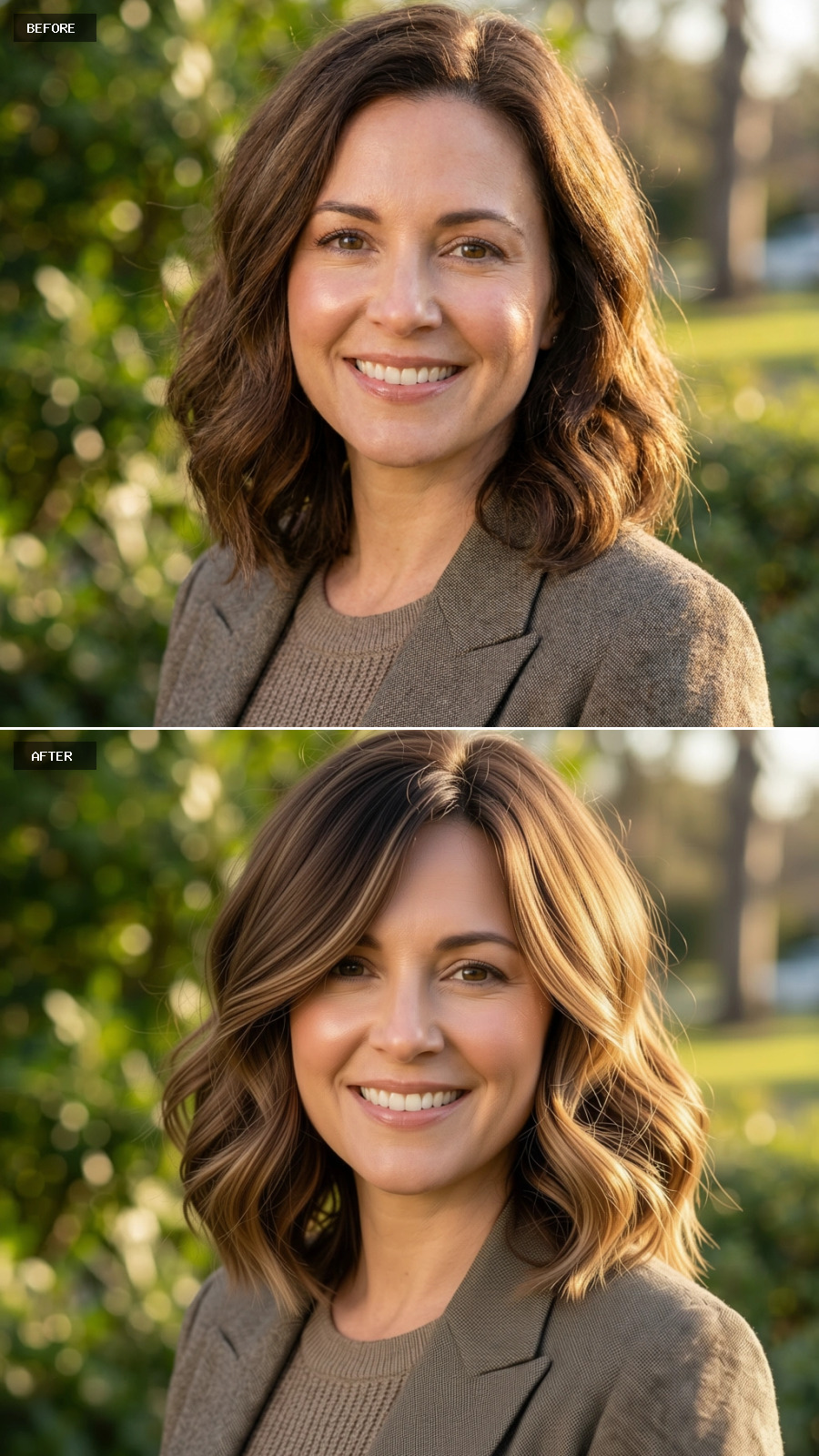
In the before photo, she wears her brown hair in loose waves parted off-center, with uniform color from root to tip and no framing around the face. The cut falls just past the collarbone. She has on a taupe knit crewneck layered under a medium-weight linen-blend blazer in warm greige, and the overall effect reads polished but flat.
The after introduces hand-painted caramel and honey balayage concentrated through the mid-lengths and ends, with curtain bangs swept outward to bracket her cheekbones. The added dimension in the color makes her hazel eyes read warmer. Volume at the crown shifts the silhouette upward, and the soft, face-framing layers change how the same blazer and knit read entirely.
32. Warm Caramel Highlights Reframe Her Whole Face
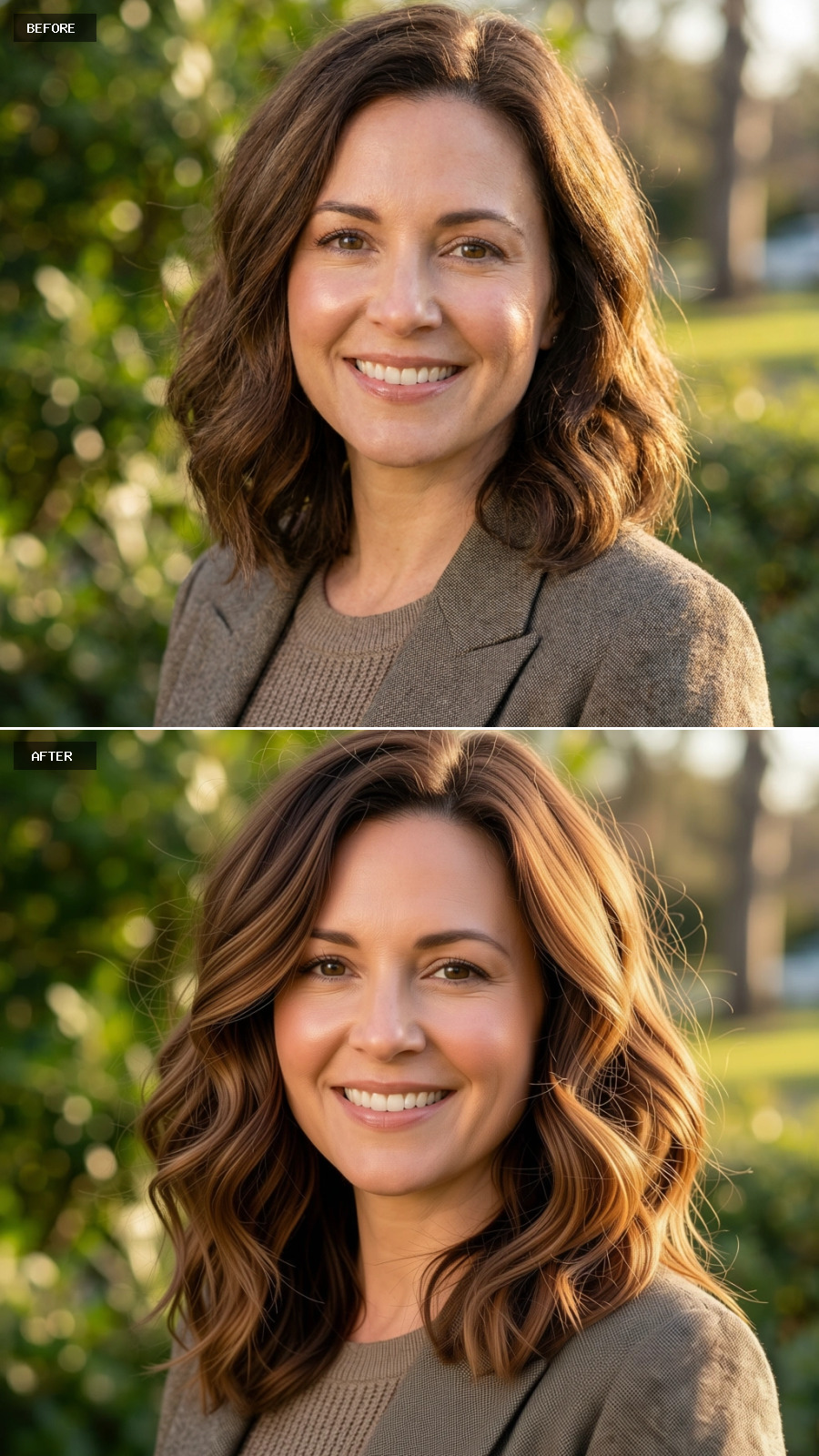
Moving from a single-process brown to a multi-tonal balayage with caramel and amber highlights shifts the entire visual weight of the look. The after photo shows waves with real dimension, curling past the collarbone, with lighter pieces framing the cheekbones specifically. Her olive skin reads warmer against the honey tones. The taupe ribbed sweater stays constant, but the hair does markedly different work.
31. Straight Dark Bob Swaps Warm Waves for Sharp Geometry
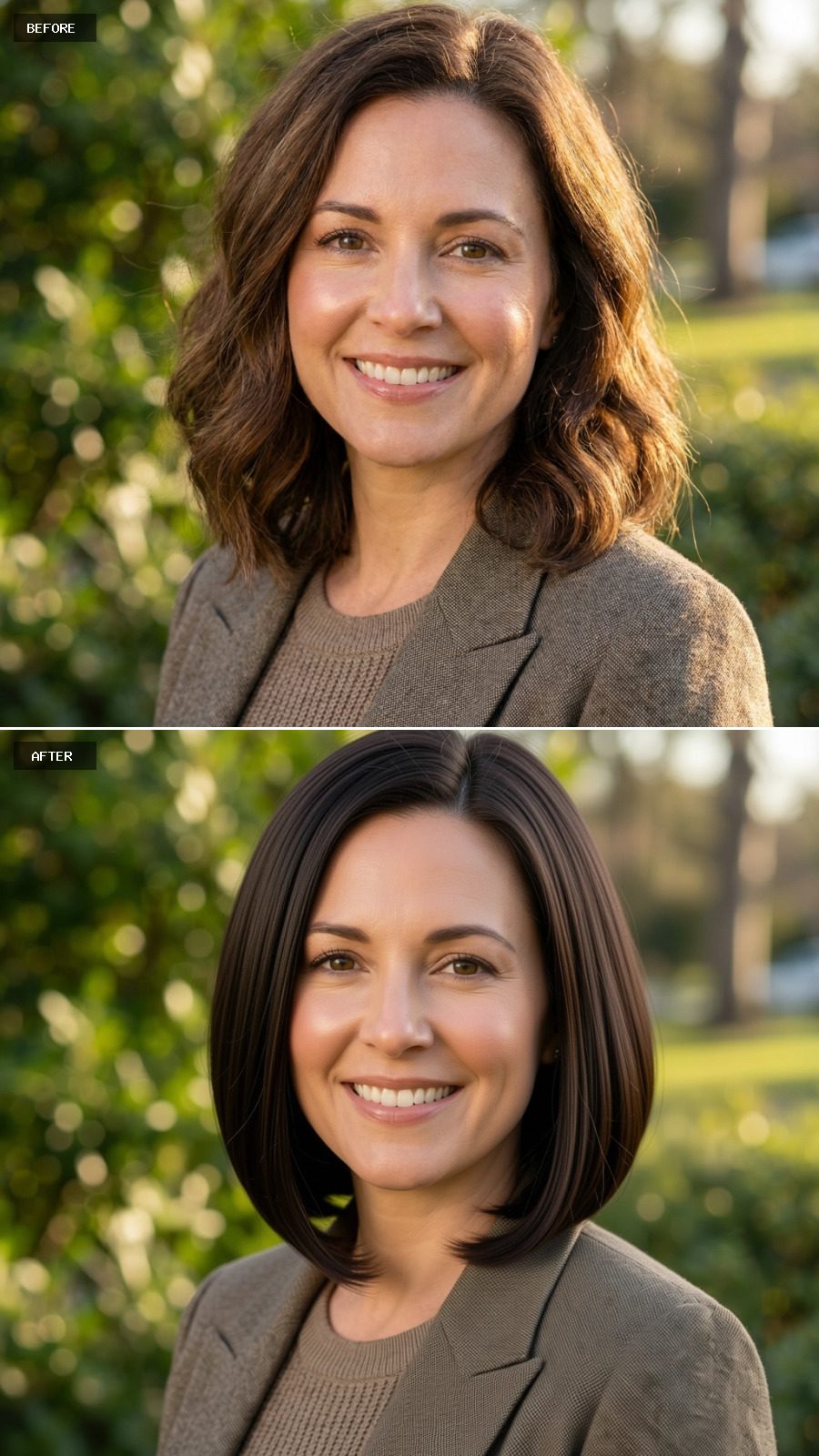
She went from shoulder-length auburn waves to a chin-grazing bob with a center part and blunt-cut ends that fall in a single, clean line. The new color reads almost black, a cool dark brown that absorbs light rather than catching it the way her former honey-kissed ends did. That shift alone changes the whole weight of her face. The bob’s interior layers keep it from looking flat, while the slight inward curl at the tips adds just enough movement to soften the geometry. Her olive-toned blazer in a mid-weight knit reads warmer by contrast.
Closet Note: A blunt bob requires precision at the ends, so ask your stylist for a dry cut finish after the wet cut to confirm the line sits exactly where it should. Dark, cool-toned color applied close to the scalp with no balayage or highlights will sharpen the graphic effect of the shape. This combination works particularly well for women with oval or heart-shaped faces, where the jaw-length hemline draws the eye outward.
30. Cropped Dark Pixie Swaps Shoulder Length Waves for Textured Volume
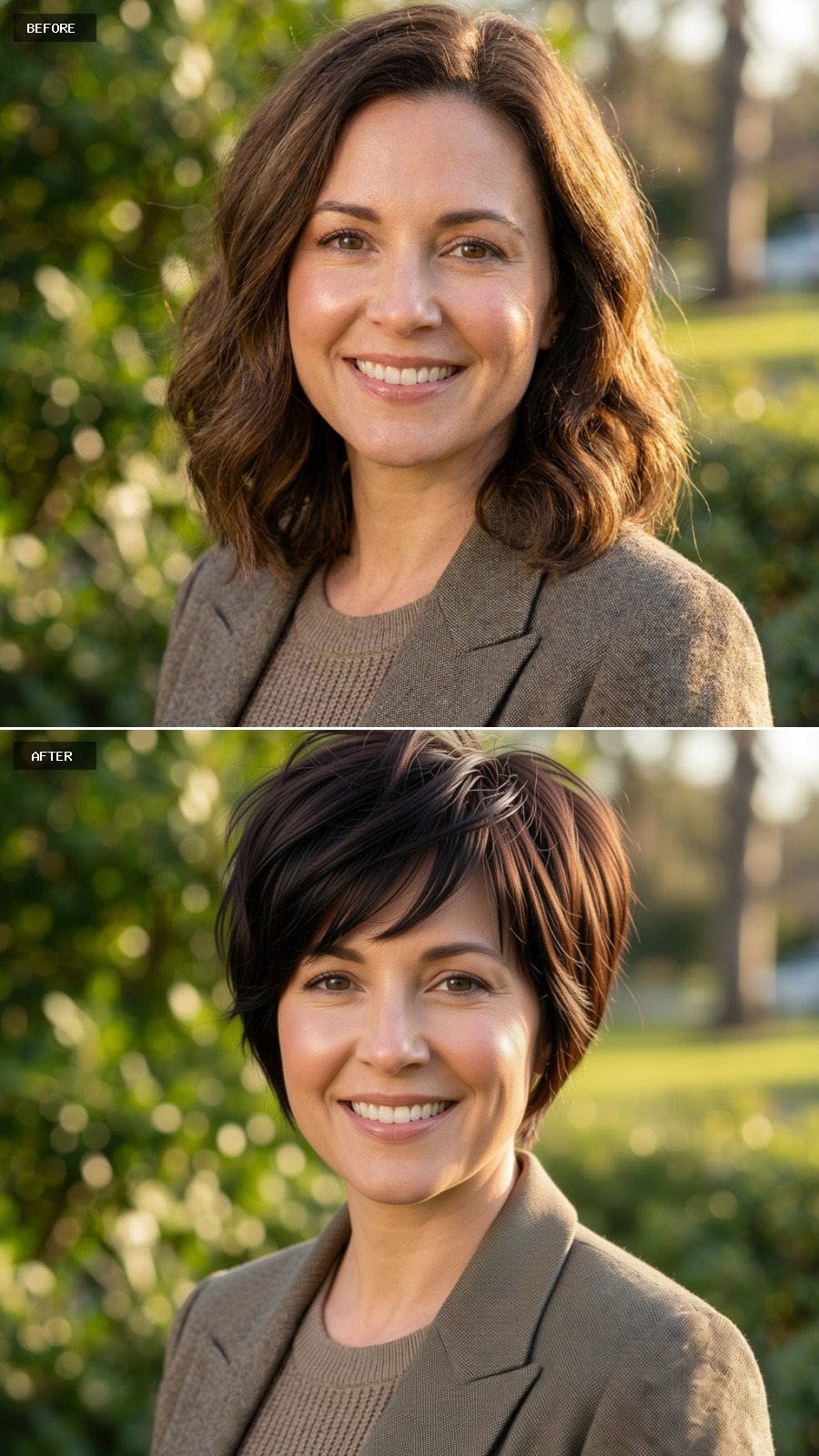
The before photo shows medium-length brown hair with loose waves and warm auburn tones caught in outdoor light. The after cuts that length down to a short, layered pixie with dark brown roots and auburn-brown highlights running through the top layers. The stylist has razor-cut the ends to create separation and lift at the crown, while side-swept fringe falls across the forehead at an angle. The olive-toned blazer in a mid-weight woven fabric reads the same in both shots, but the cropped cut pulls the eye upward and puts more emphasis on the cheekbones and jawline.
29. Dark Brown to Buttery Blonde Rewrites Her Entire Color Story
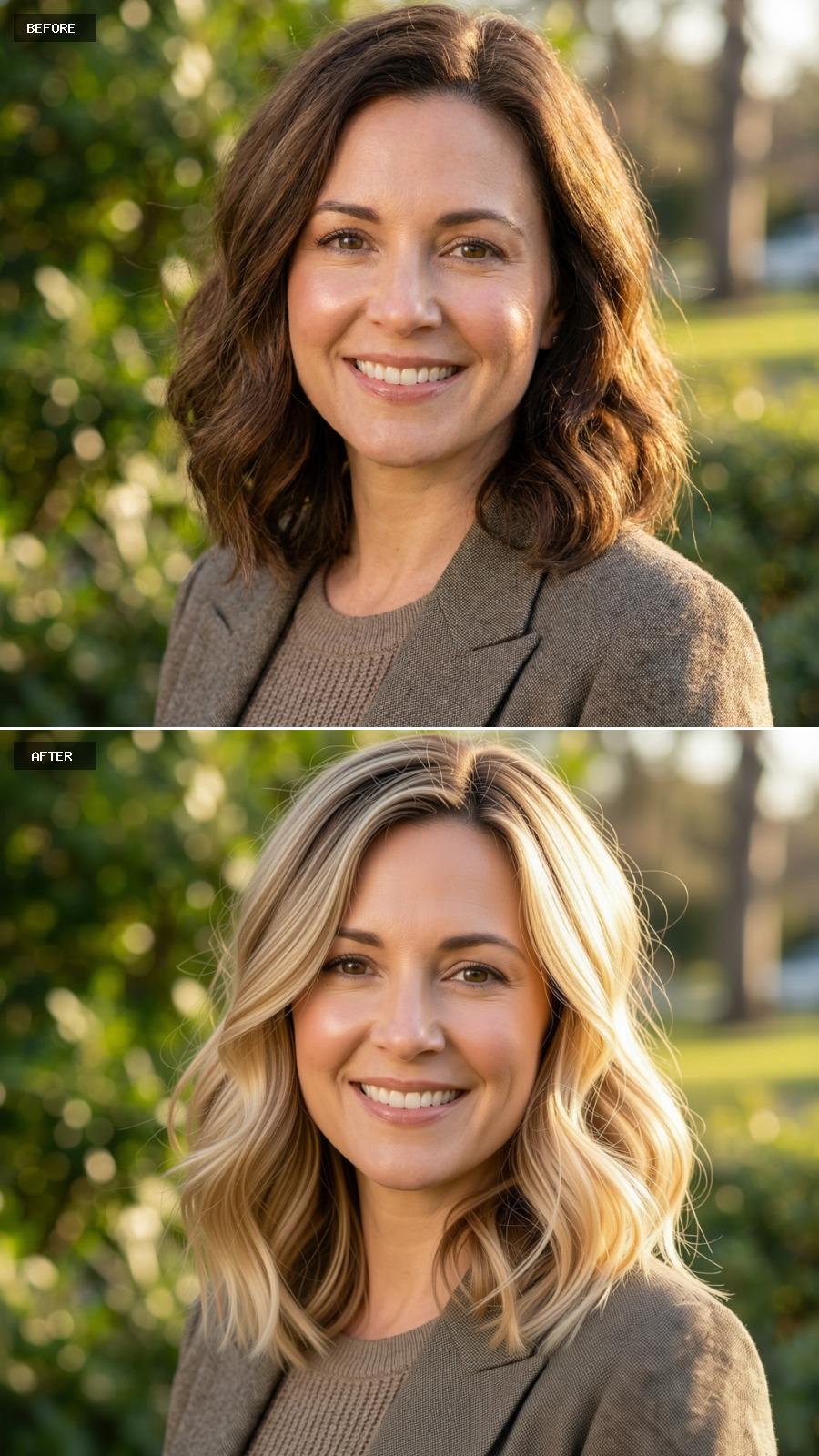
Warm honey and ash blonde tones replace a flat medium brown, with face-framing pieces pulling light directly onto her cheekbones. Her wavy lob gains visible dimension through alternating cool and golden streaks. The ribbed knit crewneck and structured blazer in taupe stay constant, which makes the hair shift feel even more pronounced.
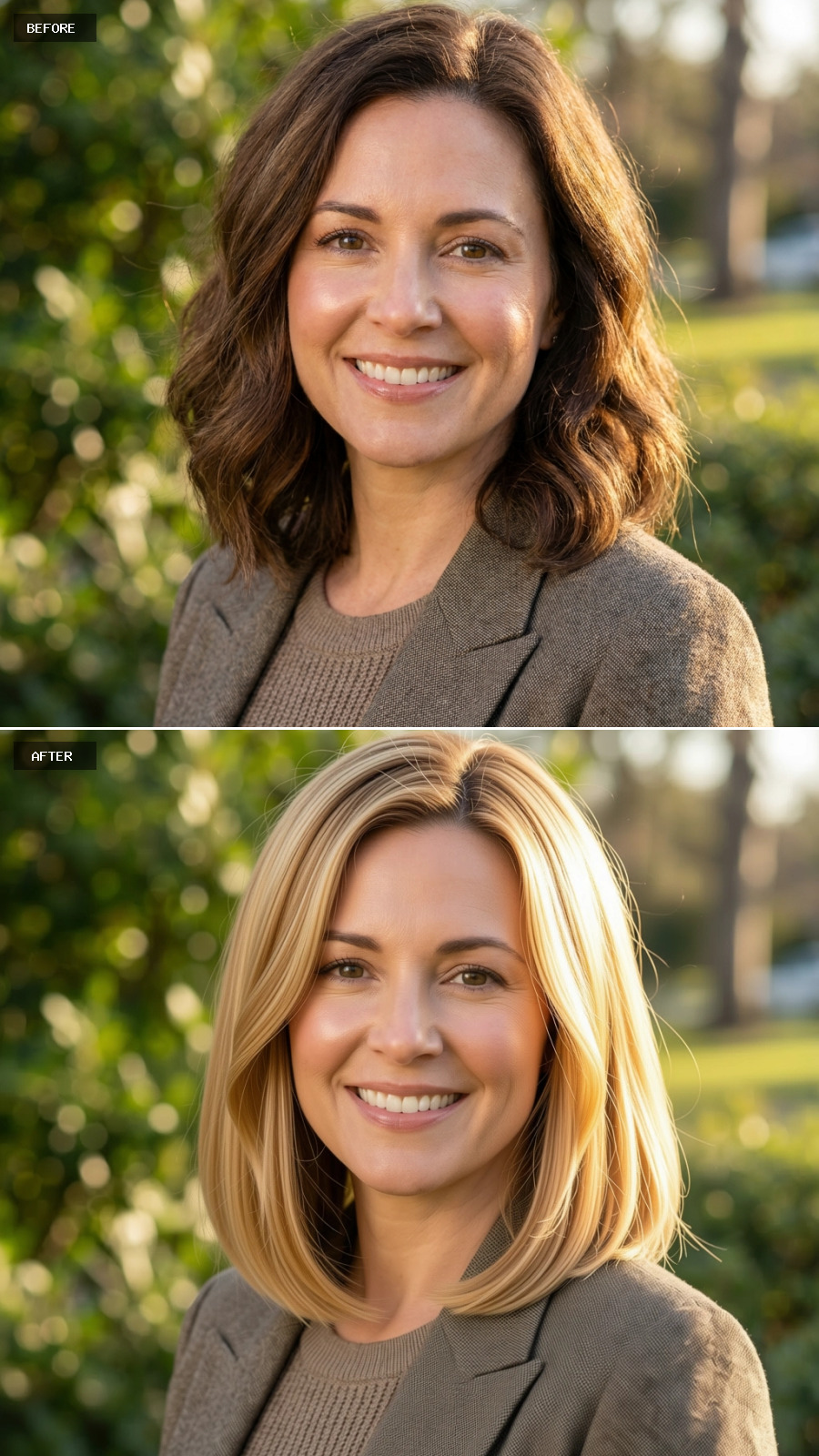
28. Chocolate Waves Out, Butter Blonde Bob In — Same Woman, Different Energy
Watch the Transformation
Before, her hair sits in loose, dark-brown waves at collarbone length, with natural movement and a center part that draws the eye inward. After, a straight blonde bob cut to just below the jaw resets the entire frame. The color reads as a warm honey-to-platinum blend, with darker roots that prevent the look from going flat. Paired again with her taupe knit-collared blazer layered over a ribbed crewneck, the lighter hair pulls more brightness toward her cheekbones and gives the cut a polished, graphic weight the waves never had.
27. Longer Waves and Balayage Shift Her Look by a Full Decade
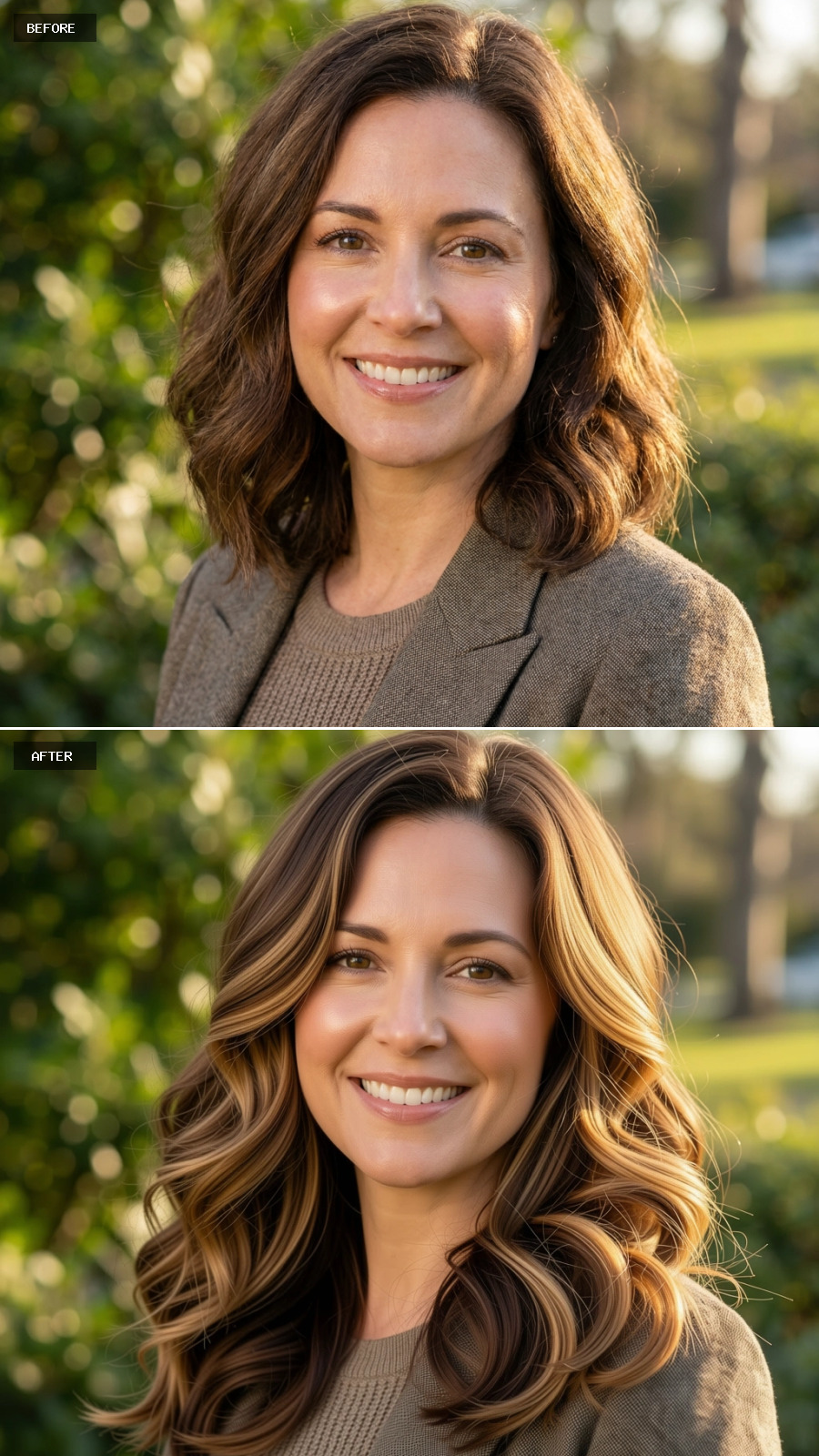
Going from shoulder-length, uniform brown hair to longer, voluminous waves with caramel and honey balayage does specific work here. The color placement starts darker at the root and lightens toward the mid-shaft, pulling light toward her cheekbones. Her taupe ribbed sweater and matching blazer stay identical in both frames, which makes the hair change impossible to ignore.
26. Curtain Bangs and Caramel Dimension Pull Her Face Forward
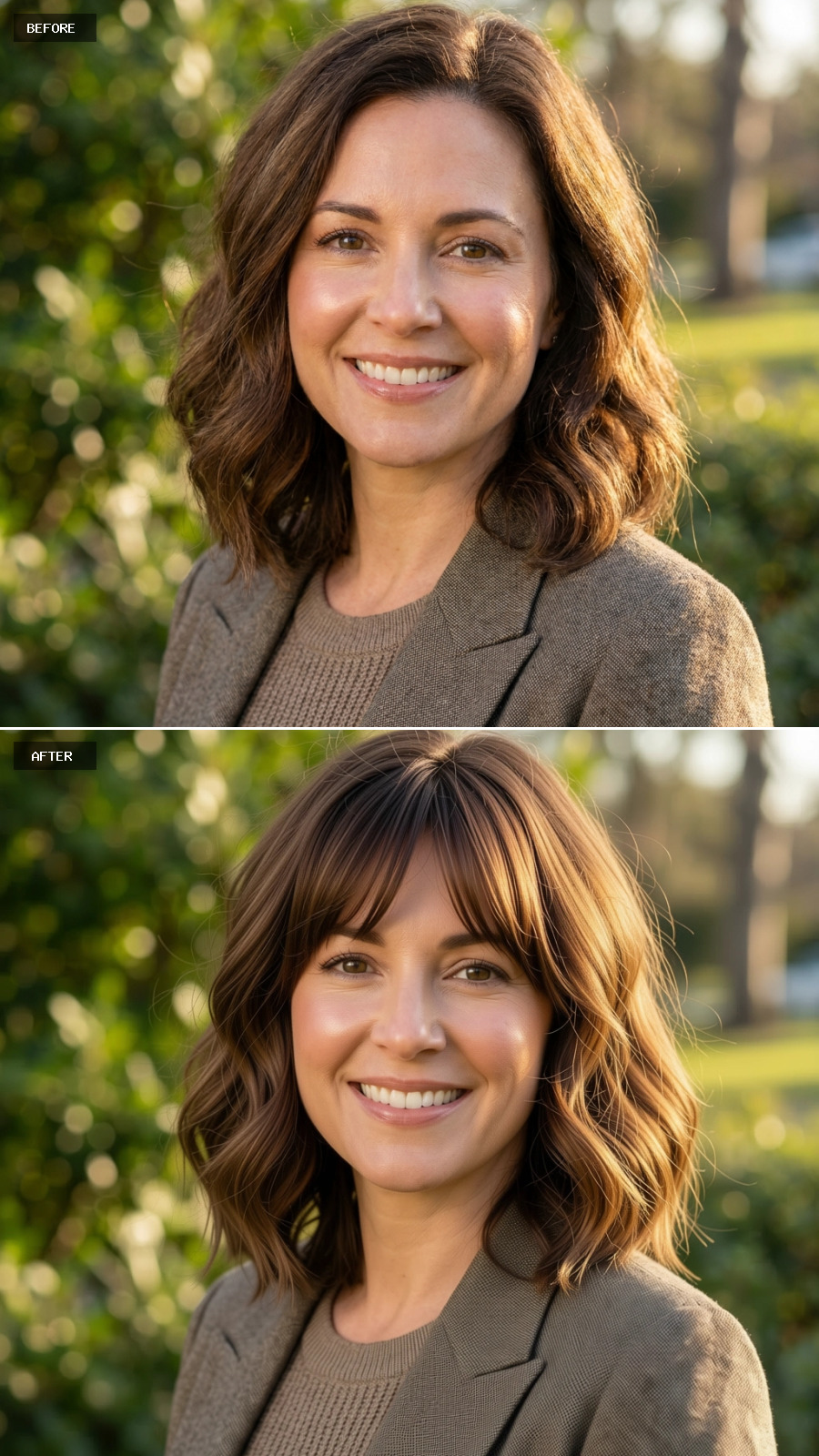
Layered shoulder-length waves get a visual reset with the addition of curtain bangs, parted at the center and feathered back toward the temples. The fringe sits light, not heavy, skimming her brows rather than landing flat across the forehead. That choice alone shifts the focal point of her face, drawing attention to her cheekbones and eye area in a way the original style did not.
The color work deepens the effect considerably. Her base remains a rich medium brown, but the after adds caramel threading through the mid-lengths and ends, catching the natural light in the outdoor setting. Her blazer reads as a heathered taupe, a fabric weight suggesting structured wool blend, and her ribbed crewneck sweater underneath stays in the same tonal family. Nothing competes with the haircut, which is clearly the intended point.
How the Curtain Bang Parting Line Changes Perceived Face Width
The center part on curtain bangs creates a vertical line that visually narrows a rounder face while opening the eye area. In this after image, the fringe fans outward at roughly a 45-degree angle from the part, which keeps the forehead from appearing covered or heavy. Stylists often use a rounded brush on low heat to set that outward sweep, locking the shape without adding bulk at the roots.
25. Straight Highlights and Length Add Up to a Softer, Younger Frame
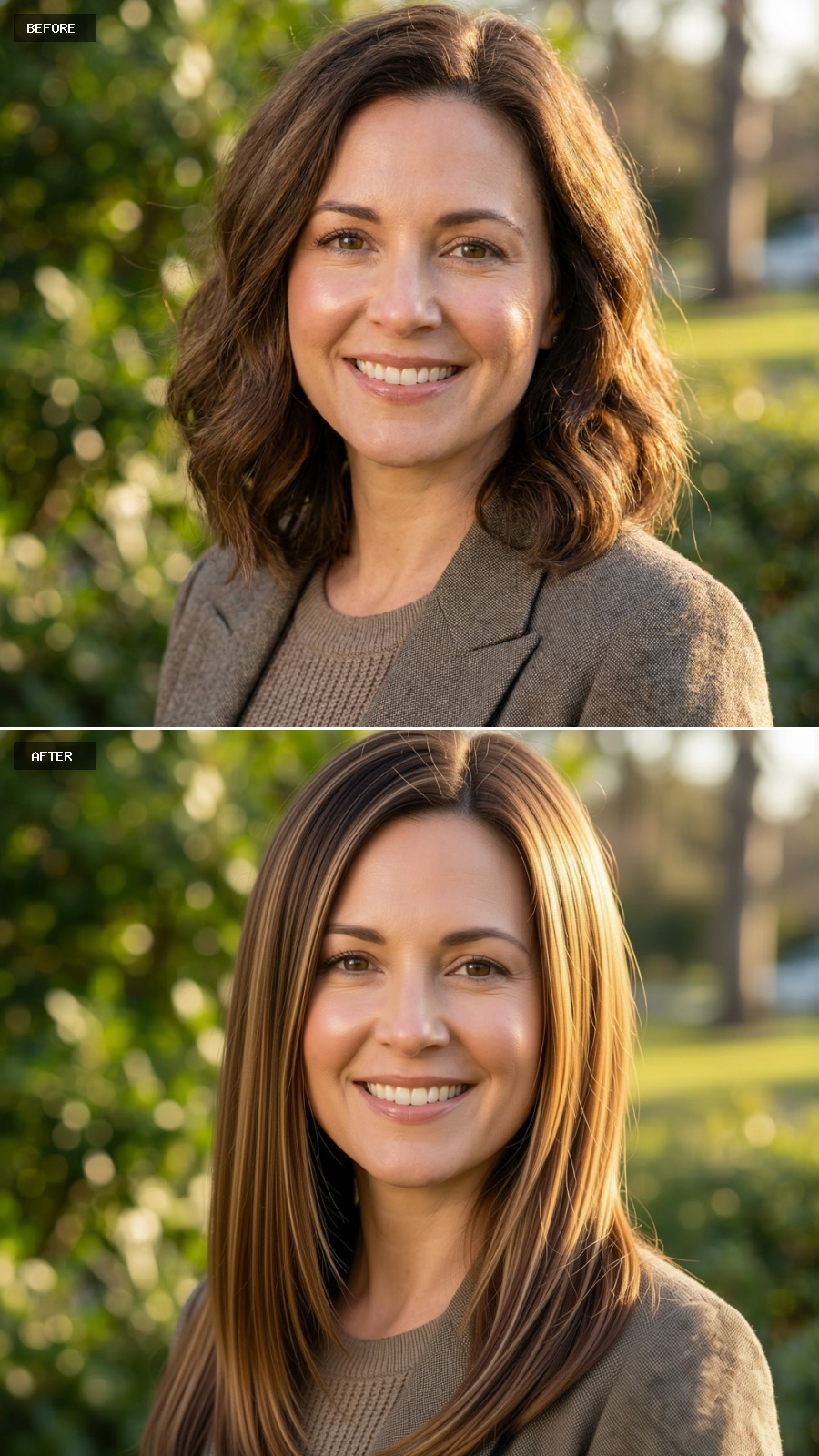
Shoulder-length waves in medium brown gave way to long, straight strands with hand-painted highlights running from mid-shaft to ends. The color moves between dark chocolate at the roots and honey-caramel panels through the mid-lengths, with a few cooler ash-blonde pieces near the face that catch the outdoor light differently than the warmer tones behind them. Hair falls past the collarbone with no curl or bend, which lets the highlight pattern read clearly rather than getting lost in texture.
Switching from waves to straight length does specific work on face framing. The panels closest to her face act like vertical lines, drawing the eye downward and making her cheekbones appear more central in the overall composition. Her taupe ribbed-knit sweater and matching blazer stay constant across both images, which makes it easier to isolate exactly what the hair is doing: the length and the color distribution together shift where attention lands first.
24. Dark Brown to Blonde Waves Rewrites the Rules on Playing It Safe
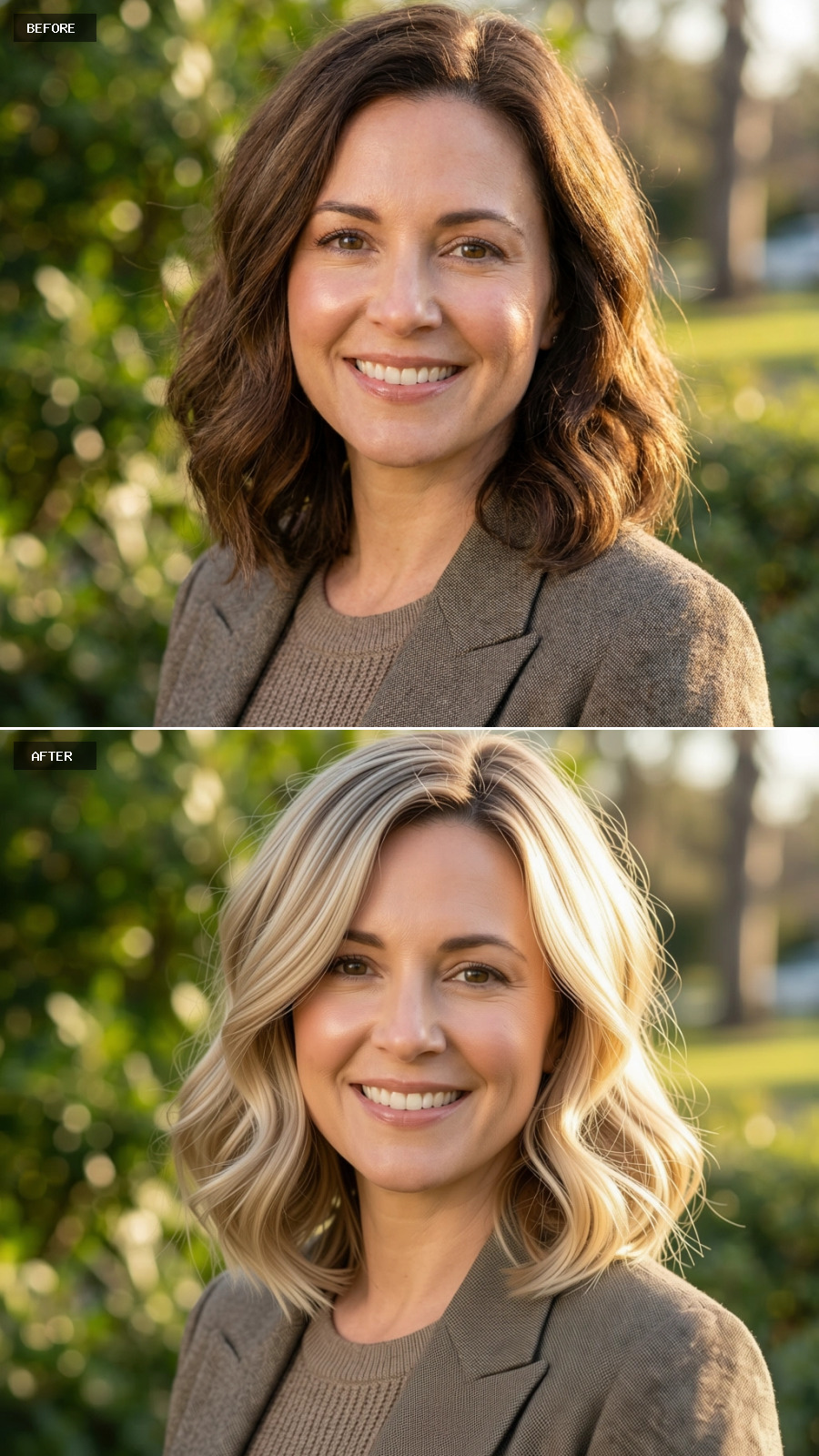
Brunette hair with medium-depth brown tones and a slight wave sits conservatively in the before shot, paired with a taupe knit crewneck layered under a matching taupe blazer in a medium-weight fabric. The after shot pulls every warm tone out of that same outfit by switching to a blonde balayage with ash-to-honey graduation and loose, barrel-curled waves that catch the outdoor light differently. Face framing pieces fall just past the cheekbones. Roots are kept two to three shades darker than the ends, which prevents the blonde from reading flat or overprocessed. That depth at the root does visible work: it gives the waves dimension they would otherwise lose on fine-to-medium hair.
23. Wavy Brown Layers Out, Sleek Bob In — Her Face Shape Finally Gets the Frame It Deserved
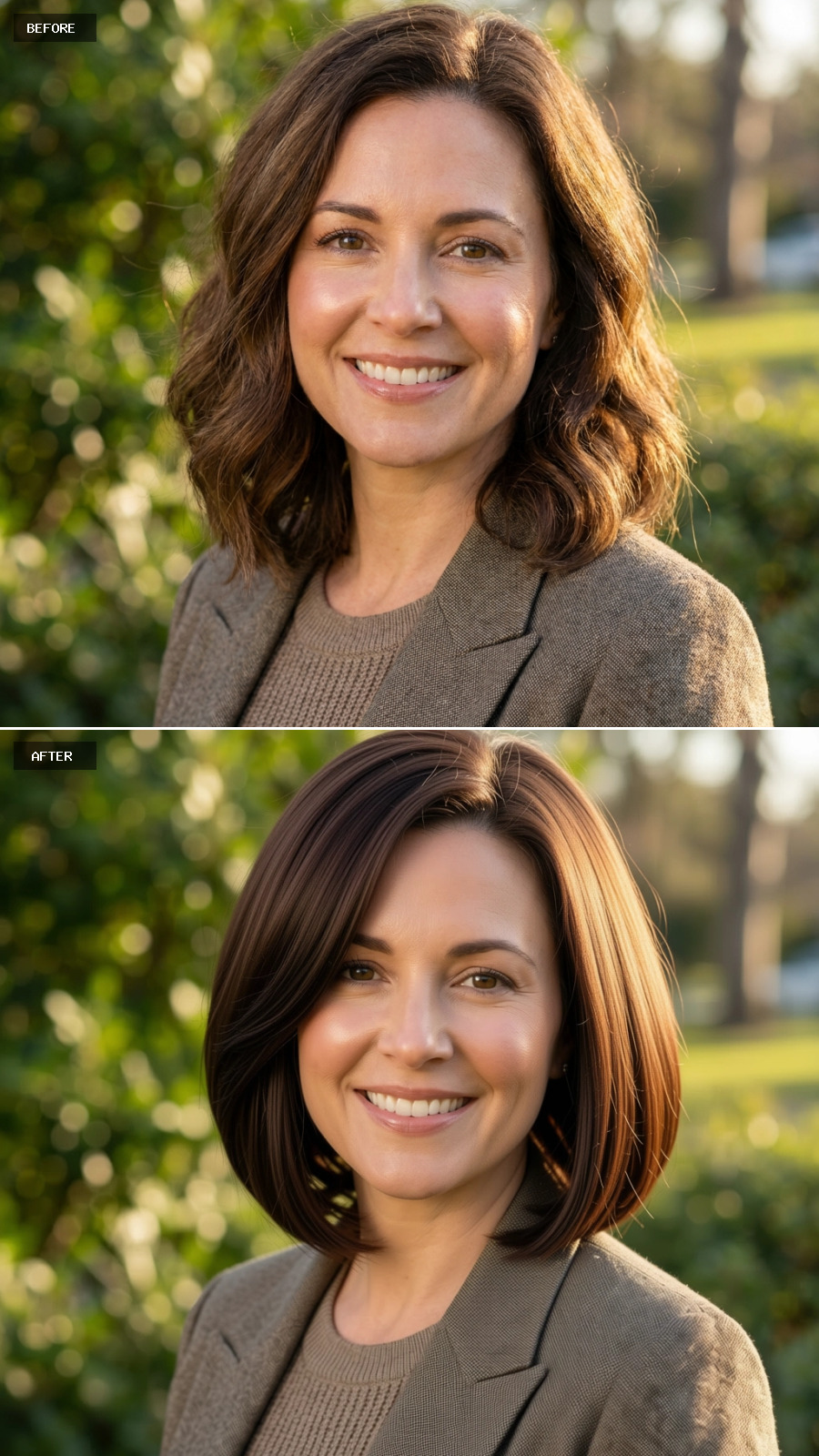
What changes here is not just the cut but the entire optical logic of the style. The before shows medium-length waves with warm auburn tones catching the light, worn loose and full around the jaw. The after replaces all of that with a chin-length bob, cut with a soft inward curve that skims just below the ears. The color deepens to a rich chocolate brown with subtle copper highlights threaded through the mid-lengths. Volume moves from the ends up to the crown, which draws the eye upward and lengthens her face. The taupe blazer over a ribbed knit sweater stays identical in both shots, making the hair shift the only variable worth measuring.
22. From Medium Brown Waves to Rich Dark Lengths That Reset Her Entire Presence
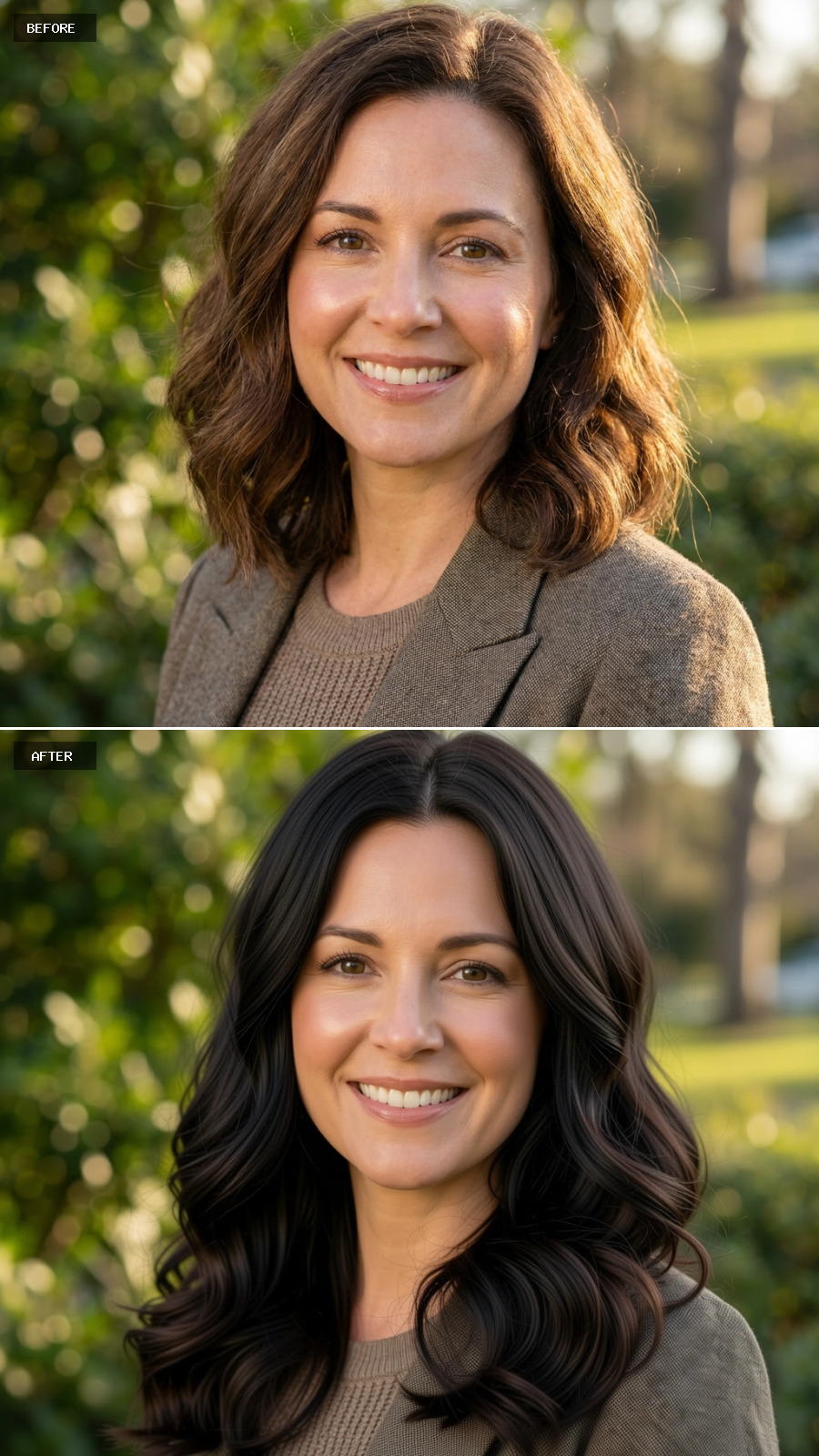
Medium brown, shoulder-grazing waves with warm auburn undertones give way to deep near-black hair with long, voluminous curls falling well past the collarbone. The color shift is dramatic: the before reads as a sun-touched, natural brunette, while the after lands squarely in cool espresso territory with zero warmth in the tone. Her brows, which appeared lighter against the original color, now read as a deliberate, defined feature that anchors her face differently. The texture change matters just as much as the color. Loose, fine waves become structured, bouncy curls with body through the mid-lengths and ends.
Both versions are photographed against the same outdoor backdrop of soft-focus greenery, which makes the contrast in hair density and light absorption unmistakable. The richer pigment in the after photo pulls more shadow, creating the appearance of fuller volume at the crown and along the sides. She wears the same ribbed knit sweater in both shots, a detail that keeps the clothing variable neutral and lets the hair carry the full visual weight of the comparison.
21. Dark Brown Waves Out, Blonde Dimension In — Her Forties Just Got Louder
❤️ Would you like to save this?
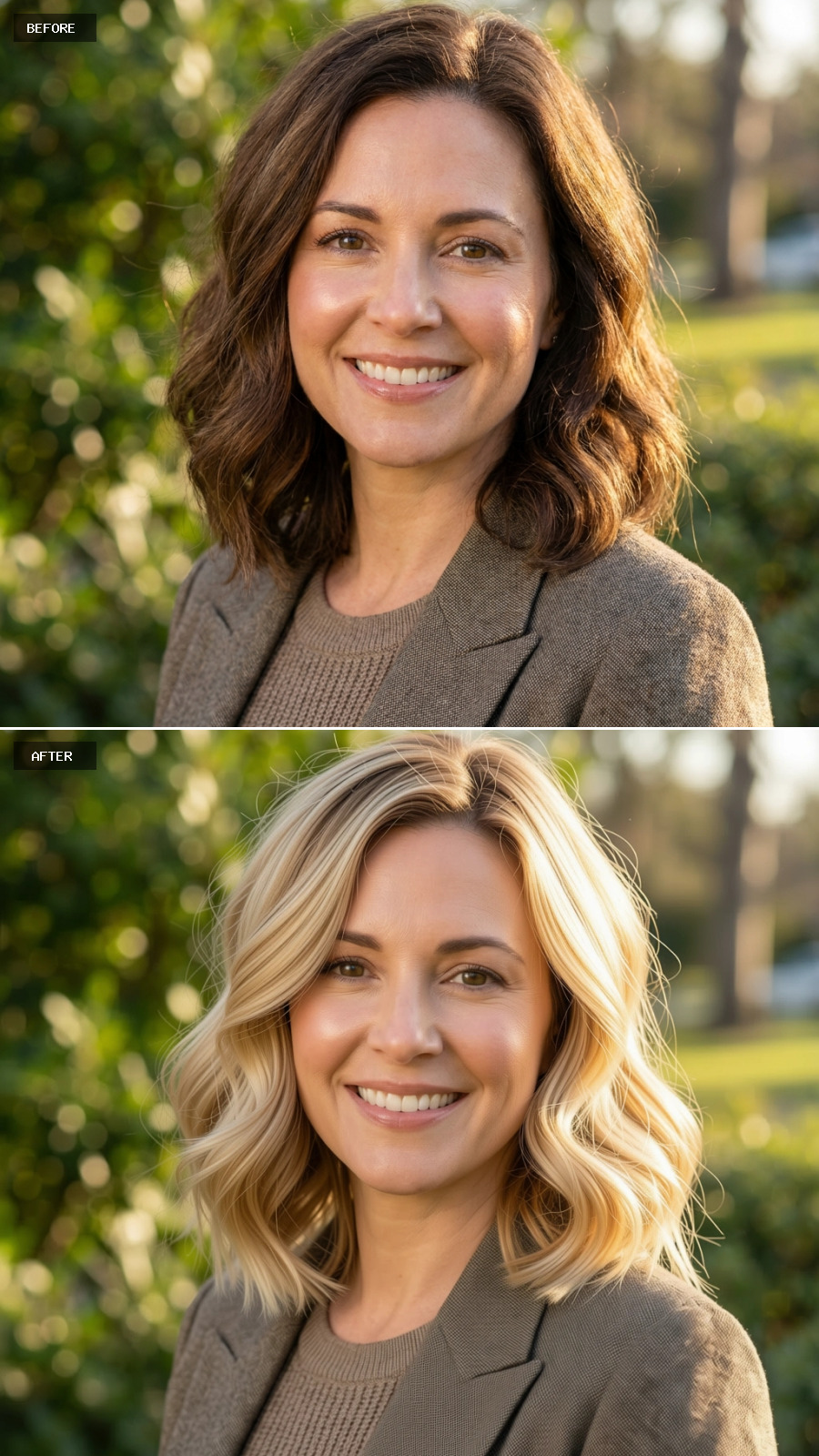
Rich medium brown with natural wave gives way to a blonde layered style with visible depth at the roots and brighter pieces through the mid-lengths and ends. The colorist worked in at least two tones of blonde, keeping the base slightly darker so the lighter sections read as dimension rather than bleach. Both photos show the same taupe blazer with notched lapels over a ribbed crewneck in a warm greige knit, which confirms the color shift does the heavy lifting here.
The “after” cut also sits slightly shorter and fuller at the cheekbones, with the wave pattern tightened into more defined sections. That added volume at the sides creates a frame that draws attention up and across her face. On women over 40 with similar coloring, this kind of root-to-end graduation in blonde tends to read younger than a flat single-process result because the contrast mimics how hair catches light naturally.
20. Highlights, Bangs, and a Color Shift That Changed How Her Face Reads
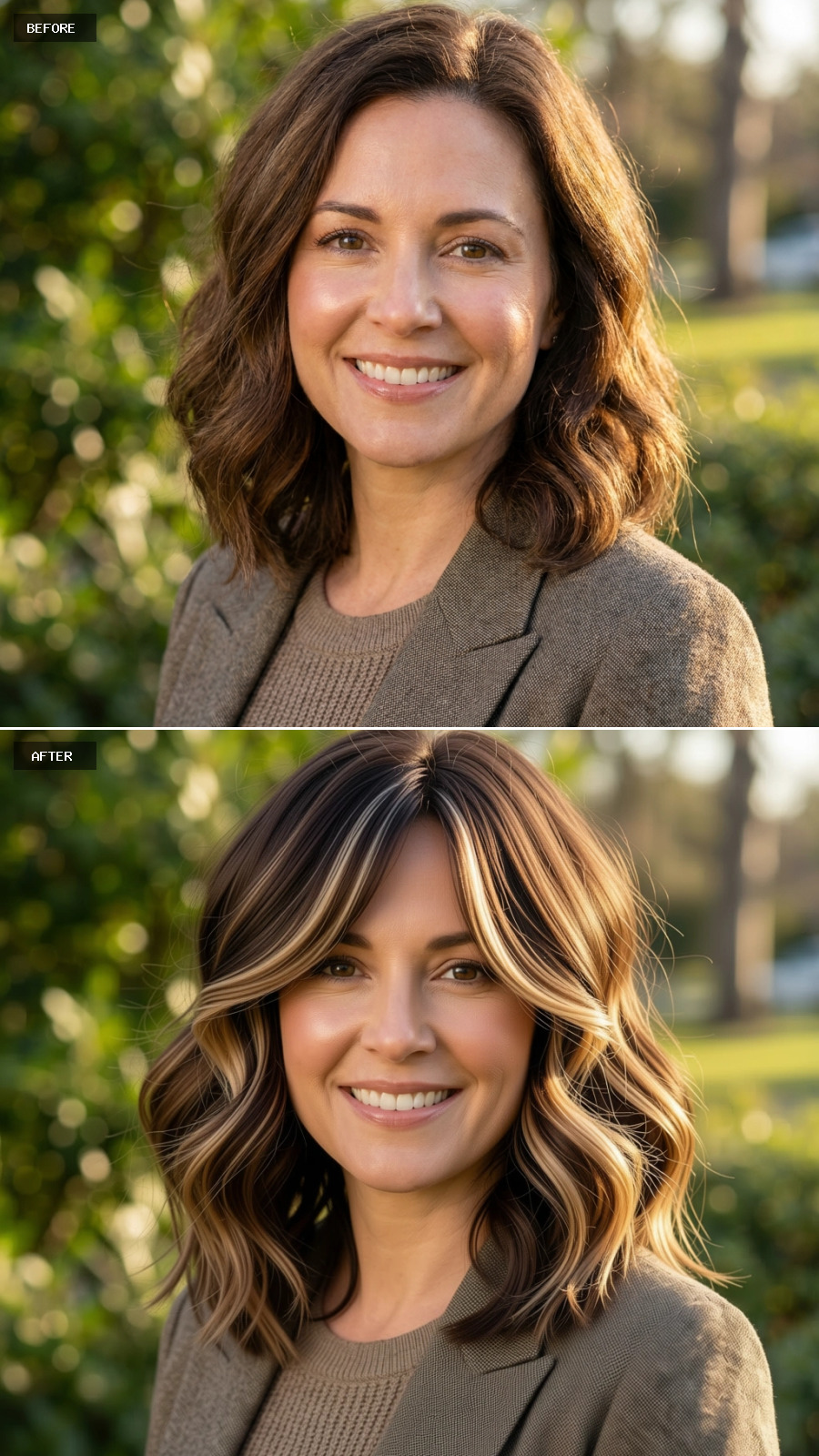
Her natural dark brown hair sits uniformly past her shoulders in the before, with no variation in tone and no framing around her face. The after introduces curtain bangs that part at center and sweep outward, plus a balayage blend that moves from near-black roots through caramel mid-lengths into honey blonde ends. That contrast in depth pulls light directly toward her cheekbones and eyes in a way solid color simply cannot.
Fit Tip: Balayage placed specifically in the front sections, rather than distributed evenly all over, gives the most face-framing payoff for the least maintenance. Ask your colorist to concentrate the lightest pieces within two inches of your face, starting at the temple. Those sections catch light first and do the most work when your hair is down or loosely styled.
19. Soft Brown to Blonde Balayage, and Suddenly the Blazer Reads Completely Different
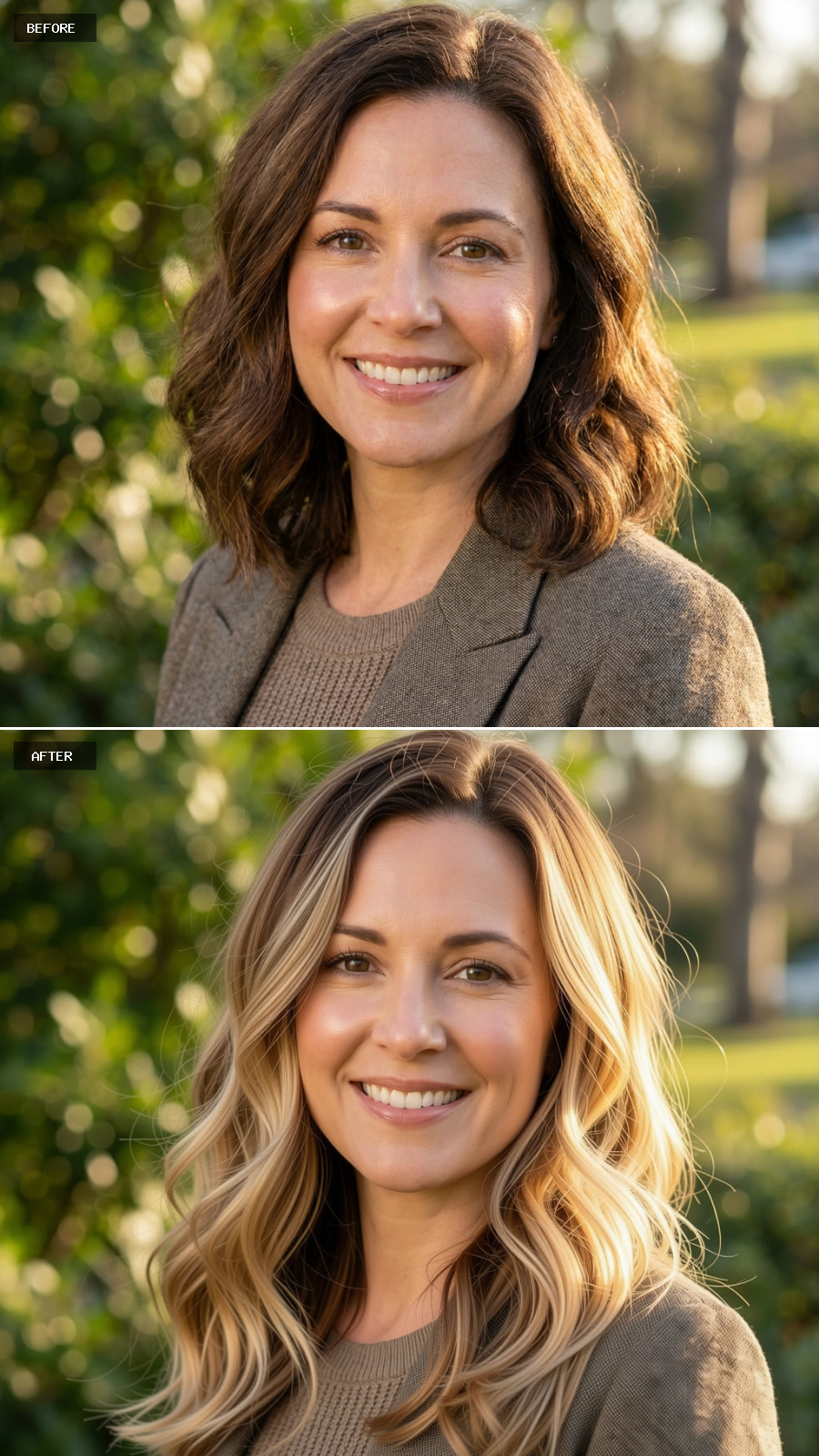
Dark brown, chin-skimming waves sit neatly in the before shot, paired with a taupe blazer layered over a ribbed knit in the same muted family. The cut is tidy but compact, and the color absorbs light rather than reflecting it. In the after, the same taupe blazer reads warmer because the hair surrounding it has shifted to a blonde balayage with visible rooting at the crown and face-framing pieces that catch the outdoor light. The length extends past the shoulders in loose, barrel-curled waves. Color placement near the temples does specific work here, pulling the eye outward and widening the perceived cheekbone line.
18. Soft Layers Gone, Short Bob In — Her Color Does the Heavy Lifting Now
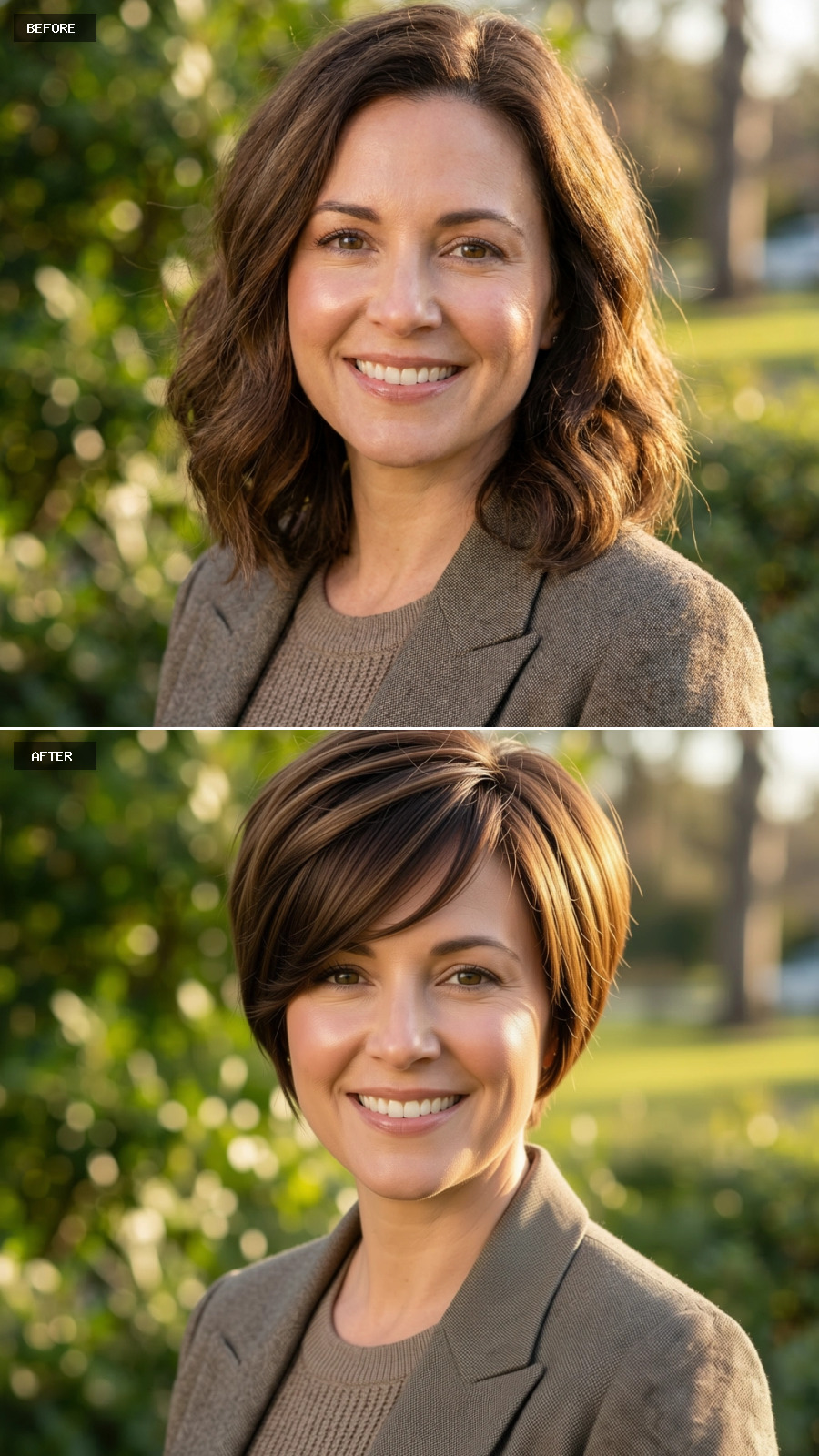
Straight across the crown, with face-framing pieces that angle sharply toward the chin, the cropped bob replaces what was loose, shoulder-grazing waves sitting without much structure. The color shift matters just as much as the cut: the after shows a deeper brown base with warm caramel pieces pulled through the top layer, catching the outdoor light in a way the flat medium brown of the before never did. She wears the same taupe blazer over a ribbed knit sweater in both shots, which makes it easy to see how the shorter silhouette opens up the jaw and neck. The pixie-adjacent length reads polished without requiring blowout time every morning.
17. Bangs Added, Waves Reshaped, and the Color Got a Whole New Depth
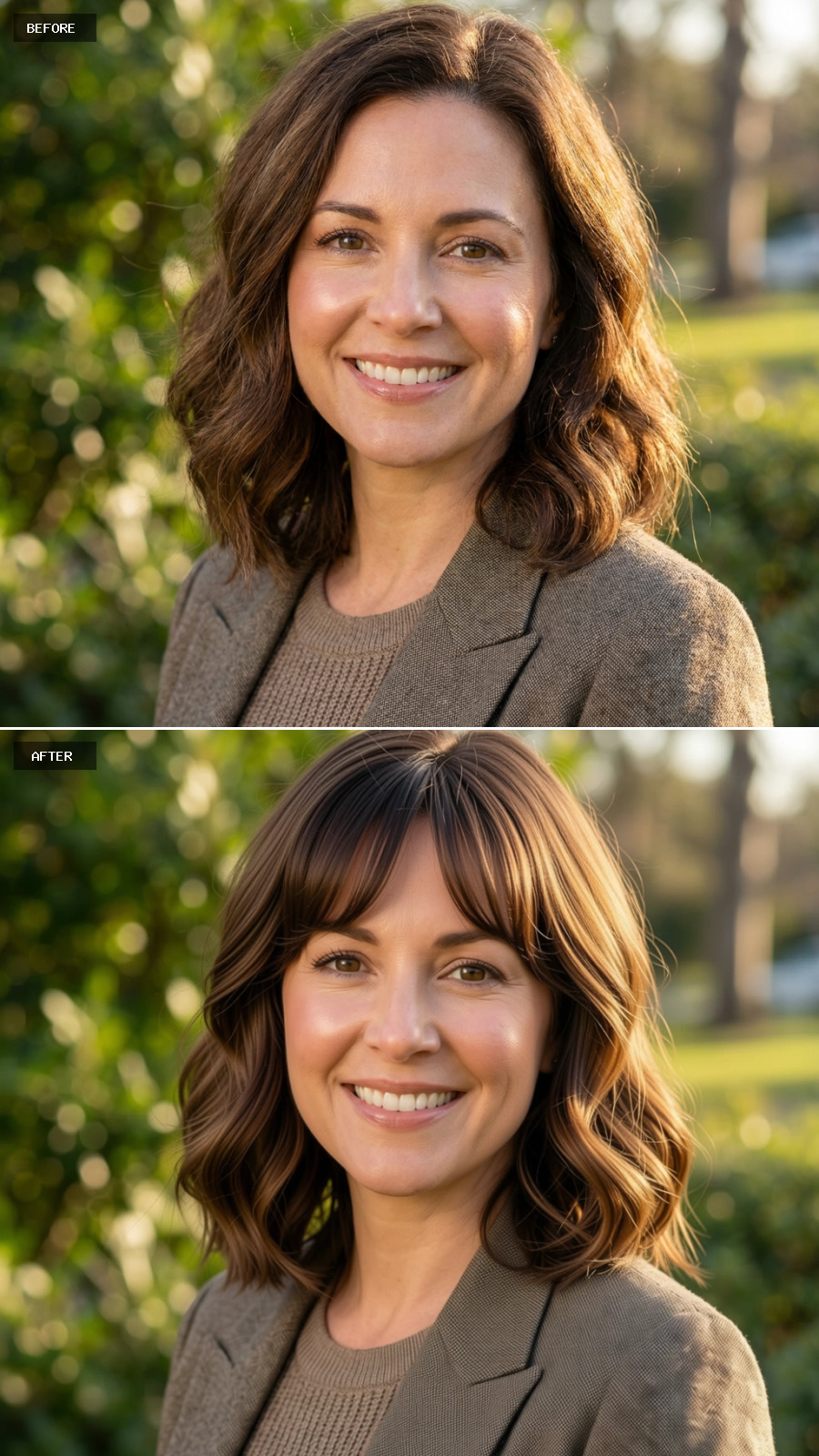
Before, she wears her brown hair pulled back from the face with no fringe, the ends falling in loose waves just past the collarbone, paired with a taupe knit crewneck layered under a heathered blazer in the same neutral family. The after introduces curtain-style bangs that sweep across the forehead and break just above the brow line, immediately shifting where the eye lands on her face. The color moves from a flat medium brown to a deeper brunette base with warm caramel ribbons concentrated through the mid-lengths and ends, giving the wave pattern more visual separation. Those waves tighten slightly in the after, with more defined curves through the lower half that add density at the shoulder. The blazer reads warmer now, less utilitarian, because the contrast between the dark root and lighter ends pulls the whole frame down rather than up.
16. Brown Waves to Blonde Curls, and the Whole Photograph Changes Temperature
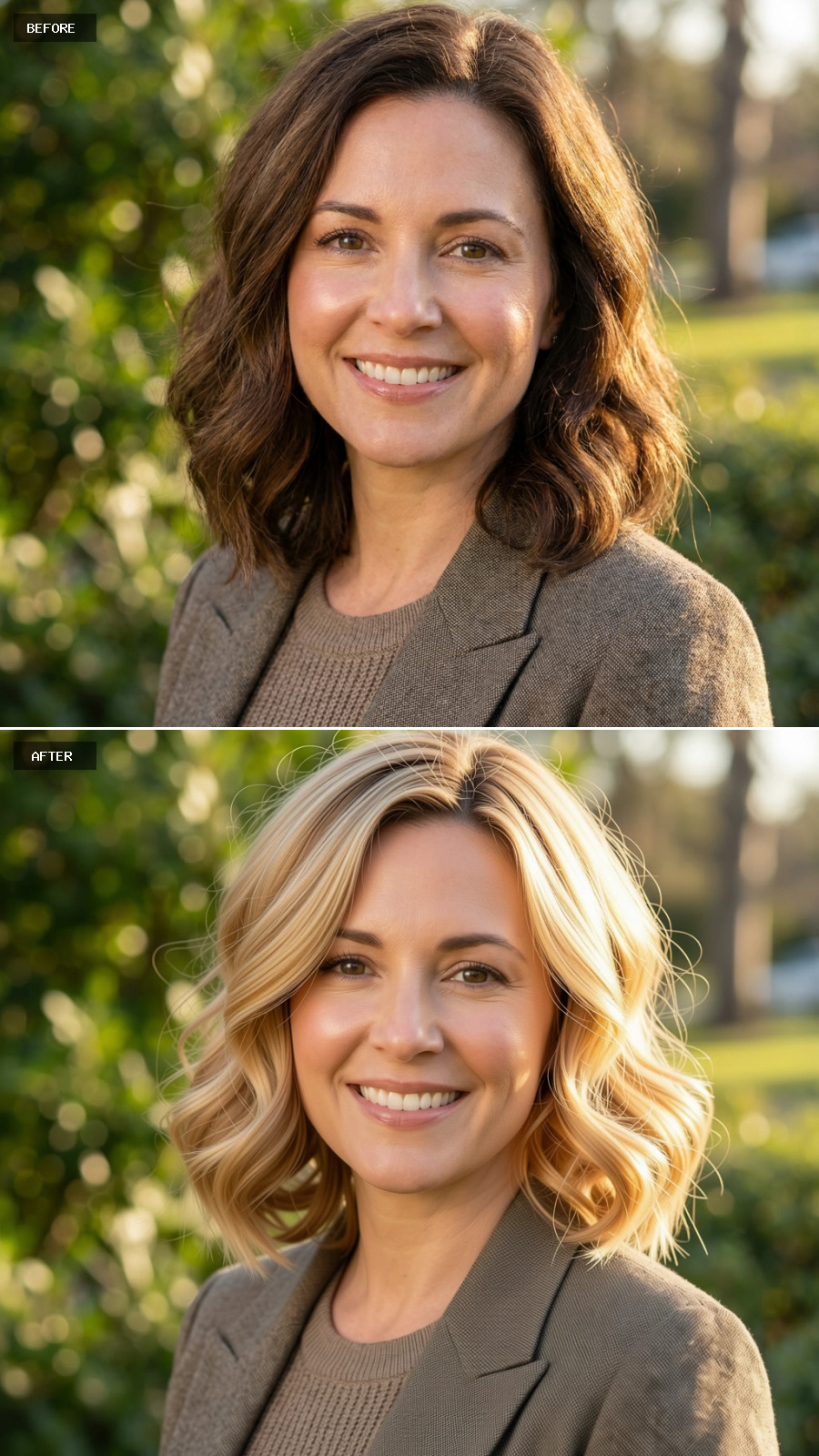
Going from cool-toned brown to a warm, multi-dimensional blonde shifts the light in a portrait in ways that color correction in editing simply cannot replicate. In the before, the hair reads flat against the olive-toned skin, and the taupe blazer over a ribbed crew-neck sweater blends into one muted block. The after introduces a sandy-to-platinum blonde with visible separation between darker roots and brighter mid-lengths, and suddenly the same blazer reads as a deliberate neutral rather than a forgettable one. Loose, defined curls replace the flatter wave pattern, adding width at the jaw that softens the overall silhouette without adding length.
15. Caramel Highlights and Looser Curls Shifted Every Proportion on Her Face
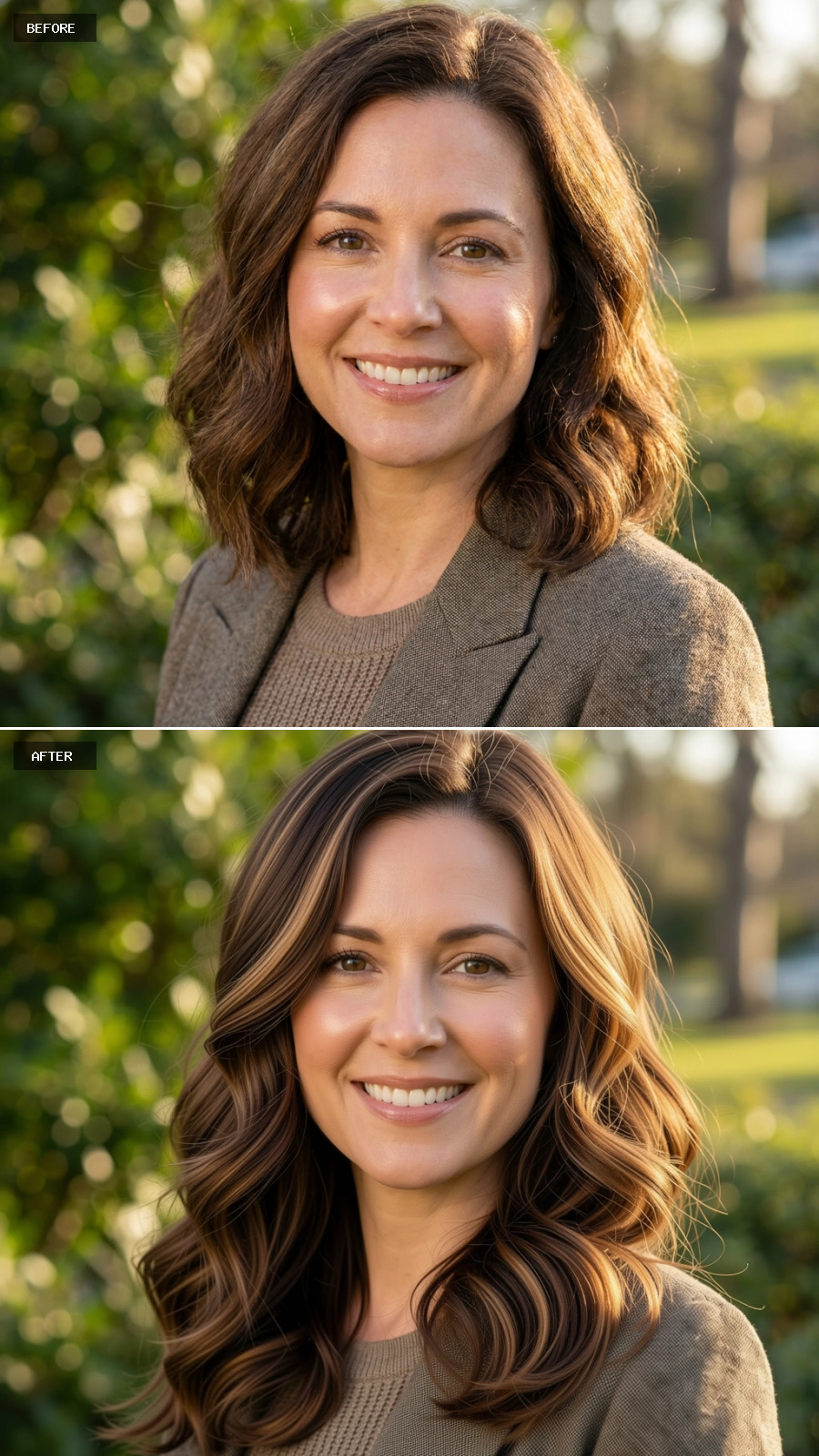
The jacket disappeared, and somehow that made the whole result hit harder.
In the before, a taupe blazer over a ribbed knit sweater kept the look pulled together but corporate. The hair sat in relatively flat, uniformly dark brown waves without much contrast between root and end. In the after, the blazer is gone, the ribbed crew neck reads warmer, and the hair carries dimensional balayage that moves from a deep chocolate root into honey and caramel at the mid-shaft. The curls are larger and more open than before, which softens the jaw and pulls the eye upward.
14. Wavy Layers Traded for a Sleek Bob, and the Color Dropped Two Full Shades
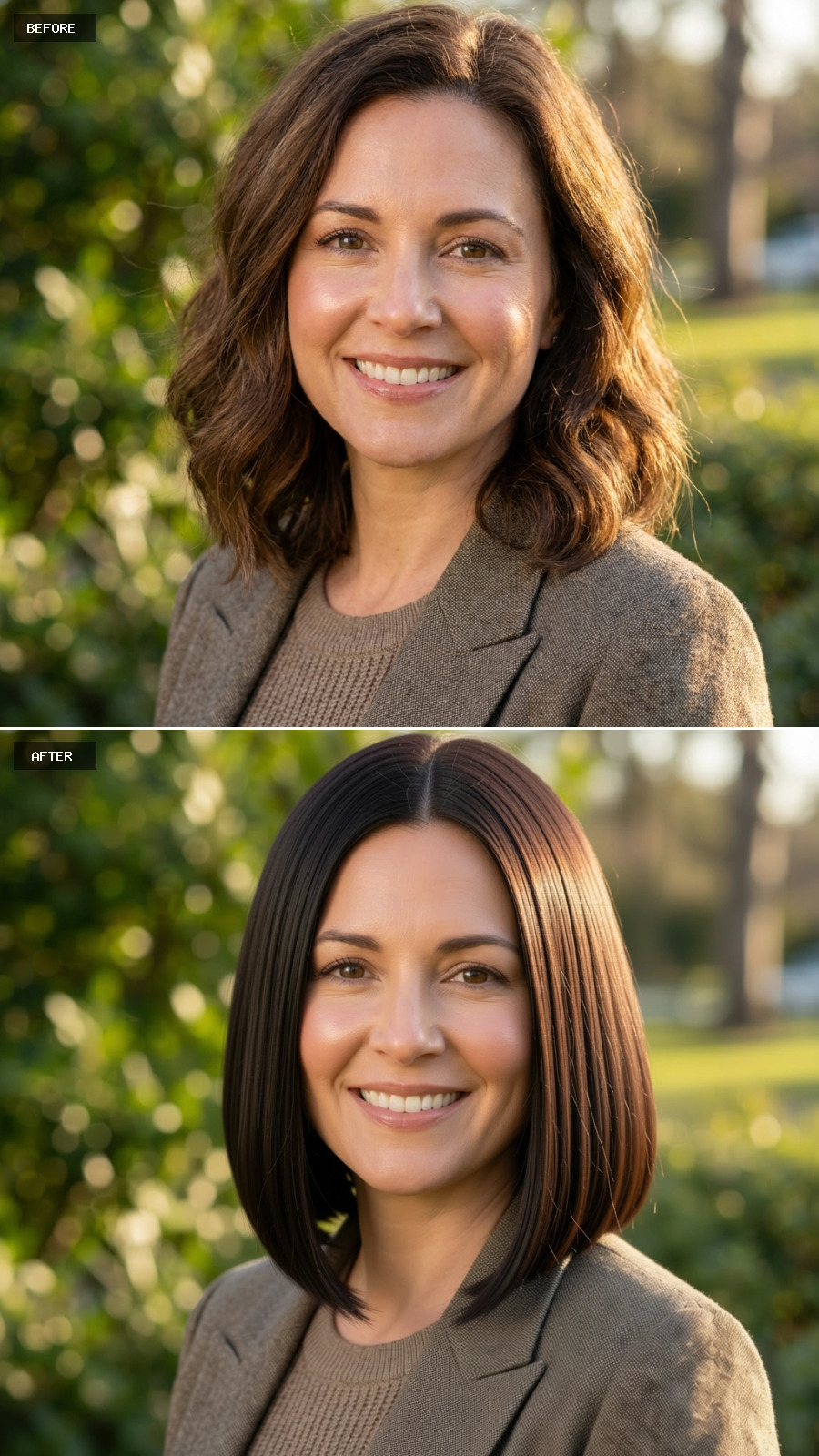
Soft, medium-length waves in a warm chestnut brown give way to a blunt bob cut just above the shoulder, with the part shifted to dead center and the color deepened to near-espresso at the roots with subtle copper warmth showing through the ends in direct light. The after cut falls with visible weight and density, the kind of bob that requires a flat iron or round brush finish to hold that glassy surface. She wears the same taupe knit-under-blazer combination in both frames, which makes the contrast between the two cuts impossible to miss. The darker shade pulls her brow line and cheekbones into sharper focus. Fewer layers means fewer variables, and that single structural decision does more work than any color technique could on its own.
13. Blonde Waves Added Three Inches of Visual Length Without Touching a Single Cut
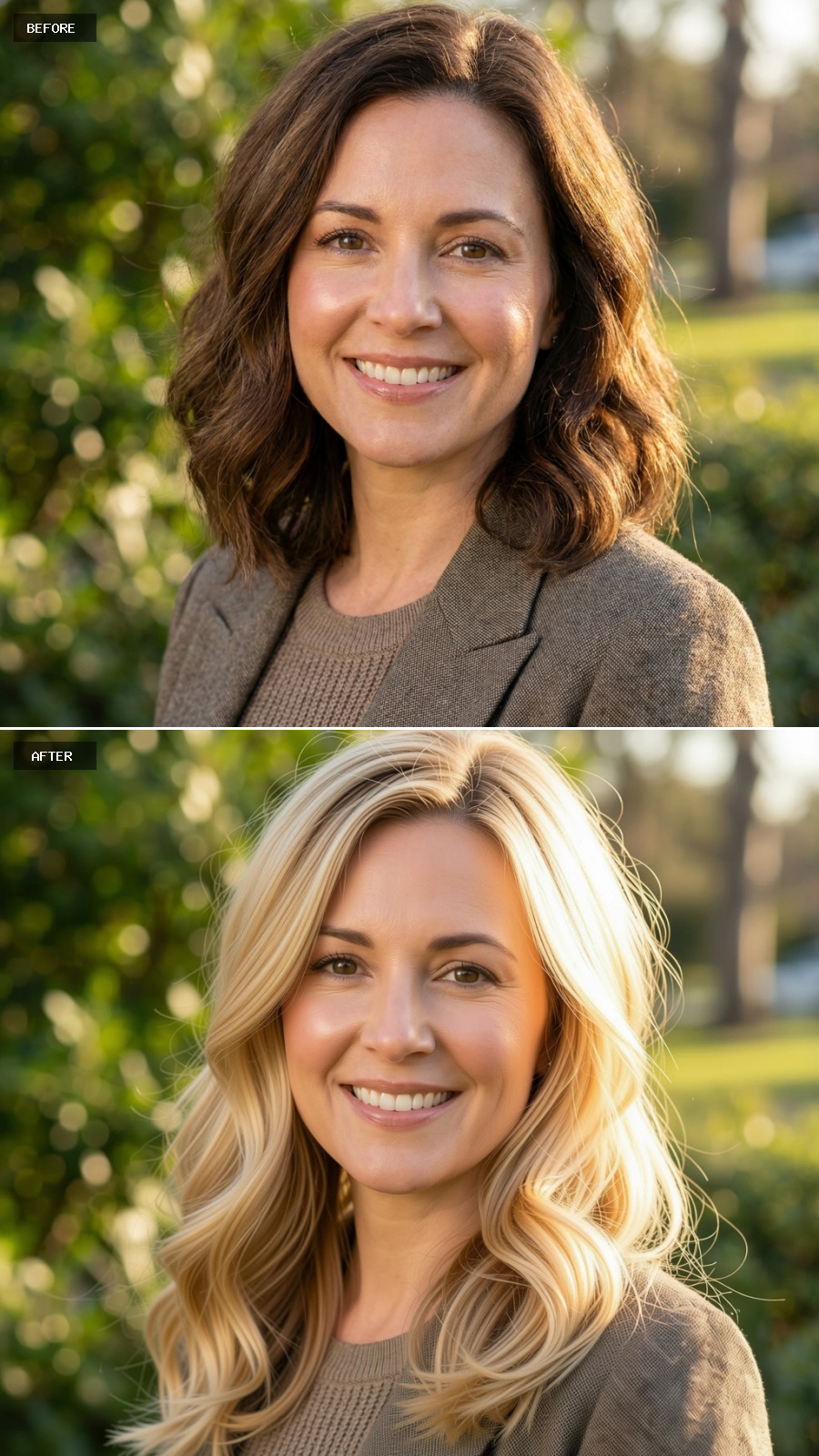
Brown, mid-length waves gave way to blonde, shoulder-grazing layers with visible highlights concentrated through the crown and face-framing sections. The cooler, ashy blonde reads noticeably lighter against the olive-toned knit sweater, which sits the same in both images. What shifted is proportion. The longer wave pattern draws the eye downward, and the added volume at the ends creates a width-to-length ratio that balances her forehead differently than the shorter, darker style did. The colorist clearly placed the lightest pieces closest to the face, letting the mid-lengths stay a warmer gold.
12. Waves Cut Short, Ends Tucked Under, and the Color Finally Has Somewhere to Go
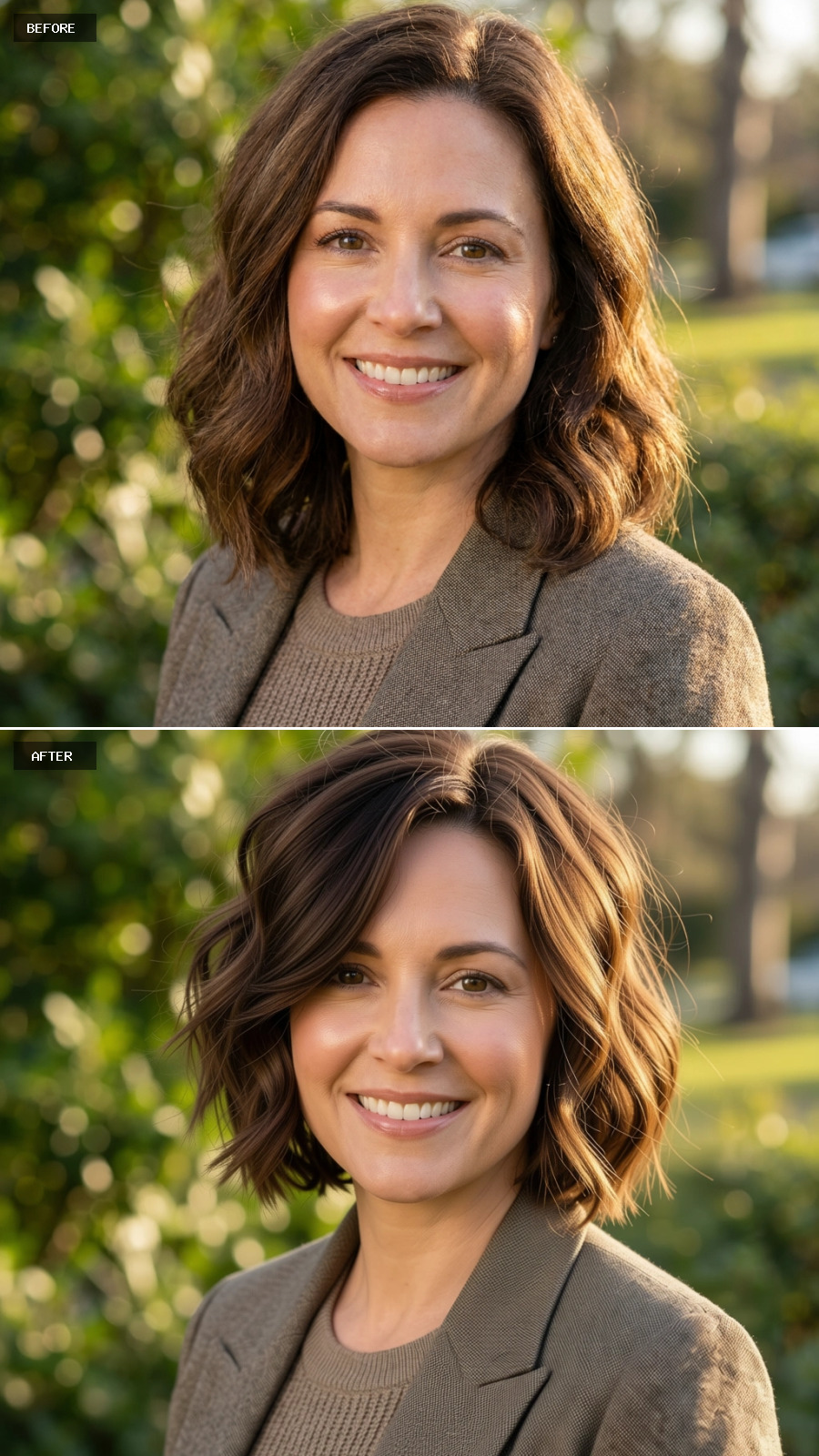
Wavy shoulder-length hair gets reduced to a chin-grazing lob with ends that curve inward rather than fall loose. The cut reads tighter at the jaw, which pulls focus upward. Caramel panels run through the crown, set against a dark chocolate base that keeps the whole thing grounded against her taupe blazer.
11. Highlights Woven Through the Crown Rewrote What Her Blazer Was Saying
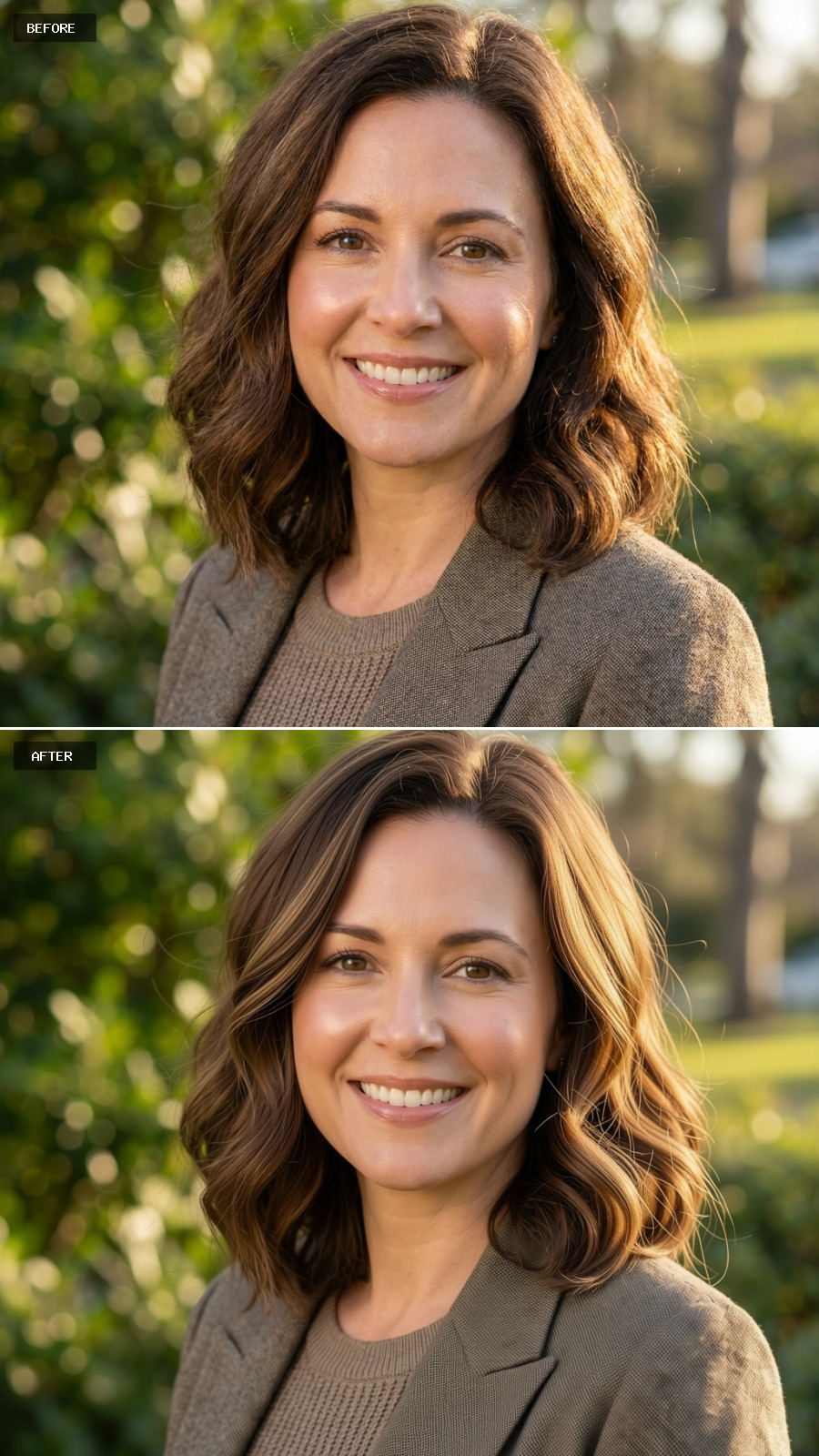
Warm caramel and honey tones run through the mid-lengths and crown in the after shot, replacing what reads as a flatter, more uniform brown in the before. The waves have been reshaped too, with more deliberate curl at the ends giving each section room to catch light. That repositioned volume frames the cheekbones differently. The olive-toned knit sweater under the structured taupe blazer stays identical across both shots, yet the lighter hair pulls warmth out of the fabric in a way the cooler brown simply did not.
Trend Alert: Colorists call the crown placement technique “money lighting” because it mimics exactly where the sun would naturally bleach hair first, which reads as youth rather than artifice. Asking for panels concentrated between the part line and two inches back gives the most visible payoff in photographs and in motion. For women in their forties with medium-length waves, three to five panels through the crown section is typically enough without requiring a full highlight service.
10. Brunette Waves Out, Blonde Layers In — and Her Blazer Stopped Being the Point
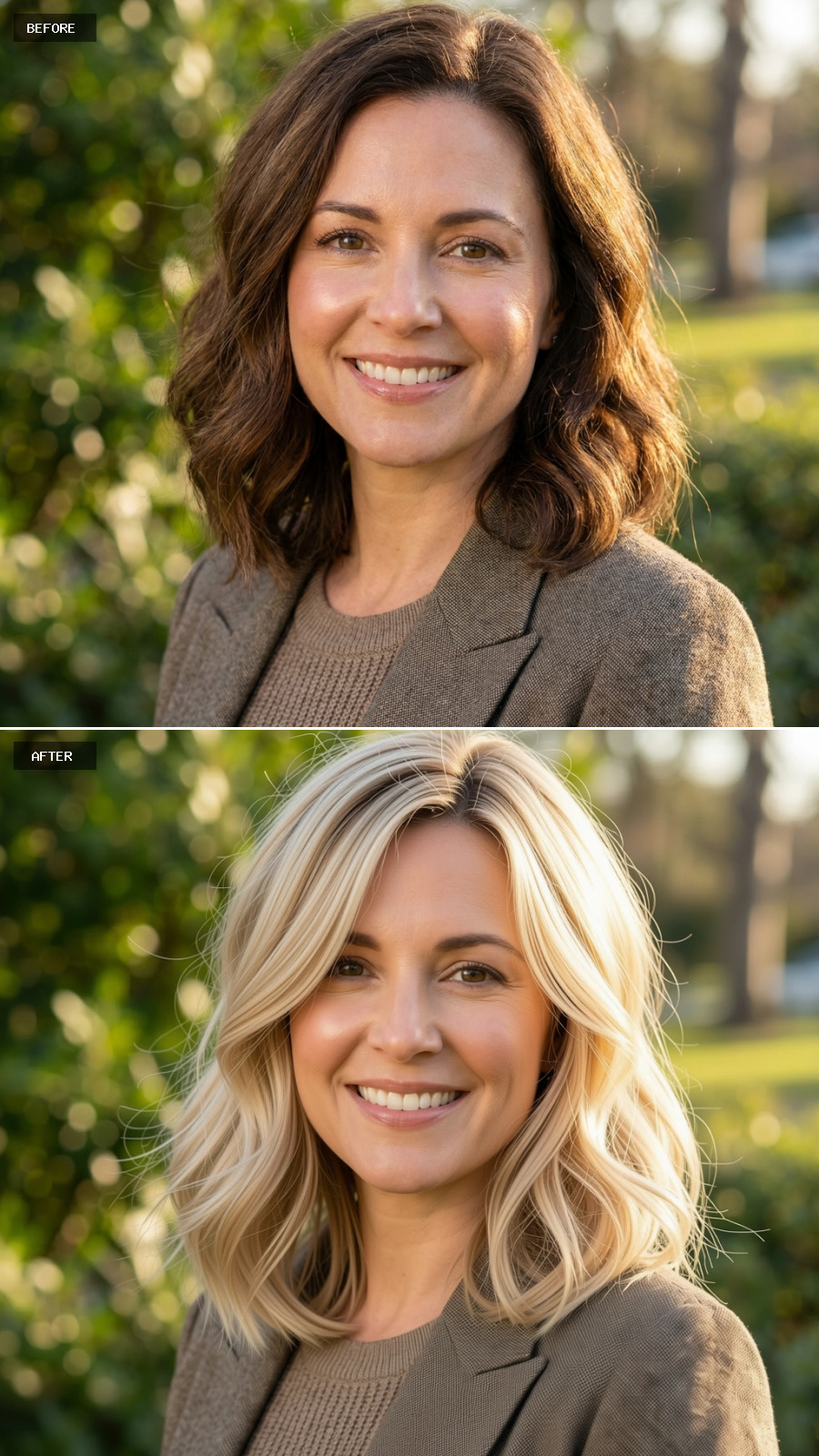
Two photos, same background, same taupe-toned blazer over a ribbed crewneck sweater in a slightly darker taupe. The before shows chin-grazing brown waves with minimal layering and a center part that sits flat against the crown. The color reads cool and muted against the green foliage behind her. In the after, the same cut has been replaced with shoulder-length blonde layers that fall in loose, outward-curling waves. The highlights range from a creamy platinum at the front panels to a warmer honey gold deeper into the mid-lengths.
The color shift pulls warmth forward and makes the blazer’s woven texture register more clearly. What reads as flat in the before now has dimension because the hair is doing the contrast work. The layers break at the collarbone, which creates movement that the original cut didn’t offer. Her face reads wider through the cheekbones in the after, not because of any cut change, but because the blonde reflects more light back toward the center of her face.
9. Curtain Bangs and Darker Roots Rewrote the Angle of Her Whole Face
❤️ Would you like to save this?
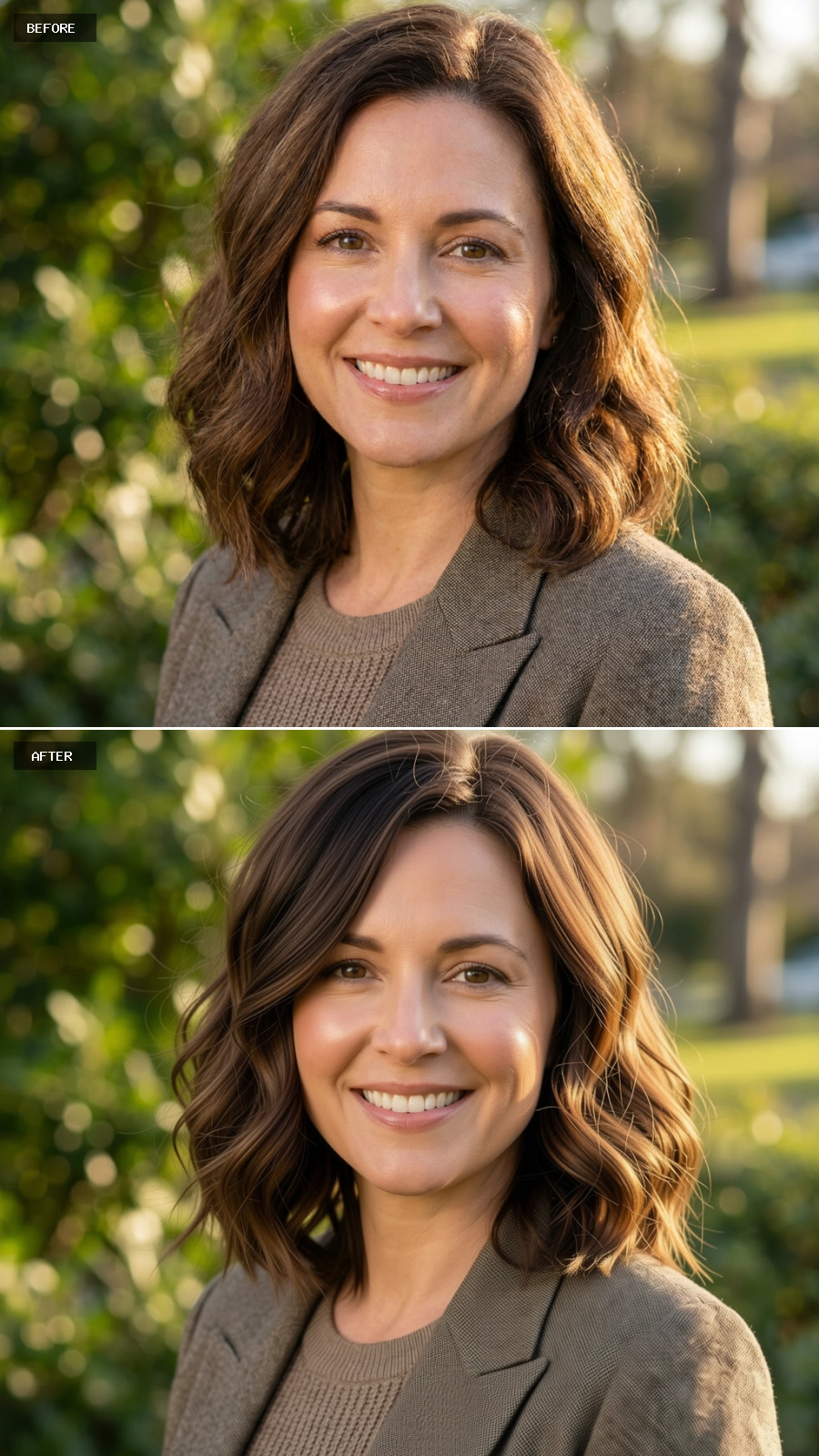
Her hair shifted from a center-parted wave with uniform brunette color to a side-swept style with curtain bangs that fall just past the brow bone. The roots read darker now, a deep espresso brown, while the mid-lengths warm into a chestnut tone with scattered highlights. The bangs pull the eye down and inward, narrowing the forehead visually. Her khaki-toned blazer over a ribbed knit crewneck reads the same, but the face framing does different work entirely.
8. Dark, Straight, and Cut to the Collarbone — the Waves Were Never the Problem
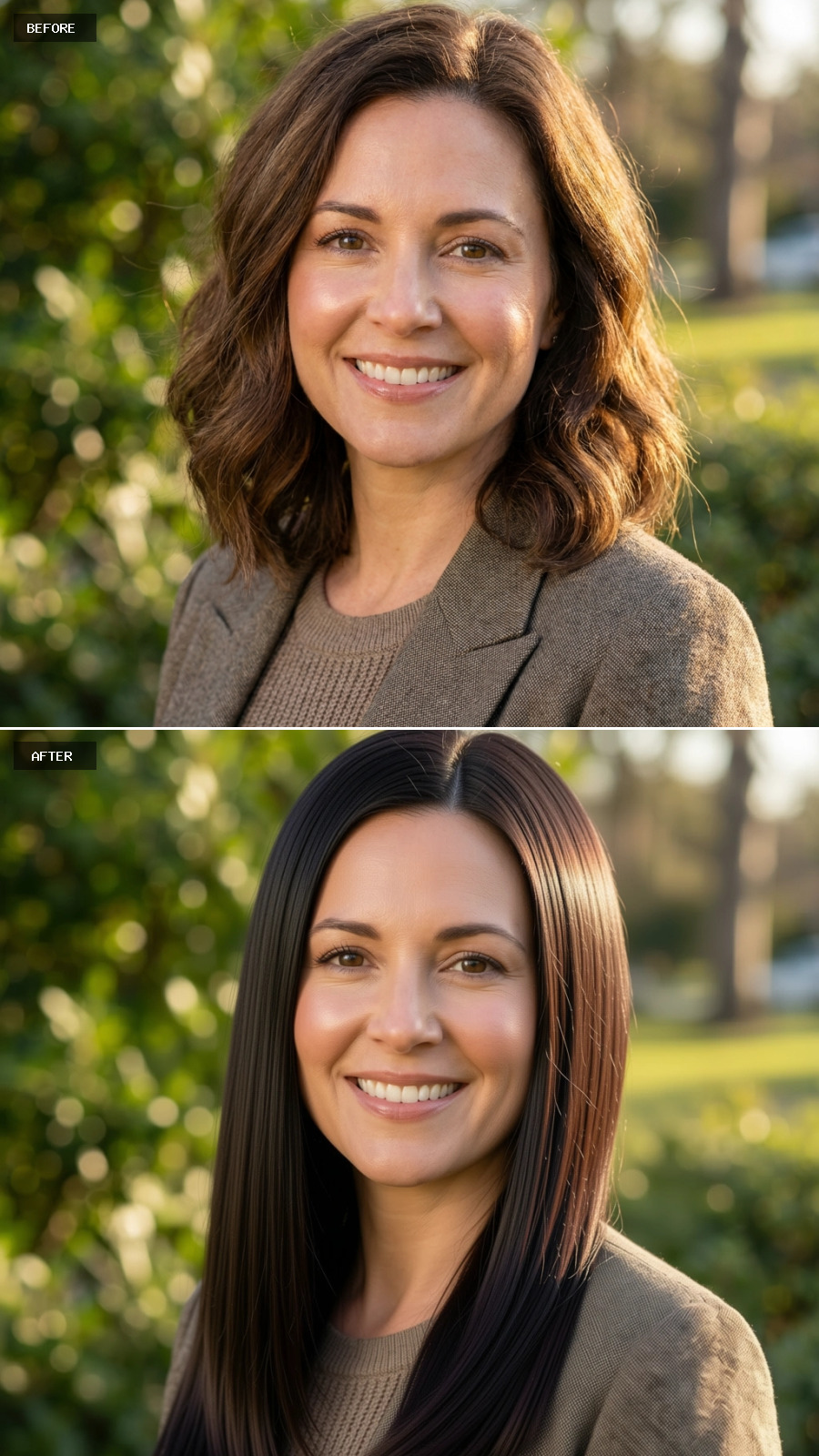
Medium brown waves gave way to jet-black hair worn long and pin-straight, parted cleanly at the center and falling just past the collarbone. The shift darkens her contrast level considerably, pulling the hazel eyes forward in a way the lighter, warmer waves did not. She kept the same olive-toned knit under a mid-weight tweed blazer, which confirms the clothing changed nothing. The hair did all of it.
7. Highlights Pulled to the Front Sections Changed the Math on Her Entire Face
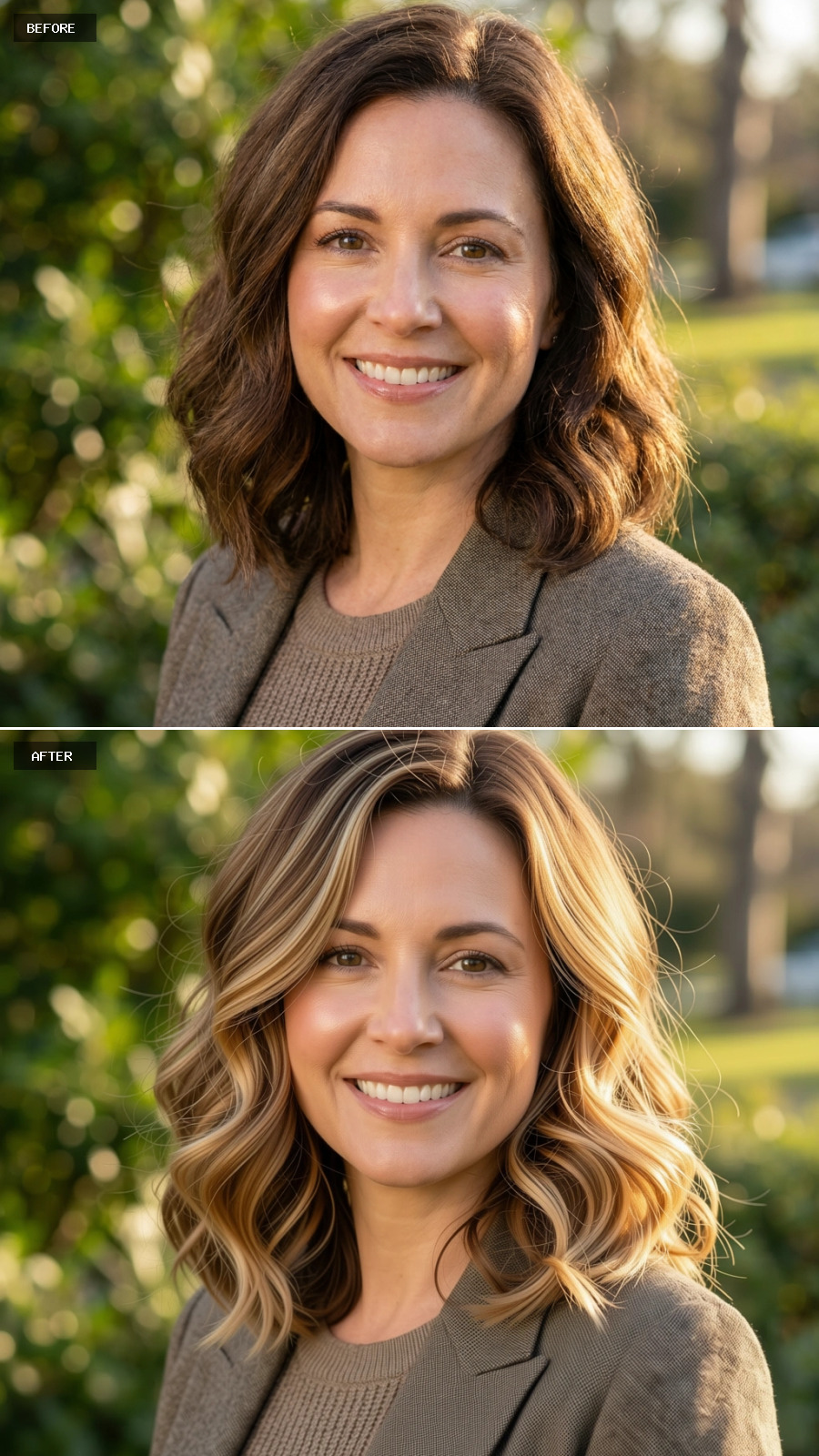
Dark chestnut waves with no color variation sat close to the face in the before, reading flat against the taupe blazer and ribbed crew-neck sweater underneath. The after introduces a balayage pattern weighted heavily toward the face-framing sections, with golden blonde panels pulling from the hairline back through the mid-lengths, leaving the roots in a medium brown for contrast. The curl pattern also opened up, switching from a compressed wave to a looser, wider spiral with more separation between sections. That combination of lighter tone at the front and increased volume at the sides effectively widened the visual frame around her face.
6. Short Crop, Side Sweep, and the Color Got Three Shades Deeper
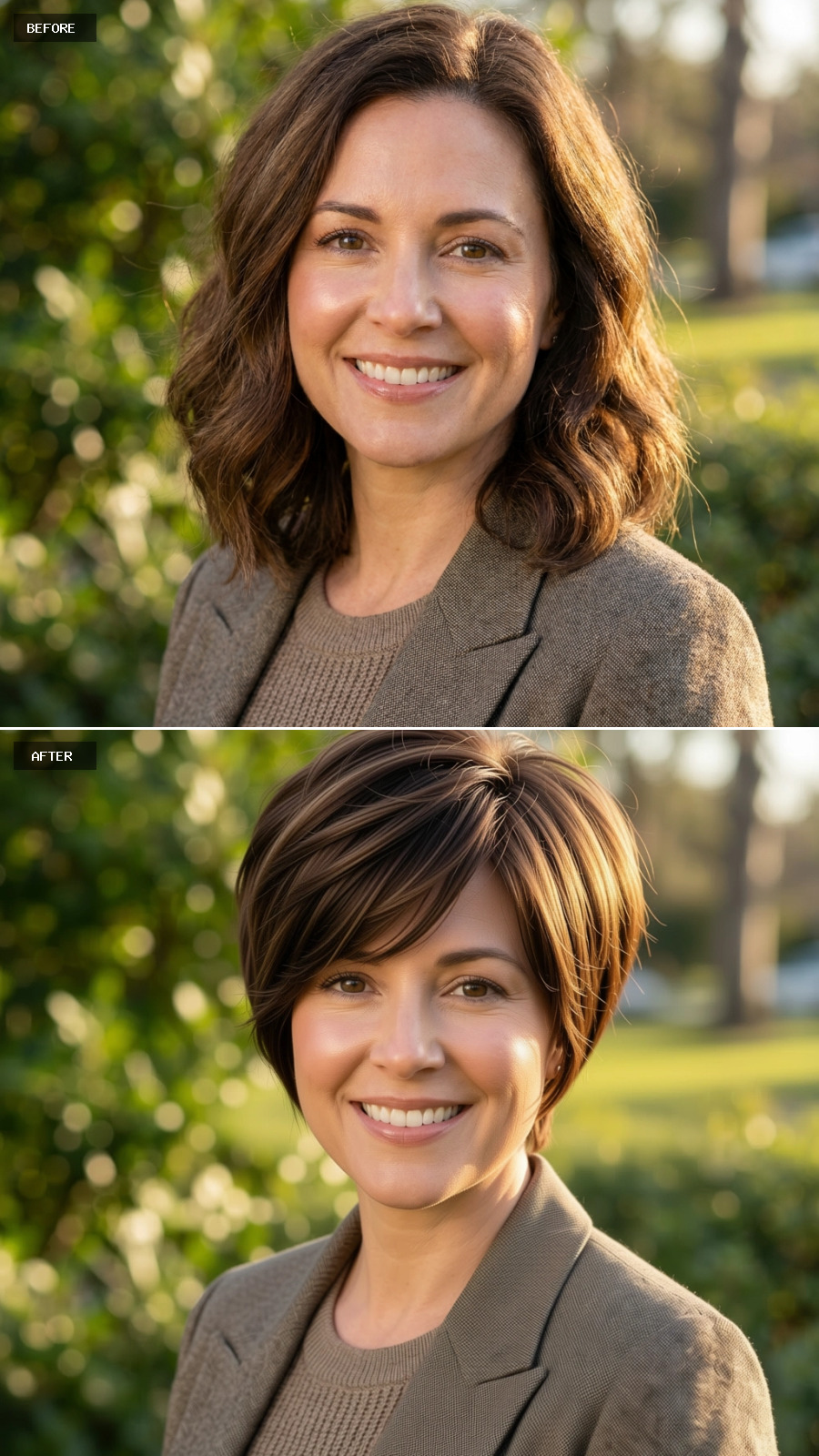
She wore medium-length waves with warm auburn tones in the before, paired with a taupe knit sweater under a textured blazer in the same neutral family. The after introduces a cropped pixie-adjacent cut with a pronounced side sweep, the layers cut to fall just past the ear on one side. The color shifted to a cooler, deeper brown with subtle caramel panels pulled through the top sections only, which draws the eye upward and lengthens the neck line considerably.
5. Blonde Layers Replaced the Brunette Entirely, and the Blazer Finally Took a Back Seat
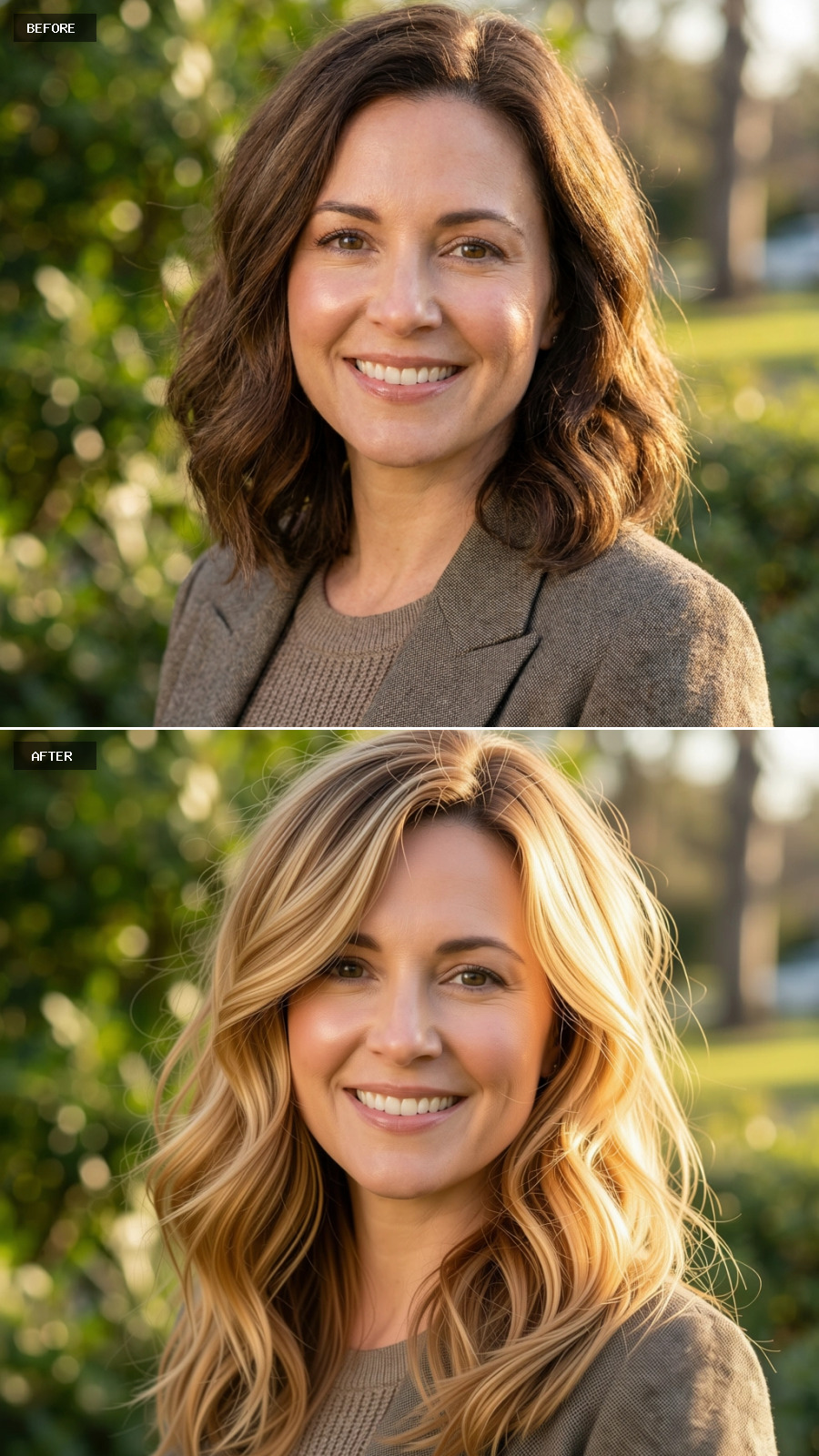
Golden blonde with visible warm and cool variation throughout replaces what was a solid medium brown cut with minimal layering. The “after” shows panels ranging from honeyed gold near the roots to near-platinum at the ends, styled into loose, face-framing waves that fall past the collarbone. That extra length draws the eye down and away from the taupe blazer, which reads as background texture rather than the focal point it was before.
Did You Know: Colorists refer to the technique of blending warm and cool tones within a single blonde result as “dimensional blonde,” and it prevents the flat, one-note look that can age hair color significantly. Achieving it requires at least two different lightening formulas applied in the same session, one warmer at the root zone and one cooler through the mid-lengths and ends. Asking your colorist specifically for dimensional placement rather than a single all-over toner is what separates a lived-in result from a flat one.
4. Caramel Panels Shifted Forward and the Cut Finally Framed Her Face
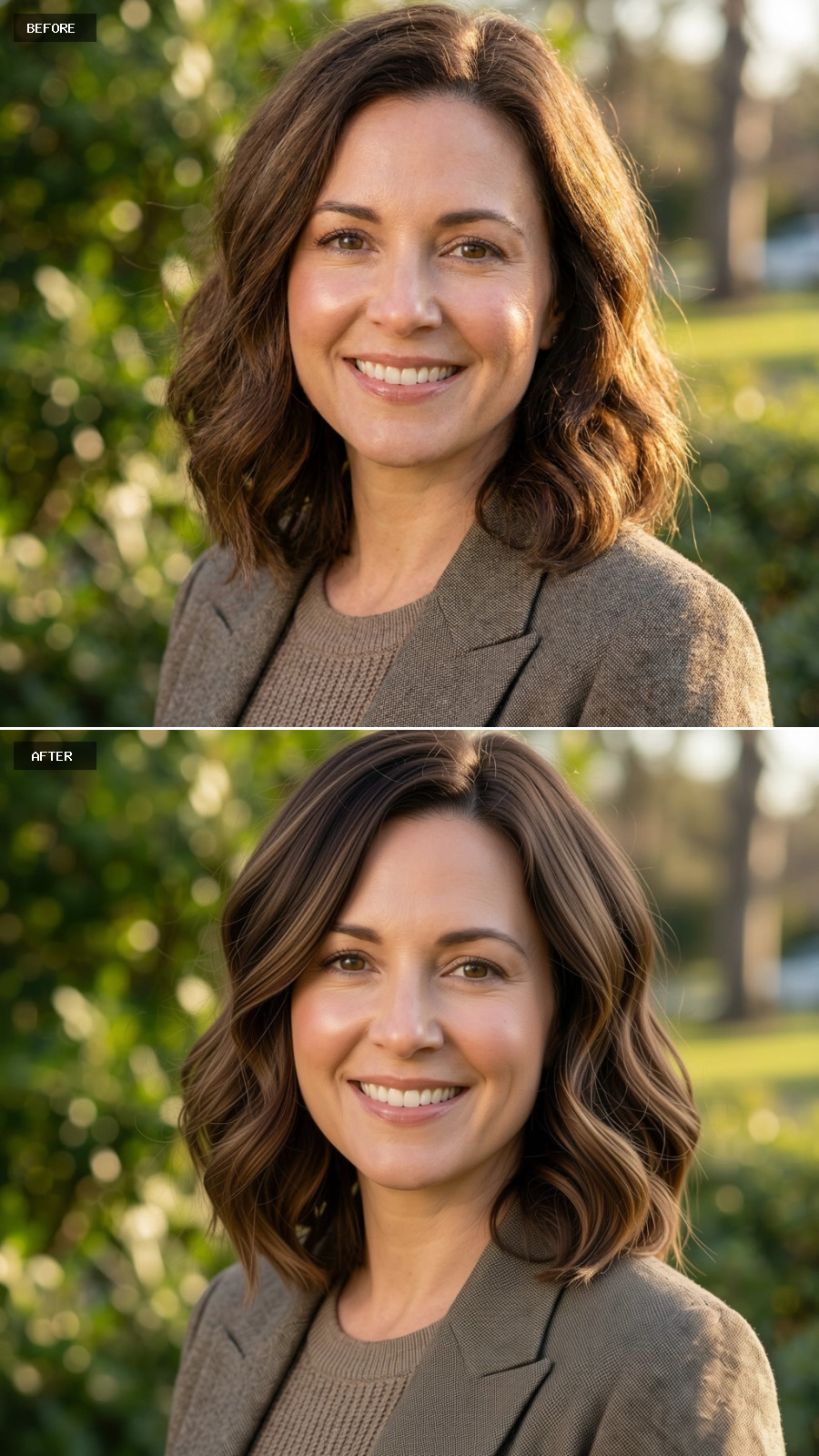
Before, the hair reads as a single mass of warm brunette, the waves breaking loosely past the collarbone with no clear perimeter and volume distributed evenly from root to end. The khaki blazer over a ribbed knit crewneck in the same taupe family pushed the whole look toward neutral without any contrast point. After, the cut tightens just above the shoulder, the ends styled into defined curls rather than open waves, and caramel highlight panels are placed specifically at the front sections, pulling light directly toward the cheekbones.
3. Straight Blonde Bob Replaced Brunette Waves and Rebalanced the Whole Portrait
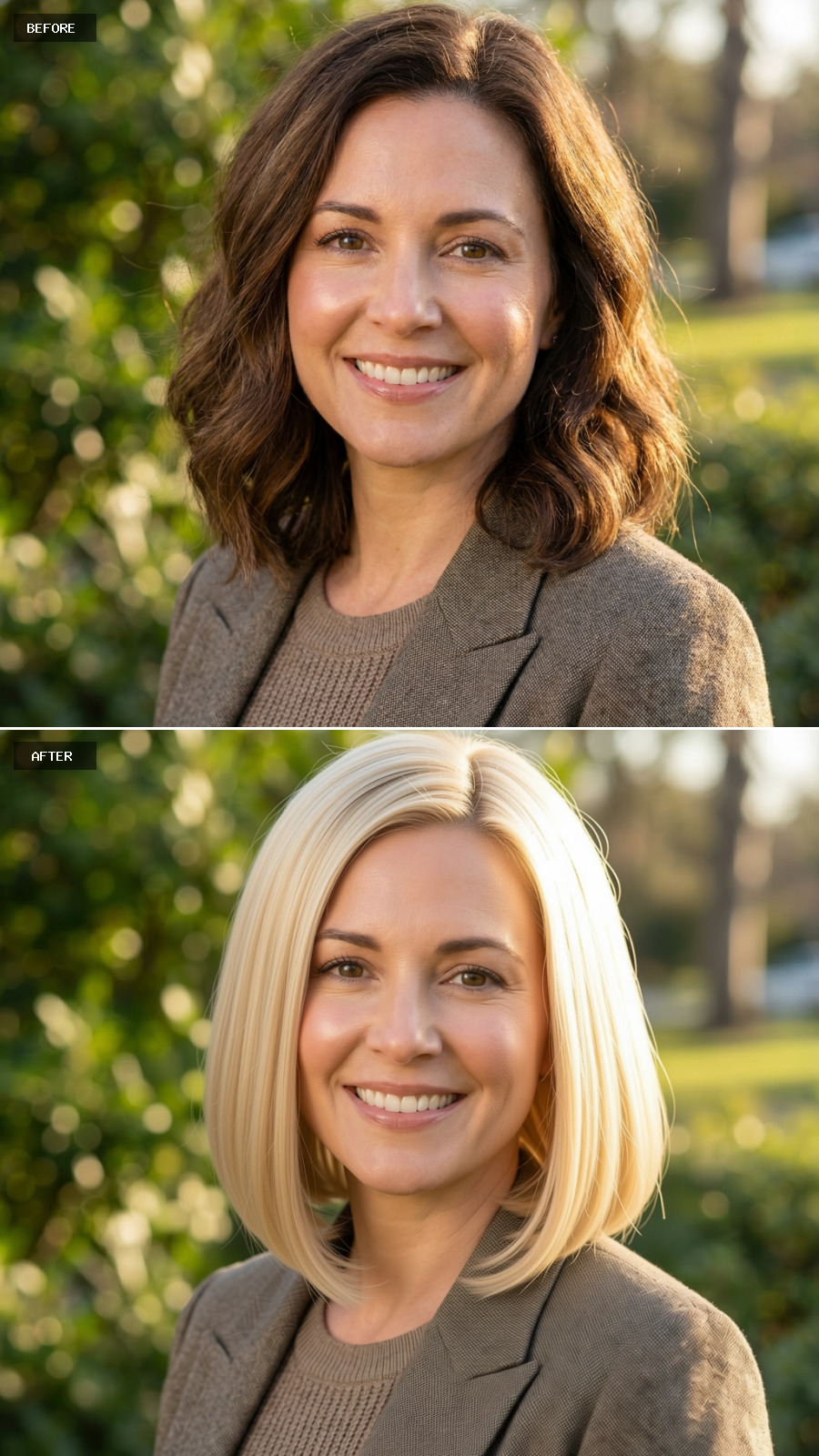
Straight, platinum-to-cream blonde hair cut into a blunt bob that grazes the collarbone replaced shoulder-length brunette waves with visible movement. The new length sits heavier and falls without breaking, which pulls the eye down the face rather than outward across the cheeks. Both photos show the same taupe knit crewneck layered under a mid-weight linen-blend blazer in warm stone, so the clothing contribution stayed fixed. What shifted was proportion. The bob’s blunt perimeter and flat texture create a vertical frame, and the pale tone bounces light across the jawline in a way the darker, layered wave pattern never could.
2. Darker Roots and Caramel Ends Rewrote Every Angle the Camera Was Catching
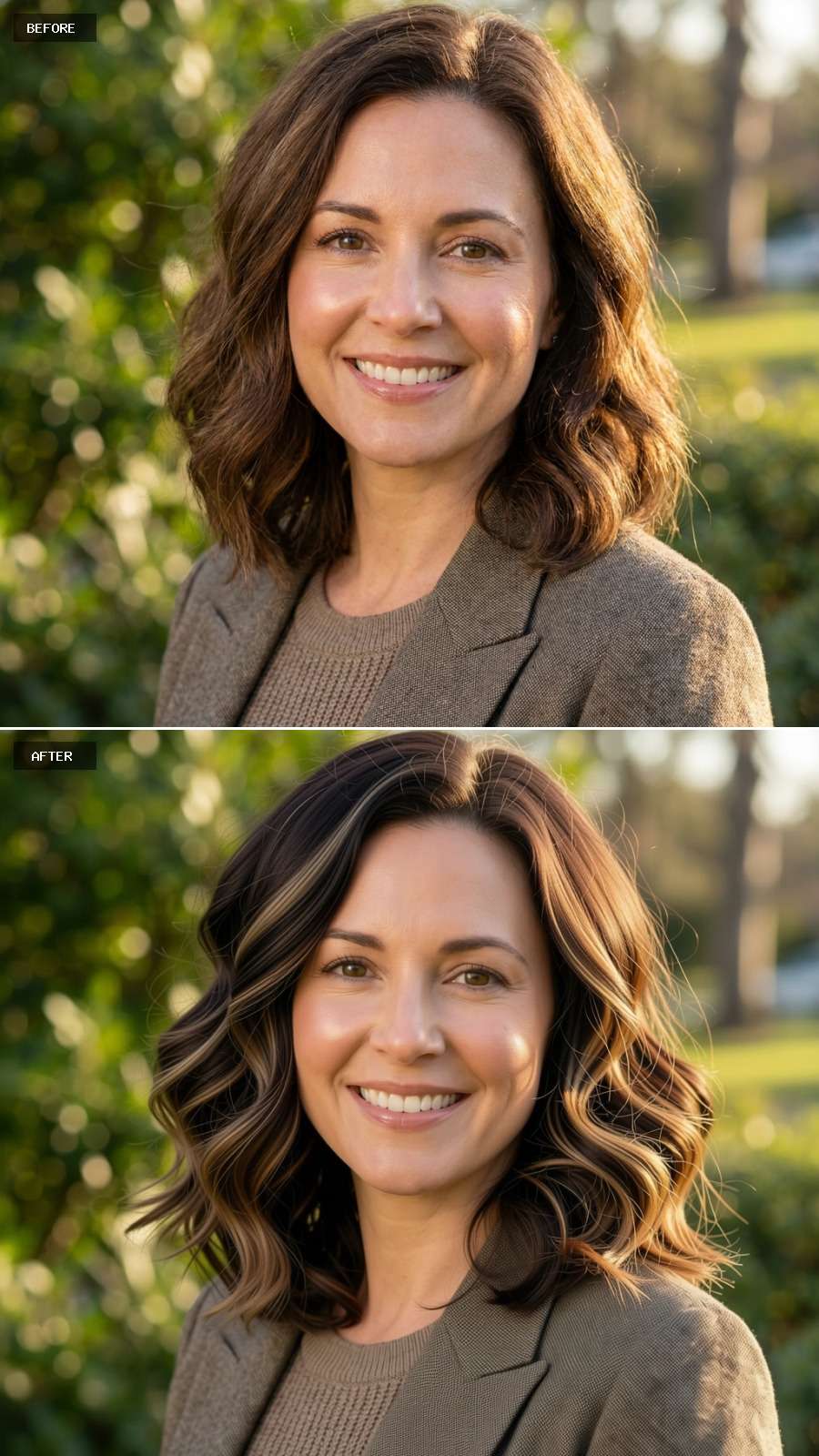
Soft brown waves with uniform color read as flat in outdoor light, even with the blazer’s textured weave working in the frame’s favor. The after version introduces a dark espresso base at the roots that fades into caramel and honey panels concentrated toward the ends and front sections. The shift in depth makes the waves register as actual waves rather than a single-tone mass. Those curled ends now carry contrast, so the movement reads clearly from root to tip. The blazer, a mid-weight taupe with a notched lapel, stays exactly the same, but the color gradient in the hair pulls focus upward and holds it at the face rather than dispersing it across the shoulders.
1. Bangs Cut to the Brow and Waves Dropped Past the Shoulder Reframed Everything
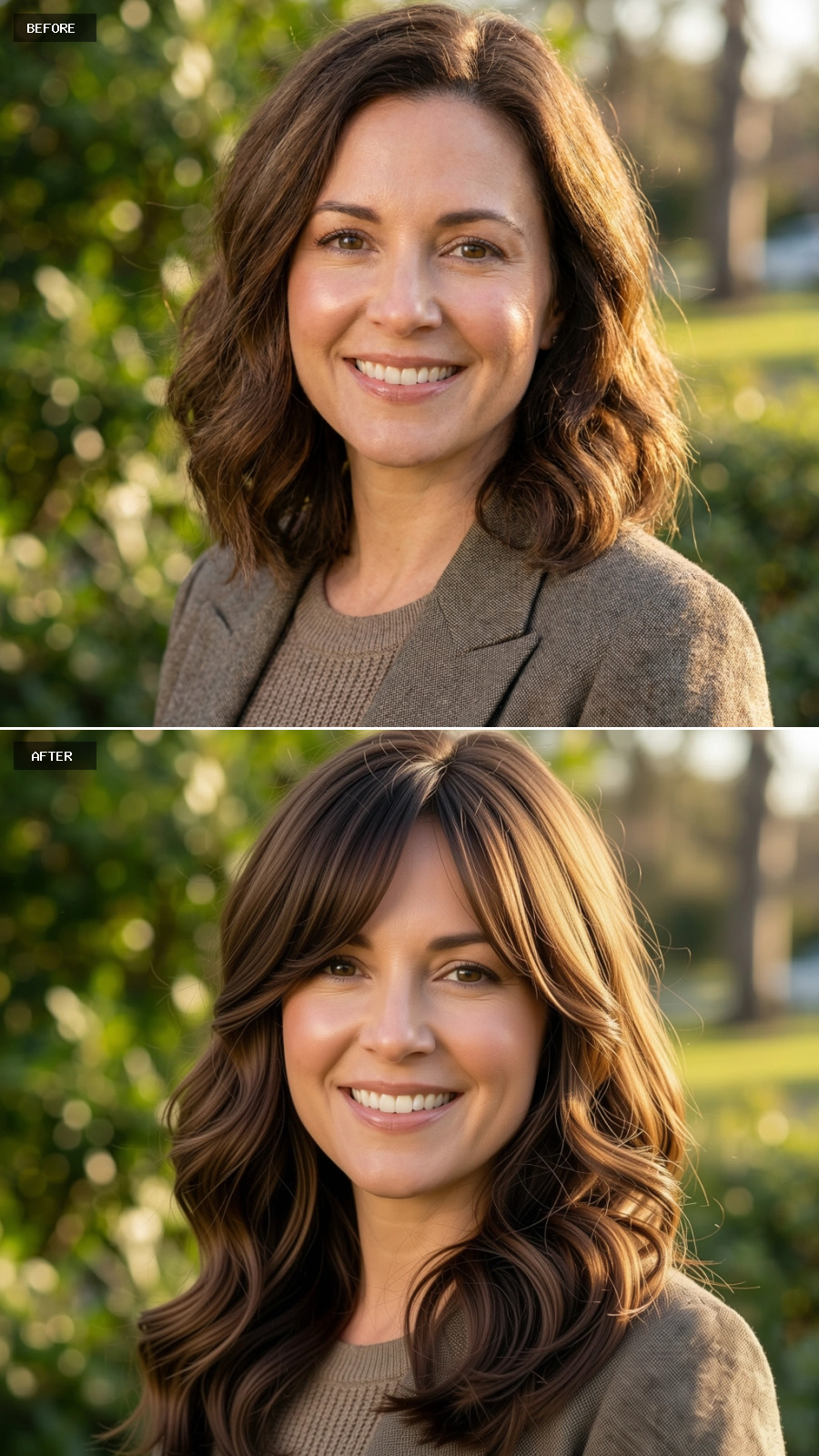
Brown-to-caramel balayage with visible root shadow runs through shoulder-length waves that curl outward at the ends in the after photo. Curtain bangs split at center and fall just at brow level, pulling attention inward toward the eyes rather than outward toward the hairline. The added length and the bend in each wave section give the face a vertical pull that the before photo, with its shorter, more uniform wave, simply wasn’t producing.
The before shows a polished, chin-grazing wave with even brunette color and a blazer collar that reads more corporate than personal. Removing that collar from the visual equation by lengthening the hair so it falls past the shoulders changed the crop entirely. A medium-knit sweater in taupe sits underneath in both shots, but in the after it reads like a deliberate choice rather than background noise.