
❤️ Would you like to save this?
At 44, she walked into the salon with a short brunette pixie and walked out with something completely different. That single appointment became the starting point for this before-and-after roundup, which tracks how one woman's hair evolved across multiple looks over time.
A pixie cut is a confident choice, but it does come with limits. Styling options narrow, length takes months to return, and the face framing that longer cuts provide simply isn't there. For women in their 40s who are growing out a pixie or considering a change, seeing real results on a real person at a similar age makes a difference.
What follows is a collection of hairstyle options photographed against that pixie starting point. Some looks involve added length, others play with color, texture, or cut. Each one offers a clear visual contrast to the original short brunette baseline. The goal is practical inspiration, not fantasy, so every style here has been chosen with the realities of hair in your 40s in mind, including density changes, gray blending, and how much daily effort a look actually requires.
FYI, thanks to AI imagery software, we’re able to create very specific fashion and hairstyle examples to illustrate the points being made. In some cases, imagery is exaggerated to hammer home the point. Also, assume links that take you off the site are affiliate links such as links to Amazon. this means we may earn a commission if you buy something.
31. From Pixie to Bob: One Length Change That Shifts Everything
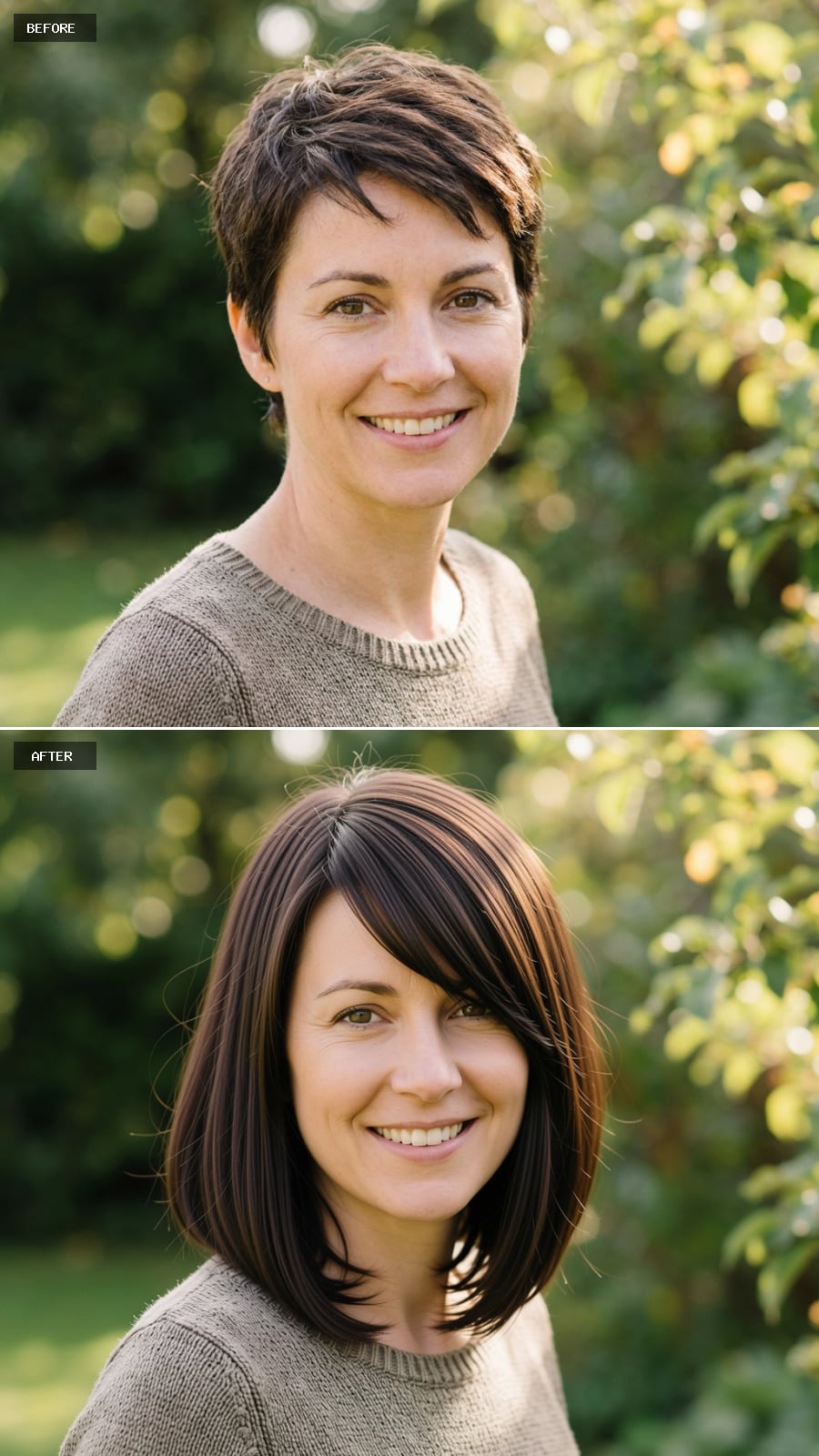
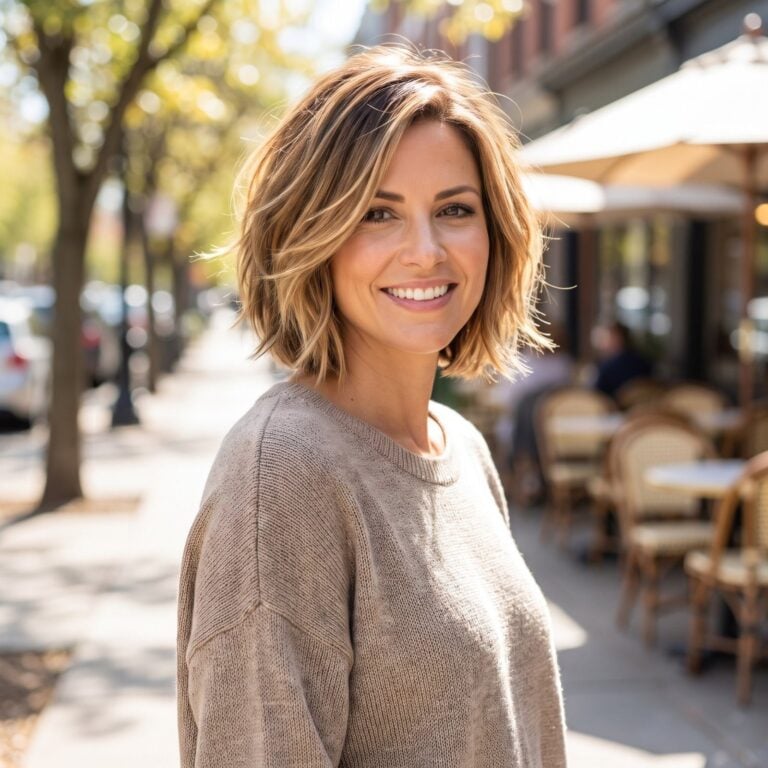
In the before photo, she wears a cropped brunette pixie with close-cut sides and wispy, side-swept bangs that sit just above the brow. The cut reads neat and low-maintenance. In the after, the hair has grown and been styled into a chin-length bob with deep side-parted bangs that sweep across the forehead. The color shifts from a lighter, more uniform brown to a deeper espresso with warm caramel highlights concentrated along the part and through the mid-lengths. The added weight and length soften her jaw line and draw the eye downward. Her olive-toned knit sweater, with its wide ribbed crewneck and medium-weight texture, reads the same in both shots, which makes the contrast between cuts all the more direct.
30. Longer, Lighter, Softer: How a Bob Reads Completely Different at 44
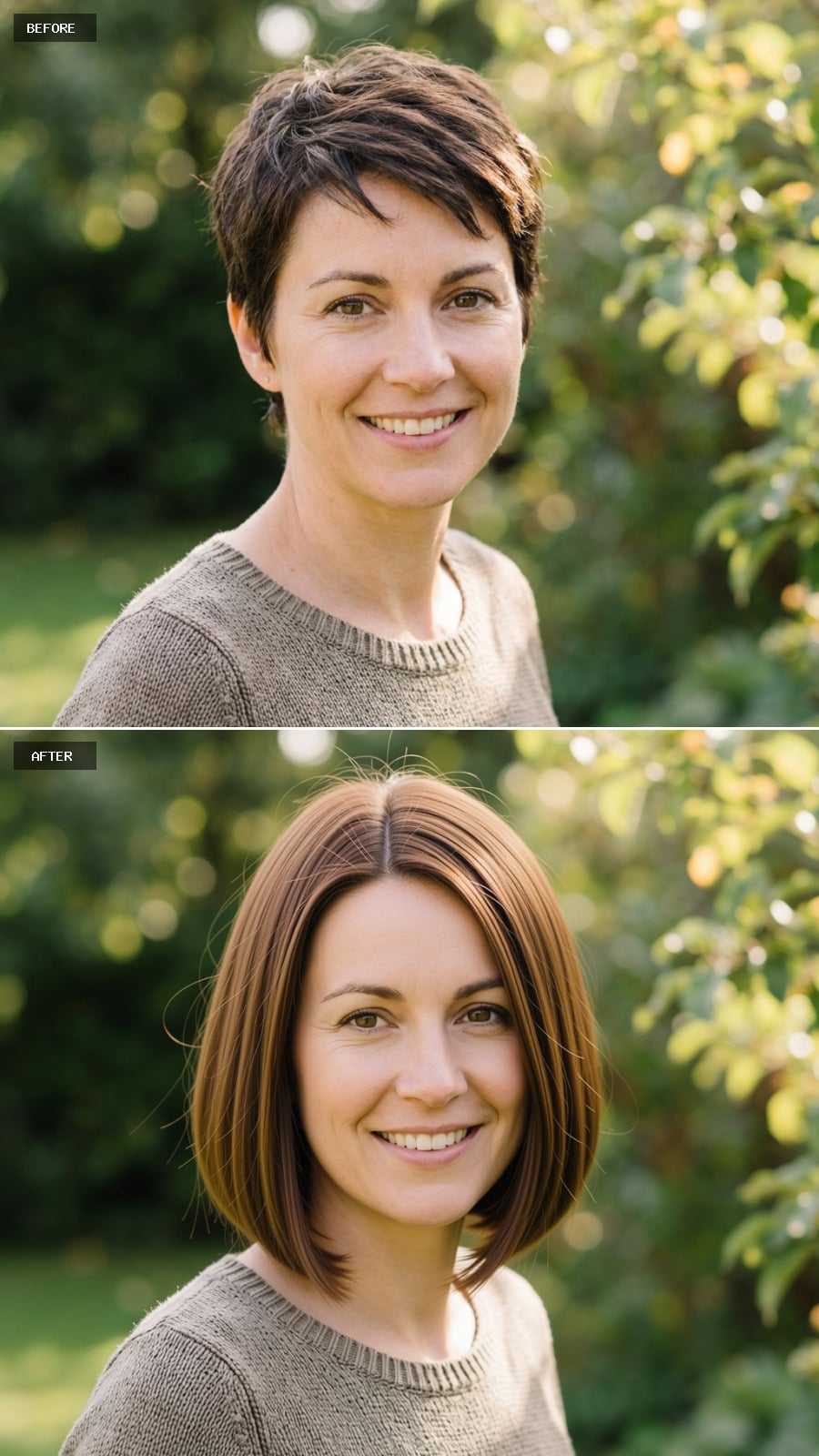
Her "before" pixie sits close to the skull, cut tight at the sides with dark brunette pieces pushed forward at the forehead. It reads sharp, deliberate, low-maintenance. The "after" shifts the entire weight of the face by adding length down to the jaw, with a center part and warm chestnut tones that pull noticeably lighter toward the ends.
The bob in the lower image falls in a single clean line, sitting just below the chin. The color graduation moves from a deeper brown at the root to a caramel-touched mid-shaft, which softens the contrast against her skin tone considerably. Pieces are blow-dried smooth, with the ends tucked slightly inward rather than flipped out.
She wears the same ribbed, crew-neck sweater in a muted taupe-olive in both photos, which makes the hair read as the only variable. That consistency makes the difference in perceived face shape and warmth unmistakable.
29. Wavy, Sun-Caught, Shoulder-Length: What Growing Out a Pixie Actually Looks Like
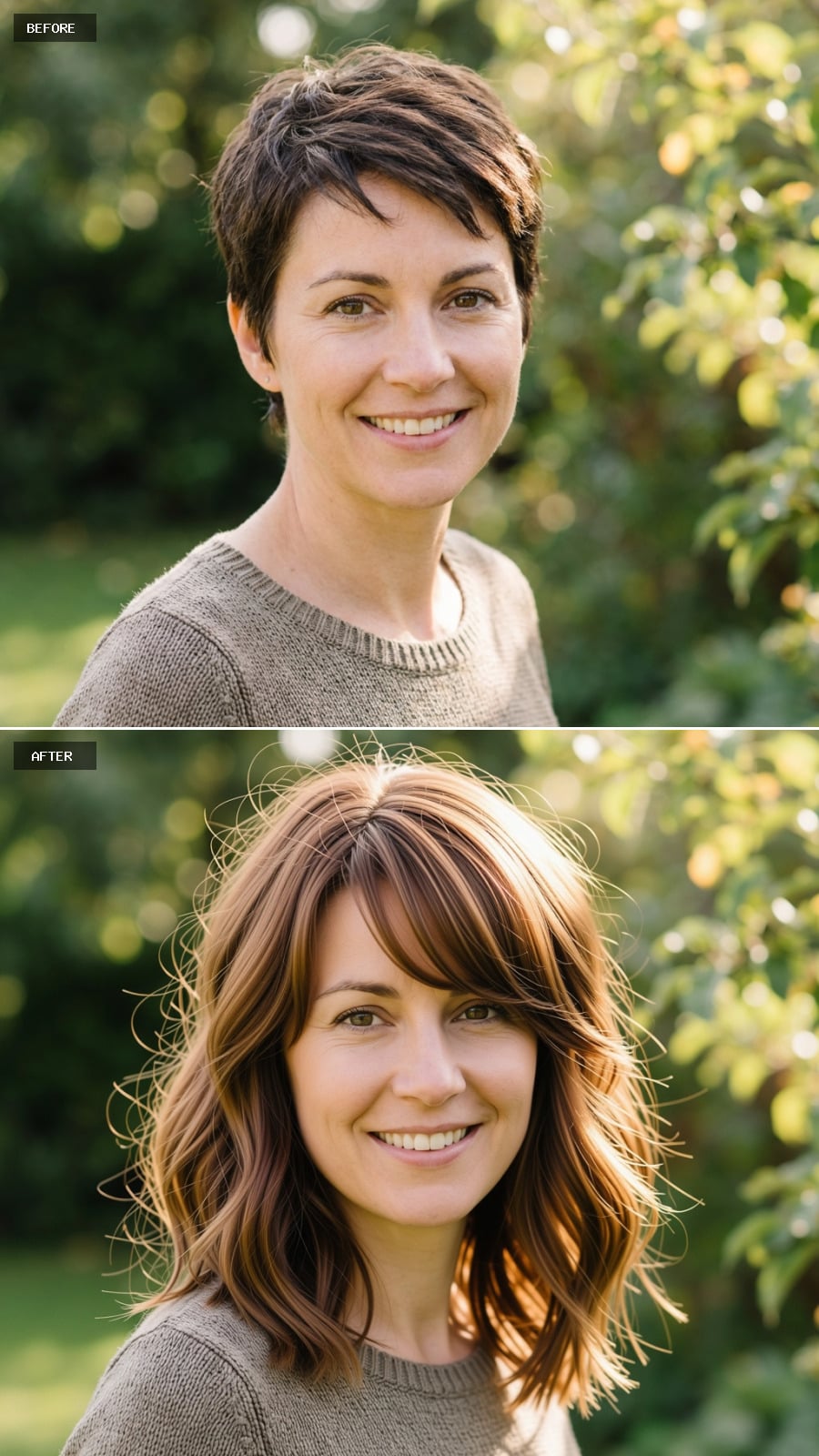
Side-swept bangs cut at cheekbone level replace the cropped fringe from the before photo, and the shift in proportion alone changes how the face reads. The hair falls to collarbone length in soft waves, with caramel and honey highlights concentrated toward the ends, pulling warmth forward against the cooler dark-brown root. Texture runs throughout: loose bends rather than tight curls, with a few flyaways catching backlight from what appears to be late-afternoon sun filtering through tree cover. The ribbed crewneck sweater in olive-taupe carries over from the before shot, grounding both images as the same person at the same moment in life, just with more length and considerably more light in the hair.
28. Blonde, Wavy, Shoulder-Length: What a Color Shift Does to the Whole Face
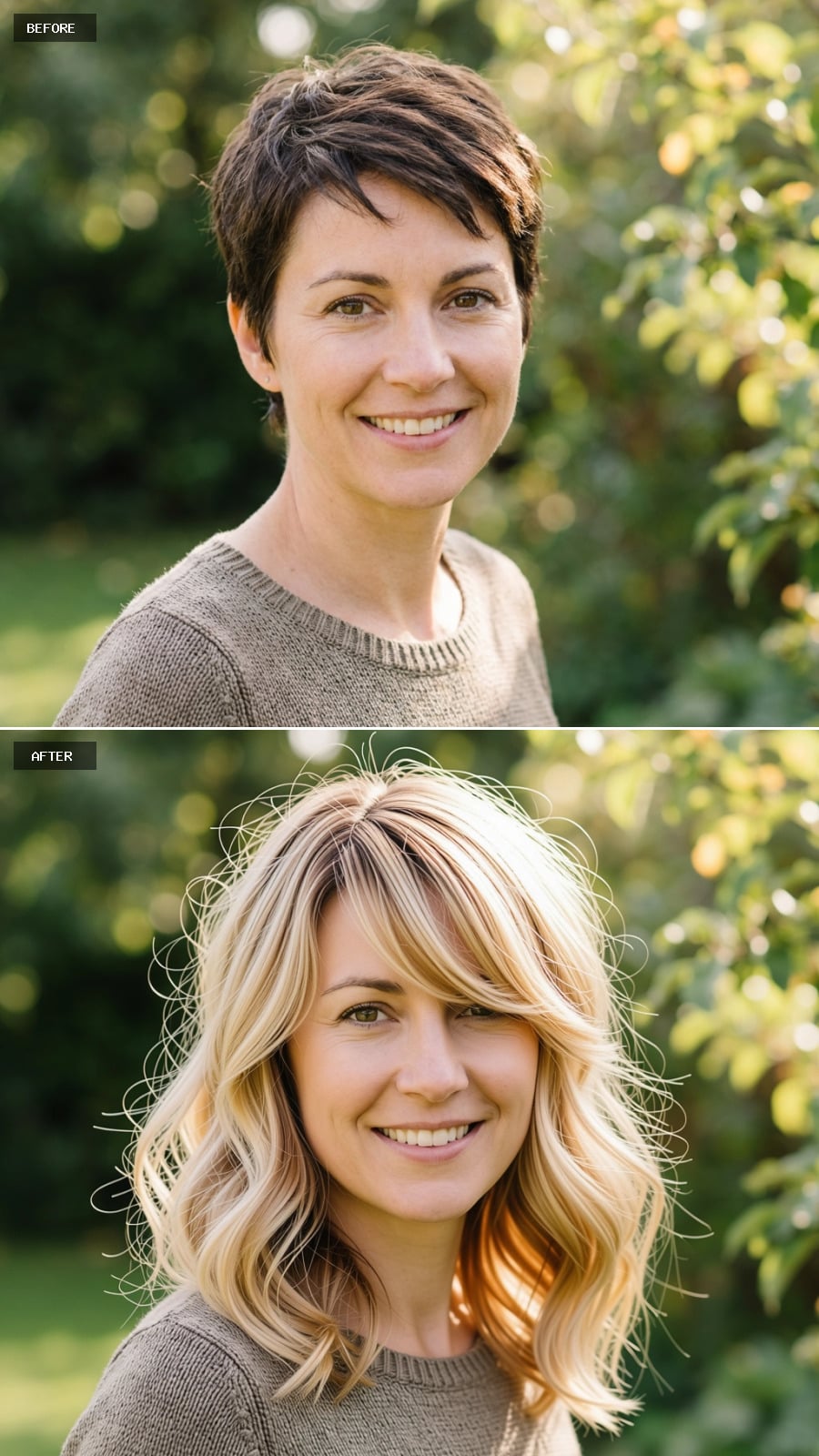
Switching from a dark pixie to blonde, shoulder-length waves does something specific to facial structure: it pulls the eye outward and downward, softening the jaw line and adding visual width at the collarbone. The waves here are loose, not barrel-curled, with a slight root shadow that keeps the color from reading flat. Side-parted with a sweeping fringe, the length grazes the shoulder and moves rather than sits.
The sweater carries over from the before photo, which makes the contrast sharper. Same taupe ribbed knit, same crew neckline. Only the hair changed. That single variable shifts how the face reads in a photograph, adding roundness and warmth that the pixie, precise and close-cropped, did not suggest.
Fit Tip: Growing out a pixie while shifting to blonde works best when done in stages, adding length before committing to full lightening. The root shadow visible here is not just a stylistic choice but a practical buffer that protects hair health during a longer grow-out. Asking a colorist for a lived-in blonde rather than a uniform blonde keeps the result looking intentional at every stage.
27. Dark, Straight, Shoulder-Length: How One Cut Reads a Decade Younger
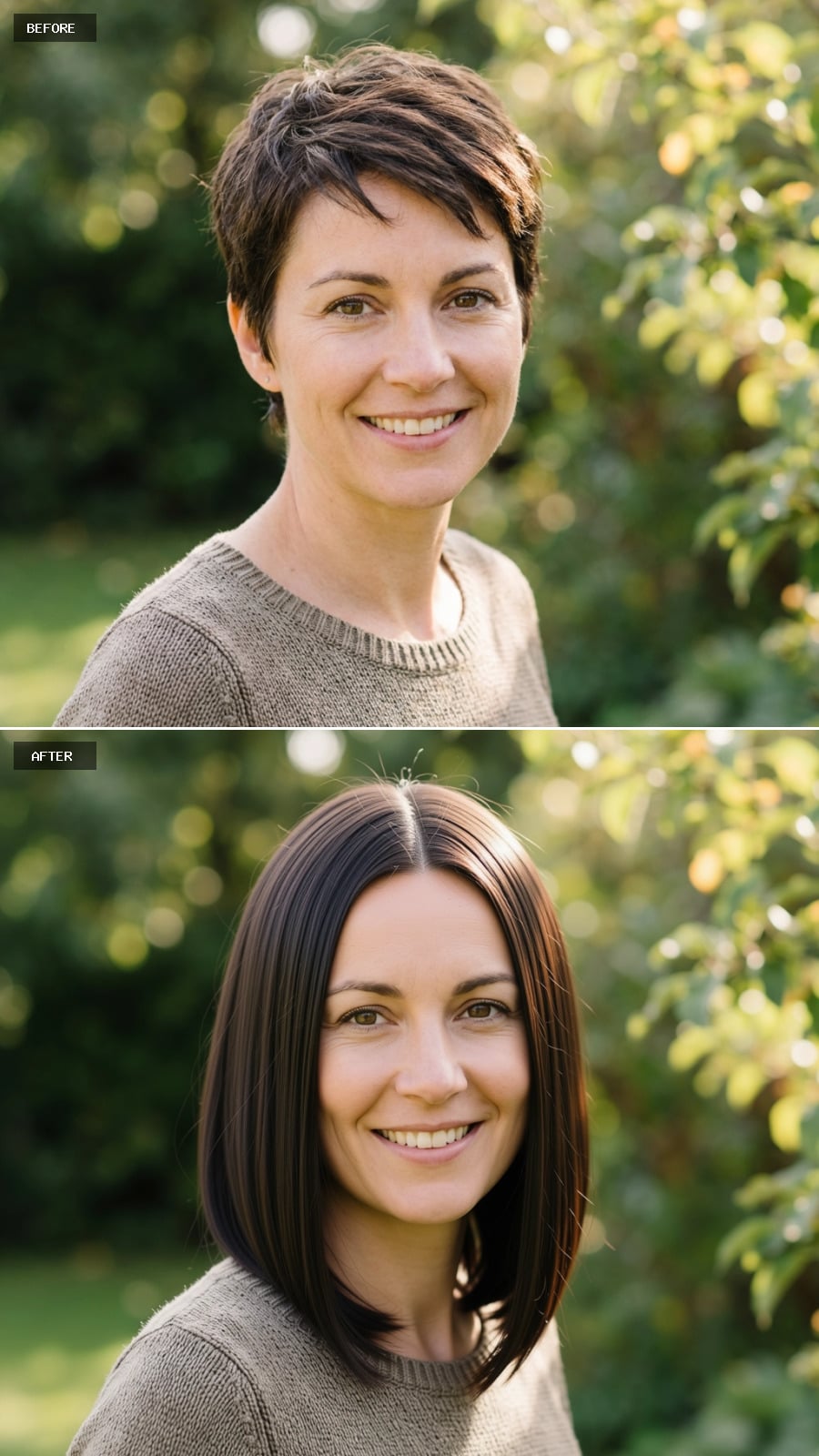
Swapping a cropped pixie for a blunt-ended bob with a center part does something specific to face shape: it lengthens. The hair falls just past the collarbone, cut straight across with no layering, which adds weight and visual softness around the jaw. The color reads almost espresso at the roots, warming to a dark chestnut where light catches the mid-shaft. Paired with the same oatmeal-toned knit sweater, the contrast between the deep brown and the muted fabric pulls attention upward. Clean, direct, deliberate.
26. Caramel Highlights, Wavy Ends, Shoulder Length: What the Grown-Out Version Delivers
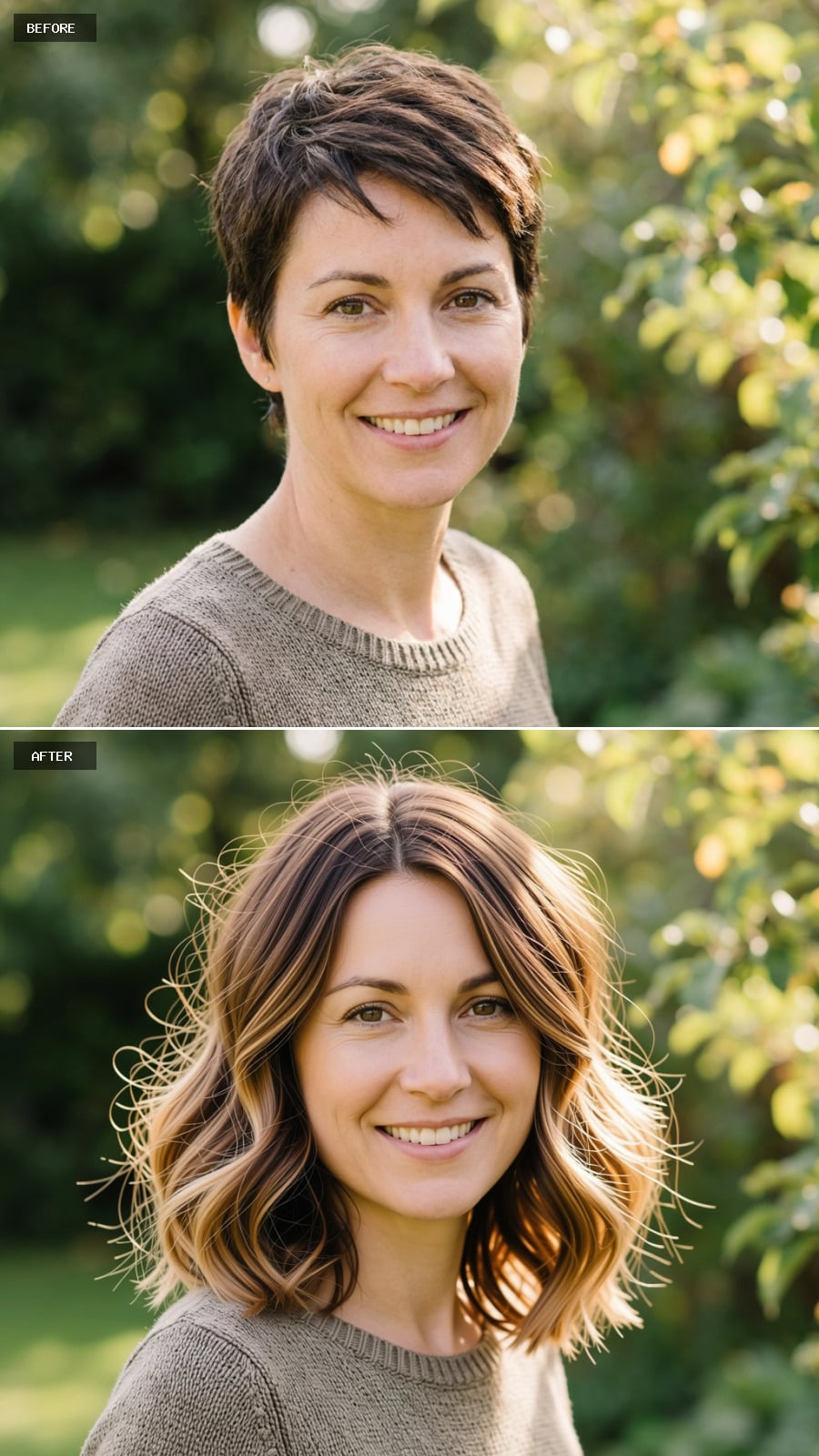
Wavy, chin-grazing layers catch the light differently when the ends have been lifted to a warm caramel against a darker brown root. The ribbed crewneck sweater in olive-grey reads the same in both photos, but the added volume at the jaw shifts the whole proportion of the face. Loose, tousled waves do the structural work here.
25. Bangs, Bob Length, and What That Combination Actually Does to Bone Structure
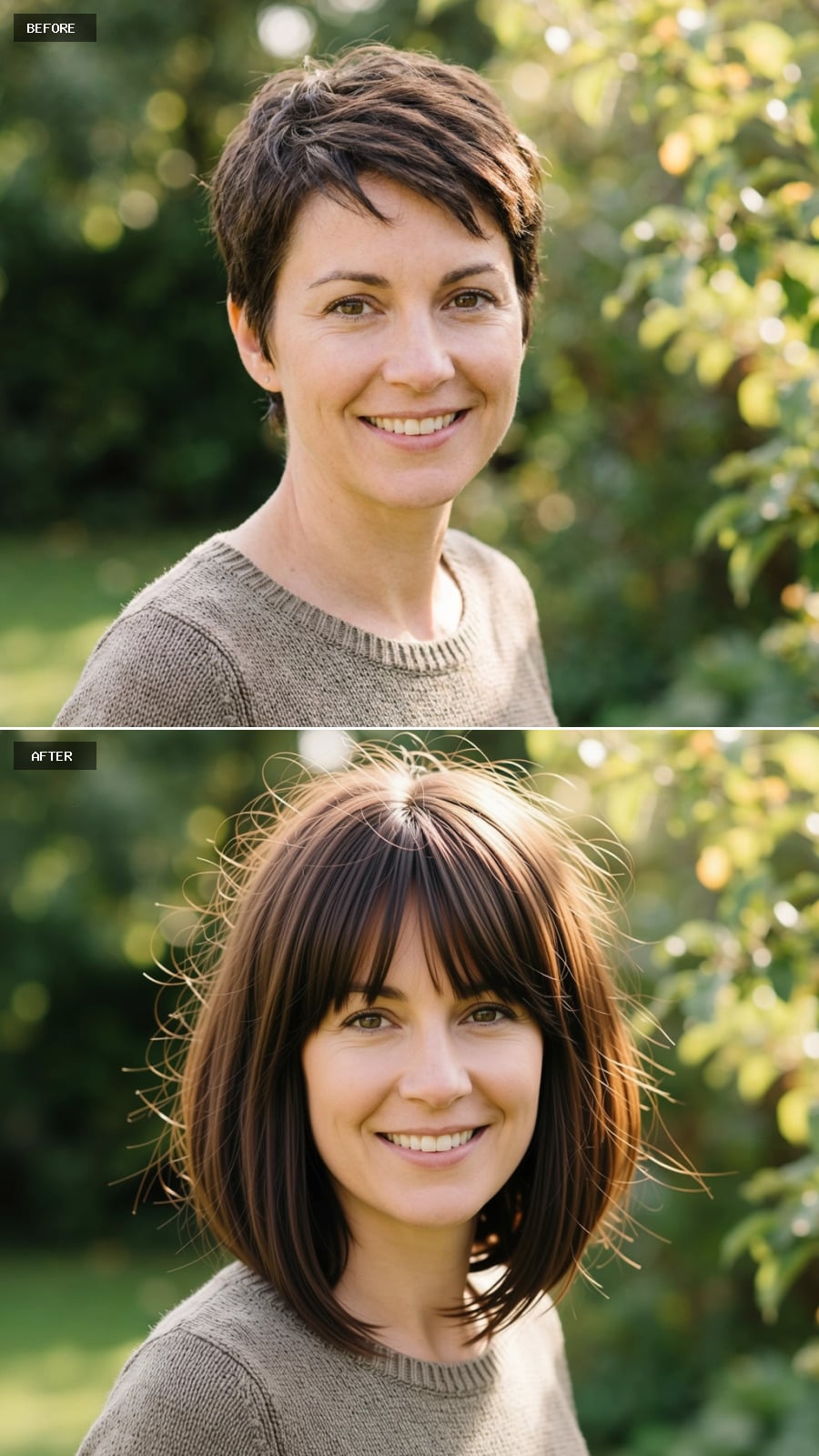
Dropping from a close-cropped pixie to a chin-length bob with blunt bangs is a geometric shift as much as a length one. The after photo shows dark brown hair cut to a blunt line just below the jaw, with bangs that fall straight across the forehead and stop just above the brows. Flyaway strands catch the backlight from the sun coming through the orchard canopy, giving the cut a lived-in quality that keeps it from reading too polished. The fringe frames the forehead and draws the eye across the face horizontally, which shortens the overall face shape visually.
The ribbed crew-neck knit reads the same in both photos, but the longer cut changes how much of it shows. With the bob, the hair rests against the neckline rather than exposing it, and that shift pulls attention upward toward the face rather than the collar. Blunt bangs paired with a blunt perimeter is a deliberate structural choice. Both lines work together to create definition that a pixie, with its tapered edges and exposed temples, simply does not deliver the same way.
24. Blonde Waves, Short Roots: What Happens When Length and Color Arrive Together
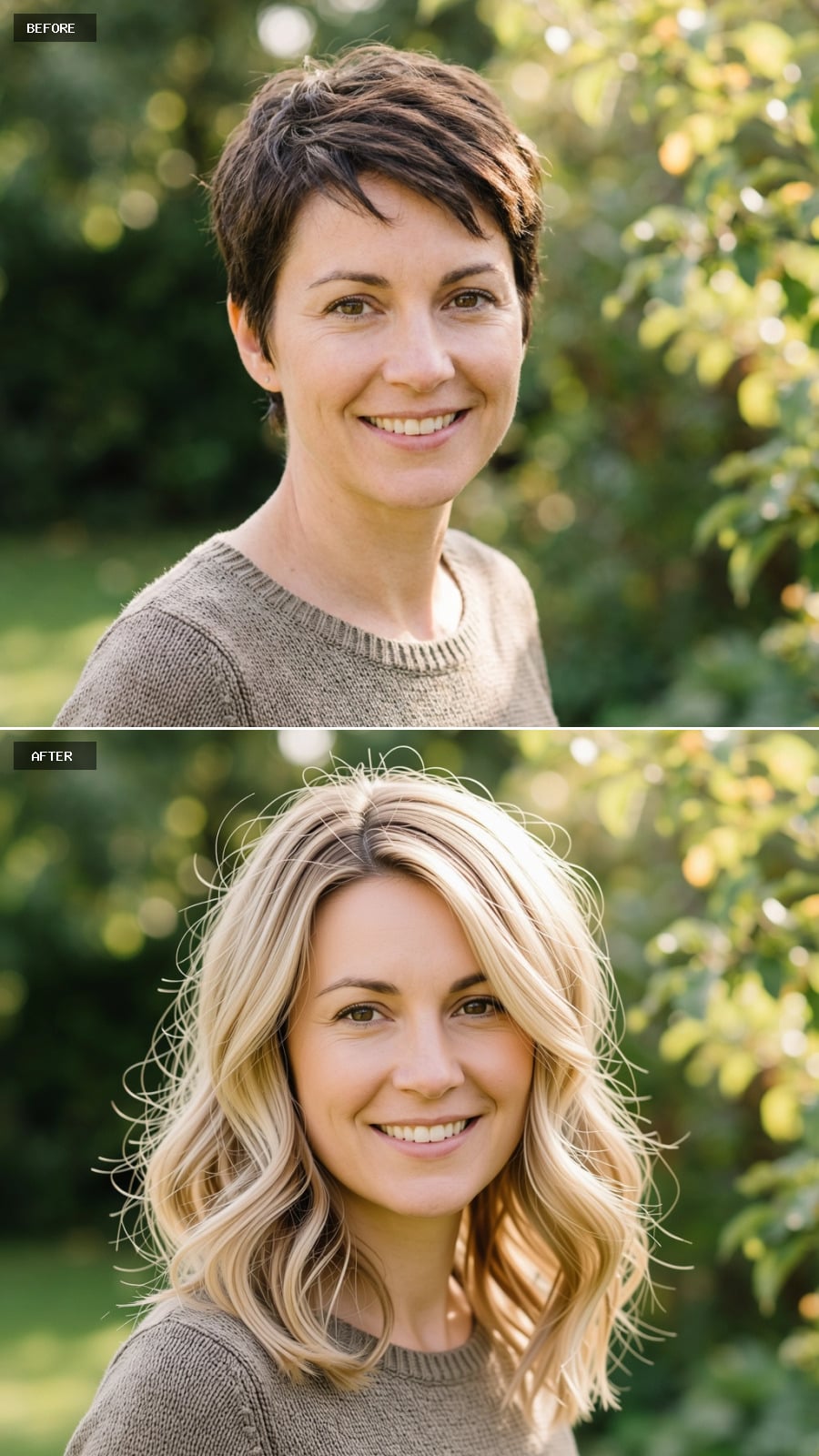
Blonde waves cut to shoulder length land differently when the roots stay dark. The visible grow-out line at the crown reads intentional here, not unfinished, because the wave pattern below it carries enough movement to hold attention. Soft curls fall past the collarbone against a taupe ribbed-knit crewneck, the fabric weight grounding what could otherwise read as too polished. The face sits framed rather than framed and softened, which at 44 is a meaningful distinction.
23. Chunky Highlights, Grown-Out Length, and What That Contrast Actually Does
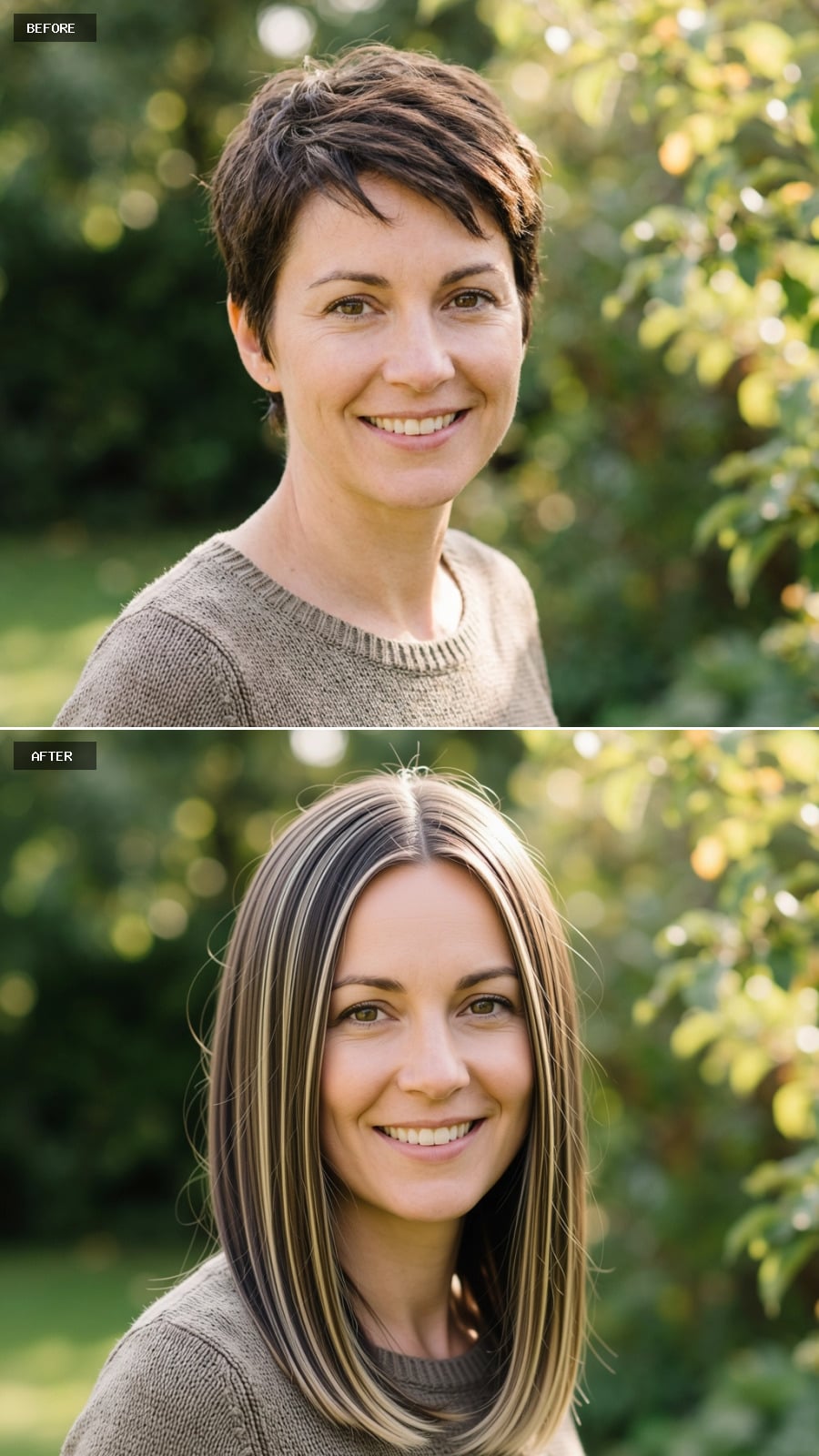
Straight, shoulder-length hair with thick panels of platinum and honey blonde running through dark brown roots reads completely differently than the short brunette pixie it replaced. The highlights aren't blended softly here — they're bold, wide sections that catch light and pull the eye downward along the face, drawing attention to the jawline and cheekbones. The center part keeps the silhouette clean and symmetrical. Against the chunky knit sweater with its wide ribbed crewneck, the length adds visual weight at the collarbone in a way short hair never does at this age.
22. Bangs, Length, and Brunette Depth: What This Combination Resets at 44
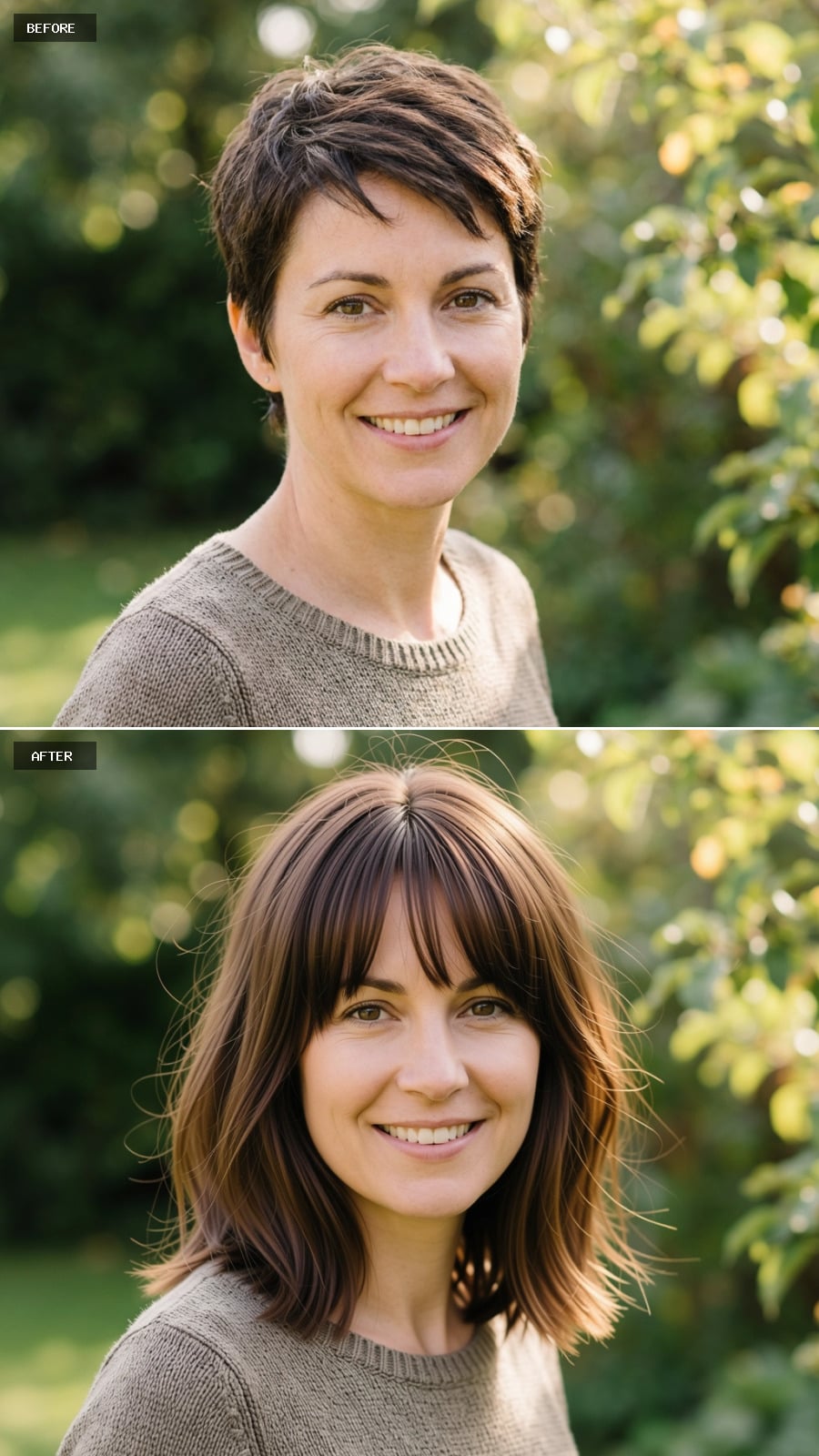
The pixie is gone, and what replaced it reads as a completely different face shape. A shoulder-grazing bob with curtain bangs that part at the center and sweep just below the brow line does specific structural work: it narrows the forehead, draws attention toward the eyes, and softens the jaw without adding visual weight. The brunette base picks up warm chestnut tones at the ends, catching the outdoor light in a way that flat, single-process color rarely does.
The texture is the detail worth studying. Each section moves independently, with ends that separate rather than curl under, giving the whole silhouette a lived-in quality that reads as low-maintenance but clearly isn't. The olive-toned ribbed crewneck sweater keeps the eye moving upward. Framing that strong, the face needs nothing else.
Did You Know: Curtain bangs suit a wide range of face shapes because the center part distributes visual weight evenly across the forehead. Women over 40 often find that bangs cut straight across can emphasize forehead lines, while curtain-style bangs skim rather than press against the skin. Growing them from a pixie is actually simpler than starting from scratch, since the top layers are already close to the right length.
21. Soft Updo, Warm Auburn, and What Pinned Length Does to a Face at 44
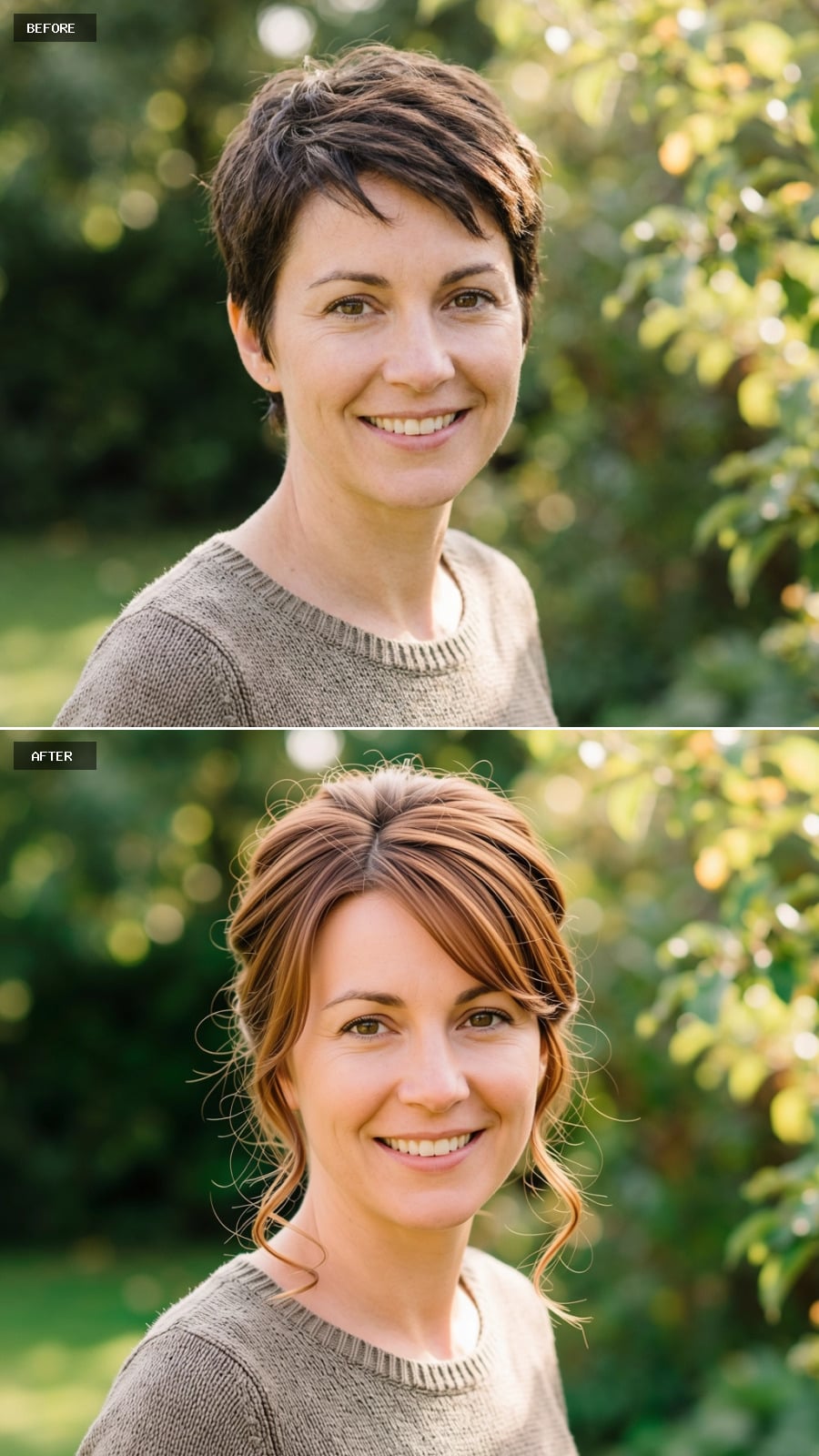
Pulled up and loosely pinned, the auburn hair sits gathered at the crown with face-framing pieces left loose at the temples and jaw. The color reads warm brown with copper-toned highlights, noticeably lighter than the close-cropped dark brunette cut it replaced. Wispy tendrils at the hairline add softness without looking undone. Against the oatmeal-toned knit with its ribbed crewneck, the lifted silhouette draws attention upward, and the jawline reads cleaner with length working around it rather than sitting flat against it.
20. From Cropped Brunette to Long and Blonde: What This Length Change Resets on the Face
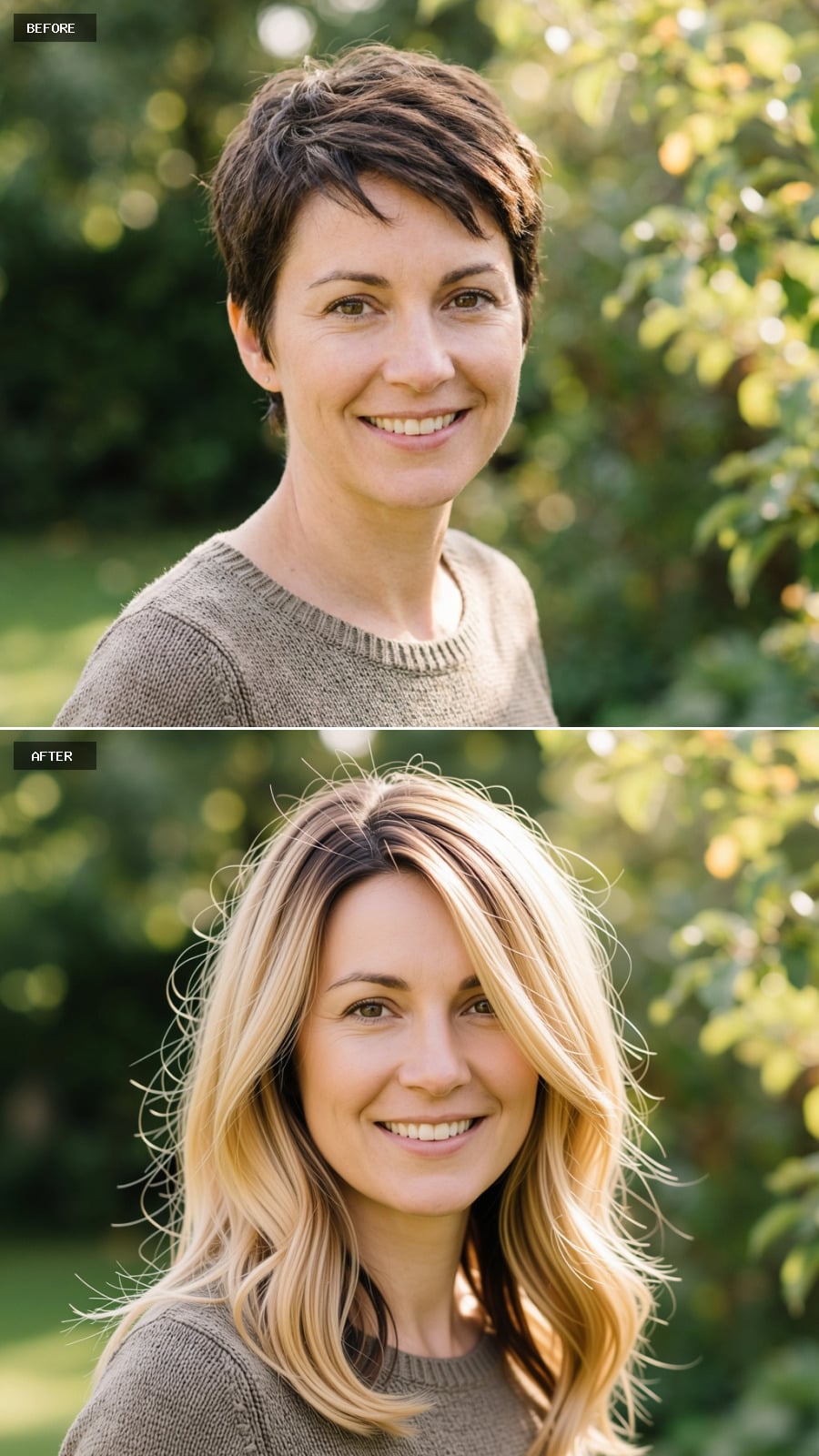
Long, loose layers fall past the collarbone here, lit from behind with warm afternoon light that catches the blonde tones differently at the ends than at the root. The darker base at the crown reads almost chestnut, while the mid-lengths shift into a honey-wheat blonde, giving the hair dimension without looking processed. That gradient pulls attention downward along the jaw, which visually lengthens the face compared to the cropped pixie above.
The olive-toned ribbed knit from the before photo reappears in the after, which makes the color and length changes read as a genuine side-by-side comparison rather than a full restyle. Loose, wind-moved ends prevent the length from sitting heavy against the face. At 44, this kind of soft movement around the jaw does specific work: it diffuses the transition between the face and neck in a way that shorter cuts simply cannot.
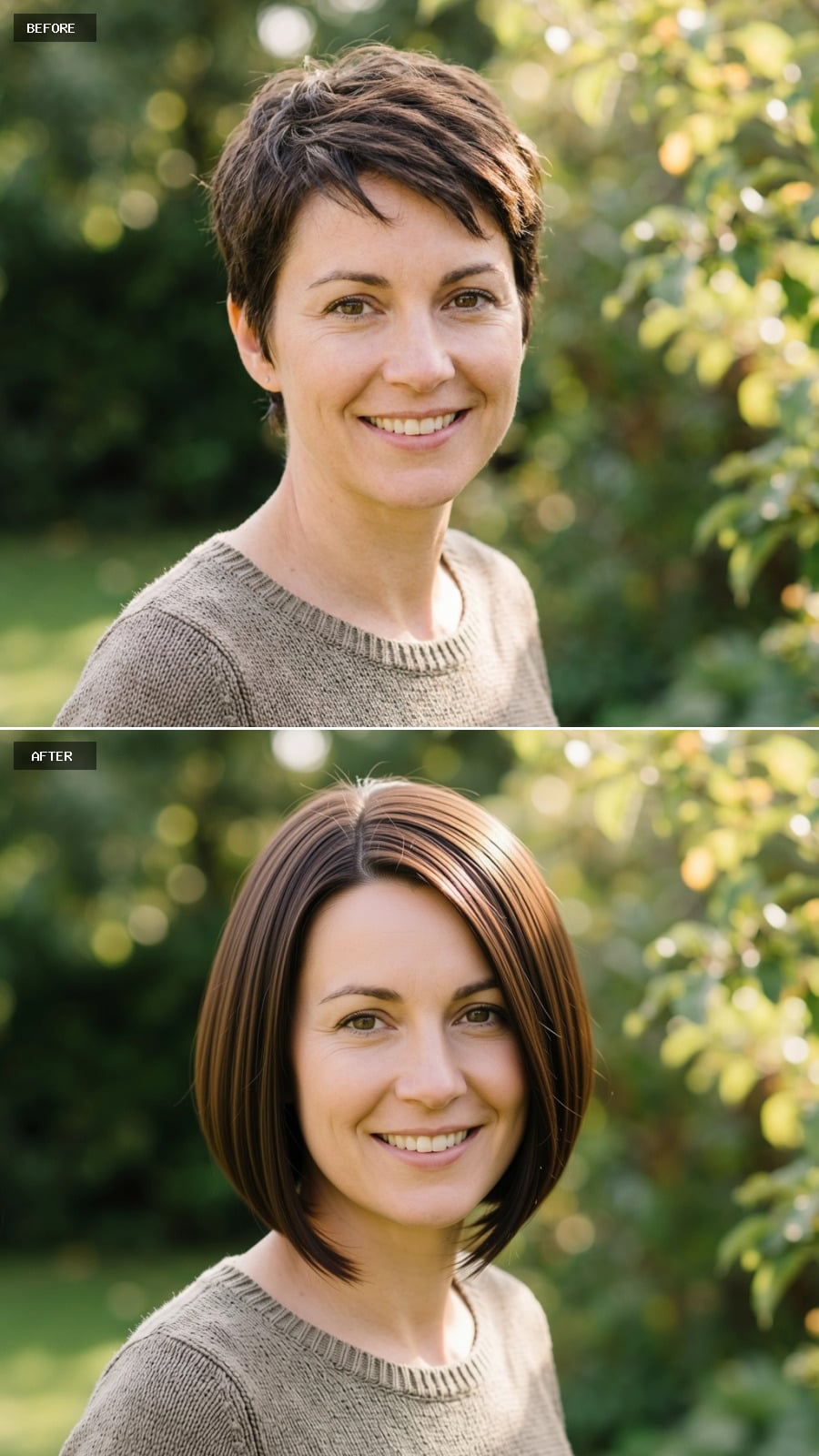
19. Brunette Bob With Highlights: What Sleek Length Does That a Pixie Simply Can't
❤️ Would you like to save this?
Dark brown base hair, cut into a chin-length bob with a clean center part, picks up copper and caramel highlights along the mid-shaft. The light catches those warmer tones differently than it would on cropped hair, pulling more dimension into the face at eye level. Both photos show the same oatmeal-toned ribbed knit sweater with a wide crew neckline, which keeps the comparison clean.
At pixie length, the forehead and jawline read as the dominant features. At bob length, the hair itself creates a frame that draws attention inward toward the eyes and cheekbones. The blunt perimeter sits just below the jaw, and that sharp line does specific work: it signals structure without relying on product or styling tools to hold a shape.
18. Gray Highlights, Shoulder Length, and What That Color Placement Does to the Eyes
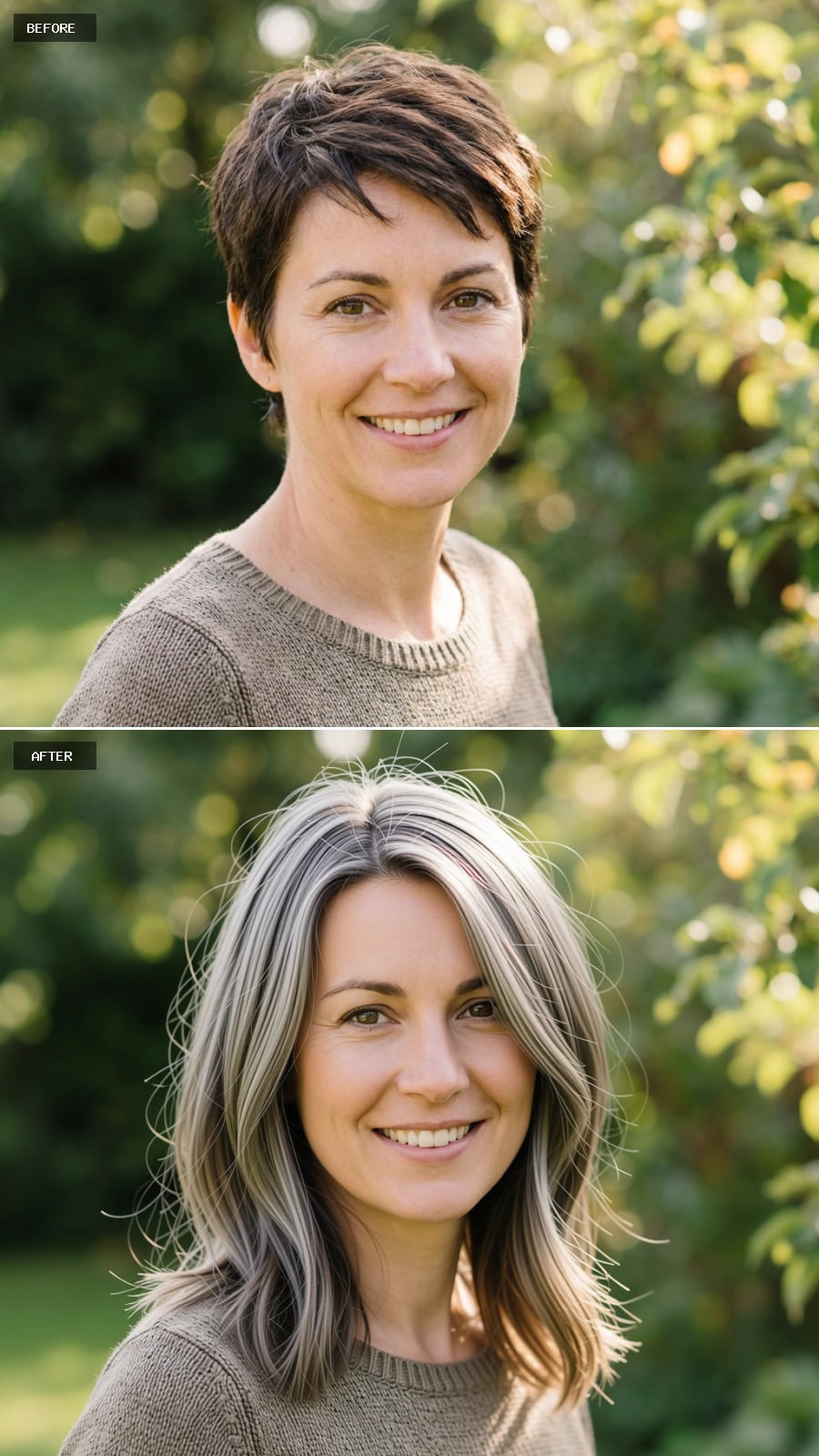
From a cropped brunette pixie to shoulder-length hair with gray and silver highlights running through dark brown roots, this change does something specific to the face: it draws the eye upward and outward. The highlights aren't uniform. They concentrate near the front sections and through the mid-lengths, creating movement that reads as width across the cheekbones.
The cut itself falls just past the collarbone with a slight inward bend at the ends. That bend keeps the silhouette controlled without stiffening into a blowout shape. Paired with the loose, low-volume styling, the hair sits rather than performs.
She wears a ribbed olive-taupe sweater with a crew neckline and medium-weight knit texture. That neutral keeps all the visual interest at face level, which is exactly where the highlight placement earns its effect. At 44, that kind of deliberate framing matters more than length alone.
17. Grown Into Waves: What a Lob With Highlights Does to a Pixie Face Shape
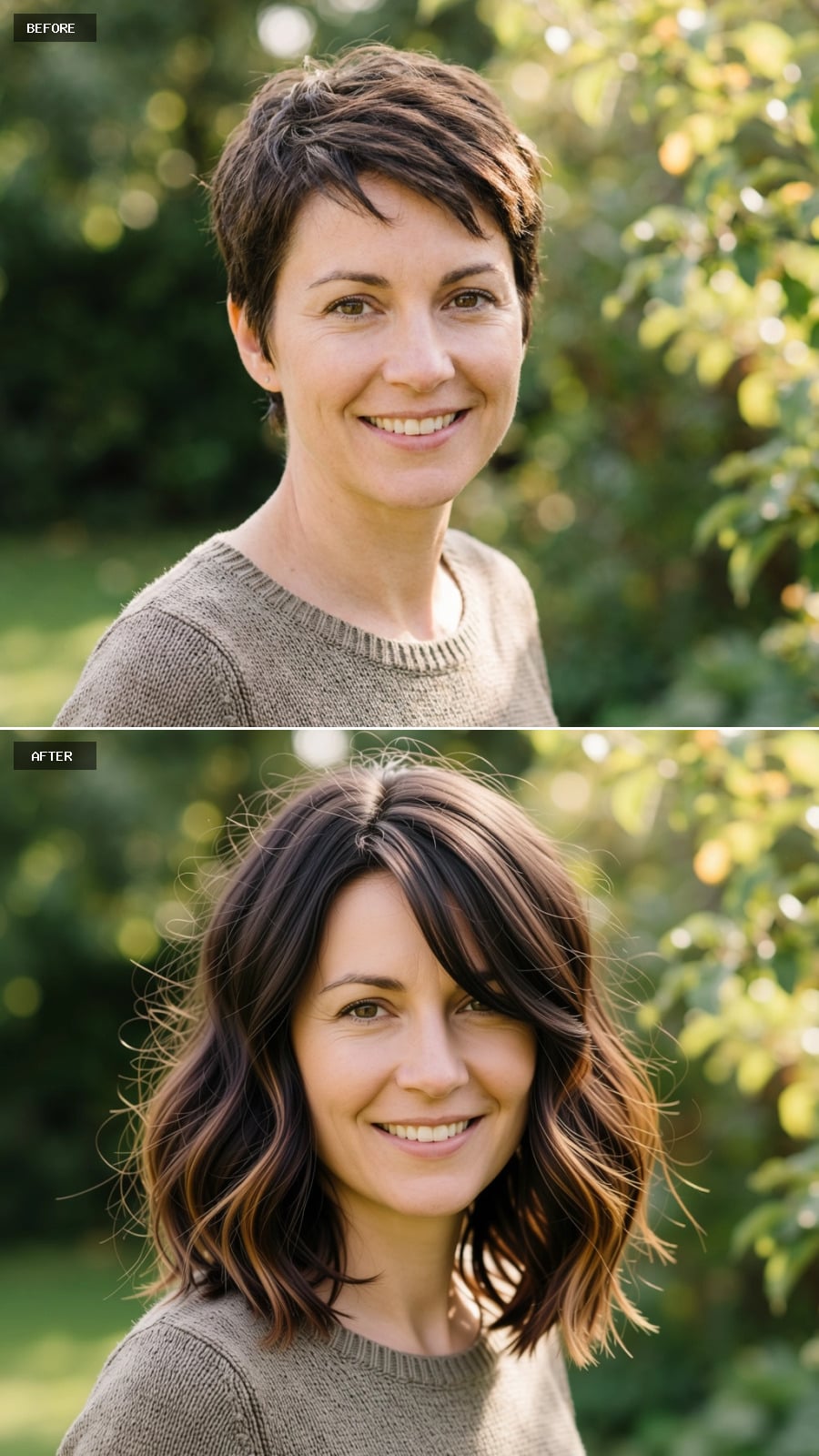
She came in with a close-cropped brunette pixie, tapered at the sides and barely grazing the forehead. The after shows a shoulder-length lob with loose, tousled waves and a center part that splits the forehead cleanly in two. Caramel and amber highlights run through dark brown base hair, concentrated toward the ends and face frame.
That face-framing placement does specific work. It pulls attention outward toward the cheekbones rather than straight down, which reads wider across the mid-face. The waves break the line of her jaw rather than following it, softening what a blunt cut would otherwise sharpen. Her olive skin tone picks up warmth from the amber tones in a way the flat pixie simply didn't allow.
The ribbed crewneck sweater in a muted sage-khaki stays consistent across both images, which makes the hair change easier to read without distraction.
- Face-framing highlights placed from mid-shaft to ends draw the eye outward toward the cheekbones
- A center part on a lob reduces forehead width visually without the need for fringe
- Loose waves at jaw level interrupt the jaw line rather than tracing it, which softens angular bone structure
16. Shoulder-Length Waves, Platinum Highlights, and What Root Depth Does to Face Shape
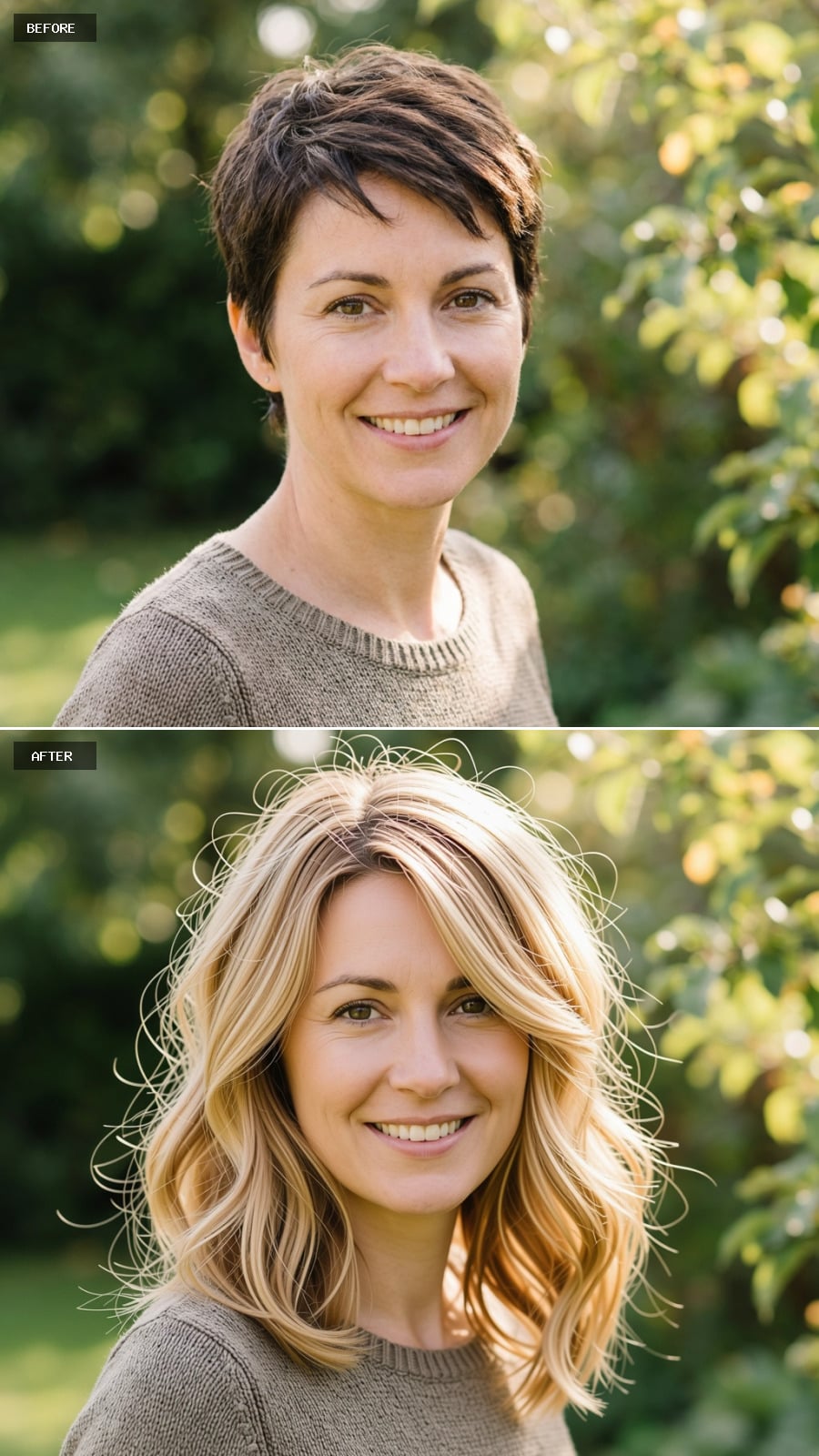
Soft platinum highlights run from mid-shaft to ends, leaving a darker blonde root that creates dimension without requiring constant upkeep. The cut sits just past the shoulder, with loose waves styled away from the face to expose the cheekbones fully. Her ribbed crew-neck sweater in taupe grounds the softness overhead. Compared to the cropped brunette pixie, this length adds visual weight along the jaw where fullness reads as structure, not roundness.
15. Braided Crown, Warm Auburn Waves, and What Pinned Volume Does Differently Than a Pixie
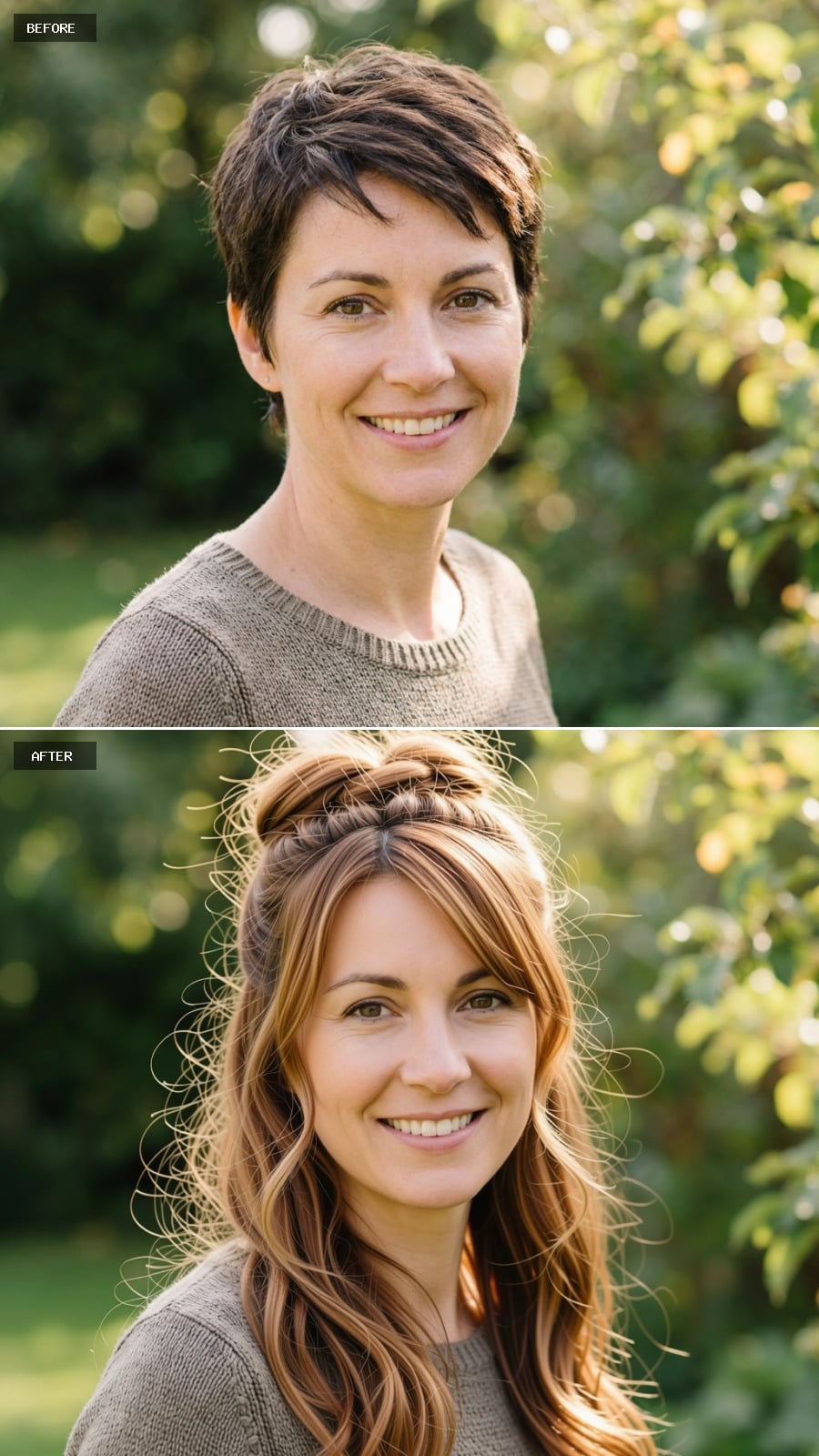
Warm auburn lengths with honey-toned highlights replace close-cropped brunette, and the shift in visual weight is immediate. A half-up braided crown sits at the top of the head, pulling hair back from the temples while releasing wavy, layered lengths past the collarbone. That combination adds vertical height at the crown and horizontal softness at the jaw simultaneously. The medium-weight knit sweater in taupe stays consistent between both images, which isolates the hair change as the sole variable. Flyaway texture around the face reads as natural rather than styled, and the warm golden backlight picks up the lighter sections within the waves.
14. Bob Length, Fringe, and What Dark Brown Highlights Do to Bone Structure at 44
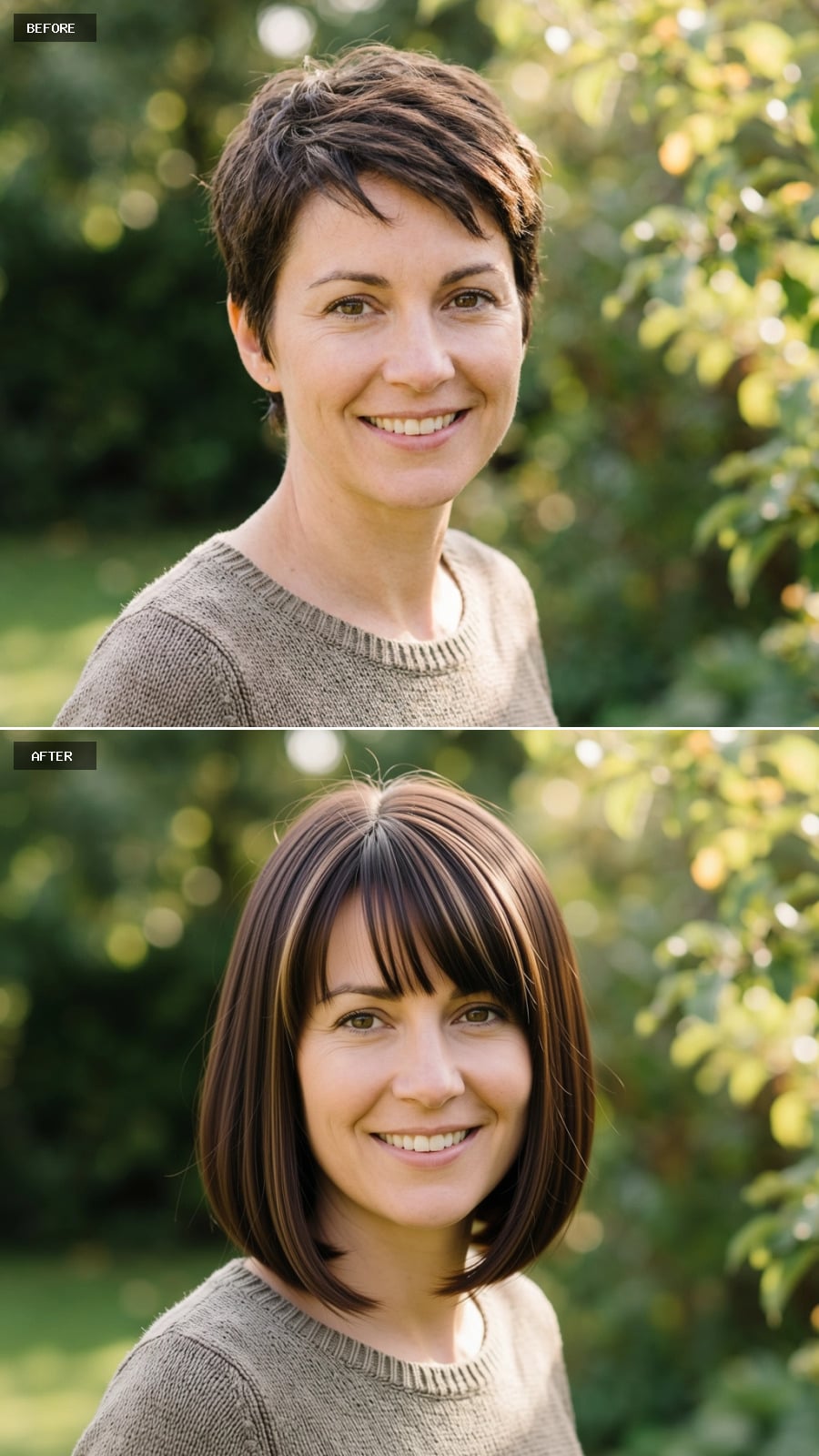
Graduated into a chin-length bob with blunt-cut fringe, this look replaces the pixie's close crop with a silhouette that visibly lengthens the neck while letting the jaw stay defined. The color runs deep brown at the roots and through most of the mid-shaft, with caramel highlights placed selectively along the front panels. That placement pulls light directly toward the cheekbones. Paired with the ribbed crewneck sweater in taupe, the overall effect reads polished without relying on accessories to do any work.
13. Wavy Lob, Balayage Highlights, and What Shoulder Length Returns to the Face
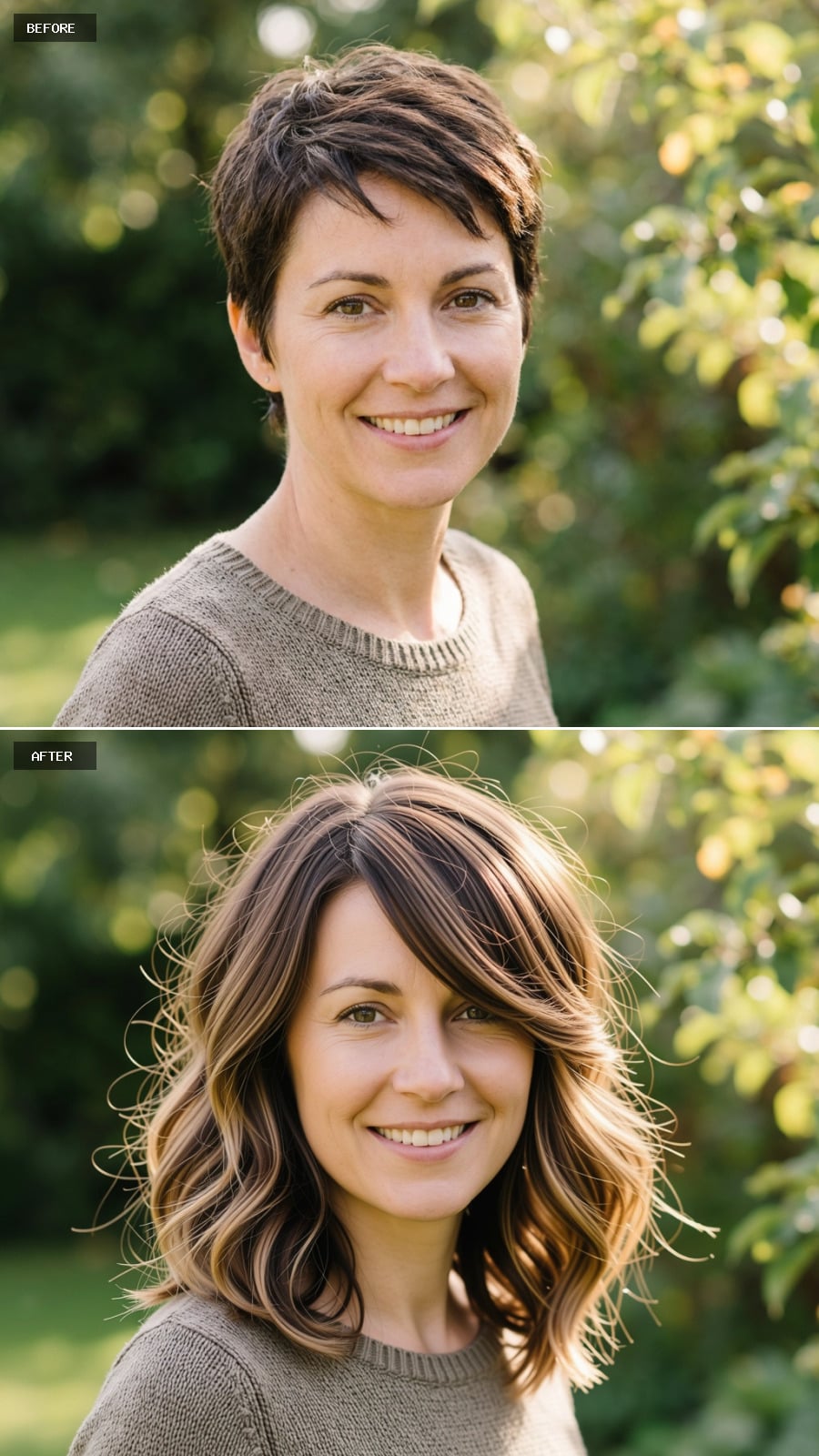
Moving from a cropped pixie to a shoulder-length wavy lob with balayage shifts almost everything about how the face reads. Here, dark brown roots dissolve into caramel and golden highlights through mid-length waves that curl loosely at the ends. Side-swept layers pull across the forehead without fully committing to bangs, which keeps the eyes open while adding width at cheekbone level. Against the ribbed knit crew-neck in olive-taupe, the added volume at the jaw reads proportional rather than heavy.
12. Braided Crown With Auburn Balayage: What Pinned Height Does to a Pixie Face at 44
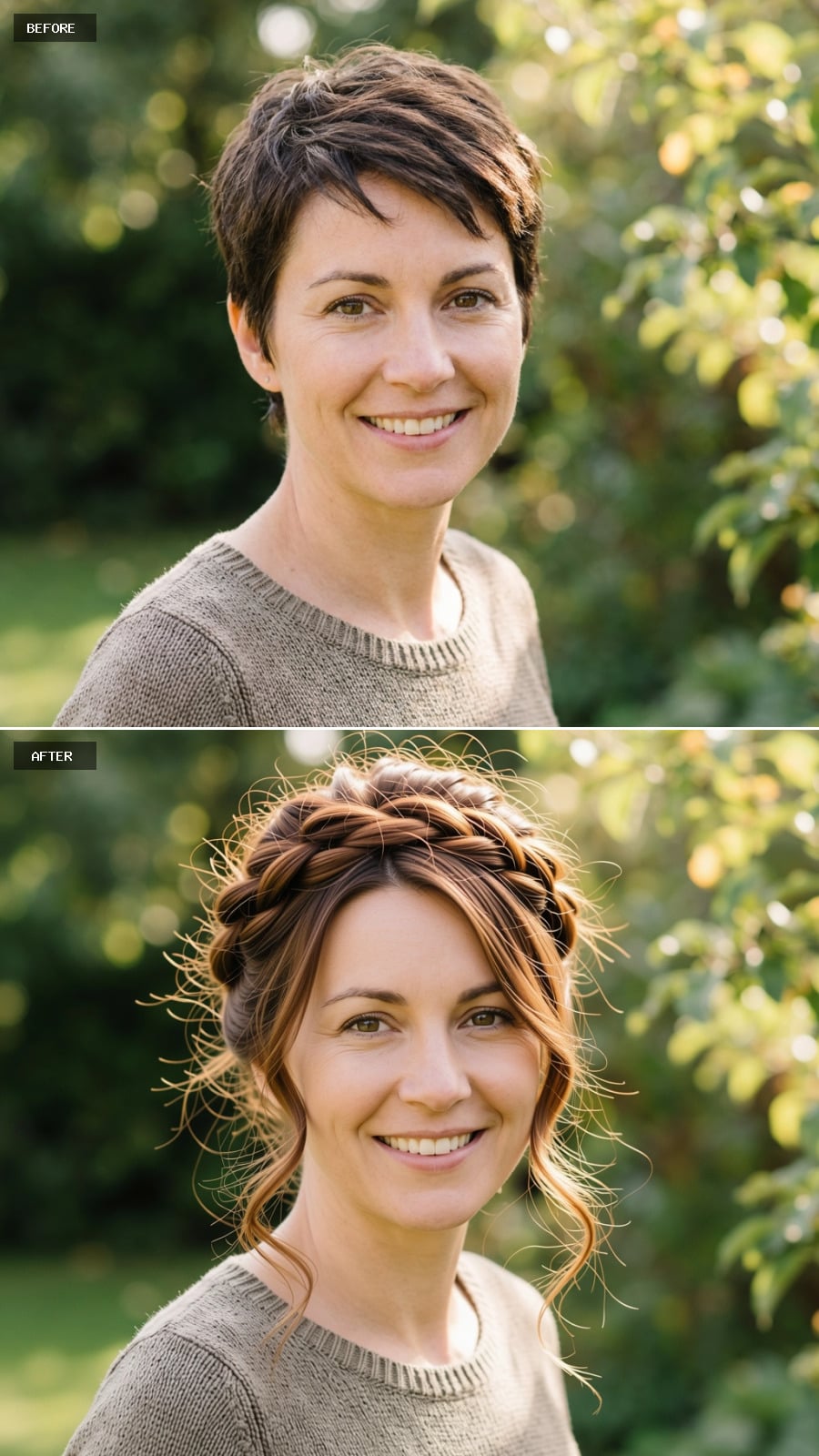
Halo braids built this high, sitting at the crown rather than flat against the head, do something a short pixie cut physically cannot: they add vertical mass above the face. Her natural brunette base transitions into warm copper-auburn through the mid-lengths, with the lightest pieces framing the jaw in loose, undone tendrils. The braid itself is thick and rope-style, woven in an interlocking pattern that catches light differently across each twist.
What reads on camera is how the added height lengthens her face proportionally. The scattered flyaways around the hairline keep it from looking architectural or stiff. Her ribbed knit crewneck in olive-taupe grounds the whole look without competing. The color shift from dark root to warm copper draws attention upward, which is exactly what a pixie distributes sideways instead.
11. Blonde Waves, Shoulder Length, and What Loose Curl Texture Does to a Pixie Face
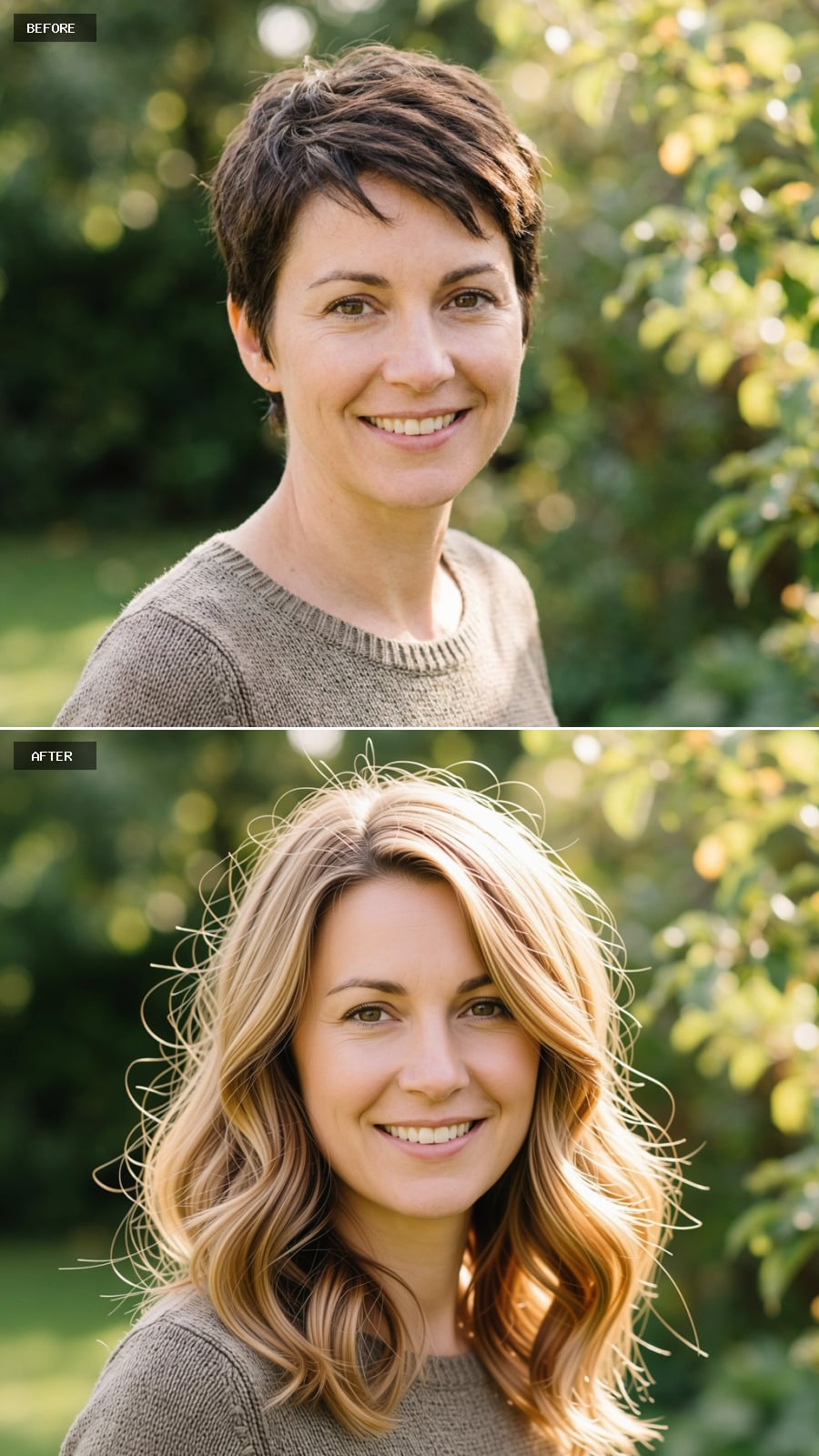
Blonde balayage with honey and wheat tones replaces the cropped brunette cut entirely, and the shift in weight distribution reads immediately. Shoulder-length waves styled with soft spiral ends add width at the jaw rather than the crown, which recalibrates proportion across the cheekbones. The medium-knit taupe crewneck stays consistent across both photos, which makes the hair change the sole variable to read.
Fabric Note: Chunky-knit crewneck sweaters in neutral taupe photograph well outdoors because the texture catches natural light without competing with hair color work. The ribbed neckline detail draws the eye horizontally across the collarbone, which suits shoulder-length styles that benefit from a visual anchor at the base of the neck.
10. Bob Length, Blonde Highlights, and What a Center Part Does to Pixie Bone Structure
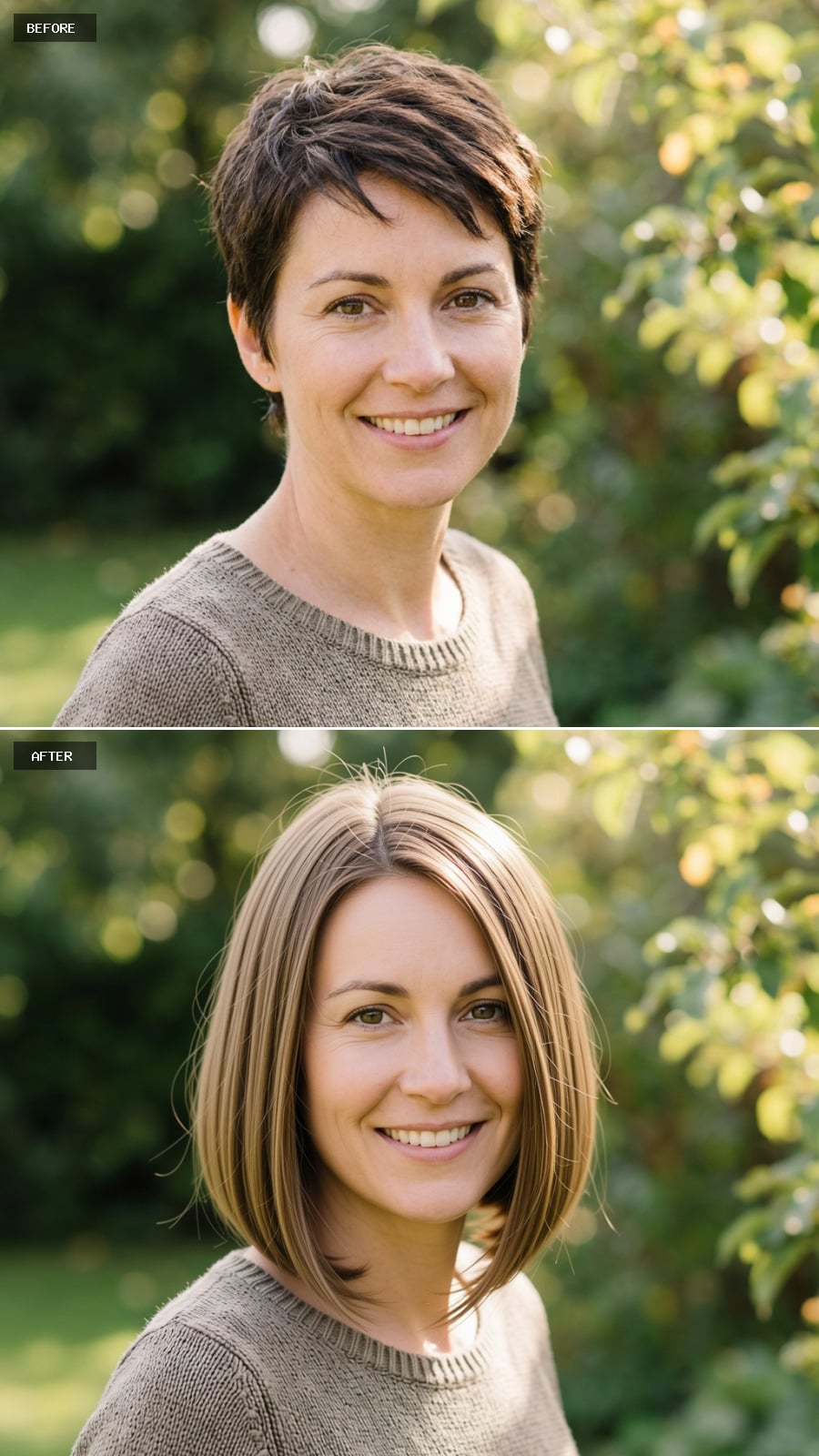
Switching from a dark pixie to a chin-length bob with blonde balayage highlights shifts the entire weight distribution across the face. The after photo shows hair falling just past the jaw, with a clean center part that draws a vertical line through the forehead and pulls attention toward the eyes rather than the crown. Warm blonde tones run through the mid-lengths while the roots hold a darker base, creating contrast that defines cheekbone depth. The ribbed crewneck sweater in taupe stays consistent across both photos, which makes the length change read clearly against the same silhouette.
9. Wavy Bob, Caramel Highlights, and What Bangs Return to a Pixie Jawline
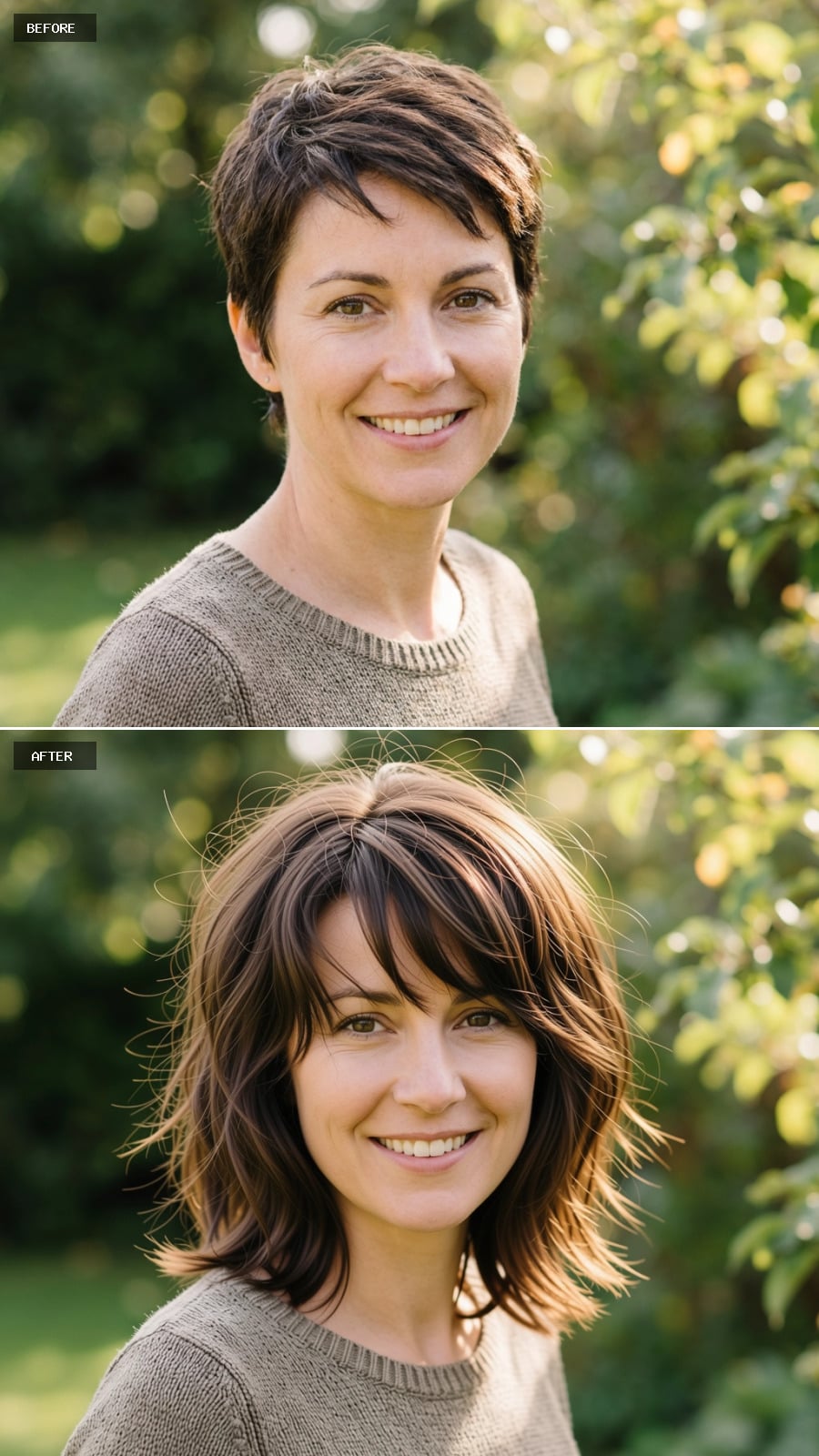
Chin-length waves replace the cropped pixie cut here, with the added length landing just below the jaw. The color moves from a deep brunette root into caramel and honey highlights through the mid-lengths, pulled forward by loose, piece-y fringe that skims the brow line. That fringe does specific work: it shortens the visual distance between forehead and cheekbone, which a pixie left fully open. The waves have a lived-in texture, not a set curl, which keeps the overall silhouette relaxed rather than polished. The taupe ribbed-knit crewneck grounds the look without pulling attention from the face.
8. Upswept Chignon, Caramel Highlights, and What Longer Length Does to Pixie Bone Structure
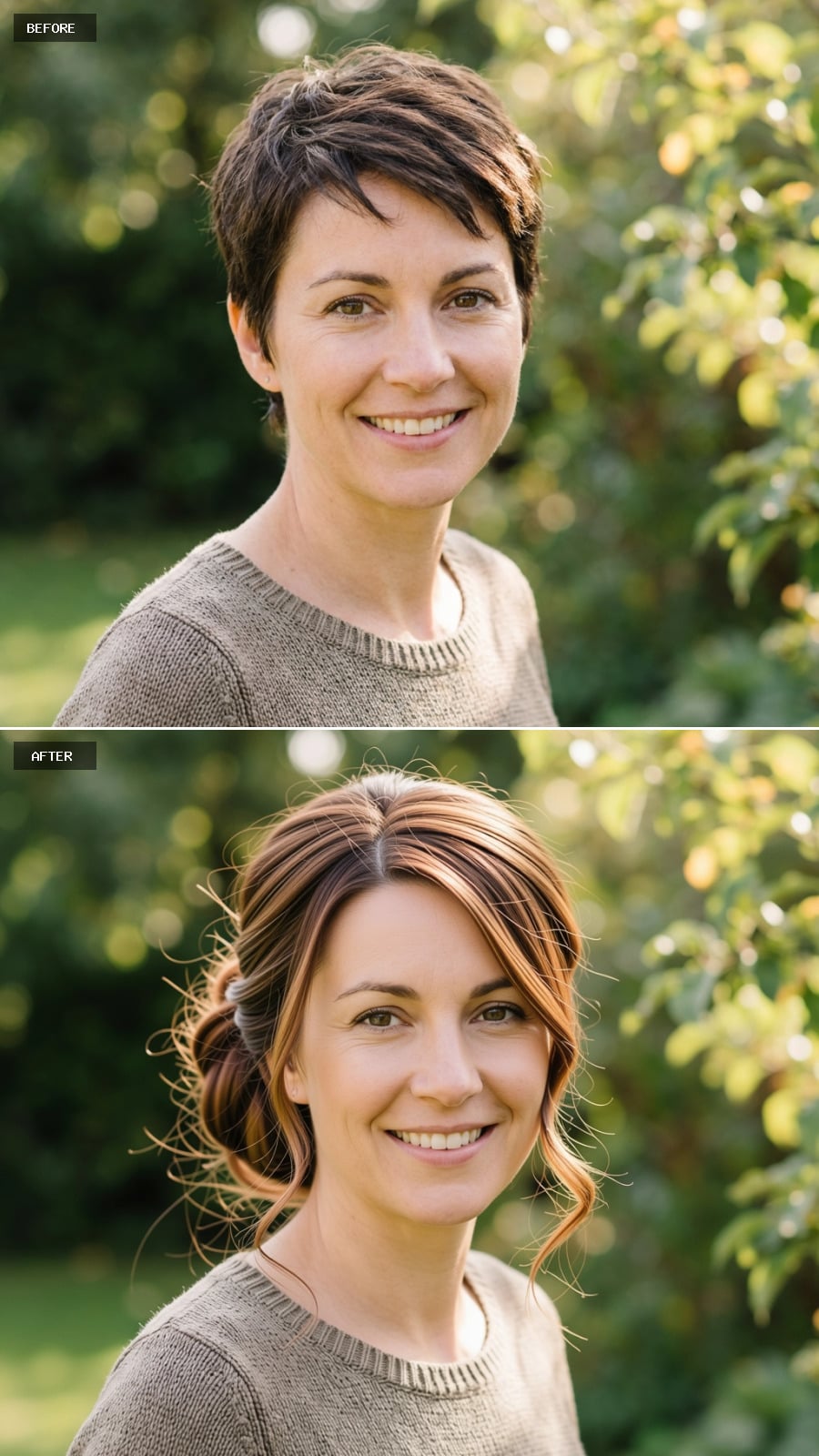
Growing from a dark brunette pixie into a medium-length updo changes the entire geometry of the face. Here, the hair is swept back into a loose chignon at the nape, with face-framing pieces left loose near the temples. The color shifts from near-solid dark brown at the roots to warm caramel and copper tones through the mid-lengths and ends, a contrast that pulls light directly toward the cheekbones and eye area in a way a single-process color cannot.
The taupe knit sweater reappears in the after image, which makes the color difference between the two looks even more readable. Against the same fabric, the lighter, multitonal hair reads warmer and adds definition to the jaw without cutting across it the way a shorter silhouette does. The loose tendrils near the ears keep the updo from reading severe. Outdoor light catches the copper tones through the length, making the overall effect feel deliberate rather than accidental.
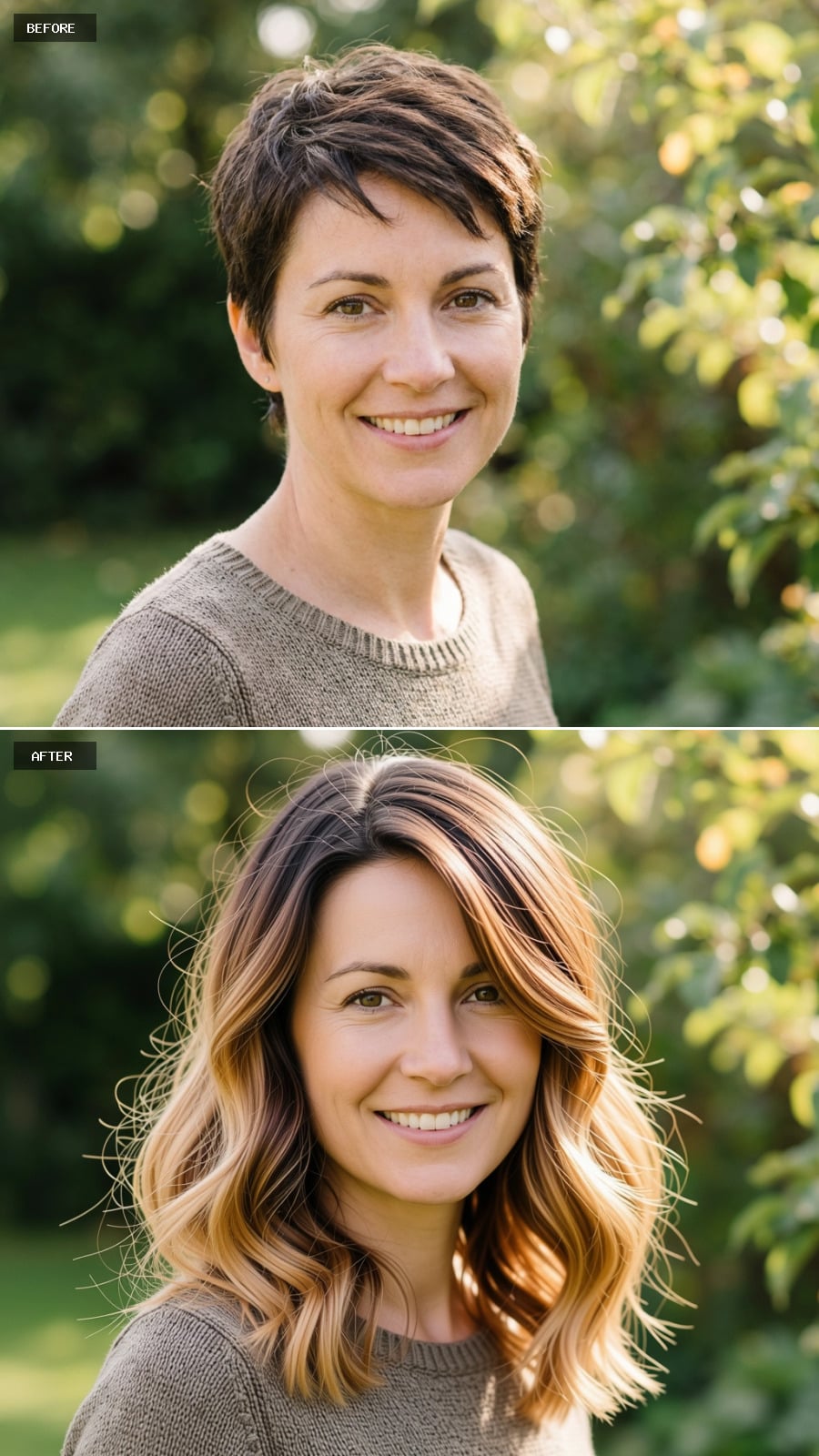
7. Balayage Lob, Loose Waves, and What Medium Length Does to a Pixie Face at 44
❤️ Would you like to save this?
From a cropped brunette pixie, the change here is considerable: medium-length waves with a balayage that runs from dark brown roots into caramel and honey-blonde ends. The part sits slightly off-center, letting the waves fall asymmetrically across the forehead and cheek. That diagonal line does specific work on her face shape, drawing the eye down rather than across. A ribbed crewneck sweater in taupe-grey provides a neutral anchor below the color. The movement in the mid-lengths adds width at cheekbone level, which a pixie never reaches. At 44, that horizontal volume reads differently than it would at 30.
6. Long Blonde Waves, Curtain Bangs, and What Fringe Does to a Pixie Forehead at 44
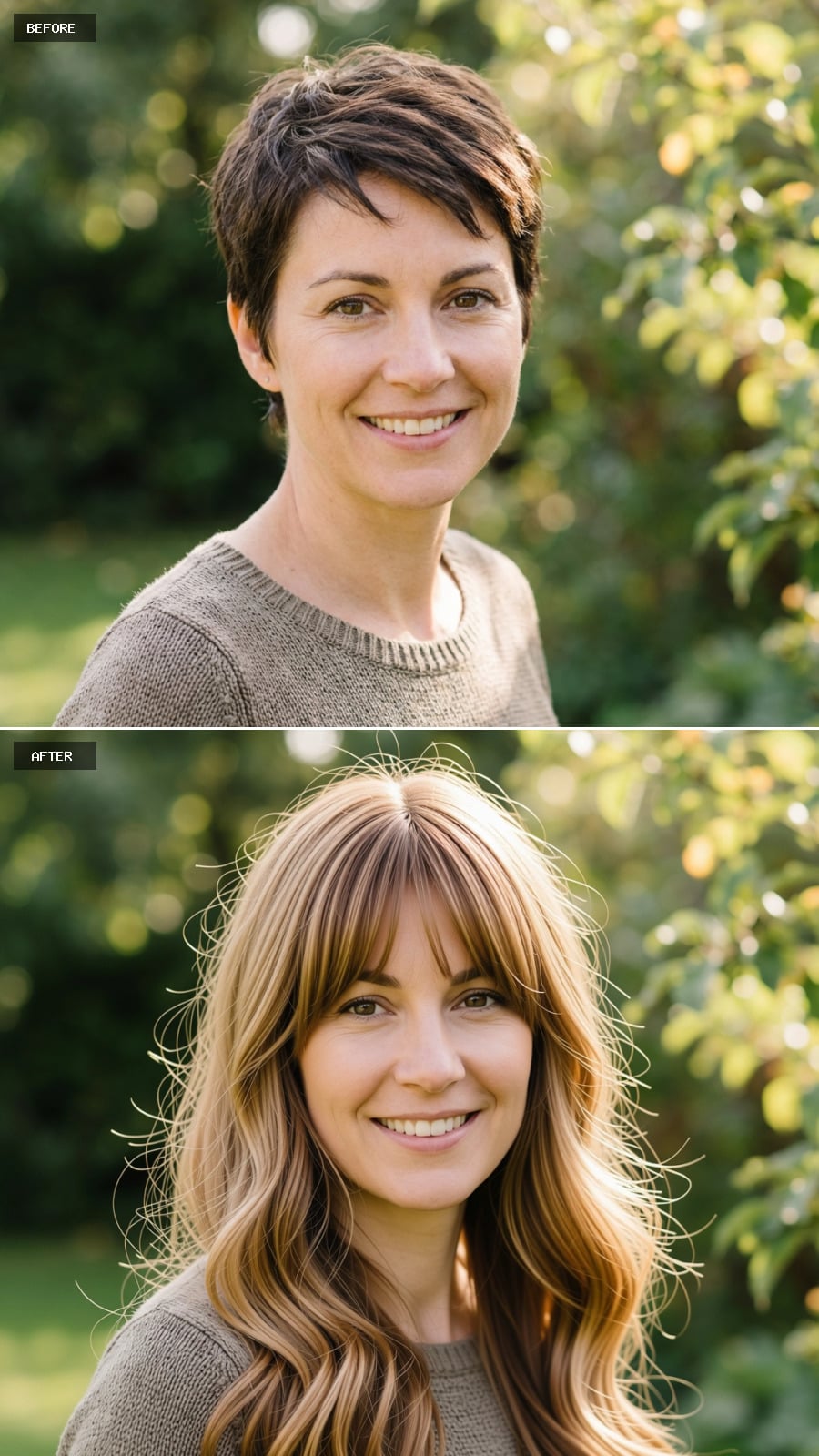
Her hair has been taken from a close-cropped brunette cut to long, layered waves sitting well past the collarbone. The color shifts from a medium brown root into a honey-blonde mid-shaft, with lighter pieces around the face that pull attention toward the eyes. Curtain bangs split at the center and fall to brow level, creating a line that the pixie never offered.
The knit sweater reads as the same neutral taupe from the before photo, which makes the hair color change land harder by comparison. Nothing else shifted, which is exactly the point. The added length and fringe work together to give the jawline more visual company, so the face reads differently without the bone structure having changed at all.
5. Shoulder-Length Waves, Caramel Balayage, and What Wavy Volume Does to a Pixie Face
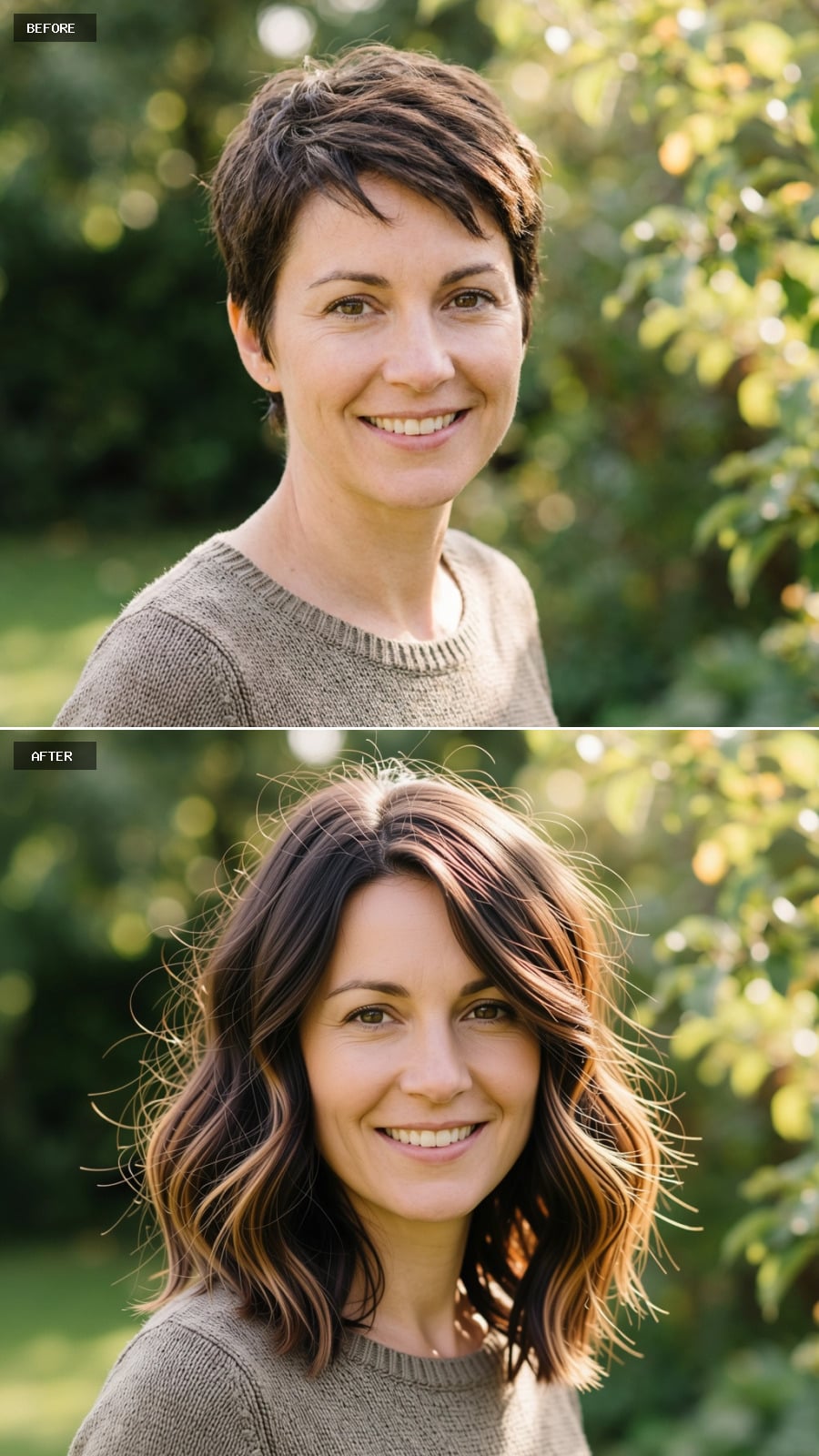
Soft, shoulder-grazing waves replace the close-cropped pixie with a silhouette that adds width at the cheekbones and visual weight below the jaw. The balayage moves from a deep brunette root into caramel and honey tones mid-shaft, catching the outdoor light in a way flat color never would. Loose, tousled waves create texture without polish. The ribbed crewneck sweater in muted khaki keeps the focus entirely at the face.
Wardrobe Math: Ribbed-knit sweaters in olive and khaki tones act as neutrals that work across seasons, pairing equally well with dark denim in October as they do with linen trousers in May. The crewneck neckline keeps jewelry options open, making it one of the more versatile silhouettes a woman can build around.
4. Long Blonde Straight Hair and What Center-Parted Length Does to Pixie Bone Structure
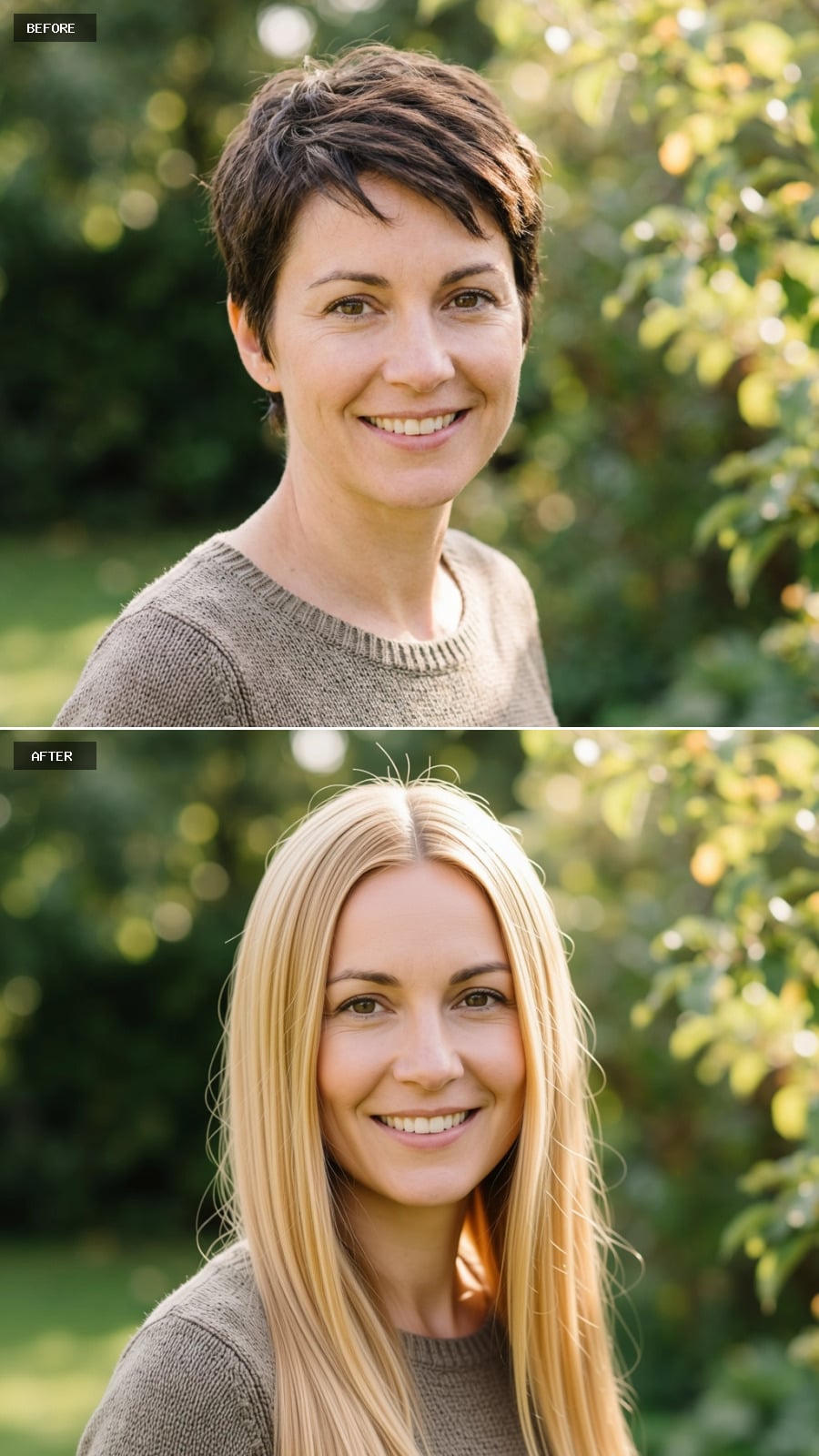
Straight, center-parted hair falling past the collarbone reads completely differently than the cropped brunette cut above it. The color shift to a pale, cool blonde with slightly warmer mid-lengths pulls light toward the cheekbones rather than sitting flat against the skull. Length at this scale reintroduces a vertical line through the face, which narrows the forehead and draws the eye downward past the jaw. The taupe ribbed crewneck, already a familiar neutral in this shoot, anchors the look without competing. Wispy ends keep the silhouette from reading too polished at 44.
3. Auburn Updo, Soft Highlights, and What Pinned Length Does to Pixie Bone Structure at 44
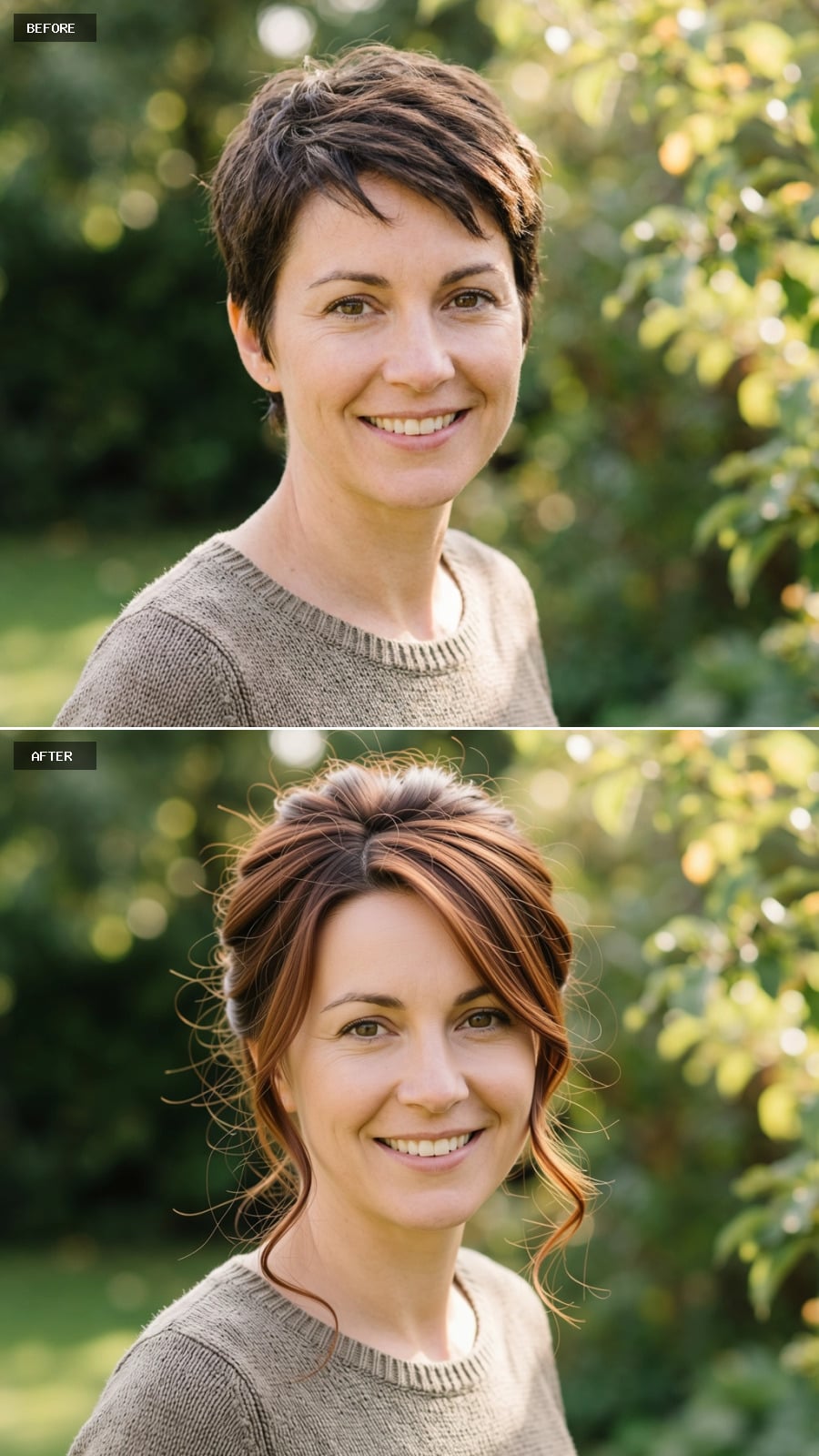
Wispy tendrils frame the face at the jawline, pulled from an upswept style that gathers the length into a loose, textured knot at the crown. The auburn-to-chestnut balayage runs warm through the pinned sections, with copper highlights catching the outdoor light differently than a flat single-process color would. At the sides, face-framing pieces curl forward naturally rather than being forced into place. The ribbed crewneck in taupe sits low enough to keep attention on the neck and collarbone, which the lifted silhouette makes visible in a way the pixie cut did not.
2. Layered Bob, Blonde Highlights, and What Swept Volume Does to a Pixie Face at 44
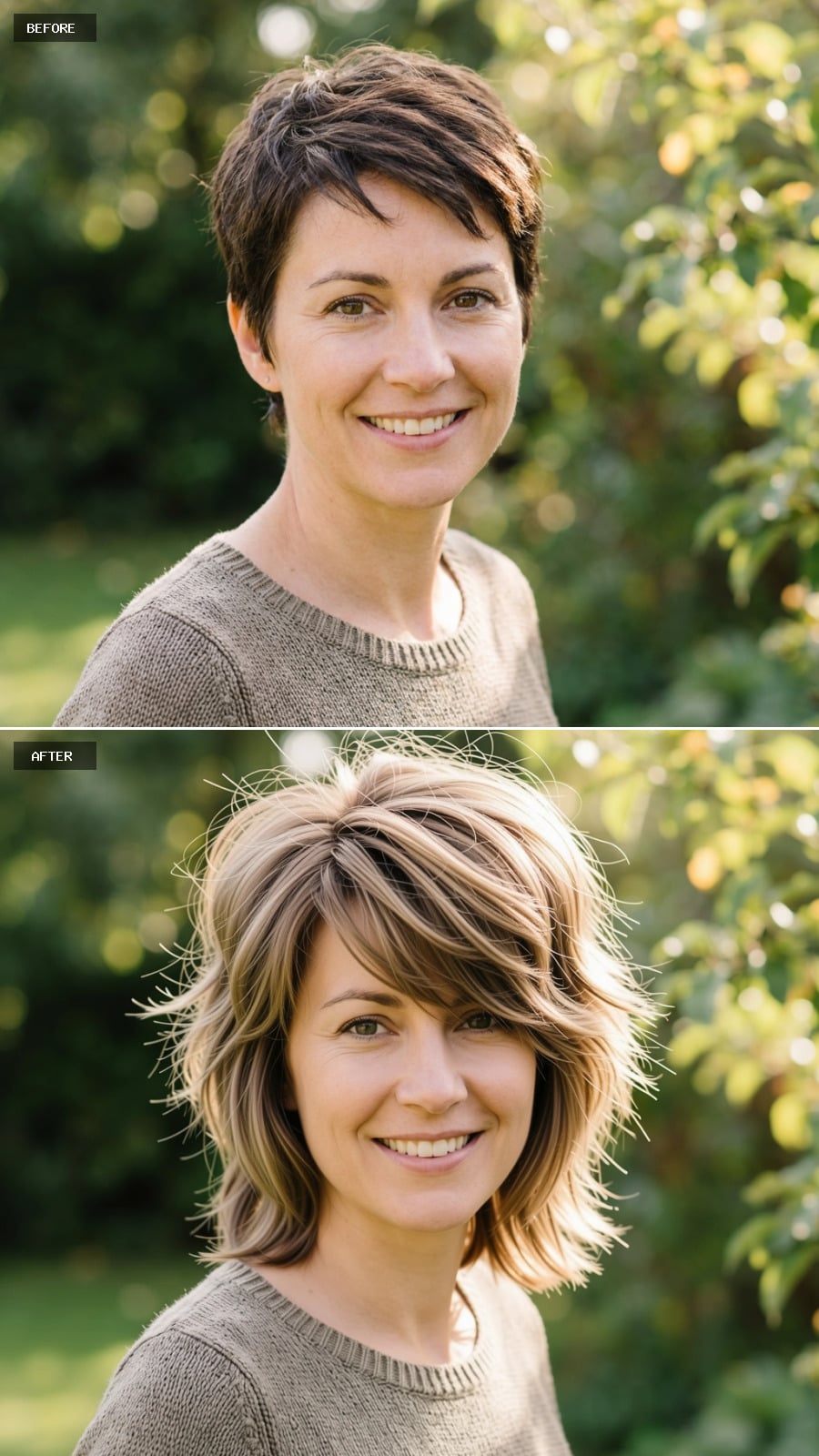
Moving from a cropped brunette pixie to a highlighted, layered bob shifts nearly every proportion on her face. The cut lands just below the jaw, with choppy layers that start at the crown and fall forward, creating movement that the pixie's clean-clipped silhouette never allowed. Colorist work here involves a warm blonde balayage painted through medium-brown roots, with darker pieces underneath that add depth rather than flatness. The sweep across the forehead covers the brow line partially, rounding what the pixie left angular. She wears the same ribbed taupe crewneck sweater, which confirms that the volume change is entirely about the hair: more length at the sides widens the visual frame and draws the eye downward along the cheekbones rather than stopping abruptly at the ears.
1. Loose Balayage Waves, Long Length, and What Dark-to-Blonde Contrast Does at 44
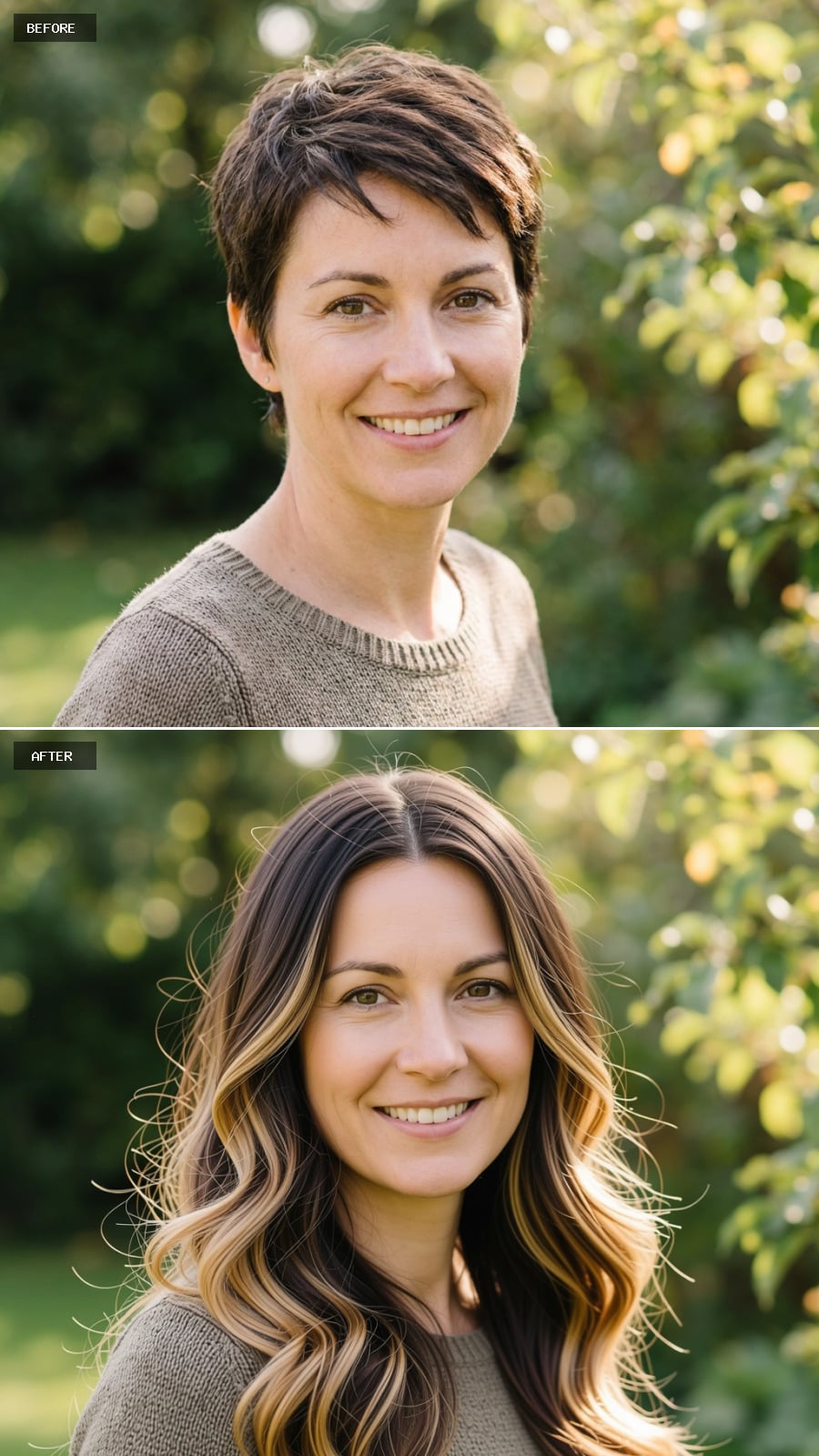
Dark roots dissolving into caramel and wheat-blonde ends give the hair a depth that a single process color never achieves. The length falls past the shoulders in relaxed waves, with the center part pulling the face into a longer, narrower proportion. She wears the same taupe ribbed crewneck from the before image, making the hair do all the visual work.
The length falls past the shoulders in relaxed waves, with the center part pulling the face into a longer, narrower proportion.