
❤️ Would you like to save this?
Stepping into your mid-forties marks the perfect moment to refresh your look with a hairstyle that celebrates your confidence and style evolution. Whether you’re ready to ditch those bangs or transform your entire aesthetic, these trending makeovers offer flattering options that work beautifully for mature beauty, enhancing your best features while keeping maintenance refreshingly manageable.
A simple bob with bangs is a practical choice, but it can start to feel like a default rather than a decision. At 45, hair carries real weight, and many women find themselves ready to move on from a cut they’ve had for years without knowing exactly where to go next. This article lays out 35 directions worth considering, from small adjustments to full-scale reinventions.
FYI, thanks to AI imagery software, we’re able to create very specific fashion and hairstyle examples to illustrate the points being made. In some cases, imagery is exaggerated to hammer home the point. Also, assume links that take you off the site are affiliate links such as links to Amazon. this means we may earn a commission if you buy something.
31. From Blunt Bob to Blonde Pixie Bob: Same Age, Different Energy
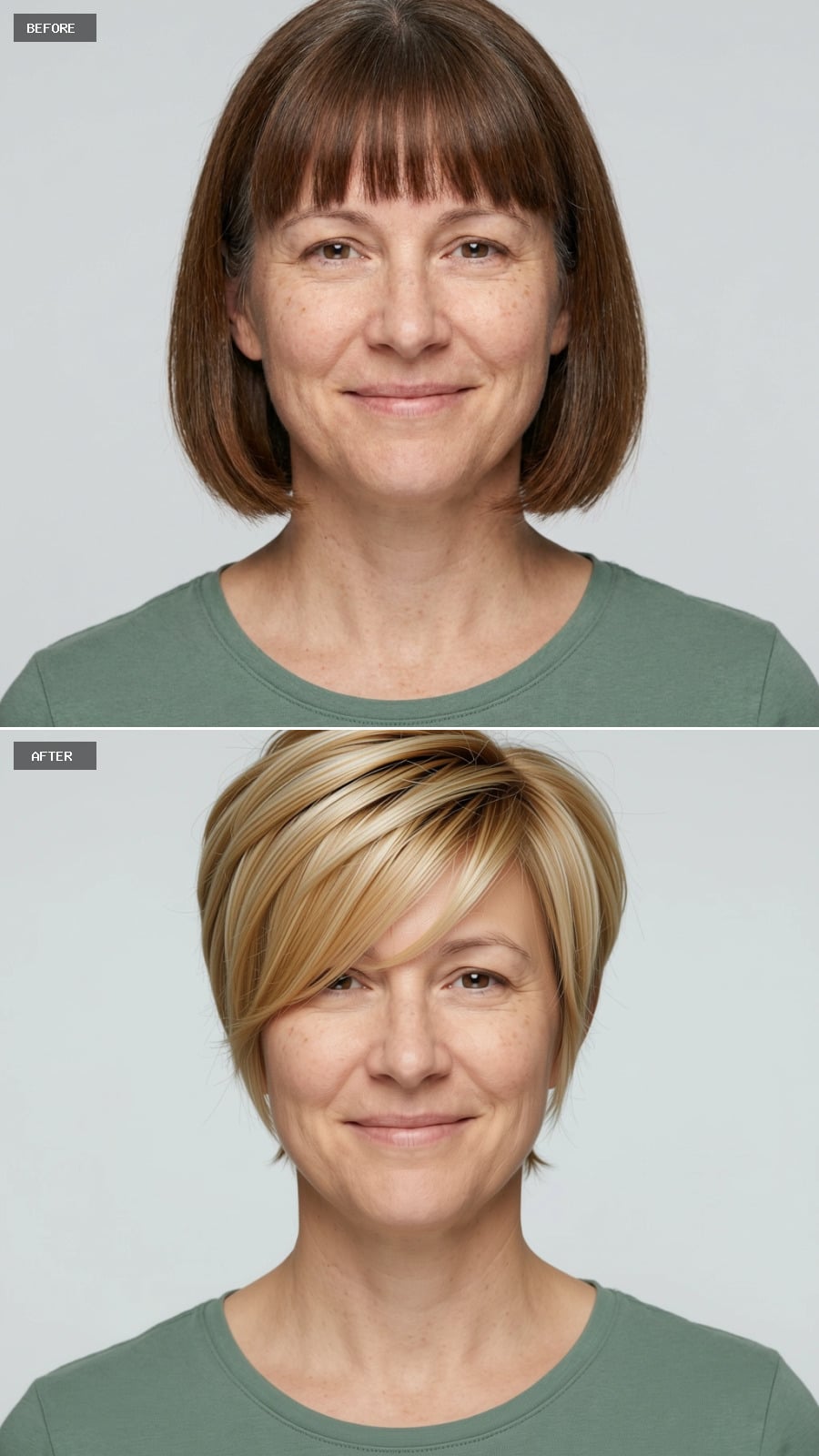
Swapping a chin-length brown bob with straight-across bangs for a cropped blonde pixie bob changes the entire weight of the face. The after cut sits closer to the head at the back with longer pieces sweeping forward across the cheek, a technique that pulls attention toward the eyes rather than the jaw. Warm honey blonde with cream highlights replaces the flat brunette, and the diagonal fringe creates movement where the original style had none.
30. Longer, Lighter, Wavier: How One Color Change Shifts Everything
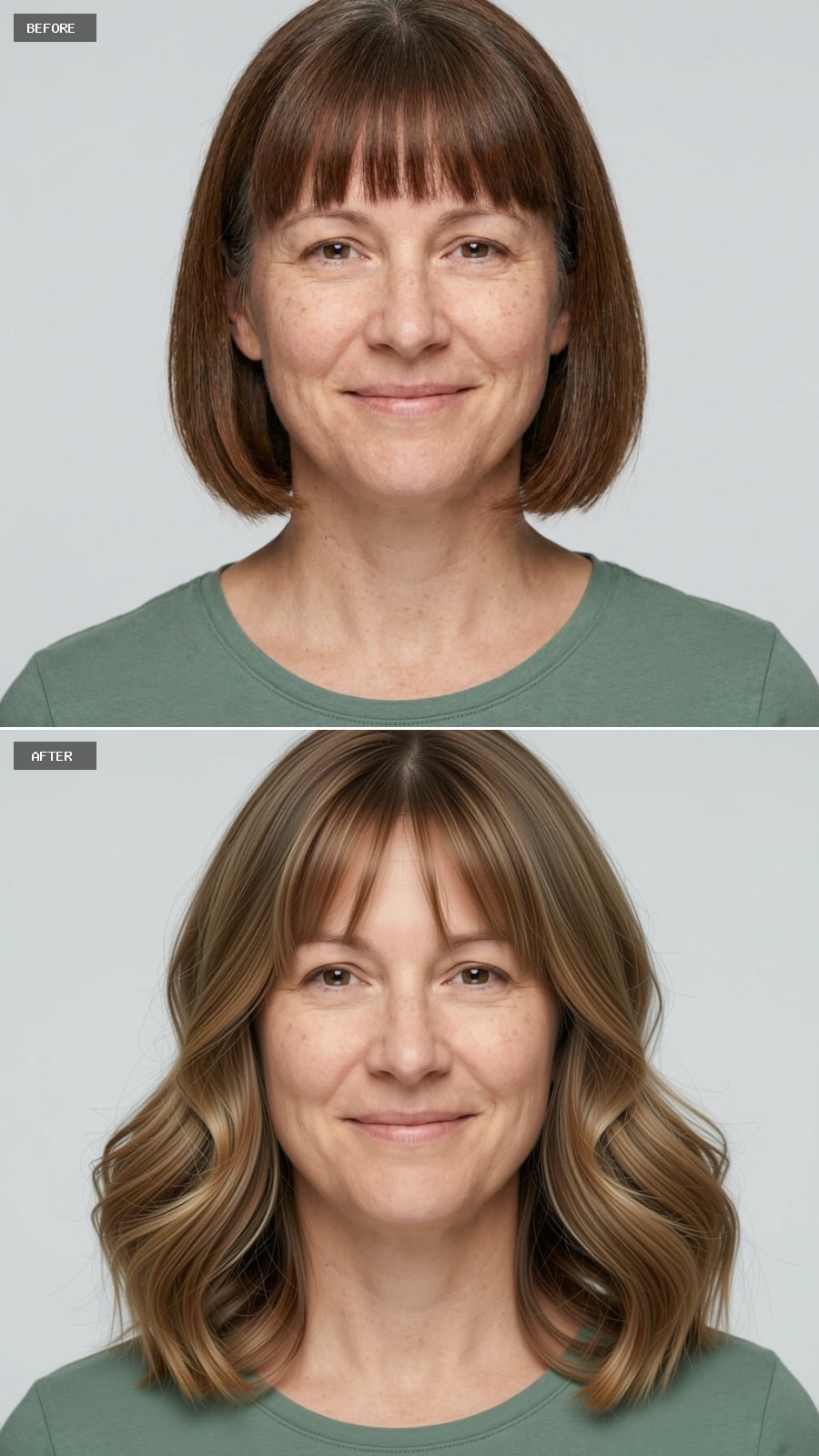
Her before cut sits at chin length, brown hair chopped blunt with a straight fringe that runs edge to edge across her forehead. The shape is neat but flat, with minimal movement from root to tip. It reads practical.
The after version grows that silhouette out to collarbone length, adding loose, barrel-curl waves that create width through the mid-section. The fringe softens from a hard horizontal line to a slightly tapered curtain that skims the brow. The real shift, though, is the color. A warm blonde with honey and caramel highlights replaces the flat chestnut brown, using face-framing pieces to draw light directly toward her cheekbones.
Both versions wear the same sage green crew-neck top, which confirms the hair is doing all the heavy lifting here. The added volume through the sides balances her face shape in a way the close-cropped bob never quite achieved.
29. Peachy Pink Layers and Why the Length Change Does the Heavy Lifting
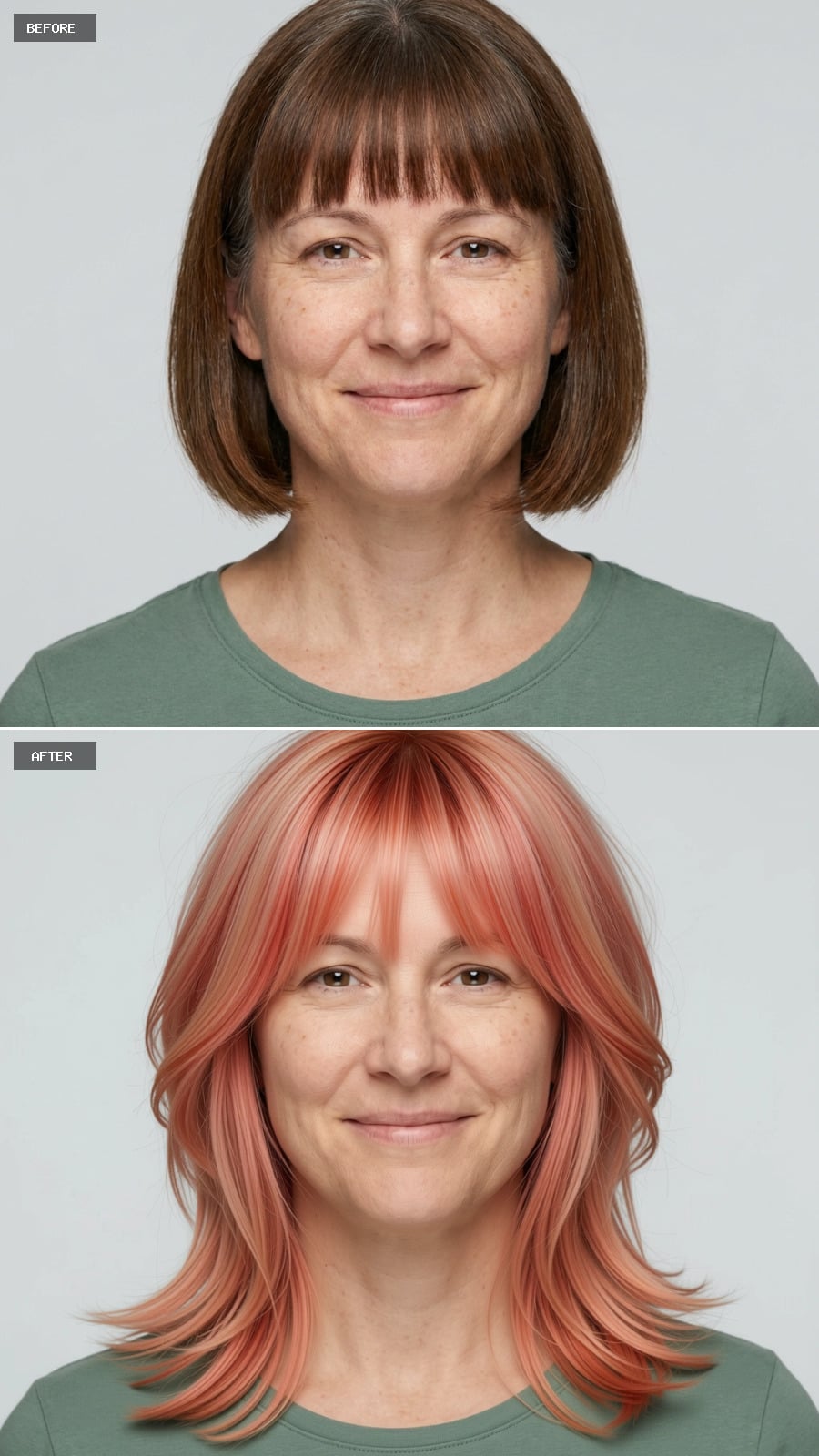
What reads as a complete overhaul is mostly two decisions: color and length. The brown bob gets replaced by shoulder-length layers in a coral-peach tone, with highlights running lighter toward the crown and deepening near the ends. Curtain-style bangs replace the blunt fringe, sitting softer against the forehead. The layered cut adds movement that the previous chin-length shape couldn’t carry.
28. Blonde Bob, Bangs Forward: How One Color Shift Rewrites the Whole Face
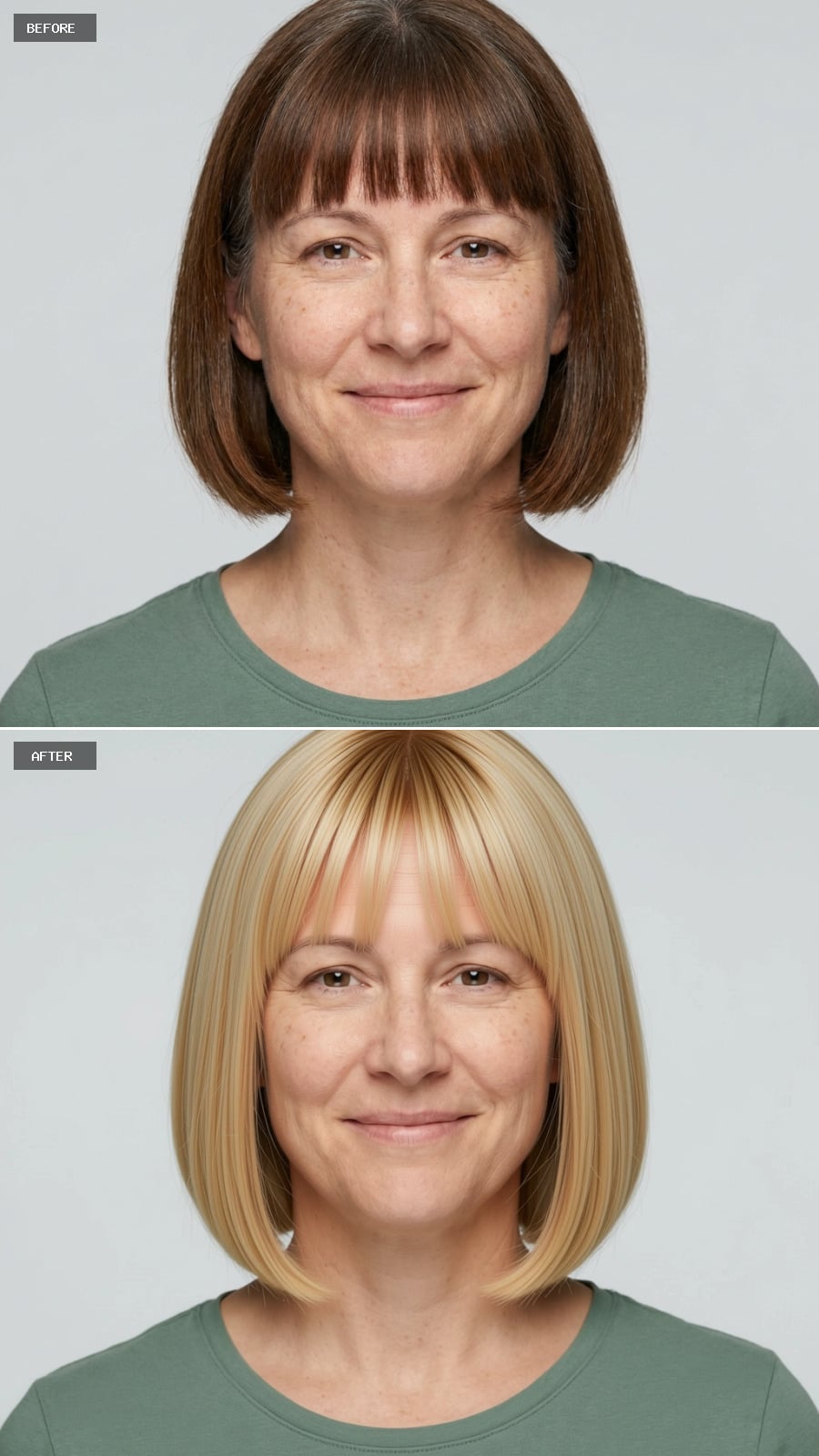
The brown bob sat flat against her jaw, its blunt ends and straight-across fringe doing little to add movement. Going platinum-blonde with warm golden undertones changes the weight distribution entirely: the hair now reads fuller at the sides, and the bangs sweep rather than sit. Skin tone appears brighter against the lighter shade. The sage green crew-neck stays constant, which confirms the color is doing all the work here, not the cut.
27. Dark Chocolate Waves with Highlights: Volume That Changes the Whole Equation
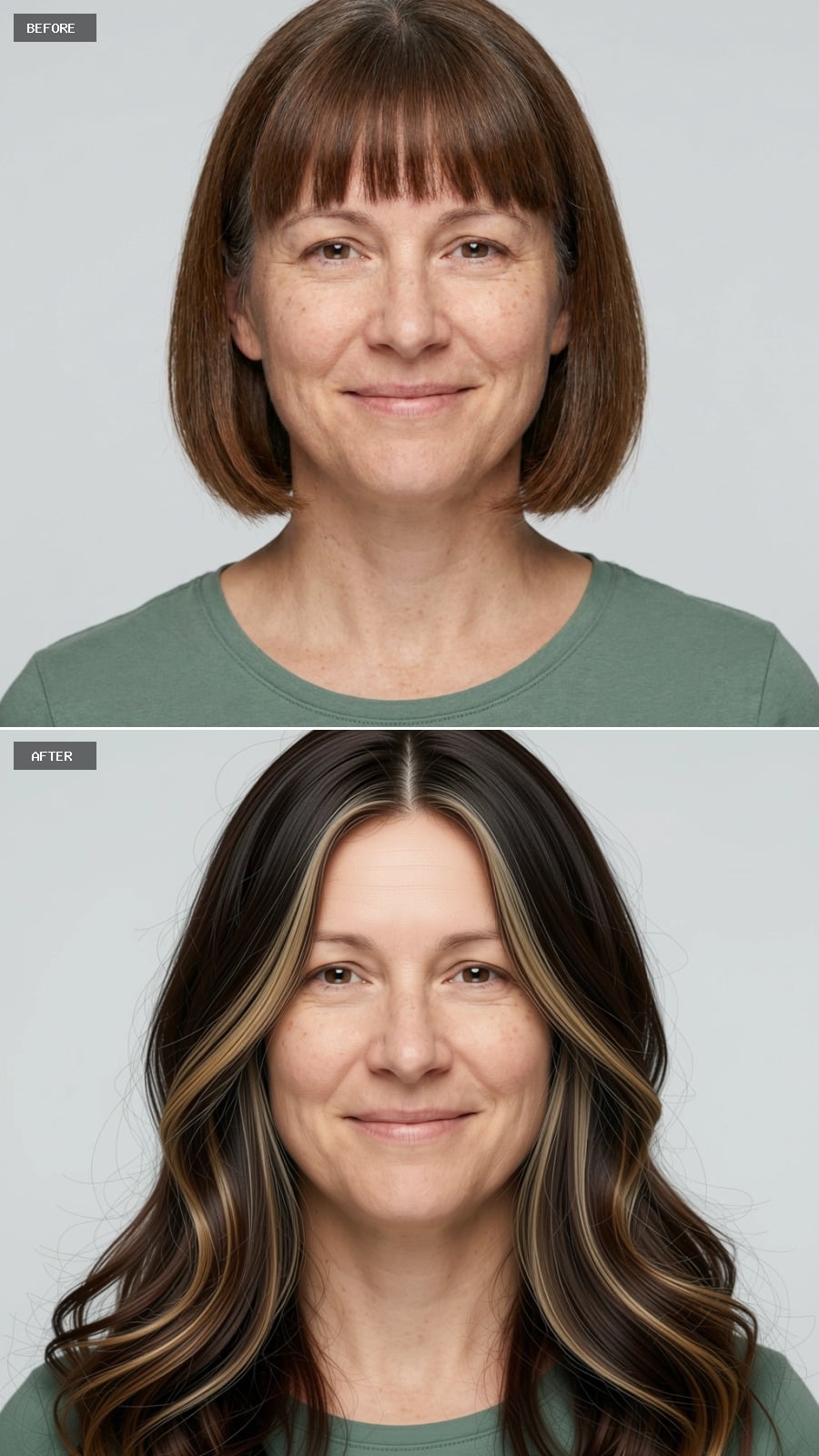
Going from a chin-length bob with blunt bangs to long, wavy hair reads as a completely different person in the best way. The new length falls well past the shoulders, with loose, spiraling waves that create movement where the previous cut had none. Dark brown as the base color shifts the tone cooler and richer, while the caramel and golden blonde highlights run through the mid-lengths and ends in wide, face-framing sections. A subtle silver-grey root line adds depth rather than being covered, which keeps the result grounded rather than flat.
The scoop-neck top in muted sage green stays consistent across both images, which makes the hair change land harder by contrast. Removing the bangs opens up the forehead entirely, and the added volume at the crown changes the proportion of the face. The waves are styled with a large-barrel technique, keeping the curl relaxed rather than tight. It’s a significant shift achieved through color placement and length alone.
Fabric Note: The sage green scoop-neck top reads as a medium-weight jersey knit, with enough structure to hold its neckline without pulling. The rib-free hem and minimal seaming keep it clean against the face, which matters when hair is the focal point. Muted tones in the sage-to-grey range tend to work well alongside warm highlight palettes without competing.
26. Blonde with Movement: How Side-Swept Layers Read Younger Than Bangs
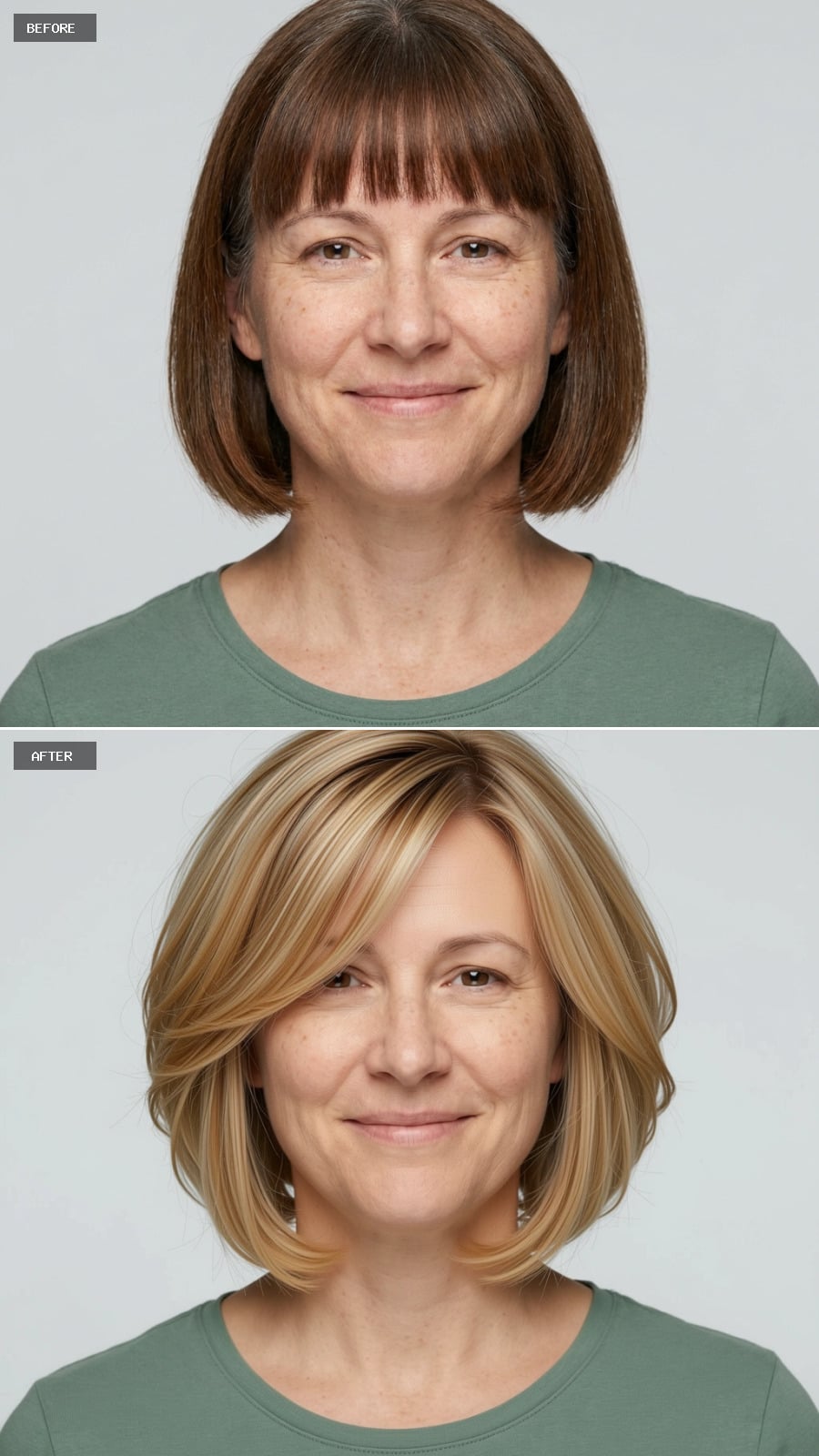
Side-swept layers cut to jaw length do something a blunt fringe cannot: they create diagonal lines across the face rather than horizontal ones. In the after image, the hair moves from a deep root in warm golden-brown through several distinct highlight panels, reaching a near-platinum at the ends. That tonal range, roughly four shades from root to tip, gives the bob a layered depth that reads as intentional rather than processed.
Silver drop earrings sit just below the lobe, small enough to catch light without competing with the hair. The sage green top appears again, its scoop neckline keeping the collarbone visible and the overall silhouette clean. With the hair now falling open around the face rather than framing it with a hard geometric edge, the entire upper third of the look shifts in proportion.
25. Highlights Cut Short: How a Pixie Bob With Dimension Reads Completely Different
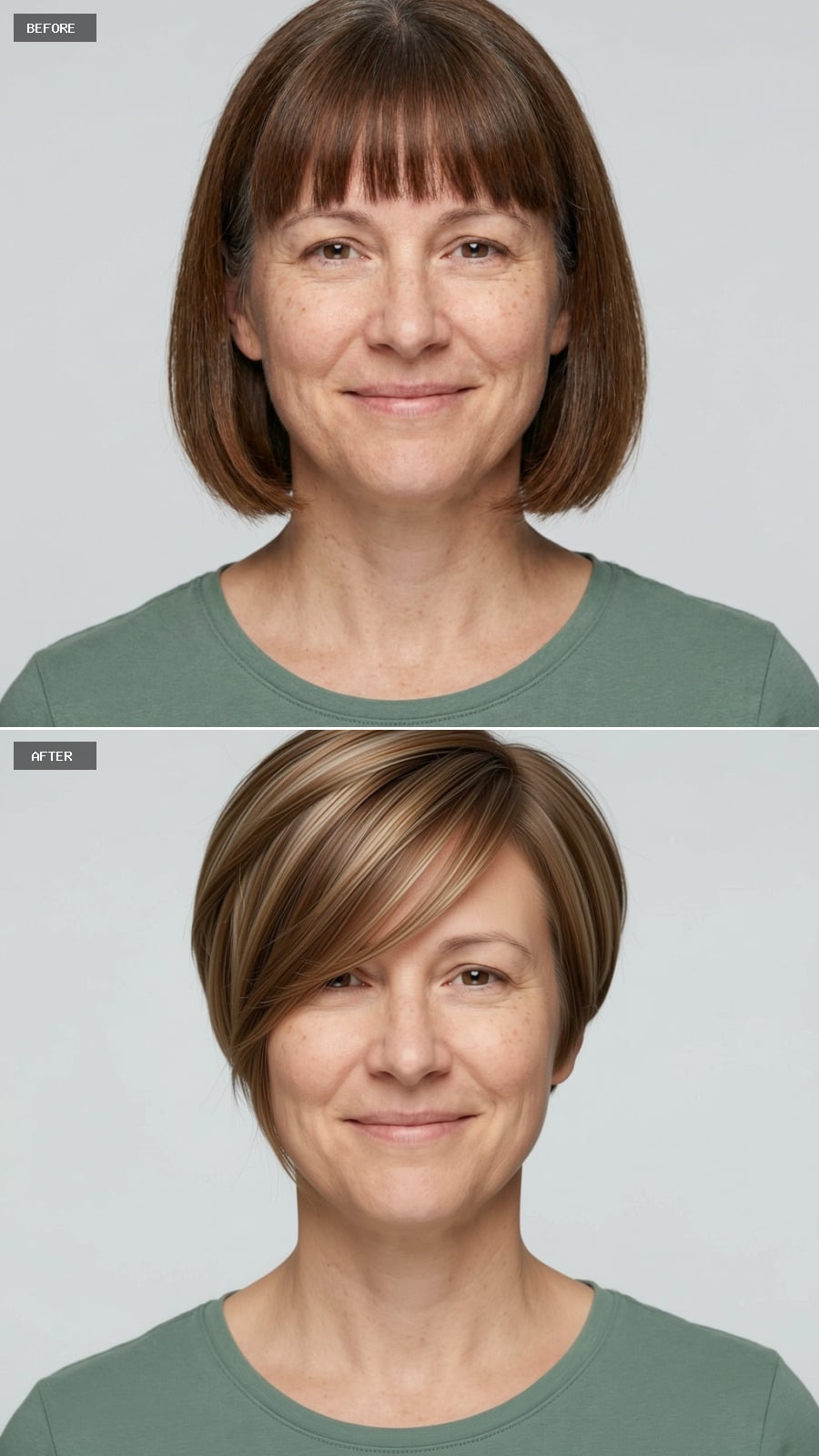
Brown with warm blonde and cream highlights running in wide sections from root to tip gives this pixie bob a layered depth that a flat single-process color simply cannot produce. The cut itself sits close at the nape, with length angled forward toward the jaw and a side-swept fringe that skims above the brow rather than cutting straight across it. That diagonal line across the forehead opens up more of the face than bangs ever allow. Paired against a sage green scoop-neck top in a mid-weight knit, the lightness at the crown reads in sharp contrast to the heavier, darker bob from before.
24. Rose Gold Layers at Shoulder Length: When Color and Cut Work Together
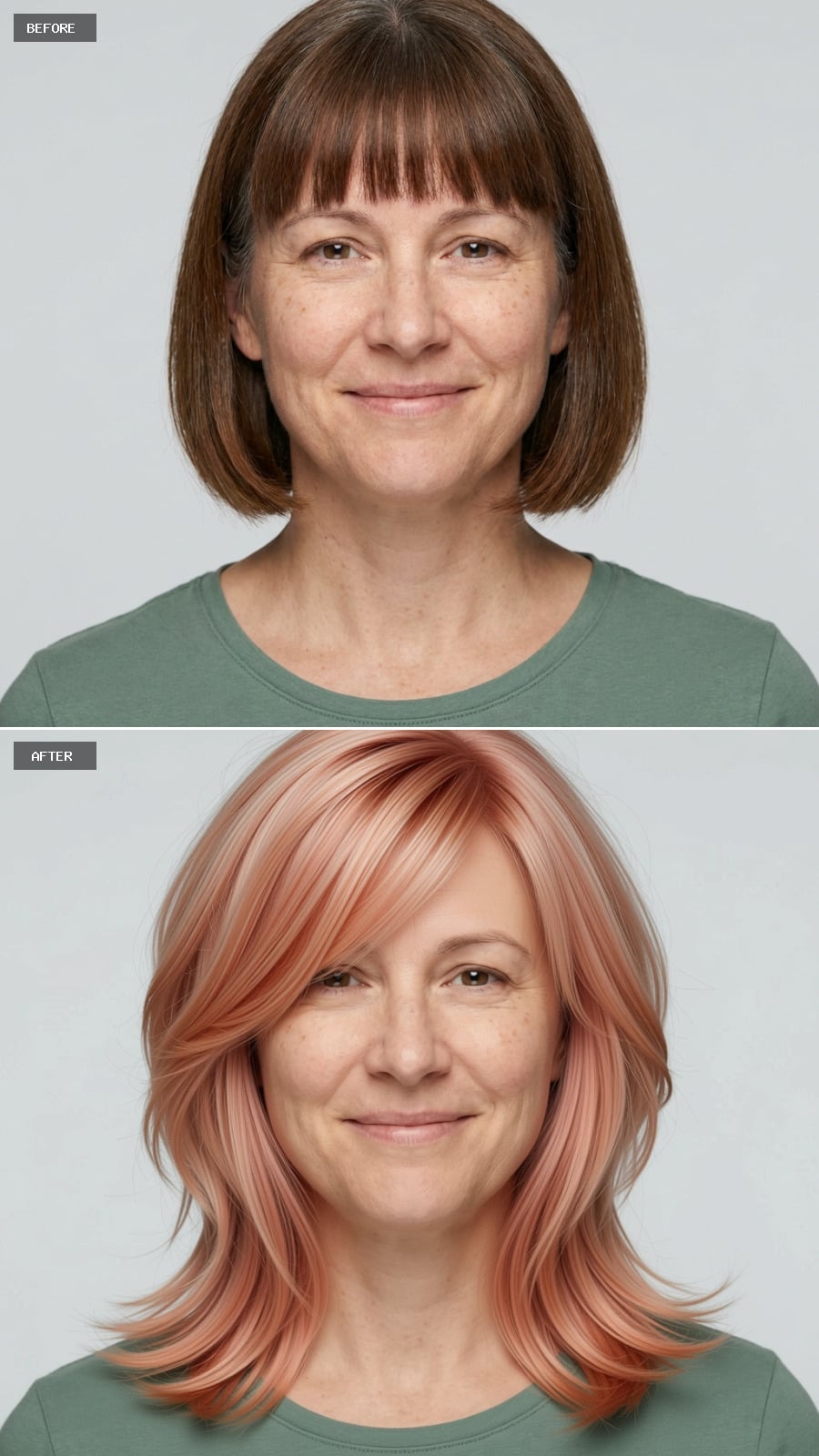
Pink-peach hair in this shade sits closer to a warm rose gold than anything bubblegum or pastel. The color runs deeper at the roots and lightens toward the ends, giving the layers visual separation without needing much styling product to do it. Face-framing pieces fall at cheekbone level and draw attention inward, which reads differently than a blunt line sitting at the jaw.
Length lands just below the shoulders, with layers cut to move rather than stack. The slight wave in the ends looks like it comes from a round brush or a large-barrel iron rather than a natural curl pattern. Paired again with that sage green scoop-neck in a medium-weight jersey, the warmth in the hair pulls a subtle pink undertone out of the fabric that wasn’t visible against the darker brown.
23. Balayage Waves at Shoulder Length: When Bangs Come Off and Volume Moves In
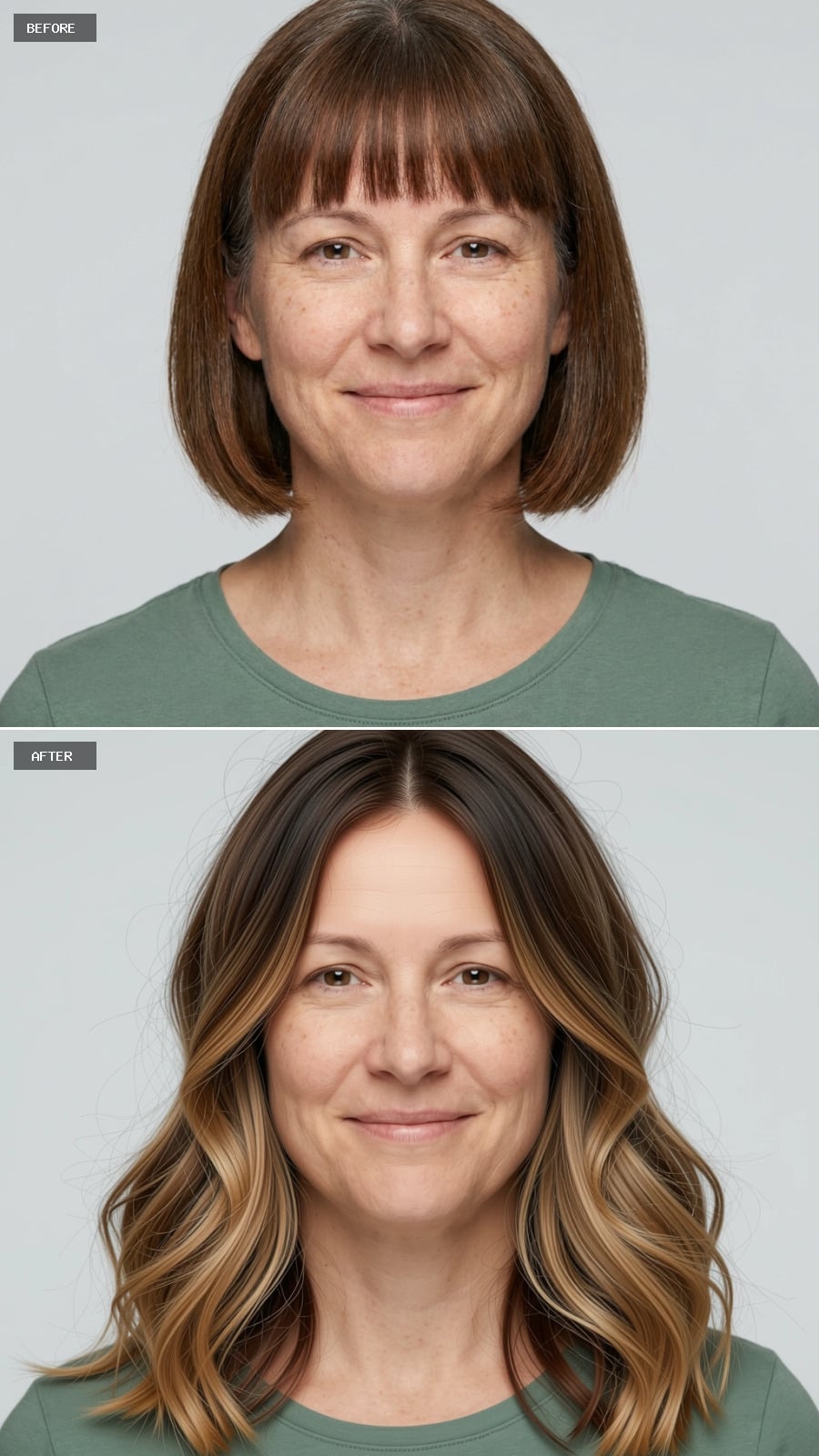
Removing the fringe opens up the entire forehead, and that single change shifts how the face reads before any color work is even considered. Length drops from a chin-level bob to collarbone, and the added inches give the waves somewhere to land. The result is a silhouette with weight at the sides rather than across the brow.
The color does specific work here. Dark brown roots graduate into a mid-shaft caramel, then lighten further toward sandy blonde at the ends. That pattern of light draws the eye downward and outward, adding the impression of width through the cheekbones.
Styling is loose and lived-in, with bends rather than tight curls, and a center part that replaces the blunt horizontal line of the former fringe. The sage scoop-neck top stays constant between both images, which makes the hair’s impact easier to isolate and read clearly.
22. Blonde Waves, No Bangs: How Volume Rewrites a Face at 45
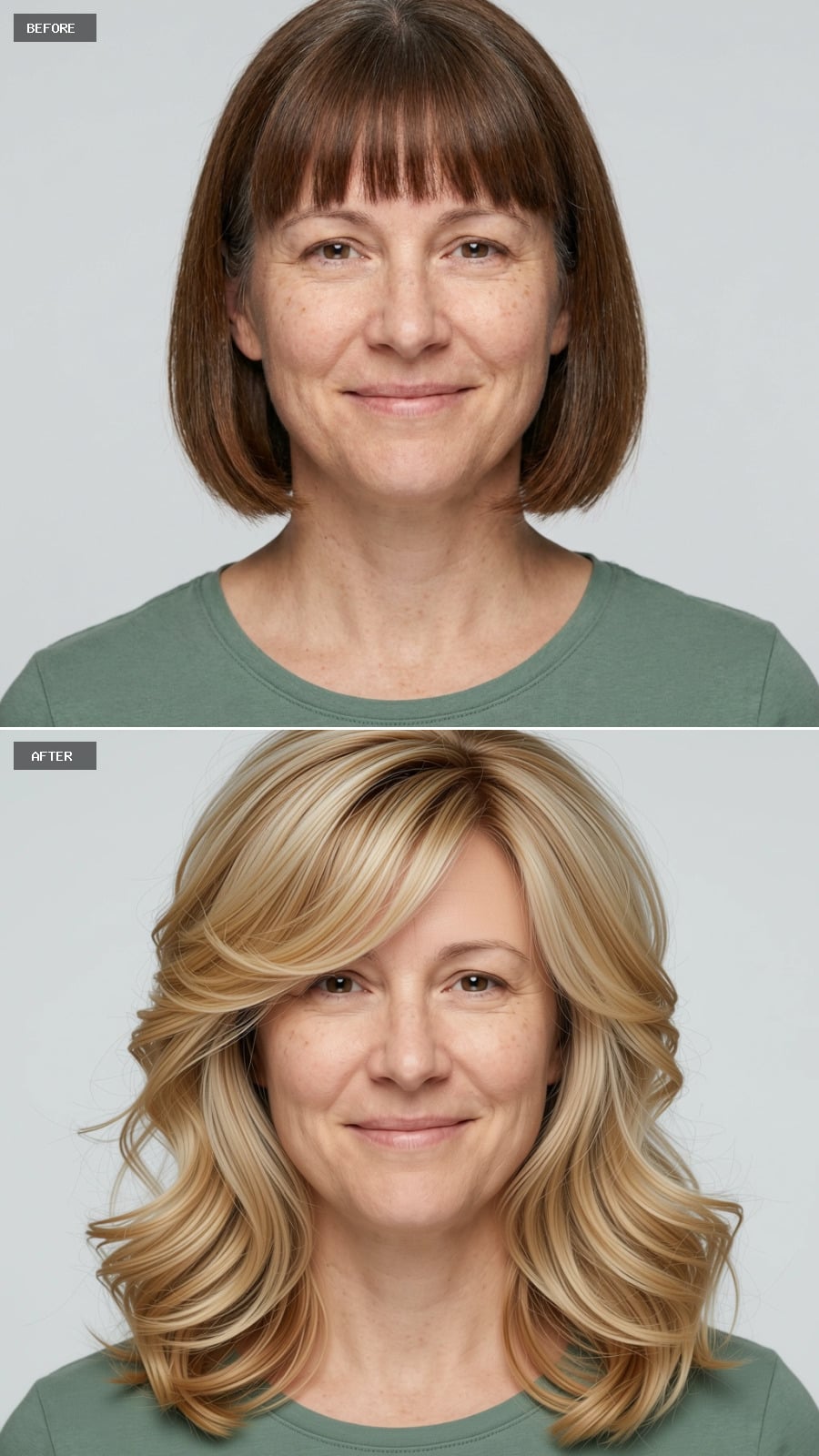
Styled into loose, shoulder-length waves with a side part, this balayage reads warm honey at the roots and pale cream at the ends, giving the hair natural-looking depth without a single flat section. Volume sits wide at the cheekbones rather than on top, which shifts the visual weight of the face outward. Layers fall in large, barrel-curled sections rather than tight ringlets, keeping the silhouette soft without reading overdone. Forehead fully visible, cheekbones catch the light differently now.
History Corner: Barrel curls as a styling technique date back to the Victorian era, when women used heated metal rods wrapped in cloth to achieve structured ringlets for formal occasions. By the 1970s, the technique had loosened considerably, with larger diameter tools producing the softer, brushed-out wave shape seen in this makeover. Modern ceramic barrels, typically ranging from one to one and a half inches in diameter, replicate that decade’s relaxed volume while distributing heat more evenly than their predecessors.
21. Red Waves and Bangs Rebuilt: How Length Does What Color Can’t Do Alone
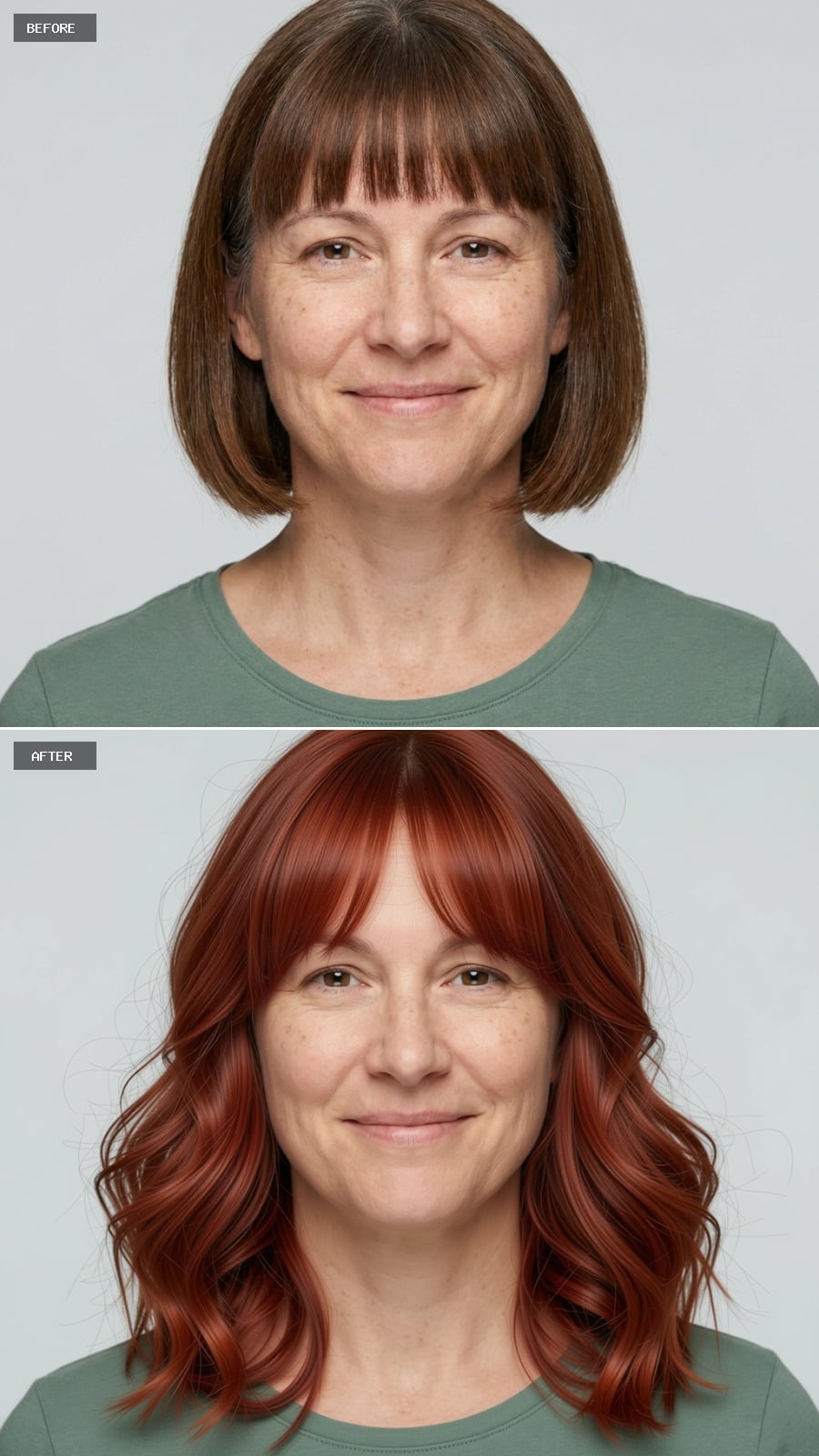
Copper-red with warm auburn lowlights replaces a flat brown bob, but the color shift is only half the story. Volume carries the real weight here. Loose, medium-barrel waves fall past the collarbone, adding width and movement that the chin-length cut never allowed. Feathered bangs replace the blunt straight-across fringe from before, sitting higher on the forehead and drawing the eye upward rather than across. The part is slightly off-center, which keeps the silhouette from reading too symmetrical. Face-framing pieces curl forward at the cheekbones, softening the jawline without requiring any structural cut change. Texture runs through the mid-lengths and ends, giving the hair visible grip rather than the smooth, heavy fall of the original style. The same sage green jersey scoop-neck keeps the focus entirely above the shoulders, where all the change is happening.
20. Longer and Darker, With Bangs That Finally Have Room to Work
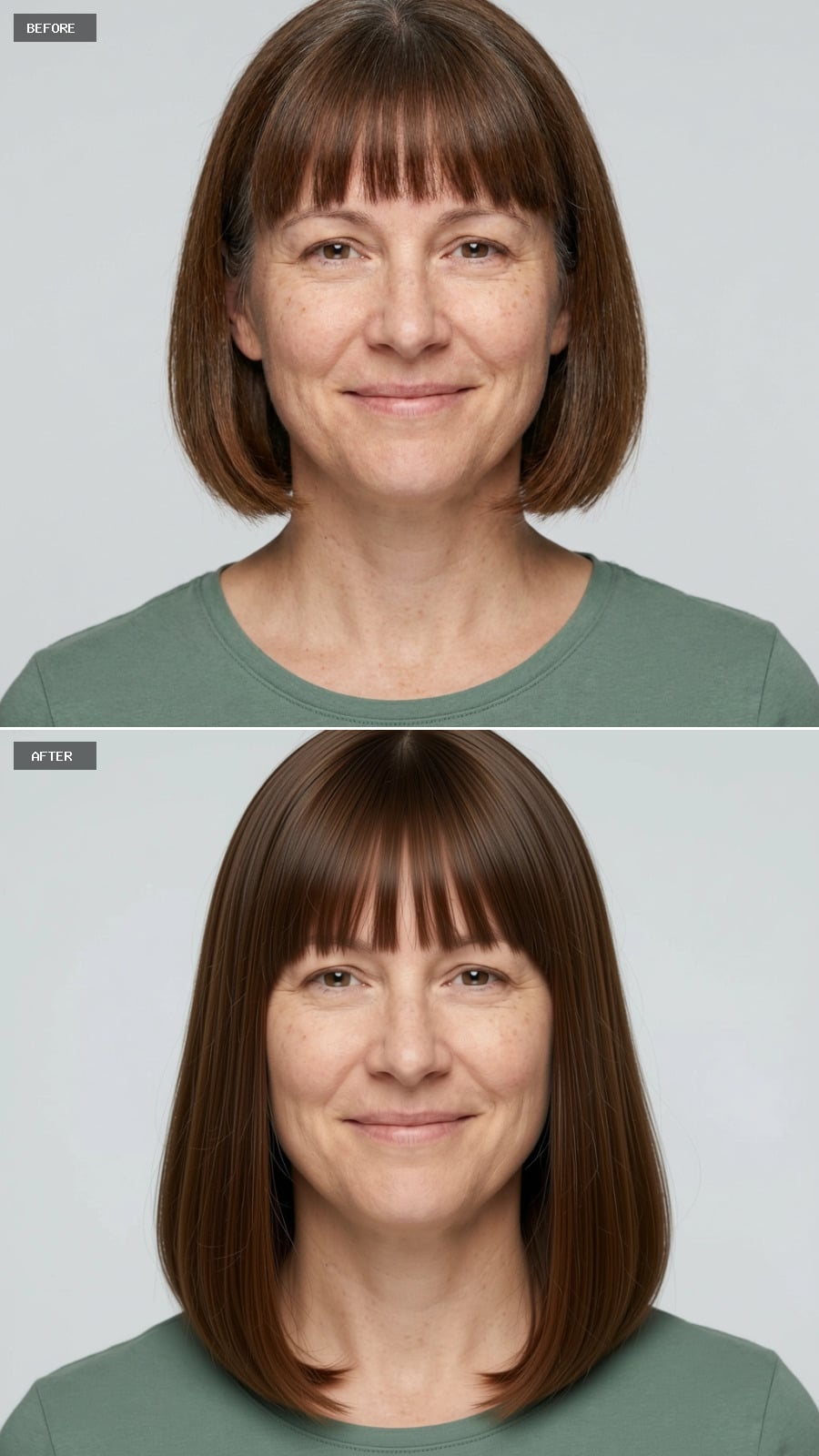
Switching from a chin-length bob to a collarbone-skimming lob gives the bangs a visual counterweight they didn’t have before. In the after image, the hair reads as a deep mahogany brown, noticeably richer than the cooler, ashier tone in the before, and the added length pulls the silhouette downward in a way that softens the jaw without framing it so tightly. The blunt fringe stays intact but sits differently now, less like a standalone feature and more like one part of a longer line. Subtle highlights run through the mid-lengths, catching light along the straight-ironed surface.
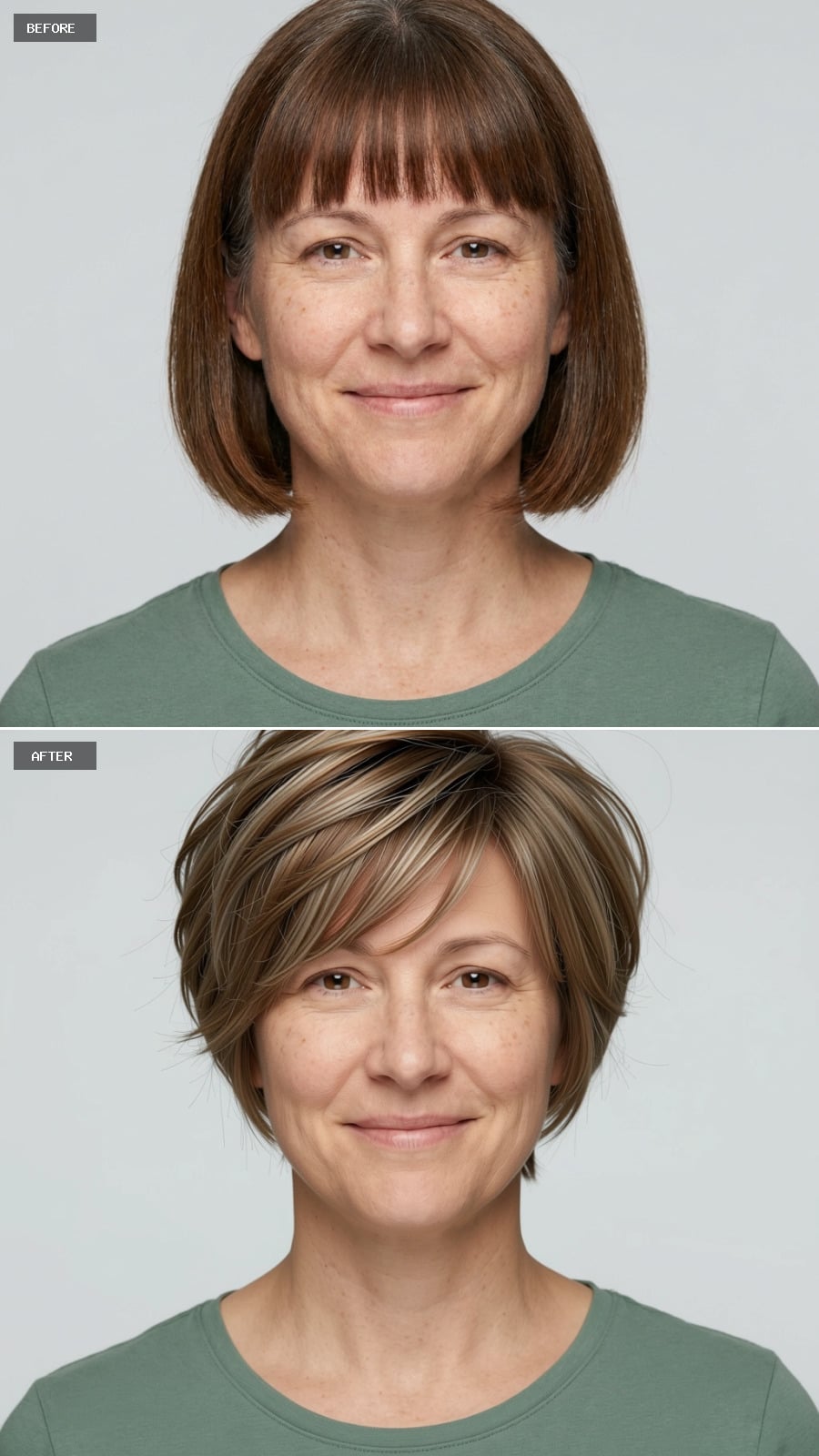
19. Highlighted Layers Cut Short: How Dimension Reads When Bangs Shift Sideways
❤️ Would you like to save this?
Dark brown gives way to a blended mix of ash blonde, warm honey, and near-white ribbon highlights running through a layered pixie-length cut. The bangs sweep diagonally across the forehead rather than sitting flat, which opens the upper face in a way the original blunt fringe never did. Texture does the structural work here.
18. Blonde Layers, Longer Length: What Happens When Bangs Stop Being the Focal Point
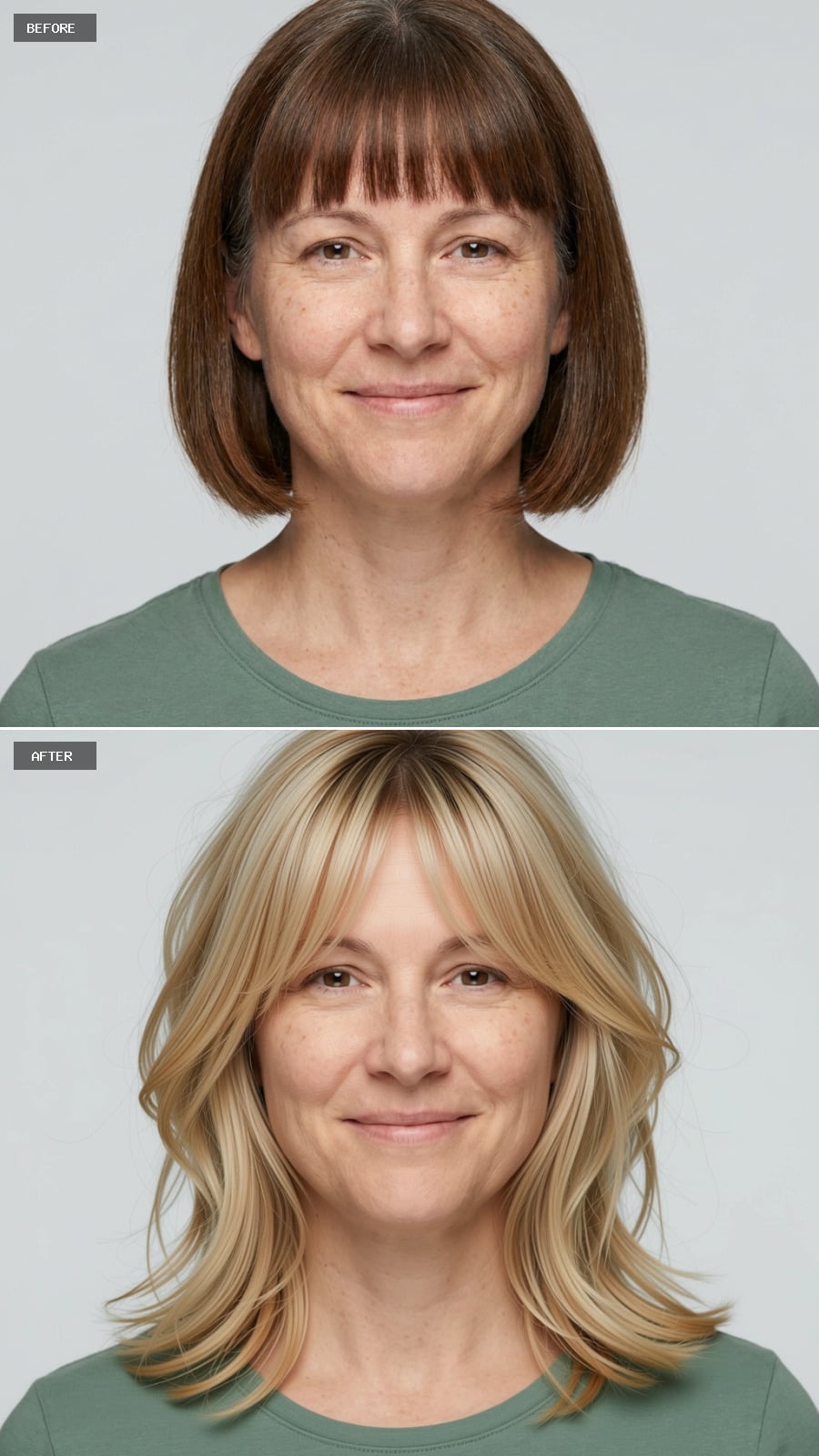
Blunt bangs and a chin-length bob keep attention concentrated at the forehead. Here, the shift to a shoulder-length blonde shag redistributes that weight entirely, pulling the eye down and outward through layers that move at the collarbone.
Honey-to-platinum highlights run through the midlengths and ends, with visible warmth near the roots that prevents the overall tone from reading flat. The bangs remain, but they’re lighter now, feathered rather than solid, which lets the face breathe in a way the blunt cut didn’t allow. Loose movement through the lower layers does most of the structural work.
Beauty Pairing: Feathered bangs hold their shape longest when blown dry with a round brush directed slightly to one side, which prevents the hair from splitting down the center after a few hours of wear. A light-hold mist applied before drying, rather than after, keeps the texture natural without adding visible stiffness.
17. Peach-Gold Length: What Soft Waves Do When a Bob Steps Aside
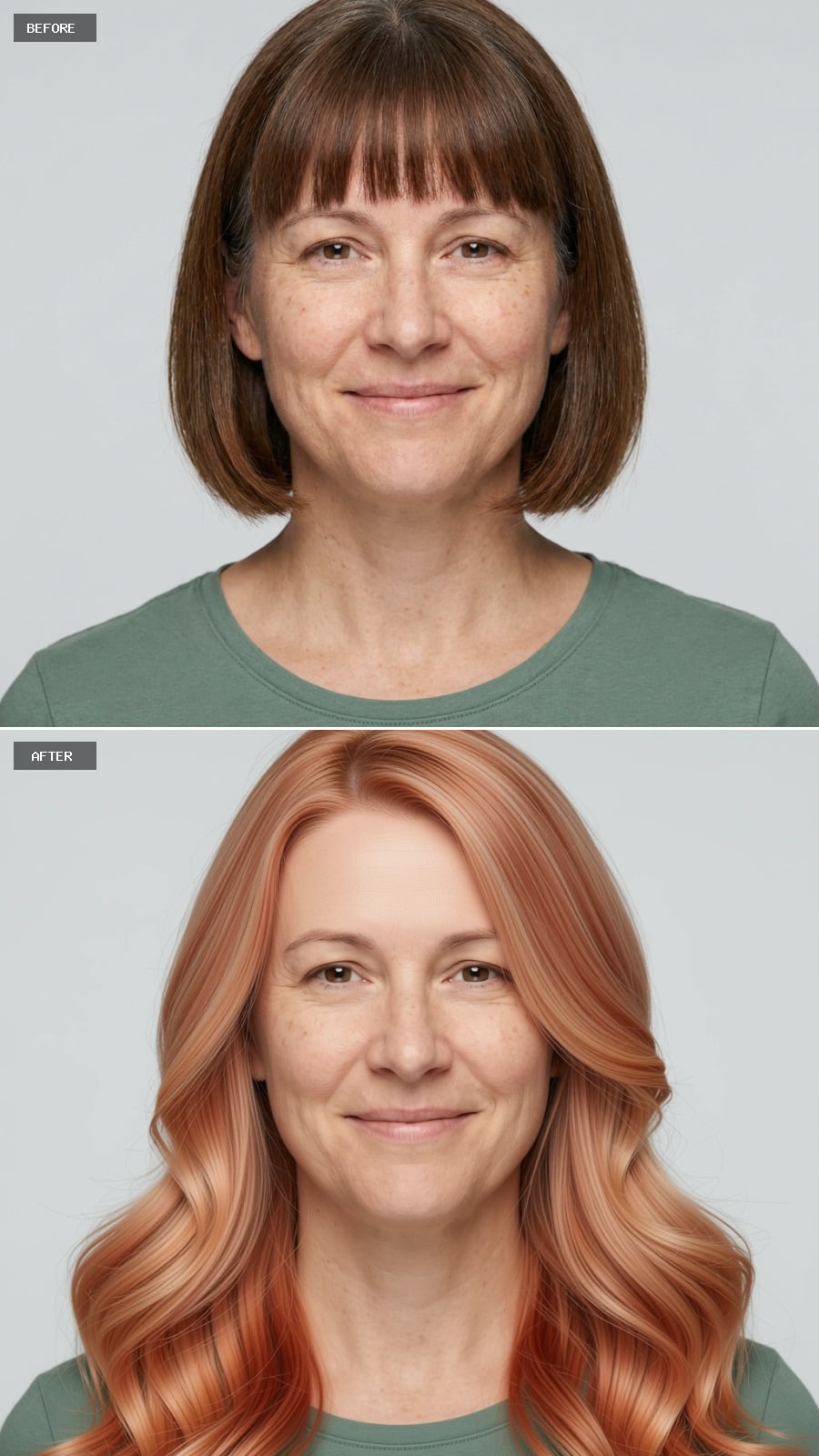
Her hair shifts from a chin-length brown bob with blunt bangs to long, loose waves in a warm peach-gold tone that sits between copper and strawberry blonde. The color isn’t uniform: lighter sections run through the mid-lengths and ends, creating depth without a hard contrast line. Waves break at the collarbone and continue past the shoulder, adding width and movement that the previous cut kept entirely compressed against the jaw.
The sage green scoop-neck top reappears, which makes the color shift read even more clearly against the same base. Where the bob pulled the eye inward and downward, the waves distribute attention across the full width of the face and neck. That lateral spread is the structural argument for length at 45, and this makeover makes it plainly.
16. Wavy Length With Warm Highlights: What a Bob Looks Like With Room to Breathe
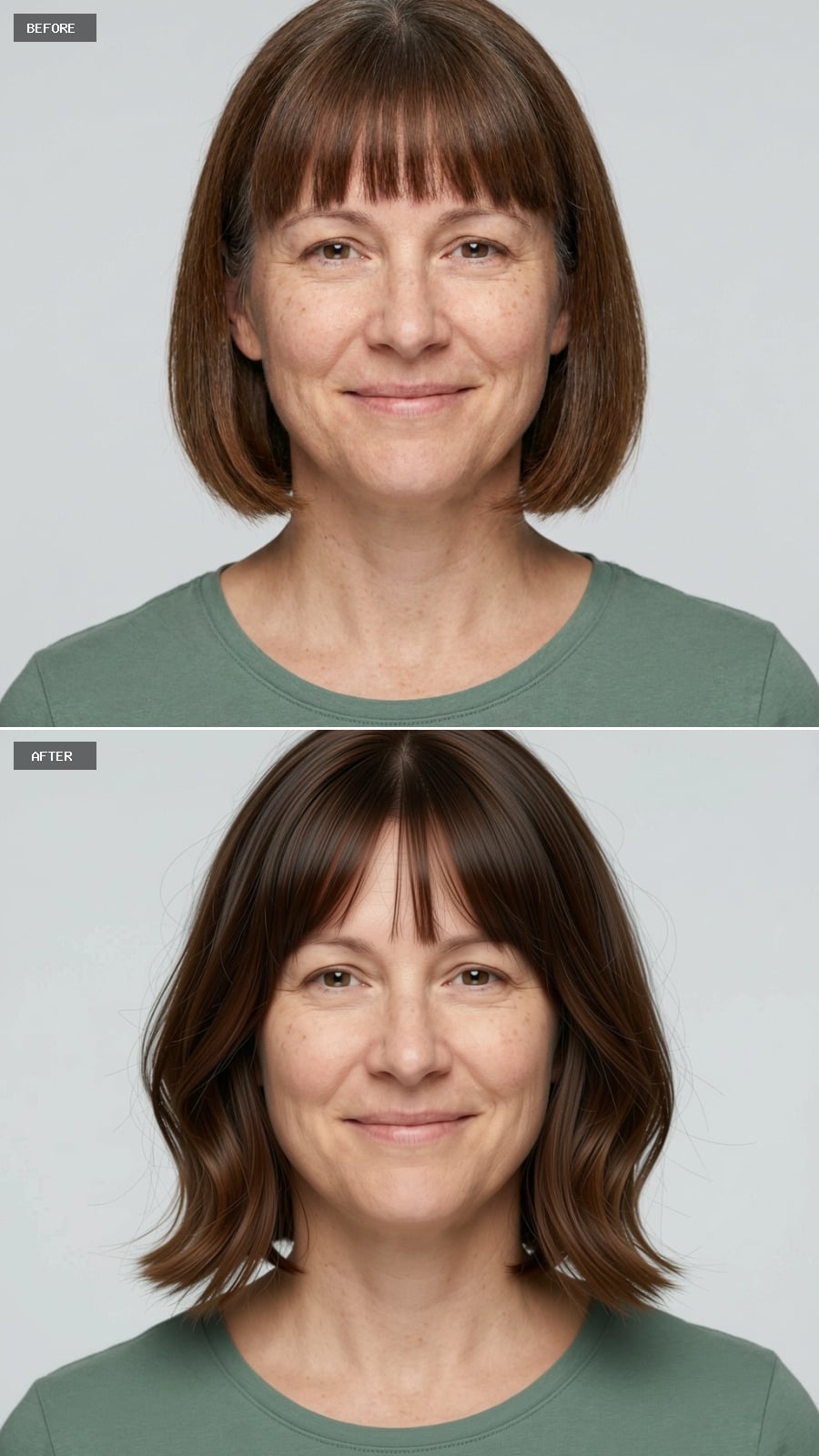
Switching from a blunt chin-length bob to a collarbone-grazing cut with loose waves changes the entire weight distribution of the look. The after shows chocolate brown hair with auburn-toned highlights running through the mid-lengths, giving the hair visible separation without relying on heavy product. Soft waves break just below the jaw and continue to the ends, adding width at cheek level where a close-cropped bob compresses it. The fringe is still present but sits with more air between strands, landing above the brows rather than flush against the forehead. Against the sage green jersey scoop-neck, the longer silhouette reads proportional rather than tucked.
15. Blonde Length After a Bob: What Layers Do to Jawline and Volume Together
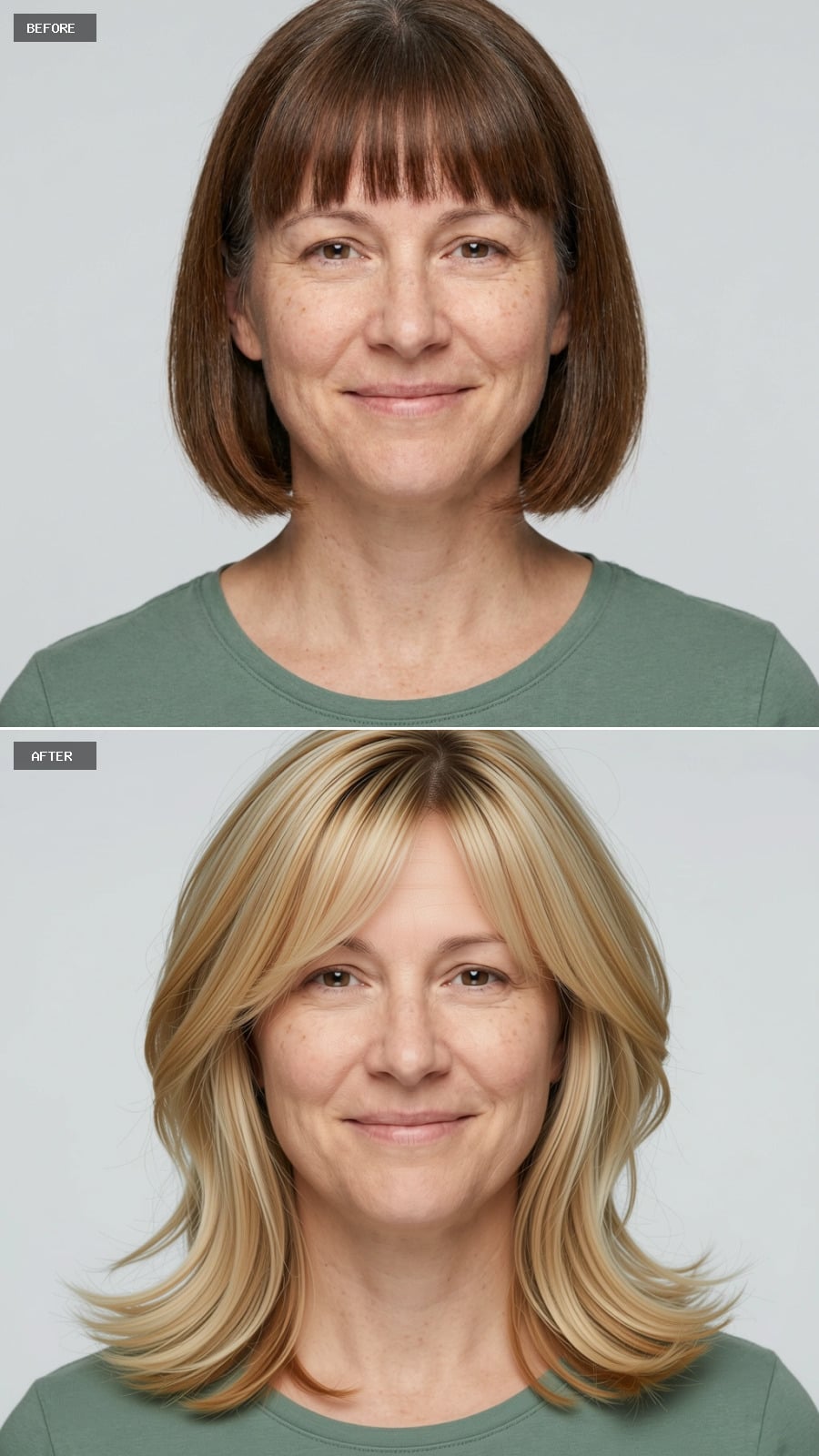
Wheat-blonde hair cut to mid-shoulder length replaces the previous chin-skimming brown bob, and the difference reads immediately across the jawline. Wispy, side-swept bangs fall at an angle rather than lying flat across the forehead, which opens up the upper face without fully abandoning the fringe. The cut features long layers throughout, with the ends flipped outward in a loose blowout that adds width at the collarbone rather than at the cheekbones. That shift in where the volume lands is what changes the proportion most visibly. The color moves from a slightly darker root through golden mid-lengths to brighter ends, keeping the overall tone warm without reading as yellow. She wears the same sage green scoop-neck top from the before photo, which confirms that the hair alone is doing the structural work here. Nothing about the look relies on product buildup or heavy styling tools to hold its shape.
14. Bold Red and a Pixie Cut: What Happens When a Bob Loses Its Weight
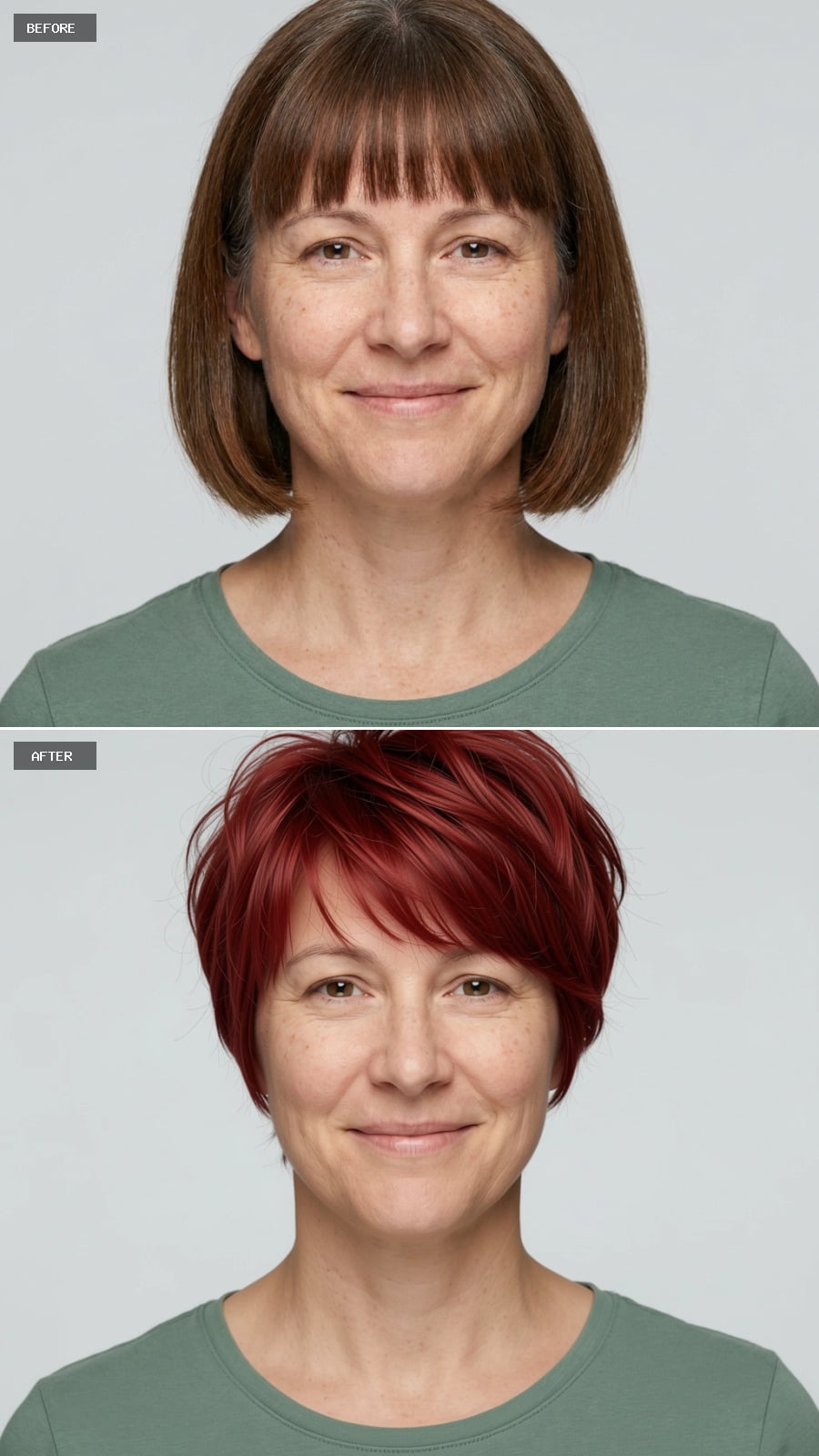
Cranberry-red hair with visible depth variation sits short and layered, with piece-y fringe falling at an angle across the forehead rather than straight across. The cut reads as a textured pixie-bob, longer at the crown and clipped close at the sides, which pulls volume upward instead of widening the face horizontally. Against the sage green jersey-knit top, the saturated red reads warmer and richer than it would against a neutral. The shift from a flat brown bob to this cut removes the horizontal line that the previous blunt ends drew across the jaw.
How the Fringe Angle Changes the Geometry of the Forehead
In the after image, the fringe doesn’t fall parallel to the brow line. It sweeps at roughly a 20-degree diagonal, which breaks the face into asymmetric sections and draws the eye across rather than down. That diagonal also interrupts what the previous center-parted, ruler-straight bang was doing, which was dividing the face into two equal halves with no visual movement. At 45, asymmetric fringe placed this high on the forehead tends to open the eye area without requiring brow-length precision.
13. Blonde Waves and Swept Bangs: What Longer Hair Fixes That a Bob Can’t
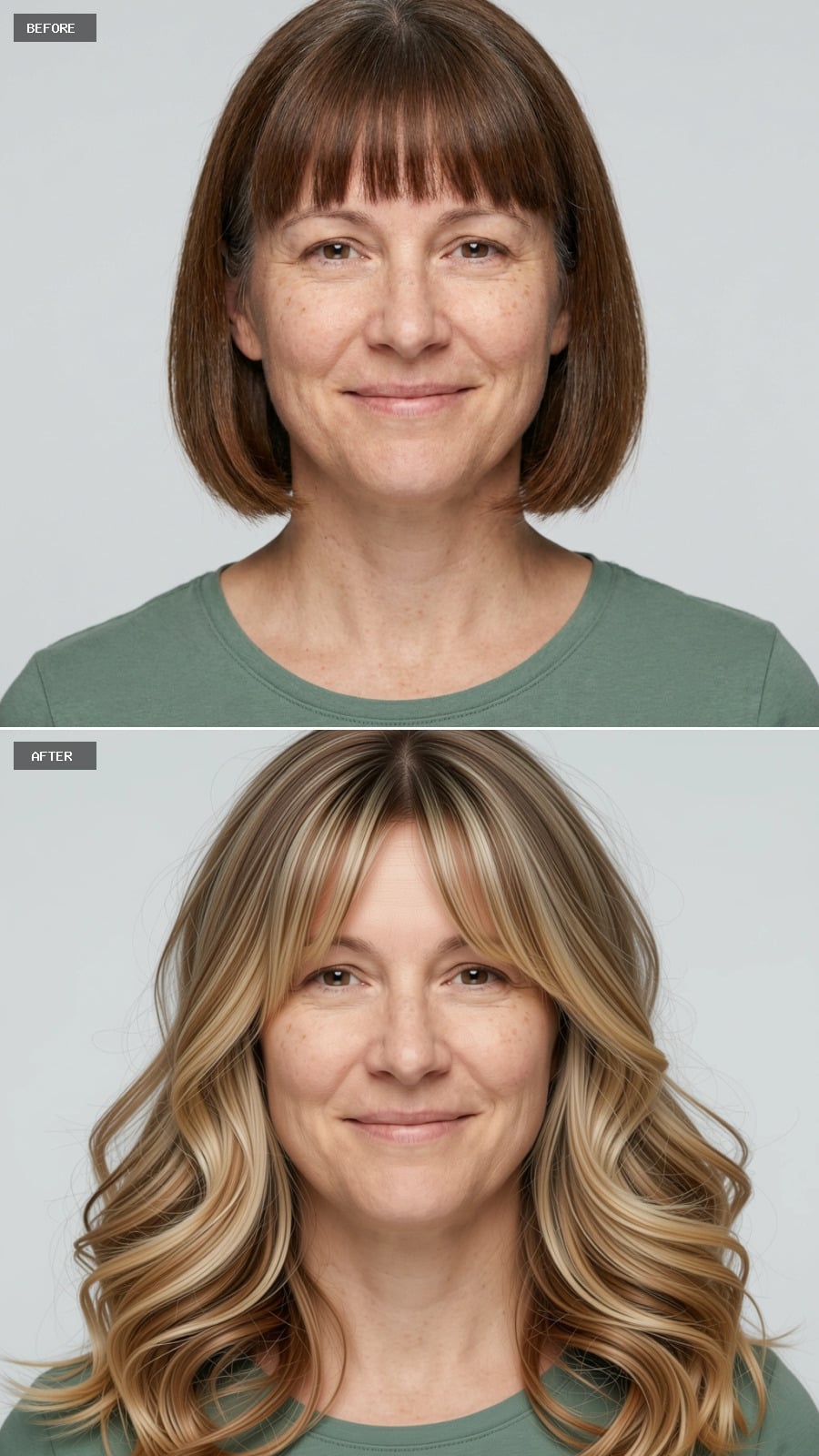
Warm blonde balayage runs from mid-root to wavy ends at collarbone length, with the lightest sections concentrated around the face and through the midsections of each wave. Soft curtain-style bangs replace the blunt fringe, sweeping outward rather than cutting straight across. Loose spiral waves add width at the jaw without bulk at the crown. The sage scoop-neck top carries through from the before, grounding the comparison. Length at this level draws the eye downward and breaks the horizontal line that shorter cuts create across the cheekbone.
12. Swept Blonde Bob: What Side Fringe Does to a Face That Bangs Kept Flat
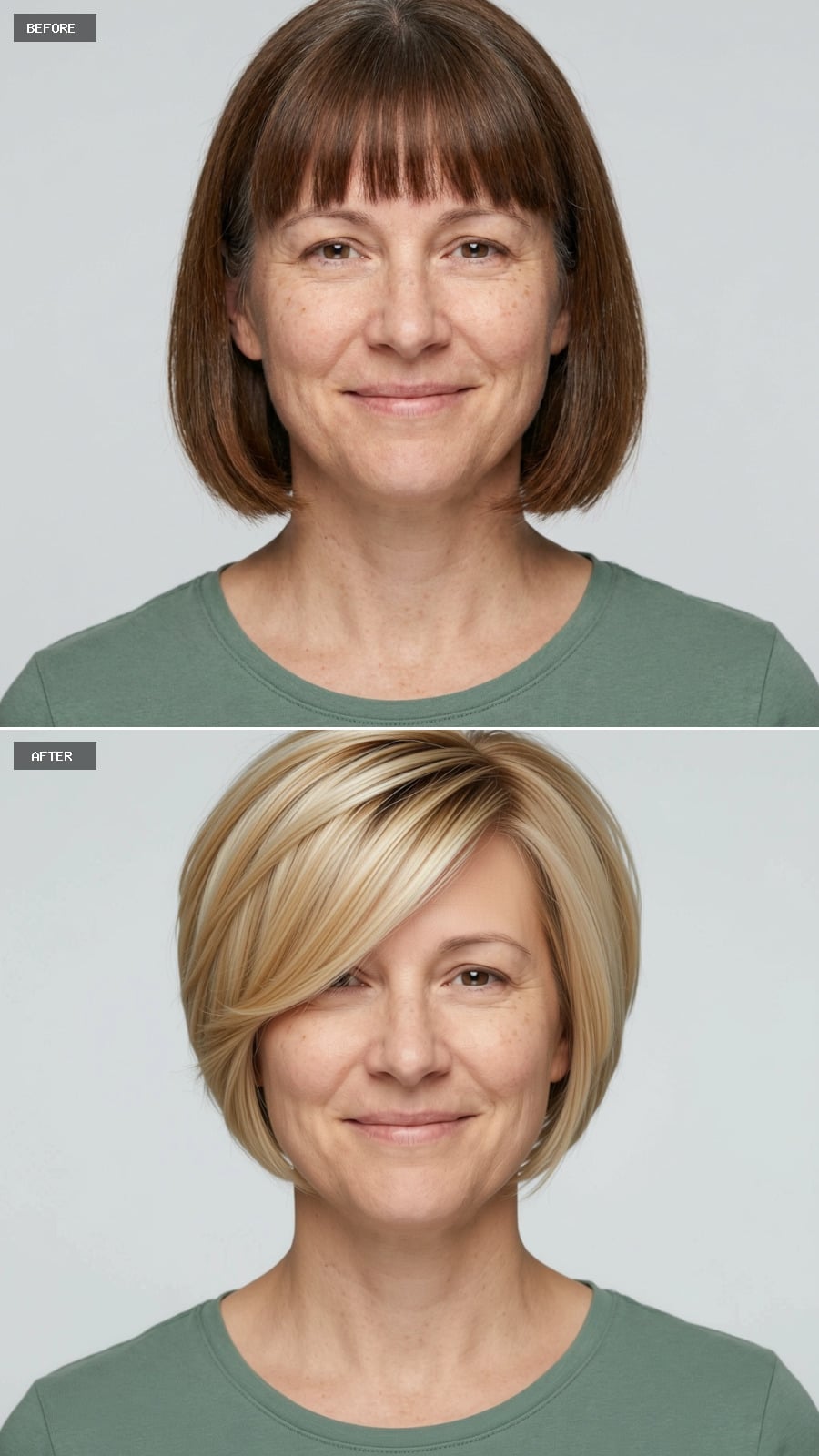
Going from a center-parted brown bob with blunt fringe to a blonde bob with a deep side part changes the entire geometry of the face. The after cut sits just below the jaw, with the hair swept across the forehead rather than dropped straight down, which pulls the eye diagonally instead of horizontally. The color moves from flat medium brown to a layered blonde with brighter highlights concentrated at the crown and face-framing sections, giving depth without added length. Volume sits at the sides rather than the top, which broadens the mid-face in a way a center-parted blunt cut actively works against. The sage green scoop-neck top is consistent across both images, which makes the color shift read even more clearly against the same fabric tone.
11. Wavy Length in Deep Brown: What Volume Looks Like Without a Straight Edge in Sight
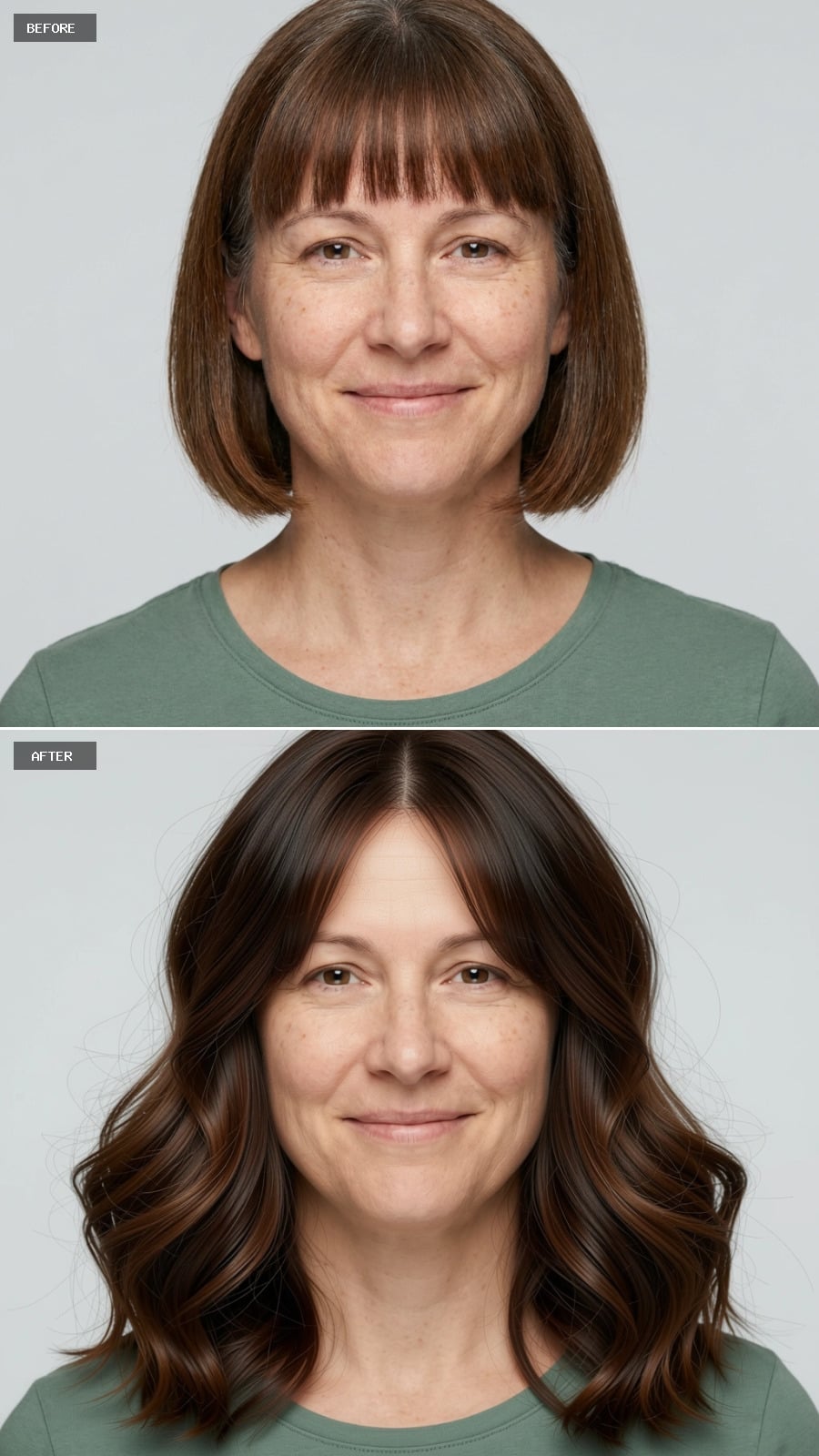
Soft, shoulder-grazing waves replace the blunt bob entirely, and the shift changes how the face reads from the forehead down. The part moves to center, and the waves fall in loose, irregular curves rather than uniform curls, which keeps the overall shape from looking overdone. Depth in the brunette shade runs cool rather than warm, with faint chestnut movement visible only where light catches the mid-lengths. The sage scoop-neck top, the same one from before, now reads as quieter against the added hair volume framing the face.
10. Pink Pixie Cut: When Side-Swept Fringe Does the Work Bangs Never Could
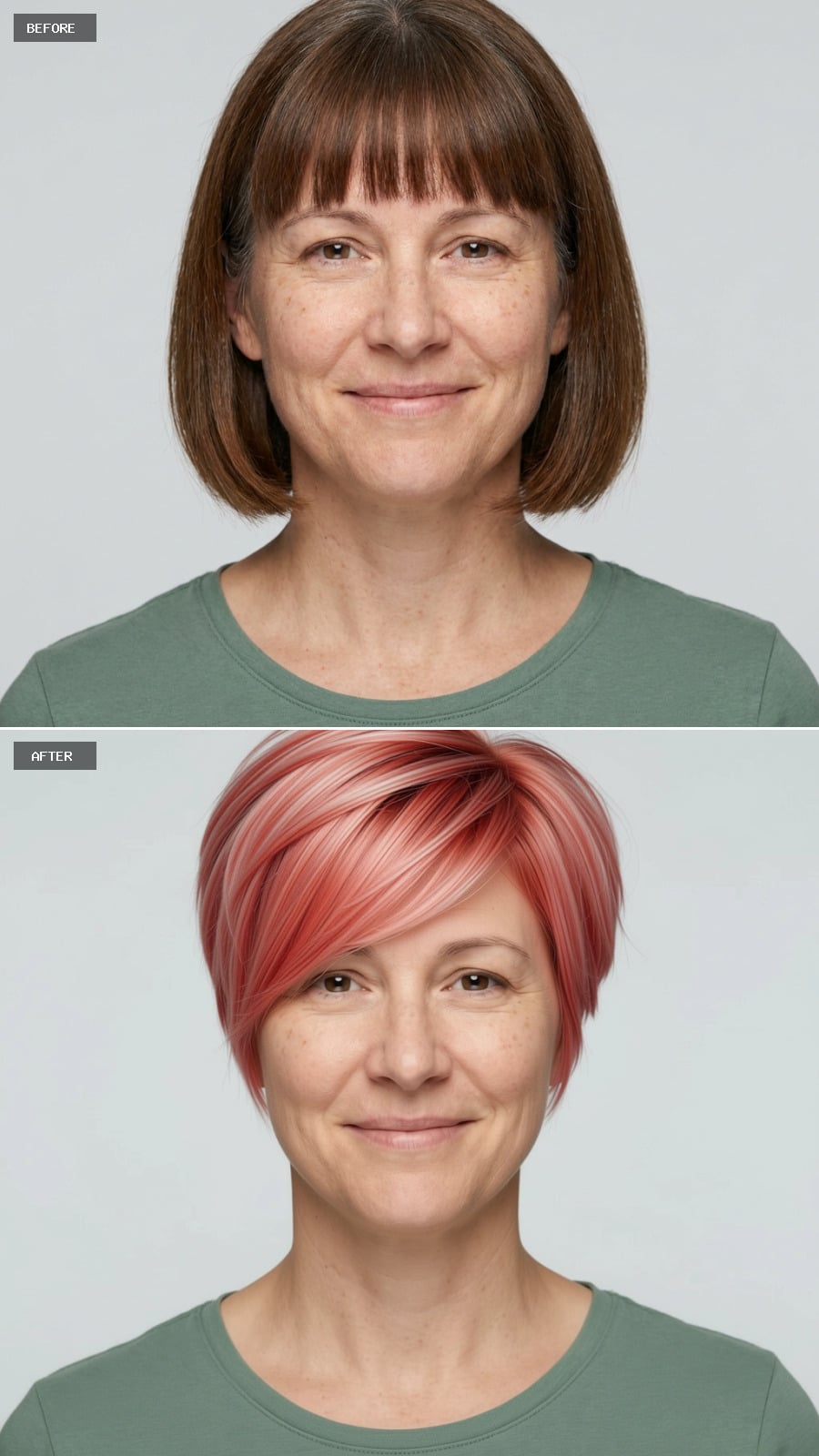
Saturated pink with streaks of pale blush running through the crown gives this pixie its depth, and the side-swept fringe falls at an angle that pulls the eye across the forehead rather than straight down. The cut sits close at the nape and opens up through the top, creating volume without any added length. Compared to the straight-edged bob, the structure here reads lighter. The same sage green scoop-neck jersey stays underneath, which makes it clear the hair is doing all the heavy lifting.
9. Blonde Waves, Longer Length: What Shifting From Brown to Gold Actually Does to Your Face
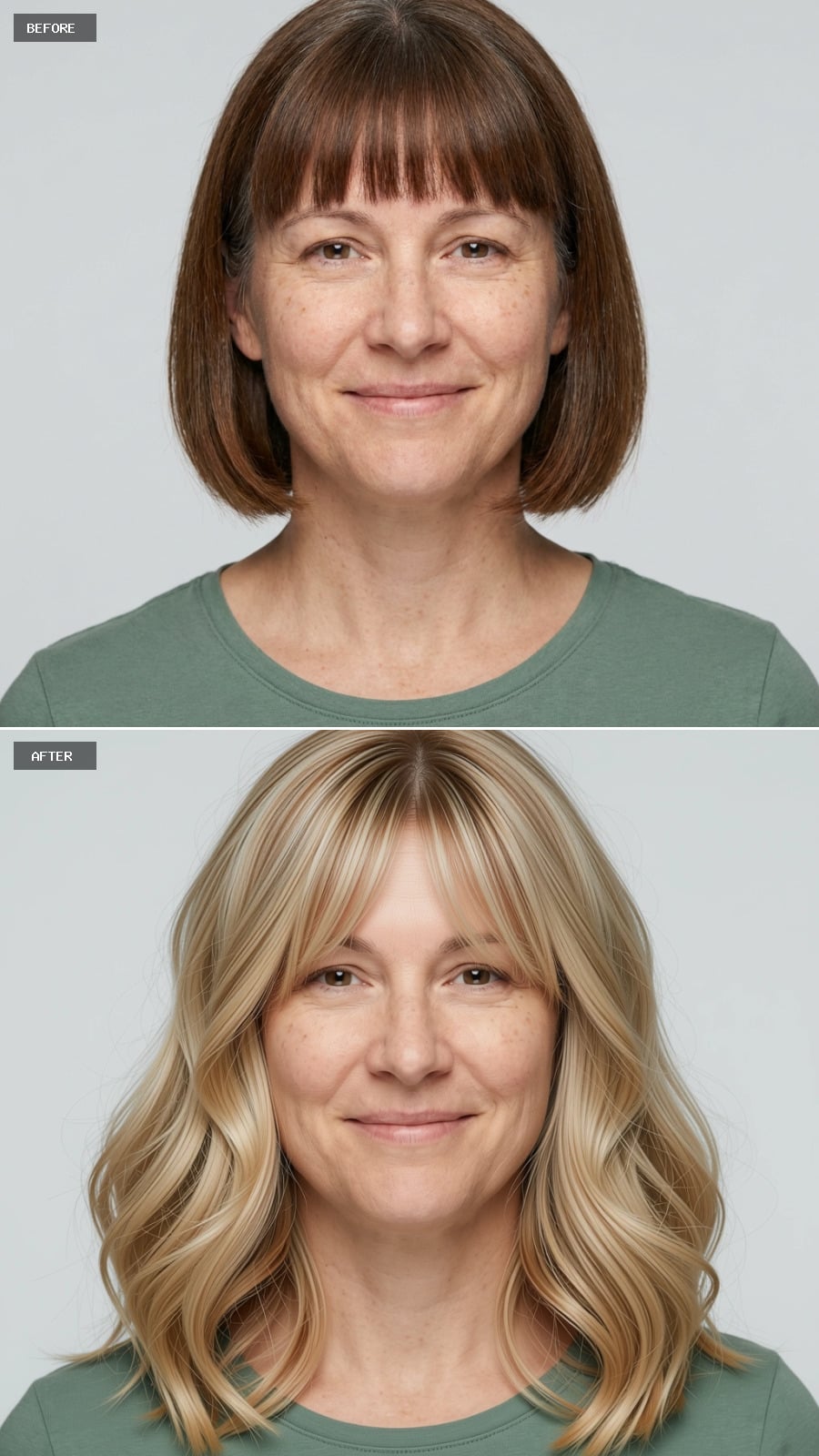
Chin-length brown with blunt-cut bangs keeps everything close to the face, which can flatten features rather than frame them. Here, the switch to a shoulder-length blonde with loose waves and wispy curtain bangs opens up the forehead and draws the eye outward. The color sits in a cool-to-neutral blonde range, with lighter pieces concentrated around the face and slightly deeper tones underneath. Waves fall with a medium-width bend, not tight, not fully relaxed, which gives the hair enough body to move without needing daily styling effort. The result reads lighter overall, even at the same neckline.
Try This: Curtain bangs work best when parted slightly off-center rather than split exactly down the middle, because a perfectly even part can read stiff on most face shapes. Ask your stylist to point-cut the ends rather than blunt-cut them, which keeps the fringe from clumping into two rigid curtains as the day goes on.
8. Crown Braid With Wispy Bangs: What Pinning Everything Up Reveals About Your Face
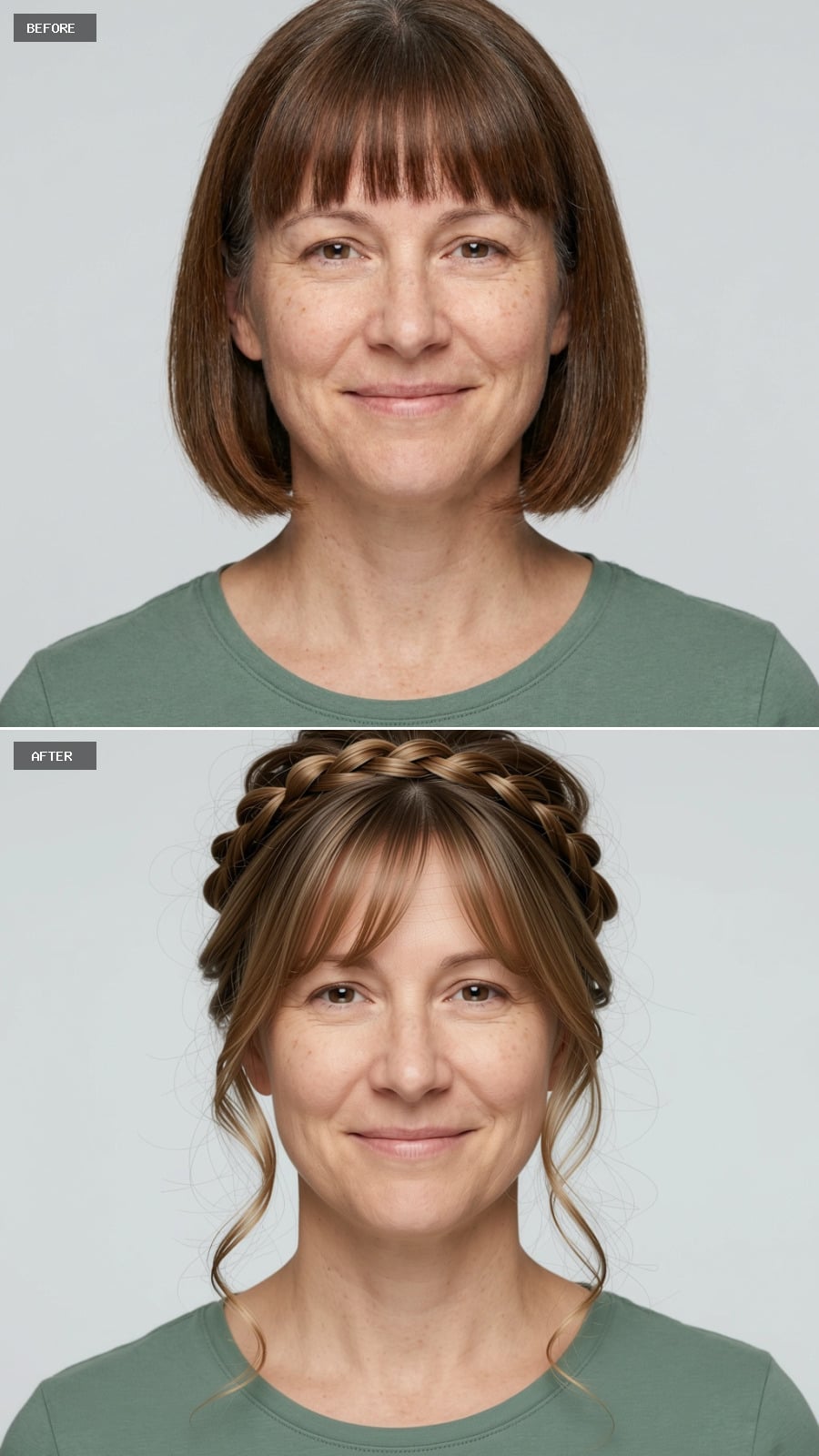
From a blunt bob to a crown braid is a significant structural shift. Here, the hair is plaited into a halo braid that sits flat against the top of the head, with the individual sections crossing over each other in a tight, rope-like pattern. Loose tendrils fall at the temples and jaw, and the bangs stay wispy rather than blunt, which changes the entire read of the forehead.
The color does real work in the after. What was a flat medium brown picks up honey and caramel highlights through the mid-lengths, making the braid itself look dimensional rather than solid. The lightness pulls toward the face rather than sitting at the ends.
The sage scoop-neck top carries over from the before, but the exposed neck and jaw in the after let the neckline read differently. Nothing competes with the braid. That clarity is what makes the style work at any age: structure at the crown, softness at the face, nothing in between.
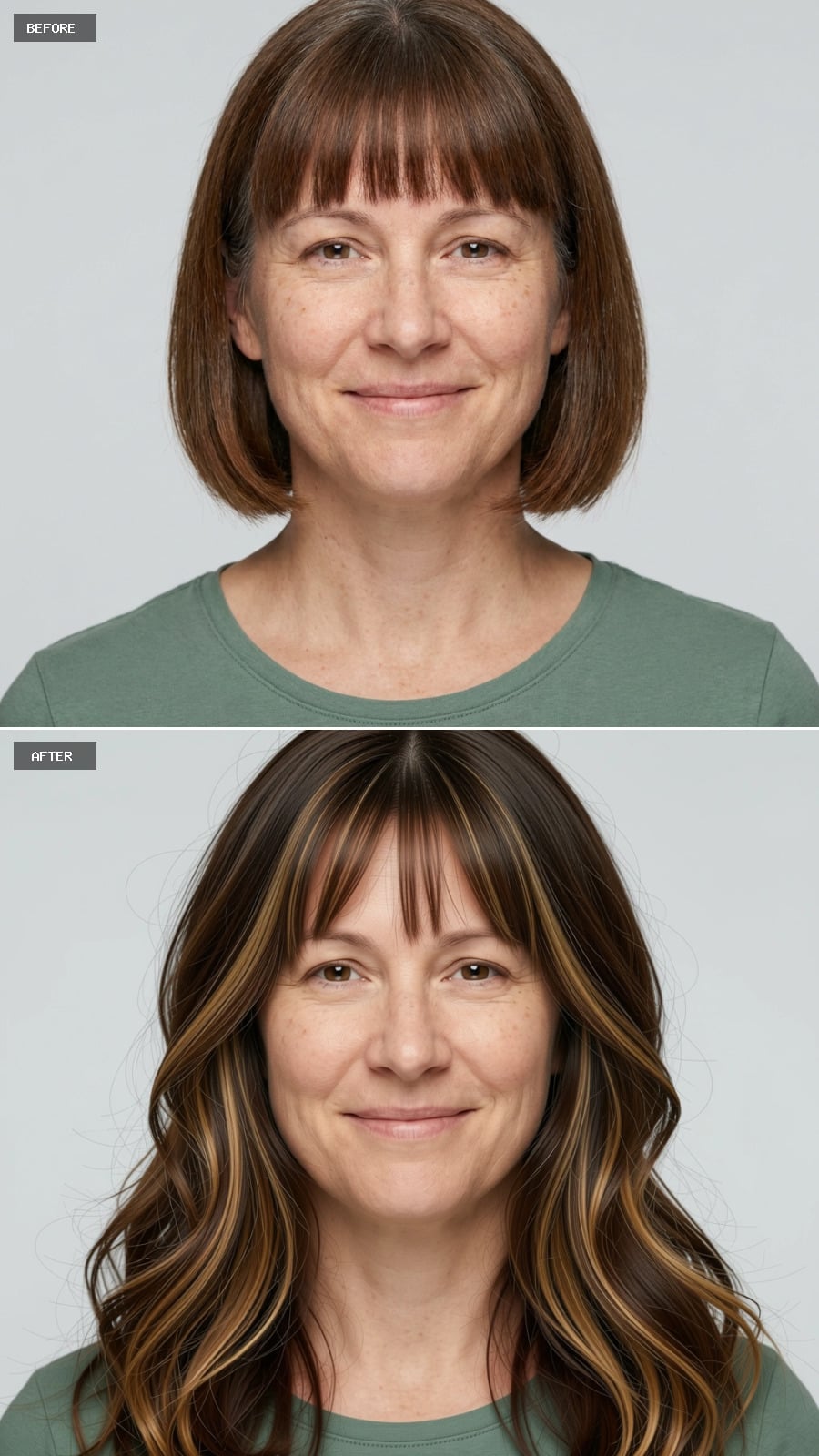
7. Dark Brown Waves With Highlights: Length and Texture Working Where Structure Left Off
❤️ Would you like to save this?
Caramel and honey highlights are painted through dark brown base hair in a balayage pattern that concentrates warmth toward the mid-lengths and ends, leaving the roots noticeably deeper. The cut has grown well past the jaw into a medium-length style that falls across the shoulders, with loose waves created through a curling iron in sections roughly two inches wide. Curtain-style bangs sweep open from a center point and graze the brows without lying flat against the forehead. The added length changes how the face reads entirely: the jaw appears softer because there is no blunt line ending directly beside it. The same sage green scoop-neck top grounds the comparison and keeps the focus above the shoulders, where the hair volume now does most of the work.
6. Red Shifts Everything: How One Color Change Rewires a Familiar Haircut
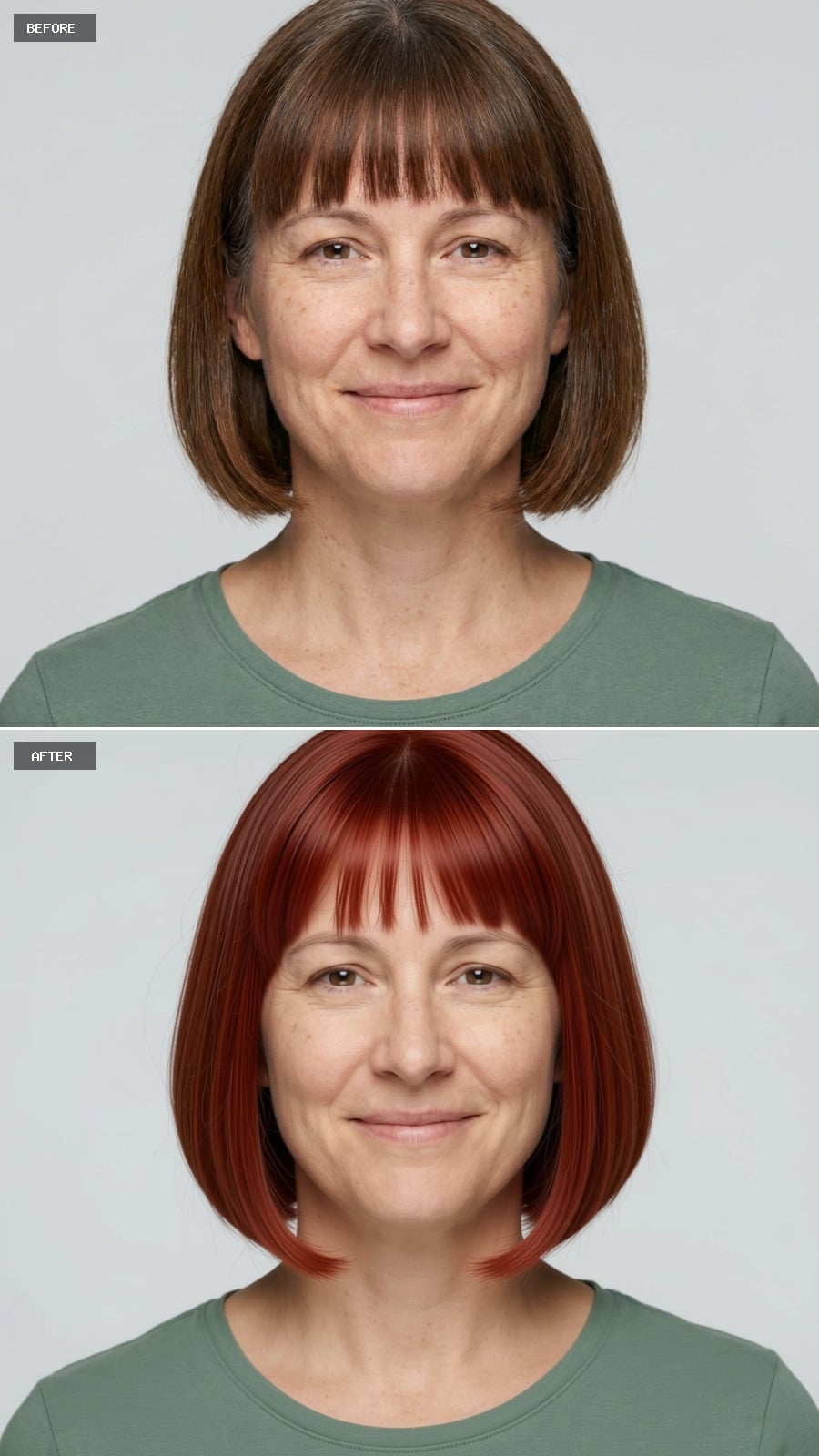
Red hair at this depth reads differently than a typical dye job. The shade here lands somewhere between auburn and crimson, with enough brown in the base to keep it grounded rather than theatrical. Compared to the flat medium-brown bob in the before, the color now catches light in distinct sections, pulling the eye through the length rather than across it. The cut itself stays close to the original shape, a chin-length bob with a blunt fringe, but the volume has opened up at the crown, giving the silhouette more height than the before photo showed. The sage green jersey top remains the same, and that familiarity makes the color shift register more clearly. Nothing else changed. The hair is doing all of it.
5. Longer, Lighter, Layered: How Blonde Rewrites the Bob’s Limitations
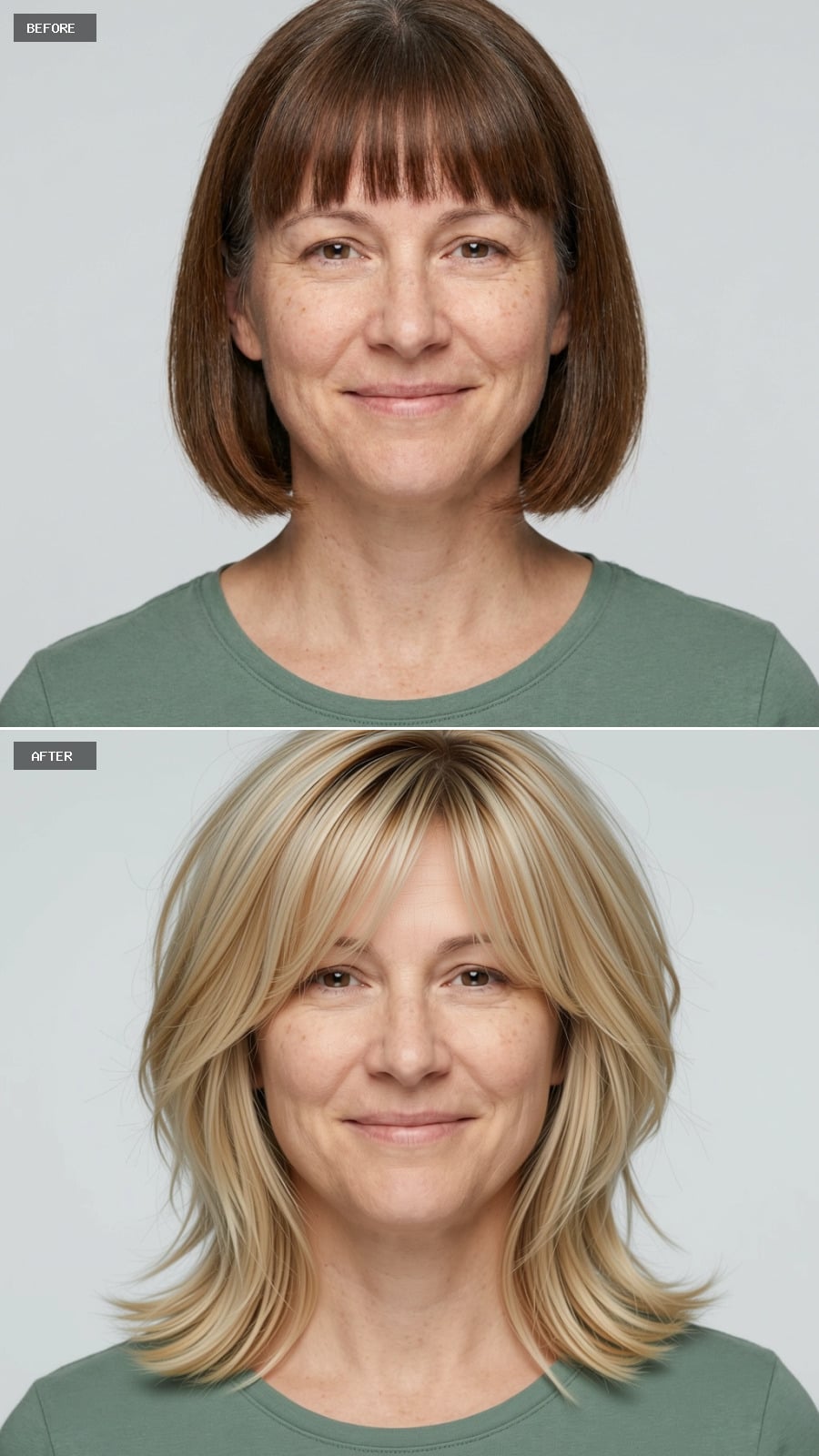
She’s kept the bangs but let everything else shift. The color moves from a single-process brunette into a multi-tonal blonde with cooler, almost platinum streaks near the face and deeper gold closer to the roots. Layers fall past the jaw in loose, feathered sections that break apart rather than hang flat. The result reads wider at the cheekbones and lighter at the chin.
Wardrobe Math: Scoop necklines in medium-weight jersey sit flat against the collarbone without gaping, which makes them reliable under longer hair that moves. When layers fall forward, a clean neckline keeps the overall picture from feeling overloaded. It’s a pairing that asks very little of the clothes while the hair does most of the work.
4. Blonde Highlights and Swept Fringe: Trading a Blunt Bob for Something That Moves
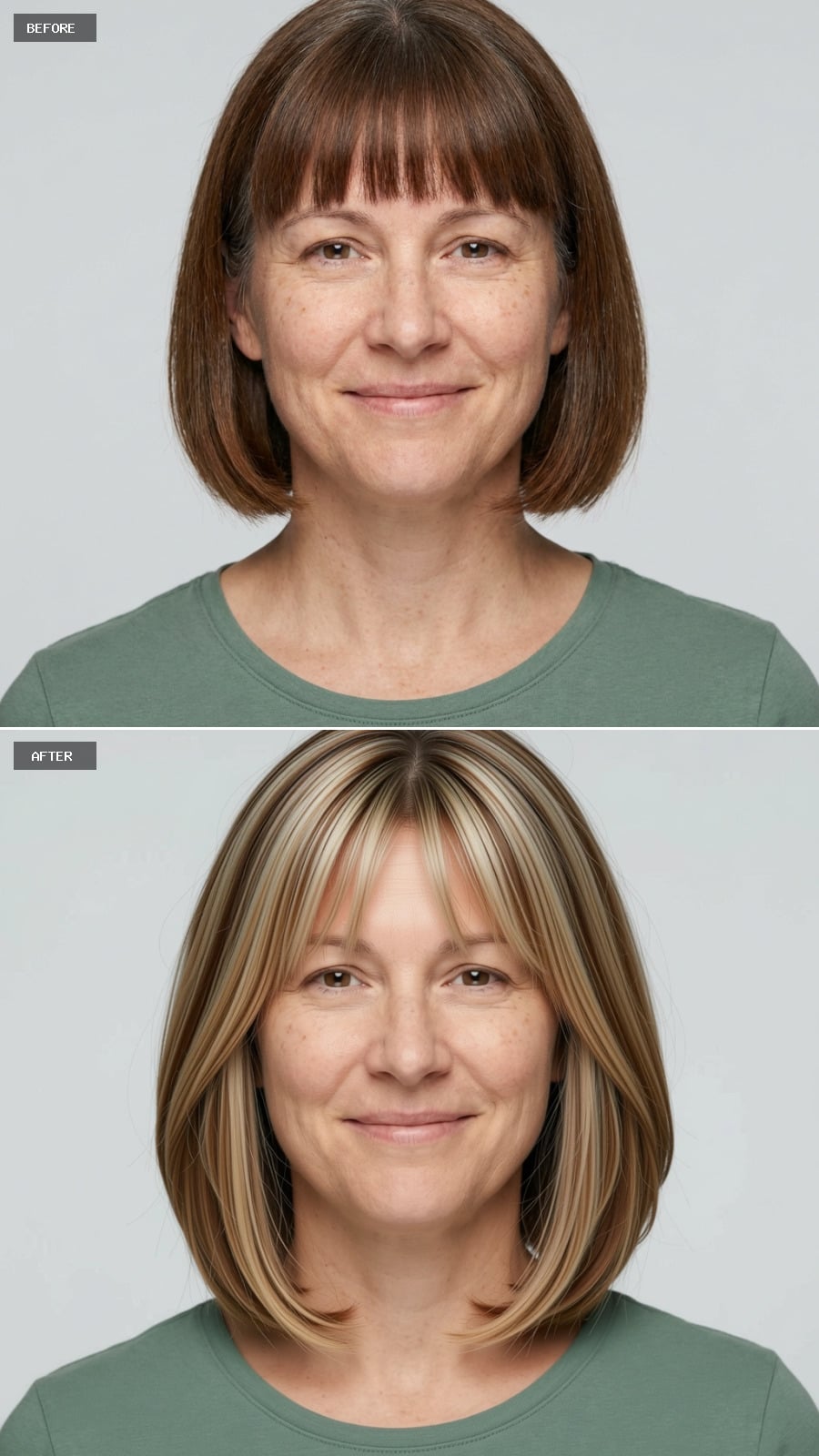
Highlights in cream and wheat run through a mid-length bob that sits just past the collarbone, replacing a flat brown cut with a layered structure that shifts when the head turns. The fringe sweeps left rather than sitting straight across, which opens the forehead differently than the blunt bangs did before. Ends appear blow-dried smooth with a slight inward curve, suggesting a round brush finish rather than a flat iron. The sage jersey scoop-neck sits exactly as it did in the before photo, which makes the hair do all the talking.
3. Cropped and Layered in Dark Brown: Side Sweep Over Bangs, Volume Over Length
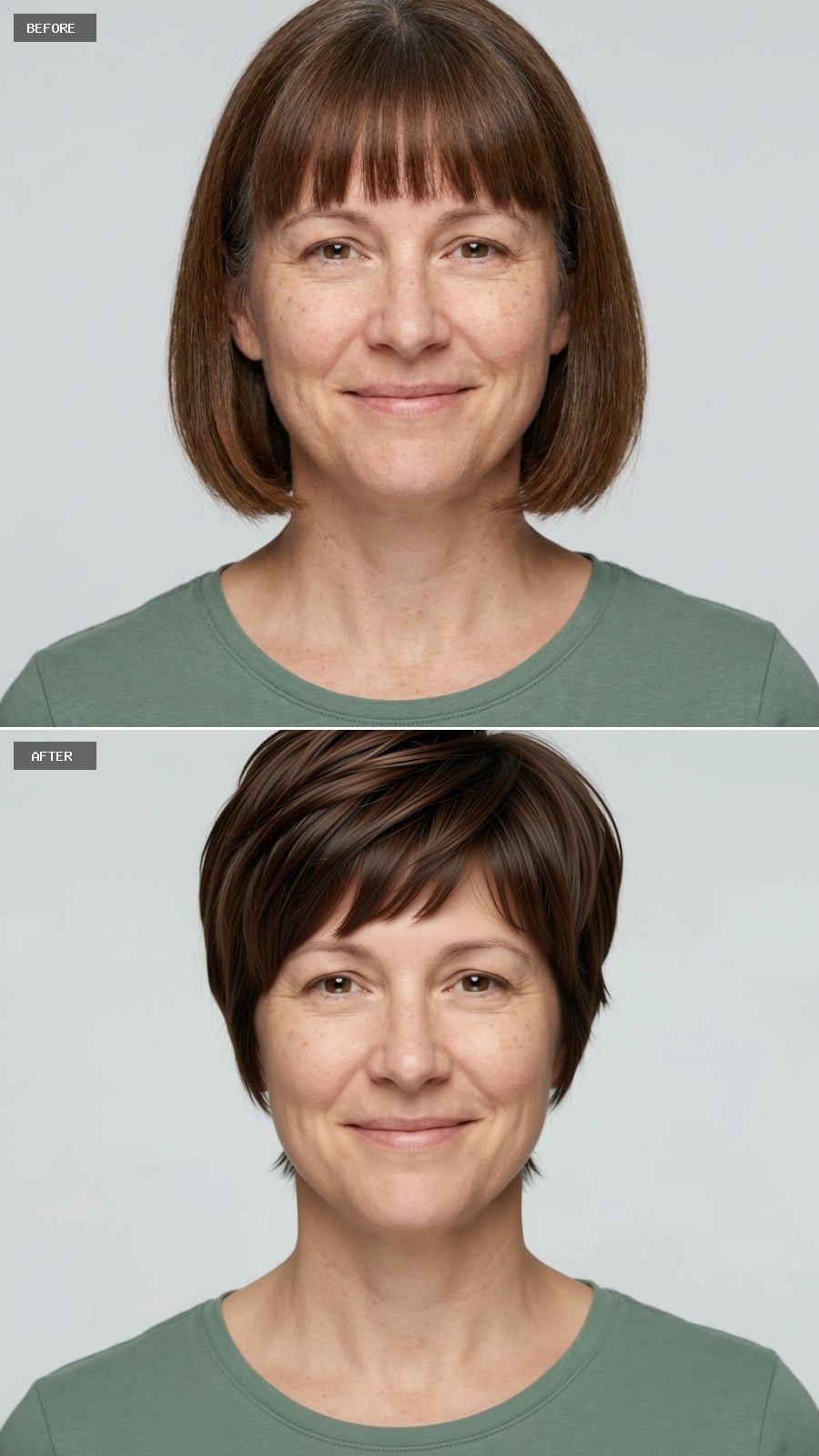
Switching from a blunt bob with fringe to a cropped cut with sweeping layers shifts the weight of the style entirely. The new shape sits shorter at the back and sides while the top layers push forward with visible texture, letting the side-swept fringe cross the forehead at an angle rather than hang straight across. The darker brown reads richer than before, with subtle variation in tone running through the layers. Her sage green jersey top, same scoop neckline, grounds the comparison cleanly.
2. Copper Waves, Longer Length: What Happens When Bangs Finally Get Room to Breathe
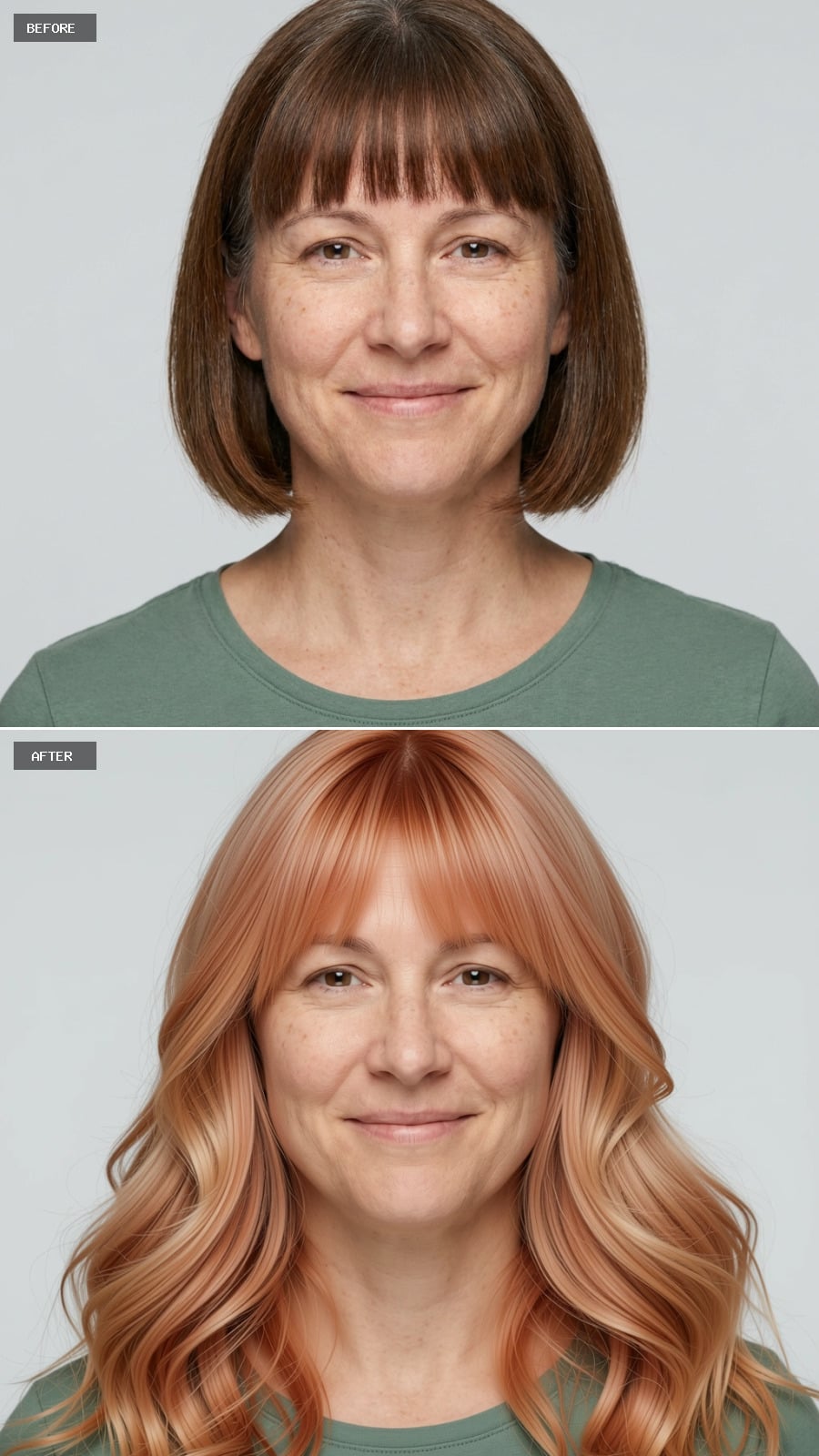
Warm copper with blonde gradient ends replaces the flat brown bob, and the shift in tone does visible work on skin. Long layers fall past the collarbone in loose, barrel-shaped waves, adding width at the jaw that the blunt cut actively suppressed. Wispy, feathered bangs replace the dense fringe, sitting lighter across the forehead. The scoop-neck top in sage jersey stays consistent, keeping the focus upward. More length, more movement, fewer hard edges.
1. Highlights That Hit Every Tone Between Honey and Chestnut
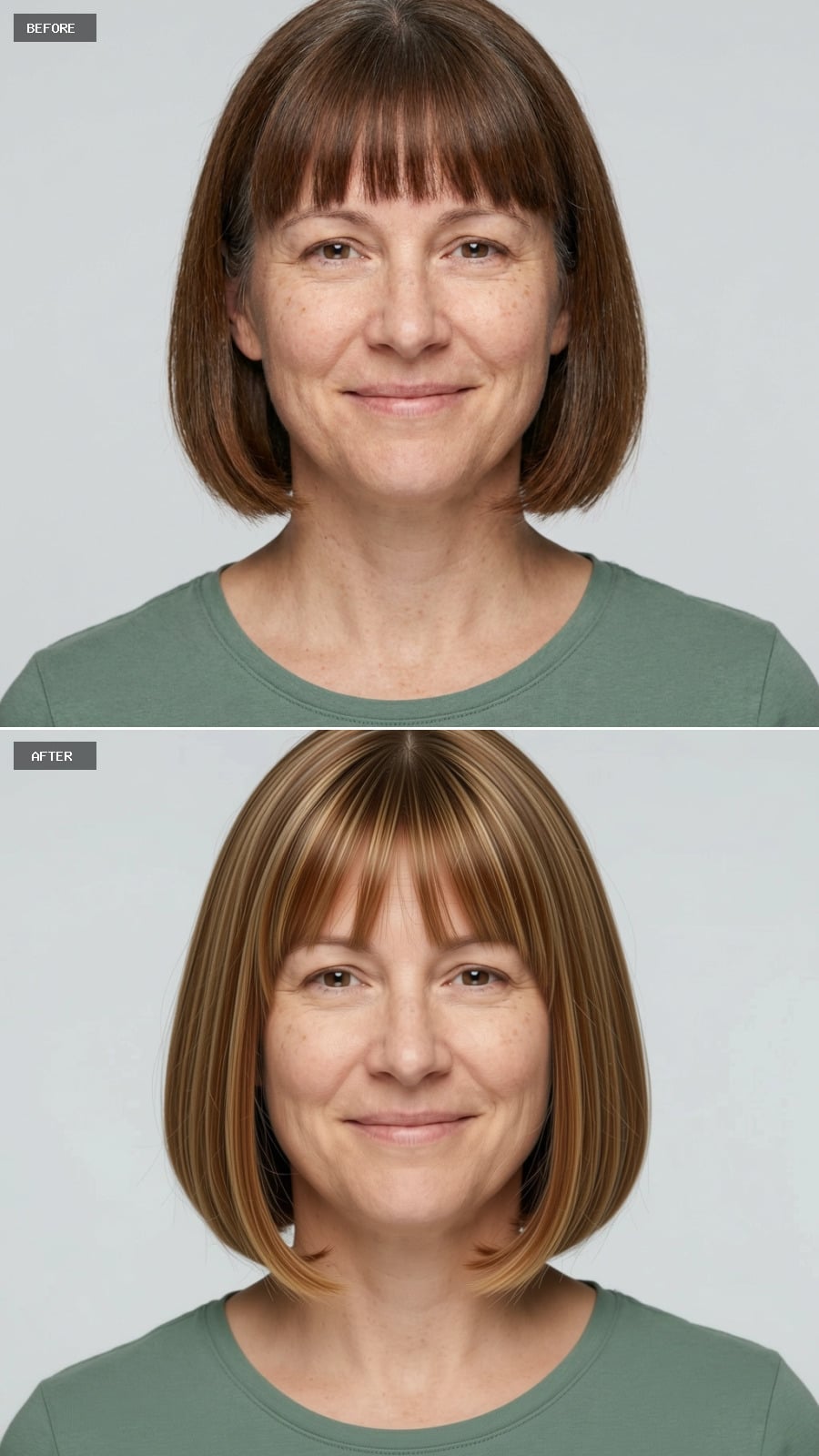
Balayage in a bob this short is a specific technical choice. The colorist has pulled honey blonde and warm gold through the mid-lengths and ends, leaving the root zone in a medium chestnut brown that reads cooler against the scalp. Where the before photo showed a single flat brunette tone with no variation, this version catches light differently at every angle. The fringe, still blunt, now carries those lighter pieces toward the face rather than sitting as a solid curtain of dark hair. The bob itself may be the same cut, but multi-tonal color gives each section visual weight of its own.
Fun Fact: Balayage on short hair requires a different application method than on long hair because the colorist has far less length to work with, so the painted sections must be placed with more precision to avoid patchiness. On a bob that hits at the chin, most of the color payoff happens within just two to three inches of hair. This is why short balayage often costs as much as, or more than, the same service on longer lengths.