❤️ Would you like to save this?
The appointment gets booked before the lease is signed. Before the lawyer is called. Sometimes before she’s even said the words out loud to anyone besides the bathroom mirror.
Stylists who have been behind the chair long enough will tell you they can spot it the second she walks in. Something about the way she sits down. The way she says I don’t know, just different.
According to research on enclothed cognition from the Journal of Experimental Social Psychology, what we put on our bodies changes how we think and who we become. Hair is no exception. It’s not vanity. It’s not a cliché. It is a woman using the fastest, most visible tool she has to tell her own nervous system: that version of me is finished.
Here are 19 reasons the haircut comes first, and not one of them is about looking cute.
FYI, thanks to AI imagery software, we’re able to create very specific fashion and hairstyle examples to illustrate the points being made. In some cases, imagery is exaggerated to hammer home the point. Also, assume links that take you off the site are affiliate links such as links to Amazon. this means we may earn a commission if you buy something.
Cutting the hair he always asked her to keep long because length was never really about her preference
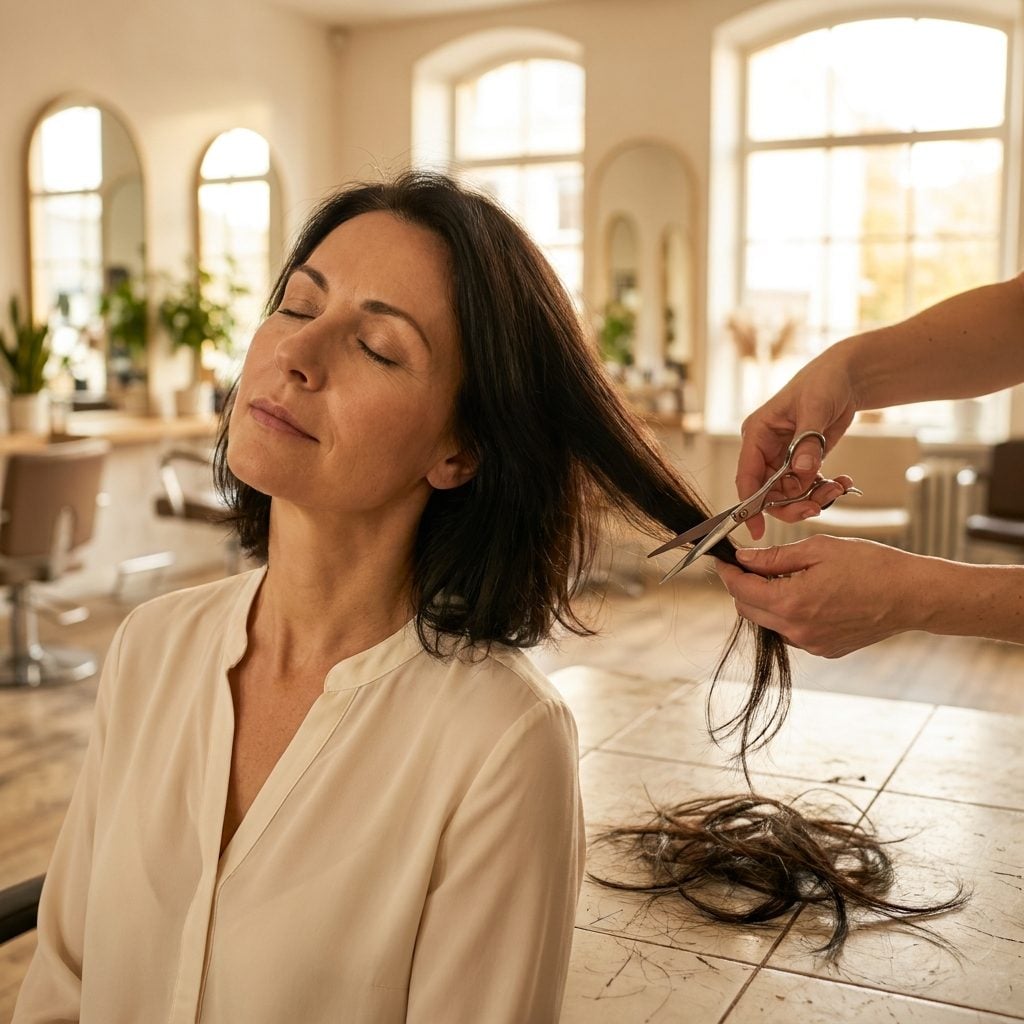
Controlling partners don’t always scream. Sometimes they just say I like it long, and that sentence gets repeated enough times that it stops sounding like a preference and starts sounding like a rule. Source. Stylists and survivors confirm: one of the most common patterns in coercive relationships is an abuser dictating a partner’s hair, clothing, and grooming under the guise of compliments or taste.
Here’s what’s happening underneath. Sociologist Evan Stark described coercive control as a “liberty crime” that systematically dismantles a person’s freedom to make their own choices. Source. Hair is one of the first territories to get colonized because it’s intimate, visible, and daily. You can’t forget about it. Every morning in the mirror, you see the version of yourself someone else built.
So the cut isn’t about inches. It’s about removing the evidence of occupation. The woman in the chair at forty-three who says take it all off isn’t being impulsive. She’s being precise. She’s cutting away the shape of someone else’s instructions and finding out what her own head looks like without them.
Removing the style he complimented most because the compliment always came with a condition attached
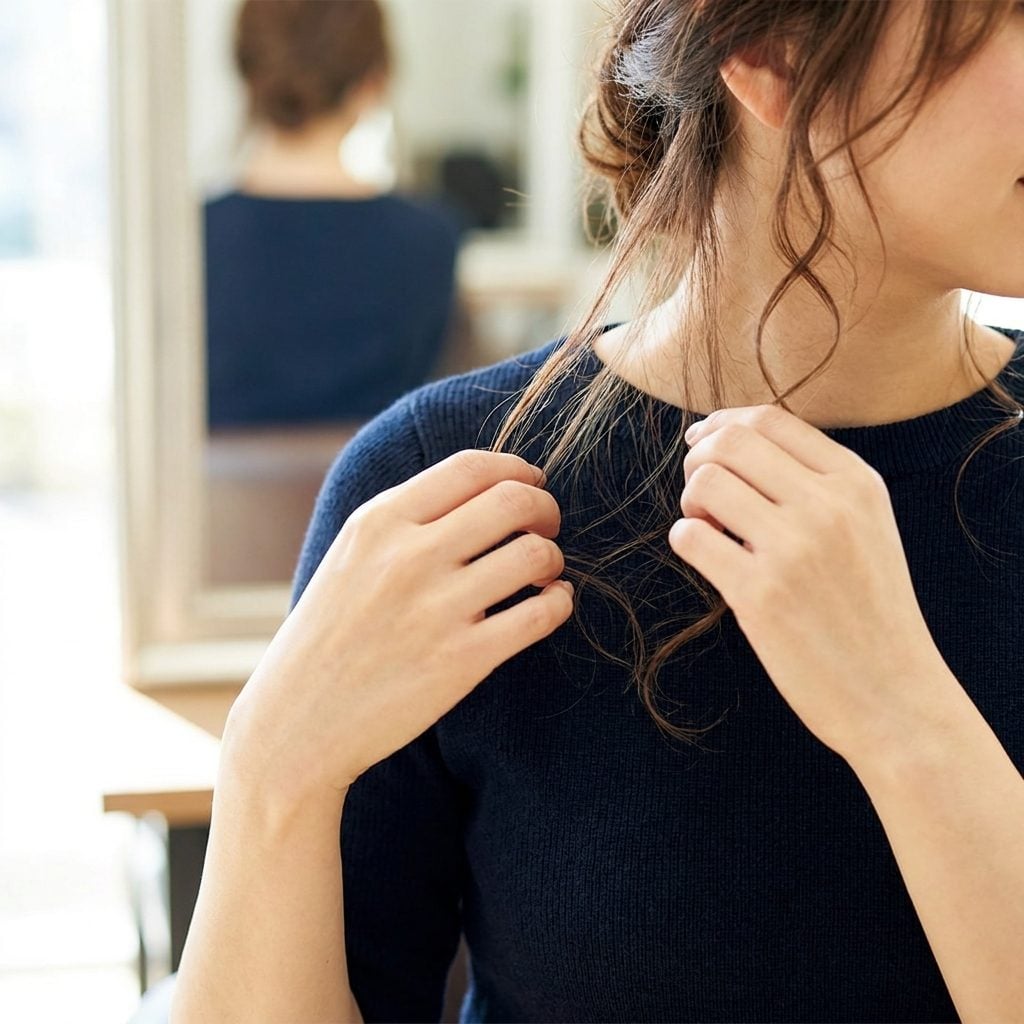
There’s a specific kind of compliment that doesn’t feel like one. You look so beautiful when you wear your hair down. Sweet on the surface. But what lives under it is: don’t wear it up, don’t cut it, don’t change it, don’t become someone I didn’t approve. The compliment is a leash with a nice handle.
This is a documented feature of coercive control. Abusers criticize appearance or use praise strategically to shape how a partner presents herself. Source. The effect is slow. Over months or years, a woman stops trusting her own taste. She wears what gets rewarded. Avoids what gets silence. Her mirror becomes his opinion reflected back at her.
When she walks into the salon and says I want something completely different, she’s not rejecting a hairstyle. She’s rejecting a feedback loop that trained her to perform for approval instead of dress for herself. The new cut is a disruption of the circuit. And the first time nobody flinches at the result, something cracks open.
Choosing a cut she mentioned once years ago and was talked out of before she could even book the appointment
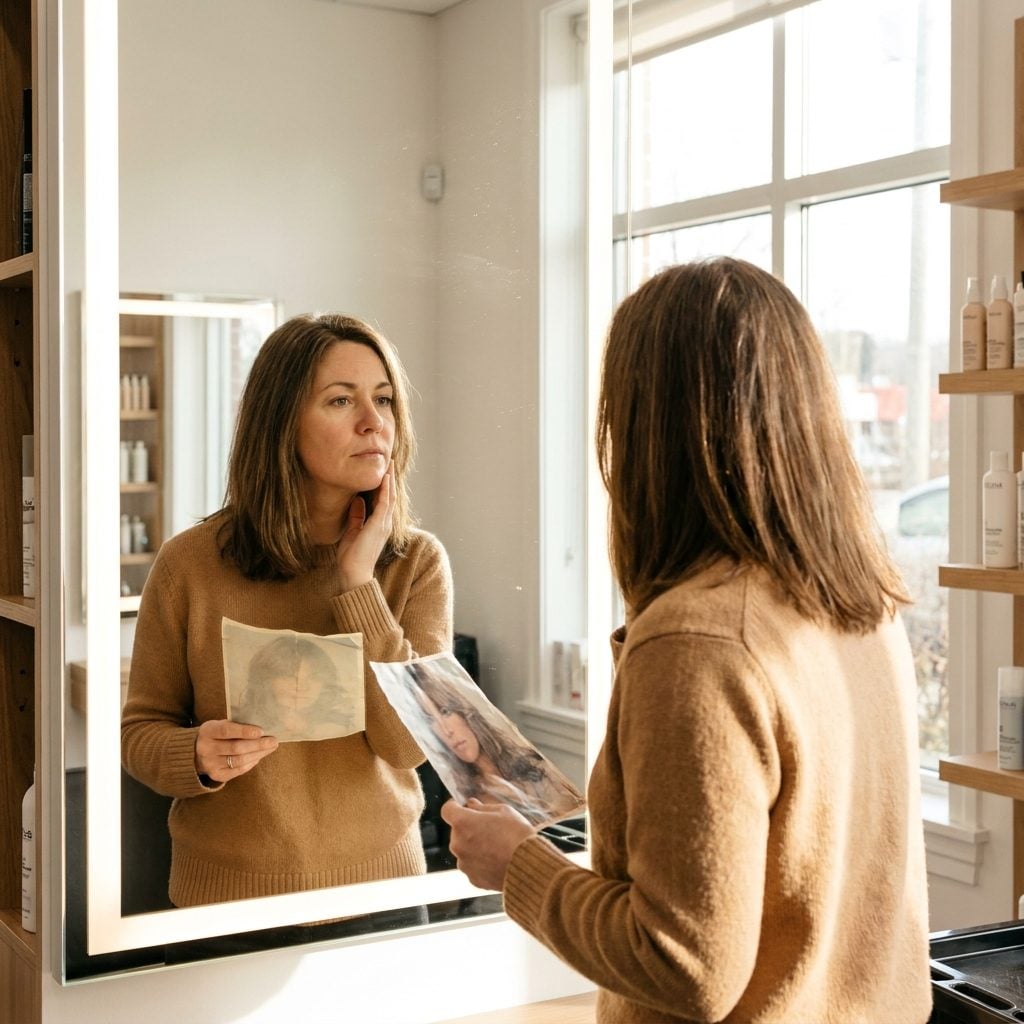
She wanted bangs in 2019. Or a short crop. Or that chin-length thing she saw on a woman at the grocery store and thought about for three days straight. She mentioned it once. Maybe at dinner. And it got shut down so casually she barely registered it as a shutdown. That wouldn’t suit you. You have the wrong face shape. Why would you change what already works?
That idea didn’t die. It went underground. It sat in the back of her mind for years, kept alive by something she couldn’t name. Psychologists note that when our self-expression is suppressed in relationships, the unfulfilled desire doesn’t vanish. It gets stored. According to mental health professionals at Tides Mental Health (Source), hair changes during transitions often reflect identity shifts that have been building internally long before the external change happens.
That’s why the first post-breakup cut so often isn’t random. It’s specific. It’s the haircut she wanted at thirty-seven. She’s forty-four now, and she’s finally going to get it. Not because she’s lost her mind. Because she’s found her own voice in the rubble, and this was the first thing it ever tried to say.
Walking into the salon without a photo for the first time because she finally trusted her own instincts
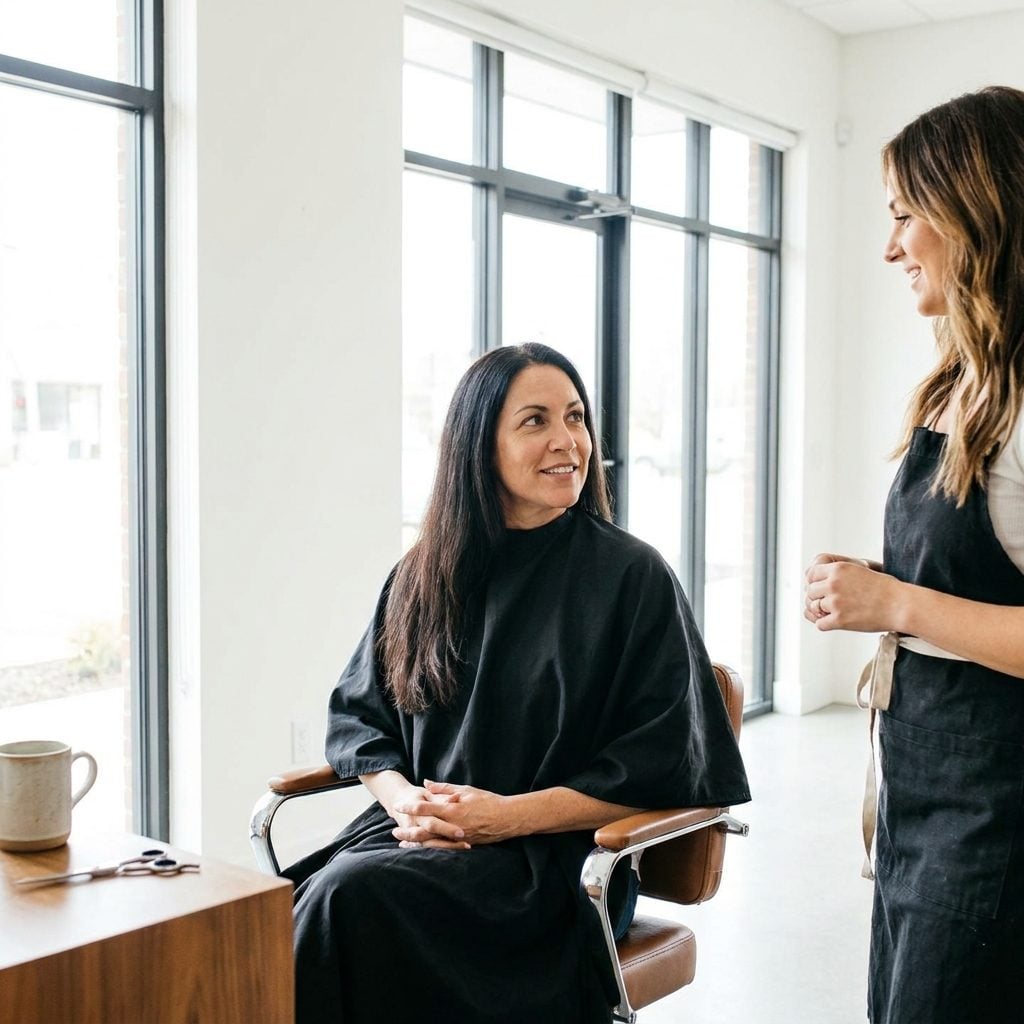
You’ve seen her before. The woman who sits down and slides her phone across the counter. Like this, please. The reference photo is the safety net. It says: don’t let me be wrong. Don’t let me look foolish. Let someone else’s face carry the risk of this decision.
Now picture the woman who walks in empty-handed. No screenshot. No Pinterest board. She sits down and just talks. I want it off my neck. I want it lighter. I want to feel different.
That shift is enormous. Research on locus of control shows that people with a strong internal orientation, those who believe they can direct their own outcomes, tend to act more independently and cope with difficulty more effectively. Source. The phoneless salon visit is a small, wild act of internal locus in action. She’s not referencing someone else’s look. She’s navigating by feel. For a woman who spent years checking another person’s face before making any choice, this is not a haircut. It’s a declaration of competence. Quiet, sure, and hers.
Asking for something she saw on a stranger and liked quietly to herself without anyone else’s opinion in the room

The woman at the coffee shop had a short silver bob and looked like she didn’t care what anyone thought about it. That’s the whole story. No celebrity. No algorithm. Just a stranger in a line who looked free, and something about it stuck.
This kind of quiet admiration matters more than it seems. A survey by All Things Hair found that 55% of Americans change their hair after a breakup, and 31% cited a desire for a sense of freedom as the driving motivation. Source. Freedom here isn’t abstract. It’s specific. It’s the freedom to notice something, like it, and act on it without running it past anybody. Without performing a justification. Without bracing for the reaction.
For years, her taste passed through a filter. His approval. His silence. His raised eyebrow. If you explore hair ideas after a breakup, you’ll notice the choices skew bolder, shorter, more personal. That’s not recklessness. That’s a woman finally shopping for herself with the lights on.
Cutting off the ends that held two years of a life she is no longer living in the same body
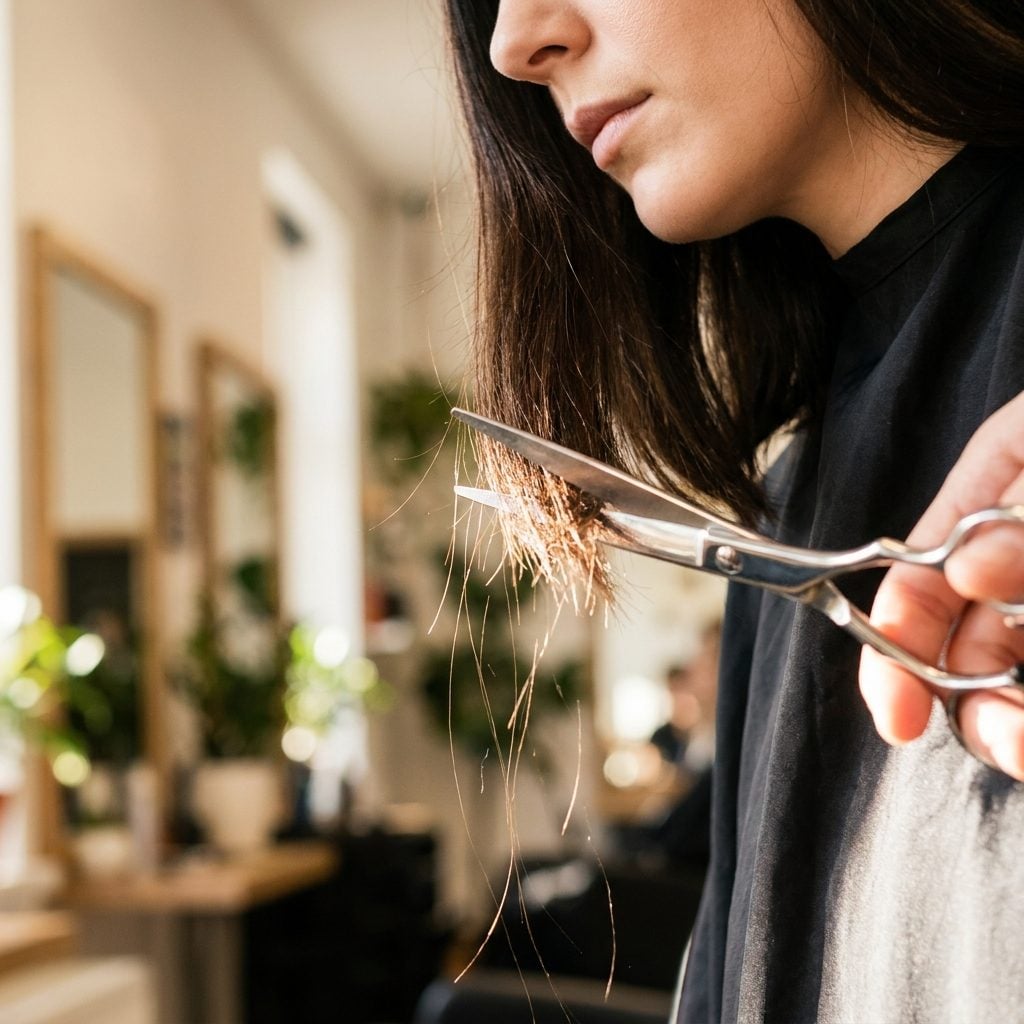
Hair is a timeline. It grows roughly half an inch a month, which means twelve inches of length is two years of your life sitting on your shoulders. The hair you grew while you cried in the bathroom at 2 a.m. is still attached to the hair you grew the week you signed the lease on your own apartment. It’s all there, braided together, impossible to separate by memory.
The physical act of cutting that away provides something psychologists call catharsis, a concept Aristotle named and modern therapy still uses. The snip is a release mechanism. Source. When words aren’t enough to close a chapter, the body finds its own rituals. Hair cutting during major life transitions serves as a visible, tangible boundary between before and after. Source.
The woman who asks the stylist to cut to the collarbone isn’t being dramatic. She’s being surgical. She knows exactly how long the bad years were. And she wants them on the floor.
Sitting in the salon chair and realizing she has never once chosen a hairstyle entirely for herself
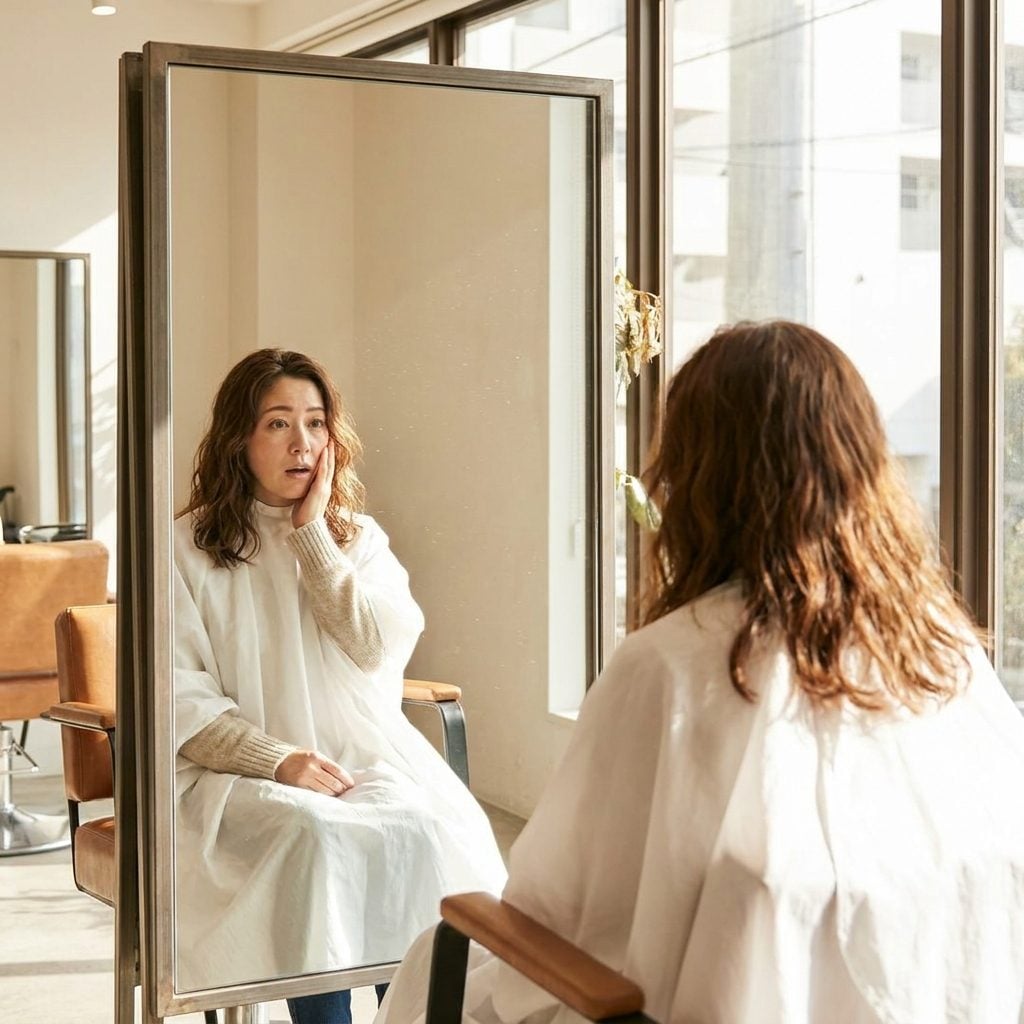
This is the one that stops her mid-sentence. The stylist asks what do you want? and her mind runs through every haircut she’s ever had. Her mother’s preference at fourteen. The boyfriend in college who liked long hair. The husband who said blondes look younger. The boss who once commented on bangs being unprofessional. Layer after layer of other people’s input stacked so high she can’t find her own opinion underneath it all.
It isn’t just about one relationship. It’s about a lifetime of appearance being managed by committee. Research confirms that relationships shape how we see ourselves, and when an intense relationship ends, the sense of identity can fracture. Source. But the fracture is also an opening. The crack is where the light comes in, and the salon chair is where a lot of women first sit still long enough to notice it.
She doesn’t cry because she’s sad. She cries because she’s forty-six years old and she just realized she’s never answered the question honestly. Not once. And now she gets to.
Telling the stylist just do what you think and meaning it for the first time without fear of the reaction at home
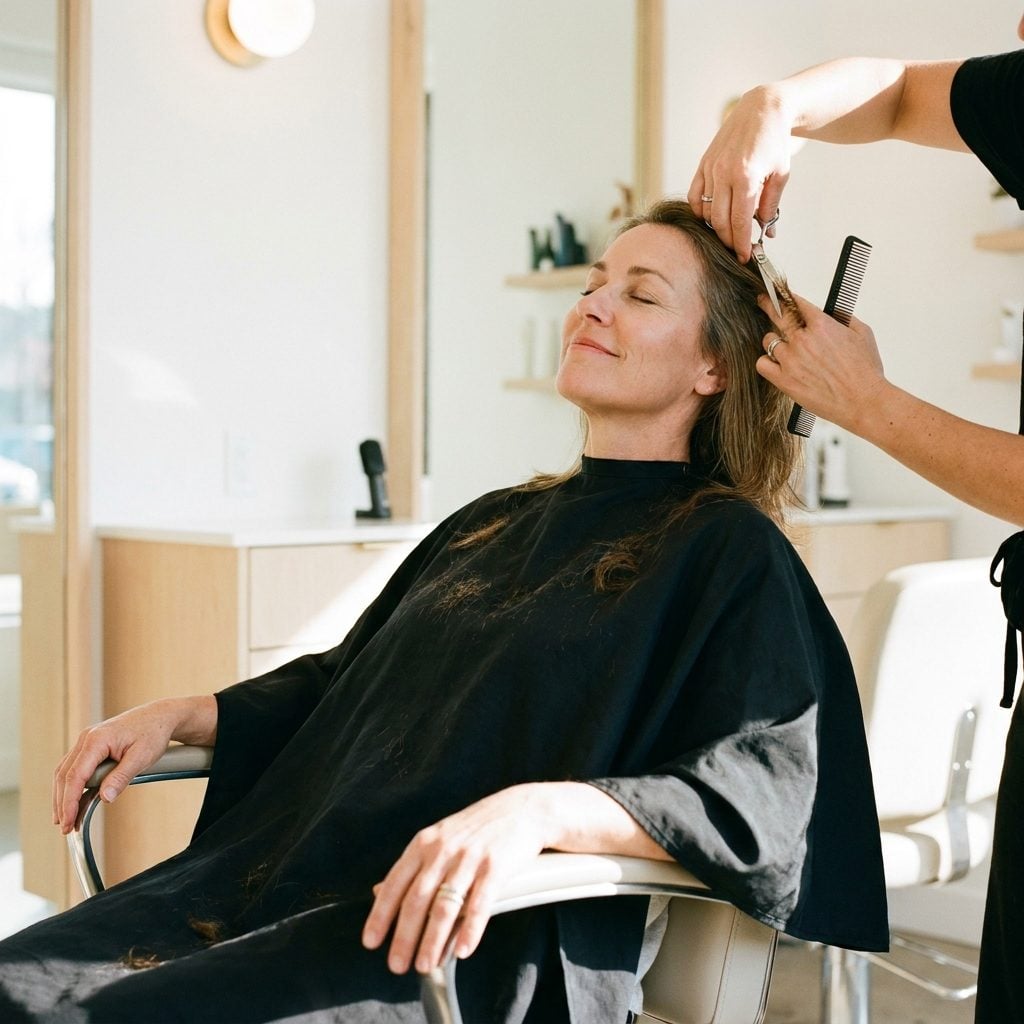
Seven words that would’ve been unthinkable six months ago. Just do what you think. Not because she doesn’t care about the outcome. Because she trusts another woman’s hands more than she trusts the voice that’s been narrating her appearance for a decade.
Surrendering control at the salon is the opposite of what it looks like. It’s not passivity. It’s a test of a muscle she hasn’t used: the ability to let something happen to her without pre-approving every detail to avoid consequences. In a controlling relationship, spontaneity gets trained out of you. Every choice requires calculation. If I do this, will he notice? Will he say something? Will the evening be ruined? According to domestic violence prevention resources, controlling a partner’s appearance, from hair to clothing to makeup, is a recognized hallmark of coercive control.
So when she says just do what you think, she’s not being casual. She’s conducting a private experiment. She wants to find out what happens when a choice gets made without her managing every outcome. And when she looks in the mirror afterward and no one screams, no one sulks, no one withholds affection for three days, she gets her answer. Nothing bad happens. That’s the whole point. Nothing bad happens at all.
Choosing a fringe she always wanted because he said bangs would make her look like she was trying too hard
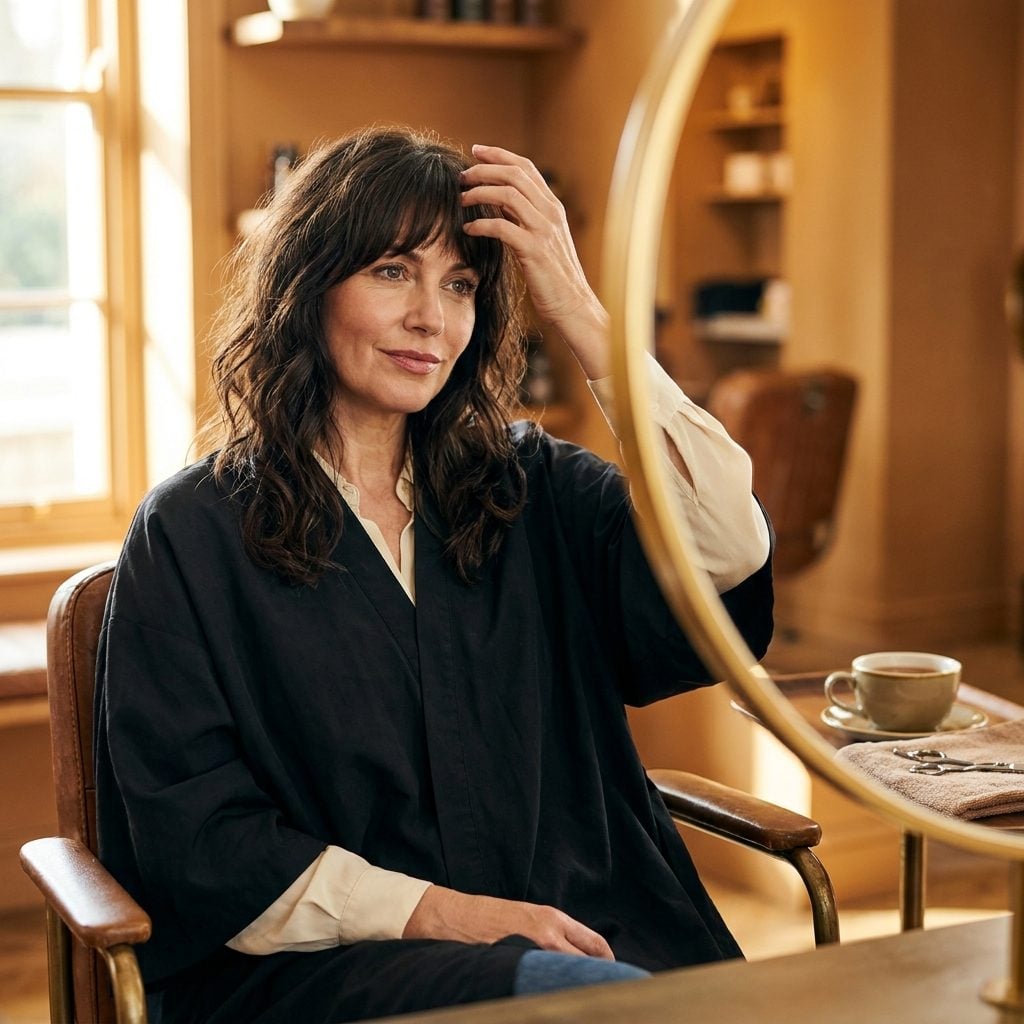
You know this woman. You might be this woman. She mentioned bangs once, maybe twice, years ago. Got told they’d look childish, or desperate, or like she was trying to be someone she wasn’t. So she pinned the idea back and forgot about it. Except she didn’t forget. She filed it away in the same drawer as the friend he didn’t like, the lipstick shade he said was “a lot,” the dress he never complimented.
According to Nicole Branca, executive director at New Destiny Housing, abusers seek to control their victims in every way they can, including physical appearance. “Financial and emotional abuse often go hand in hand with exerting control over a survivor’s appearance,” she explains. Abusers may dictate specific clothes, makeup, and hairstyles, even if it makes the person deeply uncomfortable. Source The bangs were never really about bangs. They were a territory marker. A boundary drawn around her face by someone who needed to own the frame.
Cutting off old hair or choosing a different style is choosing how to present yourself now and no longer restricting yourself to what a partner found attractive. Source So she gets the fringe. And it looks good. Not because bangs are universally flattering, but because a woman making an uncensored decision about her own face carries a particular energy that no blowout can replicate. As stylist and survivor Consuelo Rodriguez puts it: “Abuse robs us of so much, but one of the biggest things it takes away is our self-esteem.” She notes that abusers use looks as a control mechanism, and reclaiming appearance is an act of reclaiming the self.
I’ll say this plainly: if someone in your life has opinions about what your hair ideas should be, that’s information. Not about your hair. About them.
Going Shorter Than She Planned Because Once She Started She Realized She Was Not Afraid Anymore

The woman who walks in asking for two inches off and walks out with six didn’t lose her nerve. She found it. Psychologists tie this to what’s called an approach motivation shift. For months or years inside a controlling relationship, the brain learns to avoid risk. To stay small. To predict the reaction before making a move. That survival pattern doesn’t disappear when the relationship ends. It lingers like a reflex. But the salon chair is a rare kind of space: low-stakes, physically safe, and entirely under her control.
The first inch comes off and nothing bad happens. No one flinches. No one says she’s being dramatic. So she keeps going. Each cut is a tiny experiment in what happens when she does what she wants without asking. According to Source, the decision to cut your hair is entirely and unambiguously yours, something no one can veto, reverse, or take from you. That irreversibility is the whole point. You can’t undo a haircut. And she doesn’t want to.
Booking the Appointment the Same Afternoon She Changed the Locks Because Both Felt Like the Same Decision

She changed the locks at 11 a.m. She booked the salon at 1 p.m. Ask her and she won’t describe these as two separate acts. They felt like one continuous sentence her body was writing before her brain caught up.
Psychologist Julian Rotter’s concept of locus of control helps explain the pattern. According to Source, people with an internal locus of control tend to experience higher resilience and motivation, while those conditioned toward an external locus feel helpless, as though outcomes are beyond their influence. Toxic relationships systematically shift that locus outward. Every decision routed through someone else’s approval. Every boundary negotiated into nothing.
The afternoon she leaves, her nervous system is hunting for proof that the locus has moved back inside. Changing a lock is proof. Booking a haircut is proof. Both are irreversible physical acts that say: I decide who gets access to me now. The locksmith handles the house. The stylist handles the rest.
Watching the length fall to the floor and feeling something she cannot name but recognizes as relief
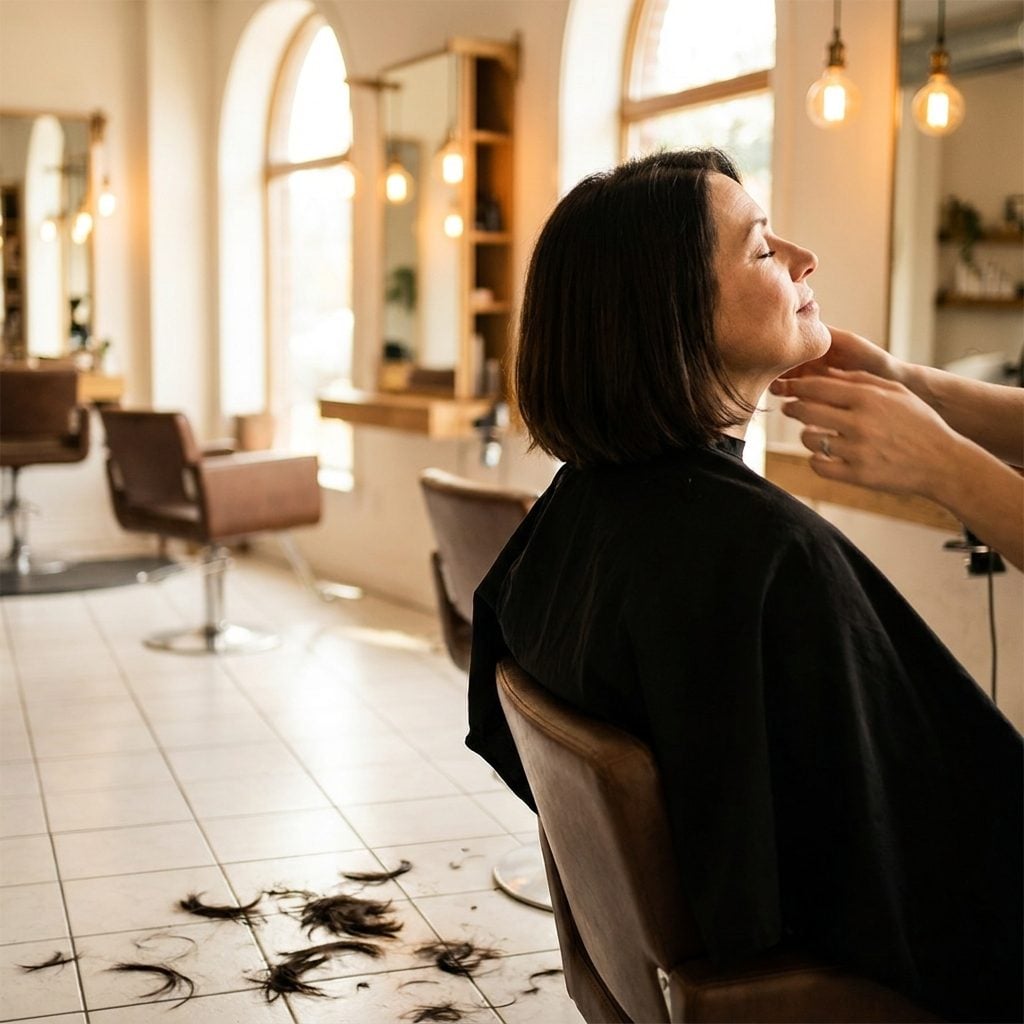
There’s a sound scissors make on thick hair. Not a snip. More like a whisper that turns into a thud when eight inches of dead weight hits linoleum. And the woman in the chair goes quiet for a second. Not sad. Not happy, exactly. Just lighter.
Psychologists trace this to catharsis, a concept Aristotle used to describe the purging of strong or repressed emotion. The physical act of cutting hair can serve as a tangible manifestation of that release. As each strand falls, it can feel like a burden is being removed, making room for closure and new experience. Source Many women who cut their hair report that the relief is immediate and almost physical. Long hair, in particular, can feel like the accumulated weight of years of memories. Cutting it off is experienced as leaving behind a part of the past, and psychologists suggest the resulting feeling of lightness is a “renewal effect” created as the brain adapts to the changed image. Source
During moments of intense emotional pain, cutting hair provides a sense of closure. It externalizes what is going on internally. And it hands back a feeling of control when everything else feels out of reach. That’s the part nobody warns you about. The relief doesn’t come from the new style. It comes from watching the old one leave.
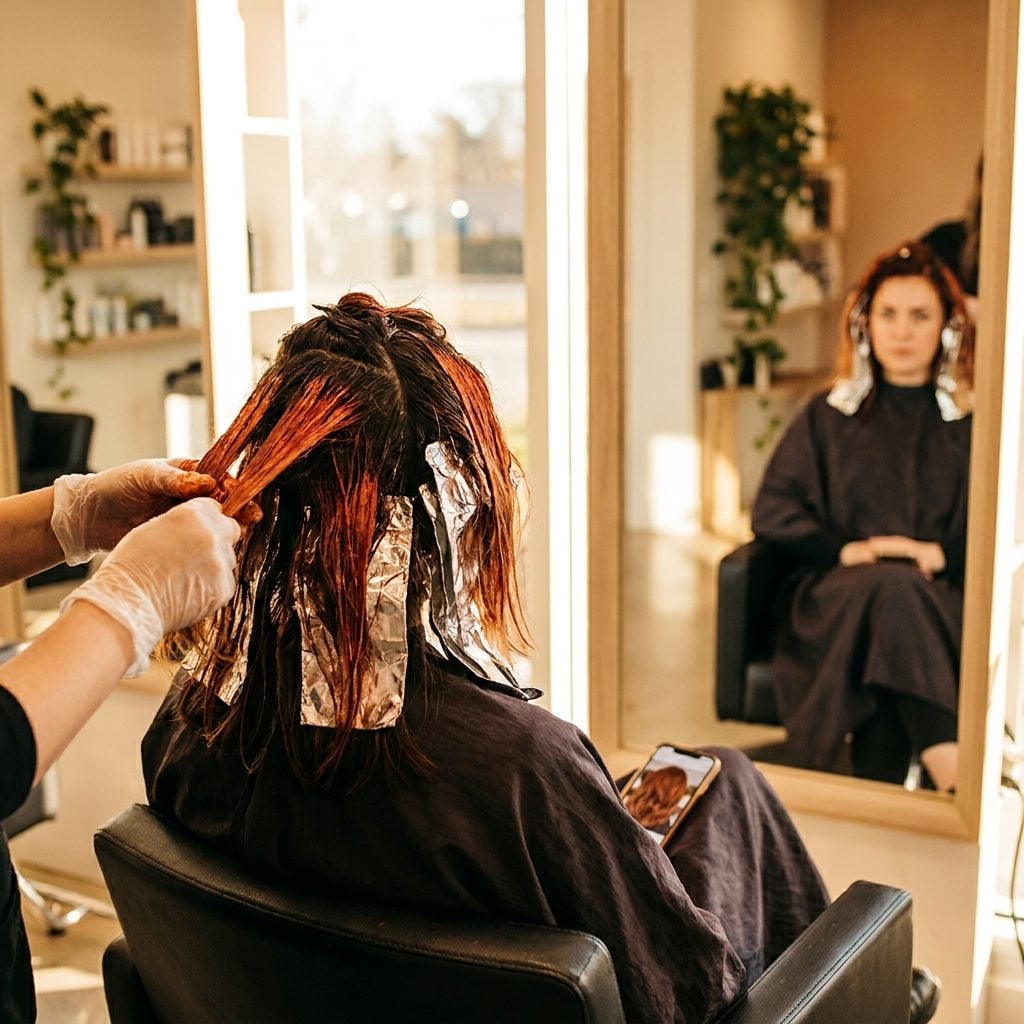
Asking for Color She Was Always Told Was Too Bold Because Too Bold Was Never Actually About Her Hair
❤️ Would you like to save this?
Red. Copper. A blonde so bright it practically announces itself. She brings the reference photo she’s been saving for years, the one she never showed anyone because she already knew the line: “That’s a lot.” “That won’t look professional.” “I liked you better the way you were.”
None of those objections were about hair color. They were about visibility. About how much space she was allowed to occupy. A Source survey of 1,000 Americans found that 34% of people who changed their hair after a breakup were motivated by a desire to reclaim their identity, while 31% cited a need for freedom. Bold color isn’t rebellion for its own sake. It’s the visual correction of a long suppression. She wasn’t too bold. She was told to be too quiet.
For women over 40, this carries extra weight. There’s a cultural script that says you age into neutrals, into softness, into fading. Walking out with hair inspiration that refuses to be ignored is a two-word sentence: I’m here.
Leaving the Salon and Not Texting a Photo to Anyone Because She No Longer Needed That Kind of Permission

This is the one people don’t talk about. Not the cut. Not the color. The silence after.
She walks out, catches her reflection in the window of the shop next door, and her thumb doesn’t move toward the camera. She doesn’t send the photo to see if it’s approved. Doesn’t post it to measure the reaction count. For the first time in a long time, the experience belongs only to her. That restraint isn’t coldness. It’s the first sign that the approval circuit has been interrupted.
In relationships with coercive control, even small decisions get routed through an external checkpoint. You learn to preview every choice through someone else’s eyes before you let yourself feel anything about it. So the moment a woman does something significant and doesn’t immediately seek validation from outside herself, something has shifted at a structural level. The locus of control researchers describe, that internal sense of agency, is flickering back on. She looked. She liked it. That was enough.
Cutting to a Length That Has Nothing to Do With Being Desirable and Everything to Do With Feeling Like Herself

She didn’t ask what looked best. She asked for what felt right. And those are wildly different questions when you’ve spent years dressing your hair (and your body, and your face) for someone else’s preference.
According to Source, a study published in the Journal of Applied Social Psychology found that women who changed their hair reported feeling more confident and more attractive, but the key word is reported. The confidence didn’t come from other people finding them attractive. It came from alignment. Internal identity matching external presentation. That match is what researchers in enclothed cognition call “symbolic self-completion,” and it works with hair the same way it works with clothes.
For a woman over 40 who’s spent a decade performing desirability on someone else’s terms, a cut that prioritizes how she feels over how she’s received is a radical correction. Maybe it’s a short crop. Maybe it’s an androgynous bob cut. The length isn’t the point. The audience is. She’s finally the only one in the room.
Walking Past a Mirror Two Days Later and Not Recognizing the Woman Looking Back in the Best Possible Way
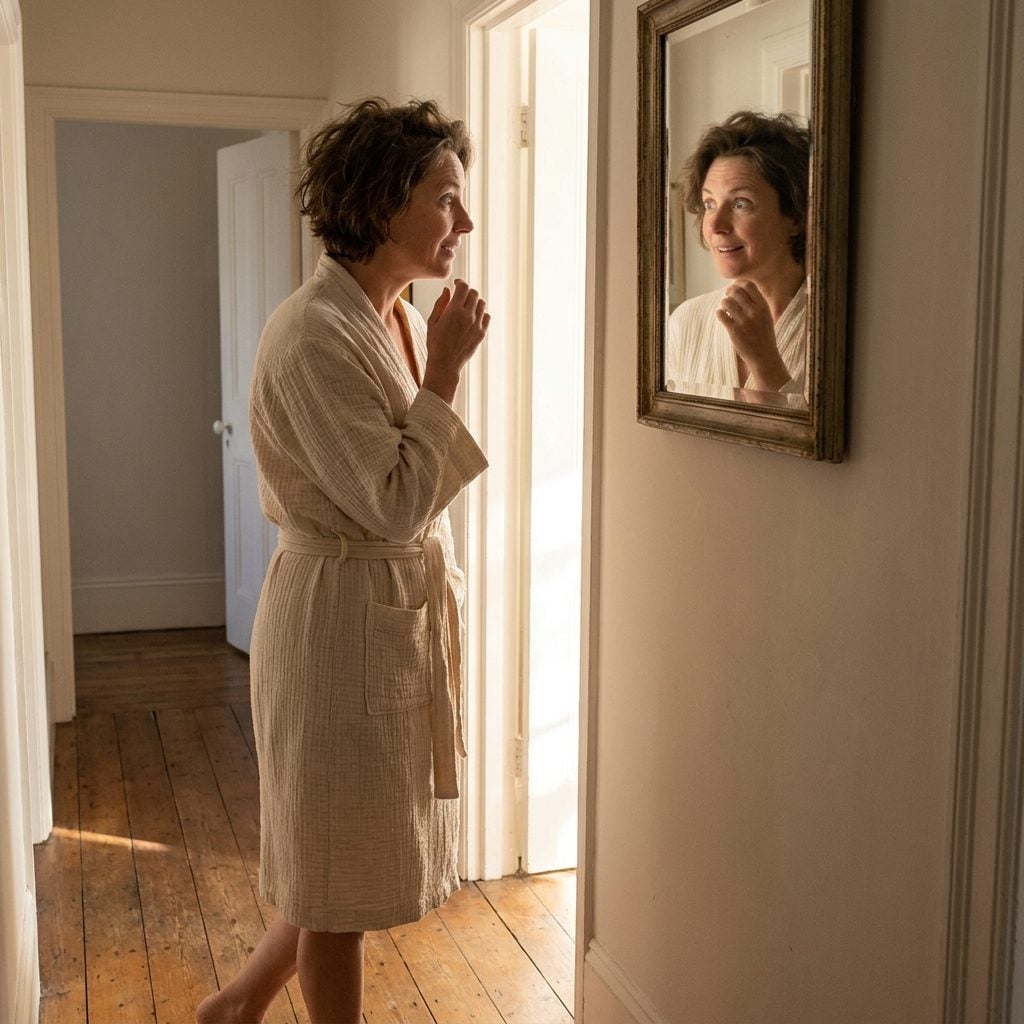
Day one, she knows she did it. Day two, she forgets. Then she passes the hallway mirror and there’s a stranger standing where she used to be.
Psychologists call this positive identity discontinuity. It sounds clinical. It doesn’t feel clinical. It feels like meeting someone you’ve been looking for without knowing you were looking. Research on appearance changes and identity suggests that radical shifts in how we look can create new perceptions in the brain, making a person feel as though they’re looking at a different version of themselves, which in turn can boost self-confidence (Source). The old reflection carried years of association. That hair in the mirror belonged to the woman who stayed. Who made herself smaller. Who said yes when she meant something else entirely.
The new reflection hasn’t been assigned a story yet. She gets to write it fresh. I say this as someone who once kept the same hairstyle for eight years because change felt like risk. The unfamiliar reflection isn’t disorienting. It’s a clean page.
Realizing the Stylist Was the First Person in Months Who Asked What She Wanted and Then Actually Listened
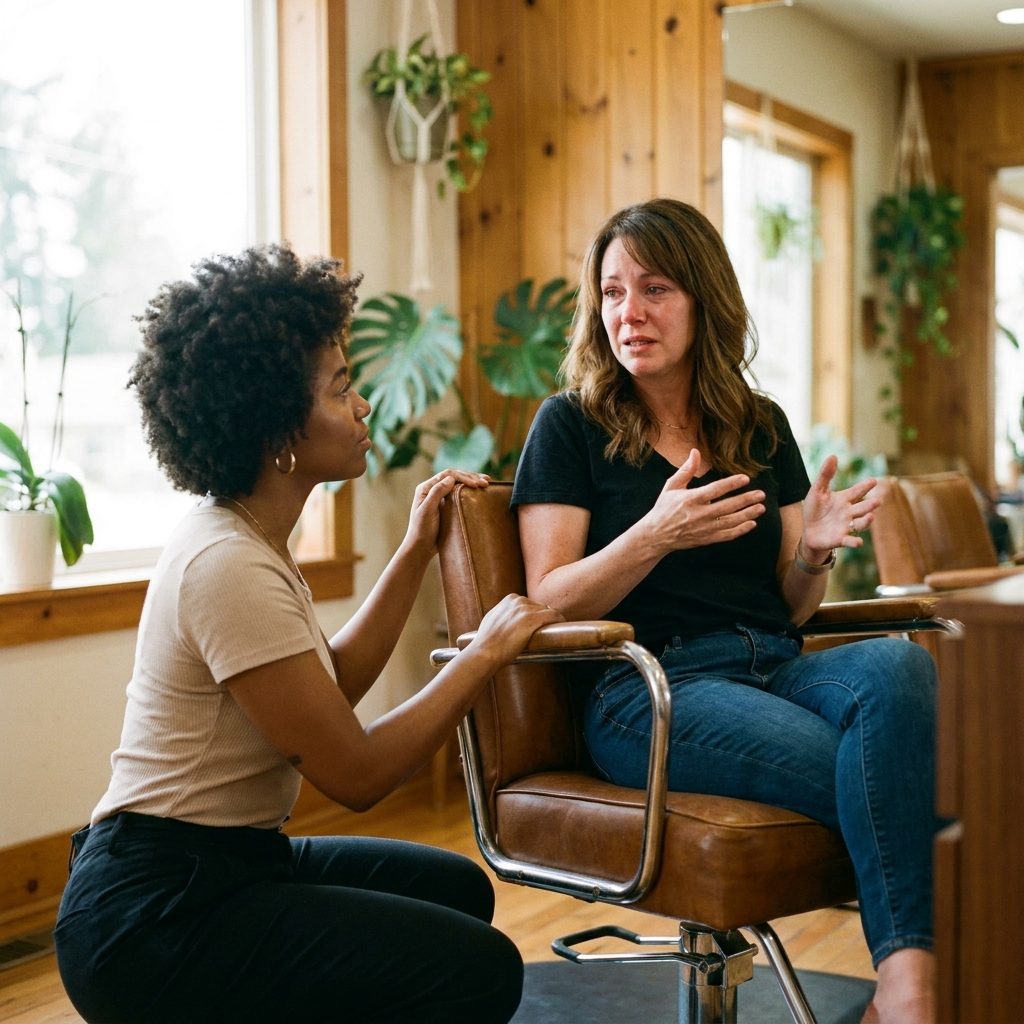
“What are we doing today?”
Four words. And she almost cries. Not because the question is hard. Because nobody has asked her one like it in a long time.
This isn’t sentimentality. Research backs it up. A (Source) found that hairdressers frequently function as informal therapists, with clients disclosing information about family, health, identity, and mental health. The study identified key themes including “behaving like a therapist” and “providing a place of safety.” A separate 2023 survey by StyleSeat found that 1 in 3 Americans consider their stylist to be like a therapist, with 55% reporting emotional support during appointments.
The salon chair has a strange advantage over the therapist’s couch. Nobody expects you to explain yourself from the beginning. Nobody takes notes. Someone touches your hair gently, asks you what you want, and then does it. For a woman exiting a relationship where her preferences were ignored, overruled, or mocked, this simple exchange can feel like the first act of being heard in months. Maybe years.
Choosing the Cut Her Best Friend Suggested Three Years Ago That She Dismissed Because She Already Knew the Reaction It Would Get

Her best friend said it three years ago over wine. “You’d look incredible with a pixie.” Or layers. Or that dramatic lob. She knew her friend was right. She could see it. She wanted it. And she shut it down instantly because she’d already run the simulation in her head. She knew the look she’d get when she walked through the door. The silence. Or worse, the comment dressed up as concern. “That’s… different.” “You’re not really going to keep it like that, are you?”
So she didn’t. For three years.
What’s happening here isn’t indecision. It’s pre-censorship. The behavior pattern psychologists connect to coercive control, where the controlled person begins monitoring their own choices before the controller even has to weigh in (Source). The surveillance gets internalized. She becomes her own warden. When she finally calls the salon and asks for the cut she refused three years ago, she’s not just getting a haircut. She’s firing the guard she didn’t hire in the first place.
That best friend, by the way? She’s the first person who gets the photo.
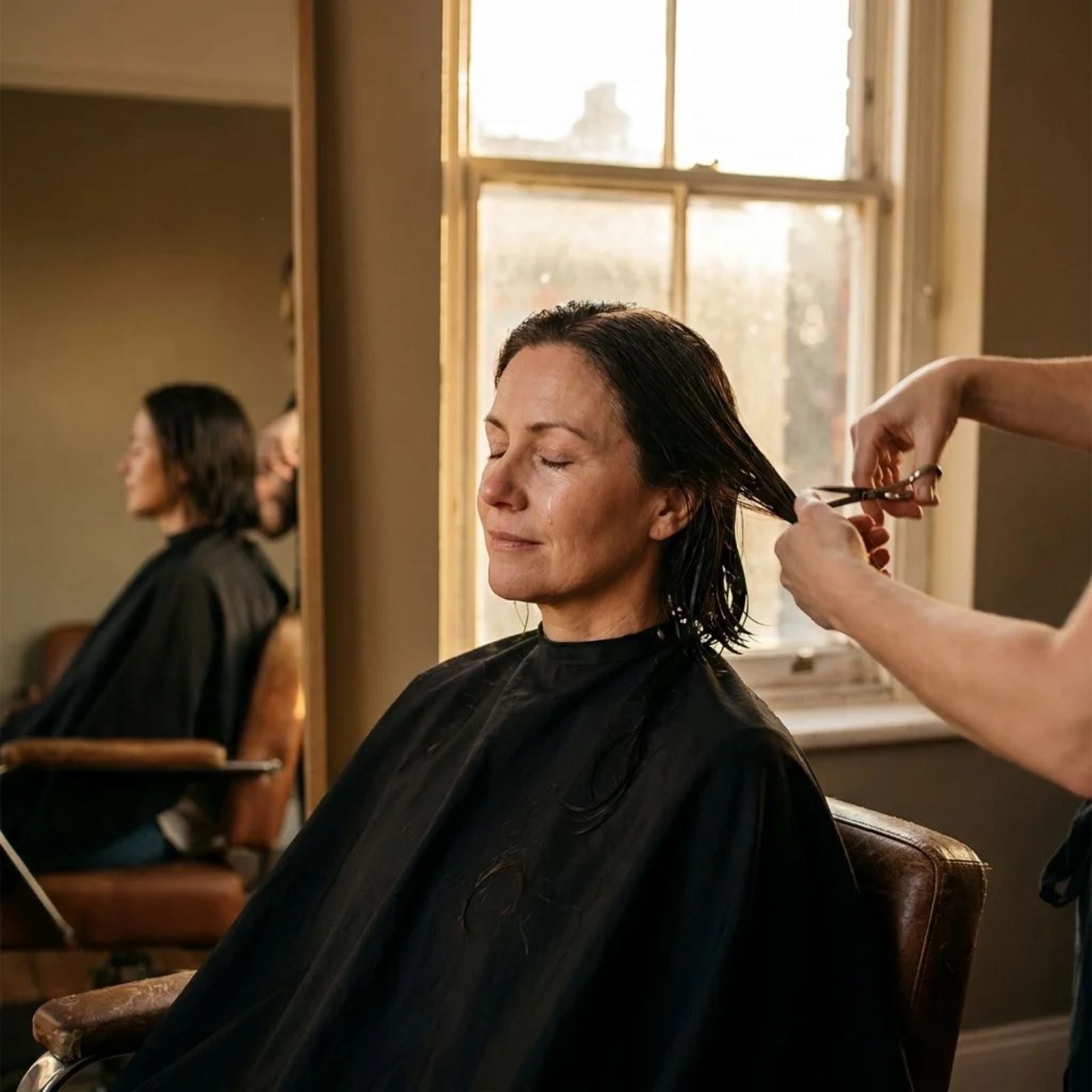
Sitting in the chair and crying quietly not from sadness but from the specific relief of being seen without an audience
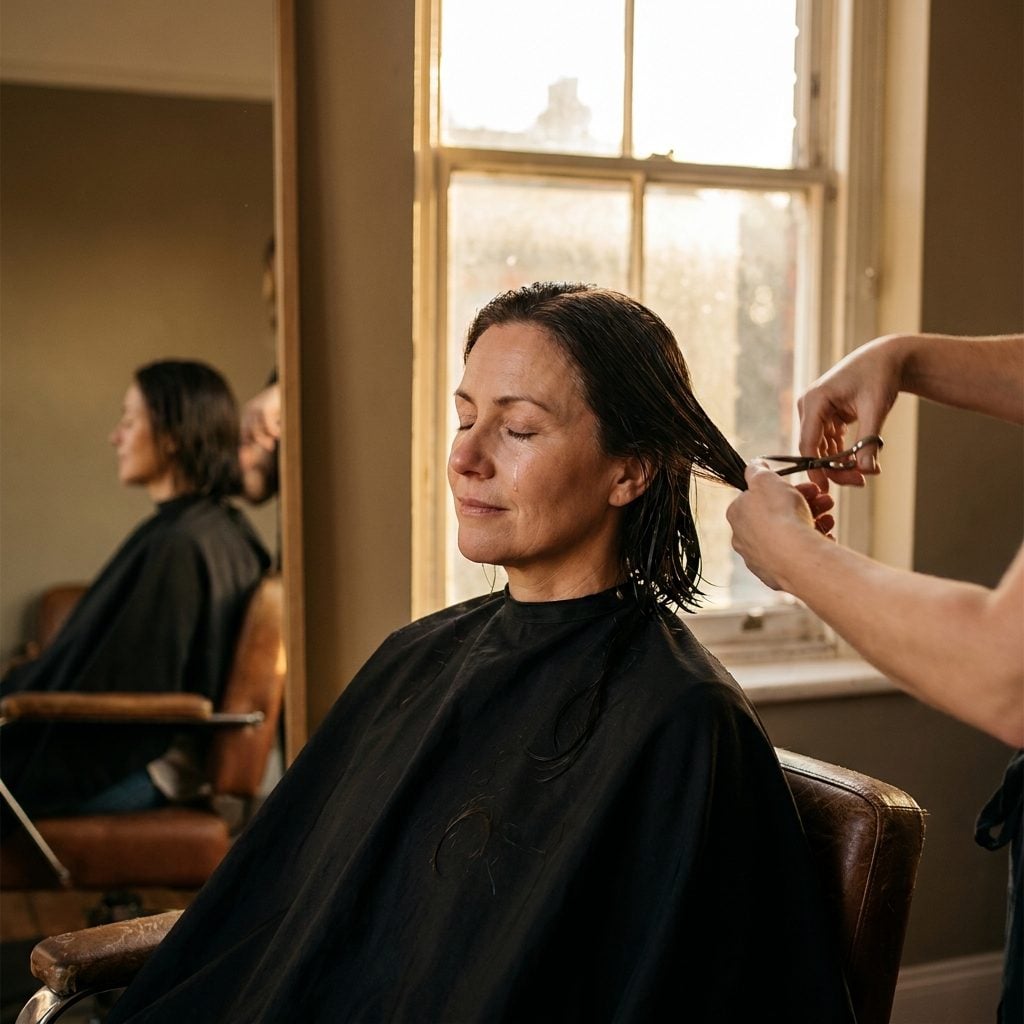
The salon chair does something no other seat in your life does. It faces a mirror, but someone else is standing behind you, touching your head, asking nothing of you. You don’t have to perform. You don’t have to explain why your eyes are wet. The woman behind you already knows.
According to research by L’Oréal Professionnel for its Head Up initiative (Source), hairstylists spend an average of 2,000 hours per year listening to clients. They hear about divorces, diagnoses, the fights that finally crossed the line. The chair becomes a confessional with better lighting. And the tears that come aren’t grief. They’re the body’s way of saying: I can stop holding this now.
A woman leaving a toxic relationship has spent months, sometimes years, calibrating every facial expression. Smiling when she shouldn’t have to. Staying composed when composed was the last thing she felt. The salon strips that performance away because the only job here is to sit still. To be tended to. To let someone else’s hands do the work. That’s when the tears come, quiet and fast, not because she’s breaking down but because she’s finally in a room where she doesn’t have to hold it together. Clinical psychologist Afiya Mbilishaka has built an entire framework around this idea, using salons as entry points for mental health support through her PsychoHairapy research. The salon isn’t pretending to be therapy. It just happens to create the conditions where a woman can finally exhale.
Leaving with hair that belongs entirely to her for the first time in longer than she can honestly remember

Here’s the part nobody talks about enough. In a controlling relationship, hair isn’t just hair. It’s territory. “He liked it long.” “He said short hair was masculine.” “He told me the blonde looked cheap.” The preferences sounded like opinions. They functioned as rules. Every morning she styled her hair for an audience of one, and that audience had veto power.
According to a psychologist interviewed by Dazed about drastic haircuts (Source), grief after a breakup often drives someone toward a big appearance change as a way of “lifting the literal and metaphorical weight.” But for women leaving toxic dynamics, the weight isn’t metaphorical at all. It’s the accumulated mass of years spent curating someone else’s version of you. Every inch cut away is an inch reclaimed.
She walks out and the air hits the back of her neck. New sensation. Lighter head. She catches her reflection in a shop window and doesn’t recognize herself for half a second. Good. That’s the point. The woman in the glass isn’t the one who kept the peace, who wore her hair the way she was told, who made herself smaller in every way including this one. This new cut has no history with him. No memory of his hands in it. No association with the version of herself she built for his approval. It’s the first thing on her body that belongs only to her since before she can pinpoint when the belonging stopped.
If you’re curious about where to take that feeling next, exploring new hair ideas can be its own quiet act of reclamation.
The Bottom Line
The first appointment after a breakup is always the same because it’s never really about the hair. It’s the first decision she makes in a body that finally belongs to her again, and every stylist recognizes that moment because the woman in the chair is meeting herself for the first time in years. The next time you reach for someone else’s opinion before making a choice about your own appearance, ask yourself whose reflection you’ve been maintaining.