❤️ Would you like to save this?
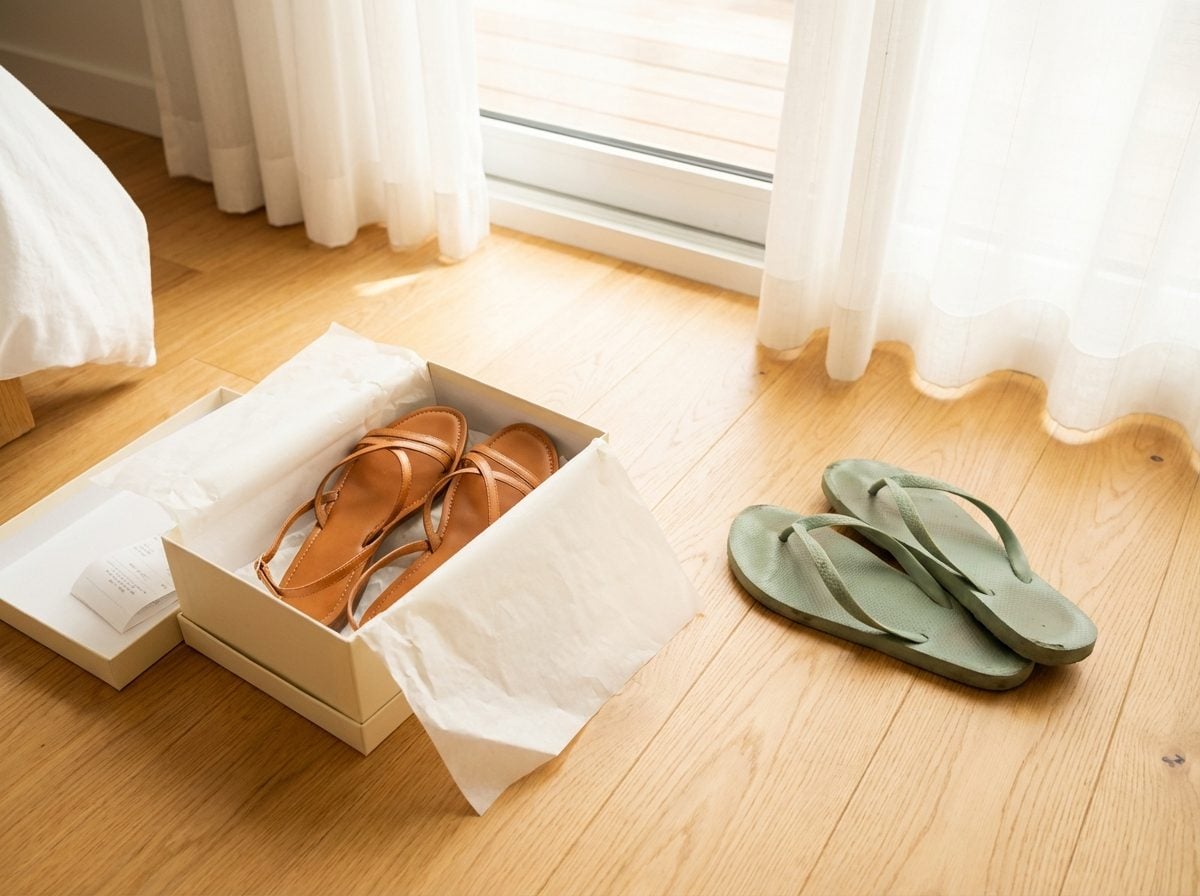
You saved up. You deliberated. You stood in the store, or hovered over the checkout page, and you bought them, the sandals. The beautiful, ridiculous, completely-worth-it sandals. And then you got home, put them in the box, slid the box onto the shelf, and the next morning you reached for the $12 flip flops like nothing had changed.
Sound familiar? You are not alone, and you are not irrational. What’s actually happening when you do this is one of the most fascinating psychological stories your wardrobe tells about you, and once you understand it, you will never look at your shoe rack the same way again.
FYI, thanks to AI imagery software, we’re able to create very specific fashion and hairstyle examples to illustrate the points being made. In some cases, imagery is exaggerated to hammer home the point. Also, assume links that take you off the site are affiliate links such as links to Amazon. this means we may earn a commission if you buy something.
The Neuroscience Reason Your Brain Keeps Choosing the Cheaper Option (Even When You Can Afford Better)

Picture the moment: the expensive sandals are right there, broken in, gorgeous, yours. The $12 flip flops are a crumbling heap of foam by the door. And yet your hand reaches for the foam. Every time. It feels like a character flaw. It is not.
According to a 2010 UCL study published in the Proceedings of the National Academy of Sciences, the brain has a measurable, physiological bias toward the default option, the familiar, the established, the already-chosen. When a decision gets harder, this bias gets stronger. Researchers found that a brain region called the subthalamic nucleus had to actively fire to override the default, meaning choosing differently is a genuine neurological effort. Your brain isn’t lazy. It’s efficient. The flip flops are the default. Changing course costs cognitive energy your brain would rather spend somewhere else.
There’s also loss aversion lurking underneath. A 2011 Journal of Neuroscience study on regret-induced status quo bias found that when people deviate from their default and it doesn’t work out, the regret registers harder neurologically than if they’d just stuck with what they knew. So the safer bet, to your brain’s ancient accounting system, is always the familiar thing. The cheap thing. The thing that has never once disappointed you.
Something worth sitting with: this bias toward the default doesn’t know the difference between an era of scarcity and an era of abundance. It was set long before the sandals arrived.
Why the Moment You Finally Buy the Thing You’ve Always Wanted Often Feels Like a Betrayal

There’s a particular flatness that shows up after big purchases. You worked for these sandals. You thought about them for months. You finally clicked ‘buy.’ And then, almost immediately, something in you went quiet in a way that felt more like deflation than satisfaction.
Psychologists have a name for what happens next. Dr. Tal Ben-Shahar’s concept of the arrival fallacy, explored in depth in a recent Psychology Today piece, describes the false belief that achieving a specific goal, buying the thing, landing the promotion, finishing the renovation, will deliver lasting satisfaction. It almost never does. Not because the goal wasn’t worth it. But because the anticipation was doing all the emotional heavy lifting, and once it’s gone, there’s nothing left to want.
The sandals now exist. They can no longer be looked forward to. And that particular, quietly sustaining pleasure, of having something to want, has been replaced by an object sitting in a box. The betrayal isn’t the sandals. It’s the gap between the imagined version of having them and the real, ordinary Wednesday morning of actually having them.
The Psychological Phenomenon That Makes Luxury Feel Like a Costume, Not a Right
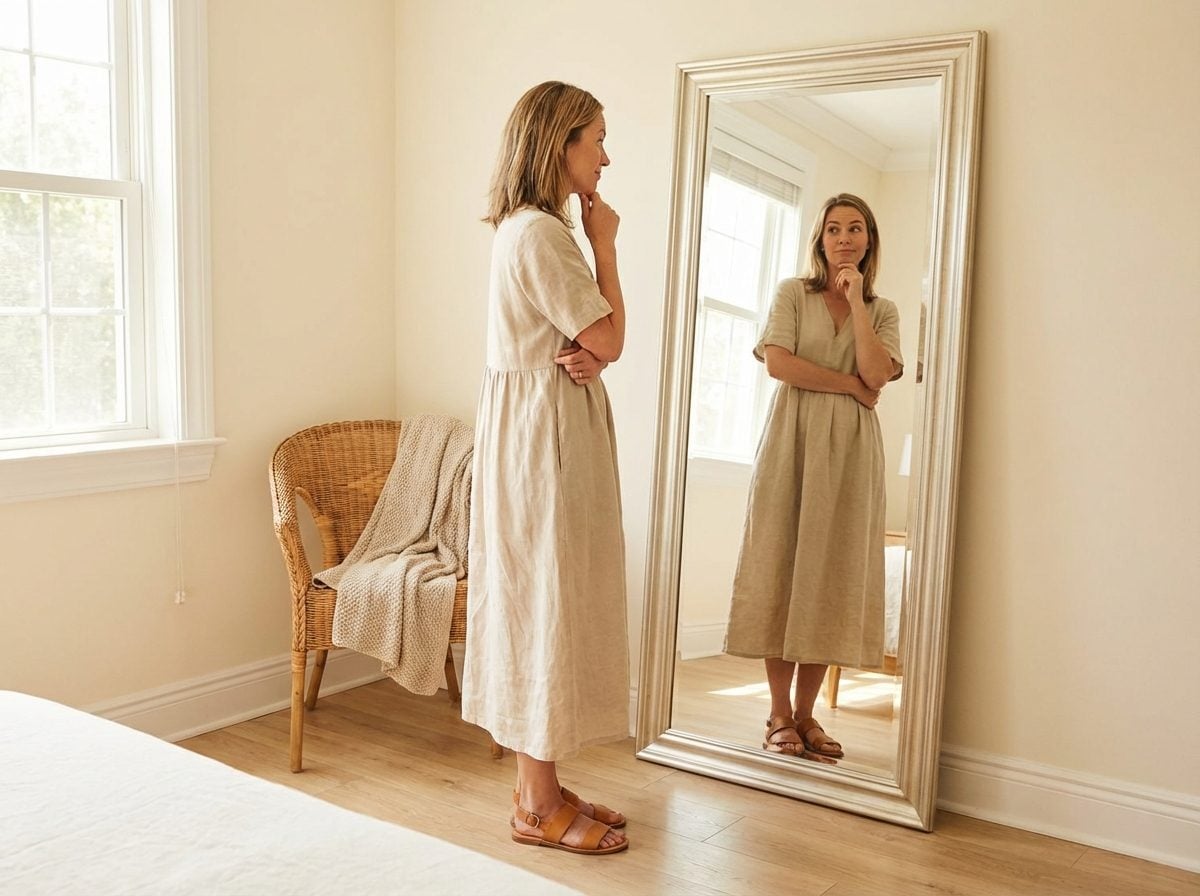
The first time you wear something truly expensive in public, you might feel watched. Like you owe someone an explanation. Like the price tag is somehow visible, glowing softly through the leather, announcing itself to everyone who passes. That sensation has a clinical history.
What psychologists call impostor syndrome was first formally described in 1978 by researchers Pauline Rose Clance and Suzanne Imes, who observed it specifically in high-achieving women. A detailed clinical overview from StatPearls via the NCBI notes that the core experience involves a persistent belief that one’s achievements, or in this case, one’s possessions, are unearned, undeserved, and provisional. The fear isn’t just that you spent too much on sandals. It’s a quieter, older fear: that someone will notice you reaching above your station.
Around 70% of adults experience impostorism at some point in their lives, according to Psychology Today’s overview of the research. Which means the specific sensation of wearing beautiful shoes and feeling fraudulent is, statistically, extremely common. That doesn’t make it easier to shake. Impostor feelings have a way of attaching to objects the same way they attach to job titles: you got it, but do you really deserve it?
The expensive sandals sit in the closet not because they’re uncomfortable, but because wearing them requires a self-concept you haven’t quite finished building yet. The flip flops ask nothing of you. No performance required.
What Your Most Comfortable Shoe Actually Says About How You See Yourself
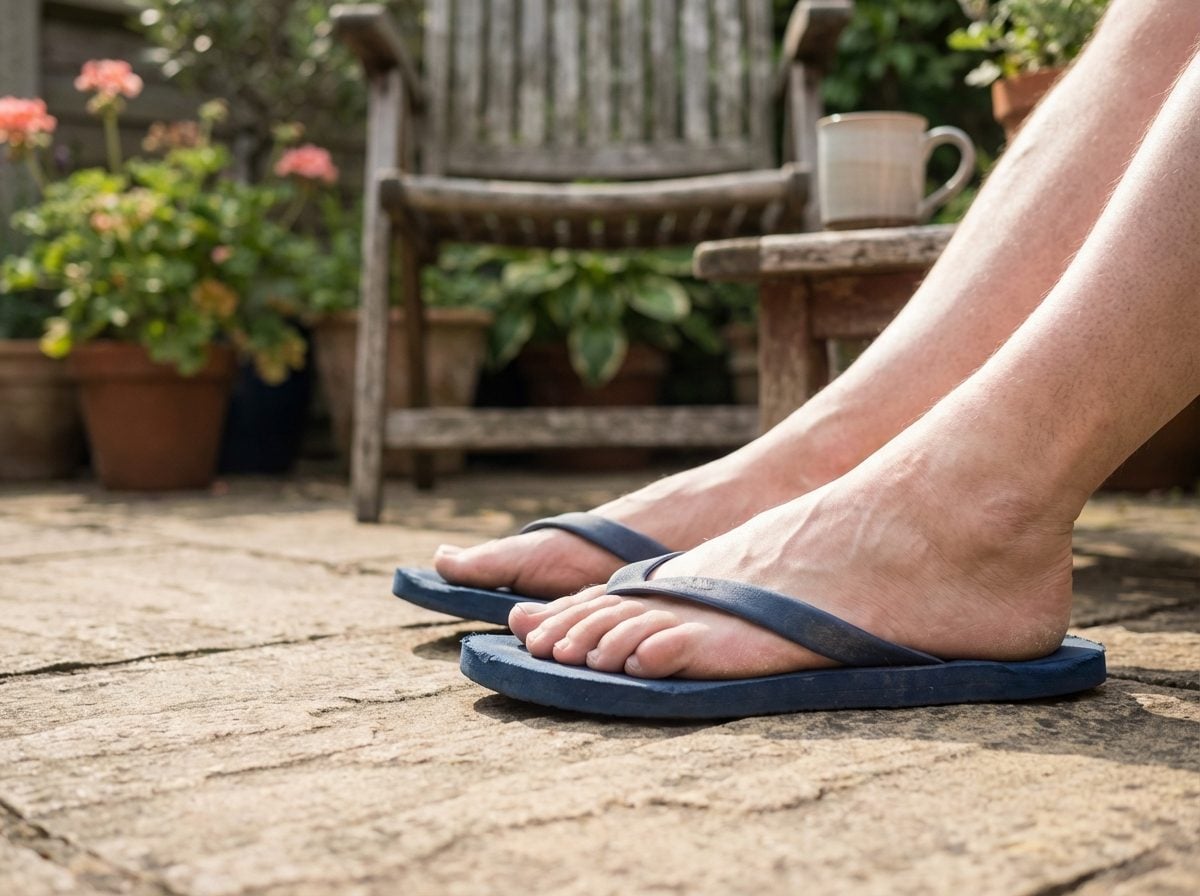
Comfort and identity are not as simple a pairing as they seem. The shoes you wear without thinking, the ones you could navigate a grocery store, a school run, or a long phone call in without ever once noticing your feet, those are the shoes that have merged with your self-concept. They are not just comfortable. They are you.
Research in embodied cognition and self-perception consistently shows that clothing shapes identity not just outwardly, how others see you, but inwardly, governing how you move through the world and how you interpret your own role in it. The clothes (and shoes) we return to habitually are the ones that have been silently endorsed by the self. They don’t just fit your foot. They fit your working theory of who you are.
The flip flops are comfortable, yes. But their real psychological function might be something else entirely: they are low-stakes. They require no aspiration. They do not suggest you are on your way somewhere. And after years of performing competence, motherhood, professionalism, and partnership, all at once, with very little margin, not suggesting you’re on your way somewhere can feel like the deepest possible relief.
The Hidden Guilt Loop That Fires Every Time You Reach for Something ‘Too Nice’
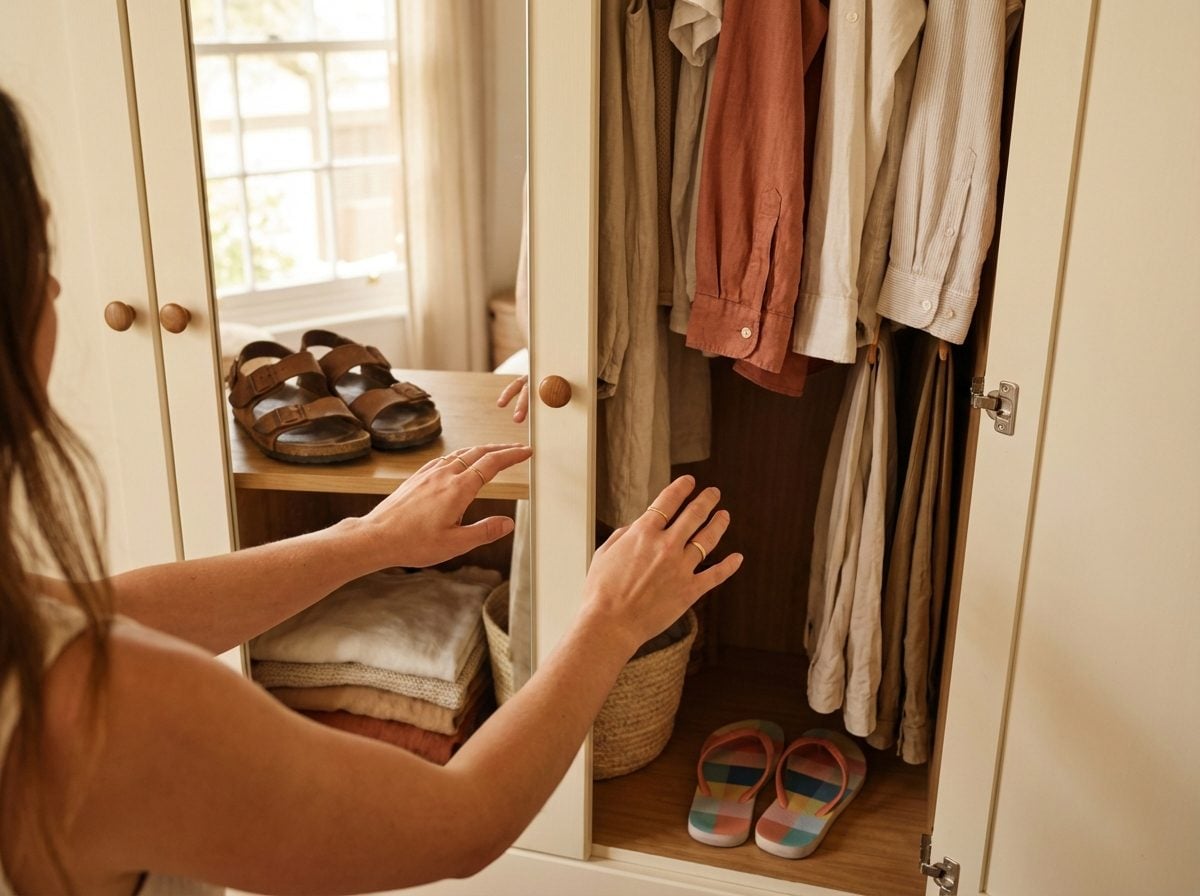
You reach for the expensive sandals. Something tightens. You put them back. The flip flops go on. The tightness releases. This sequence happens so fast you might not even clock it as a decision.
But it is one. And it’s being driven by something very old.
The Three-Part Loop Most Women Don’t Realize They’re In
- Approach: You reach for the nicer thing. A faint alarm sounds, is this okay? Am I allowed?
- Retreat: You put it back. Relief arrives. Your nervous system logs this as the correct choice.
- Reinforcement: The retreat gets easier the next time, because relief is rewarding and your brain learns what produces it.
This loop has nothing to do with logic. It has everything to do with what you were taught, explicitly or by example, about your own deservingness. The guilt that fires when you reach for something nice is rarely about the object. It’s about the implicit question underneath it: Who do you think you are?
And until that question gets answered differently, the flip flops will keep winning. Not because they’re better shoes. Because reaching for them never triggers the alarm.
Why Women Who Grew Up Watching Their Mothers ‘Save’ Things for Special Occasions Are Still Paying for It Today
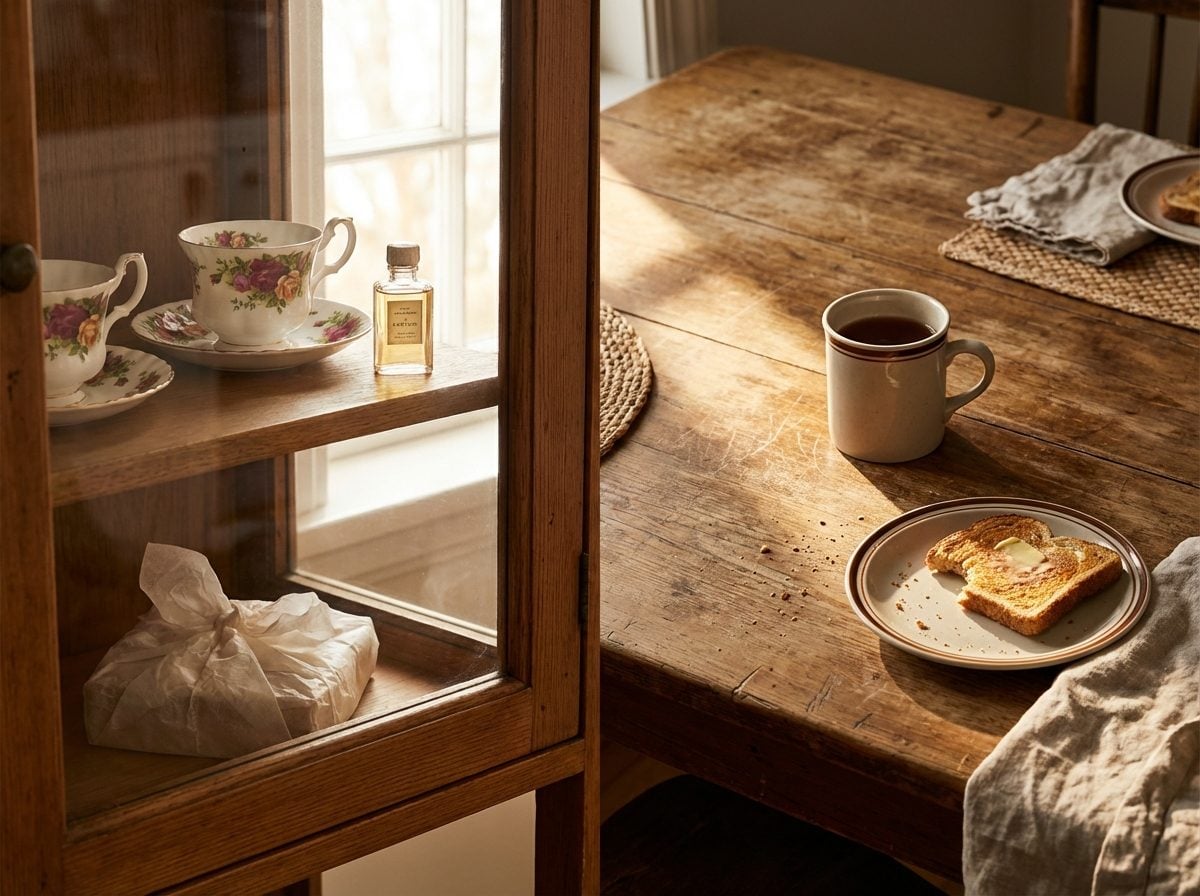
The good china in the cupboard. The perfume that was never opened. The dress bought for a party that never quite arrived. If you grew up in a household where the nicest things were protected rather than used, you absorbed something that no one taught you explicitly: nice things are fragile, finite, and probably not for everyday you.
The psychology of scarcity runs deep. Research summarized by the Association for Psychological Science shows that growing up in resource-limited environments, or simply in households that operated from a scarcity mindset, shapes decision-making and self-perception in ways that persist long into adulthood, often long after the scarcity itself is gone. The brain that learned ‘save the good stuff’ doesn’t automatically update when the bank account does.
Your mother wasn’t wrong, exactly. She was managing what she had with great care. But the lesson that got downloaded into you wasn’t ‘be careful with beautiful things.’ It was ‘beautiful things are not for regular days.’ And you are still, quietly, living by that rule. The expensive sandals are in the box because somewhere in your nervous system, today has not yet qualified as a special enough occasion.
The question worth asking: after 40-something years of waiting, what exactly would the occasion look like?
The Identity Gap Between the Woman Who Bought the Sandals and the Woman Who Actually Wears Them
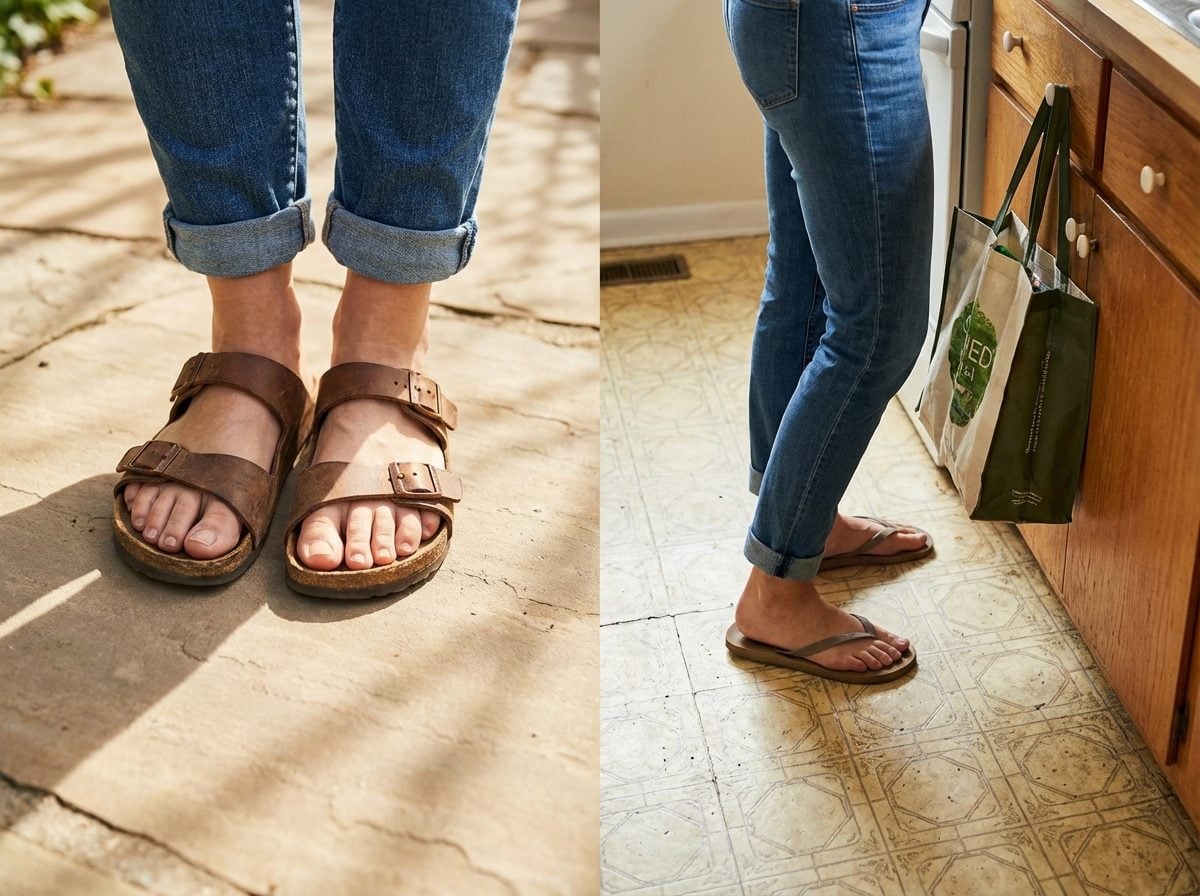
She bought the sandals. You wear the flip flops. These might be the same person, technically. But they don’t always feel that way.
The woman who bought those sandals was in a particular state of mind, decisive, hopeful, slightly aspirational. She was buying toward a version of herself that felt close: pulled-together, unhurried, the kind of woman who wears good shoes to the farmers’ market and doesn’t think twice about it. That version is real. She exists. But she doesn’t always show up on a Tuesday morning when there’s a shopping list to get through and the car needs petrol and the dog has already been walked.
Research in clothing psychology and self-perception theory consistently finds that we dress according to our self-concept, our active, working belief about who we are, not necessarily who we aspire to be. The aspirational self and the operational self are different people. They share a wardrobe but they don’t always share a morning routine.
The sandals live in the gap between the two. Bought by one woman, left unchosen by another. Neither is wrong. But the gap itself is worth examining: it’s not just a footwear preference. It’s a measure of how much distance still exists between who you’re becoming and who you believe, day to day, that you actually are.
What Psychologists Call the ‘Arrival Fallacy’, and Why Your Expensive Purchase Never Quite Fits the Life You Imagined

You imagined a specific life when you bought those sandals. Not consciously, maybe, but the image was there: morning coffee on a terrace somewhere, unhurried, barefoot on warm tiles, then slipping on the sandals to walk to a market. Or some version of that. A life with enough space in it to wear good shoes to ordinary places.
Harvard-trained positive psychologist Dr. Tal Ben-Shahar coined the term ‘arrival fallacy’ to describe exactly this. As explored by NessLabs in their breakdown of his work, the arrival fallacy is the persistent, incorrect belief that reaching a specific goal, or acquiring a specific object, will deliver lasting happiness or shift how your life feels. It almost never does, not because the goal wasn’t worth reaching, but because psychologists Timothy Wilson and Daniel Gilbert identified what they call the ‘impact bias’: we systematically overestimate how intensely and how long positive events will affect us.
The sandals arrived. The life didn’t.
The Tuesday still looked like Tuesday. The morning was still rushed. The farmers’ market happened in forty-five minutes on the way back from something else. And so the sandals stayed in the box, because the box was where the imagined life lived, and taking them out meant admitting that the imagined life wasn’t coming. That this is, in fact, the life.
Which brings you back to the flip flops. Every time.
The expensive sandals were bought for the woman she thought she should be, the one who has it together, who deserves nice things, who finally made it. The $12 flip flops are for the woman she actually is. And after 40, she’s done pretending there’s a difference.
The Surprising Way Self-Worth Gets Quietly Encoded Into What You Allow Yourself to Wear
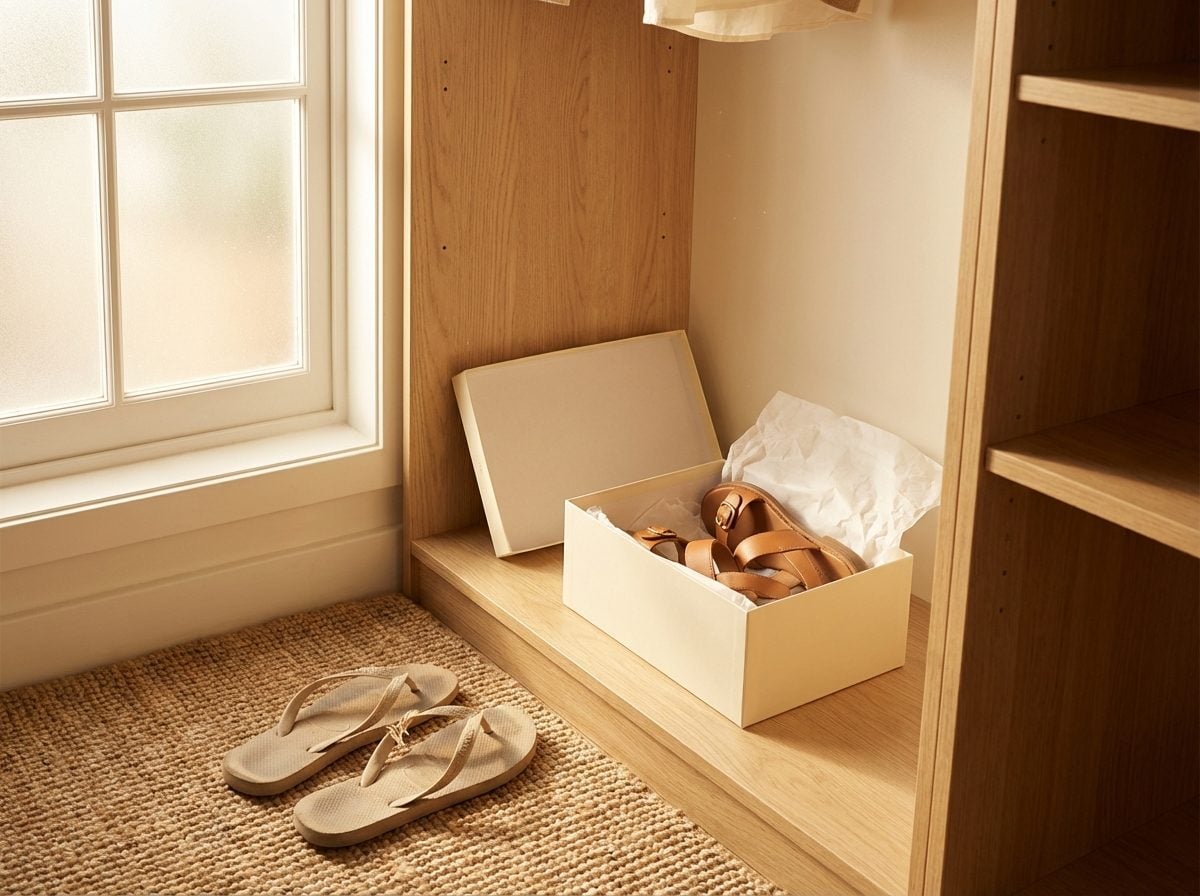
You probably don’t think of getting dressed as an act of self-evaluation. But according to a 2021 study in Frontiers in Psychology from the University of Haifa, clothing functions as what researchers call the “visible self”, an external expression of how much self-regard you actually carry. Not how much you say you carry. How much you actually believe you deserve. Researchers define this as the degree to which clothing is perceived as “an expression of self-regard or self-worth”, and it shows up in your choices whether you intend it to or not.
This is where it gets uncomfortably specific. The expensive sandals aren’t just shoes. They’re a statement about who you believe is allowed to have nice things. And if some part of you doesn’t fully believe that person is you, the sandals stay in the box, perfectly wrapped, waiting for a version of you that feels ready. The $12 flip flops aren’t laziness. They might be a much older story.
Why Choosing Comfort Over Beauty After 40 Is an Act of Psychological Rebellion, Not Defeat
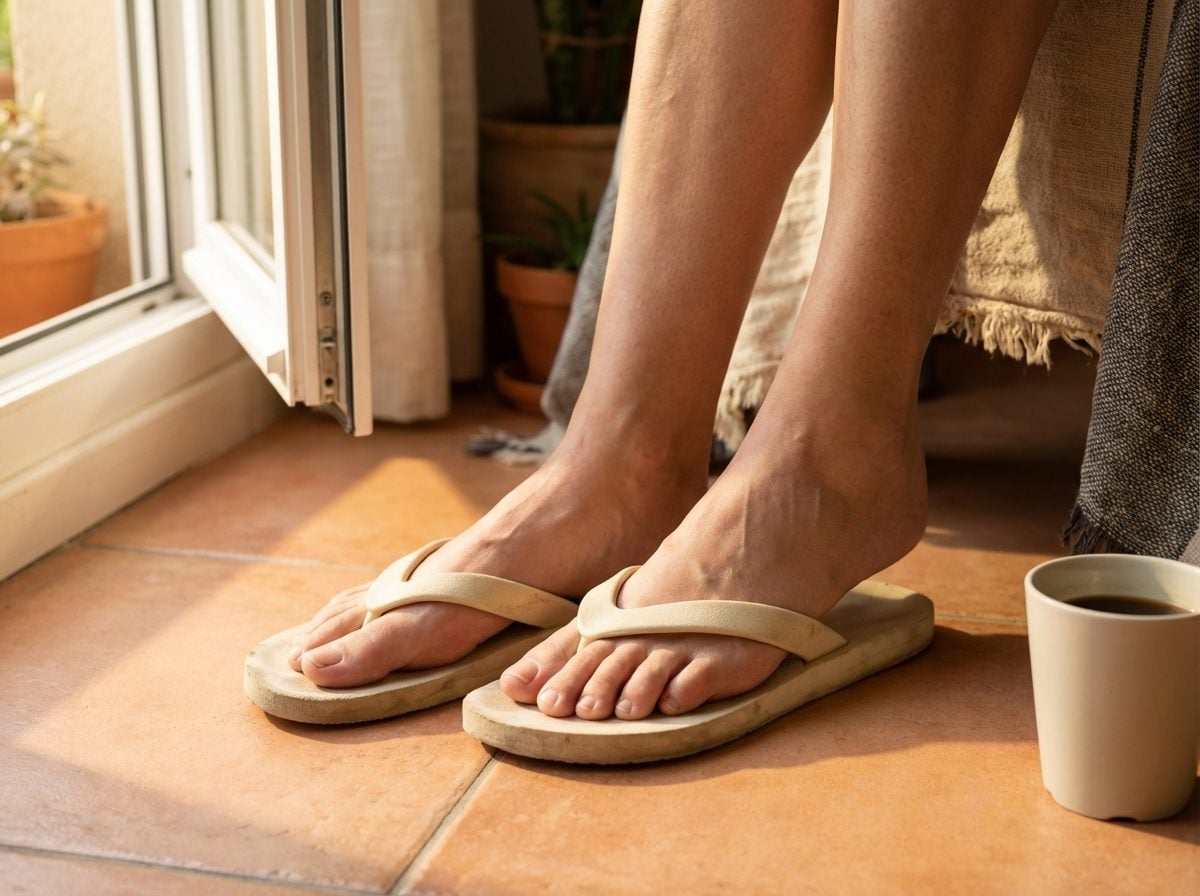
There’s a persistent cultural script that says a woman who stops suffering for her appearance has given up. Tight shoes equal effort. Effort equals worth. It’s a logic so deeply embedded that many women internalize it without ever examining it, and then feel vaguely guilty every time they reach for something soft, flat, or easy.
But a 2024 paper in the Journal of Women & Aging examining women’s perceptions of appearance in the second half of life found something worth sitting with: resisting the pressure to perform through beauty work can be understood as an assertion of agency, a refusal to let external culture define the terms of your self-presentation. Choosing comfort, in other words, isn’t withdrawal. It can be a deliberate reorientation of power.
After 40, many women describe a shift in what clothing is for. Less performance, more alignment. Research published in Frontiers in Psychology found that women who dress for self-expression rather than to meet external standards report stronger self-validation and less psychological distress tied to body image. The flip flops might not be resignation. They might be the first honest choice you’ve made in years.
The Emotional Labor Behind Every ‘Practical’ Fashion Choice You’ve Ever Made
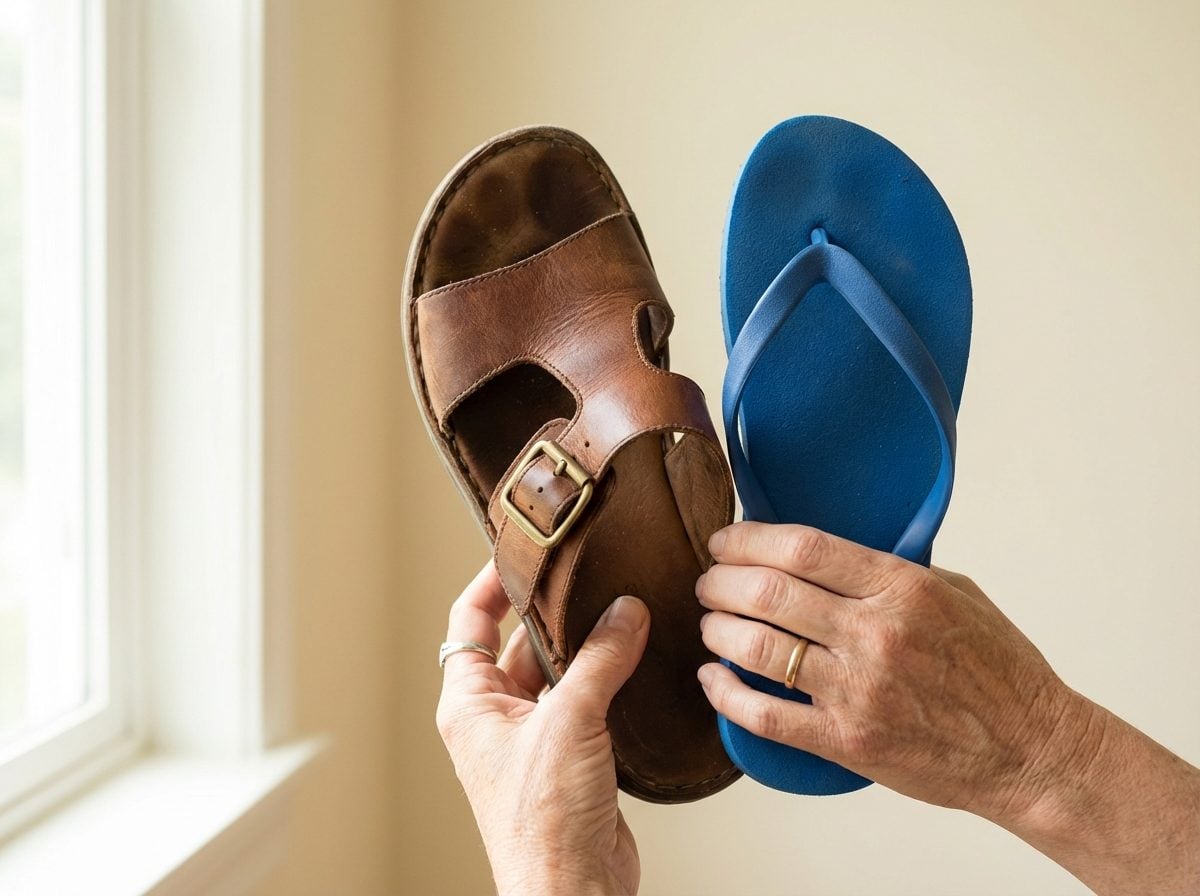
Practicality is rarely just practical. When you choose the shoes that won’t hurt, the dress that doesn’t need dry cleaning, the bag that fits the stroller, you’re not just solving a logistical problem. You’re managing a complex negotiation between who you are, who you’re supposed to be, and who you have the energy to perform today.
Psychologists studying emotional labor, a concept first introduced by sociologist Arlie Hochschild to describe the work of managing your emotional presentation for others, have increasingly applied it to appearance. Every “practical” choice carries emotional weight: the decision not to wear heels because your feet hurt is simple; the decision not to wear heels because you stopped believing you’re the kind of woman who does is something else entirely. Both look the same from the outside.
For women over 40 especially, the accumulation of practical choices can quietly calcify into a belief system. You stop reaching for the good things not because they’re impractical, but because you’ve spent so long prioritizing other people’s comfort, in your schedule, your body, your appearance, that your own preferences have become an afterthought you apologize for.
- The choice that started as sensible, then became automatic
- The automatic choice that became an identity
- The identity that made the expensive sandals feel like they belong to someone else
What the $12 Flip Flops Are Actually Saying About Who You Believe You Are When No One’s Watching

There’s a version of you that exists only in private. No audience, no performance, no one to dress for. And the clothes you reach for in that version of your life are some of the most psychologically revealing data points you have access to.
Clinician and author Dr. Jennifer Baumgartner, in her work on the psychology of shopping and dress, argues that what we wear when no one is watching is a direct window into our private self-concept, the beliefs we hold about our own value that haven’t yet been examined or challenged. The items you won’t let yourself wear even at home, the ones that feel “too good for this,” the ones you’re saving, these aren’t arbitrary. They’re a map of your self-imposed ceiling.
Mental health researchers have identified a specific pattern: low self-worth showing up as avoiding clothes you love because you feel you “don’t deserve” to wear them. It doesn’t announce itself as low self-worth. It announces itself as practicality. As saving the nice things. As “I’ll wear them when I have somewhere worth going.”
“When no one is watching, you stop performing, and start revealing.”
The Deep Psychological Reason ‘Saving’ Nice Things for Later Is Really About Feeling Undeserving Now

❤️ Would you like to save this?
The good china that only comes out for guests. The perfume too precious to use on a Tuesday. The sandals in the box. There’s a whole category of things many women own but don’t allow themselves to enjoy, justified by a logic that sounds responsible, save it for something worthy, but functions as something much more uncomfortable: a belief that the present moment, and the present version of yourself, isn’t quite enough to warrant the nice thing.
Psychologists studying scarcity mindset identify one of its key emotional signatures as feeling “undeserving of help, pleasure, or abundance”, even when resources are objectively available. The person with the scarcity mindset isn’t necessarily poor. They may own the sandals. They just can’t fully inhabit the permission to wear them.
What makes this pattern so persistent is that it masquerades as virtue. Saving things, being careful, not wasting, these are culturally rewarded behaviors. The discomfort only surfaces in the private moment when you open the box, look at the sandals, and put them back. Not because today isn’t a good enough day. But because some part of you isn’t sure you are.
How Childhood Messages About Money and Worthiness Show Up in Your Shoe Rack Decades Later

You didn’t form your beliefs about whether you deserve nice things last year. You formed them in a kitchen, probably before you were ten, listening to how adults around you talked about money, about spending, about what certain people were allowed to have.
Research on what financial therapists call “money scripts”, the unconscious beliefs about money developed in childhood, shows these scripts are frequently intergenerational, forming from the messages absorbed from caregivers and rarely examined as adults. One particularly common and quietly destructive script is money avoidance: the belief that money, or the things money buys, are somehow undeserved or morally suspect. People carrying this script don’t just underspend. They underallow. They buy the sandals, then put them back on the shelf.
The connection to clothing is more direct than it might seem. Research published by the Financial Planning Association found that money avoidance scripts, rooted in childhood, directly shape adult behaviors around spending, saving, and self-permission. The shoe rack isn’t just a shoe rack. It’s a physical record of every message you ever absorbed about what you’re allowed to want.
The Quiet Power Shift That Happens When a Woman Finally Stops Performing and Starts Dressing for Herself

For most women, a significant portion of their wardrobe history has been in service of an audience. The outfit that reads as competent. The heels that signal effort. The dress that says “I took this seriously.” Dressing has been, in large part, a performance, and like all performances, it requires continuous labor to maintain.
The shift that tends to happen in midlife, and that research on women’s psychological development increasingly recognizes as a marker of authentic growth, is a reorientation of that energy. Therapists working with women in midlife describe it as a moment when the question changes: not “What should I wear?” but “What do I actually want to wear?” For many women, those are two very different questions, and the gap between them has been open for decades.
Research on fashion and psychological well-being suggests that dressing for comfort and authenticity, rather than external approval, actively supports better self-image and lower appearance anxiety. The woman who finally reaches for the thing she actually wants, not the thing she’s supposed to want, isn’t opting out. She’s opting in. To herself. That’s not a small thing. It might be the whole thing.
Why the Gap Between What You Buy and What You Wear Is the Most Honest Mirror You Own

Open your wardrobe and look at what’s never been worn. Not the impulse buy that didn’t fit, not the trend you tested and abandoned. The things with tags still on that you love, that you bought specifically because you loved them, that you just can’t quite make yourself put on. That gap is not a styling problem. It’s a self-perception problem.
Fashion psychologists describe this as buying for an aspirational self, the version of you who has it together, who deserves the nice thing, who wears the sandals, while defaulting, daily, to the self you actually believe yourself to be. The unworn item isn’t a mistake. It’s a portrait of the distance between those two women.
What makes this mirror so uncomfortable is how specific it is. You can’t argue with the shoebox. Either the sandals have been worn, or they haven’t. Either you believe you’re the woman who wears them, or you don’t. The wardrobe doesn’t deal in intentions or rationalizations. It just keeps an honest inventory.
And here’s what that inventory is quietly telling you, if you’re willing to look at it directly: the expensive sandals were bought for the woman you thought you should be, the one who has it together, who deserves nice things, who finally made it. The $12 flip flops are for the woman you actually are. And after 40, she’s done pretending there’s a difference.
The Bottom Line
The woman who bought the sandals and the woman who reaches for the flip flops are not two different women, they are the same woman at war with how much she believes she deserves on an ordinary Tuesday. That gap between the shelf and your feet is not about comfort or practicality; it is a live measurement of your self-worth in real time. The next time you reach past the nice thing, pause long enough to ask yourself what day, exactly, you are waiting to finally become worthy of it.