
❤️ Would you like to save this?
Nobody taught you the difference. That’s sort of the point. The woman wearing a twenty-year-old watch with a scratched crystal isn’t making a statement. She’s just getting dressed. Generational wealth has a dress code, but it’s written in omissions: no logos where logos could go, no trends chased past their second season, no visible effort. By your forties, you’ve met enough women on both sides of this line to recognize the signals instantly, even if you’ve never named them. Here are forty signs your style reads as old money, not new.
FYI, thanks to AI imagery software, we’re able to create very specific fashion and hairstyle examples to illustrate the points being made. In some cases, imagery is exaggerated to hammer home the point. Also, assume links that take you off the site are affiliate links such as links to Amazon. this means we may earn a commission if you buy something.
37. Every Piece You’re Wearing Could Belong to Three Different Decades and Nobody Can Tell

This is the real test. Could your outfit have been worn in 1994? In 2003? Right now? If the answer is yes to all three, you’re signaling something very specific: that you don’t dress for the moment. You dress from a vocabulary that predates trends entirely.
A camel cashmere sweater with ivory straight-leg trousers and a cognac suede belt is not a trend. It’s a sentence in a language that wealthy families have been speaking for generations. The colors are borrowed from the landscape, not a runway. The silhouettes are clean but never sharp. Nothing screams. I spent most of my twenties chasing whatever color Pantone declared “of the year,” and I looked like a walking mood board. The women I most admired during those years were wearing the exact same thing they’d worn the year before. I just didn’t understand why yet.
What Our Readers Say
- When we asked ThreadCurve readers about trends, 86% said they stay classic and only 14% said they follow them.
From ThreadCurve reader polls and votes.
36. Your Handbag Has No Visible Logo and People Still Ask Where It’s From

The absence of a logo is itself a statement. It says: I don’t need you to know. A structured leather handbag in saddle tan, with no monogram, no chain strap, no oversized clasp, just beautiful hide and clean proportions. People notice it because their eyes aren’t being directed anywhere specific. They’re just responding to quality.
Pair that with a white button-down tucked into a charcoal herringbone midi skirt and the whole outfit reads like inherited taste. Not inherited money necessarily, though sometimes yes. Inherited sensibility. The understanding that the best things don’t announce themselves.
35. You Own Exactly One Trench Coat and It Fits Like It Was Tailored Yesterday
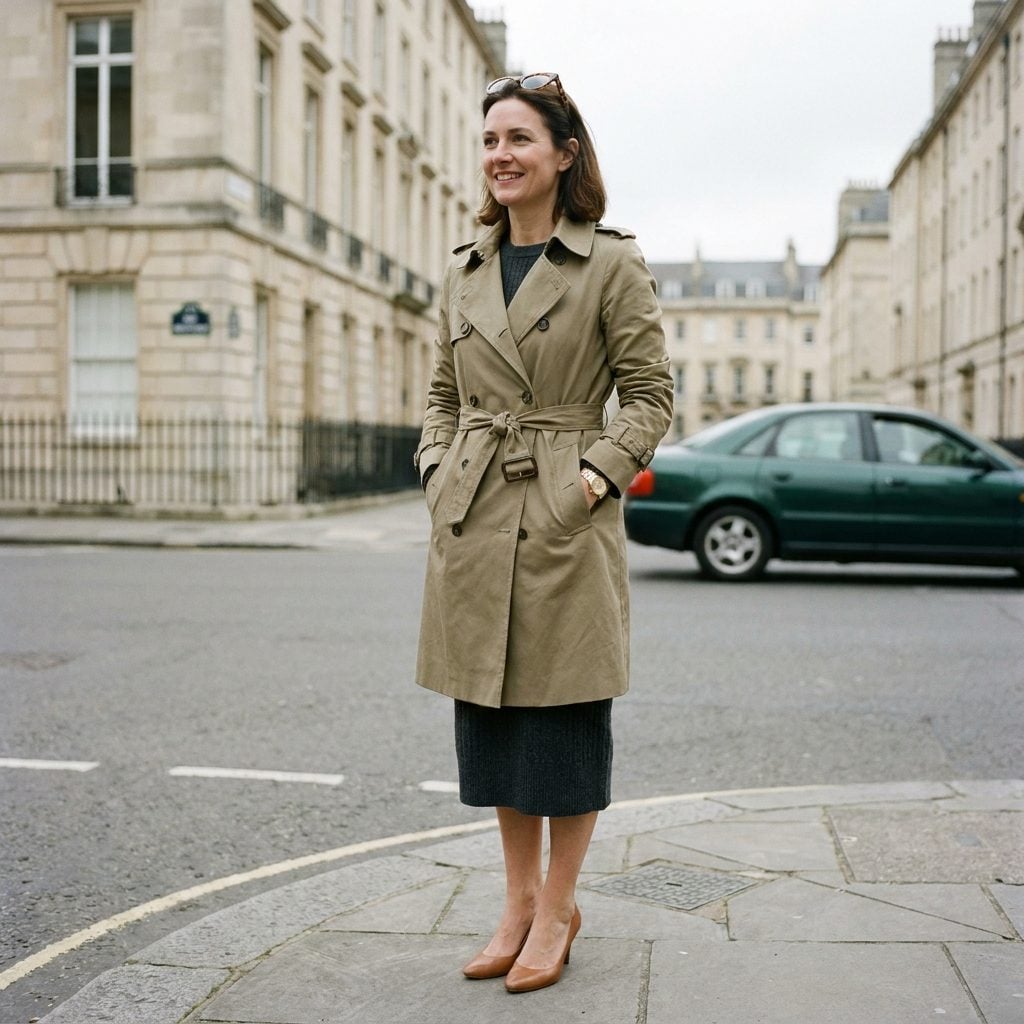
Not two trench coats. Not a rotation of “light jackets for spring.” One. And it’s the right one.
A khaki cotton gabardine trench with the belt tied, never buckled (buckled looks like you just bought it and haven’t figured it out yet), over a charcoal knit dress that hits below the knee. The sunglasses are real tortoiseshell or a very convincing substitute, and they live on top of your head as often as on your face. I will die on this hill: the tied trench belt is one of the most reliable visual shorthand signals in women’s style. It says you’re not following the care instructions. You’re following instinct.
Generational wealth dressing has this quality of looking slightly unfinished on purpose. One button undone. Sleeves pushed up. It’s controlled carelessness, and it takes years to learn.
34. Your Matching Set Isn’t Matchy, It’s a Uniform You Built Over Time
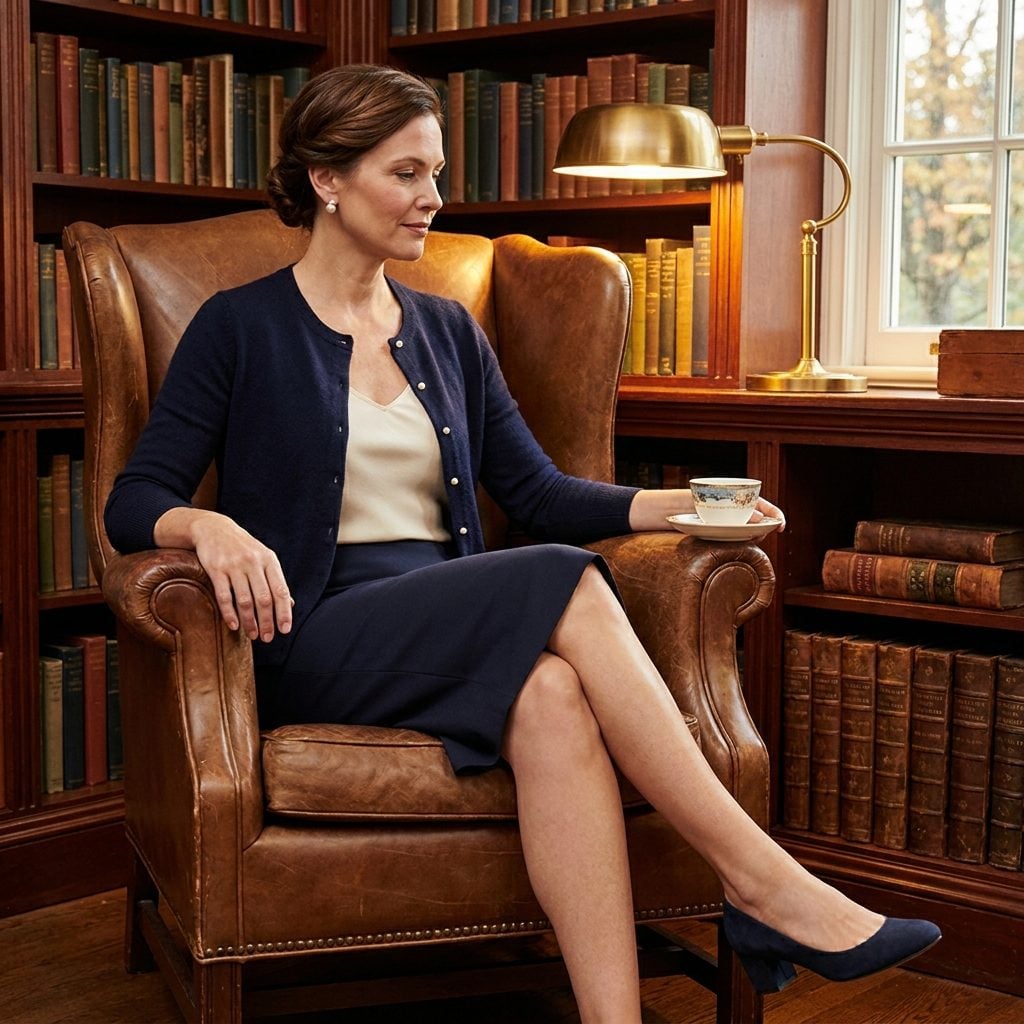
Here’s what separates the navy knit cardigan and matching skirt of someone with generational taste from someone who bought a “co-ord set” off a fast fashion site last week: the person with taste bought the cardigan in 2016 and the skirt in 2019. They match because she has a palette, not because she clicked “add both to cart.”
Pearl studs that belonged to someone before you. Block heels in the same navy because you know your colors the way a painter knows theirs. The whole thing looks coordinated because it is, just not in a single shopping trip. It was coordinated across years of knowing exactly what works.
33. You Reach for Gray Cashmere the Way Other People Reach for Their Phone

Automatic. Reflexive. The gray cashmere turtleneck is not a choice you make. It’s a default you’ve earned.
I spent years thinking gray was boring. Gray is what you wear when you can’t decide. Then I watched a woman at a dinner party in a heather gray turtleneck and charcoal wool trousers hold an entire room’s attention for forty-five minutes while telling a story about a ferry ride in Greece. Nobody was looking at her clothes. That was the whole point. Her clothes had stepped back so she could step forward. Generational wealth dressing does this constantly: it removes the outfit from the conversation so the person becomes the only thing worth noticing.
32. Your Summer Wardrobe Looks Like It Was Packed for a House You’ve Been Going to for Years
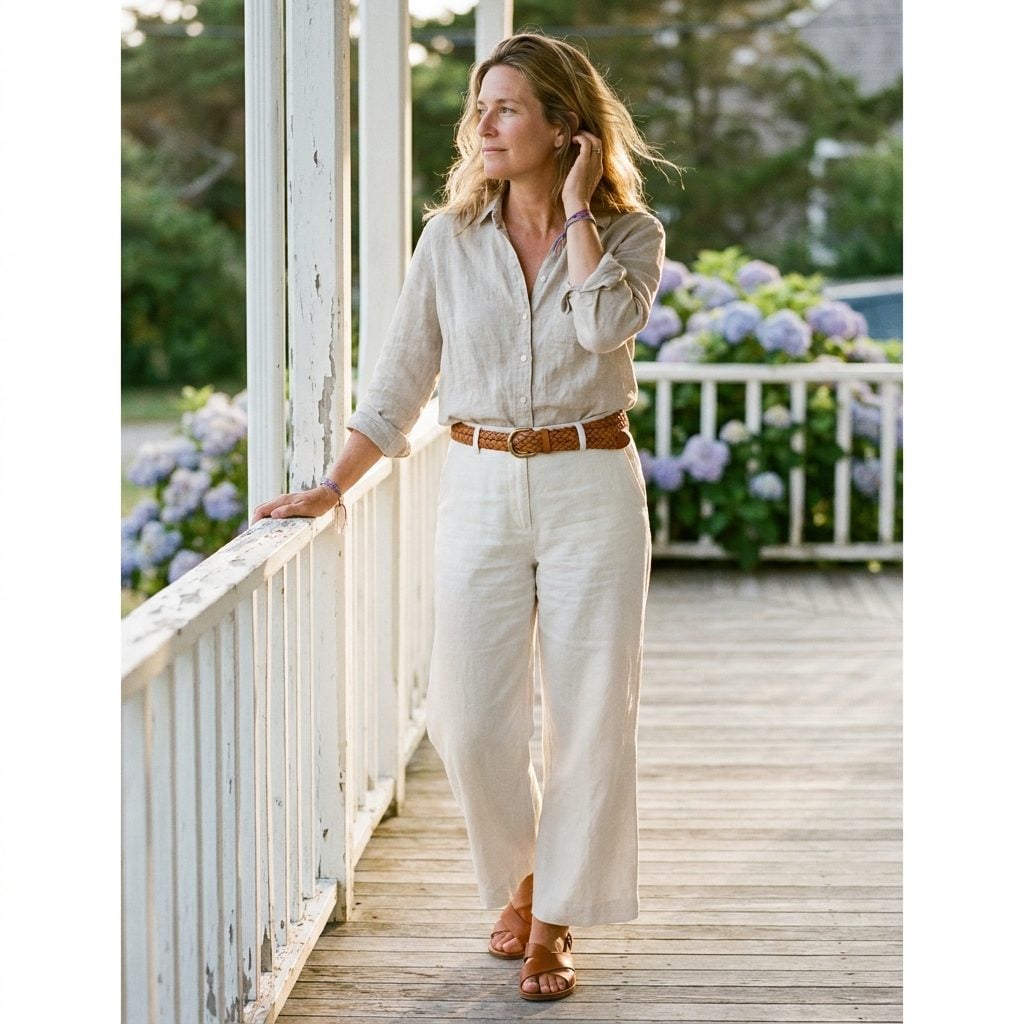
There’s a specific kind of linen rumple that you can’t fake. It comes from actual wear in actual heat over actual summers, not from buying a pre-wrinkled oatmeal linen shirt and wearing it to brunch once.
Off-white linen wide-leg trousers, a woven leather belt that’s darkened with age, flat sandals that have molded to your feet. The faded friendship bracelet from a trip you can’t quite remember the year of. All of it says: I’ve been somewhere like this before, many times, and I didn’t need to buy a new outfit for the occasion. Summer dressing for people with generational taste has this wonderful quality of looking like a suitcase was unpacked from memory, not from a shopping list. The clothes know where they’re going because they’ve been there.
31. Your Denim Costs Less Than People Assume and Fits Better Than They’d Expect

Nobody with real taste is spending four hundred dollars on jeans. I’m sorry. I know that’s a controversial stance. But the women I know who dress with the most authority buy their dark indigo straight-leg denim from completely unremarkable places, then have the hem done properly. That’s it. That’s the whole secret.
The dark olive wool blazer over denim is doing most of the talking here. The jeans are just being quiet and well-fitted in the background, which is exactly what good denim should do. No distressing, no whiskering, no “fashion” wash. Just a dark, consistent indigo that reads like you’ve been wearing this silhouette since before it was called “quiet luxury” by people on the internet.
30. The Wrap Dress You’ve Owned for a Decade Fits Better Than Anything on the Runway Right Now
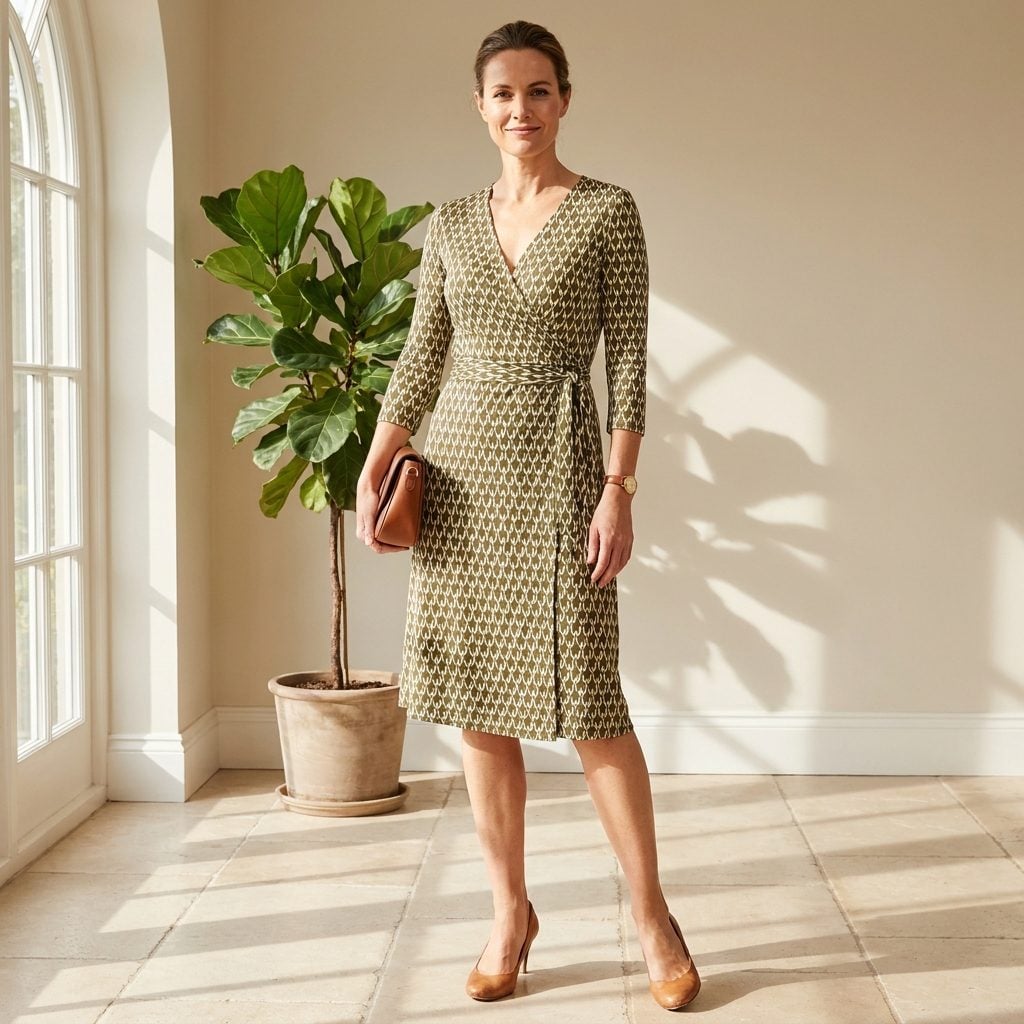
Nobody buys a wrap dress to make a statement. That’s precisely why it works. The woman wearing a muted print in a silhouette that predates every micro-trend of the last fifteen years isn’t trying to signal anything, and that absence of effort is louder than a logo belt could ever be.
The watch is the real tell. Not oversized, not dripping with diamonds, just a clean face on a leather strap that’s softened with age. Old money doesn’t replace things that still function. There’s a style logic here that runs deeper than fashion: you buy once, you buy well, and then you forget about it. The pumps have the same energy. A heel height that says “I walk places” rather than “I arrive places.”
I spent years thinking the goal was to look expensive. It’s not. The goal is to look like you stopped thinking about it a long time ago.
29. Your Cream Silk Blouse Has a Tiny Stain You Haven’t Bothered to Hide and Somehow That’s the Most Expensive Thing in the Room

Real silk wrinkles. That’s something you learn only after you’ve owned it. The fast-fashion version stays smooth all day because it’s polyester with a shiny finish. The genuine article creases where you bend, and you don’t iron it out before you sit down at lunch, because why would you.
A cream silk blouse paired with a pleated midi skirt and pointed-toe flats reads like someone who got dressed the way she makes coffee: without deliberation, because the infrastructure is already in place. The skirt has movement. The flats are scuffed at the toe. Nothing is “fresh from the store” and that’s the entire point. Generational wealth dresses like it forgot it was dressing at all.
28. You Wear Navy Like Other People Wear Armor, Except You’re Not Defending Anything

There’s a reason navy is the unofficial uniform of women who sit on boards and endowment committees. It’s not trying to be black. It’s not trying to be anything. A navy shift dress with zero embellishment, paired with jewelry you could count on one hand, doesn’t photograph well for Instagram. That’s the filter. New money optimizes for the camera. Old money optimizes for the room.
Small gold hoops. No necklace. Low heels that don’t announce your arrival. I used to think this was boring. Then I sat across from a woman dressed exactly like this at a dinner and realized she was the most powerful person at the table, and I’d almost overlooked her. That’s the trick: you don’t see the outfit. You just see the person.
27. That Cashmere Cardigan Has Been Refolded a Thousand Times and Still Looks Like It Belongs in a Still Life

Cashmere pills. Everyone knows this. The difference is what happens next.
New money throws it away and buys another. Old money owns a cashmere comb and uses it on Sunday mornings while listening to something on the radio. The oatmeal cashmere cardigan over a quiet shell top and charcoal wool trousers is a combination so understated it barely registers as an outfit. That’s the vocabulary of someone who learned to dress from watching, not from shopping. The cardigan probably belonged to someone else first. The trousers were altered once, at the waist, years ago. The cognac leather loafers have been resoled.
Maintenance over replacement. Care over novelty. I will die on this hill: the single most expensive-looking thing a woman can wear is something that’s clearly been worn before and treated well.
26. Your Winter Coat Buttons All the Way Up and You Bought It Before Your Youngest Was Born
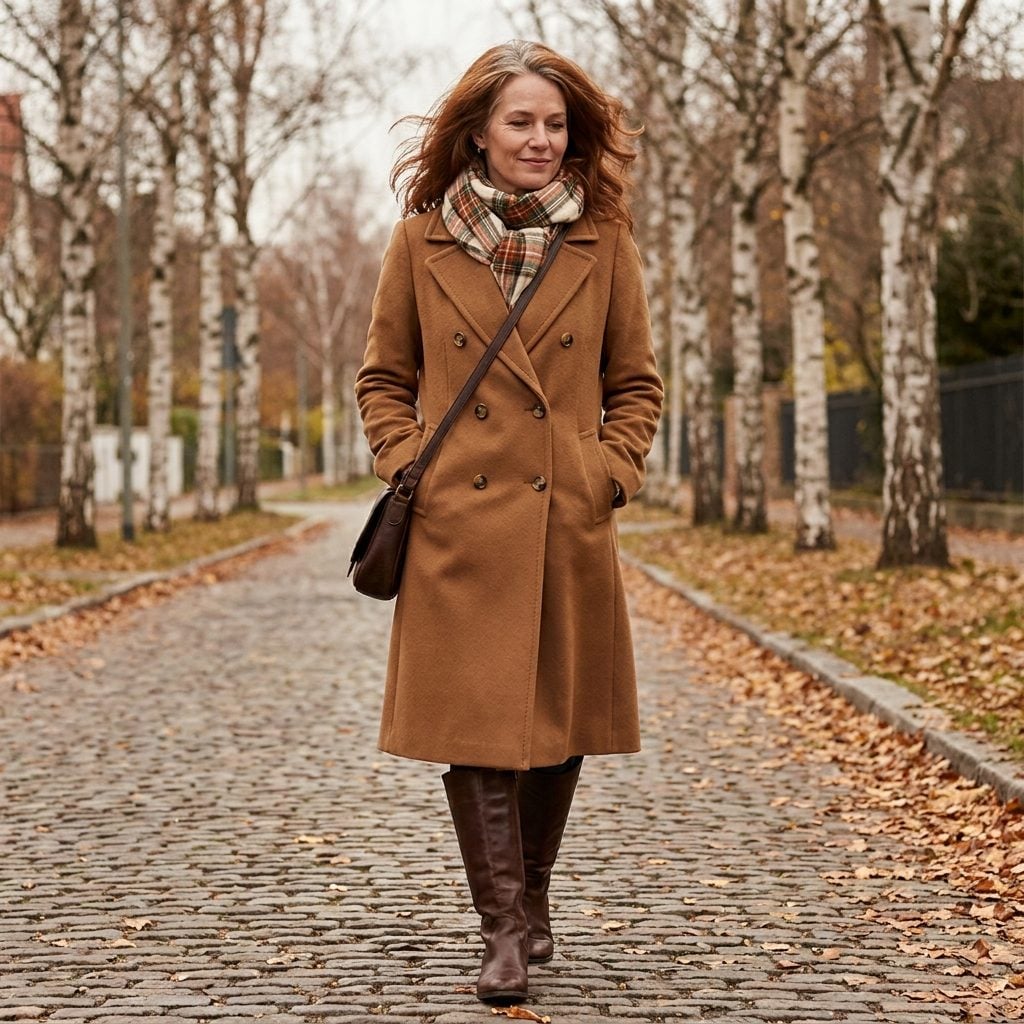
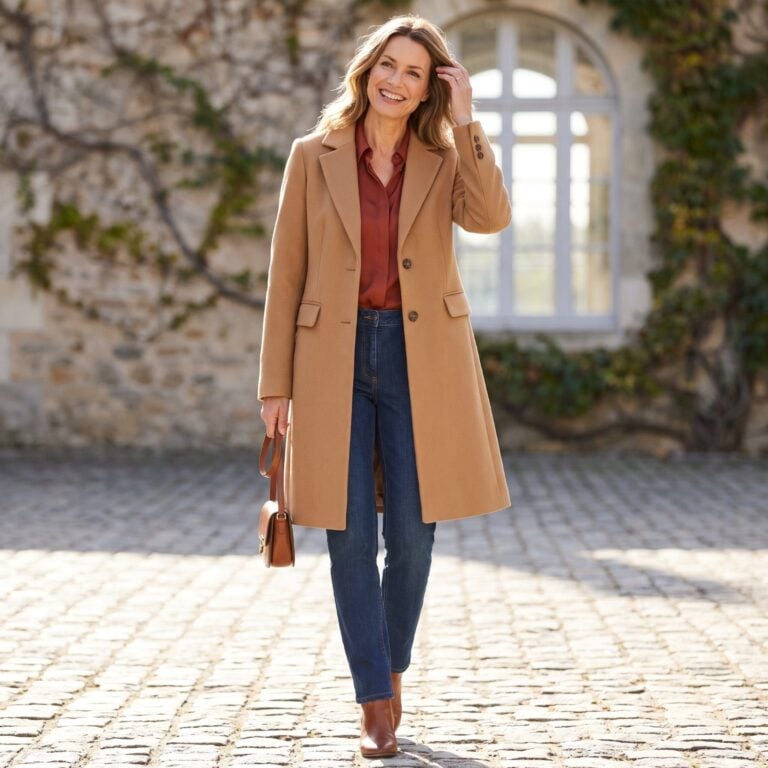
A camel wool coat with horn buttons. Dark brown knee-high boots. A plaid scarf that doesn’t match the coat so much as coexist with it. This is the outfit of a woman who solved winter fifteen years ago and hasn’t revisited the question since.
Here’s what separates this from a department store mannequin: the coat isn’t new. The buttons have a patina. The boots have been to the cobbler more than once. And the scarf was probably a gift, which is why she still wears it even though the fringe is starting to unravel at one corner. Generational wealth doesn’t curate a “winter capsule wardrobe.” It just opens the same closet every October.
25. The Blazer Is Relaxed Because You Are, and People Can Tell the Difference

❤️ Would you like to save this?
An oversized blazer from fast fashion says “I saw this on TikTok.” A relaxed blazer in taupe linen that was cut this way on purpose, paired with a champagne silk camisole and straight-leg trousers, says something else entirely. It says the shoulders weren’t padded because they didn’t need to be. The fit is relaxed because the wearer is.
I got this wrong for years, by the way. I thought a blazer had to be structured to look polished. Turns out the opposite is true once you cross a certain threshold. The softer the construction, the more confidence it requires, and confidence is the one thing you can’t buy at any price point.
24. Everything You’re Wearing Is Beige and Yet Somehow No One Would Call It Boring
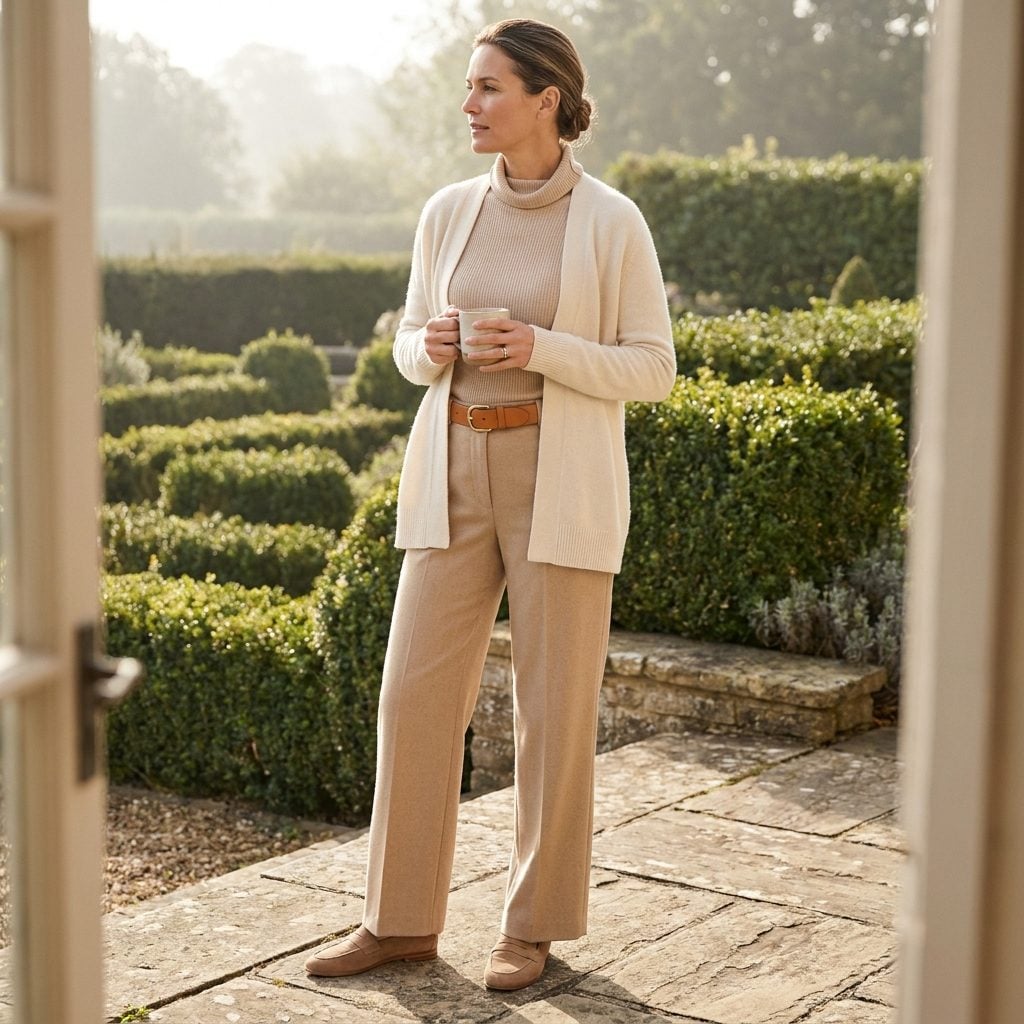
Wearing one color from head to toe is either very easy or very hard, and the difference comes down to texture. A beige style palette that mixes ribbed knit, wool, cashmere, and suede in the same outfit isn’t monochrome at all, really. Your eye reads it as one continuous tone, but your brain registers the variation. That tension between sameness and difference is what makes it feel expensive without a single visible label.
“Wealth whispers” isn’t just a saying. It’s a textile strategy.
This kind of outfit requires knowing your materials. You can’t pull it off with four pieces of the same polyester blend in slightly different shades of beige, because the surface will be flat and the light will bounce off everything the same way. Real texture absorbs and reflects light differently across each layer. That’s the quiet drama. And honestly, once you see it, you can’t unsee it.
23. Your Coat Closes the Conversation Before You Even Open Your Mouth

A long coat is a commitment. You can’t half-wear it. You can’t throw it on ironically. When a charcoal wool coat falls to mid-calf over a fitted midi dress and understated espresso leather heels, it creates a silhouette that does more work than any accessory could. The coat is the outfit. Everything underneath is supporting cast.
What I find interesting is how this particular combination, long coat, dress, low heel, reads the same way across almost every culture and context. It registers as authority. Not loud authority, not “I run things” authority. More like “I’ve been in the room so long I forgot I was in the room” authority. The hidden buttons matter. The lack of a visible closure means the coat looks architectural rather than functional. And the hem of the dress peeking out at the knee? That’s accidental poetry. You didn’t plan it. It just happened because everything was the right length.
22. The Cotton Shirt Dress You Belt with Leather That’s Softened Over a Decade
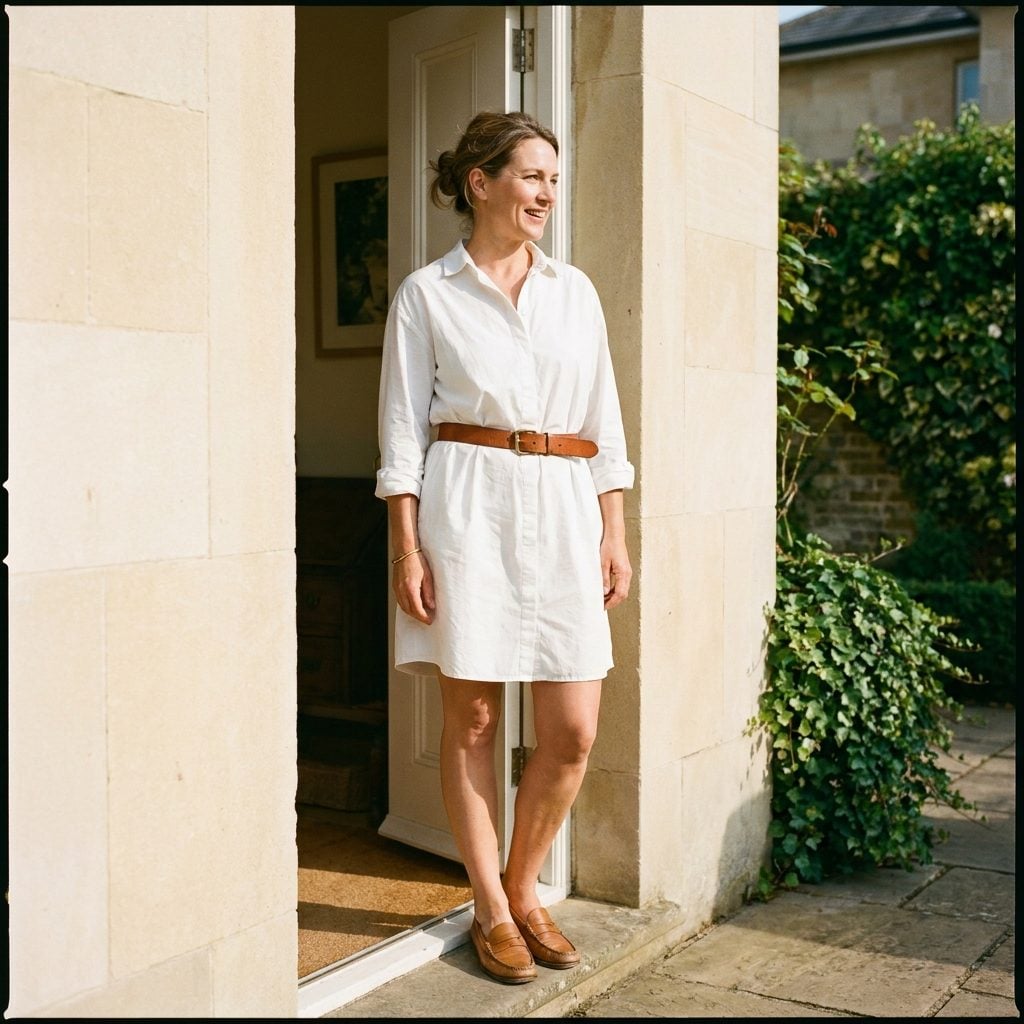
Nobody buys a white cotton shirt dress to impress anyone. That’s exactly why it works. The fabric isn’t trying to catch light or announce a label. It just falls, clean and unstructured, until you cinch it with a belt you’ve owned so long the leather has molded to your waist.
I spent years thinking “simple” meant “boring,” and I was completely wrong. The women I’ve known who come from real, quiet money wear exactly this kind of thing on a Tuesday. The cognac leather belt isn’t new. The tan penny loafers have seen several resoles. There’s zero anxiety in this outfit, and that absence of anxiety is the signal. New money dresses to prove something. Old money dresses to go get the mail, and somehow looks finished doing it.
21. Your Navy Blazer Has Been to More Countries Than Most People’s Entire Wardrobes

The Breton stripe was a French Navy uniform before it was a fashion statement. There’s a reason it still reads as composed rather than costume. Paired with a navy wool blazer that sits just right in the shoulders and white tailored trousers that break at the ankle, this combination signals something specific: you don’t need trends to feel current.
What makes this outfit whisper generational wealth isn’t any single piece. It’s the fact that every piece could have been purchased five years ago or last week and you genuinely can’t tell. The nude leather flats are practical enough for cobblestones. The bag is small because you don’t carry your whole life with you. Everything fits, nothing clings, and the color story could be summarized in exactly two words.
20. A Fine Knit Tucked Into a Midi Skirt Says More Than Any Logo Ever Could

The tuck is everything here. A fine gauge knit hanging loose over a skirt reads as casual Friday. That same sweater tucked in, with the fabric bloused just slightly at the waist? That reads as a woman who’s been dressing well long enough to understand proportion without thinking about it.
A camel fine knit sweater against a charcoal wool midi skirt creates a palette so restrained it almost disappears. And that’s the point. The watch has a leather strap, not a diamond bezel. The necklace is a single chain. These are pieces that say, quietly, “I have nothing to prove to you,” which is, ironically, the most compelling thing an outfit can communicate.
Old money dressing isn’t minimal for the aesthetic. It’s minimal because excess feels unnecessary when comfort isn’t in question.
Our readers lean the same way: asked which sweater they would buy, 59% picked fine over chunky.
19. Your Tweed Jacket Predates the Last Three Times Tweed Was ‘Back in Style’

Tweed cycles in and out of trend reports every few years. The magazines call it a “revival.” Meanwhile, your jacket has been hanging on the same hook since before Instagram existed, and it still fits the way it did the season you bought it, because you bought quality and you bought your actual size.
A herringbone tweed jacket paired with dark navy trousers and a chocolate leather tote is the kind of outfit that doesn’t photograph well on a flat lay but looks extraordinary on a person in motion. The texture of the tweed catches light differently as you move. The pearl studs are small enough to forget you’re wearing them.
18. Silk That Whispers Instead of Shouts, Paired with Trousers That Actually Move

Culottes got a bad reputation in the early 2010s because everyone made them too wide, too cropped, and too loud. In the right cut and a quiet color, they’re actually one of the most practical silhouettes for a woman who moves through her day without thinking about what she’s wearing.
An ivory silk blouse open at the collar, with stone tailored culottes and blush block-heel sandals: this is the kind of outfit that looks like you didn’t try. You did, of course. But the effort went into the shopping, years ago, not into the getting dressed this morning. The silk catches light without being reflective. The gold cuff is thin enough to slide under a coat sleeve. Generational wealth blush style dressing is really just this: buying fewer things, buying them well, and wearing them until they feel like part of your body.
17. The Cashmere Sweater Set Your Mother Would Recognize and Your Daughter Wants to Borrow

Here’s a test: if you can describe an outfit to three different generations and each one says “oh, I’d wear that,” you’ve landed on something with staying power. The oatmeal cashmere sweater set passes that test every single time.
Sweater sets read as conservative, and they are. That’s not an insult. Conservative dressing, when it’s built on quality materials and clean proportion, communicates stability. The cognac structured leather handbag with a single clasp does more work than a bag covered in hardware. The diamond studs are small. Real, but small. There’s a whole psychology to this: people with generational wealth tend to under-signal rather than over-signal, because they’re not performing for strangers. They’re dressing for Tuesday.
16. A Longline Cardigan Over a Simple Dress, and You Look Like You Own the Building

There’s something about a charcoal longline cardigan that changes your silhouette from “dressed” to “composed.” The vertical line it creates, falling open over a dark dress, elongates everything. You look taller. You look like you’re headed somewhere specific and you’re not in a rush to get there.
A black jersey dress underneath does the unglamorous heavy lifting. It’s comfortable. It moves. It doesn’t wrinkle when you sit for three hours. The black leather ankle boots ground it. One gold ring, oversized and sculptural, and that’s the only piece that draws attention to itself. The whole outfit costs the eye almost nothing to process, which is exactly why it registers as expensive. Complexity is cheap. Simplicity takes confidence, and confidence takes time to build.
15. Your Belted Wool Coat Doesn’t Follow Trends Because It Was Right Before They Started
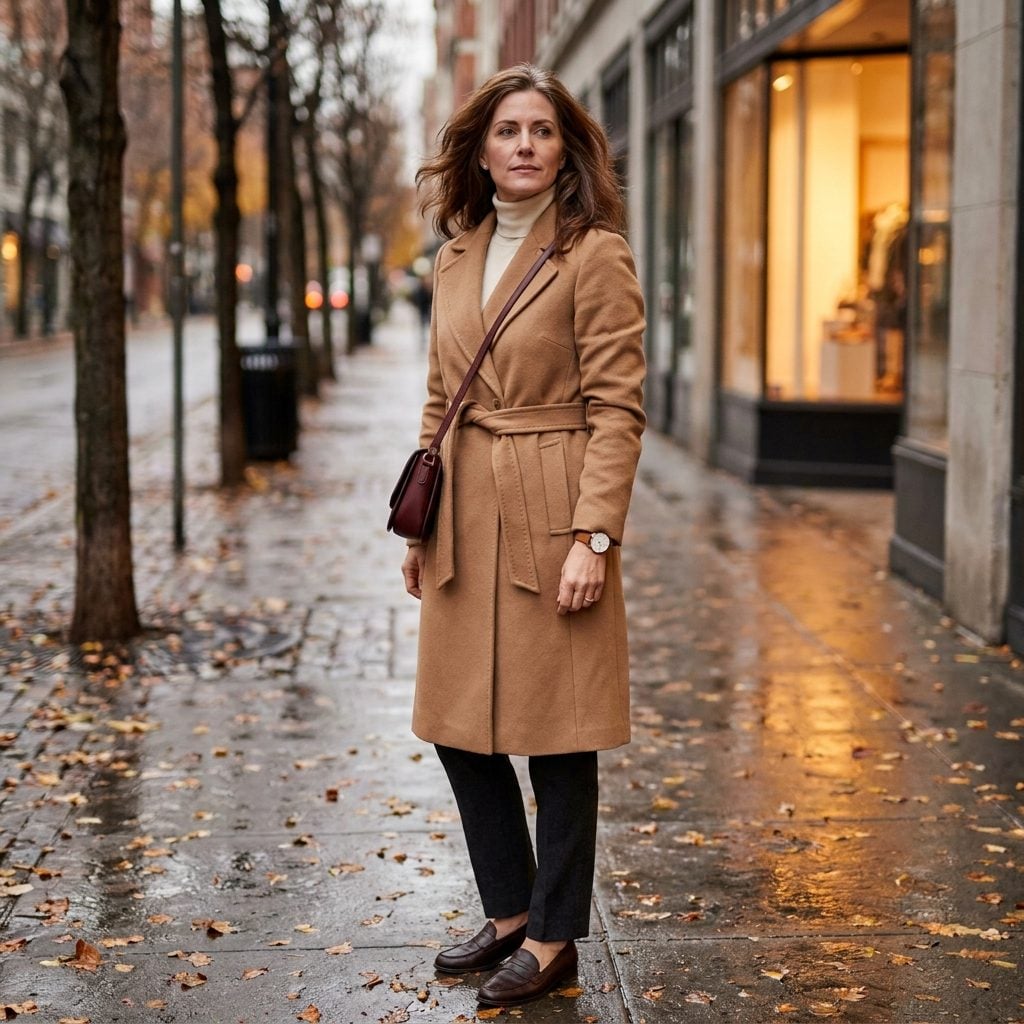
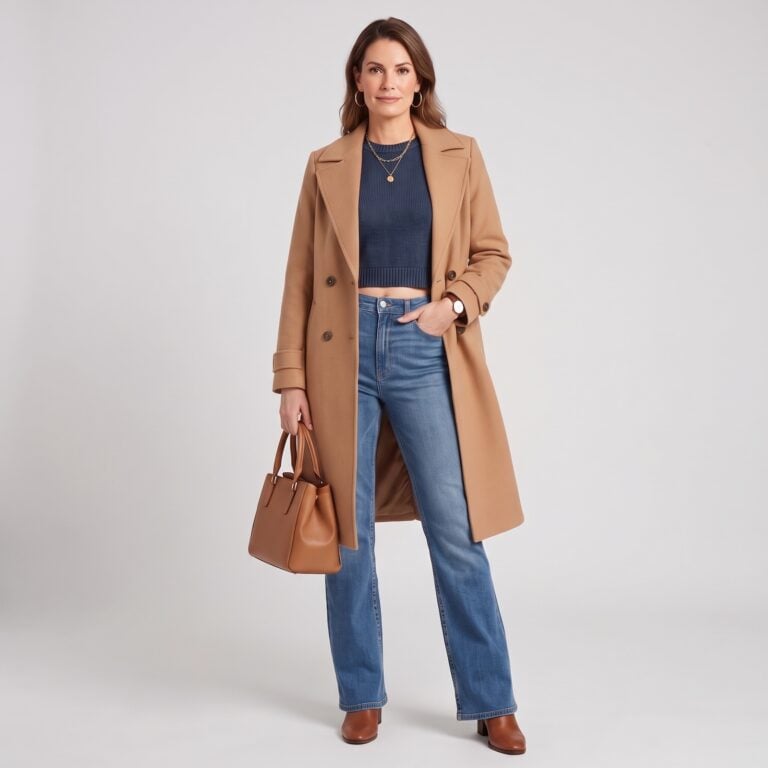
I’ll be honest: I didn’t understand the power of a good camel belted wool coat until my late thirties. Before that, I kept buying trendy outerwear that felt exciting for one season and embarrassing by the next. The camel coat just sat there in the back of my mind, seeming too plain, too expected, too much like something my aunt would wear. My aunt, it turns out, was ahead of me by about two decades.
This is the coat that makes tailored separates underneath irrelevant. A cream cashmere turtleneck, charcoal wool trousers, dark brown leather loafers: none of it matters once the coat goes on. The coat IS the outfit. The belt cinches it and gives you a waist, which is the single fastest way to make any winter look feel intentional rather than bundled. A burgundy leather crossbody adds the only color needed.
Generational wealth beige style dressing in winter comes down to this: one perfect coat, worn for years, that makes getting dressed in cold weather feel like a decision you already made a long time ago.
Camel is also the coat our readers would choose: in a camel-or-grey poll, 71% would buy camel, and most of them said it came down to looks.
14. The Poplin Shirt You Iron Yourself Because the Fabric Is That Good

Nobody who grew up around real money talks about their clothes. That’s the first tell. The second is the shirt itself: a white poplin shirt so perfectly weighted it falls away from the body without clinging, without billowing, without trying. You didn’t buy it because someone on Instagram told you to. You bought it because you touched the fabric in a quiet shop somewhere and thought, yes, this is the one.
Pair it with high-waisted wool trousers in a shade of tobacco or dark camel and cognac leather loafers that have actually been walked in. The watch is thin. The earrings are small. The whole thing reads like a sentence written by someone who knows exactly which words to cut.
13. Your Sandals Cost More Than Most People’s Statement Necklaces, and No One Can Tell
❤️ Would you like to save this?
Here’s something I got wrong for years: I thought minimalist sandals were boring. Turns out boring was exactly the point, and the point was the whole point.
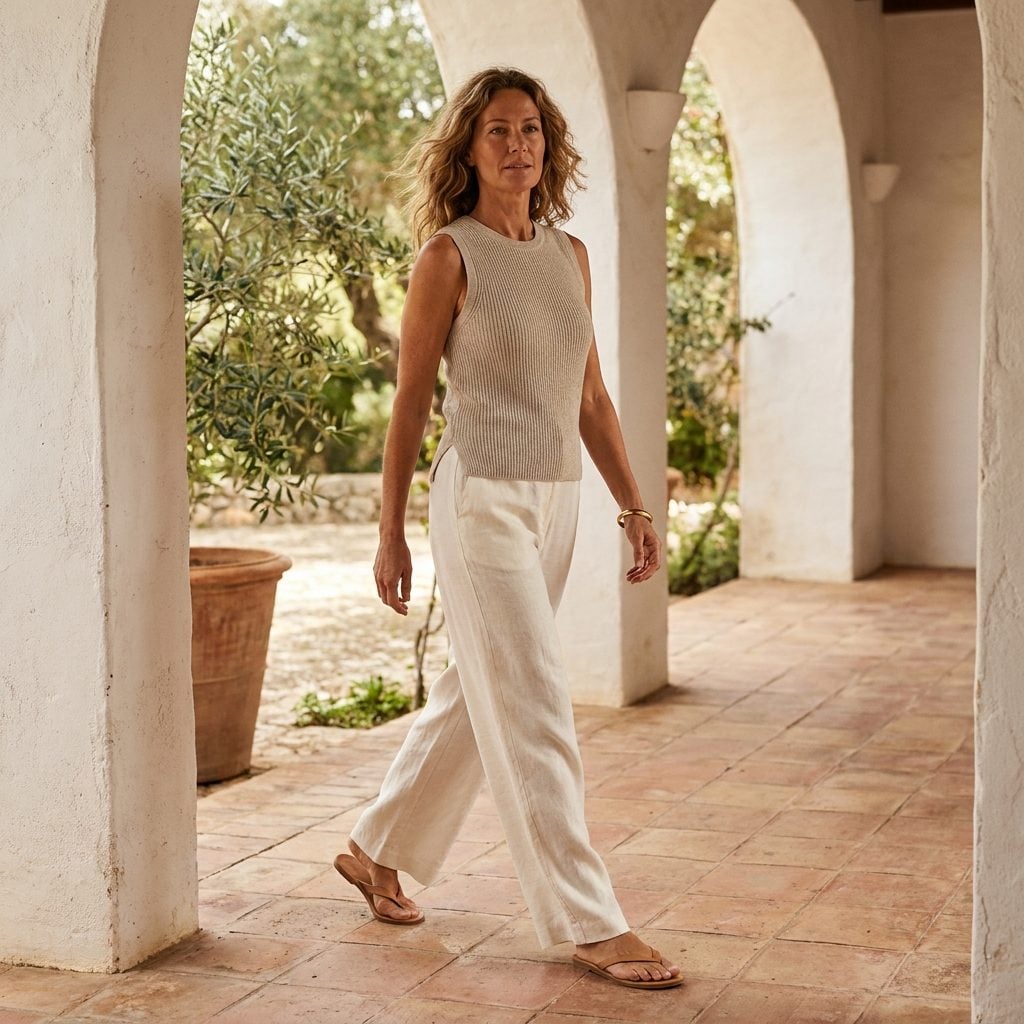
A minimalist leather sandal with one clean strap says more about your relationship with money than any designer heel. It says you’ve stopped performing. Wide-leg trousers in ivory or stone, a sleeveless knit top that fits like it was cut for your body specifically, a single gold bangle that could be your grandmother’s or could be from a small atelier in Florence. Nobody needs to know which. That ambiguity is the entire language of old money dressing. The clothes don’t explain themselves. They don’t need to.
12. A Jumpsuit in a Color So Quiet It Barely Registers, and Yet Everyone Notices You

Muted color is a power move most people misread as playing it safe. A tailored jumpsuit in sage, stone, or dusty rose does something interesting in a room full of bold prints and logo hardware. It disappears just enough that people have to look twice. And the second look is always longer.
The fit matters more than anything here. A tailored jumpsuit that defines the waist without cinching, that falls straight through the leg without pooling at the ankle, that has the right depth of neckline (V, never plunging). Simple putty leather heels keep the line clean. The jewelry is one piece, maybe two, and it sits flat against the skin like it belongs there permanently.
11. The Wool Dress and Blazer Combination That Makes People Assume You Run Something
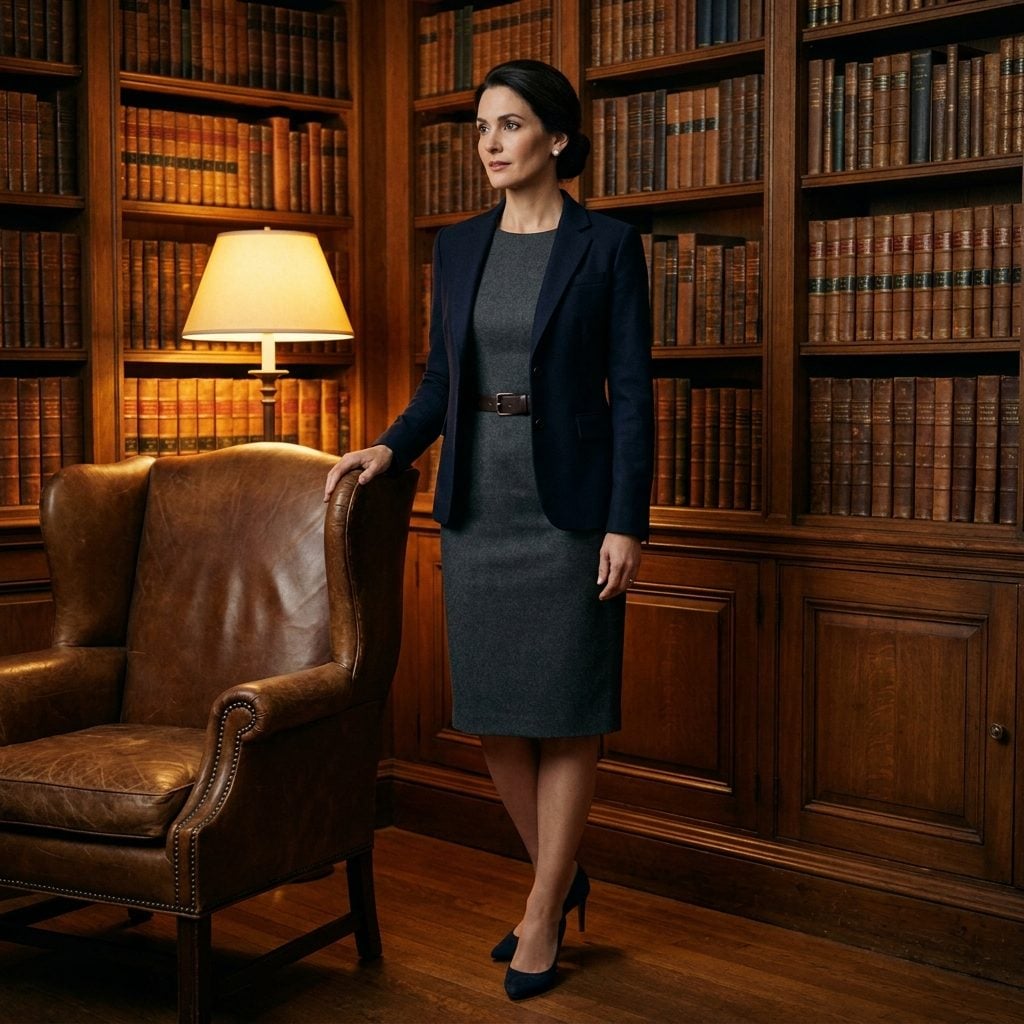
There’s a specific combination that makes people straighten up a little when you walk in. A charcoal wool sheath dress under a navy structured blazer. Pearl studs, not drops. A heel with substance, not height. I will die on this hill: block heels after 40 are not a compromise. They’re a declaration that you plan to be on your feet all day and still be the most composed person in the room at 7 PM.
What makes this read as generational wealth rather than corporate uniform? The fabrics. Fine merino moves differently than polyester blends. The blazer has actual structure in the shoulder, not padding, but tailoring that understands where your shoulder actually ends. And the colors don’t match. They coordinate. Navy and charcoal together is a deliberate choice that says you understand tone-on-tone without needing everything to be identical.
10. You Throw a Cashmere Wrap Over a Knit Dress Like It’s a Sweater You Found in the Car

Cashmere that costs real money doesn’t announce itself. It pills less. It weighs more. It has a density that you feel against your wrist before you see it. And the woman who grew up with it treats it exactly the way she treats most of her best things: casually, almost carelessly, like it might end up balled on the passenger seat later.
A cashmere wrap over a ribbed knit dress in camel, finished with flat burgundy leather flats. That’s it. The nonchalance is the signal. New money protects expensive things. Old money forgets they’re expensive at all.
9. Your Blazer Over a Midi Dress Looks Like You Pulled It From a Coat Closet That Has Its Own Room

The blazer-over-dress combination is one of the oldest moves in the book, and it still works because it relies on something that can’t be faked: fit. Not trendy oversized fit. Not boxy boyfriend fit. Actual fit, where the shoulder seam lands at your shoulder and the sleeve hits just past your wrist bone and the whole thing follows your frame without gripping it.
A camel wool blazer over a forest green midi, dark brown leather ankle boots, a tan leather handbag you’ve carried long enough that it’s developed its own creases. The accessories are understated: small gold hoops, maybe a silk scarf tied to the bag because you got warm and needed somewhere to put it.
That last detail matters. Old money style always looks slightly improvised, like you got dressed with intention but adapted on the fly. Because you did.
8. A Silk Blouse and Pencil Skirt in Tones So Close They Almost Merge Into One Color
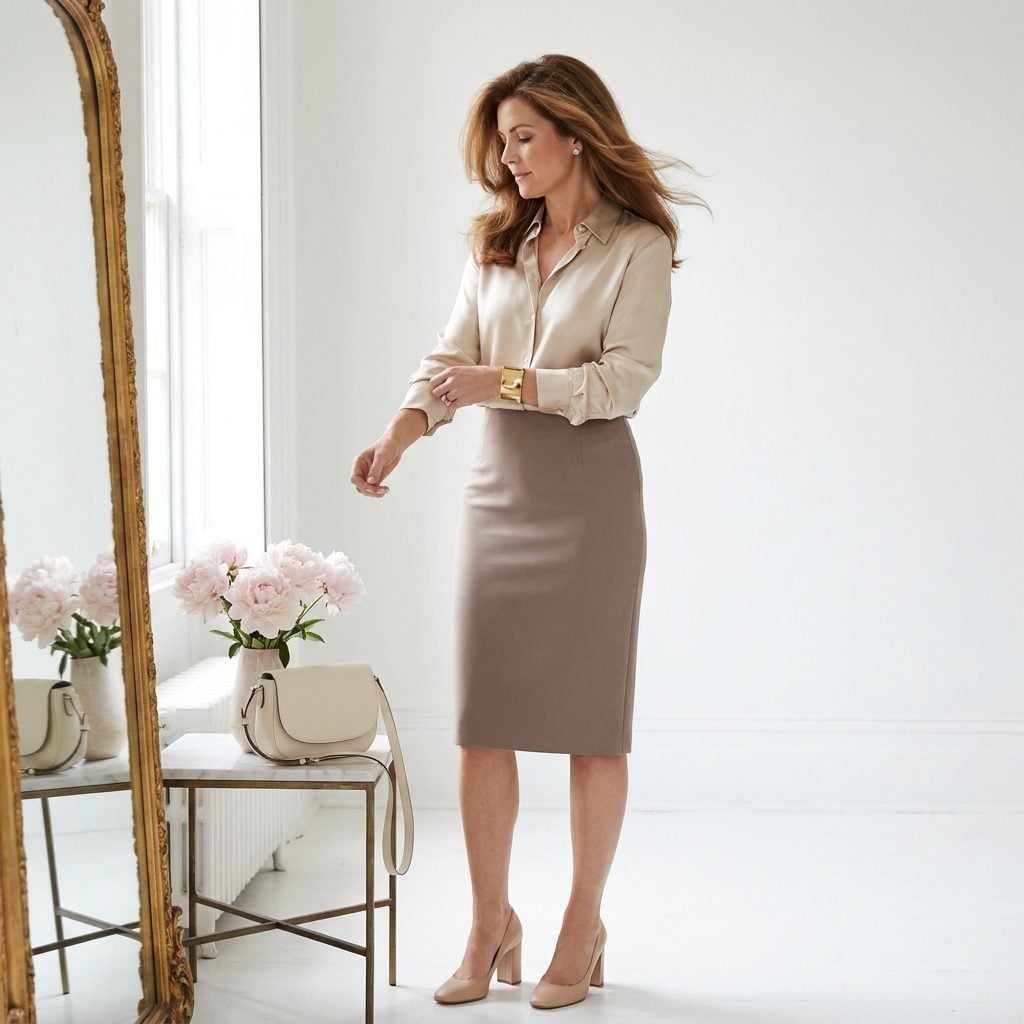
Tone-on-tone dressing in neutrals is the closest thing fashion has to a whisper. A champagne silk blouse into a taupe pencil skirt. Nude heels. A gold cuff. The colors are so close together that the outfit reads as a single warm column, and the only variation is texture: the light catching the silk differently than the matte wool of the skirt, the leather of the shoe adding just enough contrast to ground it.
7. Your Ankle Boots Have a Story You’ll Never Volunteer, and That’s the Whole Point
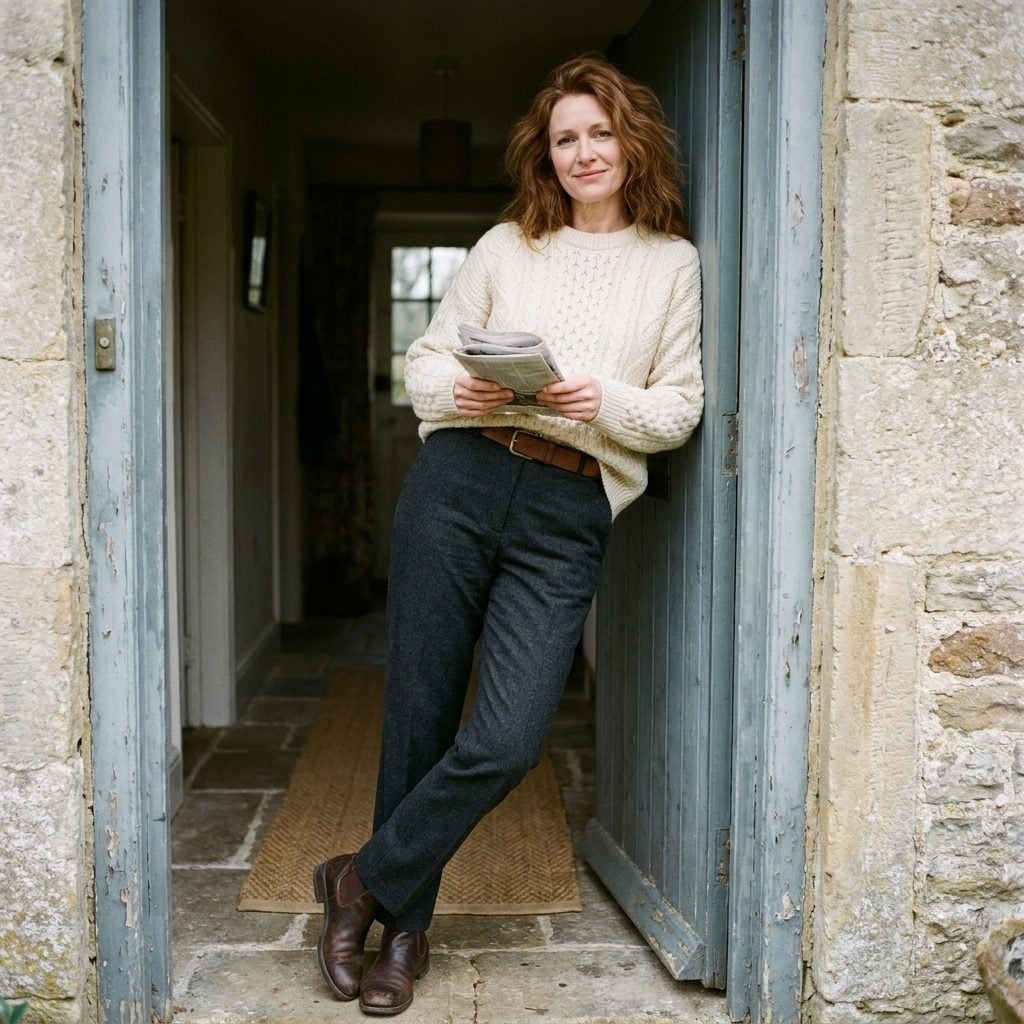
Somewhere between buying boots that look expensive and buying boots that actually are expensive, there’s a third category: boots you’ve owned long enough that they’ve stopped being a purchase and started being yours. The leather has softened around the ankle. The sole has a particular wear pattern. You had them resoled once, maybe twice, and the cobbler knew what he was doing.
A cream cable-knit sweater half-tucked into charcoal straight-leg trousers. Dark brown leather ankle boots with a stacked heel. A thin belt, a wedding band, nothing else. This is an outfit that looks like it took no time at all, and it probably didn’t, because the hard work happened years ago when you figured out what works and stopped second-guessing it.
6. Your Sneakers Cost Less Than People Assume and You’ve Never Mentioned the Brand

Nobody with real money talks about their sneakers. That’s the tell.
A navy knit polo tucked into taupe tailored trousers with a pair of white leather sneakers is a combination that reads as someone who grew up around enough nice things to know that a shoe doesn’t need a visible logo to justify itself. The sneakers are clean but not pristine. They’re leather, not mesh. The sole is thin. They look like they could belong to a woman who plays tennis at a club that doesn’t advertise its membership fees.
What sells this as old money rather than minimalist influencer? The fit of the trousers. The crease is pressed. The polo collar has actual structure. Nothing here is oversized or borrowed from menswear trends. It’s just correct, in a way that suggests someone taught you what correct meant before you were old enough to question it.
5. Your Navy Blazer Has Been Relined Twice and You’ve Never Considered Replacing It

The blazer that costs the most per wear is never the one with the highest price tag. It’s the one that’s been taken to a tailor so many times the tailor knows your name. A navy wool blazer with horn buttons and a notch lapel that sits like it was cut for your shoulders specifically, not because it was bespoke (though maybe it was), but because you’ve had the sleeves shortened a quarter inch and the back taken in after the first wearing. That kind of patience with clothing is a dead giveaway.
New money replaces. Old money repairs. There’s a reason the wealthiest families in New England have cobblers on speed dial and a relationship with the same dry cleaner for decades. When your cream silk blouse gets a pull, you don’t toss it. You fix it. The quiet confidence of wearing something visibly loved, not visibly new, communicates more than any logo ever could.
In our reader polls, navy edged out black as the blazer people would buy, 54% to 45%.
4. Your Belt Is Older Than Most People’s Entire Wardrobes
❤️ Would you like to save this?
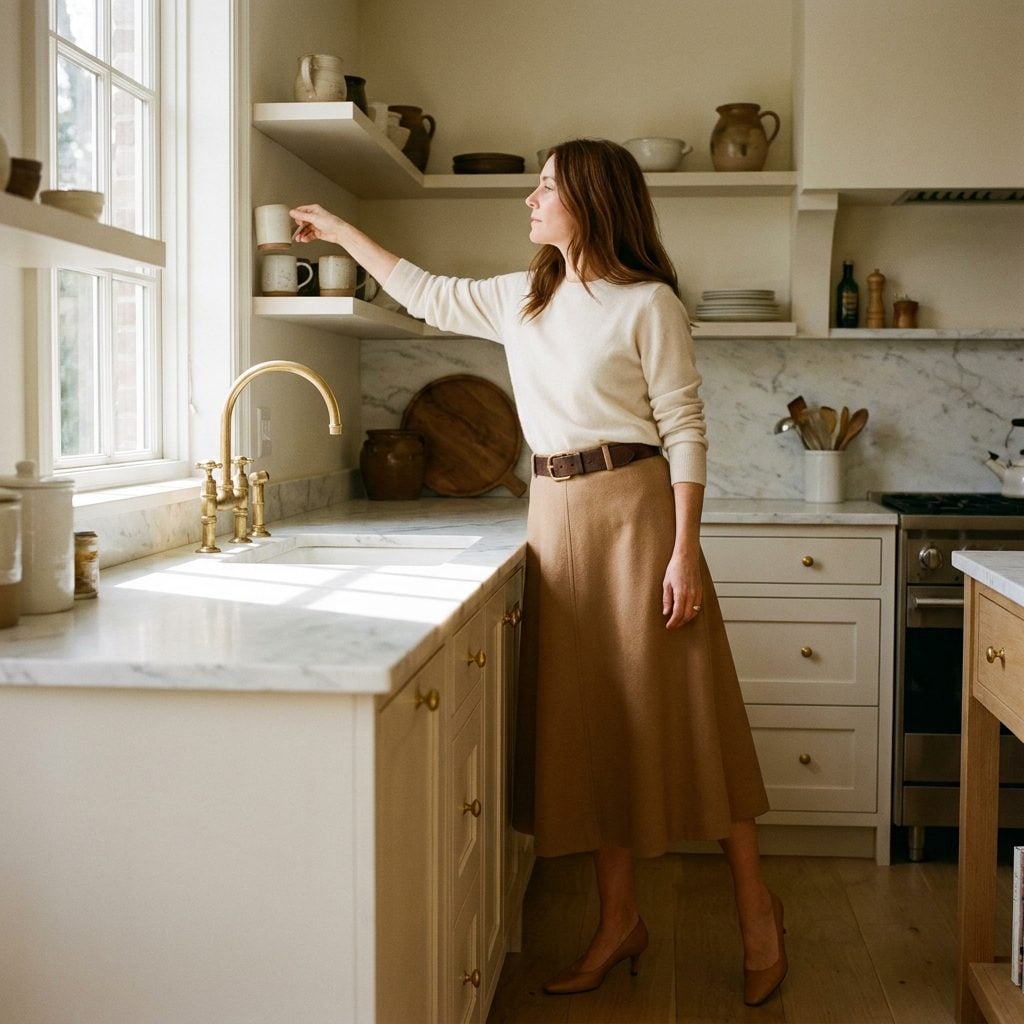
Real wealth has a relationship with leather that new money doesn’t understand yet. That dark brown leather belt with the brass buckle gone slightly green at the edges? It probably belonged to someone before you. Maybe your mother. Maybe it came from a small shop in Florence that doesn’t have a website. The point is, you’ve never thought about replacing it because why would you replace something that’s still doing its job perfectly.
Tucked into a camel wool midi skirt with a cream cashmere crewneck, that belt becomes the whole outfit’s thesis statement. Everything else is just supporting evidence.
3. Your Silk Scarf Does the Talking So You Don’t Have To
I’ll be honest: I used to think silk scarves were for flight attendants and grandmothers who collected Hermès boxes. I was wrong, and it took me longer than I’d like to admit to figure out why.
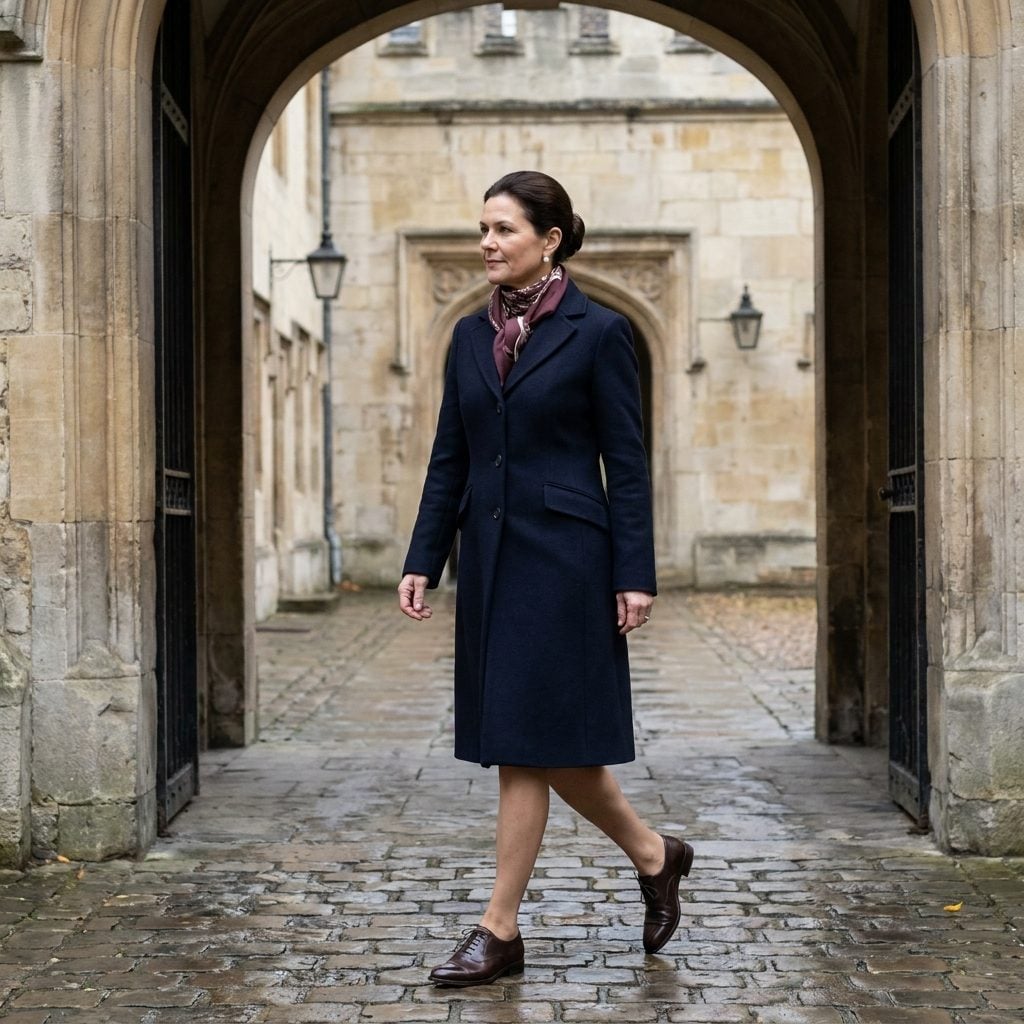
The scarf works here because it’s not an accessory. It’s a vocabulary. A muted burgundy-and-cream print knotted loosely at the throat of a navy wool coat, one end tucked inside so only a triangle of color shows. That small decision, the tucking, separates someone who wears scarves from someone who was raised wearing them. It’s the difference between display and habit.
The brown leather oxfords are polished but not shiny. Pearl studs, not drops. Nothing competes with anything else. The whole look has the quiet authority of someone who learned how to enter a room by watching people who never tried to be noticed when they did.
2. People Can’t Describe What You’re Wearing But They Remember How It Looked

Ask someone what she was wearing at the dinner and they’ll pause. “Something gray? Maybe a dress? It was… really nice.” That pause is the whole point. A dove gray sheath dress that fits without clinging, a neckline that shows collarbone and nothing else, black leather pumps at a height you could actually stand in all evening.
New money gets described in detail because the details demand it. Generational wealth creates an impression that outlasts the specifics. It’s the beige style principle taken to its logical conclusion: let the palette do less so the person does more.
1. Your Cardigan Set Makes Everyone Else Feel Like They Tried Too Hard
The cardigan set is either the most boring thing in fashion or the most powerful. There’s no in-between, and your position on this question says more about you than you think.
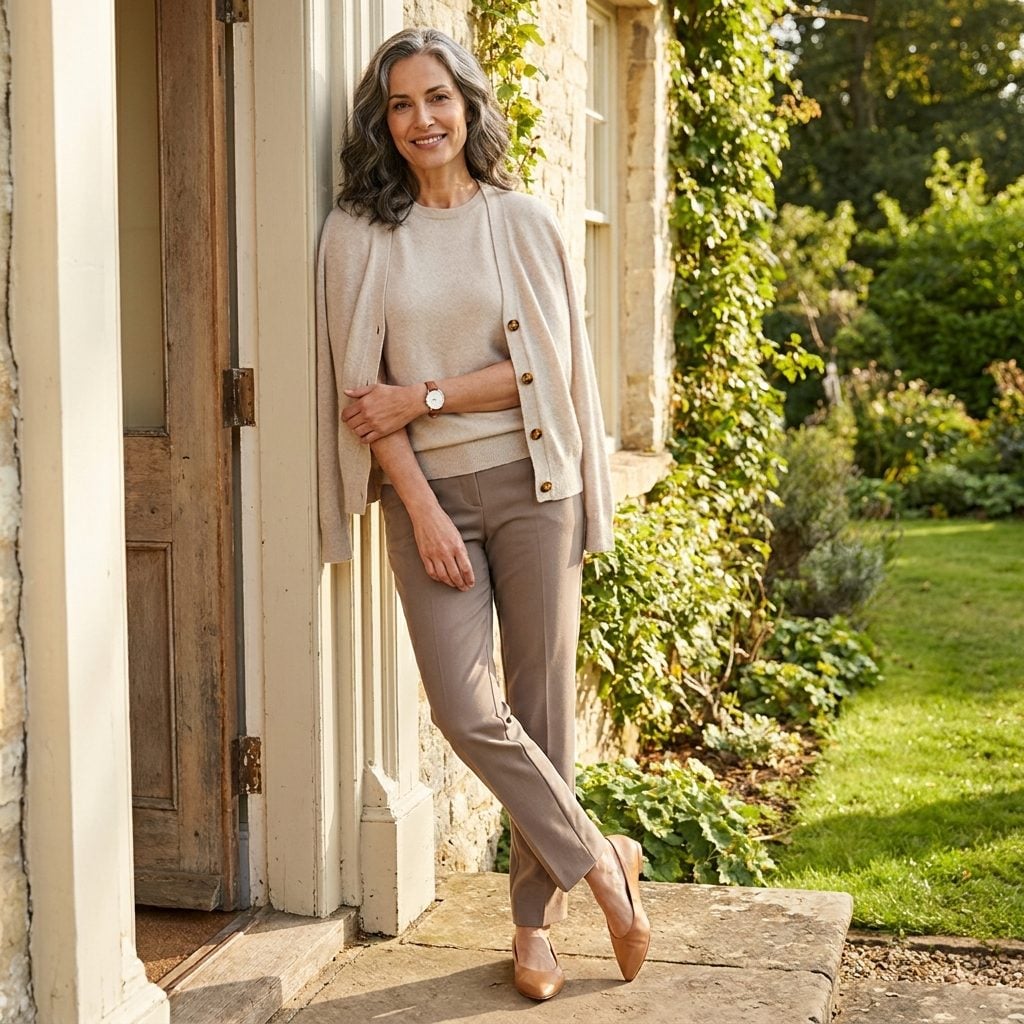
A matched stone-beige cashmere cardigan set with taupe tailored trousers and camel leather flats is the visual equivalent of inherited furniture. You didn’t choose it to make a statement. You chose it because it works, it always works, it worked for your aunt before you, and arguing with it would be a waste of everyone’s time. The tortoiseshell buttons aren’t a “detail.” They’re just how buttons look on good knitwear.