
❤️ Would you like to save this?
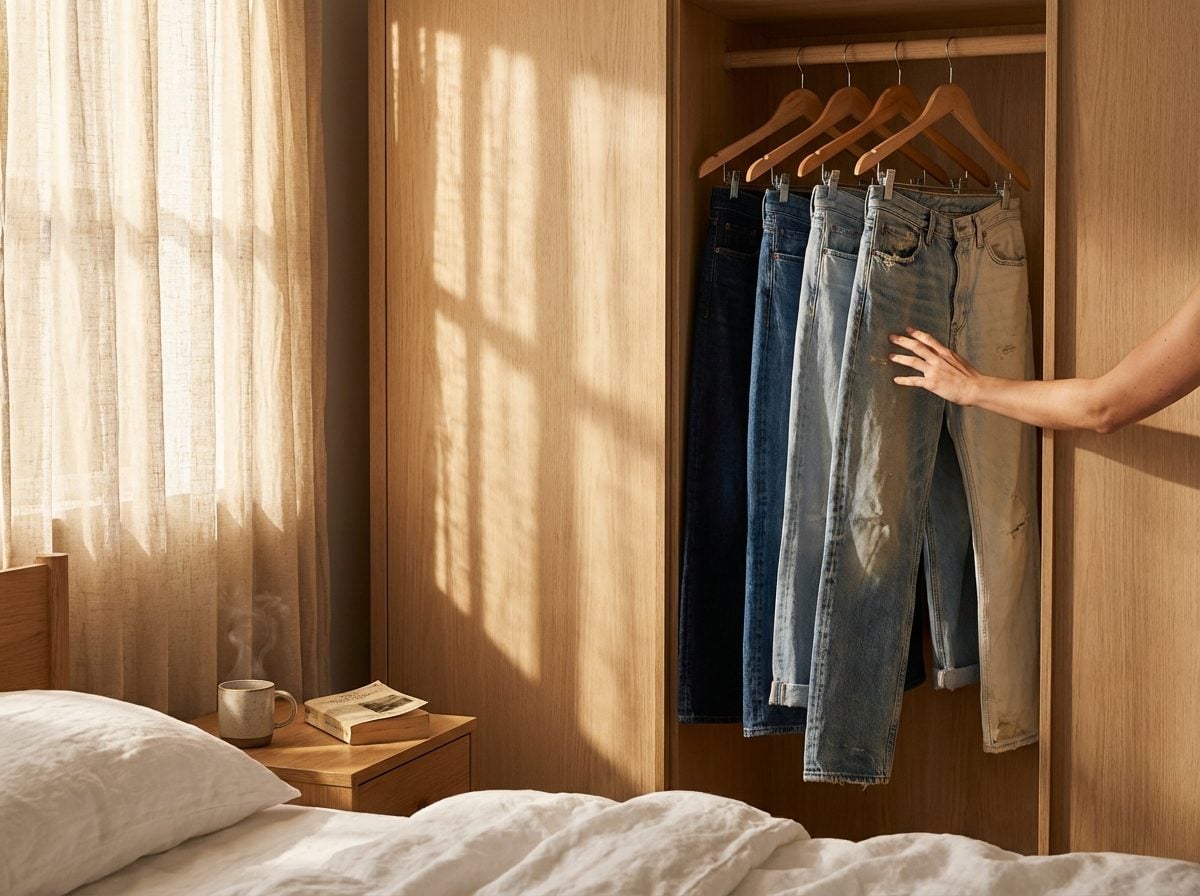
Every morning, before you’ve had coffee or checked your phone, you make a decision that has almost nothing to do with fashion. You open your closet, scan the row of denim, and reach for the same pair. Again. Not because they’re the newest, or the most flattering according to any magazine, but because something quieter is guiding your hand. Behavioral scientists call it a comfort default. Psychologists call it avoidance behavior. Your body just calls it survival.
The jeans you skip, the ones you own but never wear, the pair that technically fits but stays folded at the bottom of the stack, each of those choices is a data point. And together, they paint a picture of how you actually see yourself, not how you wish you did. Ready to read it?
FYI, thanks to AI imagery software, we’re able to create very specific fashion and hairstyle examples to illustrate the points being made. In some cases, imagery is exaggerated to hammer home the point. Also, assume links that take you off the site are affiliate links such as links to Amazon. this means we may earn a commission if you buy something.
The Silent Negotiation Happening Every Time You Open Your Closet Door
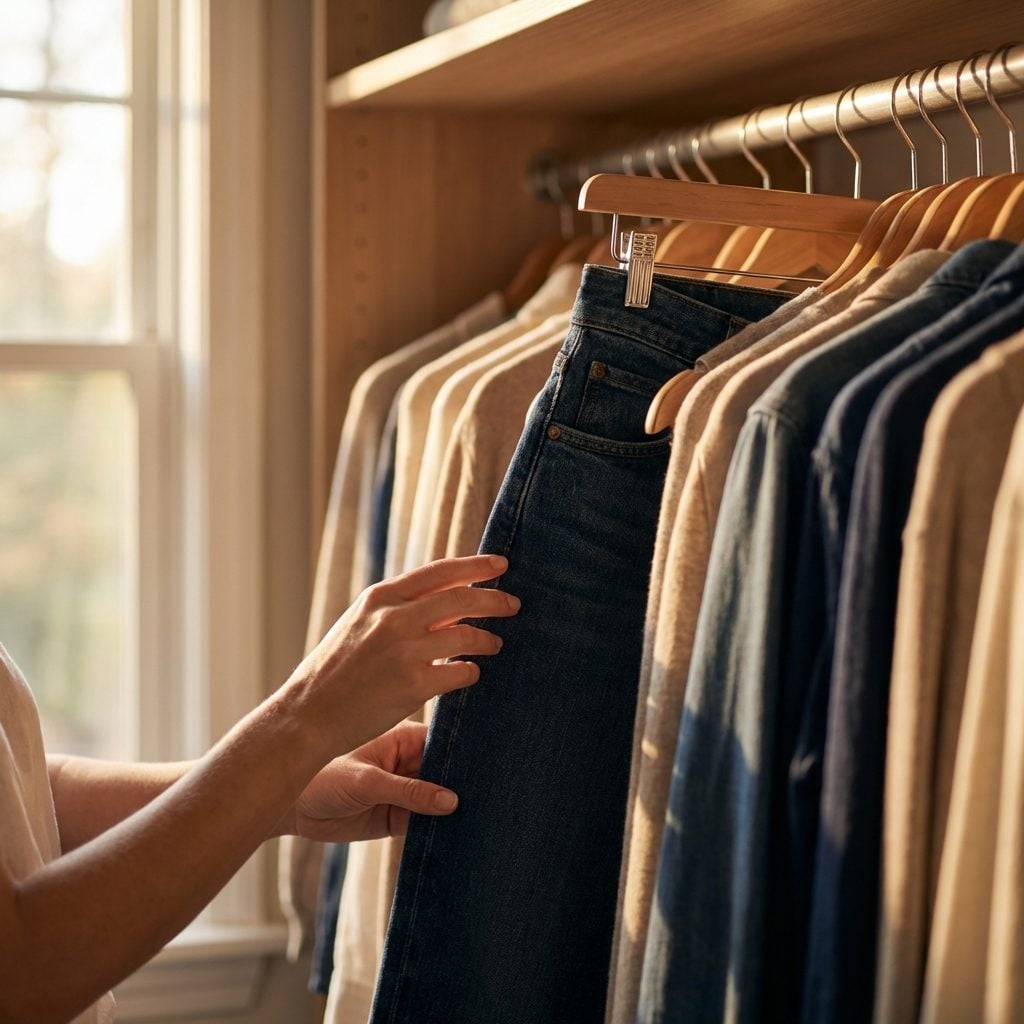
Most mornings, it doesn’t feel like a decision. You reach, you pull, you move on. But psychologists who study clothing behavior describe the wardrobe moment as something far more loaded than logistics. A 2021 study published in Frontiers in Psychology on clothing practices and body image found that how women feel about their bodies directly predicts what they choose to wear, and crucially, what they don’t. The closet isn’t neutral. It’s an archive of every version of yourself you’ve tried on, held onto, or quietly retired.
The black jeans you always choose, the wide-leg pair you love in theory but never quite commit to, each of those choices is a tiny negotiation between who you are today and who you think you’re supposed to be. What’s striking is how fast it happens. The deliberation is largely unconscious, shaped more by emotional memory than by what’s clean or weather-appropriate. You’re not just picking an outfit. You’re deciding, in about four seconds, how much friction you’re willing to carry into the day.
Why the Jeans That ‘Technically Fit’ Stay Folded at the Bottom of the Drawer
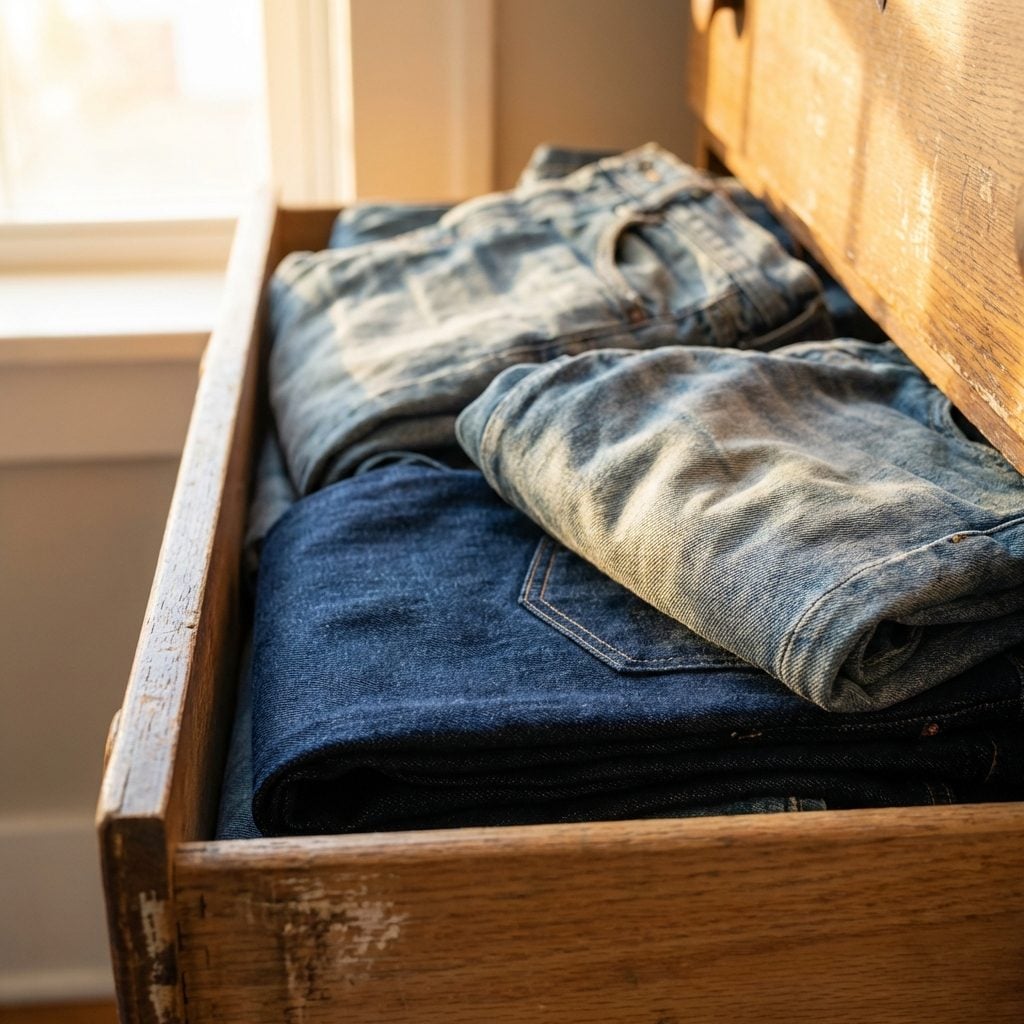
Technically fitting and actually wearing are two completely different things. Most of us have at least one pair that passes every objective measure, the zipper closes, the waist buttons, nothing pinches, and yet they live in perpetual hibernation at the bottom of the stack. The reason isn’t the jeans. It’s what they make you feel while you’re wearing them.
Research published in Body Image journal found that women’s clothing choices are directly shaped by body satisfaction, specifically, that women experiencing low body esteem gravitate toward garments that offer psychological cover, not just physical coverage. A pair of jeans that fits but reads as “too tight” in your own perception triggers a state of self-monitoring that follows you through the entire day.
This is the quiet cruelty of clothes that technically work. They don’t give you an obvious reason to reject them, so instead you feel like the problem. You’re not. The problem is that fit, as a psychological experience, has almost nothing to do with measurements.
The Pair You’ve Owned for Years That Still Feels Like a Risk
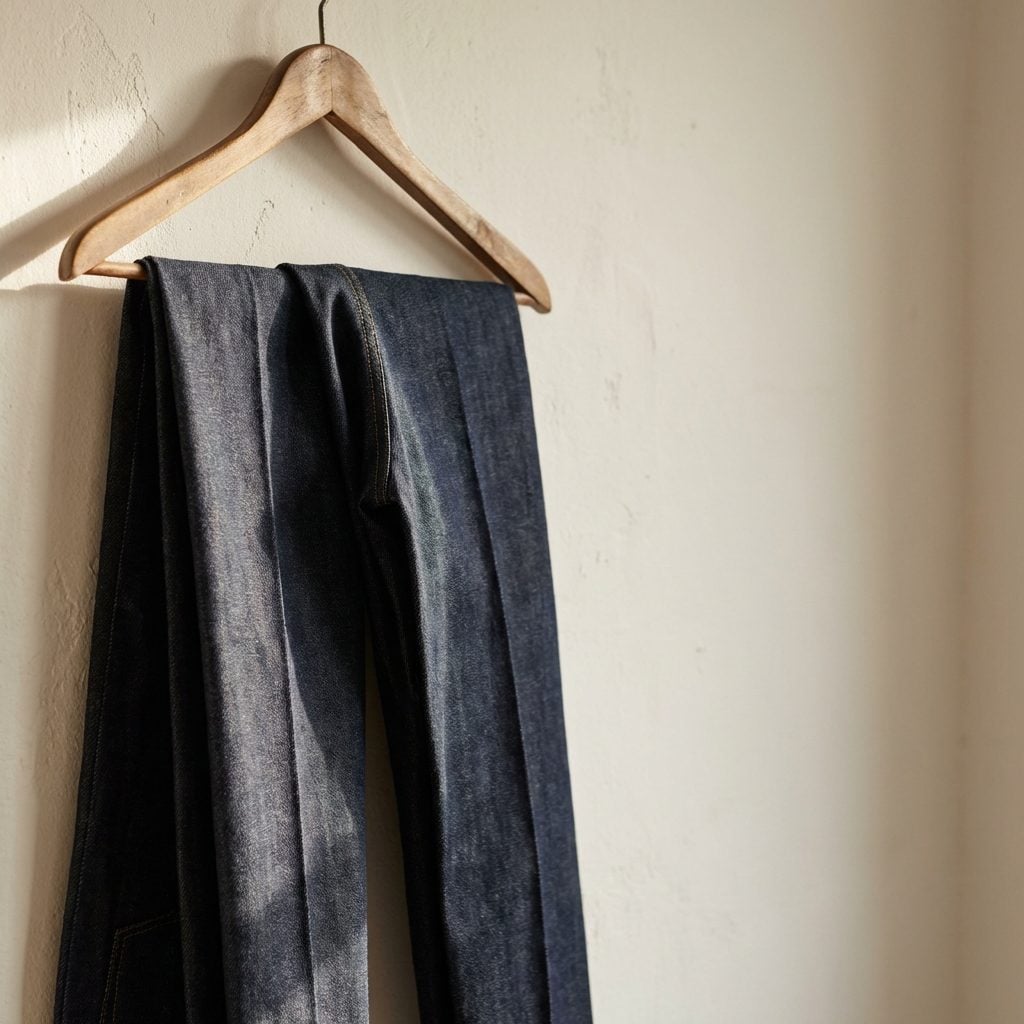
You bought them on a good day, maybe a vacation, maybe after a run of confident mornings when the mirror felt like an ally. They fit beautifully in the dressing room. You’ve owned them for two years and worn them twice. Every few months you try them on again, decide today’s not quite the right day, and fold them back.
This pattern has a name in fashion psychology circles: aspirational dressing. But it’s less about aspiration than it is about what researchers describe as the gap between actual and ideal body schema, the distance between how you perceive yourself today and the self you imagined when you made the purchase. The jeans didn’t change. Your internal reference point did, probably multiple times.
What makes this particularly interesting is that the “risk” isn’t about exposure in any rational sense. Nobody is watching your waistband. The risk is entirely psychological: the possibility of confirming a story you already half-believe about your body. The jeans are just the test you keep postponing.
What Behavioral Scientists Call the Garment You Reach for Without Thinking
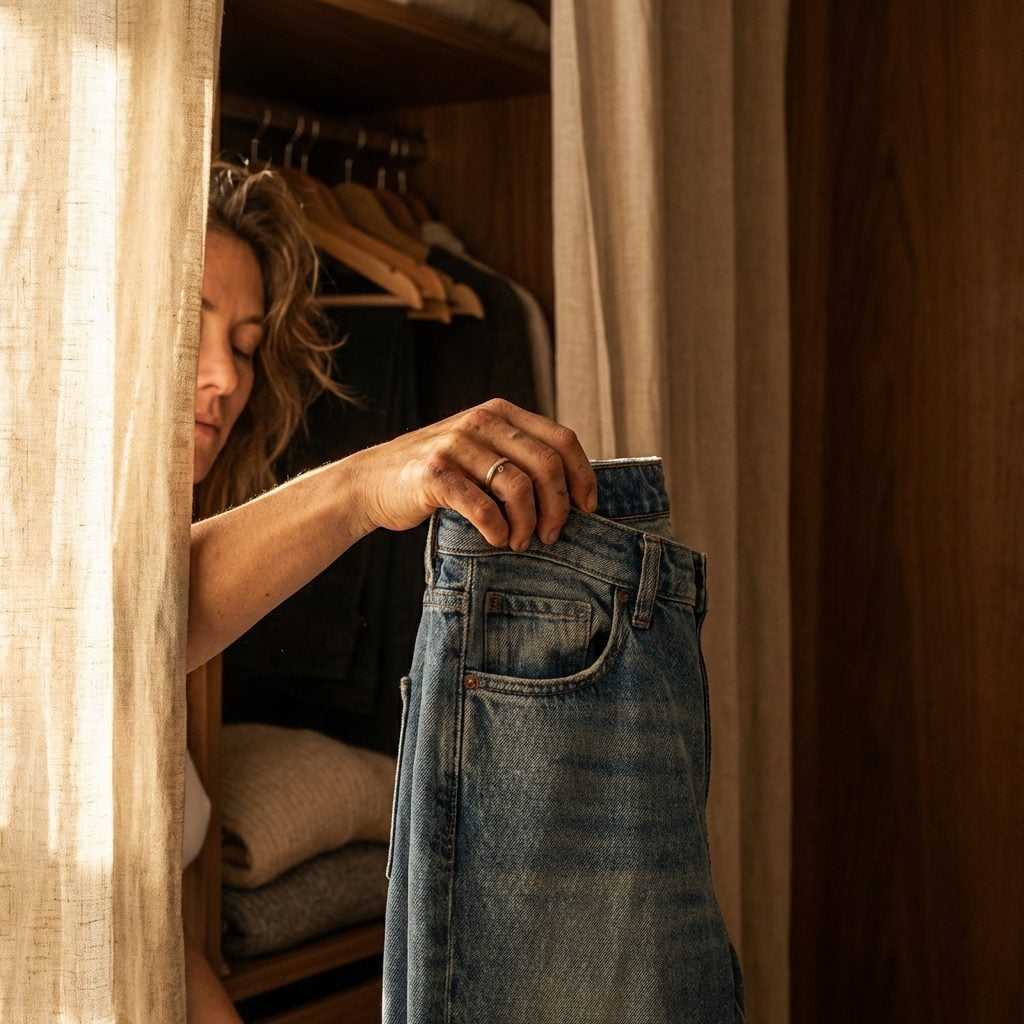
There’s a term for the jeans you put on before you’ve fully woken up, the ones your hand finds without looking. Behavioral scientists call it a default garment, a clothing choice that has been repeated so many times it has slipped out of conscious decision-making entirely and into the domain of habit. (Source) established that clothing doesn’t just reflect psychological state, it actively creates it, working through the combined force of a garment’s symbolic meaning and the physical act of wearing it.
Your default pair of blue jeans carries both. It has a symbolic meaning you’ve built up over years, comfort, safety, normalcy, “me”, and the physical sensation of wearing them reinforces that identity signal every time. Habit researcher Wendy Wood’s work found that roughly (Source). Getting dressed almost certainly accounts for a significant share of that.
The default garment isn’t laziness. It’s your nervous system taking a shortcut to a feeling it already knows works.
The Waistband Effect: Why One Inch of Fabric Controls Your Entire Morning Mood
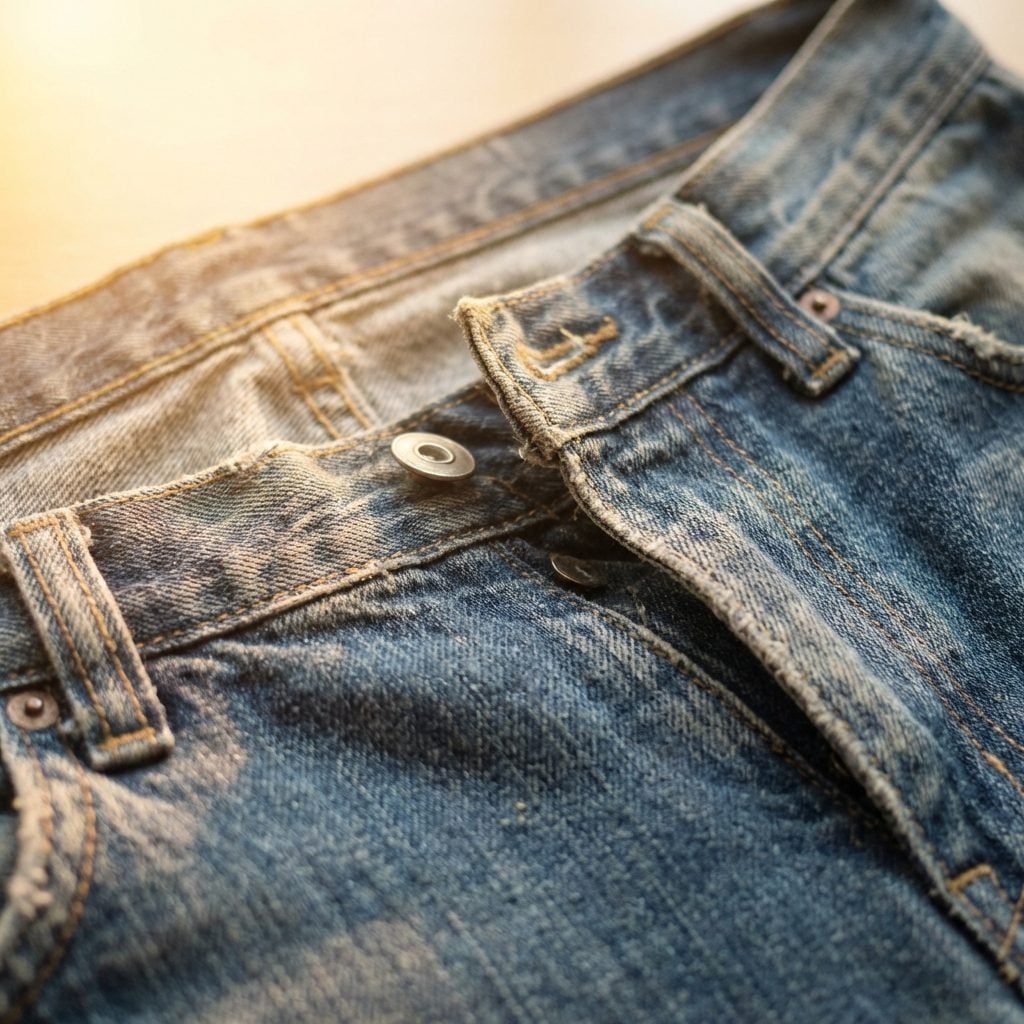
A waistband that sits slightly wrong, not painful, just present, is one of the most psychologically disruptive things a garment can do. It creates what researchers studying body image and self-monitoring call interoceptive interference: a constant, low-level physical signal that keeps pulling your attention back to your body throughout the day.
(Source) found that over a third of UK adults reported feeling anxious or depressed because of how they felt about their bodies on a given day. A waistband that digs in doesn’t just create physical discomfort. It becomes a recurring cue, a small tap on the shoulder every hour reminding you that your body is something to monitor rather than simply inhabit.
- The attention loop: Physical discomfort draws awareness to the body, which triggers self-evaluation, which activates body image anxiety.
- The mood cascade: That low-grade anxiety colors everything, conversations, focus, appetite, confidence, without you ever consciously connecting it back to the waistband.
- The comparison spiral: By mid-morning, you’re not just uncomfortable. You’re doing the mental math of what your body “should” look like, based on an internal standard that has very little to do with your actual body today.
The inch of fabric isn’t the problem. It’s the psychological story that inch triggers.
Why Your Brain Treats Getting Dressed as a Test You Might Fail
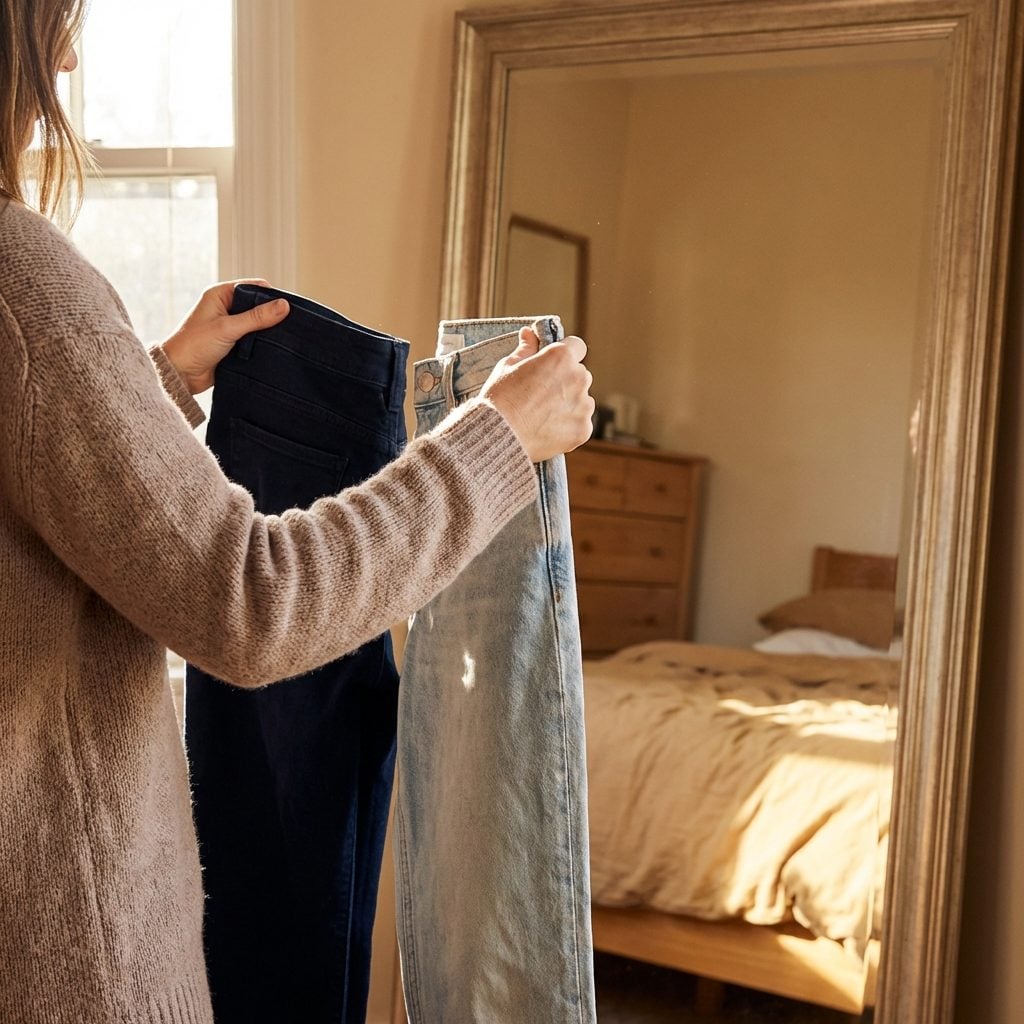
For many women, the dressing ritual isn’t preparation. It’s evaluation. And the evaluator is never kind.
Research in Frontiers in Psychology on sociocultural body image models describes how internalized body ideals create a running comparison process, a kind of ambient self-audit that activates whenever appearance becomes salient. Getting dressed is about as appearance-salient as a moment gets. You’re looking at your body. You’re making choices about how to present it. And your brain, conditioned by decades of cultural messaging about how bodies should look, runs that comparison automatically.
The result is that for some women, standing in front of a wardrobe with a pair of athleisure jeans in hand isn’t a neutral act of choosing clothes. It’s a small performance review. The “test” is whether today’s body matches the internal standard. Spoiler: the standard is almost always derived from a composite of images, old memories, and external pressure, not from any honest appraisal of the actual, present body in the mirror.
The Psychological Reason You Own Seven Pairs but Only Wear Two
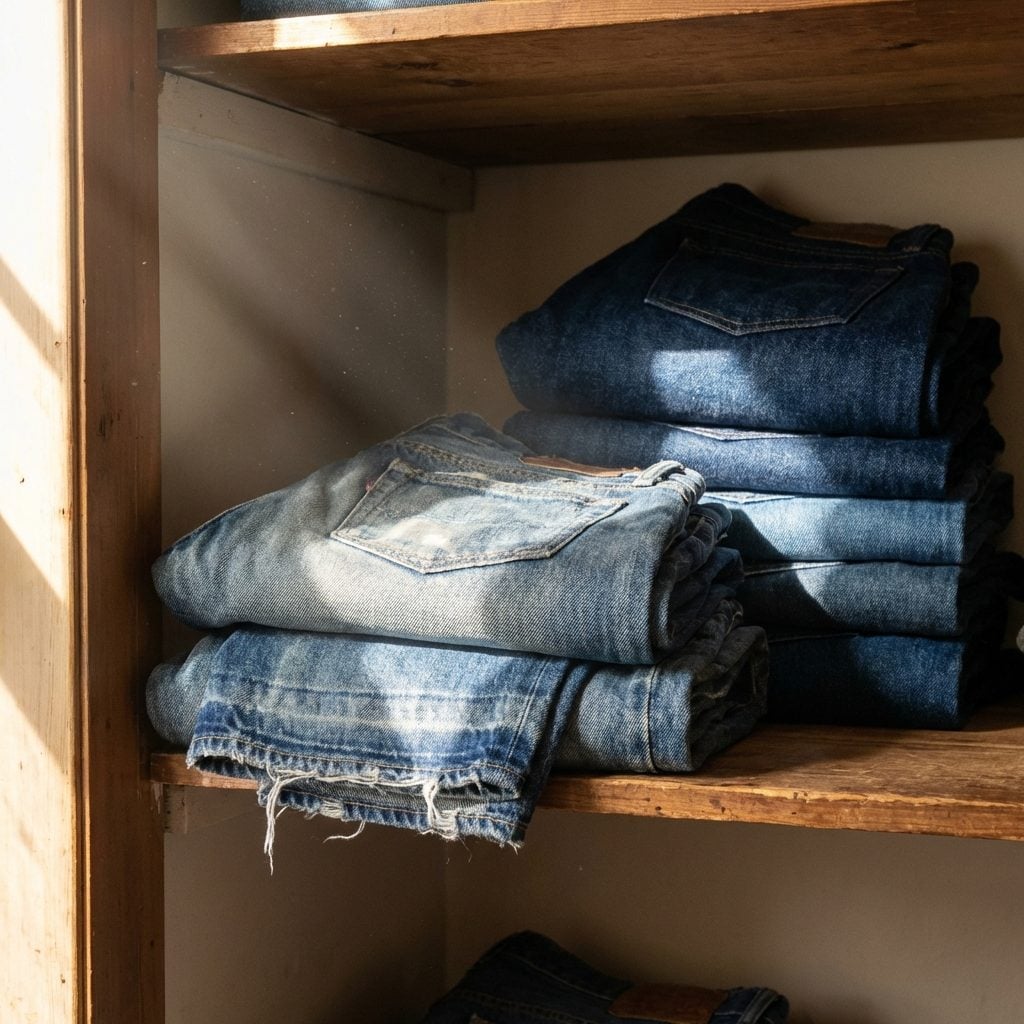
The math never adds up and yet it’s almost universal. Seven pairs on the shelf, or ten, or twelve, and the same two rotate through the week. It’s not about forgetting the others exist. It’s about something more specific: the emotional overhead of choosing a garment you’re not certain about.
Each pair of jeans carries a psychological profile. The ones you reach for are pairs where the internal calculation has already resolved, comfort is confirmed, the silhouette feels right, you know how the day will go in them. Every other pair still has an open question attached. Do I feel good in these? Will I spend the day adjusting them? Will they make me more self-conscious or less? (Source) confirms that clothing choices generate real psychological load, and that the brain, given the option, prefers to route around uncertainty.
The two pairs you wear aren’t your favorites because they’re the best jeans. They’re your favorites because they’ve been pre-approved by past experience. They’re the choices that come without a test attached.
What the Jeans You Avoid Are Actually Telling You About Your Body Image
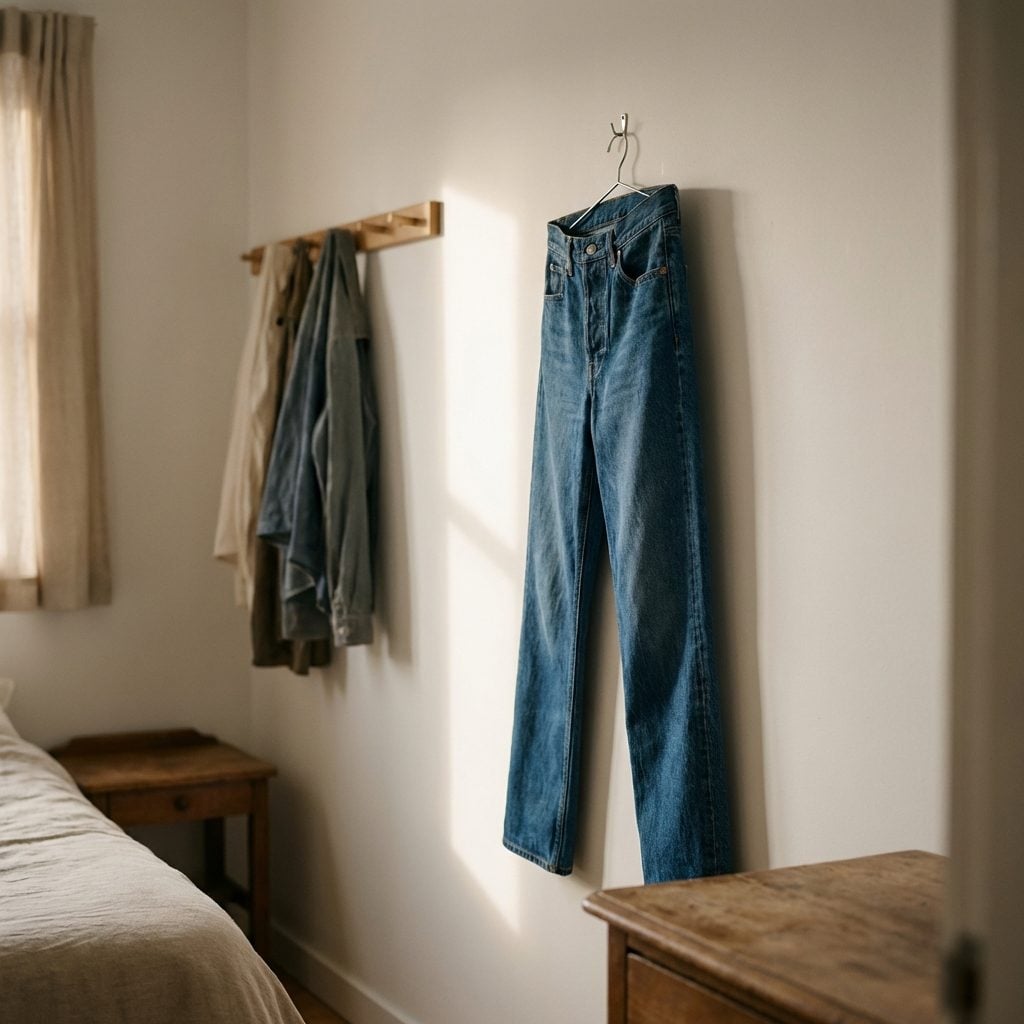
Avoidance is one of the most informative behaviors in psychology, not because of what it prevents, but because of what it protects. The jeans you consistently skip, the silhouettes that stay on the hanger, the cuts you try on once and never again: each one is a data point. Not about your body. About your relationship with it.
The 2021 Frontiers in Psychology study on clothing and body image found that women with lower body satisfaction are significantly more motivated by camouflage when choosing what to wear, the desire to cover, minimize, or redirect attention rather than express. The jeans you avoid likely fall outside that safety zone. They might sit differently at the waist. They might be a cut that draws attention to a part of your body you’re not at peace with. They might just not leave enough room to hide behind.
What’s worth sitting with is this: the avoidance isn’t evidence that your body is wrong for those jeans. It’s evidence of how you’re currently framing your body, as something that needs to pass a standard before it deserves to be seen. The gap between the jeans you wear and the ones you avoid is precisely the distance between where you are right now and a more generous relationship with the body you actually have. And it’s worth knowing that distance exists, even before you try to close it.
The Comfort Trap: Why ‘Forgiving’ Fit Can Quietly Reinforce Hiding
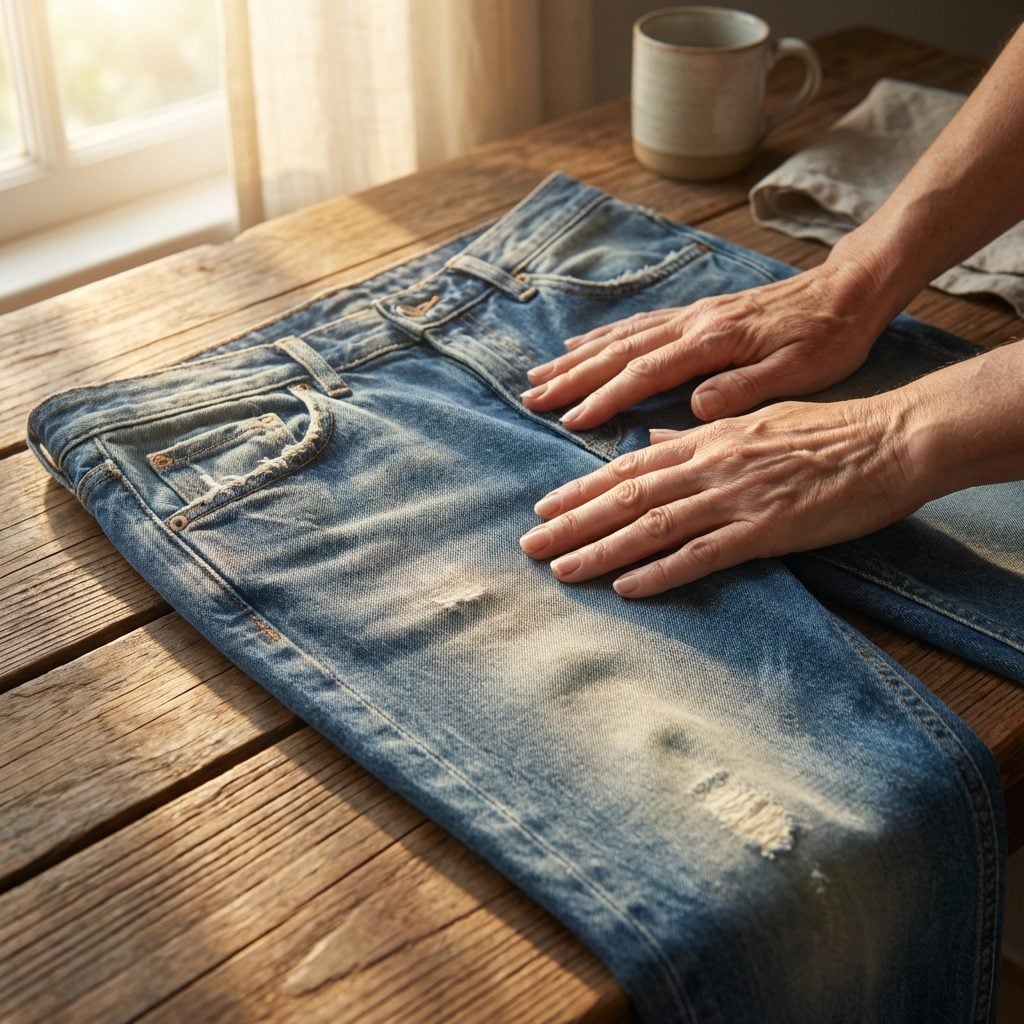
There’s a particular pair of jeans in almost every woman’s closet, the ones that never cause trouble. They zip without ceremony, don’t pinch after lunch, and require zero negotiation with your body. They feel safe. And that’s exactly where things get complicated.
Researchers studying clothing and body image have found that women who gravitate toward what’s termed a “camouflage” style, looser, darker, body-concealing fits, tend to score higher on measures of body dissatisfaction. Source The choice isn’t just about comfort. It’s a coping strategy. The jeans that forgive aren’t neutral, they’re doing psychological work, shielding you from a self-perception you’d rather not confront at 7am.
This matters because clothing doesn’t just reflect how you feel about your body. According to (Source), what you wear feeds back into how you think and behave. The “forgiving” fit that started as comfort can quietly teach your brain that the body underneath needs forgiving in the first place. There’s a meaningful difference between choosing ease because you love your body and choosing it because you’re hiding from it. The black jeans that never see daylight tell that story, too.
The Mirror Moment That Determines Whether You Feel Like Yourself All Day

The few seconds you spend looking at yourself before leaving the house are doing far more cognitive work than you realize. Social neuroscience research published in PMC describes what happens in that moment as something close to social perception, we use similar brain mechanisms to perceive our own faces as we use to perceive other people’s. Which means your emotional state going into that mirror moment directly colors what you see coming back out of it.
Psychologists call this affective realism: if you feel ashamed or uneasy, the mirror reflects shame. If you feel settled, you see a more generous version of yourself. The jeans you put on before that moment have already primed the emotional tone. A waistband that digs, a rise that feels wrong, a fabric that makes you want to adjust and readjust, all of it arrives at the mirror before your face does.
One clinical observation captures this with striking precision: a woman who lost significant weight after a health scare still dressed to conceal a body she no longer had, more than a year later. Source Her internal image hadn’t caught up with her physical reality. The friction wasn’t in the clothes. It was in the story she was still telling herself.
Why Certain Denim Feels Like Armor, and What That Reveals About Your Confidence
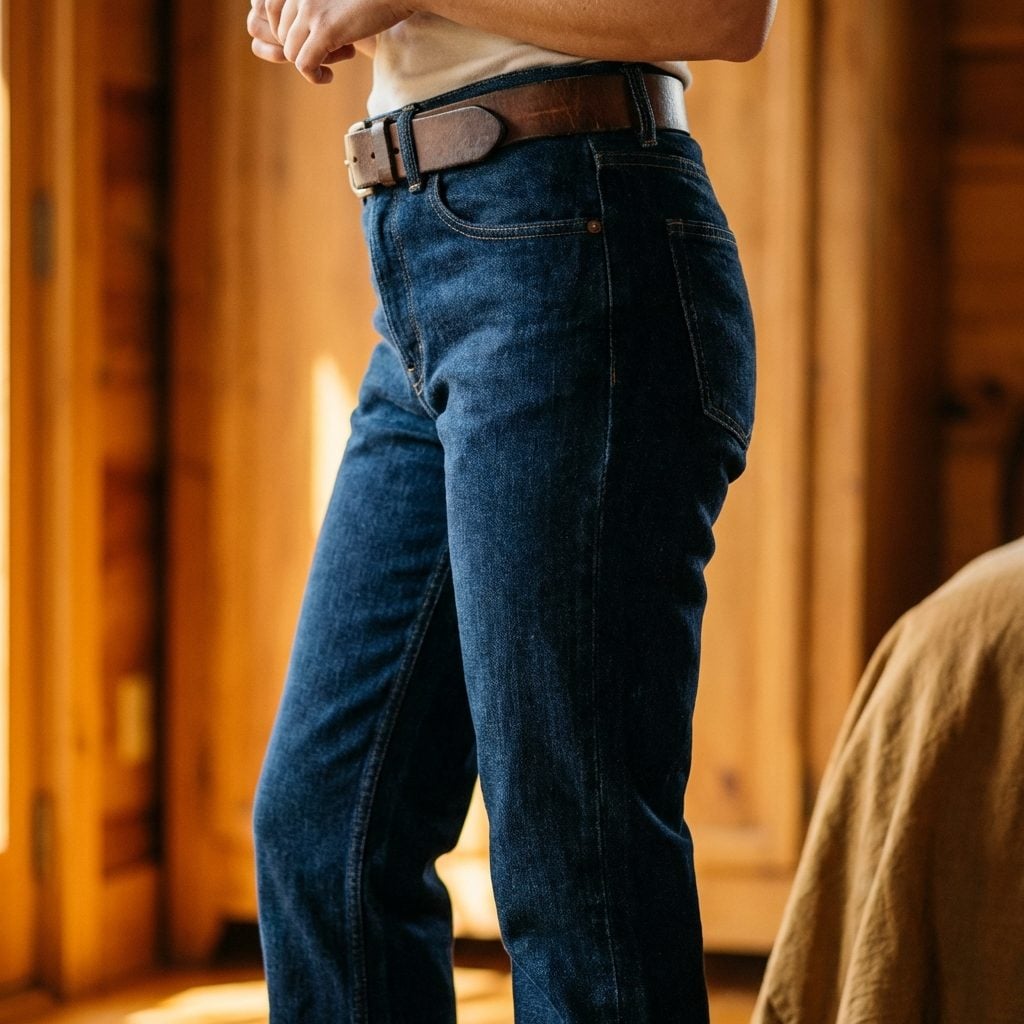
Ask most women to describe their most-reached-for pair of blue jeans and you’ll hear language that has nothing to do with fashion. “I feel like myself in them.” “I can handle anything.” “They just work.” That’s not styling intuition. That’s the armor effect in action.
Clothing has long been documented as a tool for psychological protection. Research on enclothed cognition identifies physical and psychological protection as one of the primary functions of dress, alongside communicating group identity, managing first impressions, and concealing perceived physical flaws. The jeans that feel like armor aren’t just comfortable. They carry a symbolic meaning your nervous system recognizes: in these, I am okay.
The interesting question is where that symbolic meaning comes from. For some women it’s rooted in fit, a waistband that sits exactly right creates a physical sense of containment and control. For others it’s tied to a memory: the jeans worn during a period of confidence, or on the day something important went well. The armor isn’t in the denim. It’s in the association your brain has built around it over years of repetition.
The Feedback Loop Neuroscientists Say Is Built Into Your Wardrobe
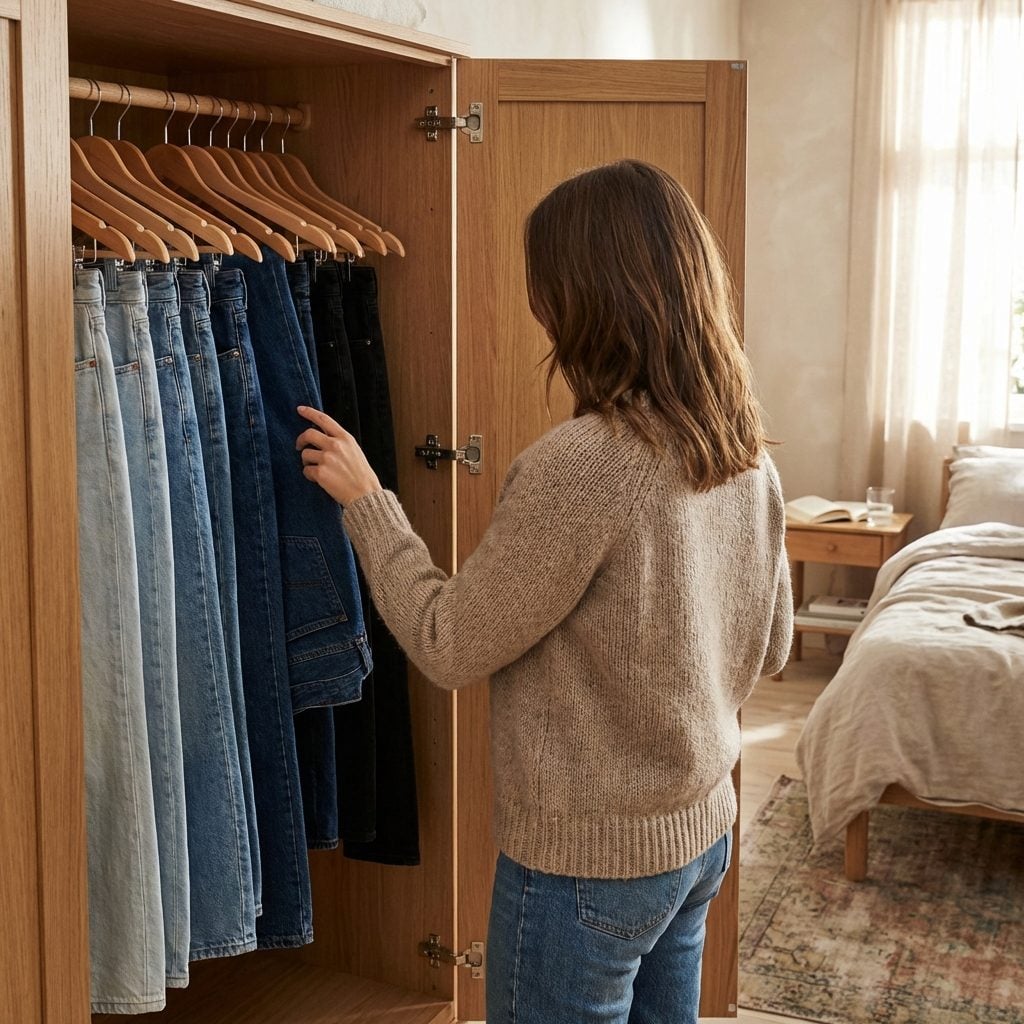
Your wardrobe isn’t just where clothes live. It’s a behavioral feedback system you interact with every single morning.
The concept of enclothed cognition, first described in a landmark study by Hajo Adam and Adam D. Galinsky, established that clothing affects not just how others see us but how we think and perform. Source A 2023 meta-analysis across 40 studies confirmed the core mechanism holds: what you wear carries symbolic meaning that activates psychological states in the wearer. The effect is small to moderate in size, but it’s consistent, and it’s cumulative across thousands of mornings.
Here’s what makes it a feedback loop specifically: you don’t just wear clothes and feel things. The clothes you choose reflect how you already feel, which then reinforces that feeling, which shapes tomorrow’s choice. Reach for the loose, low-effort pair because you feel sluggish and invisible? That choice sends a return signal. Reach for the pair that fits with some intention? Different signal. Different day.
Research on clothing psychology notes that donning attire which contradicts your self-concept can undermine psychological well-being, but the reverse is equally true. Clothing that aligns with how you want to feel can actively scaffold a more confident state before the day has even started.
- The choice reflects your current self-image
- The garment activates the psychological state it symbolizes
- That state colors how you move through the next 12 hours
The One Fit Detail That Shifts You From Self-Conscious to Self-Possessed
❤️ Would you like to save this?
Fit is not a vanity consideration. It’s a psychological one.
A 2024 study in Journal of Retailing and Consumer Services built an entire theoretical model around exactly this: the relationship between clothing fit, specifically fit preference and fit performance, and consumers’ self-evaluation processes, including body satisfaction and self-esteem. Source The finding that keeps surfacing across this body of research: ill-fitting clothing amplifies insecurity, while clothing that fits with intention creates what researchers describe as a more positive self-image.
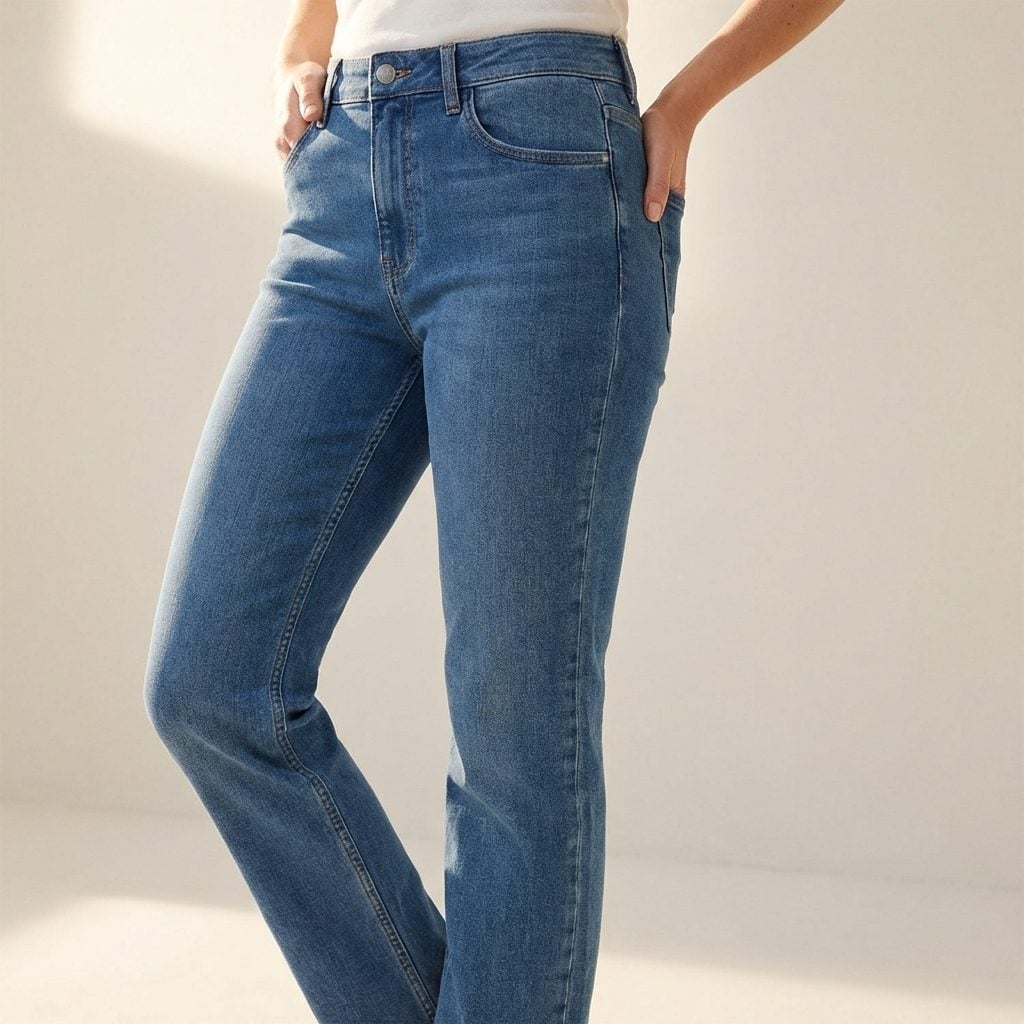
For jeans specifically, the detail that most reliably makes the shift tends to be one of three things: the rise (where the waistband sits relative to your natural waist), the thigh (enough ease to move without pulling), or the length (hitting exactly where your eye wants it to). Get one of these wrong and every mirror glance becomes a correction. Get them right, even in the most casual pair of athleisure jeans, and something settles. The body stops being a problem to manage and becomes simply where you live.
That shift, from self-conscious to self-possessed, isn’t about looking a certain way. It’s about removing the constant low-level friction that takes up attention you’d otherwise use for everything else in your day.
What Your ‘Default’ Jean Is Really Protecting You From
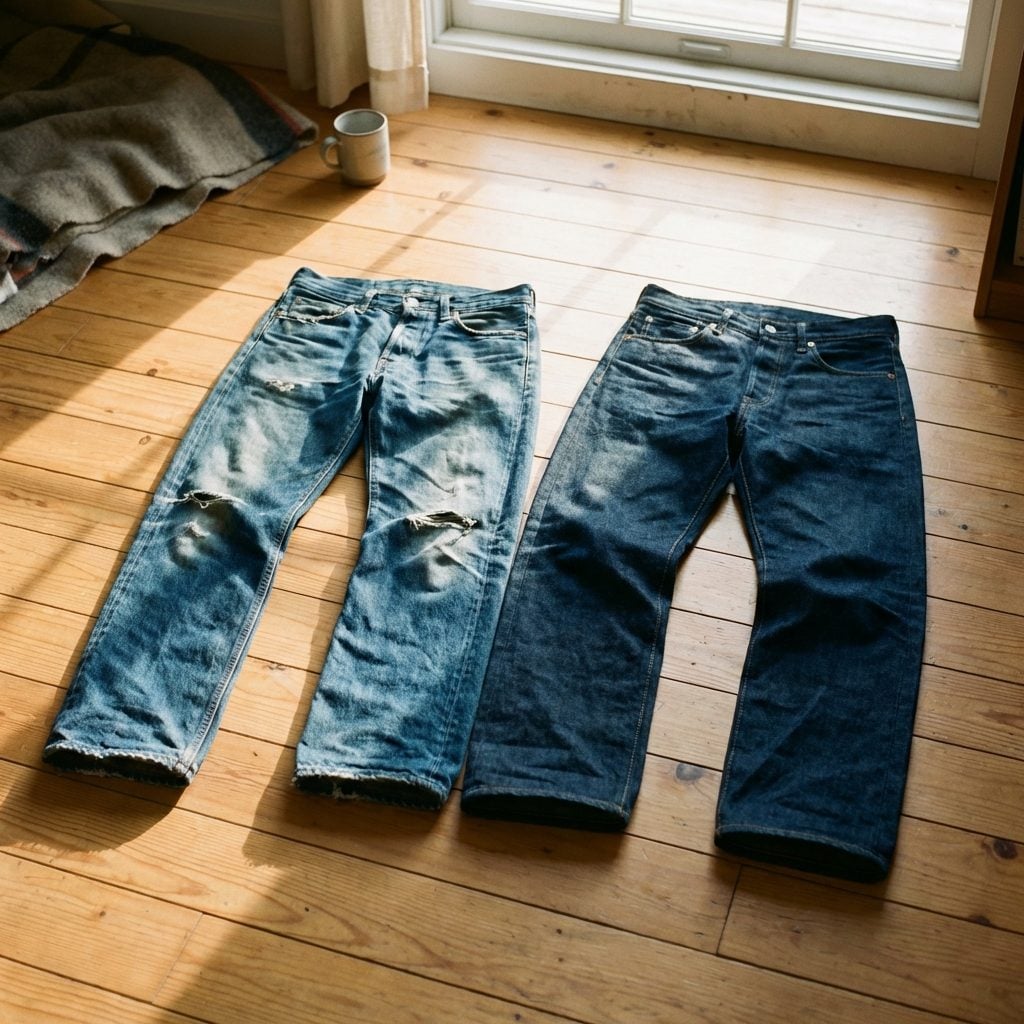
Every woman has a default. The pair she reaches for when she’s not thinking about it, when the morning is running late or the decision feels too heavy. It’s the path of least resistance, and it is also, quietly, a decision about risk.
Clothing psychologists describe one of dress’s core functions as psychological protection: managing other people’s impressions, concealing perceived physical flaws, and maintaining a stable sense of self. Source The default jean performs all three. It offers predictability. You know exactly how you’ll look and feel in it. There are no surprises, and no possibility of the particular low-grade devastation of putting on something that doesn’t work at 7:15 in the morning.
But protection from what, exactly? Often it’s protection from a specific, uncomfortable question: what if I try something different and it doesn’t work, and I have to spend all day knowing I got it wrong? That’s not vanity. That’s risk aversion built from dozens of small experiences of clothing-related discomfort. Research on enclothed cognition consistently shows that clothing misaligned with your self-concept can undermine your psychological state for hours afterward. The default is a hedge against that.
The more interesting question isn’t which jeans you default to. It’s whether that default is still serving the version of yourself you actually are right now, or whether it’s protecting a version of you that doesn’t quite exist anymore.
The Bottom Line
The jeans you reach for without thinking aren’t a neutral choice, they are a daily vote on how much of yourself you’re willing to show up as. Your default pair is the physical record of the gap between who you are and who you believe you’re allowed to be. Today, before you close the drawer, notice which pair you’re avoiding, and ask yourself what it would actually cost you to wear it.