❤️ Would you like to save this?
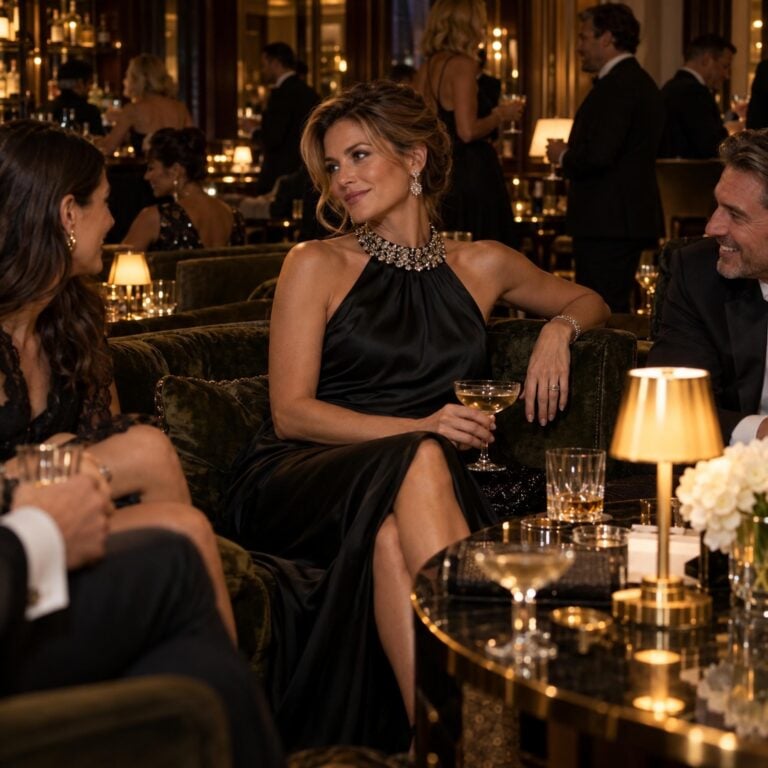
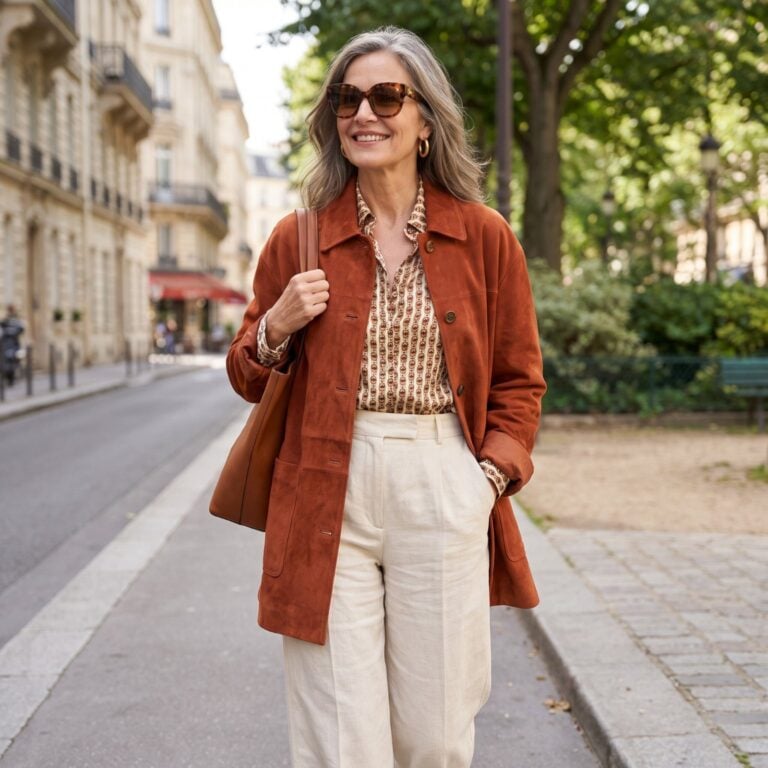
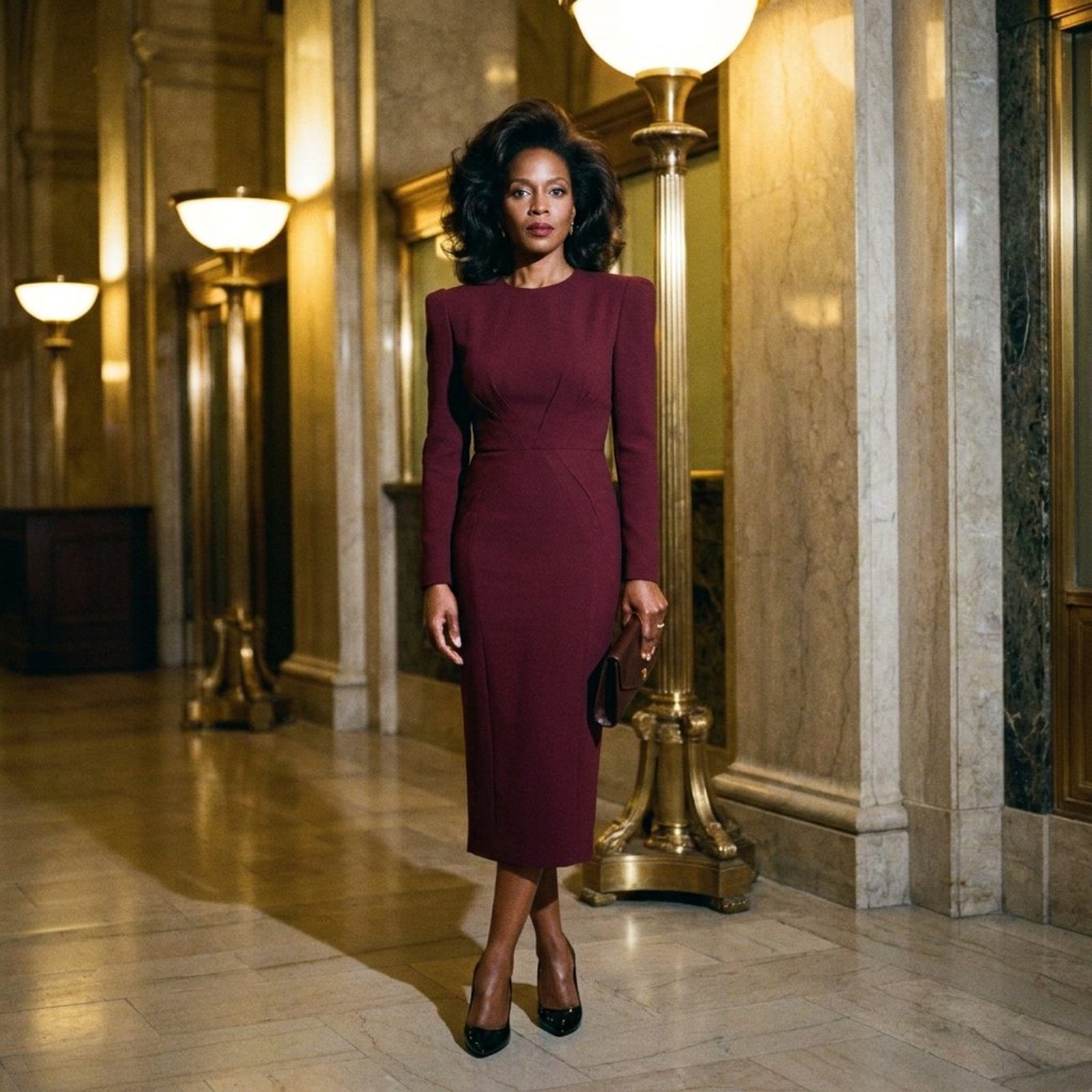
Close your eyes and you can still feel it: the rustle of rayon challis against opaque wine-colored tights, the slight scratch of a lace yoke at the collar, the structural confidence of shoulder pads that could have held up a small building. The 1980s midi-dress was not a garment. It was an architectural event. It had opinions. It had layers. It had a fabric belt that never, not once, stayed where you put it. If you wore one, you remember everything.
FYI, thanks to AI imagery software, we’re able to create very specific fashion and hairstyle examples to illustrate the points being made. In some cases, imagery is exaggerated to hammer home the point. Also, assume links that take you off the site are affiliate links such as links to Amazon. this means we may earn a commission if you buy something.
35. Drop Waists That Sat on Your Hips and Dared You to Argue
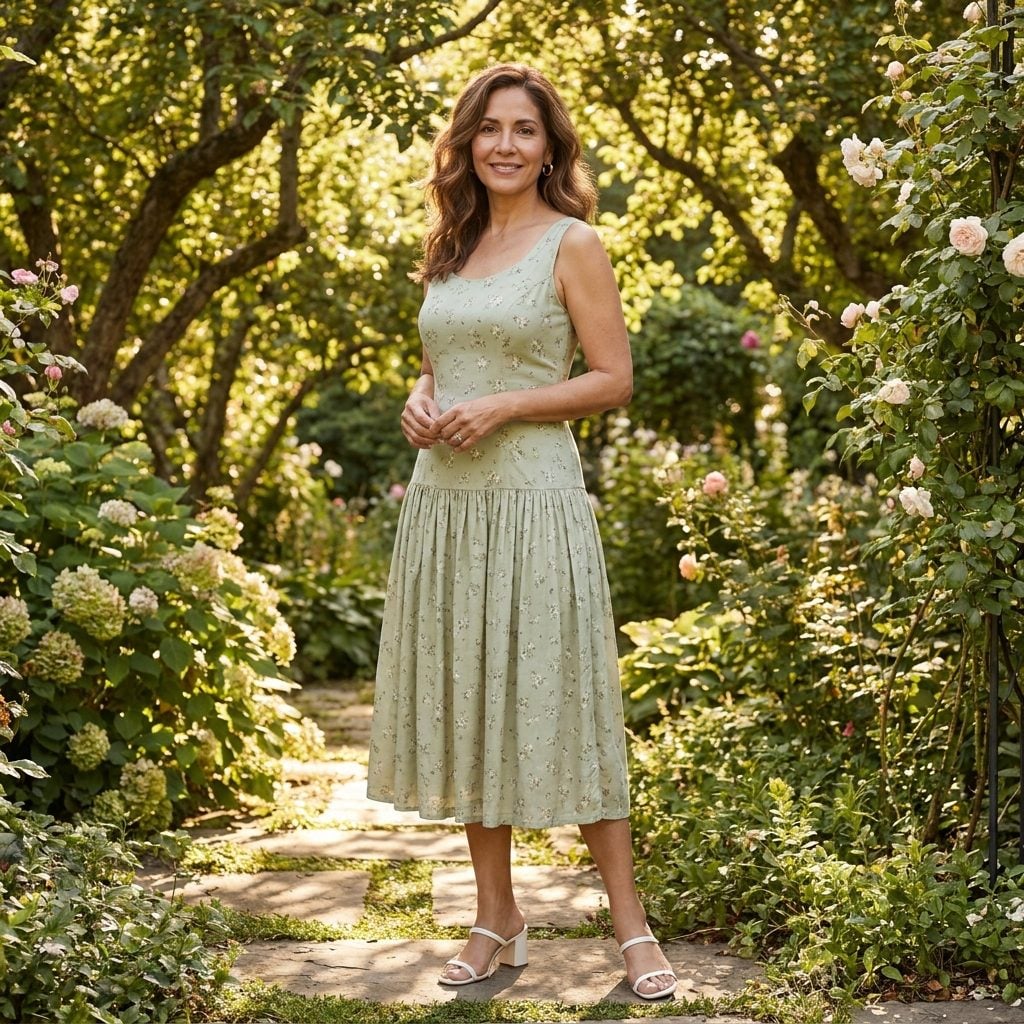
The drop waist is one of those designs that sounds easy in theory, lower the seam, create a different silhouette, and in practice turns into a geometry problem your body has to solve. On a 1980s dress, the waistline landed somewhere around the hip bone, which then released into a full or tiered skirt that swept down to midi length. If your proportions aligned with the designer’s assumptions, it was charming. If they didn’t, the horizontal seam across the widest part of your hips became a very public conversation.
We wore them anyway. We wore them to school dances and Sunday dinners and felt completely wonderful about it, and honestly? The confidence required for that was its own kind of power.
34. The Pouf Hem: Fashion’s Most Confident Design Mistake
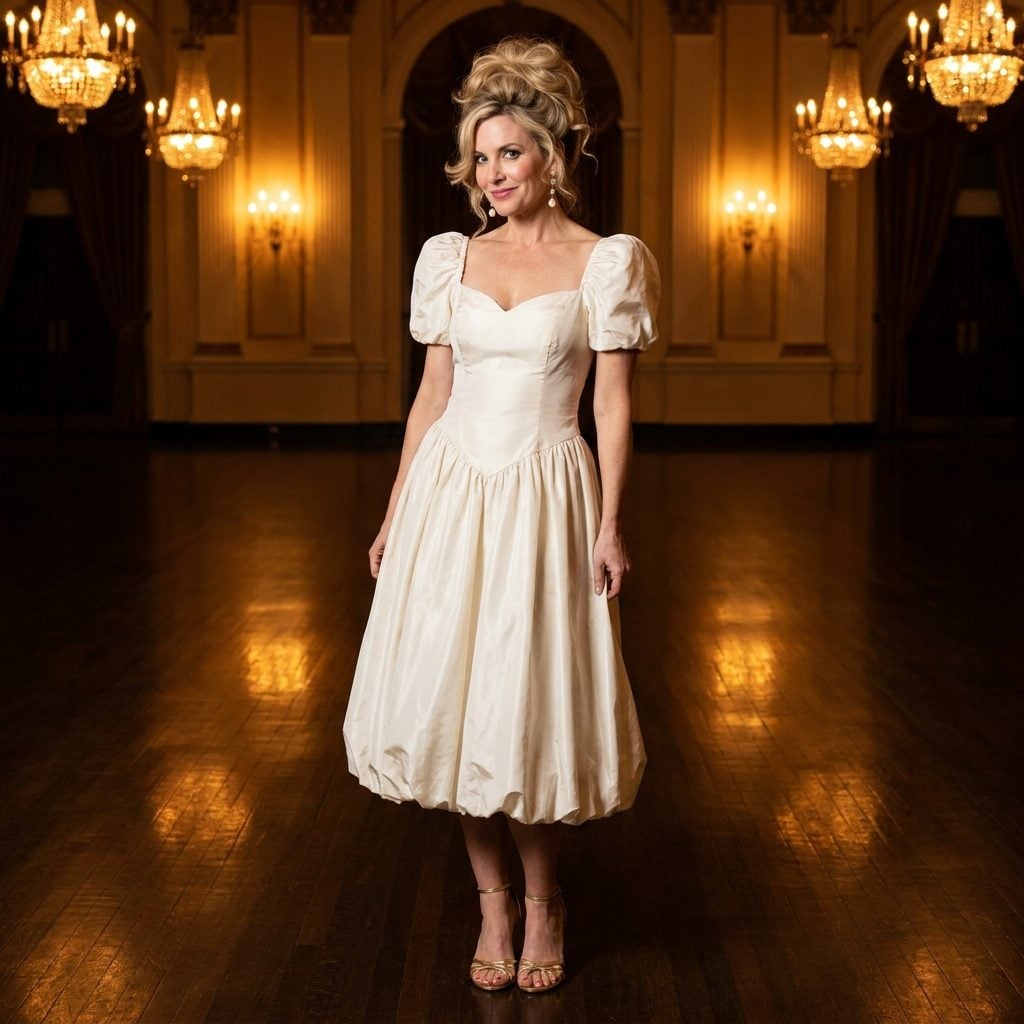
Imagine a skirt that ballooned outward at the hem, tucked itself under at the bottom, and created a shape that can only be described as a lampshade on a very important errand. That was the bubble hem, and it was everywhere in the 1980s. Taffeta was the preferred fabric because the rustle alone announced your arrival. You couldn’t sit without the whole structure rebelling. You couldn’t cross your legs without visual chaos.
The really committed versions used boning or a lining layer to maintain the rounded shape all day, which meant you were essentially wearing architecture.
“The bubble hem didn’t just make a statement. It filed a noise complaint against every other dress in the room.”
33. Gunne Sax Prairie Midis: The Victorian Fever Dream We All Shared
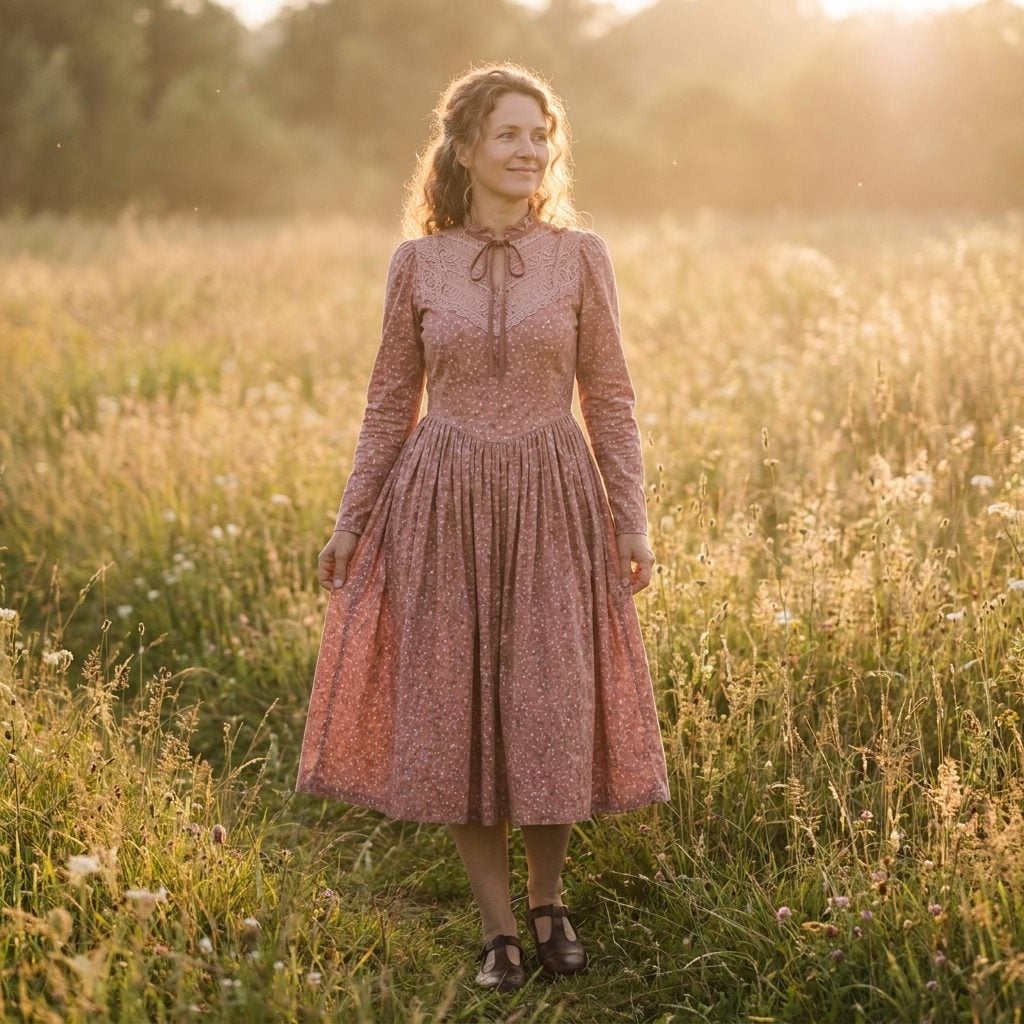
If you wore a Gunne Sax dress to prom or a spring dance in the early-to-mid 1980s, you were participating in something deeply specific: the collective fantasy that we were all gentle heroines in a novel set near a meadow. The lace yokes were delicate and slightly itchy. The ribbon ties at the neck needed to be re-tied approximately every 45 minutes. The calico florals came in the kind of dusty rose and cornflower blue that practically had their own theme music.
San Francisco-based designer Jessica McClintock built the Gunne Sax brand into a prom-dress empire on exactly this aesthetic, romantic Victorian detailing, a modest neckline, a floaty skirt, and the distinct feeling that you should be carrying a basket of wildflowers instead of a Esprit tote.
32. Laura Ashley Calico Florals: The English Countryside You Pretended to Live In
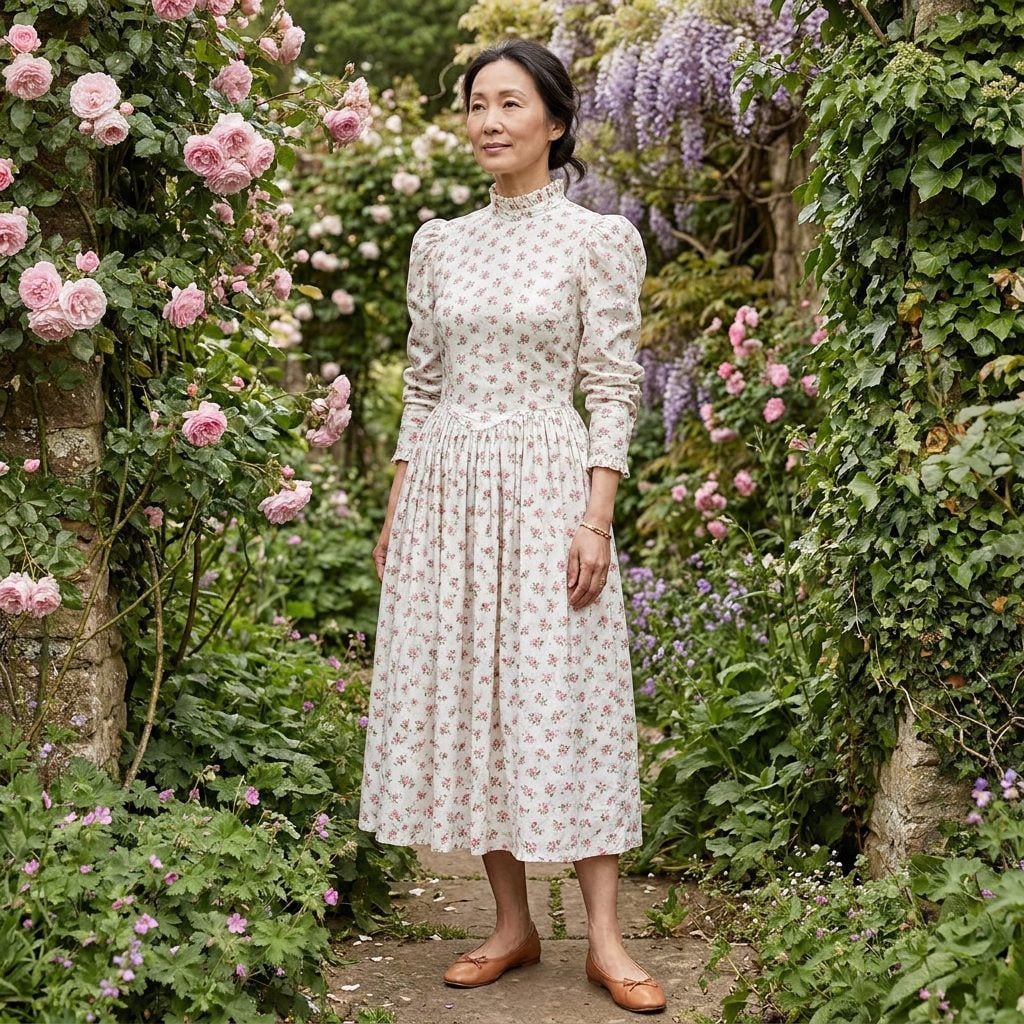
You didn’t have to be British to own a Laura Ashley midi. You just had to believe, on some level, that you deserved a life involving stone cottages and afternoon tea and a garden that bloomed without anyone weeding it. The calico florals came in tiny, all-over prints, rosebuds, forget-me-nots, small sprigs on white or cream grounds, and the dresses had this soft, slightly cottony weight that made you feel vaguely wholesome just putting them on.
The brand had over 500 stores worldwide by the mid-1980s, which means this particular fantasy was extremely well attended. Every Laura Ashley dress came with an unspoken promise that your life was more pastoral than it actually was.
31. Giant Pussy Bows That Required a Tutorial and a Press
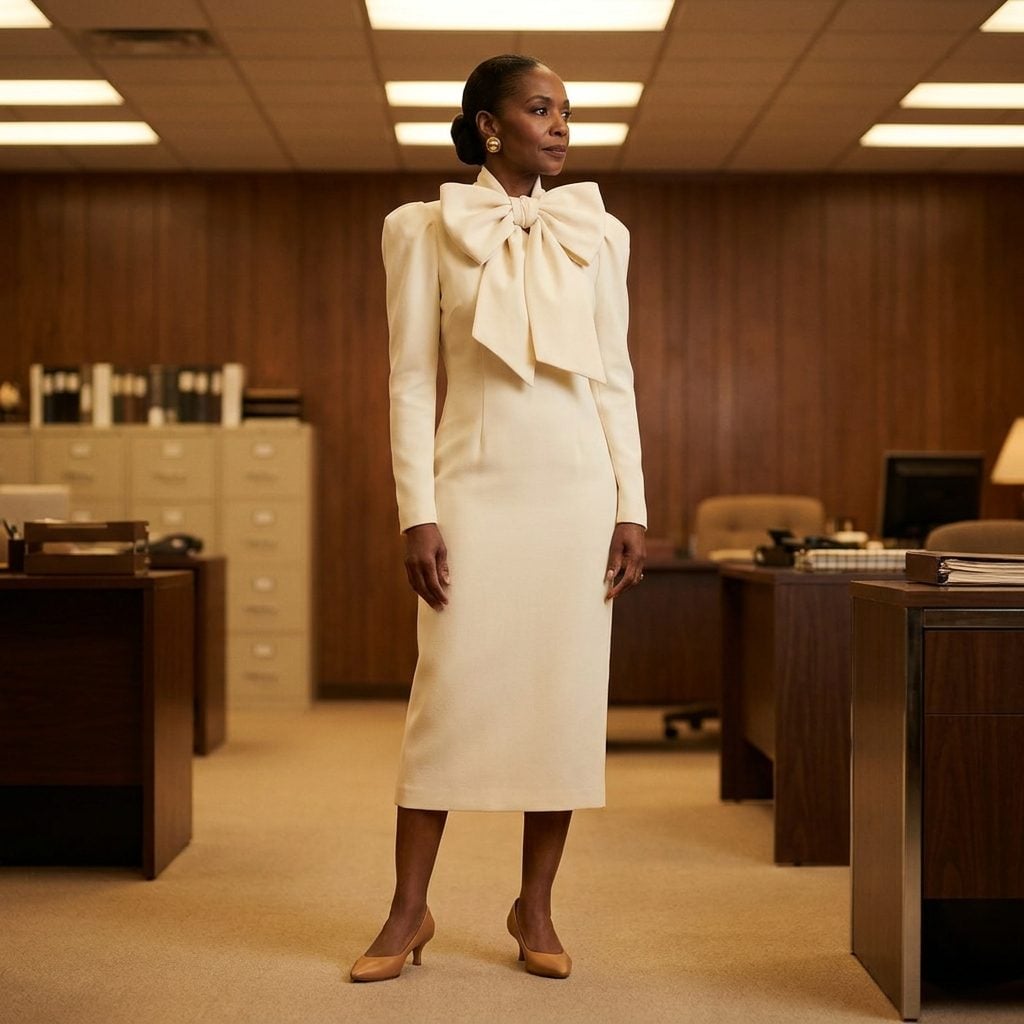
The pussy bow was not a casual accessory. On a 1980s midi, this was a full architectural commitment, a length of fabric at the neckline that you tied into a bow so large it occupied its own airspace. Silk versions were the prize. They came in cream, ivory, or that particular shade of dusty rose the decade loved. You ironed the bow before you tied it, then tried to get the loops even, then retied it, then gave up and left for the office slightly lopsided and still somehow magnificent.
Thatcher wore them. Sigourney Weaver wore them. Your mother wore them. The pussy bow was shorthand for a specific kind of dressed-up authority, feminine and sharp at the same time, which was the entire tightrope act of 1980s working women’s fashion.
30. Sailor Collars: Nautical Details That Had No Business Being So Charming
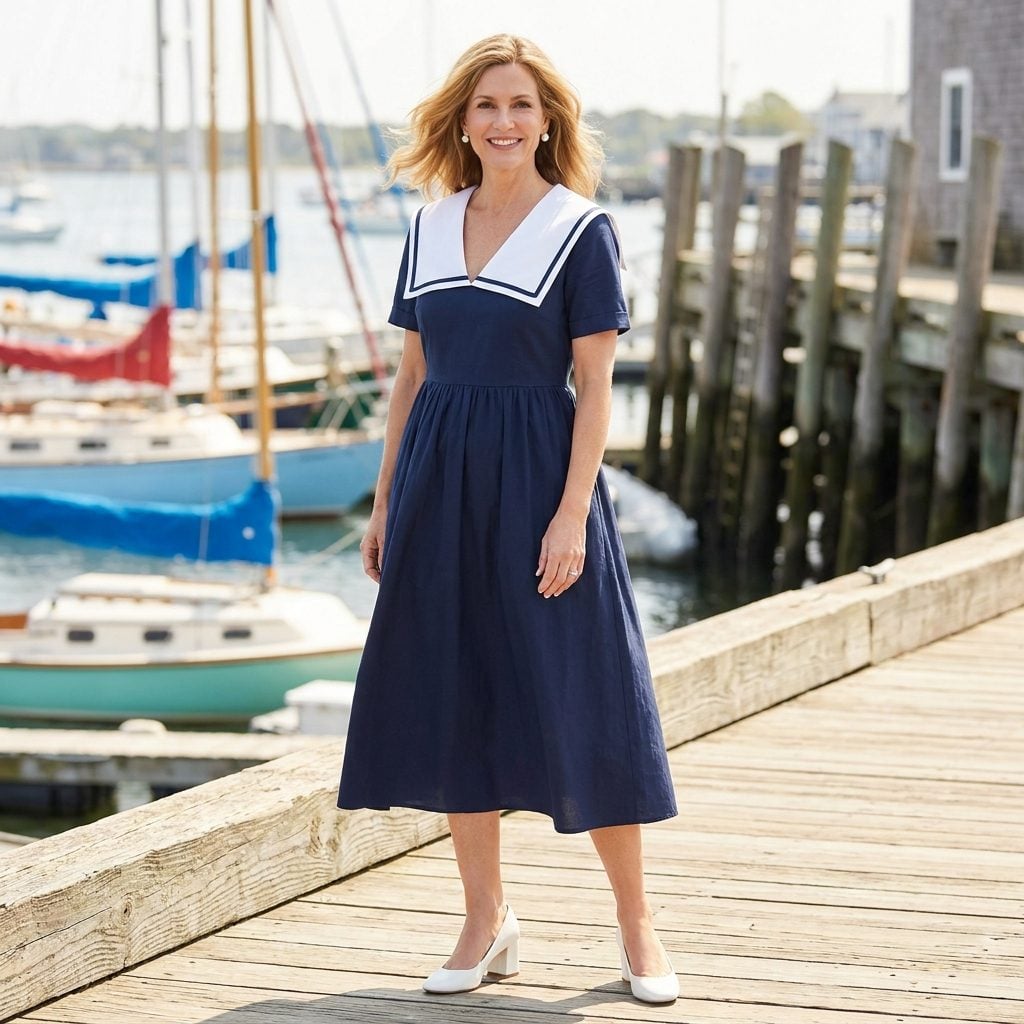
The sailor collar on an everyday 1980s midi was exactly the detail that made no logical sense and absolute perfect sense simultaneously. A broad, flat collar with white contrast piping along the edges, folded back across the shoulders in the classic navy or white-on-navy combination, and suddenly a Wednesday afternoon dress had opinions about maritime life.
Department stores were full of them. Sears, JCPenney, Casual Corner, the sailor collar midi was the Everywoman’s choice, accessible and slightly aspirational in the way that nautical anything always reads as clean and purposeful. Pair it with white low-heeled pumps and you were ready for a summer lunch that didn’t technically exist but felt very real.
29. Sweetheart Necklines With Puff Sleeves: Tuesday Felt Like a Ball
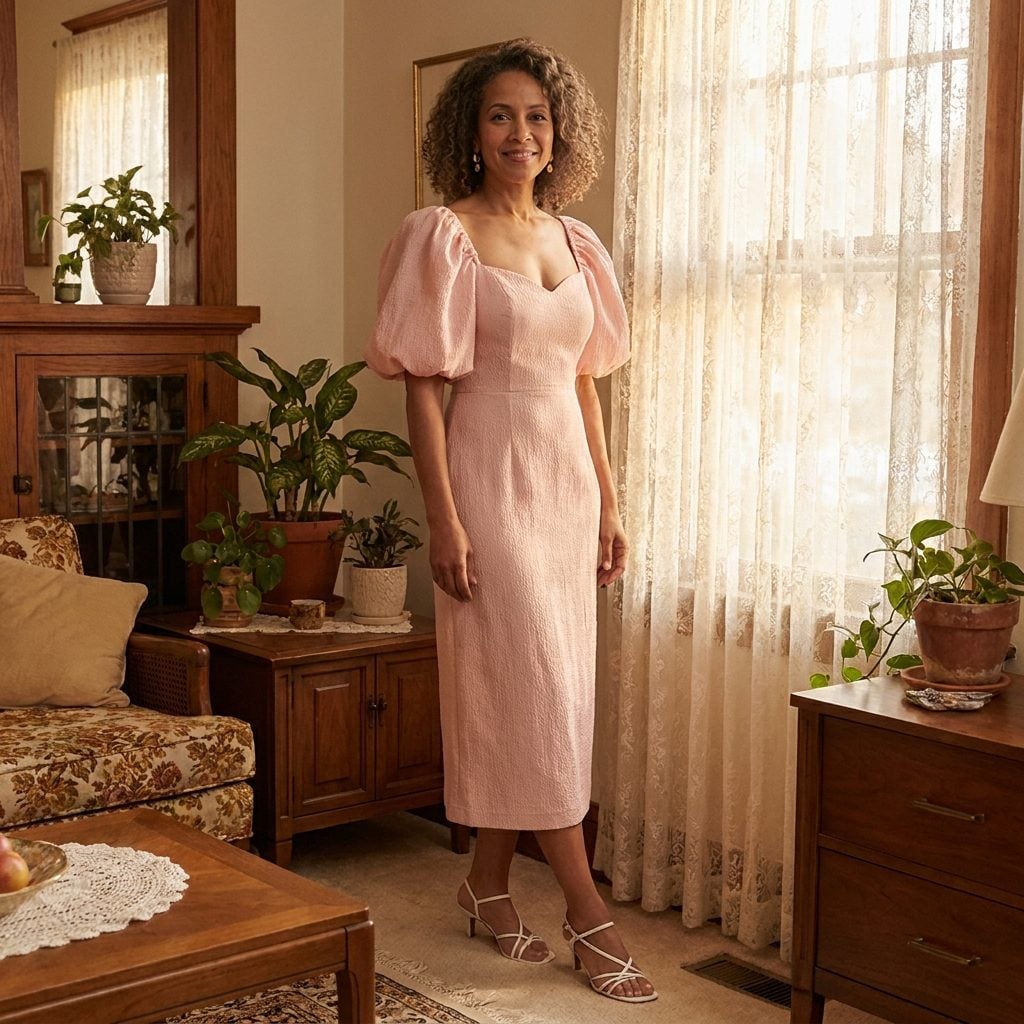
This combination should only have existed for evening wear and yet there it was, a sweetheart neckline dipping into a soft heart curve at the center of the chest, and above it, two fully committed puff sleeves with enough gathering to stuff a pillow. On a daytime midi. For work. For a school lunch. For a regular Tuesday.
The sleeves were often a different fabric from the bodice, or at least lined differently so they held the puff shape without collapsing by 10am. Taffeta inside a cotton poplin sleeve gave you a quiet rustle every time you reached for a cup of coffee, which felt more festive than it sounds.
28. Removable Lace Dickeys: One Dress, Multiple Personalities
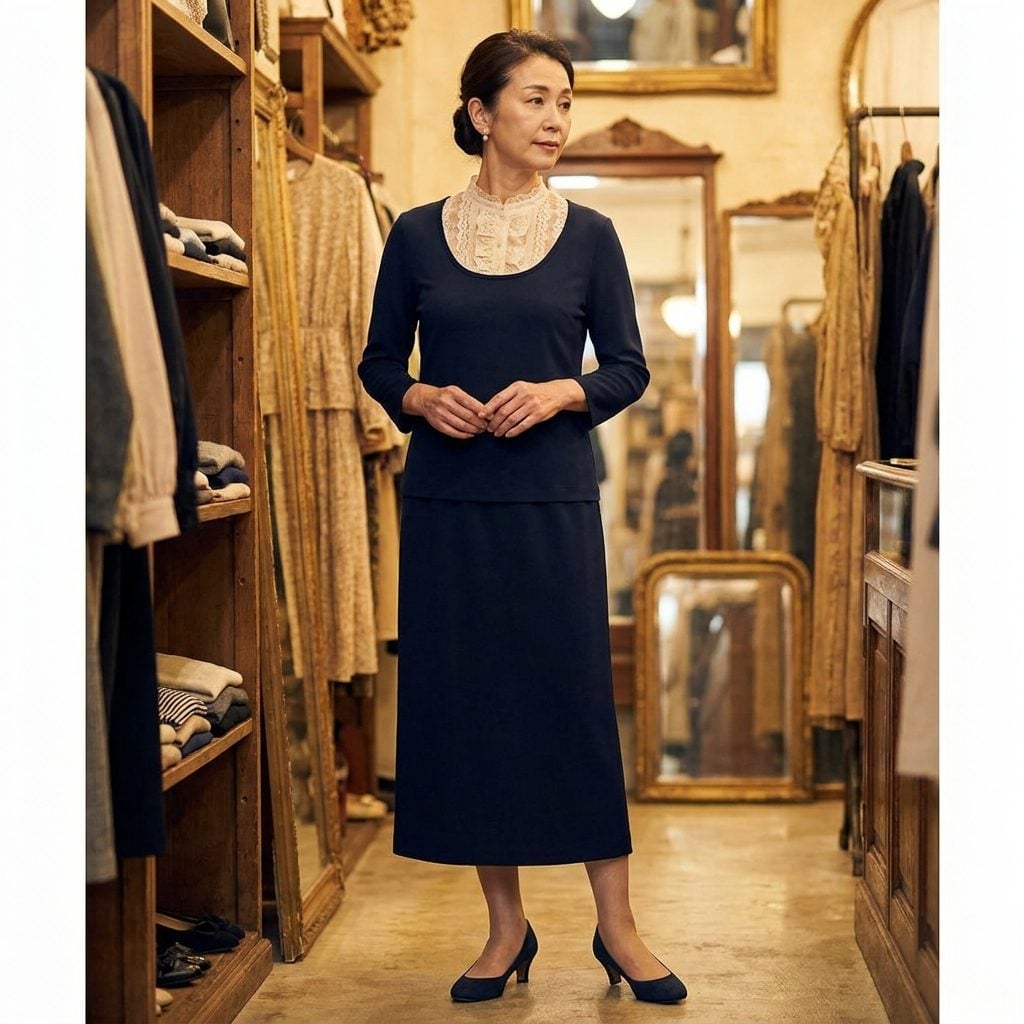
A dickey was essentially a fake shirt front, just the collar and a bib of fabric, no sleeves, no back, held in place by tucking into a neckline or fastening with a small button. The lace version looked like you were wearing a delicate Victorian blouse underneath a plain midi, and the point was to completely reinvent the dress’s formality with almost no effort. Monday was the plain crew neck version. Tuesday, you tucked in the lace dickey and looked like you had somewhere important to be.
They sold for next to nothing at fabric stores and accessory counters. Your grandmother probably had a drawer full of them. The concept was entirely practical and slightly mad, a removable neckline insert, and also very much the 1980s solution to a wardrobe budget: buy less, accessorize harder.
27. Peplums Over Full Midi Skirts: More Fabric Was Always the Answer
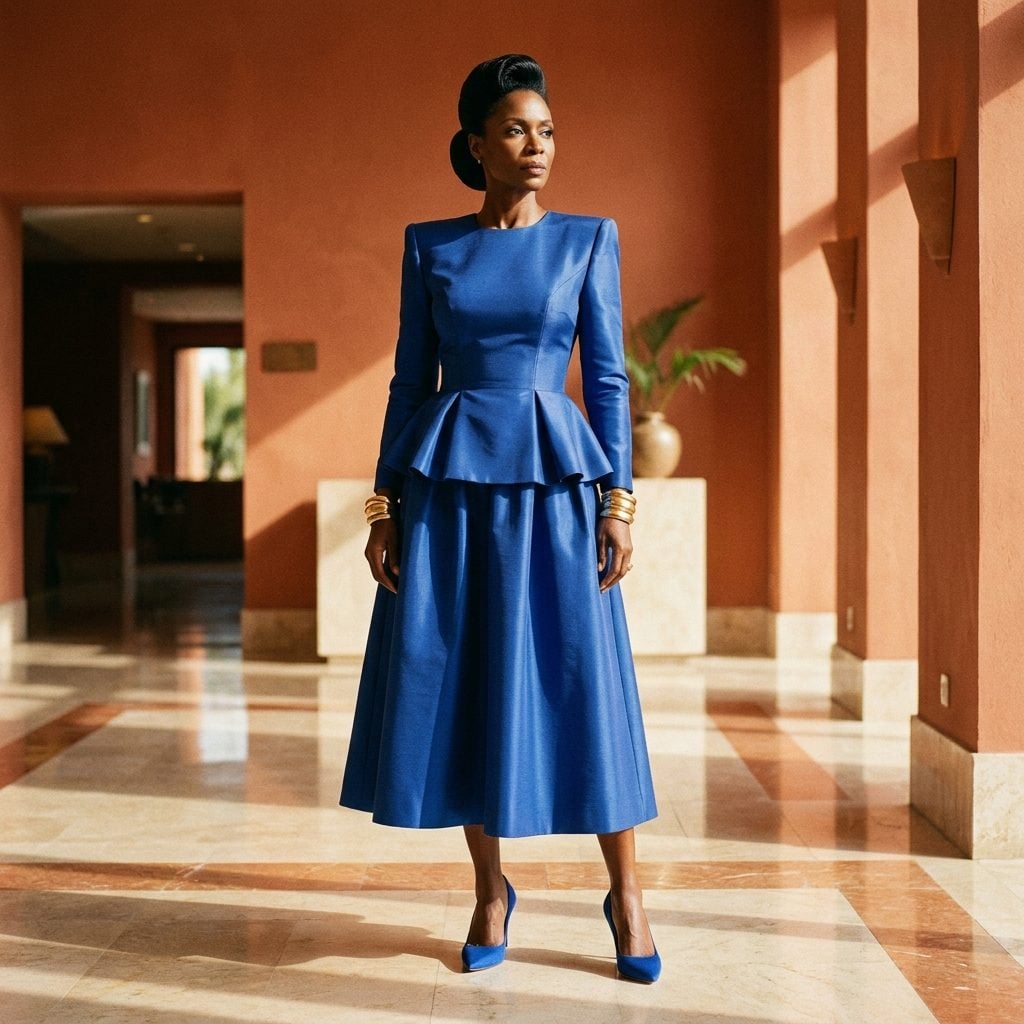
Logic says: if you already have a full midi skirt, you don’t also need a peplum flaring out at the waist above it. The 1980s heard this and replied, “Yes, actually, you do.” The peplum added a second layer of structure right at the hip, a little ruffle or flare that sat between the fitted bodice and the skirt below, so the entire dress had three distinct silhouette moments happening at once.
It was a lot. It was glorious. It was the decade refusing to do anything quietly.
26. Matching Fabric Belts With Oversized Buckles (That Never Stayed Put)
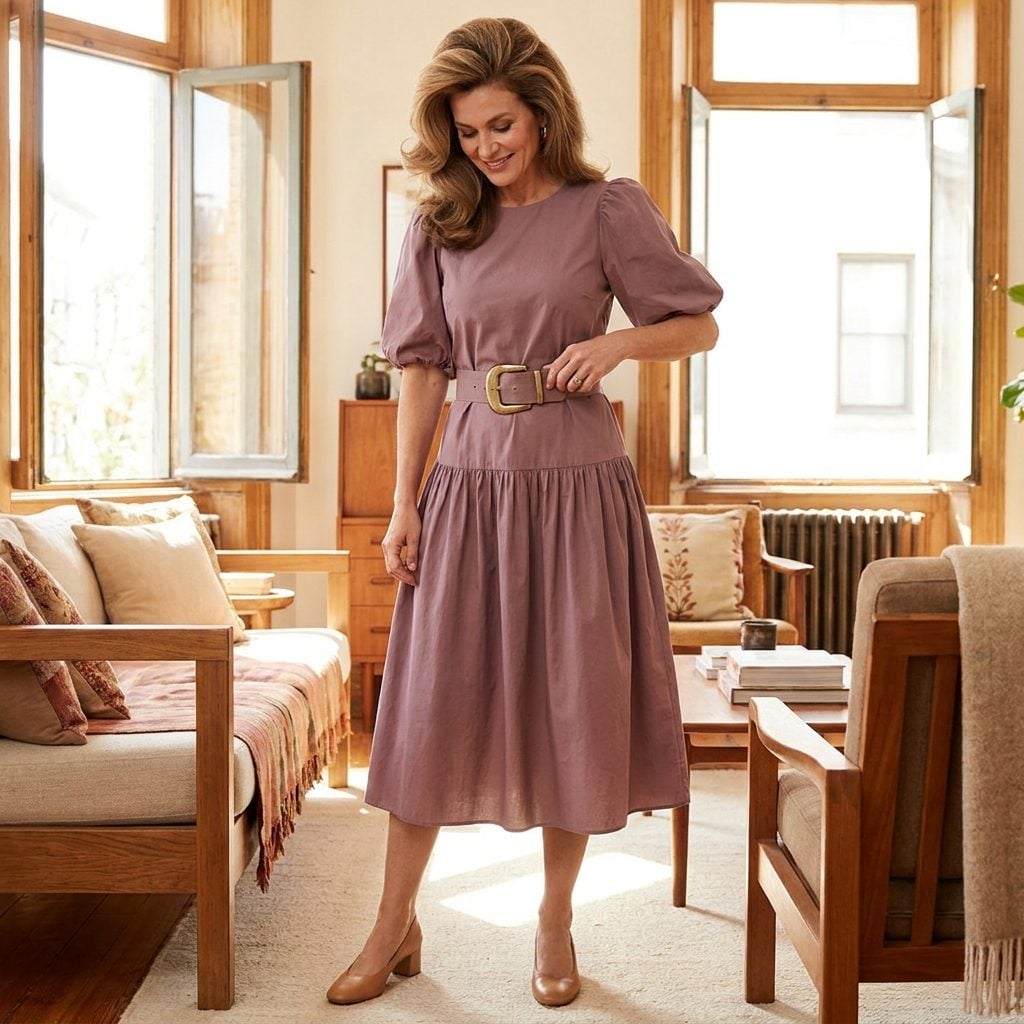
Every midi dress came with one. It was included in the bag, coiled like a thin licorice rope, usually in the exact same fabric as the dress with a rectangular gold-tone buckle the size of a playing card. The idea was effortless coordination. The reality was a belt that twisted every time you sat down, a buckle that migrated toward your left side no matter how carefully you centered it, and a fabric loop that worked loose by lunchtime.
You wore it anyway because the dress looked unfinished without it. This is what we called “a complete outfit.”
25. Dolman and Batwing Sleeves: The Wingspan of a Confident Woman
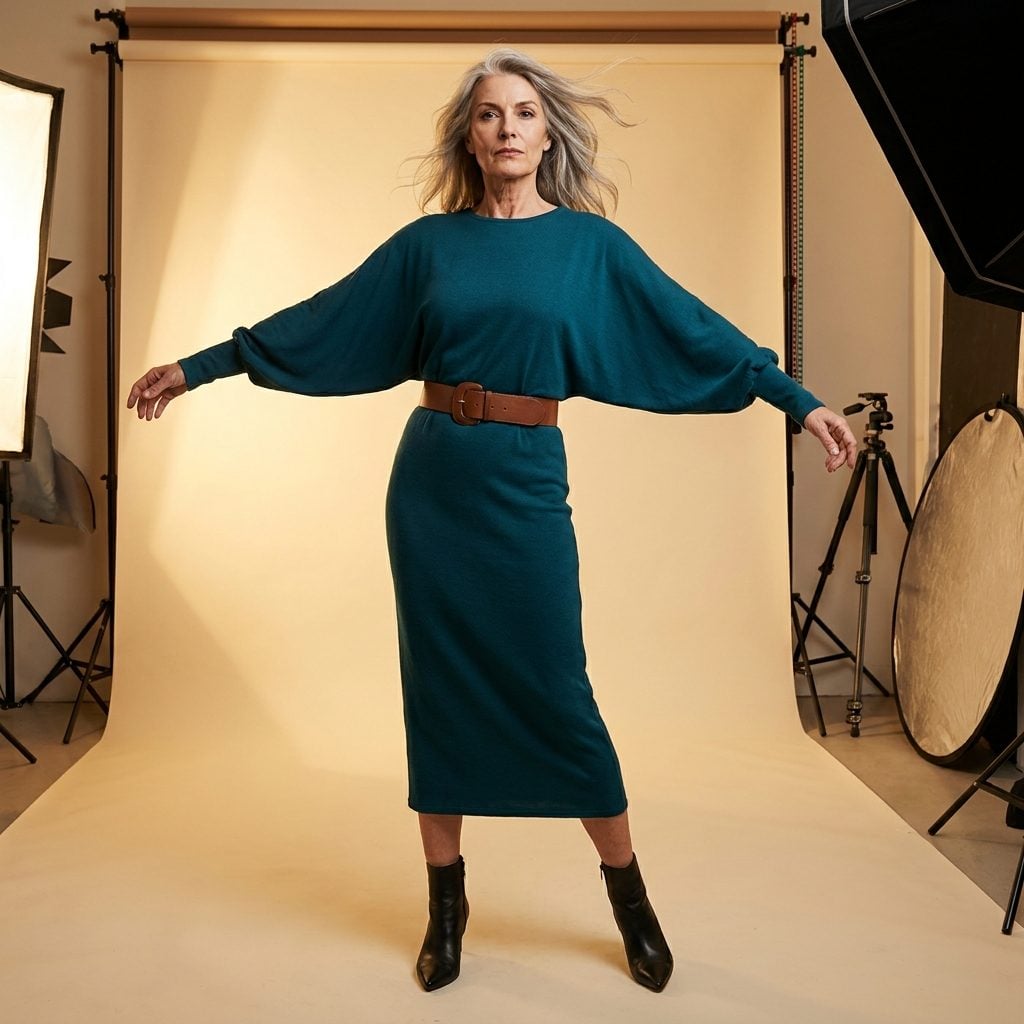
Raise your arms in a dolman-sleeve midi and you became something between a hawk and a very stylish cape. The sleeve cut directly from the bodice with no set-in armhole, just one continuous drape of fabric from neck to wrist, widest at the underarm where it pooled into a dramatic wing. You had unrestricted shoulder movement. You had no shoulder seam to worry about. What you did not have was the ability to reach for anything on a high shelf without revealing your entire torso.
The batwing was the bolder cousin, even more exaggerated, even more wingspan, the kind of sleeve that made your shadow look like you were about to deliver a speech from a great height. Both versions appeared on knitwear, on jersey, on woven fabric midis. They were a decade’s worth of confidence expressed in a single draped seam.
24. Opaque Colored Tights in Wine, Navy, and Forest Green, The Only Acceptable Leg

Bare legs under a midi were practically a social infraction. You wore dress with tights, full stop. And not just any tights, deeply saturated, nearly-matte opaque ones in colors that matched nothing else you owned but somehow matched everything. Wine with florals. Forest green with plaids. Navy with literally any occasion. The opaque colored tights weren’t an accessory, they were the outfit’s foundation.
Department stores devoted entire wall sections to L’eggs and No Nonsense display racks, and you’d stand there for a genuinely long time deciding between “Merlot” and “Burgundy” as though they were different. They were not different. You bought both.
23. Slouchy Scrunched Socks Over Tights, Because Why Choose Just One
❤️ Would you like to save this?
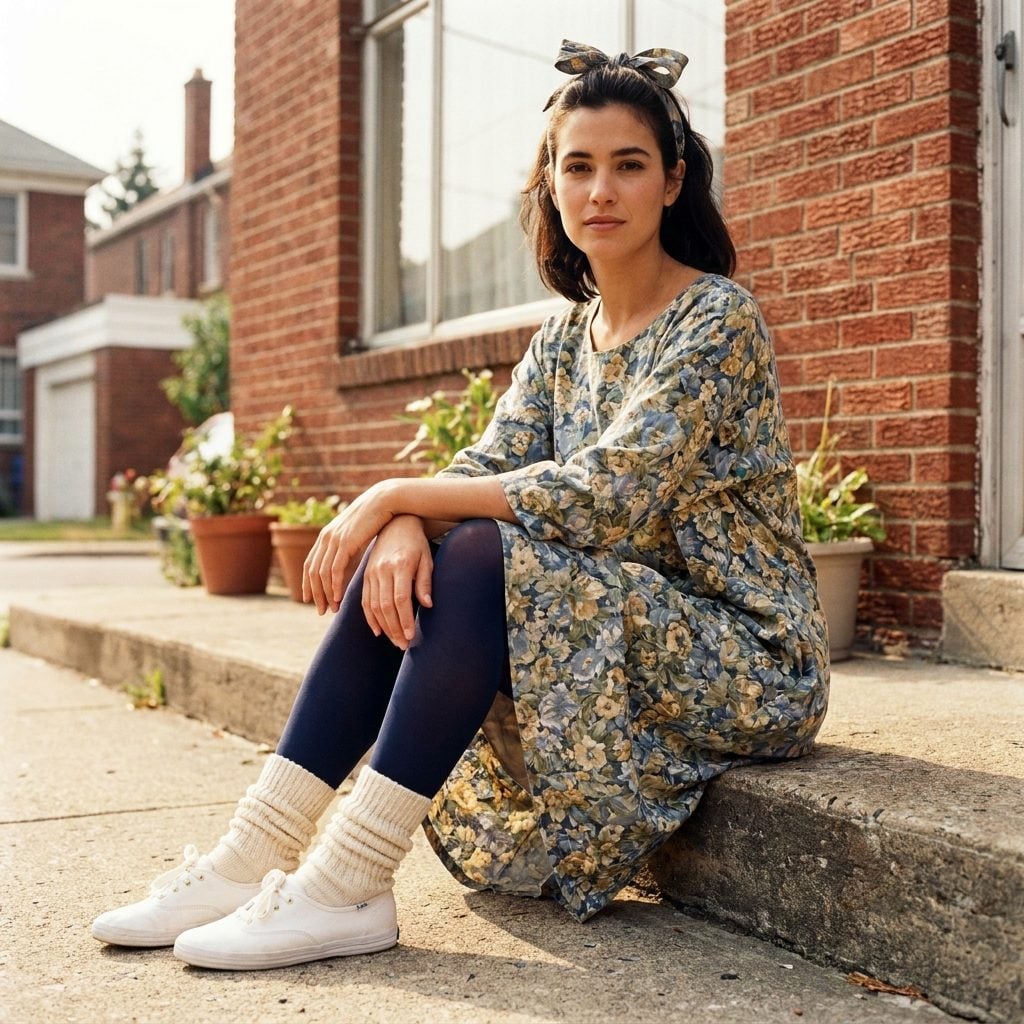
This was peak 80s styling logic: put socks on top of your tights. Not thin ankle socks, thick, slouchy, deliberately scrunched-down socks, usually in cream or pastel, bunched over dark opaque hosiery right above your sneaker or flat. It should have looked chaotic. And it did. We did it anyway.
The technique came straight out of the dance-class-to-street-style pipeline, somewhere between Flashdance and your school’s most stylish seventh grader. The combination of texture and layering felt intentional, even artistic. Ask a woman under 30 to explain it today and watch the confusion unfold in real time.
22. White Keds With Floral Midis, Zero Irony Required
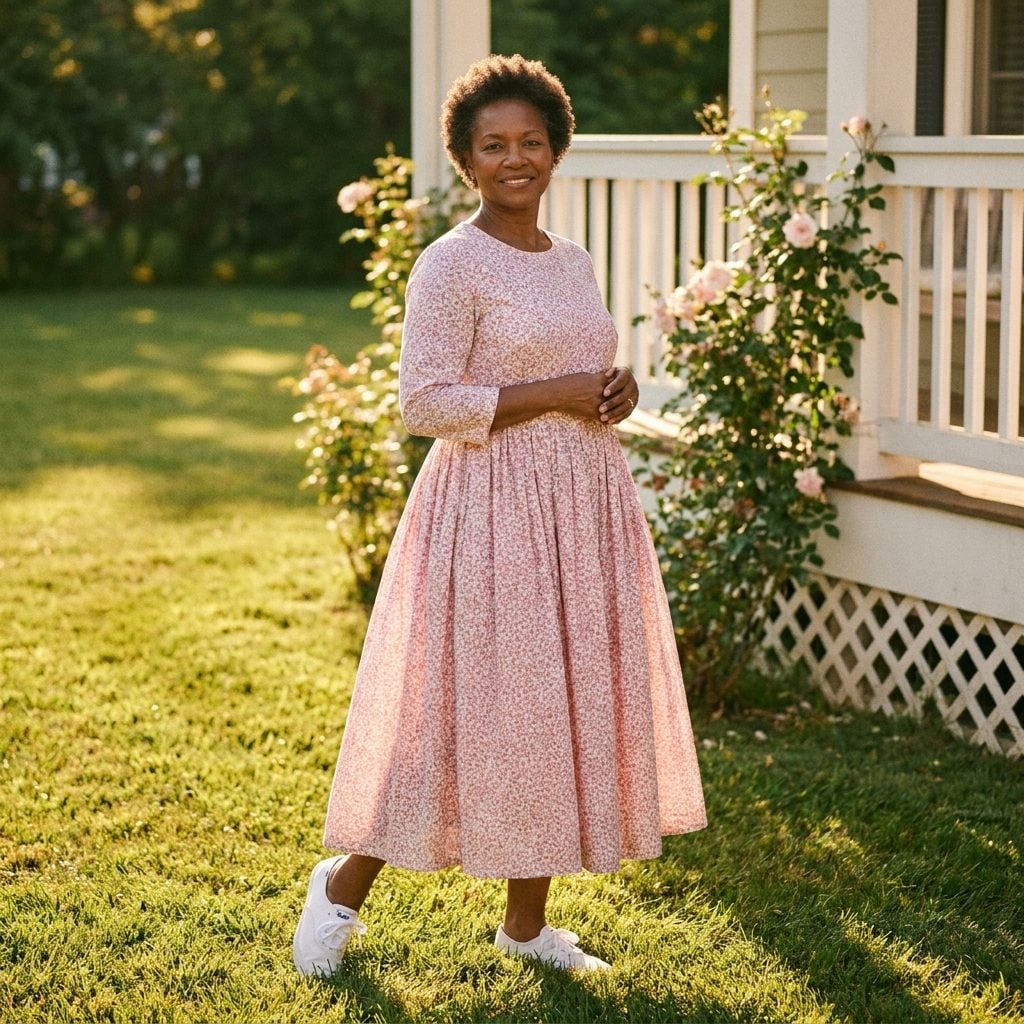
Before “sneakers with a dress” became a whole fashion moment, we were already doing it, and we were extremely sincere about it. White canvas Keds, laced tight, worn with the most floral, most feminine midi-dress you owned. No quotation marks around the choice. No styling wink to the camera. Just a dress and some Keds, because that was the outfit.
The combination lived at the intersection of prairie wholesomeness and gym-class practicality, and it felt completely correct at the time. White canvas sneakers and a midi were, essentially, the 1980s version of “I got dressed.” The flatness of the sole and the sweetness of the print cancelled each other out into something that somehow worked.
21. Cowboy Boots Under the Hem, Courtesy of the Southwestern Trend Wave
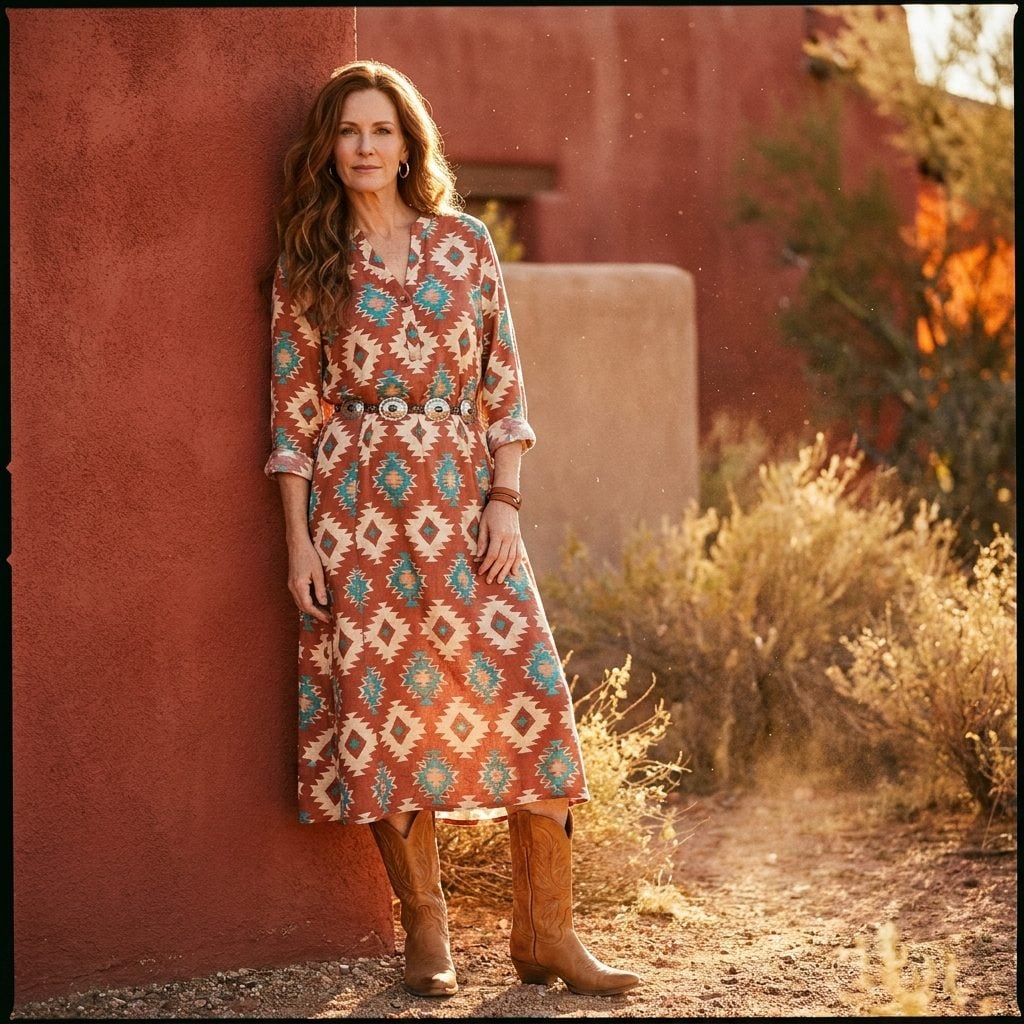
Around 1983 to 1987, the American Southwest consumed fashion whole. Suddenly every mall store had turquoise, tooled leather, and concho belt details, and midi-dresses were not immune. The specific image: a floral or geometric-print dress with a full skirt, and just the pointed toe and shaft of a western cowboy boot peeking out below the hem as you walked.
It read as genuinely cool. The boots gave the whole look a toughness the soft dress needed. Santa Fe boutiques and mainstream stores like County Seat and Miller’s Outpost sold into this combination hard, and their customers obliged completely.
20. Crinolines and Petticoats Underneath, Skirt Volume Was a Human Right
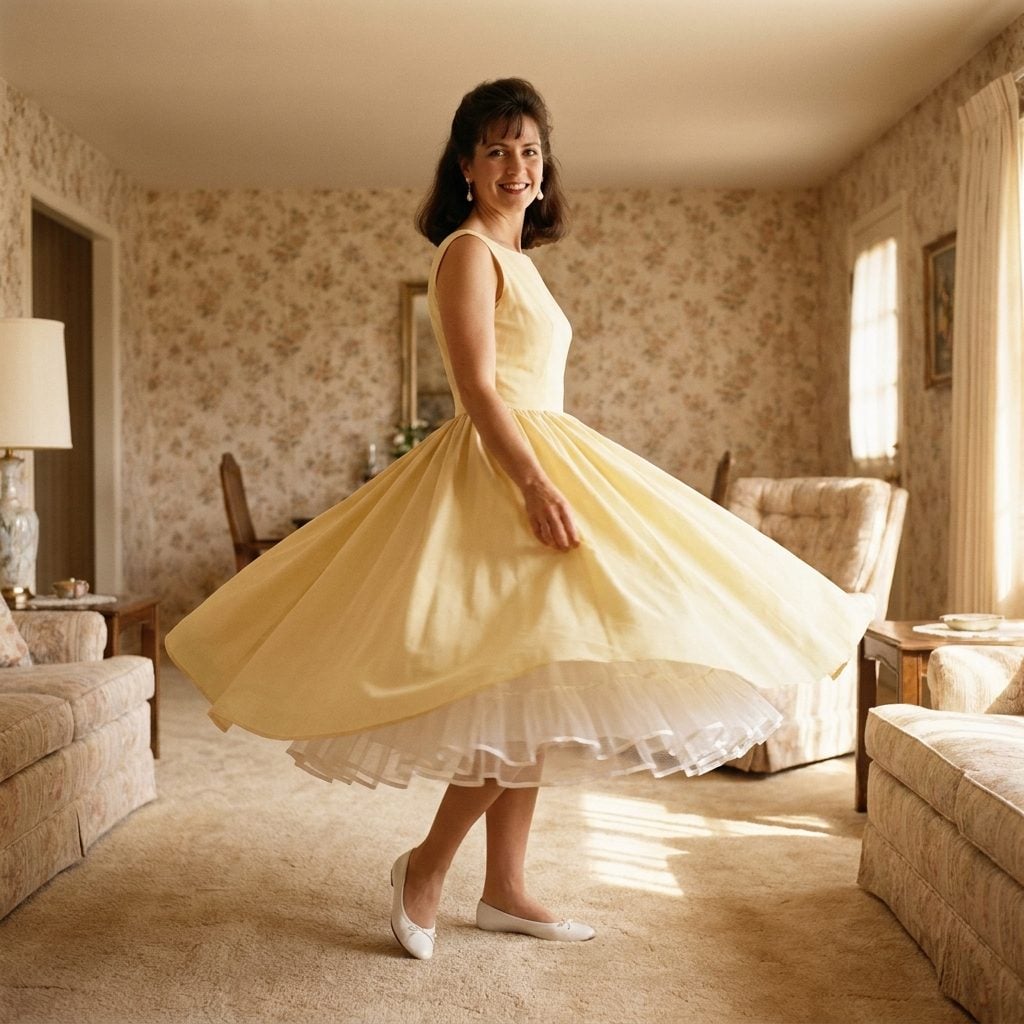
The 80s dress silhouette was not content to hang gently. It needed to project. So underneath every full-skirted midi lived a crinoline or petticoat, stiff net or taffeta layers that pushed the skirt out into a shape that read more “county fair” than “commute” but we didn’t care even slightly.
Getting dressed involved a very specific rustle. The underskirts were often scratchy. They made sitting in a car a minor geometric puzzle. None of this deterred anyone. You could hear a woman in full crinoline walking down a hallway from two classrooms away, and the sound was excellent.
19. The Matching Fabric Hair Bow That Came Shrink-Wrapped With the Dress
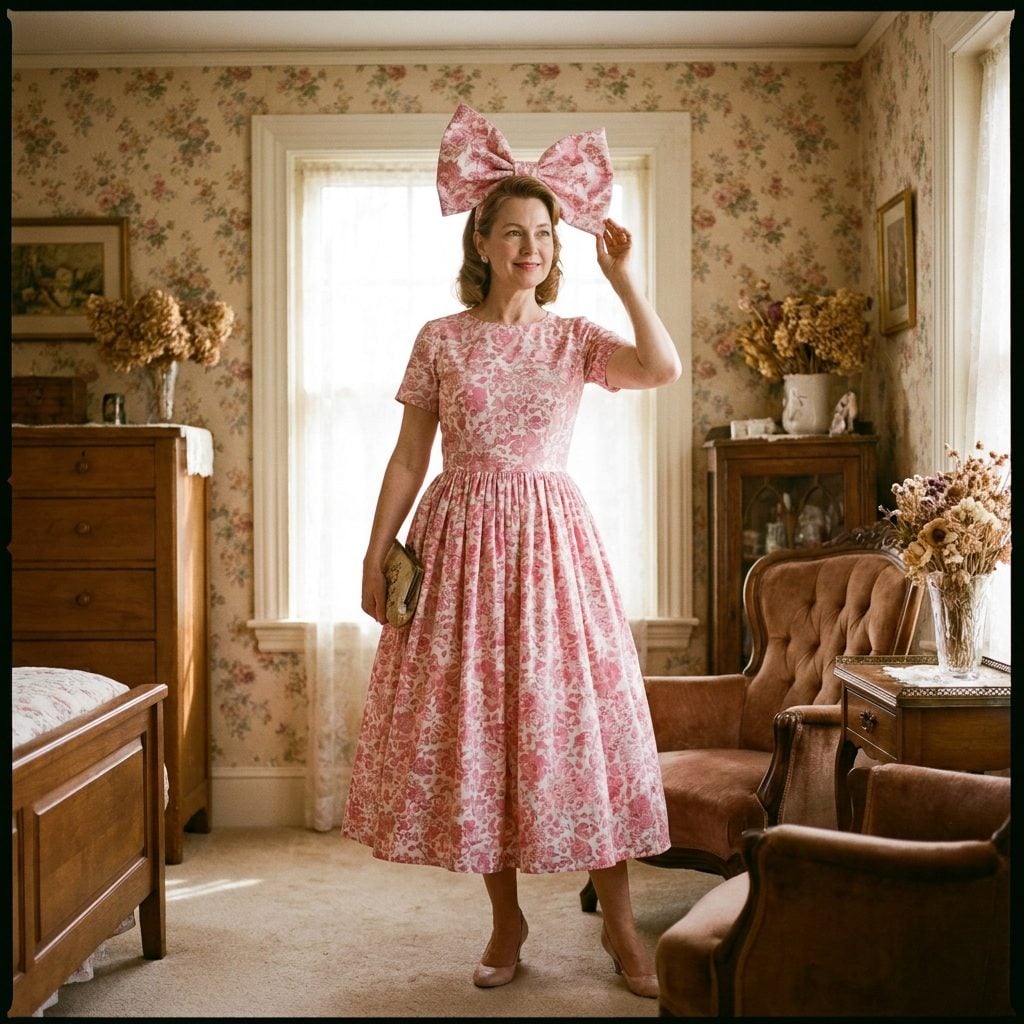
You opened the bag, shook out the dress, and there it was at the bottom: a fabric hair bow or headband made from the exact same floral cotton as the dress itself. Retailers sold this as a complete set and we treated it as a complete outfit solution. Matching your hair accessory to your dress fabric was not considered over-coordinated, it was considered finished.
The bows were oversized and stiff-armed, the kind that stood upright rather than drooped. Attached to a covered elastic headband or a small alligator clip, they sat on the top or side of your head like a declaration. Delia’s and units of every department store carried them. You wore yours until the elastic snapped or the fabric frayed, and sometimes even after.
18. All Those Covered Buttons Down the Front, Every Single One of Them Functional
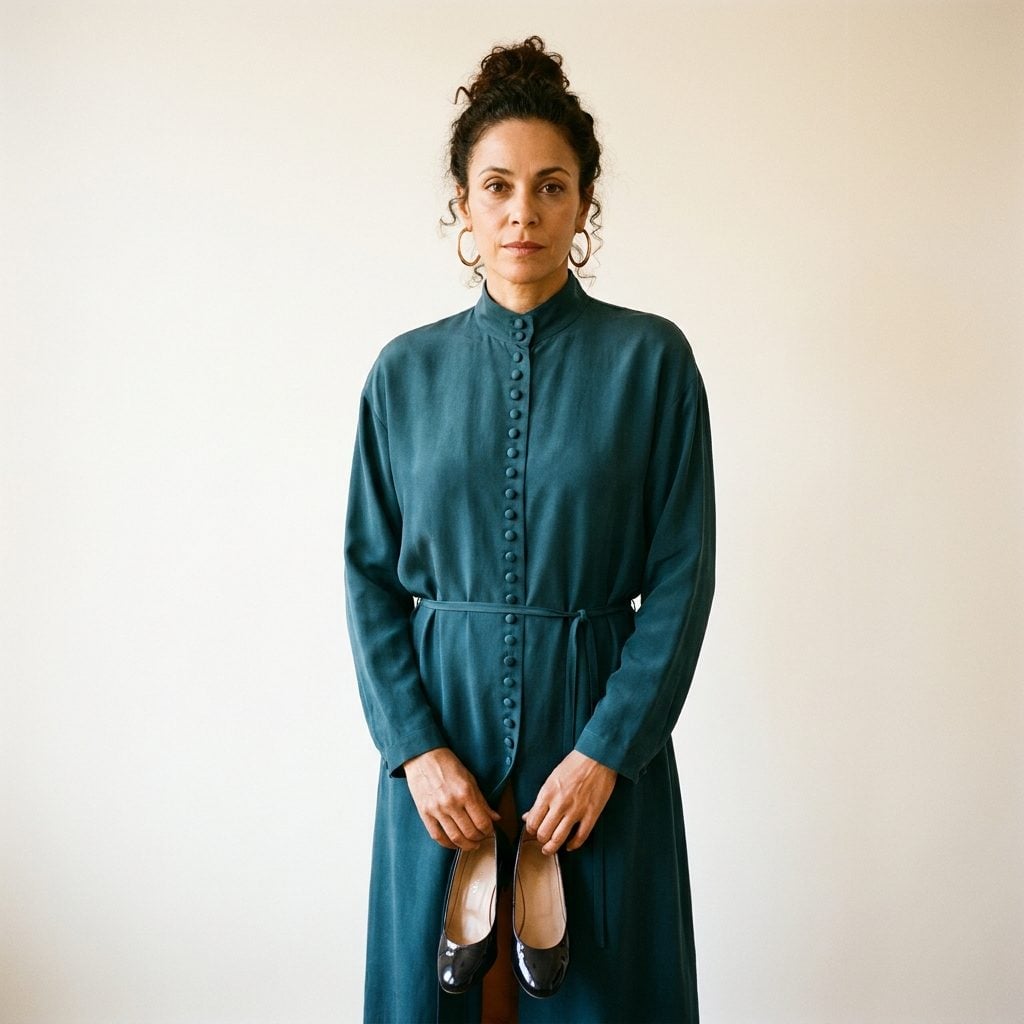
There were so many buttons. Not decorative buttons sewn on as a suggestion. Fully functional, individually fabric-covered buttons running from the collarbone to the hem, each one requiring a corresponding loop, each loop requiring patience you absolutely did not have on a Tuesday morning. A front-button dress in 1985 could have upward of twenty buttons, and the getting-dressed ritual reflected this.
The buttons were always covered in the same fabric as the dress, which made them look polished and expensive. They also had a specific aesthetic purpose: they implied the dress could be unbuttoned to the midi thigh on a whim, which was a fantasy nobody really acted on. You fastened all twenty, you went to work, you spent a moment each time regretting your choices.
17. Smocked Bodices on Adult Dresses, Not Just for Toddlers, Apparently
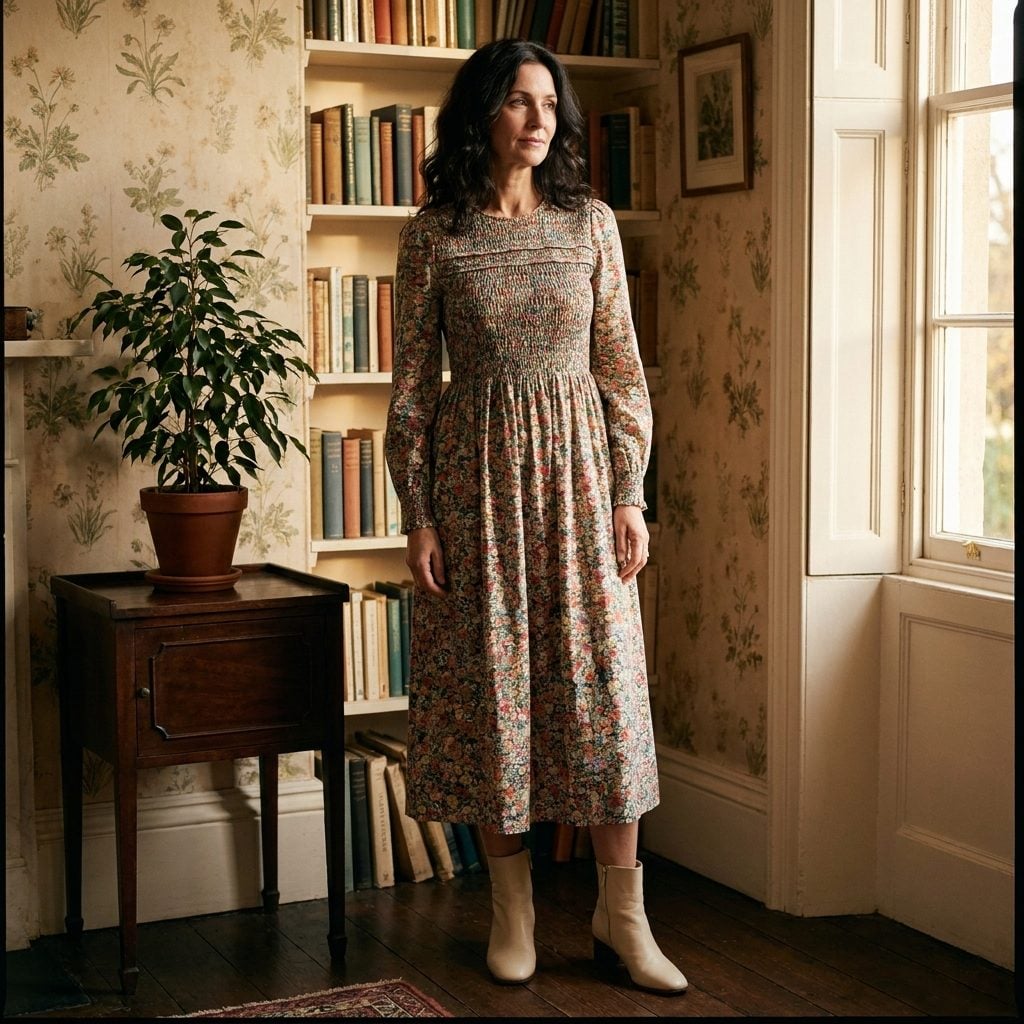
Smocking, that honeycomb-gathered embroidery technique your grandmother stitched onto children’s pinafores, showed up on grown-woman dresses throughout the 80s and nobody questioned the origins. The dress would hit the chest and upper bodice with dense, elasticated smocking in matching thread, which both fit the body and created texture that read as artisanal rather than juvenile.
Country Road, Laura Ashley, and domestic catalog brands like Chadwick’s leaned into this heavily. A smocked-bodice midi in a Liberty-style floral print was basically the uniform of a certain kind of 80s woman, the kind who listened to Sade and had a ficus in her living room. The smocking did stretch over time, gradually losing its gather until the bodice looked vaguely tired, but you kept wearing it anyway.
16. The Pinafore Overdress Layered on Top of Another Midi, Layers All the Way Down
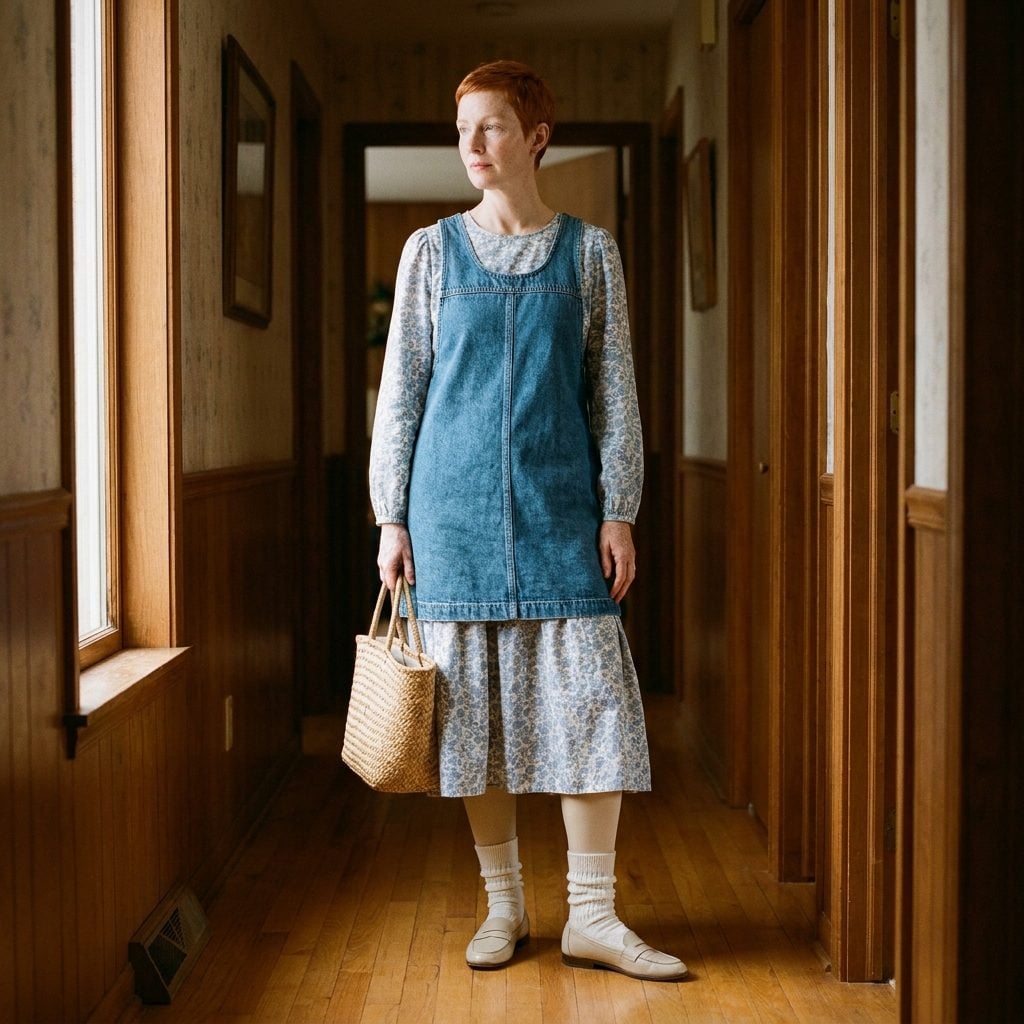
Layering a dress over another dress required a specific kind of commitment that, in retrospect, we should all be recognized for. The pinafore-style overdress, sleeveless, slightly apron-like, sometimes with a bib front, went on top of a long-sleeve midi, adding a second hemline, a second waistline, and a complexity of silhouette that took genuine effort to wear but looked, genuinely, correct.
This was a distinct 80s habit: the idea that more layers equaled more style. Overdresses in denim, corduroy, or contrasting floral appeared at Express, The Limited, and Esprit. The layered look created unexpected proportions and interesting hem interplay.
15. Rayon Challis: The Fabric That Wrinkled the Moment You Sat Down
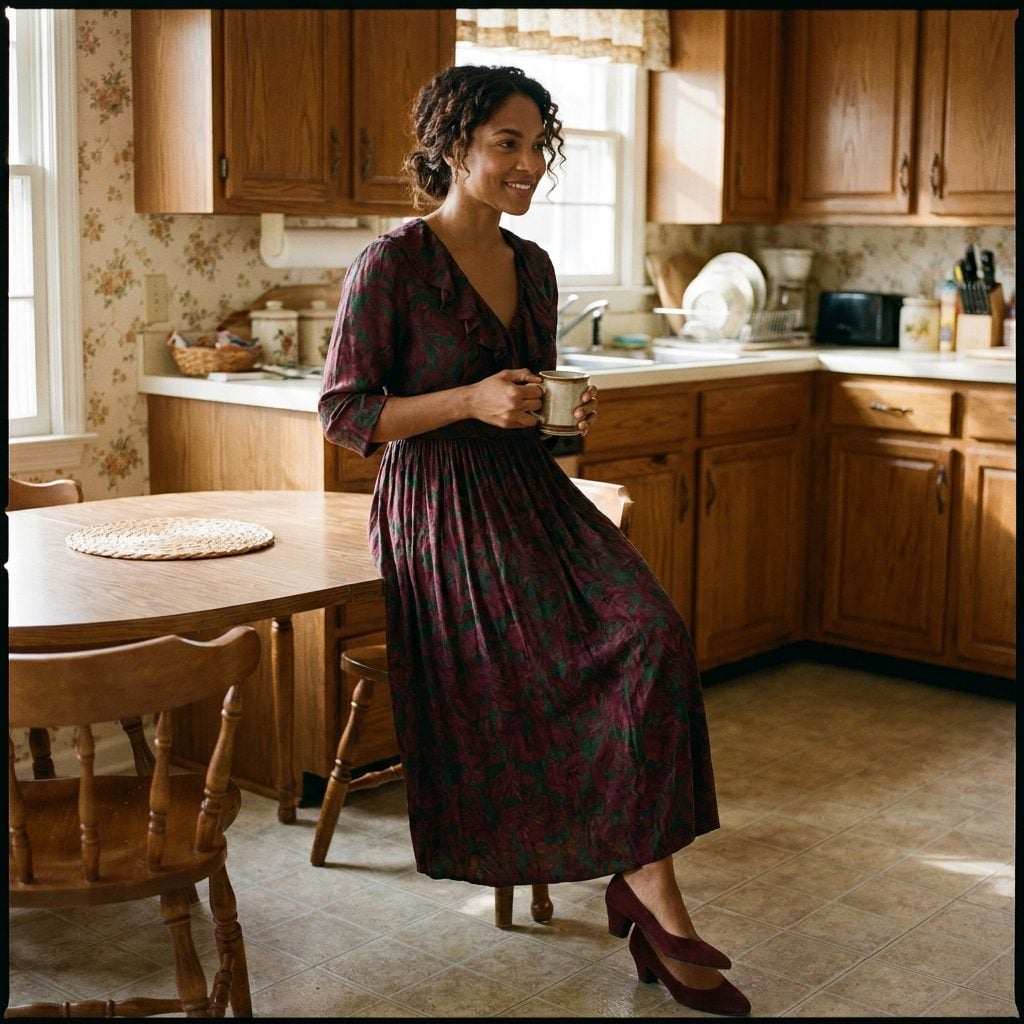
Rayon challis was the defining fabric of the 80s midi. It was soft, it draped beautifully, it photographed well, it cost relatively little, and it wrinkled with absolute determination. The moment you sat in your car, a full topographic map appeared across your lap that no amount of smoothing would fully resolve.
The prints were the thing. Rayon challis came in the kind of dense, saturated floral and paisley prints that cotton couldn’t achieve at the same weight, swirling botanical patterns in burgundy and hunter green, abstract paisleys in rust and cream. You’d find bolts of it at JoAnn Fabrics and finished dresses at T.J. Maxx and catalog brands. Women who sewed made entire wardrobes out of it. The wrinkles were simply accepted as a condition of participation.
14. The Tea-Length Formal Midi That Wasn’t Quite Casual, Wasn’t Quite Occasion Wear
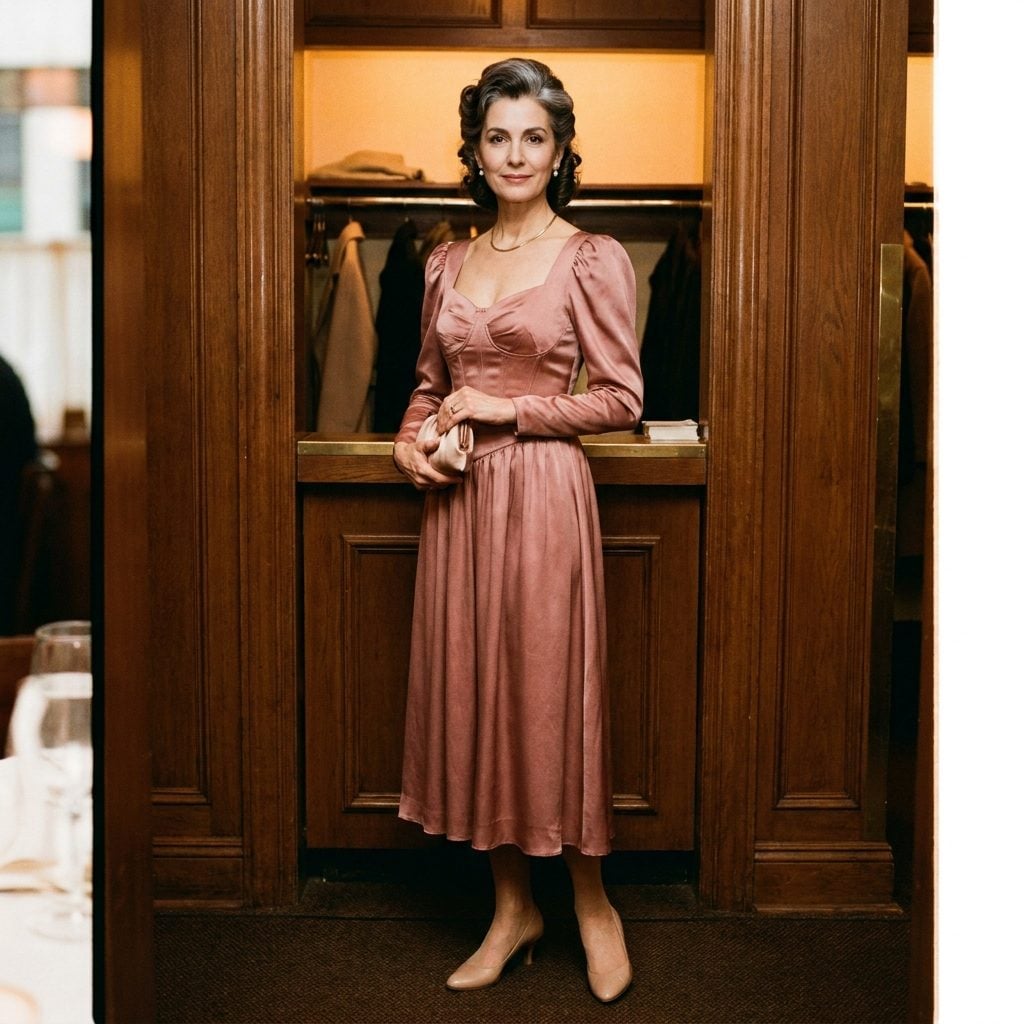
Somewhere between a dress you’d wear to a cousin’s wedding and something you could technically justify at a nice dinner, the tea-length formal midi occupied a category the 80s invented and the 90s killed. Falling to mid-calf in taffeta, silk charmeuse, or heavy crepe, it was too formal for the office and too structural for anything you’d call a party, but it was perfect for every ambiguous event of the decade.
Confirmation ceremonies. Easter Sunday. A work dinner at a restaurant with real tablecloths. A first date you wanted to look serious about. The tea-length formal midi handled all of it with a certain composed authority. You wore your best pearl drop earrings with it. You carried a clutch. You felt, briefly, exactly like a woman who had everything together.
13. Double-Belting: Adding a Wide Elastic Belt Over the One Already Built Into the Dress
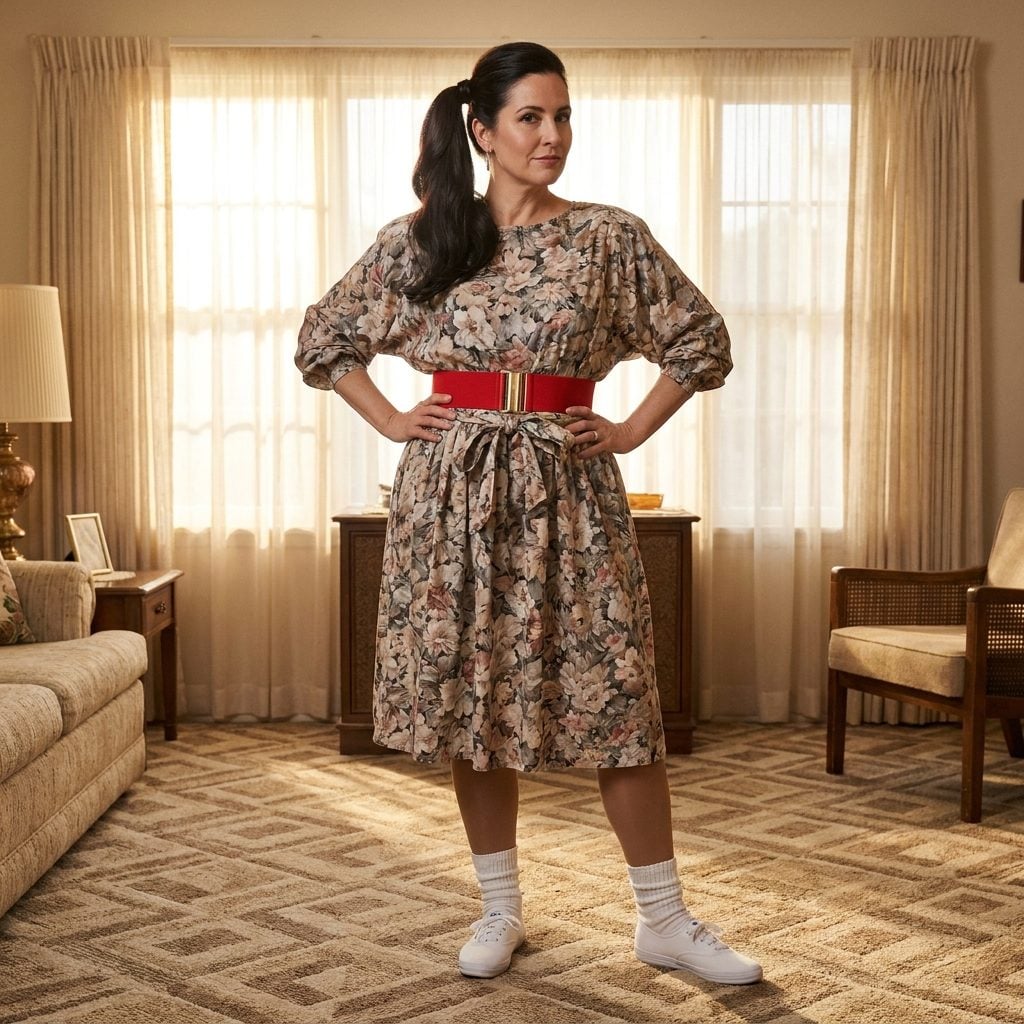
The built-in sash wasn’t enough. The fabric belt wasn’t doing enough work. So you reached into the accessories drawer and pulled out a wide elastic cinch belt, usually in a contrasting color, usually with a large round or square buckle, and you put it directly on top of the belt that was already part of the dress. Two belts. Simultaneously. This was considered a styling move, not a mistake.
The wide elastic cinch belt over a dressed-in sash created a defined waist within a waist, a layered waistband that read, in the visual grammar of 1986, as purposeful. Bright red belt over a navy dress. White vinyl belt over a floral midi. Braided leather over a smocked bodice. Every combination felt like a decision, not an accident, which was really the whole spirit of 80s dressing compressed into a single extra accessory.
12. The Crossbody Bag Strap That Sliced Your Outfit in Half
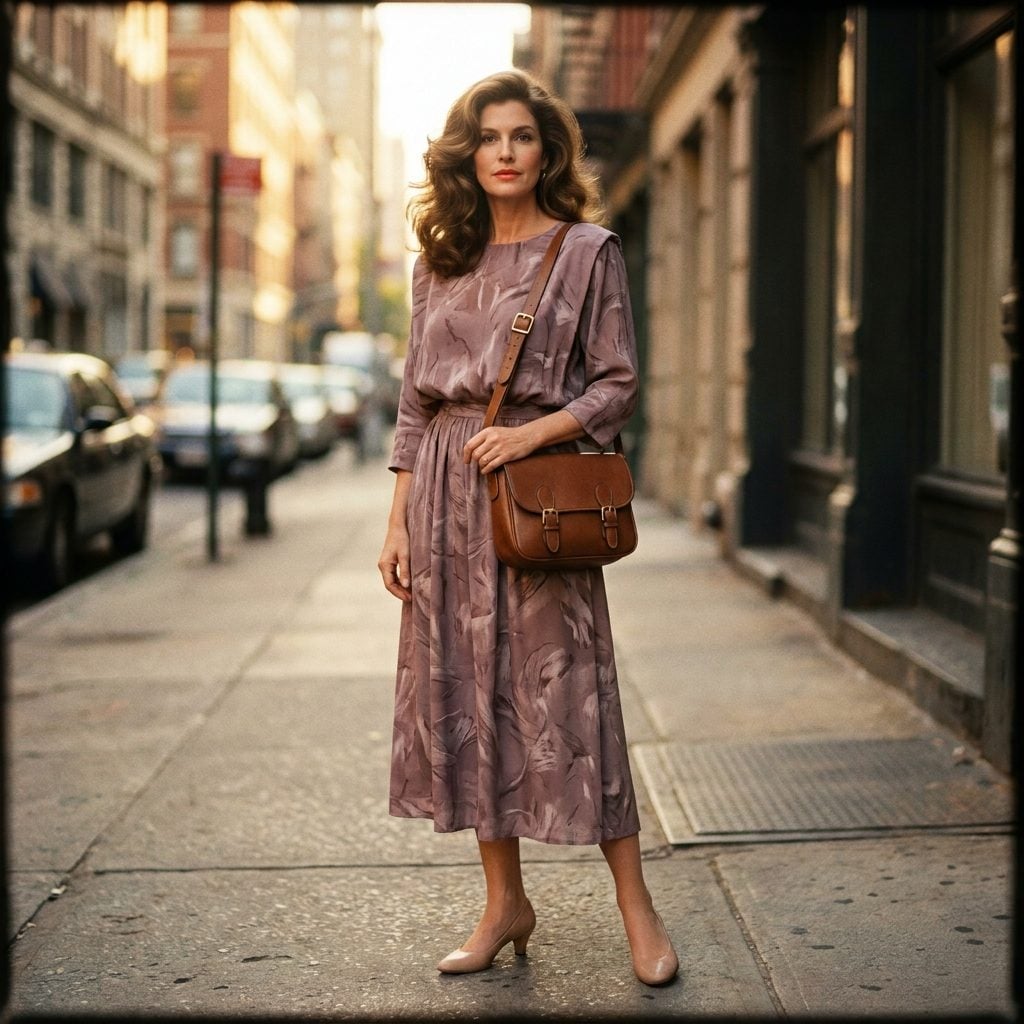
You spent twenty minutes getting the perfect midi dress on, then threw a crossbody bag diagonally across your entire body like a seatbelt. Nobody questioned it. The long strap cut straight across the chest, bisected the waist, and landed somewhere near the hip, chopping every careful vertical line the dress was trying to create. We were essentially walking geometry problems.
The bag itself was usually structured leather or vinyl, with a brass buckle the size of a small appliance. The longer the strap, the better. Fashion math in 1985 was simply different.
11. Elasticized Waists That Gathered Everything Into a Fabric Situation

❤️ Would you like to save this?
The elastic waist was supposed to be the solution. Comfort! Ease! No need for a zipper! What it actually did was create a horizontal ring of gathered fabric around the midsection that puffed outward in all directions, like the dress had eaten a life preserver and was quietly digesting it.
The fabric above the waist bloused out. The fabric below the waist poofed out. The elastic itself, usually an inch and a half wide, would occasionally roll and fold during the day. By noon you were essentially wearing a scrunchie around your middle. We tucked blouses into these. We wore belts over these. We did not stop to ask why.
10. The Mid-Calf Hem: Fashion’s Most Visually Unflattering Coordinate
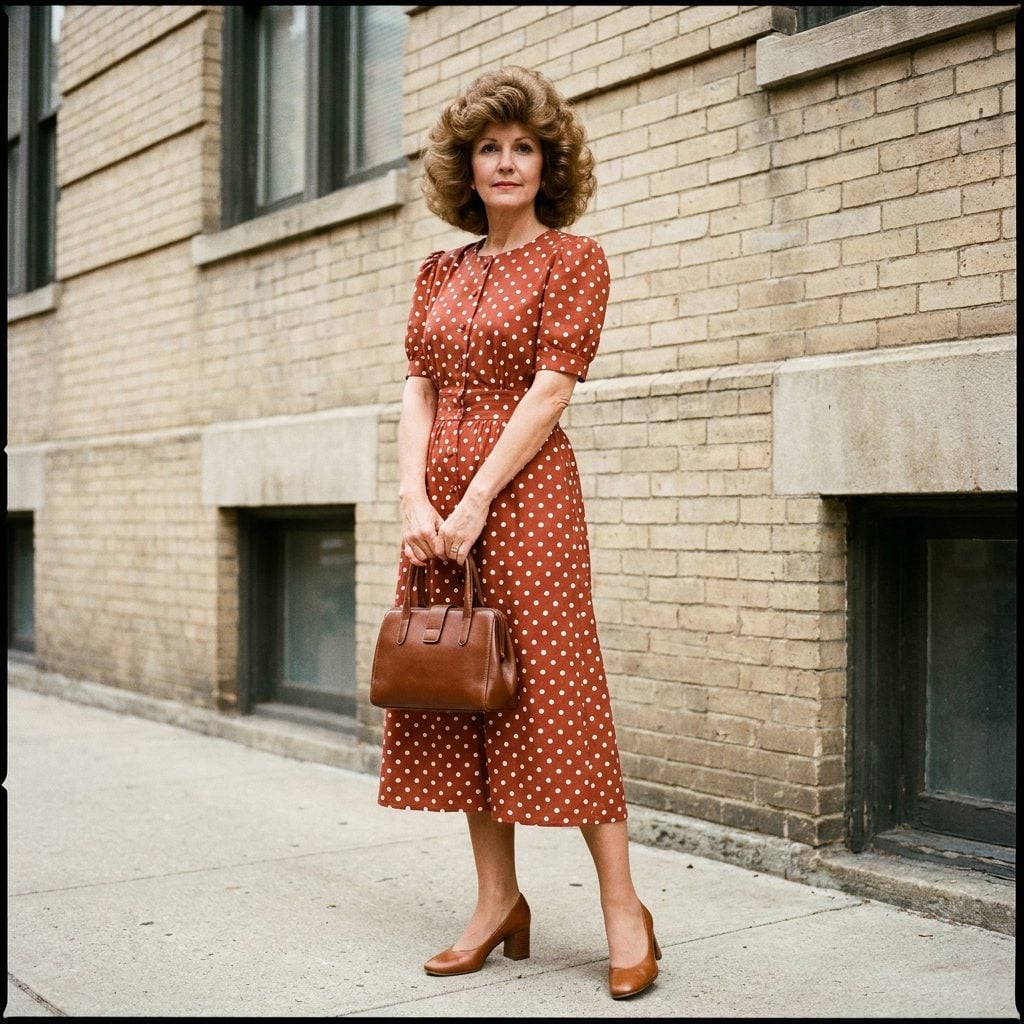
Whoever decided that stopping a hemline directly at the widest, fleshiest part of the calf was a good idea owed every woman of the 1980s a sincere apology. The midi length hit at the precise point where legs look their least like legs. Not ankle. Not knee. The exact visual midpoint guaranteed to make everyone appear three inches shorter and six inches wider at the leg.
And yet. We wore them constantly. To church. To the office. To casual Saturday errands. The mid-calf midi was as close to a uniform as civilian women got in 1985, and we committed fully.
9. The Boxy Cut That Treated the Human Body as a Mild Suggestion
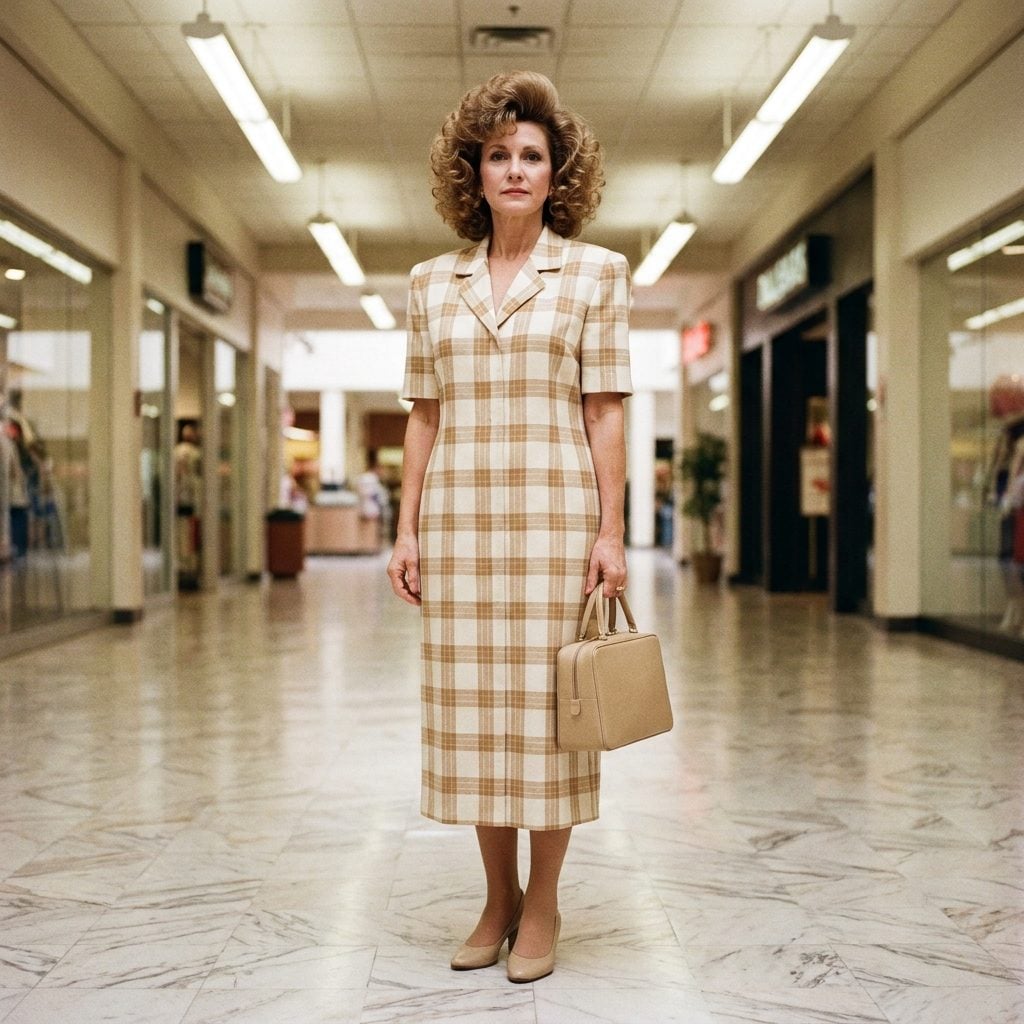
Waist? Optional. Hips? Irrelevant. Shoulders? The widest possible point, please. The 1980s boxy midi dress operated on the principle that the human silhouette was merely a starting point, not a constraint. Fabric hung in a straight line from the padded shoulders downward, ignoring the waist entirely, grazing the hips without acknowledgment, and arriving at mid-calf with zero commentary on what had happened in between.
It was, in its own peculiar way, democratic. Everyone wore a box. Size two and size fourteen looked structurally identical from ten feet away. Whether that was liberating or quietly bizarre depends on how nostalgic you’re feeling right now.
8. Prints Clashing With Prints, On Purpose, With Confidence
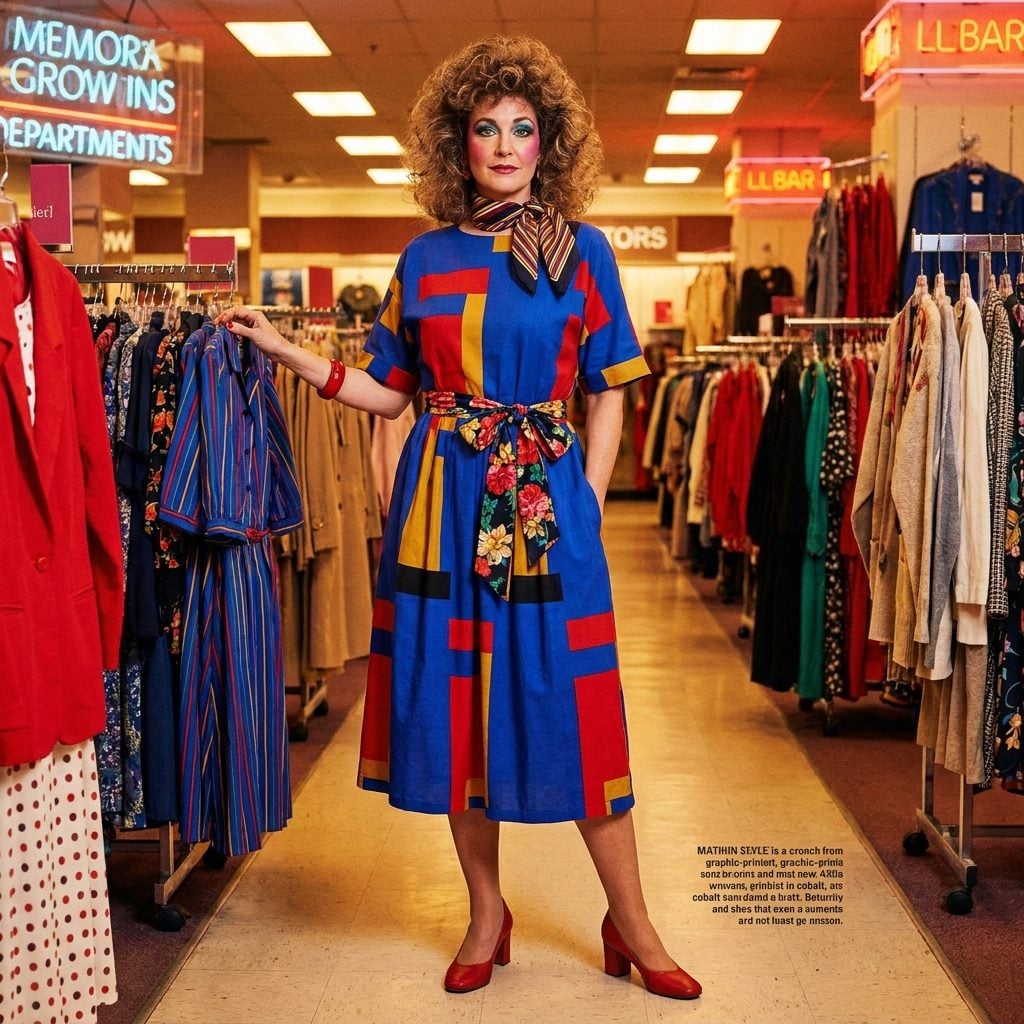
There was a period in the late 1980s when pattern mixing went so far past intentional that it circled back around to chaotic. A midi dress in a bold geometric print would be belted with a floral fabric belt. Worn over a striped blouse. Accessorized with a plaid scarf. Every element in direct visual competition with every other element.
The result was not subtle. You could locate a woman in a busy print midi dress from across a parking lot. That was possibly the point. Quiet dressing was simply not an 80s value, and we respected that about ourselves, even when the patterns were technically arguing.
7. The Buttoned-to-the-Throat Neckline You Wore Everywhere, No Exceptions
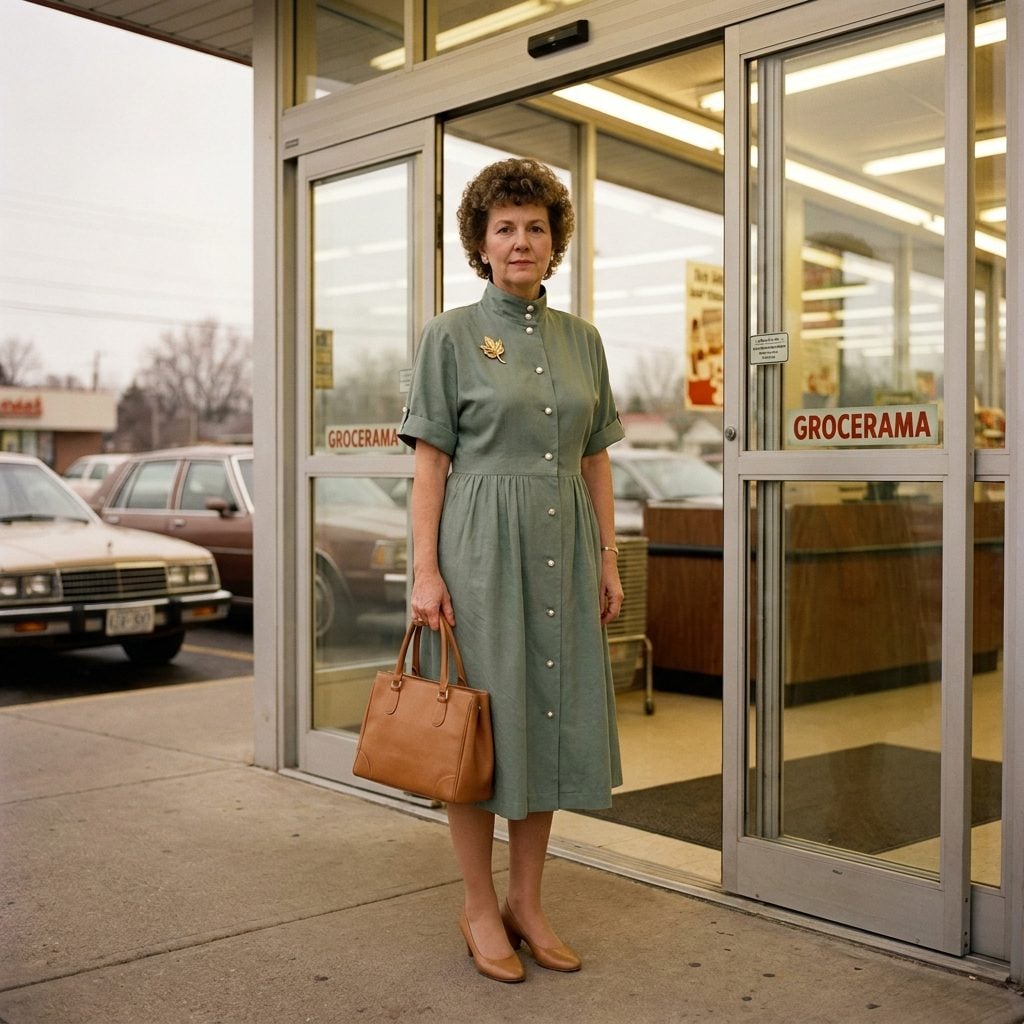
Grocery run on a Tuesday? Buttons to the chin. Summer barbecue? Buttons to the chin. The 1980s casual midi dress had no interest in showing collarbone. The neckline started high, buttoned up through a small stand collar, and closed completely at the throat. Sometimes with a brooch pinned directly over the top button, because we wanted to make absolutely certain the message was received.
These were not evening gowns. These were everyday dresses worn to the supermarket and the school pickup line. The formality of the neckline versus the casualness of the occasion was a dissonance nobody seemed to register or care about. We were simply dressed. Thoroughly, completely, all the way up to the jaw, dressed.
6. Shoulder Pads So Thick They Had Their Own Zip Code
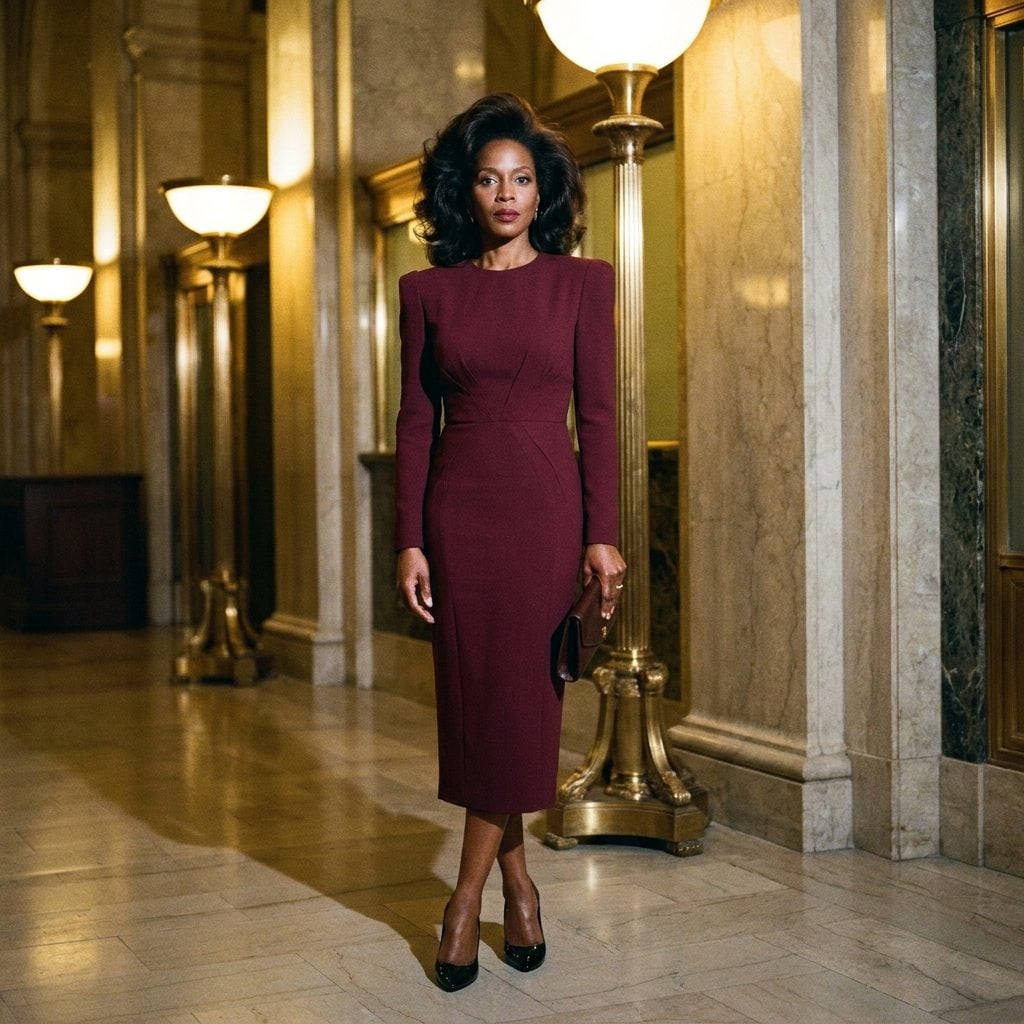
You could tell a lot about a woman’s ambition by the width of her shoulders. The midi dresses of the 1980s came pre-loaded with foam wedges that turned every silhouette into a quarterback’s dream, and we wore them without a single question. Some were sewn in permanently. Some were held in with snaps, which meant they migrated toward your armpits by noon. The lucky ones were swappable, you could pull the pads from your dress, stuff them into your blazer, and spend the entire decade at maximum width.
Power dressing wasn’t a concept. It was a physical measurement.
5. Tiered Skirts That Added Bulk in Descending Layers, Like a Textile Onion
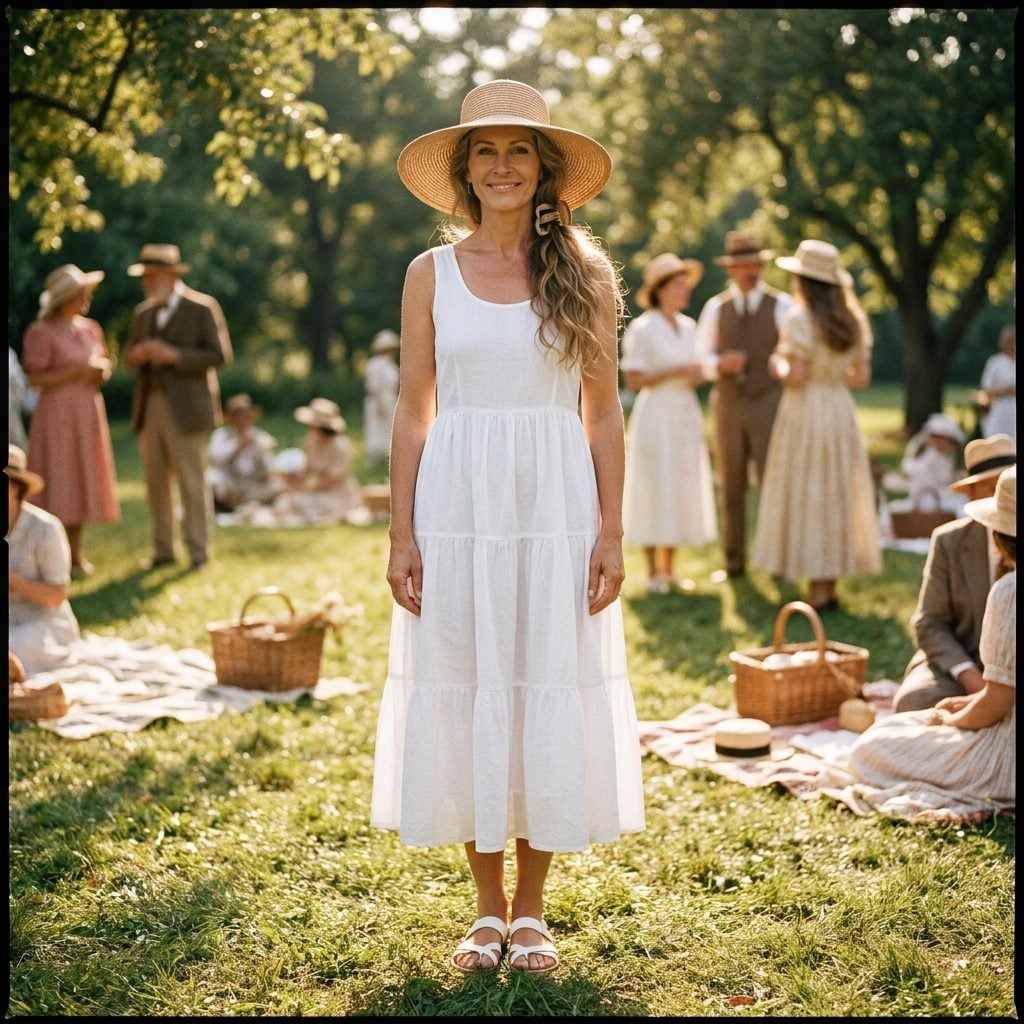
Three tiers. Sometimes four. Each one slightly longer than the last, each one adding another horizontal band of gathered fabric to the lower half of the dress. The tiered midi skirt was, in structural terms, a series of ruffles sewn directly on top of each other. In practice, it moved with all the grace and lightness of a wet sleeping bag.
The fabric used was usually cotton voile, or a cotton blend that had been pre-washed into near-transparency but somehow still managed to feel substantial when gathered three times over. We wore these to summer picnics and outdoor parties and we sat down and the tiers immediately formed their own geography. It was fine. It was all fine.
4. Pleats That Held Their Shape Long After You Left the Room
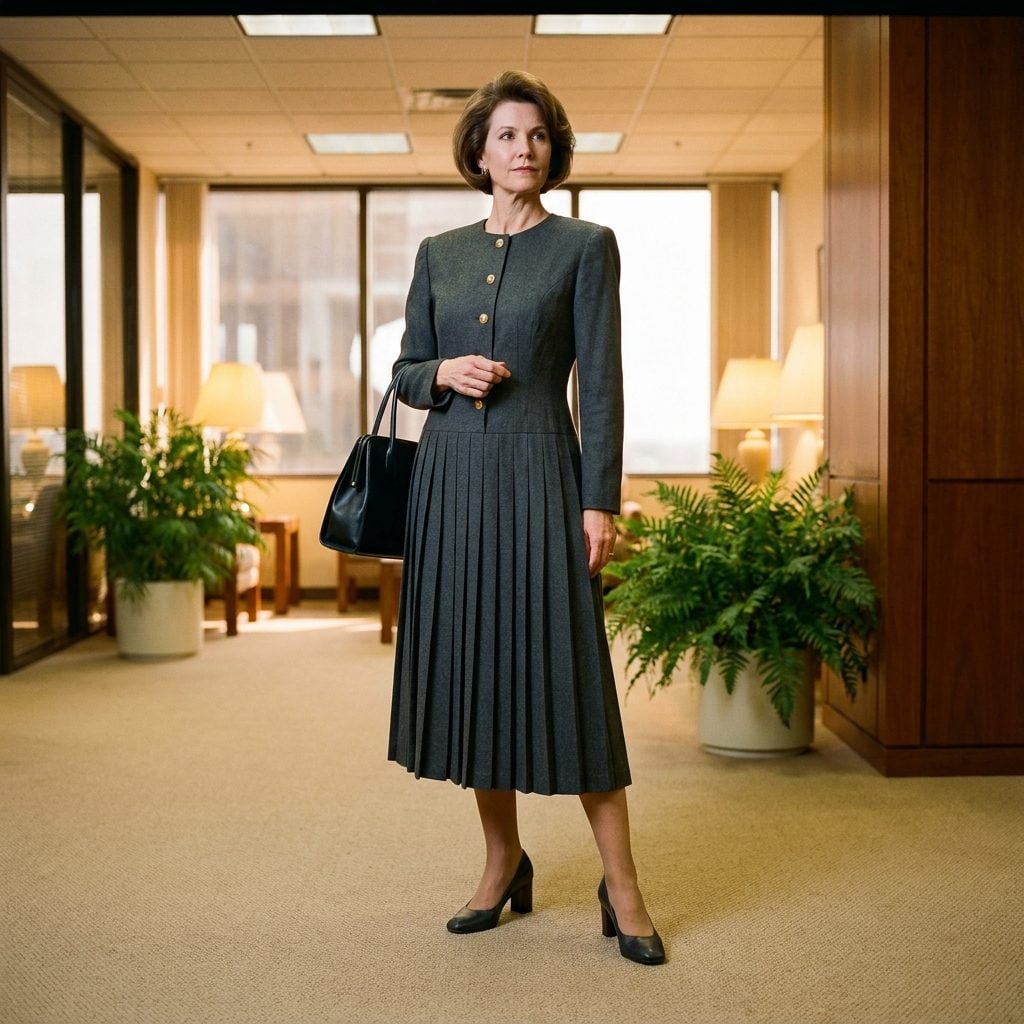
Not soft pleats. Not gentle gathers. Pressed knife pleats that had been set into the fabric with such industrial conviction that they retained their exact angle regardless of what the rest of the dress was doing. You could sit, stand, run for a bus, and those pleats would return to their original position like they had somewhere important to be.
The pleat was usually located at the skirt front, radiating outward from the waist seam in a rigid fan shape. The fabric was often a wool-polyester blend stiff enough to hold the form without any additional encouragement. Dry cleaning was not optional. These pleats had standards.
3. Large-Scale Florals That Declared War on Negative Space
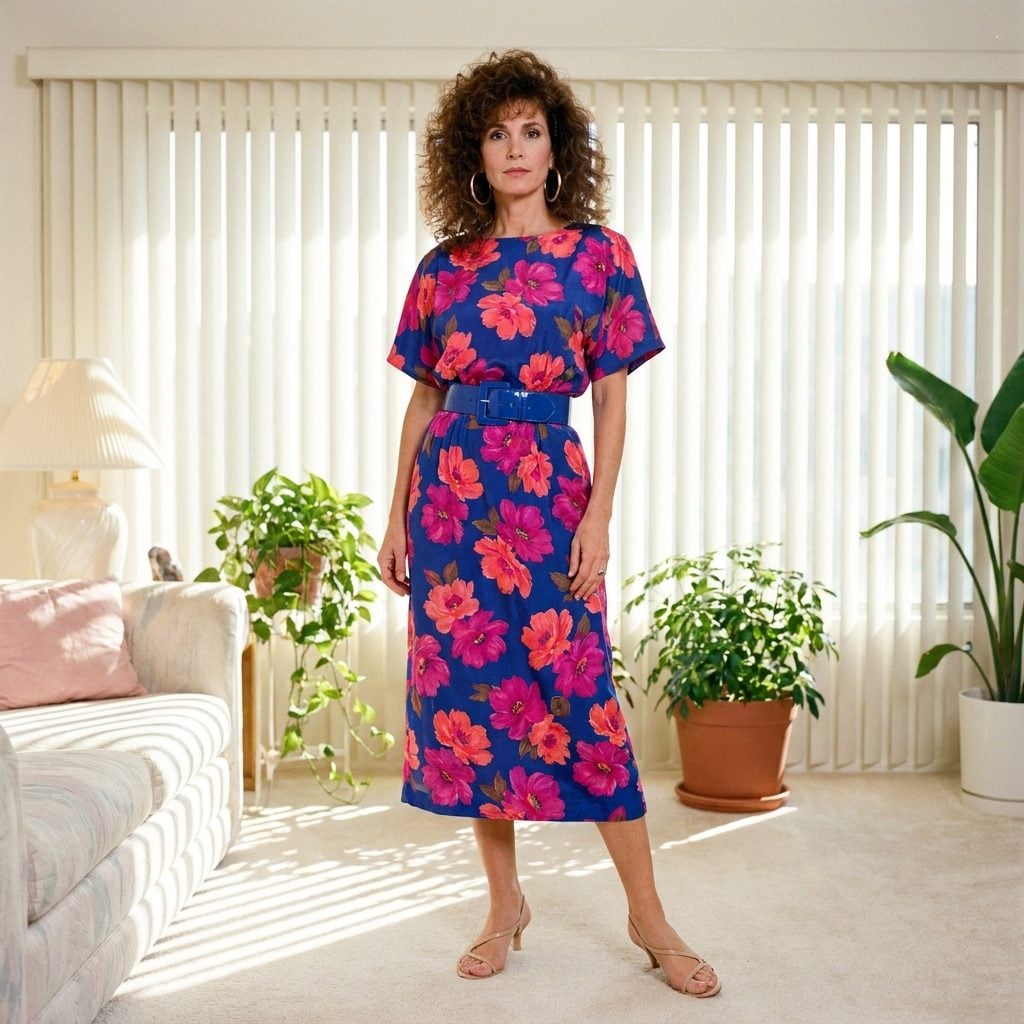
Not a small repeated pattern. Not a delicate sprig. We are talking roses the size of your fist, printed across every available inch of fabric in colors that did not occur together in nature. Fuchsia peonies on a cobalt ground. Burnt orange dahlias scattered across cream. The large-scale floral midi dress of the late 1980s believed that if you could see any fabric between the flowers, you had not printed enough flowers.
These dresses were almost impossible to accessorize, which is probably why we accessorized them enthusiastically anyway. A wide statement belt. Chunky earrings. Sometimes a second, competing print in the scarf. The dress was already a conversation. Everything else was just talking back.
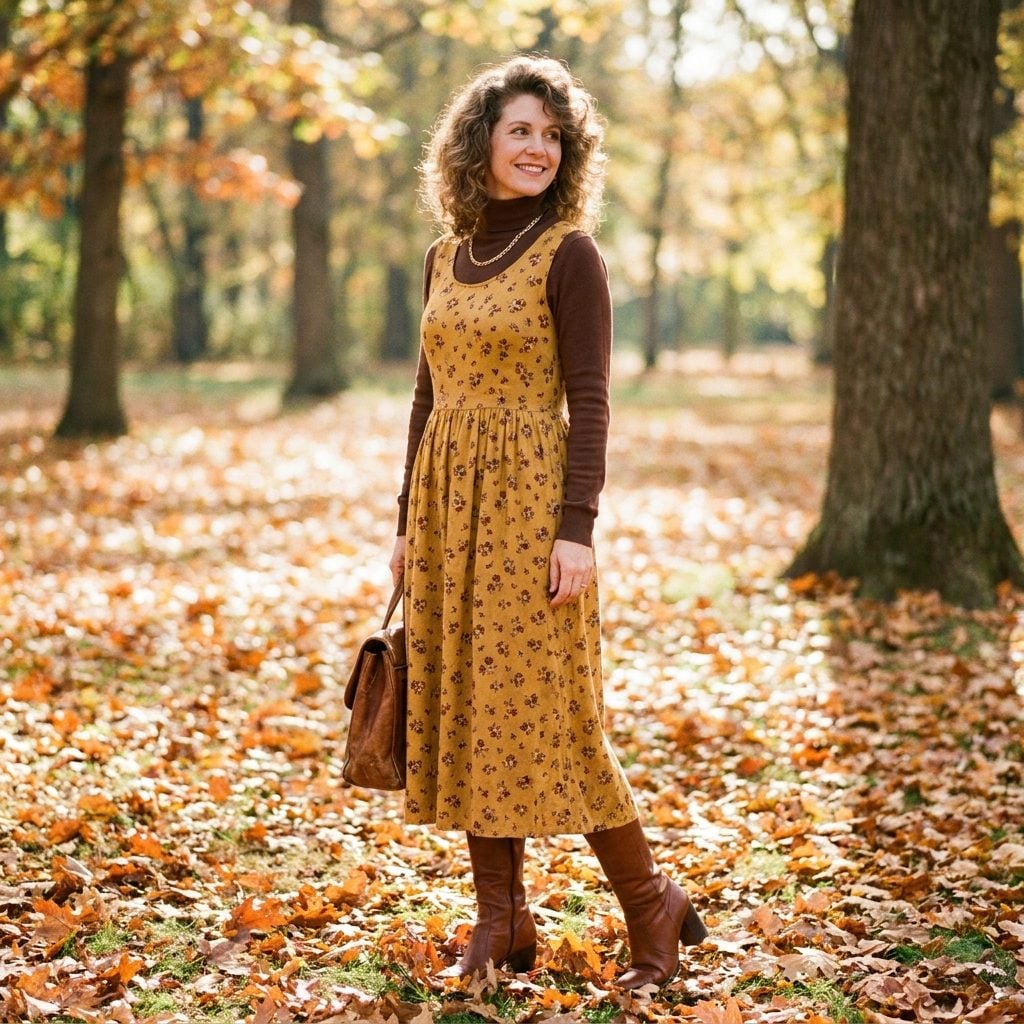
2. The Turtleneck Under the Dress: Fashion’s Most Committed Coverage Decision
❤️ Would you like to save this?
Layering a midi dress over a turtleneck was an extremely specific 1980s move that answered a question nobody had asked out loud. The question was: what if a dress also had a neck? The turtleneck provided that neck. It peeked out above the dress’s neckline in a second collar, usually in a contrasting color, and then its sleeves extended below the dress’s sleeves in another layer of arm. You were, technically, wearing two complete garments.
This was considered pulled together. This was considered a look. And in the specific visual logic of 1985, it absolutely was, practical, layered, and completely its own genre of dressing that has never fully returned and probably won’t.
1. The Oversized Blazer That Turned the Whole Thing Into an Intentional Statement
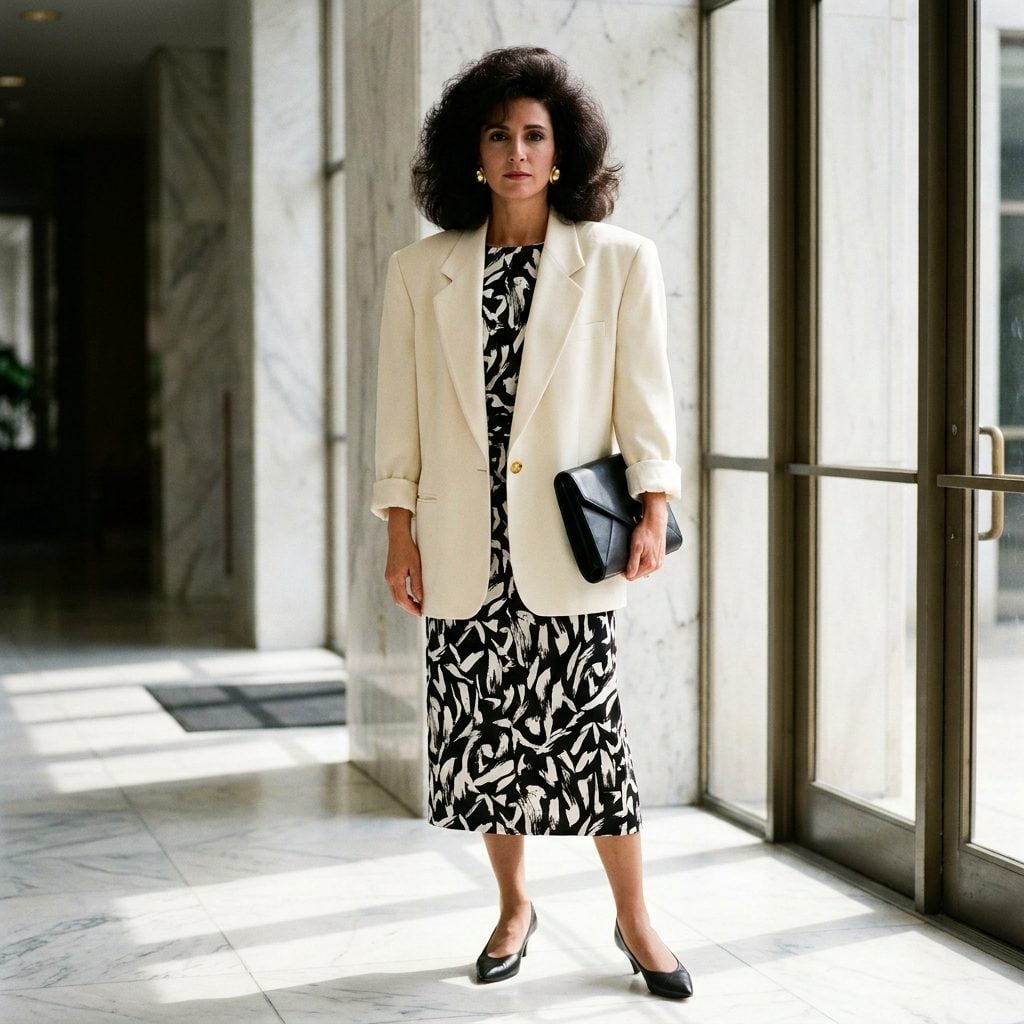
Throwing an oversized blazer over a midi dress was the 1980s version of finishing an outfit. Not a fitted blazer. Not a tailored jacket. A blazer with shoulders wider than your actual shoulders, a hem that hit somewhere around the hip, and a boxy cut that added its own geometry to the geometry of the dress underneath. The two silhouettes together created a volume situation that was, depending on your perspective, either incredibly powerful or architecturally bewildering.
The blazer was usually a solid neutral, cream, camel, or black, so it could sit on top of whatever print the dress was doing. You rolled the sleeves up to the elbow in exactly two folds. You left the front open. You walked into the office or the party or the school meeting and you took up space. That was entirely the point.
It was the athleisure dress of its day in the sense that it made a casual or semiformal piece suddenly read as intentional, finished, and ready. The oversized blazer did not suggest you were trying. It announced that you had already decided.