❤️ Would you like to save this?
That purse weighed approximately six pounds and we carried it like it was nothing. Somewhere between the macramé wallet and the loose change rattling against a tube of Bonne Bell, the 1970s woman had built herself a portable world. A whole philosophy of life lived in a structured leather bag with a brass clasp. Pull one of these things out today and you’d feel it immediately, that particular combination of freedom and practicality that defined the decade. Here’s what was in there.
FYI, thanks to AI imagery software, we’re able to create very specific fashion and hairstyle examples to illustrate the points being made. In some cases, imagery is exaggerated to hammer home the point. Also, assume links that take you off the site are affiliate links such as links to Amazon. this means we may earn a commission if you buy something.
31. Maybelline Great Lash in That Iconic Pink-and-Green Tube
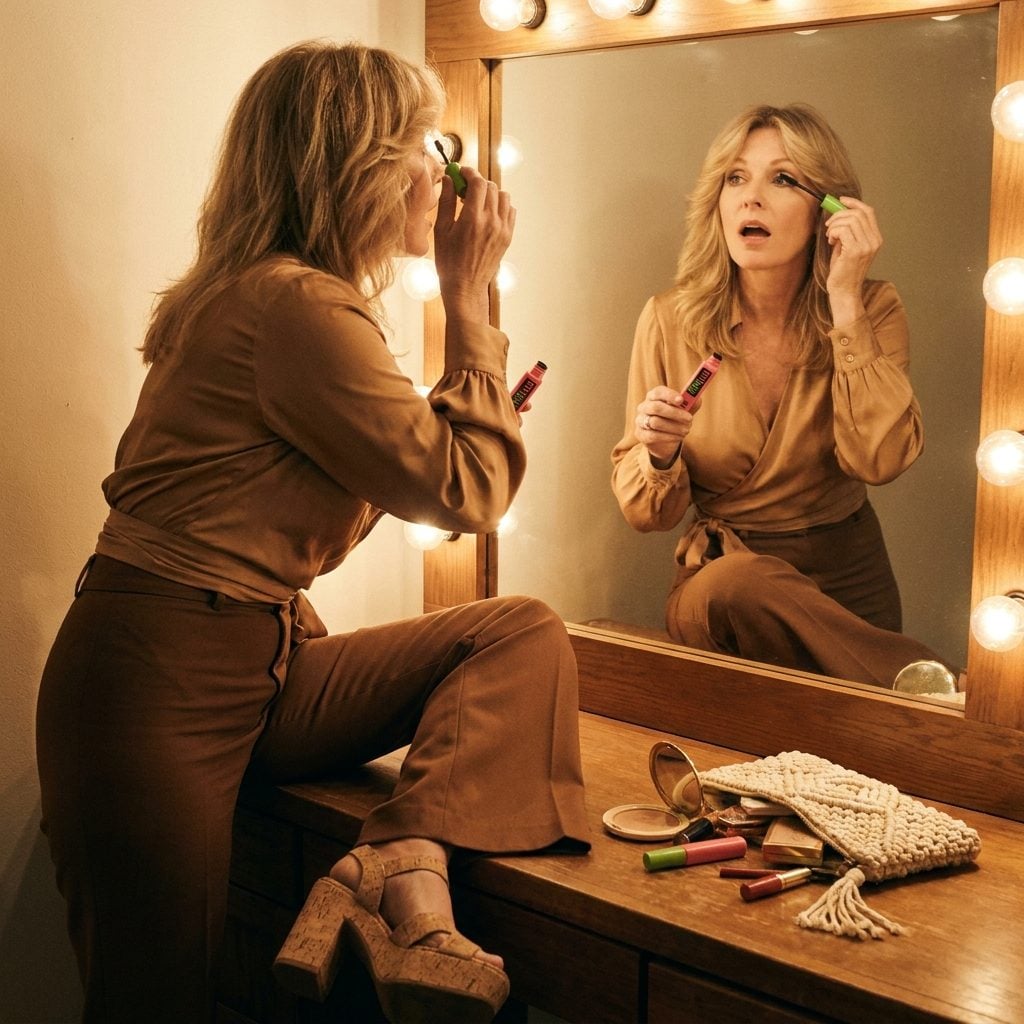
Every woman reading this has owned that tube. The hot pink body, the bright green cap, the font that never changed. Great Lash launched in 1971 and it felt like it had always existed, like mascara and that specific combination of colors were invented at the same moment by the same person. You fished it out of a pocketbook by feel alone.
It clumped. It absolutely clumped. By noon your lashes had a texture that could charitably be described as “dramatic” and less charitably as “spidery.” And yet. The Great Lash mascara is still sold in the same tube today, which should tell you everything about how deeply that pink-and-green combination is wired into a certain generation’s muscle memory.
30. The Frosted Pink Lipstick That Made Everyone Look Slightly Undead
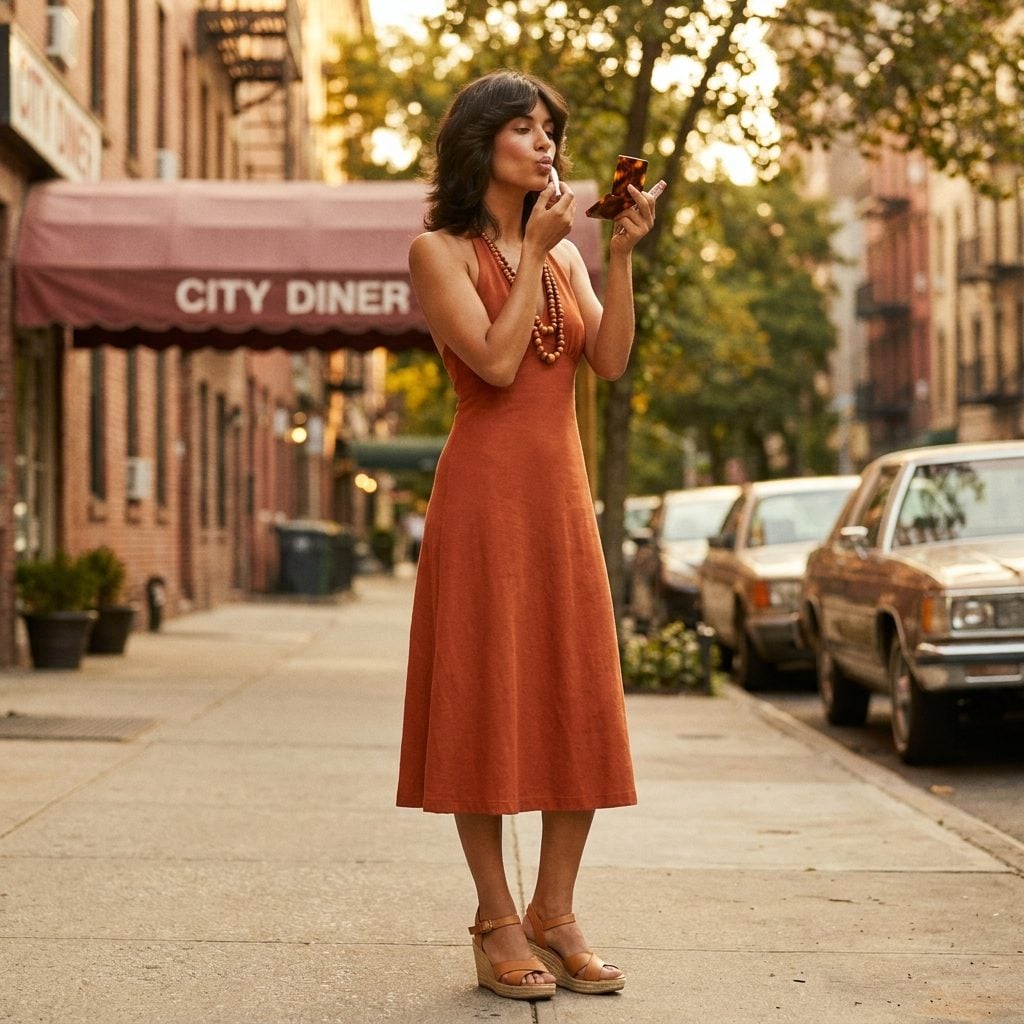
Frost was the point. Not shine, not gloss, not a healthy flush of color. Frost. The goal was lips that looked like they’d been coated in a fine layer of mica and left to set, slightly pale, slightly iridescent, slightly like you had just come in from a very cold hallway. Paired with a deep tan and heavy eyeliner, this somehow looked good. We are choosing to remember it that way.
The frosted pink lipstick lived at the bottom of every purse next to a receipt from the drugstore and a broken pen. Brands like Yardley and Cover Girl did this particularly well, which is to say, they did it with maximum frost. You reapplied it constantly because frost fades fast, and it gave you something to do with your hands.
29. A Bonne Bell Lip Smacker (Strawberry, Obviously)
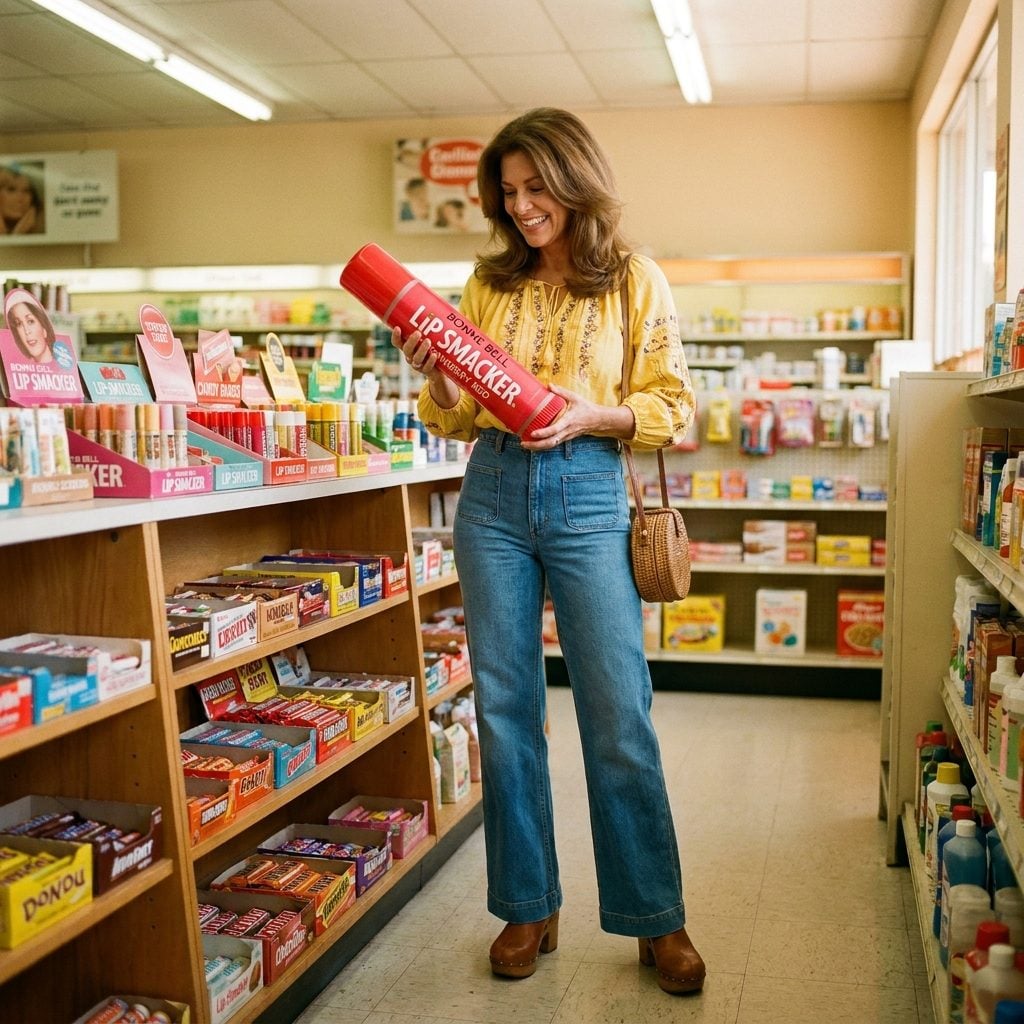
Technically it was a lip balm. In practice it was a scent delivery system, a social currency, and a personality statement all rolled into one waxy cylinder the diameter of a 9-volt battery. The strawberry one smelled so aggressively, cartoonishly of artificial strawberry that opening it in a classroom was basically an announcement.
The original Lip Smacker launched in 1973 as the first flavored lip balm, and Bonne Bell had the good sense to make the large size, that big, satisfying tube, the one everyone wanted. You traded flavors. You compared flavors. Somebody always had the Dr Pepper one and was insufferably proud of it.
28. A Vial of Charlie by Revlon, Tucked in the Zip Pocket
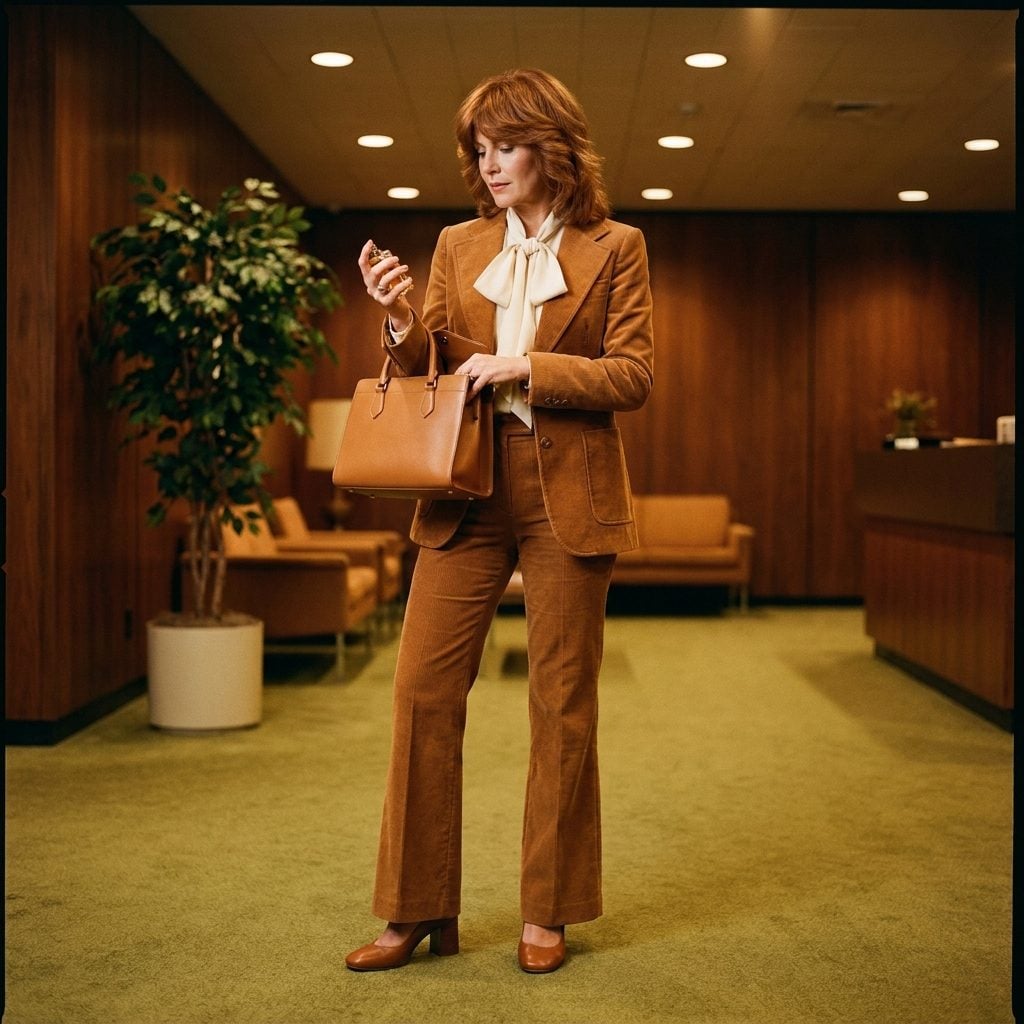
Charlie arrived in 1973 and it was genuinely radical for one specific reason: the woman in the ads was striding, not posing. She had places to be. The fragrance itself was fresh, woody, a little androgynous at a time when “androgynous” on a woman was a fairly loaded word. You wore it to work, by which we mean you wore it to the office job you had just been allowed to have.
The small spray vial fit perfectly in the inner zip pocket of a structured bag. You spritzed it on your wrists in the elevator. It was confidence in a bottle, not because the marketing told you so, but because walking into a room and smelling of something that didn’t come in a pink bottle felt like a quiet statement in 1974.
27. Love’s Baby Soft: The Powdery Cloud That Followed You Everywhere

“Love’s Baby Soft. Because innocence is sexier than you think.” That was the actual tagline. They put it on a product that smelled like warm baby powder and marketed it with imagery that, by any current reading, would never see print. The 1970s contained multitudes.
The fragrance itself was exactly what the bottle suggested: soft, powdery, sweet without being cloying, the olfactory equivalent of a chenille sweater. Younger girls wore it before they graduated to Charlie. You never quite stopped reaching for it. A small bottle of powdery cologne rattling around in the bottom of a bag is a sense memory so specific it almost hurts.
26. Jean Naté After Bath Splash, Liberated from the Bathroom to the Purse
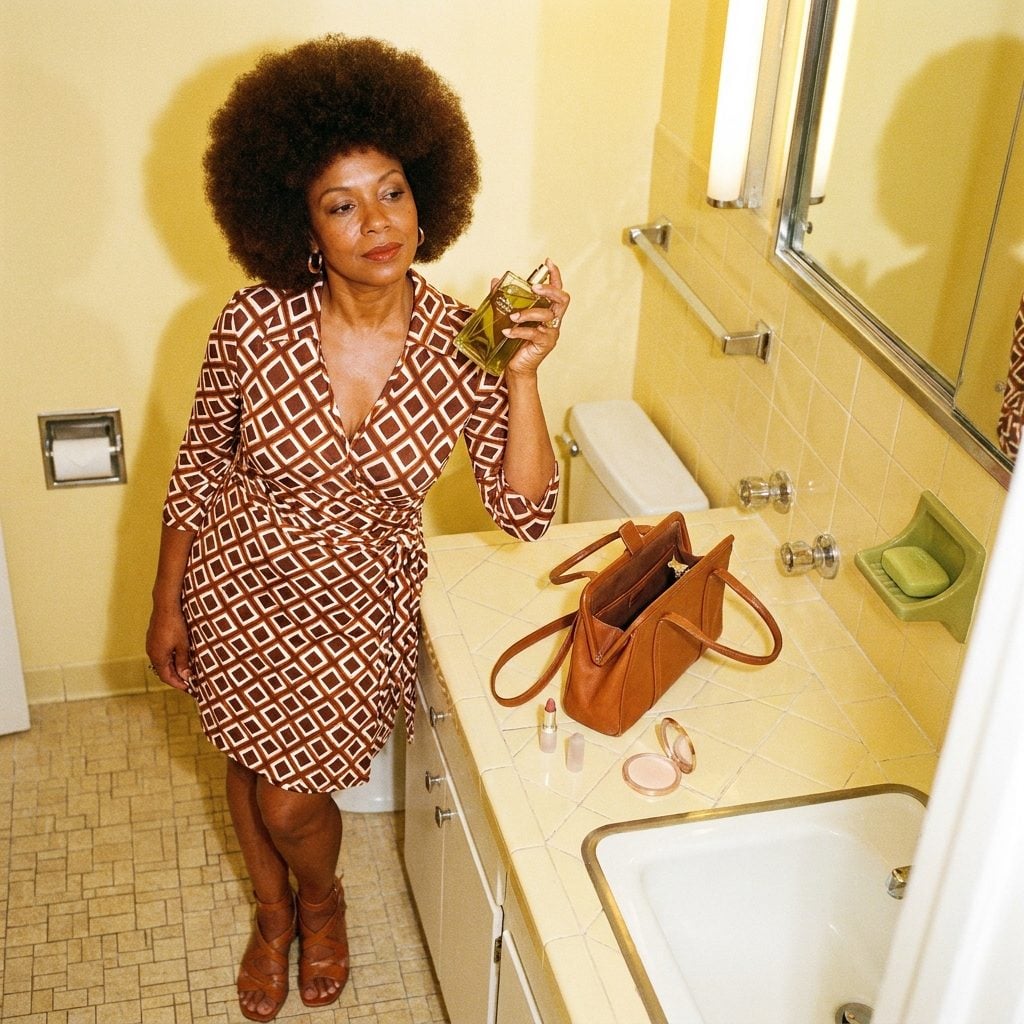
Jean Naté was technically a body splash, meant to be splashed liberally all over after a bath, which is exactly what it says in the name and which nobody ever questioned. The scent was citrusy, clean, lemony in a way that felt like standing in a grove of something Mediterranean. It came in that angular yellow bottle that rattled around the bottom of the purse like a very confident little tenant.
Bringing it out of the bathroom and into the bag was a specific act of 1970s resourcefulness. You’d give yourself a small spray in the ladies’ room at a restaurant and feel completely put-together. It cost very little. It smelled like someone who had her life in order. That was the whole deal.
25. An Avon Sample from the Neighbor Who Sold It Out of Her Kitchen
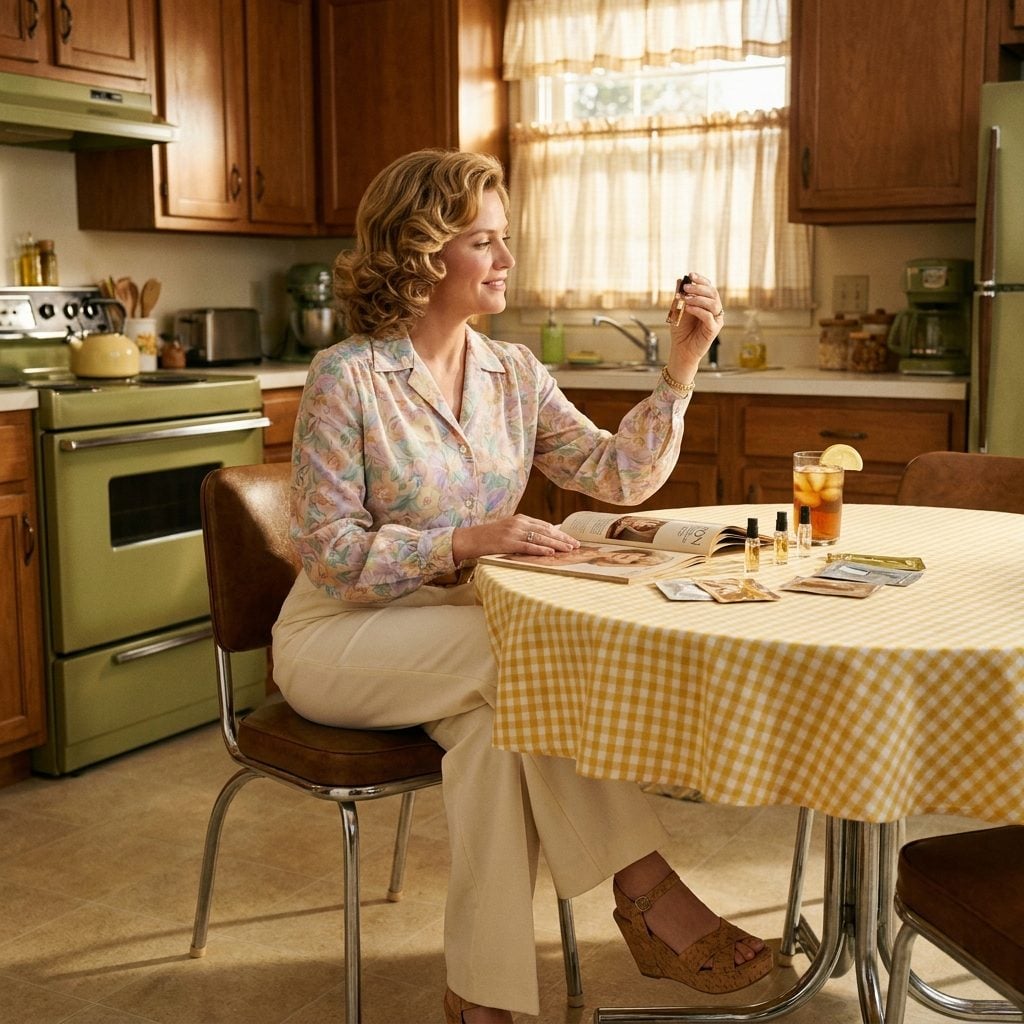
There was always a woman on the street who sold Avon. She had the catalog, the samples in a little plastic tray, and an expression that was warm but also slightly expectant. You bought something every time because declining felt rude and also because the samples were genuinely good: small foil packets of perfume, tiny roll-on bottles with names like “Topaze” and “Occur!” and “Cotillion” that sounded like they’d been named by someone who had seen Paris once in a magazine.
The sample ended up in the purse and then forgotten for weeks, then found like a small gift. The whole Avon ecosystem was a specific social institution of the 1970s: neighbor-to-neighbor, kitchen-table commerce, a kind of informal women’s business network that nobody called that at the time.
24. Virginia Slims: You’ve Come a Long Way, Baby (Straight Into the Purse)
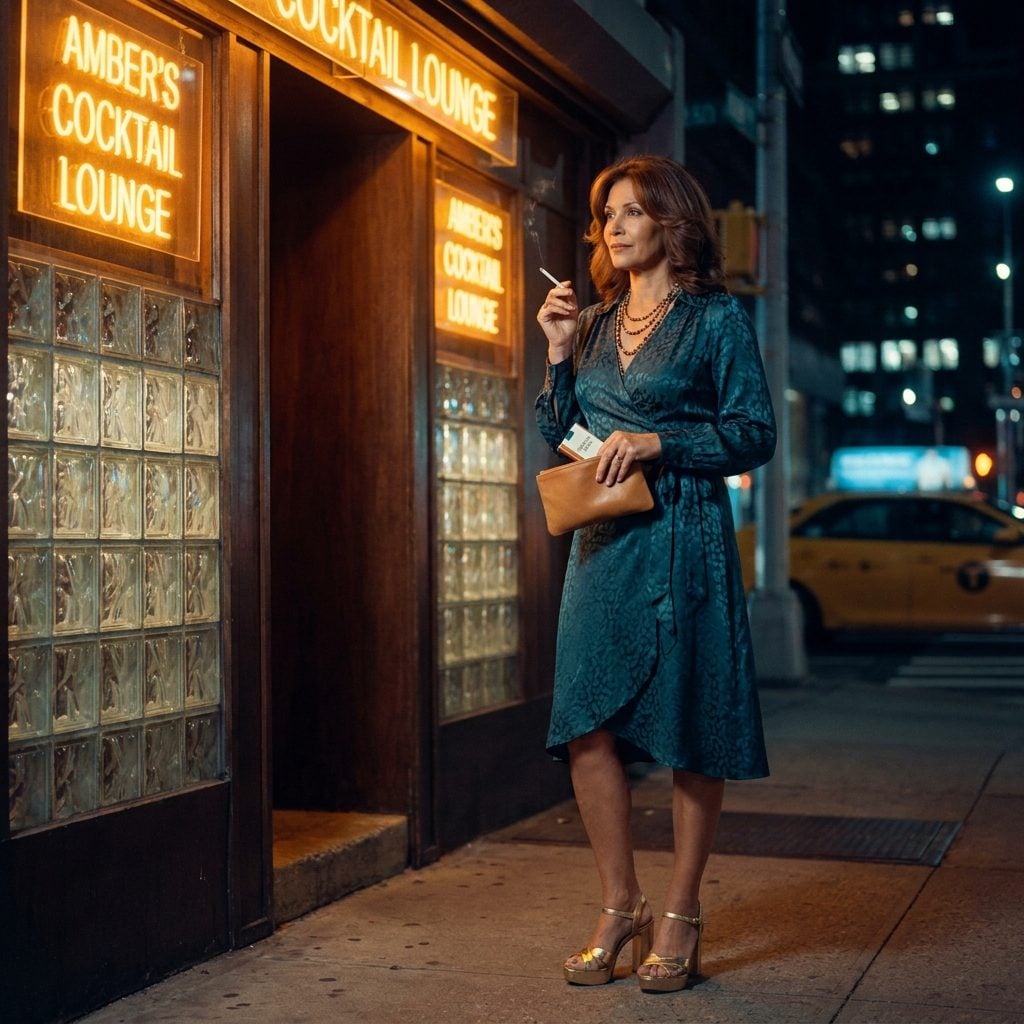
Virginia Slims launched in 1968 with one of the most effective, and, in hindsight, deeply cynical, taglines in advertising history. “You’ve come a long way, baby” told women that smoking a cigarette specifically designed to be thinner and more “feminine” than a regular cigarette was somehow an act of liberation. And it worked. Brilliantly. Because the alternative was being marketed cigarettes designed for men, which was its own kind of statement.
The pack was slim, pale, and fit in even the smallest purse. It had a particular social function at parties and in offices: lighting someone else’s cigarette was how conversations started, how eye contact was held a beat longer than necessary. Virginia Slims were a prop and everybody knew it and nobody cared.
“The pack was slim enough to slide into a clutch alongside a lipstick and a subway token. That was the product design brief, whether they admitted it or not.”
23. The Matchbook Tucked Inside the Cigarette Pack, Always
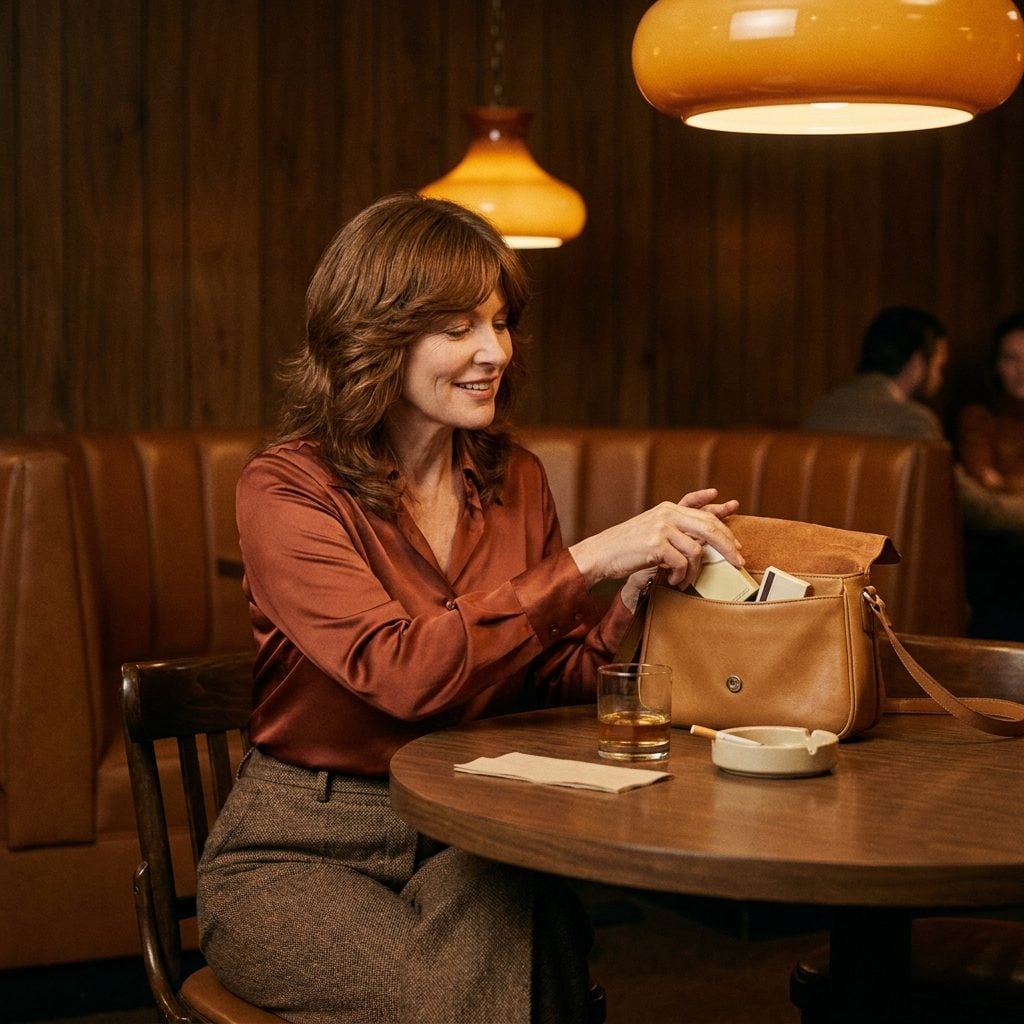
Every cigarette pack had one. Not in a pocket, not loose in the bottom of the bag, specifically wedged under the cellophane wrap of the pack itself, so you always had both together. The matchbook was usually from a restaurant you’d been to, or a motel, or sometimes just a generic safety-match book from the drugstore. You collected them without meaning to.
There was something almost ceremonial about the whole routine: the bag, the pack, the matchbook, the lighting. It telegraphed a kind of ease that felt very adult, very having your life together, even if the bag was held shut by a broken clasp and you were seventeen minutes late.
22. A Bic Disposable Lighter That Belonged to Everyone and No One
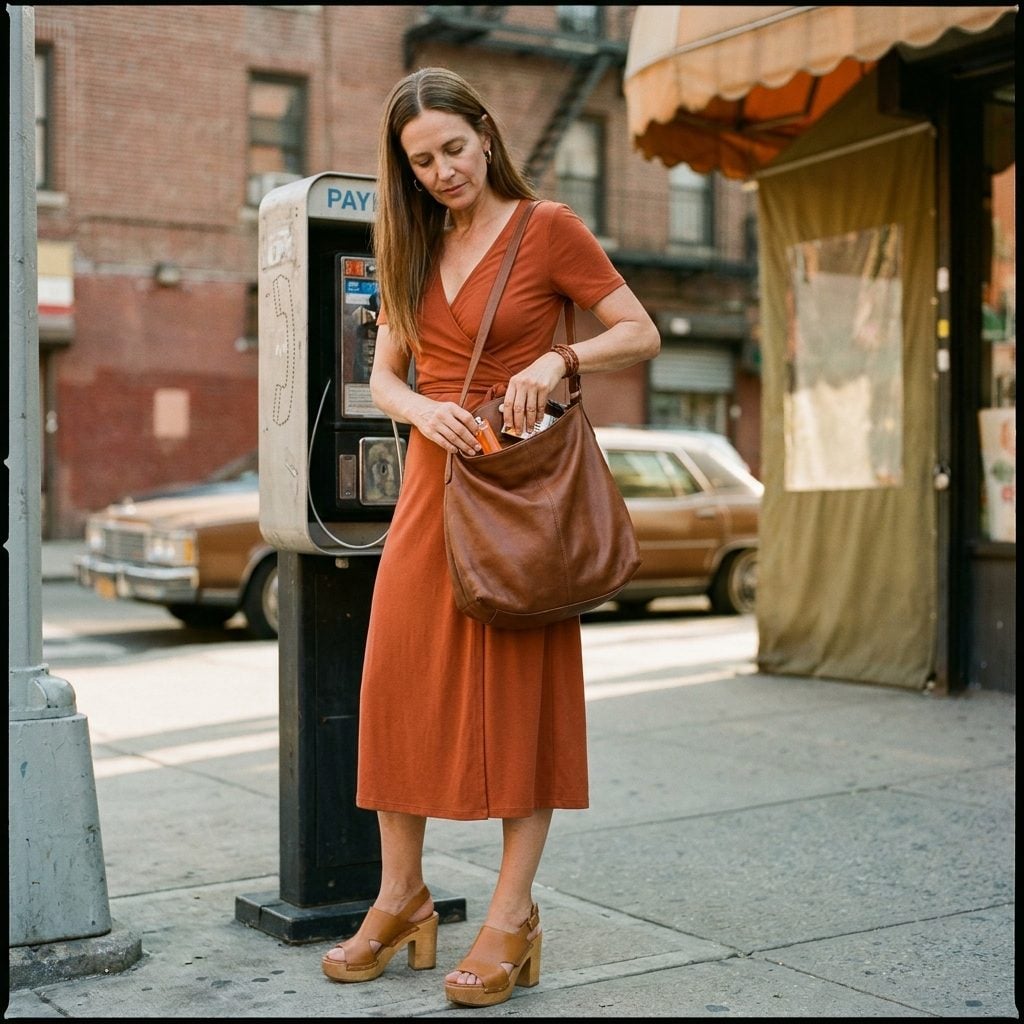
Technically it was yours. Practically, it was everyone’s. The translucent orange Bic lighter launched in 1973 and immediately became communal property, it left your purse in someone’s hand at a party and returned, eventually, as a completely different Bic in a color you didn’t choose. Nobody stole lighters on purpose. They just migrated.
Before Bic, lighters were either cheap and unreliable or expensive and precious. The Bic was neither. It was dependable, replaceable, and always slightly low on fluid when you needed it most. You’d shake it, flick it six times, and swear at it quietly. Then it would catch.
21. The Pressed-Powder Compact With the Crack Running Right Across the Mirror
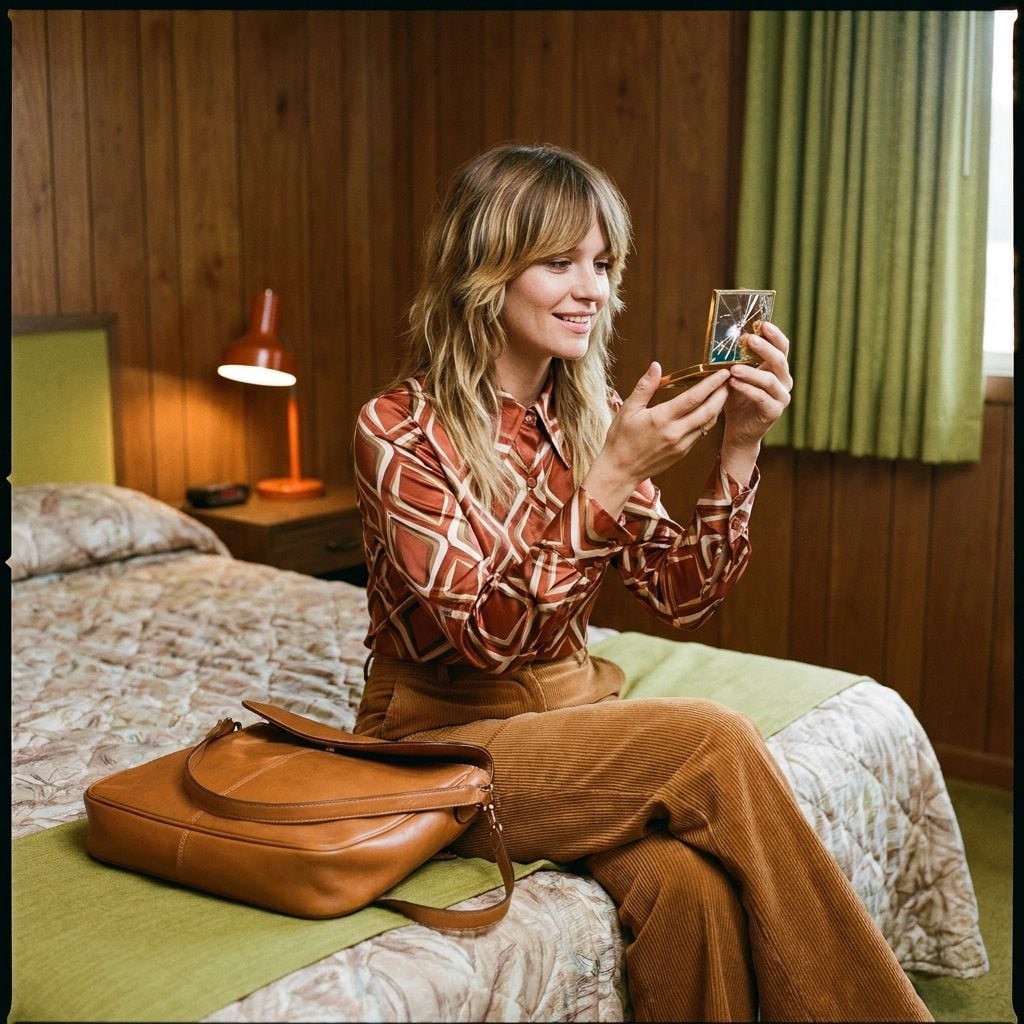
You could see your reflection in four disconnected pieces, and somehow this never stopped you from using it. The crack appeared early, dropped on a bathroom tile, probably, and stayed for years, because replacing a compact felt like an unnecessary errand you kept almost getting around to.
The compact itself was usually a gift or a drugstore find: cloisonné lid, gold trim, the powder inside worn down to a shiny concave circle from the puff. The smell of it was specific and unrepeatable. Pressed powder and something slightly metallic from the case. Women of that era wore it over their base in a way that photographed chalky and looked flawless in real life.
20. The Leather Checkbook Cover With Your Initials Tooled Into the Front
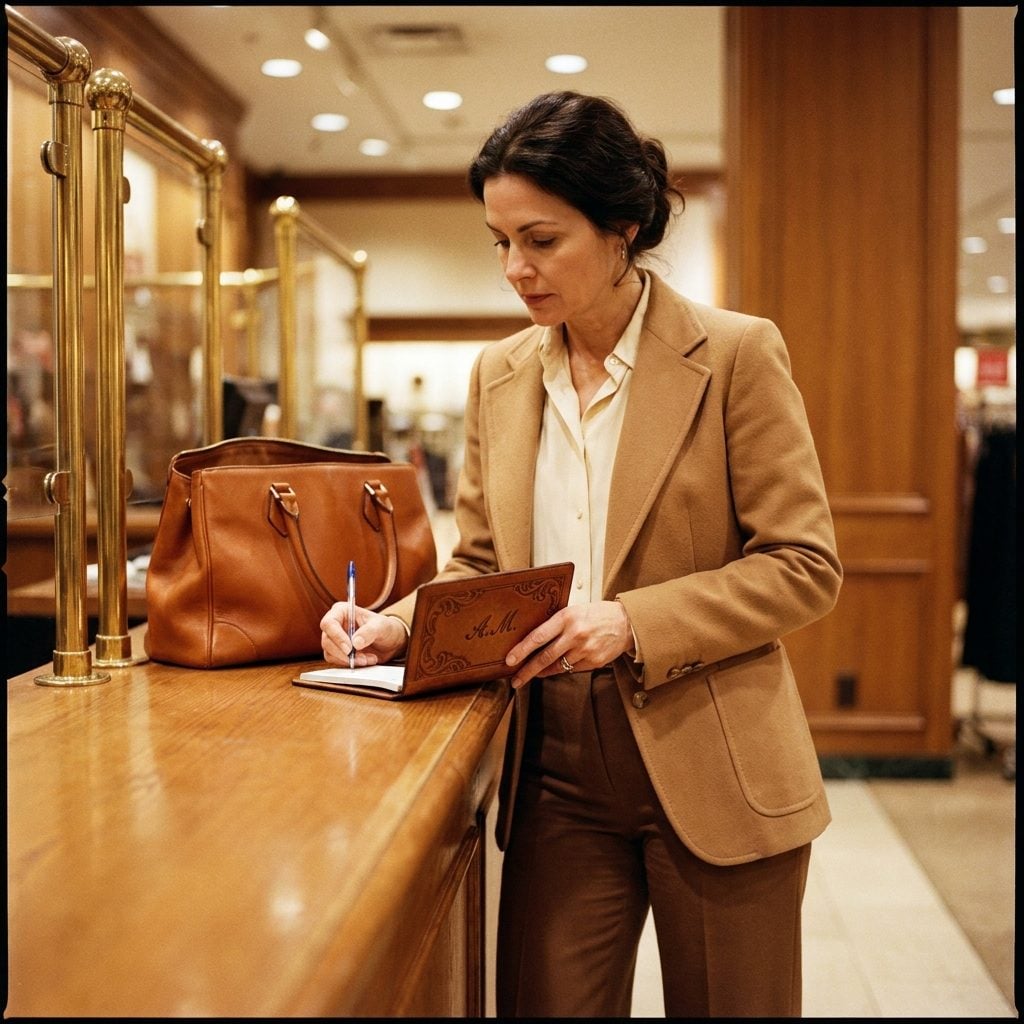
Writing a check in public required the full production. The leather checkbook cover was not optional, it was what separated a woman who had her finances in order from one who did not. Tooled initials meant you’d had it made, or received it as a gift from someone who understood the assignment. Plain initials stamped in gold were fine. Anything less was letting yourself down.
You’d unsnap it, uncap the pen, write the amount in careful cursive, tear along the perforated edge with a clean pull, and hand it over like a small formal contract. A whole ritual that took 90 seconds and felt somehow significant. The debit card killed all of this, and something about that still feels like a loss.
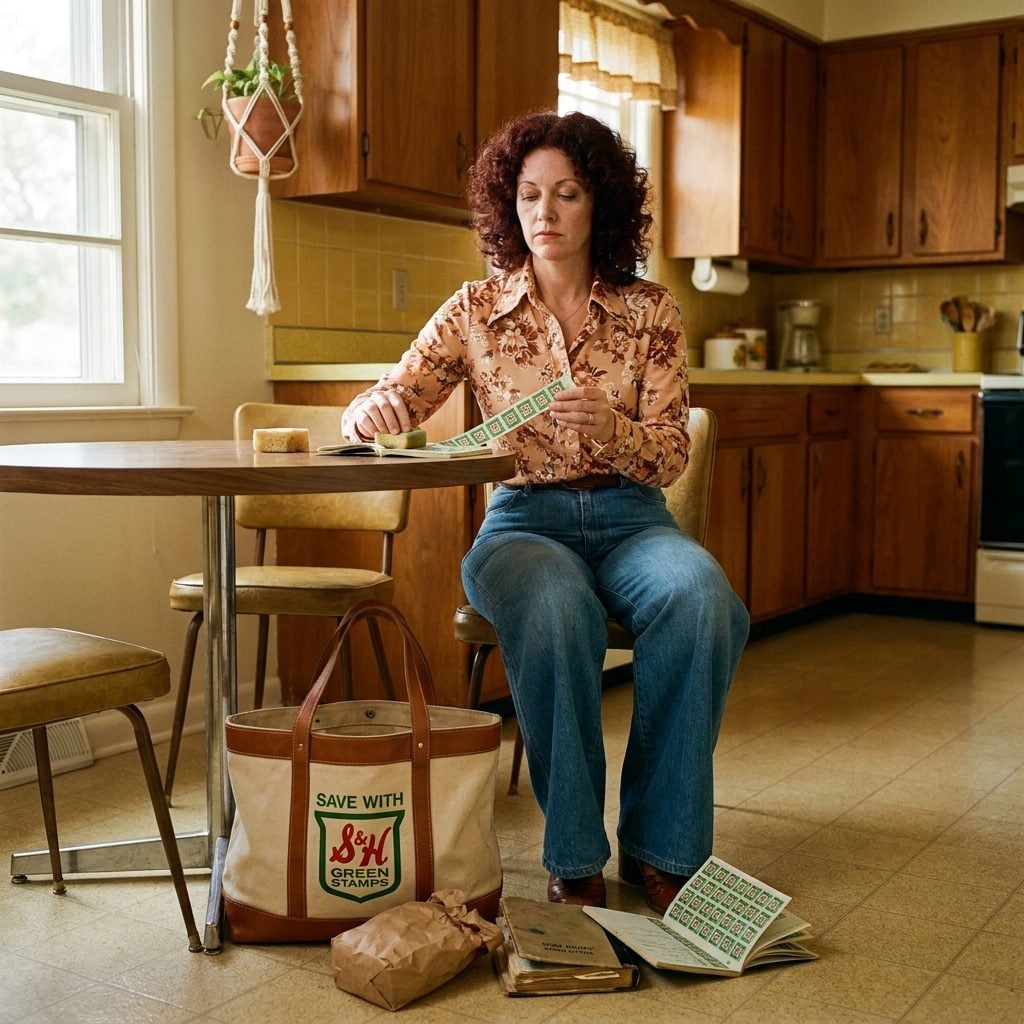
19. A Booklet of S&H Green Stamps, Pages Half-Filled
❤️ Would you like to save this?
The stamps themselves were the size of a postage stamp and required actual licking, which no one enjoyed. You’d get them at the grocery store or the gas station, little strips of them printed in green, and the deal was that if you collected enough, many, many books’ worth, you could redeem them for actual merchandise from a catalog. A blender. A lamp. A set of towels.
The booklets lived in purses and kitchen junk drawers in roughly equal measure, always half-completed, always with a few loose stamps stuck to the bottom of the bag. Almost no one ever actually filled enough books to redeem them. Almost everyone kept trying anyway.
18. A Rubber-Banded Stack of Coupons Clipped From the Sunday Paper

Sunday mornings had a specific sound: the thick thump of the newspaper on the porch, the rustle of sections being sorted, and then the clean snip of scissors through the insert pages. Coupon clipping wasn’t embarrassing, it was competent. It said you knew the price of things and refused to pay more than necessary, which in the mid-1970s, with inflation doing what it did, was practically a political stance.
The rubber-banded stack lived in the purse and occasionally in a small accordion file if you were really organized. Most of us were not really organized. Most of us had a rubber band, a few expired ones we’d forgotten to cull, and an unwavering belief that this week we’d actually use them all.
17. The Vinyl Pocket Address Book You Could Never Quite Read Your Own Handwriting In

Every single phone number you’d ever need was in here, written in whatever pen you’d had available at the moment, sometimes ballpoint, sometimes felt-tip that had bled slightly, sometimes pencil that had mostly faded. The tabs were worn thin at the edges of the most-used letters. The back pages had notes, addresses, at least one grocery list that had migrated there from nowhere.
When you lost one of these, you lost everything. There was no backup. No cloud. No sync. It just was gone, and so were all the numbers, and you had to call your mother to get your aunt’s number and go from there.
16. Polaroid Snapshots Loose in an Accordion Photo Wallet

The accordion wallet opened up to reveal a small museum you carried everywhere. Polaroids were thick and slightly waxy to the touch, the colors never quite matching reality, everyone’s skin a little more orange, the sky a little more cyan, the whole world processed through something warm and inexact. You didn’t know anyone who thought this was a flaw.
There were photos of kids, of your best friend’s wedding, of a trip somewhere, of a party you don’t entirely remember. Some were labeled in pen on the white border. Most weren’t, which meant certain photos became mysteries within a decade. Who is that? Where was that taken? When?
Nobody edited or deleted anything. The photo existed or it didn’t. The ones that came out badly still went into the wallet, slightly blurry or with someone’s thumb in the corner, because they were still proof that the moment happened.
15. A Handful of Dimes Saved Specifically for the Pay Phone
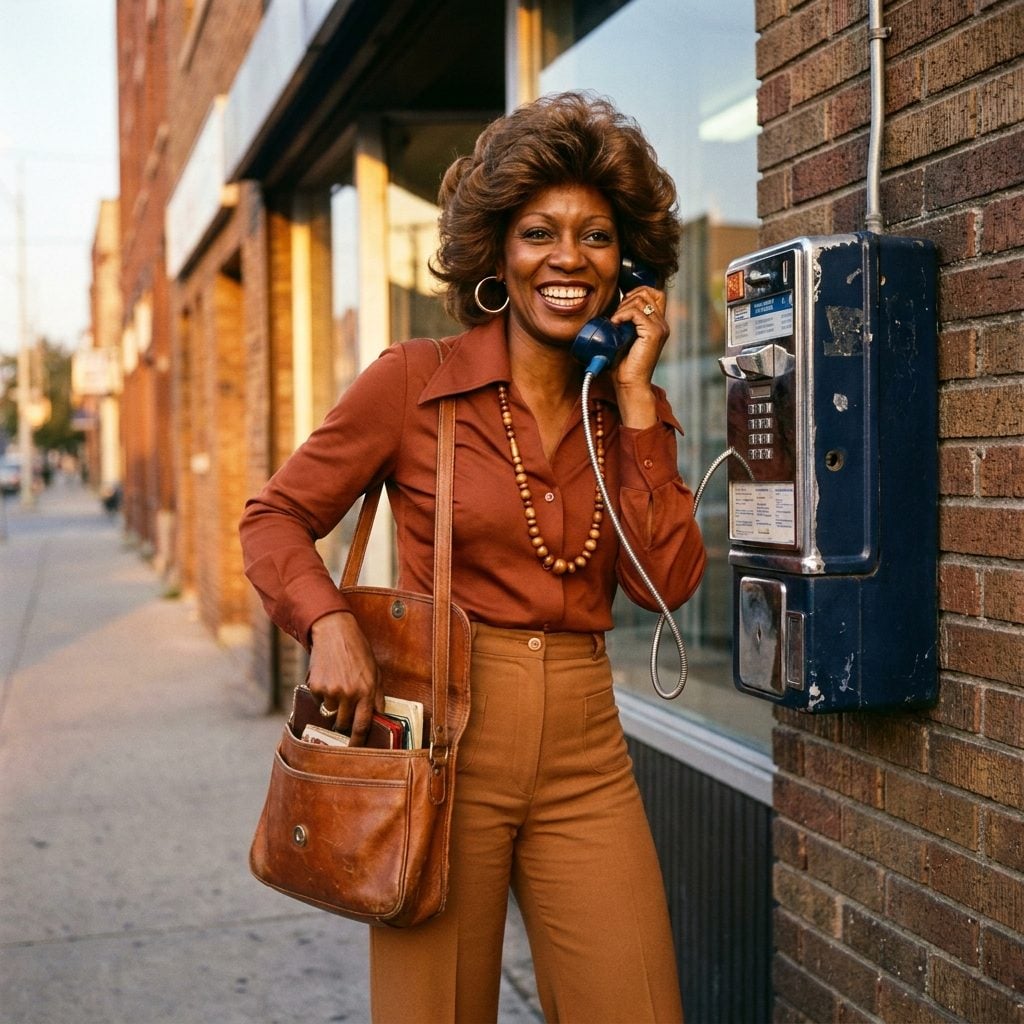
You carried at least four of them at the bottom of your bag at all times, loose and rolling around with the Tic Tacs and the receipt from Woolworth’s. Not quarters. Dimes. Because a local call cost ten cents and you were not going to be stranded outside the Sears with nothing to call your husband about the dinner situation.
The pay phone was infrastructure. It was your entire communication plan. You memorized numbers the way people now have a password manager, and if your dimes ran out mid-call, you talked faster. There was a whole art to it, the coin drop, the dial tone, the brief grace window before the operator cut in. We didn’t think of it as hardship. It was just Tuesday.
14. A Rat-Tail Comb That Doubled as a Weapon

Black plastic. Long thin metal tail sharp enough to part hair with surgical precision or, theoretically, defend yourself in a parking garage. Every woman in the 1970s had one, and not a single one of us thought it was a strange object to carry in a handbag.
The rat-tail comb was the essential tool of feathered, layered, Farrah-adjacent hair maintenance. You used the tail to lift and separate, the teeth to tease the crown, and the whole thing to refresh a blowout that had gone flat by 2pm. It left a faint scratch mark on everything at the bottom of your bag. A small price.
13. A Travel-Size Can of Aqua Net That Made Your Bag Smell Like a Beauty Salon
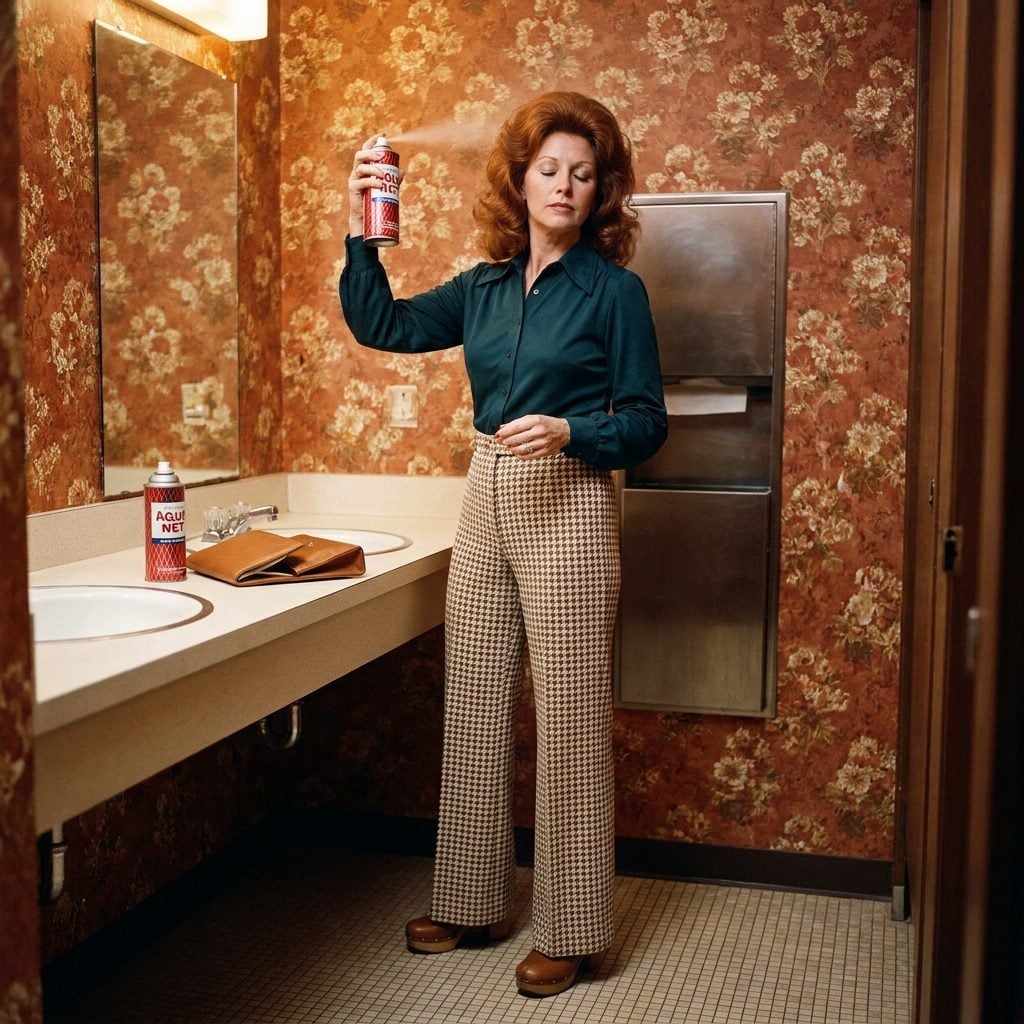
The smell hit you before the can even cleared the bag. That sharp, sweet, slightly chemical cloud of Aqua Net, hairspray so strong it qualified as a structural element. You could set hair with it in the morning and it would still be holding at 11pm if you hadn’t touched it.
The travel size was a 1970s handbag non-negotiable. Humidity, wind, the back of a station wagon with all the windows open, none of it was a match for Aqua Net Extra Hold. Your hair was going to stay where you put it, and the whole powder room was going to know about it.
12. A Silk Headscarf Folded Into a Perfect Tight Square
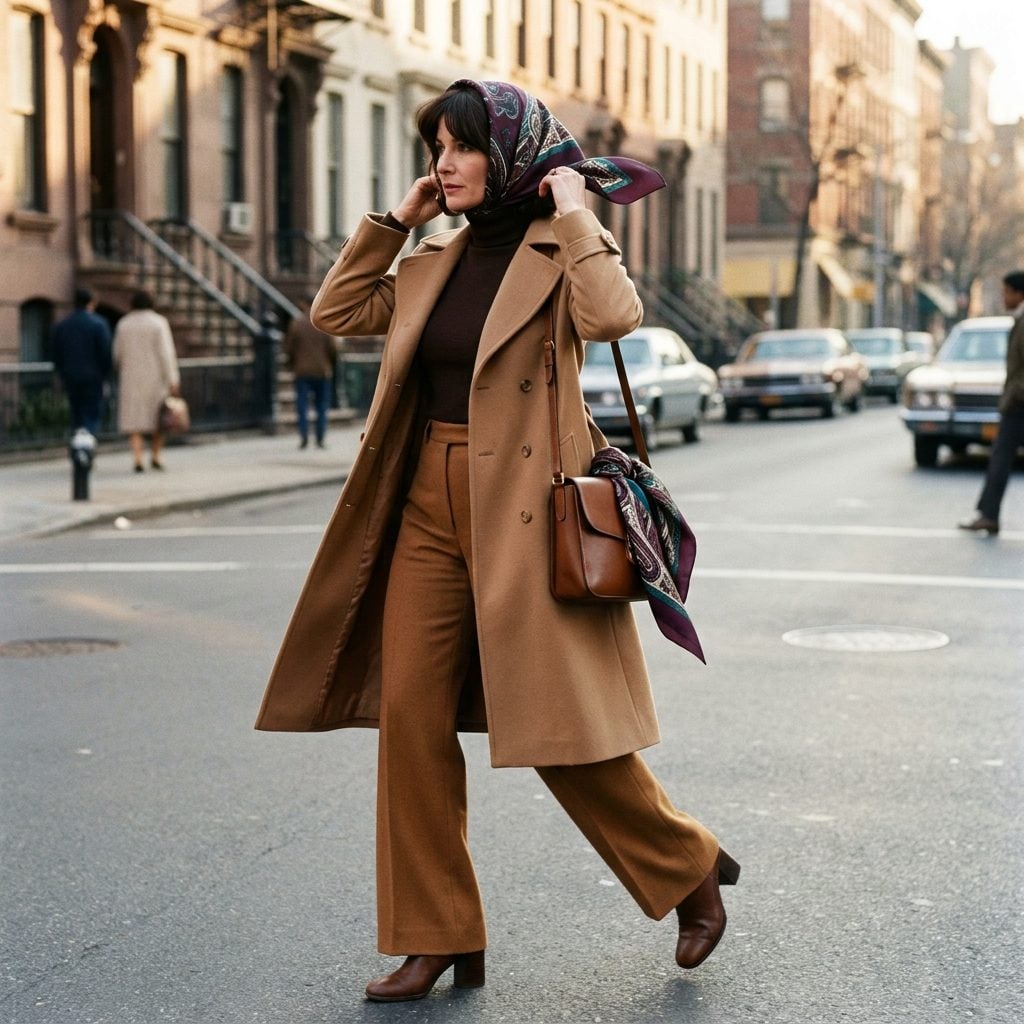
Folding it correctly was its own small skill. You pressed it edge to edge into a triangle, then rolled it into a long band, then folded it twice more until it sat in your bag as a neat, dense little square about the size of a playing card. If you were your mother, you could do this one-handed.
The silk headscarf was multitasking before multitasking was a word. It tied over a blowout against the rain. It knotted at the neck over a coat collar. It wrapped a ponytail for the gym. It was glamour and practicality in one piece of fabric, and the women who carried them understood intuitively that real style is mostly just being prepared.
11. A Pair of L’eggs Pantyhose Still Sealed in Their Plastic Egg
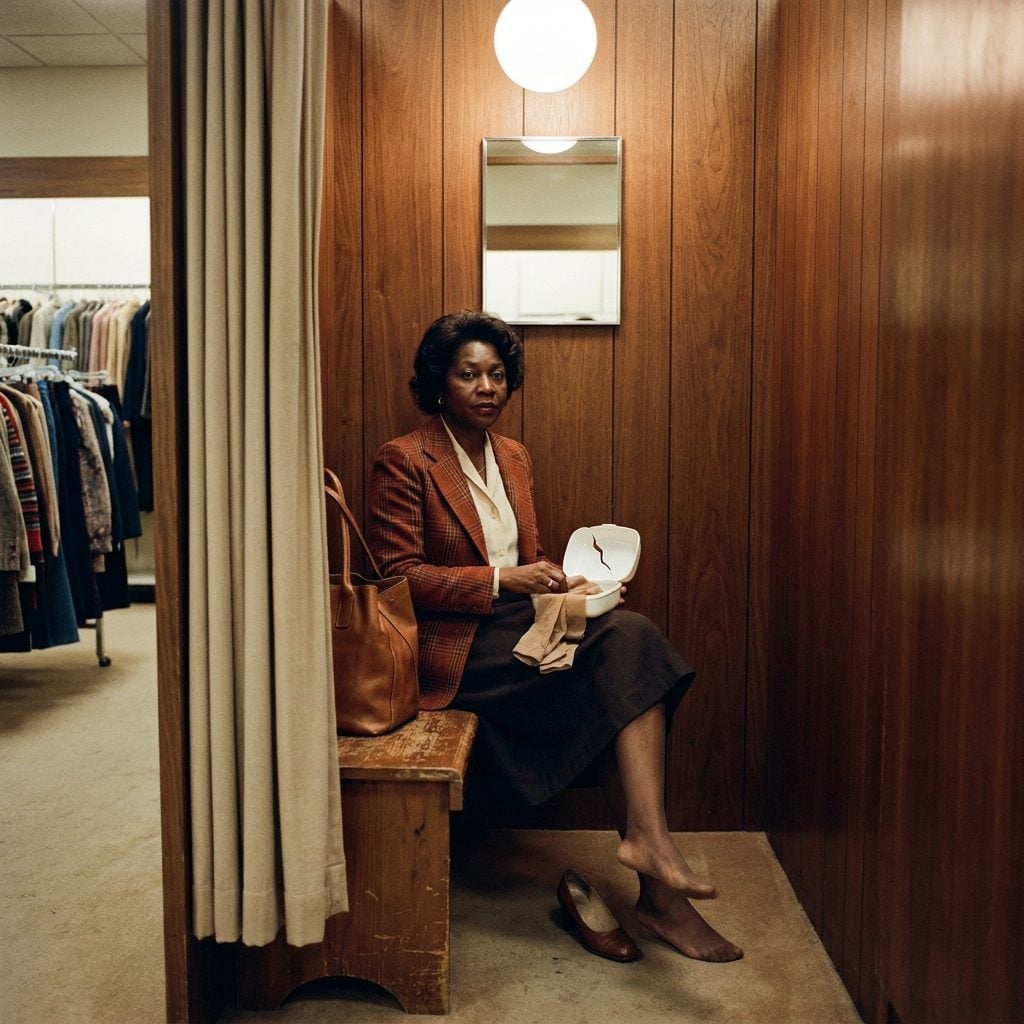
The egg was genius. An actual plastic egg, white or pastel, that cracked open at the seam to reveal your pantyhose nested inside like something that might hatch into your outfit. L’eggs launched in 1970 and immediately became one of the most successful product launches in American retail history, specifically because of that container.
You kept a spare in your bag because a run was not an option. Not at the office. Not at church. Not at a dinner where you were trying to make an impression. The spare egg sat at the bottom of your purse beside the dimes and the Aqua Net, and every woman knew it was there for the same reason you kept an umbrella even when the sky was clear.
“The egg was genius. An actual plastic egg that cracked open to reveal your pantyhose nested inside like something that might hatch into your outfit.”
10. A Round Dial-Pack of Birth Control Pills With the Days Printed on the Foil
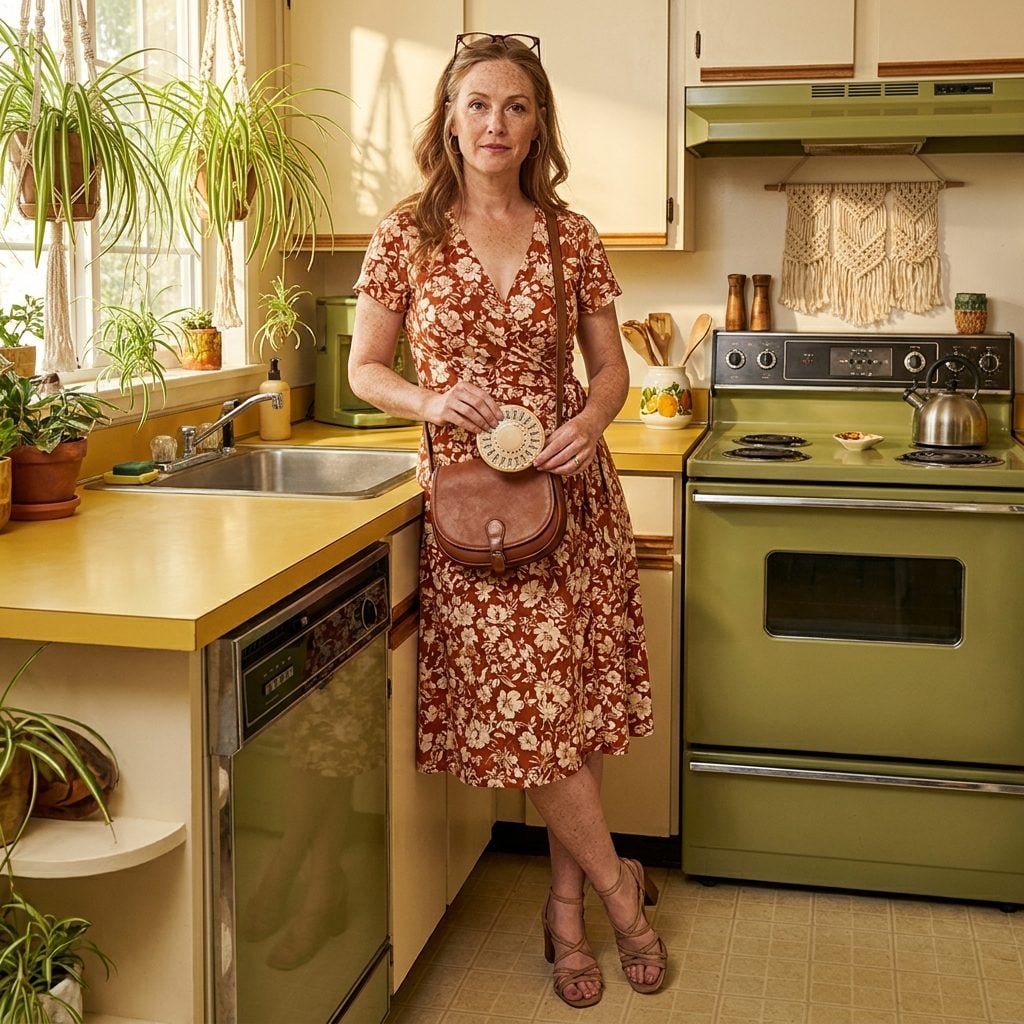
The pill compact was round, usually pale pink or cream, and about the size of a compact mirror. The days of the week were stamped around the foil in a circle, and you rotated the inner disc to the day you were on. Every woman who used them developed the habit of checking it the same way, one quick glance, morning, done.
Carrying it in your purse was, in the 1970s, a quiet political act dressed up as a personal one. The pill had only been available to unmarried women nationwide since 1972. Some women still got raised eyebrows at the pharmacy. Tucking that round dial-pack into your bag was ordinary and radical at the same time, and most of us understood that even if we never said it out loud.
9. A Tin of Bayer Aspirin Rattling Around the Bottom Like a Tiny Maraca
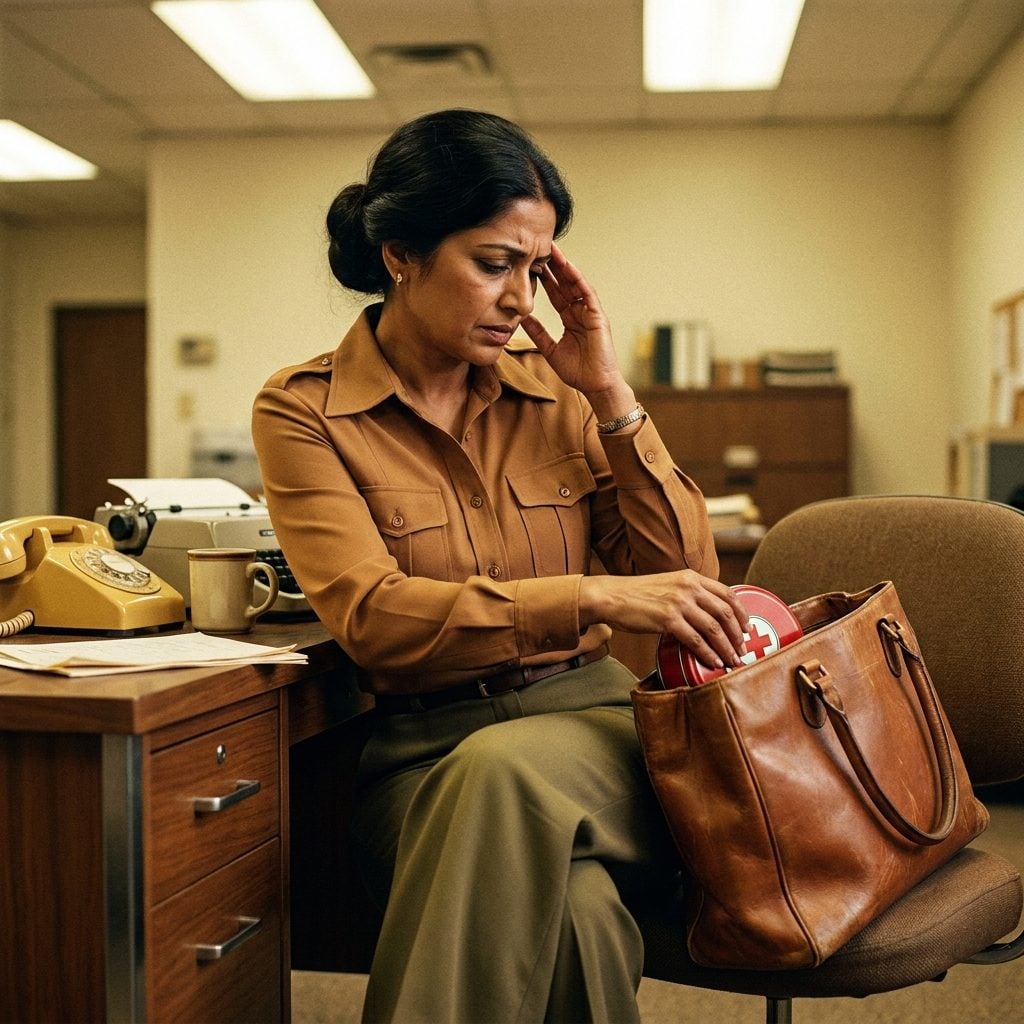
Small, round, red tin. White Bayer cross on the lid. Twelve tablets inside, which rattled against each other with every step you took, making your bag sound faintly like a baby toy. You did not care. Aspirin was the universal fix for every physical complaint the 1970s produced, from actual headaches to the kind of tension headache that came from sitting under fluorescent office lights for eight hours in polyester.
There was no ibuprofen yet, that didn’t hit American shelves until 1984. Acetaminophen was there but Bayer was what your mother carried and her mother before her. The tin in your bag was a straight line of inheritance, practical and unquestioned.
8. A Pack of Wrigley’s Doublemint, Always Doublemint, Never Anything Else

Not Juicy Fruit. Not Big Red. Not spearmint or cinnamon or any of the others. Doublemint. The green pack. Always.
Wrigley’s Doublemint was the default gum of the 1970s American woman the way Kleenex was the default tissue, a brand name that became a category. You kept it in the side pocket of your bag where you could find it without looking, which mattered because you were usually offering a stick to someone while doing something else entirely. Offering gum was its own social ritual. A signal of friendliness, of preparedness, of having your bag in order.
7. The Kleenex Pocket Pack That Lived at the Bottom of Every Bag

❤️ Would you like to save this?
It was never at the top. Never conveniently placed. It had migrated, over weeks, to the very bottom of the bag, nested under a comb, two receipts, a lip balm without its cap, and possibly a parking ticket. The Kleenex pocket pack: slightly squashed, the cardboard tab long gone, the remaining tissues held loosely in their crinkled sleeve. You always had it. You never knew exactly where.
The pocket pack launched in 1924 but had its real cultural moment in the ’70s, small enough for a handbag, just fancy enough to feel like a step above the loose tissues your grandmother tucked into her sleeve. We told ourselves it was practical. It was. But it was also just what you had, automatically, the way women of that era stocked their bags like a mobile emergency kit.
6. The Embroidered Linen Handkerchief You Never Actually Used

Every woman of that era had at least one. Usually gifted, from a grandmother, an aunt, a department store gift box that came with a bottle of Chanel No. 5. The corner was always monogrammed with an initial you may or may not have had, because monogrammed handkerchiefs were the gifting fallback of the entire 1970s middle class.
You did not blow your nose into it. That was the unspoken rule. It was a decorative handkerchief, folded into a neat square, occasionally dabbed against a cheek with great theatrical restraint, and then refolded and returned. The actual Kleenex pocket pack (see above) handled the real business. The handkerchief was purely for appearances, and we all knew it, and we all kept it anyway.
5. An Emery Board So Worn Down It Was Basically Cardboard
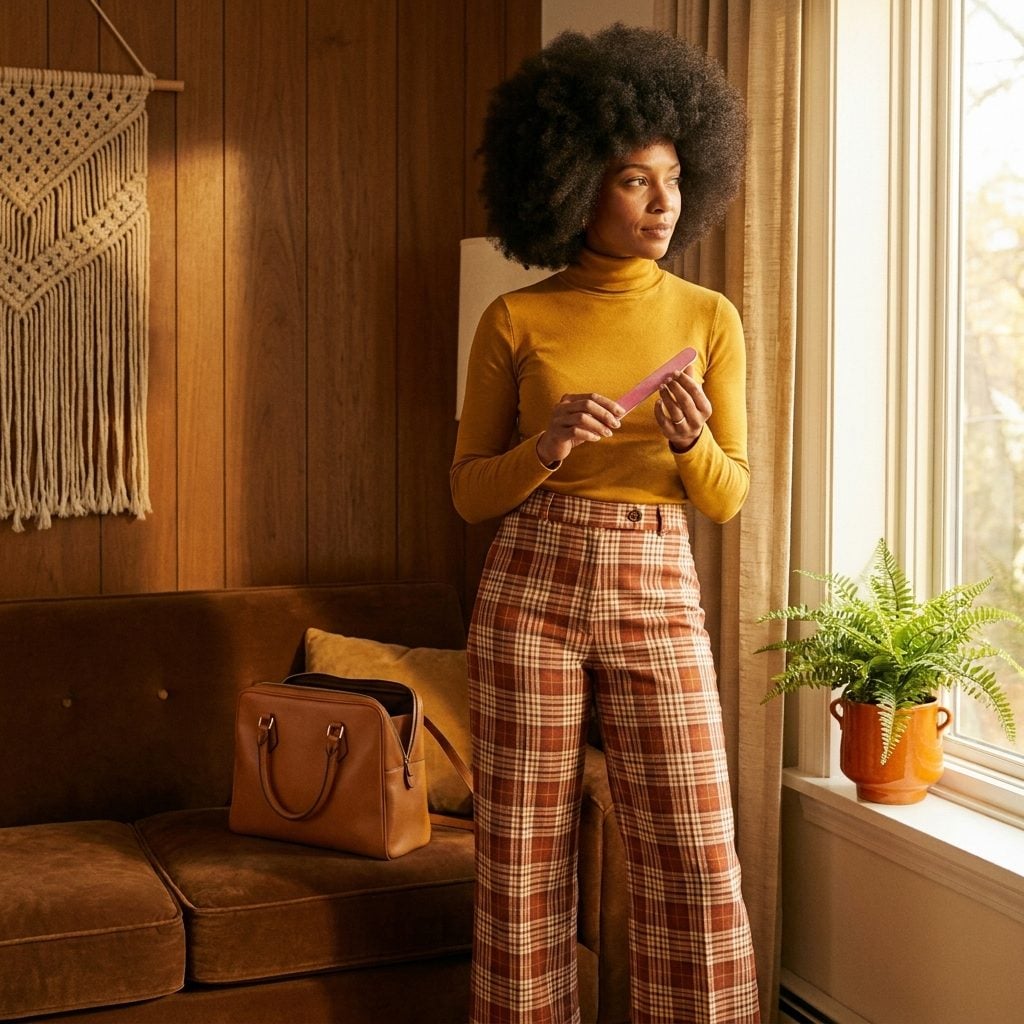
Gritty on one side, smoother on the other, and reduced by the time you found it to something with the filing power of a birthday card. You kept it anyway. An emery board was not the kind of thing you replaced, it was the kind of thing you used until it physically disintegrated.
There was always at least one in the bag, usually near the bottom, often bent slightly from being sat on. A broken nail in the 1970s was a full emergency. You could not simply leave it jagged. You could not. So you filed it down with that sad, flattened strip of sandpaper and called it a day, and it absolutely worked, kind of.
4. The Tiny Bottle of Cutex Nail Polish Rattling Around for Touch-Ups
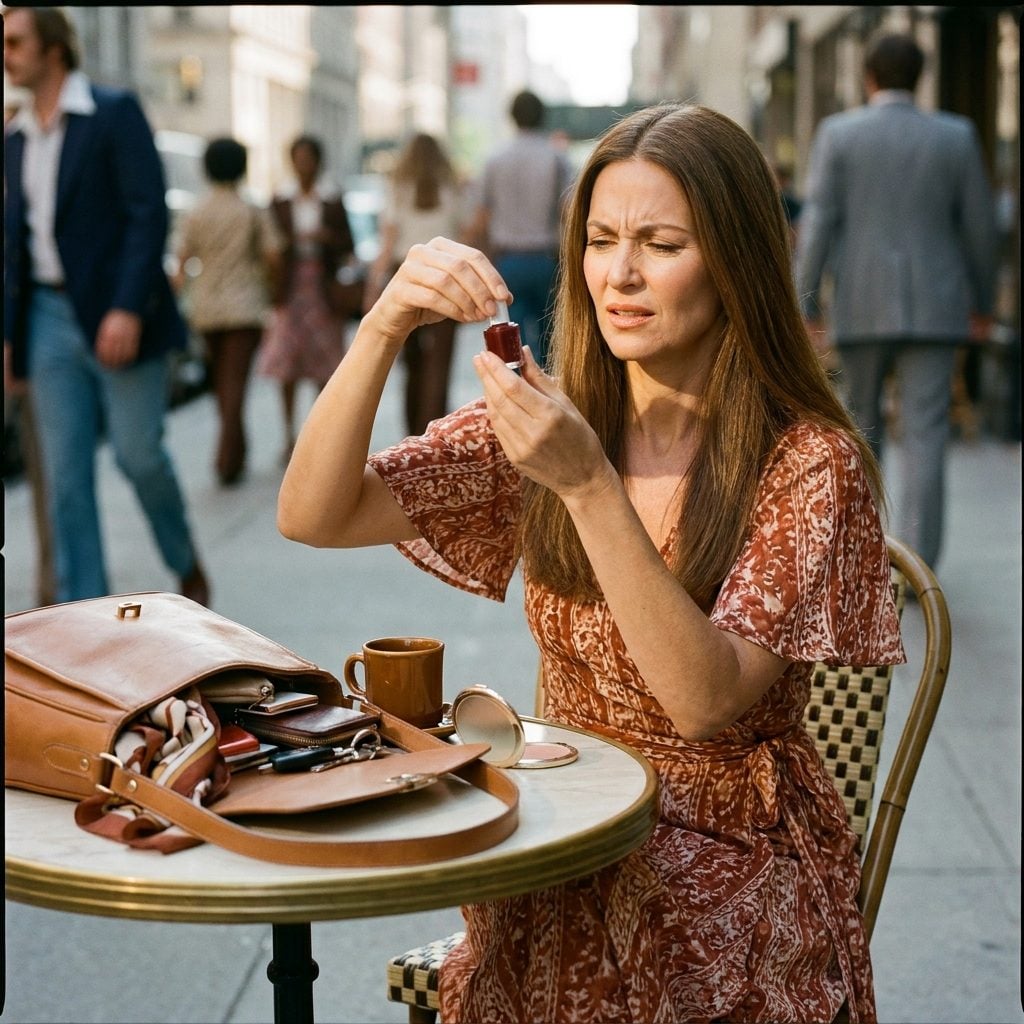
Cutex owned the 1970s. Not metaphorically, they were genuinely everywhere, those small, rounded glass bottles with the black cap and the color name printed in looping script: Frosted Coral. Wild Melon. Persian Melon (yes, two different melons, yes, we bought both). The bottle in your bag was always almost empty, always slightly sticky around the cap, and the brush had gone stiff about three touch-up sessions ago.
But you kept it. A chipped nail was a visible offense, and the touch-up was a ritual you could perform at a restaurant table, in a car, at your desk, with zero self-consciousness. The 1970s woman treated her bag as a traveling beauty counter. Cutex was the foundation of the whole operation.
3. Oversized Tortoiseshell Sunglasses That Covered Half Your Face (On Purpose)
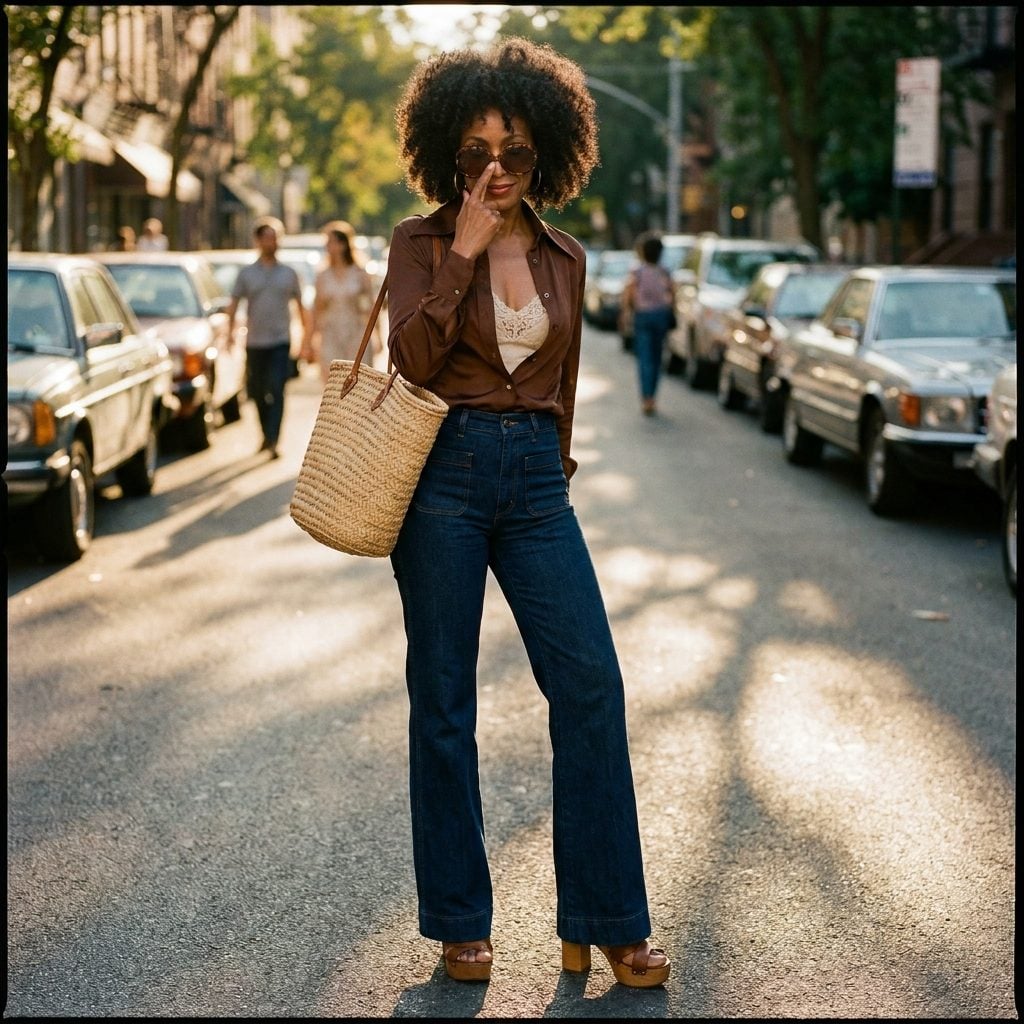
The bigger, the better. That was the only rule. Lens coverage was a status indicator in 1970s sunglasses culture, and if your frames weren’t wide enough to double as a windscreen, you had simply not committed. Tortoiseshell was the universal choice, warm brown with amber swirls, thick plastic arms, frames that went halfway up your forehead and halfway down your cheekbones.
Jackie Kennedy had been photographed in enormous shades throughout the late ’60s and early ’70s, and the entire Western world took that as binding instruction. These lived in your bag on a little case, or folded into a breast pocket, or just loose in the bag where they got scratched and you pretended not to care. You wore them indoors exactly twice and felt no shame about it.
2. The Smiley-Face Keychain That Made Every Key Feel a Little More Optimistic
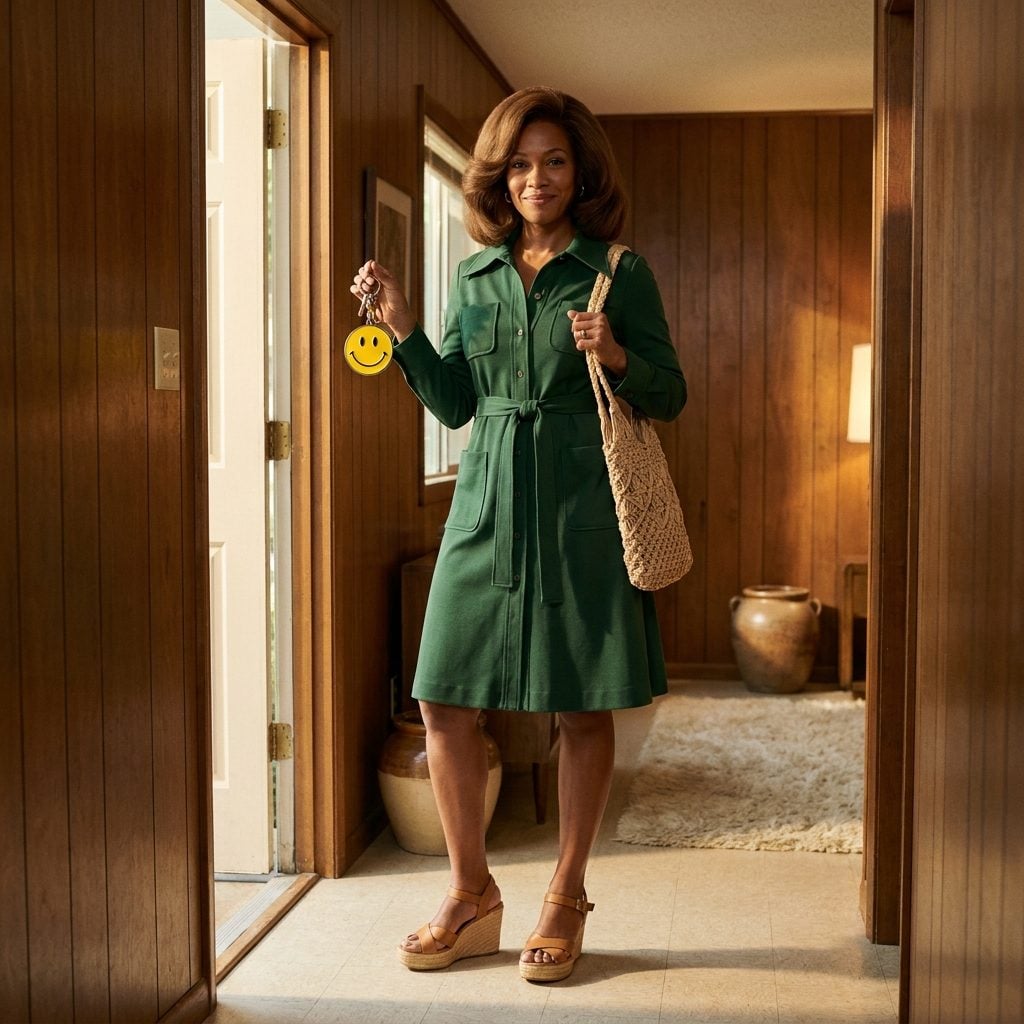
The smiley face was not a casual symbol in the 1970s. After Vietnam, Watergate, and the general psychic hangover of the late ’60s, a bright yellow circle with two dots and a curve was, genuinely, cultural medicine. It was on buttons, iron-on patches, lunchboxes, and yes, keychains, millions of them, clipped to the house key and the car key and whatever mystery key you’d been carrying for four years without knowing what it opened.
Ours was usually a hard yellow enamel disk with a chrome ring, or sometimes the inflatable vinyl version that had gone slightly soft. It hit the inside of the bag with a cheerful little rattle. Harvey Ball designed the original in 1963, but the ’70s is when it metastasized into every pocket and purse in America, and we were not complaining.
1. The Fold-Up Hairbrush With a Tiny Mirror Inside the Handle
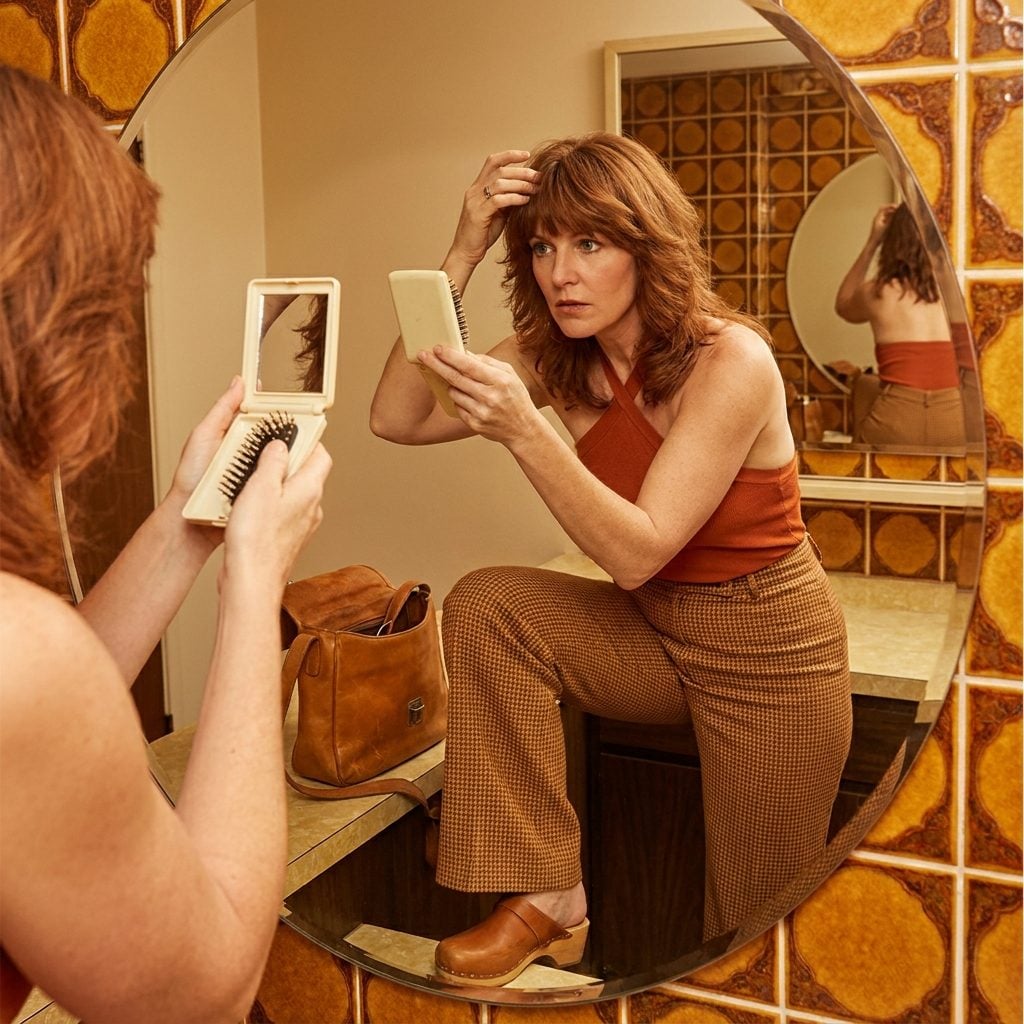
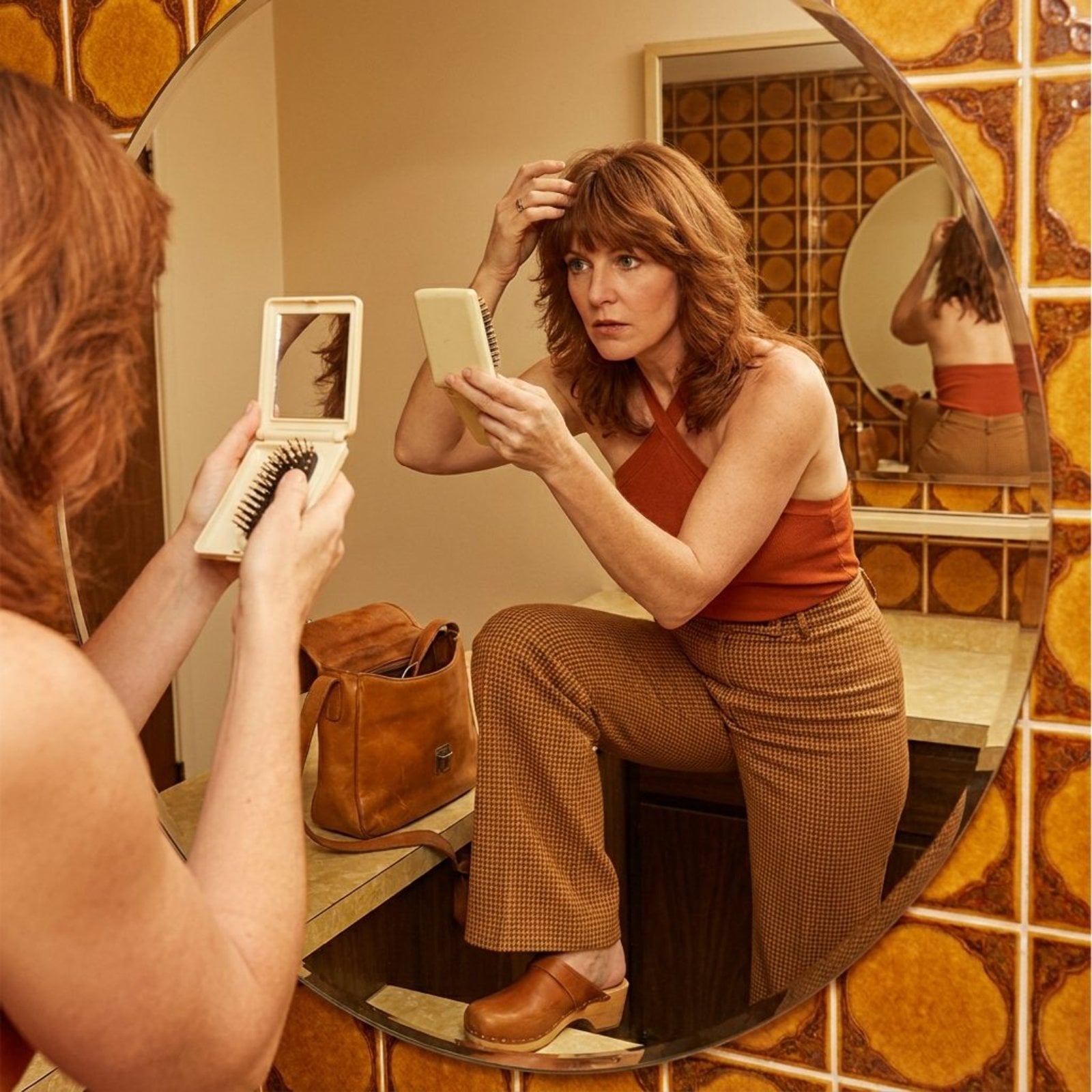
Genius in a two-inch piece of plastic. You folded the brush head down into the handle, or up, depending on the design, and inside the handle was a small rectangular mirror, just large enough to check your teeth for lipstick and confirm that your feathered layers still had volume. Just barely. The brush side had about forty short bristles packed into a paddle the size of a credit card, which was not enough to brush anything, really, but enough to smooth a single strand back into place and call it done.
These came in every color, cream, coral, chocolate brown, harvest gold, and they showed up in every drugstore gift section, usually on a rack near the register alongside travel compact mirrors and miniature perfume atomizers. The hinge wore out eventually and the mirror fogged slightly at the edges. You kept using it.