❤️ Would you like to save this?
There’s a difference between loving a brand and hiding behind one. Most of us have stood in a dressing room at some point, holding a piece we didn’t quite love but buying it anyway because of the name on the tag. That instinct is more common than anyone admits, and more revealing than any outfit. Real style is deeply personal. It lives in proportion, color, fit, and instinct. These 26 signs will help you see clearly whether your wardrobe reflects who you are, or just what you spent.
FYI, thanks to AI imagery software, we’re able to create very specific fashion and hairstyle examples to illustrate the points being made. In some cases, imagery is exaggerated to hammer home the point. Also, assume links that take you off the site are affiliate links such as links to Amazon. this means we may earn a commission if you buy something.
26. The First Thing You Google Is the Brand, Not How It Looks on a Body

The habit is so automatic you might not notice it. Something catches your eye in a store window, and before you step inside to see the fabric, the cut, or whether the color suits you, you flip over the tag or check the label near the hem. If the brand doesn’t register as the right name, interest drops, even if the piece itself is beautifully made.
This is brand recognition working exactly as marketers designed it to work. The problem is that it short-circuits your own eye. Some of the most interesting dressing happens when you let go of the name and ask instead: does this fit well, does this color work, does this feel like me?
25. The Confidence Arrives When the Logo Is Showing, Not Before

Pay attention to the moment your posture changes. For many label-driven dressers, the shift happens not when the outfit comes together, but specifically when a recognizable logo or brand marker is visible. The black style bag with the hardware signature gets carried in the crook of the arm, facing out. The branded sneakers get worn with the logo facing forward. Confidence tied to a brand name is borrowed confidence, it belongs to the label, not to you.
The goal is to feel exactly as pulled-together in an unbranded linen shirt that fits perfectly as you do carrying a logo bag. That is the shift worth chasing.
24. You Walk Past Pieces You’d Love, Because Nobody Would Know the Name

It has happened in a vintage shop, an independent boutique, or even a department store. A jacket in exactly the right color, a pair of trousers with a perfect cut, a dress that fits like it was made for your body. But the label is unknown, or worse, one you associate with being «affordable,» and so you put it back.
That moment of hesitation is the clearest sign that brand status has overridden your actual taste. The question worth sitting with: if you wore that jacket and someone asked where it was from, what would you say? If the honest answer is that you’d feel embarrassed, that discomfort has nothing to do with the jacket and everything to do with what you’ve decided clothing is supposed to prove.
“Style is knowing who you are, what you want to say, and not giving a damn.”, Orson Welles
23. You Check the Tag Before You Check the Mirror
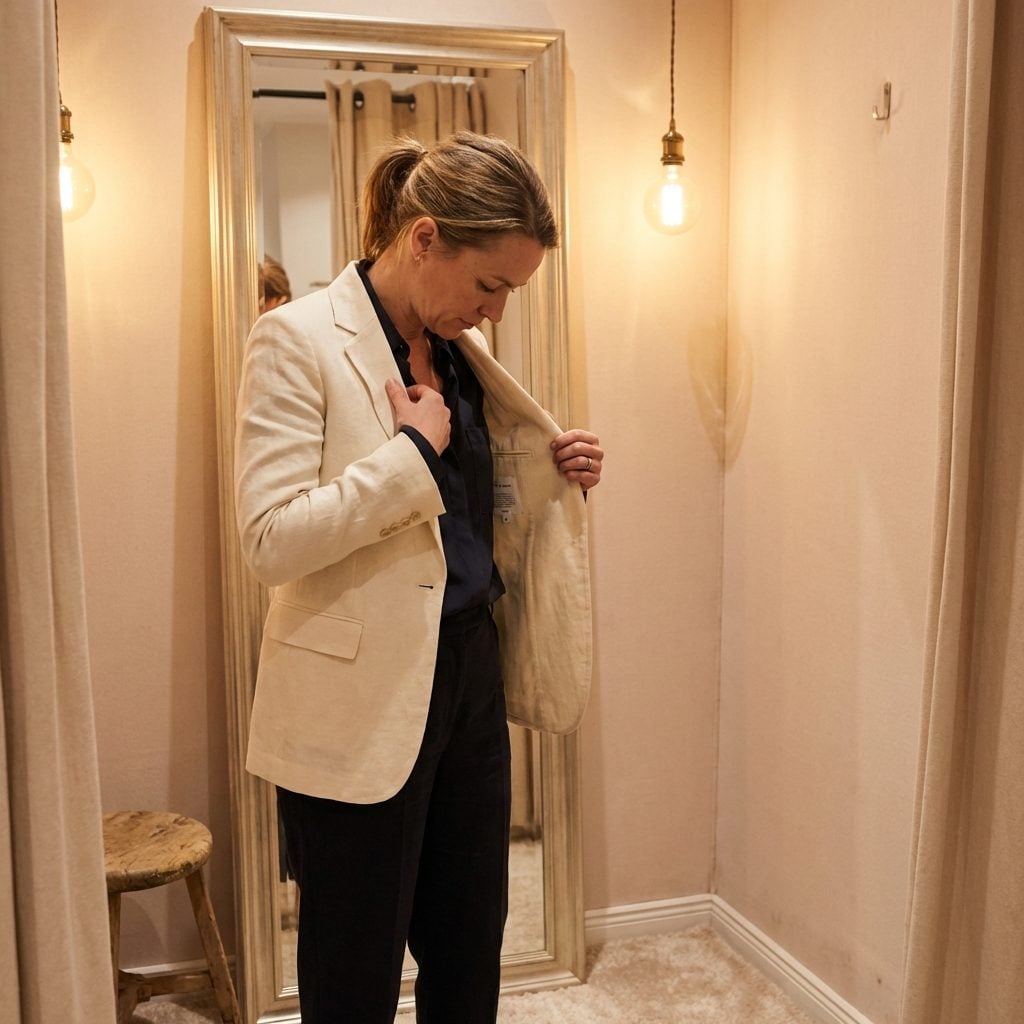
The fitting room should be about one thing: whether the garment works on your body. Does it sit right at the shoulder? Does the waist hit where it should? Is the hem length right for your height? Instead, the first move is reaching inside the collar to check the brand before even facing the mirror.
Fit is the single most powerful factor in how clothing reads on a person. A perfectly fitting unbranded shirt will always outperform an ill-fitting designer one. Always. The mirror is the honest arbiter. The tag is just information.
- Check the shoulders first, nothing overrides a bad shoulder seam.
- Check how the fabric sits at the hip and waist before anything else.
- Only then check the label, if you need to.
22. Every Outfit Has One Hero Piece, and It’s Always the Logo

There is nothing wrong with a statement piece. The issue is when the statement is always, only, the brand logo. When every outfit is built around making one recognizable item visible, the rest of the wardrobe starts to function as a backdrop rather than clothing you love.
A great outfit has a focal point, yes. But that focal point might be a color that looks extraordinary on you, a cut that works with your body, a texture that adds depth. When the logo is always the hero, everything else in your wardrobe risks becoming filler.
21. The Price Tag Has Become Your Measure of Taste

Cost and quality do have a relationship, but it is not a straight line, and it certainly is not a guarantee of style. Assuming that the most expensive piece in the room is also the most interesting one is a logical leap that the fashion world does not actually support. Some of the most precise and considered dressing happens in a beige style palette sourced entirely from mid-market brands. Some of the most forgettable outfits wear five-figure price tags.
Price is a proxy for something, but it is not a proxy for taste. Taste comes from looking, absorbing, noticing, and making deliberate choices. It cannot be purchased, only developed.
20. Unbranded Clothing Makes You Feel Like You’re Missing Something

Put on a beautifully cut pair of trousers with no logo anywhere. A fine-gauge sweater in a color that works perfectly against your skin. Simple, well-made leather loafers with no visible branding. If your immediate reaction is that the outfit feels incomplete, that is worth examining carefully.
That feeling of absence is not about the clothing. The clothing is doing everything right. The absence is about the social signal you’re used to sending and the validation you expect in return. Clothing that works purely on its own terms, without a brand doing the communicating for it, is actually a more sophisticated kind of dressing. It requires trusting your own eye completely.
19. You Scan an Outfit for the Brand Before You See It as a Whole

This one is almost a party trick, and not in a fun way. Someone walks into the room and your eye goes immediately to the bag, the belt, the sneaker profile, the logo hardware. Before you register what they’re wearing, how it fits, or whether it reads well together, you’ve already clocked the brand. It takes about three seconds.
That instant categorization is something the fashion industry has spent enormous resources training into consumers. Recognizing labels fast is not a sign of advanced taste, it is a sign of brand conditioning. Actual style observation moves in the opposite direction: it starts with the overall impression, then zooms in.
18. You Describe Your Outfits in Prices and Brand Names, Not Colors or Cuts

Listen to how you talk about your clothing. «I’m wearing my Burberry today.» «This is the Bottega.» «These are the ones everyone has been waiting for.» The brand name is the lead, the description. Not the color. Not the silhouette. Not the fabric weight or what makes it work with the rest of the outfit.
Compare that to someone who says: «I’m in this deep navy linen, it has the most interesting wide leg.» That person is talking about what the clothing actually looks like. They are describing blue style choices made with intention. The vocabulary you use around clothing reveals a lot about whether you’re engaging with it aesthetically or as status currency.
17. A Great Outfit Still Feels Unfinished Without a Name Behind It
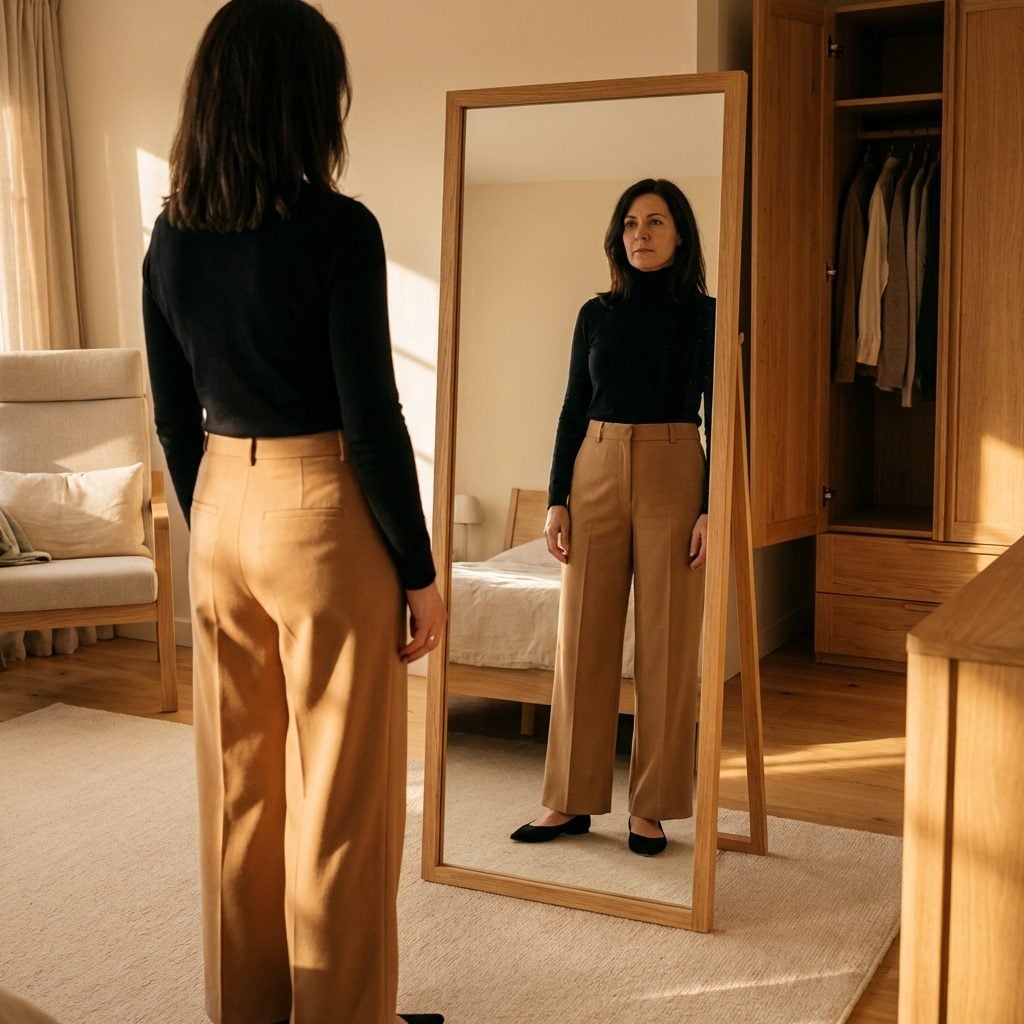
Everything works. The proportions are right, the colors connect, the fabrics have weight and texture. You look in the mirror and, objectively, the outfit is good. Then the thought arrives: but nobody will know this is anything. And suddenly the whole thing feels less.
That deflation is the clearest signal that the outfit was never fully about how you look. It was about how others will categorize you. Personal style, in the truest sense, is something you feel regardless of audience. An outfit that only lands when someone else recognizes the label is performing for the room, not for you.
16. The Logos and Monograms Are Always Front and Center, and That Is Not an Accident

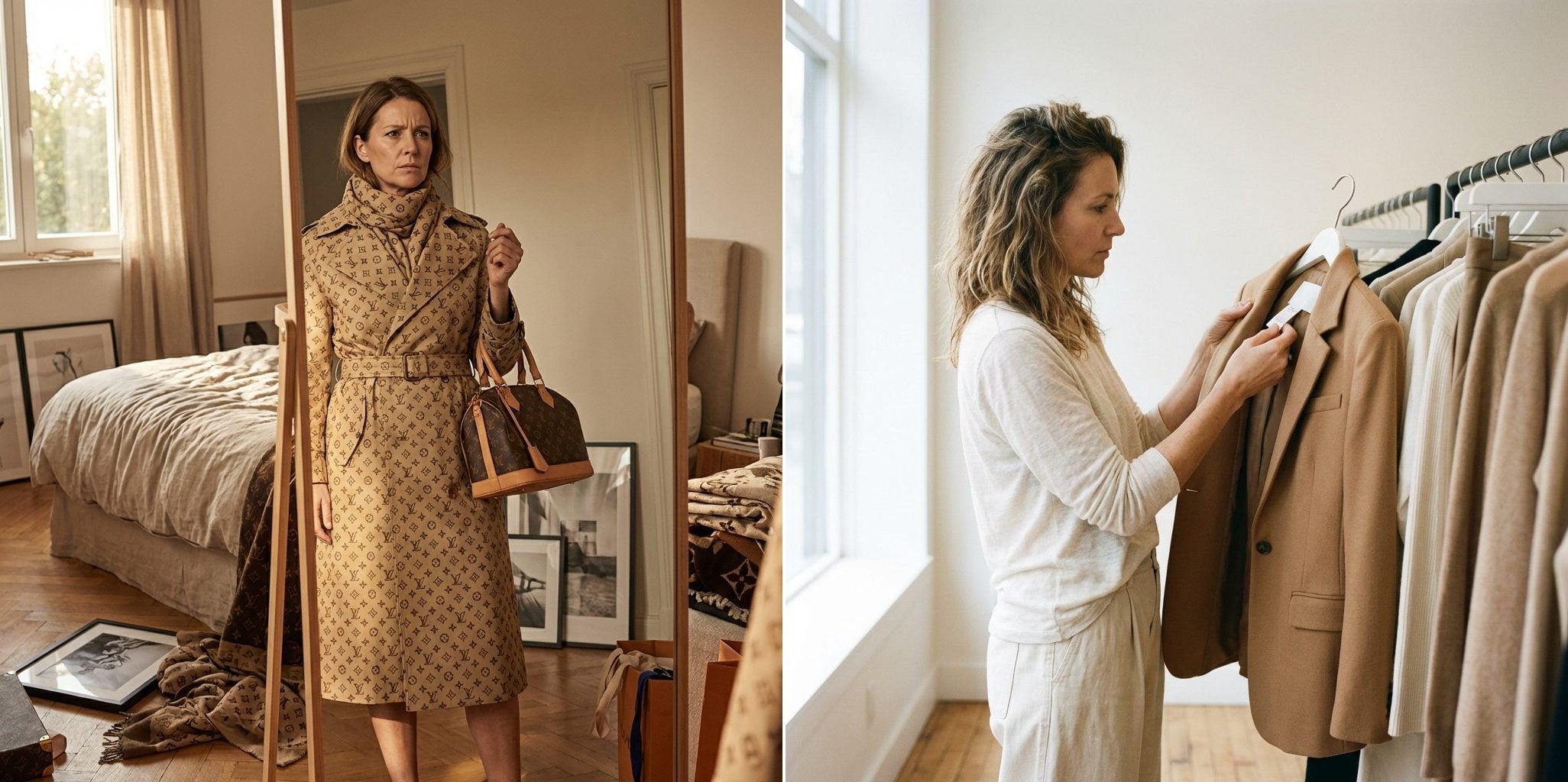
There is a version of this that is genuinely playful. Bold blush style pieces with a graphic monogram, a classic logo scarf worn with irony and intention. That is styling with awareness. The version worth examining is when the logo is always the point, always the thing you want read first, always the piece around which everything else organizes itself.
The habit often develops gradually. One logo piece leads to another, and before long the wardrobe is a collection of brand signals rather than a reflection of actual aesthetic. Pulling back does not mean giving up quality. It means asking, genuinely: is this piece interesting without the name on it? If the answer is no, that is useful information.
15. You Hesitate Before Wearing Something Nobody Will Recognize

There’s a silk blouse in the back of your closet. You love it. The color works, the fit is right, the fabric feels like wearing a quiet promise. But it’s from a small brand, and you keep leaving it there. Something stops you.
That hesitation is worth examining. If the deciding factor between wearing or not wearing a piece is whether someone else will clock the label, your taste has become a performance for an audience. Style that depends on recognition to feel valid is style built on borrowed confidence, not your own.
14. The Things You Buy Are Really Sending a Message You Haven’t Said Out Loud
❤️ Would you like to save this?
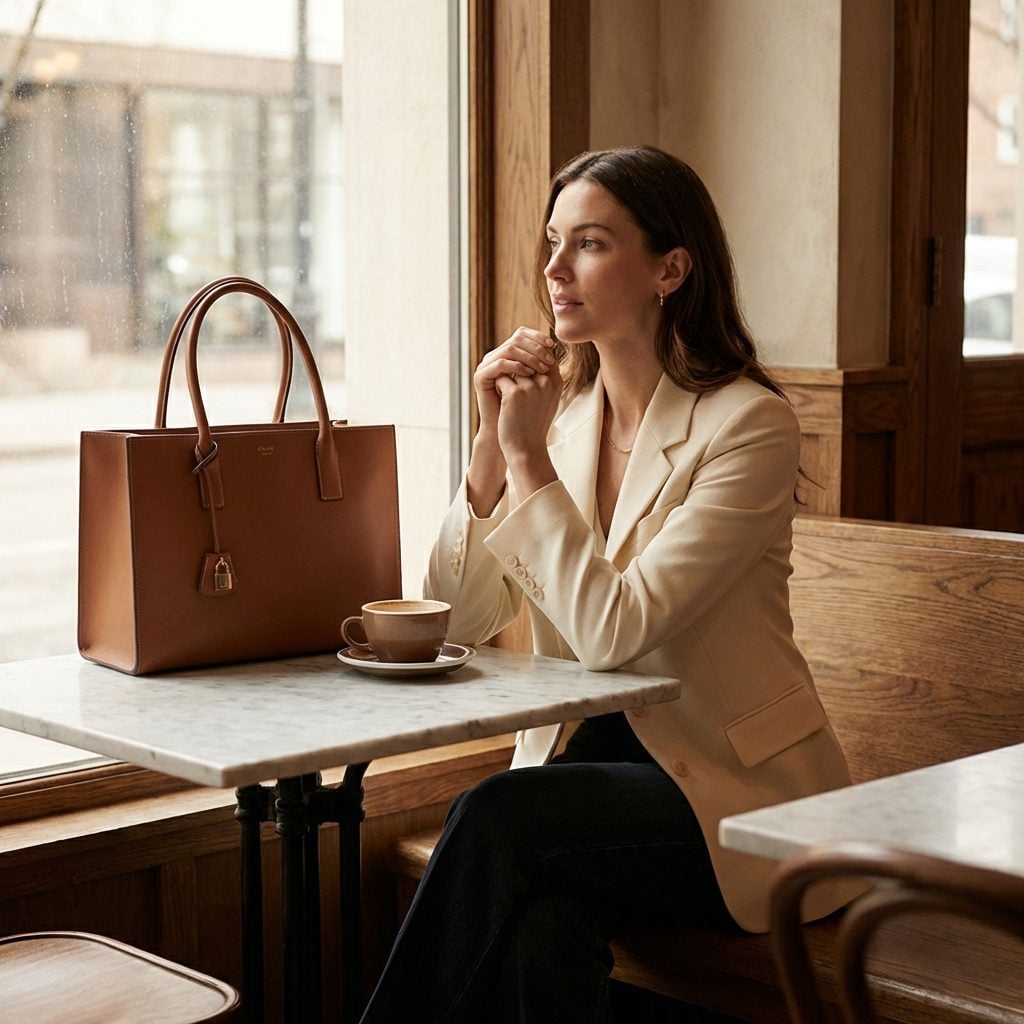
Most of us won’t admit this one, even to ourselves. The bag wasn’t chosen because you needed a structured tote or loved the leather. It was chosen because of what carrying it communicates. That’s not entirely shallow. Clothing has always carried social meaning.
But there’s a tipping point. When every purchase is fundamentally about signaling arrival, status, or belonging, the clothes stop being yours. They become a press release. Ask yourself: if this piece had no recognizable logo, no brand equity, would you still want it?
13. The Fit Is Wrong and You’re Wearing It Anyway Because of What’s on the Tag
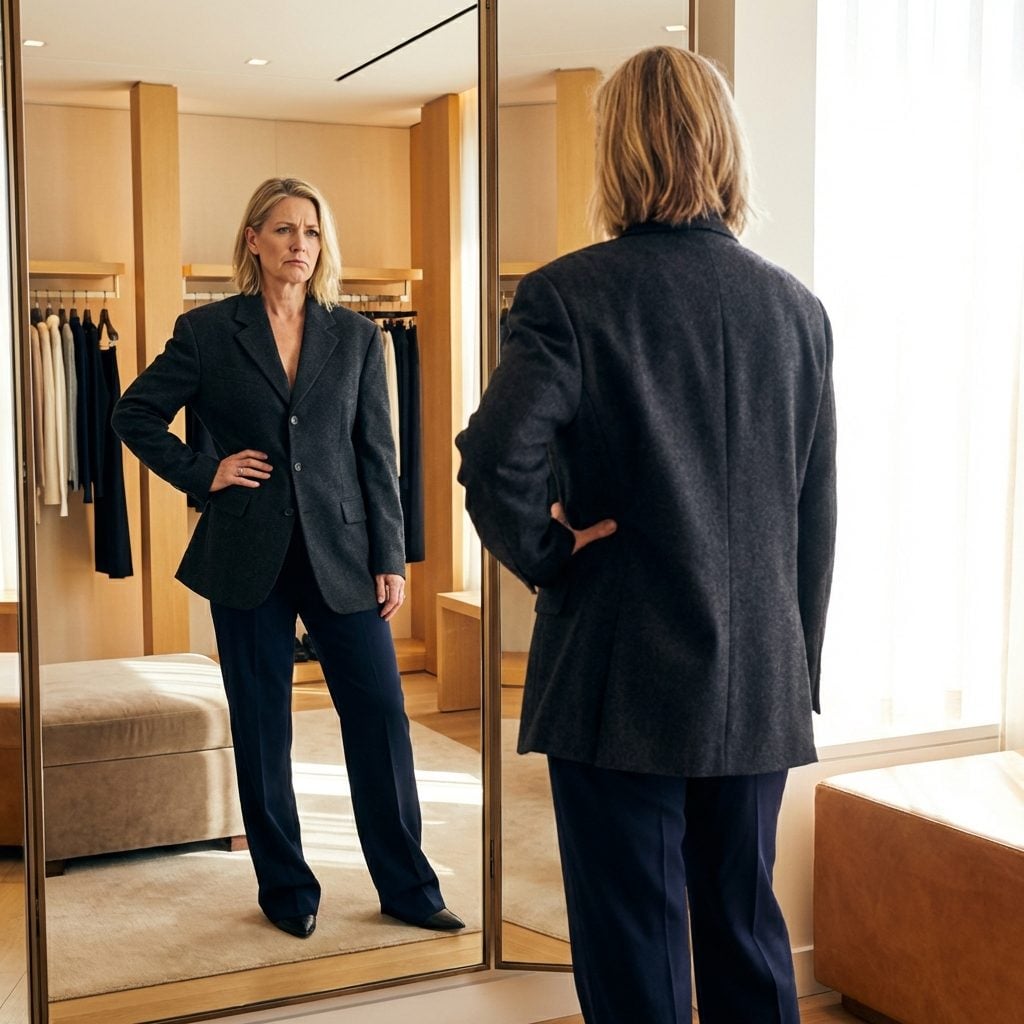
A pair of wide-leg trousers that sit too low, a blazer with shoulders that drift past yours, a dress that’s beautiful in theory but cuts you in the wrong place. You keep them all. Alterations feel unnecessary when the label is the point.
Here’s the quiet truth: nothing signals taste like fit. Not price, not provenance, not the name sewn into the lining. A tailored blazer from a mid-range brand that sits perfectly on your frame will always read better than a designer piece that doesn’t. The eye doesn’t read labels. It reads proportion.
Fit is the one thing money can always buy but status-dressing rarely bothers with.
12. A Compliment Only Lands If They Know the Brand

Someone stops you. Tells you they love your jacket. You smile, say thank you, and then feel oddly flat when they don’t follow up with recognition of the label. The compliment didn’t quite complete itself.
That’s the tell. A genuine response to being told you look good should feel like enough. When it isn’t, when the compliment only counts if the other person identifies the brand, you’ve outsourced your satisfaction to their brand literacy. What you’re chasing isn’t a compliment. It’s validation that the purchase was the right move.
11. You Start With the Label and Build an Outfit Backward From There

The process reveals everything. Open your mental wardrobe and notice where your eye goes first. Is it to a color story, a shape, a proportion you want to create? Or is it to the most recognizable piece, the one with the most visual brand equity, and then you build around it?
Dressing backward from a label means the label is doing the creative work. It’s the anchor and the destination. Everything else is filler. Real personal style starts with silhouette: the way a wide trouser balances a fitted top, the way beige style layers tone on tone to create depth without noise. The brand is incidental.
10. The Price Comes Up In Conversation Before Anyone Asks

It happens casually. Someone says they like your coat and you say, almost reflexively, “Thank you, it was actually on sale, originally four hundred dollars.” Or there’s the version where the price isn’t mentioned directly but the brand is dropped loudly enough that the cost is implied.
Cost-dropping is the verbal equivalent of turning the label outward. It’s a bid for a specific type of respect, one that has nothing to do with how the piece actually looks on you. The things worth saying about what you’re wearing are usually more interesting than the receipt.
9. You Rushed to Wear the Season’s Loudest Piece Before the Hype Moved On
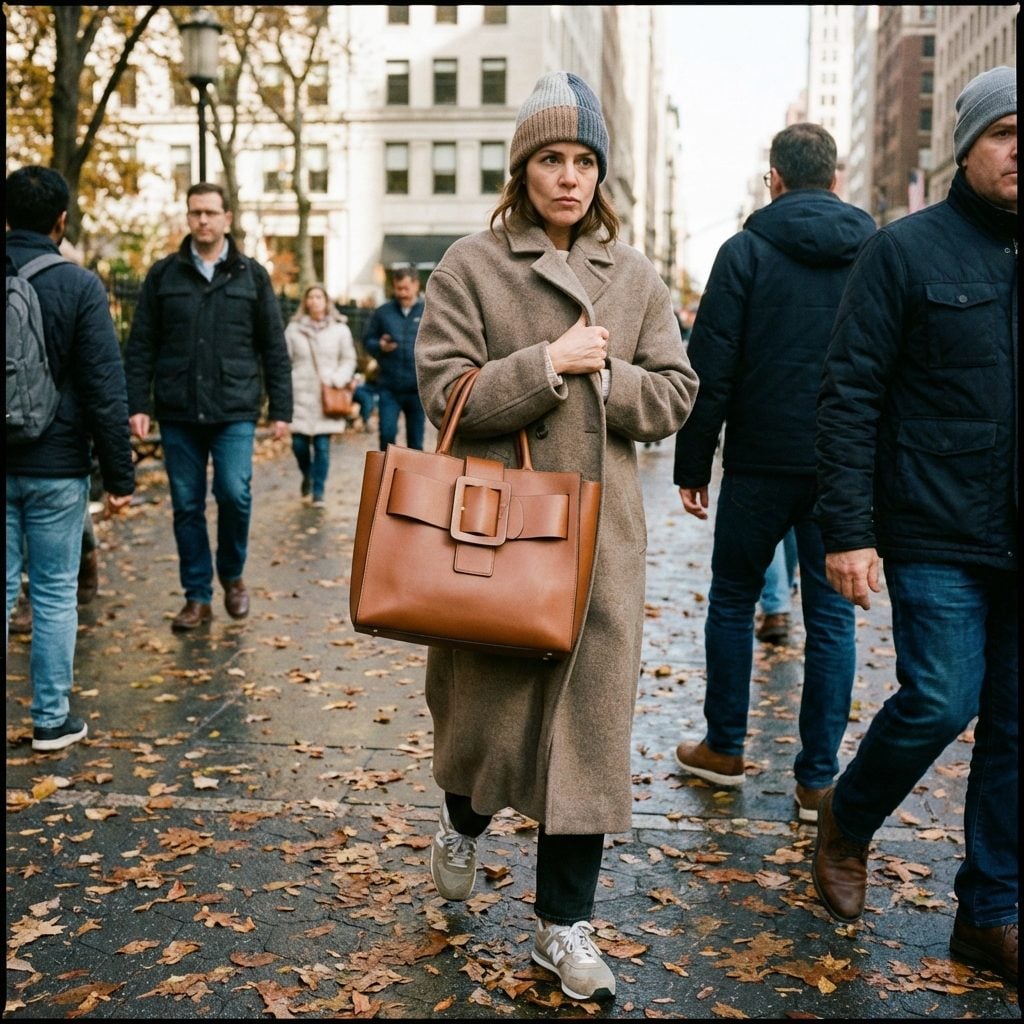
There was a very specific window. The “it” bag, the shoe everyone photographed, the jacket that appeared on three magazine covers. You bought it in that window and wore it immediately, with urgency.
Speed is the giveaway here. Personal style doesn’t have a deadline. Trend participation does. There’s nothing wrong with loving a season’s most photographed piece, but if the driving force was getting there first, before the hype faded and the piece “lost value,” you weren’t buying for you. You were buying for the timestamp.
Style built on timing is really just fast fashion with a higher price tag.
8. You Know the Original Retail Price of Almost Everything You Own

Not approximate. Exact. You know it the way you know your phone number. And the secondary market value too, probably. The resale estimate. The waitlist status.
There’s a version of this that’s just being a smart consumer. But when the retail price is one of the primary ways you organize the value of what you own, and when pieces that cost less feel like they matter less, that’s when the numbers have replaced the experience of actually wearing your clothes.
- You feel different wearing a piece based on what it cost, even if it looks identical to something cheaper.
- Gifted items feel less valuable until you look up the price.
- A “good deal” still feels like a step down from full-price status.
7. You’ve Replaced Pieces Purely Because the Logo Got Quieter
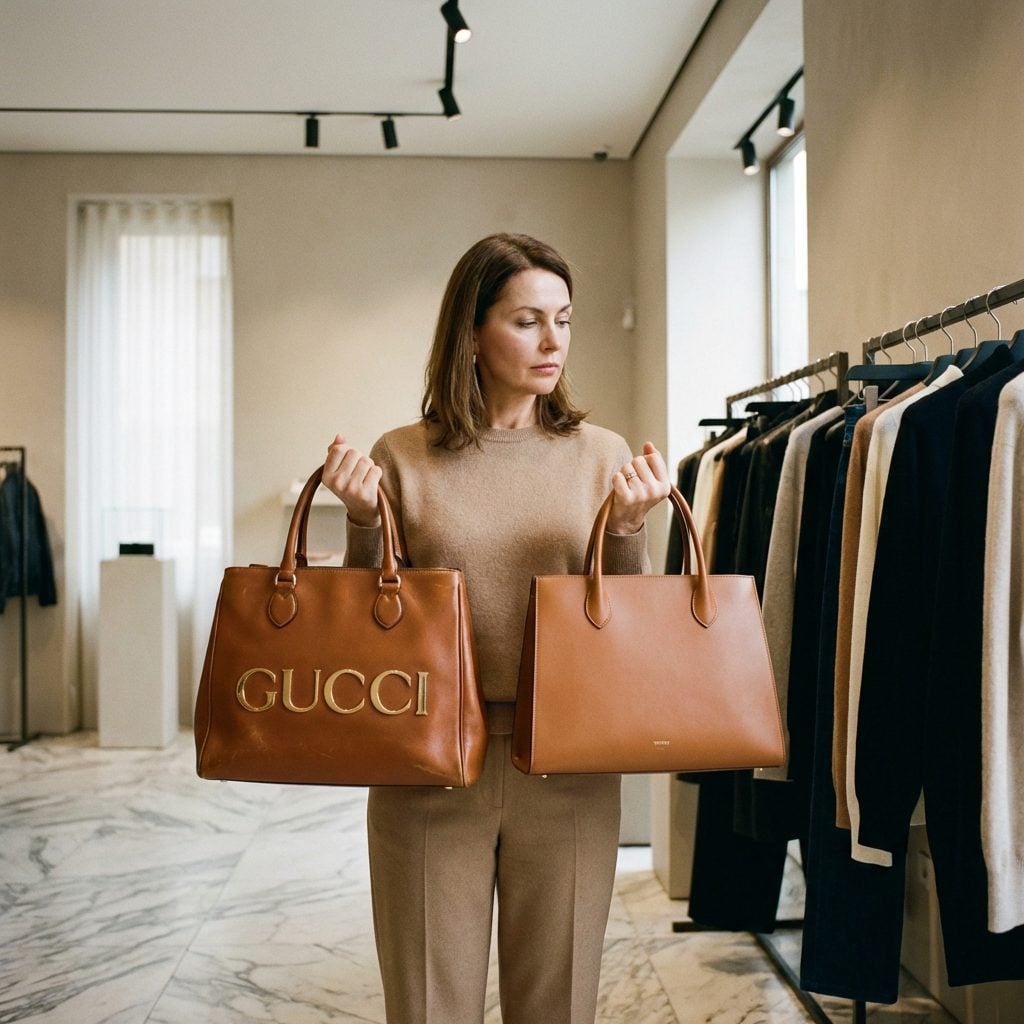
The brand updated its monogram. The new creative director stripped the obvious branding. The season’s version is somehow less recognizable than the one you already own, and suddenly you need the new one.
This is the clearest possible sign that the label is doing the work, not you. The item itself didn’t change. The quality is the same or similar. What changed is the legibility of the status signal. Replacing perfectly good pieces because the branding has become less visible is not taste. It’s maintenance of a social signal.
6. You Keep Reaching for the Recognizable Colorway Even When Another Shade Suits You Better

The brand’s classic camel. The signature red sole. The house navy. You know these colorways by heart, and you keep going back to them not because they work best on you, but because they communicate instantly.
Flattering color is deeply personal and has almost nothing to do with what’s on the label. The blush style that lights up your complexion, the warm terracotta that makes your eyes do something interesting, these are discoveries that require paying attention to yourself, not to brand identity. Choosing the recognizable colorway over the one that actually works for you is choosing the audience over the mirror.
5. “Where Is It From?” Feels Like the Only Compliment That Actually Counts

“I love that dress” should be the whole thing. But there’s a familiar feeling where that sentence lands and you wait, almost involuntarily, for the follow-up. The brand recognition. The “oh, is that a so-and-so?” that turns the compliment into a shared understanding of value.
When a compliment on how you look feels incomplete without the brand being named, you’ve handed the source of your confidence to someone else’s fashion literacy. The most interesting dressers are the ones who make you feel the question “where is it from?” is almost beside the point. Because the way they wore it made it entirely their own.
4. That Keychain Cost More Than Your Last Vacation and You Know It
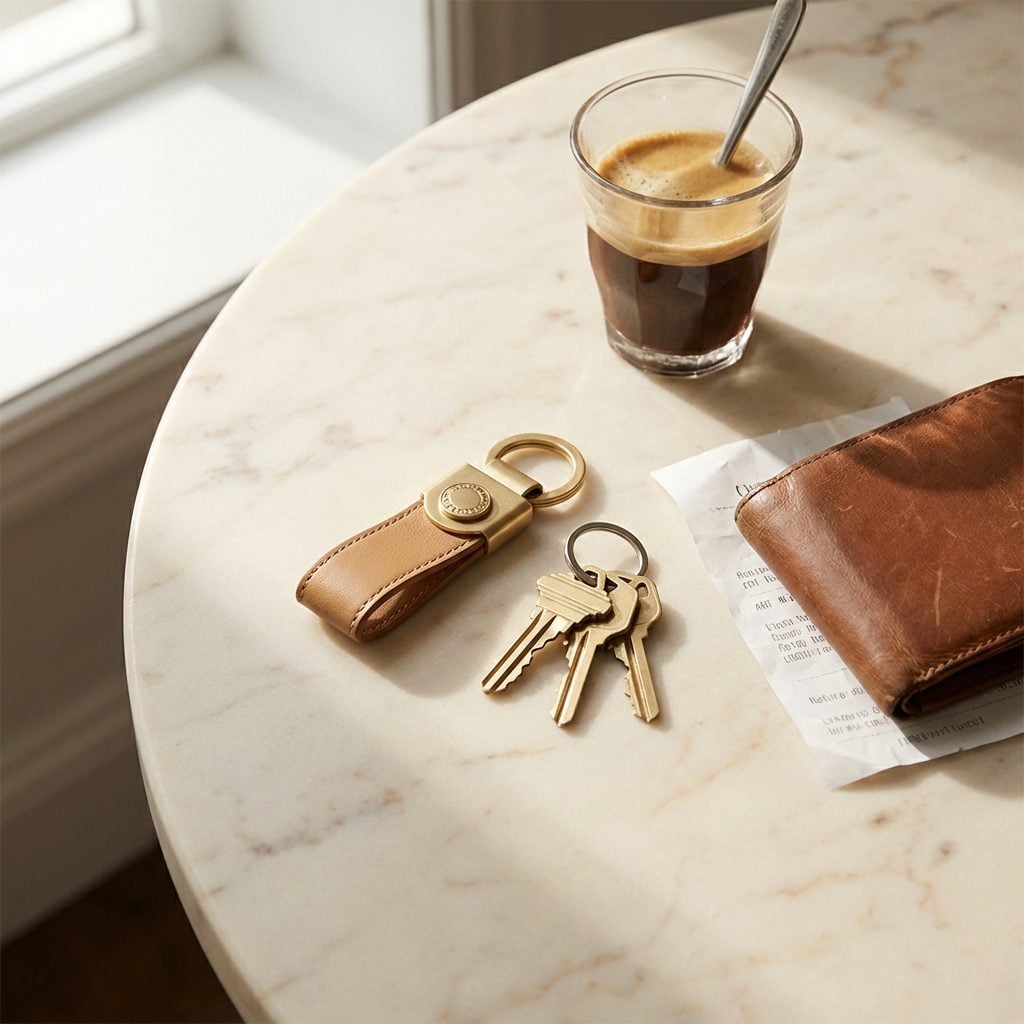
Entry-level luxury items, the small leather goods, the logo keychains, the canvas cardholders, exist for one reason: to get the logo into the hands of buyers who can’t yet afford the full range. There’s no shame in that. But buying a designer logo keychain you don’t actually need, purely to carry a name, is a different conversation than loving a well-made small leather piece for its craft.
Ask yourself honestly: would you buy this if the logo were removed? If the answer takes more than two seconds, you already have it.
3. The Outfit Is Expensive. You Still Feel Like You Disappeared Into It.

You’re wearing something that cost more than most people’s car payments, and somehow you feel invisible. No compliments, no second glances, just a very quiet, very well-made outfit that nobody noticed.
This is one of the more disorienting signs. We’re conditioned to believe price and impact are the same thing. They aren’t. A woman who knows her colors, her silhouettes, the exact shade of blush style that makes her face come alive, she’ll be remembered in a forty-dollar linen wrap dress long after the logo has been forgotten.
Taste is the thing that makes people remember you. Labels are the thing you use when you’re not sure what else to say.
2. You Refresh the Sold-Out Page, Not Your Own Sense of What You Actually Want

❤️ Would you like to save this?
There’s a specific kind of wanting that kicks in the moment something sells out. Before the item disappeared, you might have scrolled past it twice. Now it’s urgent. This isn’t desire. It’s scarcity mechanics, and the fashion industry has spent decades perfecting it.
Style built on personal preference has a different texture. You know what you reach for on a Tuesday morning when nobody’s watching. You know the pieces you wear until they fall apart. Those instincts are taste. The need to own the thing everyone else is currently chasing is something else entirely.
1. The First Thing You Ask Is ‘What Brand Is It?’ Instead of ‘Where Did You Find That?’

Two very different questions. One is trying to place something in a hierarchy. The other is genuinely curious about where a person found something they love.
When someone walks in wearing a coat that stops you mid-sentence, the instinct that comes from taste asks: where did that come from, who made it, can I find something like it? The instinct that comes from label-dependence asks: is it worth noticing? The brand name is being used as a quality filter, a shortcut that replaces your own eye.
Training your eye to see a garment before its provenance is one of the more useful style habits you can build. It means you stop missing the interesting things.