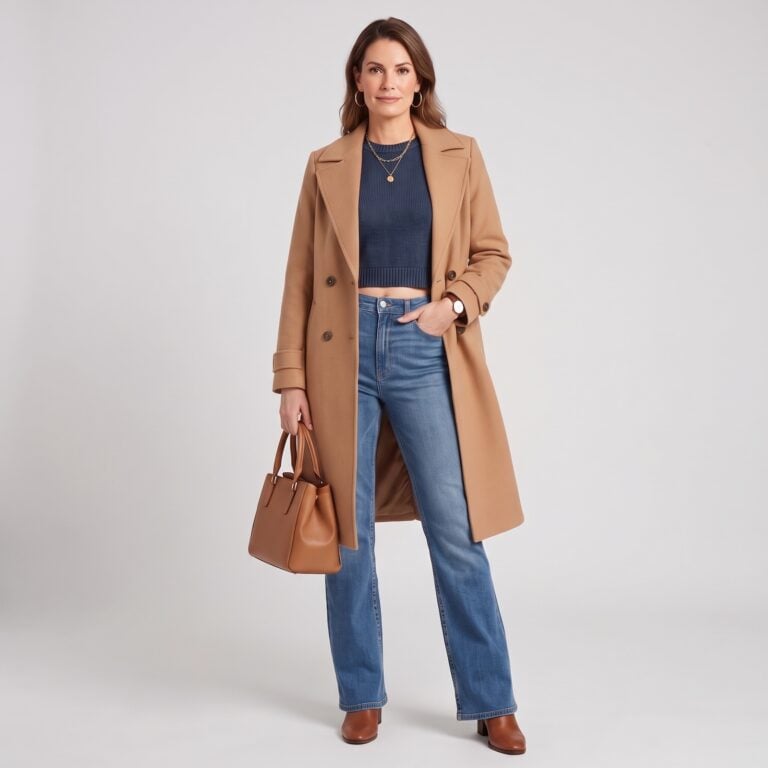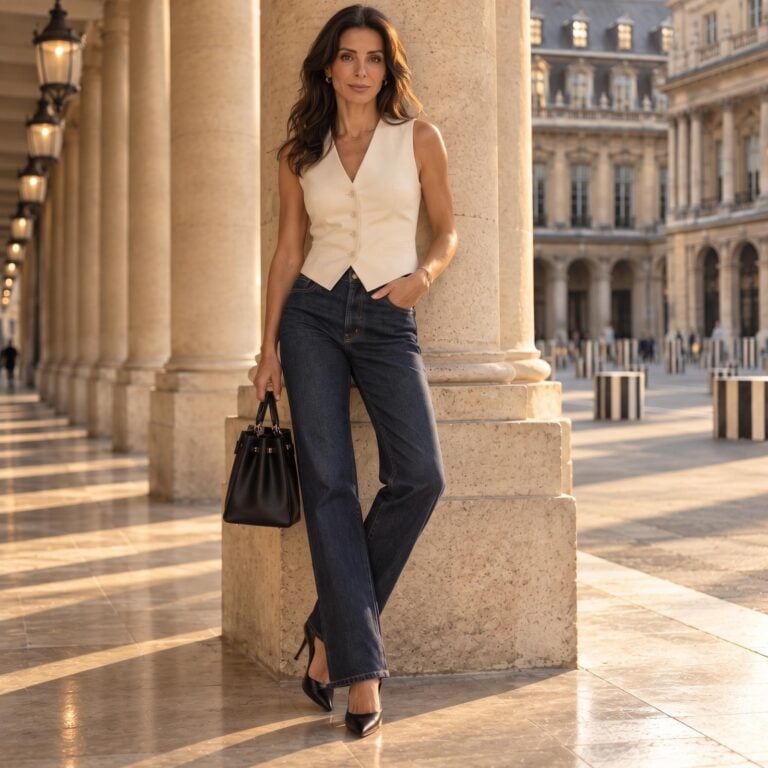
❤️ Would you like to save this?
Your wardrobe is not a collection of clothes. It’s a record of every opinion you’ve ever accepted about yourself. And somewhere inside it, buried under the pieces you bought because they were practical, or appropriate, or because someone said they’d suit you, is the version of you that dresses without consulting anyone. Most women meet her properly for the first time after 40. A handful meet her through a single pair of shoes. The psychology behind why certain women’s style sharpens with age while others feel increasingly lost isn’t about taste or budget or access to the right stores. It’s about one very specific mental shift, and once you see it, you’ll spot it in every room you walk into.
FYI, thanks to AI imagery software, we’re able to create very specific fashion and hairstyle examples to illustrate the points being made. In some cases, imagery is exaggerated to hammer home the point. Also, assume links that take you off the site are affiliate links such as links to Amazon. this means we may earn a commission if you buy something.
The Psychological Reason Women Who Stop Asking Permission Dress Better Than Everyone Else

There’s a specific kind of ease you notice on some women. Their clothes aren’t trying harder than they are. The silhouette isn’t performing. The sneaker isn’t a statement, it’s just a shoe they liked. What’s actually happening beneath all that apparent casualness is a measurable psychological shift: they have moved from extrinsic to intrinsic motivation.
Psychologist Leon Festinger’s social comparison theory explains why so many of us dress the way we do: we unconsciously benchmark our choices against what others wear, what trends are circulating, what the room might reward. Research on social approval as extrinsic motivation shows that when we base our choices on external validation, we create what psychologists call conditional self-worth, a self-image that fluctuates with the opinions around it. That’s an exhausting place to dress from. The women who seem to have “arrived” stylistically haven’t necessarily learned more about fashion. They’ve stopped consulting it for permission.
What Neuroscientists Found When They Studied Women Who Dress Purely for Themselves
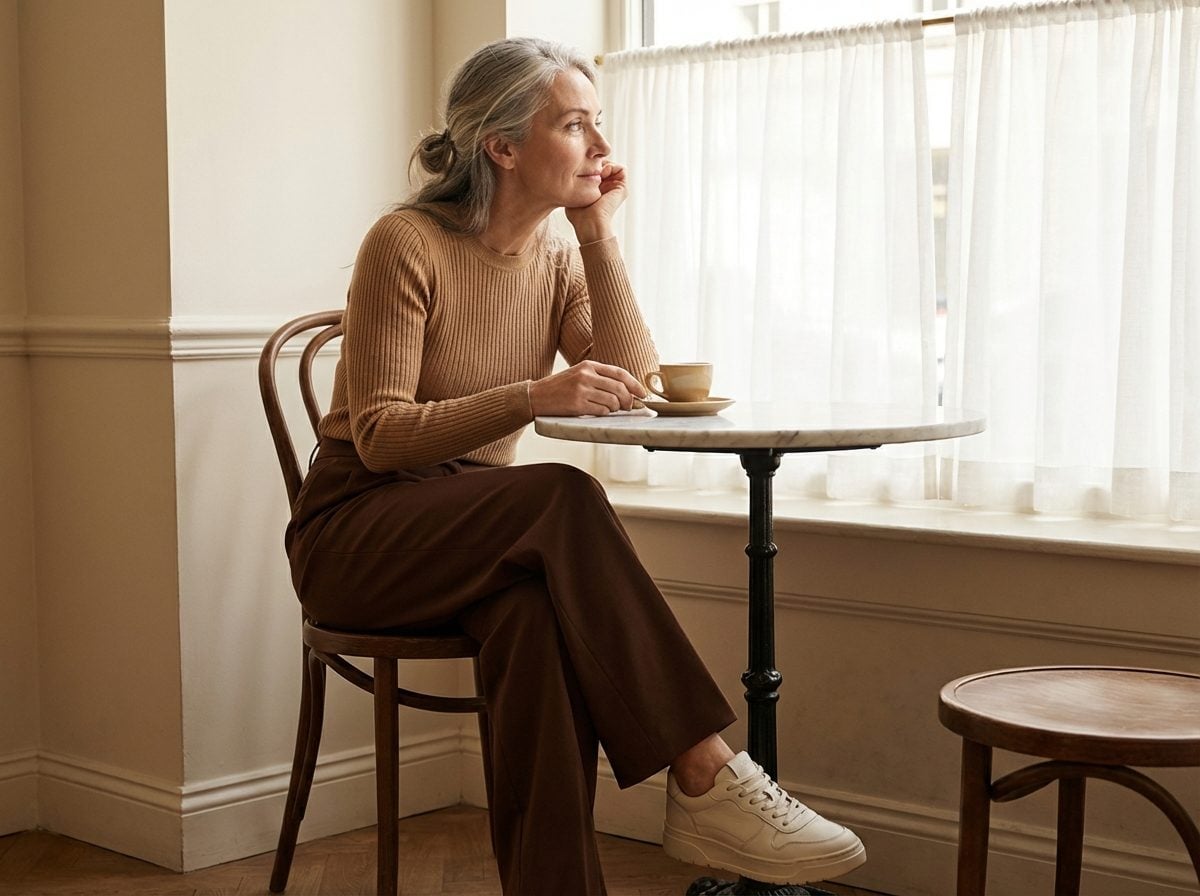
When researchers scan the brain during moments of authentic self-expression, something specific lights up: the brain’s reward circuitry, particularly the ventral striatum and nucleus accumbens, releases dopamine not in response to praise received, but in anticipation of a choice that feels right. Neuroscience research on style and self-concept suggests the brain processes fashion choices in the same regions responsible for identity, meaning that when you choose clothing that aligns with who you actually are, you’re not just getting dressed. You’re reinforcing a self-concept.
The women who dress purely for themselves aren’t doing something indulgent. They’re doing something neurologically efficient. There’s no ongoing inner negotiation, no quiet loop of is this okay, is this too much, does this read right, because the internal judge has been retired. What remains is faster, cleaner, and far more decisive. That’s where the appearance of effortlessness comes from. Not from caring less, but from having stopped consulting the wrong sources.
The Quiet Power Move Hidden Inside a Single Footwear Choice
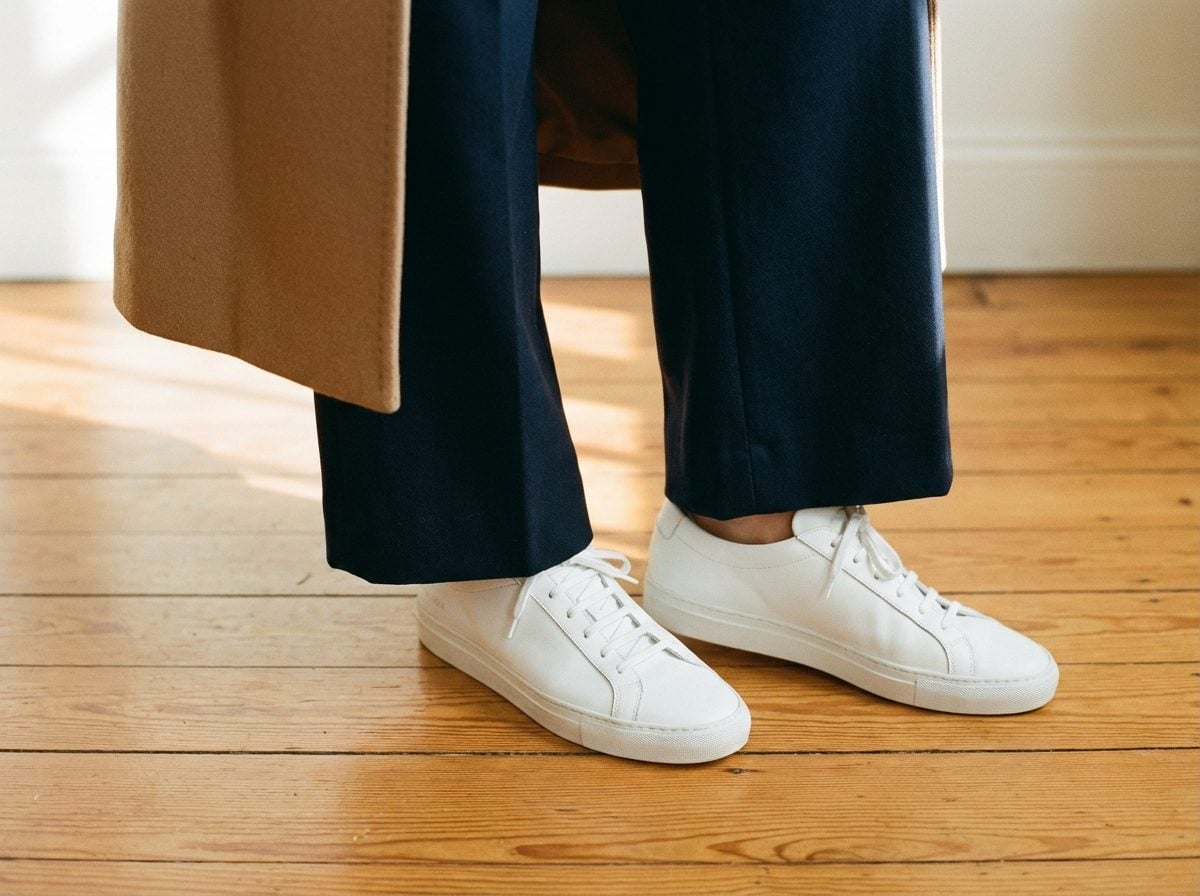
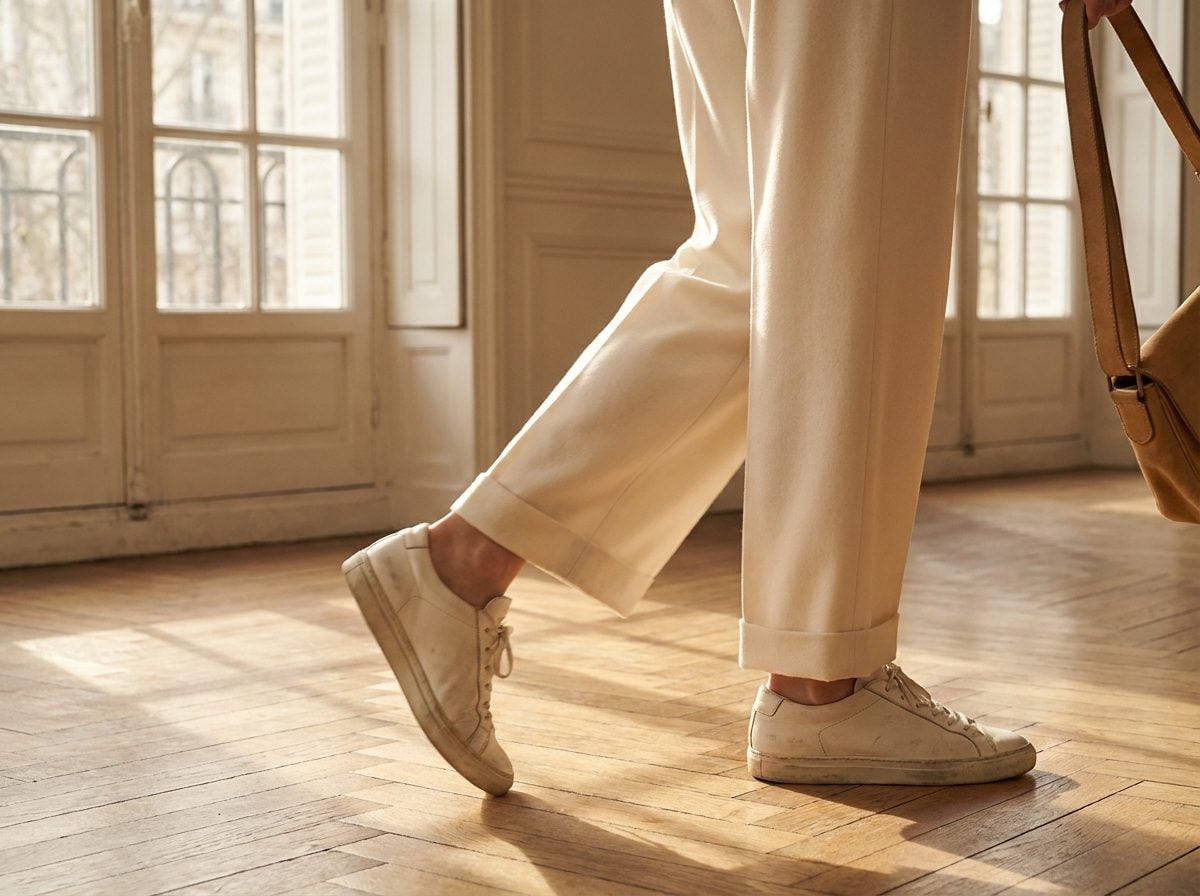
Footwear communicates something clothing rarely can: attitude toward the ground beneath you. Heels negotiate height. Ballet flats signal compliance. But a sneaker, the right sneaker, worn with intention, projects something more specific: a person who has decided, quietly and without announcement, that their comfort and their aesthetic are not in conflict.
The armor effect in fashion psychology describes how deliberate clothing choices create psychological protection and signal social status without aggression. Researchers studying dress and social perception have found that clothing consistently communicates group membership, status, and self-concept to observers, often in the first seconds of contact. A sneaker worn with a well-tailored coat or a fluid silk midi skirt doesn’t just look interesting, it transmits something harder to fake: the confidence to mix registers without needing the outfit to explain itself.
This is the power move nobody talks about. Not the shoe. The fact that no justification was felt to be necessary.
Why the Women Who Look Most Effortless Are Actually Running a Very Specific Mental Filter
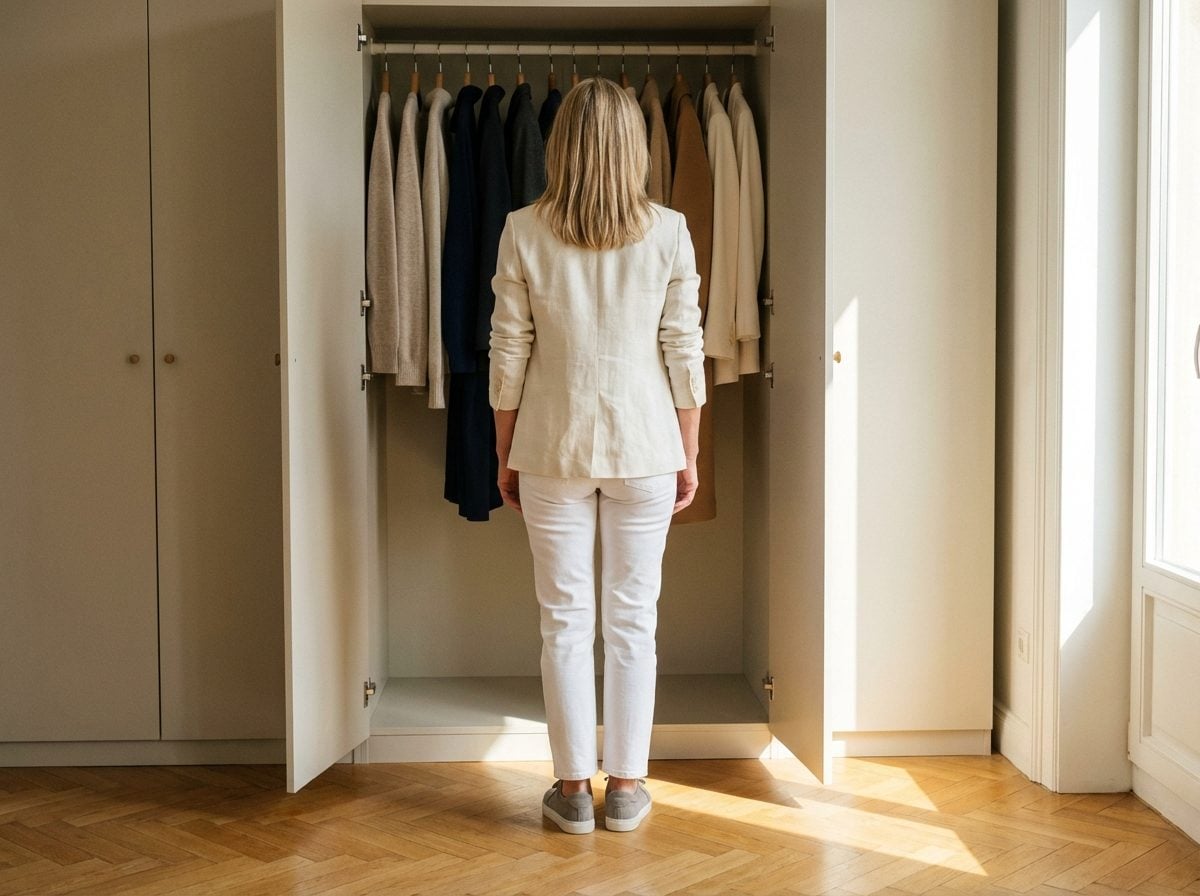
The word “effortless” is doing a lot of lying in fashion media. What looks like zero effort is usually the product of a highly refined internal editing system, one that took years to build and operates almost instantaneously now.
The Three-Question Filter
Women who dress with apparent ease have typically collapsed their decision-making into something close to a single criterion. Psychologists studying clothing style confidence as a multi-dimensional construct found it includes what they call “style longevity”, an individual’s sense of what will still feel right over time rather than just right now, alongside authenticity and aesthetic perceptive ability. Translated: the most confident dressers aren’t just asking “do I like this?” They’re asking “does this feel like me?” and “will this still feel like me next year?”
That filter runs fast once built. The outfit that clears all three answers in two seconds is the one that looks effortless. The deliberation has already happened, it just happened over many years of self-knowledge, not many minutes of that morning.
The Identity Phenomenon That Explains Why Some Women’s Style Gets Sharper After 40, Not Duller
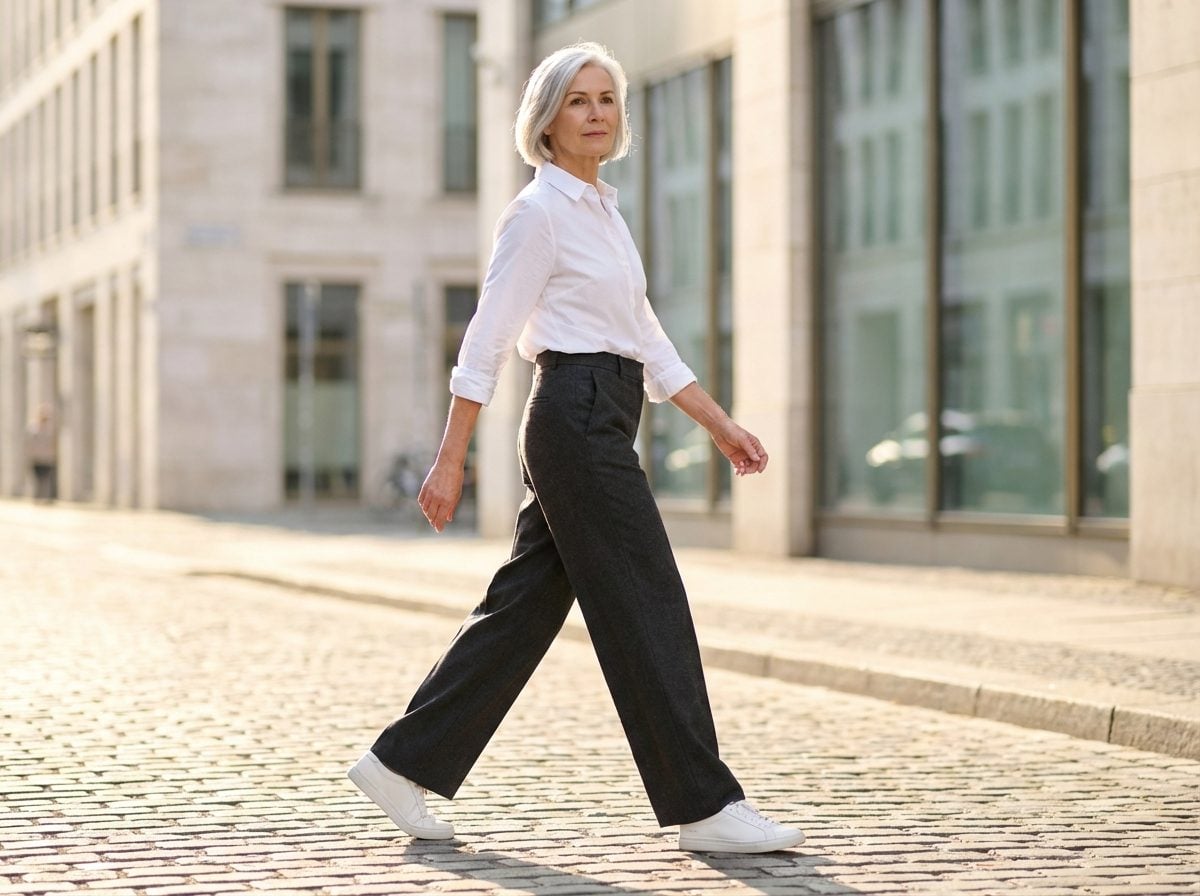
Conventional wisdom assumes style fades with age, that women gradually retreat into safe choices. The research says something almost opposite. Longitudinal identity research tracking women across decades found a consistent trend toward greater identity achievement with age, with women generally reaching identity achievement earlier than men. Identity achievement, the point at which a person has explored their options and committed to a clear sense of self, is the psychological state that produces the most decisive, unambiguous personal style.
A key study on women’s personality development at midlife found that features like identity clarity and what researchers called “confident power” are actually central to this life stage, not peripheral. The women whose style sharpens after 40 aren’t doing it in spite of their age. Age is the mechanism. Decades of accumulated self-knowledge produce a wardrobe edit so precise it reads as instinct.
The Surprising Thing That Happens to Your Confidence When You Stop Dressing for an Audience

You’d expect that dressing with less external input might make you less confident, that the loss of the audience would hollow out the performance. What actually happens is the reverse, and it’s documented. According to Adam and Galinsky’s foundational enclothed cognition research in the Journal of Experimental Social Psychology, clothing affects psychological states through two simultaneous factors: its symbolic meaning and the physical experience of wearing it. When clothing carries your meaning, not a trend’s meaning, not the room’s meaning, both factors align. The symbolic weight becomes personal. The psychological effect is stronger, not weaker.
The audience-less dresser isn’t performing for nobody. She’s performing for herself, and that turns out to be the highest-stakes audience of all. The confidence that comes from that isn’t contingent on how the room responds. It doesn’t need refreshing by compliments. It arrives with the outfit and stays regardless of what anyone says.
What Psychologists Call It When Your Clothes Finally Match Your Internal Self-Image

Carl Rogers called it congruence, the alignment between who you actually are and how you present yourself to the world. He believed psychological well-being depends on a close match between your self-image and your behavior, and that incongruence, the mismatch between inner self and outward expression, leads to anxiety and inner conflict. Fashion is, among other things, a daily congruence test.
When your clothes match your internal self-image, something very specific stops happening: the low-level, mostly unconscious friction of wearing something that belongs to a version of you that doesn’t quite exist. The version who’s trying harder, or younger, or safer, or more impressive. That friction is tiring in a way that’s hard to name until it’s gone.
Researchers studying self-concept and personal clothing style have found that behaviors that create congruence between self-states are associated with elevated self-esteem and general psychological well-being. In the language of clothing: the outfit that finally matches who you are doesn’t just look better. It feels lighter.
The Subtle Signal That Tells Everyone in the Room You’ve Stopped Needing Their Approval

It isn’t the expensive bag. It isn’t the “statement” piece. The signal is far more understated than that, and observers pick it up before they can articulate it.
Erving Goffman, the sociologist whose work on social presentation has influenced decades of fashion psychology, argued that people constantly manage the impressions they make, and that skilled observers read not just what someone is presenting but how deliberately they’re presenting it. Research in the social psychology of dress building on Goffman’s framework shows that individuals use clothing to signal group membership, status, and self-concept, and that these signals are read rapidly and intuitively by others.
The subtle tell of someone who has stopped seeking approval isn’t confidence displayed loudly. It’s the absence of the small compensatory details, the trend piece inserted to prove currency, the logo visible a beat too deliberately, the outfit assembled for what it will produce rather than because it felt right. When none of those calculations are present in an outfit, people sense it. They can’t always name what they’re responding to. But they respond.
Why Trend Immunity Is Actually a Measurable Psychological Milestone, Not Just a Personality Trait
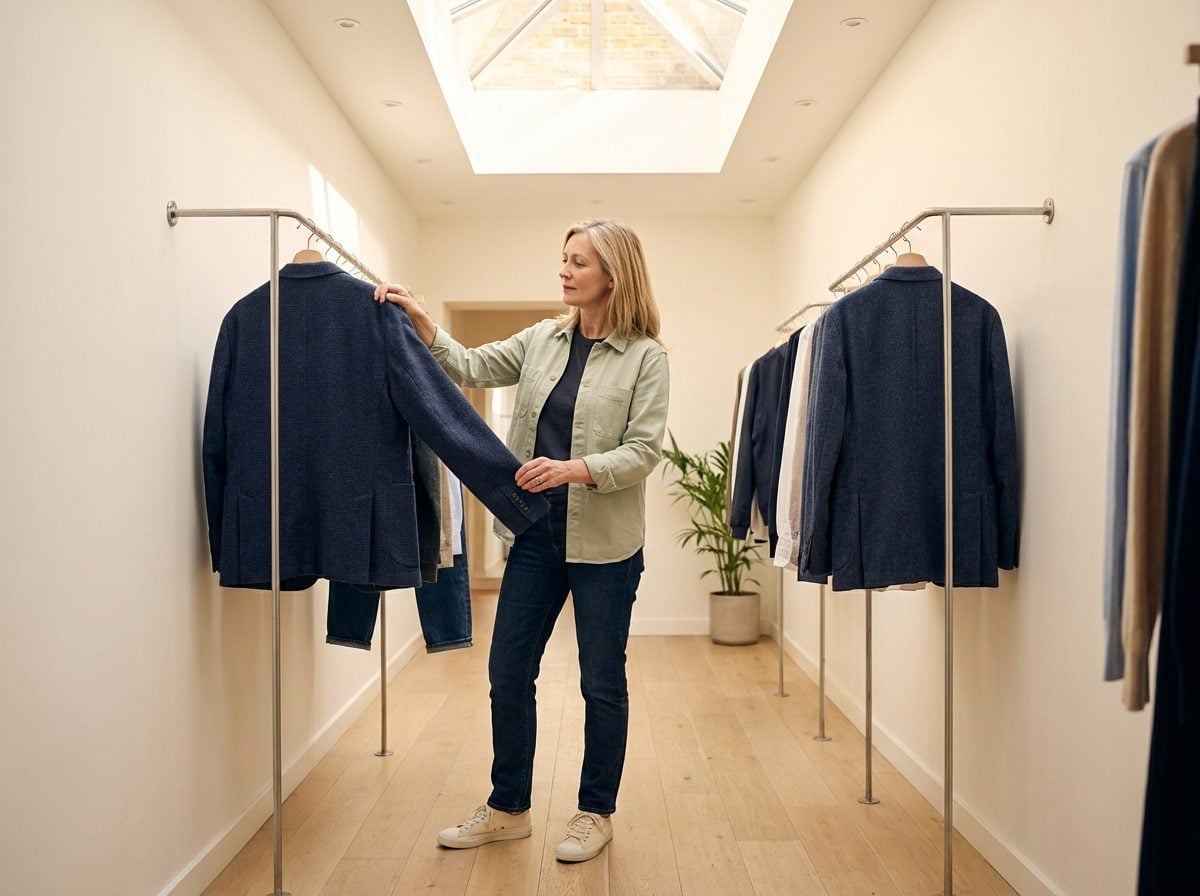
It’s tempting to dismiss trend immunity as temperament, as something some people are simply born with. The research suggests otherwise. A 2024 study on clothing style confidence published in the journal Sustainability found that people with high clothing style confidence express themselves through dress “in a self-directed manner that does not depend on fashion system trends.” Crucially, this confidence wasn’t a fixed trait, it was a construct made up of five learnable dimensions, including style longevity, aesthetic perceptive ability, and authenticity.
Trend immunity, then, is the downstream result of building those dimensions over time. It’s not that the trend-immune woman doesn’t notice trends. She notices them precisely. She just runs them through a filter that asks: does this belong in my life, on my body, in the story I’m actually living, or does it belong in the story the trend is pitching?
That filter takes time to develop. It requires enough self-knowledge to recognize what fits and enough security to decline what doesn’t. Research on personal clothing style and self-concept has also found that fashion innovativeness can actually be driven by fear of being judged unfashionable, meaning that chasing every trend isn’t confidence, it’s its opposite. Trend immunity isn’t a personality type. It’s a milestone. And almost everyone who reaches it did so sometime after 40.
The Dopamine Pattern That Separates Women Who Love Getting Dressed From Women Who Dread It
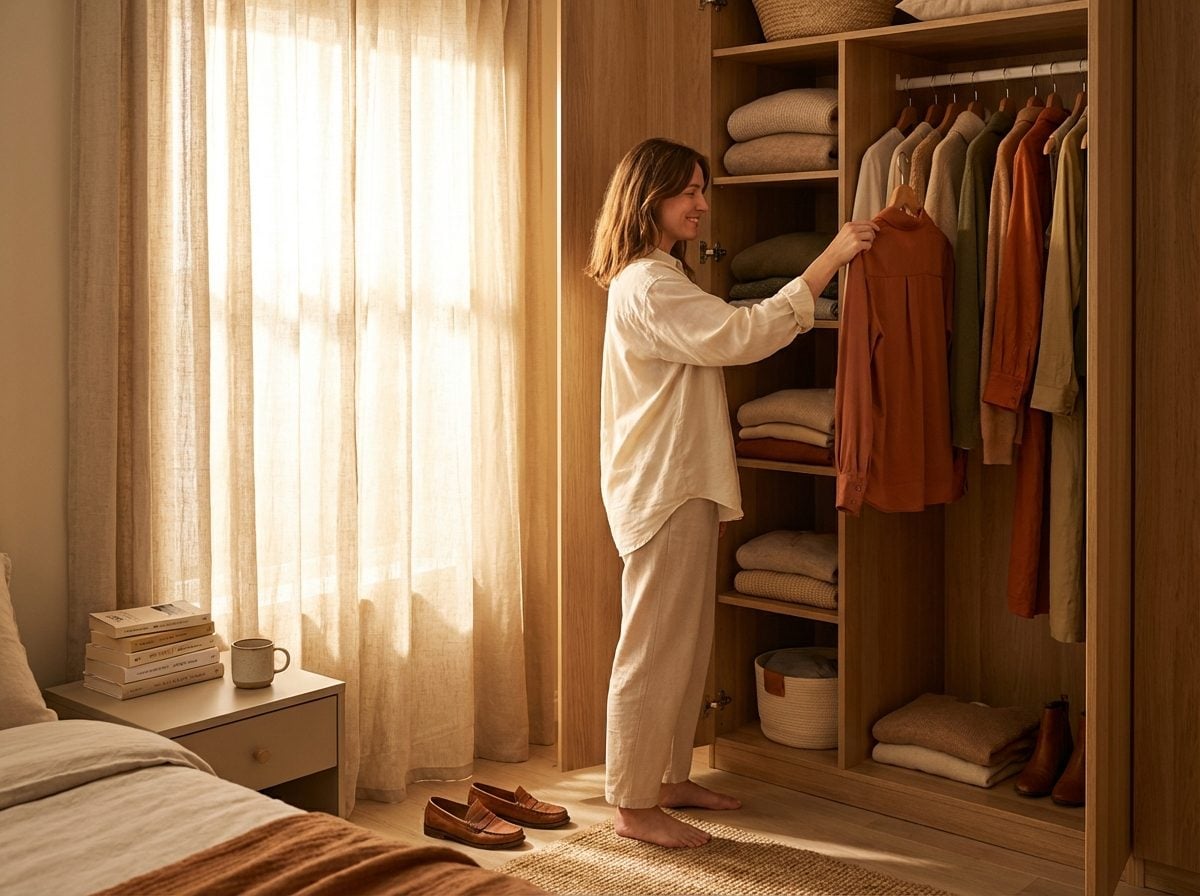
There’s a specific kind of morning that changes everything. You open your wardrobe and reach, without thinking, for something you actually want to wear. Not what’s appropriate, not what’s office-safe, not what fits the version of yourself you’re trying to project, just what feels right. That morning is rare for most women. For some, it’s every morning. The difference isn’t confidence exactly, though confidence is part of it. The difference is whether your wardrobe is wired for your dopamine or someone else’s approval.
According to fashion psychologist Shakaila Forbes-Bell’s work on Fashion is Psychology, wearing an outfit that carries genuine symbolic value for the wearer triggers a dopamine release, a real, measurable rush of pleasure. But here’s what the trend coverage misses: as Dr. Dawnn Karen, the fashion psychologist who coined the term “mood enhancement dressing,” has written, what sparks that response is personal to the point of being non-transferable. Your dopamine palette and your neighbor’s are almost certainly different. Women who dread getting dressed haven’t failed at fashion. They’ve simply never been given, or given themselves, permission to find out what their own triggers actually are.
What the Most Psychologically Secure Women Have in Common With Their Wardrobes
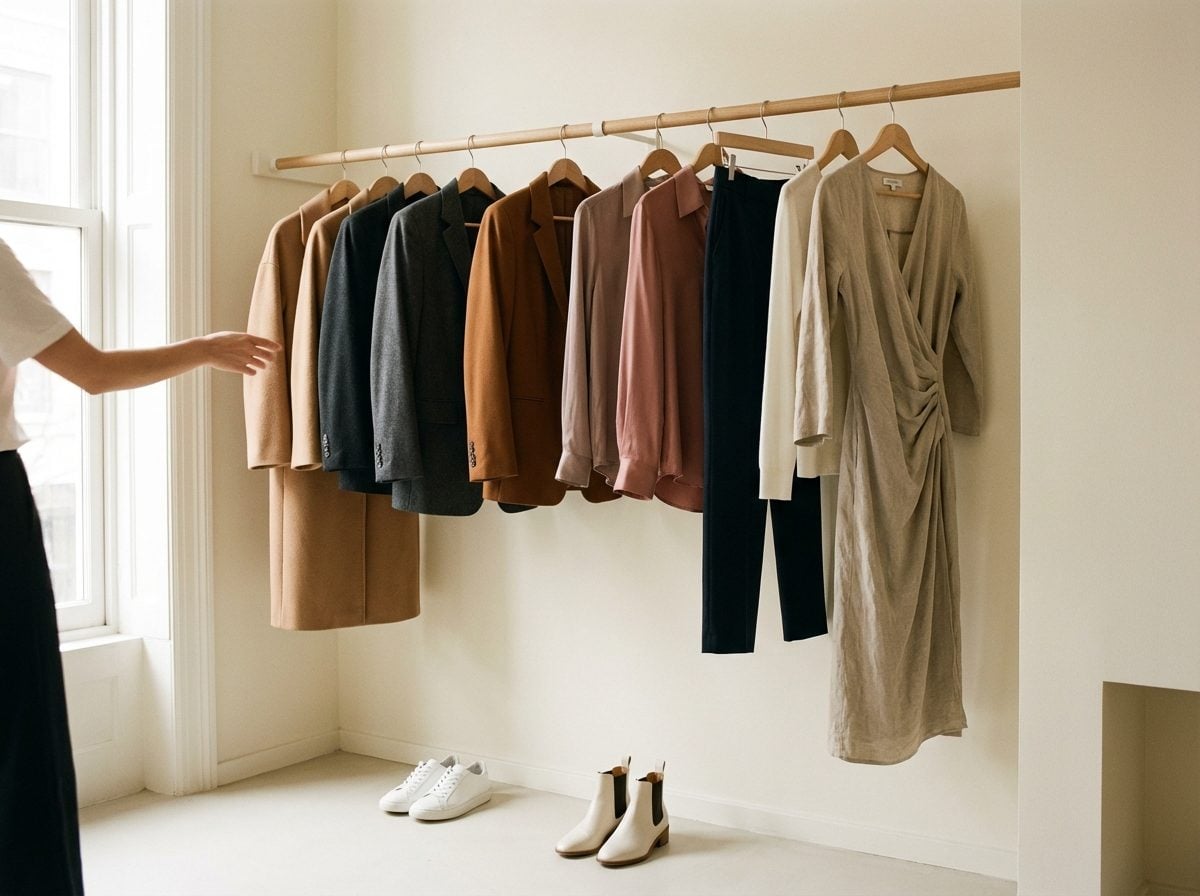
They don’t explain their clothes. Not to themselves, not to anyone else. Their wardrobe isn’t a mood board of aspiration or a collection of things they thought they should own. It’s more like a long conversation with themselves that nobody else needs to hear the transcript of.
Psychologists describe this as “clothing-identity congruence”, the state that occurs when what you wear accurately expresses who you actually feel yourself to be. According to research summarized by personal stylist Deni Kiro on the emotional wardrobe, this alignment produces measurable psychological harmony, while the inverse, wearing things that conflict with your self-perception, creates what researchers call clothing-identity dissonance, a low-level friction that costs real mental energy.
What’s interesting about the most psychologically grounded women is that their wardrobes often look effortless precisely because there’s very little internal conflict happening. They don’t own a lot of things they feel neutral about. Every garment is either a yes or it’s gone, because they learned, at some point, that the cost of keeping things that feel wrong is paid in small daily doses of unease.
The Cognitive Shift That Makes Getting Dressed Feel Like Power Instead of Performance
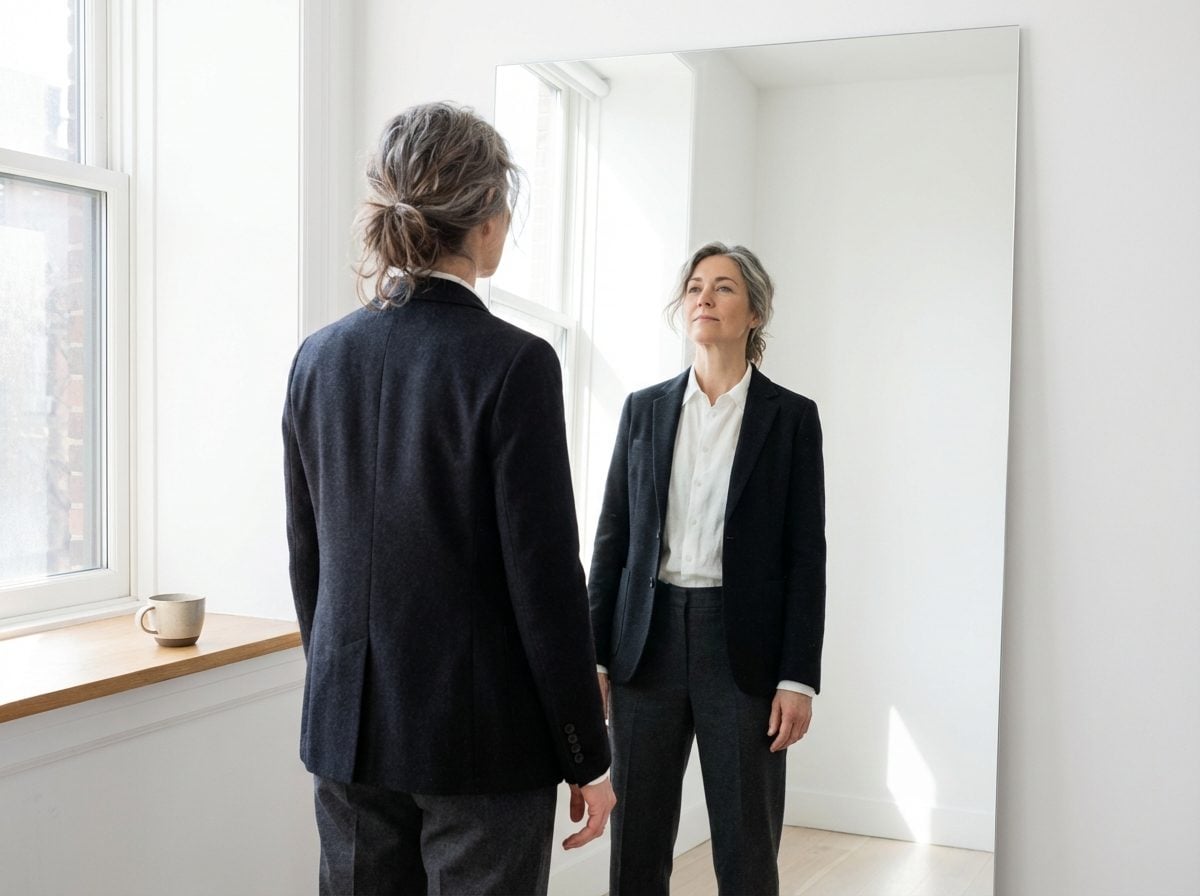
Most of us were taught, implicitly, that getting dressed is something you do for other people. For the office. For the event. For the impression. That framing puts you in a permanently reactive position, always calculating how to be received, never simply being. The cognitive shift that changes everything is smaller than it sounds: you start dressing as a form of self-direction rather than impression management.
This maps directly onto what self-determination theory calls autonomous motivation, the experience of acting from your own values rather than external pressures. Research by W.S. Ryan and R.M. Ryan on the social psychology of authenticity consistently shows that perceiving autonomy in how you express yourself is linked to feeling more like your ideal self, with measurable differences in psychological well-being. Applied to fashion, it’s the difference between wearing a structured navy blazer because it makes you feel sharp versus wearing one because you think it makes you look credible to someone else.
The functional result of that shift is significant. Getting dressed stops being a problem to solve and becomes something closer to a ritual of self-definition. Women who have made this shift often describe it the same way: one day, the anxiety just wasn’t there anymore.
Why Wearing Exactly What You Want Activates a Different Part of Your Brain Than Dressing to Impress

❤️ Would you like to save this?
Dressing to impress is cognitively expensive. You’re running constant calculations: how will this read? Is this too much? Not enough? Does this say what I’m trying to say? That kind of processing draws heavily on executive function, the brain’s prefrontal cortex working overtime to manage social prediction and impression management. It’s tiring in a way that’s hard to name but easy to recognize. You arrive somewhere already depleted.
Dressing from the inside out operates differently. Research on embodied self-expression published in the social psychology journal In-Mind describes how clothing that reflects the “private self”, comfort, authenticity, personal meaning, supports well-being by helping people feel more secure in their identity and more present in everyday life. That’s not a soft benefit. It’s a functional cognitive shift: less monitoring of external perception, more presence in your actual experience.
The women who have made this shift aren’t necessarily dressing more boldly. Sometimes they’re dressing more quietly. What’s changed is the direction of the dressing, inward rather than outward. And that direction change frees up an enormous amount of mental bandwidth.
The Enclothed Cognition Effect Nobody Applies to Sneakers, But Should
In 2012, researchers Hajo Adam and Adam Galinsky published what became one of the most cited studies in fashion psychology. Participants who wore a coat described as a doctor’s coat showed significantly higher sustained attention than those wearing the identical coat described as a painter’s coat. The original enclothed cognition paper in the Journal of Experimental Social Psychology concluded that clothing’s psychological effect depends on two things happening simultaneously: physically wearing the garment, and the symbolic meaning you attach to it.
What This Has to Do With Your Sneakers
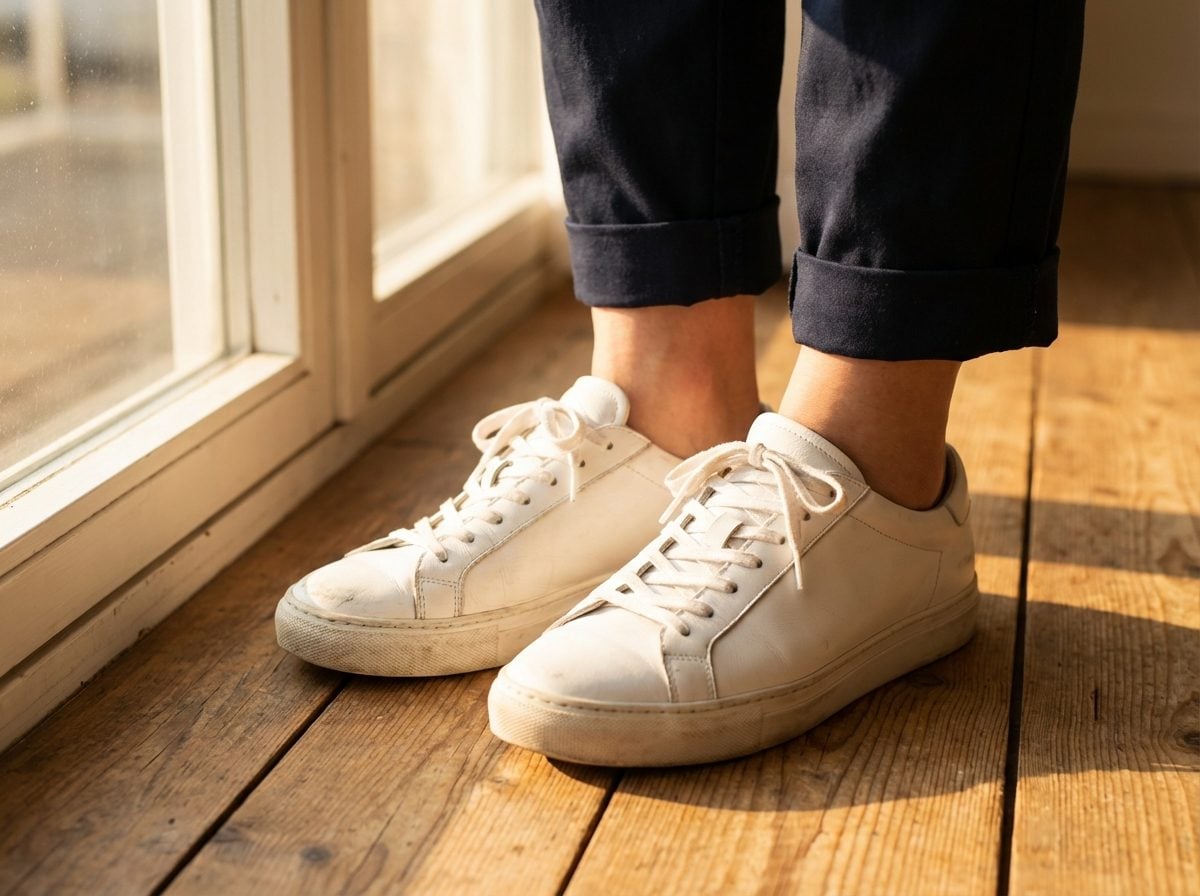
Everything. Because the symbolic meaning of a pair of sneakers isn’t fixed, it’s entirely determined by the story you tell about them. A pair of New Balance 550s means something very different on a woman who bought them because she genuinely loves the silhouette versus a woman who bought them because a magazine said they were the sneaker of the moment. The shoe is identical. The cognition it produces is not.
Enclothed cognition only works when the symbolic meaning is yours. Borrowed meaning, trend logic, external approval, the need to signal belonging to a particular aesthetic tribe, doesn’t activate the same psychological shift. Which raises a question the research doesn’t answer outright: what happens when you spend years wearing things whose symbolic meaning was never really your own?
What Your Shoe Choices Reveal About Where You Are in Your Own Self-Acceptance Journey
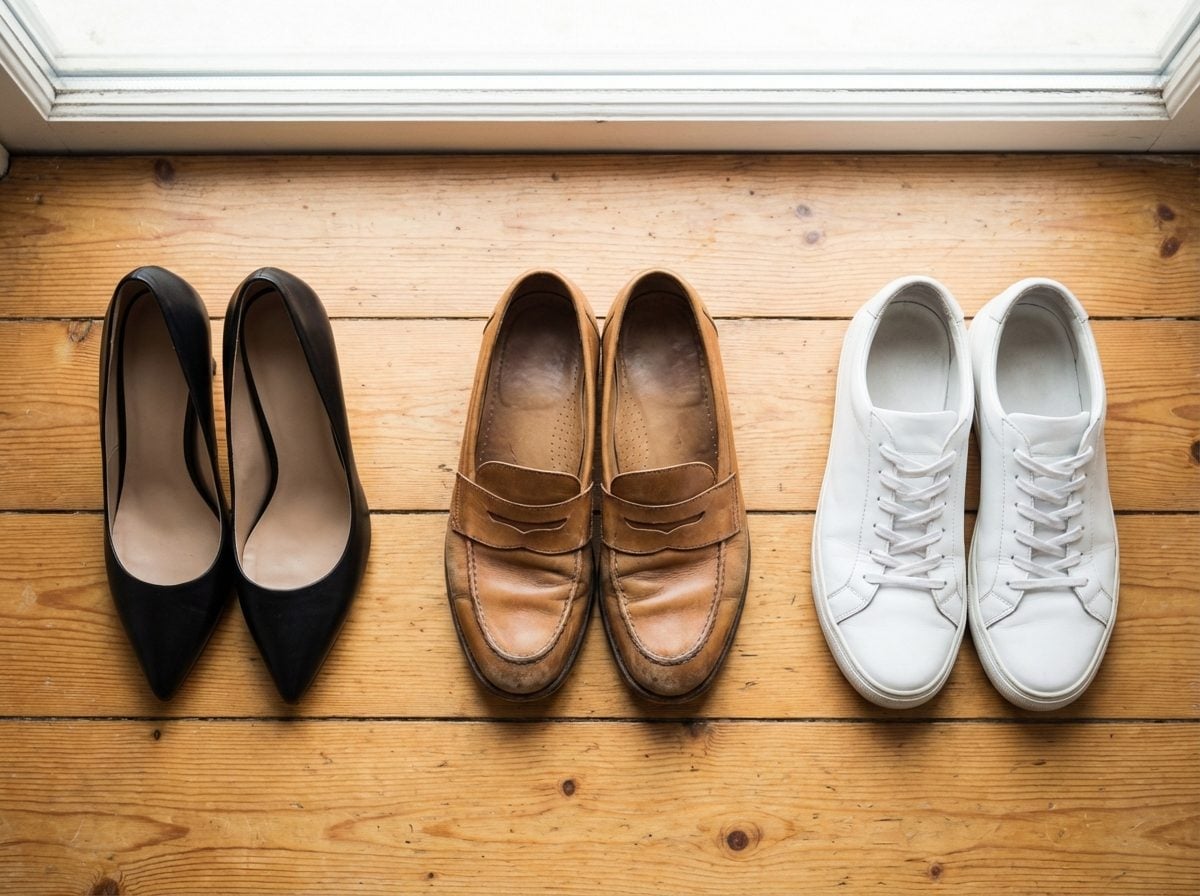
Shoes are where the subconscious shows up most honestly. You can curate a capsule wardrobe, nail a color palette, and look entirely pulled together, but your shoe choices tend to tell a different story. They’re the item most likely to be bought impulsively, most likely to be worn for someone else’s definition of appropriate, and most likely to feel wrong the moment you leave the house.
There’s a reason for that. Shoes carry enormous cultural weight around femininity, age, and credibility. The pressure to wear heels in professional settings, the complicated discourse around “comfort” versus “style” (as though these were genuinely opposed), the particular anxiety around what shoes are “appropriate” for women over a certain age, all of it accumulates into a decision that looks simple on the surface and isn’t at all.
Women who have worked through that noise describe their current shoe choices in remarkably consistent terms: they stopped buying shoes that required a justification. Not in a dramatic way. Just quietly, at some point, the calculus changed. They started buying what they actually wanted to walk in, and the rest arranged itself.
The Bottom Line
The rule is this: they only buy the sneaker they actually want, never the one they think they’re supposed to want. That single filter, applied consistently, without apology or explanation, is what separates a wardrobe that feels like armor from one that feels like a costume. Start there, with the next pair you consider, and notice what changes when you let your own answer be the only one that counts.