❤️ Would you like to save this?
There’s a moment that happens for a lot of women sometime in their forties. The closet is full, the accessories are right, and yet something shifts, not toward more, but toward less. Not less effort. Less noise. The women who’ve crossed some invisible threshold of self-possession start quietly editing something out of their wardrobes, and it’s almost never the thing you’d guess. It’s not the bodycon dress. It’s not the high heels. It’s not even the color. What they’re removing is something most women are still actively adding, and once you understand the psychology behind why, you’ll never look at your own wardrobe the same way again.
FYI, thanks to AI imagery software, we’re able to create very specific fashion and hairstyle examples to illustrate the points being made. In some cases, imagery is exaggerated to hammer home the point. Also, assume links that take you off the site are affiliate links such as links to Amazon. this means we may earn a commission if you buy something.
The Wardrobe Item Psychologists Say Is a Confidence Red Flag (Not What You’d Expect)
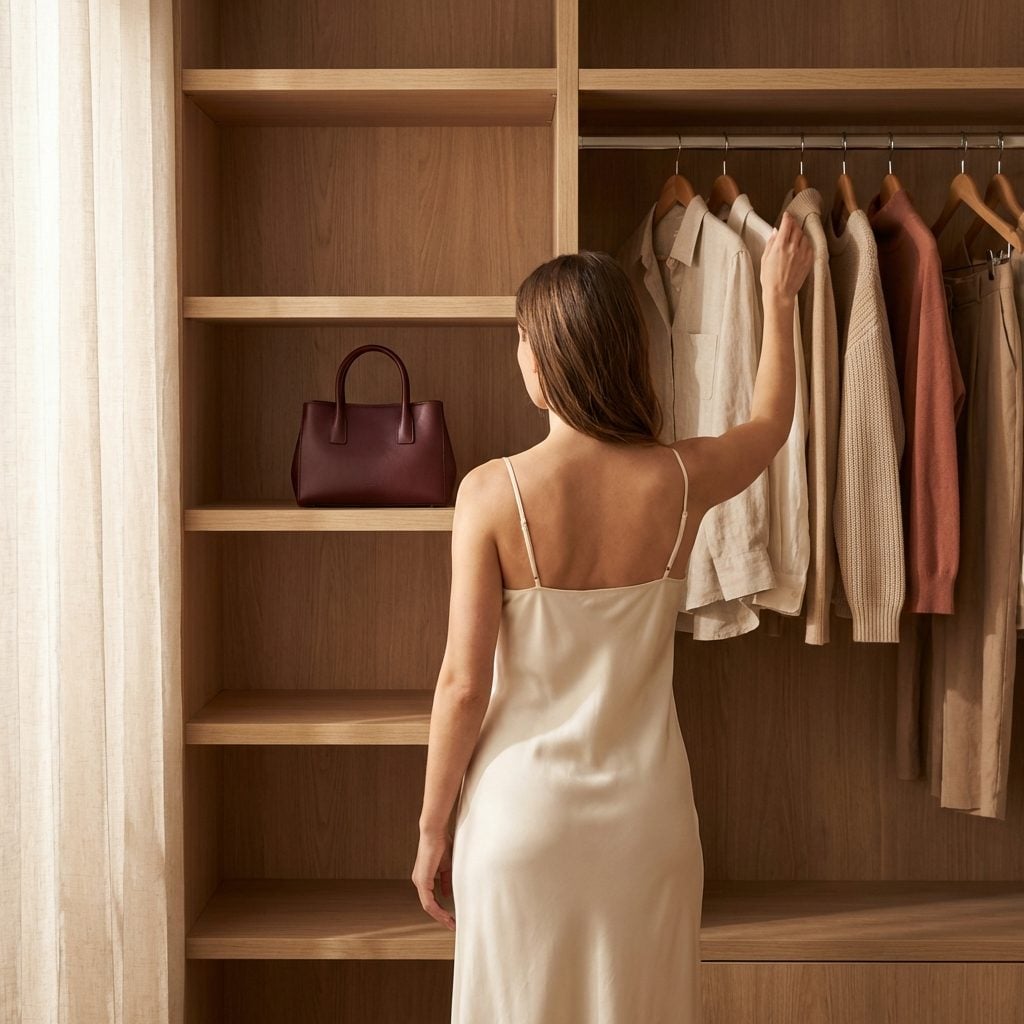
Most people assume a confidence red flag in your wardrobe looks like something worn-out or ill-fitting. It doesn’t. Psychologists point to something far more counterintuitive: the statement piece you reach for specifically because it does the talking for you.
When a garment carries the weight of your self-worth, it stops being an accessory and starts being a crutch. A 2021 study published in Frontiers in Psychology on clothing practices and body image found that excessive dependence on external validation through dress can increase vulnerability and quietly erode confidence rather than build it. The researchers noted that strategic dressing can improve social confidence, but excessive reliance on external signals works in the opposite direction, leaving the wearer more anxious, not less.
There’s a specific kind of piece that functions this way: the one you wouldn’t leave the house without. Not because it brings you joy, but because without it you feel somehow less credible. That’s the item worth examining. Confidence that depends on a single garment isn’t confidence. It’s delegation.
Why the Most Powerful Women in Any Room Are Wearing Less of This

Quiet rooms have always been the ones with real authority in them. The shift away from conspicuous branding among the most confident women isn’t a style trend. It’s a psychological one.
According to a deep dive into the quiet luxury shift and its behavioral economics, what once communicated success now broadcasts something else entirely: the need for external validation. Research into the psychology of status signaling consistently shows that conspicuous logos function most prominently as compensatory mechanisms, visible symbols of wealth that manage insecurity rather than reflect genuine security. The people who most need others to read their price tag aloud tend to be the ones least sure of their value without it.
The most psychologically secure women aren’t avoiding logos as a trend statement. They’re operating from a different internal framework entirely, one where their presence precedes their outfit. The clothes become quieter because the person wearing them no longer needs them to be loud.
The Subtle Signal Your Outfit Sends Before You Say a Word

You make an impression before you open your mouth. That much most people accept. But the specific signal your clothes send is more nuanced than “professional” or “casual”, it operates on a layer most people never consciously decode but everyone instinctively receives.
a 2020 review in Perspectives on Psychological Science on social perception and appearance-based inferences, and crucially, that these inferences happen fast and largely below conscious awareness. Your outfit answers questions the room is already silently asking: Does she know exactly who she is? Is she dressed from a place of certainty or audition? Does this look cost her anything, effort, anxiety, performance?
The women who change a room’s energy when they walk in share something specific in their presentation. It’s not expensive. It’s not trendy. It’s coherent. The clothes match the person wearing them so precisely that there’s no gap, no performance, no reaching. That alignment is the signal, and people feel it style immediately and they’ll never say it out loud, but they will orient toward her anyway.
What Brain Science Reveals About Women Who Stop Needing to Be Noticed
There’s a specific neurological shift that happens when external validation stops being the primary reward. Psychologists who study self-determination theory describe it as the movement from extrinsic to intrinsic motivation, and it shows up, perhaps unexpectedly, in how a woman dresses.
When clothing choices are driven by the need for others’ approval, the brain is essentially running a reward loop that requires constant external input to sustain. Research published in In-Mind Magazine on fashion psychology found that when people choose clothes primarily to gain approval, they report feeling constantly observed, more anxious about their appearance, and less confident that what they’re wearing reflects who they actually are, a feedback loop that erodes the very self-assurance they were trying to project.
Women who cross through this particular threshold tend to describe the same thing: getting dressed becomes quicker, calmer, and oddly more pleasurable. The choices feel less like auditioning and more like stating. The neuroscience underneath this is straightforward, intrinsic motivation is self-sustaining. It doesn’t need the room to respond to keep going.
The Psychological Shift That Happens When You Remove This One Thing From Your Look
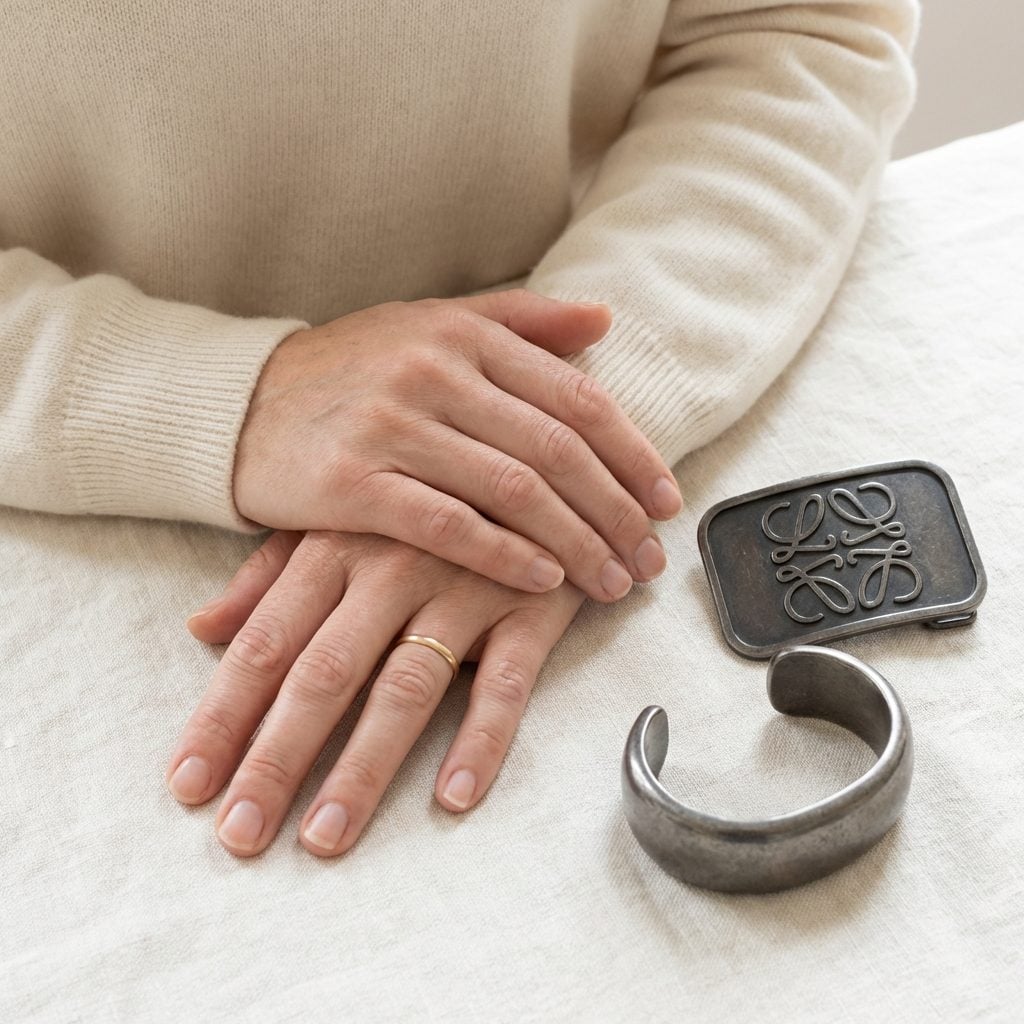
Subtraction is underrated as a psychological act. Most style advice is additive, add a belt, add color, add dimension. But there’s a specific category of removal that shifts not just how an outfit looks, but how the person wearing it feels and functions.
Three things that actually change when you strip back the signal-seeking piece:
- Your attention returns inward. When you stop monitoring whether the external piece is landing, cognitive resources go back to the conversation, the room, the moment.
- Your posture shifts. Research on enclothed cognition notes that clothing influences posture and internal dialogue, remove the piece you’re performing in, and the body often relaxes into something more authentic.
- Others respond differently. Studies on luxury logo display found that observers frequently attribute higher levels of narcissism and lower warmth to conspicuous brand signaling, stripping it away changes the social equation entirely.
The removal isn’t about minimalism as an aesthetic. It’s about what’s left when you take away the costume. What’s left is the statement.
Why Therapists Say This Common Style Habit Is Actually a Form of Seeking Approval
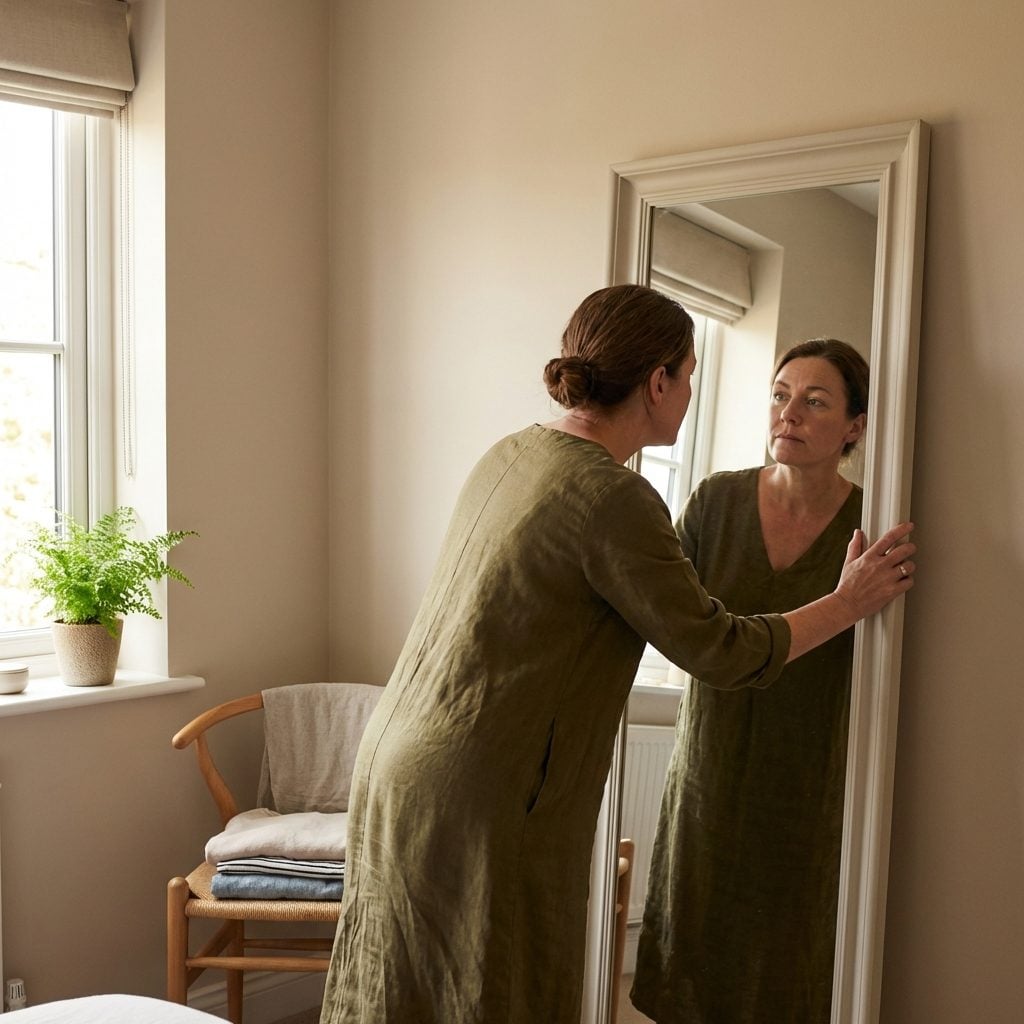
It doesn’t look like insecurity from the outside. That’s the point.
The habit therapists flag isn’t careless dressing or even overdressing. It’s the very specific pattern of dressing for a perceived audience, curating every outfit with a mental image of who will see it and what they’ll think. Fashion psychologists describe this as a shift from an inner-directed to an outer-directed process: clothing stops being chosen for how it makes you feel and starts being chosen for how it will be received. The distinction sounds small. The psychological cost isn’t.
Research on the psychological influence of fashion confirms that excessive dependence on external validation through clothing increases vulnerability and self-esteem issues over time, even in women who appear polished and certain from the outside. The loop is self-defeating: dressing to be approved of requires ongoing approval to feel settled, which means the baseline confidence never actually rises.
Therapists who work with identity and self-esteem often note the same pattern in reverse: when a woman starts dressing for herself, for how she feels in something rather than how it scans, the shift shows up in other areas of her life almost immediately.
The Dressing Ritual That Separates Women Who’ve Found Themselves From Women Still Searching
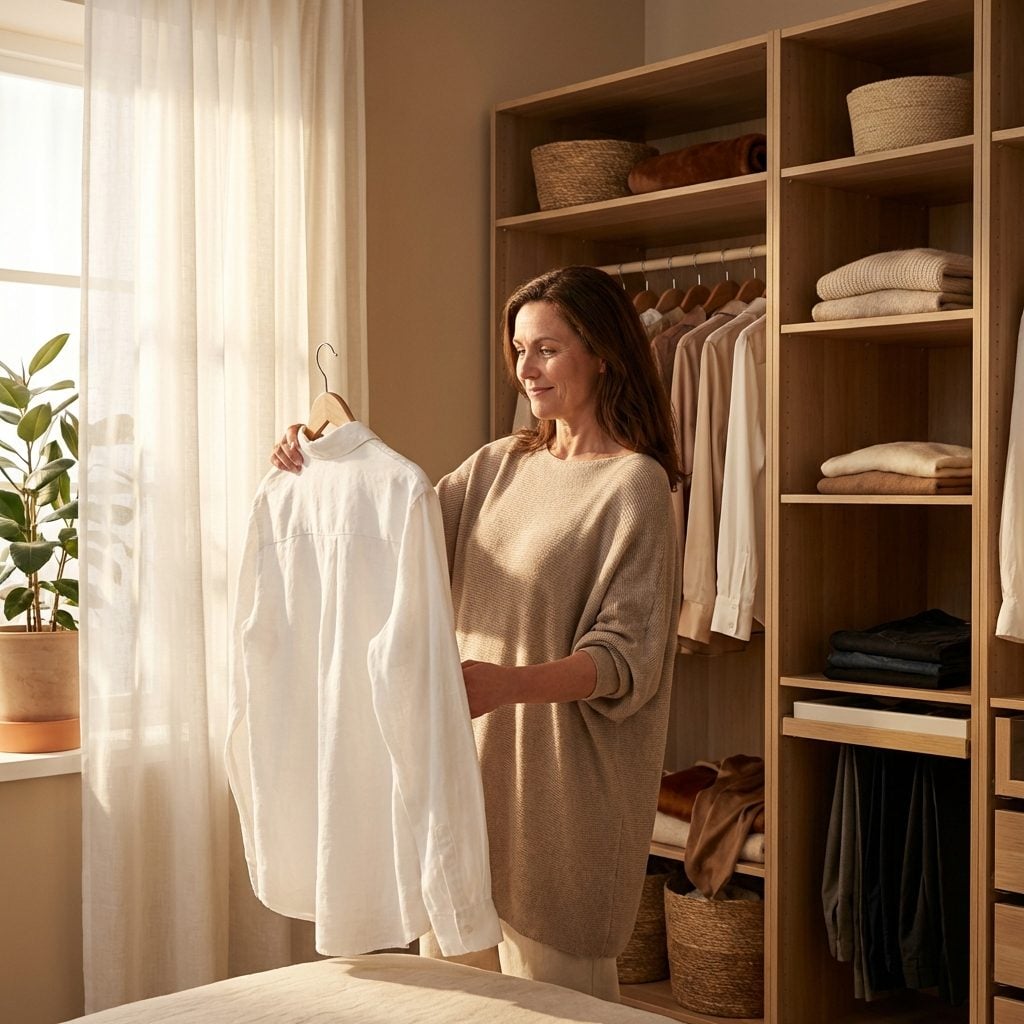
The ritual of getting dressed is not a minor domestic chore. For women navigating identity, particularly in their 40s and beyond, when the scripts society handed them start to feel like someone else’s lines, it is one of the most psychologically loaded acts of the day.
Fashion psychologist Carolyn Mair describes clothing as “psychological scaffolding”, a tool that helps us stand taller in the roles we choose to inhabit. The key word is choose. Women who have done the internal work don’t reach into their wardrobe asking “what will work today?” They reach in knowing who they’re dressing. That specificity, that prior knowledge of self, is what makes the ritual grounding rather than anxious.
Women still searching use the morning mirror as a question. Women who’ve found themselves use it as a confirmation. Clothing psychologists note that style aligned with genuine personality reinforces authenticity, which in turn builds real confidence, not the performed kind that requires maintenance, but the settled kind that doesn’t need an audience to hold its shape.
The difference in their wardrobes, when you look closely, is less about what’s in them and more about why each piece is there.
What Your Most Expensive Accessory Is Actually Telling the Room About Your Insecurities
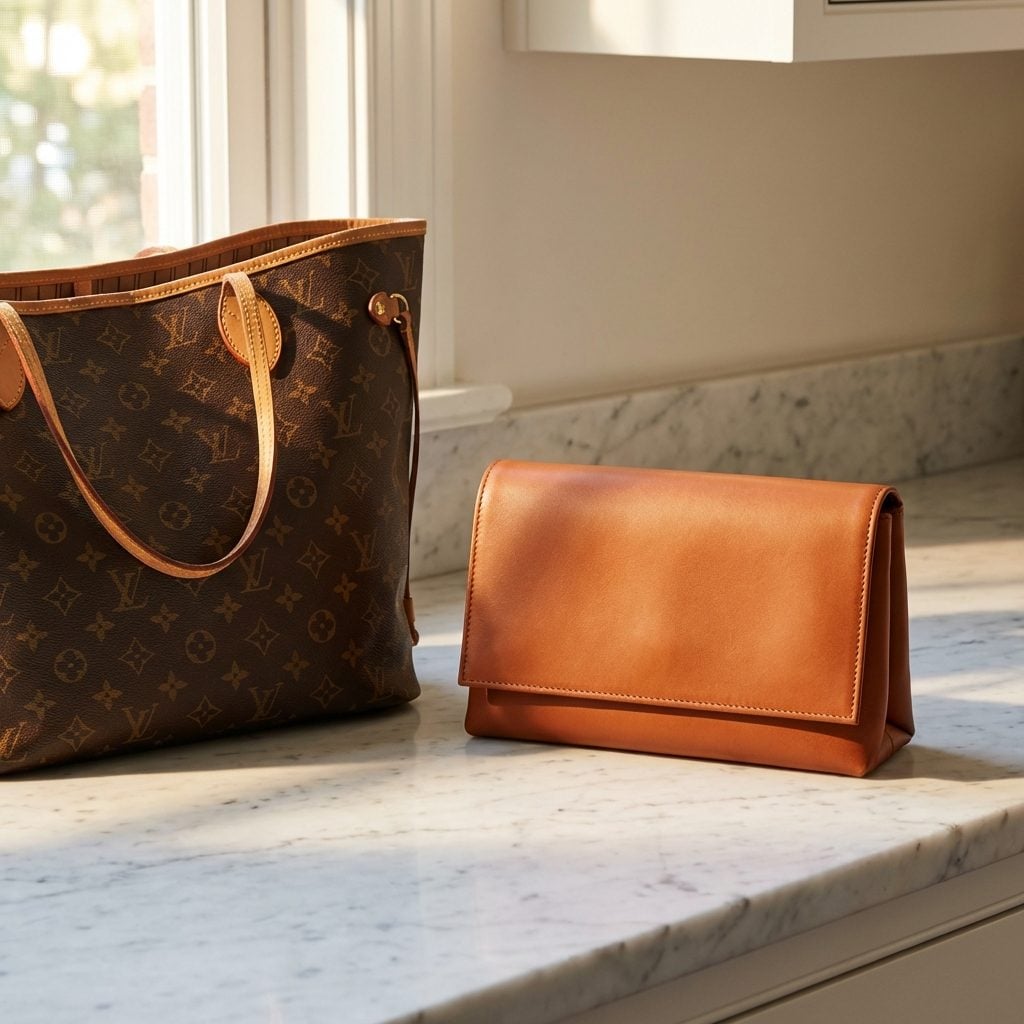
The most expensive item you own communicates something. The question is whether it’s saying what you think it is.
Research published in the Journal of Consumer Psychology found that individuals with lower financial self-esteem are significantly more likely to purchase items with visible logos, not for the craftsmanship, but for the instant social recognition the logo provides. Psychologists call the underlying mechanism “compensatory consumption”: buying what symbolically fills a gap that isn’t really about money at all.
But here’s where it gets interesting for women specifically. The expensive accessory displayed most prominently is often doing emotional labor its owner hasn’t consciously assigned it: announcing before she can, defending before she’s been questioned, validating before the room has had a chance to decide. Social psychologists describe this through the concept of the “looking-glass self”, our self-perception shaped by how we believe others see us, which means a woman relying on a logo for her status is outsourcing her self-image to whoever is watching.
The most psychologically grounded women over 40 haven’t necessarily stopped buying beautiful things. They’ve stopped needing those things to precede them into rooms. That shift, from the bag announcing the woman to the woman carrying the bag, is everything.
The Counterintuitive Reason Less Visible Clothing Makes You More Memorable
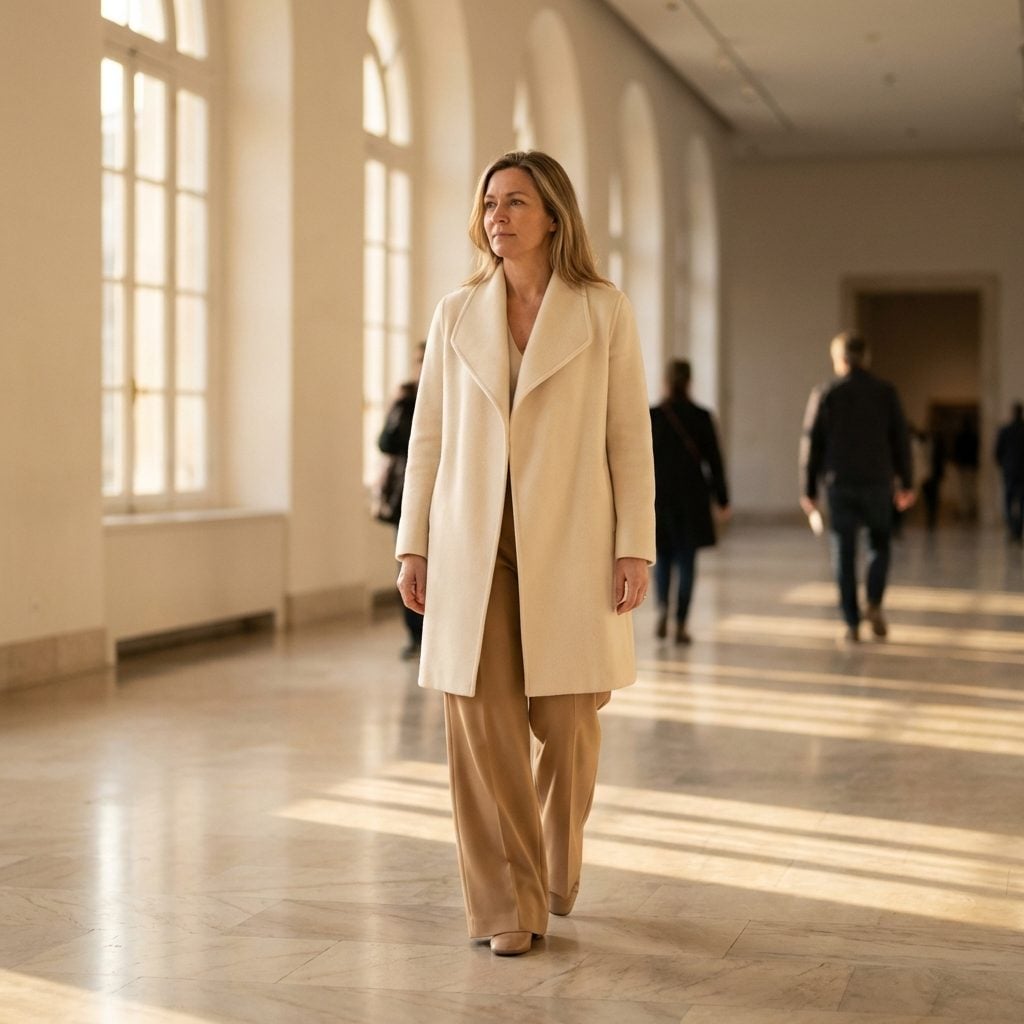
There is a specific kind of attention that moves through a room silently. It doesn’t announce itself. It doesn’t compete. And according to research on luxury consumer psychology, it’s the kind most people remember longest. A 2025 study on inconspicuous luxury consumption published in the Journal of Retailing and Consumer Services found that status is increasingly signaled not through recognizable branding but through subtle markers that only those with genuine cultural literacy can decode. In other words, the outfit that registers as simply elegant to a casual observer reads as deeply sophisticated to someone who knows what they’re looking at.
The psychological mechanic here is counterintuitive but real: when your clothes don’t shout, people lean in. They try to place you. They notice the cut of your trousers, the drape of your coat, the exact shade of ivory in your blouse. You become a puzzle worth solving rather than a label easily filed away. That’s a far more powerful form of impression than anything a visible logo ever bought. The question this raises, and it’s one worth sitting with, is whether the women who figured this out arrived there through conscious intention, or through something quieter and more internal entirely.
What Researchers Found When They Studied the Wardrobes of Women With High Self-Worth
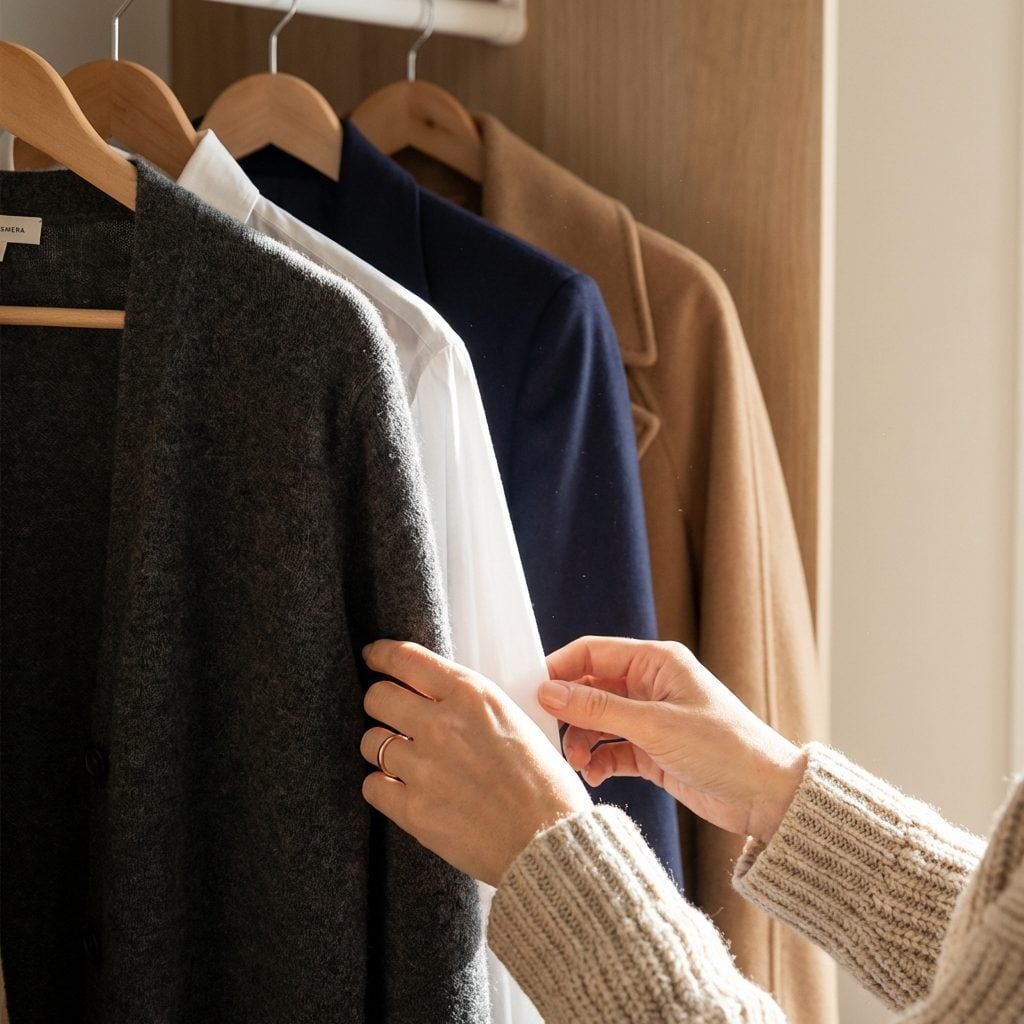
The wardrobes of women with a strong self-concept share one striking pattern: intentionality over volume. A Frontiers in Psychology study that examined clothing practices, personality traits, and body image among 792 women (mean age 42) found that women scoring high in openness to experience were significantly more likely to dress for individuality and self-expression rather than camouflage or social conformity. Crucially, their clothing choices reflected internal states, who they were, rather than external pressure: who they were supposed to be.
What the researchers also noted is that clothing functions as what theorists call “the visible self”, a psychological extension of identity, not just fabric. When that connection is strong, the wardrobe tends to become smaller, more deliberate, more coherent. Less noise. More signal. A Toronto Metropolitan University thesis on fashion and positive psychology similarly found that clothing that reinforces self-concept consistently boosts self-esteem and emotional well-being. The researchers weren’t describing large wardrobes. They were describing wardrobes that fit the person, not just the body.
The Fashion Habit Rooted in Fear That Most Women Don’t Recognize in Themselves

Most people assume they dress to express themselves. Research suggests the reality is often more complicated. A 2025 paper in the Research Archive of Rising Scholars on the psychological influence of fashion found that while strategic dressing can improve confidence, excessive dependence on external validation through clothing tends to increase psychological vulnerability and erode self-esteem over time. The habit looks like enthusiasm, constant shopping, keeping up with trends, reaching for the bolder choice, but underneath, it’s a form of anxiety management.
The fear isn’t always obvious. Sometimes it masquerades as personal style. Sometimes it reads as fun. But look more closely at the pattern and a question emerges: are these choices being made from a secure internal place, or are they a response to the low-grade dread of being overlooked, underestimated, or simply not enough? A 2025 article in In-Mind magazine on fashion psychology in a filtered digital world noted that when clothes are chosen primarily to gain approval, the effect is that people feel constantly observed and less confident that their wardrobe reflects who they actually are, precisely the opposite of what the habit is meant to achieve. It’s a loop, and most women running it don’t know they’re in it.
Why the Quietest Outfit in the Room Often Belongs to the Most Confident Person in It
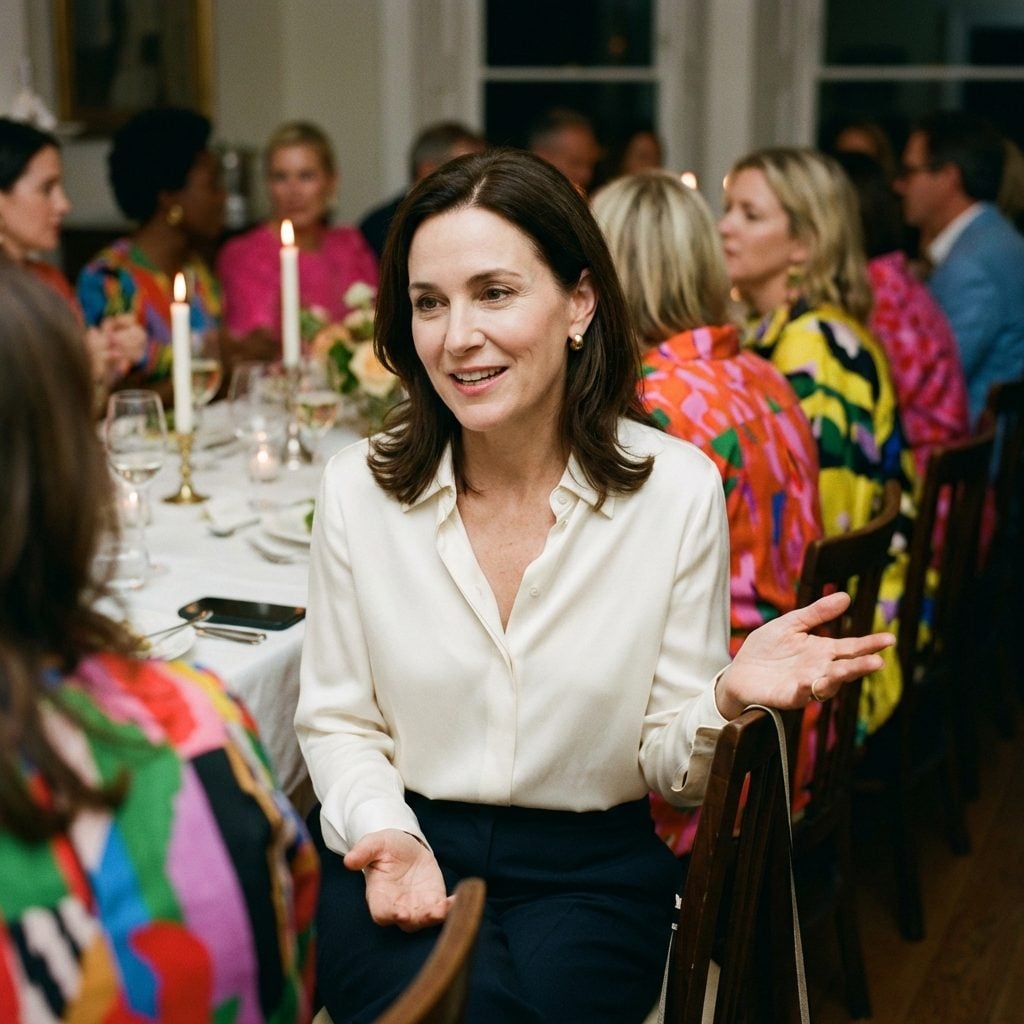
Walk into any high-stakes room, a board meeting, a gallery opening, a dinner where everyone is performing something, and the most grounded person is rarely the loudest-dressed. This isn’t coincidence, and it isn’t minimalism as an aesthetic preference. Research on stealth luxury consumption consistently finds that consumers with a genuinely low need for external status validation actively prefer inconspicuous dress. They don’t need the room to do the work of announcing them because their sense of self doesn’t depend on the room’s response.
- No armor needed. A woman who dresses quietly isn’t unprotected, she’s past the point of needing protection. The armor phase of dressing (bold shoulders, statement pieces, visible status markers) corresponds to a stage of self-construction, not self-possession.
- Attention without effort. Paradoxically, a simple, impeccably fitted outfit in a room full of visual noise draws more sustained attention than the loudest look. People’s eyes rest there because it doesn’t exhaust them.
- Identity clarity. When what you wear isn’t fighting for attention, you get to make the impression. The clothes become a frame, not a subject.
The interesting psychological question isn’t why the confident woman dresses quietly. It’s why it took confidence to get her there. Something had to be released first, and that something is worth examining closely.
The Psychological Term for Dressing to Be Validated, and Why Women Over 40 Start to Outgrow It
❤️ Would you like to save this?
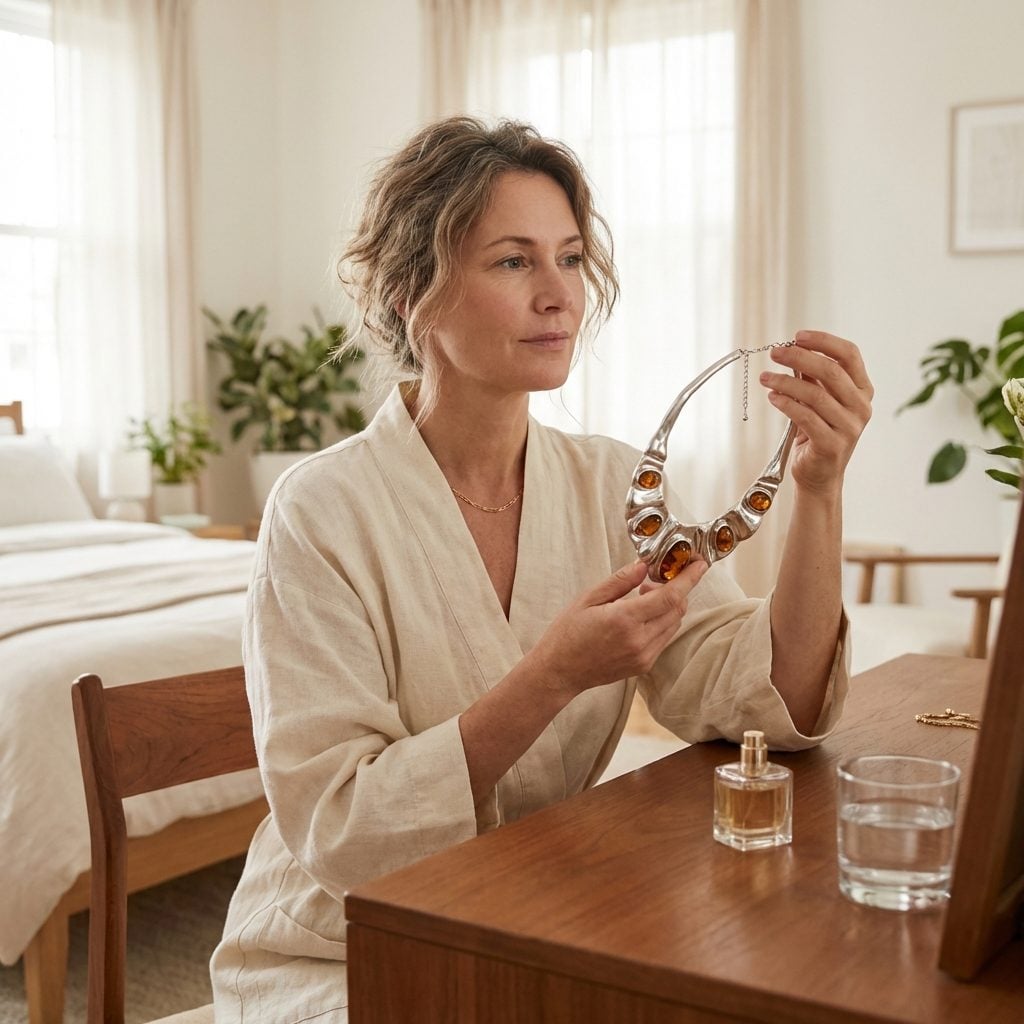
Psychologists call it contingent self-worth, the state in which a person’s sense of value is tied to external feedback rather than internal knowledge. In fashion terms, it shows up as needing the compliment, the second glance, the “you look amazing” to feel like the outfit worked. And it is, according to fashion psychology researchers writing in In-Mind magazine, a direct product of a culture that teaches women from an early age that their appearance is for others to assess.
What shifts after 40 for many women isn’t a loss of interest in how they look. It’s a quiet but significant recalibration of who the audience is. The approval being sought gradually migrates inward. This isn’t something that happens all at once, it accumulates. A decade of dressing for an imagined observer, followed by the slow realization that the observer was never as attentive, as critical, or as important as assumed. Something about that recognition tends to simplify the wardrobe considerably. You can look immediately and they’ll never say it, because the shift isn’t always visible from the outside. But internally, the woman doing it knows something has changed.
What Happens to Your Brain When You Stop Letting a Label Speak for You
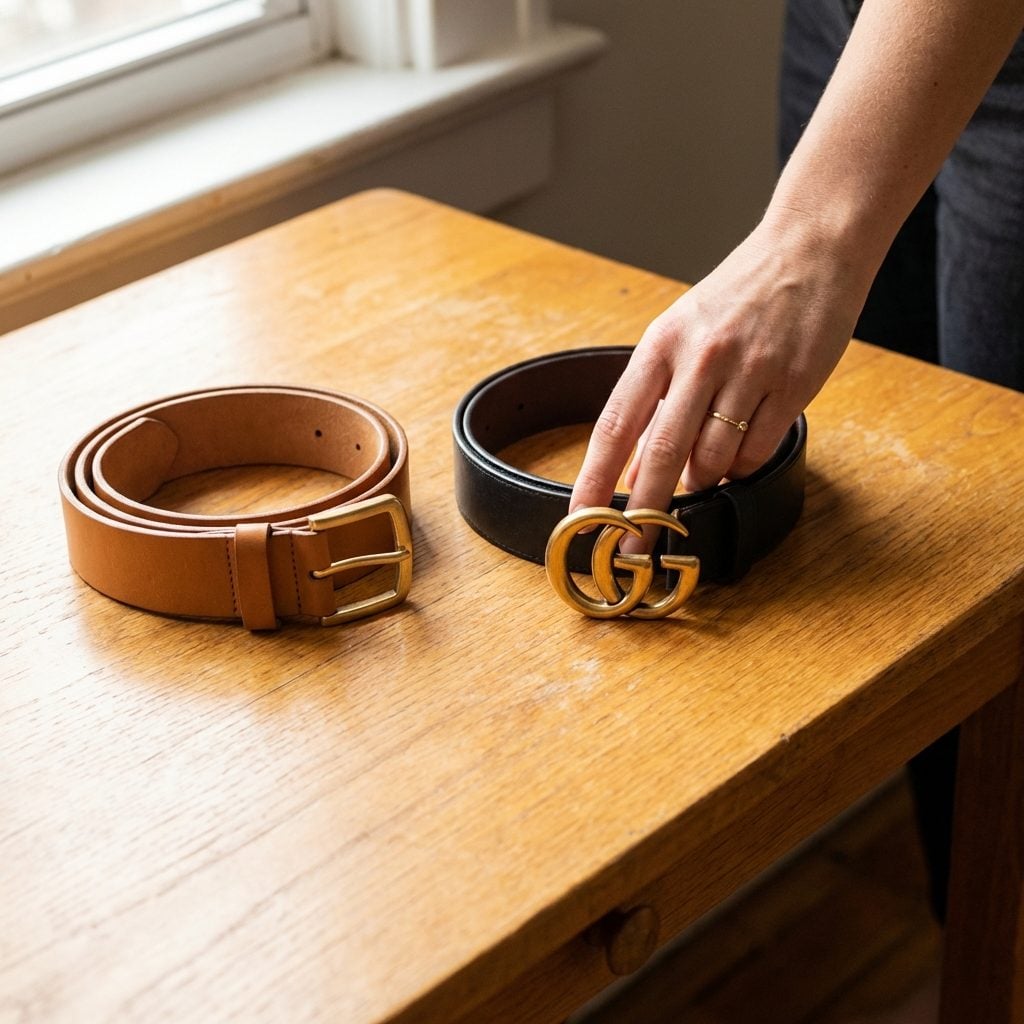
The psychology of brand logos is older than you might expect. Research on luxury branding behavior published in 2025 traces conspicuous logos directly to what economists call Veblen signaling, the use of visible markers to communicate social position to others. The brain, when wearing a recognizable logo, isn’t experiencing personal style. It’s engaged in a social transaction: broadcasting a message to an audience and waiting for the return signal of recognition or status approval.
When that transaction stops, when the logo comes off, when the branded belt is replaced by a beautifully made one no one can place, something neurologically interesting happens. The performance ends. Adam and Galinsky’s foundational 2012 research on enclothed cognition established that what we wear shapes our psychological state through its symbolic meaning to us, not just to observers. When the symbol shifts from external broadcast to internal resonance, when a garment means something because of how it feels, how it was made, how it fits, the cognitive experience of wearing it changes fundamentally. You stop performing identity and start inhabiting it.
That’s not a small shift. And it tends to be irreversible.
The One Style Shift That Signals You’ve Stopped Dressing for Other People’s Eyes
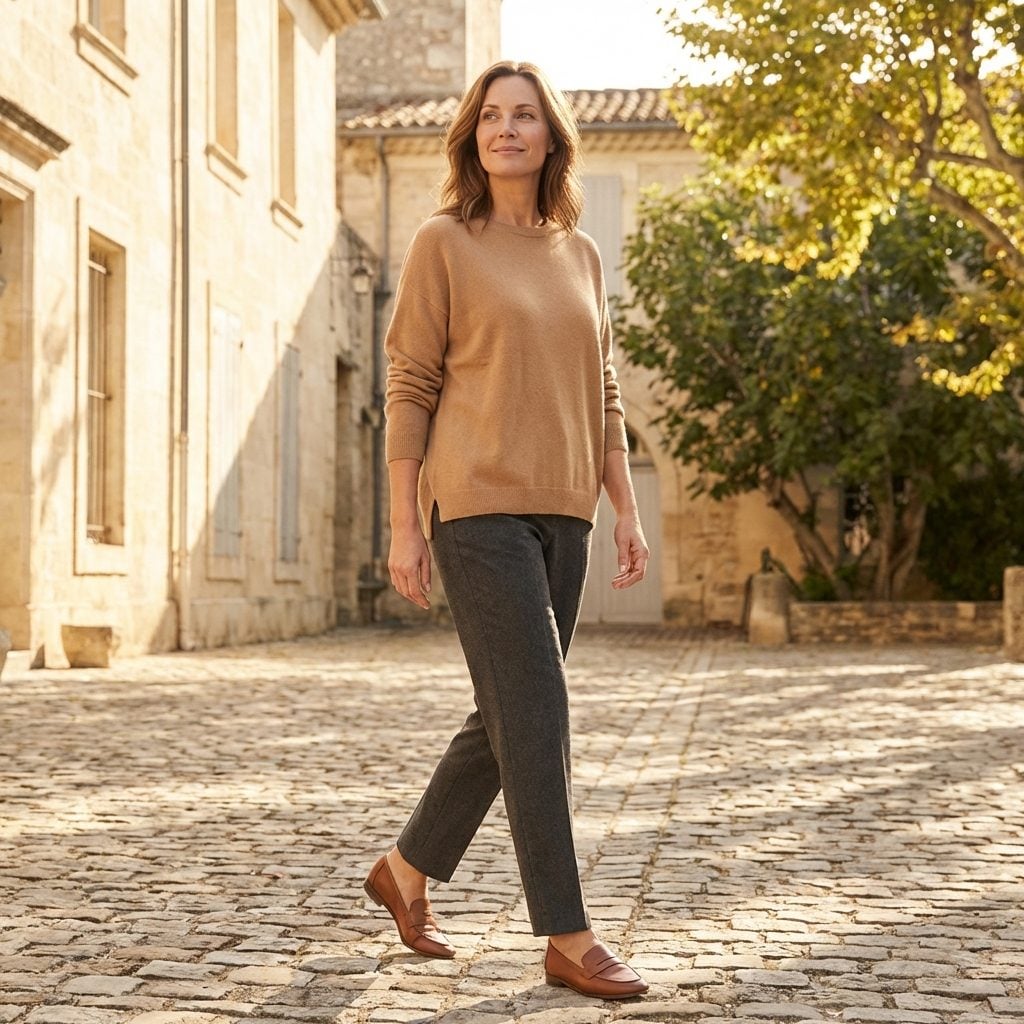
It rarely announces itself. There’s no single morning when a woman wakes up and decides to stop performing. It’s more like a slow loosening, pieces leaving the wardrobe one at a time, not because they stopped being fashionable but because they started feeling like costumes. What replaces them is almost always the same: fewer items, better quality, a coherent palette. A cashmere crew neck sweater in a color that’s been a constant for twenty years. A tailored wide-leg trouser in a fabric worth touching. Leather loafers worn in just enough to feel like extensions of the body rather than footwear.
What the psychology of dress tells us is that this isn’t downsizing. It’s not settling. A 2021 Frontiers in Psychology study on clothing practices and self-concept found that the shift from dressing for camouflage or social conformity toward dressing for individuality corresponds directly to greater openness, stronger self-concept, and measurably better psychological well-being. The simplified wardrobe isn’t the symptom of giving up visibility. It’s the evidence that a woman has stopped outsourcing her sense of self to her closet.
And that’s the answer this article has been circling. The first thing genuinely confident women over 40 quietly get rid of isn’t a category of clothing. It’s the need for their clothing to carry the emotional weight of proving who they are. When that need goes, the wardrobe reorganizes itself around one simple principle: does this feel like me? Not a version of me curated for someone else’s approval. Just, precisely, undeniably, me.
The Bottom Line
The first thing confident women over 40 quietly get rid of is visible status, the logos, the loud labels, the carefully curated signals designed to tell the room who they are before they open their mouth. When a woman stops needing her clothes to speak for her, it’s not a style choice; it’s evidence that she’s already answered the question she used to dress to ask: Am I enough? The next time you get dressed, notice which pieces you’re putting on for yourself, and which ones you’re putting on for the room.