❤️ Would you like to save this?
There was a particular way a 1940s woman picked up her handbag. Not grabbed, picked up. With intention. Because the bag wasn’t an afterthought. It was the punctuation mark on a carefully constructed outfit, chosen to coordinate with her shoes, her gloves, her occasion. Some of these bags were rationed into existence. Some were handmade from dress scraps. Some were pure Hollywood fantasy in alligator skin. All of them had something our modern carryalls often don’t: a sense of ceremony.
FYI, thanks to AI imagery software, we’re able to create very specific fashion and hairstyle examples to illustrate the points being made. In some cases, imagery is exaggerated to hammer home the point. Also, assume links that take you off the site are affiliate links such as links to Amazon. this means we may earn a commission if you buy something.
30. Top-Handle Doctor Bag Silhouettes That Looked Like They Meant Business
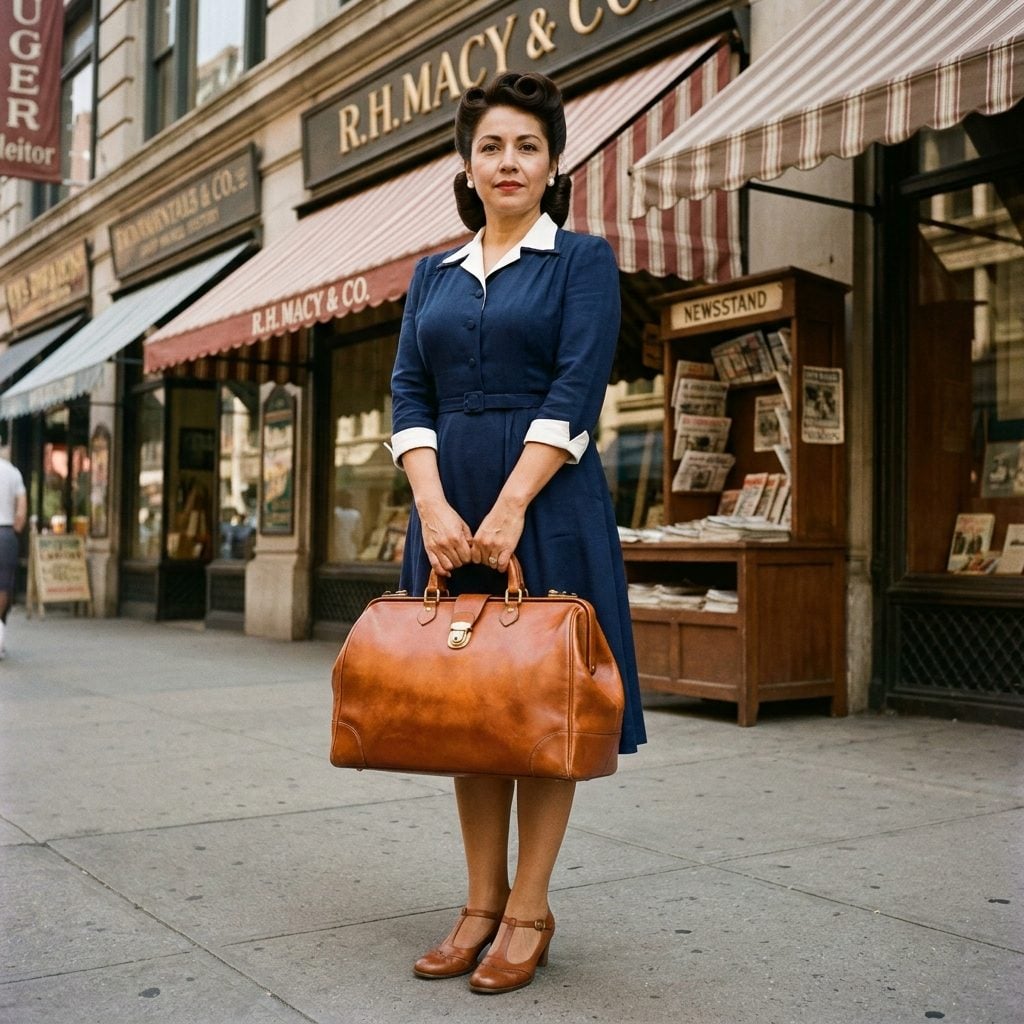
The doctor bag shape, wide gusset base, arching top handles, a frame that opened like a wide mouth, was one of the defining silhouettes of 1940s American handbag design. It borrowed its structure from actual medical bags, which, if you think about it, tracks perfectly for a decade when practicality was a cultural mandate.
Women carried these in burnished tan, deep navy, and near-black brown, usually in stiff cowhide or calf leather with minimal exterior decoration. The appeal was entirely in the proportion. Slung over a forearm or gripped by the handles, it gave every outfit a certain authority. It is also, not coincidentally, one of the silhouettes quietly staging a comeback right now for women who want a bag that reads intentional rather than trendy.
29. Kiss-Lock Clasps With Engraved or Rhinestone Detail, Tiny and Completely Irresistible
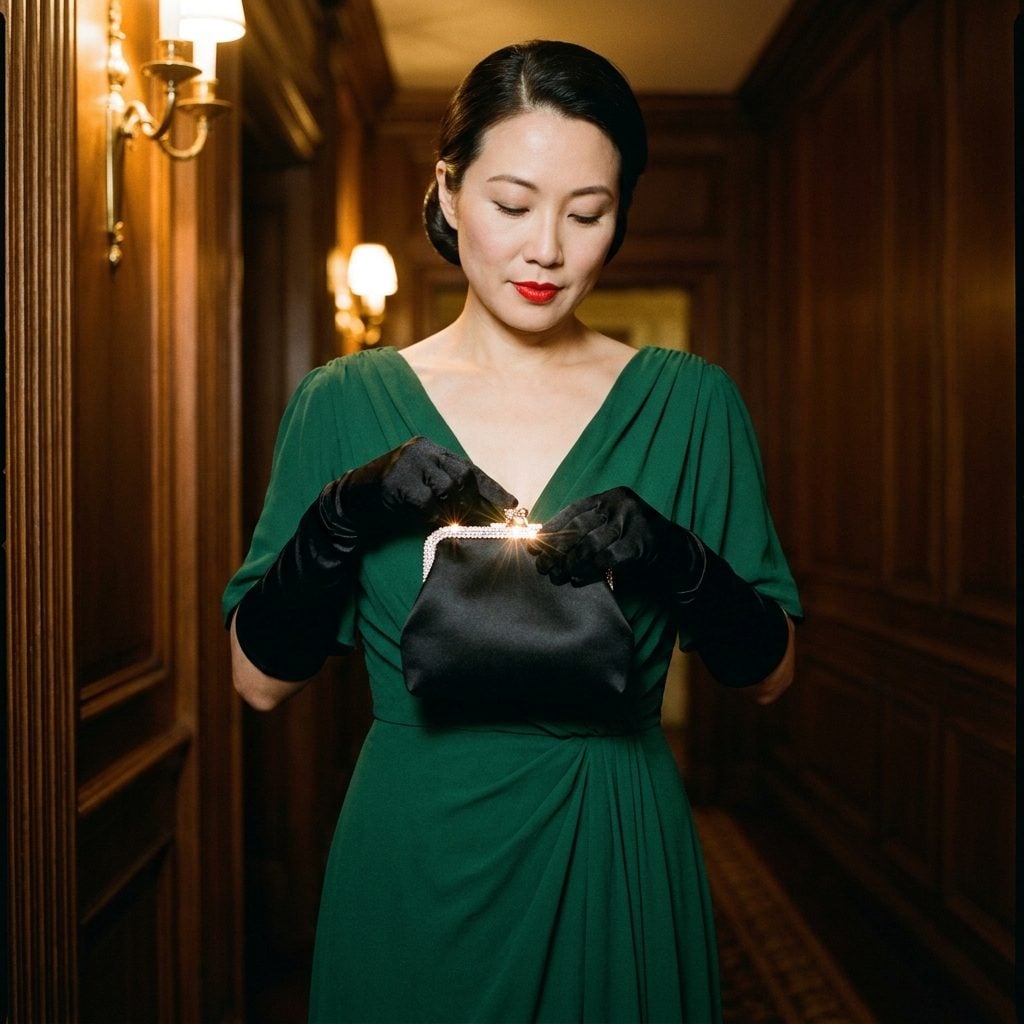
The kiss-lock clasp was the jewelry of the bag. Two rounded metal knobs that you pressed together, a satisfying little click, to open or close the frame. On daytime bags they came in brushed gold or antiqued brass, often engraved with scroll patterns. On evening bags, they went full glamour: rhinestones set into the metal, seed pearls pressed along the edges, or tiny filigree work that caught the light at a dinner table.
Opening your purse in 1940s company was, in a small way, a presentation. The clasp was the first thing anyone saw. Women selected bags partly for what that hardware said, discreet elegance, festive sparkle, or solid dependability. It is a level of considered detail that modern magnetic snaps have almost entirely erased.
28. Small, Careful Bags Shaped by Wartime Rationing
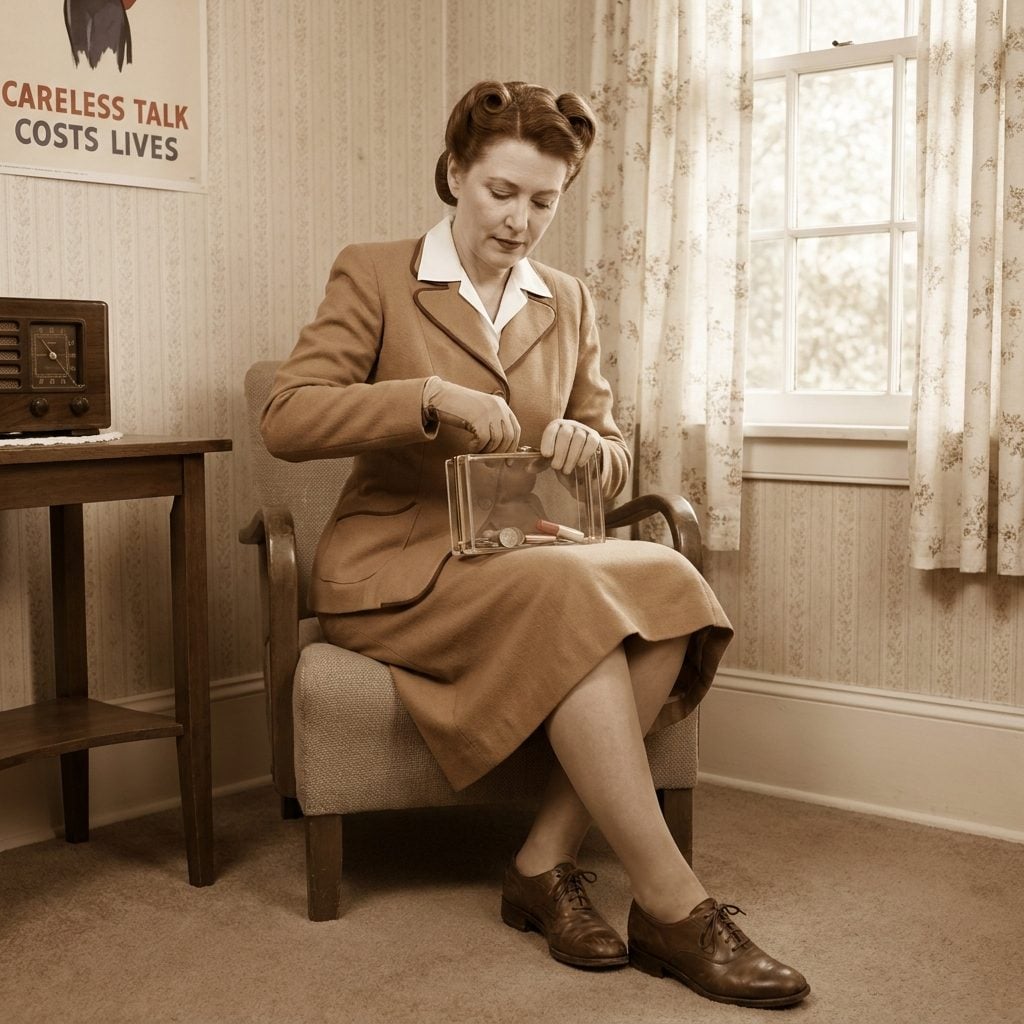
Scarcity, it turns out, makes for beautiful design constraints. The War Production Board’s L-85 regulations didn’t just govern clothing, material shortages rippled through every accessory category. Handbags shrank. Not because small was fashionable, but because leather, metal hardware, and fabric were all restricted or redirected toward the war effort. What remained was precise and considered: compact rectangles, slim envelopes, small trapezoids that held exactly what you needed and nothing more.
American manufacturers got inventive. Bags appeared in unexpected materials: woven raffia, painted wooden panels, clear and colored Lucite, fabric-covered cardboard, even woven telephone wire. Some of these workaround materials produced genuinely interesting objects. The wartime bag wasn’t an apology, it was a demonstration of ingenuity dressed up as style.
27. Matching Handbag-and-Shoe Sets, Because Coordination Was Non-Negotiable
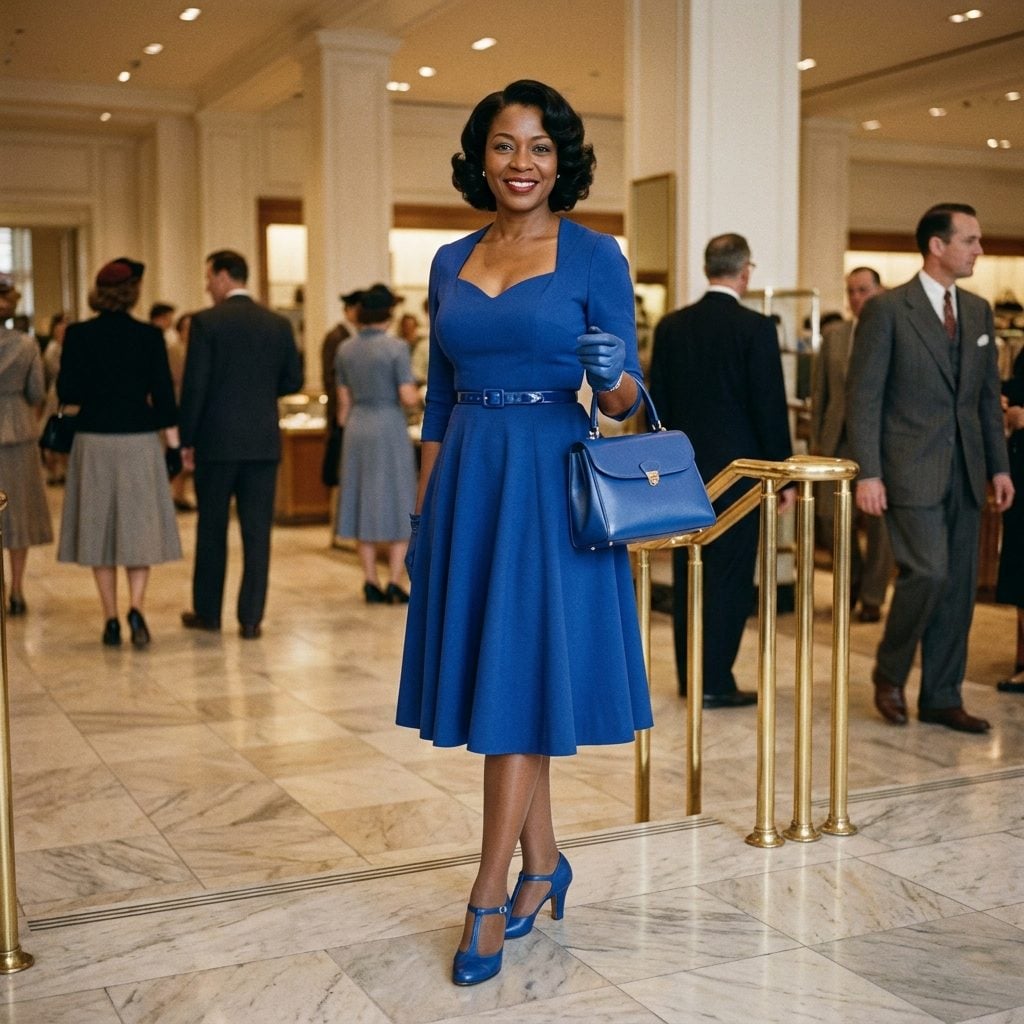
This was not a suggestion. A complete 1940s outfit meant your bag and your shoes matched. Not coordinated, matched. Same leather, same dye lot if possible, same maker if you were serious about it. Department stores sold them as sets: a slim envelope clutch or top-handle bag packaged alongside pointed-toe pumps or T-strap heels in identical navy calf, forest green suede, or classic black patent.
The rule was so embedded that deviating from it read as either avant-garde or simply not put-together. It is one of those fashion conventions that feels almost impossible to imagine now, in an era where deliberately mismatching your accessories signals sophisticated taste. Back then, the matching set was the sophistication.
“Your shoes told people where you were going. Your bag confirmed it.”
26. Alligator Skin Bags: The Ultimate Status Symbol That Required No Explanation
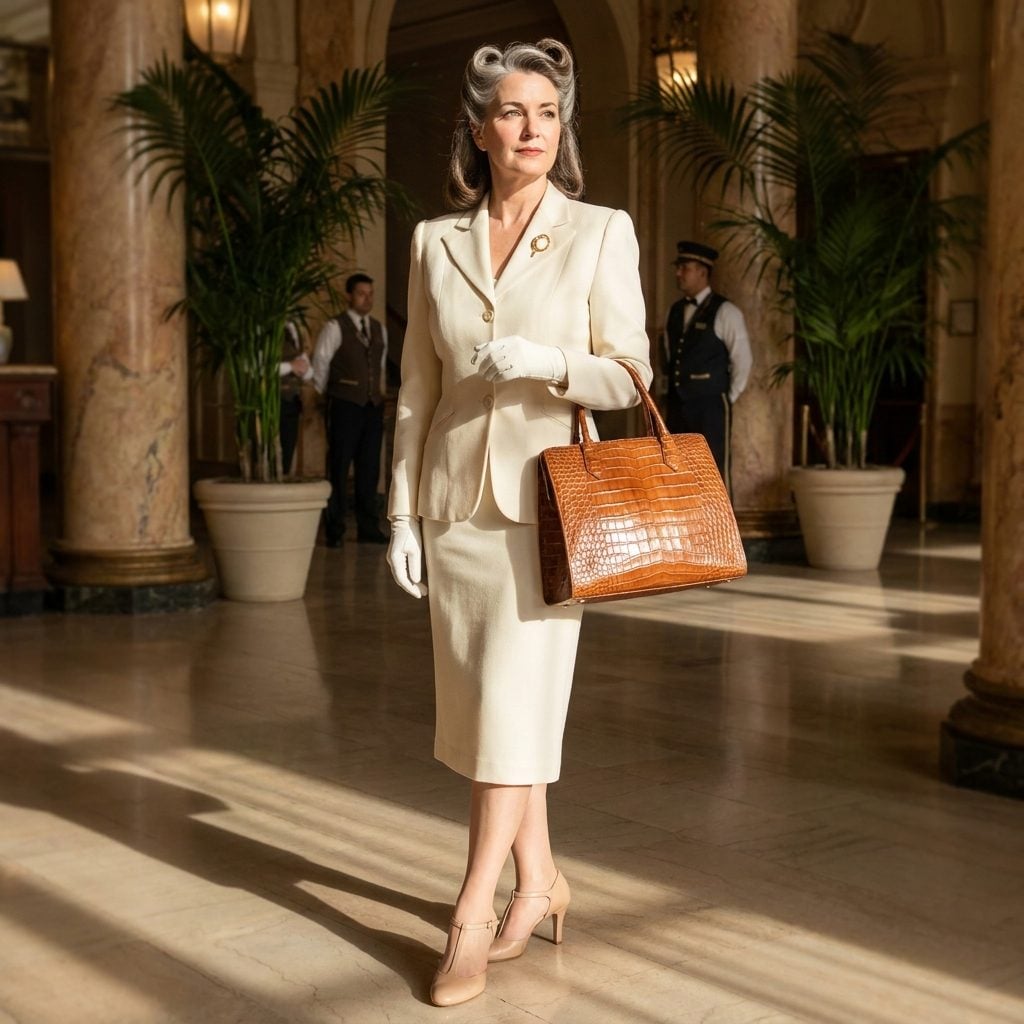
In 1940s America, an alligator handbag was not a fashion choice, it was a declaration. The skin’s distinctive rectangular scale pattern, the way it caught light differently than any smooth leather, the sheer cost of the thing: all of it communicated arrival in a single glance. You didn’t need initials or hardware to signal that your bag was expensive. The alligator did that work entirely on its own.
Department stores like Saks and Neiman Marcus sold them in natural tan, dyed black, and deep cognac. A full alligator skin bag required multiple hides and hours of hand-finishing. Women saved for them, received them as gifts from husbands, inherited them from mothers. They lasted for decades, which was partly the point.
25. Snake and Lizard Skin Bags for the Woman Who Wanted Texture Without the Price Tag
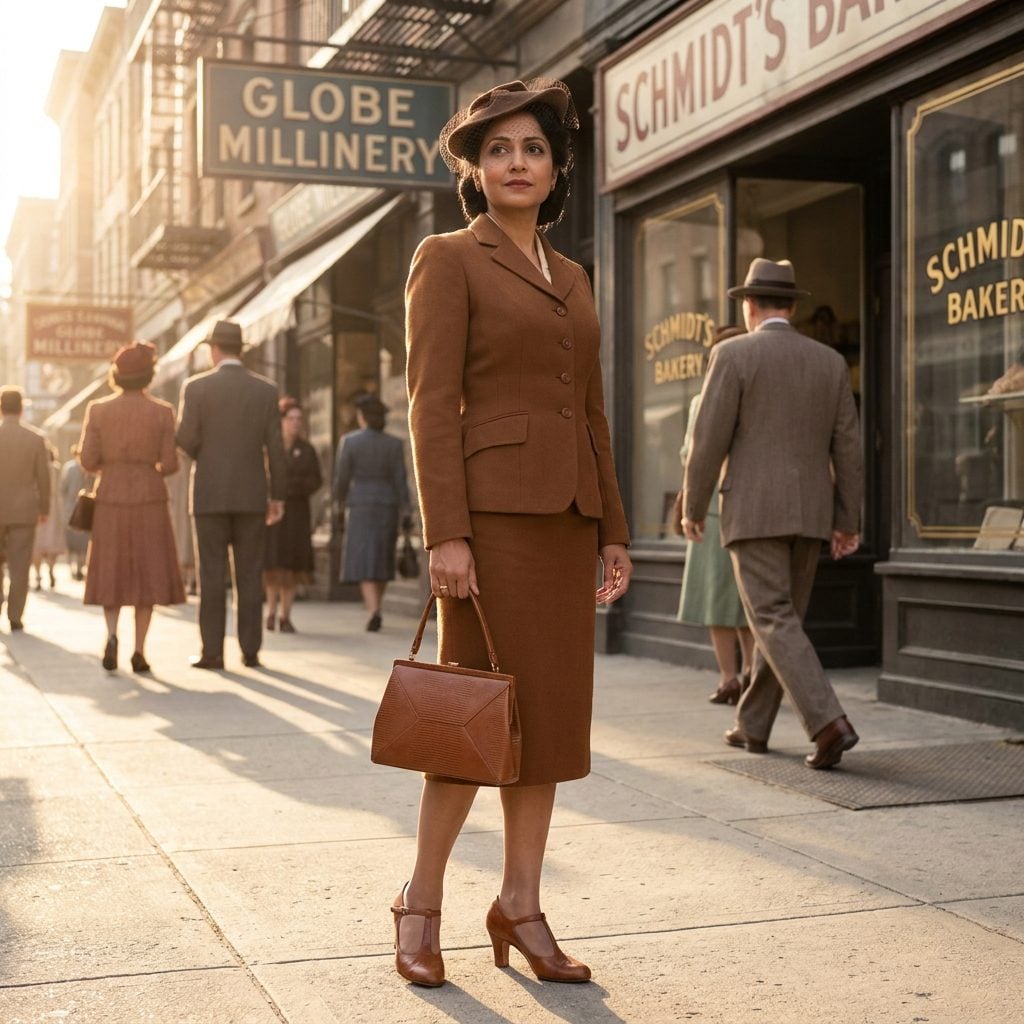
Alligator was the crown jewel, but snake and lizard skin occupied a lively middle tier of 1940s exotic leather handbags. Python brought a wilder, more graphic scale pattern in natural cream-and-brown or dyed burgundy. Karung sea snake produced a finer, more uniform texture. Lizard skin, particularly teju and monitor, had a tight, almost embossed quality that photographed beautifully and aged with a particular grace.
These were daytime bags, not evening. Women wore them to lunch, to the shops, to afternoon card parties. Paired with a tailored suit and low heels, a slim lizard skin bag in cognac or dark green felt polished without being flashy. The texture did all the work.
24. Corde Bags With Coiled Rayon Cord in Those Mesmerizing Swirl Patterns
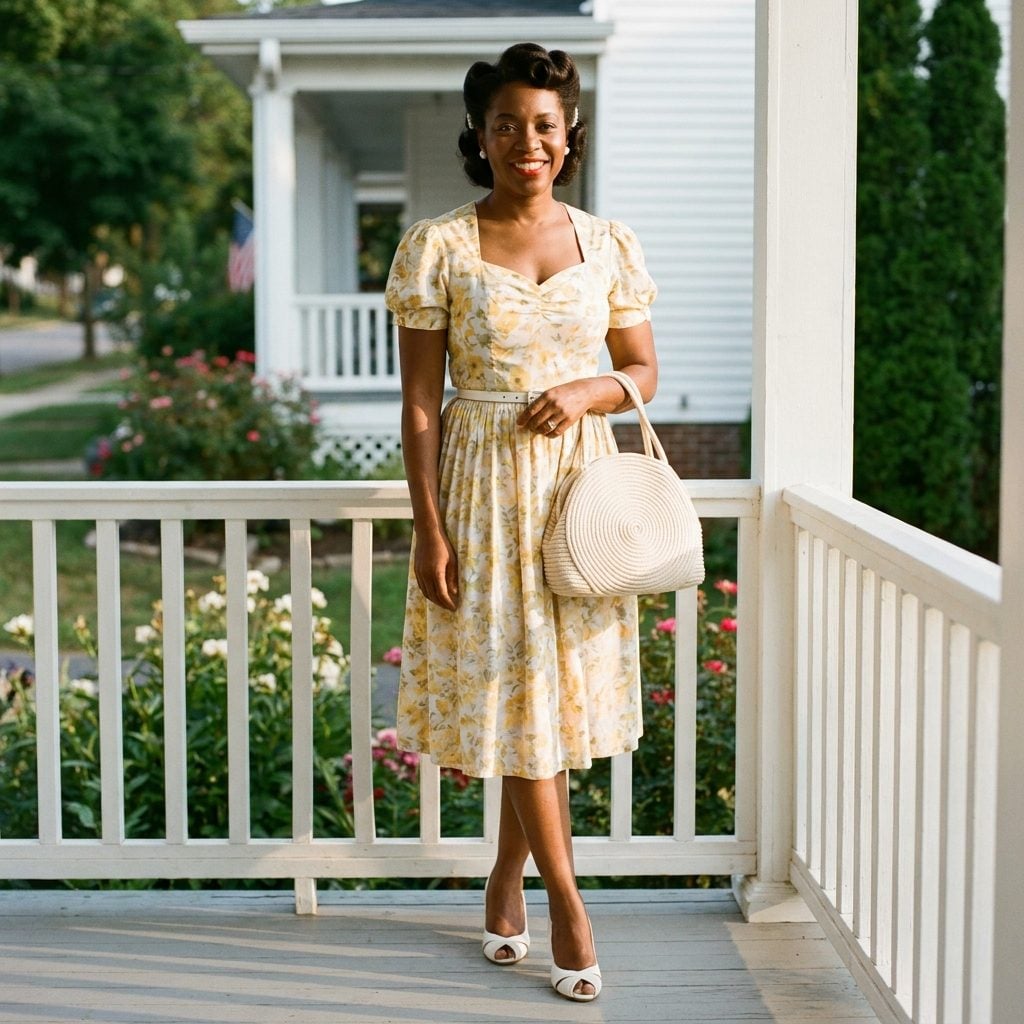
Corde bags were one of the most distinctive wartime material pivots in American accessories, and one of the most visually interesting things to come out of that era’s constraints. The construction involved coiling and stitching rayon cord (a non-restricted synthetic) into tight swirling patterns, often with a beaded or fabric-covered frame. The result had a sculptural, almost architectural quality. The cord sat in concentric spirals across the bag’s surface, creating depth and pattern without using a single inch of restricted leather.
They came in natural cream, warm caramel, and jet black, often with a contrasting cord worked into the pattern for definition. Corde bags were popular enough that they remained in production well into the early 1950s, a rare case of a wartime workaround outlasting the war itself.
23. Petit Point Tapestry Bags With Tiny Floral Scenes You Could Lose Yourself In
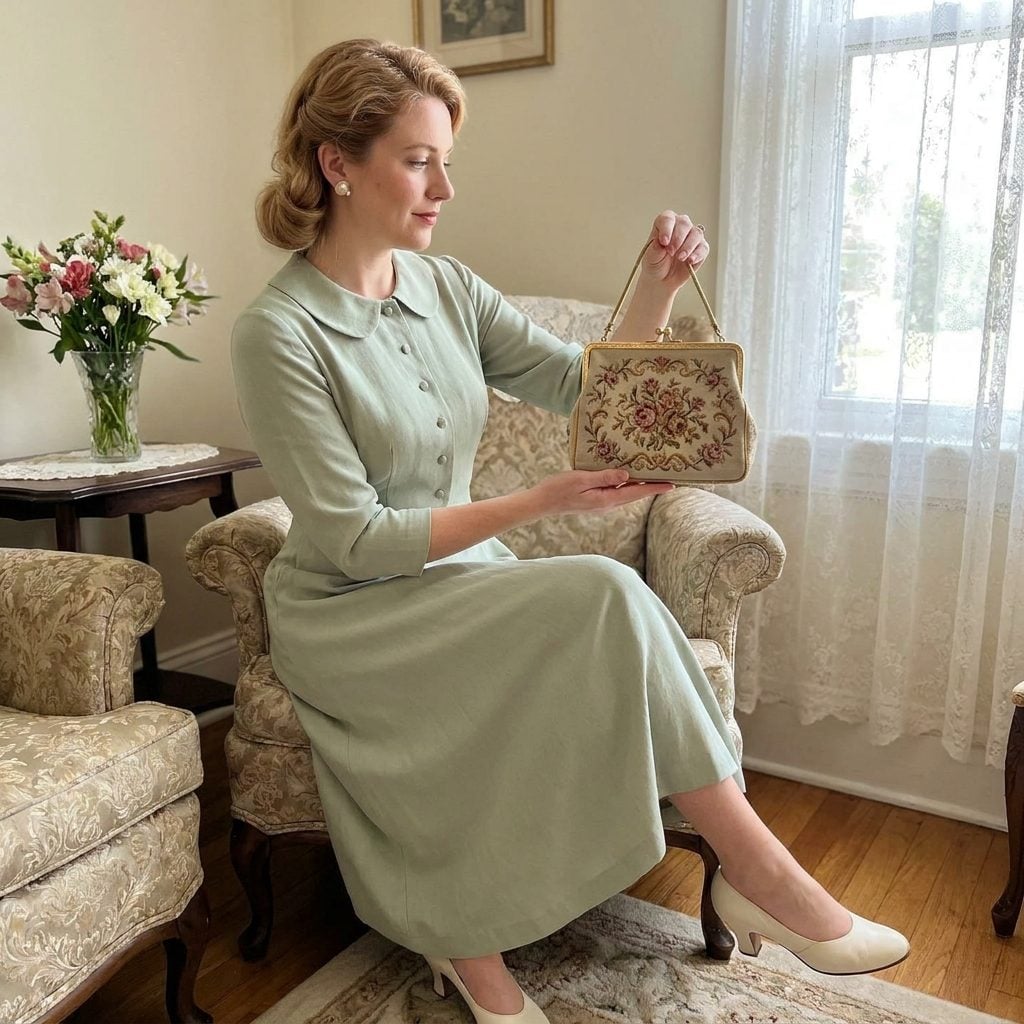
Petit point bags required a particular quality of attention to even notice what you were looking at. The stitches were so fine, sometimes as many as 40 per inch on the finest European work, that the bag’s surface held what looked like a miniature oil painting: a garden bower, roses climbing a stone wall, a milkmaid in a pastoral scene, a bouquet arranged with botanical precision. American women imported them from Austria and France or found them at specialty gift shops and antique dealers.
Carrying one was a quiet form of connoisseurship. It said: I chose this carefully, and I know the difference between craft and commodity. They were typically set in gold-tone or tortoiseshell frames with kiss-lock clasps, the embroidered panel protected by a fabric-lined interior. Many have survived in remarkable condition, the petit point itself essentially indestructible.
22. Needlepoint Handbags, Often Stitched by the Woman Who Carried Them
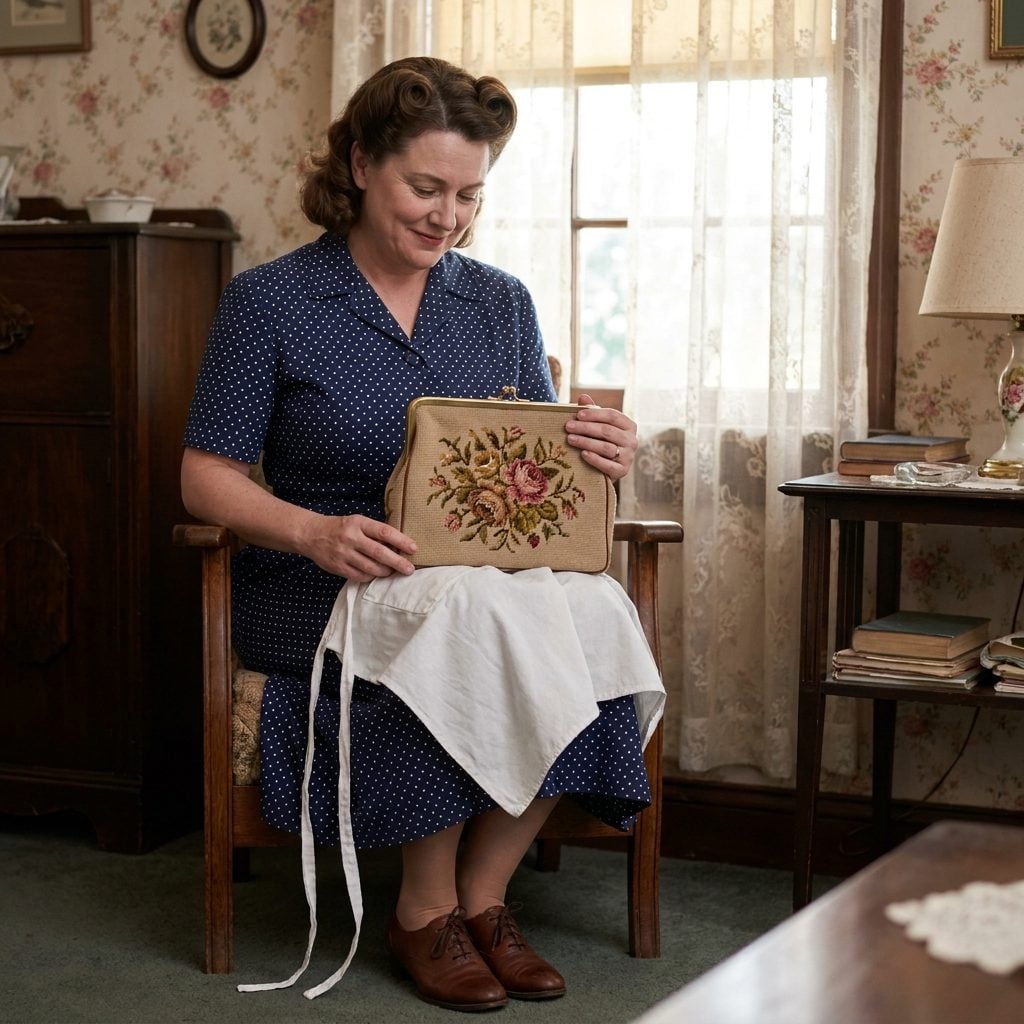
There is something moving about a bag that someone made with their own hands to carry with their own hands.
Needlepoint handbags occupied a different emotional register than their petit point cousins. Where petit point was imported luxury, needlepoint was domestic pride. Women stitched canvases at home during the war years, a practical activity that produced something beautiful while husbands and brothers were overseas. Kits were sold at dime stores and fabric shops with pre-printed canvas, wool yarn in coordinated colorways, and simple finishing instructions.
The finished bags typically featured bold geometric patterns, simple florals, or pictorial scenes (a dog, a horse, a cottage) worked in chunky wool stitches on a cream canvas ground. They were often mounted on simple tortoiseshell or brass frames by a local cobbler or luggage shop. Some women carried bags that their mothers had made. Some made bags that their daughters eventually carried.
21. Beaded Evening Bags in Gold, Silver, and Jet-Black Micro-Beads
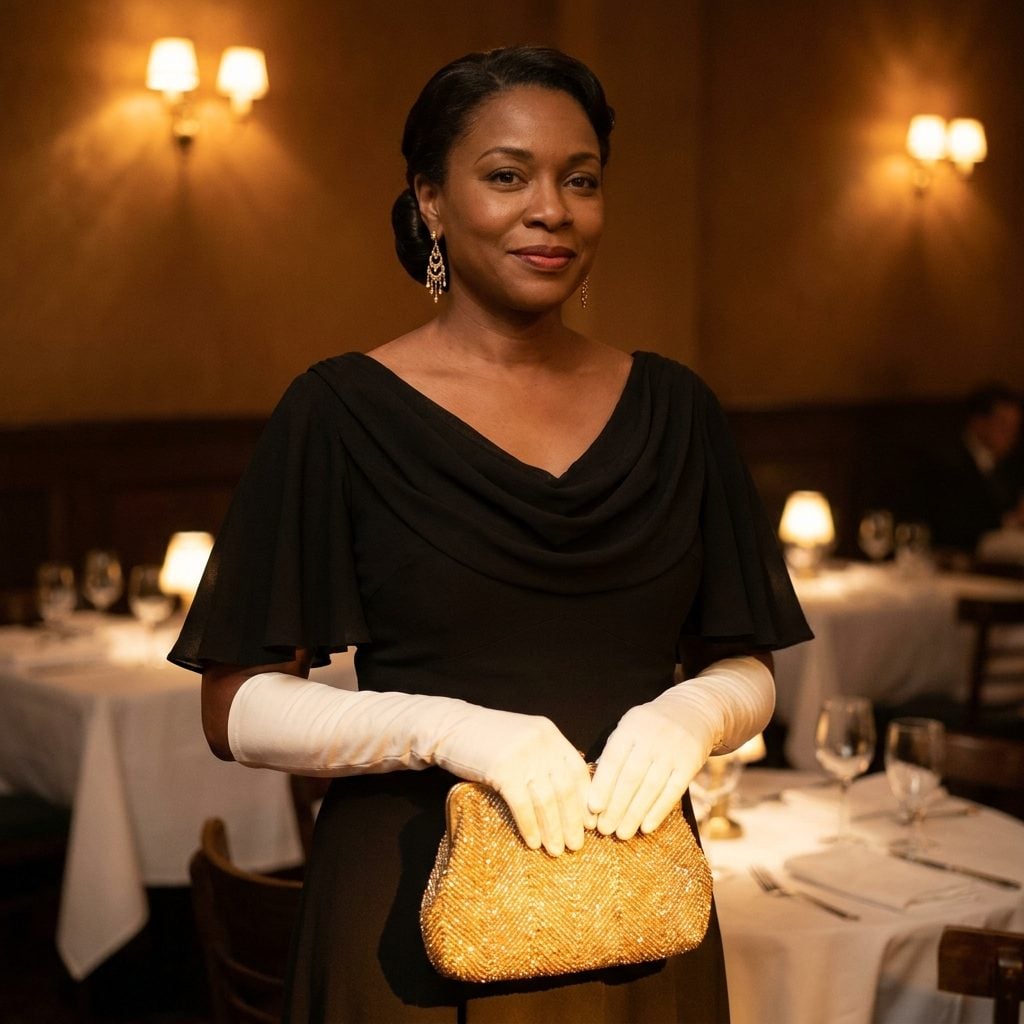
An evening bag from the 1940s could hold a lipstick, a folded handkerchief, a compact, and almost nothing else. It didn’t need to. Its entire purpose was to glitter. The finest examples were covered edge-to-edge in micro-beads so small they read as a continuous shimmering surface, the beads worked into geometric Art Deco patterns, abstract scrollwork, or stylized floral motifs. Gold seed beads for a blonde or ivory gown. Silver for black or navy. Jet black for a look that was simultaneously minimal and completely extravagant.
These bags were made in France, Czechoslovakia, and increasingly in American workshops as European imports dried up during the war. You held one in the palm of your hand. It weighed almost nothing and cost more than it looked like it should. The beads caught every light source in a room, candlelight, the chrome fixtures of a supper club, the flash of a camera.
20. Whiting and Davis Metal Mesh Bags: Every Shade of Silver and Gold Imaginable
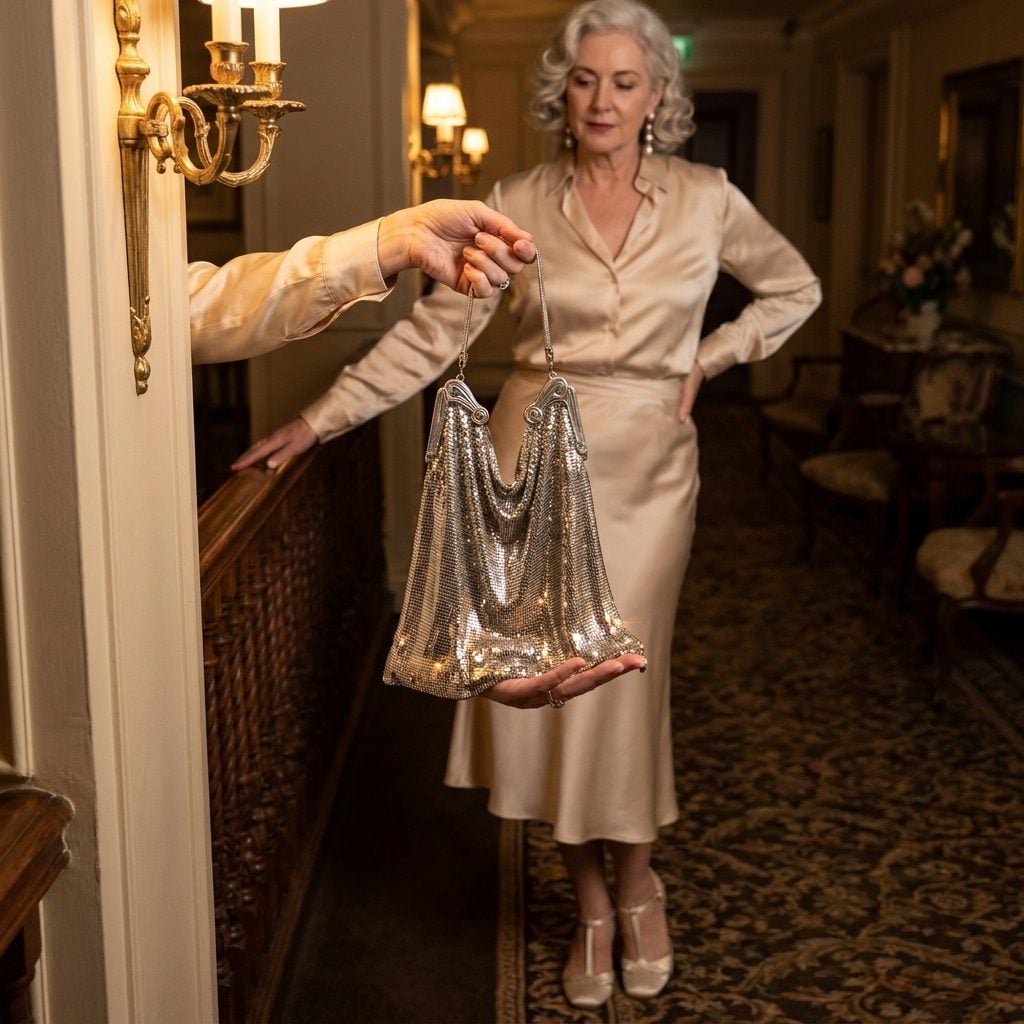
Whiting and Davis had been making metal mesh bags in Plainville, Massachusetts since the late 1800s, but the 1940s represented a particular peak of their cultural reach. The bags, constructed from thousands of tiny interlocking metal rings, machine-made with a precision that still impresses, caught light with a fluid, almost liquid quality. They moved differently than any other bag you could carry. They draped over your hand. They pooled in your palm when you set them down.
In the 1940s they came in rhodium-plated silver, gold-tone brass, two-tone combinations, and enameled mesh in ombre gradients of rose gold and champagne. The frame closures were often ornate, engraved gold-tone bars with integrated kiss-lock clasps. Carrying one to an evening event was less accessorizing and more wearing jewelry large enough to put things in.
19. The Envelope Clutch Tucked Precisely Under One Arm
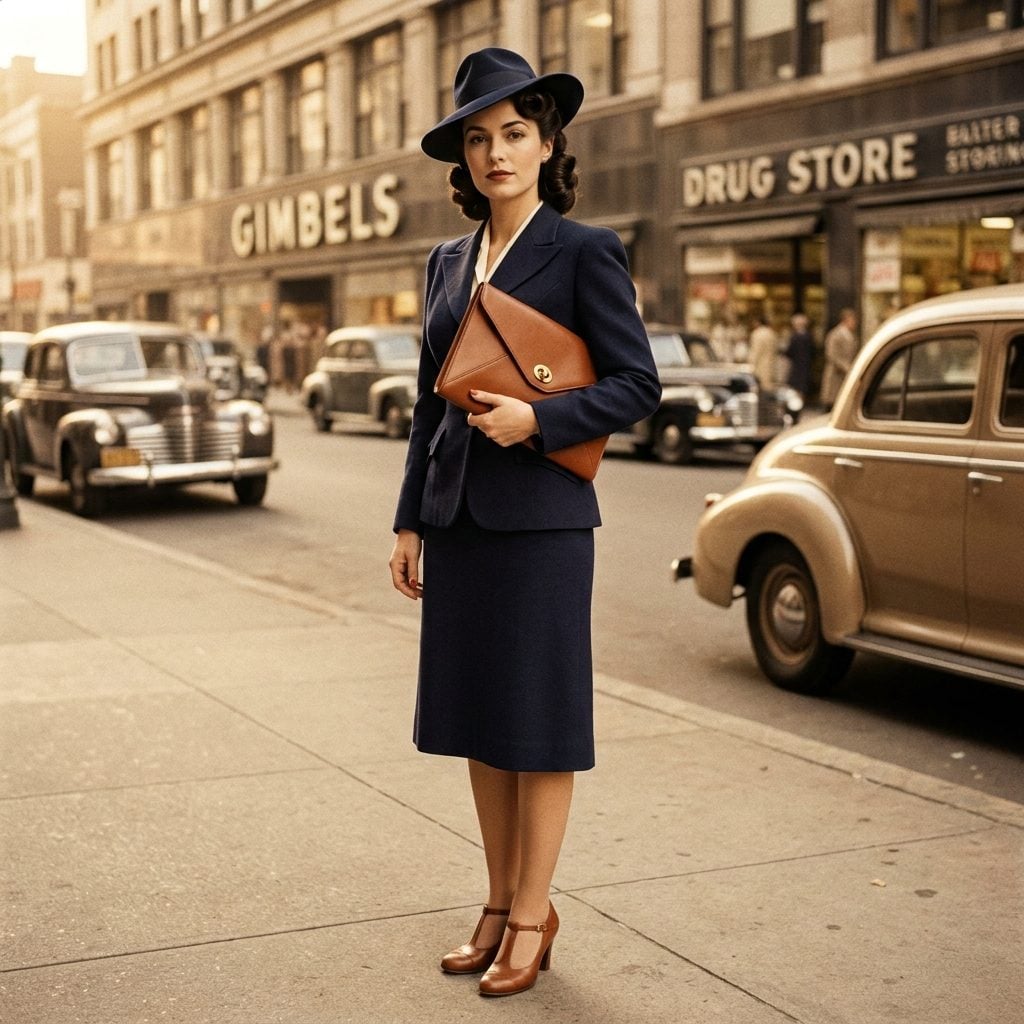
Every woman who wanted to look like she had somewhere important to be carried hers exactly the same way: flat against the ribs, elbow clamped down, wrist free. The bag wasn’t just an accessory, it was a posture cue. You stood differently when you had one pinned there.
They came in sleek calf leather, in satin for evening, in navy and cognac and forest green. The clasp was usually a simple turn-lock or a press-stud, because the envelope clutch didn’t need to announce itself. The woman carrying it did that on her own.
18. Lucite Bags With Carved Lids, Wilardy Made Them, We Coveted Them
❤️ Would you like to save this?
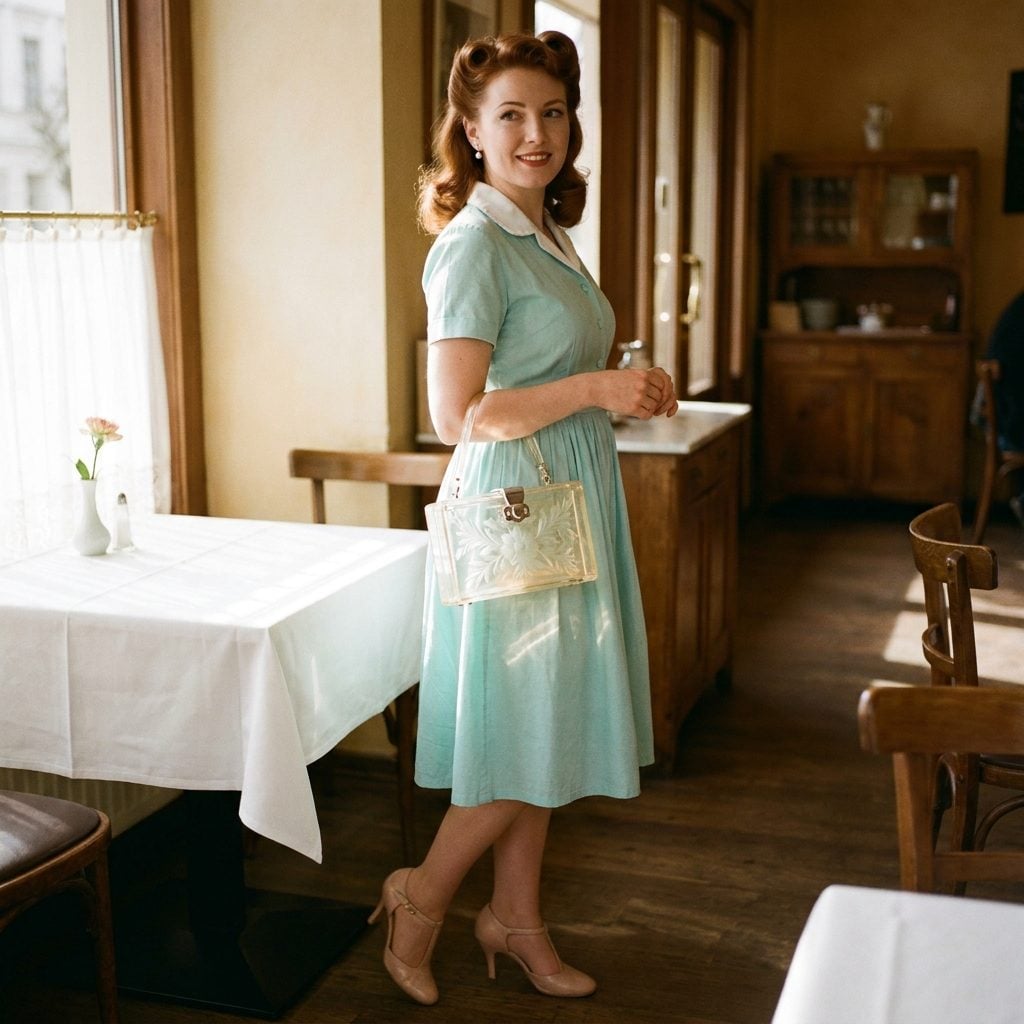
There is nothing subtle about a clear Lucite box bag with a lid carved like a basket weave or etched with tropical leaves. That was the whole point. You placed it on the table at lunch and let people figure out what they were looking at.
Wilardy, Llewellyn, and Patricia of Miami made the ones everyone remembers: thick-walled, heavy in the hand, with a satisfying click when the clasp snapped shut. Some were tinted amber or pale mint. Some were filled with silk flowers trapped beneath the lid like a tiny terrarium you were also carrying your lipstick in.
17. Wooden Box Purses With Hand-Painted or Decoupage Lids
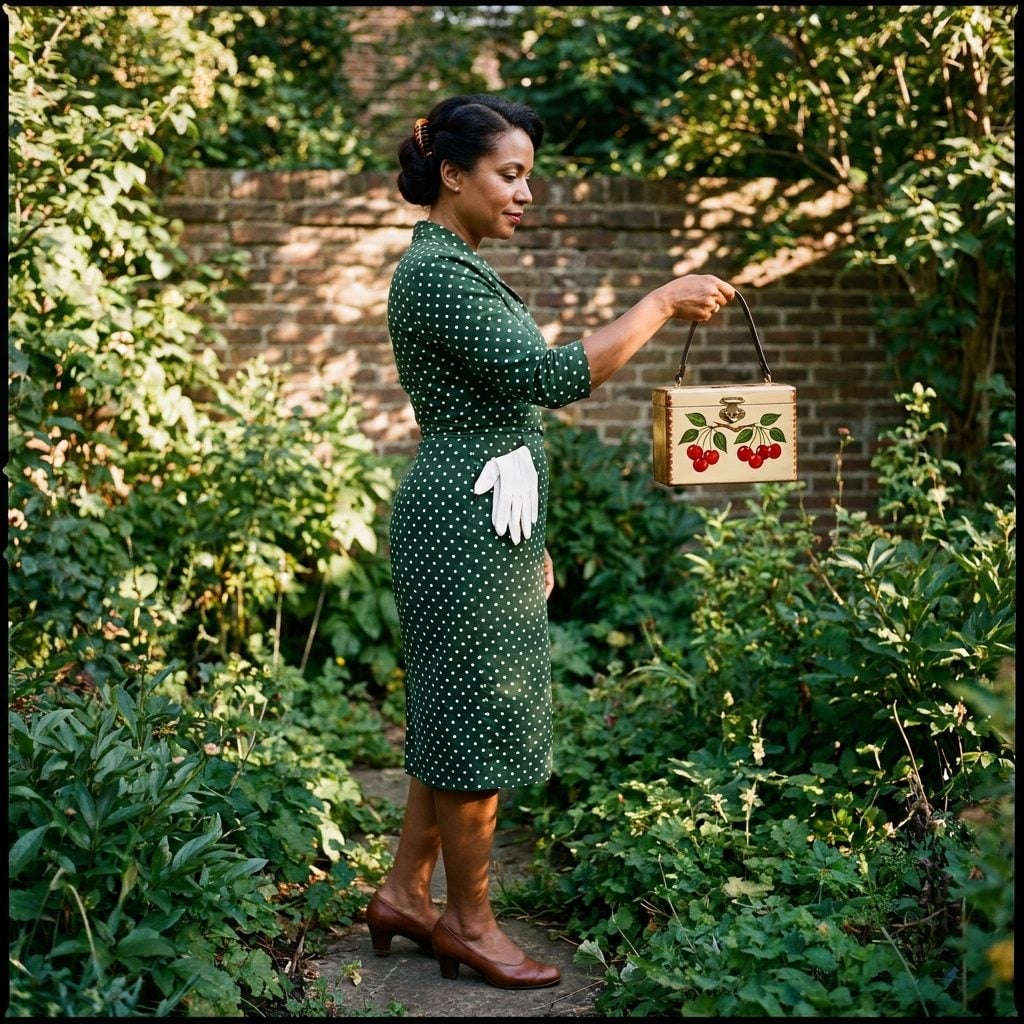
These were the conversation pieces. A hinged wooden box, maybe six inches wide, painted with cherries or roosters or a little seaside village, carried on a short leather loop like it was the most normal thing in the world.
Craft culture ran parallel to fashion in the 1940s. Women made and decorated their own when they couldn’t buy them. Decoupage lids with Victorian-era cutouts, hand-lacquered finishes in glossy red or hunter green, tiny brass hinges that squeaked just slightly. Wearing one signaled a very specific kind of creative confidence, the kind that didn’t wait for a store to stock it.
16. Tooled Leather Bags With Western Floral Motifs
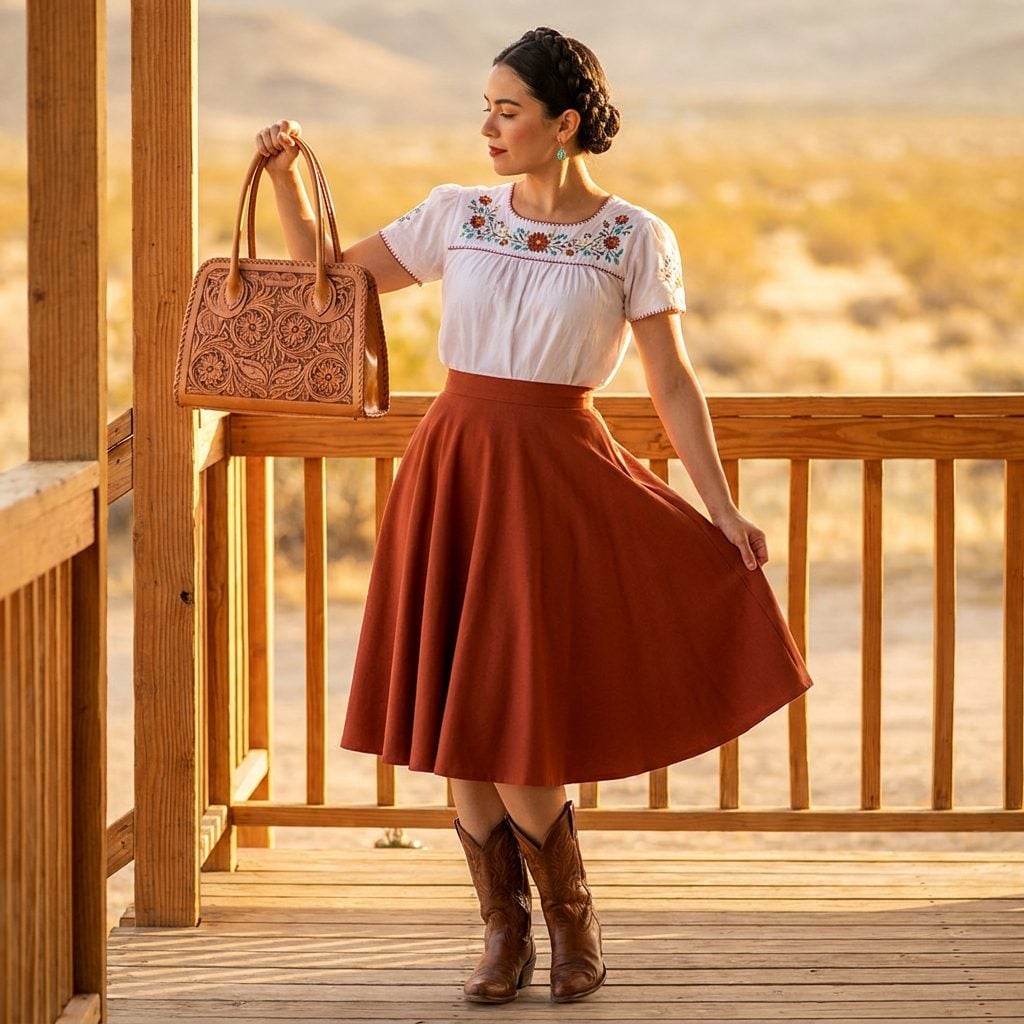
The craft was in the leather itself. Hand-tooled floral scrollwork pressed into vegetable-tanned cowhide, the petals and vines carved in relief so you could feel the whole design with your fingertips. These were bags from the American Southwest and they made no apology for it.
Westernwear had a cultural moment in the early 1940s, pushed along by cowgirl film stars and the romanticization of ranch life. A tooled leather bag with a floral border and a turquoise-set silver clasp was aspirational, it carried the idea of open land and self-sufficiency into a very urban wardrobe.
They came from Mexico, from Texas, from small saddlery shops that made their way into department stores as novelty items. Some women wore them with full skirts and riding boots. Others wore them with their sharpest city suits, which was always the better choice.
15. Drawstring Pouch Bags in Suede or Faille
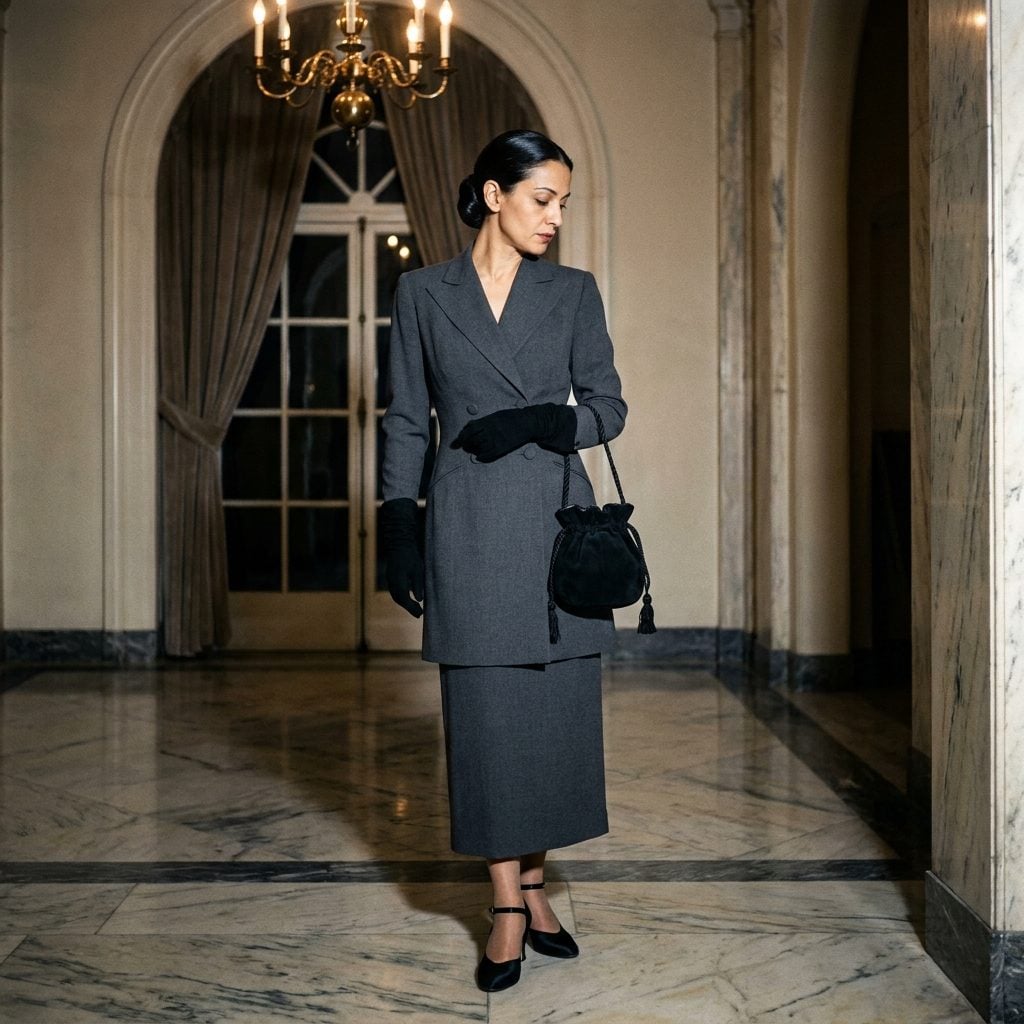
The drawstring pouch asked nothing of you structurally, it just gathered at the top and hung from your wrist on a short cord or ribbon, soft as a collapsed soufflé. Which was either its charm or its liability depending on how organized you needed to be.
In black suede for evening, these read as quietly chic. In bottle green or plum faille with a tassel pull, they had a slightly theatrical quality that suited the 1940s perfectly. The bag had no rigid frame, no internal organization, no loyalty to keeping its shape. You found your compact by touch alone and you were grateful when you did.
14. Fabric Purses Stitched From Dress Scraps (Thank You, War Rationing)
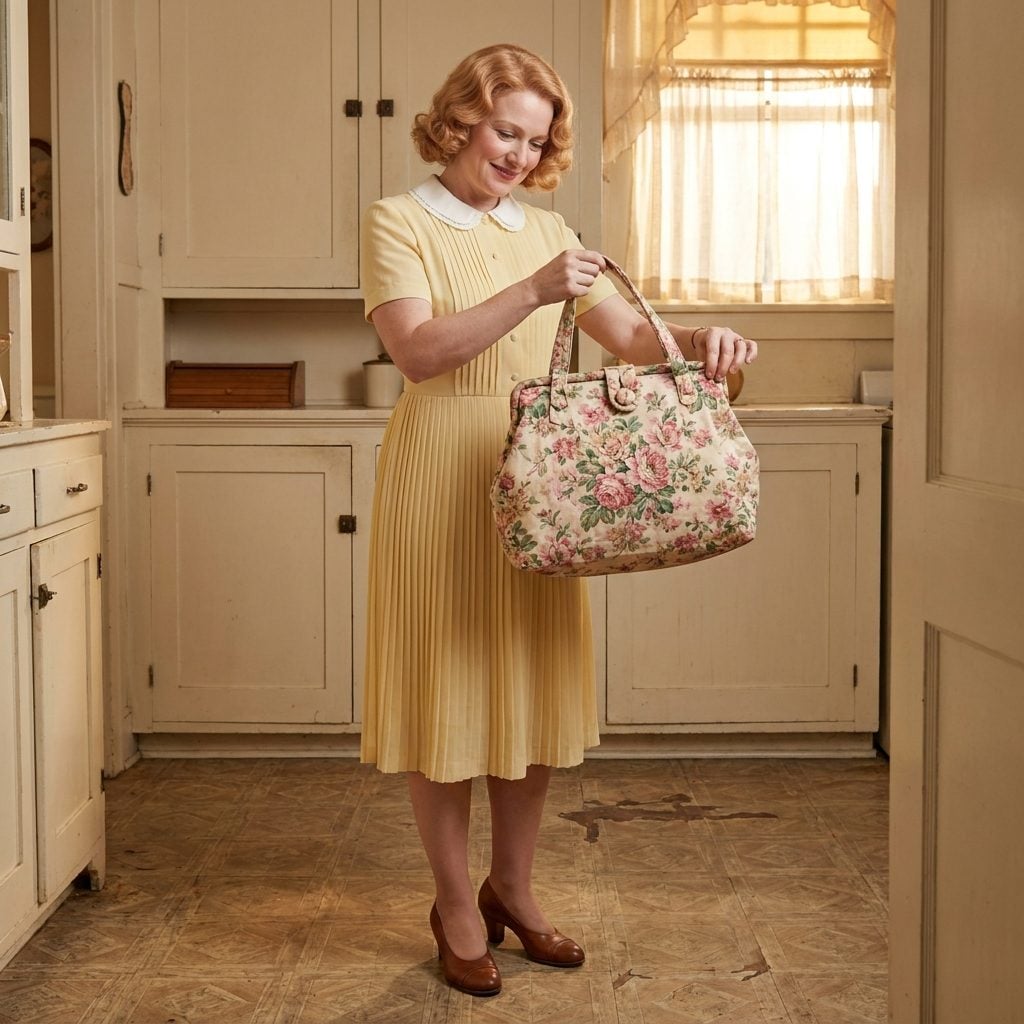
Leather was rationed. Hardware was rationed. So women did what women have always done when the supply chain fails them: they made something better out of whatever was left.
Floral chintz, wool suiting remnants, tapestry fabric cut from old curtains, pieces of a dress that had worn through at the hem but still had good life left in the bodice. These bags were lined, structured with cardboard or thin batting, finished with self-fabric buttons or salvaged clasps. They matched nothing and somehow matched everything.
“Make do and mend” wasn’t just a wartime slogan, it was a design philosophy, and the fabric handbag was its best accessory.
13. Bakelite and Early Plastic Frames in Colors Metal Couldn’t Be
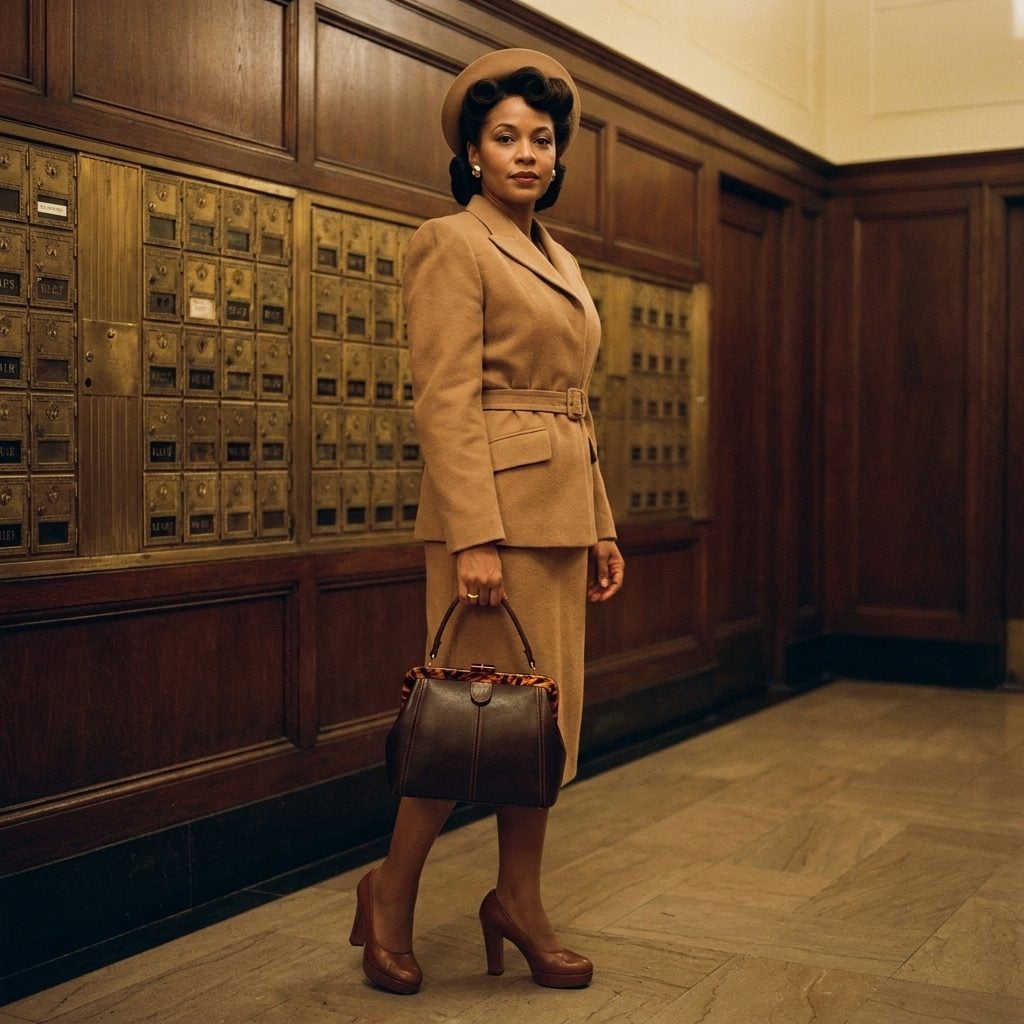
When metal went to the war effort, bag makers turned to Bakelite and early cellulose acetate for frames, and something genuinely interesting happened: suddenly bags came with tortoiseshell handles, candy-red clasps, and marbled amber frames that no metal component could have produced.
The top-stitched construction around these frames was meticulous, showing the seam where leather met Bakelite in a clean, almost architectural line. Collectors now hunt these specifically. At the time, we just thought they looked like a decent alternative. We were wrong, they looked better.
12. Telephone Cord Handles Twisted Into Sculptural Coils
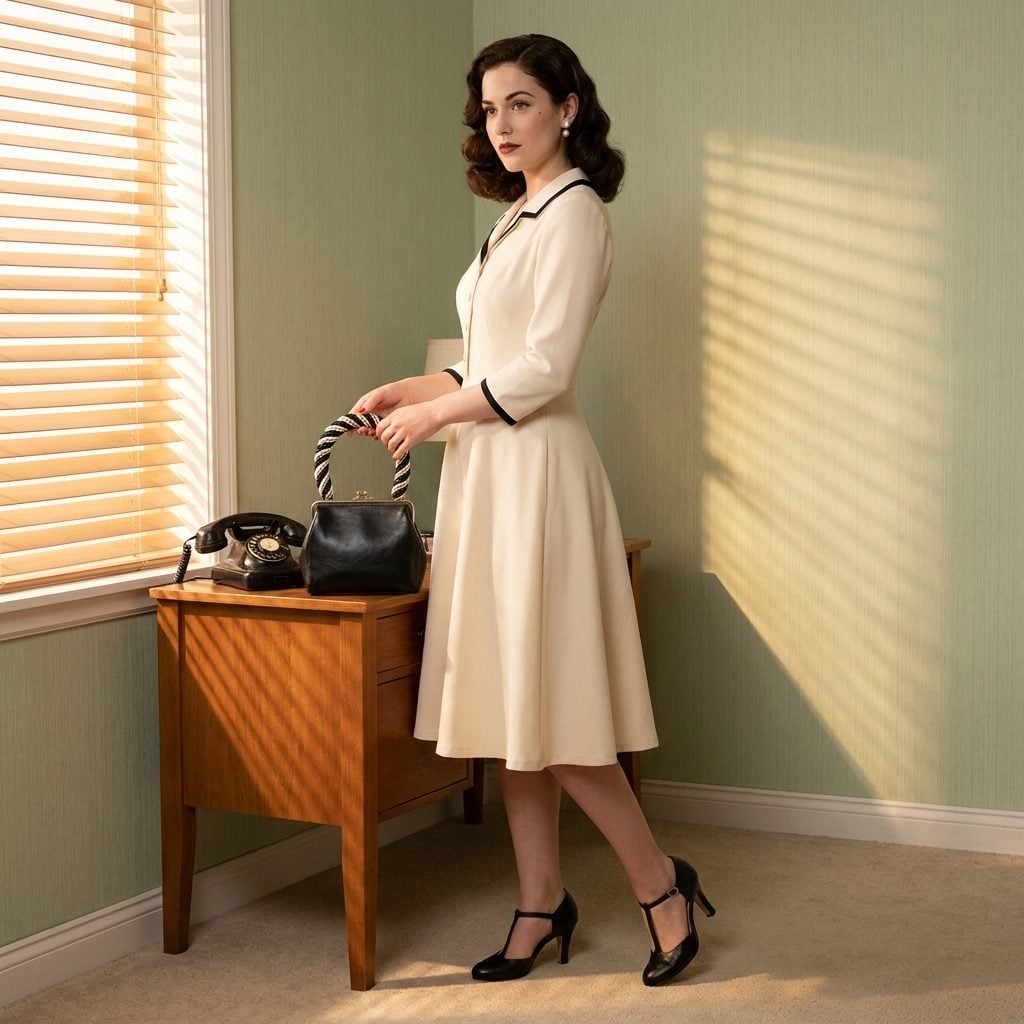
At first glance you’d think the handle on this bag had escaped from the rotary phone on your kitchen wall. That was fine. That was fashion.
Coiled telephone cord handles braided or wrapped into rigid spiral shapes appeared on bags throughout the late 1940s, a bit of Pop Art logic before Pop Art had a name. They were usually in black or ivory, occasionally in pastel, always slightly surreal. You gripped a coiled spring to carry your lipstick and your ration book, and somehow this felt like the future.
11. The Muff Bag: Half Hand Warmer, Half Handbag, All Glamour
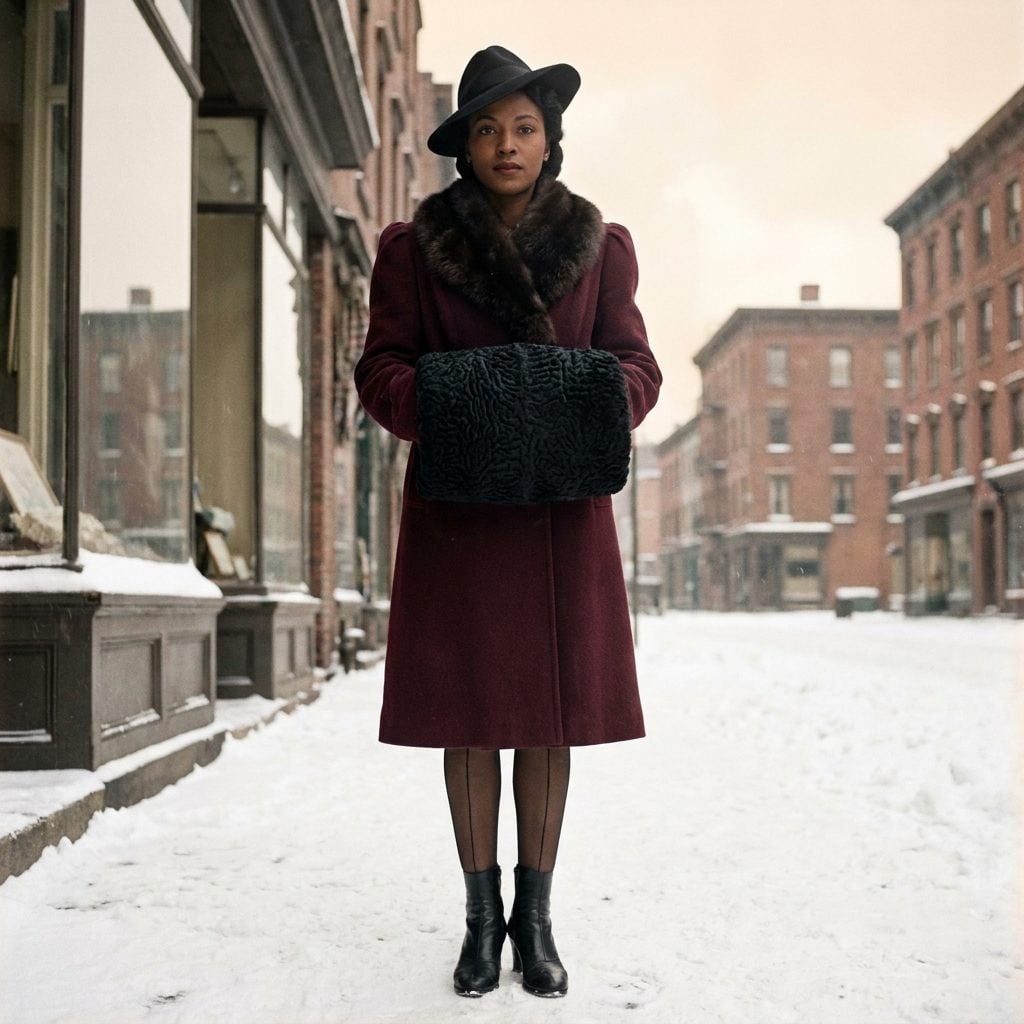
A muff bag was exactly what it sounds like and more impractical than it appears. You slipped both hands inside a cylindrical or barrel-shaped fur or fabric tube, and somewhere inside that tube was a small zippered pocket holding your compact, your coins, and your absolute faith that this was a reasonable way to carry your belongings in winter.
In black Persian lamb or white rabbit fur, with satin lining and a discreet interior pocket, the muff bag was the most theatrical accessory of the cold-weather wardrobe. It required a certain commitment. You couldn’t gesture freely. You couldn’t dig through it while moving. You simply carried it, both hands disappearing inside, and looked absolutely correct doing so.
10. Souvenir Handbags With Hand-Painted City Scenes
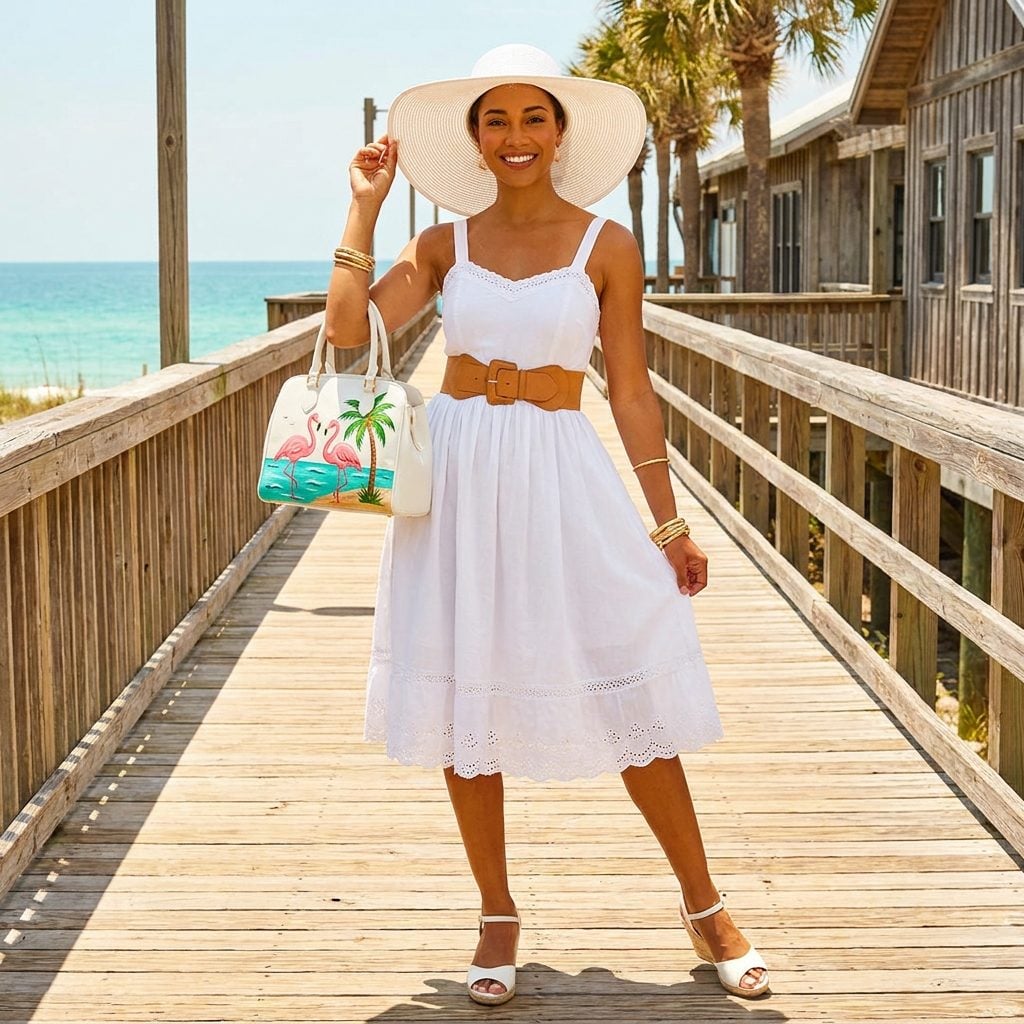
Miami’s flamingos. The Manhattan skyline. The Golden Gate at dusk. Hand-painted on smooth leather or stiff fabric, these bags arrived home in a suitcase and then never stopped traveling, because you wore them everywhere and made sure people asked about them.
The souvenir bag was a 1940s status symbol with a specific subtext: I went somewhere. During wartime and its immediate aftermath, leisure travel was aspirational in a way it hadn’t been before. A bag painted with a Florida beach scene or a New Orleans wrought-iron balcony wasn’t just a souvenir, it was a story you carried on your arm.
9. Gold-Tone Chain Straps on After-Dark Shoulder Bags
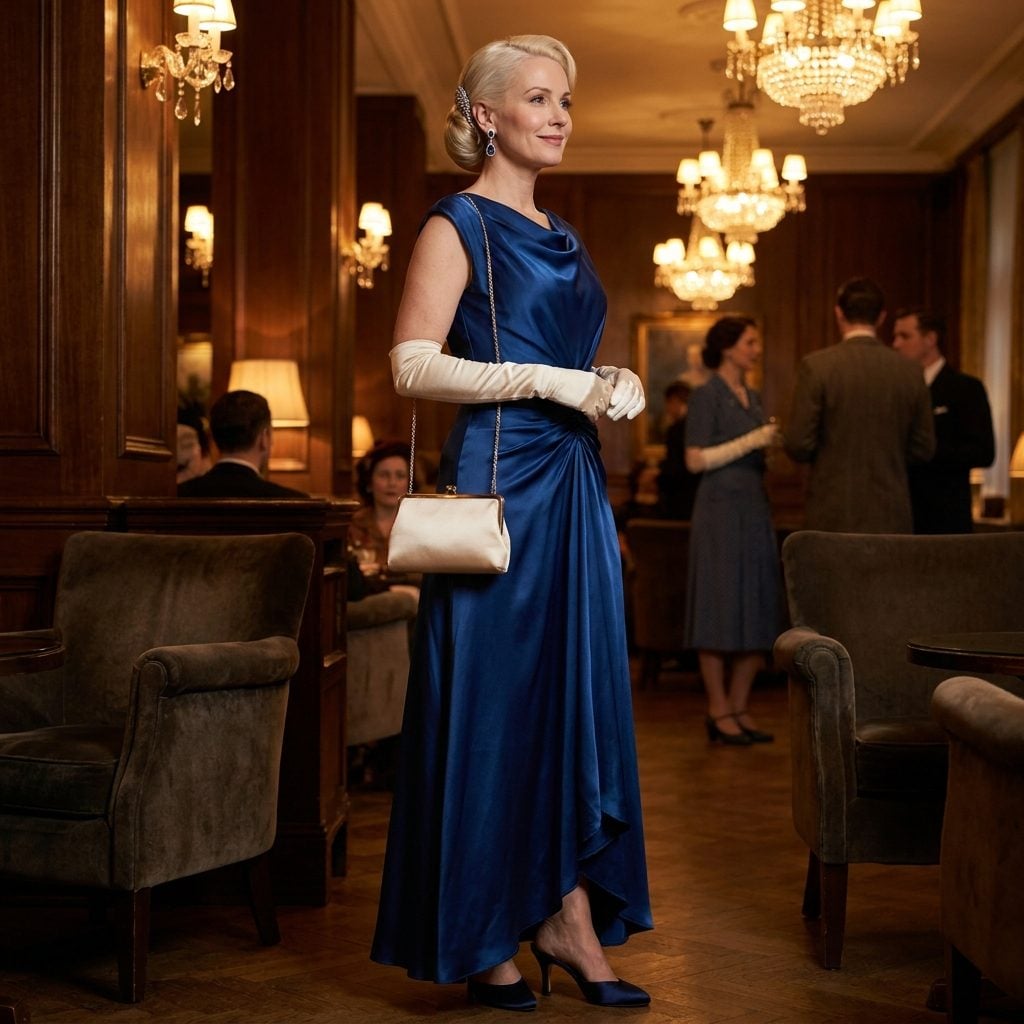
Before the chain strap became Chanel’s most recognizable design language, it was already everywhere in 1940s American eveningwear, thinner than what you’d see today, usually a single delicate strand in gold-tone or gilt brass, just long enough to loop over one shoulder and leave both hands free for a cocktail glass.
The bags themselves were small: gathered satin, beaded minaudières, compact fabric pouches that held exactly a lipstick and a card. The chain was almost architectural in contrast to the softness of the bag. It caught light the same way earrings did, and that was entirely intentional.
8. The Wrist-Strap Pochette: Small Enough to Mean You Were Somewhere Important
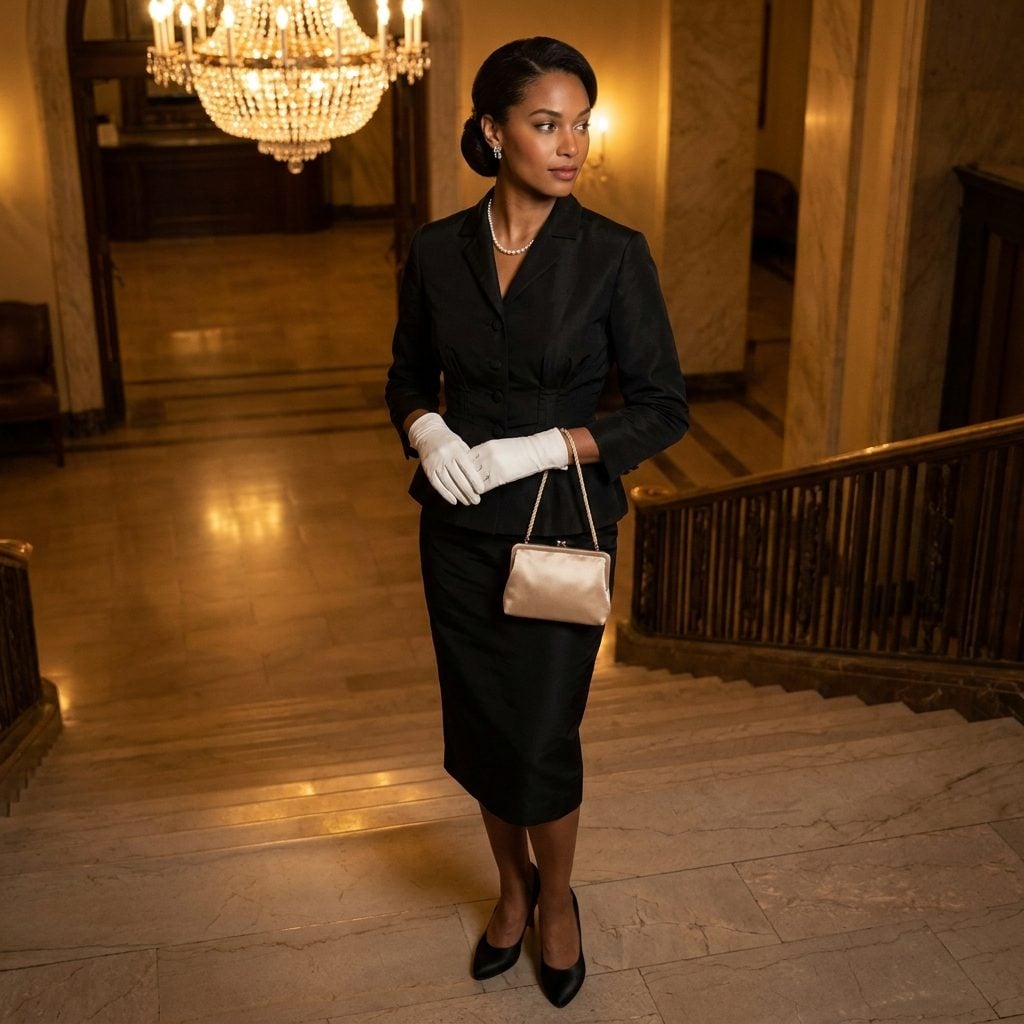
The pochette worn on the wrist required an almost performative level of occasion-dressing. You didn’t carry a bag this small unless the night genuinely called for it. It held your powder compact, a single folded bill, and the absolute certainty that someone else was driving.
In black satin with a seed-pearl frame, or in champagne silk with a braided silk loop, the 1940s wrist pochette was formal in a way that felt almost ceremonial. The loop sat at the wrist bone, just below the glove hem. You carried your entire evening in something the size of a deck of cards, and the restraint itself was the point.
7. The Interior Built for Lipstick, a Compact, and a Ration Card
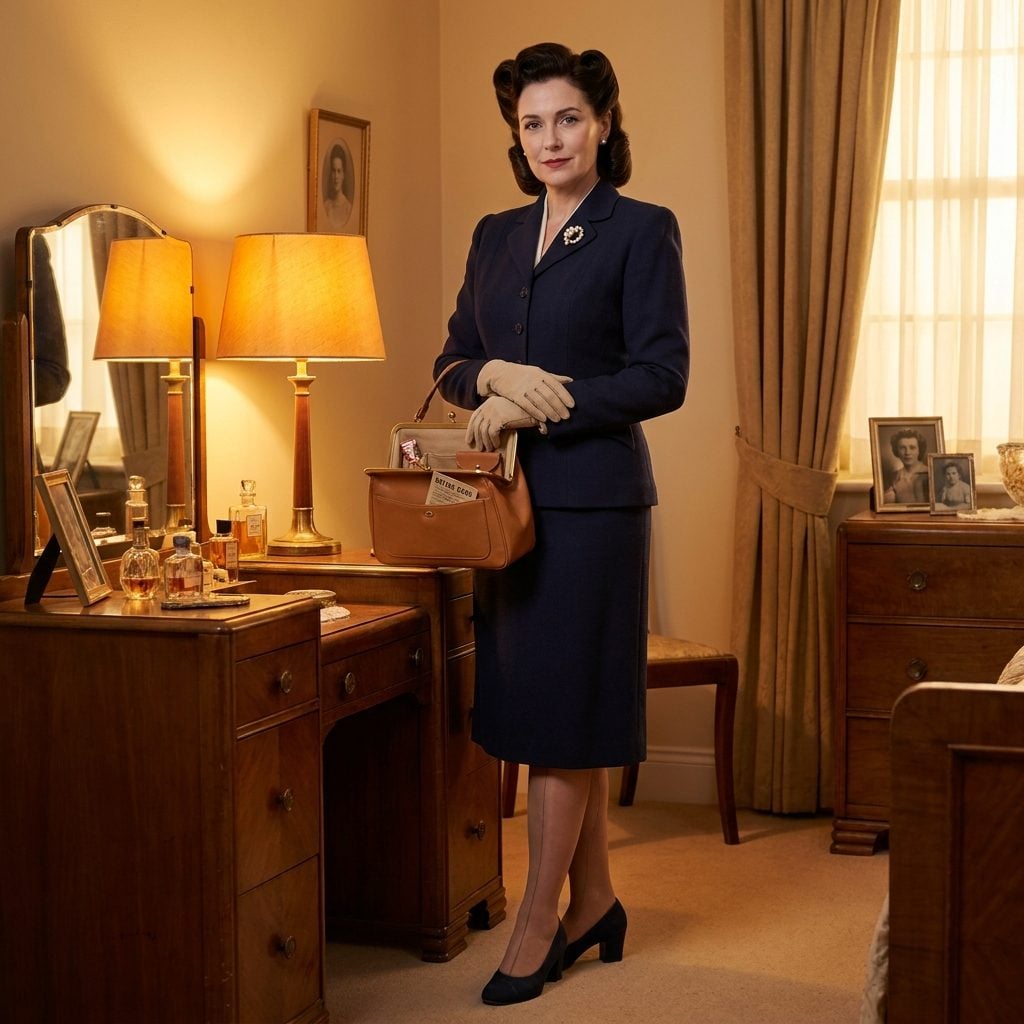
Open a 1940s bag and you were looking at a woman’s entire civilian life in miniature. There was a slim sleeve for the lipstick (Victory Red, always), a padded snap pocket for the powder compact, and somewhere in there, folded with the care of a legal document, a ration card. The organization was not accidental. It was architectural.
These bags were built around real constraints. Wartime meant less leather, less hardware, fewer luxuries, but the interior layout told you everything about what a woman still refused to give up. The lipstick stayed. The compact stayed. The rest was negotiable.
6. Satin-Lined Interiors That Made Opening Your Bag Feel Like a Small Secret
❤️ Would you like to save this?
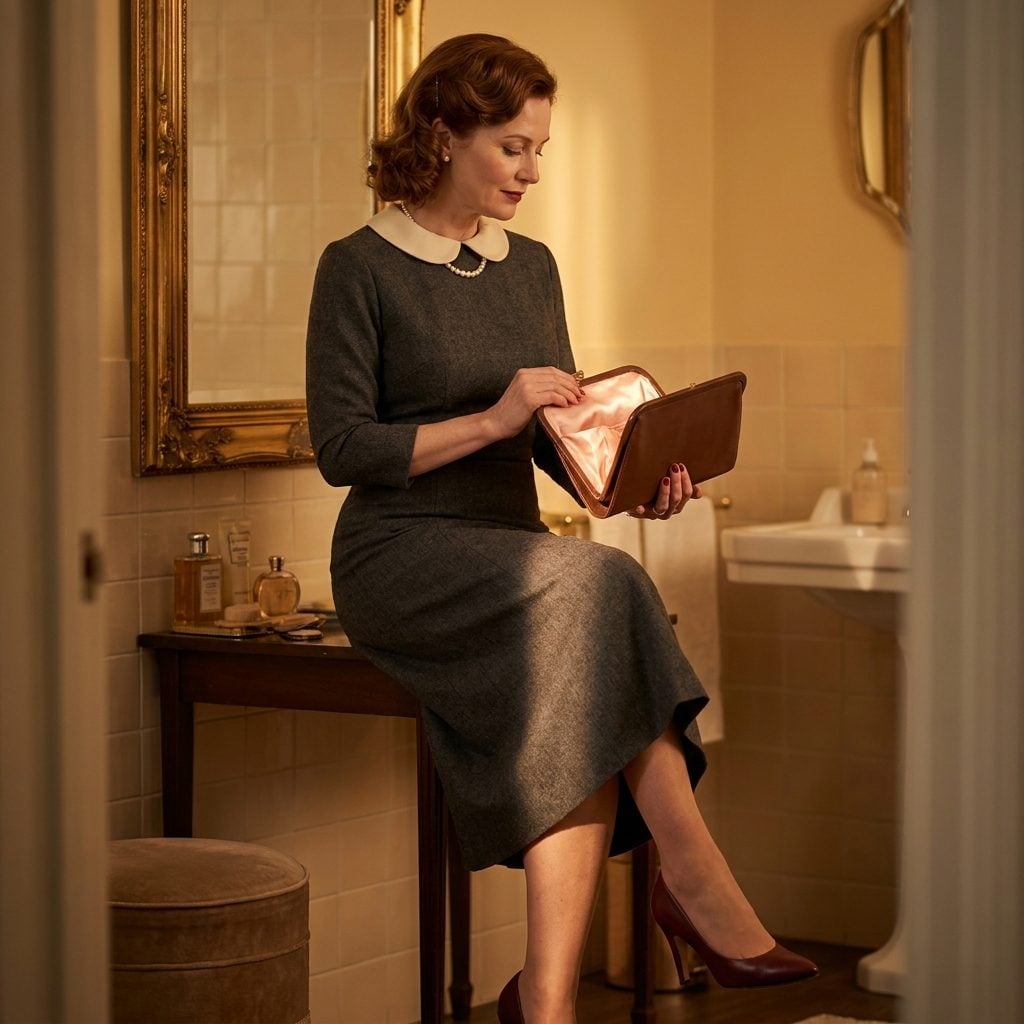
Nobody saw it but you, and that was almost the point. The outside of a 1940s bag could be sensible navy calf leather or sturdy brown faille, but the lining, that was where a little extravagance was permitted. Ivory satin. Dusty rose moire. Occasionally a printed floral that had absolutely no business being inside a bag used to carry ration stamps, but there it was.
There is something quietly radical about hidden luxury. When materials were restricted and practicality was patriotic, the choice to line a bag in something beautiful was a small, private declaration. The woman who carried it knew. That was enough.
5. Black, Brown, and Navy: The Holy Trinity of the 1940s Everyday Bag
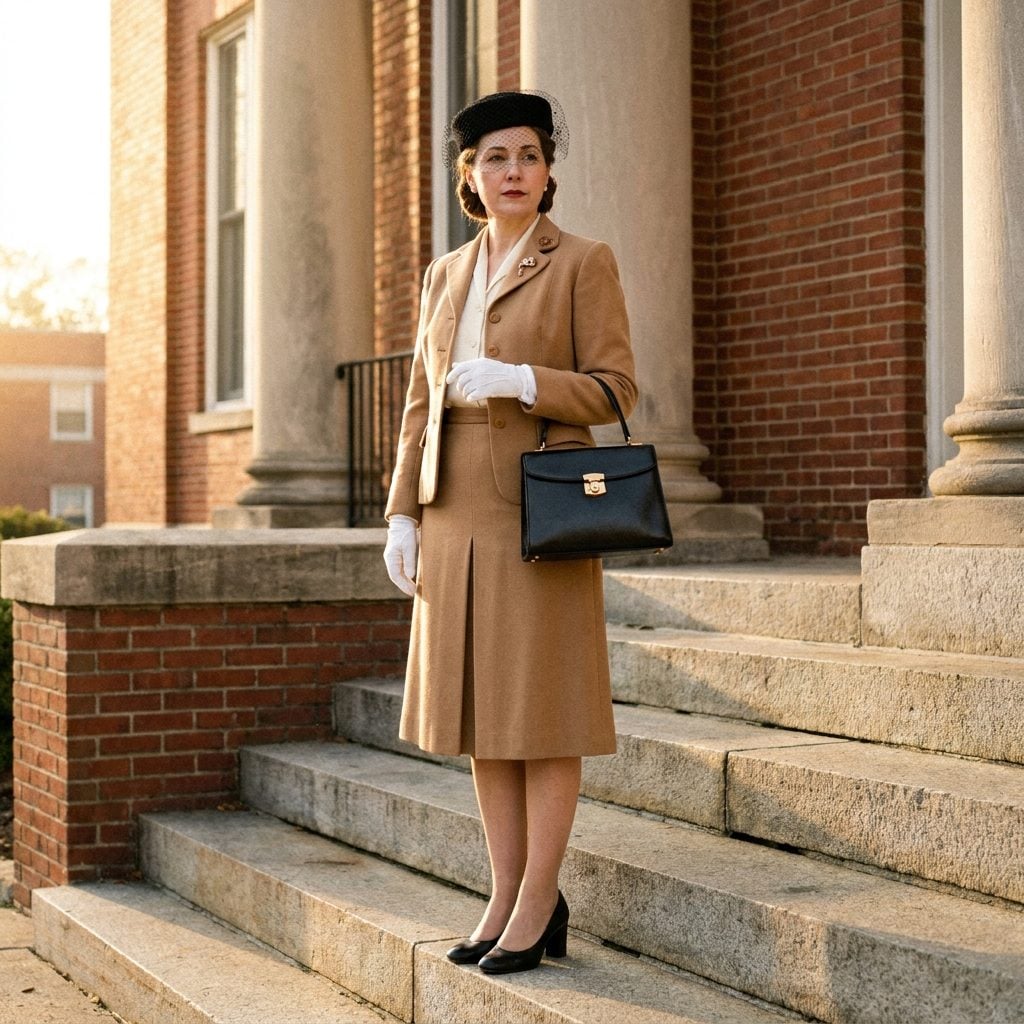
You owned three bags, and that was considered sufficient. One black, one brown, one navy. They rotated with your outfits the way a Catholic school schedule rotates with the liturgical calendar, with total commitment and zero deviation. These were not boring choices. They were considered ones.
The 1940s woman had a sophisticated understanding of what neutral actually meant in practice: it meant her bag never competed with her outfit, which was doing a great deal of work already. Padded shoulders, nipped waist, A-line skirt. The bag was the quiet anchor, and it was always in a shade that cost nothing to coordinate.
4. No Logo in Sight: When a Well-Made Bag Spoke for Itself
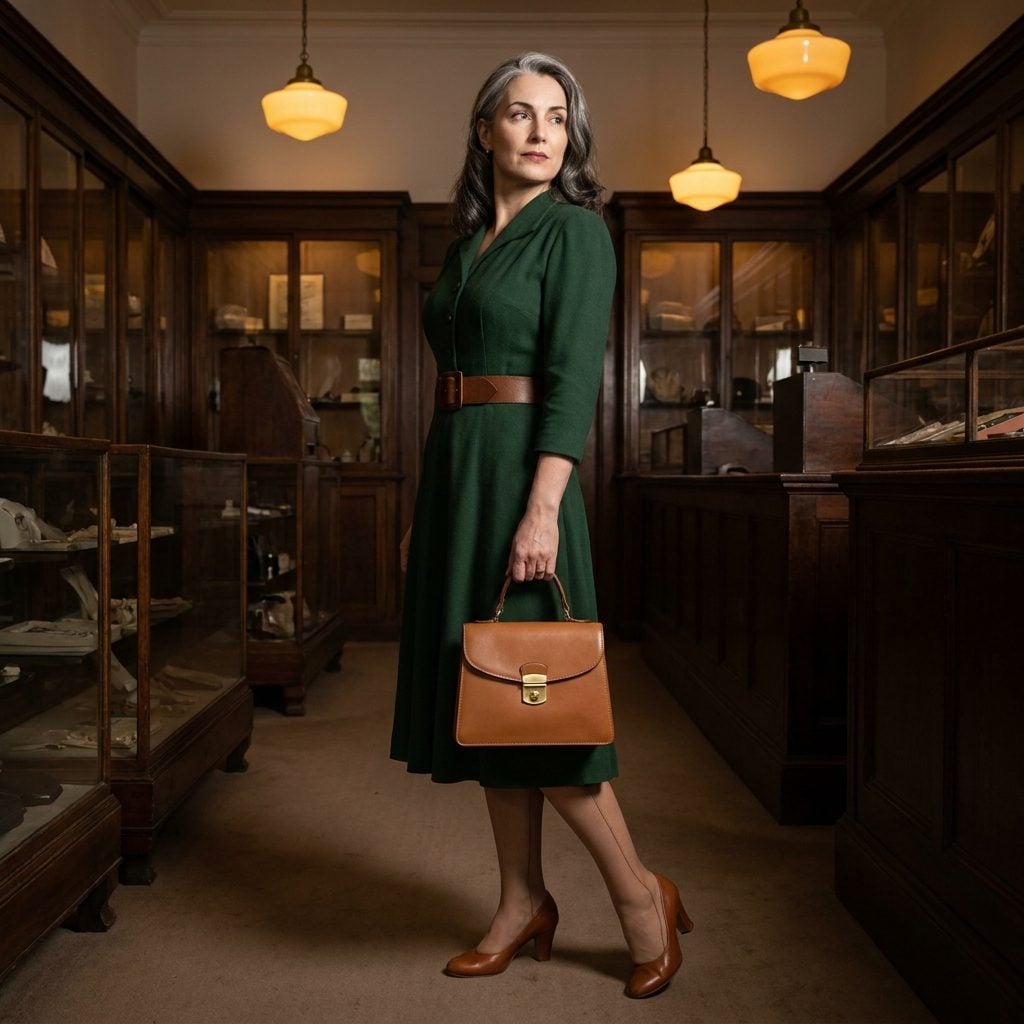
In the 1940s, your bag did not announce who made it. There were no stamped monograms on the hardware, no embossed brand names on the clasp, no printed logos swimming across the canvas. The quality announced itself through construction: the weight of the leather, the precision of the stitching, the smooth click of a brass frame closing shut.
This was a different kind of status signal, one that required the viewer to know what they were looking at. And the women who carried these bags generally did. Quiet confidence in an object built to last a decade, not a season.
3. The Boxy Frame Bag: Art Deco’s Last Stand in Leather
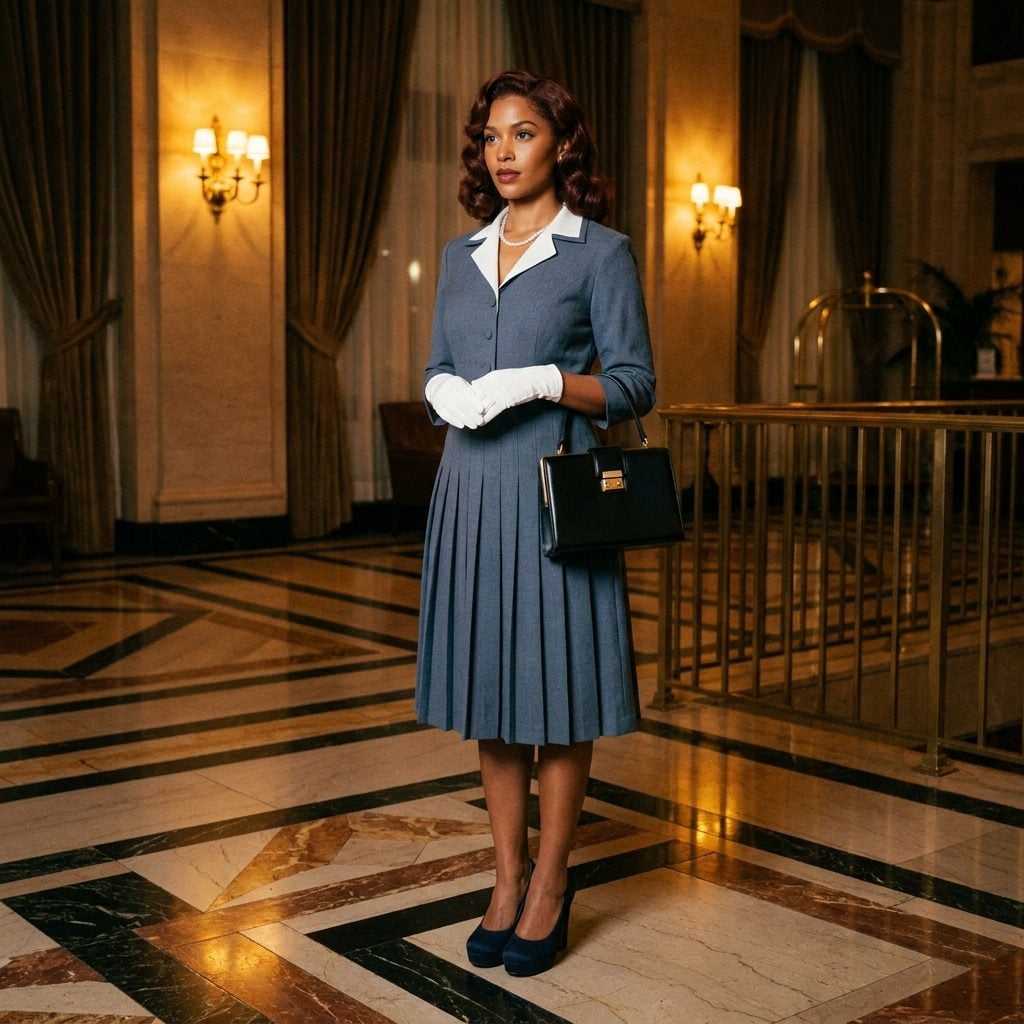
Art Deco had technically peaked in the 1930s. Nobody told the handbag designers. The boxy, geometric frame bags of the 1940s carried all that angular energy forward: hard rectangular silhouettes, structured corners with no apology, brass hardware in stepped or chevron shapes, occasionally a Bakelite clasp in amber or black that looked like it belonged in an architecture drawing.
Carrying one of these felt like carrying a small building. It sat on your wrist with authority. It did not slouch. It did not flop. It held its shape whether it was full or empty, which is more than can be said for most things.
“A bag that held its shape whether empty or full. We could learn something from that.”
2. Carried at the Wrist, Not the Shoulder: The Posture a Handbag Demanded
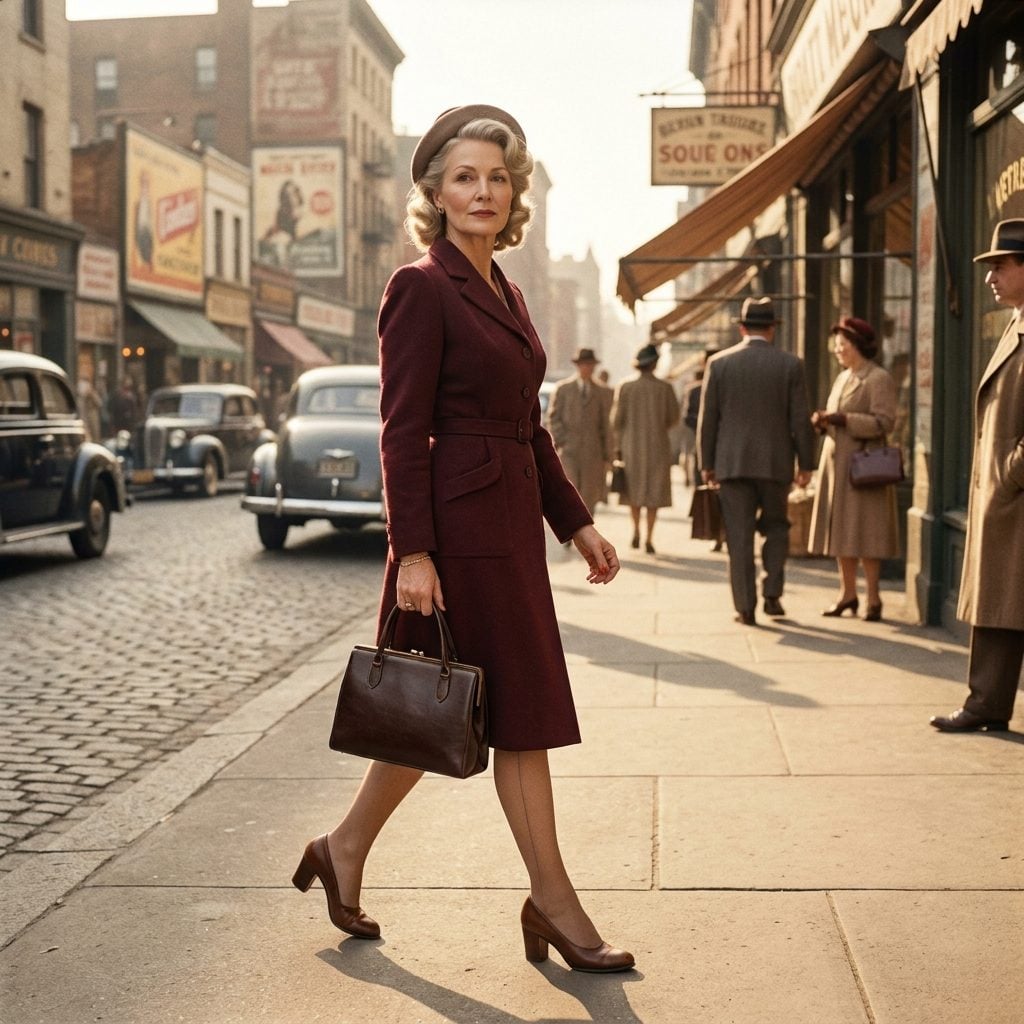
Slinging a bag across your body was not yet an option. The 1940s bag was carried by its top handles or looped over the wrist, which meant you could not slouch, not comfortably. The bag enforced a certain carriage. Shoulders back. Chin level. Walk like you have somewhere important to be, even if you are headed to the grocery store with a ration book and exactly four dollars.
It sounds rigid now. But there was something about the physical relationship with a bag that connected the wearer to how she moved through space. The style and the posture were one system. The bag was not an accessory to the outfit. It was part of how the outfit was performed.
1. The Structured Box Purse With a Hard Frame and That Satisfying Snap
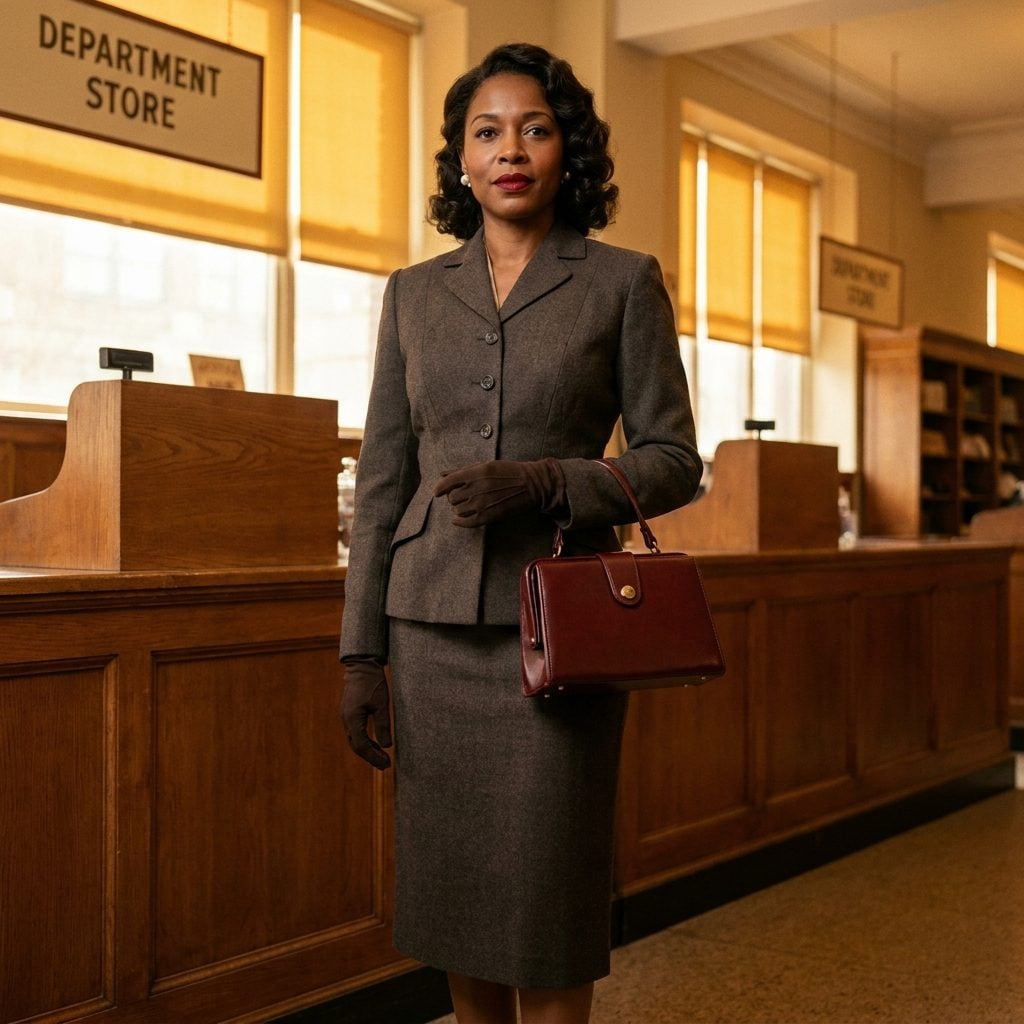
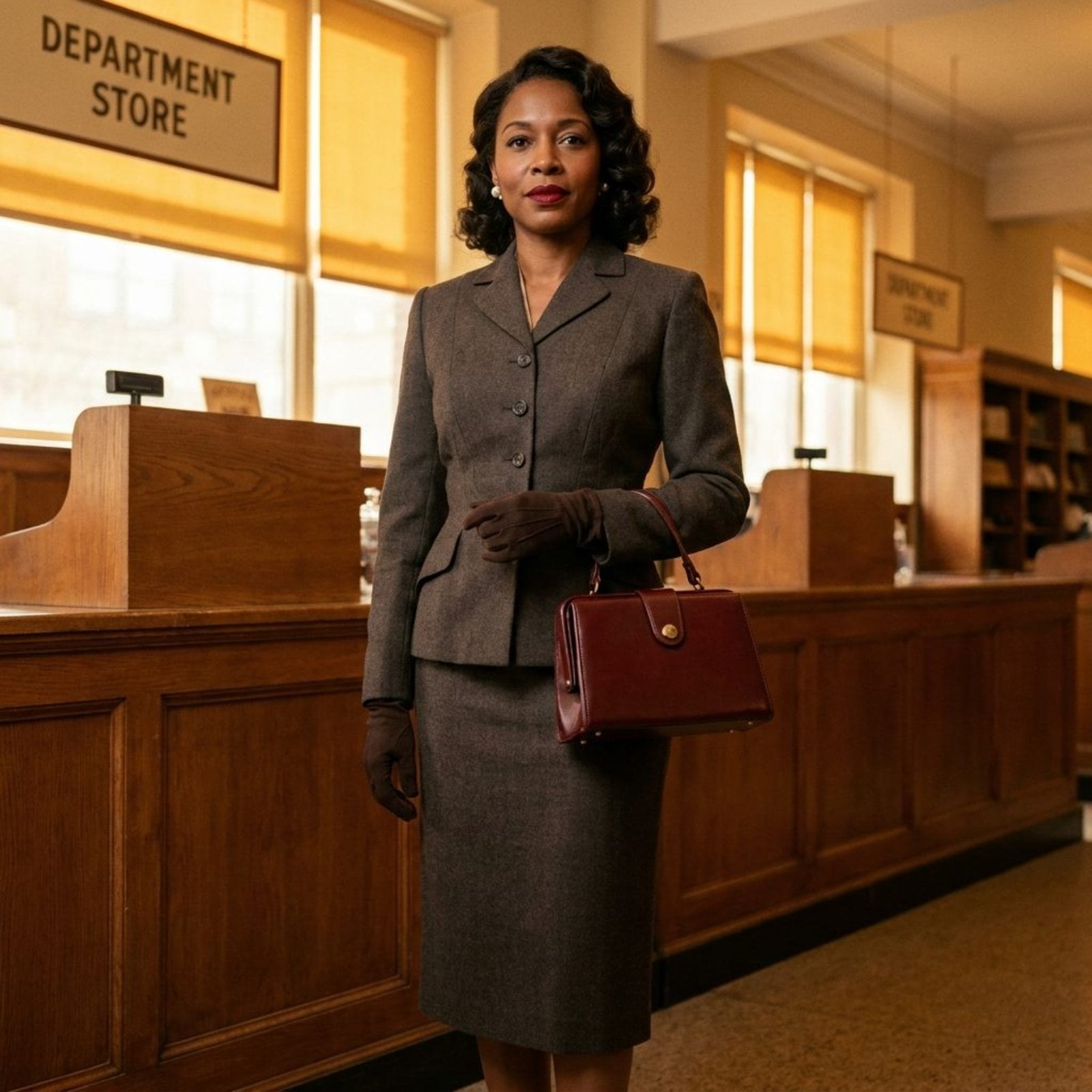
There was nothing casual about carrying a box purse. The rigid frame, usually molded leather over cardboard or early plastics like Lucite, held its shape whether you were at the department store counter or a church luncheon. You set it on a surface and it stayed there, perfectly upright, like it had somewhere important to be. The snap closure made a sound that meant business.
These weren’t bags you rummaged through. They were bags you opened with intention. Inside: a lipstick, a handkerchief, a compact, and maybe a ration book. The box purse was the physical expression of a particular 1940s ideal, composed, contained, and never caught off guard.