❤️ Would you like to save this?
The shoes told the whole story. Before a word was spoken, before a coat came off, before anyone asked what you were drinking at the club soda counter, your shoes had already announced exactly who you were and how seriously you took yourself. The 1950s were not a decade for ambiguous footwear. Every heel height was a statement. Every toe shape, a declaration. If you’ve ever caught a glimpse of a stiletto in an old photograph and felt something pull at you, this list is for you.
FYI, thanks to AI imagery software, we’re able to create very specific fashion and hairstyle examples to illustrate the points being made. In some cases, imagery is exaggerated to hammer home the point. Also, assume links that take you off the site are affiliate links such as links to Amazon. this means we may earn a commission if you buy something.
31. White Leather Peep-Toe Pumps: The Shoe That Went With Everything (Especially Your Best Church Dress)
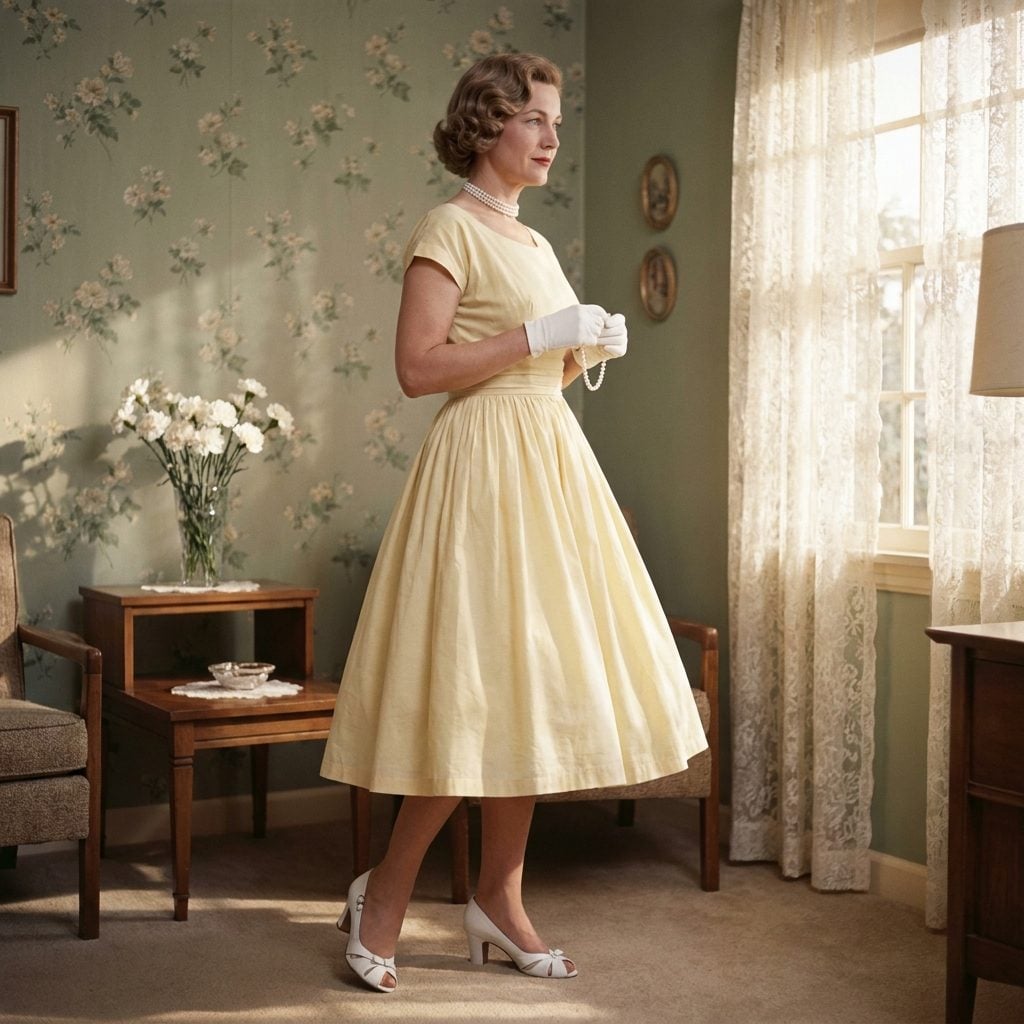
Every woman had a pair. White leather, peep-toe, a heel just high enough to feel dressed. They came out for Easter Sunday, for picture day, for any occasion someone’s mother described as a good dress situation. You wore them with your sheath dress and your full skirt and your shirtwaist, and somehow they worked every single time.
The genius of the white peep-toe pump in the 1950s was its total versatility disguised as a very specific shoe. Department stores like Sears and Penney’s sold them by the thousands. They scuffed at the toe by September and you touched them up with white shoe polish from a little glass bottle with a sponge applicator. There was a whole ritual to it. They were the decade’s little black dress, but for feet.
30. Saddle Shoes and Bobby Socks: The Unofficial Uniform of Every Girl Who Had Any Social Life at All
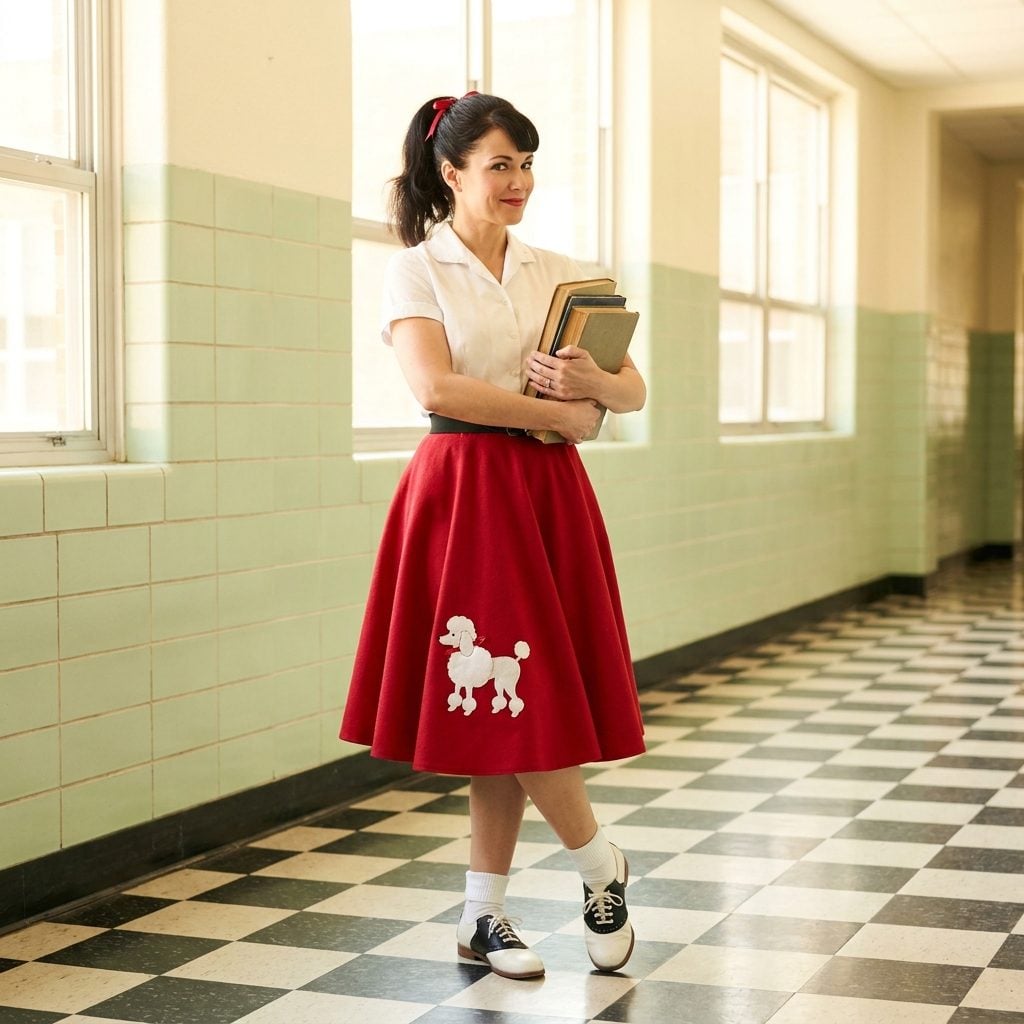
Black saddle, white base, a thick rubber sole that squeaked on gymnasium floors. Every girl who cared about fitting in had a pair, and every girl who was new to school got them immediately to signal she understood the assignment. They came from shoe stores with little footrest stools and salesmen who used metal measuring contraptions on your foot.
The bobby socks were non-negotiable. Folded down once, never twice, always ankle-length, always white. You wore this combination to school dances, to the malt shop, to anywhere that mattered socially in the American teenage universe of 1953. The accessory trends of the decade revolved around youth culture in ways that hadn’t really existed before, and the saddle shoe was ground zero for all of it.
29. Kitten Heels: The Shoe That Saved Knees, Backs, and the General Dignity of Women Everywhere
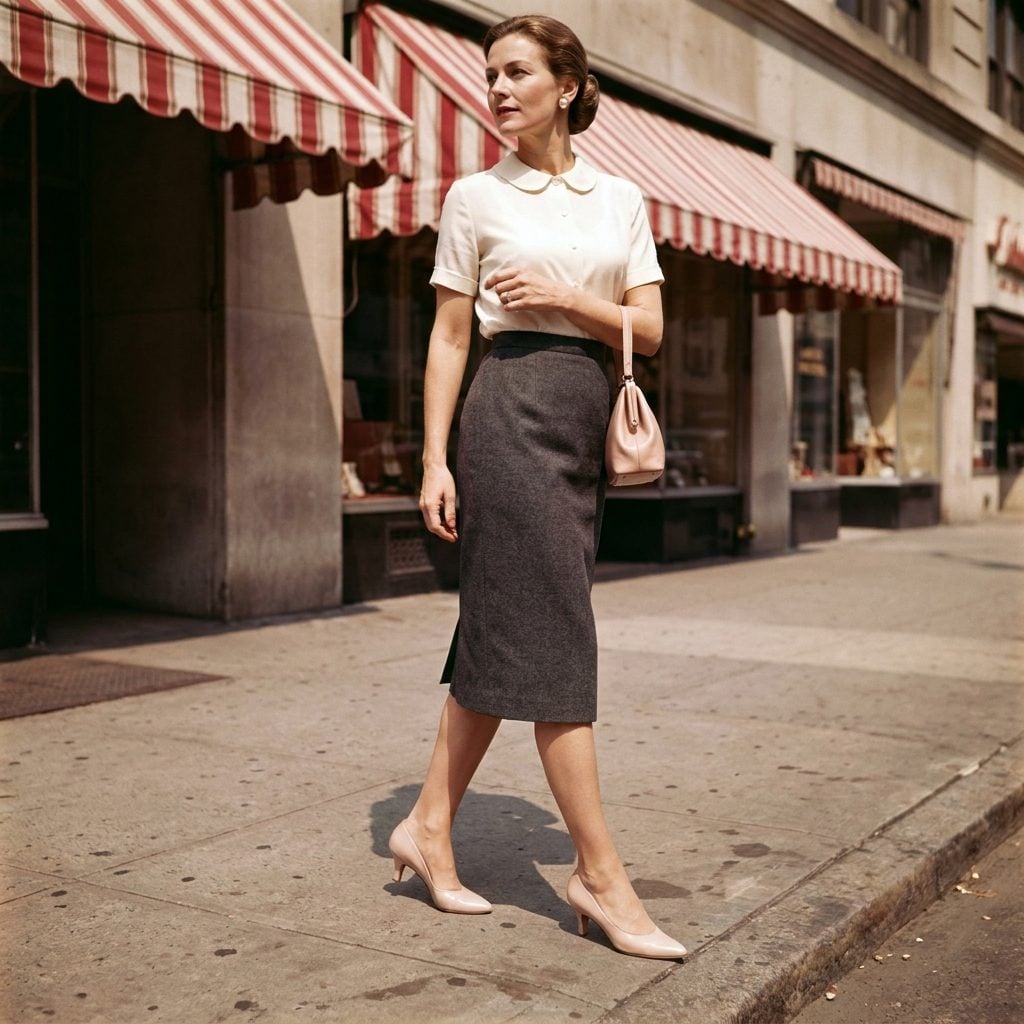
Salvatore Ferragamo is credited with creating the kitten heel in the late 1950s, originally designed for young women who he felt weren’t ready for a full stiletto. What he actually did was invent the shoe that working women, mothers, and anyone with more than four city blocks to cover would quietly prefer for the rest of the century.
The kitten heel sat at about an inch and a half. Low enough to walk in. High enough to look like you’d made an effort. It was the shoe that let you chase a toddler in the morning and attend a committee meeting by noon without changing. kitten heel pumps became the signature shoe of the practical woman who still wanted to look put together, which was basically every woman in the 1950s.
28. Two-Tone Spectator Pumps: The Shoe That Said ‘I Take Dressing Seriously’ Without Saying a Word
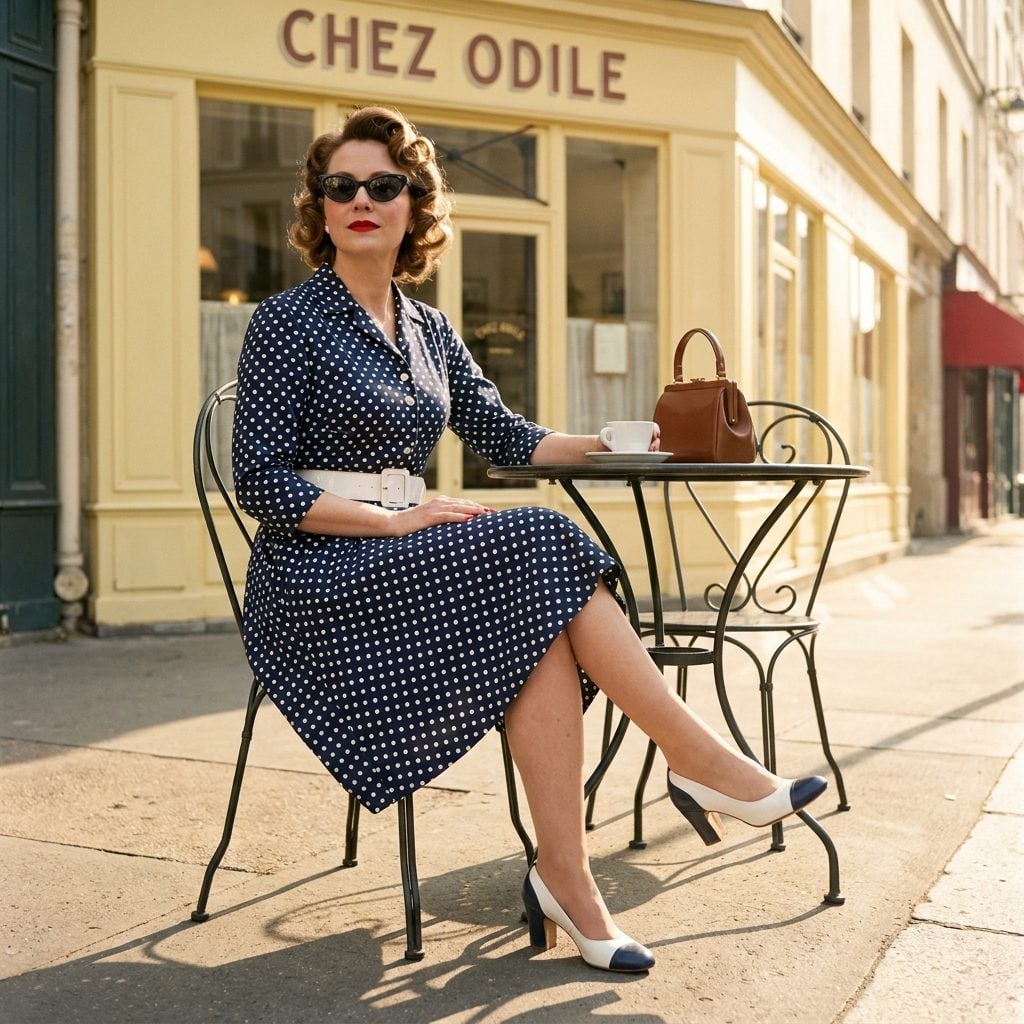
White body, dark cap toe, dark heel counter. The spectator pump had an almost architectural quality that set it apart from every other shoe in the 1950s wardrobe. It required matching. It required thought. Women who wore spectators were understood to be paying attention.
They’d originally been men’s golf shoes in the 1920s before migrating into women’s fashion, and by the 1950s they carried a distinct air of polish. You wore them with your best day dress and your white gloves and your structured bag, and the outfit communicated something very specific: I did not get dressed in a hurry.
Department stores stocked them in the classic white-and-black, white-and-navy, white-and-tan combinations. Spectator pumps had a faint country club undertone without being exclusionary. They just looked expensive, even when they weren’t.
27. Soft Ballet Flats: The Shoe That Quietly Rewrote the Rules About What ‘Dressed Up’ Had to Mean

Something shifted in the mid-1950s when a certain kind of woman decided she was done with heels for everyday life and reached for a flat instead. The leather ballet flat arrived in American closets through French fashion, through jazz clubs, through the particular cultural moment when looking slightly Parisian became aspirational for a whole generation of American women.
They paired naturally with cigarette pants and slim skirts, and they implied a personality: literate, maybe a little artsy, not particularly interested in your approval. The flat worked because it rejected the era’s obsession with height and formality. That was, at the time, a minor act of rebellion dressed up as a shoe choice.
The woman in ballet flats was telling you something about herself, even if she’d never put it into words.
26. Clear Plastic Rain Galoshes: The Most Unglamorous Thing Every Well-Dressed Woman Owned
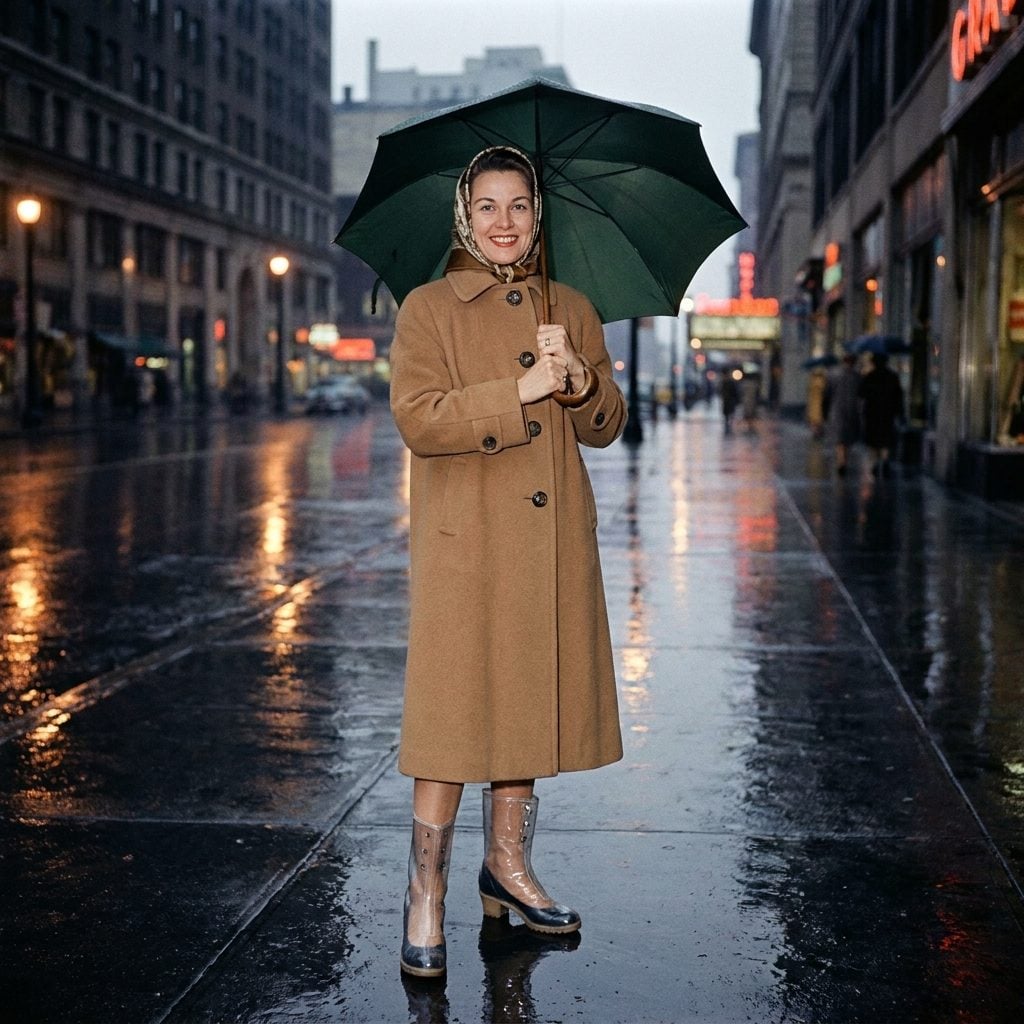
They were transparent. They snapped onto the side. They made a specific squeaking sound when you walked. And every woman who owned a decent pair of leather pumps also owned a pair of these, because the alternative was ruining shoes that cost a week’s grocery budget.
Plastic rain galoshes were the great equalizer of 1950s women’s fashion. You could be wearing your best spectators or your good white peep-toes, and when the weather turned, out came the galoshes from your bag and on they went, right over the shoes, like little clear rubber clamshells. They were practical, they were hideous, and nobody cared because everybody wore them.
25. Red Patent Leather Pumps: The Shoe You Put On When You Wanted the Room to Know You’d Arrived
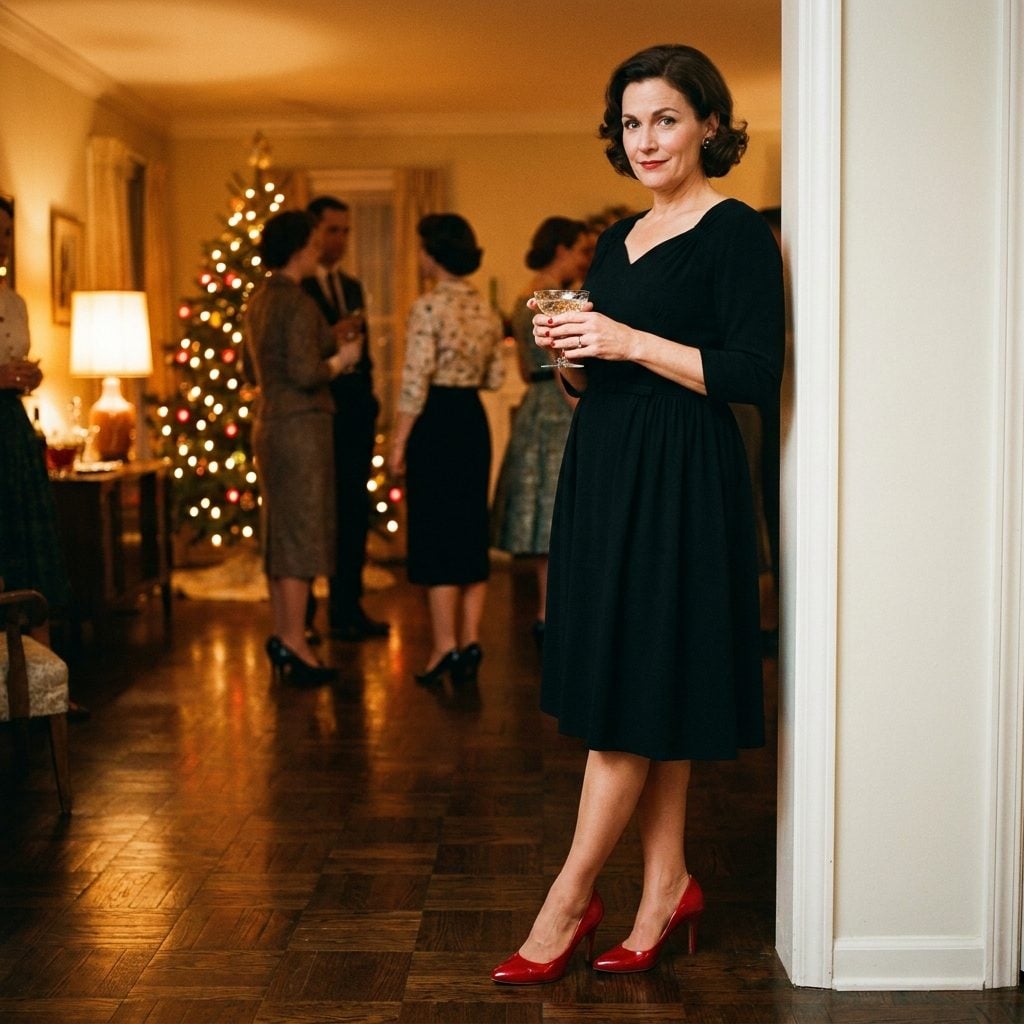
Red patent leather had a specific quality of light that no other shoe could replicate. It didn’t just reflect the lamp at the cocktail party. It announced the lamp at the cocktail party. Every woman who owned a pair knew exactly what she was doing when she put them on.
These were not everyday shoes. They came out for Christmas dinner, for the office holiday party, for your anniversary dinner at the good restaurant downtown. The red patent leather pumps were your punctuation mark at the end of a sentence that had been very carefully composed all evening.
Patent leather itself became widely affordable in the 1950s through advances in synthetic coating processes, which meant the shoe that had once read as luxury became something a secretary and a socialite could both own. The democracy of a very good red shoe.
24. Black Suede Pointed-Toe Pumps: The Shoe That Understood the Assignment Every Single Time
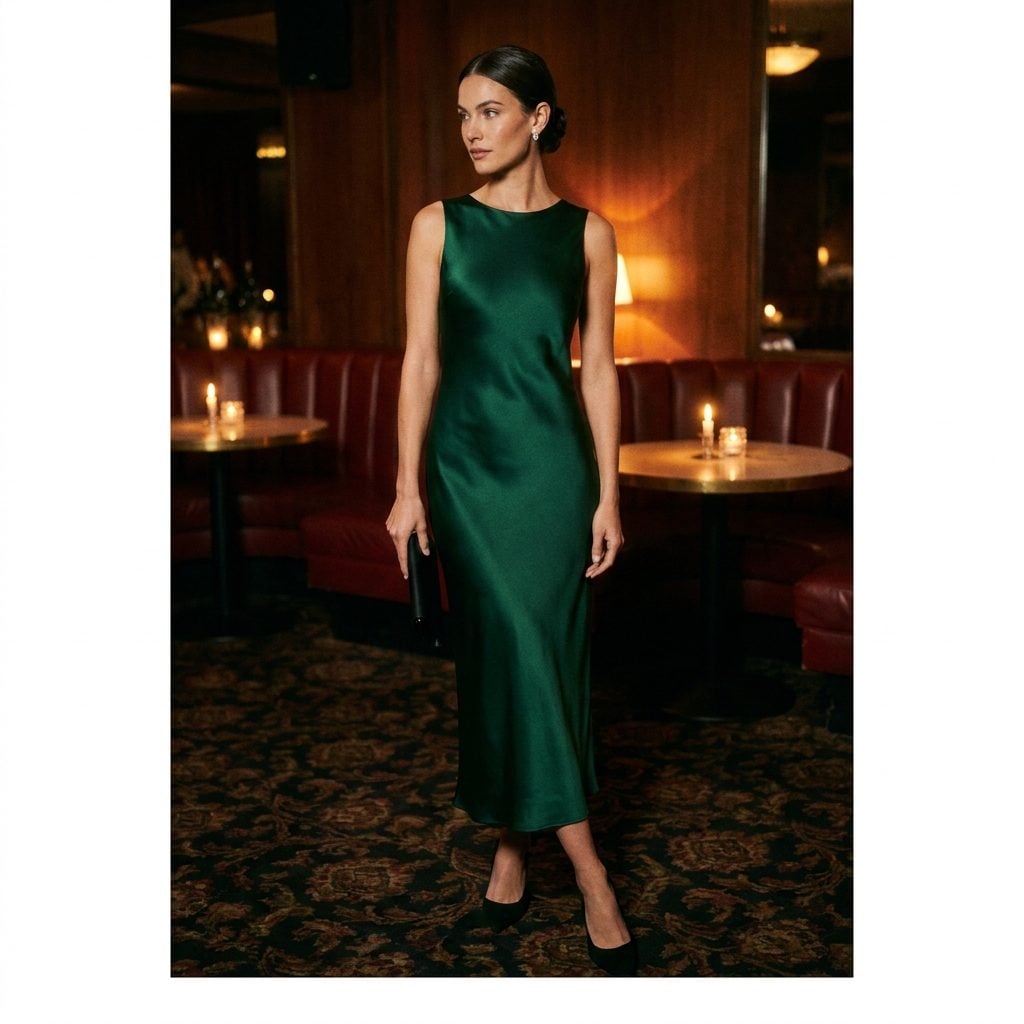
Black suede with a pointed toe was the evening shoe that required nothing else from you. It didn’t need to match. It didn’t need to contrast. It just needed to be on your feet, and the outfit was finished. The matte quality of the suede against a silk or crepe dress was a combination that worked on almost every color, at almost every formal occasion.
The sharply pointed toe was central to the silhouette. It elongated the foot, pulled the eye downward in a way that felt intentional, and communicated that you knew what you were doing. Black suede pointed-toe pumps in the 1950s were stocked in every department store’s evening shoe section, usually near the long gloves and the rhinestone clip-on earrings that completed the look.
Suede required care. You kept a suede brush in your closet and used it. The shoes were seasonal, strictly fall and winter, which made them feel even more special when they came out of the box.
23. Feather-Trimmed Mule Heels That Turned Any Living Room Into a Supper Club
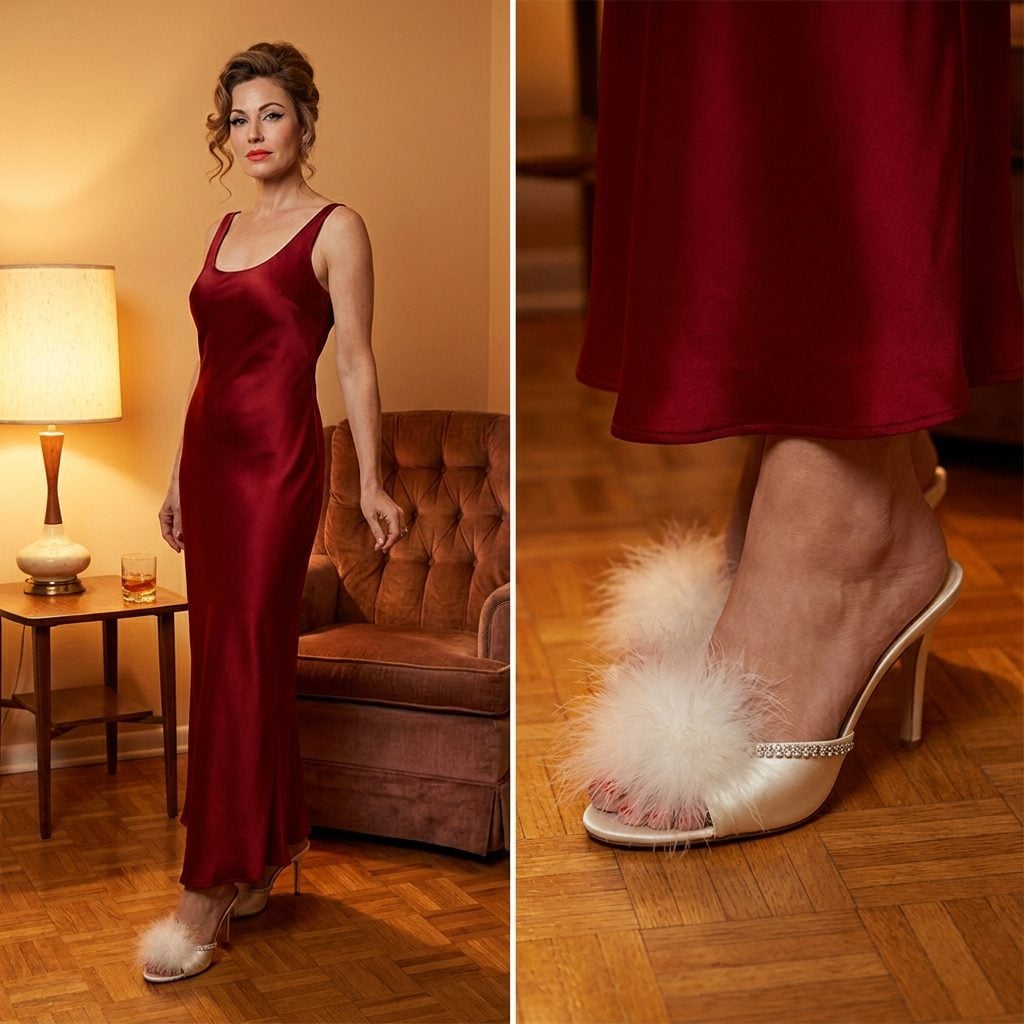
There was a specific kind of woman who wore these, and every other woman at the party noticed her immediately. The marabou feathers caught the air every time she crossed her legs. The rhinestones caught the light every time she didn’t. Satin uppers, kitten or mid heel, completely open at the back, they were impractical in the most intentional way possible.
You didn’t wear feather-trimmed mules to run errands. You wore them to signal that the evening was serious. Brands like Delman and I. Miller stocked versions for department stores, but even the budget iterations from Sears’ evening section had the same effect. Pair them with a cocktail dress and the right shade of red lipstick and you were basically starring in your own film noir.
22. Canvas Keds in White: The Shoe That Outlasted Every Other Trend in This List
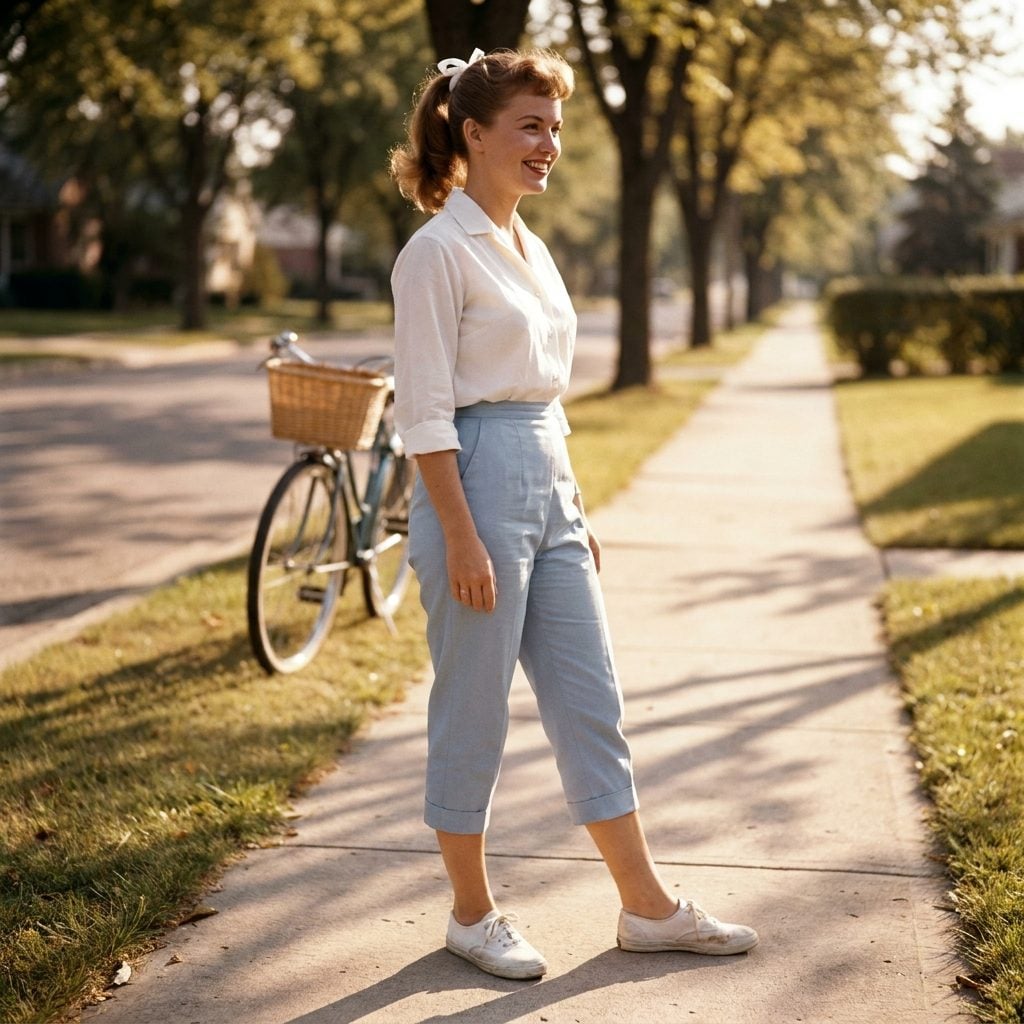
Gym class, the drugstore, Saturday morning, every summer you ever had before the age of fifteen. White canvas Keds were so universal in the 1950s that they barely registered as a choice, they were just what was on your feet. Keds had been around since 1916, but postwar American life gave them a new context: the rise of casual suburban living made a clean, flat, cheap sneaker a genuine wardrobe essential.
Girls wore them with pedal pushers and bobby socks. Women wore them in the garden. They squeaked on gymnasium floors and left black scuff marks on kitchen linoleum that nobody could fully explain. They cost almost nothing, they got dirty immediately, and somehow a fresh pair felt like a small luxury. Some things don’t need to be complicated.
21. White Nursing Shoes That Escaped the Hospital and Took Over the Neighborhood
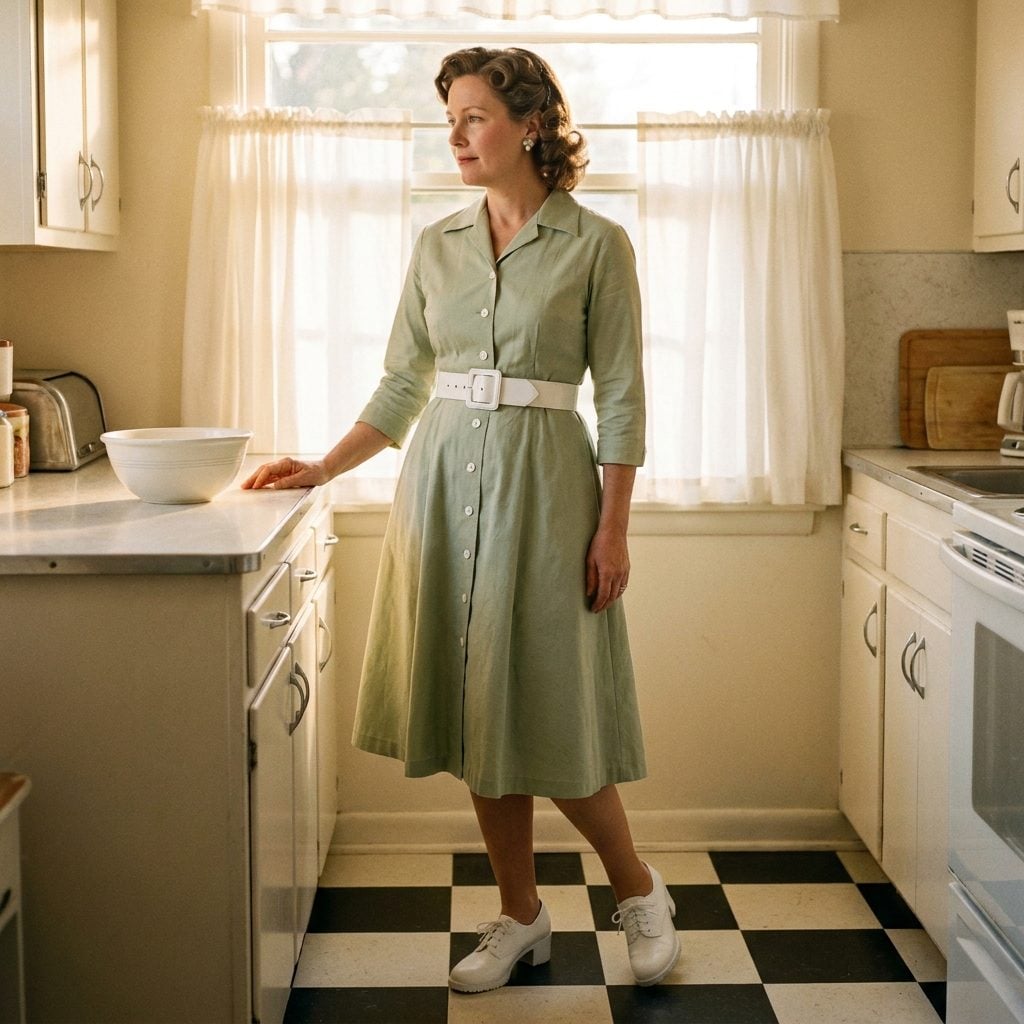
Somehow these moved from hospital wards to suburban kitchens without anyone questioning it, and honestly, you could see the logic. White, easy to clean, supportive enough for a full day on your feet, they made a certain kind of practical sense for a woman spending eight hours cooking, cleaning, and managing a household. Brands like Nurse Mates and Clinic made the originals, but the style bled into general women’s footwear quickly.
Paired with a shirtwaist dress and a white patent belt, they didn’t look medical at all. They looked neat, pressed, intentional. There is something quietly fascinating about how a shoe designed for a profession got absorbed into domestic femininity and nobody blinked.
20. Leather Loafers With Cigarette Pants: The 1950s Outfit That Still Works Today
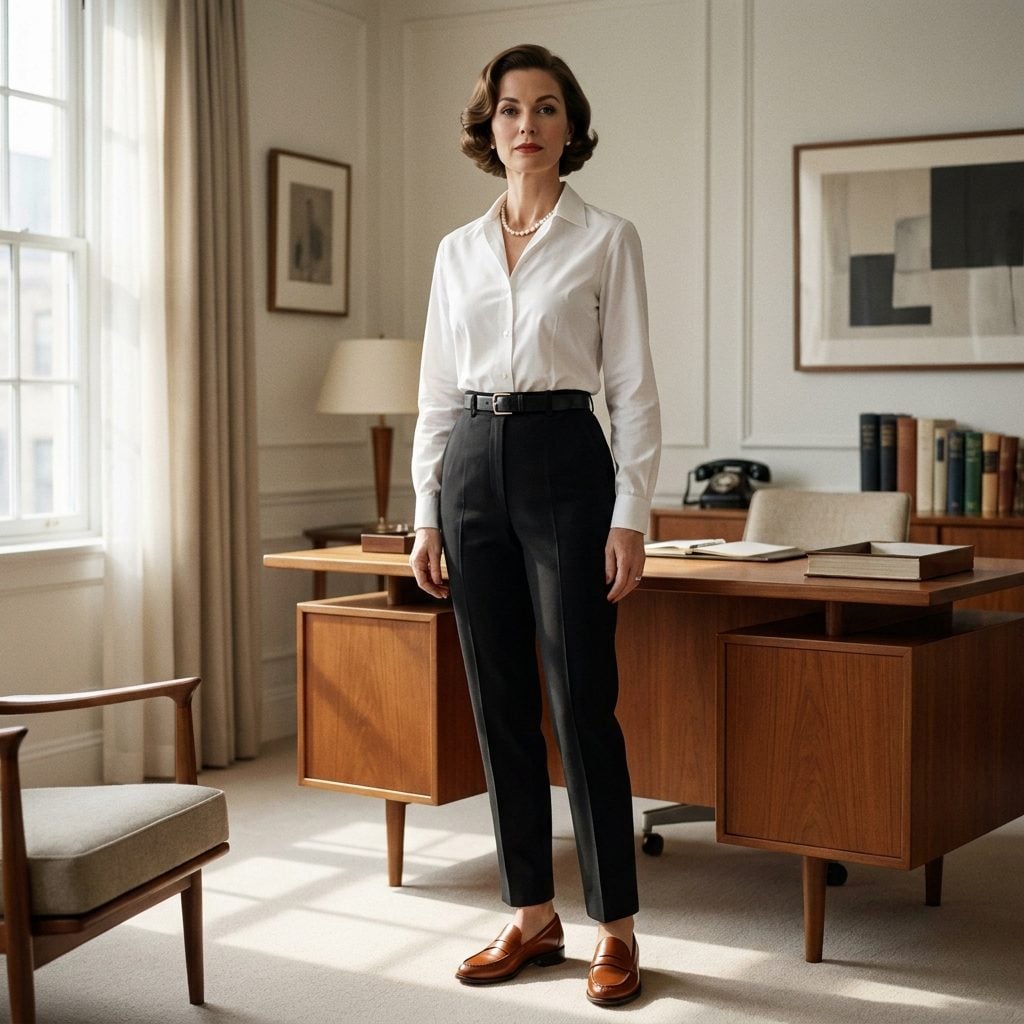
The woman in cigarette pants and loafers in 1955 was making a statement, even if she dressed it up as practicality. This was the outfit that said you’d read Simone de Beauvoir, or at least that you’d heard of her. Leather loafers, Bass Weejuns being the most coveted version, gave the cigarette pant a grounded, almost masculine counterweight that made the slim silhouette feel composed rather than simply fitted.
Some women slipped a penny into the keeper. Some left it empty. A few added a tassel, which was a different personality entirely. Paired with a tucked blouse and a strand of pearls kept deliberately understated, this combination has survived intact across decades for the obvious reason: it simply looks right. Every time, without much effort.
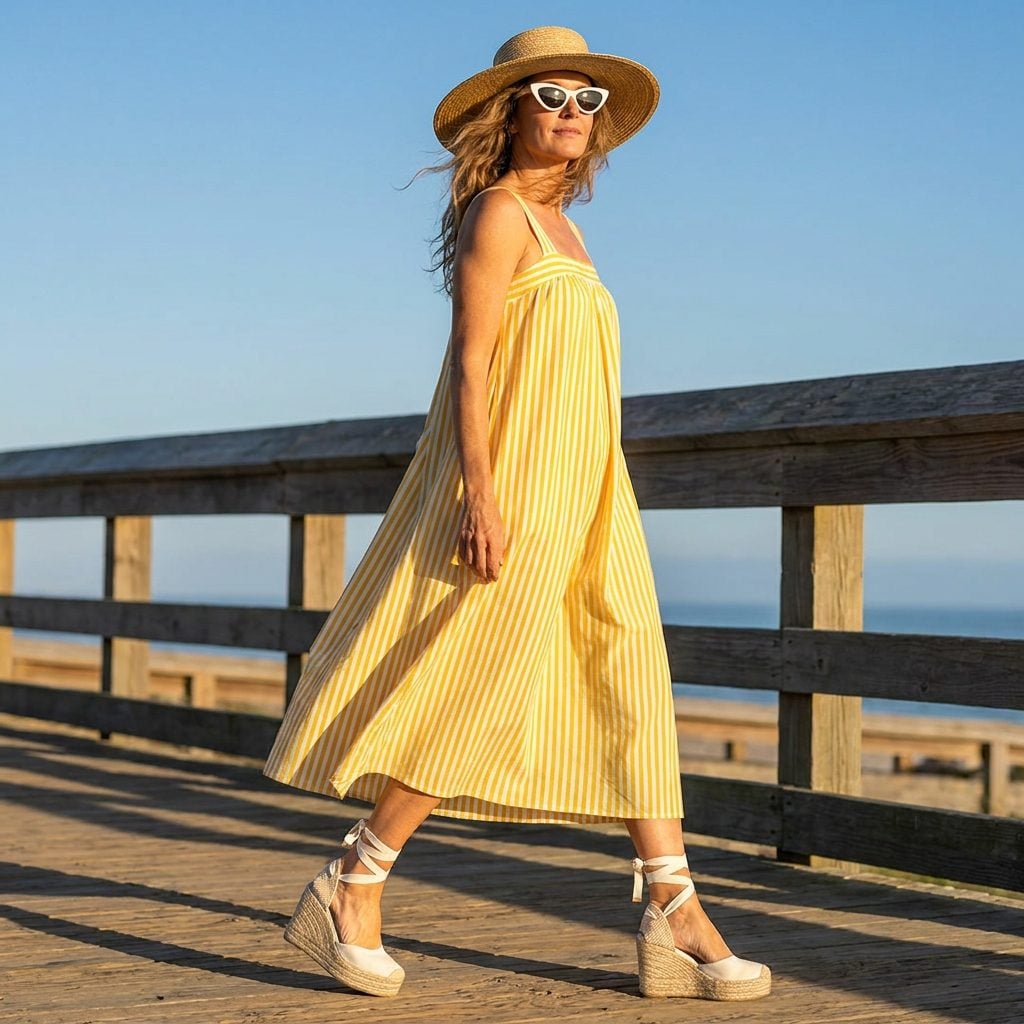
19. Espadrille Wedge Sandals: Summer’s Most Optimistic Shoe
❤️ Would you like to save this?
Espadrilles arrived in the American mainstream via European vacation culture, specifically the idea of the French Riviera, which was working very hard on the American imagination throughout the 1950s thanks to Brigitte Bardot and every Hollywood film shot on location near the Mediterranean. The wedge version gave the sandal a height that felt glamorous rather than purely casual, and the jute sole made a satisfying sound on tile and wood.
They were the shoe of backyard barbecues, beach vacations, and any afternoon with enough warmth to justify bare legs. Paired with a full-skirted sundress and a beach hat, they completed the postwar leisure fantasy perfectly. Anyone who has worn the rope-wrapped wedge version knows the particular sensation of the jute roughness against the arch of your foot, very specific, instantly recognizable.
18. The Slingback With an Ankle Strap That Made Every Outfit Feel Finished
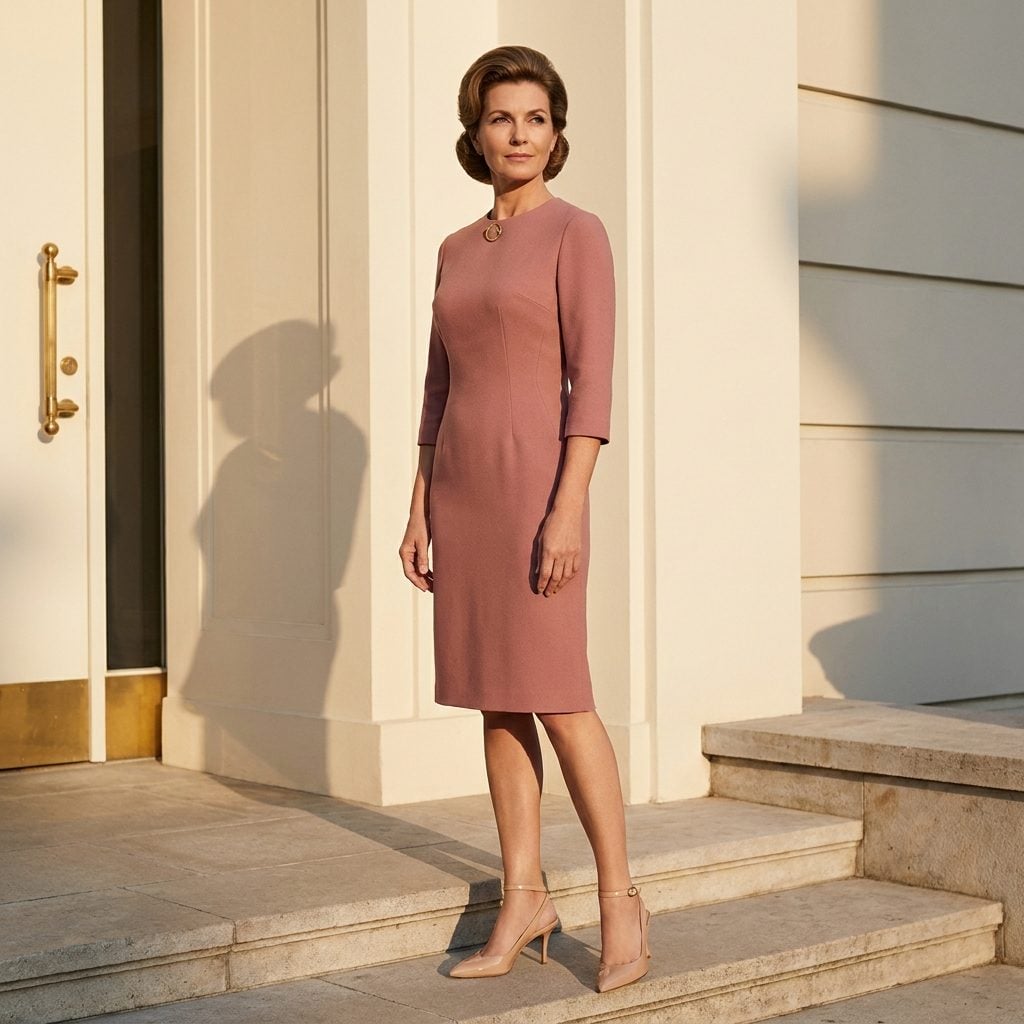
The ankle strap on a slingback was doing a specific kind of work: it made the shoe feel secured, intentional, chosen rather than simply slipped on. A plain pump was an outfit. A high-heeled slingback with an ankle strap was a decision. The fine buckle at the side, the way the strap crossed the back of the heel before looping forward, the construction was architectural in miniature.
Worn with a sheath dress and a small brooch, these were the shoes of lunches, office work, afternoon appointments, the specific category of occasion that was neither purely formal nor purely casual. Roger Vivier was making versions that would be collected. I. Miller was making versions that were actually affordable. The silhouette was the same. The memory is the same.
17. Italian Leather Stilettos and the Specific Fantasy They Were Selling
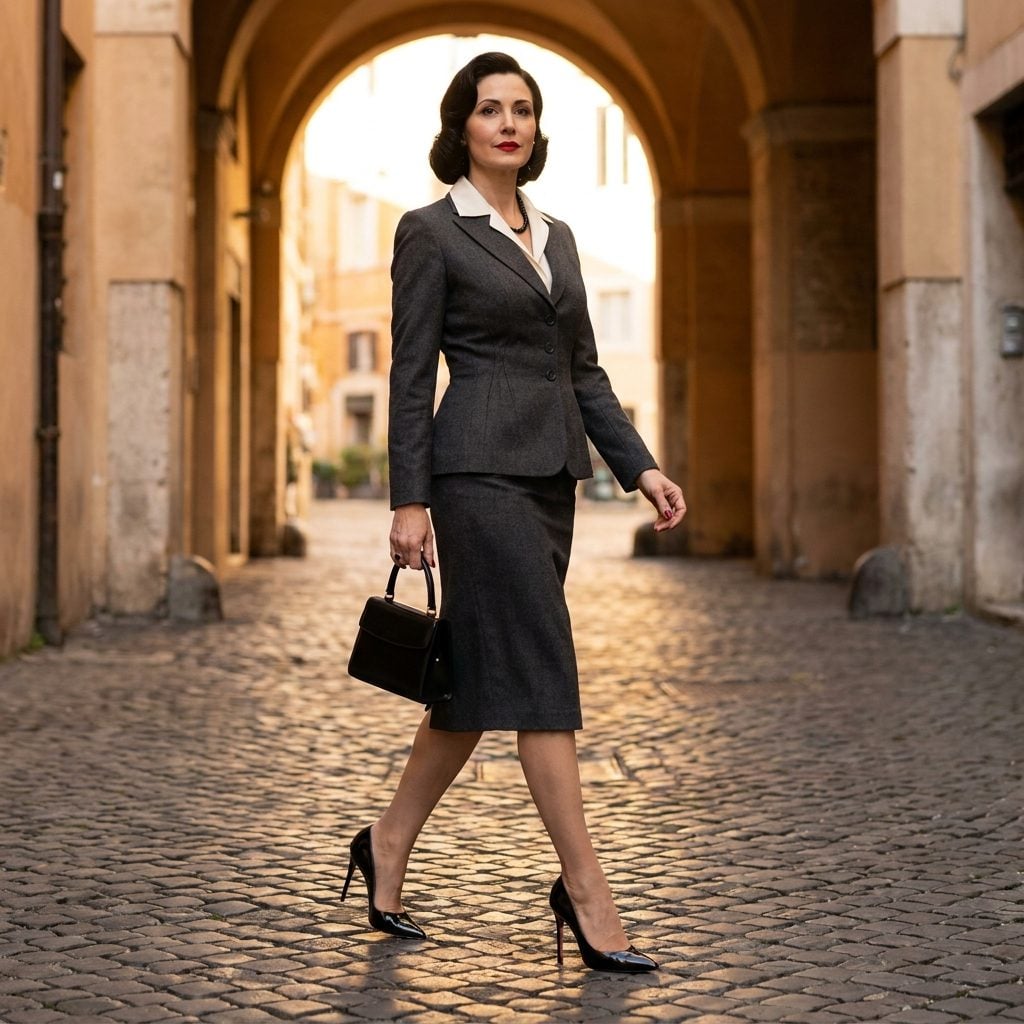
The stiletto heel was invented by Roger Vivier for Christian Dior in 1954, and within two years it had moved from Paris couture into the consciousness of every woman who read a magazine. The Italian leather version carried extra freight: it meant you knew the difference, that you had either been to Europe or understood why you should want to go. Salvatore Ferragamo was the name that mattered most. Even women who couldn’t afford Ferragamo knew the name.
The heel was engineered around a steel rod no wider than a finger. Walking in them on cobblestone was, to be precise, a form of athletic commitment. They destroyed wooden floors, got caught in sidewalk grates, and left dents in linoleum that lasted for years. None of that slowed anyone down. The specific fantasy these shoes were selling, of European sophistication, postwar prosperity, a woman who had somewhere important to be, was worth every structural hazard.
16. Lace-Up Oxfords With a Full Skirt: The Look That Said Both Smart and Sweetly Surprising
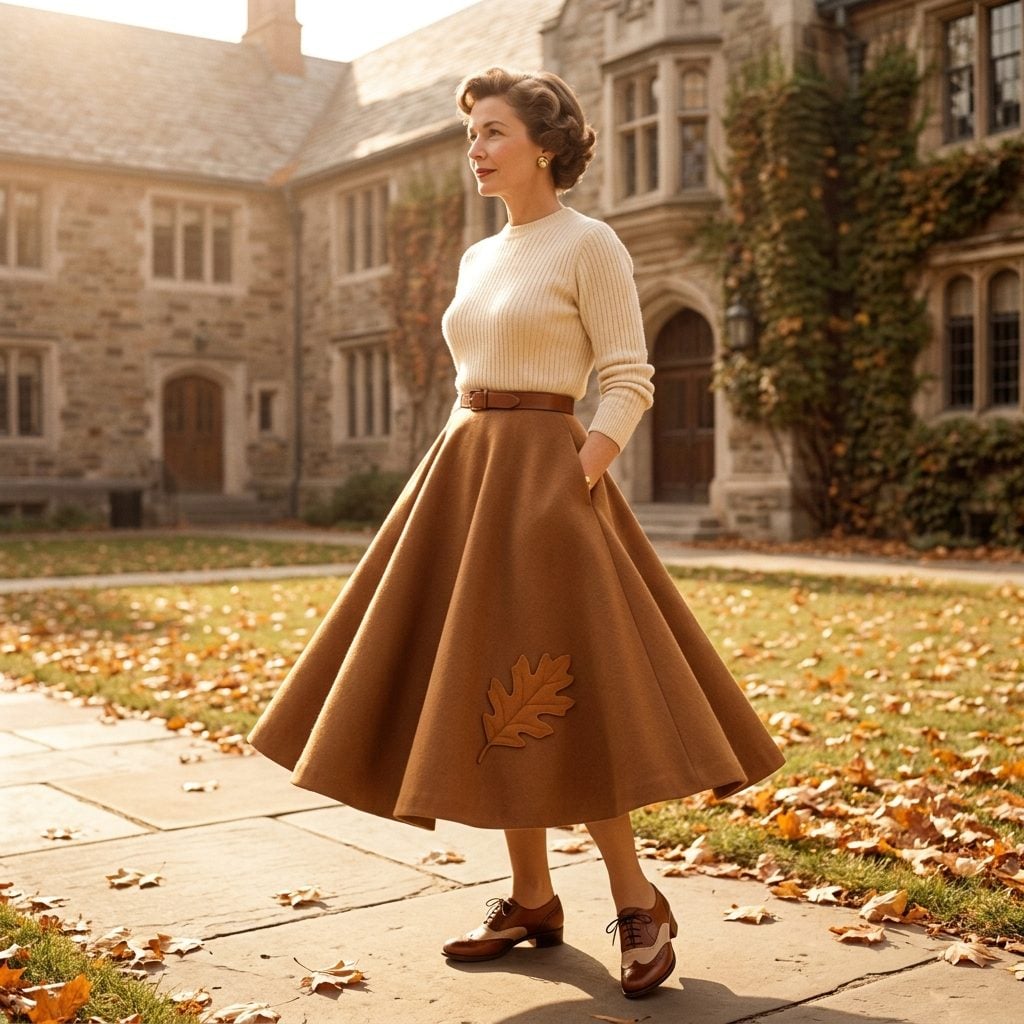
Pairing a full circle skirt with lace-up oxfords was a very particular aesthetic calculation that absolutely worked. The shoes borrowed from menswear tradition, structured, low, leather-soled, and set against yards of swirling wool felt, they grounded the silhouette in a way that a kitten heel simply wouldn’t. It read as intelligent. It read as deliberate.
College women wore them with sweater sets and bobby socks pulled to different heights depending on the current orthodoxy of their campus social group. Saddle shoes were the louder version of this impulse. Plain brown or black oxfords were the quieter one, which often meant they lasted longer in the wardrobe. Winthrop, Spalding, and various house brands at department stores made serviceable versions. The specific look of the thick sole and the neat knot of the lace against a wide skirt hem is genuinely hard to forget once you’ve seen it in an old photograph.
15. Clear Vinyl Beach Sandals in Colors That Screamed Summer
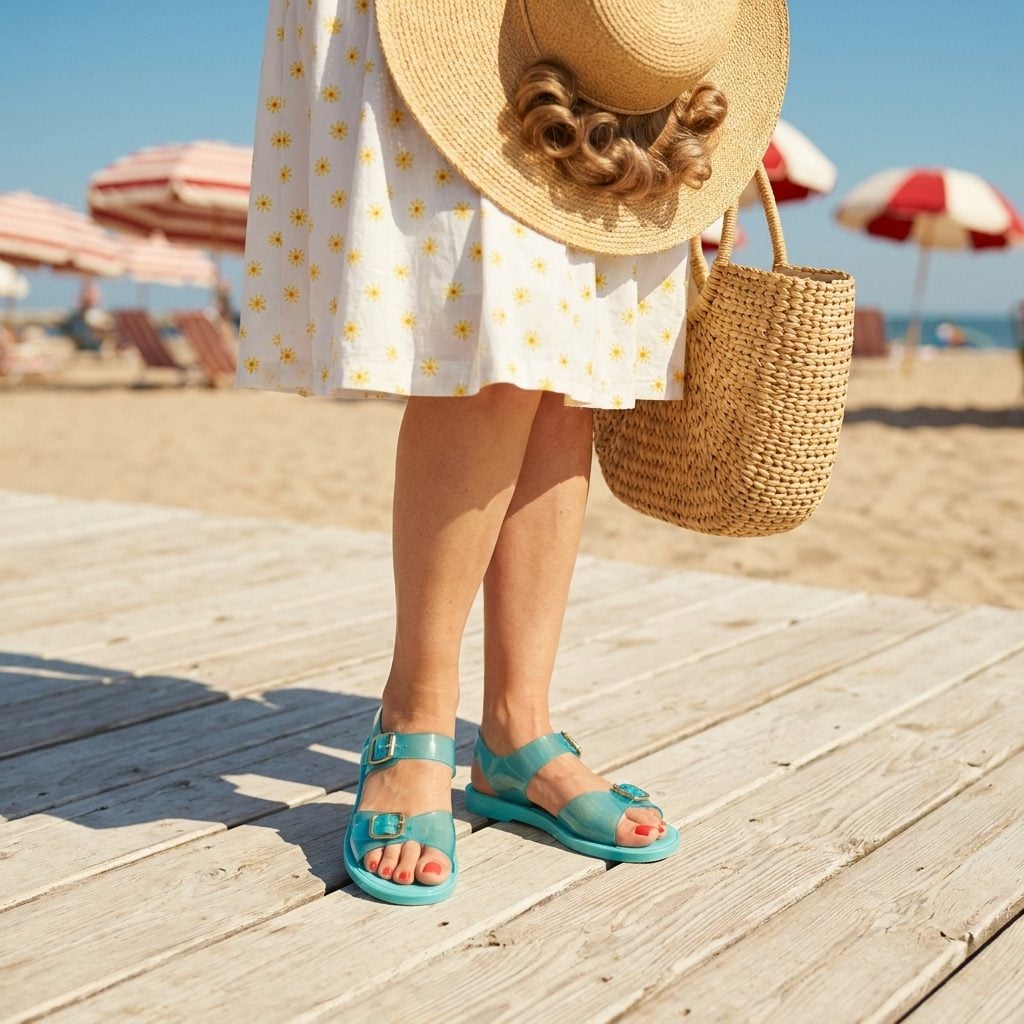
They were practically see-through, which meant your nail polish had better be perfect. These clear vinyl sandals came in the most optimistic colors imaginable, aqua, lemon yellow, cherry red, and the straps were stiff enough to leave marks across the top of your foot by noon. We wore them anyway.
The appeal was partly practical (they dried instantly, survived the waves, cost almost nothing at Woolworth’s) and partly pure mid-century optimism. Slipping into a pair felt like the official start of summer. The fact that they squeaked faintly with every step was just part of the experience.
14. The Pastel Bedroom Slippers Every Woman Kept Tucked Beside the Bed
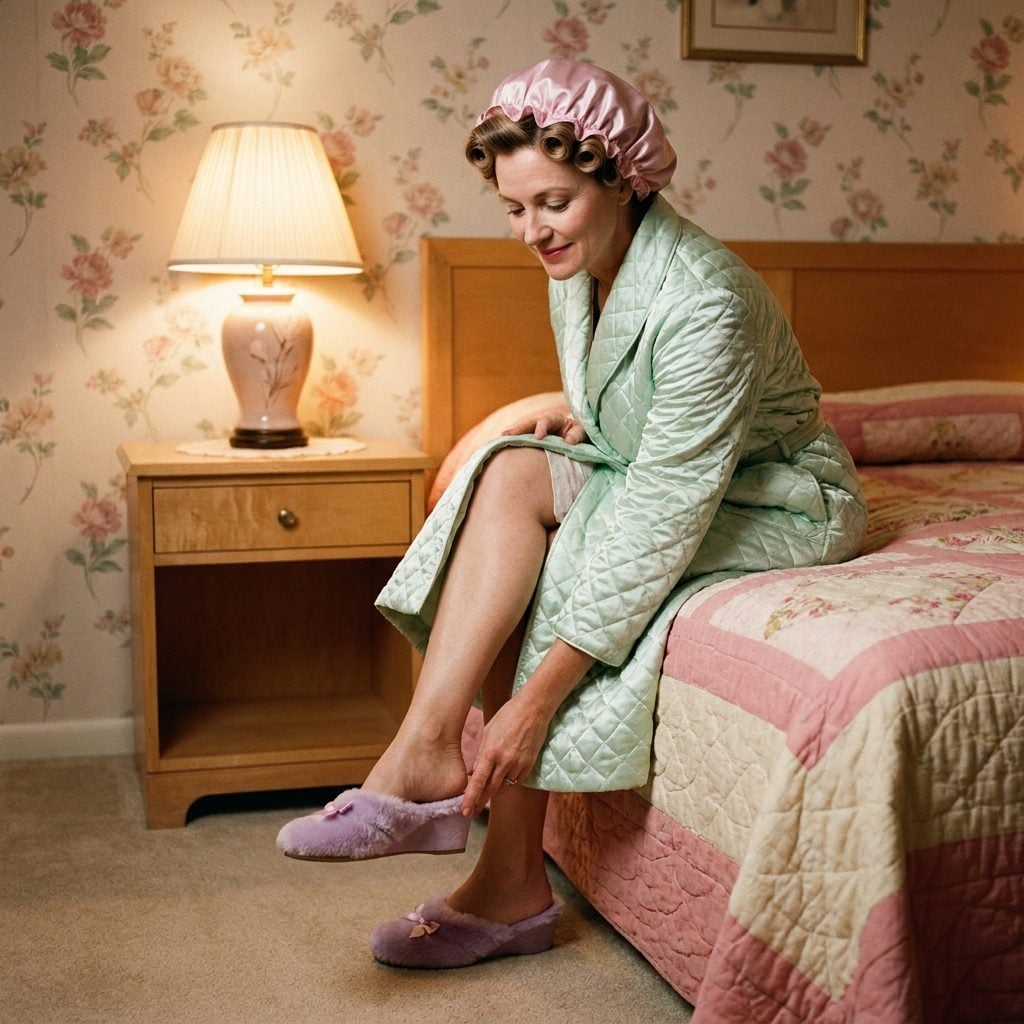
Every housewife had a pair. Mint green, powder blue, blush pink with a small satin bow on the toe and a ring of marabou feather trim that shed tiny white fluffs onto the bathroom tile all winter. They lived beside the bed or tucked under the vanity, ready the moment bare feet hit the cold floor at six in the morning.
Brands like Daniel Green made them respectable enough that they showed up wrapped in tissue paper under the Christmas tree. Wearing them with your quilted housecoat while you made coffee felt less like laziness and more like having standards.
13. Tap Shoes With the Metal Tips That Announced You Were Coming Down the Hall
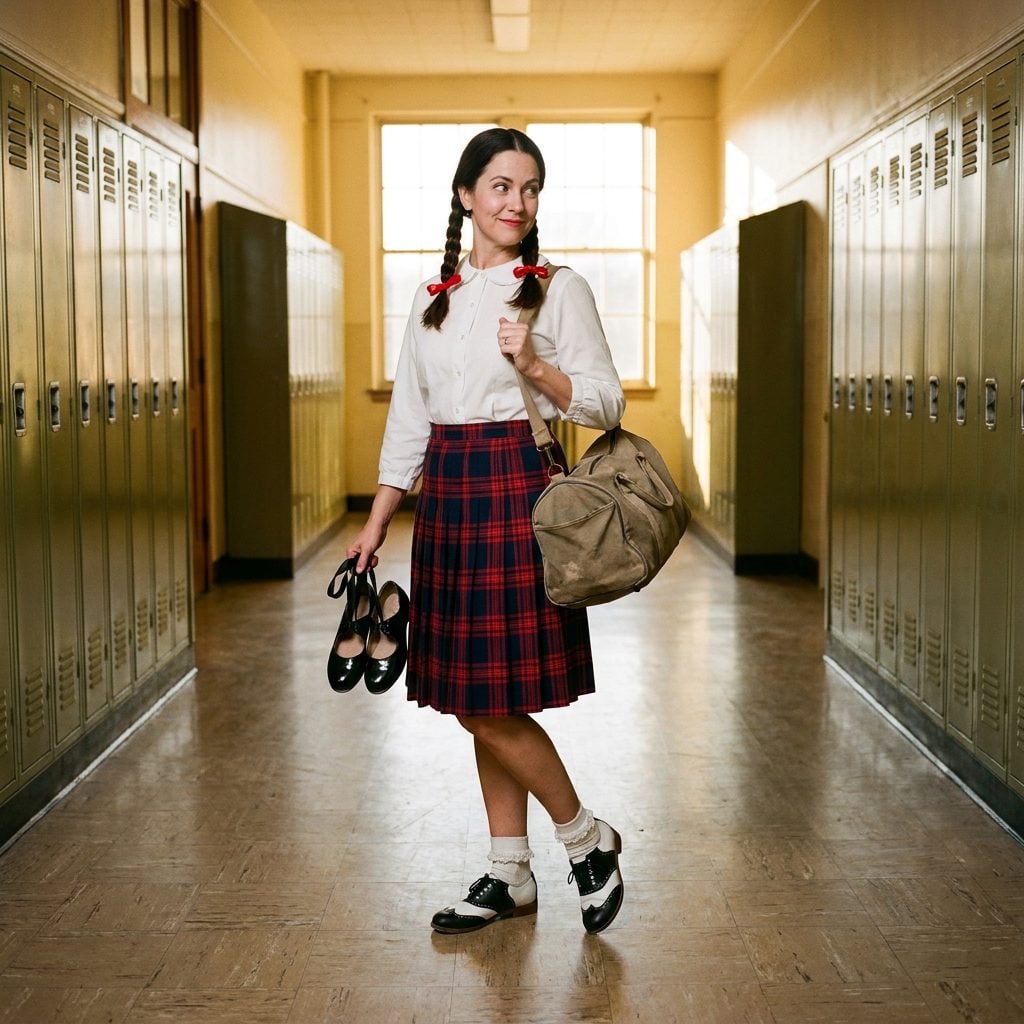
Black patent leather with a double metal tap on the sole and a grosgrain ribbon bow at the ankle. You carried them in a drawstring bag or, if you were feeling dramatic, wore them out of class and clattered down the school hallway making as much noise as possible before anyone told you to stop.
Tap class in the 1950s was practically compulsory for a certain kind of girl. The shoes themselves were a status symbol in miniature: proof that you had somewhere to be after school, something to practice, someone who drove you there. The metal tips wore down eventually, which meant a trip to the cobbler, which felt very serious and adult.
12. Cowboy Boots That Every Girl Wanted the Moment the Western Craze Hit Theaters
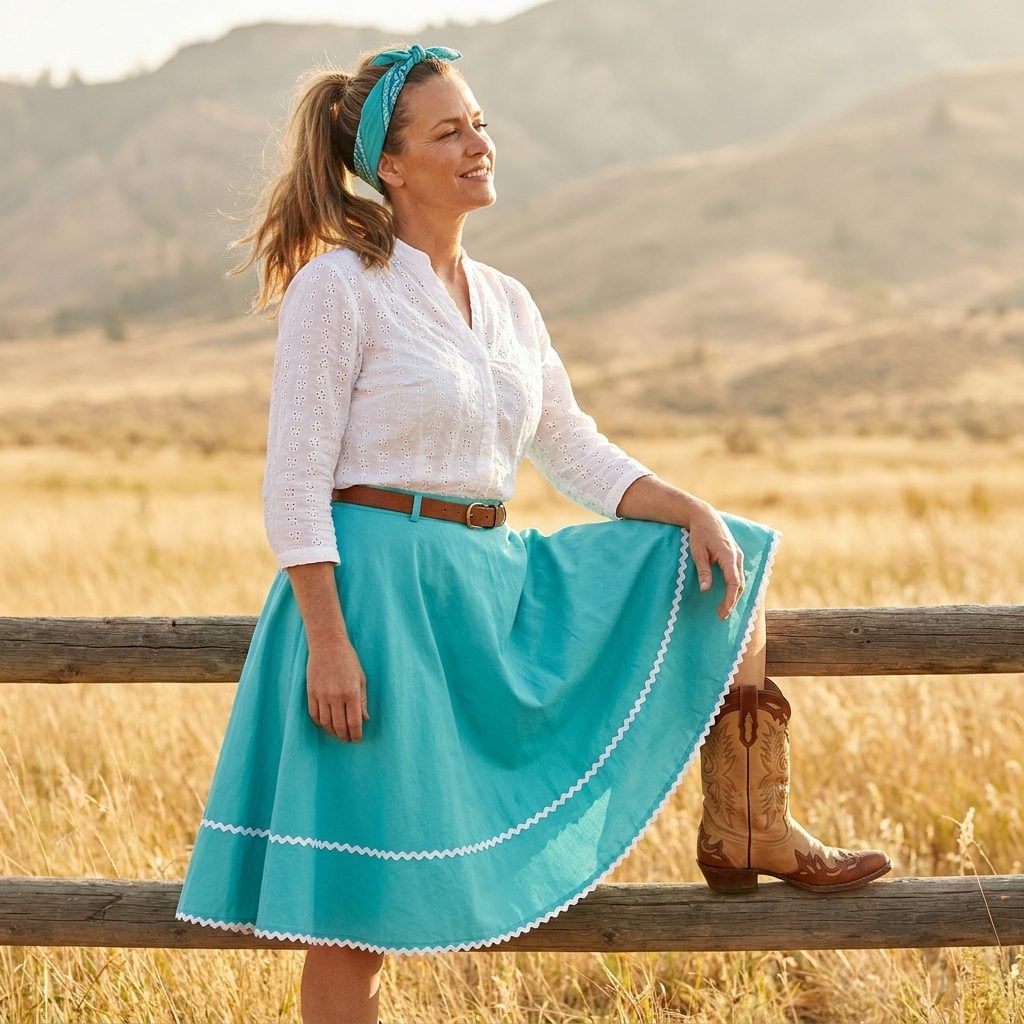
Western films were everywhere in the 1950s and boots followed them straight out of the movie house and into everyday wardrobes. These weren’t ranch-working boots. They were the kind with decorative stitching up the shaft, a modest walking heel, and leather soft enough that you could actually wear them to a Saturday matinee and then out for a soda afterward.
Girls wore them with full circle skirts and boys wore them with dungarees and everybody felt at least ten percent more exciting than they actually were. The cowboy boot was one of the first times American casualwear decided folklore was fashionable, a decision it would revisit roughly every fifteen years without fail.
11. White Buck Shoes You Polished Every Single Friday Night Without Fail
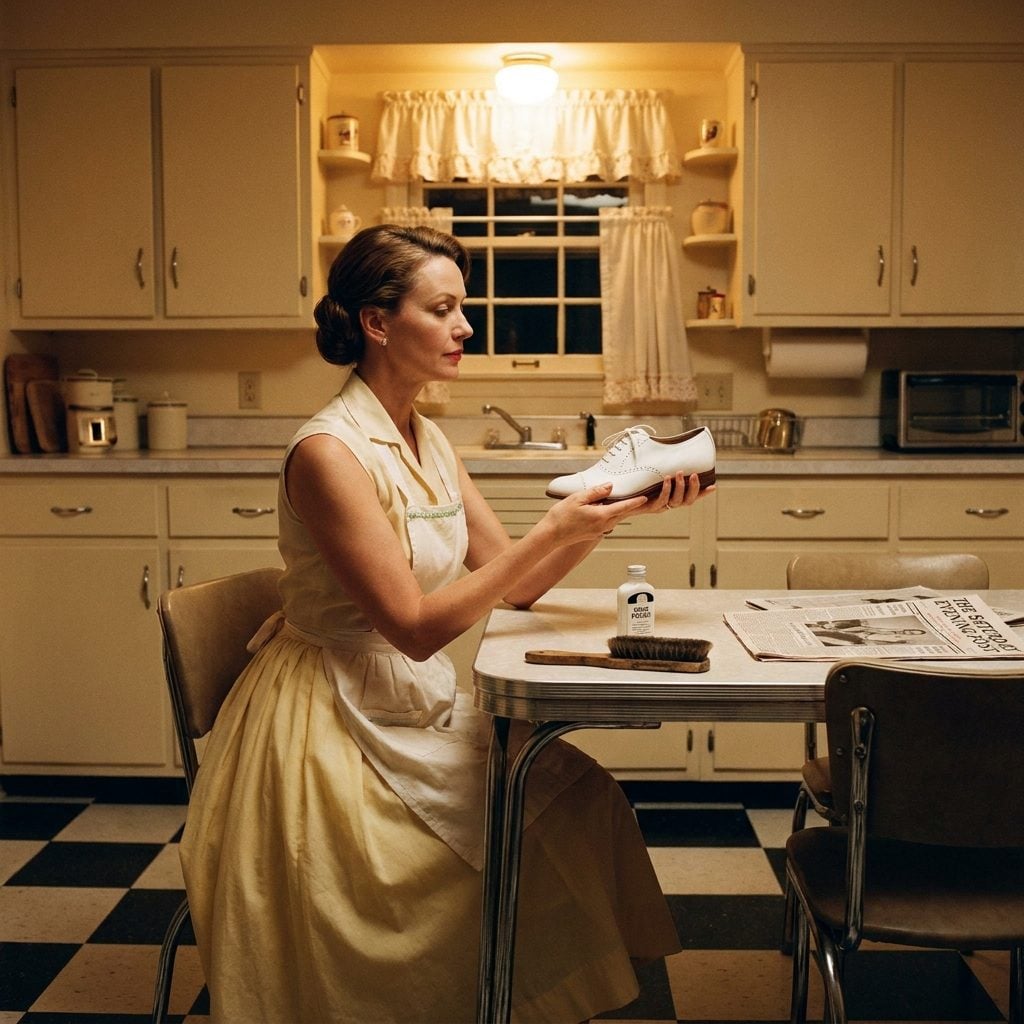
Bucks were supposed to be white. Not off-white, not cream. White. The special flat powder-based shoe polish came in a bottle with a sponge top, and Friday night was when you applied it, two coats if you were serious, because Saturday was when it mattered.
The white buck peaked as a collegiate staple in the early-to-mid 1950s before Pat Boone wore them constantly and they became inextricably linked with his very particular brand of clean-cut Americana. Whether you loved that association or quietly found it a little square, you still owned a pair. The shoes were just good.
They scuffed the moment you looked at them sideways, which was maddening, but also made the weekly polishing ritual feel genuinely necessary rather than performative.
10. Cork-Soled Wedges: The Secret to Looking Tall Without Wobbling Into the Furniture
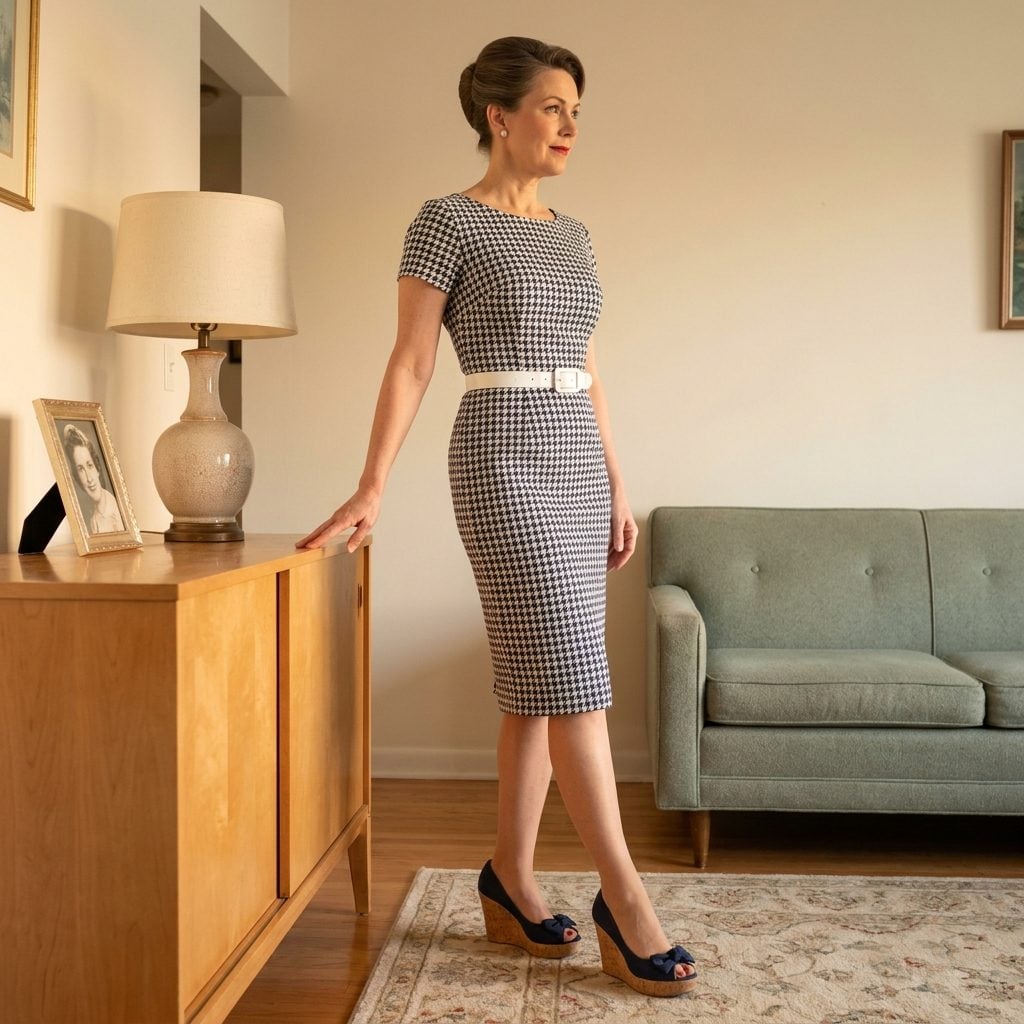
The cork wedge was the sensible woman’s answer to the stiletto. It gave you height, real height, two or three inches, without the teetering. The cork sole was warm honey-tan, the upper usually came in navy, black, or a summer-weight cream canvas, and the whole thing felt vaguely Mediterranean in a way that seemed sophisticated to women who had never been anywhere near the Mediterranean.
Ferragamo had been experimenting with cork soles since the 1940s when leather was rationed, but by the 1950s the cork wedge shoe had gone fully civilian and utterly respectable. Department stores stocked them year-round. They paired with everything from sundresses to office skirts, and they lasted forever, which in an era of real thrift was its own kind of glamour.
9. Gold Lamé Evening Heels That Caught the Light From Across the Entire Ballroom
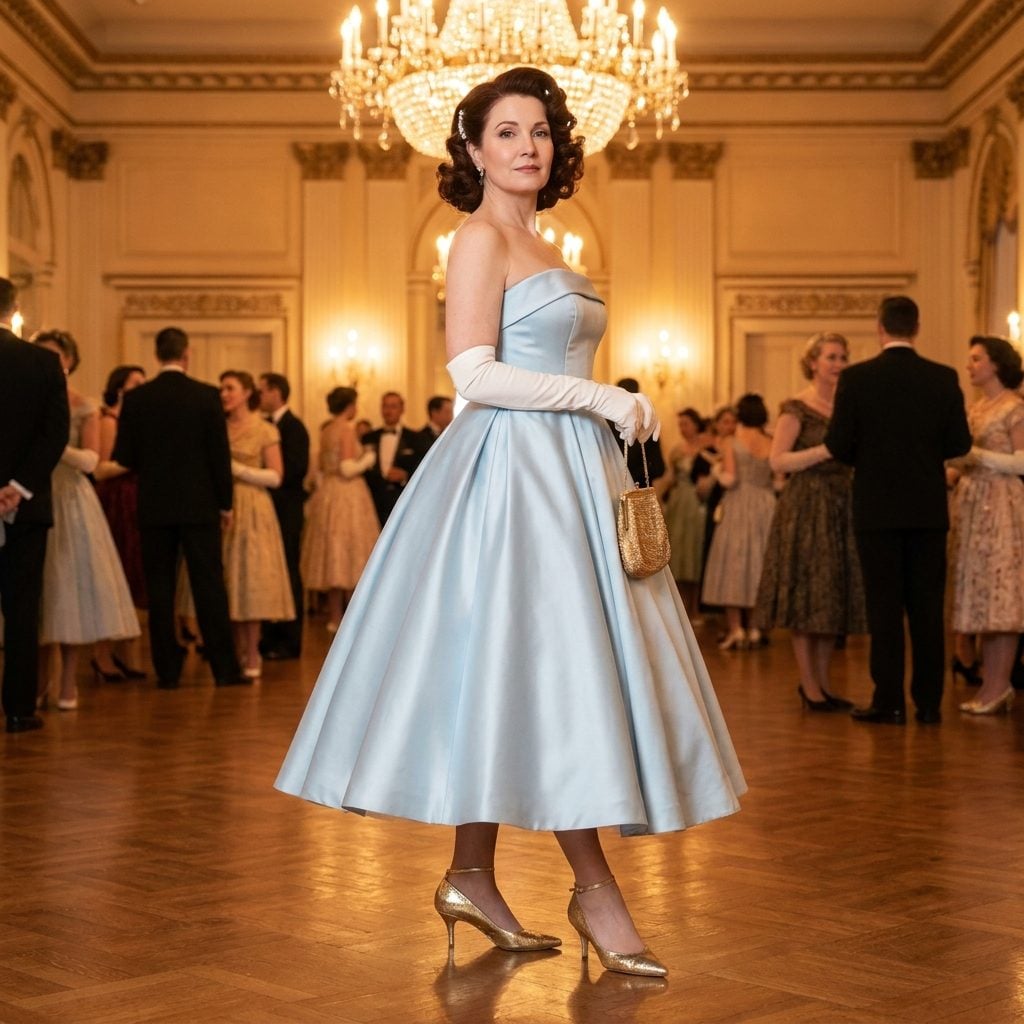
There was no shoe more thrillingly impractical than the gold lamé heel. The fabric was essentially woven with metallic thread, which meant it snagged if you breathed on it wrong, scuffed if you walked to the car, and showed every crease by the end of the night. You wore them to the New Year’s Eve party, the Elks Lodge formal, the company dinner dance, and you put them back in their tissue paper afterward and thought about them all year.
A pair of gold lamé heels under a full ballgown skirt in the 1950s wasn’t accessorizing. It was architecture. They caught the light from the chandelier and flickered like something from a film set every time you moved, which was the entire point.
8. Soft Moccasin Slippers for the Hours When the Day Was Finally, Blissfully Over
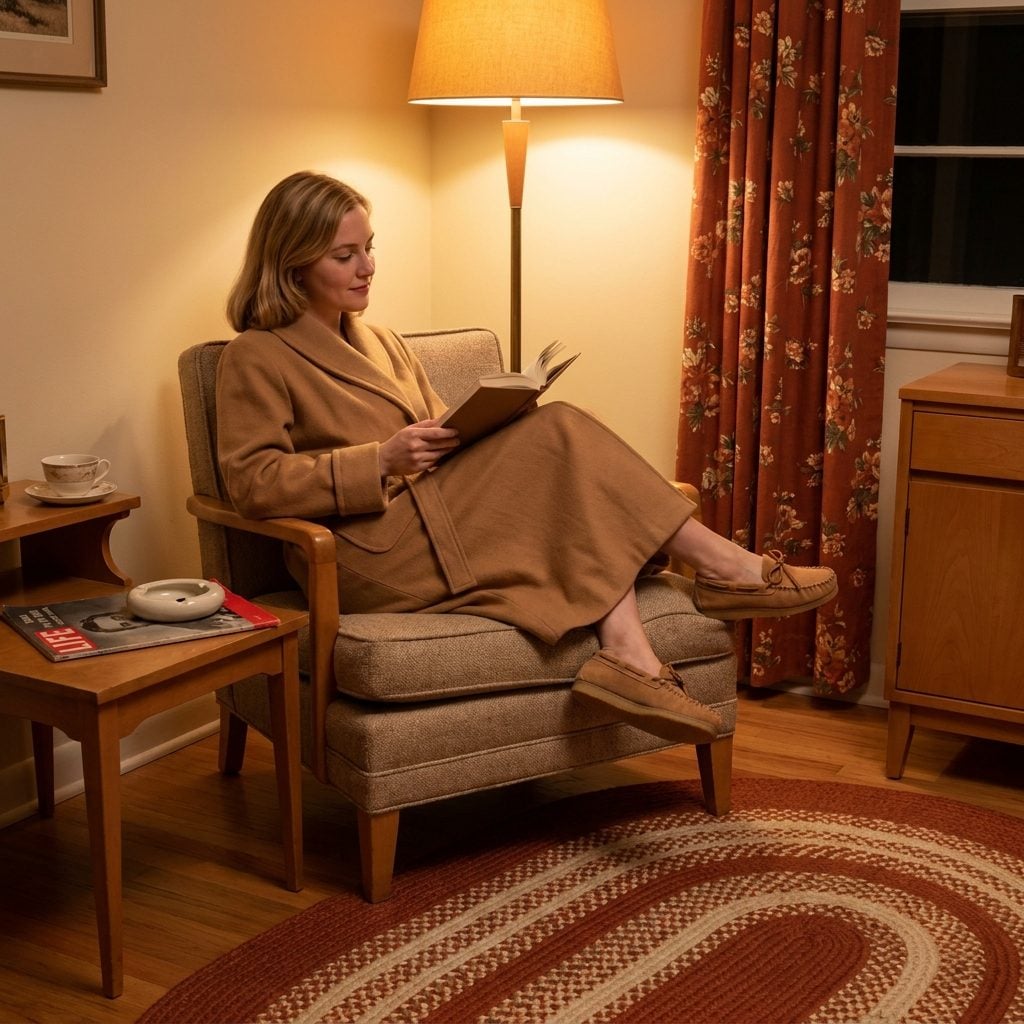
Not the fur-trimmed kind, not the theatrical kind. These were plain, close-stitched, single-sole moccasins in natural tan or chestnut suede, almost silent on hardwood floors, shaped loosely around the foot like they’d given up arguing about it. They were sold in general stores and mail-order catalogs, often filed under ‘loafers’ or ‘Indian-style moccasins,’ and they cost very little and lasted a very long time.
Putting them on at the end of a day was a physical sigh. They had no arch support to speak of, which your podiatrist would absolutely clock, but in 1955 nobody was thinking about that. You were thinking about getting your shoes off before you started dinner, and these were the shoes that meant you were home.
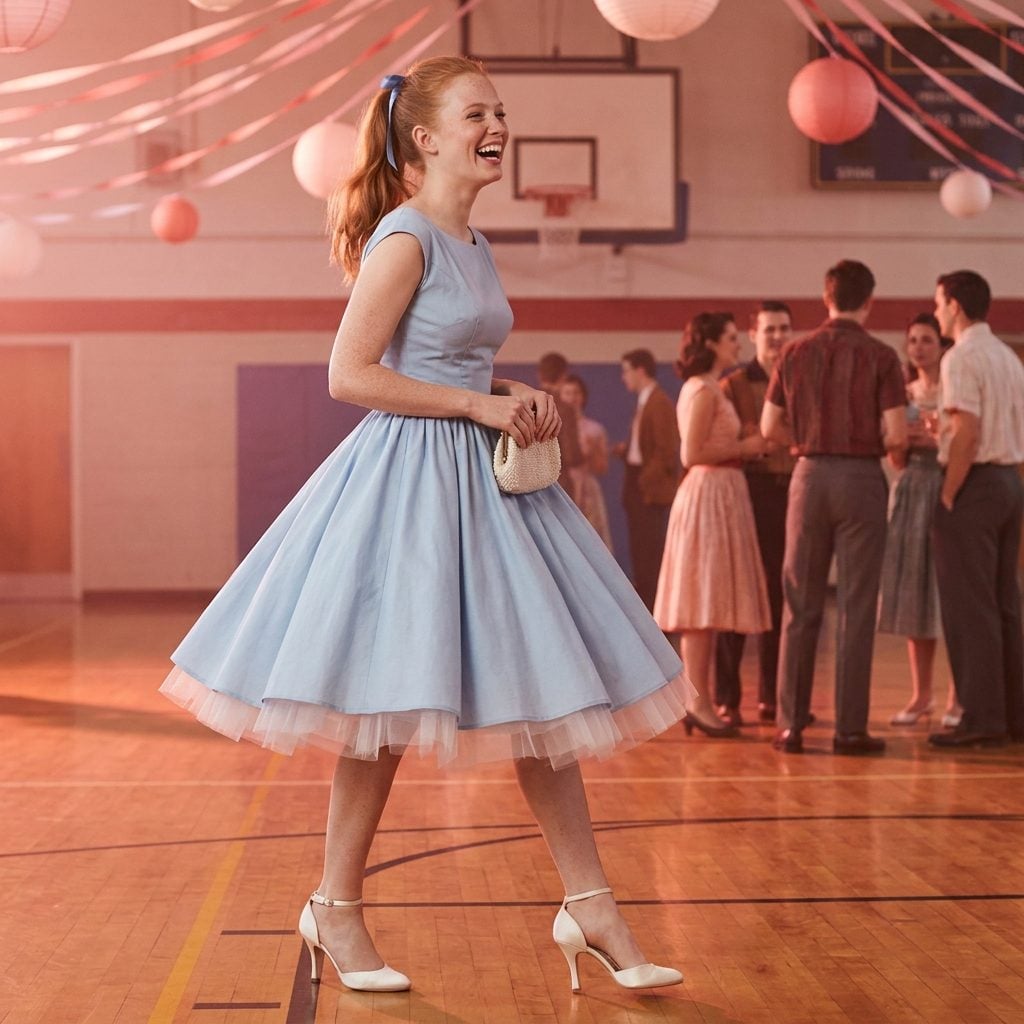
7. The Ankle-Strap Heel That Got You Through Every School Dance Without Your Heart Breaking (Your Feet Were Another Story)
❤️ Would you like to save this?
You bought them at a department store with your mother, wrapped in tissue in a box that smelled like new shoe leather, and you wore them exactly once before the ankle strap left a red mark you’d have for a week. Every girl at the dance was wearing some version of the same thing: a satin ankle-strap heel in white or ivory or pale pink, barely two inches tall but somehow still precarious on a gymnasium floor.
The crinoline skirt was doing all the dramatic work. The shoes just had to show up and sparkle a little. They did their job.
6. The Satin Bridal Pump That Had a Second Life in a Dye Bath and Emerged as Something Else Entirely
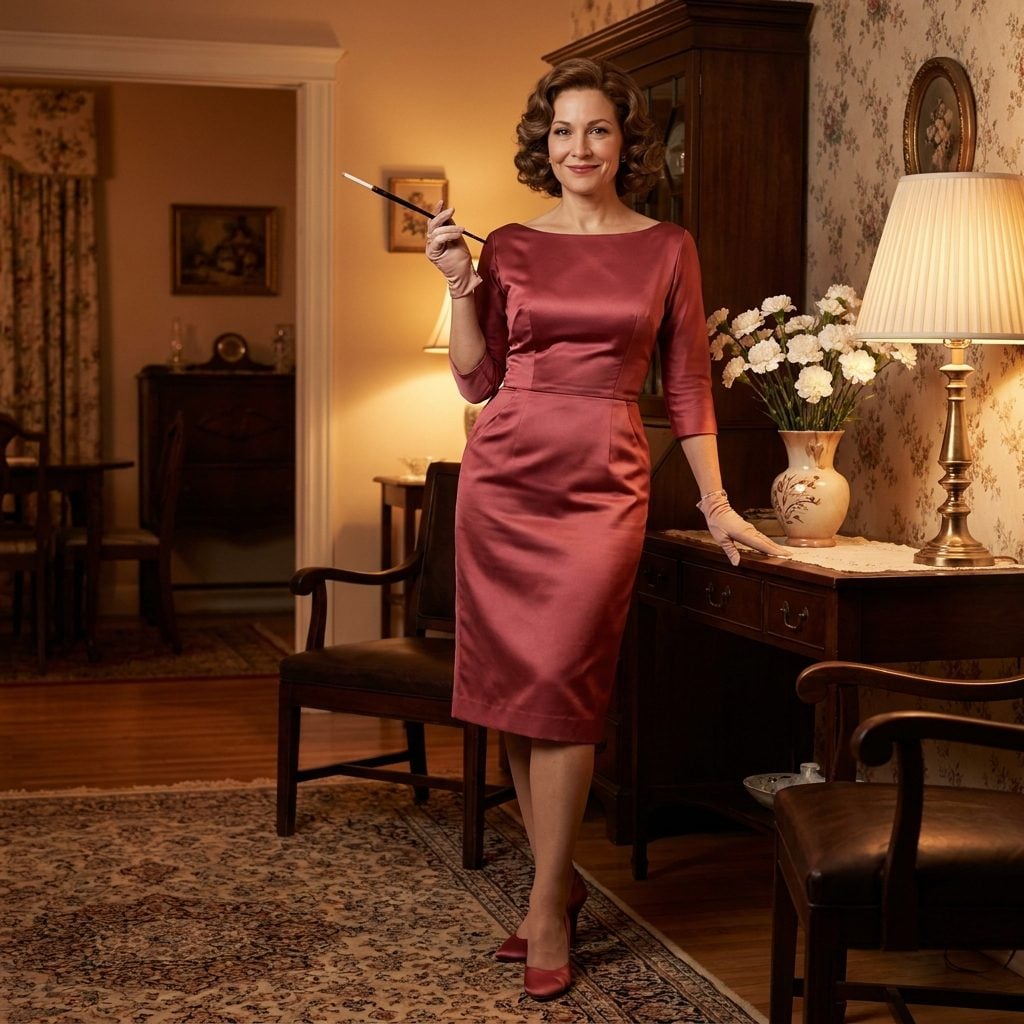
Every bridal shop in America offered it: the satin pump dyed to match. You’d bring in a fabric swatch, sometimes a full dress panel, and wait two weeks for shoes that came back in a color you described as “dusty rose” but which the dye shop interpreted as something closer to “salmon at the end of a long day.” It rarely matched perfectly. You wore them anyway.
The genius of it was the intent. The whole idea that your shoes should coordinate so precisely with your dress that they required custom dying was peak 1950s maximalism, dressed up as practicality. Nobody does this anymore. Part of me thinks we should.
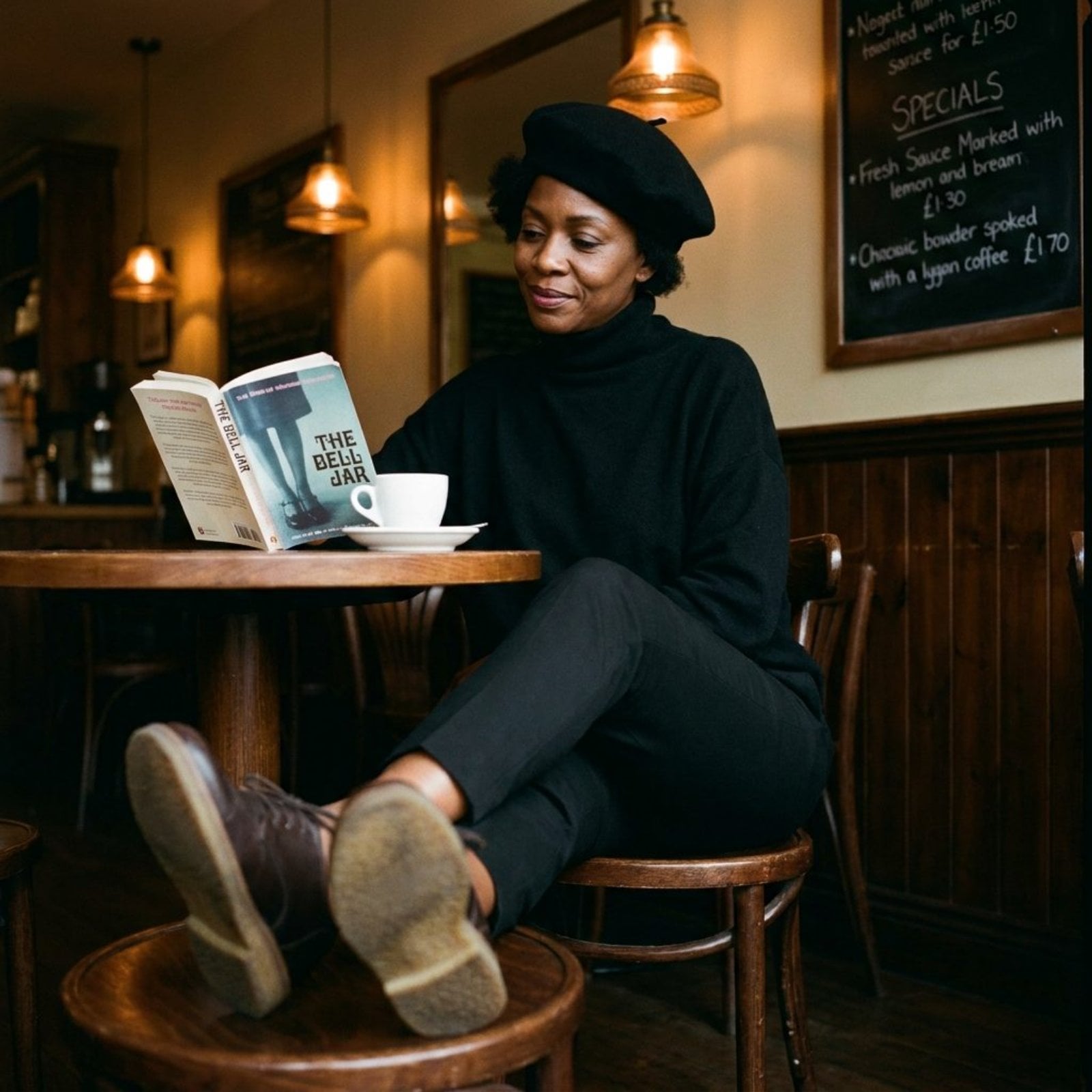
5. Crepe-Soled Shoes, Worn by Every Woman Who Owned a Beret and Had Opinions About It
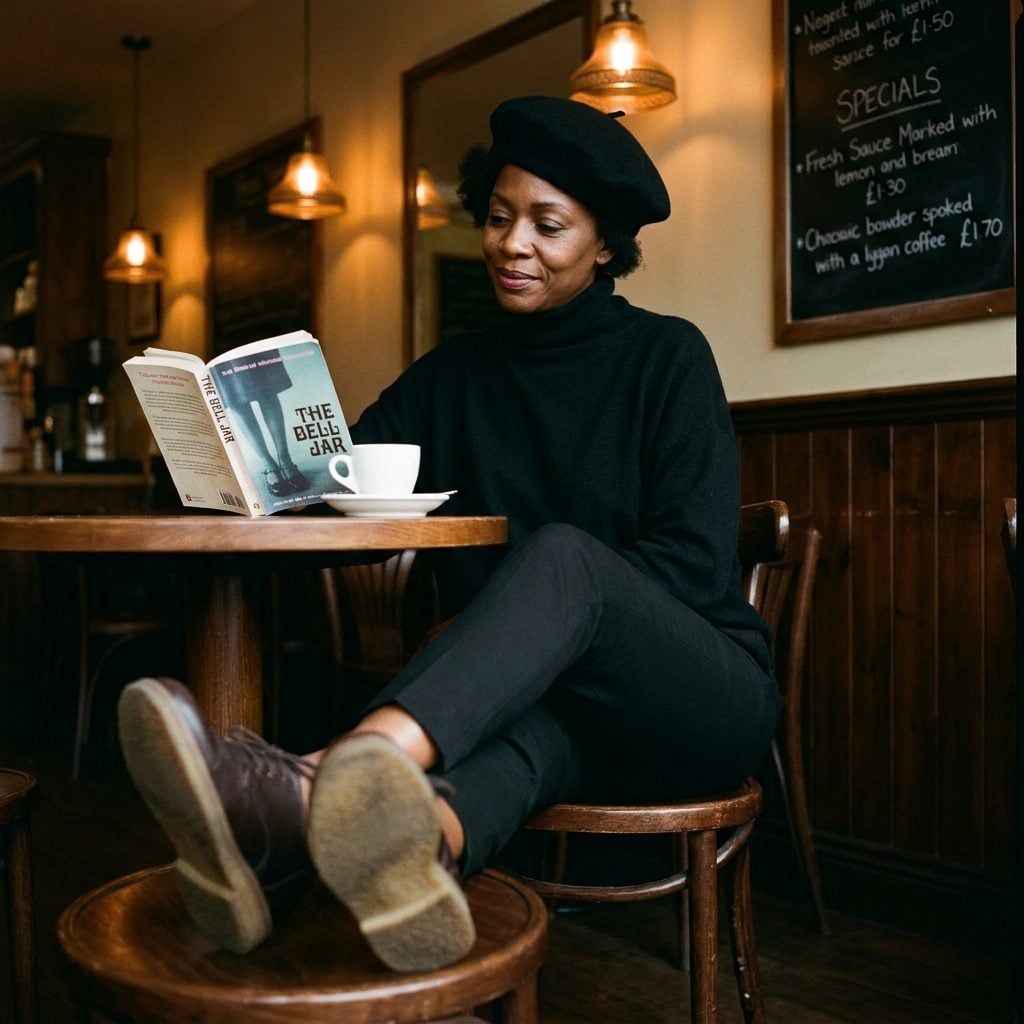
Beatnik women wore crepe soles the way they wore everything: with a kind of pointed disregard for what was fashionable. While the rest of America was clicking across department store floors in kitten heels, the artsy college crowd was padding around in these soft-soled, whisper-quiet crepe-soled shoes that felt more like a philosophical statement than footwear.
They were genuinely comfortable. They matched black cigarette pants and turtlenecks like they were born for it. And there was something satisfying about making no sound when you entered a room, especially when the room was a coffee house and you were there to argue about Camus.
4. Bowling Shoes That Were Actually Kind of Fabulous and Nobody Wants to Admit It
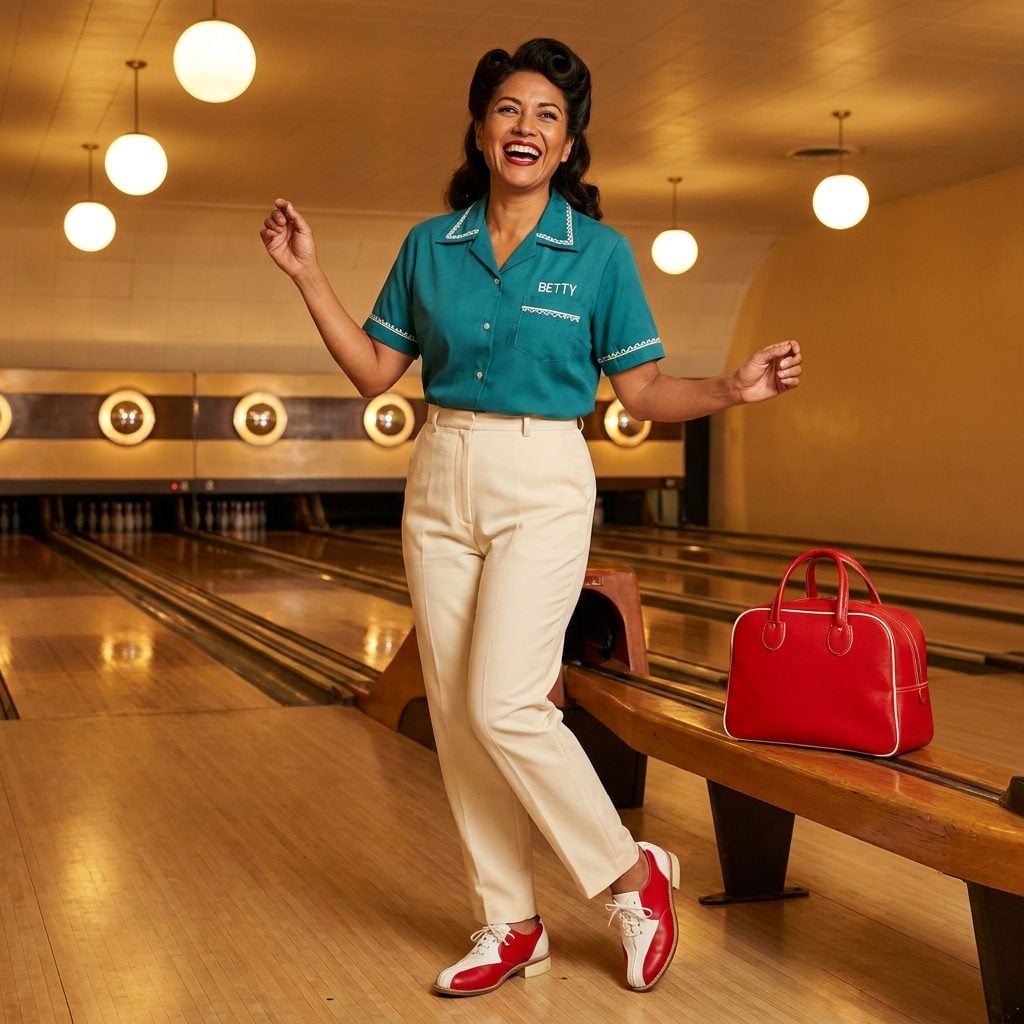
The bowling alley was one of the great social stages of 1950s life, and the shoes were part of the costume. Nobody complained about the rental pair. You showed up, laced into red-and-white two-tone leather with a rubber sole, and something about slipping them on made you feel like you were about to have a very good evening.
Some women bought their own. This was a power move. Personal two-tone bowling shoes in the color of your choice said: I am here regularly. I am not someone who needs to borrow shoes. I belong to this lane.
Honestly, the aesthetic holds up better than it has any right to.
3. The Open-Toe Spectator Sandal: Two Colors, One Shoe, Zero Regrets
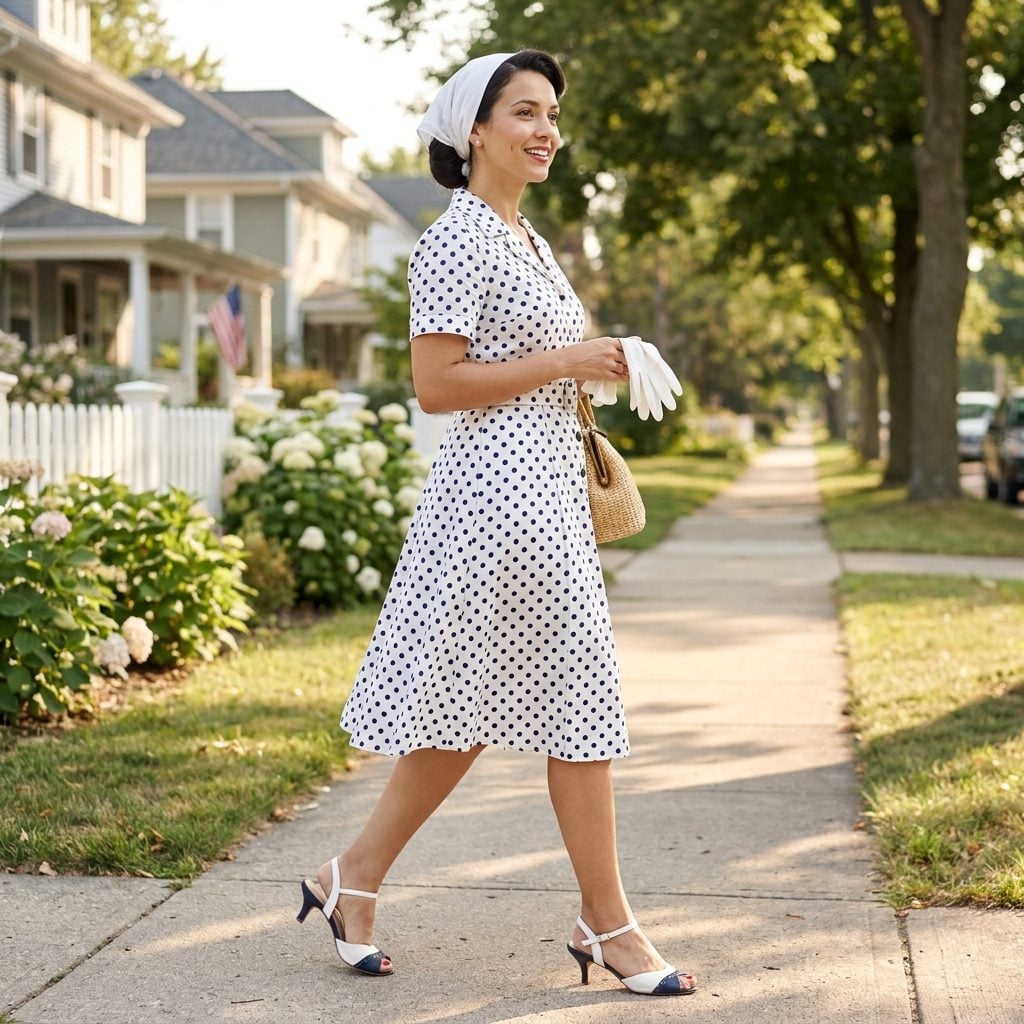
Spectator shoes were a whole philosophy: two leathers, two colors, combined with enough confidence to look intentional rather than indecisive. The closed-toe version had been around since the 1920s, but the open-toe spectator sandal was a 1950s development, perfect for summer and slightly more relaxed without losing any of its precision.
Navy and white was the classic pairing. Brown and beige for a warmer look. Black and white if you wanted to look like you’d just stepped off a yacht. The contrasting toe cap and heel panel on a spectator sandal required meticulous color coordination with your outfit, which was either deeply satisfying or deeply exhausting, depending on the morning.
2. The ‘Comfort’ Lace-Up That Was Doing Orthopedic Work in Excellent Disguise
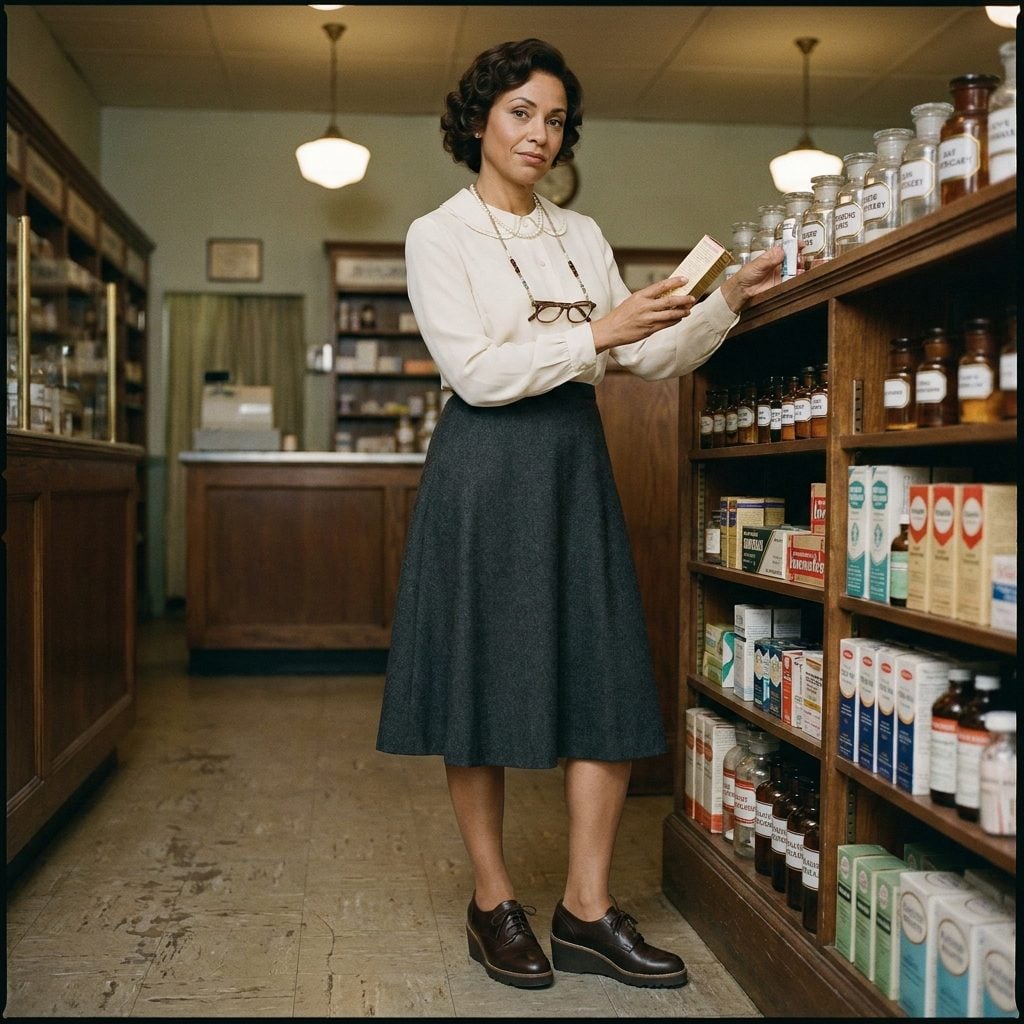
Every woman who spent her days on her feet knew these shoes. The heel was low. The toe box was wide enough to actually accommodate a foot. The sole had enough structure to support a person who stood behind a counter for eight hours or chased small children through linoleum-floored houses from six in the morning until nobody knows when.
They were sold as fashion. The window display always showed them next to something prettier, some pointed kitten heel that would destroy you by noon. But the lace-up oxford with its orthopedic soul and its respectable surface was what women actually lived in, and everyone understood this implicitly without ever quite saying it out loud.
1. Angora-Trimmed Boudoir Slippers That Made Getting Ready Feel Like an Event Worth Dressing For
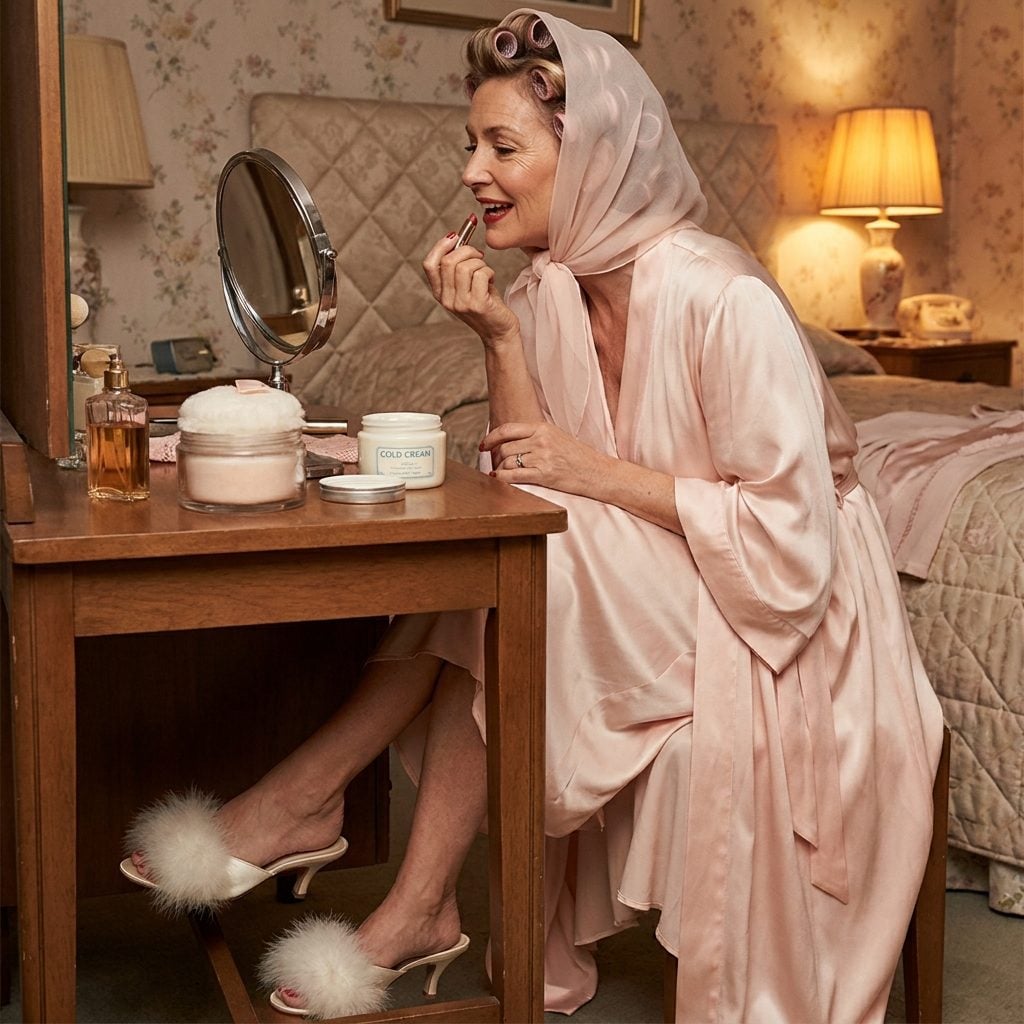
These were not shoes you wore outside. They were shoes you wore during the part of the day that was entirely yours: the twenty minutes at the vanity before anyone needed anything, the slow cup of coffee, the ritual of setting your hair. The angora trim was ridiculous and wonderful. It got everywhere. You’d find a white fiber stuck to your lipstick, another one on the cold cream lid.
The angora-trimmed satin mule was sold as glamour, and it genuinely was, in a private, no-audience-required way. Films starring the great actresses of the era had popularized the look, and suddenly every department store had a version. Some were real satin. Most were not. All of them shed. All of them were worth it.