❤️ Would you like to save this?
Nobody told anyone anything in 1970s wedding fashion. No dress code cards, no color-palette requests, no passive-aggressive Pinterest boards from the bride. You showed up in whatever you owned that felt festive, and what you owned was a lot. Polyester. Macramé. Earth tones so brown they blended into the reception hall carpet. Every guest dressed like the main character in her own movie, which is exactly as chaotic as it sounds. If any of these bring back a specific church basement or backyard ceremony, you’re in the right place.
FYI, thanks to AI imagery software, we’re able to create very specific fashion and hairstyle examples to illustrate the points being made. In some cases, imagery is exaggerated to hammer home the point. Also, assume links that take you off the site are affiliate links such as links to Amazon. this means we may earn a commission if you buy something.
28. The Guest Who Showed Up in a White Crocheted Maxi Dress and Somehow Thought That Was Fine
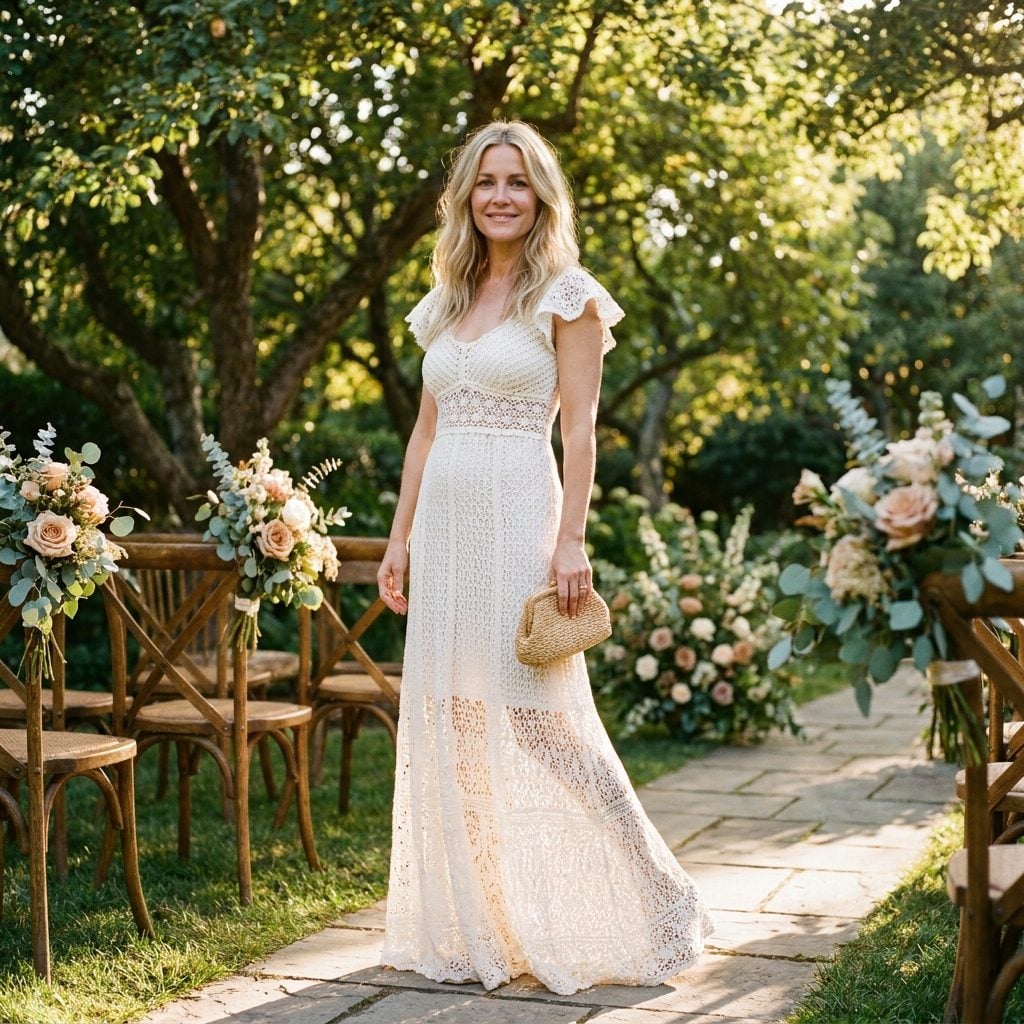
Nobody told her. Or maybe somebody did and she just couldn’t hear them over the sound of her own confidence. The white crocheted maxi dress was, in the 1970s, a perfectly legitimate outfit choice for a wedding guest, long, romantic, handmade-looking, and completely, aggressively bridal. The open weave gave it that boho goddess quality that every woman wanted after Woodstock permanently rewired everyone’s aesthetic.
There was often a slip underneath (sometimes) and a flower crown (always). The bride, arriving in her own nearly identical dress, simply had to accept this. It was a different time. Boundaries around white were not a concept anyone had filed paperwork on yet.
27. Bell-Bottom Jumpsuits in Psychedelic Floral That Made the Receiving Line Genuinely Difficult to Navigate
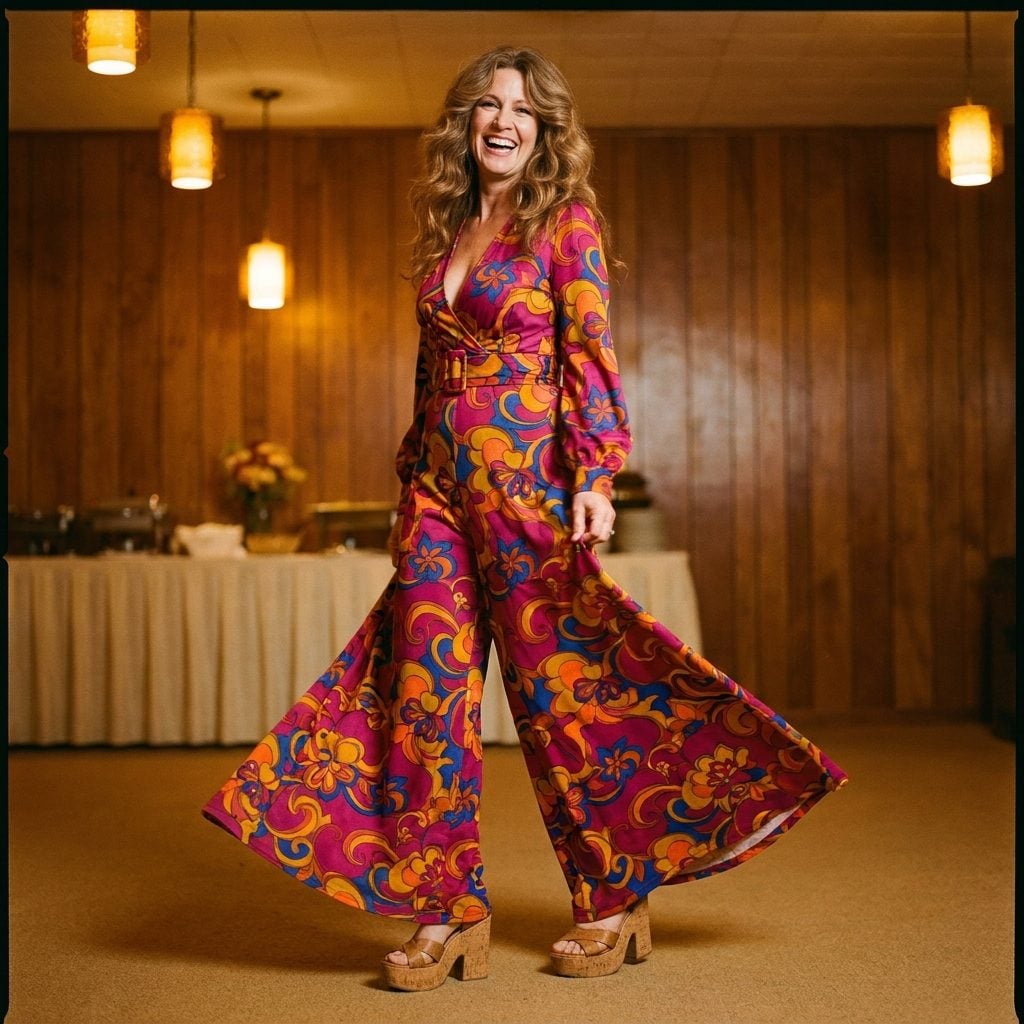
The jumpsuit made the powder room situation genuinely hazardous. One zipper, running the full length of the back, and you needed a bridesmaid on standby every single time. But nobody was skipping the jumpsuit because of logistics, this was 1976 and the bell-bottom jumpsuit in a loud floral print was the closest a woman could get to wearing a painting to a wedding.
The prints were not subtle. We are not talking tasteful florals. We are talking full-commitment, hallucinatory, all-over prints where the flowers had flowers. Worn with stacked platform sandals and a good four inches of fringe on a bag, this was a complete look. The bride’s aunt had one in burnt orange and nobody has forgotten it in 47 years.
What Our Readers Say
- Asked to name their era, two out of three ThreadCurve readers picked timeless, while 22% went for retro revival and just 13% said current.
- In readers’ heart and thumbs-down votes, outfits with floral patterns got hearts 28% of the time, compared with 40% for the other outfits in the same articles.
From ThreadCurve reader polls and votes.
26. The Sheer Peasant Blouse Situation Nobody’s Grandmother Warned Anyone About
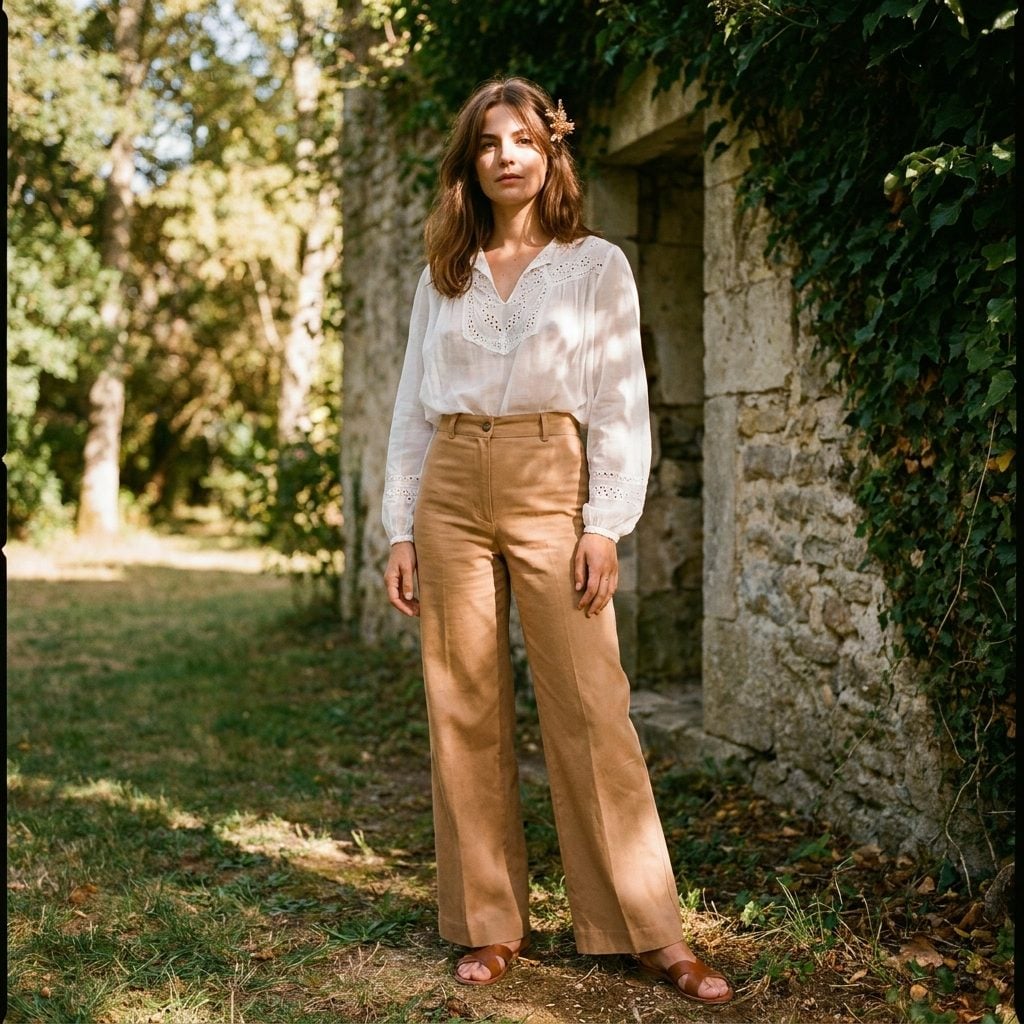
This one requires no preamble. The sheer peasant blouse worn without a bra was standard wedding guest attire in the mid-1970s, and everyone, the officiant, the flower girl, the bride’s grandmother, just accepted it and moved forward with their day.
These blouses came in white cotton or cream gauze, usually with eyelet embroidery at the collar and cuffs, which gave them a romantic, almost folkloric quality that the wearer found very much on-theme for a wedding. The sheerness was not a mistake. It was, in some circles, the point. Worn tucked into high-waisted wide-leg trousers with a braided leather belt, it was the complete earthmother guest look, and she’d bought hers from a boutique on a side street that also sold incense and wind chimes.
25. Hot Pants and Knee-High White Go-Go Boots: A Complete Look, Apparently, for a Church Wedding
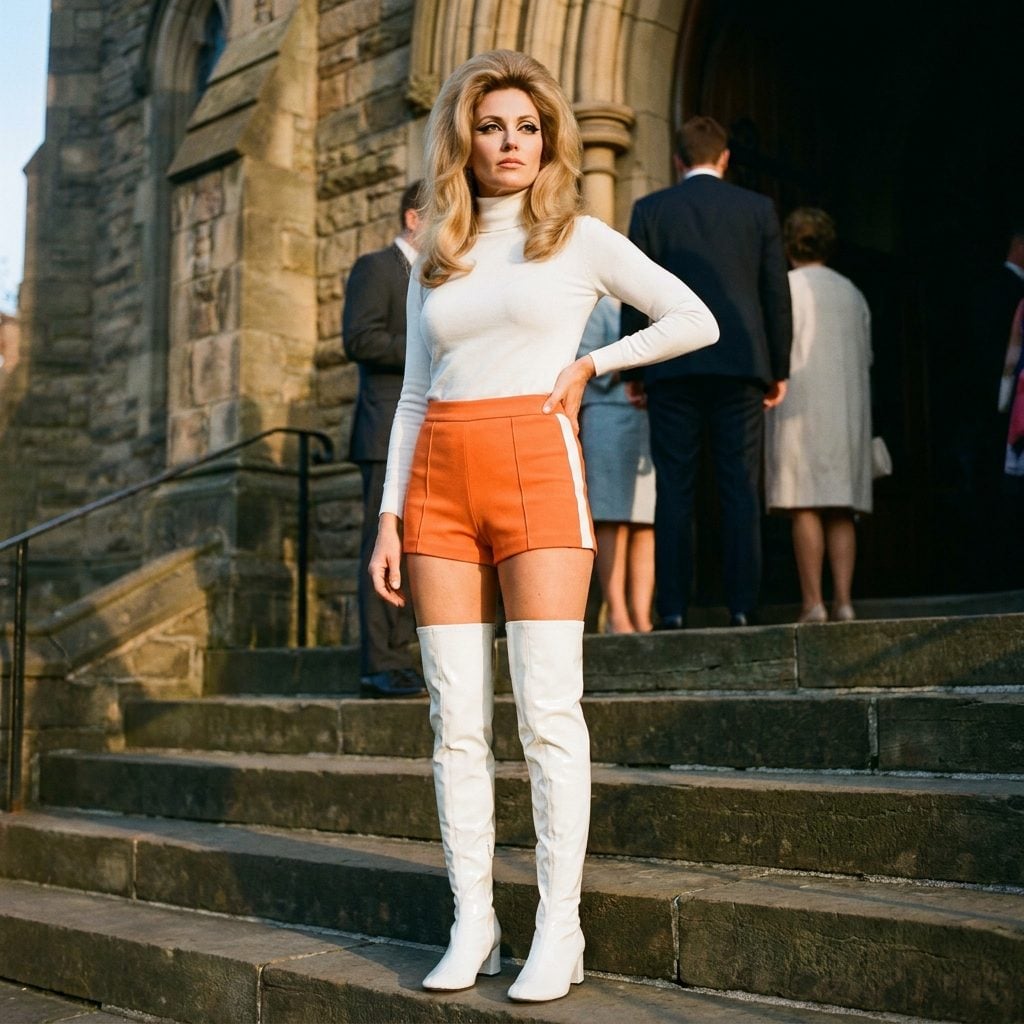
She came to a church ceremony in hot pants. She knew exactly what she was doing.
The hot pants and go-go boot combination was at its peak from roughly 1971 to 1974, and wedding albums from those years contain at minimum one guest in this exact look per reception, usually someone the groom knew from work. The shorts were high-waisted and often came in loud patterns or bold solids, and the boots were white vinyl with a side zip, worn to just below the knee.
This was not casual wear where she came from. This was her going-out look. She probably wore it to the rehearsal dinner too. As accessory outfits go, the white boot was doing a lot of heavy lifting, it unified the whole thing, gave it a space-age polish that made it feel almost formal. Almost.
24. Floor-Length Halter Dresses With Bare Backs All the Way Down to the Small of Her Back
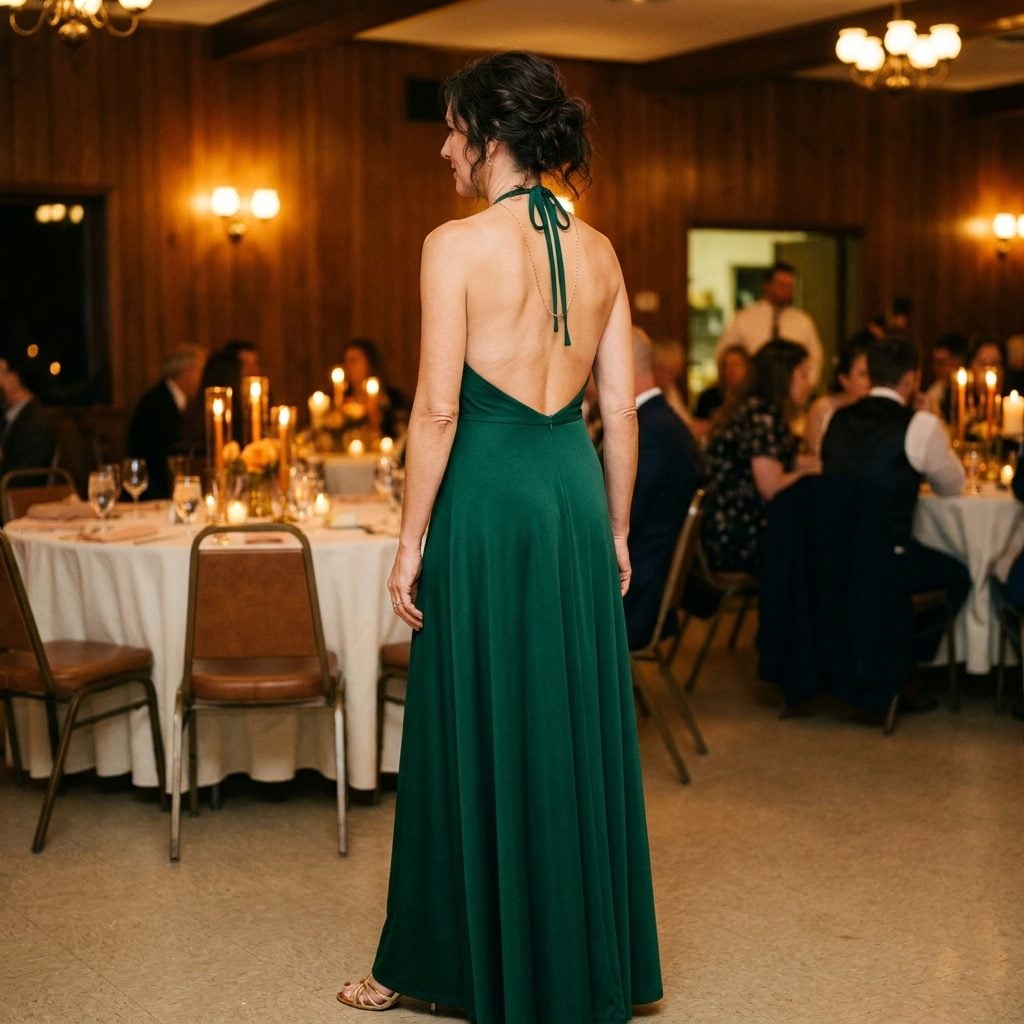
The back of this dress was its entire reason for existing. Everything else, the simple halter neck, the plain jersey skirt falling to the floor, was just context for the main event, which was a completely bare back from shoulder blades to waist. No bra was structurally possible. No cardigan was emotionally possible. The one gold chain running down the spine was the only accessory needed, and every woman who wore this dress knew exactly what she was doing when she walked into that reception hall.
These came in deep jewel tones, burgundy, forest green, midnight navy, in a soft jersey that moved beautifully. The mother of the bride is in many photos looking at the guest in this dress with an expression that is genuinely unclassifiable.
23. The Disco Shirt, Unbuttoned to the Navel, With a Gold Chain Thick Enough to Anchor Something
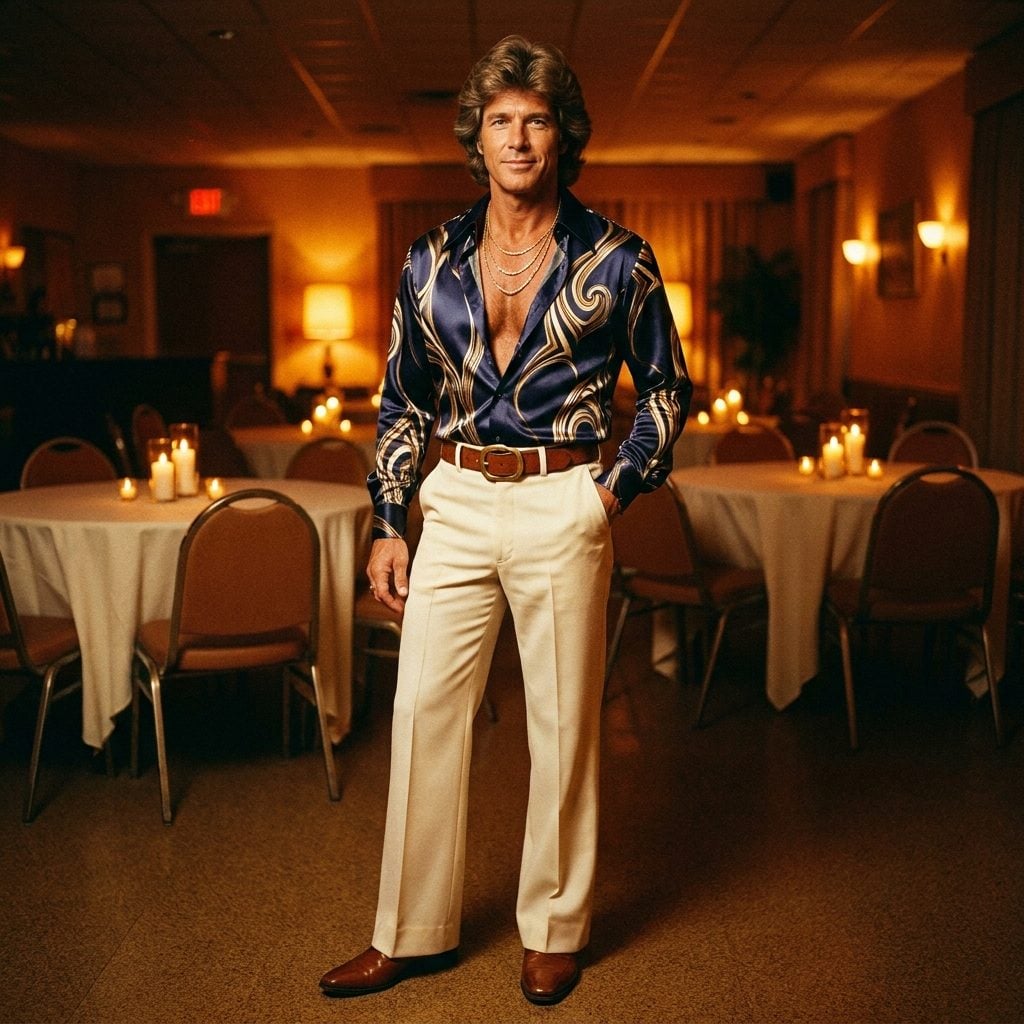
Multiple chains. Always multiple. One was a statement. Three was a lifestyle philosophy.
The disco shirt worn open to approximately the fourth button down was a staple of the 1970s male wedding guest, and the man wearing it did not for one second consider that the groom might appreciate him covering his chest hair during the ceremony. The shirts were incredible, honestly, bold abstract prints in colors that would look at home on a Kandinsky canvas, often in a fabric that had just enough sheen to catch the light on the dance floor, which was the entire point.
He’d pair it with high-waisted cream trousers, a wide leather belt with a belt buckle that could steer a boat, and shoes with a pointed toe. He danced to “Stayin’ Alive” and nobody asked him to button up. It was a better era for confidence, if nothing else.
22. The Burnt Orange and Avocado Green Polyester Pantsuit That Matched Her Kitchen Appliances
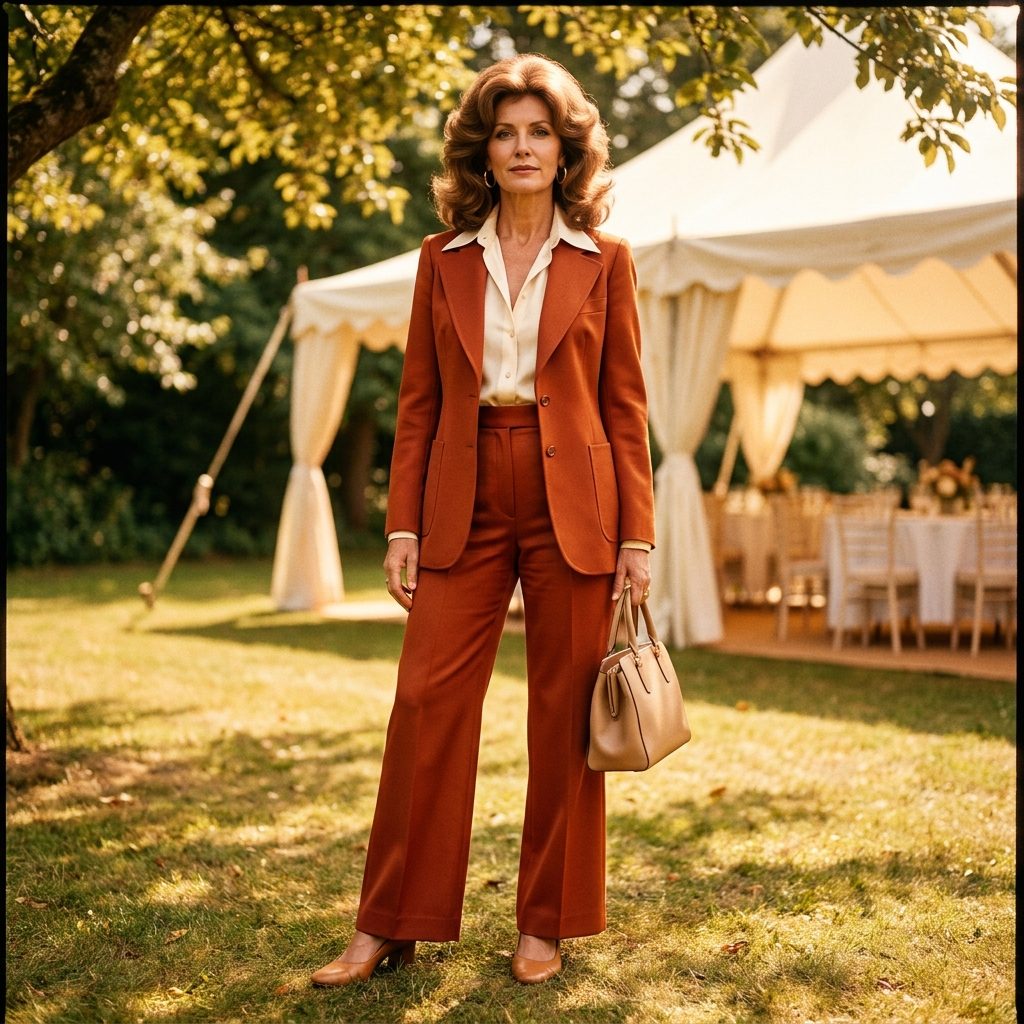
Burnt orange and avocado green were not just colors in the 1970s. They were a complete worldview. They were on the pantsuit, yes, but also on the curtains, the carpet, the KitchenAid mixer, and probably the car. The decade committed to these colors with a seriousness that nothing in the following 50 years has quite matched.
The polyester pantsuit in one or both of these shades was the practical, polished choice for the woman who wanted to look put-together without spending four hours in heels. Wide lapels, wide-leg trousers, a single-button blazer with patch pockets, she wore it to the ceremony, the reception, and then kept it for every subsequent formal occasion through 1983.
It did not wrinkle. That was the thing about polyester. You could sit through a four-hour reception in August and stand up looking exactly as you arrived. The fabric was essentially indestructible, which is why so many of these pantsuits survived long enough to mortify adult children clearing out storage units decades later.
21. Platform Shoes With 5-Inch Cork Heels That the Mother of the Bride Absolutely Refused to Apologize For
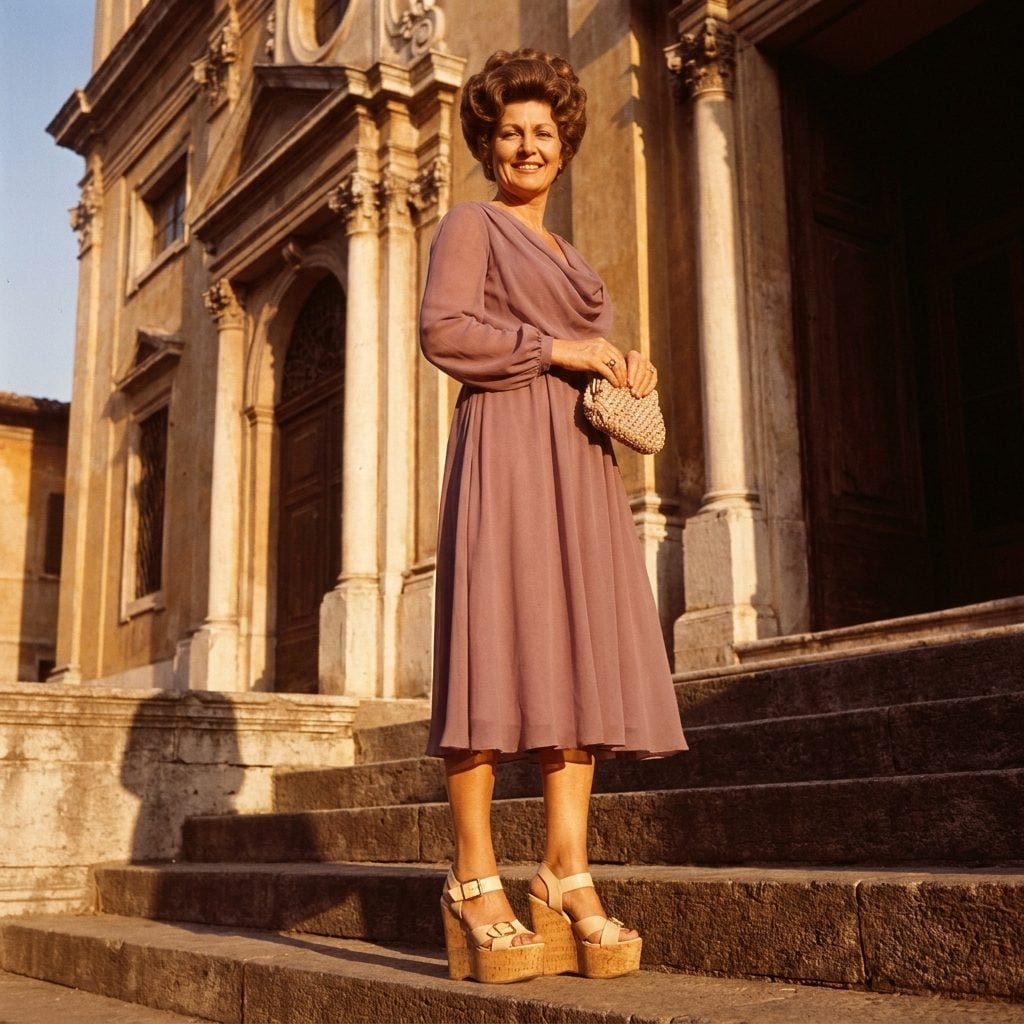
She did not teeter. She did not wobble. She walked down that church aisle at a full 5 feet 11 inches and she owned every single inch of it. The cork platform was not a fashion choice, it was a statement of dominance, and the mother of the bride made it at every wedding from 1973 to 1978 without a single moment of self-reflection.
These weren’t delicate shoes. The cork heel was sometimes wider than a brick, the ankle strap buckled in brushed gold, and the platform toe was thick enough to use as a doorstop. The truly committed paired them with palazzo pants so wide the shoes were completely invisible until you hit a staircase, at which point everyone held their breath and someone’s aunt said a quiet prayer.
20. Velvet Bell-Bottoms in Burgundy or Hunter Green That Were Absolutely, Definitely Formal Enough
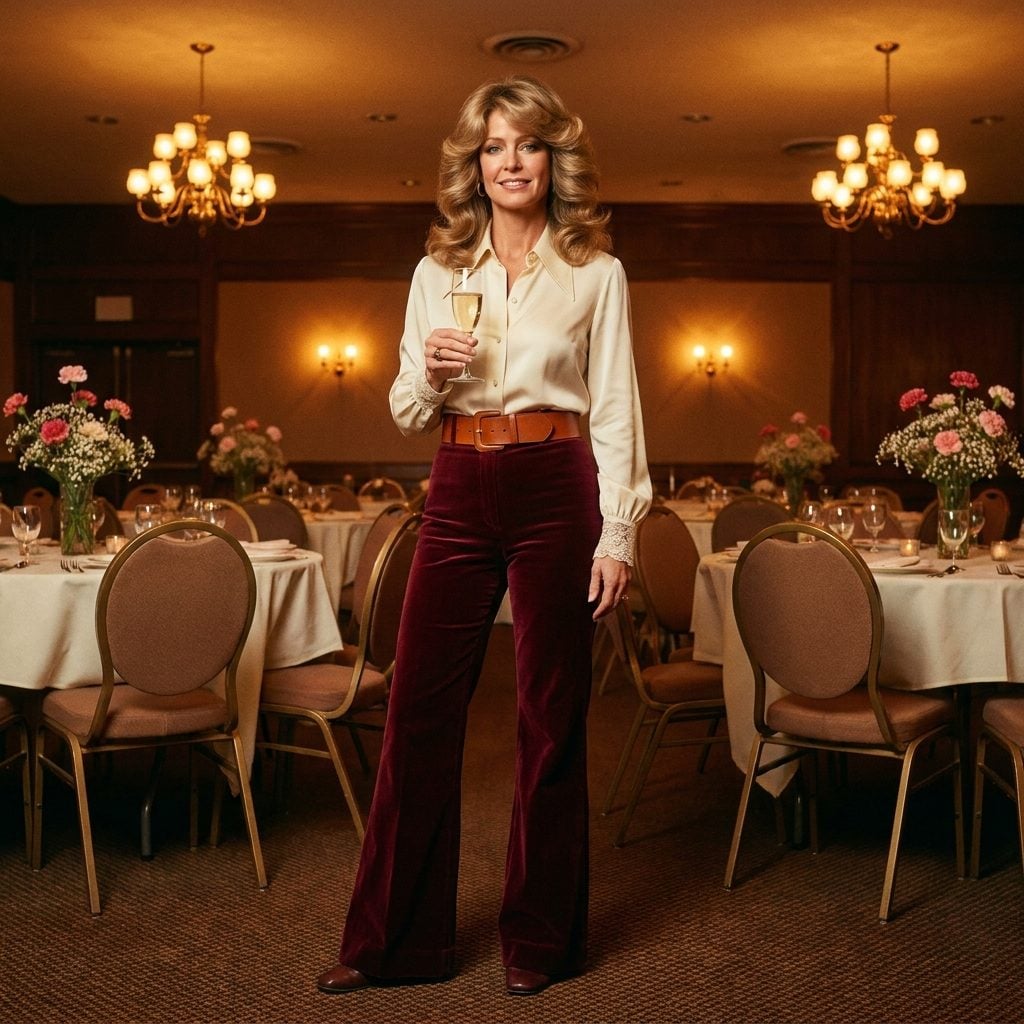
The argument for velvet bell-bottoms at a wedding was simple: velvet is fancy, and the color was burgundy, which is basically the same as red, which is a wedding color. That logic held up for an entire decade.
What made these genuinely spectacular was the sound. Walking across a hardwood dance floor in velvet bell-bottoms produced a soft, continuous swishing that announced your arrival from twenty feet away. You couldn’t sneak up on anyone. You also couldn’t sit down without the fabric creasing in a way that took the rest of the night to recover from. The hunter green ones somehow looked even more formal at the time, and now look exactly like Christmas.
19. The Tie-Dye Maxi Dress You Called ‘Boho Chic’ and Your Grandmother Called ‘A Cry for Help’
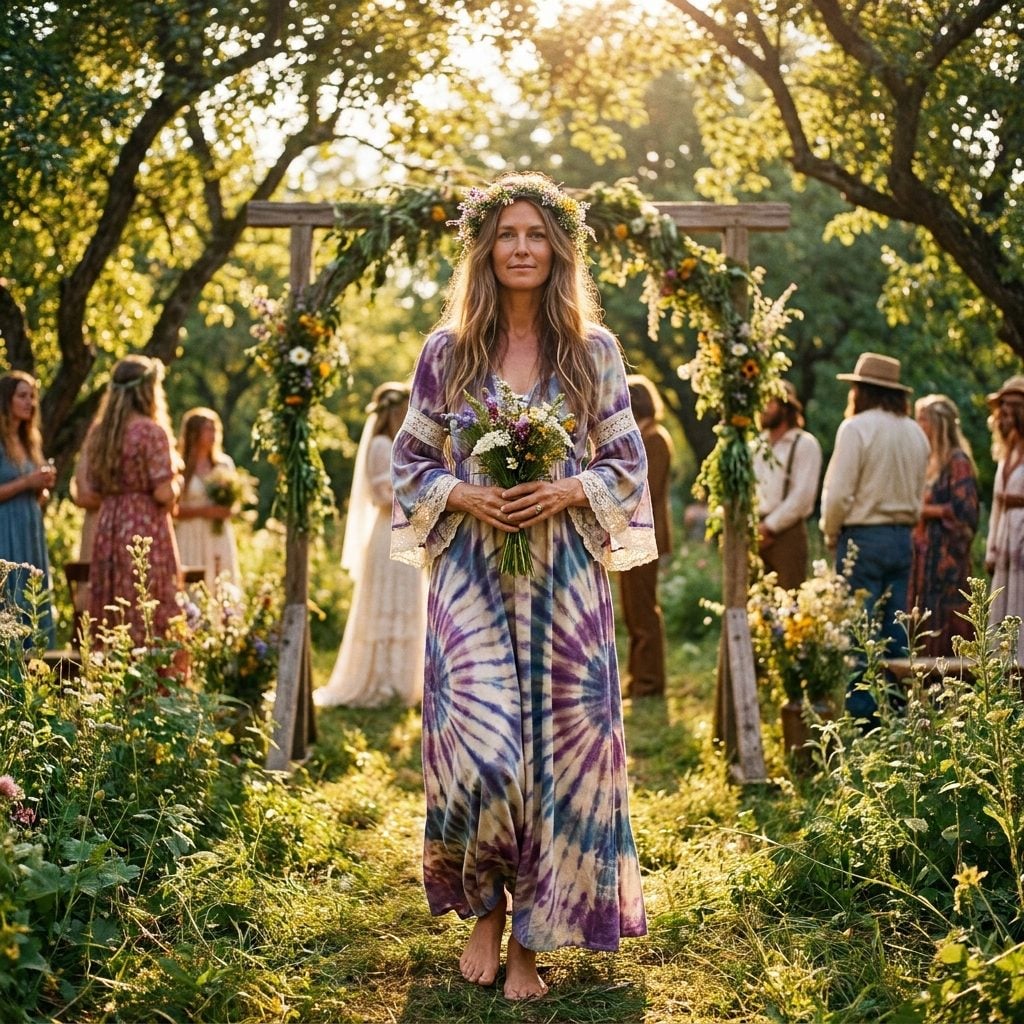
Nobody showed up to a 1970s outdoor wedding in a tie-dye maxi dress and thought they were underdressed. You thought you were ethereal. The flower crown was involved. There may have been bare feet.
This was the outfit that said I respect this union spiritually but not institutionally. It worked perfectly at the backyard weddings, the park weddings, the “ceremony at sunset on a cliff” weddings that defined the decade. The bride often had the same dress in a different colorway, which was either poetic or a disaster depending on the photos. These were almost always handmade, which meant the tie-dye was never quite symmetrical, which was the entire point.
18. Mini Dresses So Short They Were Basically a Cardigan With Aspirations
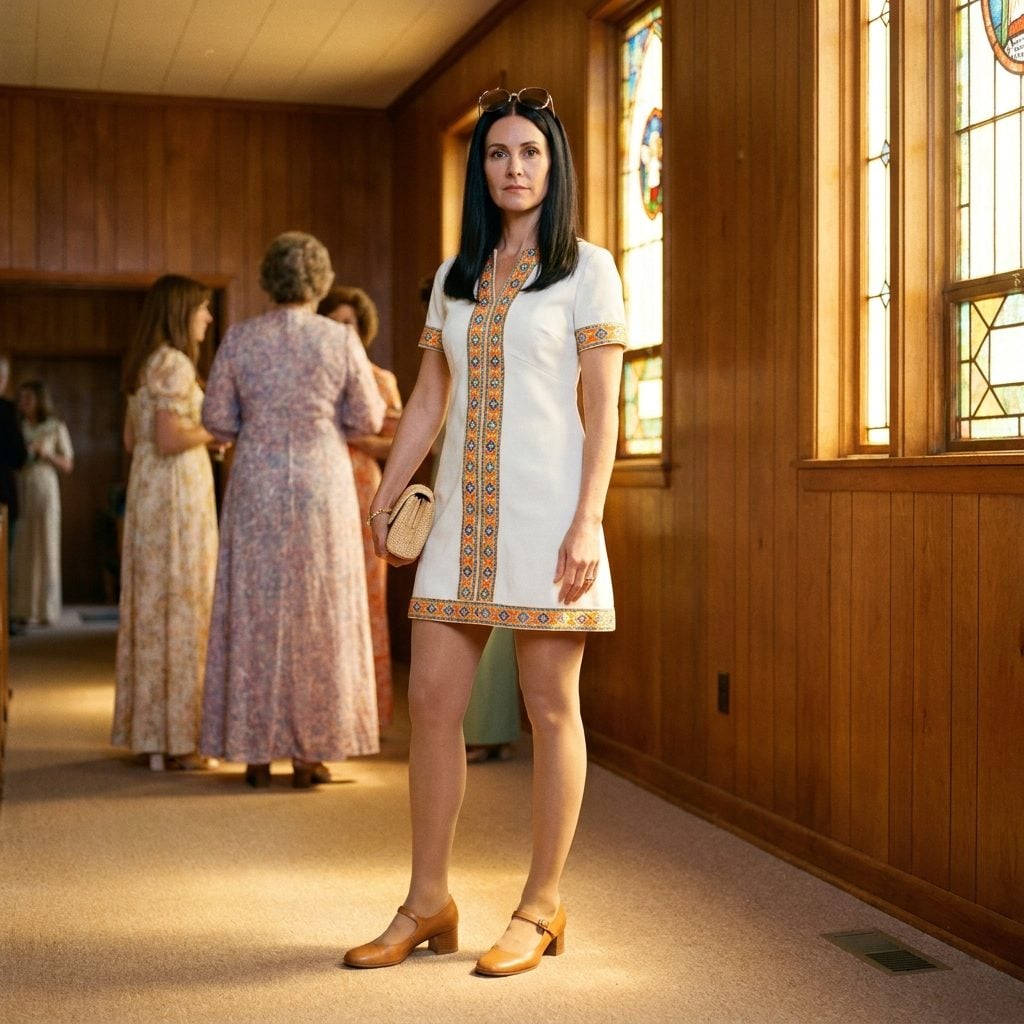
Wearing a mini dress to a church wedding in 1974 was a calculated act of social bravery. You sat down carefully. You did not reach for anything dropped on the floor. You angled yourself very specifically in every pew.
The truly short ones stopped at mid-thigh and were worn with sheer pantyhose, as if the pantyhose were structural. The embroidered trim at the hem made them feel dressed-up. The white ones were particularly bold, a guest arriving in white, in a dress that short, at a Catholic wedding. Every aunt in the room clocked it within seconds. You knew. They knew. Nobody said anything.
You sat down carefully. You did not reach for anything dropped on the floor.
17. The Caftan in Clashing Peacock and Paisley That Made Every Photograph Look Like a Fever Dream
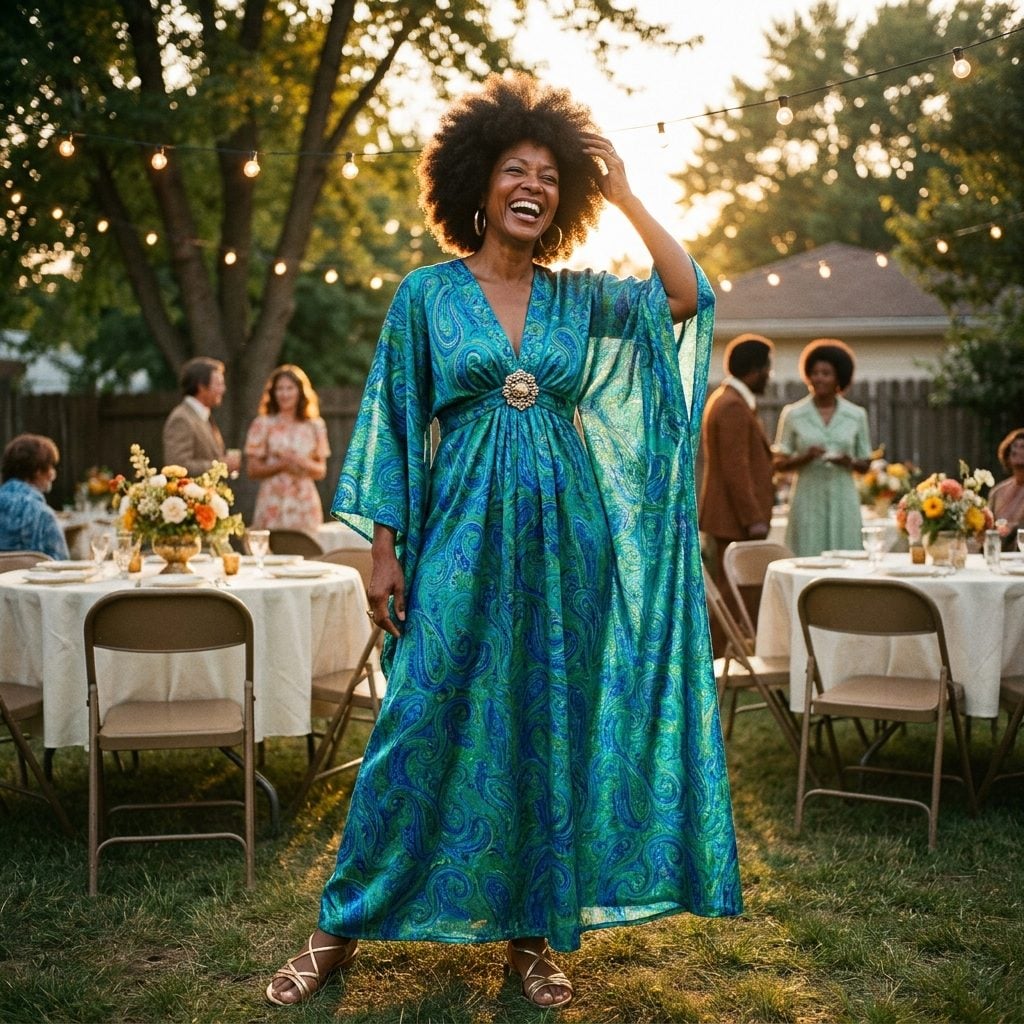
The caftan at a 1970s wedding was the move of a woman who had fully arrived at herself and was not taking questions. It was the garment of the boldly middle-aged, the fabulous aunt, the woman who had been to Morocco or at least claimed she had.
Peacock and paisley in the same garment wasn’t a styling accident, it was intentional maximalism before anyone called it that. The brooch at the neckline was load-bearing, both structurally and aesthetically. These photographs from receptions are genuinely hard to look at now, which is exactly why they’re the best ones in the album. The caftan women always have the biggest smiles.
Peacock-and-paisley clashing would struggle to find fans today: in our reader polls, 77% said they never mix prints.
16. See-Through Gauze Prairie Dresses That Were Technically Layered and Technically Left Nothing to the Imagination
❤️ Would you like to save this?
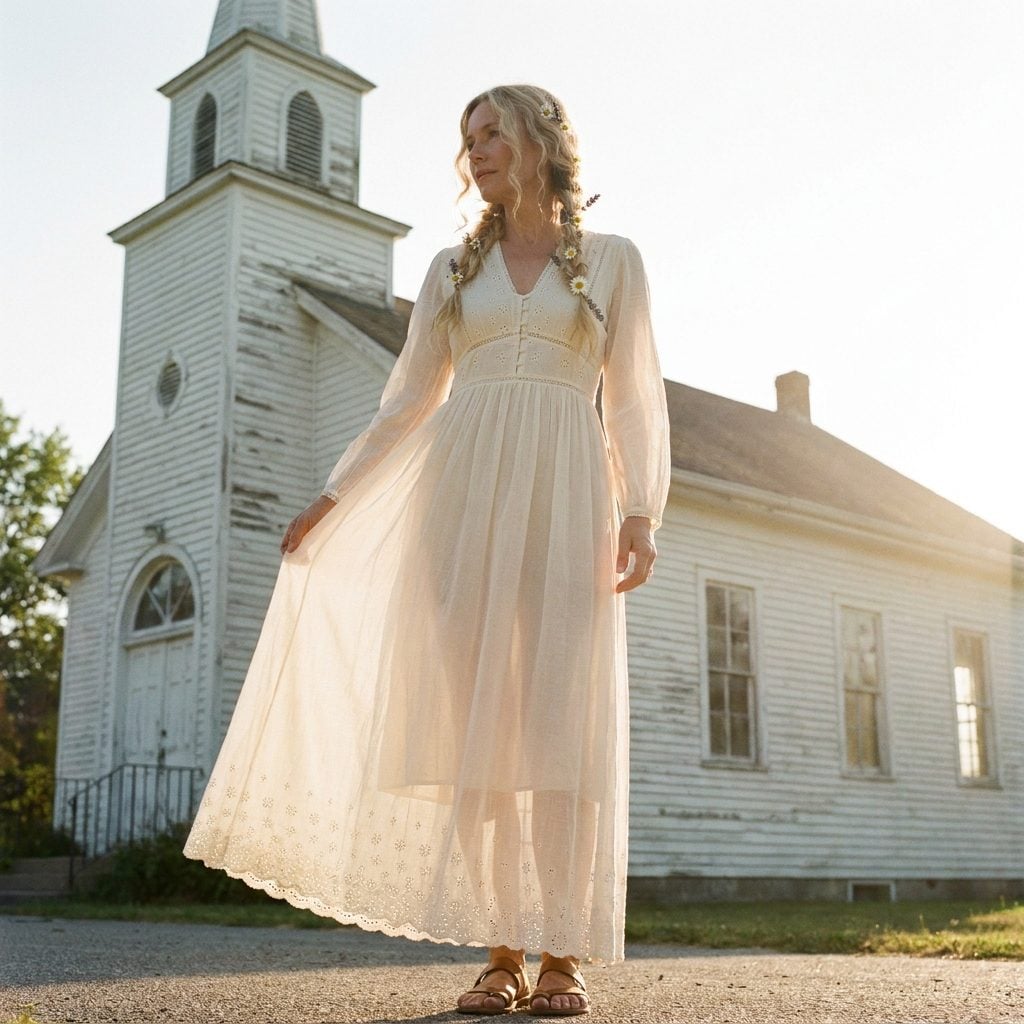
The prairie dress occupied a fascinating ethical gray zone in 1970s wedding fashion. It was floor-length, long-sleeved, and covered in delicate eyelet trim, by every technical measurement, it was a conservative choice. And then the afternoon light hit it.
The gauze fabric was the issue. Beautiful, floaty, spiritually romantic, and completely transparent when backlit, which a church doorway at 2 p.m. absolutely is. The slip worn underneath was always either slightly too short or a half shade different from the dress, which made everything worse and better simultaneously. The women who wore these to outdoor garden ceremonies at golden hour looked genuinely ethereal. The women who wore them to church were someone’s mother’s problem to deal with quietly during the receiving line.
15. The Polyester Wrap Dress in a Geometric Print So Dizzying It Counted as a Conversation Piece
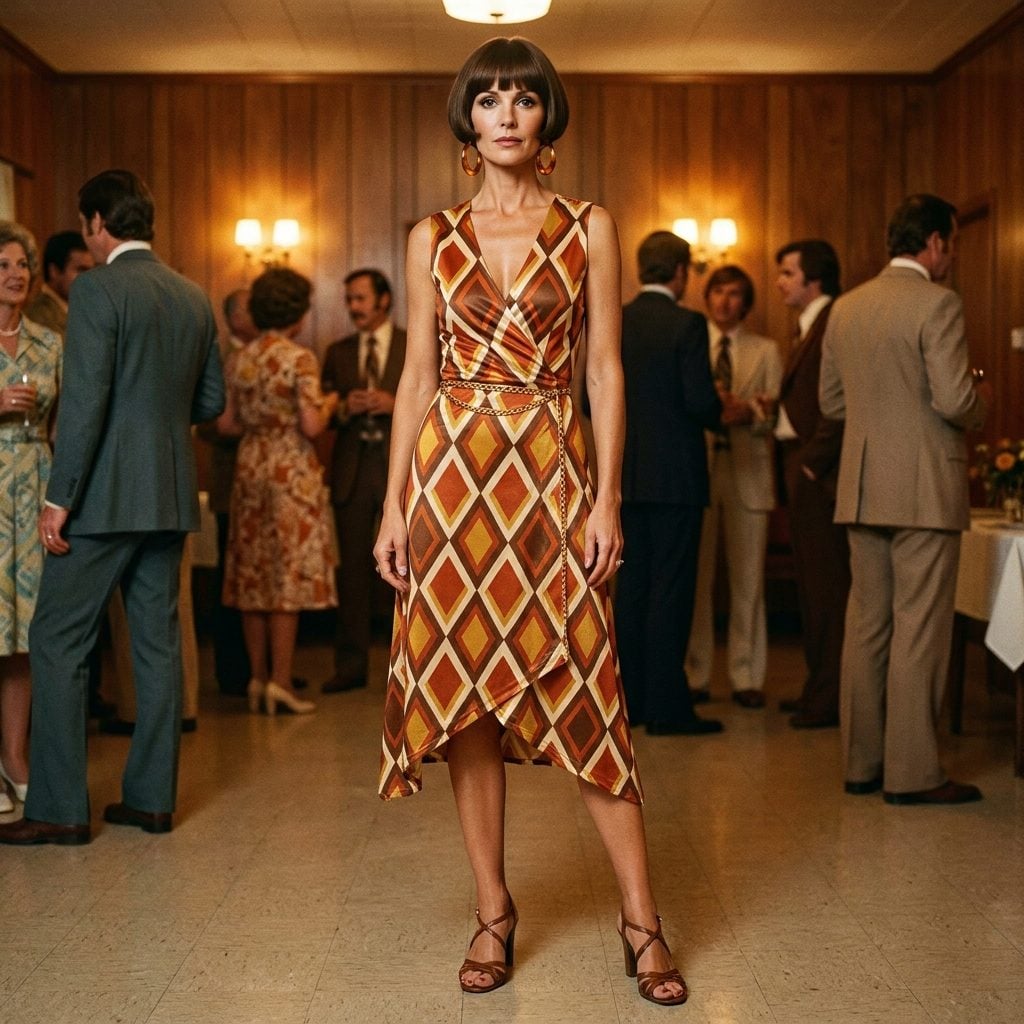
Diane von Furstenberg introduced the wrap dress in 1974 and within eighteen months it was on every woman at every reception in America, a third of them in a geometric print that could cause mild vertigo at close range. This was not considered a downside.
The beauty of the polyester wrap dress as a wedding guest outfit was its logic: the fabric didn’t wrinkle, the silhouette was flattering on everyone, and the print meant you could spill champagne and nobody would know. The geometric ones in rust and mustard and brown, the full 1970s earth-tone palette operating at maximum intensity, were the most popular. Every woman who wore one felt put-together and slightly sophisticated. Looking back at those photos now, the prints vibrate slightly even in still images, which is impressive and also a lot.
14. Head-to-Toe Hot Pink Polyester, Including the Hat
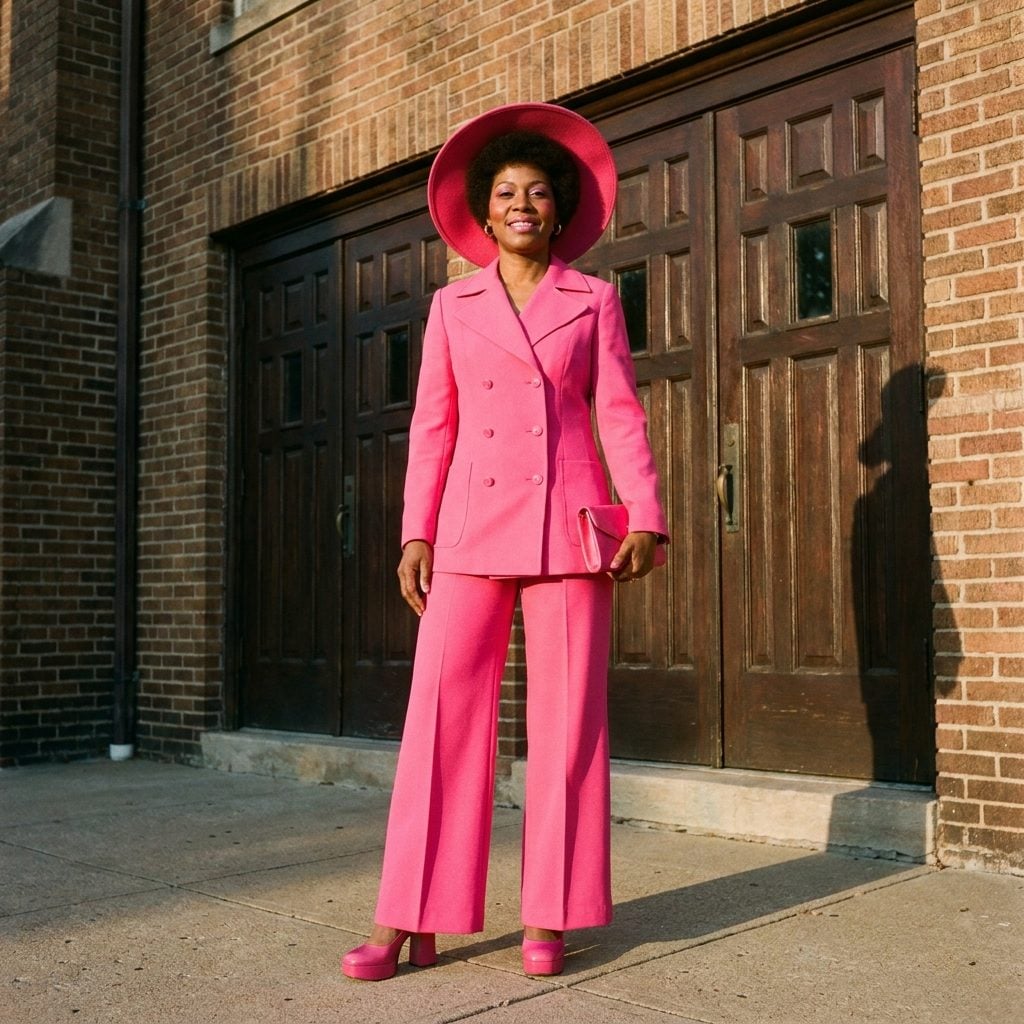
The rule was simple: if you owned something in a matching set, you wore every single piece of it, including the hat. Hot pink polyester suits came coordinated down to the last button loop, and showing up to a wedding in only two of the three matching pieces would have felt like a failure of commitment. The hat was non-negotiable.
The fabric itself deserves a moment. Seventies polyester had a particular quality, it never quite settled against your body, it crinkled in the heat, and it produced static electricity that could attract a small child from across the reception hall. Everyone wore it anyway. Hot pink, fuchsia, bubble gum: the louder the better, and the bride just had to deal with it.
13. Empire-Waist Babydoll Dresses on Fully Grown Adult Women
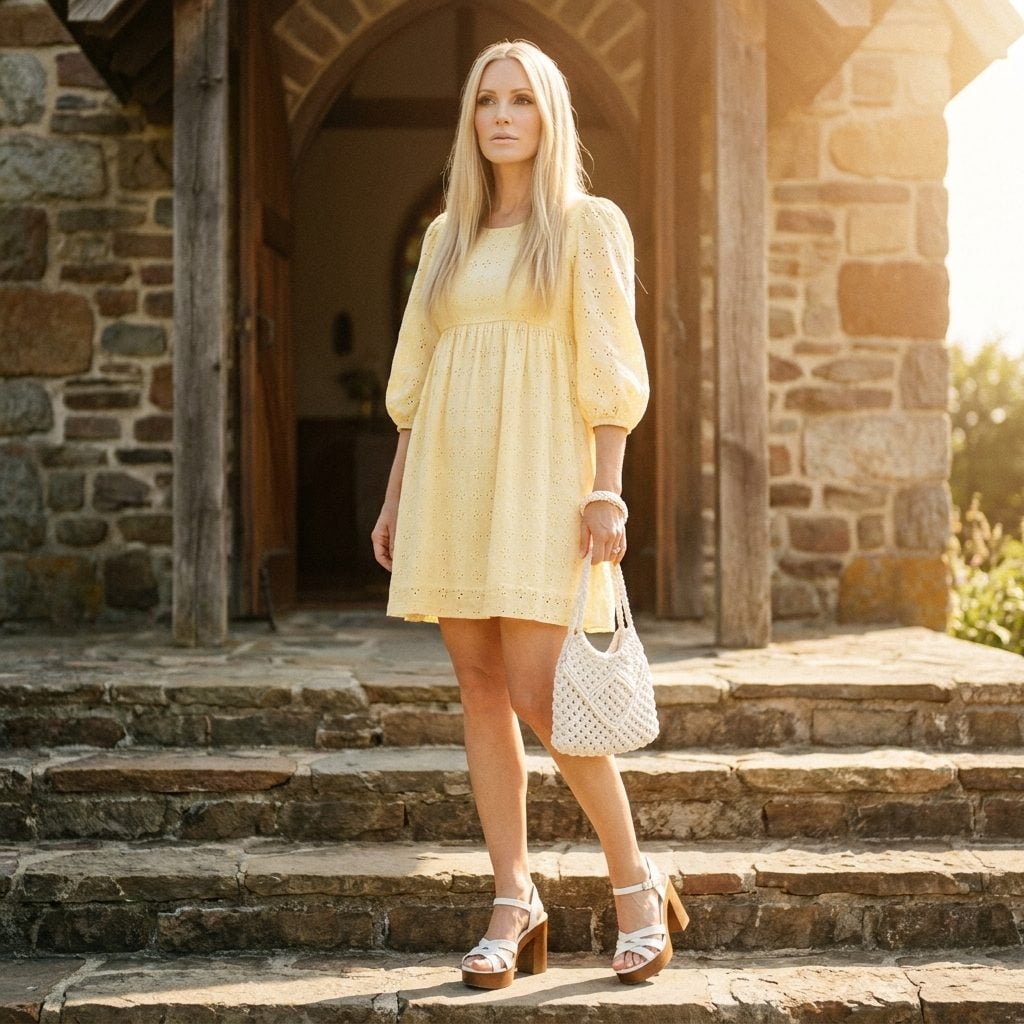
There was a four-year window in the early-to-mid seventies when adult women decided the silhouette of a six-year-old flower girl was, in fact, an aspirational look for formal occasions. Empire waist. Puffed sleeves. Skirt that billowed away from the body and landed mid-thigh. White eyelet or pale cotton lawn, ideally. The look was pure babydoll, worn earnestly to someone’s wedding with white platform sandals and a macrame bag.
It tracks, in a way. The late sixties had delivered the micro-mini, and the early seventies were still in the afterglow of youth-obsessed fashion, everything feminine was meant to read as girlish. The bride spent six months planning her gown, and her college roommate showed up looking like a very tall toddler. Nobody thought this was strange.
12. Gold Lamé Pants and a Sequined Tube Top: A Choice Made at 9 AM
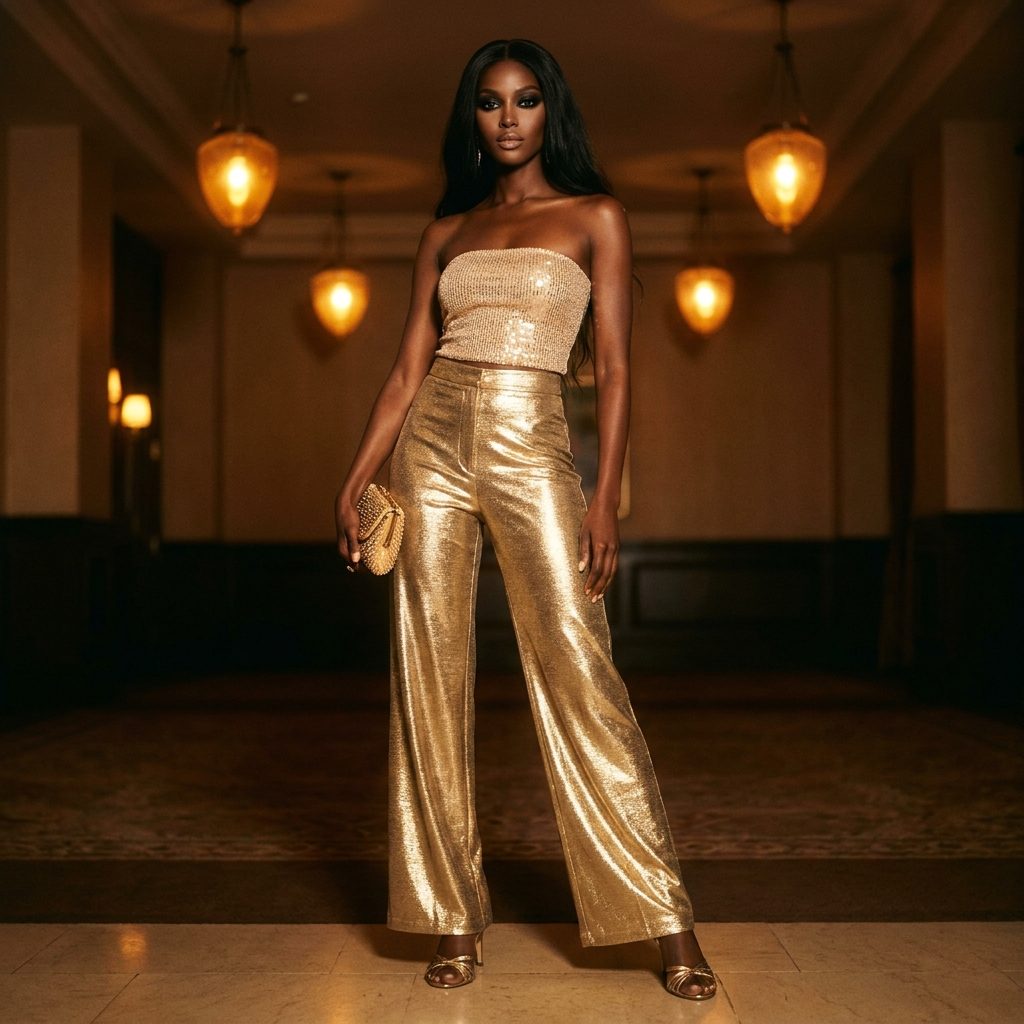
This outfit required no small amount of confidence. Gold lamé trousers, wide-leg, naturally, because every trouser was wide-leg, paired with a strapless sequined tube top, worn to a midday wedding ceremony with complete sincerity. The effect in a sunlit church was something like standing next to a disco ball while it slowly rotated.
Disco culture had fully colonized formalwear by 1977, and the line between “reception at the Ritz” and “Saturday night at Studio 54” was basically nonexistent. Guests dressed for the afterparty before the ceremony. The bride, in white satin, stood at the altar flanked by approximately six women who were significantly more aggressively shiny than she was. It was a different time. A very sparkly time.
11. Smocked Bare-Midriff Tops at a Formal Wedding Ceremony, No Notes
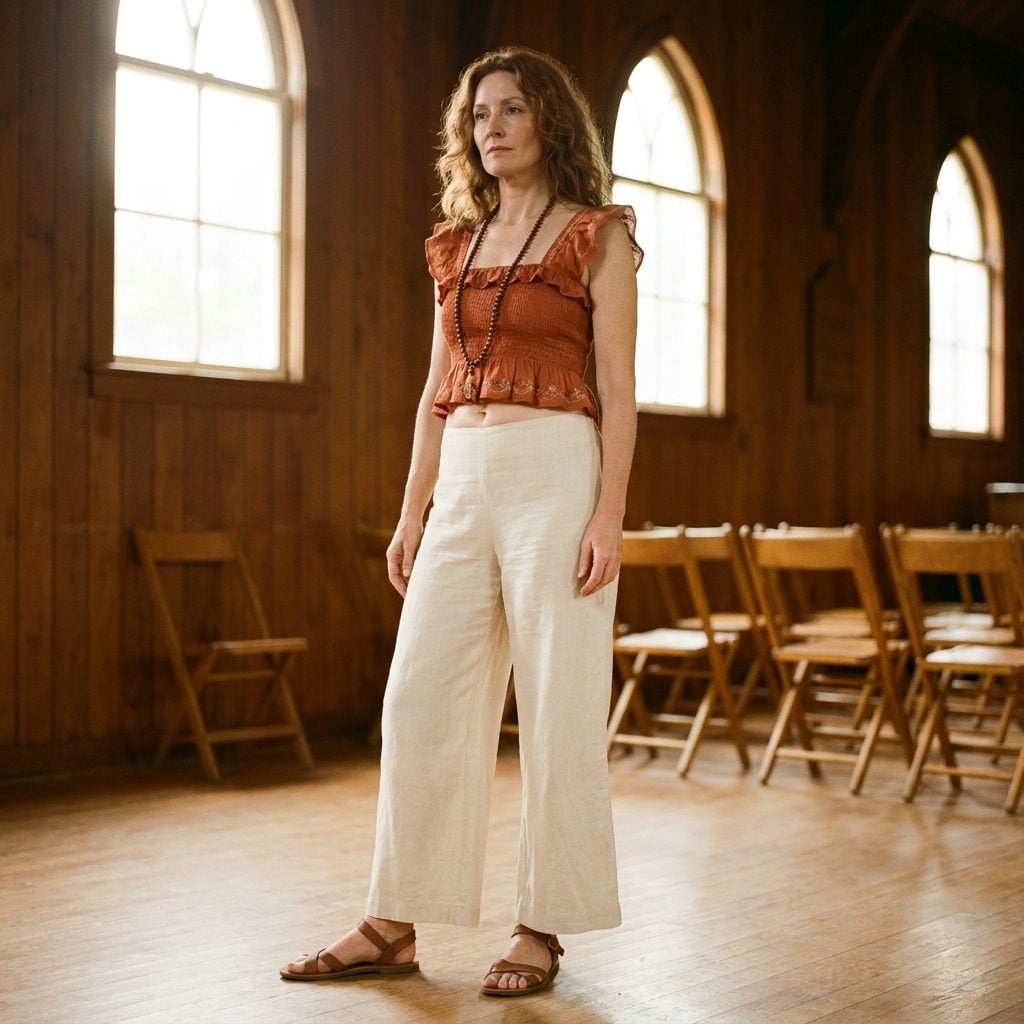
Smocked tops deserve more credit as an architectural achievement. All those tiny pleats, gathered and stitched by hand or machine into an accordion of fabric that sat perfectly across the bust and then, just stopped. Ended. Left a full two or three inches of torso available for open air. And someone decided to wear this to a church ceremony and sit in a pew and receive communion and nobody said a word.
The seventies made a sincere case that the midriff was a natural part of any occasion. Summer wedding in June? Midriff. Evening reception at a country club? Midriff. The smocking gave it a handcrafted, artisanal quality that somehow read as dressed-up. The high-waisted trousers were doing the heavy lifting in the “formal” department. Everything else was vibes.
10. Suede Fringe Jackets With Bell Sleeves at the Ceremony (Front Pew, No Less)
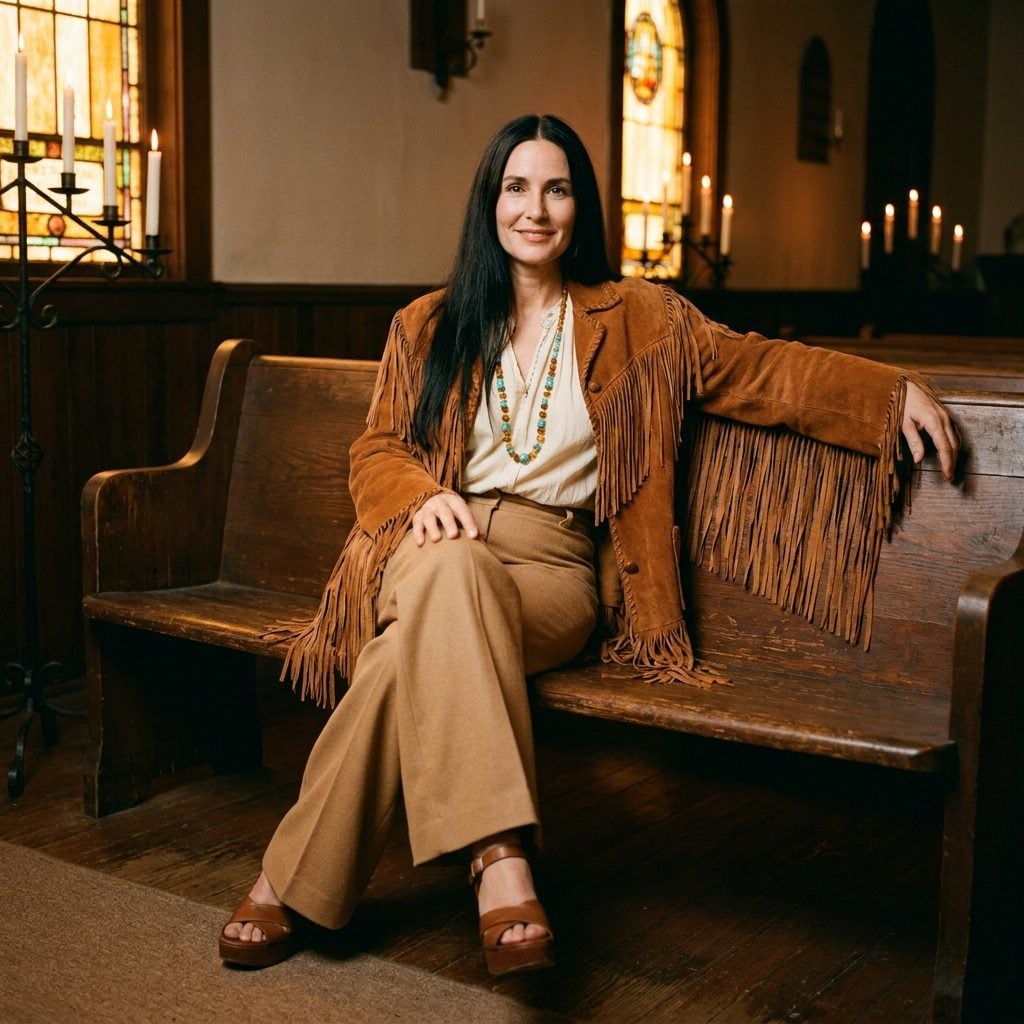
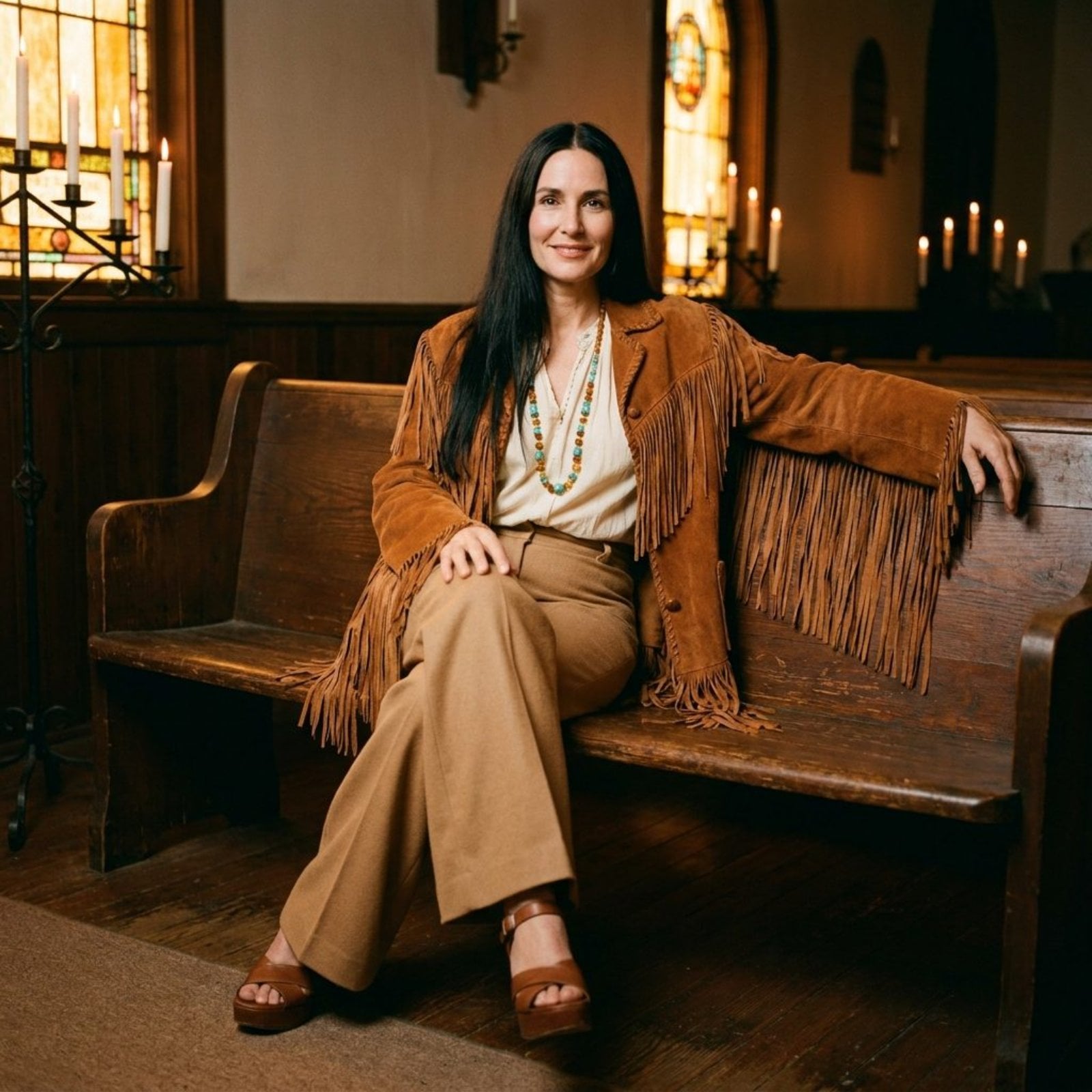
Every movement produced sound. That was the thing about fringe jackets that nobody discusses: they were kinetic instruments. Walking down the church aisle to find your seat created a soft swishing percussion. Sitting down in the pew sent a cascade of fringe over the wooden back. Reaching for a program shook the bell sleeves like a very quiet tambourine. The bride walked in and the front two rows of guests rustled in unison.
The suede fringe jacket was rooted in the folk and Western revival that ran through early-seventies fashion, Joni Mitchell, Carole King, every woman at a 1972 music festival. By mid-decade it had migrated to wedding guest attire without anyone issuing a formal declaration. Cognac brown or natural tan, worn over a peasant blouse, treated as the height of dressed-up occasion wear. The fringe swayed through the entire ceremony and nobody asked it to stop.
9. Matching His-and-Hers Leisure Suits in a Shade of Mustard That Has Never Existed in Nature
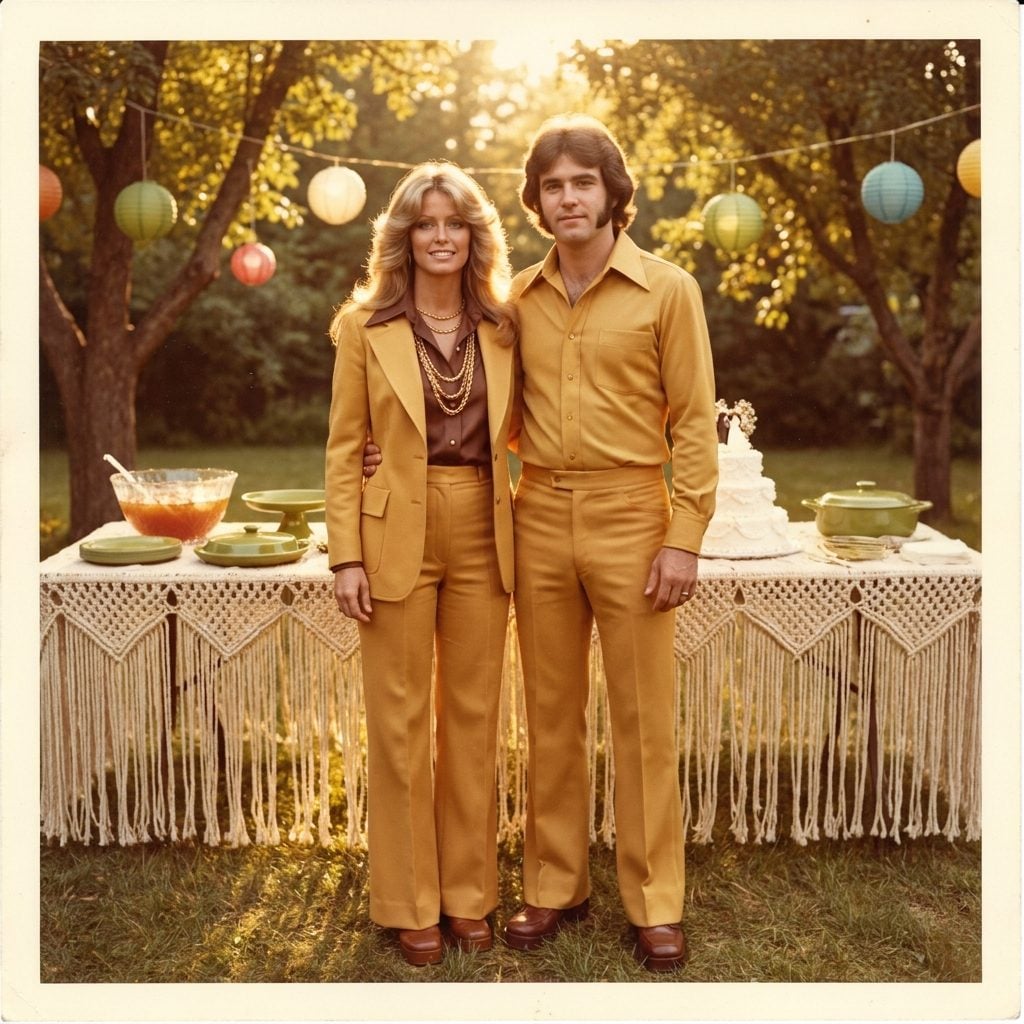
Couples dressing alike wasn’t cute in the seventies — it was a commitment, like co-signing a loan but with worse long-term consequences because at least a bad loan doesn’t show up in wedding photos for eternity. These his-and-hers wide-lapel leisure suits haunted every wedding reception between 1973 and 1978. The couples wearing them? Genuinely convinced they’d achieved continental elegance.
They had not. They looked like a pair of highlighters left on a dashboard in July. That particular polyester sheen photographed like a reflective safety vest, and the color occupied a cursed middle ground between gold and brown — the same shade appliance manufacturers were slapping onto refrigerators. Nobody blinked. Everyone just accepted it. That’s the part that haunts me most.
8. The Macramé Vest Over a Bare Chest, Which Was Apparently ‘Dressed Up’
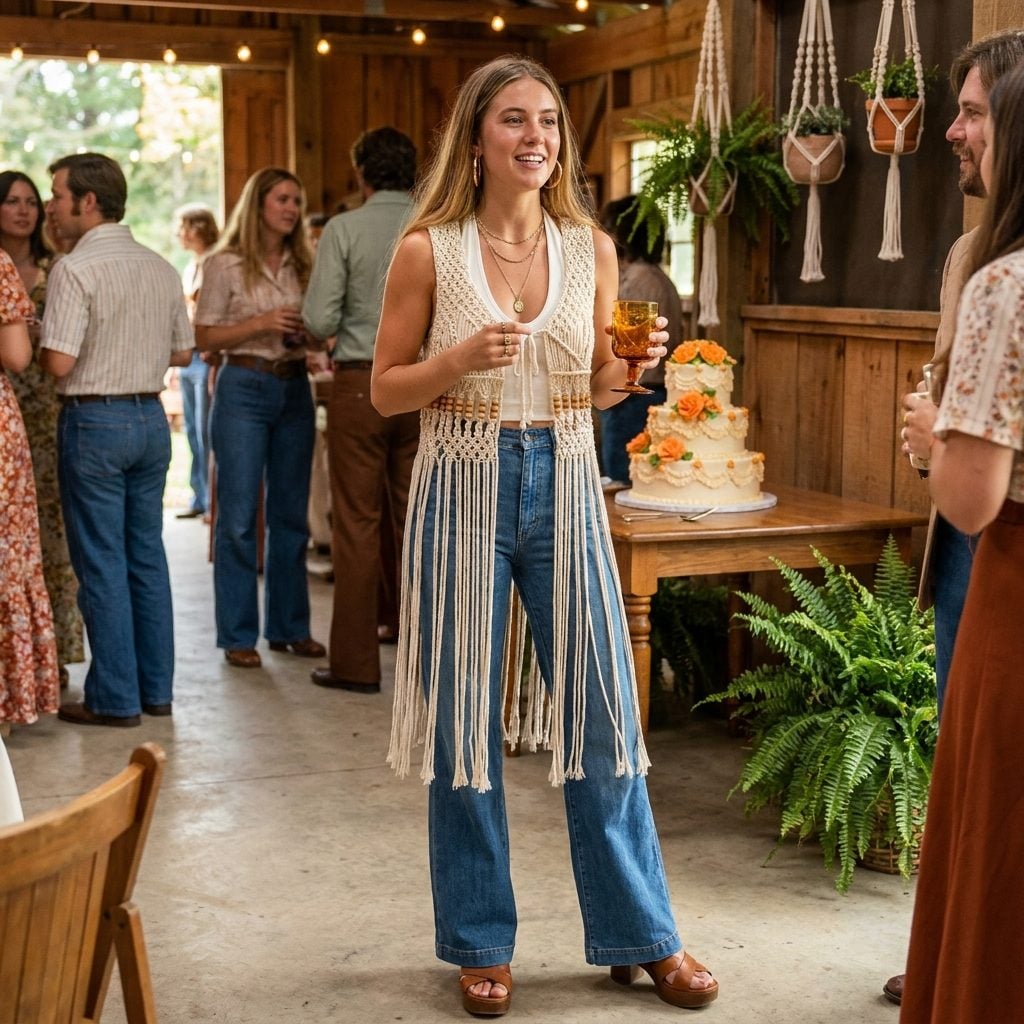
Half craft project, half garment, all audacity. The macramé vest demanded enormous amounts of knotting time and produced something with the structural coverage of a fishing net. Wearing one to a wedding with bare skin underneath read as bohemian rather than scandalous — which tells you everything about the decade’s relationship with formality.
Wooden beads added weight. Not coverage. And because the fringe swung with every movement, each photograph captured a slightly different state of accidental exposure. Someone’s aunt made these at a craft circle on Thursday nights. Someone’s aunt wore one to the ceremony on Saturday. Very often the same aunt — and honestly, good for her.
7. Earth-Tone Patchwork Skirts Sewn From What Appeared to Be Several Other Skirts
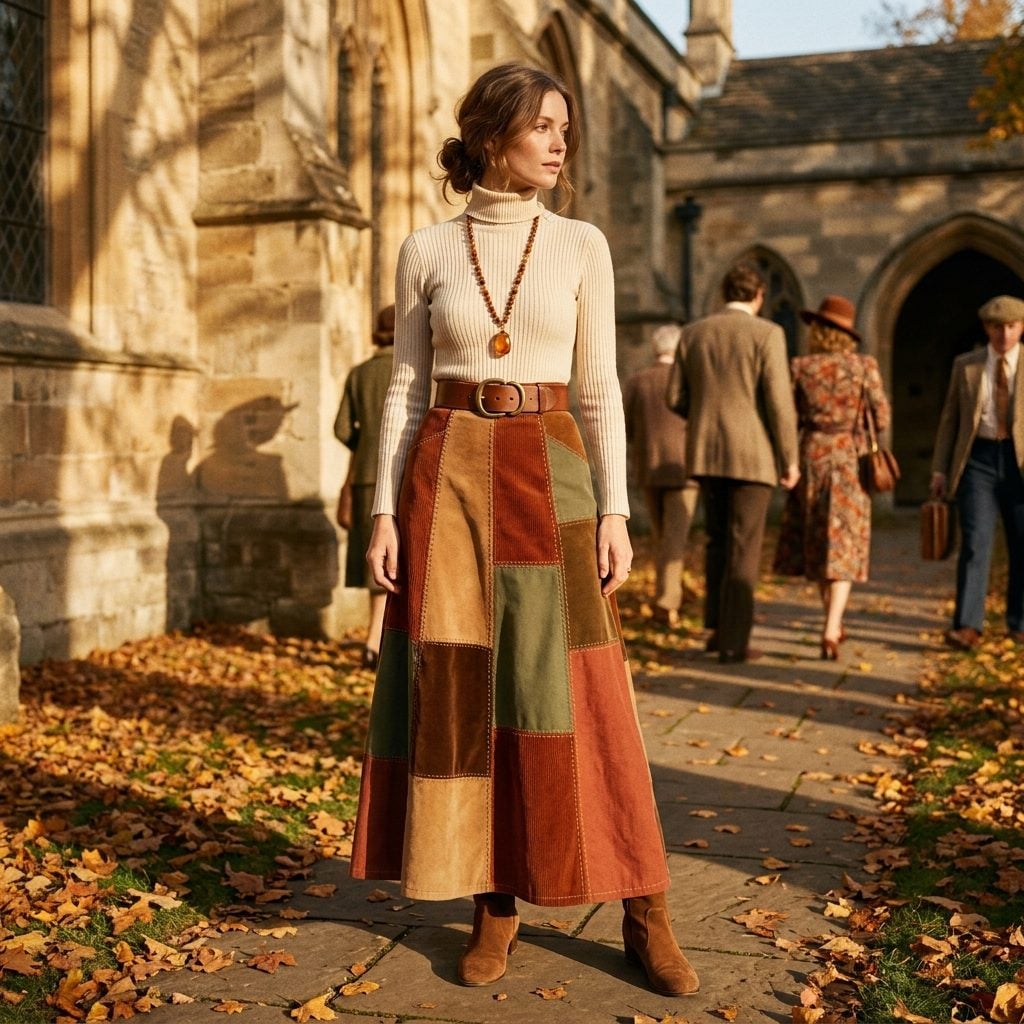
Resourceful or unhinged? The line was thin, and this skirt lived right on it. Floor-length, six or seven different earth-tone fabrics, each panel a different texture — corduroy butting up against velvet butting up against suede butting up against something that might have been salvaged from a set of drapes. The visible contrasting stitching announced “I made this” louder than any words could at the reception.
The whole outfit clocked in heavy enough to swing like a pendulum when you walked. People wore these with total sincerity, and I think about that a lot — the genuine pride in craft, individuality, a refusal to buy retail. Also a willingness to sit through a three-hour ceremony in a garment whose seams were held together by determination and not much else.
6. The Butterfly-Collar Shirt in a Floral Print So Loud It Registered on Seismographs
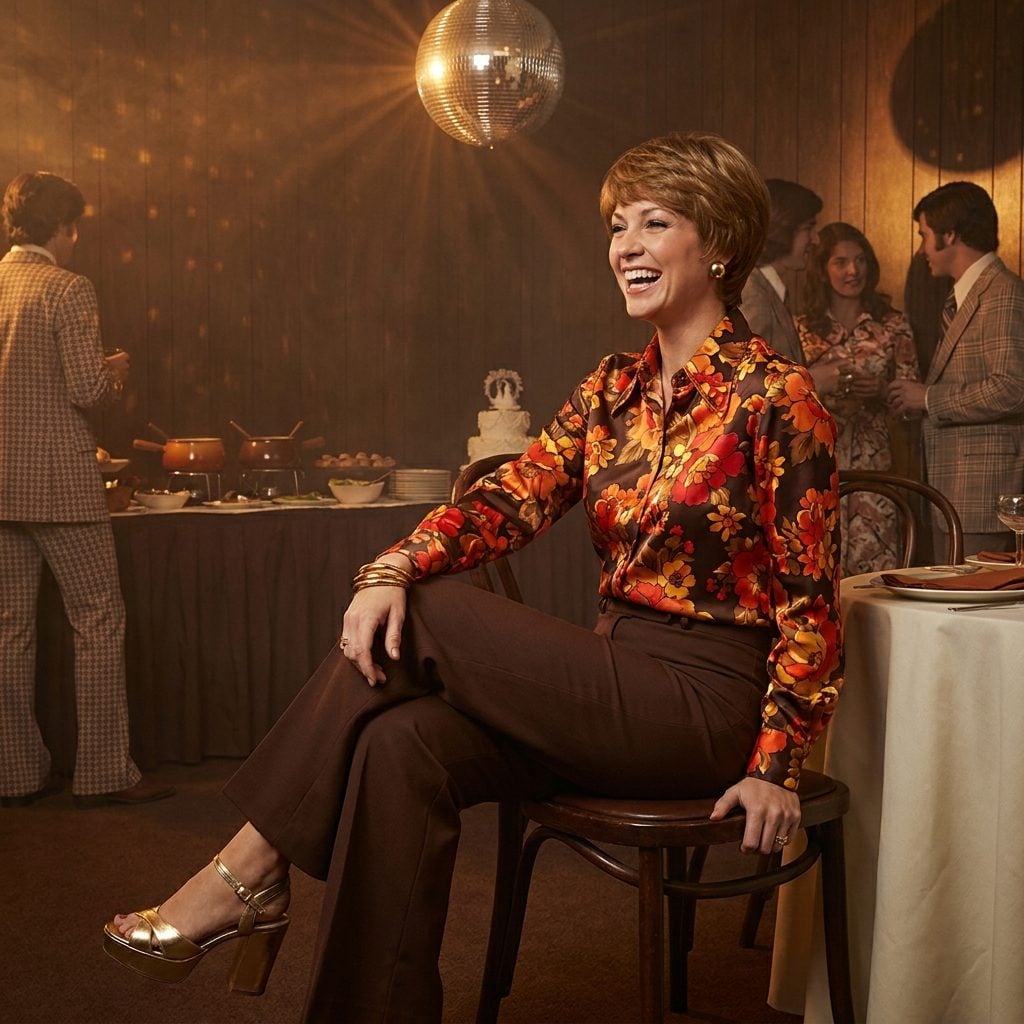
You could spot this shirt from across the fellowship hall before your eyes fully adjusted to the dim overhead lighting. The butterfly collar fanned out to roughly dinner-plate width on each side, and the print crammed fist-sized blooms — orange, red, yellow — across every square inch of brown background. The fabric had that polyester slickness that bounced fluorescent light straight into your corneas.
I say this with genuine affection: nobody in this decade could distinguish between “formal floral” and “upholstery sample.” Collar points nearly grazed the shoulders. The polyester locked in body heat with greenhouse efficiency. Tucked into brown wide-leg trousers, the whole look radiated the energy of someone who got dressed with enormous confidence and absolutely zero second-guessing. Which — honestly? Still kind of admirable.
5. Terry Cloth Everything, Including a Terry Cloth Halter Dress Worn to Someone’s Actual Nuptials
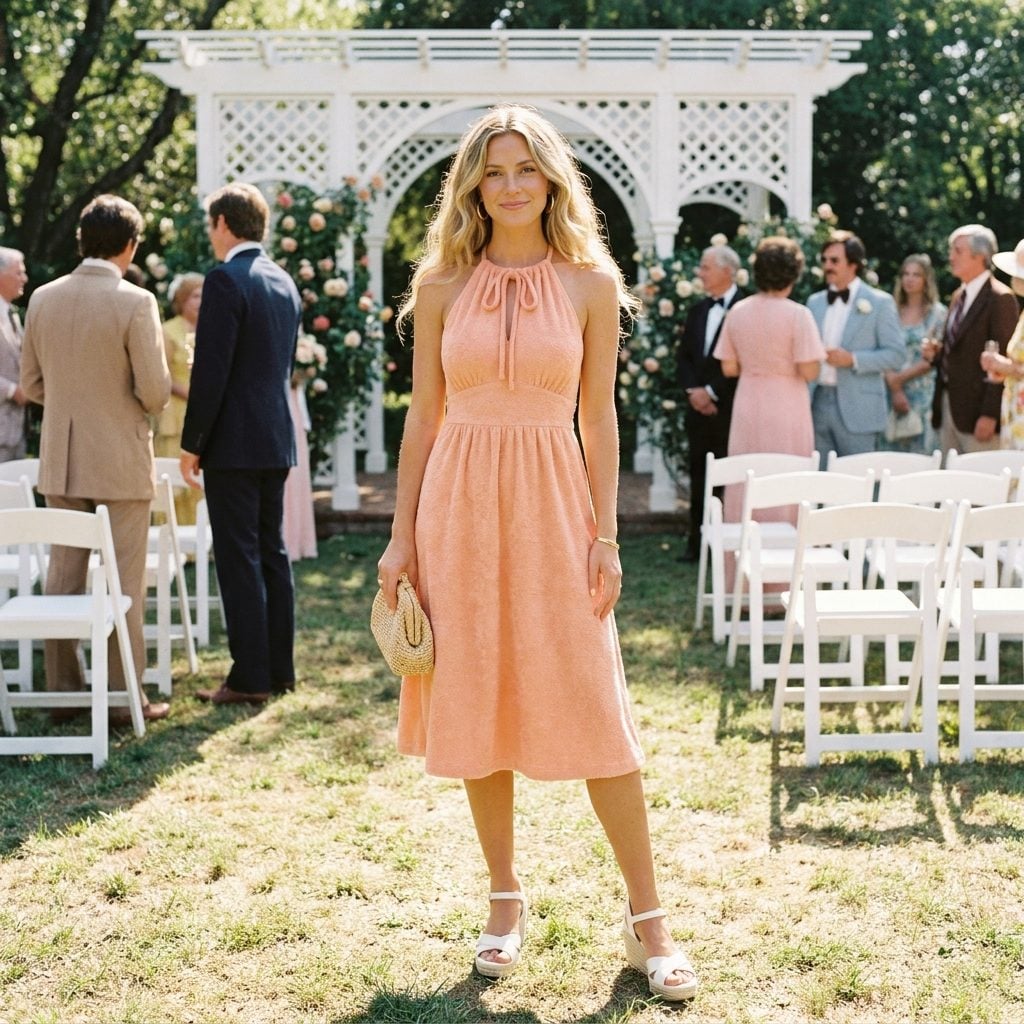
Towel fabric. At a wedding. Just — sit with that for a second.
The seventies sent terry cloth careening well beyond the pool deck and the locker room, launching this absorbent, loop-piled textile directly into formalwear territory with zero hesitation. A peach terry cloth halter dress was considered perfectly fine for a ceremony, and the wearer would add platform wedges and gold hoops as though the dress weren’t constructed from bath-mat material.
It photographed terribly and absorbed sweat in visible patches. Wrinkled the instant you sat down, never bounced back. But the comfort was real — nothing polyester could touch — and that probably explains why someone examined a bolt of terry cloth at the fabric store and thought, “Yes. Karen’s ceremony. Absolutely.” Comfort bulldozed logic. And look, I can’t throw stones. I’ve seen what we all wore in the nineties.
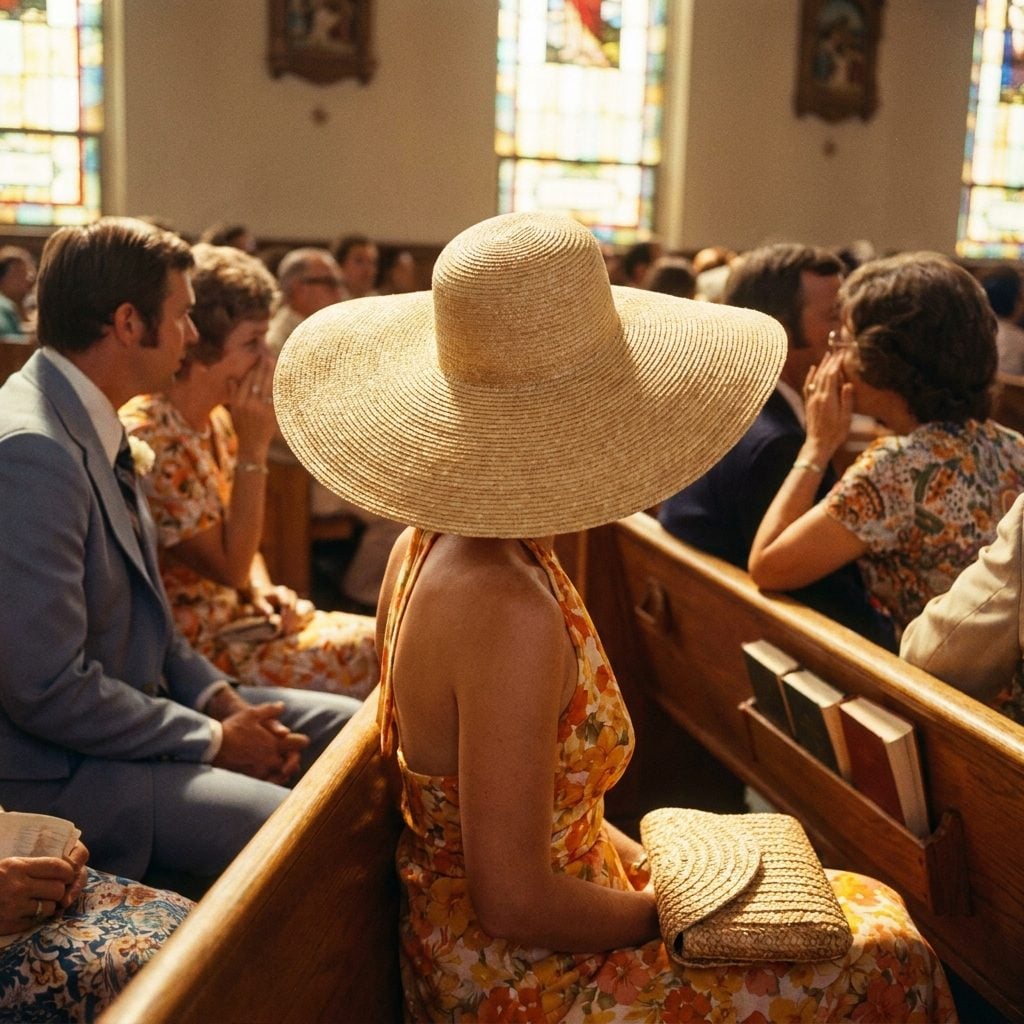
4. The Oversized Floppy Sun Hat Worn Indoors, During the Ceremony, Blocking the View of Everyone in Rows Two Through Seven
❤️ Would you like to save this?
Nobody asked her to remove it. That’s the part that kills me. She planted herself in the third row with a floppy straw hat wide enough to serve appetizers on, and the eight people behind her just accepted their fate — no usher intervention, no whispered request from a bridesmaid, nothing. She watched the entire ceremony in full sun protection, indoors, under fluorescent lights. Everyone else watched the back of her hat.
The 1970s treated hats like a constitutional right at wedding ceremonies. Bigger brim meant more dressed up. Period. The fact that you’d functionally become a human eclipse for the rows behind you? Not your concern. Not even a little bit.
3. Wooden Platform Clogs That Announced Your Arrival on Every Hard Surface Within a Quarter Mile
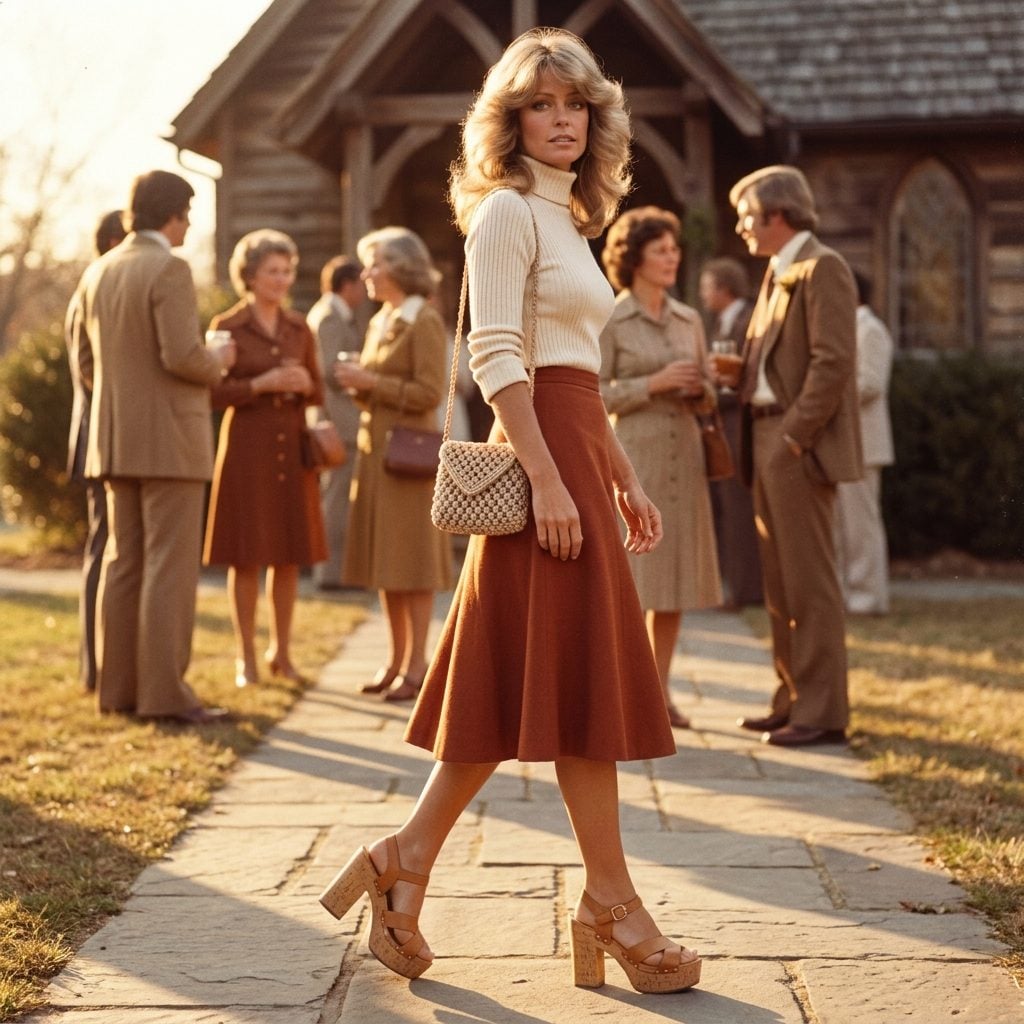
You heard them before you saw them. CLONK. CLONK. CLONK. Across the parking lot, up the church steps, down the aisle to claim a seat — wooden platform clogs turned every hard surface into a snare drum and every late arrival into a full production number. The bride’s processional music didn’t stand a chance against someone’s cousin navigating a marble floor in what were essentially small wooden stilts.
And yet. We adored them. All that solid wood underfoot made you feel invincible, even if walking on grass became a legitimate survival challenge — ankles wobbling, heels sinking, dignity evaporating. Worth it, apparently.
2. The Denim-on-Denim-on-Denim Situation That Someone’s Boyfriend Wore Like It Was a Three-Piece Suit
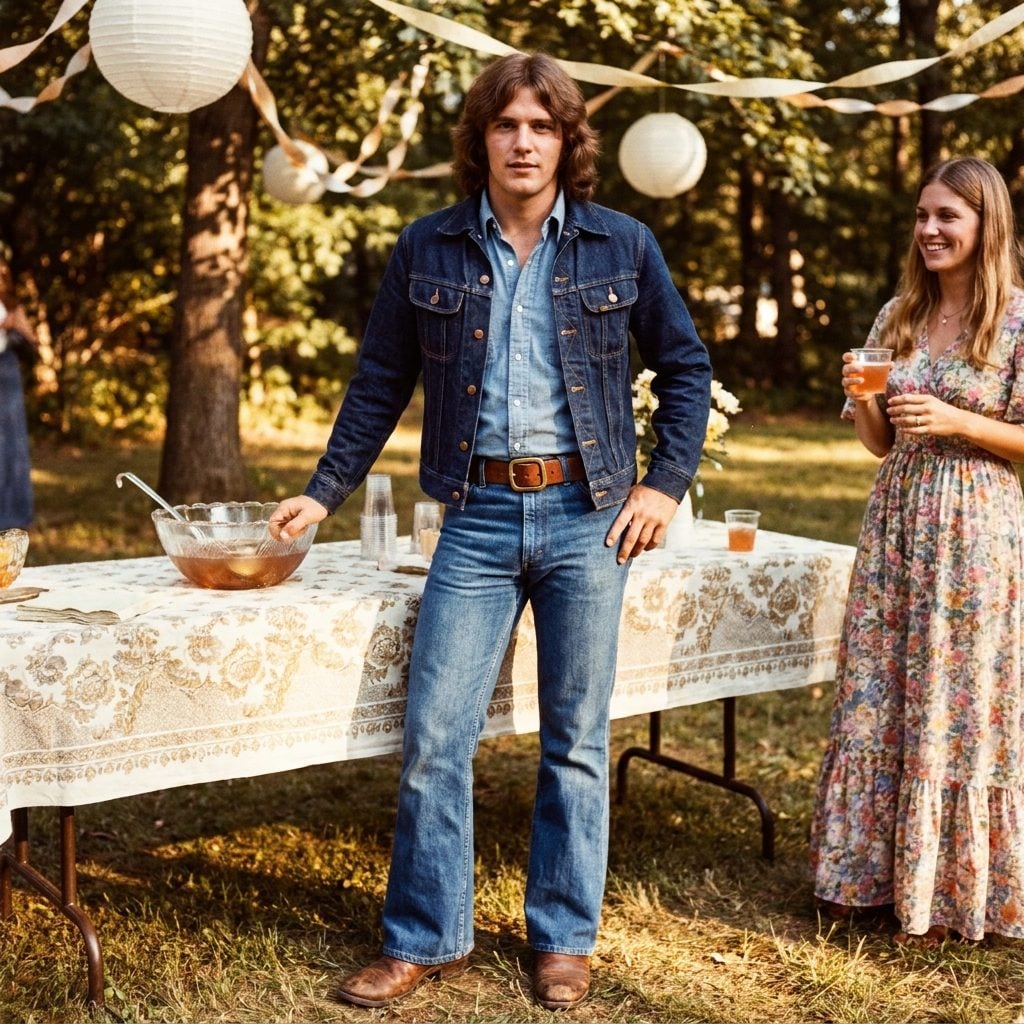
Three different washes of denim, and he genuinely believed he was dressed up. Dark jacket. Medium shirt. Light jeans. He’d created a denim gradient — intentionally — and from the look on his face, he was proud of it. Someone’s girlfriend had definitely said “you look fine” on the way out the door, and she will answer for that someday.
What makes it so good is that he thought this was appropriate. The brass belt buckle made it formal, in his mind. The boots “pulled it together.” The Canadian tuxedo wasn’t a joke in 1974 — it was a legitimate outfit choice, worn with full sincerity by men who owned zero ties and saw no reason to change that.
1. Wraparound Mirrored Aviator Sunglasses Worn for the Entirety of the Indoor Reception, Because Apparently Eye Contact Was Optional
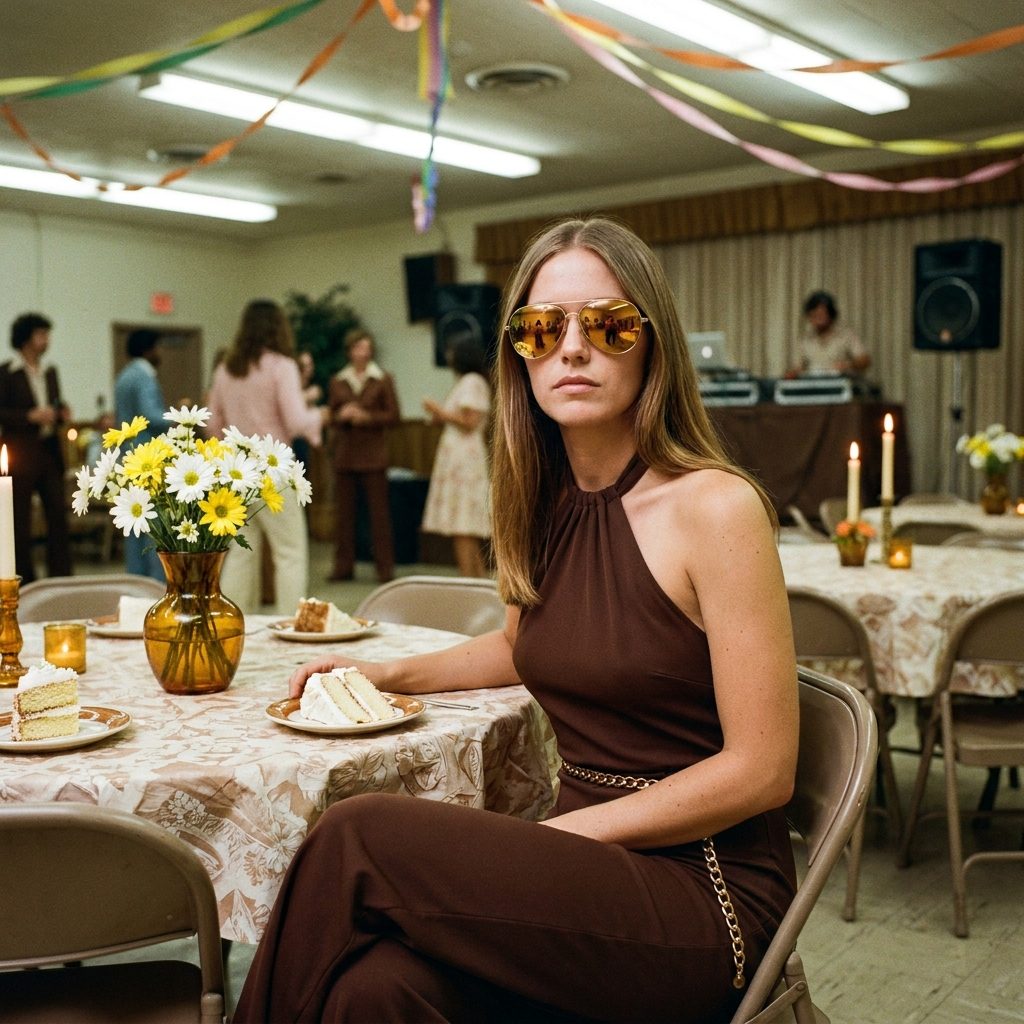
She never took them off. Not during dinner, not during the toasts, not during the first dance when the lights went down and she was functionally blind. The mirrored aviators stayed planted on her face because removing them would have meant being a regular person at a wedding — and she had zero interest in that.
Every single seventies wedding had one of these guests. Someone who treated indoor sunglasses like a whole personality. You couldn’t tell if she was watching the cake cutting or sleeping. Couldn’t gauge whether she approved of the groom. Couldn’t read a single thing, which — I have to assume — was the entire draw. The bride’s mother had opinions about it. Strong ones. She kept them to herself, mostly.
Today, aviators trail among our readers: asked which sunglasses they would buy, 49% chose cat-eye, 26% round and just 22% aviator.