❤️ Would you like to save this?
The Monday morning commute in 1963 smelled like Aqua Net and White Shoulders, and nobody showed up without gloves. Gloves. To type memos. There was a whole architecture of getting dressed for work back then, a set of unwritten rules so rigid you could practically hear them. Every hemline, every hat pin, every carefully coordinated handbag told a story about who you were supposed to be. Pull up a chair. Some of this will make you furious. Some of it will make you miss it a little.
FYI, thanks to AI imagery software, we’re able to create very specific fashion and hairstyle examples to illustrate the points being made. In some cases, imagery is exaggerated to hammer home the point. Also, assume links that take you off the site are affiliate links such as links to Amazon. this means we may earn a commission if you buy something.
31. The Powder Blue Sheath Dress She Wore Every Single Tuesday
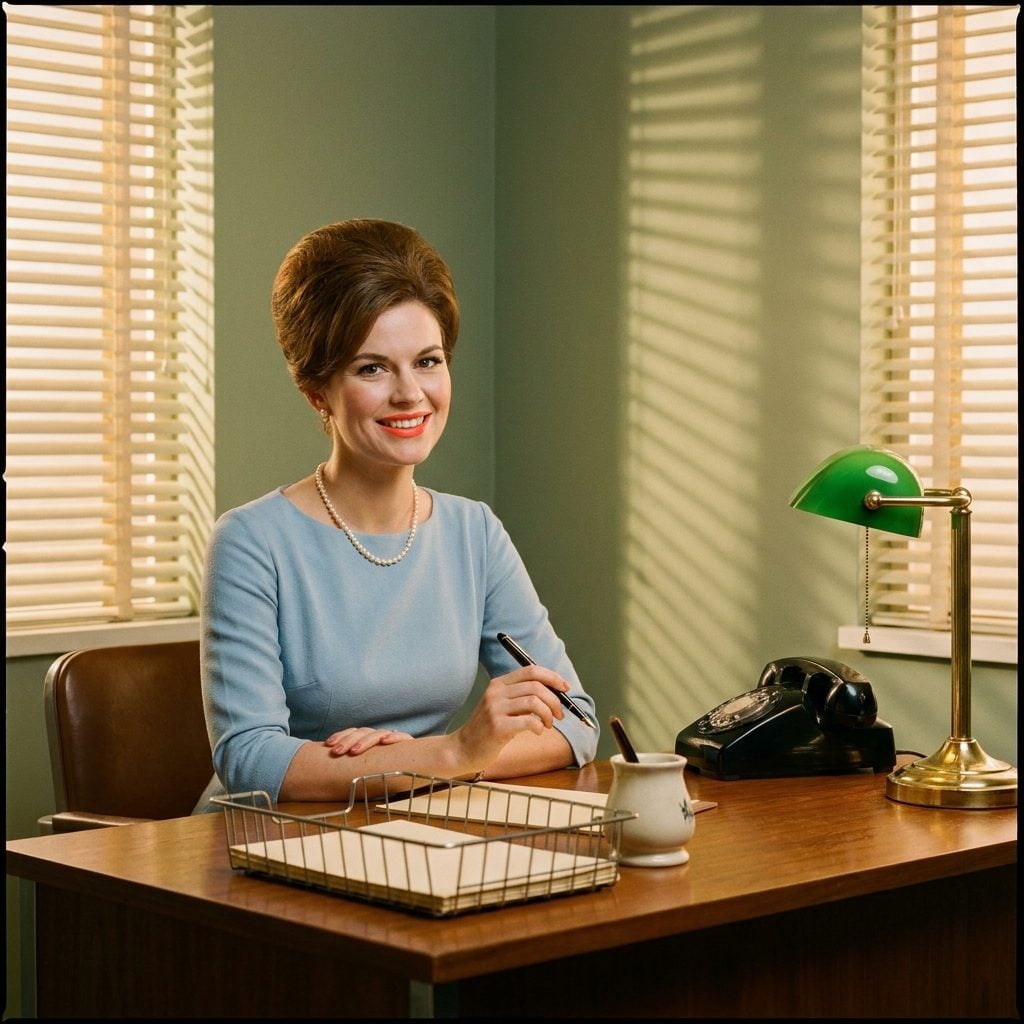
The sheath dress was the 1960s office uniform, full stop. You bought it in three colors, rotated them on a schedule, and dry-cleaned it once a week without question. Powder blue was the aspirational choice, professional enough for your boss, soft enough to seem approachable to the men who handed you things to type.
A single strand of pearl necklace was non-negotiable. Not two strands (too showy), not a pendant (too casual). One strand, knotted between each pearl, worn as if you’d been born with it on. Which, in a way, most of us had been told we should be.
30. The Pussy Bow Blouse That Made You Feel Like You Were Running Things (You Weren’t)
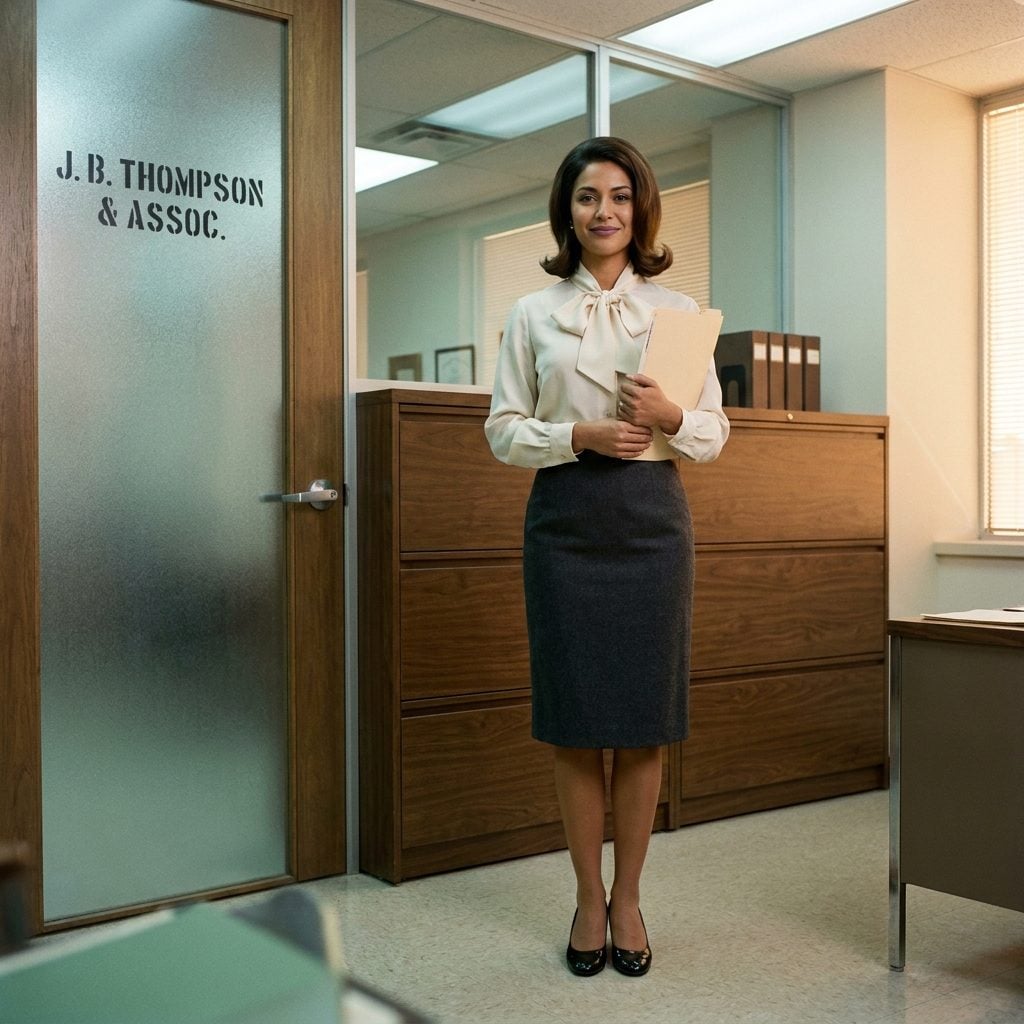
That bow wasn’t decorative. It was armor. You tied it at your neck every morning and told yourself it meant something about authority, about being taken seriously. The ivory bow blouse was the 1960s working woman’s equivalent of power dressing, years before anyone used that phrase.
Paired with a charcoal pencil skirt, it was the outfit you wore when you wanted the men in the room to remember your name. Whether they did is a different story entirely.
29. The Mustard Shift Dress With a Peter Pan Collar That Said ‘I Read Vogue’ and ‘I Take Shorthand’
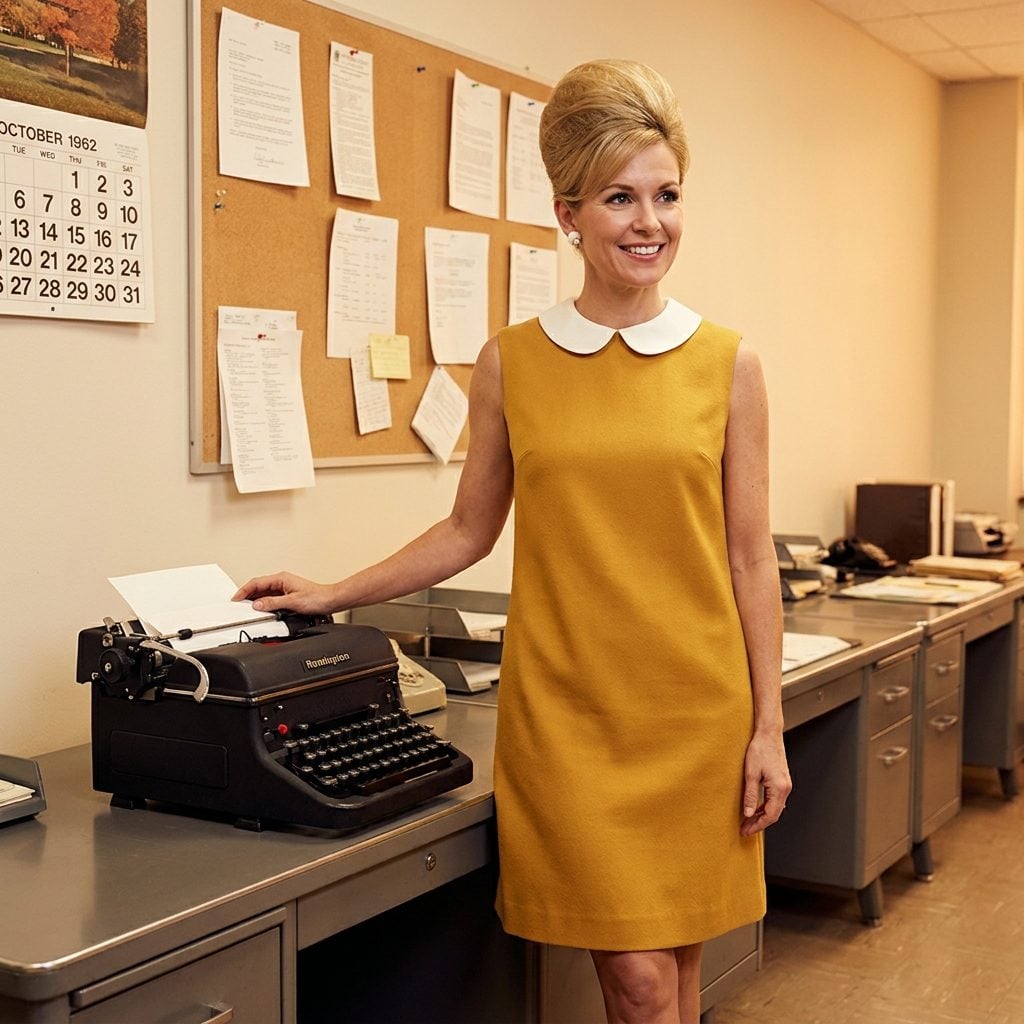
The shift dress was fashion’s gift to women who had to sit at a typewriter for eight hours without their waistband staging a revolt. No darts, no defined waist, no zip that crept down by 2pm. Just a clean rectangular silhouette that somehow managed to look intentional.
The Peter Pan collar was the detail that separated fashion-aware from merely dressed. And the mustard yellow? That was the color of a woman who subscribed to a magazine. The beehive on top of all this was essentially a crown. A very tall, very lacquered crown that could not fit under a car roof.
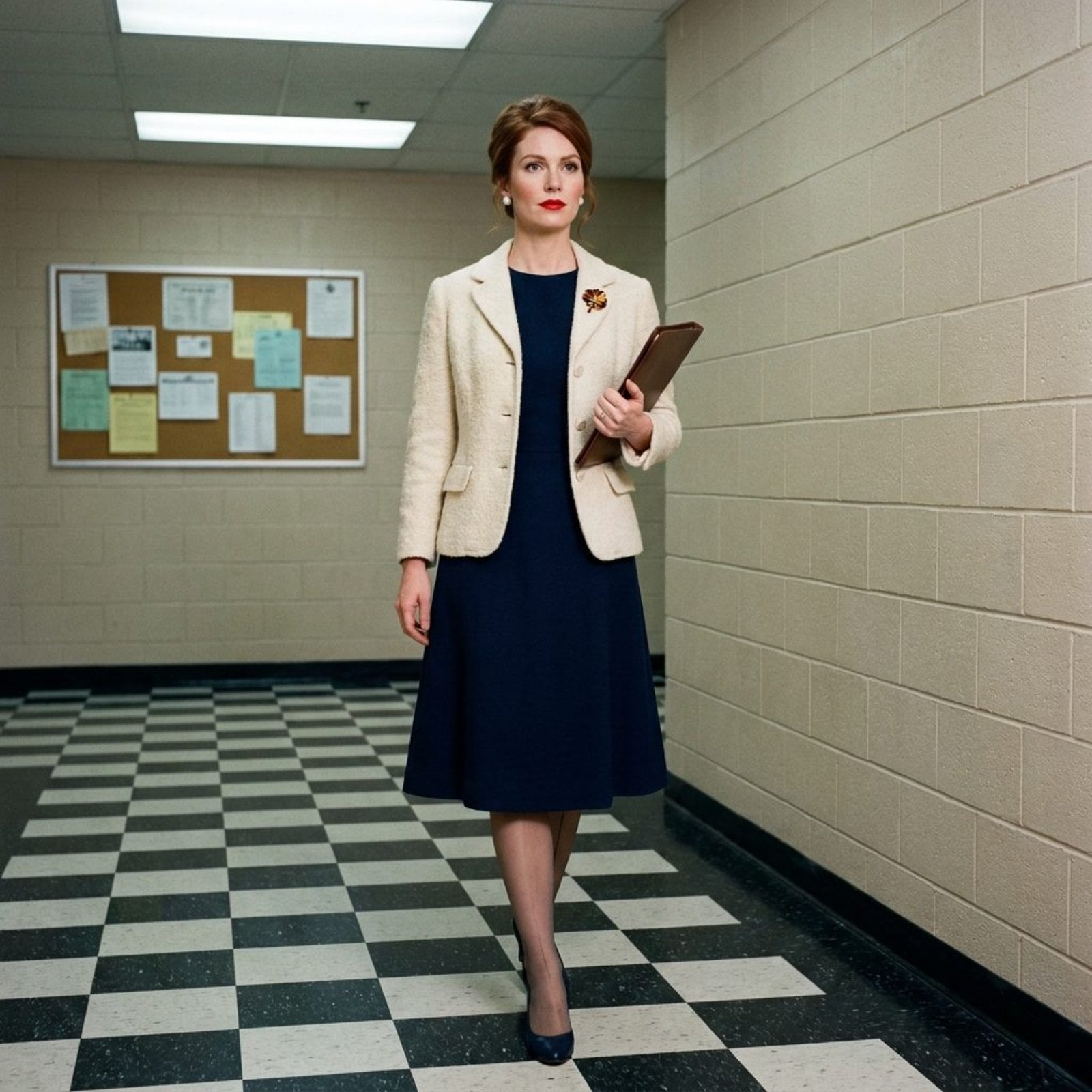
28. The Navy Boucle Skirt Suit That Meant You’d Made It to the Third Floor
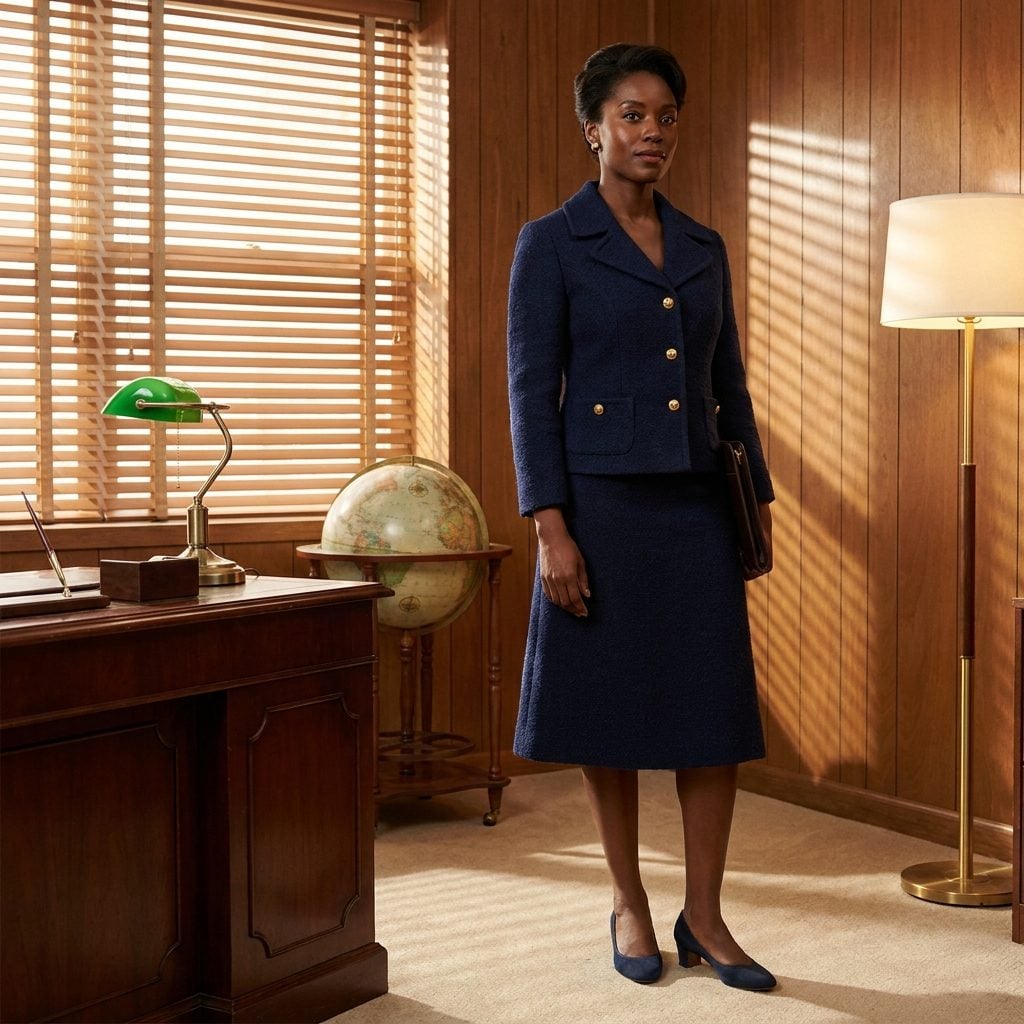
A boucle skirt suit wasn’t something you bought at your regular department store counter. You saved for it. You took it to the tailor to get the jacket sleeves shortened the exact right amount, three-quarter was modern, full-length was your mother’s suit, and the difference mattered enormously to you at the time.
Gold buttons, always. Not brass, not silver. Gold, because this suit was supposed to read Chanel from a distance even if it was a very generous approximation. The navy boucle suit with a French twist was the signal that you had been promoted, or were about to demand it.
27. The Coral Twinset You Wore When You Wanted Everyone to Think You Were Sweet (You Were Not That Sweet)
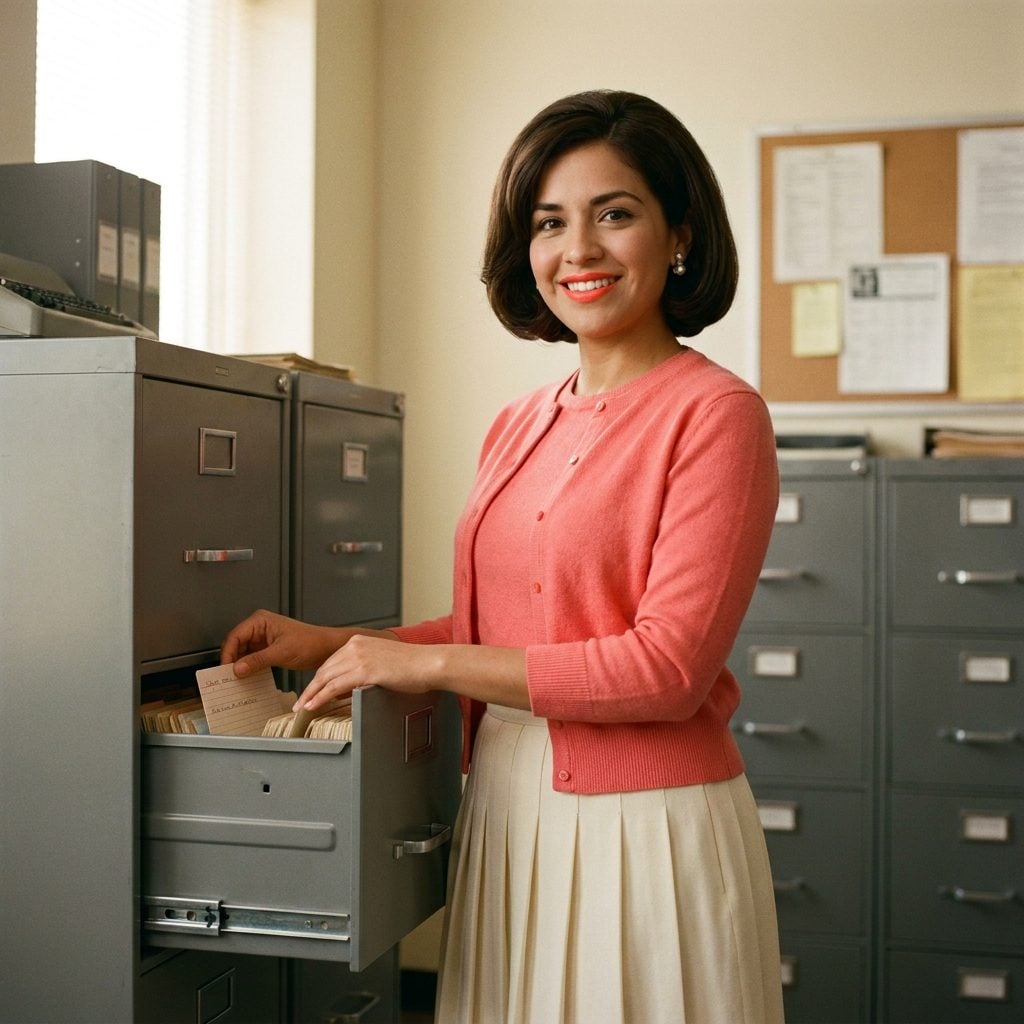
The twinset was strategic. It said: I am pleasant and approachable and will absolutely bring order to this chaos you call an office filing system. Coral specifically was the shade of a woman who had opinions about her appearance but wasn’t trying to start anything.
The thing about the twinset was the layering logic. Too warm at your desk? Remove the cardigan. Back to the conference room? Cardigan back on, instantly presentable. It was the original office layer system, and it worked better than anything we’ve come up with since.
26. The Emerald Green A-Line Dress That Was the Only Pop of Color in the Entire Building
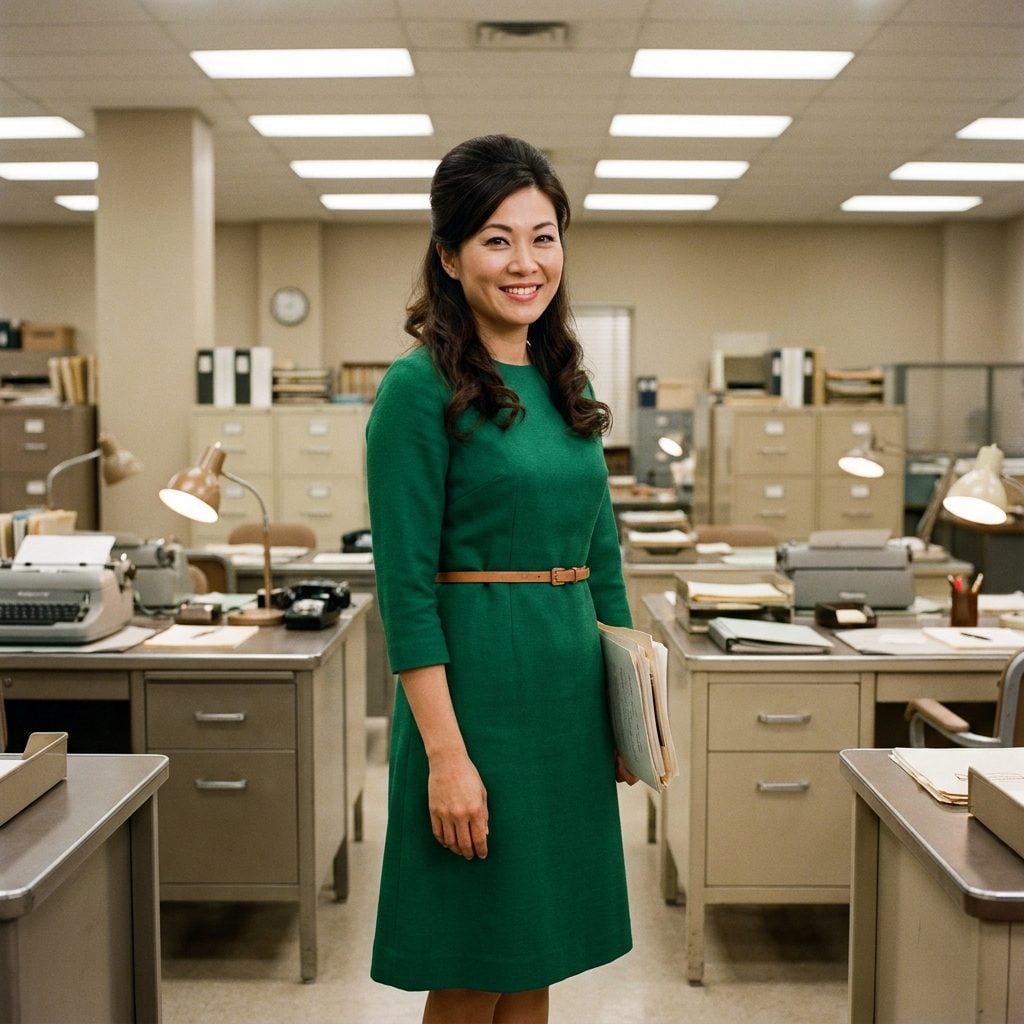
Every office had one woman who wore actual color, and she was immediately both envied and slightly mistrusted for it. An emerald A-line dress in a room full of navy, grey, and beige was a statement, even if the woman wearing it just liked green and didn’t think too hard about it.
The thin belt at the waist was the 1960s equivalent of accessorizing with intention. A dress without a belt was just a dress. Add a slim leather belt and suddenly you had a look. Women understood this distinction deeply and took it seriously.
“She’s the one in the green dress” was how you got remembered. And being remembered was the entire point.”
25. The Camel Skirt Suit She Wore in the Hallway Like She Owned the Whole Floor
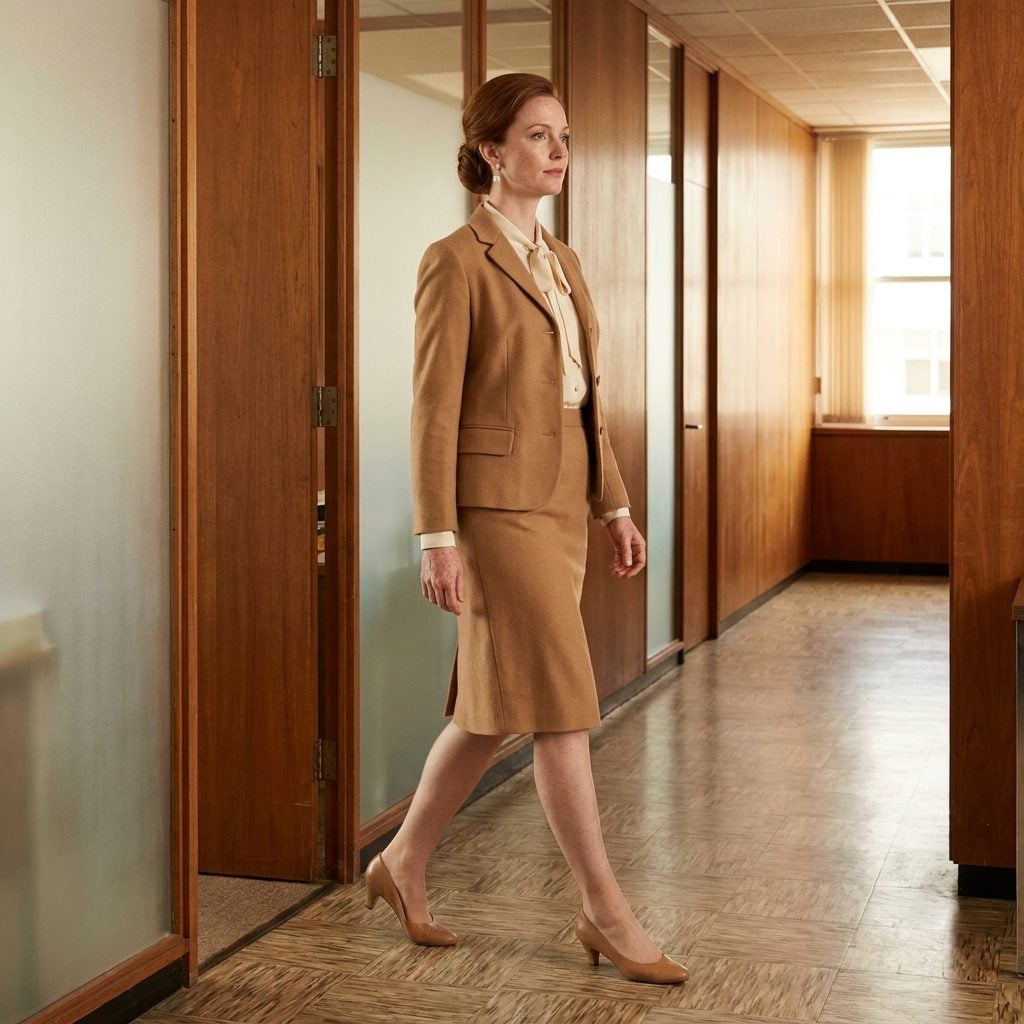
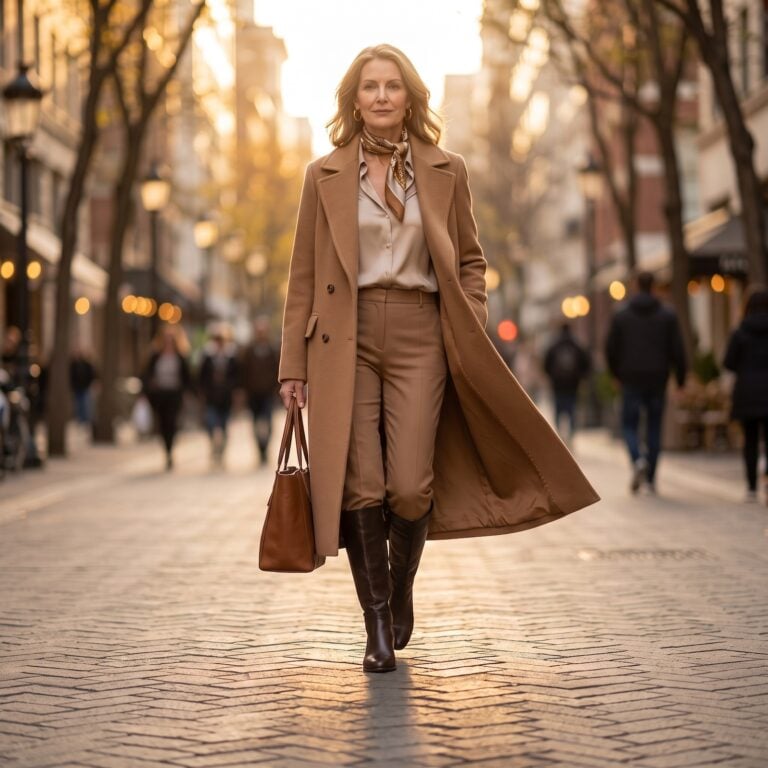
Camel was not a color for the timid. Every other woman in that hallway was in grey or navy, and there she was in warm camel wool, looking like she’d stepped directly out of a Saks Fifth Avenue window display and had somewhere important to be.
The cream silk blouse underneath did the real work: softening the lapels, adding a quiet gleam at the neck that justified skipping a necklace entirely. The camel wool suit was the choice of a woman with taste and the budget to match it, or the patience to save up for it one paycheck at a time.
24. The Houndstooth Shift and the Headband That Meant You’d Figured Out Your Whole Aesthetic at 22
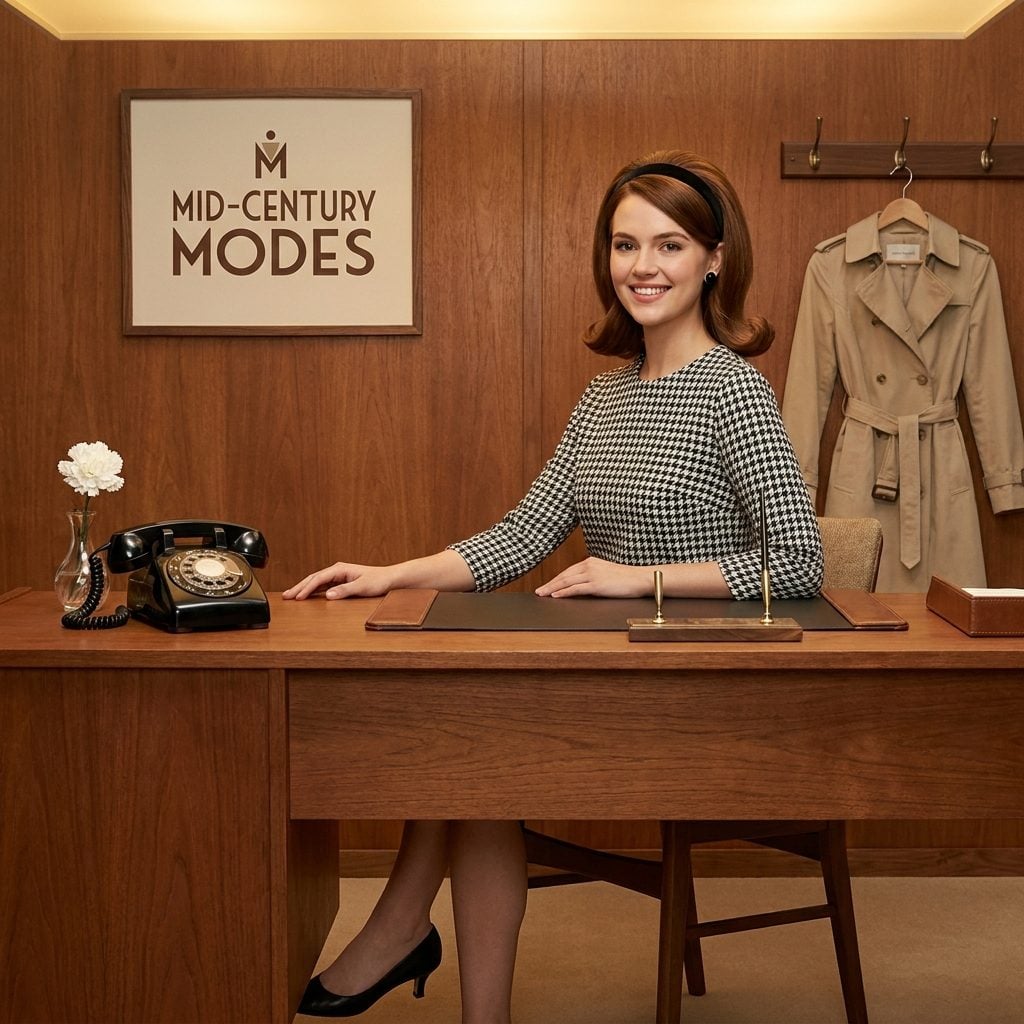
Houndstooth was the pattern that said I have done my research. Not floral, not solid, not a safe stripe, houndstooth, in black and white, perfectly scaled, cut into a shift and worn with a thin velvet headband like the whole thing required zero effort. It did not require zero effort.
The thin velvet headband was everything. It held the flip in place, added a graphic line across the crown, and cost about forty cents. The entire look, the houndstooth shift, the headband, the kitten heels, was the 1960s version of a woman who had a Pinterest board long before Pinterest existed. She just knew what she was doing, and everybody at that reception desk knew it too.
23. The Burgundy Sheath Dress and Brooch That Said ‘I Run This Floor’ Without a Word
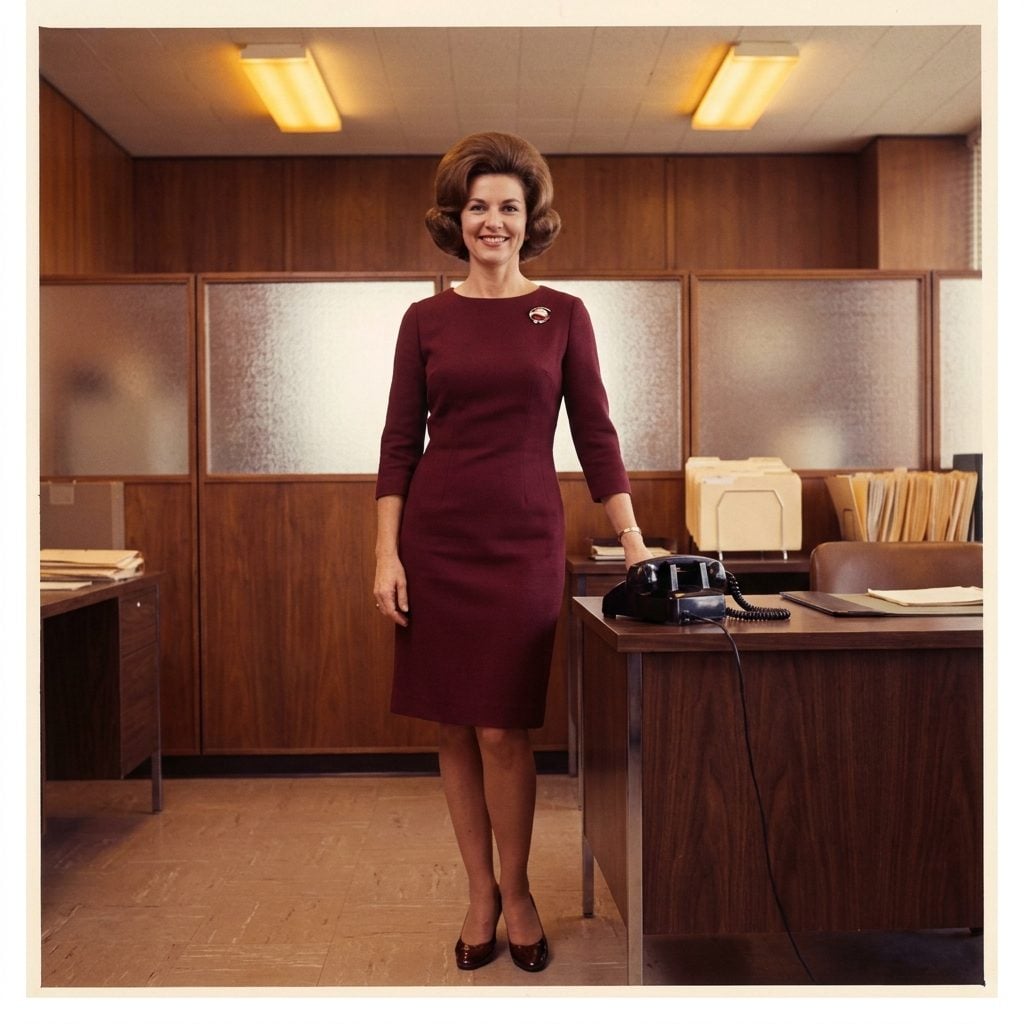
The sheath dress was not a fashion choice in the 1960s office, it was practically a burgundy sheath dress uniform. Fitted through the hip, modest at the neckline, always just below the knee. It communicated something specific: I am organized, I am professional, and I have absolutely typed thirty letters today already.
And the brooch. Every woman had one pinned somewhere on her chest, a gift from a relative, a find from the five-and-dime, or a very serious piece of costume jewelry she treated like a diamond. The brooch was the one concession to personality that the office dress code quietly allowed. A small act of self-expression within a very tight frame.
22. The Periwinkle Blouse and Grey Pencil Skirt Combo Nobody Questioned for Fifteen Years
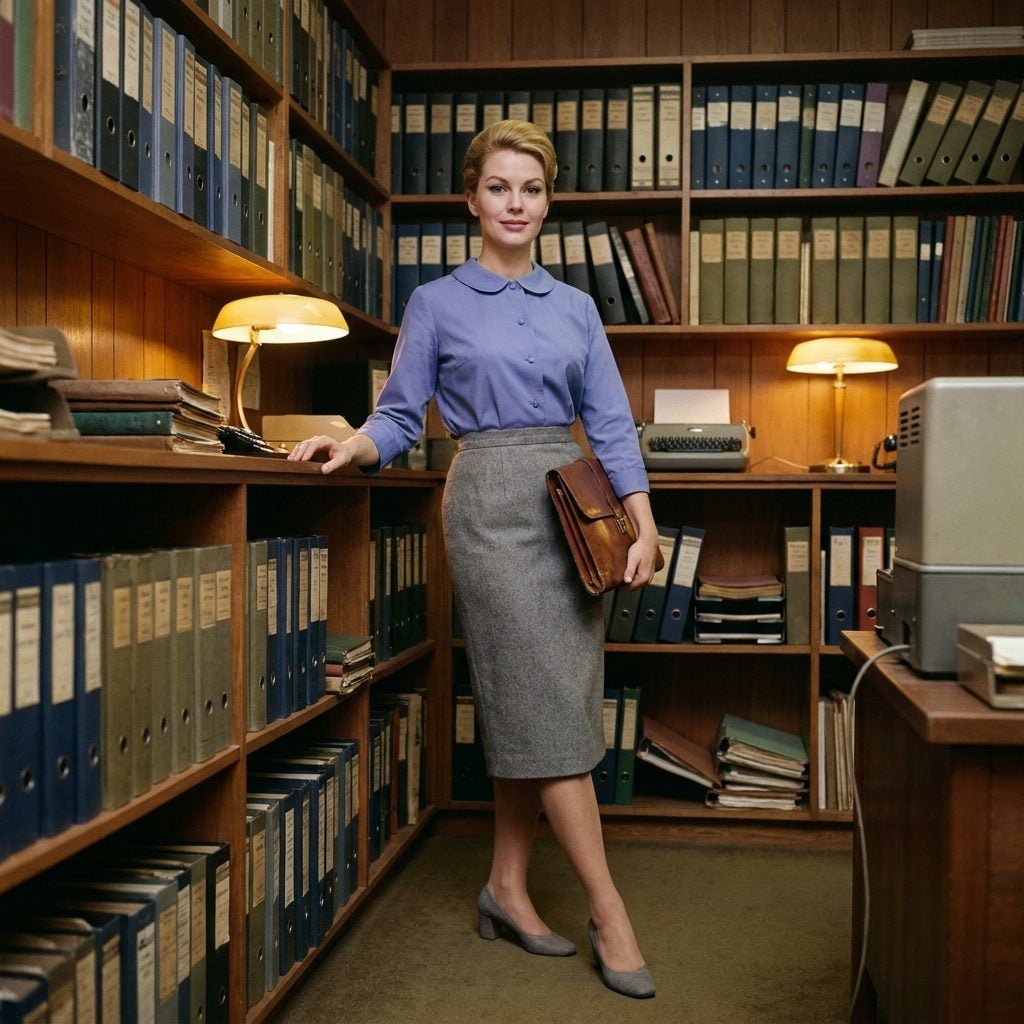
Somewhere between 1958 and 1969, the periwinkle-and-grey combination became the unofficial palette of the American office woman. The high-waisted grey pencil skirt did real structural work, it held everything in and projected an almost military neatness. Paired with a pastel blouse, it said “competent” and “pleasant” at the same time, which was frankly the whole job description.
The French twist was the finishing detail that made the whole outfit serious. It took twelve bobby pins, a jar of Dippity-Do, and ten minutes in the ladies’ room to achieve, and it lasted all day if you didn’t turn your head too fast.
21. The Forest Green Wool Dress With Front Buttons That Got Worn Every Single Tuesday
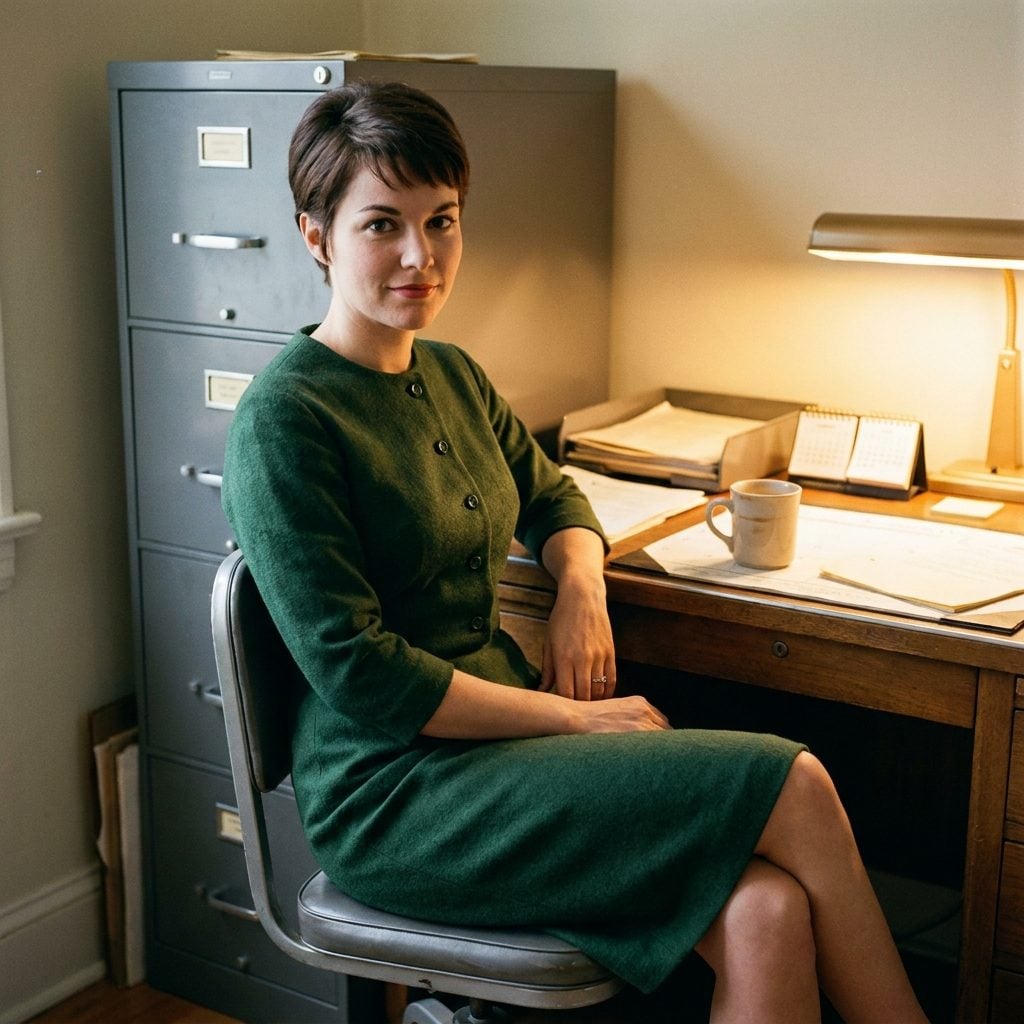
Wool dresses in the office were a sensory experience nobody talks about enough. Warm in December, suffocating by March, slightly scratchy at the wrists all year. But they held their shape beautifully, which in a decade before stretch fabric was a genuine technical achievement.
The button-front style meant the dress could theoretically be adjusted for temperature, though nobody actually unbuttoned anything above the waist in a professional setting. It was comfort theater. The forest green wool dress said “sensible” in the best possible way, earth tones read as serious, and serious was the entire goal.
The pixie cut was its own statement. In 1962, cutting your hair that short meant you had opinions about things, and people knew it.
20. The Pink Skirt Suit With Pearl Buttons That Every Secretary Saved Up Three Paychecks to Buy
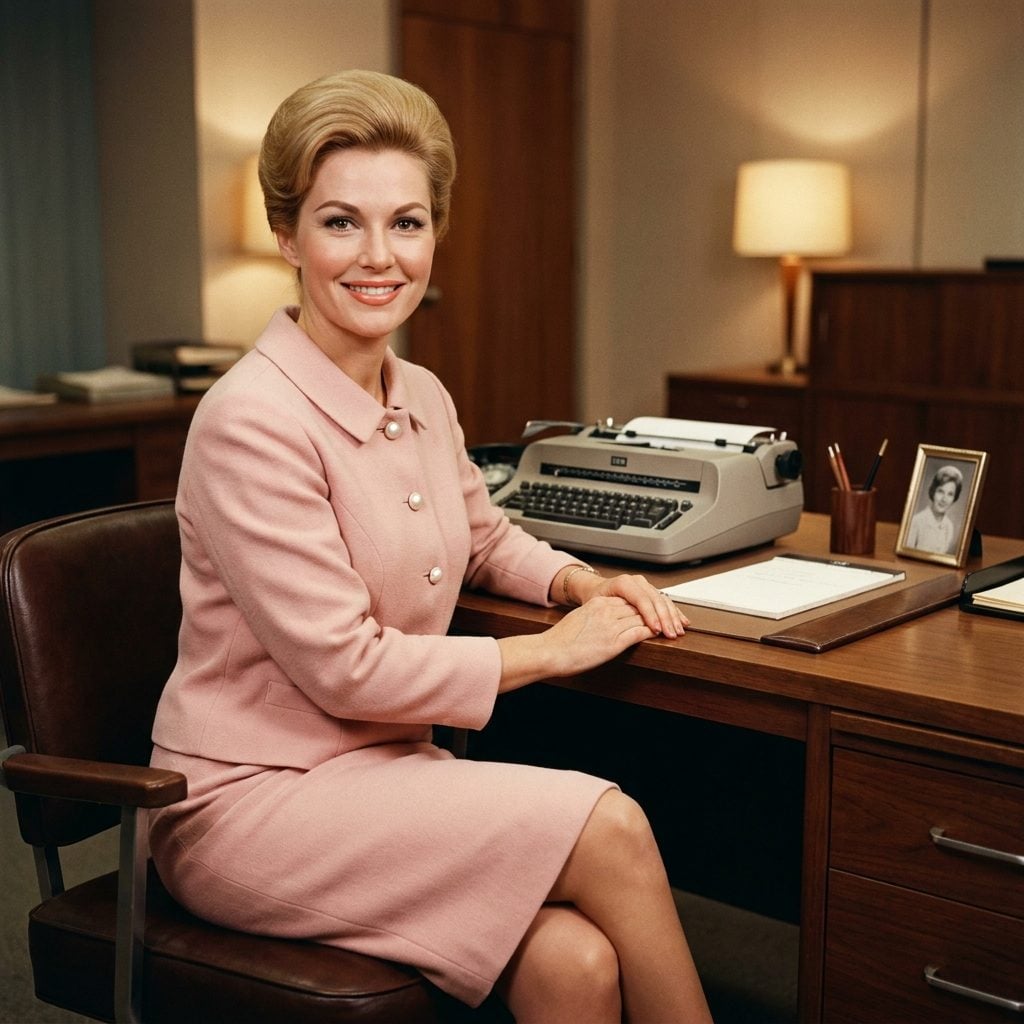
A matched suit in a soft pastel was the 1960s office woman’s version of power dressing. It sounds counterintuitive now, but showing up in a perfectly coordinated pink skirt suit communicated investment, in the job, in the appearance, in the whole project of being taken seriously within a very narrow set of rules.
Pearl buttons specifically were the detail that separated a suit you wore every week from one you saved for important days. Job interview. When the regional manager visited. The day you asked for a raise and knew it wasn’t going to go well but dressed beautifully anyway.
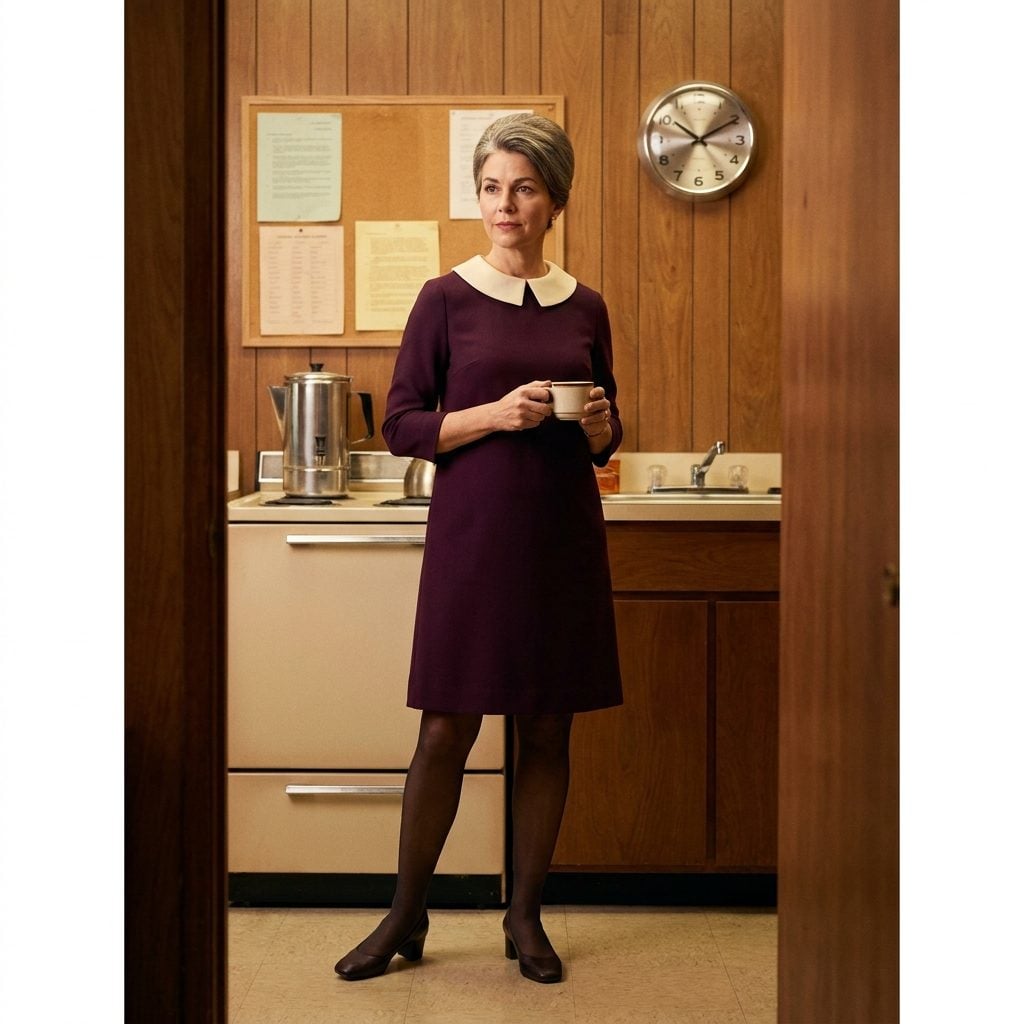
19. The Plum Shift Dress With the Wide Cream Collar That Made Every Woman Look Slightly Like a Headmistress
❤️ Would you like to save this?
The shift dress was the moment in the 1960s when fashion stopped trying to sculpt the female body and started dressing it like a well-designed rectangle. Liberating in theory. In a plum wool with a wide cream collar, it also looked a bit like a school uniform for adults, which nobody seemed to mind because the silhouette was genuinely comfortable.
The contrast collar was doing a lot of work visually, it framed the face, broke up the block of color, and added just enough decoration to keep the look from reading as stark. It’s the kind of detail that took real thought and got zero credit for it.
The beehive said: I have been here longer than you, and I will be here after you leave.
18. The Sky Blue Blouse Tucked Into a Navy A-Line Skirt, Worn With a Belt So Thin It Did Absolutely Nothing
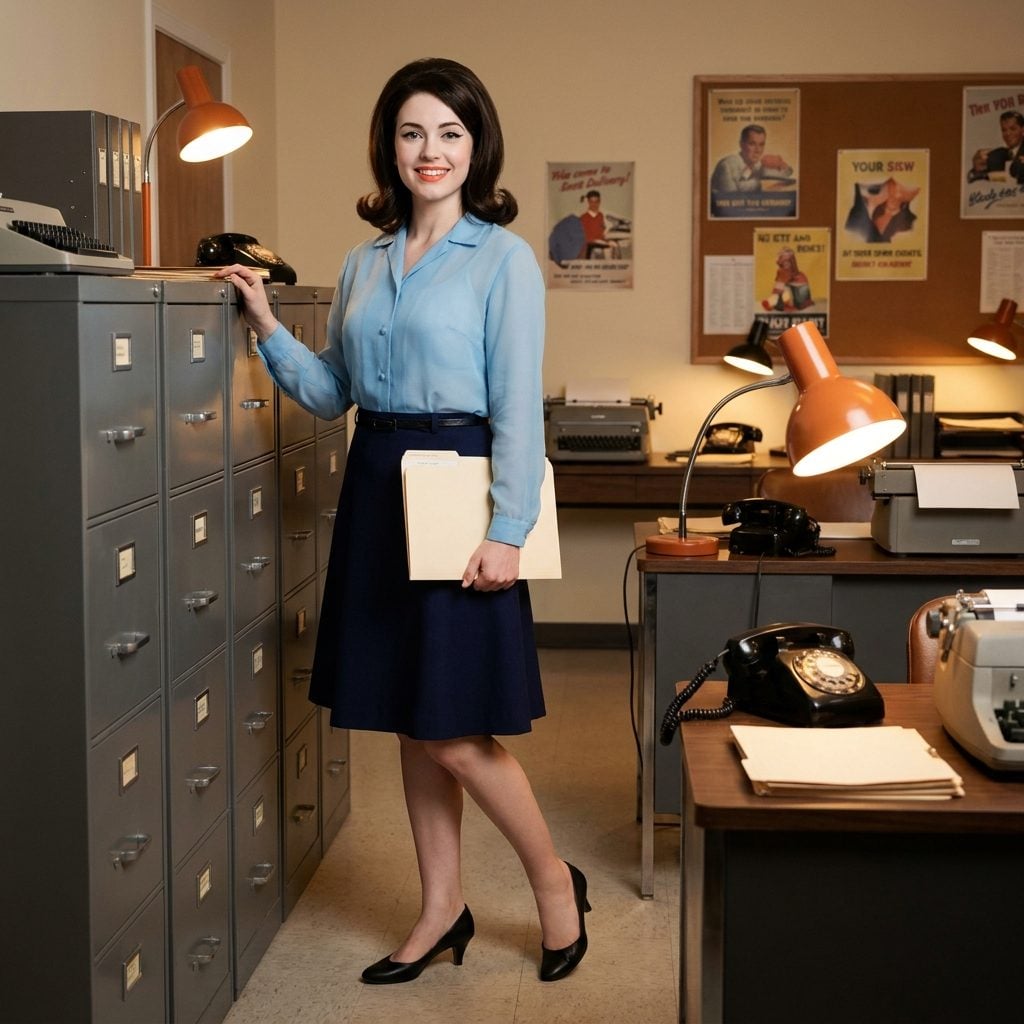
Tucking a blouse into a high-waisted skirt and adding a paper-thin belt was the 1960s equivalent of doing the most while technically doing very little. The navy A-line skirt gave you shape without the structural pressure of a pencil cut, which made it a favorite for anyone who spent the whole day seated at a desk and needed to be able to breathe at lunch.
The tonal blue combination, sky top, navy bottom, reads now as quietly sophisticated, but at the time it was just the easiest way to get dressed without thinking too hard before 7am. Not every outfit was a statement. Some were just a Tuesday.
17. The Chocolate Brown Sheath With Three-Quarter Sleeves That Somehow Survived Forty Years of Office Dress Codes
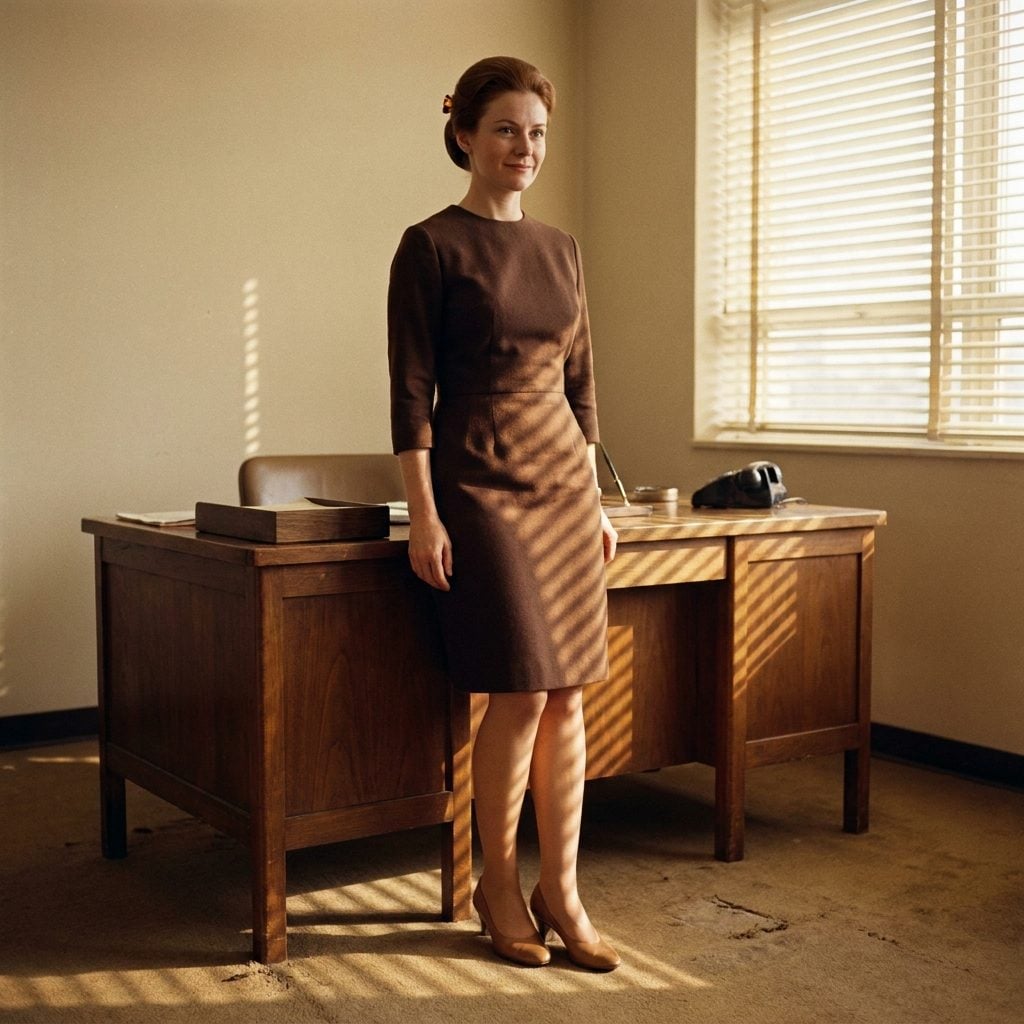
Brown was a serious color in the 1960s office in a way it almost never is now. Not khaki, not camel, deep, warm chocolate brown, which photographed beautifully in the era’s warm-toned film and looked authoritative under fluorescent light without being as harsh as black.
The three-quarter sleeve was the detail that made this dress a year-round workhorse. Long enough to look polished, short enough not to drag on anything. The brown sheath dress had no drama, no risk, no statement to make, which is exactly why women who had actual work to do wore it constantly.
16. The Bow-Neck Blouse and Tweed Pencil Skirt That Was Every Ambitious Woman’s Quietly Defiant Uniform
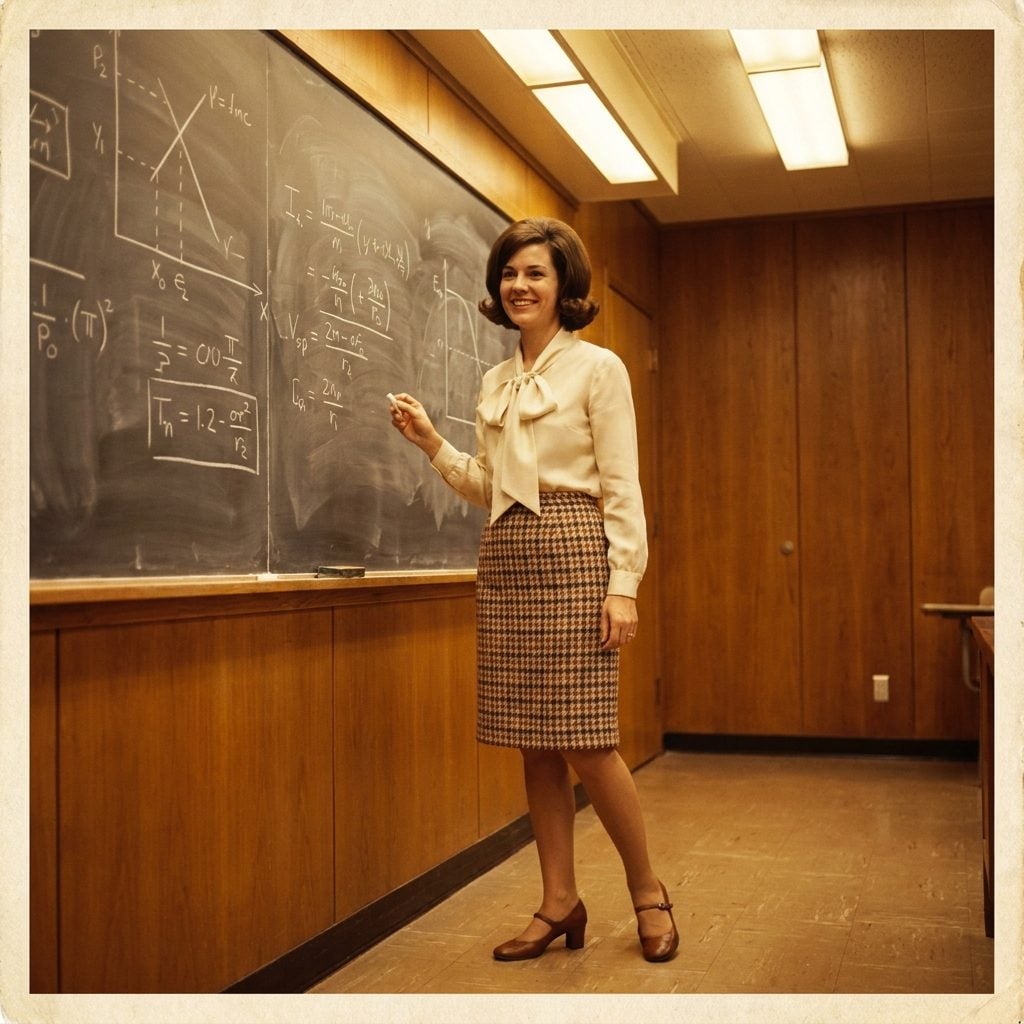
The bow-neck blouse was the 1960s office woman’s answer to a question nobody was quite asking out loud: how do you dress femininely in a space that wasn’t built for you, without looking like you’re apologizing for being there? A large, soft bow-neck blouse tucked into a tweed pencil skirt was the answer a lot of women landed on.
The bow read as soft. The tweed read as serious. Together they said something complicated about navigating a workplace that had very fixed ideas about what professional women should look like. The women who wore this combination daily, teachers, administrators, editors, junior executives, were doing quiet, precise image management every single morning.
And the pageboy cut. Clean, controlled, sharp at the jaw. It looked effortless because the woman wearing it had practiced it for years.
15. The Cobalt Sheath Dress That Made You Look Serious Before You Said a Word
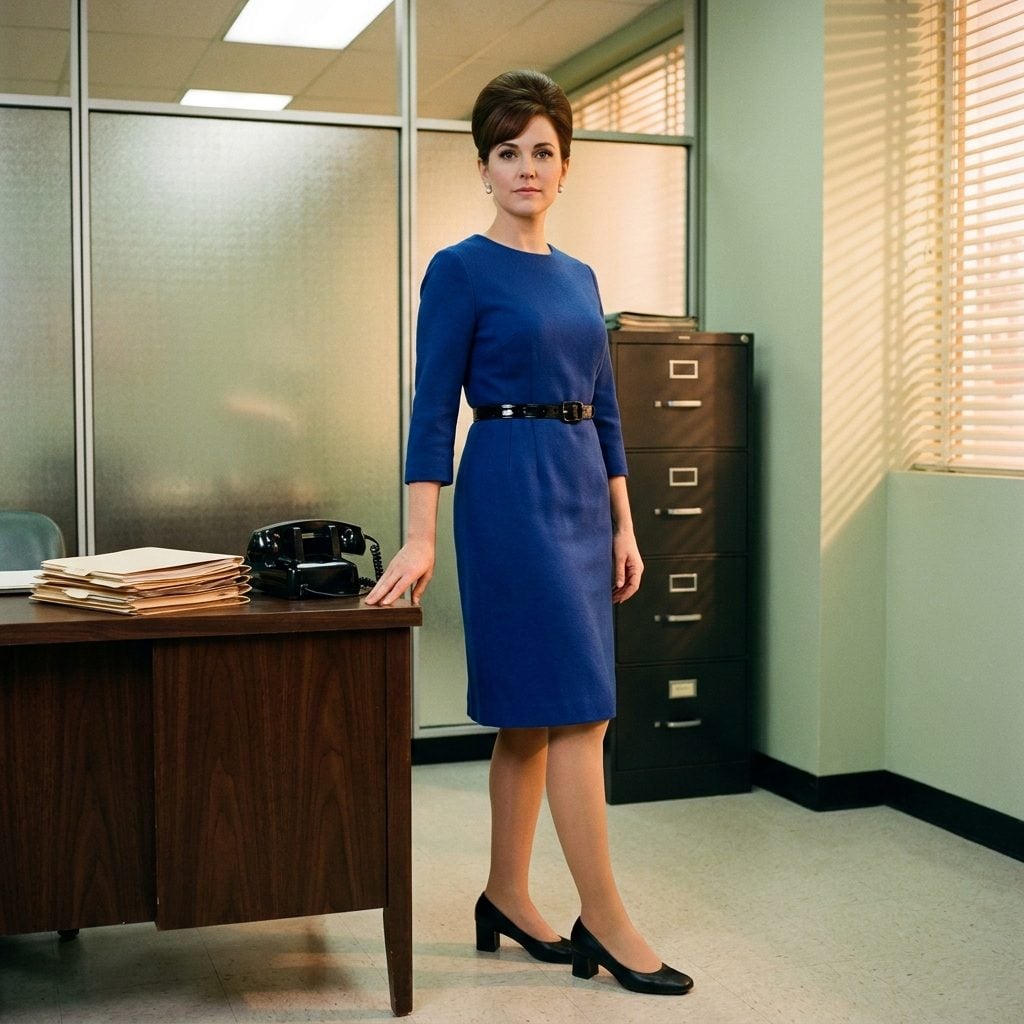
The sheath dress was the unofficial uniform of every woman who wanted to be taken seriously in a room that wasn’t built with her in mind. Cobalt specifically did something a navy didn’t, it announced presence without shouting. You belted it tight, you kept your jewelry small, and you walked into that Monday morning meeting like you’d already read every report on the table.
Jackie Kennedy wore variations of this silhouette to state functions and the whole country took notes. By 1963, department stores like Lord & Taylor and Macy’s couldn’t stock fitted sheaths fast enough. The trick was always the belt, that one thin strip of patent leather was the difference between looking like you worked there and looking like you ran there.
14. The Soft Yellow Blouse Tucked Into a Plaid Skirt, Because Pastels Were Basically Mandatory
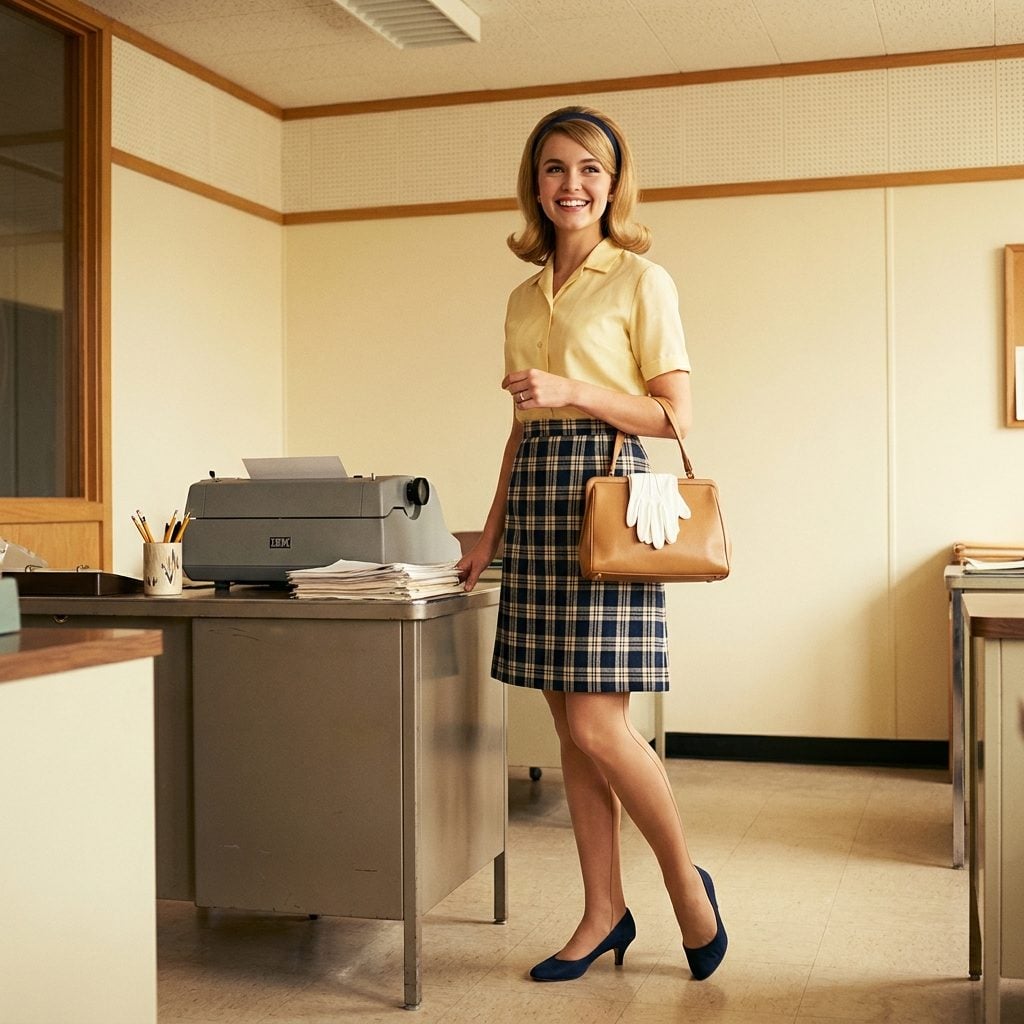
Pastels in the early 1960s office weren’t soft, they were strategic. A yellow blouse said approachable and pleasant, which was what the job listing probably said it required. Tucked in tight, paired with a structured plaid skirt from Sears or JCPenney, the whole look was neat in a way that felt almost architectural.
The headband is the detail that really unlocks the memory. Every young woman in the typing pool had one in every color, kept in the top drawer next to the correction fluid and the lipstick she reapplied at exactly 12:05.
13. The Heather Grey Shift Dress That Was Either Very Chic or Very Invisible, Depending on Who You Asked
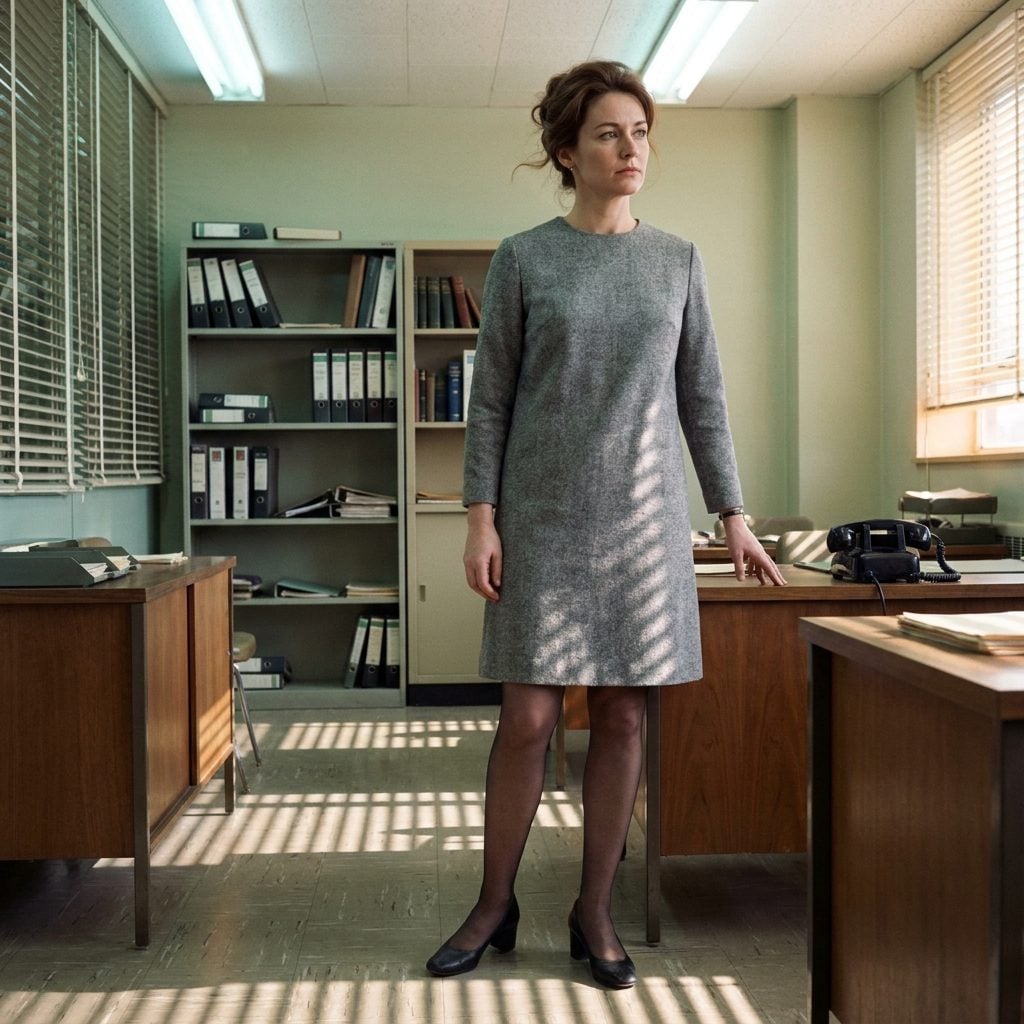
The shift dress asked nothing of you and gave back everything in return. No waist to define, no hem to worry about, no belt to constantly adjust before walking into the boss’s office. Grey wool, bought from a Simplicity pattern or straight off the rack at Lerner New York, and you were done. The French twist did the heavy lifting, without it, the whole thing risked reading as a sack. With it, you looked like you had somewhere more interesting to be after five o’clock.
12. The Wide Belt Cinching an Olive Blouse and Brown Pencil Skirt, the Whole Look Was Doing a Lot
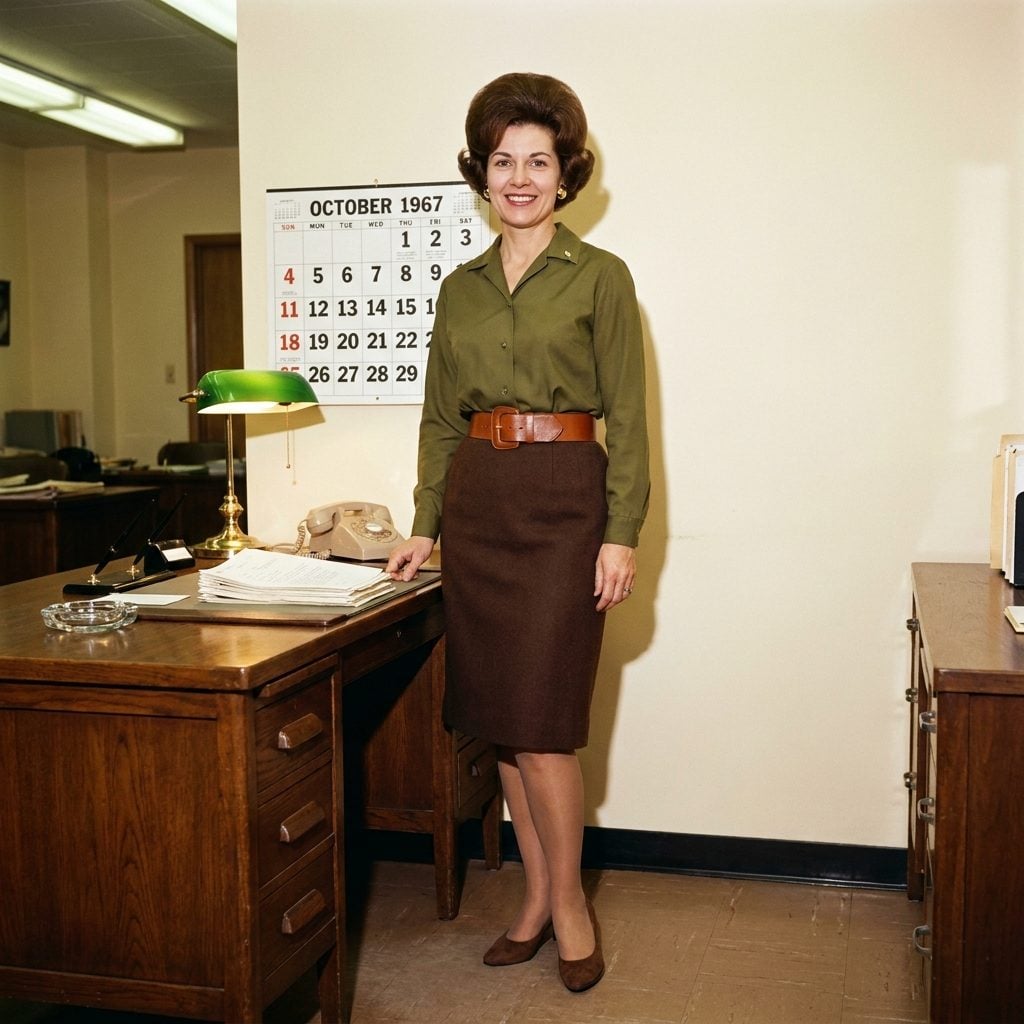
Nobody in 1964 was being subtle about their waist. The wide belt wasn’t an accent, it was the whole point. Cinched over a blouse and pencil skirt, it pulled the earth tones together into something that felt deliberately put together rather than just dressed for work. Women ordered belts from catalog pages in shades of cognac and caramel, tried them with everything, kept the three that worked.
The bouffant required its own infrastructure: a teasing comb, half a can of Aqua Net, and about twenty minutes you technically didn’t have on a Tuesday morning. Everyone did it anyway.
11. The Powder Pink Boucle Jacket That Was Absolutely Trying to Be Chanel (and We Respected It)
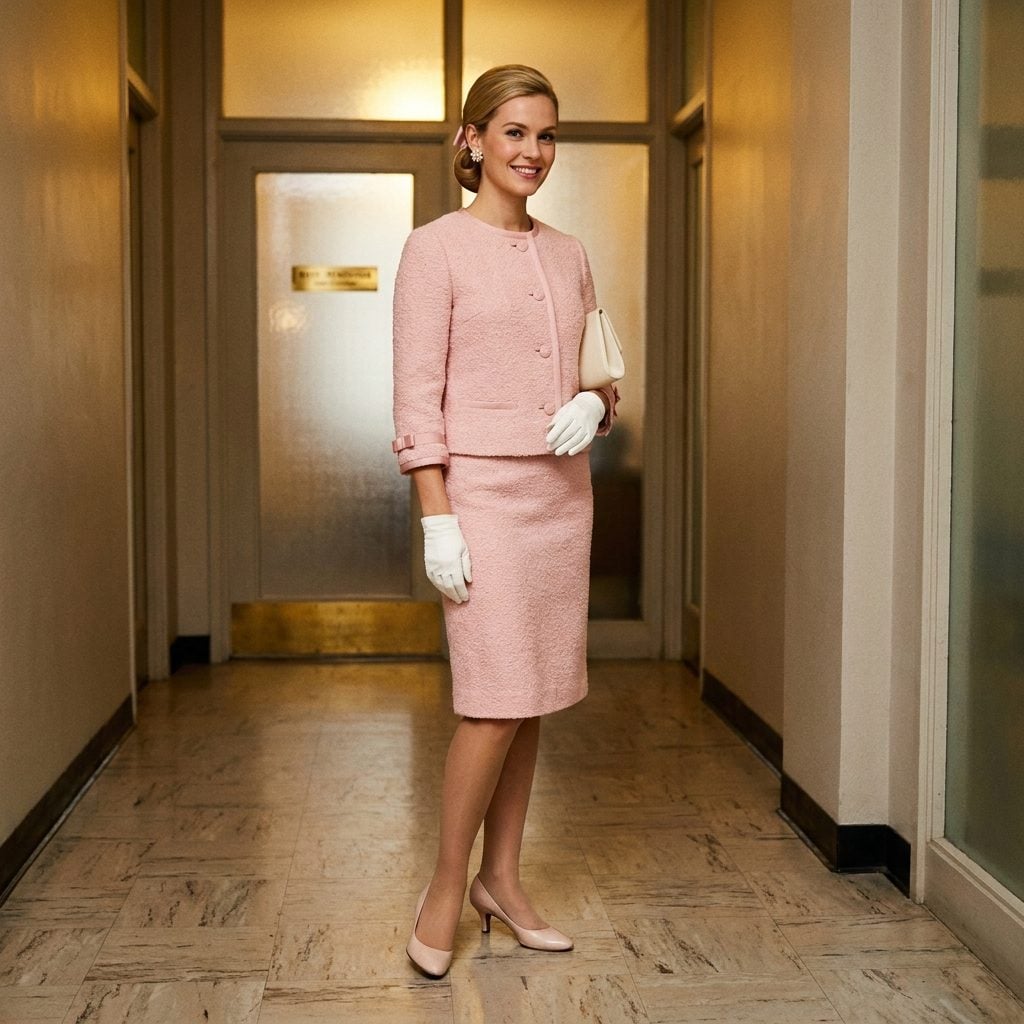
Every woman who could afford it, and several who definitely couldn’t, owned something pink and boucle in the early 1960s. Chanel’s suited sets had trickled down from Paris couture into American department stores, and knock-offs were moving fast at Garfinkel’s and Bonwit Teller. The chignon was mandatory with this look. Anything else felt like a missed opportunity.
Wearing pink to the office in 1963 wasn’t soft or passive. Paired with a slim skirt and proper gloves, it was its own kind of armor, polished enough that no one could find a single thing to criticize.
‘You weren’t copying anyone. You were just paying attention to who had the most power in the room and dressing accordingly.’
10. The Cranberry Shift With the White Collar, Because That Little Collar Was Doing Enormous Work
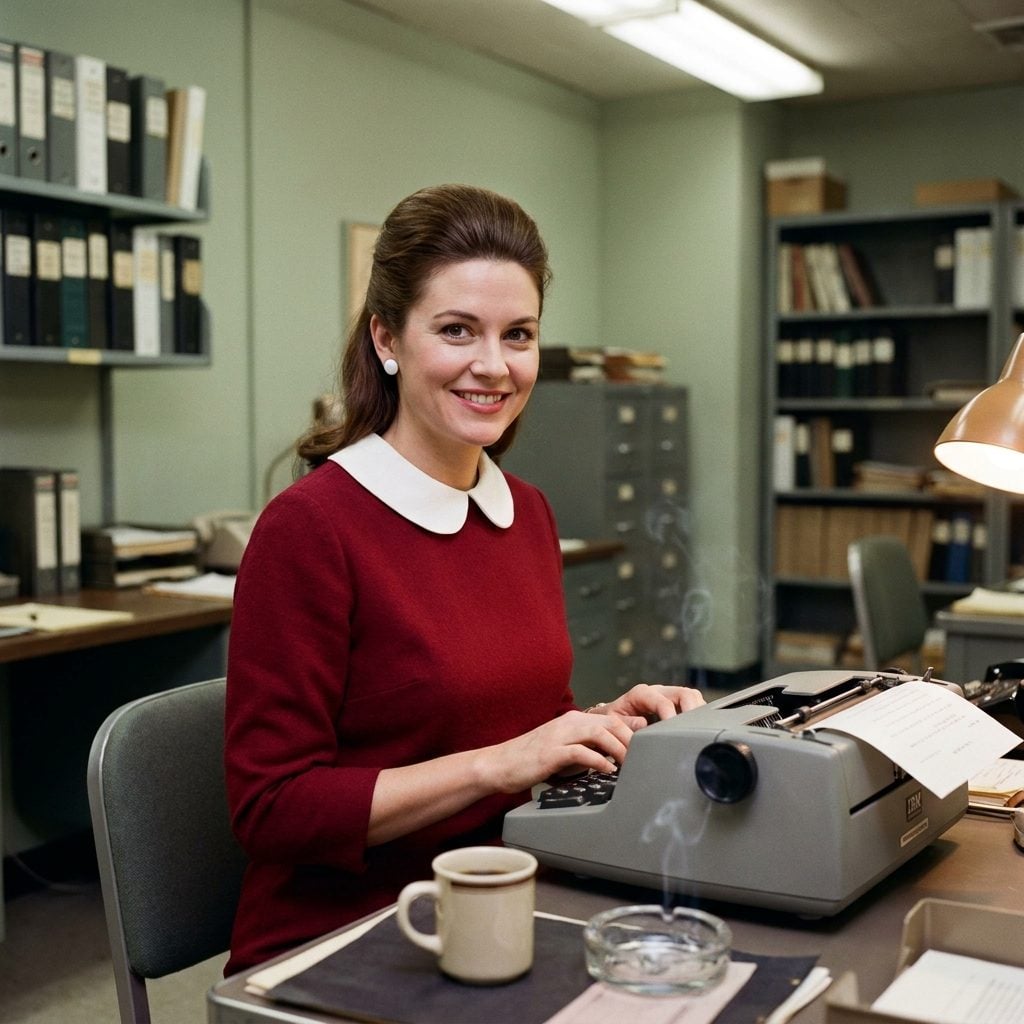
The Peter Pan collar was the most quietly powerful piece in any 1960s wardrobe. It looked modest, even demure, and that was exactly why it worked. Starched white against cranberry or black or forest green, it drew the eye straight to your face without asking anyone’s permission. Women bought detachable collars by the set and rotated them through different dresses all week.
Sitting at the typewriter in this, you looked like you belonged in a French New Wave film rather than a typing pool in Cincinnati. The dress didn’t care. It was doing its job.
9. The Dove Grey Skirt Suit With a Lavender Blouse, the Outfit That Said ‘I Have Been Here Longer Than Your Manager’
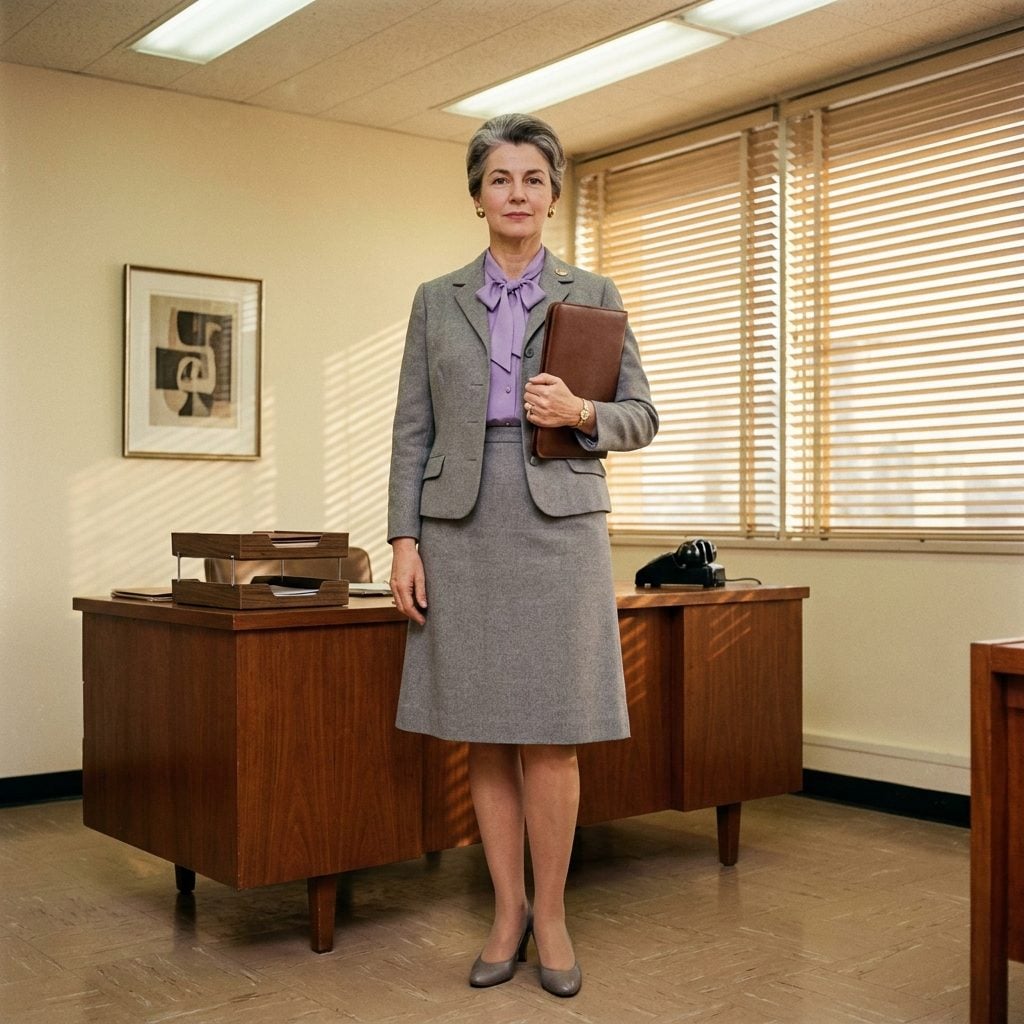
This woman did not need anyone to read her nameplate. The dove grey suit communicated her exact position in the organizational hierarchy without a single word. Women in their 40s who had been in the workforce since the early 1950s had this look dialed in: the lavender blouse for color, the bow tie for softness, the French twist for the kind of authority that doesn’t require volume.
You bought this suit from I. Magnin or Filene’s, had it altered once at the waist, and wore it for the next eight years to every meeting that mattered. It still looked right at every single one of them.
8. The Turquoise Mod Dress With Geometric Trim, When the Office Finally Caught Up to the Decade It Was Living In
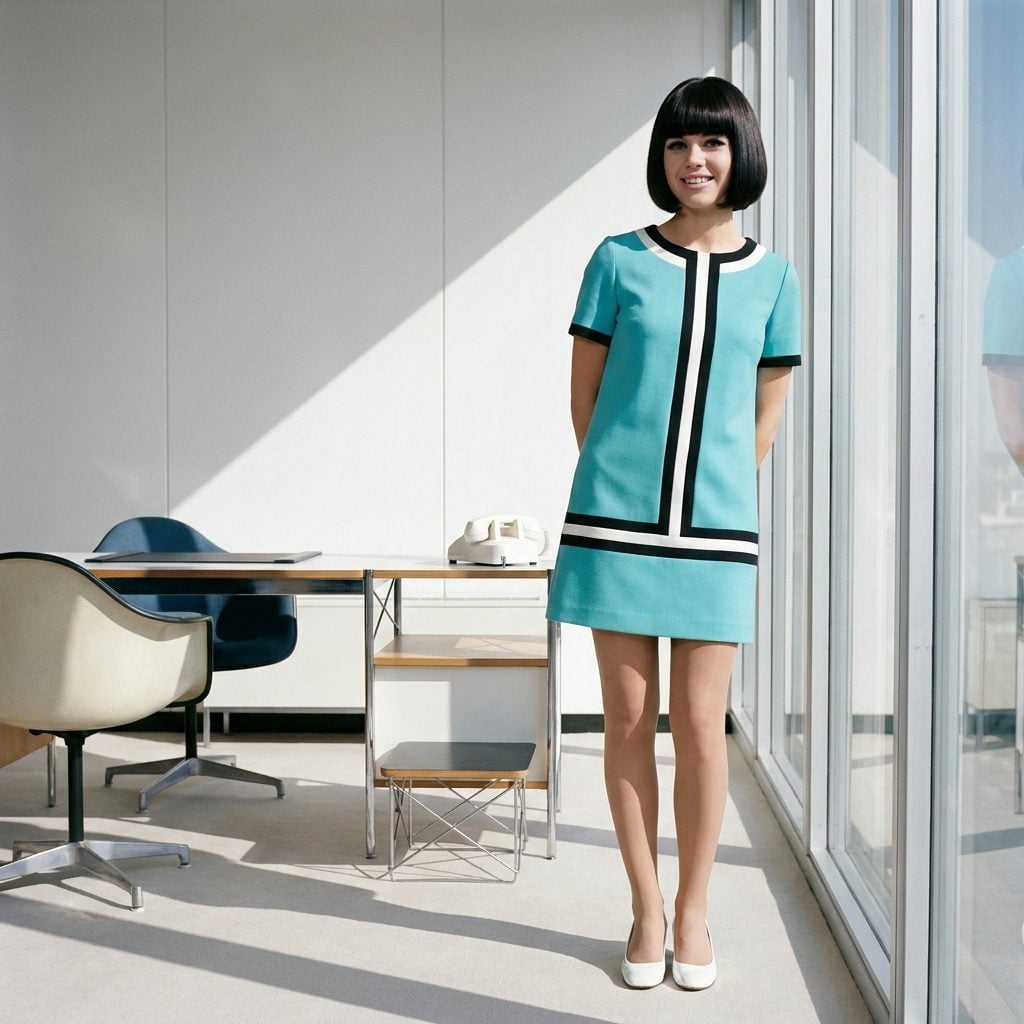
By the mid-1960s, something had shifted. The mod dress arrived at the office and made every sheath and boucle jacket in the room look like it had been there too long. Turquoise with graphic black-and-white trim was practically a manifesto, it said that you’d seen the Yardbirds on Ready Steady Go and you were not pretending otherwise during business hours.
The bob was non-negotiable with this look. A bouffant or a flip on top of a geometric mod dress created a dissonance that no amount of confidence could smooth over. Women who made this switch in 1966 looked like they were living five years ahead of everyone else at the next desk. Most of them were.
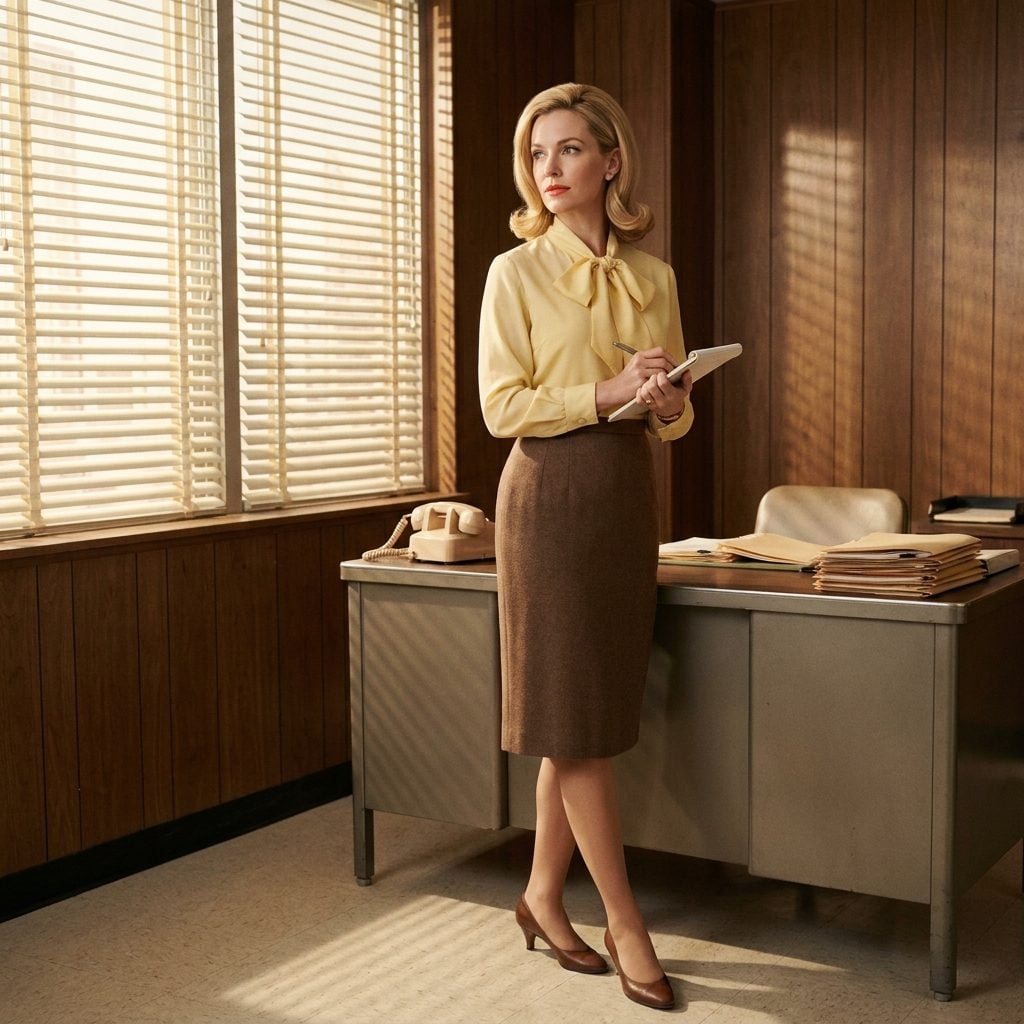
7. The Butter Yellow Blouse With the Neck Bow That Said ‘Professional But Make It Pretty’
❤️ Would you like to save this?
The neck bow blouse was doing a lot of work in the early 1960s office. It was femininity made presentable, soft enough not to threaten anyone, polished enough to get you through the door. Butter yellow was the sweet spot: cheerful without being loud, easy to pair with every neutral brown or gray skirt in the rotation. You tied that bow in the mirror every morning and it felt, somehow, like putting on armor.
Most of us had at least two of these blouses in different colors. The bow was always slightly uneven by 11am, and nobody ever mentioned it. It was the athleisure hat of its era, the finishing touch that signaled you had made an effort. Paired with a brown wool pencil skirt, it was essentially the decade’s uniform for anyone sitting behind a typewriter.
6. The Deep Purple Sheath Dress With the Chain Belt That Meant You’d Watched Too Much Jackie Kennedy
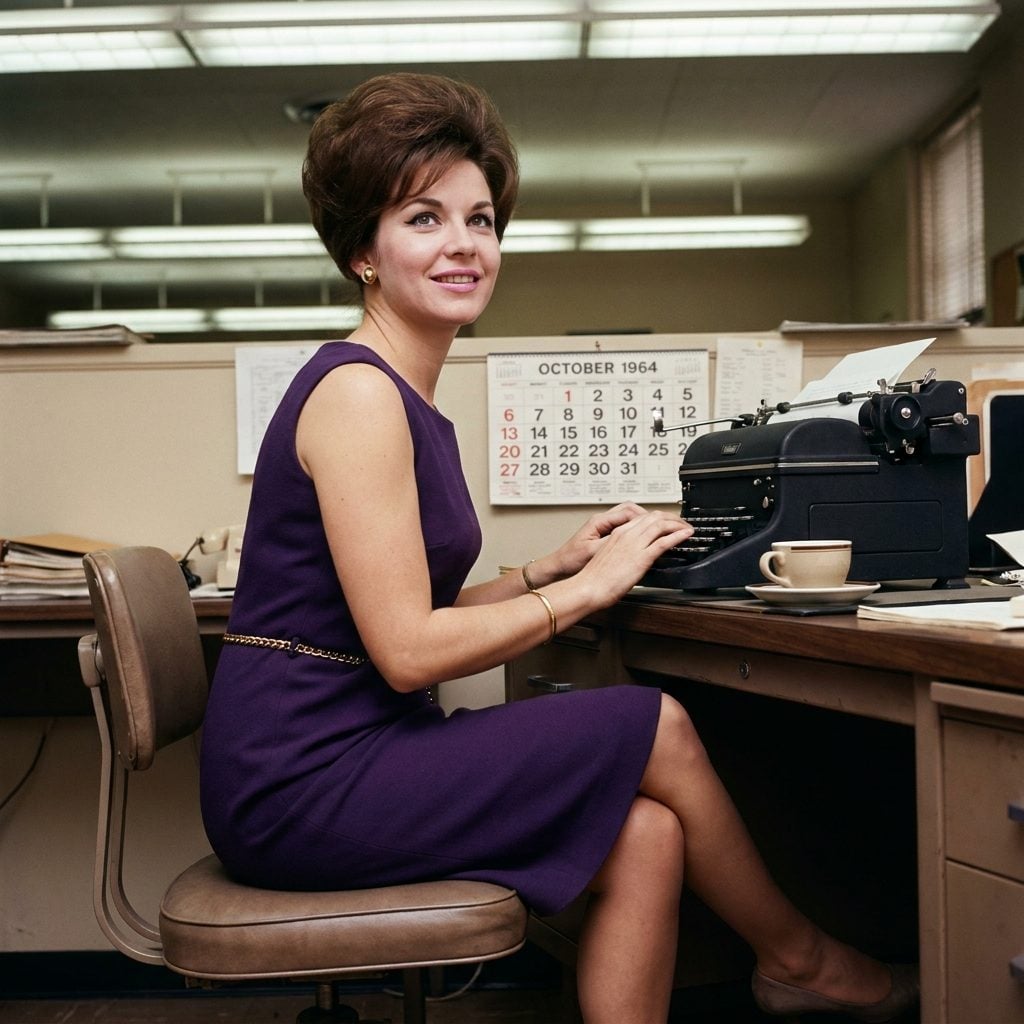
Every woman who owned a sheath dress in 1963 was, consciously or not, cosplaying as Jackie Kennedy. The silhouette was the point: no fuss, no flounce, just a clean column of color that announced you were modern. Deep purple was a bold call for an office, most women stayed in navy or beige, but the gold chain belt softened it just enough to read as tasteful rather than dramatic.
The sheath dress also had a practical genius nobody talks about: it traveled beautifully. You could sit at a typewriter all day and still look put-together at an after-work dinner. The chain belt was the only accessory the look really needed, and every woman knew it.
5. The Cream Wool Jacket Over a Navy A-Line That Was Basically a Suit Without Committing to a Suit
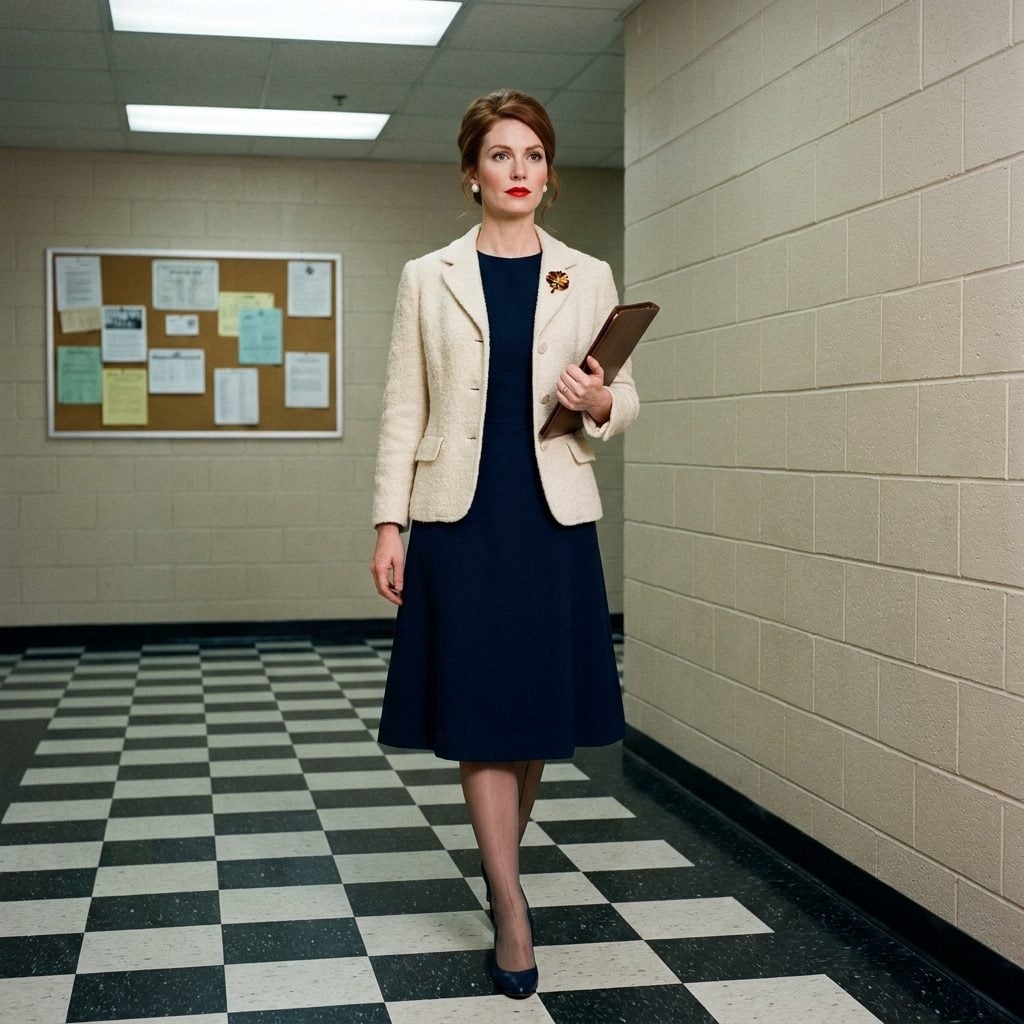
This combination was the decade’s great compromise. A full suit said you were trying to be a man. A dress alone said you were just a girl. But a cream wool jacket over a navy A-line said something more specific: that you had read the room, adjusted the volume slightly, and arrived at exactly the right register. Women who wore this in the office understood something about power that nobody had given them a manual for.
The cream wool jacket was also endlessly useful. It went over everything, traveled well on the bus without wrinkling badly, and gave you somewhere to pin a brooch, which was how you made any outfit yours without breaking any unwritten rule. The tortoiseshell brooch on the lapel was a whole personality in one small gesture.
4. The White Gloves You Put On Before You Left the House, Like You Were Heading to Church Instead of the Typing Pool
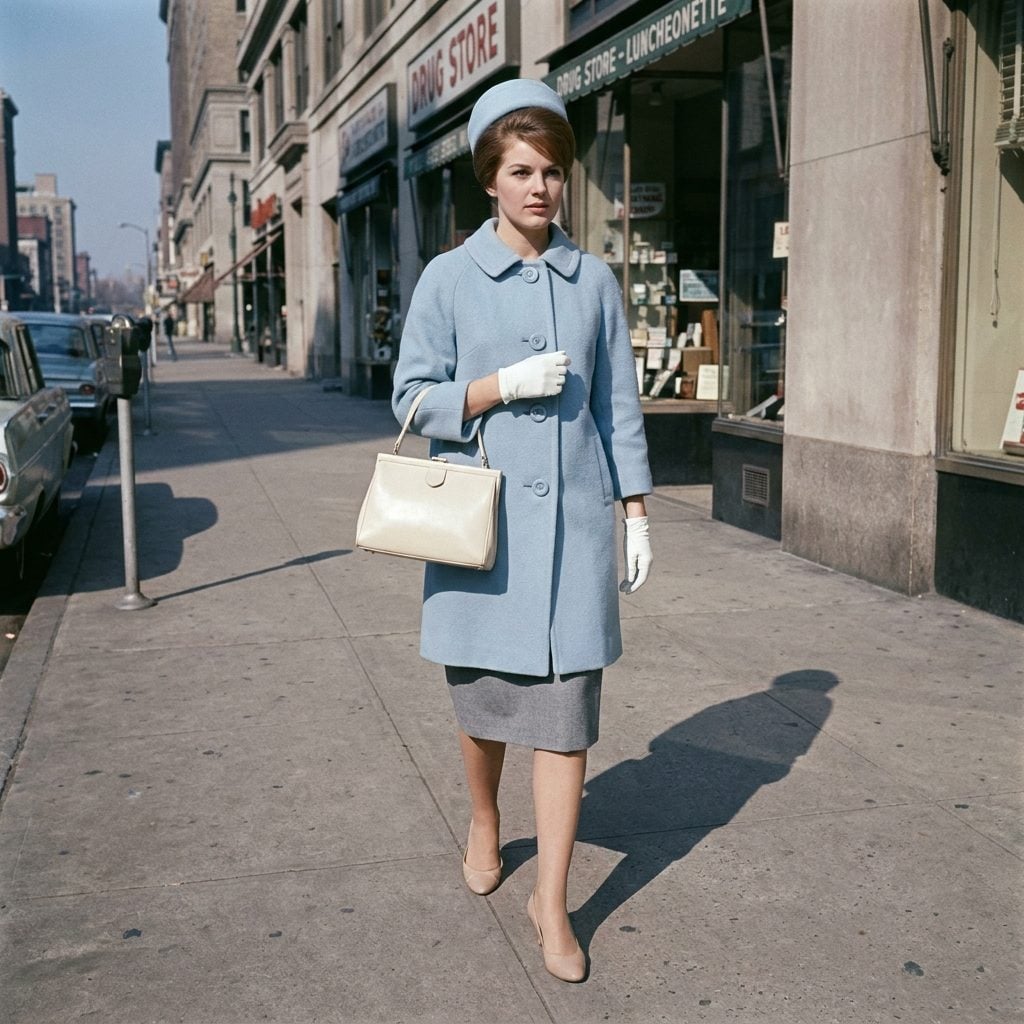
Nobody told you the gloves were mandatory. Nobody had to. You rode the bus, saw every other woman’s hands sheathed in white, and absorbed the rule before your first Monday was half over. Short white cotton wrist gloves, slightly too warm by 9 a.m., slightly yellowed after a few washes. At your desk you slipped them off and folded them into the top drawer like a little cloth secret.
They made you feel finished. Coat, hat, gloves, handbag — a four-point checklist for a woman heading somewhere that mattered, even if “somewhere” was a windowless room shared with eleven typists and a supervisor who called everyone “dear.” Funny how a scrap of cotton could do that.
3. The Seamed Stockings That Announced to the Entire Office Whether You’d Gotten Dressed in a Rush
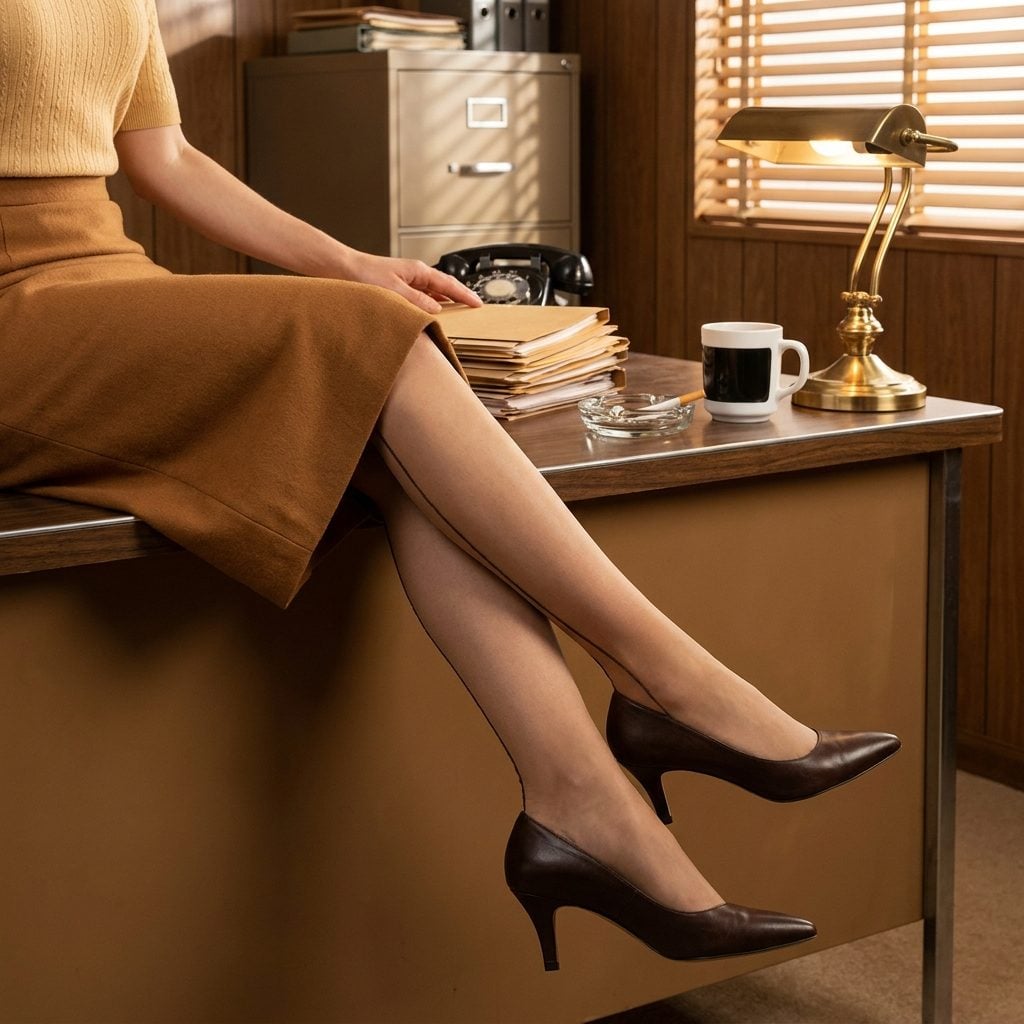
That seam was a personality test. Straight and centered? You had your life together — or you’d at least stood in front of a mirror for an extra three minutes. Crooked? You’d overslept, and every woman in the steno pool clocked it before you reached your chair.
Pantyhose killed the seamed stocking by the late sixties. But for the first half of the decade, those seamed nylons were the quiet obsession, the thing you kept a spare pair of in your desk drawer because a run before lunch was practically guaranteed. And the morning ritual of attaching them to a garter belt — in a cold apartment, before coffee, half-awake — honestly deserves its own retrospective medal.
2. The Structured Leather Handbag You Carried on Your Forearm Like a Tiny, Expensive Shield
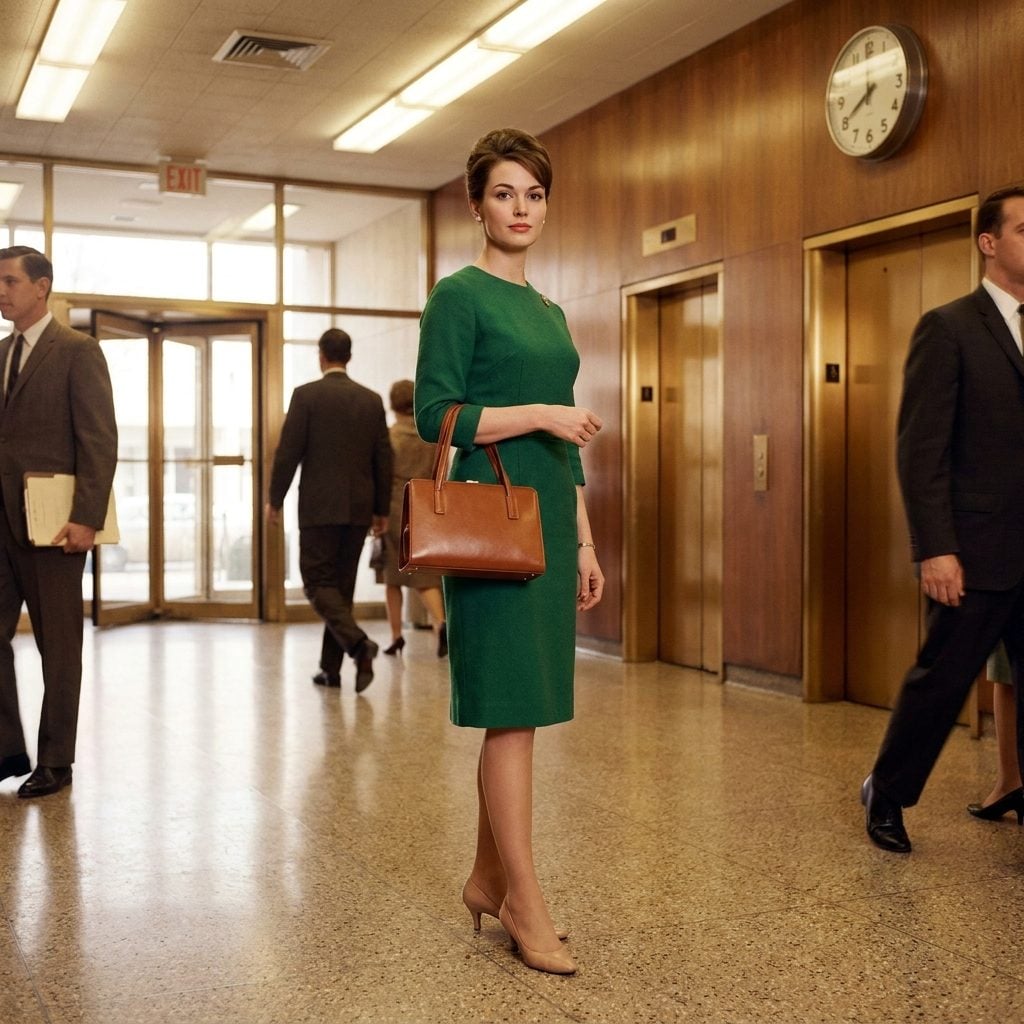
Not on your shoulder. Never on your shoulder. This bag lived in the crook of your arm, and you held it there with a stiff civic pride — like carrying the flag of a very small, very well-organized nation.
It was structured enough to stand upright on its own. Boxy. A single clasp, usually gold-toned. Inside: a compact mirror, a lipstick in some shade called “Pink Mink,” your bus pass, maybe six dollars. The structured leather handbag was the one item where you did not economize. You saved for it. You bought the good one. And then you carried it like it held state secrets rather than loose change and a grocery list.
1. The Low-Heeled Spectator Pump in Two-Tone That Was Basically a Whole Personality
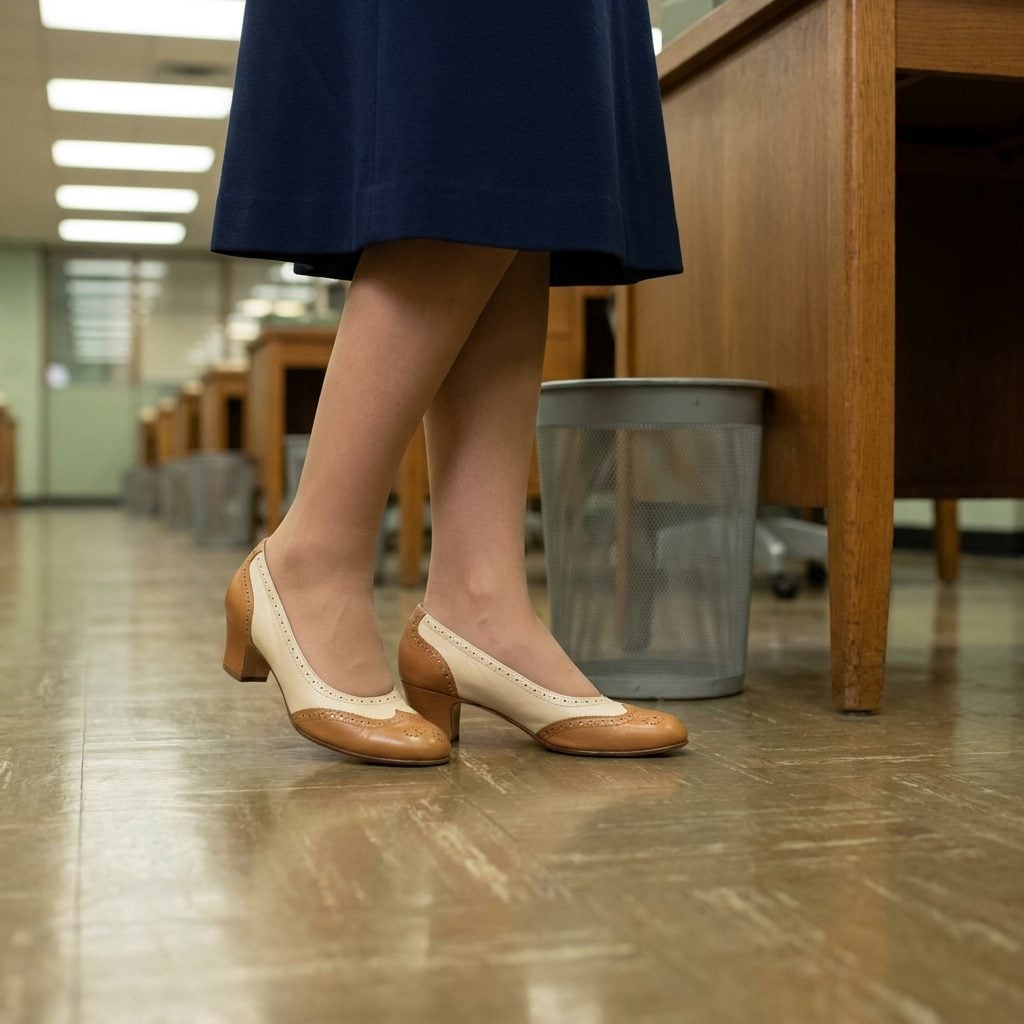
Two-tone. Perforated trim along the seams. A heel low enough that you could walk six blocks from the bus stop without negotiating with your own ankles. The spectator pump was the footwear equivalent of a firm handshake — classic, no-nonsense, declaring quietly that you had things under control.
I’d argue these shoes told you more about a woman’s place in the office than her actual title did. The new girl wore whatever she could afford. But the woman who’d been there five years? Cream and tan spectators, polished on Sunday nights. She had opinions about the coffee situation and zero hesitation about voicing them. You could tell all of that from the shoes. Which is absurd, and also completely true.