❤️ Would you like to save this?
There was a very specific kind of confidence required to get dressed in the 1980s. You layered things that had no business being near each other, you popped collars that were already popped, and you left the house looking like a fever dream at a neon factory, and somehow, it worked. Or we thought it did. The decade had rules, they just weren’t any rules anyone had written down before. Get ready to remember every single one of them.
FYI, thanks to AI imagery software, we’re able to create very specific fashion and hairstyle examples to illustrate the points being made. In some cases, imagery is exaggerated to hammer home the point. Also, assume links that take you off the site are affiliate links such as links to Amazon. this means we may earn a commission if you buy something.
25. Neon Leg Warmers Scrunched Over Acid-Washed Jeans
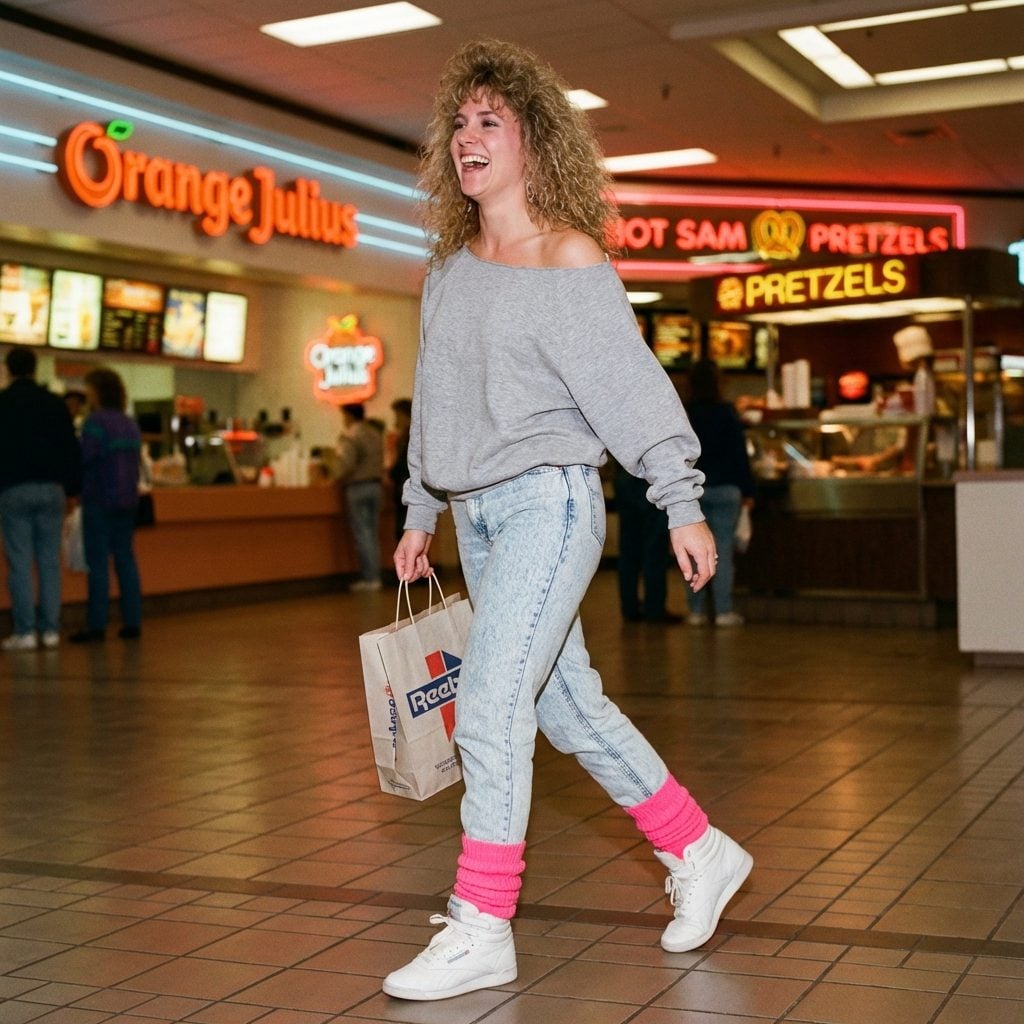
We pulled them up, we scrunched them down, we layered two pairs at once, and we genuinely believed this was a complete look. Hot pink over electric yellow, worn with athleisure outfit energy before athleisure was even a word. The acid-washed jeans underneath were doing their best, but honestly, nobody was looking at the jeans.
Leg warmers started as actual dancewear after Flashdance dropped in 1983 and rewired every teenage brain in America. Within six months they were mandatory at the mall. The fact that we were not, in fact, dancers did not register as relevant information.
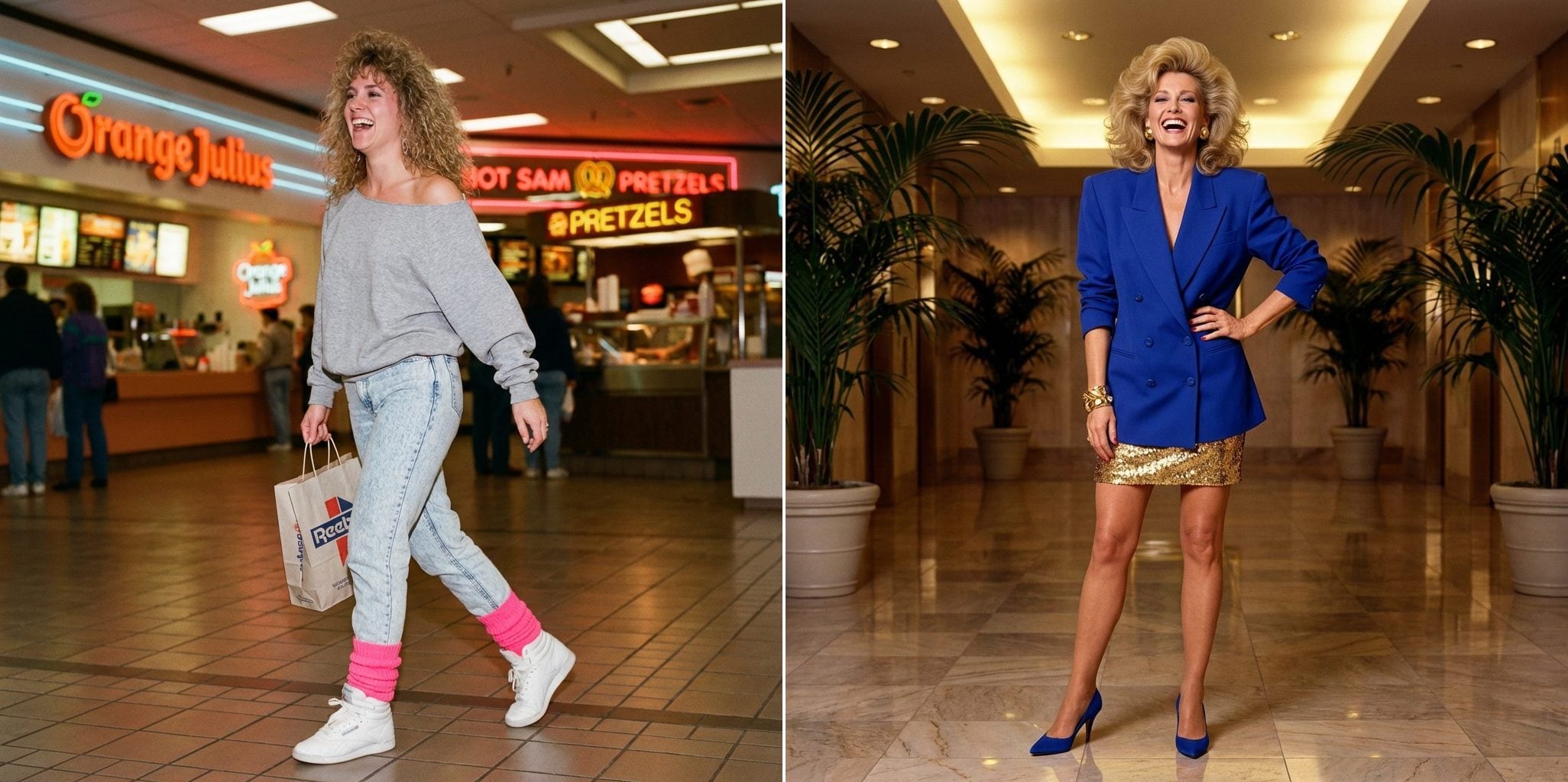
24. Power Shoulder Blazer Paired With a Sequined Miniskirt
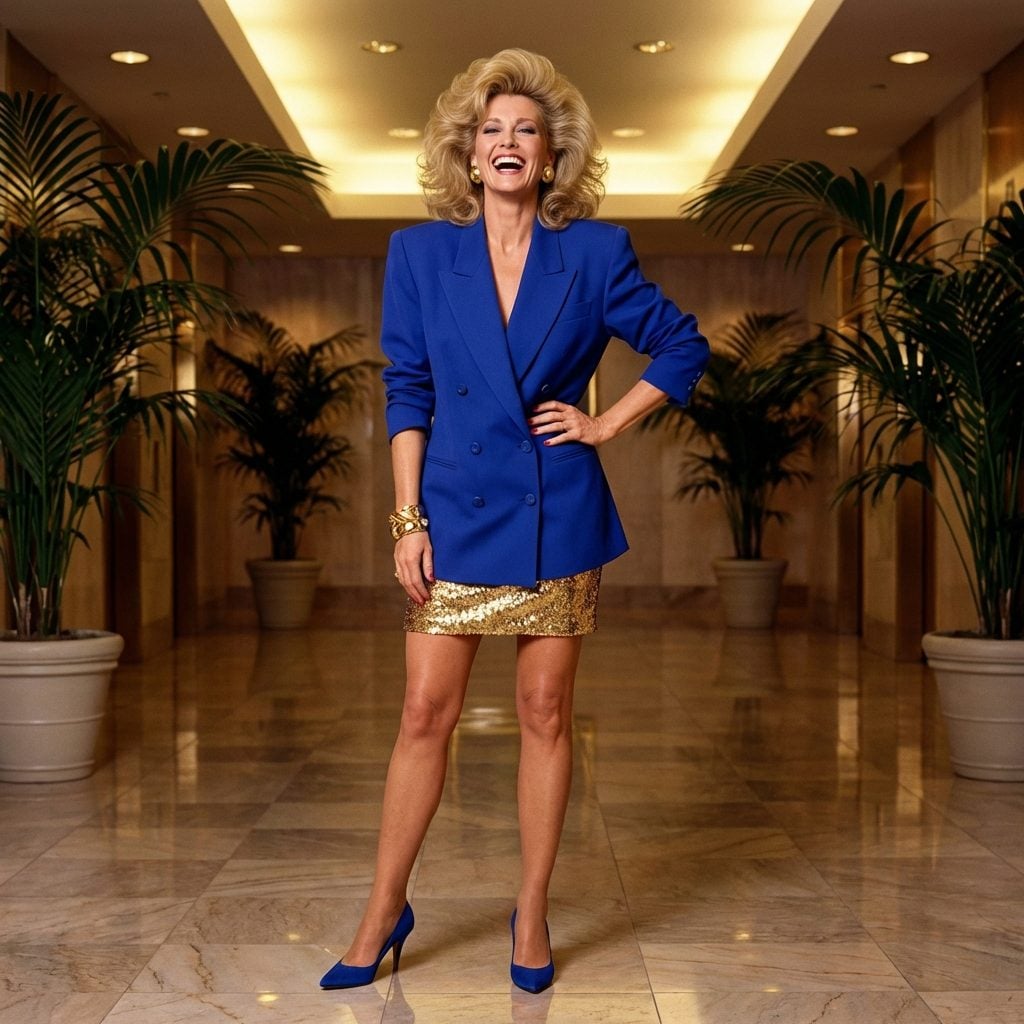
This was the outfit that said: I am going places, and I will sparkle on the way there. The blazer had shoulders wide enough to land a small aircraft on, in colors like cobalt, magenta, or an aggressive mustard yellow. The sequined miniskirt caught every fluorescent light in the office and reflected it directly into your coworkers’ eyes. Together, they were a visual event.
Dynasty was running Tuesday nights on ABC, and Joan Collins was essentially a style directive for an entire generation. The power shoulder said ambition. The sequins said fun. Nobody questioned the combination because frankly, nobody could look away long enough to form a criticism.
23. Leather Jacket Thrown Over a Lace Prom Dress
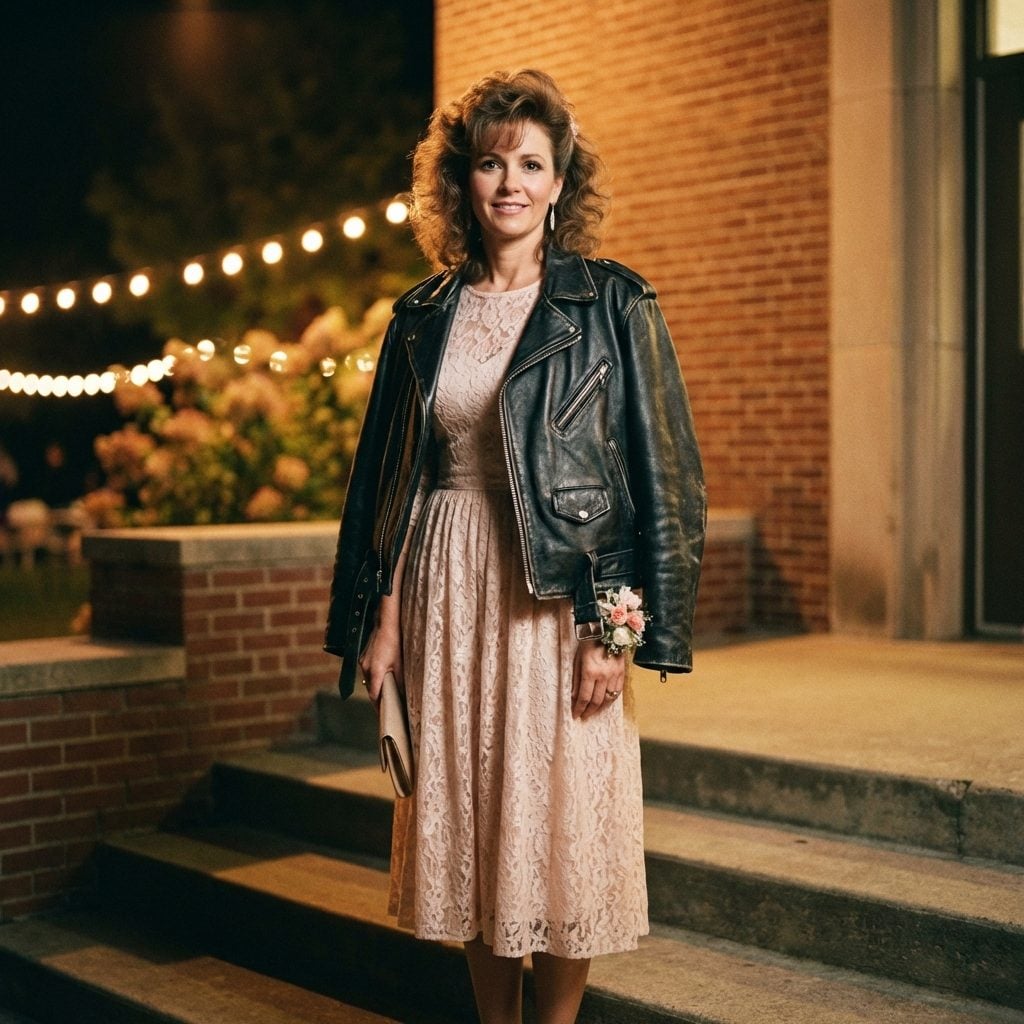
There was exactly one goal with this outfit: to look like you had somewhere more interesting to be after the dance. The lace dress was your mother’s idea. The leather jacket was yours. You wore both and somehow created a tension that every teen movie of the decade tried to bottle and sell back to you.
Madonna made this combination feel like a manifesto somewhere around 1984, and after that it wasn’t a fashion choice so much as a personality statement. Sweet on the outside. Tough on top. The leather was always slightly too big, always slightly too cool, and it absolutely destroyed the photographs your parents took at the door.
22. Pastel Polo With the Collar Popped, Layered Over a Rugby Stripe Shirt
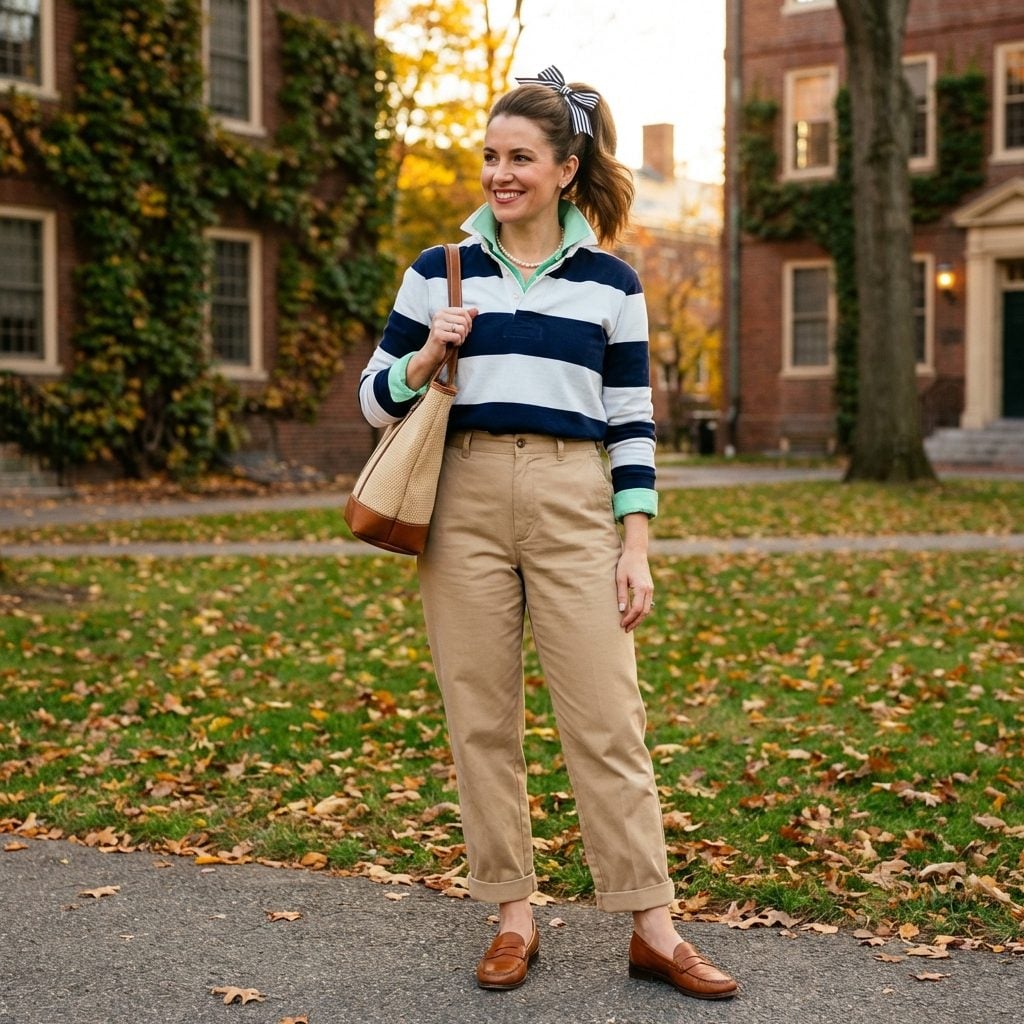
Not one popped collar. Two popped collars. Both simultaneously. We did this deliberately, on purpose, and we looked at ourselves in the mirror and thought: yes. The pastel polo on the outside, a thick-striped rugby shirt underneath, and both collars standing at attention like tiny fabric antennas broadcasting our social ambitions to everyone in the food court.
This was prep culture at its most committed. Izod, Ralph Lauren, and Polo logos were proof of concept. The colors had to be coordinated but not matching, mint over navy stripe was correct, yellow over burgundy stripe was acceptable, anything over anything fluorescent was pushing it but some people went there anyway.
21. Spandex Bike Shorts With an Oversized Off-the-Shoulder Sweatshirt
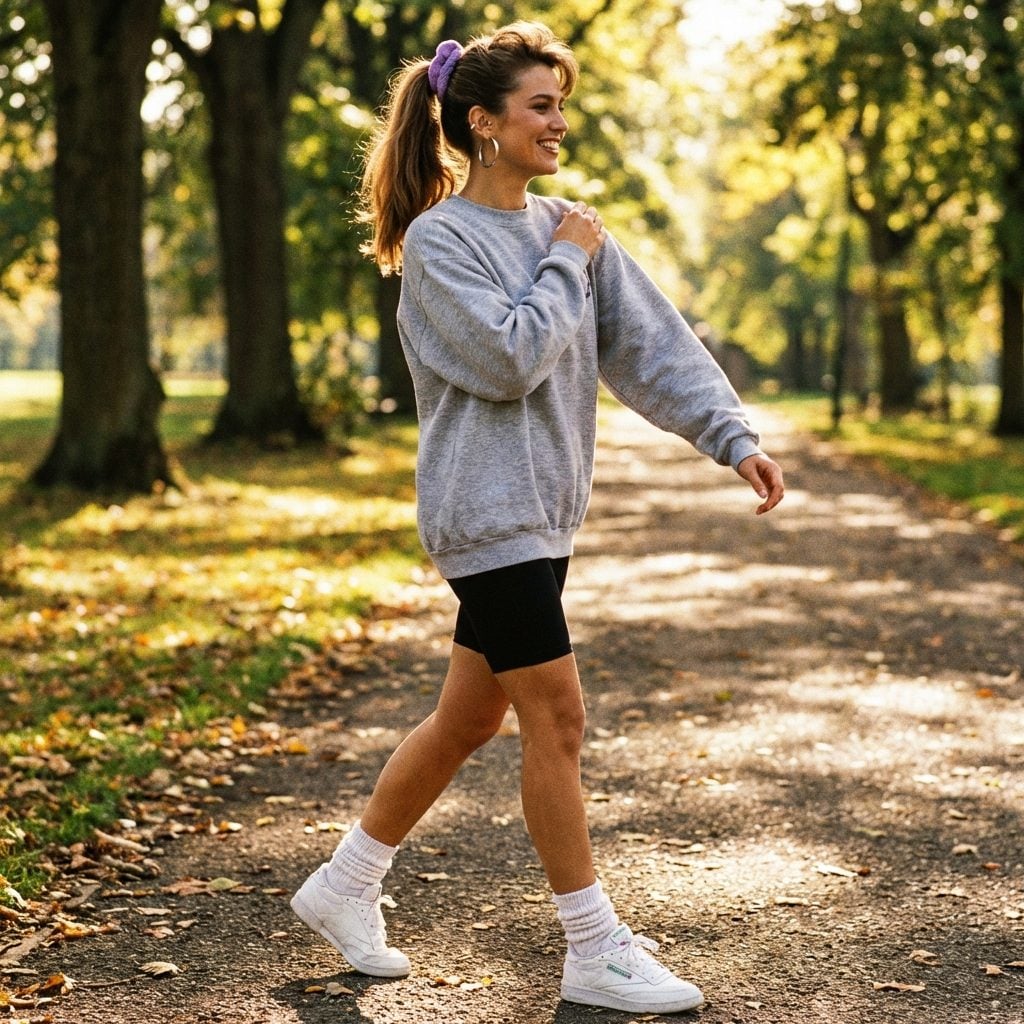
This was technically athleisure. We just didn’t have that word yet, so we called it getting dressed. The sweatshirt was enormous by design, slipping off one shoulder at all times and requiring constant adjustment that we somehow turned into a body language habit. The bike shorts were black spandex, always, worn with scrunched socks and white Keds or Reeboks. It looked chaotic. It also looked exactly right for 1988.
20. Denim Jacket Covered in Pins Over a Band Tee and Stirrup Pants
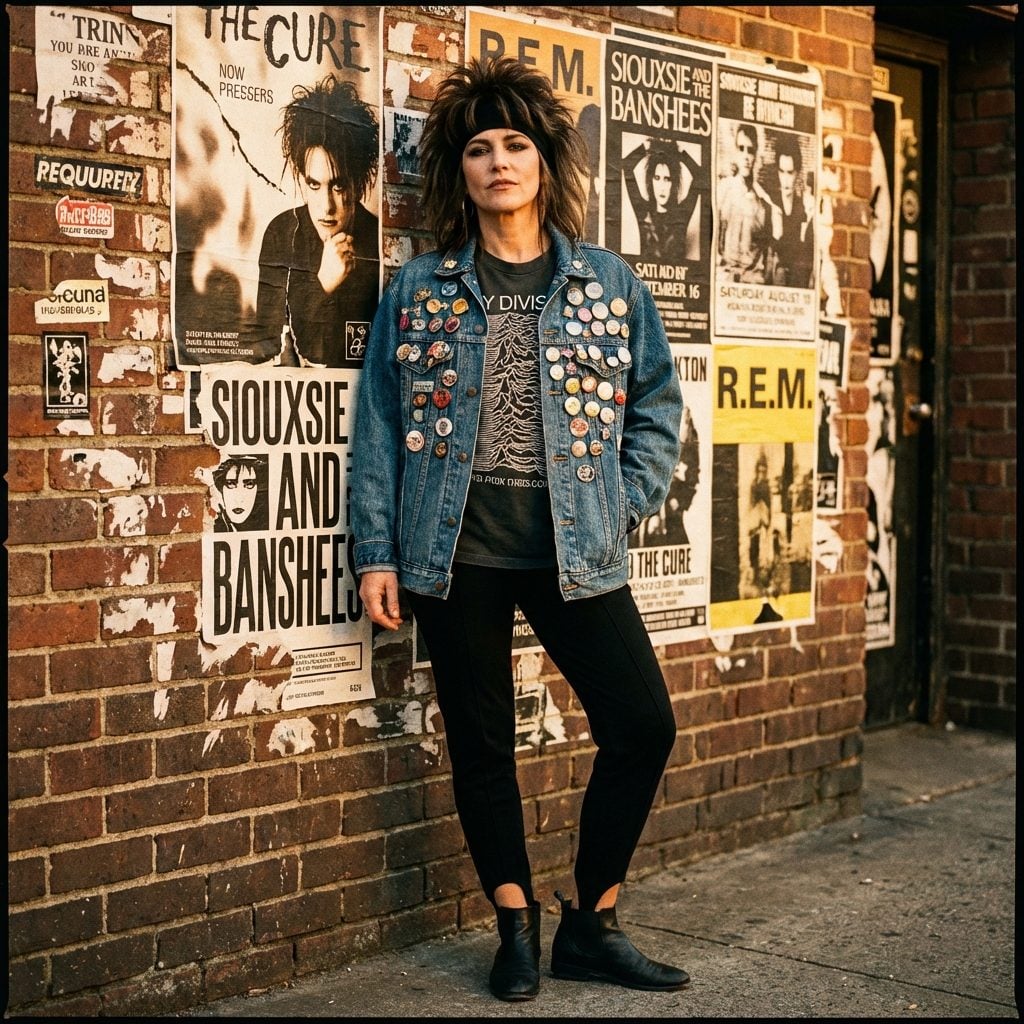
The denim jacket was the canvas. Everything else was the statement. Every pin was a decision: a band, a slogan, a political button, a smiley face, a tiny enamel skull, a peace sign, a heart with a band name written through it in permanent marker. You wore your entire personality on the back of your jacket and then tucked it into stirrup pants, which had the opposite energy entirely but somehow nobody noticed the contradiction.
Stirrup pants deserve their own moment of silence. Black, always. The little elastic loop under the arch of your foot was both deeply practical and entirely strange. Paired with flat ankle boots and a concert tee for a band you saw once or just really admired, this was the outfit of someone with extremely specific taste and also nowhere to be until 7pm.
19. Puffed Sleeve Blouse Tucked Into a High-Waisted Pleated Skirt
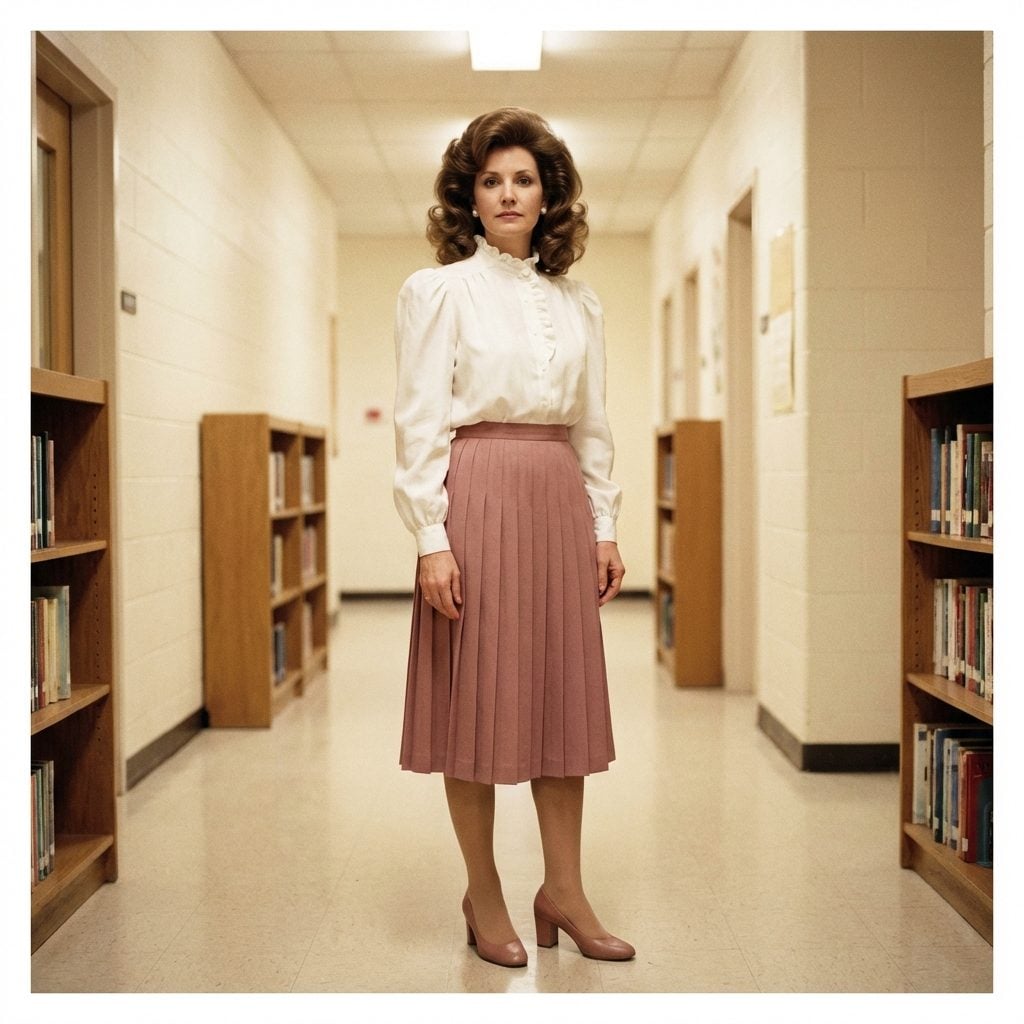
This was the outfit for every school photo from 1983 to 1989 and also every job interview, wedding, baptism, and department store shopping trip. The puffed sleeves were non-negotiable: they had to be substantial, gathered at the shoulder into something that added at least two inches of width on each side. The blouse tucked completely into the waistband of a high-waisted pleated skirt in a coordinating solid or small print.
It sounds controlled. It looked polished. It also required an enormous amount of tucking maintenance throughout the day. The blouse had a habit of escaping the waistband in segments, and you spent the afternoon doing small, discreet re-tucks while trying to look composed.
18. Fingerless Gloves Paired With a Sequined Top and Tapered Trousers
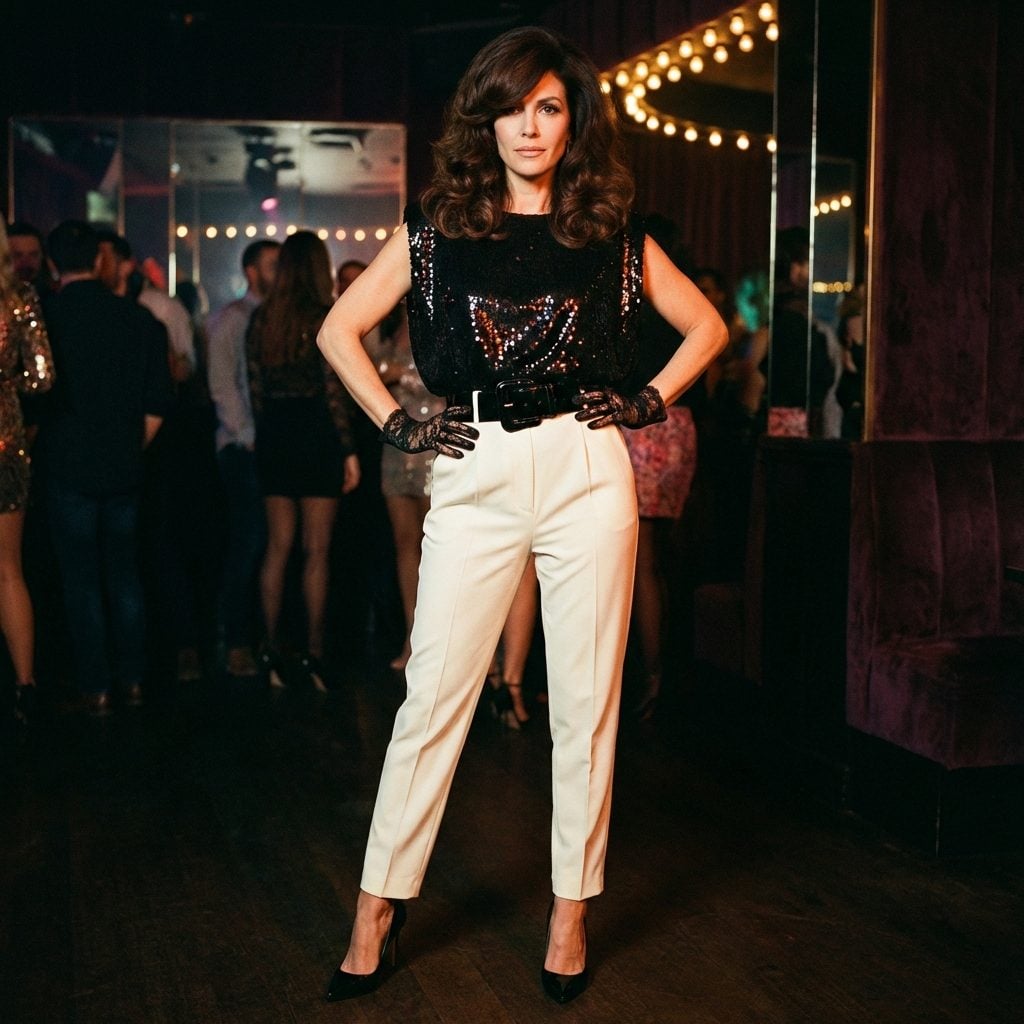
Fingerless gloves were doing a lot of heavy lifting in 1984 and nobody acknowledged the sheer effort involved. They communicated that you were: artistic, slightly downtown, possibly a backup dancer, definitely not playing by your mother’s rules. Worn over a sequined top with tapered trousers and a wide belt, the whole look had a very specific energy: party, but make it sharp.
The tapered trousers were always high-waisted, always pressed, and usually in black or ivory. They gave the outfit enough structure to balance the sequins and the fingerless gloves and also the sheer audacity of the entire combination.
17. Neon Windbreaker Over a Turtleneck With Pleated Khakis

Nobody was going for a run. This needs to be stated clearly. The neon windbreaker was a fashion garment, worn over a fine-knit turtleneck in a coordinating color (or a violently clashing one, both were correct), tucked into pleated khakis with a visible crease. This outfit went to the movies, to dinner, to school, and possibly to a birthday party at a roller rink.
Electric yellow, hot coral, lime green, or a color that had no official name but registered in the human eye as LOUD. The windbreaker had a zip-front and often a logo from a brand that sounded vaguely athletic but was sold exclusively at department stores. It swished when you walked. This was a feature, not a flaw.
16. Bodycon Tube Skirt, Boxy Printed Blazer, and Pointed Pumps
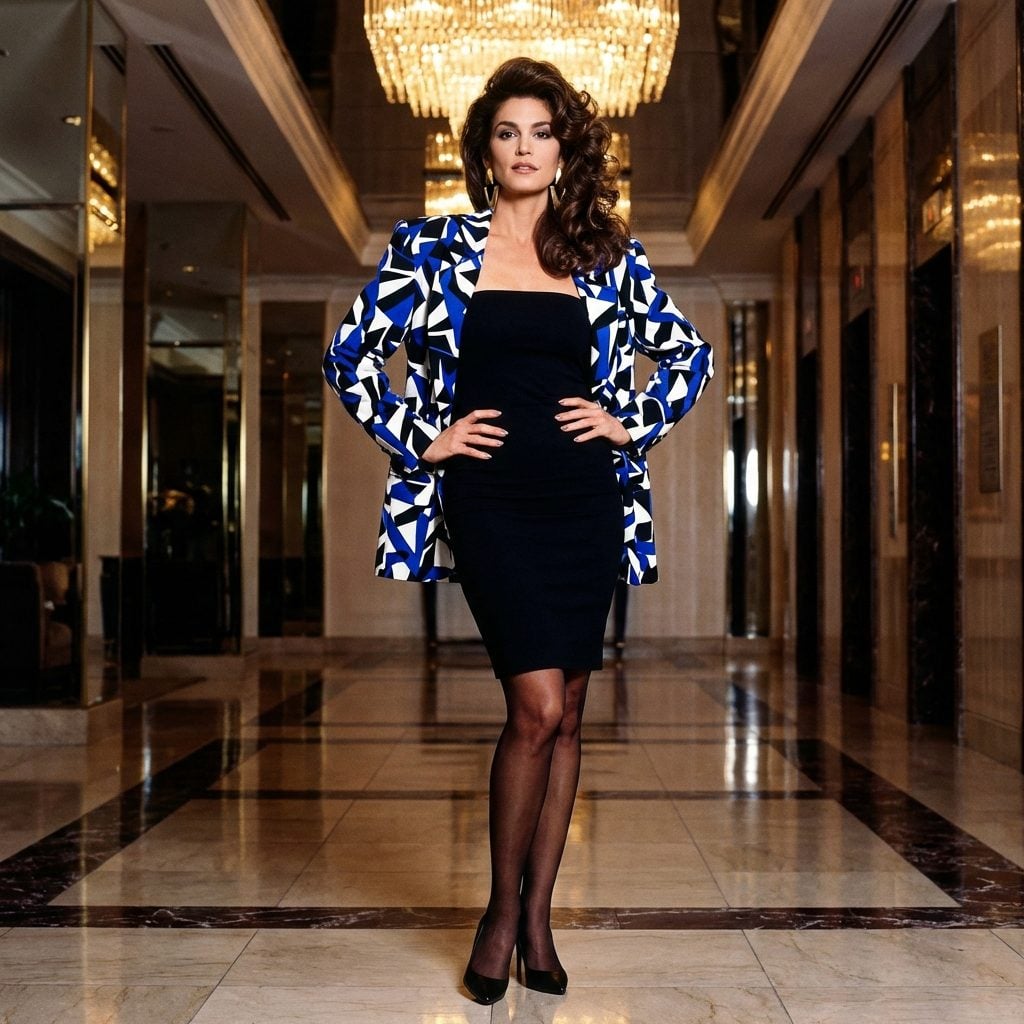
The genius of this combination was how completely the blazer contradicted the skirt. The tube skirt was body-conscious, often in a bold solid or metallic. The blazer was boxy, slouchy, and printed in a geometric or abstract pattern that looked like it had opinions. Together they created a silhouette that was simultaneously tight and oversized. This is either a contradiction or a philosophy, and in the 1980s, there was no difference.
The pointed pump was the punctuation mark at the end of every 1980s outfit sentence. Without it, everything else was just a suggestion.
You had them in black, in red, in nude, and possibly in a color that matched the blazer lining. They clicked on tile. That click mattered. It said: I am arriving.
15. Acid-Washed Denim Vest Over a Striped Boatneck Shirt
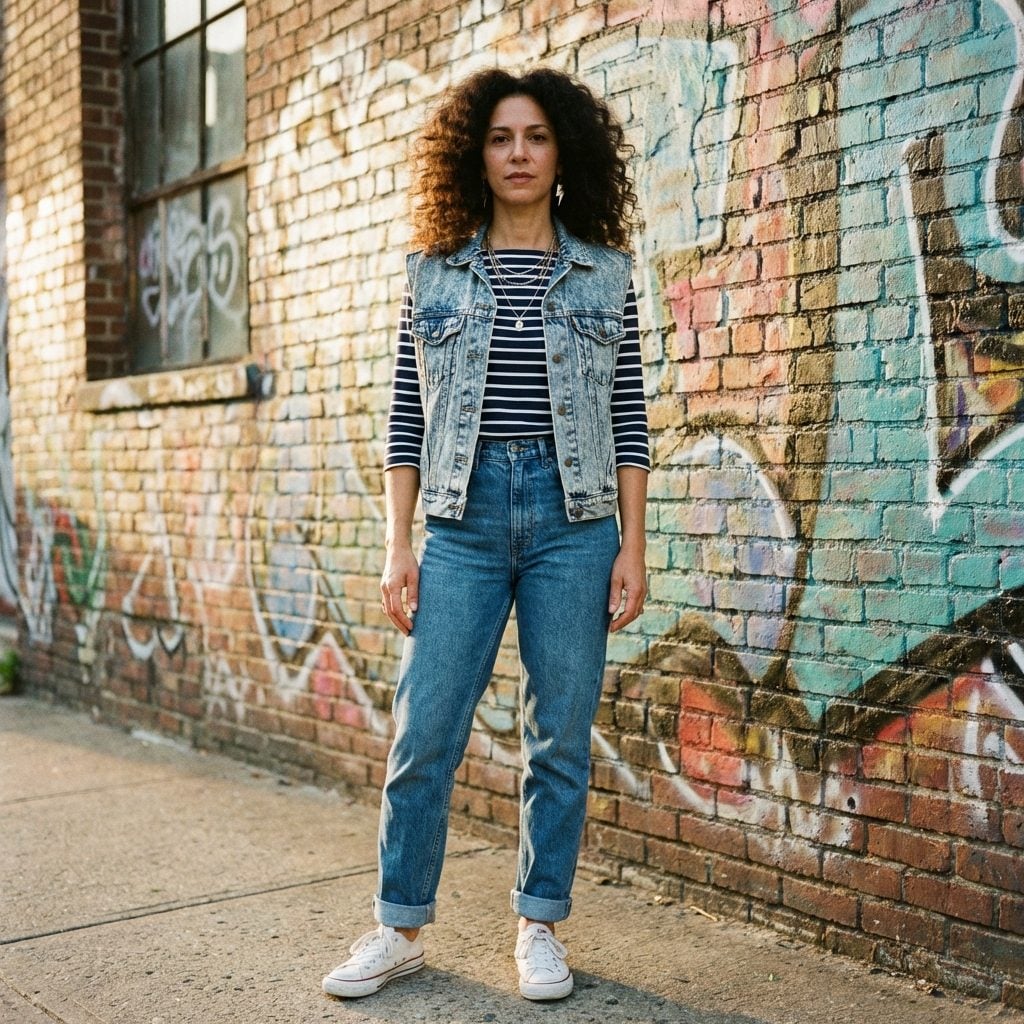
This combination had a very specific demographic: you had strong opinions about at least three bands, you had been to a flea market in the last month, and you owned more than one pair of earrings shaped like something unexpected (a lightning bolt, a tiny guitar, a palm tree). The acid-washed vest was sleeveless and usually had a back panel that was doing even more than the front. The striped boatneck underneath was your concession to nautical chic, which somehow coexisted peacefully with the aggressive denim vest energy.
14. Unitard Under Ripped Jeans With a Wide Cinch Belt
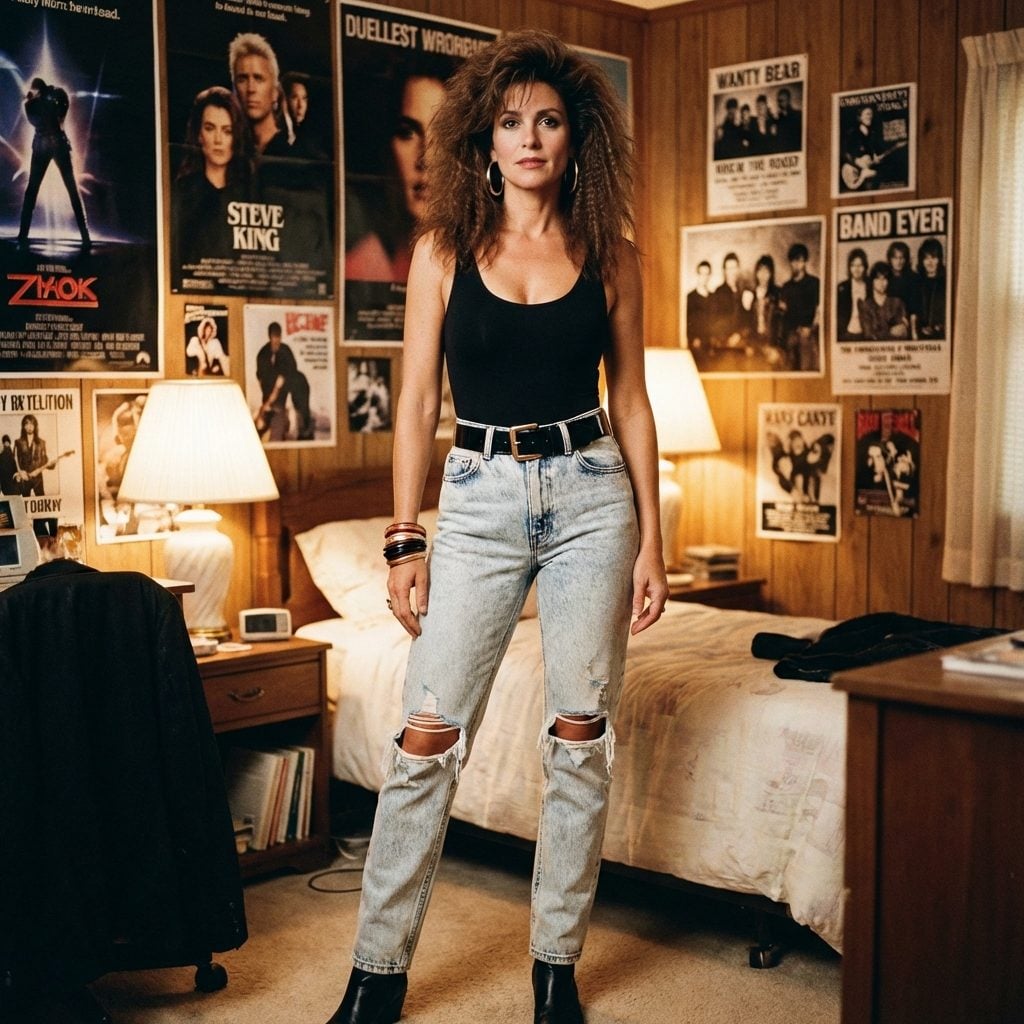
This was the outfit that required genuine commitment. You put on the unitard first: a long-sleeved or scoop-neck bodysuit in black, purple, or a particularly brave hot pink. Then you pulled on the ripped jeans, snapped the unitard closed, and added a wide cinch belt at the natural waist, pulling everything together into a shape that was very intentional and also required sitting down carefully.
The cinch belt was critical. Without it, the look was incomplete. It could be patent leather, it could be fabric with a gold buckle, it could be elastic with a geometric clasp. What it could not be was absent. The belt was the difference between looking like you had simply gotten dressed and looking like you had made a decision.
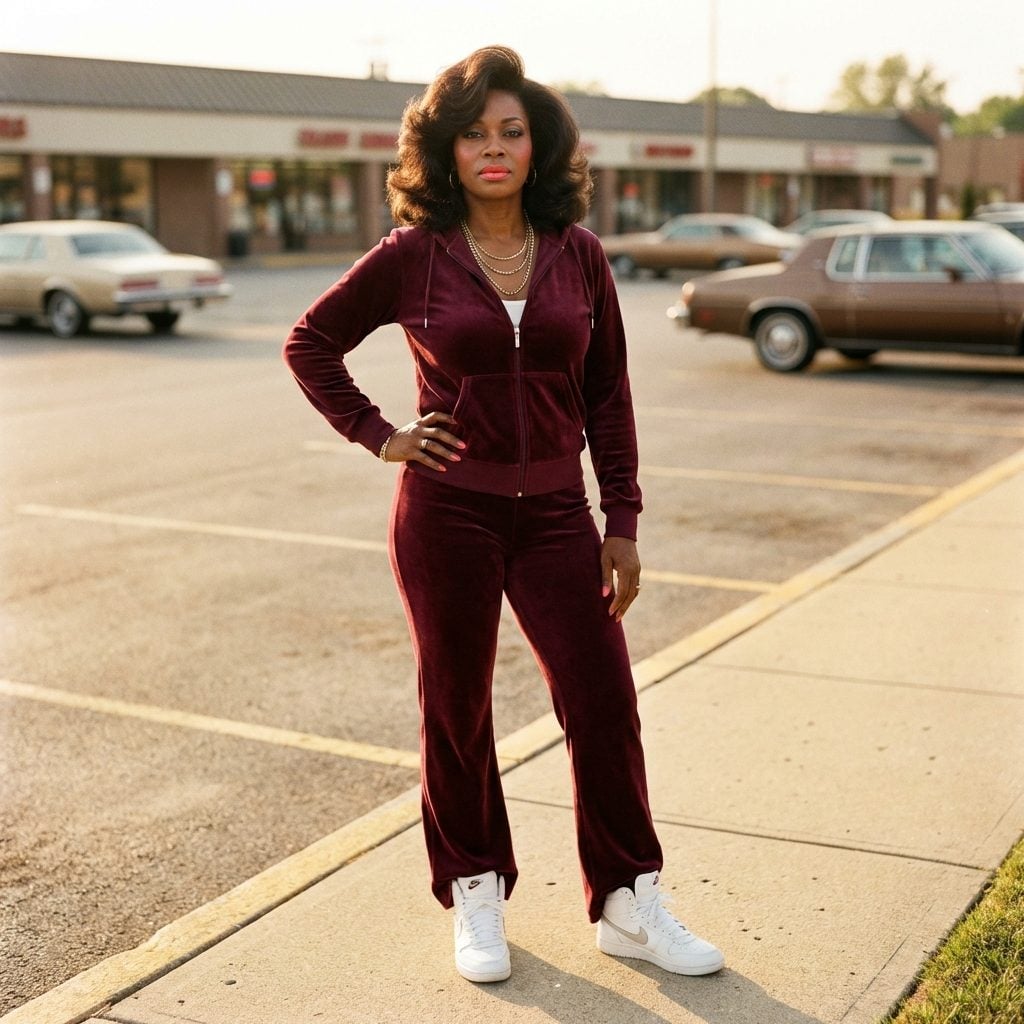
13. The Velour Tracksuit With White High-Tops and Gold Chains
❤️ Would you like to save this?
Before Juicy Couture made velour a 2000s thing, we were already living in it. The 1980s velour tracksuit came in deep jewel tones, burgundy, forest green, royal purple, and we wore it with crisp white Nike high-tops and at least two gold chains of varying thickness. This was not gym wear. This was going-to-the-mall wear, going-to-your-friend’s-house wear, going-anywhere-you-felt-important wear.
The velour tracksuit functioned as a complete personality statement. The gold layered chain necklace on top was not optional. It was load-bearing. Without it, you were just wearing pajamas. With it, you were Donna Summer running errands.
12. Floral Romper With Scrunched Slouch Socks and Ballet Flats
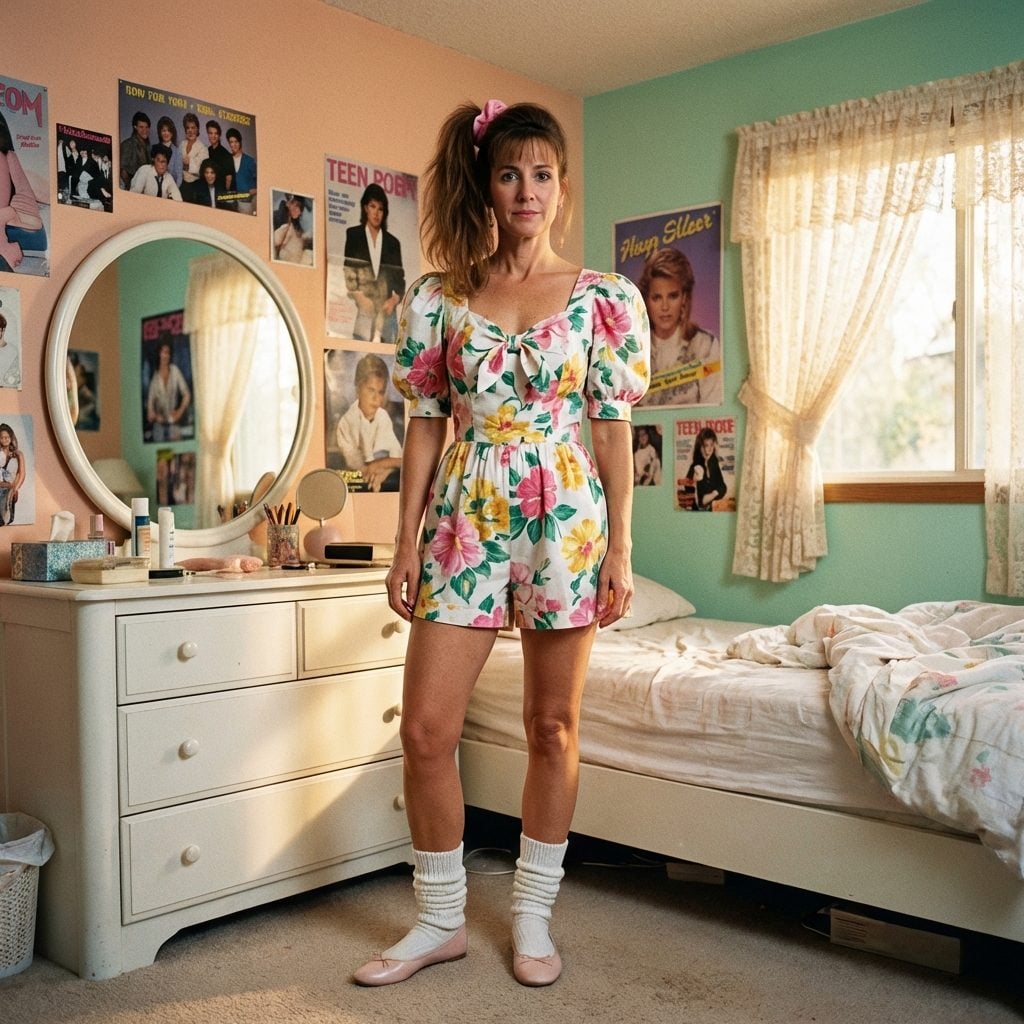
The floral floral romper was the 1980s answer to every occasion you weren’t sure how to dress for. Birthday party? Romper. First day of school? Romper. Going to the roller rink and pretending you were casual about it? Romper. The pattern was always maximalist, big blooms, clashing colors, none of that muted wildflower subtlety.
The slouch socks were non-negotiable, and they had to be properly scrunched, which took actual practice. Too tight and they looked like ankle socks. Too loose and they fell. The sweet spot was a specific amount of scrunch that communicated effortlessness while requiring full effort. Paired with ballet flats in either white or pastel pink, this outfit said: I am fun and I know it.
11. Stone-Washed Jeans, a Tucked-In Graphic Tee, and Suspenders
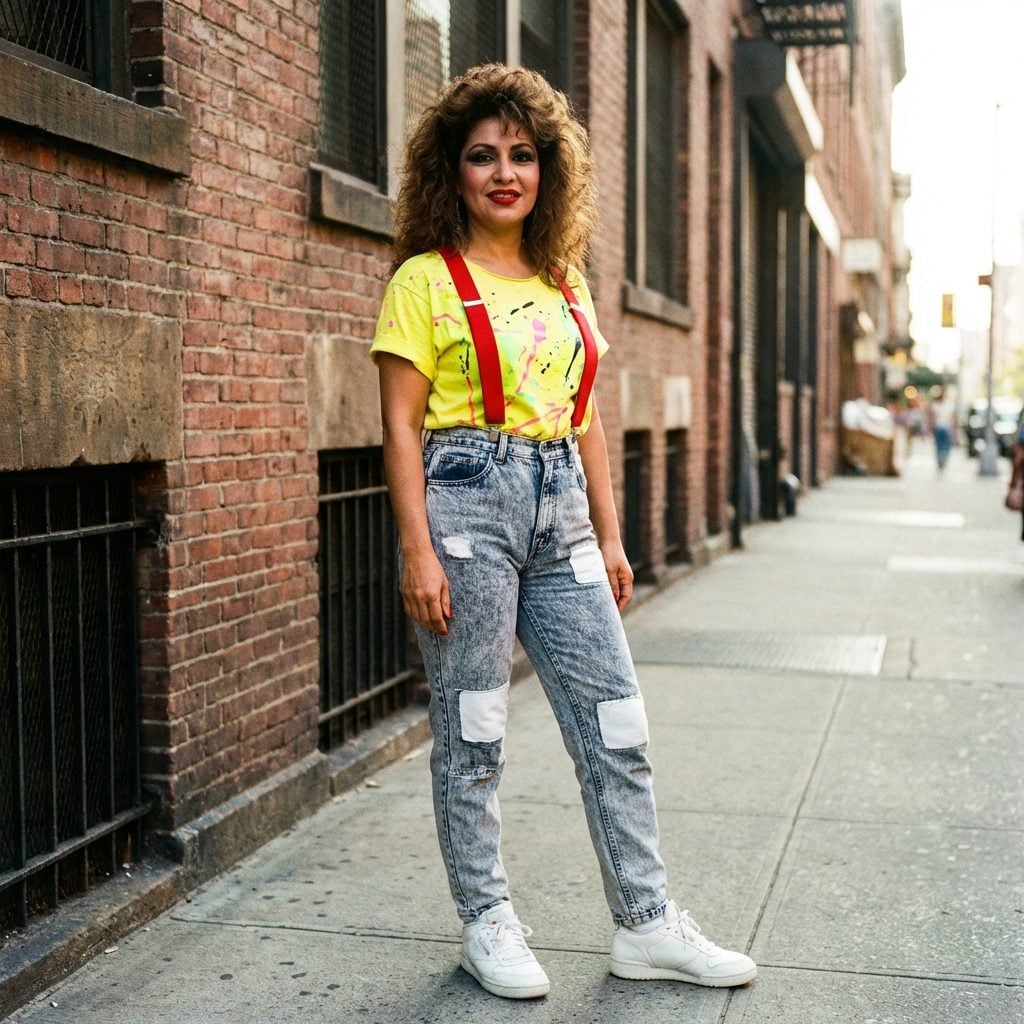
The suspenders were doing absolutely nothing structural, and we knew it.
Stone-washed jeans already had enough going on, the deliberately faded patches, the inexplicable extra whitening at the thighs, the slight stiffness of denim that had been chemically distressed before distressing was cool. Then we tucked in a graphic tee (Coca-Cola logo, a band name, something with neon paint splatter) and added clip-on suspenders in a contrasting color. Not because anything needed suspending. But because it created visual architecture over the tuck.
This combination worked because every single element was competing for attention and somehow the chaos resolved into a look. There was a math to it that we understood instinctively and cannot fully explain now.
10. Parachute Pants With a Cropped Mesh Top and High-Top Sneakers
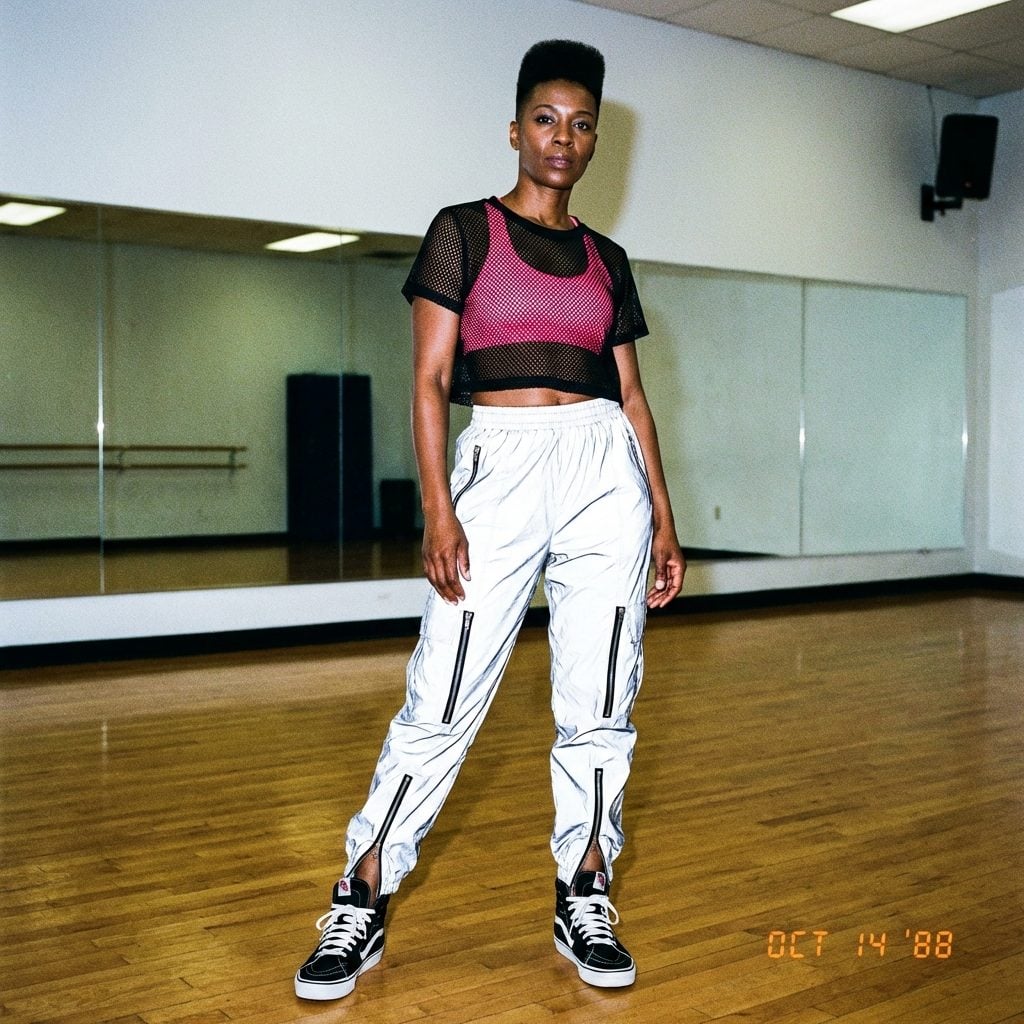
Parachute pants made a sound when you walked. A specific, nylon-on-nylon swishing sound that announced you from three hallways away. They came in black, silver, or electric blue, and they had zippers in places that served no conceivable purpose, at the ankle, along the hip, just… on the knee for reasons unknown. They were paired with a cropped mesh top that revealed your neon sports bra underneath, because layered visibility was the whole point.
The high-top sneakers completed a silhouette that looked, in retrospect, like someone had dressed a very confident person using only materials from a hardware store and a dancewear catalog. And yet. MC Hammer hasn’t apologized. Neither should we.
9. A Fur Coat Over Full Workout Wear Headed Absolutely Nowhere Near a Gym
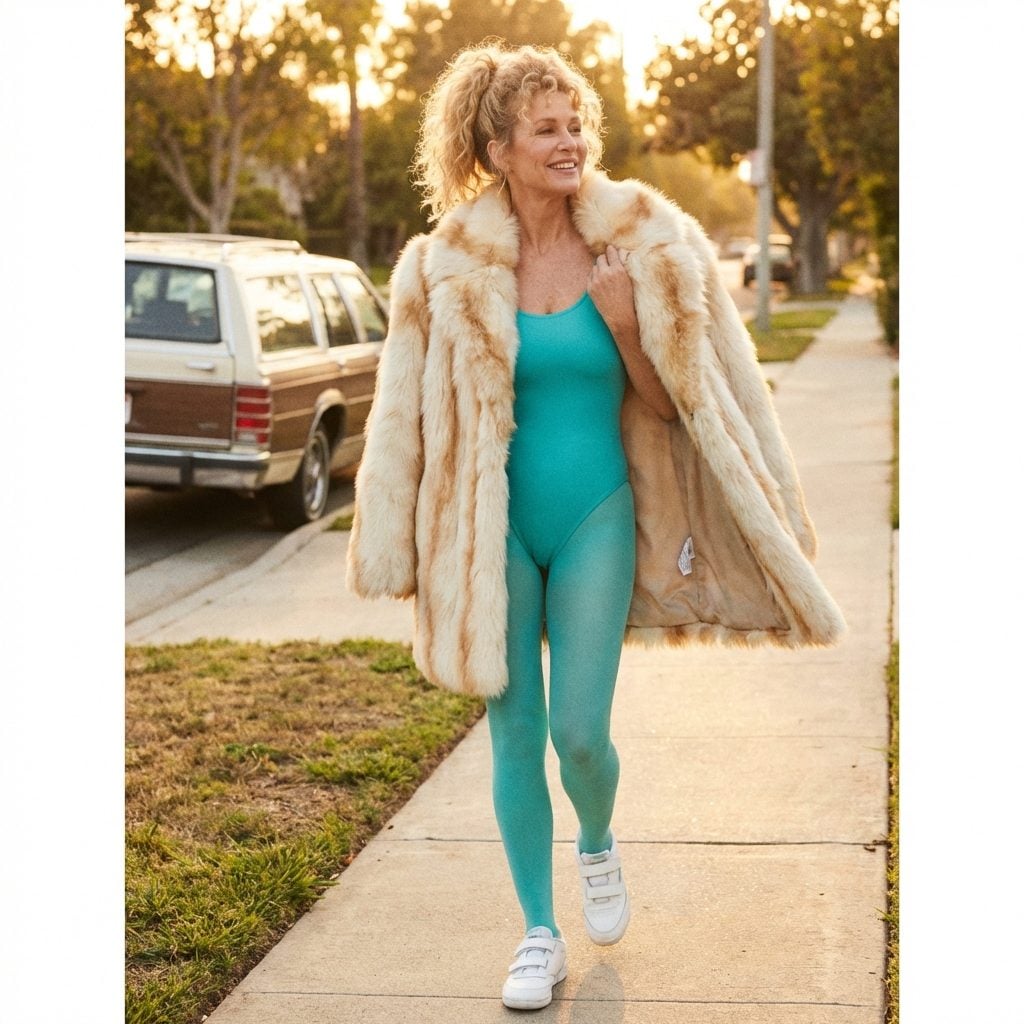
Nobody was fooling anybody. The faux fur coat thrown over a spandex leotard and high-waisted workout tights was not a practical gym-to-street transition. It was a statement about who you were: someone who worked out but also had taste. Someone who could wear both a chinchilla (faux, usually) and a unitard simultaneously and make it look intentional.
Jane Fonda started the workout-wear-as-fashion pipeline and the 1980s ran it straight off a cliff into a pile of fox-trimmed excess. The combination somehow communicated luxury and vigor at the same time. The leotard said: I am disciplined. The fur said: I am also rich. Together they said: I contain multitudes and I’m going to Kroger.
8. Satin Bomber Jacket Over a Lace Blouse and Tapered Wool Trousers
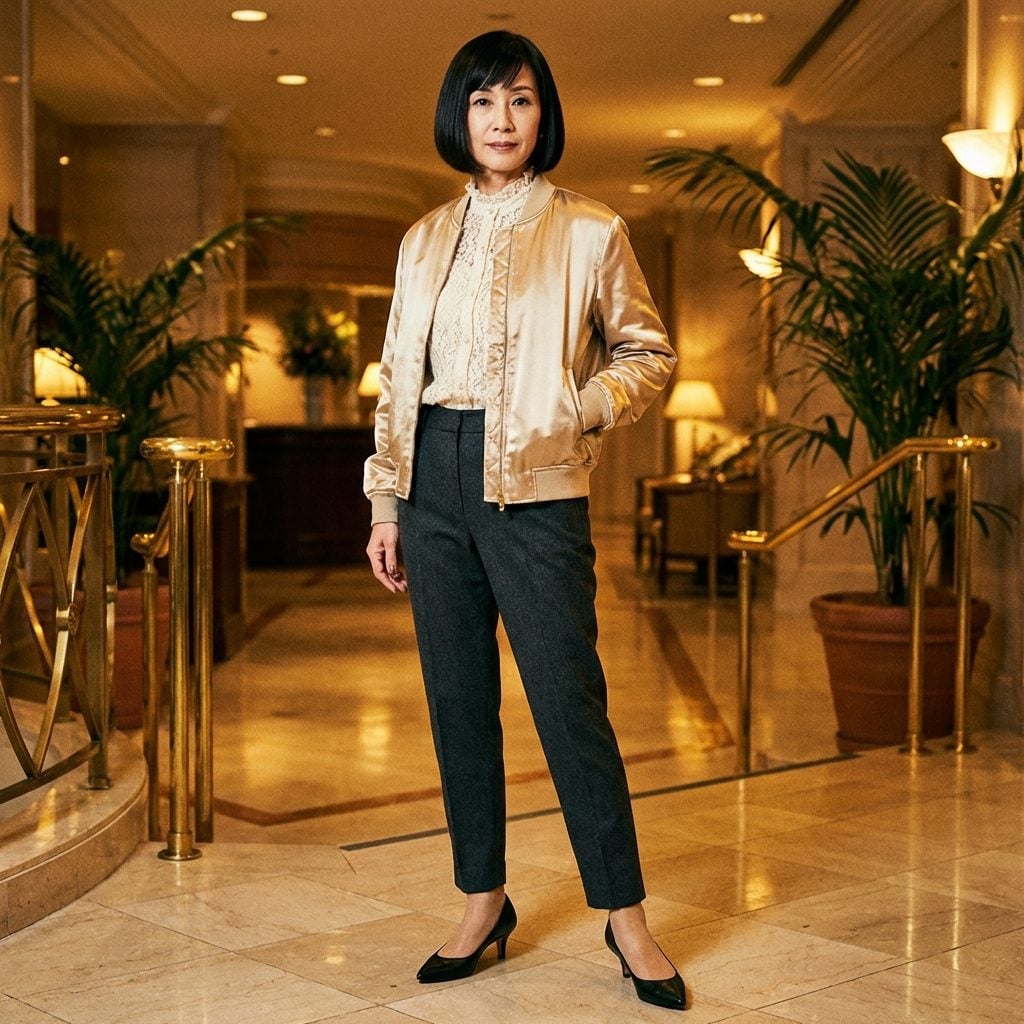
This was the combination that thought it was going somewhere fancy and also thought it was going to a stadium concert, and somehow pulled off both. The lace blouse, cream or ivory, with a high neck or a cascade of ruffles at the front, was delicate and romantic. The tapered wool trousers were crisp and professional. Then someone threw a satin bomber jacket on top, usually in champagne, black, or deep red, and the whole thing short-circuited into something genuinely chic.
The 1980s had a specific genius for combining textures that had no business being near each other. Rough and smooth. Structured and liquid. Feminine and tough. The satin bomber over lace was maybe the purest expression of that instinct, and it holds up better than most things from that decade.
7. Mini Skirt Over Patterned Tights With a Giant Mohair Sweater
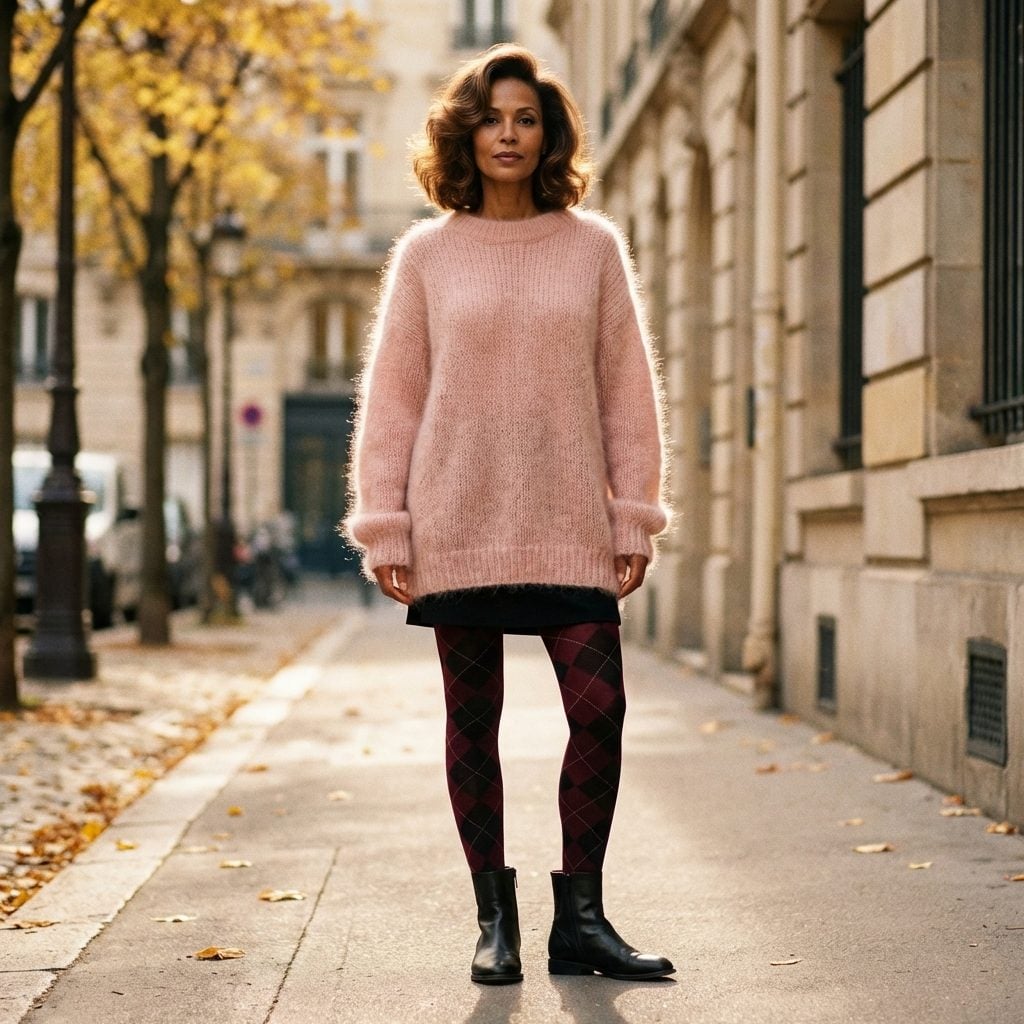
“The mohair shed on everything. Your coat, your boyfriend’s car, the inside of your locker. You were leaving a trail like a very fashionable Hansel and Gretel.”
The proportions of this outfit should not have worked. A sweater large enough to qualify as a small tent, hitting somewhere around the hips, worn over a mini skirt so short it barely registered as a garment. Underneath: patterned tights, ideally in a color that clashed intentionally with the sweater. The whole thing had a specific silhouette, oversized on top, barely-there in the middle, graphic on the legs, that the 1980s understood as sophisticated and we have since forgotten how to do.
The mohair itself had a halo. Literally. The fibers caught light and created a soft blur around your entire upper body, like you were permanently surrounded by a gentle aura of blush pink or cream or electric blue fuzz. It sounds absurd. It looked, honestly, kind of magical.
6. The Belted Jumpsuit With Giant Lapels Worn Over a Ruffled Blouse
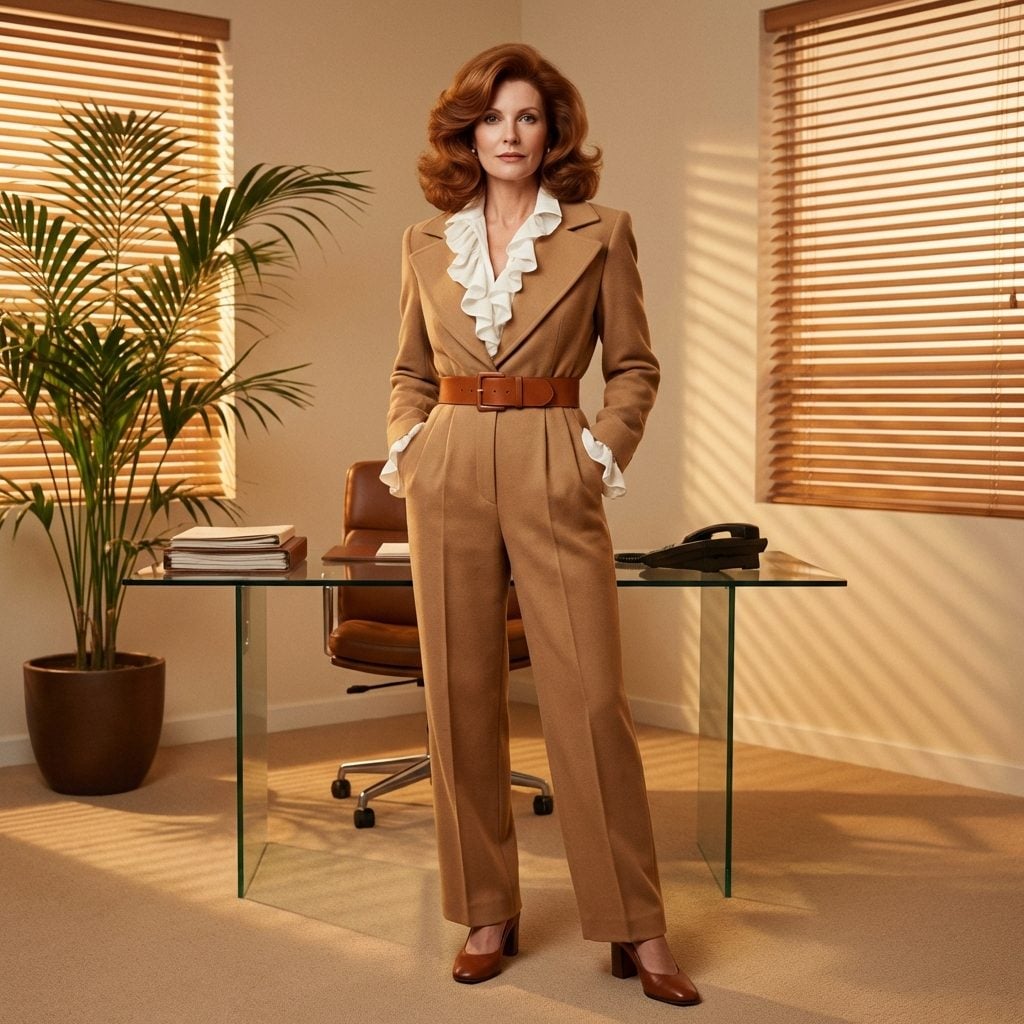
Wearing a blouse under a jumpsuit was a choice so specific to the 1980s that it almost works as a decade-identifier on its own. The jumpsuit had lapels the size of small continents, wide, sharp, often in a houndstooth or camel wool, and the ruffled blouse peeked out at the collar and cuffs like a Victorian ghost who had been hired as a wardrobe consultant.
A wide leather belt cinched the whole construction at the waist, because structure was everything and you were not going to let a single person wonder where your waist was. The result was simultaneously: businesswoman, romantic heroine, and person who was genuinely running late but looked excellent doing it.
5. Cowl Neck Sweater Dress With Leg Warmers and Ankle Boots
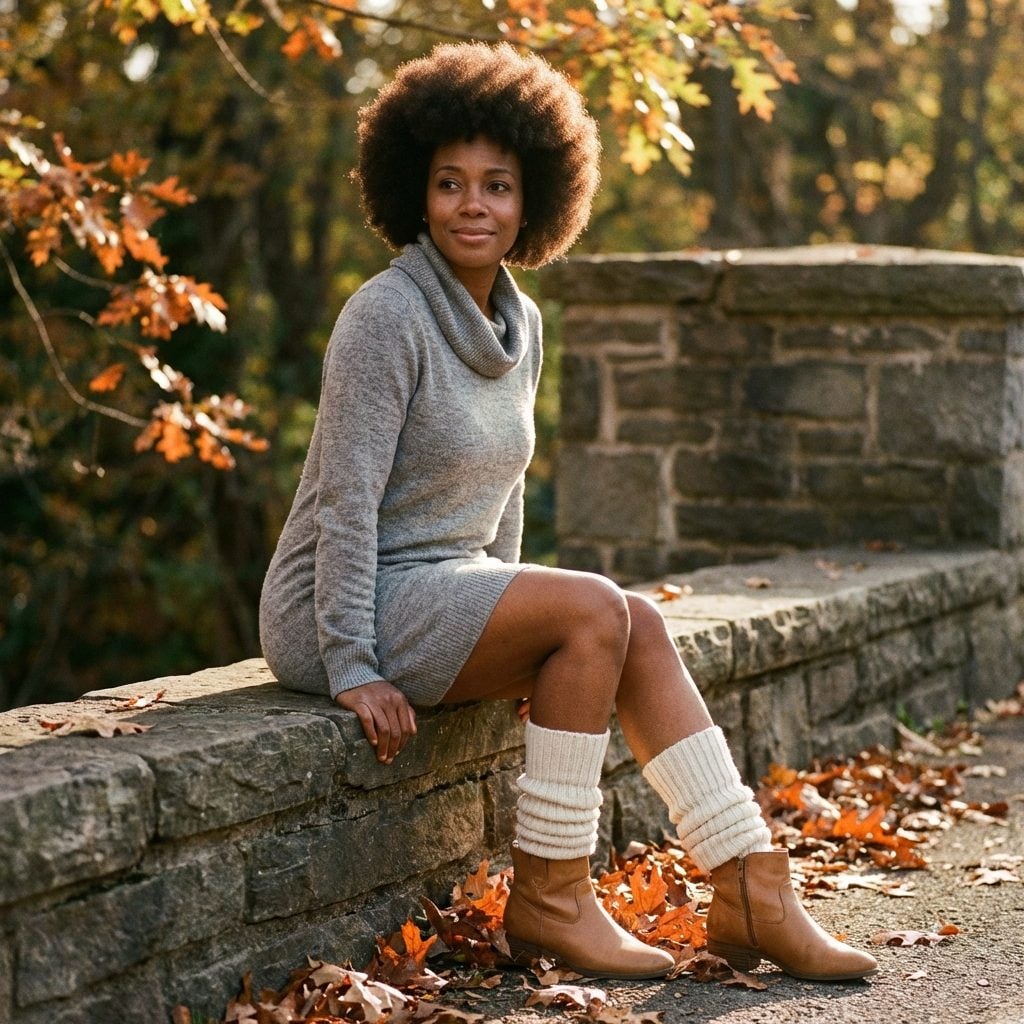
The cowl neck sweater dress was the 1980s equivalent of a security blanket you could wear to a dinner party. Soft, slightly oversized, usually in oatmeal or heather grey or dusty rose, it draped beautifully and required almost no effort. The cowl pooled at the neckline in a way that felt both casual and somehow glamorous. Then we added knit leg warmers, because apparently the dress wasn’t cozy enough.
The leg warmers usually bunched over ankle boots, creating a layered situation at the lower leg that took two minutes to arrange and another two to walk in. Was it practical? Absolutely not. Did it make you feel like you were starring in your own music video? Completely.
4. Oversized Blazer, Rolled Sleeves, a Tank Top, and a Skinny Necktie
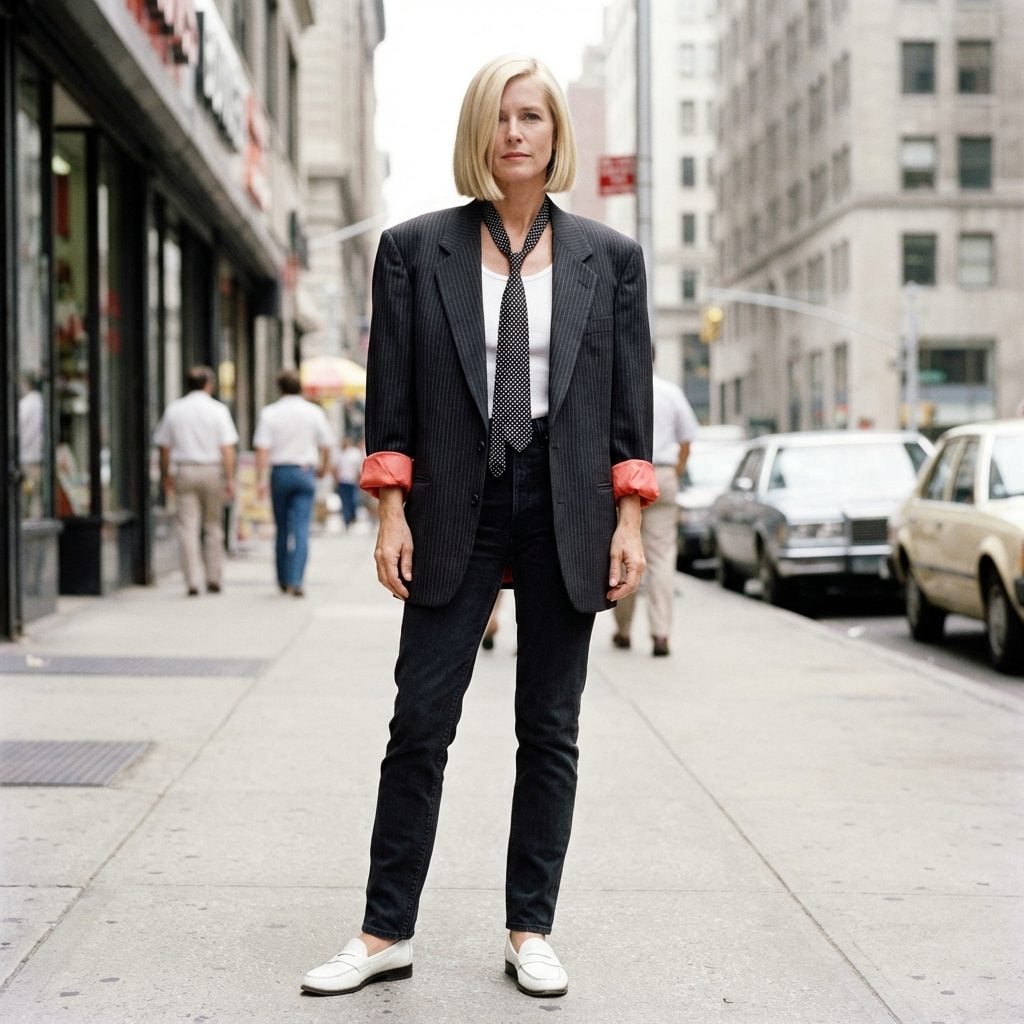
Annie Hall started something and the 1980s finished it in the most maximalist possible way. The blazer was always at least two sizes too big, intentionally, pointedly oversized, with sleeves shoved up to the elbow to reveal the lining. The tank top underneath was thin, often striped or solid white. And then: a skinny necktie, usually in a novelty print or a lurid solid color, knotted loosely or worn slightly askew because perfection would have undermined the whole point.
This outfit was the 1980s working woman’s answer to a question nobody asked out loud: can I borrow the power of a man’s wardrobe without actually wearing men’s clothes? The answer was: yes, and I’ll do it better. The oversized blazer was the whole argument made visible.
3. Two Polo Shirts Layered With Both Collars Fully Popped
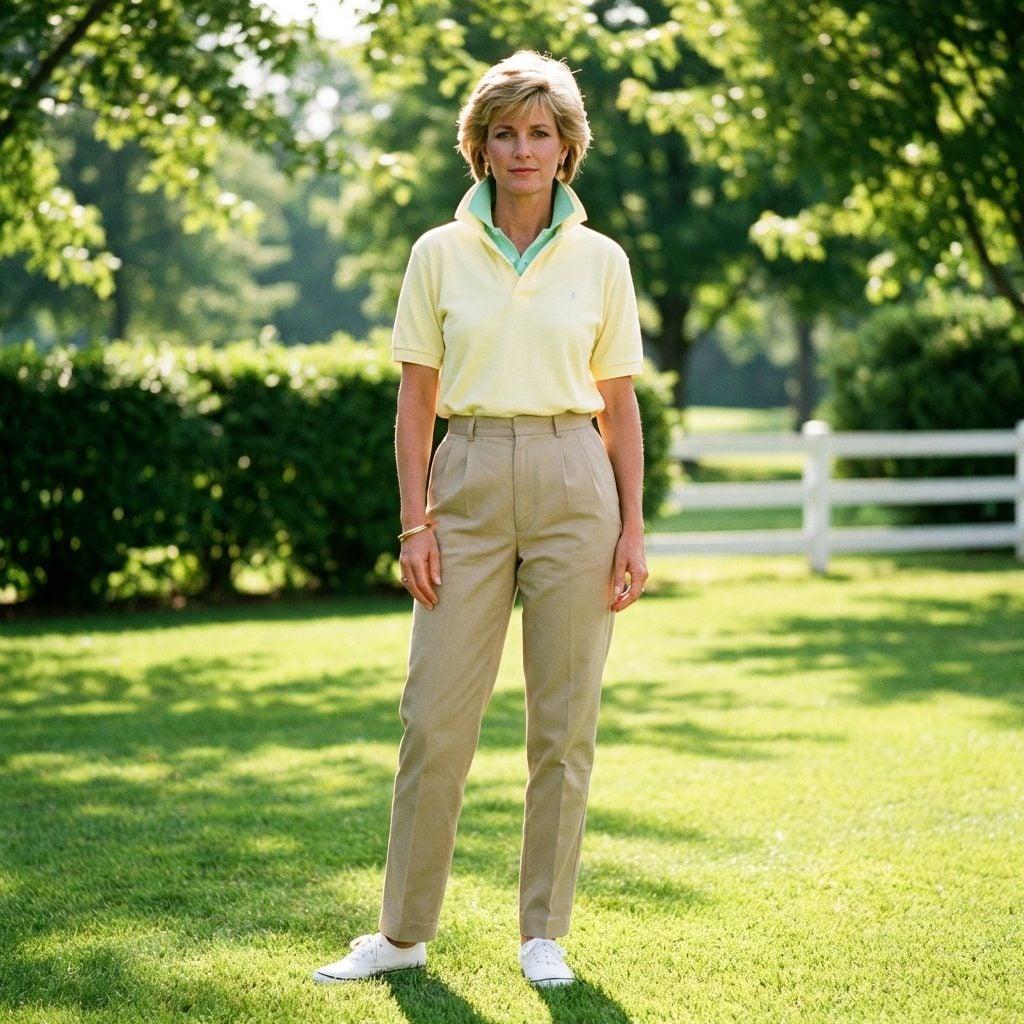
This required actual coordination. You had to choose two polos that looked good together, ideally one solid, one with a stripe, or two complementary colors, and layer them so both collars stood at attention simultaneously. It was architecture. It was planning. It was completely unnecessary and we treated it with the seriousness of a structural engineering project.
The collar-popping itself was a whole micro-culture. One collar popped was cool. Two collars popped was a specific kind of preppy maximalism that signaled you had older siblings, a membership to a country club you never actually attended, or at minimum a very good episode of Family Ties as a reference point. The Lacoste and Ralph Lauren logos had to both be visible, obviously. You weren’t doing all that work to hide the alligators.
2. Rhinestone-Studded Denim Jacket Over a Polka Dot Dress
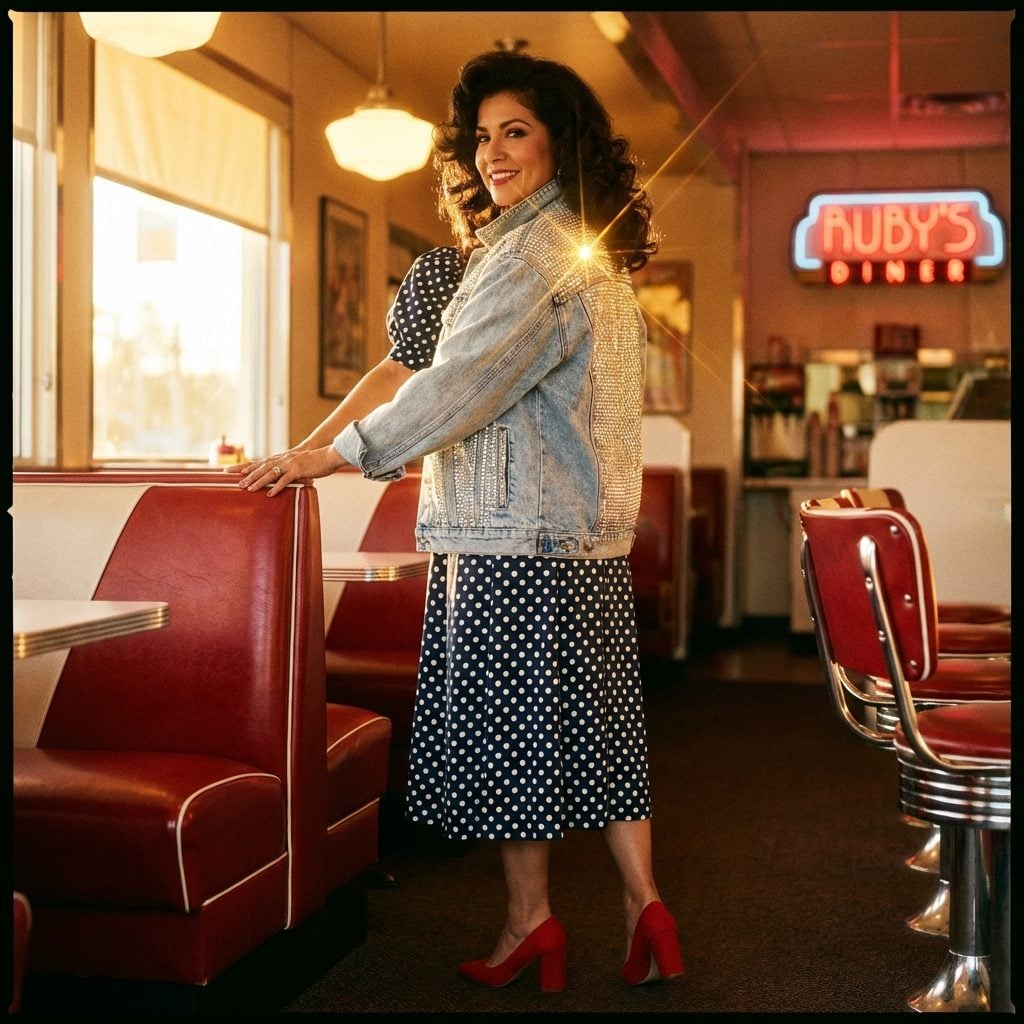
The rhinestones were not subtle. They were not meant to catch the light discreetly in a dimly lit room. They were meant to be seen from a moving vehicle. The rhinestone denim jacket was bedazzled, sometimes by the manufacturer, sometimes by hand with an actual Bedazzler kit received as a Christmas gift, and it covered the back, the pockets, the yoke, and sometimes the sleeves in varying densities of glittering crystal and plastic gem.
Under it: a polka dot dress in a contrasting scale. Large dots on small fabric, or a tiny dot print on a full skirt. The pairing should have been chaotic. Two competing patterns, one maximalist and one classic, thrown together with no mediating neutral. Instead it read as joyful, and confident, and specifically, irreplaceably 1980s in its refusal to choose between glamour and sweetness.
This was the decade’s defining fashion move condensed into one outfit: more is more, texture against texture, shine next to print, and absolutely no apology for any of it.
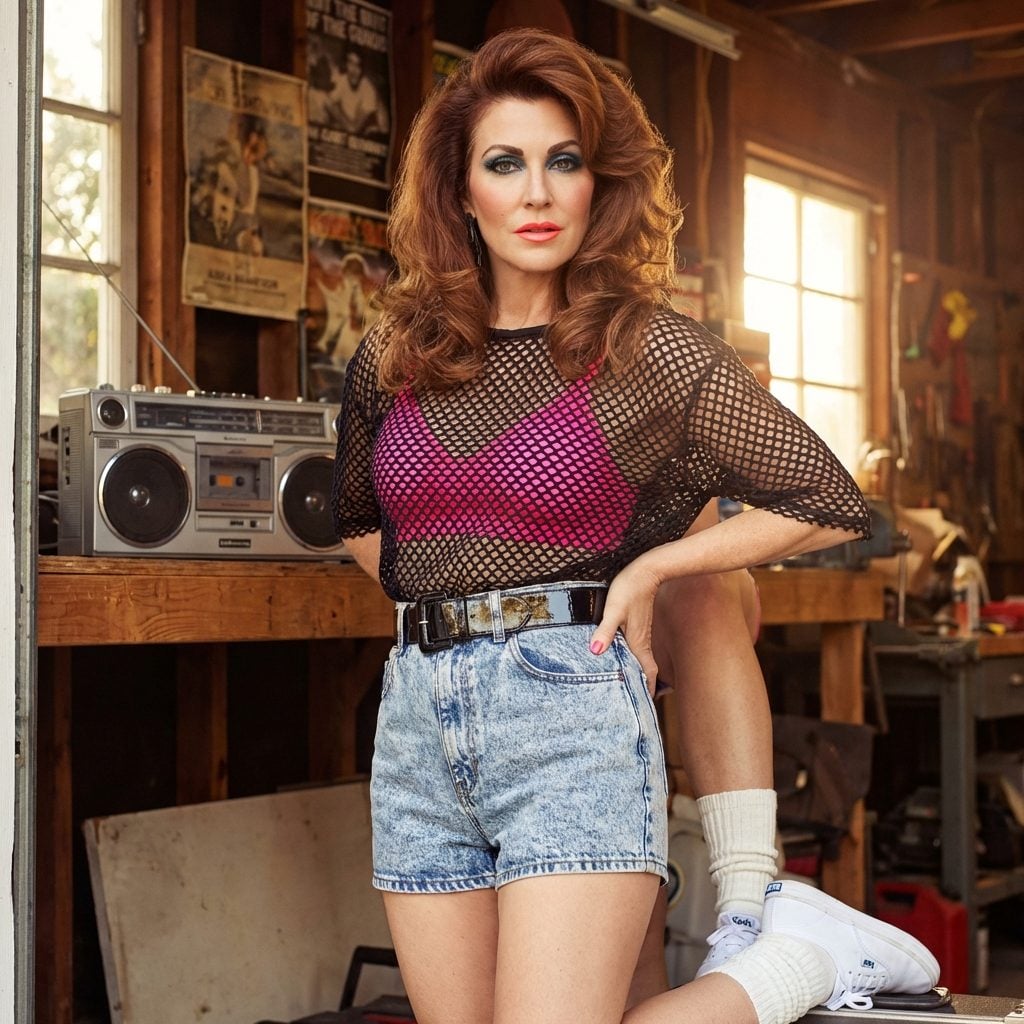
1. The Mesh Top Over a Neon Bra With High-Waisted Shorts
❤️ Would you like to save this?
You wore your underwear as outerwear and called it fashion, and nobody blinked. The mesh top was the great equalizer of 1985, it didn’t matter if you bought yours from outfit-heavy racks at Express or cut holes in a fishnet stocking, the effect was the same: a neon bra glowing through open weave like a beacon of pure confidence.
Hot pink. Electric yellow. That specific shade of green that had no name but existed only in 1980s neon tubes. You picked the bra first and built the whole look around it. Paired with high-waisted shorts, denim, preferably with the waistband rolled once for structure, and white Keds, this was a complete statement. Madonna wore it. Cyndi Lauper wore it. Your lab partner Sandra wore it to the roller rink on a Friday and suddenly everyone was raiding their mom’s lingerie drawer.