
❤️ Would you like to save this?
There was a specific kind of confidence required to leave the house in 1985. Not the quiet, understated kind, the loud, color-blocked, shoulder-padded, neon-drenched kind that announced your arrival before you even walked through the door. We wore bikini bottoms to our hip bones, scrunchies coordinated to our socks, and full faces of makeup to the beach. We thought we looked incredible. Some days, we actually did. Here’s what summer used to look like.
FYI, thanks to AI imagery software, we’re able to create very specific fashion and hairstyle examples to illustrate the points being made. In some cases, imagery is exaggerated to hammer home the point. Also, assume links that take you off the site are affiliate links such as links to Amazon. this means we may earn a commission if you buy something.
37. High-Waisted Shorts That Actually Sat at Your Waist (Revolutionary, Apparently)

The waistband hit your actual waist. Not your hips, not some ambiguous zone three inches below your navel, your waist. And we all walked around like this was simply how shorts worked, because it was. The silhouette created was long-legged and tucked-in and made every outfit look intentional in a way that took fashion another forty years to rediscover.
Gen Z thinks they invented this. They did not. We were there first, in our cotton twill with the little gold button at the top, and we looked correct.
36. Denim Shorts So Stiff They Could Have Stood Up On Their Own

These were not soft. They were not forgiving. They had the structural integrity of a cardboard box and the flexibility of a cast iron skillet. You didn’t break in 80s denim shorts, you negotiated with them over several summers until they finally softened around the thighs into something approaching comfort.
The high-waisted denim shorts came in one shade of medium blue and one shade of acid wash, and both options were equally unyielding. Stretch denim was not yet a concept anyone had thought to develop. We simply sat carefully.
35. Elastic Waistbands on Absolutely Everything, Nobody Batted an Eye
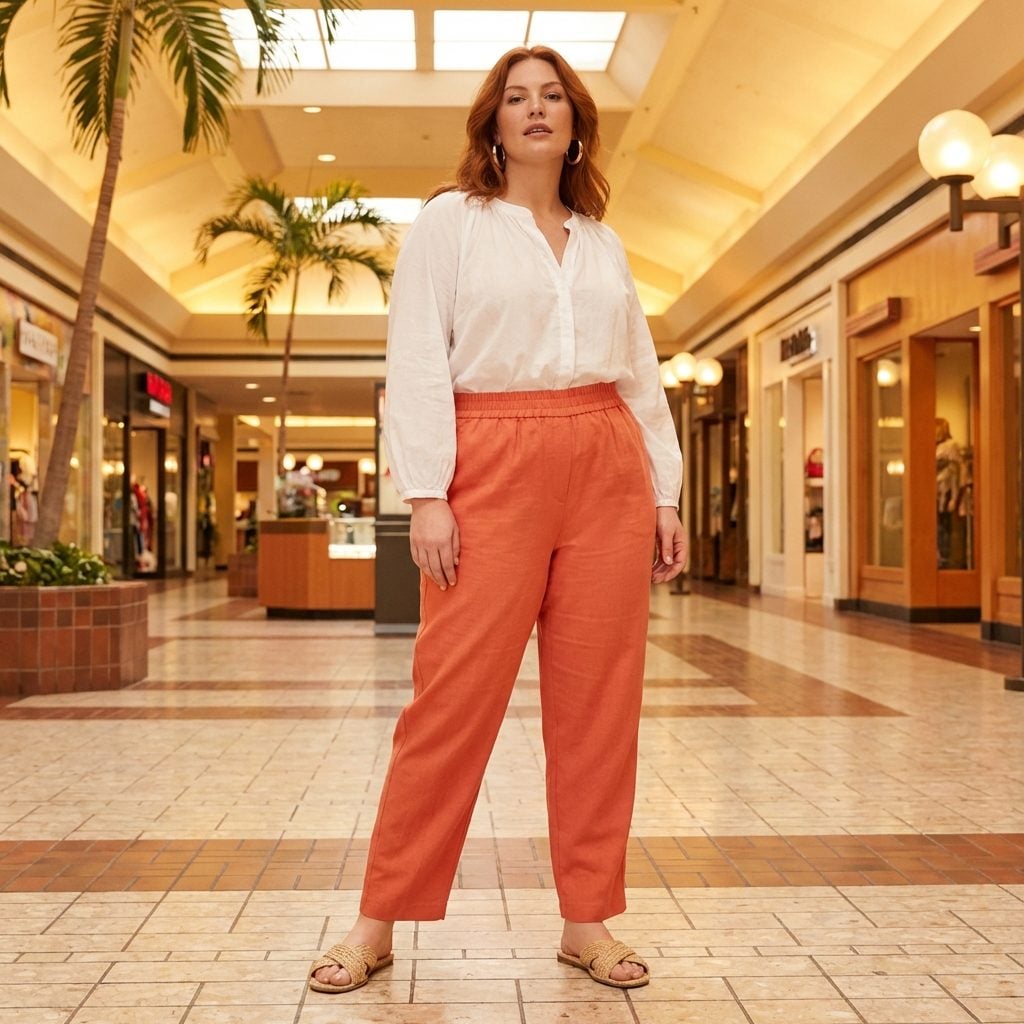
Shorts: elastic waist. Skirts: elastic waist. Summer pants: definitely elastic waist. Even some tops had a little elastic action happening around the hem to keep the blouson situation under control. The 1980s was essentially one long, comfortable experiment in waistband technology, and we were all the test subjects.
There was no stigma. No “oh, that looks like pajamas.” An elastic waistband simply meant the garment fit, which was considered a feature, not a flaw. We miss this energy desperately.
34. Shoulder Pads in Swimsuits. We Cannot Explain This and We Will Not Try.

Someone in a design studio in 1984 looked at a swimsuit and thought: this needs more shoulder. And the rest of the industry agreed. Structured, padded, power-shouldered one-piece swimsuits became a genuine product category. You could go to the beach looking like you had a board meeting at 3pm.
Summer tops had them. Lightweight blazers worn over bathing suits had them. Even some T-shirts had a subtle internal pad situation happening near the shoulder seam. The silhouette was a perfect inverted triangle, and we were all deeply committed to it.
“The goal was to look powerful even while getting sunburned. We fully achieved this.”
33. Neon Wasn’t an Accent. Neon Was the Whole Point.
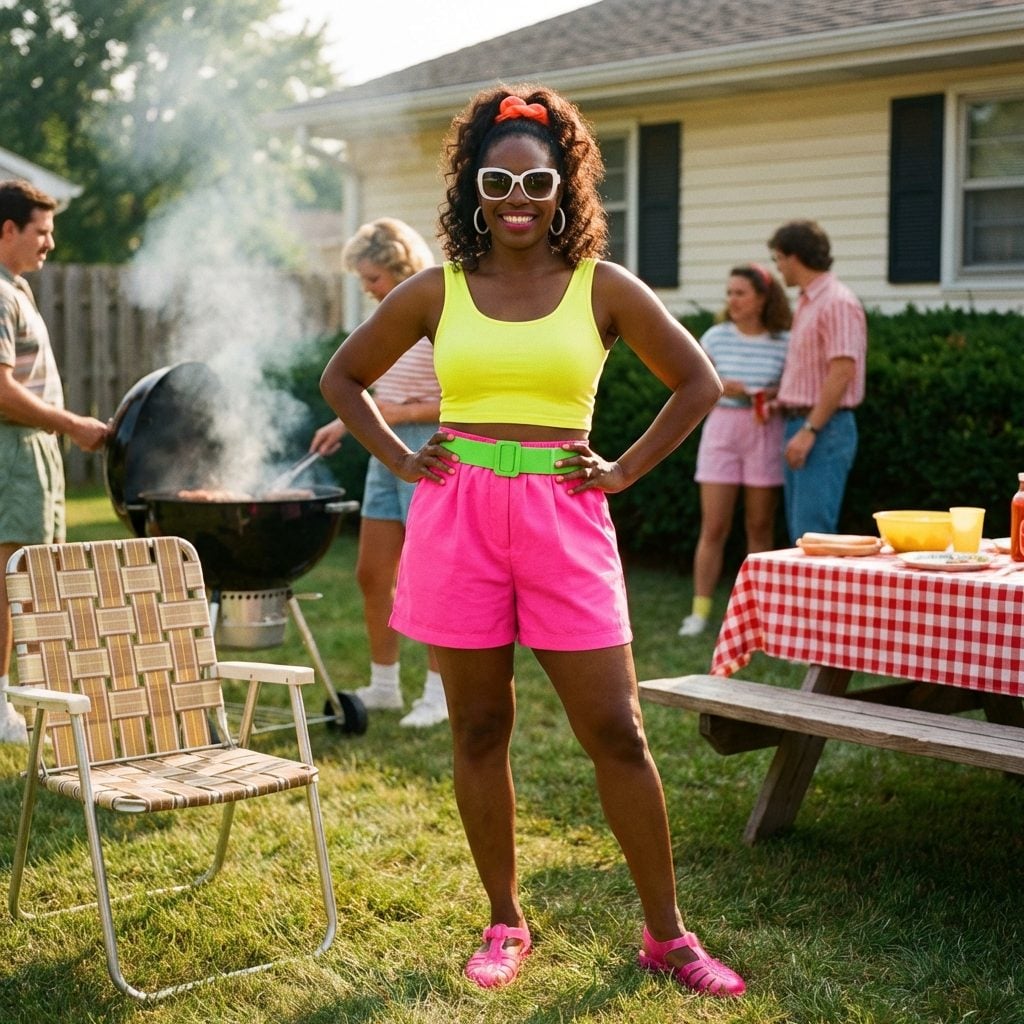
You did not wear a pop of neon. You wore neon, and then more neon, and then possibly neon accessories to bring the look together. Hot pink shorts, electric yellow tank, neon green scrunchie, each piece competing for retinal dominance at full volume. The word “subtle” had not yet entered the summer fashion vocabulary.
These were not muted pastels with one bright earring. These were colors that could be seen from a moving car. Zinc oxide on the nose was optional. Blinding everyone at the cookout was not.
32. Matching Sets Where the Print Went All the Way to the Bag (and Possibly the Towel)
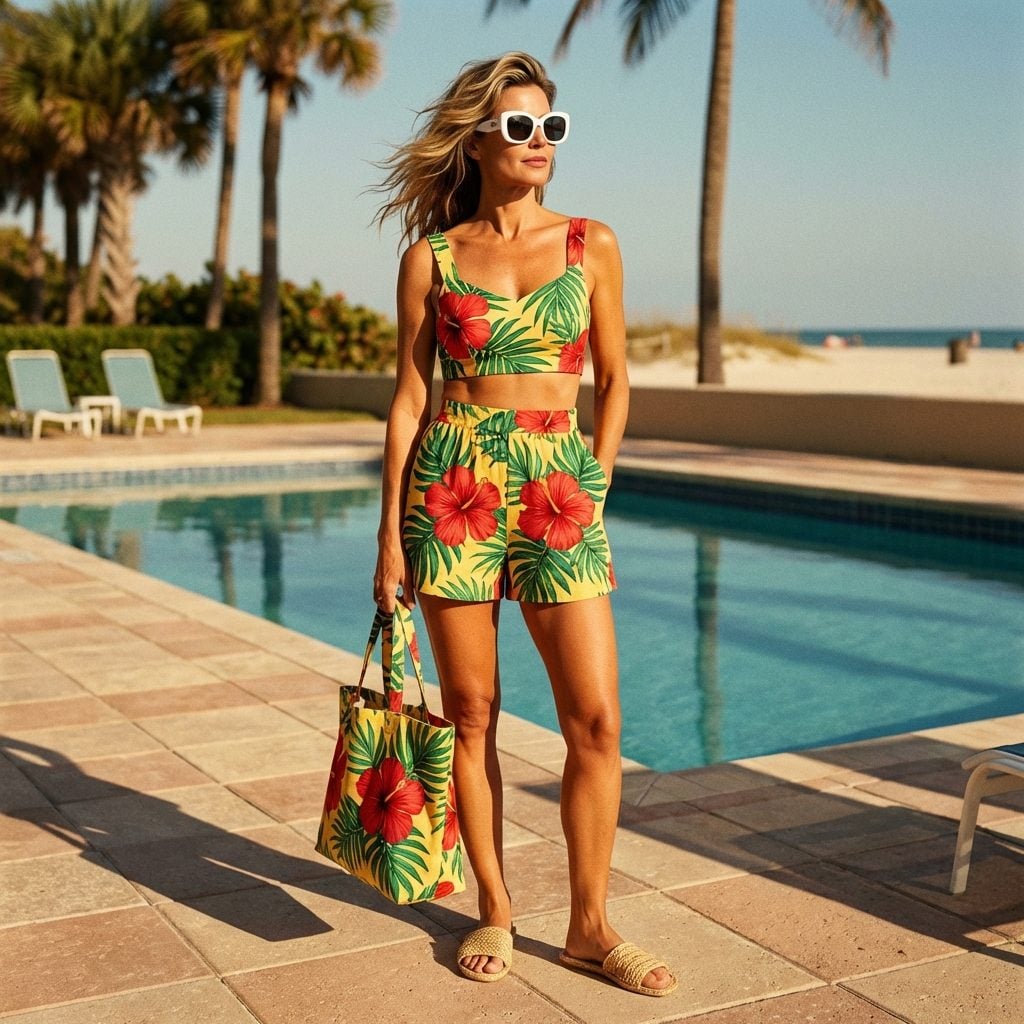
Not a coordinated set. Not a tonal match. The exact same tropical print, the same palm trees, the same hibiscus flowers at the same scale, on your shorts, your crop top, and your canvas tote bag. Sometimes the beach towel too, if you had found the complete collection at Sears. The accessory outfits and the clothing were literally the same fabric cut into different shapes.
This required discipline. This required commitment. This required a woman who looked at a loud tropical print and thought: more of this, please, in every category.
31. Jelly Shoes: Straight From the Toy Aisle, Worn as Legitimate Footwear

Translucent, slightly sticky, available in every color of a gumball machine, and made entirely of PVC plastic that turned your feet into a small personal sauna by noon. Jelly shoes were not comfortable. They were not supportive. They gave you blisters in locations that felt medically improbable. And we wore them everywhere, to the mall, to summer school, to someone’s birthday party, because they were extremely cute and that was the end of the discussion.
The flat ones were the classic. Then came the slight heel version, which added ankle instability to the existing blister situation. Reebok and Candie’s both had versions, but the best ones came in a clear bag from a discount store and cost about four dollars.
30. The Scrunchie Was Not Optional, It Was Infrastructure
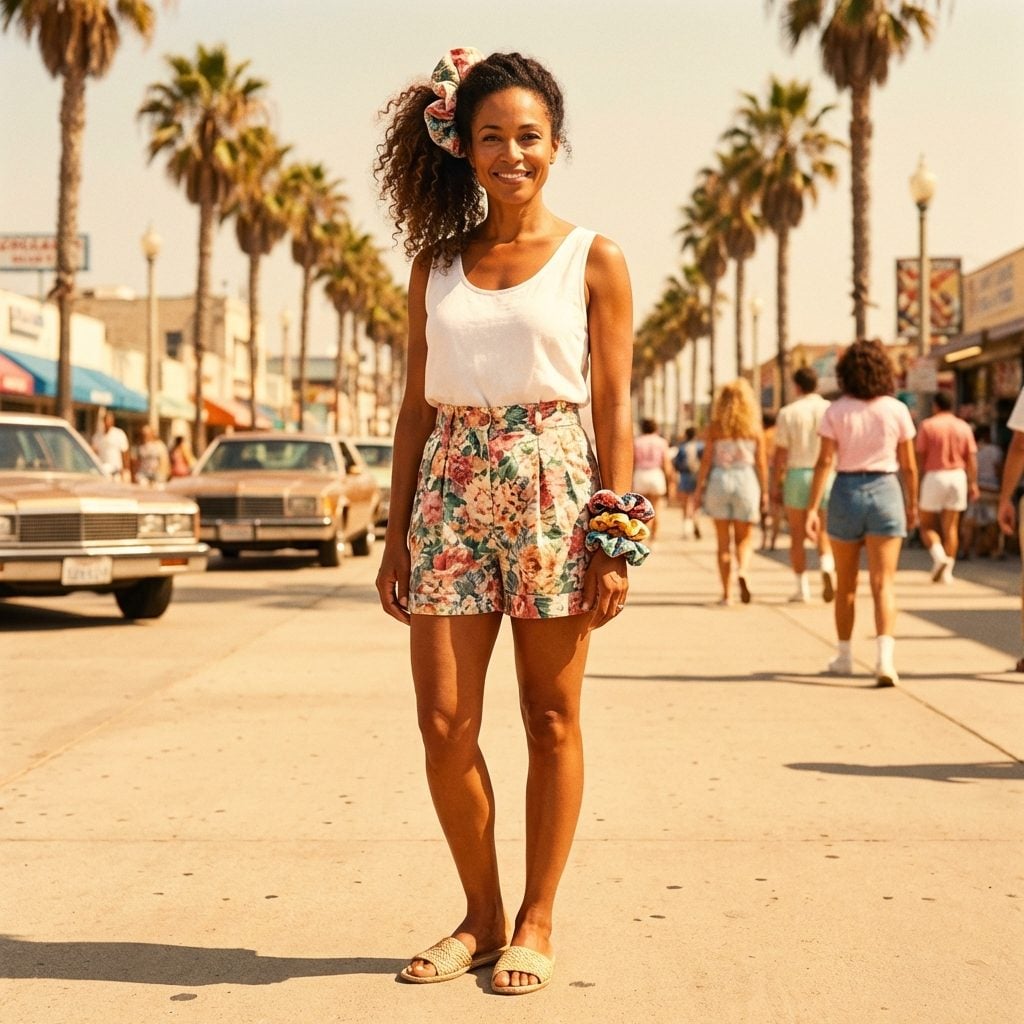
Every wrist had one as backup. Every bag had three. You matched the scrunchie to the outfit the way you matched your shoes, it was part of the system, not an afterthought. Velvet scrunchies for slightly dressier occasions. Neon terrycloth for the pool. Floral cotton for general summer deployment.
The high side ponytail required a scrunchie large enough to be seen from a reasonable distance. The half-up situation required a smaller one. There was a whole hierarchy here that everyone understood without it ever being written down anywhere.
29. Oversized Sunglasses That Covered Everything From Your Eyebrows to Your Cheekbones
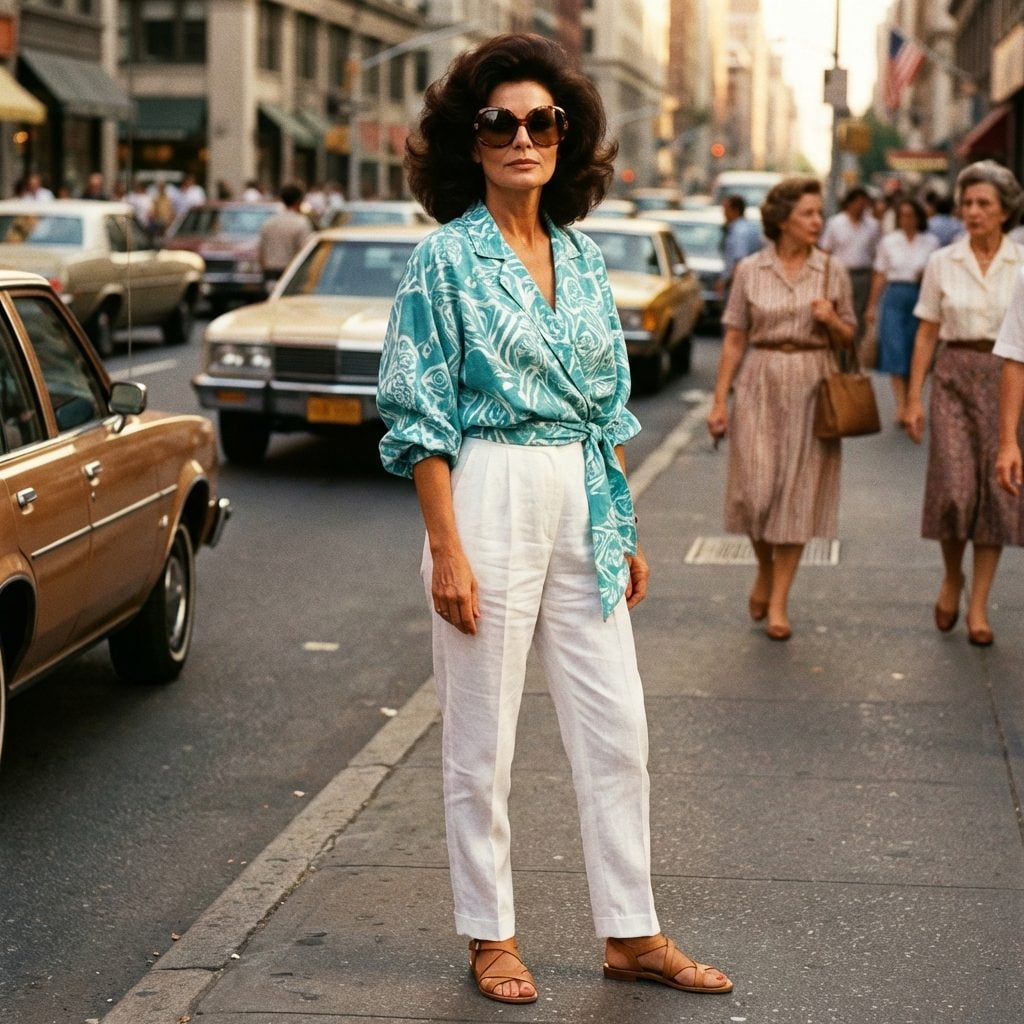
The frames were large. The lenses were larger. The tint was somewhere between amber and nearly opaque. These were not sunglasses you wore to see better outdoors, these were sunglasses you wore because they covered approximately 40% of your face and this read as extremely glamorous. And honestly, they were right about this one. The massive oversized vintage sunglasses were a flex, and the flex worked.
Tortoiseshell was the pinnacle. White frames for the beach. Clear frames if you were fashion-forward. All of them enormous. All of them deeply, correctly glamorous in the specific way that only the 1980s understood.
28. Biker Shorts Were Daywear, and Yes, With an Oversized Blazer
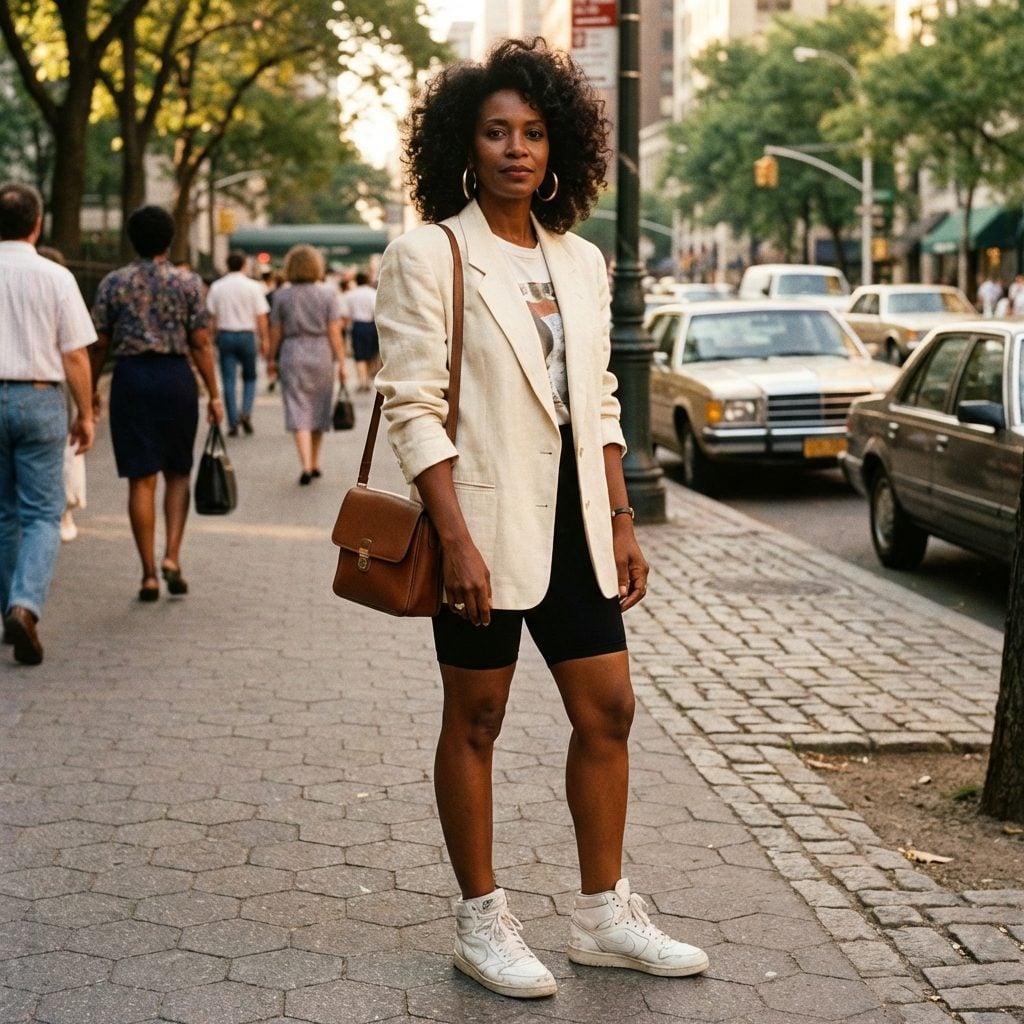
Long before athleisure was a word anyone used, we were pairing black biker shorts with oversized blazers and calling it an outfit. Not a workout outfit. Not a loungewear outfit. A going-somewhere outfit. The combination made complete visual sense to everyone alive in 1989, and the logic was: the blazer has shoulder pads, the biker shorts are sleek, together they create a person who means business but also might go for a run.
Princess Diana wore this combination and the rest of the western world followed within approximately six months. White sneakers, oversized blazer, black biker shorts, big hair. This was peak modern dressing and we were living in it.
27. Socks With Sandals, Not Ironically, Not as a Statement. Just As Shoes.
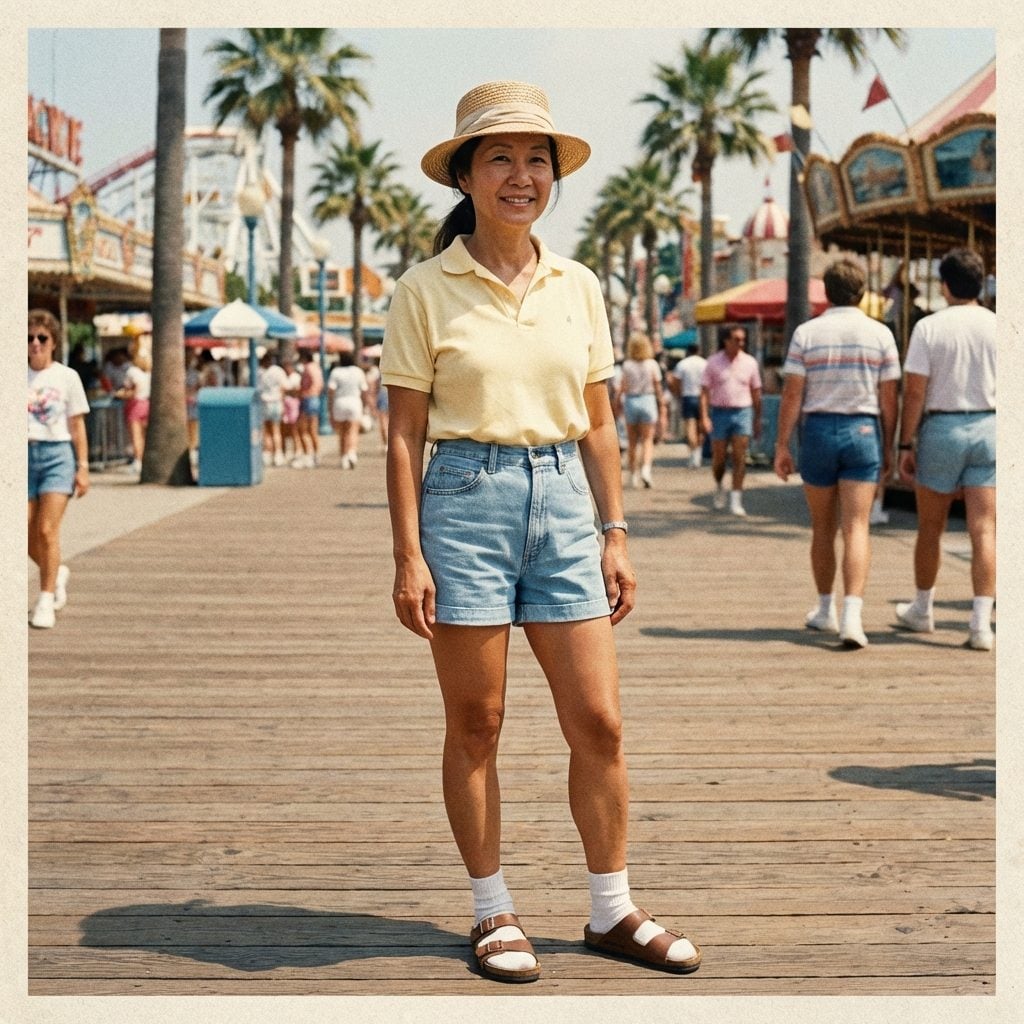
White ankle socks. Birkenstocks, or sometimes those flat woven sandals with the adjustable velcro strap. Not a fashion statement. Not a deliberate subversion of style norms. Just a person who wanted to wear sandals but also wanted to wear socks because it was a slightly cooler day or because she had a blister from her jelly shoes or because that’s simply what she put on.
The combination was everywhere, at theme parks, at the beach boardwalk, at the county fair. Nobody photographed it for a street style blog because street style blogs did not exist. Nobody called it a “moment.” It was just shoes.
26. Scrunched-Down Socks Were a Deliberate Styling Choice, Not a Laundry Situation
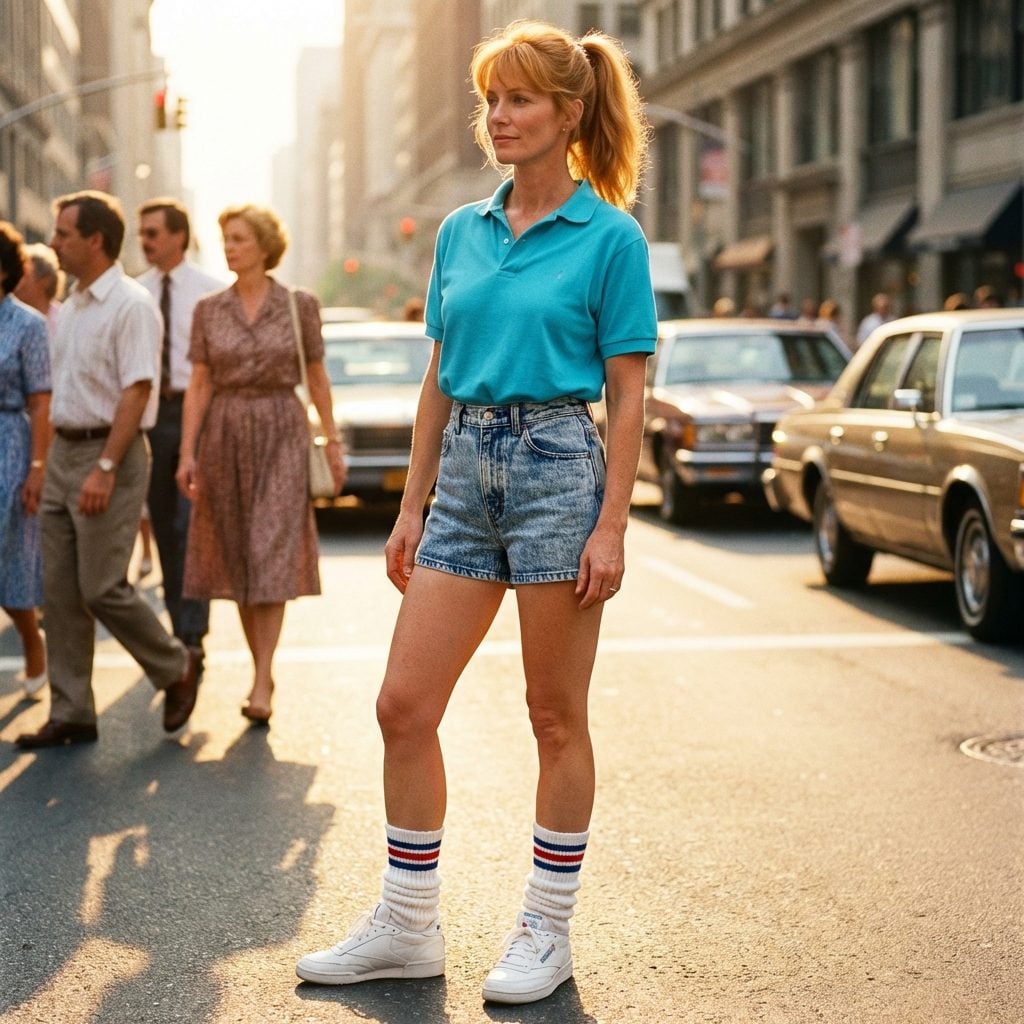
You pulled the sock up all the way, then folded it down deliberately, creating a thick cuffed roll above the ankle. Then you adjusted it. Possibly re-scrunched it. The sock had to sit just right, not too high, not collapsed completely, a specific strategic scrunch that took actual practice to get correct. This was a skill. People had this skill.
Triple-striped tube socks were the gold standard. Keds or white Reeboks were the preferred delivery vehicle. The backpack outfits of every 1980s summer camp had this sock situation at the bottom of every single look, consistent as a signature.
Women under 30 will never fully understand that this required intention. That the scrunch was a choice. That someone stood in front of a mirror and adjusted their sock fold before leaving the house. And it looked good. It genuinely looked good.
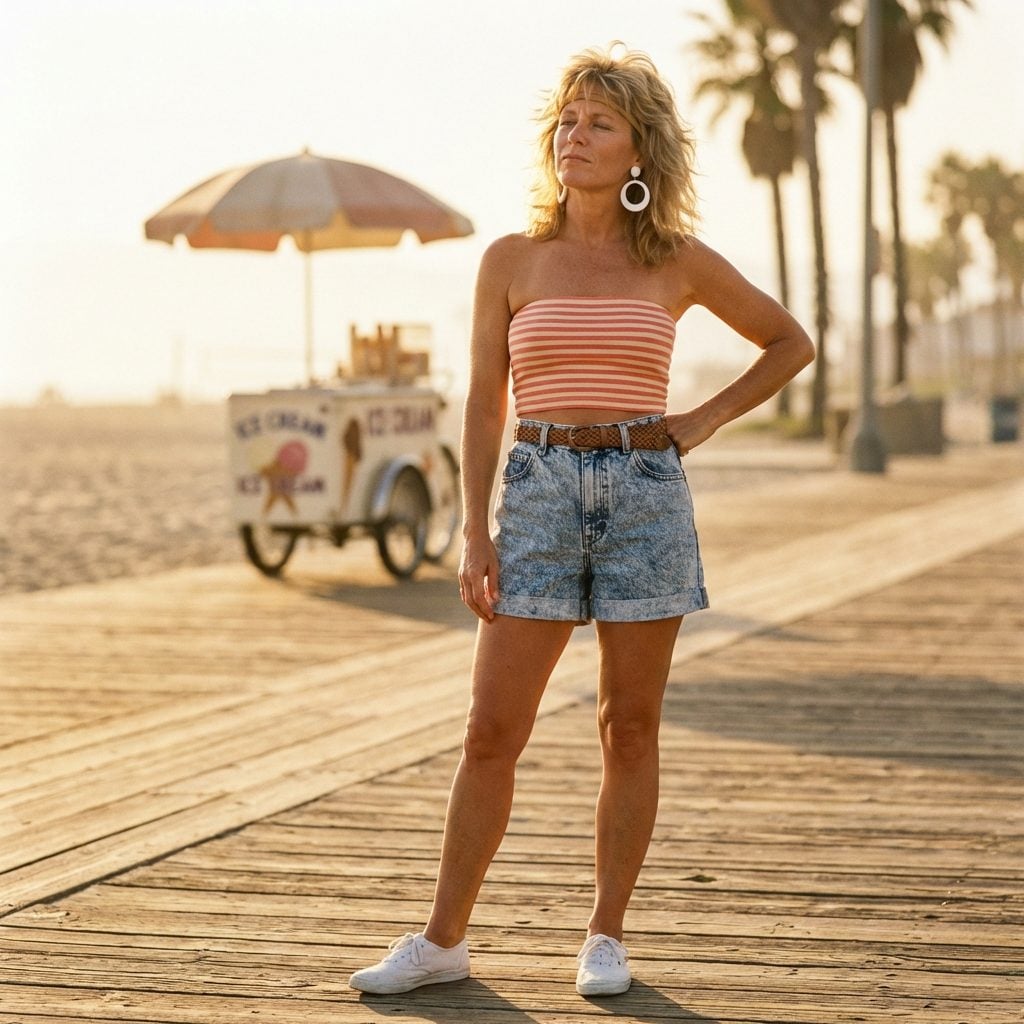
25. Tube Tops That Stayed Up Somehow, and Nobody Questioned the Physics
❤️ Would you like to save this?
There was zero engineering logic behind the tube top. A stretchy band of fabric, no straps, no boning, no architectural support of any kind, and yet we wore them to the beach, to the fair, to the mall, dancing, bending over to pick things up, running to catch the bus. They stayed up. We accepted this as fact. No one convened a meeting to discuss how.
The floral ones from ribbed tube tops in every stripe and off-white cotton eyelet are still burned into the memory. You’d pull it up approximately every forty seconds all day and consider this a normal part of getting dressed. It was basically exercise.
24. One-Piece Swimsuits That Pulled Double Duty as a Legitimate Going-Out Top
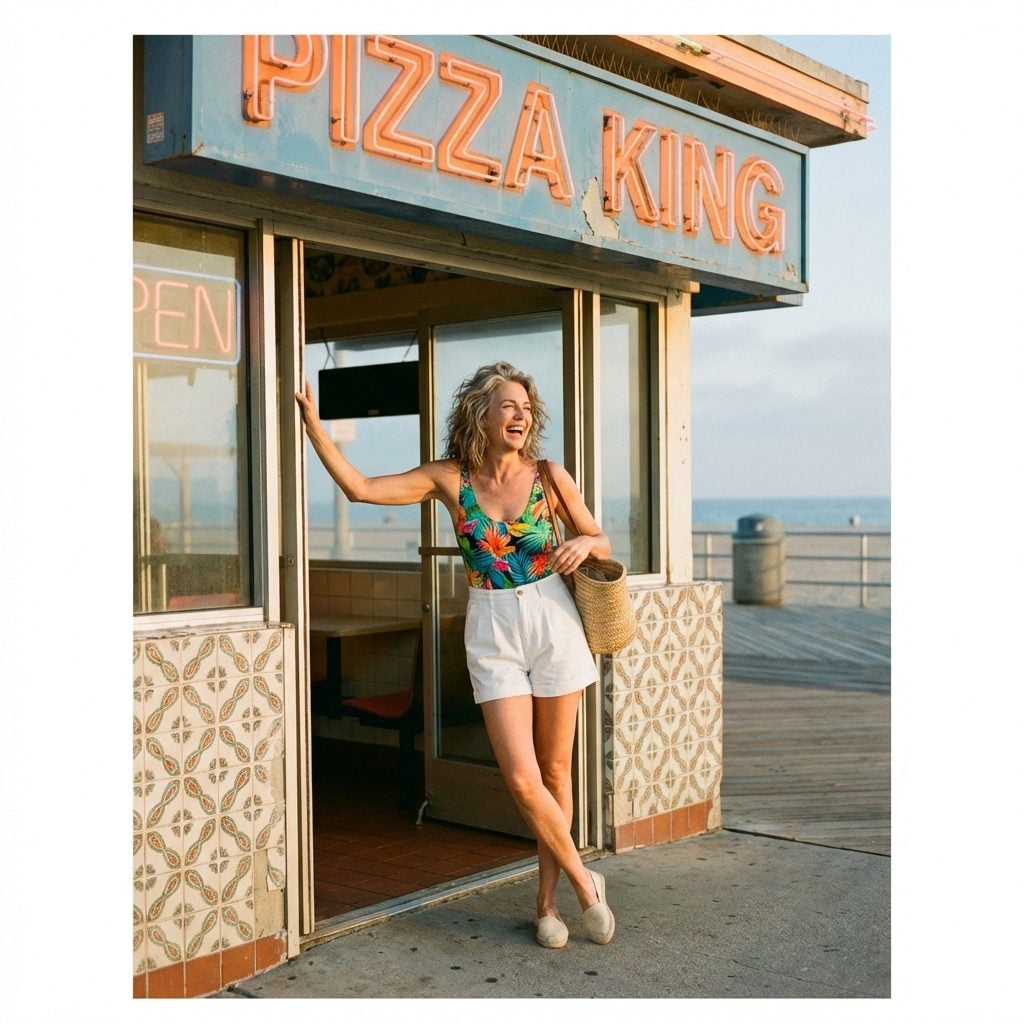
You finished your day at the community pool, pulled on a pair of high-waisted shorts, and called it an outfit. No changing. No rinsing. The swimsuit was simply also your shirt now, and everyone around you operated by the same agreement. It was chlorine-scented logic, and it worked.
Specifically, it was the maillot, high-cut at the leg, sometimes with a built-in skirt, often in a bright tropical print or neon pink, tucked into shorts or a skirt for a seamless transition from pool to pizza place. The suit staying slightly damp was treated as a non-issue. This is probably where we all developed our very high tolerance for mild discomfort.
23. The Oversized Graphic Tee, Belted into a Dress Over Leggings (We Were Architects)

Take an XL men’s concert tee, ideally Wham!, Duran Duran, or something with a iron-on palm tree, cinch it at the waist with a woven or plastic-clasp belt, add black stirrup leggings or bike shorts underneath, and you had a full fashion moment. This was considered not just acceptable but creative. We were making something from nothing. We were artists.
The belt was load-bearing in ways no structural engineer has ever been asked to evaluate. Without it, you had a sloppy oversized tee. With it, you had an ensemble. The earrings mattered too, always oversized, always geometric, always plastic in a shade that matched nothing and everything.
22. The Terry Cloth Romper: Peak Summer Sophistication, Allegedly

Zip-front, short-short, terry cloth. Often in candy pink, butter yellow, or a stripe that combined both. The pockets were either decorative or genuine, and you didn’t know which until you tried to put your quarters in them. This was the uniform of every 1980s summer, at the community pool, on the back porch, at the neighbor’s barbecue where someone always burned the hot dogs.
Calling it sophisticated might be generous, but that’s genuinely how it felt at the time. You were dressed. You were comfortable. You were summer. The short-short cut was not a statement, it was simply where the fabric stopped, and no one had feelings about it either way.
21. Stirrup Pants in July, Because Apparently We Ran Hot on Smugness
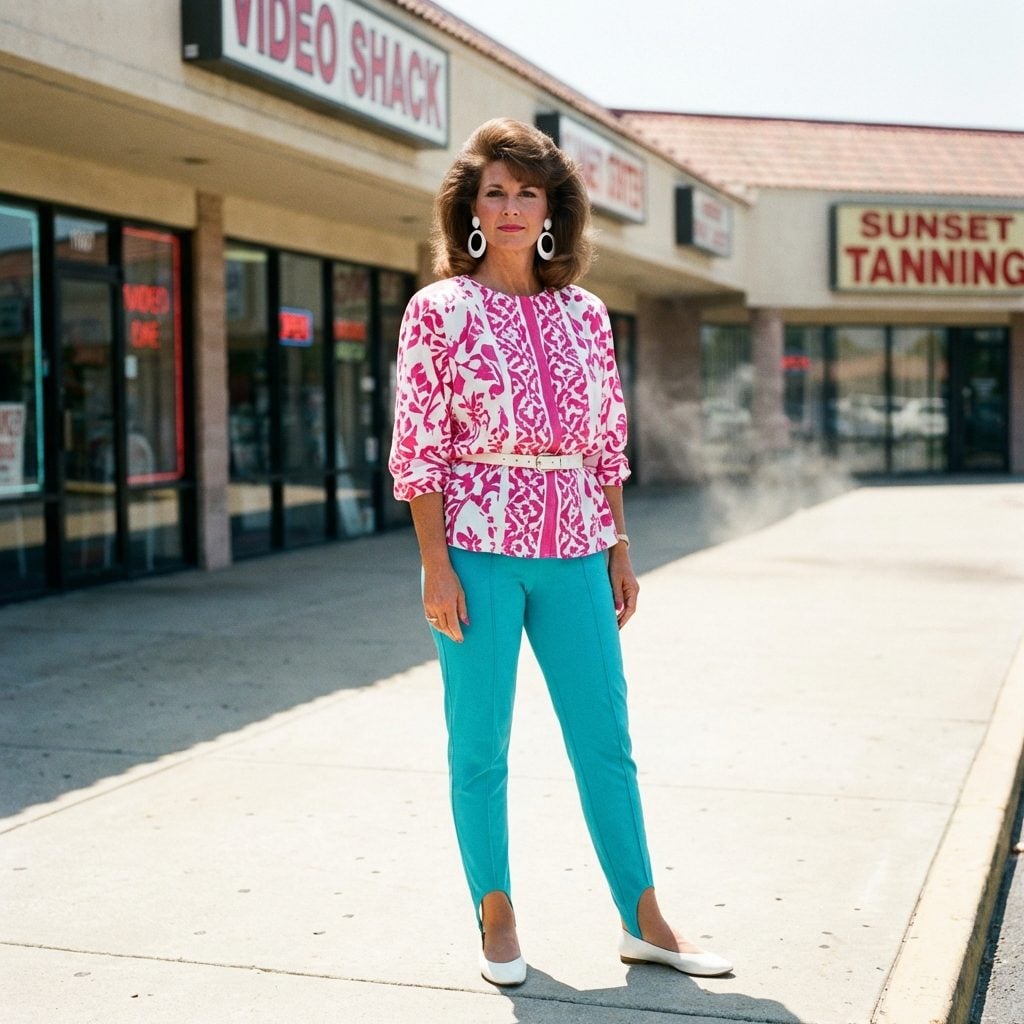
These were not just a fall pant. We wore them in full summer heat, in polyester-blend fabric that breathed approximately as well as a sealed envelope, tucked into flats or under canvas sneakers, with a bright blouson top and a belt. In July. On purpose.
The stirrup, that small strap of fabric looping under the foot, served no thermal purpose and added nothing to the silhouette except a strange tension from ankle to toe. Yet the look was considered sleek, pulled-together, grown-up. If you had stirrup pants in three colors, you were organized. You had your life in order. The pants said so.
20. The Off-the-Shoulder Sweatshirt as a Summer Wardrobe Essential (Flashdance Did This)
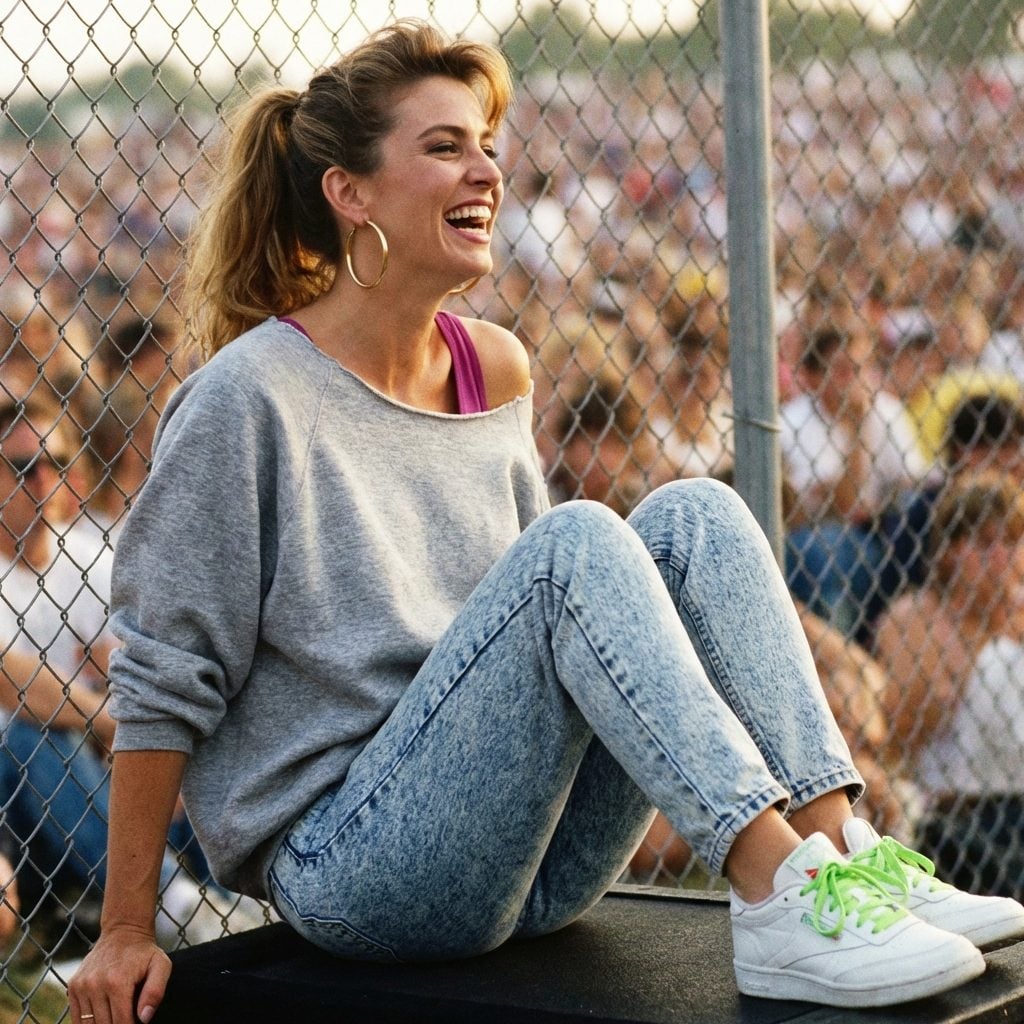
Flashdance came out in 1983 and within approximately six weeks, every woman in North America had cut the neck off a sweatshirt. The off-the-shoulder look was immediately adopted as the official casual-cool uniform for outdoor concerts, beach parties, and doing literally anything in warm weather while still appearing effortlessly put together.
They were worn with bike shorts, with high-waisted jeans, with leggings, sometimes just over a swimsuit. The sweatshirt itself was often oversized, often heather grey, often accessorized with leg warmers (in July), and always slipping to reveal exactly one shoulder blade at all times. This was the desired effect. Jennifer Beals had everything to answer for.
“Cutting the neck off was the most powerful fashion act of 1983. You were making a choice. You were making a statement. The statement was: I have scissors and I have seen this movie.”
19. A Wicker Purse Shaped Like a Watermelon (and You Felt Extremely Sophisticated)
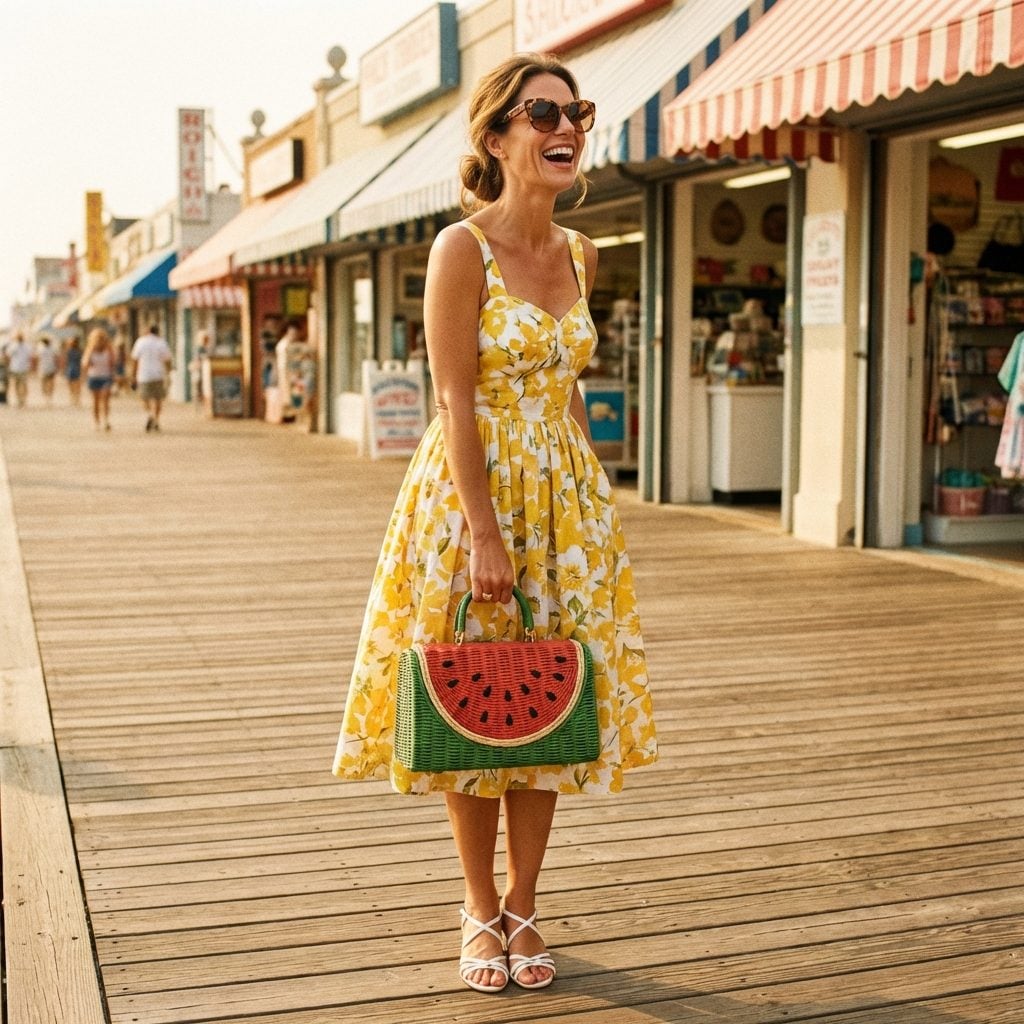
Structured, rigid, about the size of a small clutch, shaped like a fruit, and completely impractical for carrying anything except your lip gloss and a single folded dollar bill. You loved it anyway. The wicker watermelon purse, or the pineapple, or the strawberry, if you were the adventurous type, was the summer accessory outfits anchor that tied everything together.
These came from every tourist shop, every beachwear boutique, every mall kiosk that appeared between June and August. You couldn’t fit a wallet inside. You accepted this. The bag was not for carrying things. The bag was for having. For being seen with. For being the kind of woman who carried a wicker novelty bag and didn’t feel the need to explain herself.
18. Eyelet Lace on Everything, and the More Cutouts the Better

Eyelet was the fabric of the 1980s summer woman who wanted to look feminine, slightly vintage, and like she had just come from somewhere charming, a garden, maybe, or a farmers market, or a romantic porch that existed only in the imagination.
It appeared on shorts hemlines, on the collars of tank tops, on the edge of cover-ups, on small eyelet cotton bags that matched absolutely nothing and therefore matched everything. The more surface area covered in small punched-out holes, the more formal the occasion it was appropriate for. This was widely accepted as true without question.
17. Color Blocking in Shades That Had Never Previously Coexisted in Nature
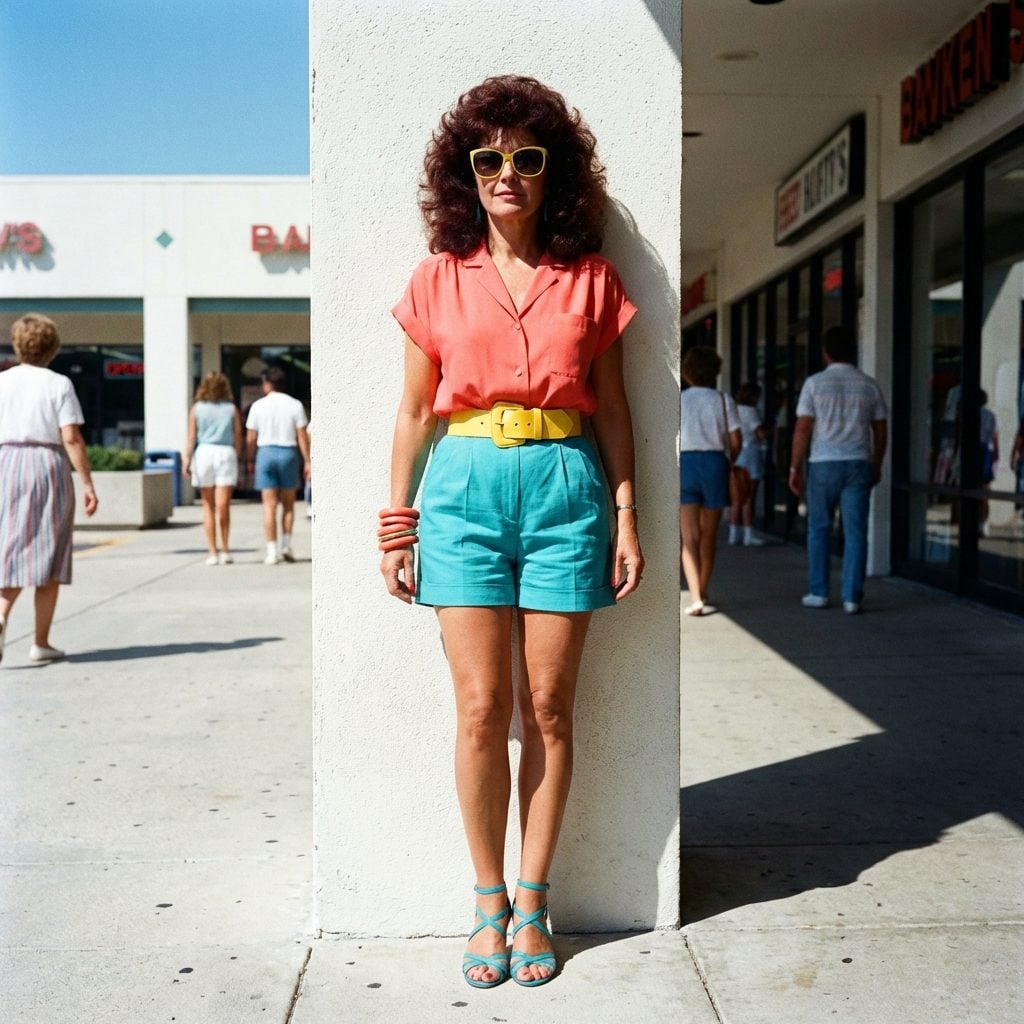
Coral. Turquoise. Yellow. Together. On one body. At the same time. Not as an accident, as a choice. A deliberate, considered, confident choice. This was 1980s color blocking, and it operated by rules that had nothing to do with the color wheel and everything to do with the belief that if it was bright, it was right.
The combination wasn’t random, it was actually quite specific. You needed at least three shades that technically clashed, each in a different solid piece. Turquoise shorts, coral top, yellow belt. Or a yellow mini skirt, turquoise blouse, coral heels. The effect was like staring directly into the sun, which was apparently the goal. We all looked like walking citrus arrangements and we never once asked ourselves if this was fine.
16. The Side Ponytail: A Legitimate Hairstyle for Outdoor Occasions
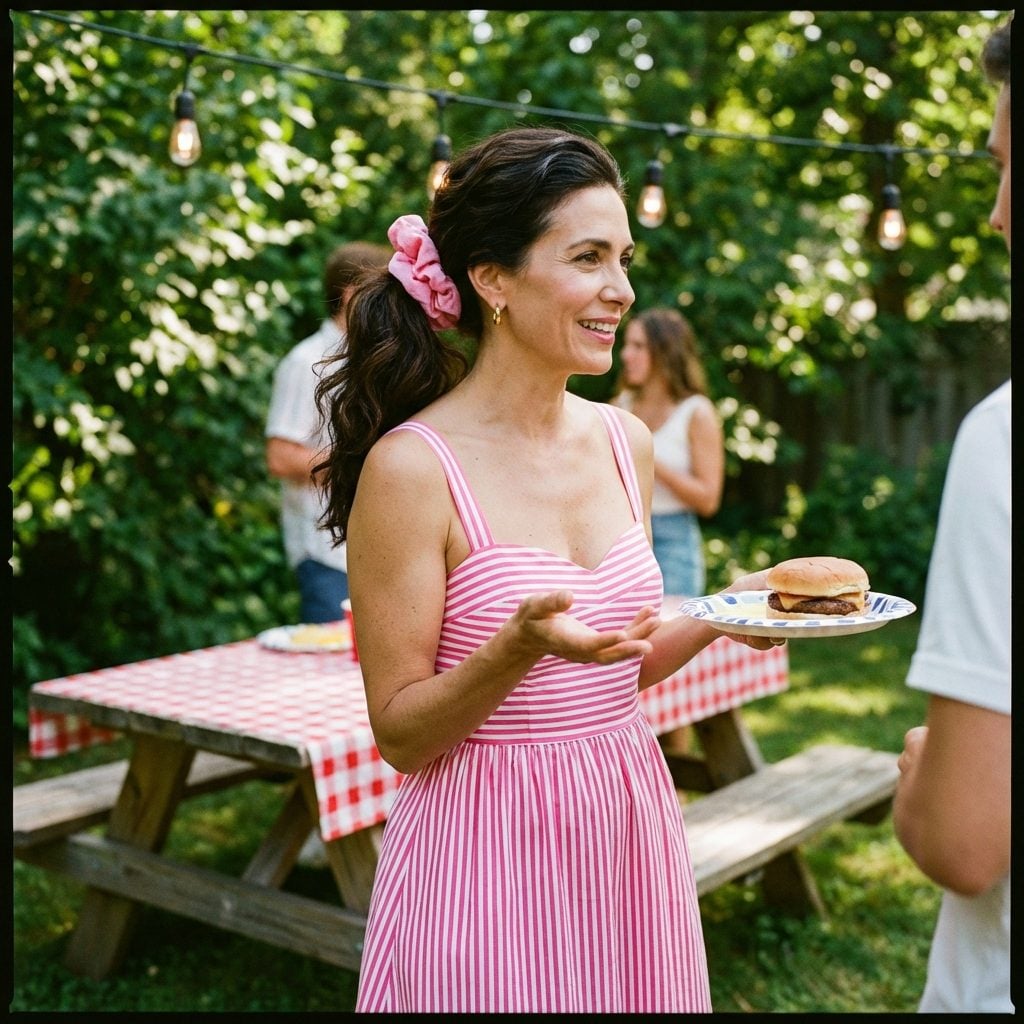
Not a casual ponytail that happened to slip to the side. A deliberate, positioned side ponytail, secured high above the left ear with a scrunchie in neon or a ribbon that matched the outfit, the kind of ribbon that came in a four-pack from the drugstore and had a small bow pre-attached.
You wore this to barbecues, to outdoor concerts, to the town pool, to your cousin’s graduation party. It was a styled look. You meant it. The side ponytail said: I got ready. I am here. I have considered my hair and I am satisfied with the outcome. Nobody questioned this. In fact, if your side ponytail came out really well, thick, high, slightly curled at the end, you were having a good summer.
15. The Full-Length Crocheted Cover-Up That You Never Actually Took Off
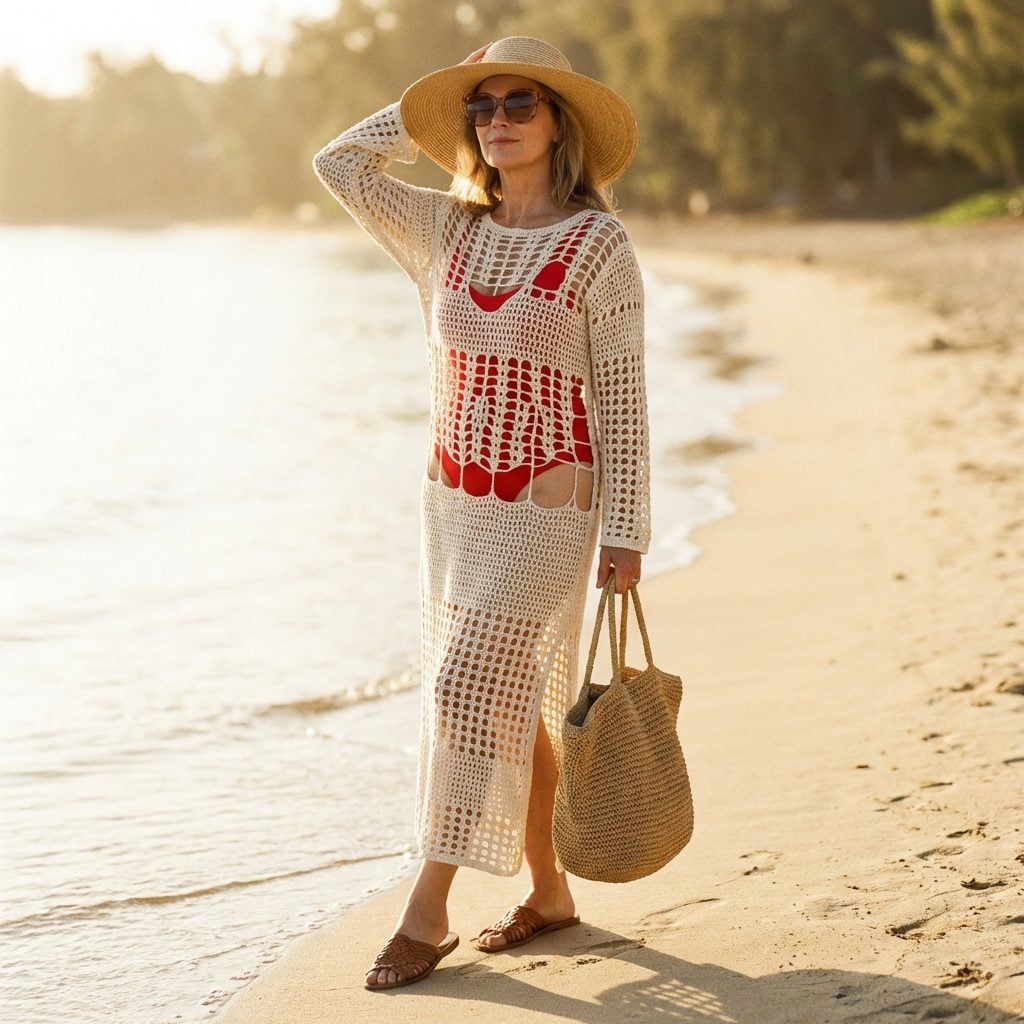
Getting it on took genuine commitment. You stepped in, you wiggled it up over the swimsuit, you extracted your arms from the sleeves one at a time, and then you accepted that it was on now and it was on for the day. The crochet cover-up was not something you casually removed and reapplied. That was not part of the deal.
It was floor-length or ankle-length, in white or natural tan or sometimes a sunset orange, with gaps large enough to see the swimsuit underneath at every angle. So it was not, technically, covering anything. But the vibe was coverage, the vibe was I have considered the transition from water to land and I have planned accordingly.
The crochet beach cover-up is genuinely back, by the way. This one was always good. We were ahead of our time and nobody gave us any credit.
14. The Crop Top That Started at the Ribcage (Below Which Was Simply the Rest of You)

The 1980s crop top and the current crop top are entirely different garments with the same name. Today’s version starts somewhere around the lower rib. The 1980s version ended just below the chest and not one inch lower. It was cropped like someone had used a ruler. Like there had been a precise measurement taken and a line drawn and then it was over, the fabric was done, that was where the shirt stopped.
You wore this with high-waisted jeans pulled up to meet it, with leggings, with a belted skirt. The exposed strip of mid-section was a side effect, not a statement. It was architecture. Cut-off sweatshirts, tied-front tanks, cropped off-the-shoulder numbers in cotton or striped knit, all of them stopping at the ribcage with quiet authority. The crop top of today is looking at its 1980s ancestor with genuine respect.
13. Friendship Bracelets Stacked Elbow-Deep (Because One Was Never Enough)

❤️ Would you like to save this?
You started with one, made for you by your best friend at camp, woven in her signature colors from a plastic bag of embroidery floss. Then you made one back. Then someone at school had a new pattern. Then you needed one for every friendship you wanted to publicly honor, and suddenly your entire forearm was a fiber arts exhibition. We never took them off, not for summer, not for fall, not until the threads finally rotted off our wrists sometime around October.
These weren’t a kid thing, either. Women in their twenties and thirties wore stacks of them just as earnestly. They were accessory outfits unto themselves. The more you had, the richer your social life appeared. A bare wrist practically announced that you had no friends.
12. The Snap-Crotch Bodysuit: Fashion’s Most Unhinged Practical Joke

Nobody warned us. You just bought the bodysuit, usually in ribbed cotton or stretchy jersey, often in a color like dusty teal or burgundy, brought it home, put it on, and then reached down to do up three small snaps in the most undignified location possible. And somehow, this felt completely fine.
The appeal was real: it never untucked. It gave you a perfectly smooth line under high-waisted jeans. Outfit integrity at all costs. The cost, it turned out, was crouching in a gas station bathroom at the Jersey Shore trying to re-snap something you couldn’t fully see. We paid it without complaint. Every single summer.
11. Full-Face Makeup to the Beach Was Not Optional, It Was Infrastructure
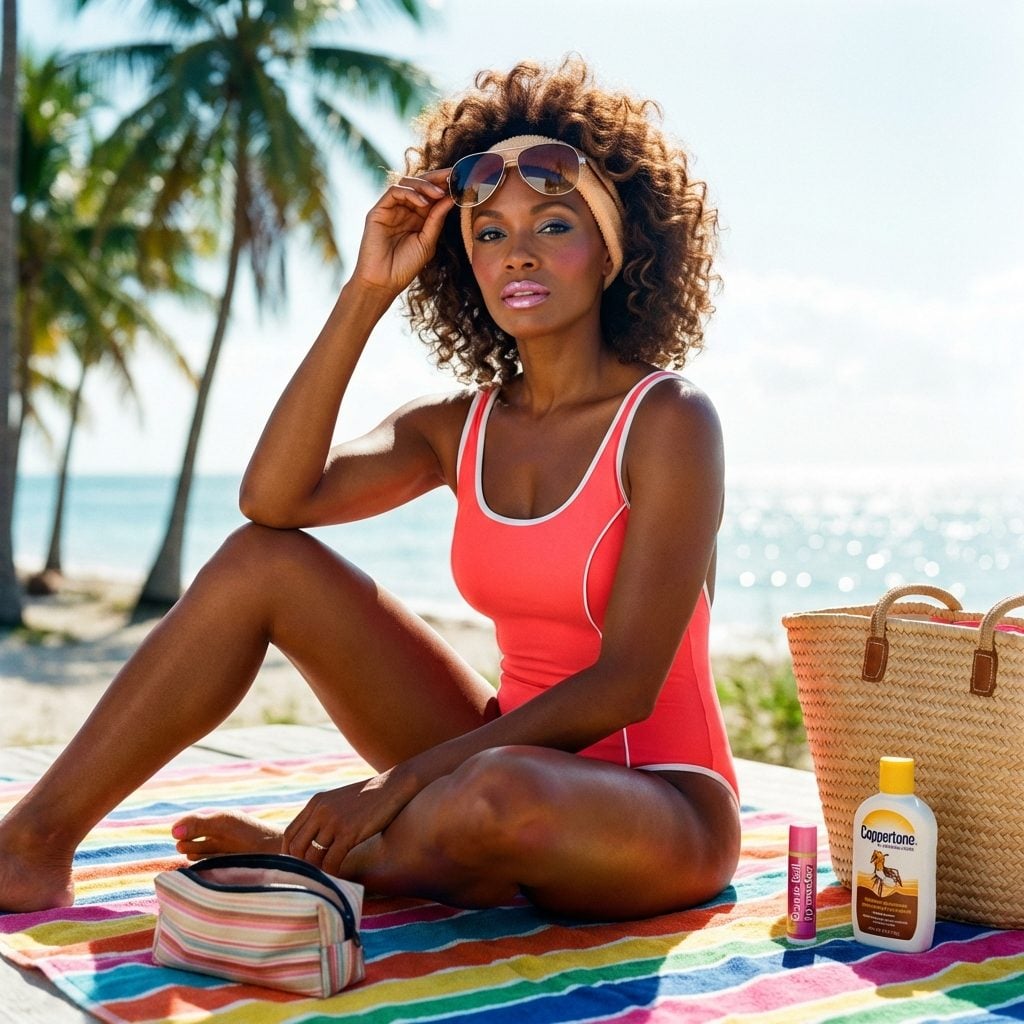
Mascara, yes. Frosted pink lipstick, absolutely. Powder foundation in a shade approximately two tones lighter than your actual skin, applied with a wedge sponge. Blue eyeliner on the waterline. All of this, packed into a small makeup bag that went in the beach tote alongside the Coppertone and the Bonnie Bell.
The mascara ran within forty minutes. We reapplied it. The powder foundation absorbed into SPF 4 sunscreen and turned chalky by noon. We pressed more on. Looking back, the combination of sweat, baby oil, and drugstore cosmetics created something on our faces that could generously be called a look.
There was a specific logic to it, though: you might run into someone. You might end up in a photo. The beach was a social event, and you showed up to social events done.
10. The High-Cut Bikini Bottom: A Hip Bone Was a Style Statement

These were not bikini bottoms in any modern sense. They were two triangles of nylon connected by string, cut at an angle that ended somewhere near your lower ribs. The goal was visible hip bone, an uninterrupted line from waist to thigh with nothing interrupting it. The higher the cut, the more committed to the aesthetic you appeared.
Paired with a bandeau bikini top or a halter in the same neon fabric, this was the official uniform of every public pool and beach from roughly 1982 to 1993. You can still find the tan line evidence in family photos. Some of those tan lines lasted well into autumn.
9. The Windbreaker: Worn in 85-Degree Heat With Full Conviction
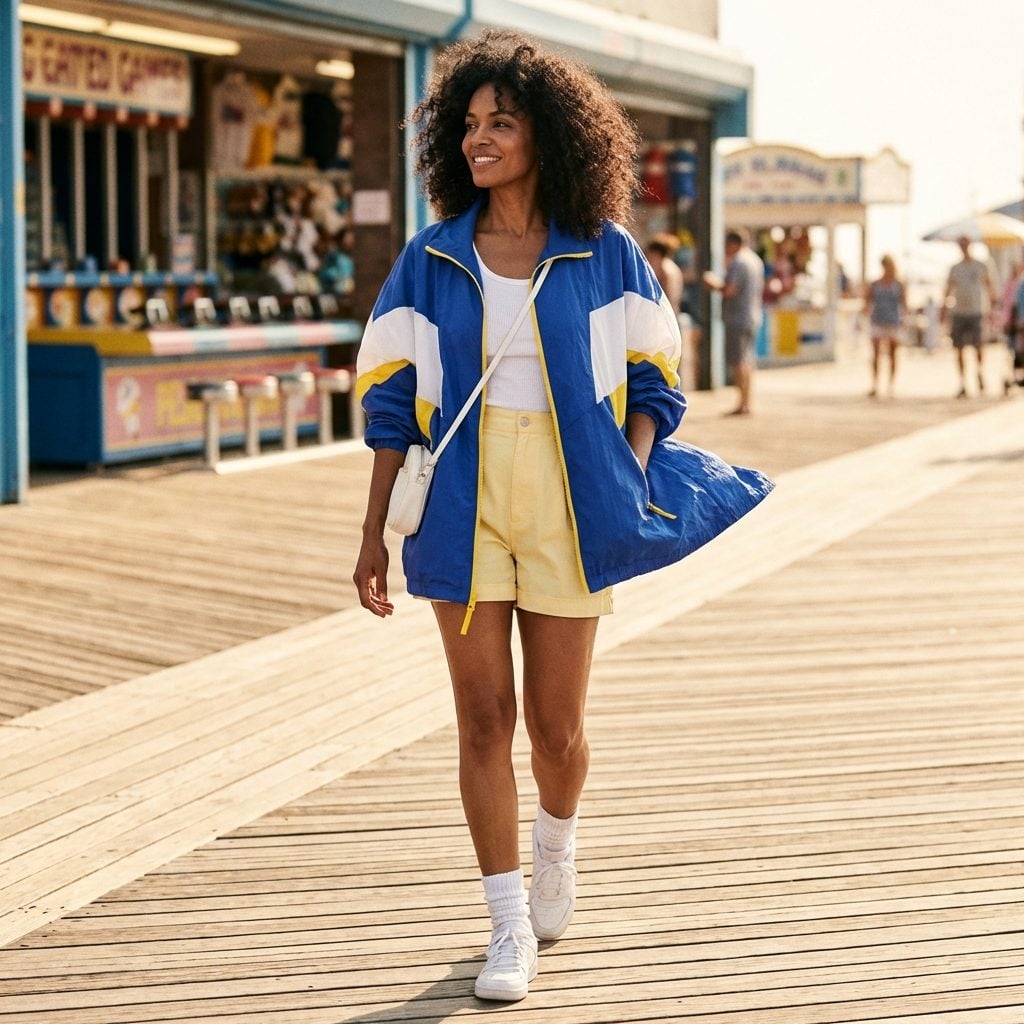
It crinkled when you walked. The nylon made a specific sound with every arm swing, a swish-swish that announced you from twenty feet away. It came in color-blocked panels: royal blue and white, hot pink and yellow, turquoise and coral. You wore it to the boardwalk, to the amusement park, to the outdoor concert, to the cookout. The temperature was irrelevant. The windbreaker was the look.
This was partly practical, you might need a layer later, in the air-conditioned car, theoretically, but mostly it was just correct. A good color-block windbreaker was the anchor piece of a summer outfit the same way a blazer anchors one now. You chose it before you chose everything else.
8. Chunky White Sneakers That Were Never, Ever Actually White

They started white. You bought them that way, in the box, tissue paper, that specific rubber-and-fresh-sneaker smell. Within one week of summer they had acquired grass stains, a faint gray tone on the toe box, and a single unidentifiable streak near the heel. You tried cleaning them with a toothbrush and baking soda once. They looked clean for approximately one afternoon.
The chunky sole was non-negotiable. Nike Air, Reebok Freestyle, Keds in a pinch if budget was a factor. You wore them with everything: cutoffs, sundresses, jeans rolled to mid-calf. The scrunched white sock peeking over the collar was load-bearing.
“The dirtier they got, the more you’d actually worn the summer.”
7. The Hair Took Forty-Five Minutes and We Had Nowhere to Be

The hot rollers set was on the bathroom counter before breakfast. The Aqua Net was on standby. Hair had to be volumized, curled, teased, or crimped before any other part of the outfit was considered. This was not vanity, it was order of operations.
Bangs were their own category. They had to stand up. Not swept to the side, not lying flat: vertical. You teased them up from the root, hit them with a round brush, and then applied enough hairspray to make them structurally independent. Then you put on a bathing suit and went to the beach. The bangs survived for about ninety minutes in the humidity before beginning their slow descent into your forehead.
And then you went back inside and redid them.
6. Logo Dressing: The Brand Was the Whole Point
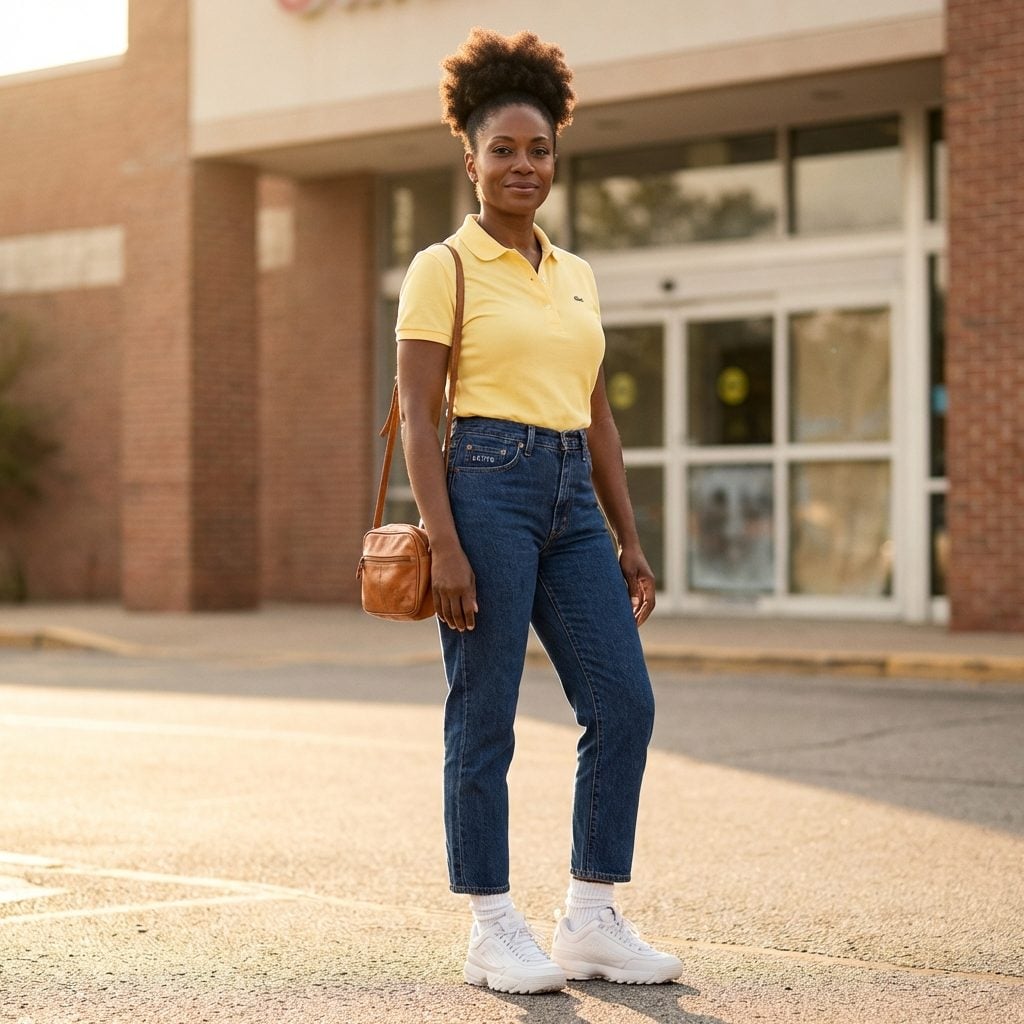
Izod. Le Coq Sportif. Sergio Valente. Jordache on the back pocket. The Lacoste crocodile on the chest, exactly 2.5 inches, positioned precisely at the left breast. You wore these logos the way you’d wear a name tag that said “I have taste and also discretionary income.”
Hiding your labels was not a concept that had been invented yet. The logo was the entire narrative of the outfit. You angled the shirt so people could read it. You chose which brand to wear based on who you were going to see that day.
And when you couldn’t afford the real thing, you bought the knockoff and hoped no one looked closely enough at the horse or the crocodile or the polo player to notice the proportions were slightly wrong. They always noticed. Nobody said anything.
5. Layering in the Heat: Suffering For the Aesthetic
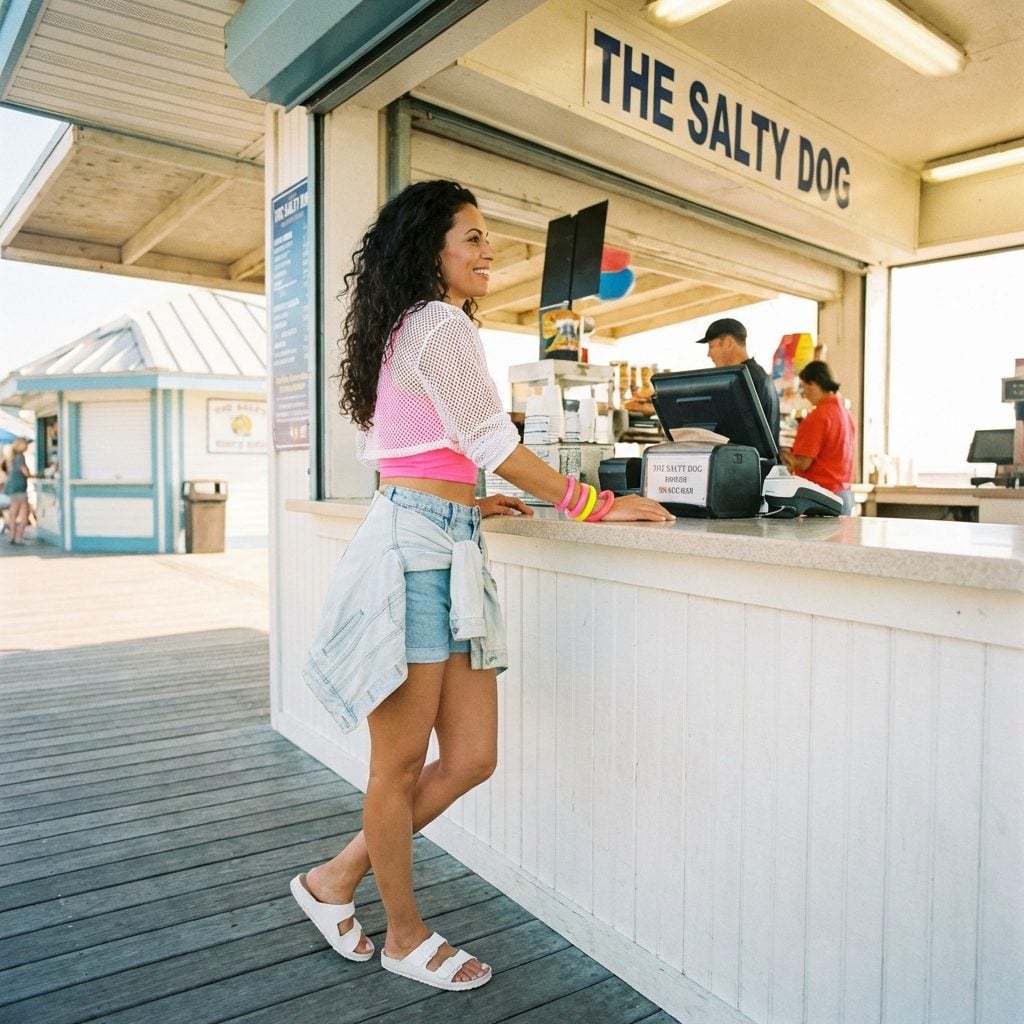
A mesh top over a neon tank. A denim jacket tied at the waist when it got too hot to keep it on, which was immediately. A sheer floral blouse worn open over a bodysuit so you had the pattern without losing the silhouette. None of this was temperature-motivated. All of this was deliberate.
The tied-at-the-waist jacket deserves its own paragraph. You’d wear it for about ten minutes, realize the heat was not theoretical, tie the arms around your hips, and then carry it that way for the rest of the day. It created a strange sash effect at the waist that was somehow also intentional.
4. Bright Plastic Jewelry Piled On Until Your Arms Made Noise When You Moved

❤️ Would you like to save this?
A single bangle was for people who hadn’t committed. You wore them in stacks of ten to fifteen on each wrist, in every neon color available: electric blue, hot pink, lime green, orange, white, banana yellow. They clicked and rattled with every gesture. Ordering food at McDonald’s sounded like a small xylophone concert.
The accessory outfits were built around these bracelets as much as around any clothing choice. You matched the neon of your top to the corresponding bangle. You bought new sets before every beach trip. At the end of summer they left faint green marks on your wrist, which you wore as a badge.
3. The Full Tuck, the Half Tuck, and the French Tuck, All Mandatory

Untucked shirts were for people who didn’t care. And while there was a whole aesthetic built around not caring, that aesthetic also involved tucking in everything. The full tuck was for structured looks, the half-tuck for slightly more relaxed settings, and the French tuck, just the front panel of the shirt folded into the waistband, for when you wanted to look like you’d just thrown it together, which required about as much thought as the full tuck.
The tuck’s actual purpose was to show off the waistband of whatever was on the bottom: high-waisted jeans, pegged trousers, a big bright belt. All roads led back to the waist. The waist was the architecture everything else was built around.
2. The Big Plastic Belt Over a Loose Top: Absolutely Unnecessary, Completely Non-Negotiable

The top was already oversized. It was doing nothing structural by nature. And yet there you were, cinching it at the waist with a four-inch-wide plastic belt in fire engine red or electric blue or white patent, and suddenly everything made sense.
These wide belts served no practical purpose on a loose top. They weren’t holding anything up. They weren’t closing anything. They were purely visual: a declaration that yes, there is a waist here, and it is going to be the focal point of this entire look. The oversized top, the big belt, the high-waisted skirt or peg-leg jeans below. It was a specific geometry that made perfect sense in 1987 and requires genuine explanation now.
1. Looking a Bit Overdone Was the Point, Apologies Were Not Issued

Big earrings. Bigger hair. A belt cinched over a blouse that was already belted. Bangles stacked from wrist to elbow. We were not confused about what we were doing. The 1980s summer outfit had a very clear philosophy: if you could add one more thing, you were supposed to add one more thing. A woman dressed for a backyard cookout looked like she was also prepared to anchor a news broadcast and accept a Grammy.
There was no concept of “too much” in that decade’s summer vocabulary. You wore your gold hoop earrings, your statement necklace, and your chunky bangle bracelets all at once, and you felt completely correct. Not apologetic. Not “a little extra.” Correct.