❤️ Would you like to save this?
Close your eyes. You’re standing in front of a three-way mirror at the mall, and something is very wrong with this picture. The shoulders could house a small family. The shorts are approximately four inches long. The hair is reaching for God. And you look absolutely incredible, or at least that’s what everyone around you agreed. The 1980s summer wardrobe was a shared hallucination, and we were all in on it together. Here’s the evidence.
FYI, thanks to AI imagery software, we’re able to create very specific fashion and hairstyle examples to illustrate the points being made. In some cases, imagery is exaggerated to hammer home the point. Also, assume links that take you off the site are affiliate links such as links to Amazon. this means we may earn a commission if you buy something.
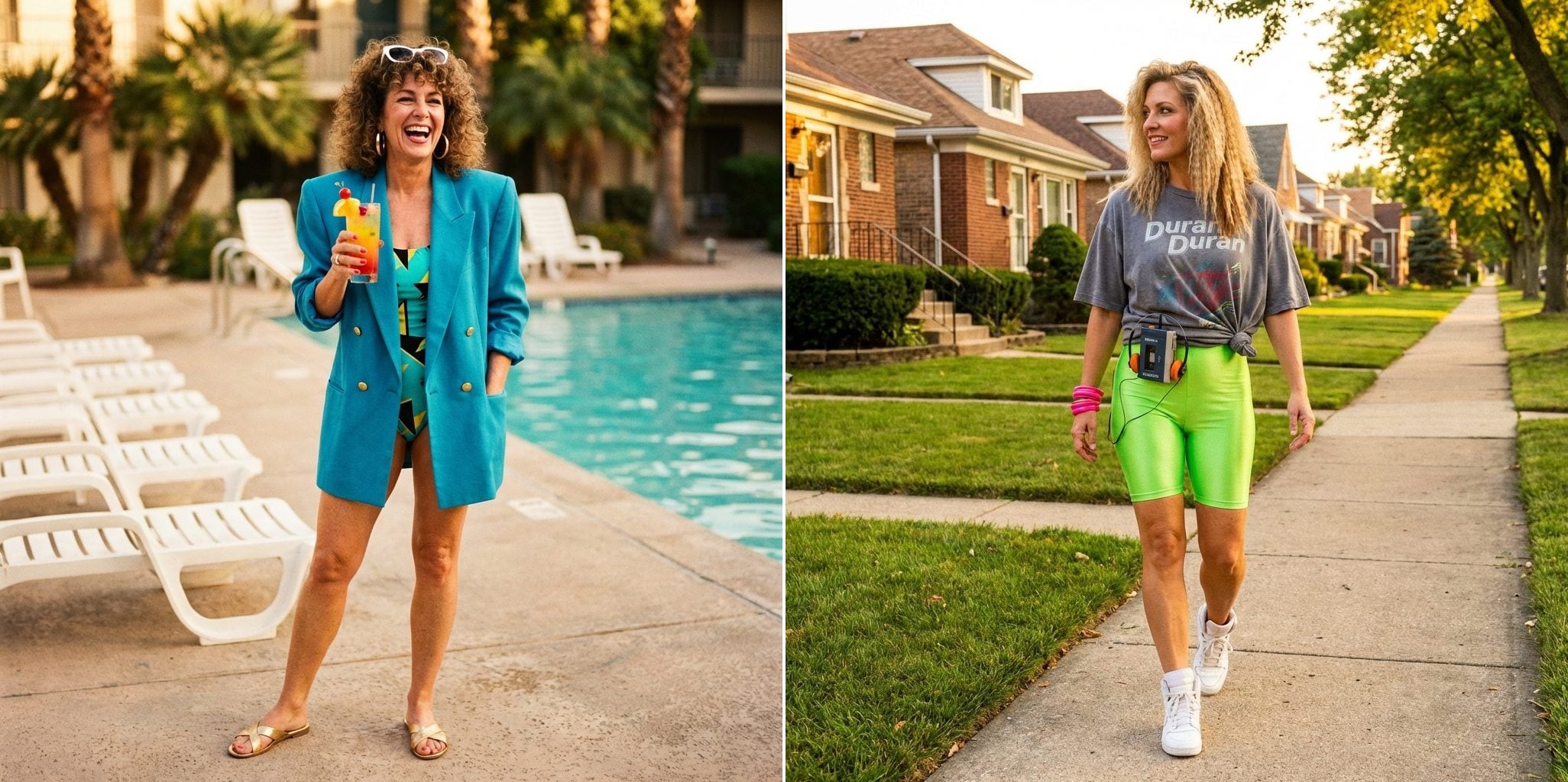
23. The Oversized Shoulder-Padded Blazer Worn Over a Bathing Suit
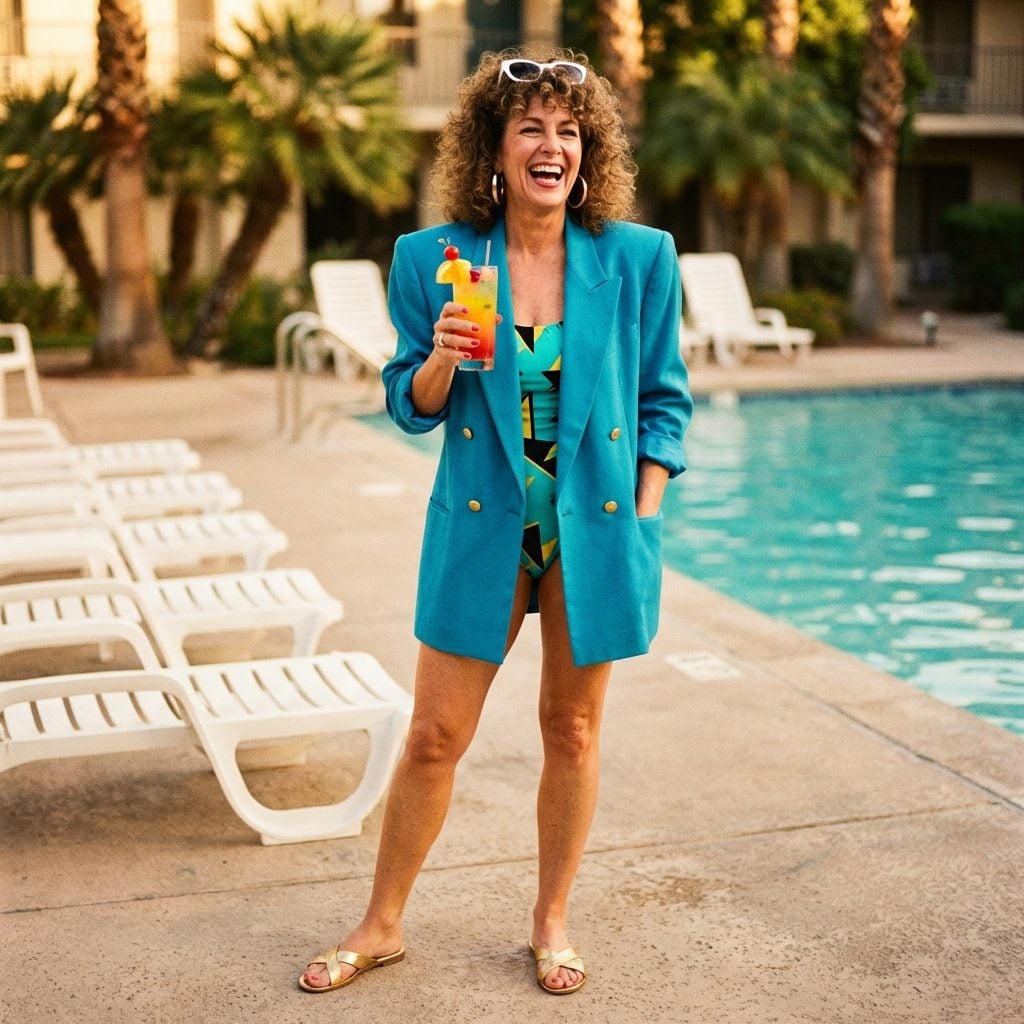
The shoulder pad was the decade’s way of saying: I have arrived, and I take up space. But wearing one over a swimsuit? That was specifically a 1980s summer move that required zero explanation. You’d throw a blazer the size of a small tent directly over your one-piece, walk to the pool bar, and everyone just nodded. The blazer announced that you were both ready for a swim AND ready to close a deal.
The sleeves were always pushed up. Always. This was non-negotiable. Pushed sleeves meant you were relaxed but powerful. The gold buttons caught the light. The shoulder line entered the room approximately four seconds before you did. And honestly? It worked, because everyone around you was doing the exact same thing and none of you questioned it for a single second.
22. Neon Spandex Bike Shorts With an Oversized Band Tee Knotted at the Hip
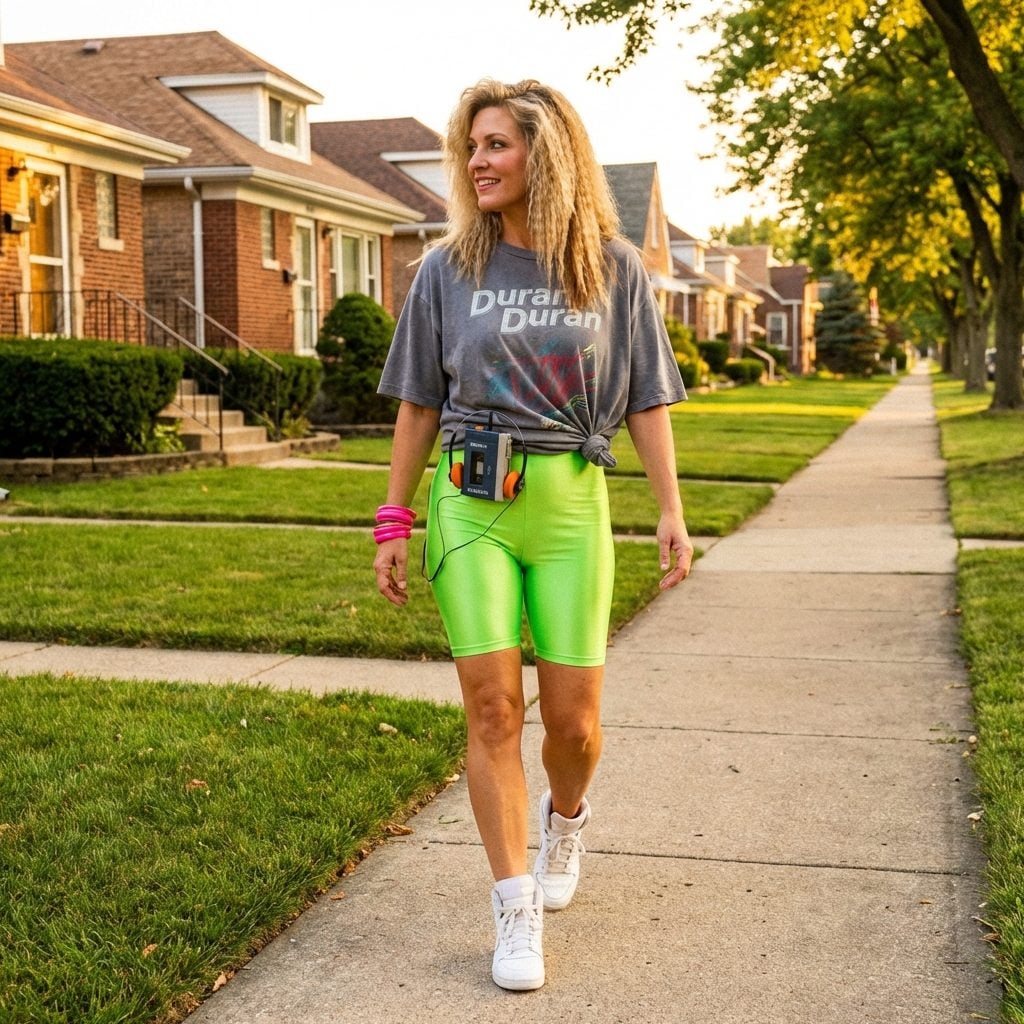
This was the athleisure outfit before that word existed, and it required specific execution: the tee had to be at least two sizes too large, and the knot at the hip had to be tight enough to stay put through an entire afternoon but casual enough to look accidental. You practiced the knot. Don’t pretend you didn’t.
The bike shorts were spandex in a color that could stop traffic. Neon lime. Hot coral. Screaming magenta. The Walkman clipped to the waistband was load-bearing, it was proof you were going somewhere athletic, even if you were just going to the corner store. Nobody interrogated this logic. The whole look was athletic cosplay and we all wore it with complete sincerity.
21. The Perm. The Full Catastrophe Perm.

Not a styling choice. A commitment. Getting a perm meant sitting in a salon chair for four hours with little plastic rods wrapped in your hair while chemicals worked their way into your future. The smell was genuinely alarming. And then you walked out looking like a woman who had grabbed an electrical fence and found it agreeable.
Summer was the perm’s natural season because the humidity only enhanced it. The curls tightened. The volume increased. You went through a full can of Aussie Sprunch Spray every two weeks. The mousse crunched when you touched it, that was correct, that meant it was working.
Every mother on the block had one. Every aunt at the Fourth of July cookout had one. It was the decade’s default hair setting, and nothing short of a flat iron (which hadn’t been invented yet for home use) was going to argue with it.
20. Acid Wash Denim Shorts Cut Off at Mid-Thigh With the White Pocket Lining Hanging Out
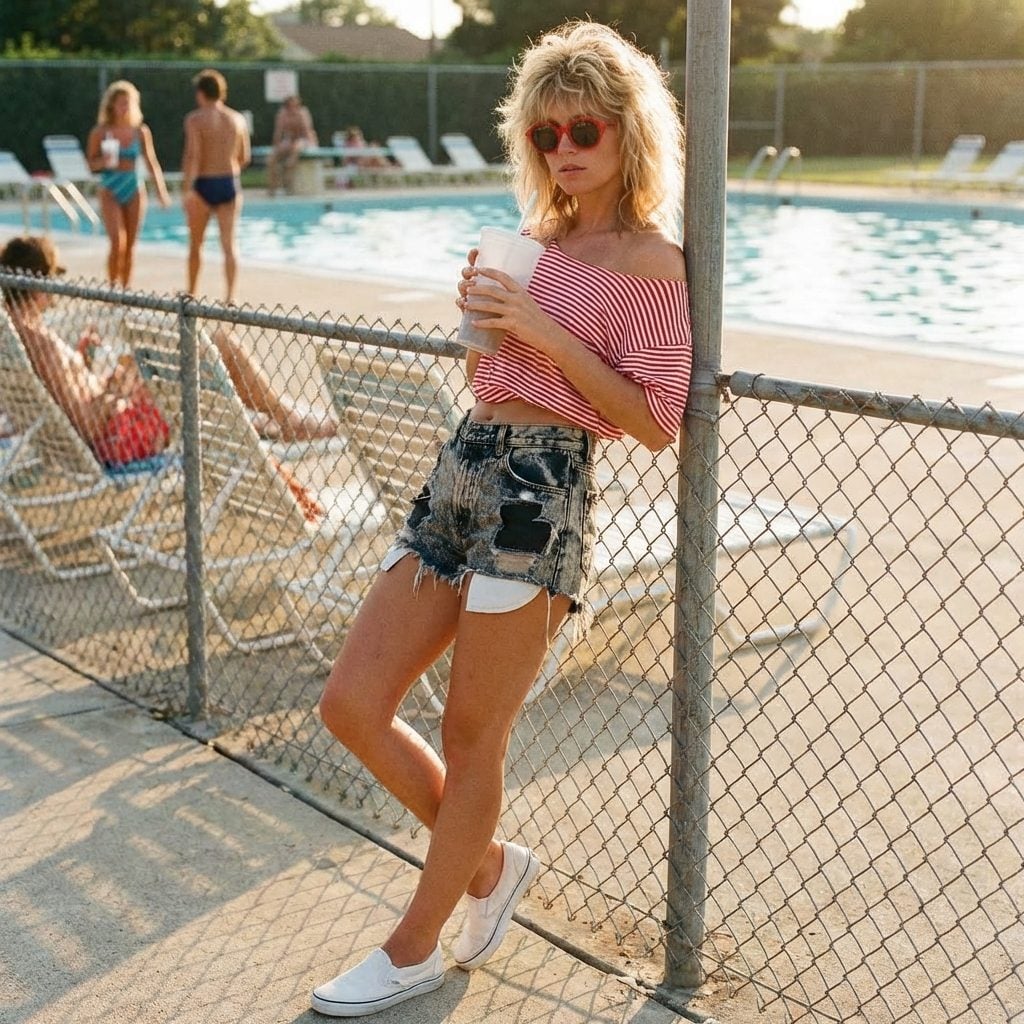
The hanging pocket lining was not accidental. You pulled it out yourself, deliberately, and arranged it so exactly one white triangle of cotton showed below the frayed denim hem. This was styling. This was fashion theory. The acid wash pattern, those dark splotches against bleached white denim, looked like someone had attacked the jeans with bleach in a parking lot, which was essentially true, and somehow that made them better.
Paired with an off-shoulder top and slip-on sneakers, this was the complete summer outfit for approximately every outdoor gathering between 1983 and 1989. Fairs, pool parties, the mall parking lot. The acid wash denim shorts were the era’s casual uniform, and cutting them yourself at home with kitchen scissors was a rite of passage.
19. The Hypercolor T-Shirt That Changed Color Everywhere You Didn’t Want It To
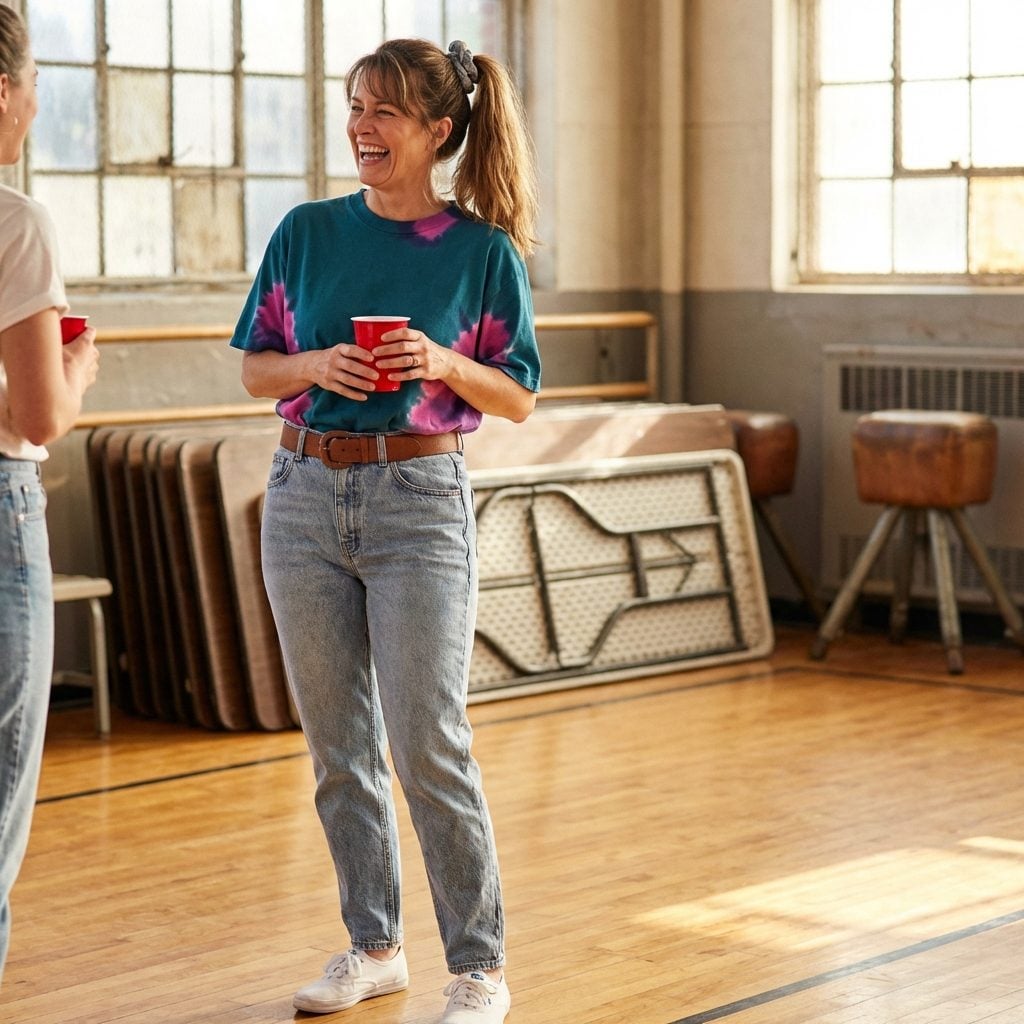
Technically a very early 1990s product, but spiritually so 1980s that it counts. Hypercolor shirts used thermochromic dye that changed color when it got warm, which sounds incredible until you realize that the warmest parts of your body are your armpits and wherever someone touches you. The shirt was essentially a real-time map of your most embarrassing heat zones.
Every middle schooler and high schooler wanted one. Every parent thought it was a marvel of science. Nobody thought through the implications until you were already standing in front of your entire class with two vivid hot-pink armpit circles announcing themselves to the room. The color-change graphic tee lasted about two washes before the dye stopped working, which was honestly a mercy.
18. White Lace Fingerless Gloves Worn to Literally Any Occasion
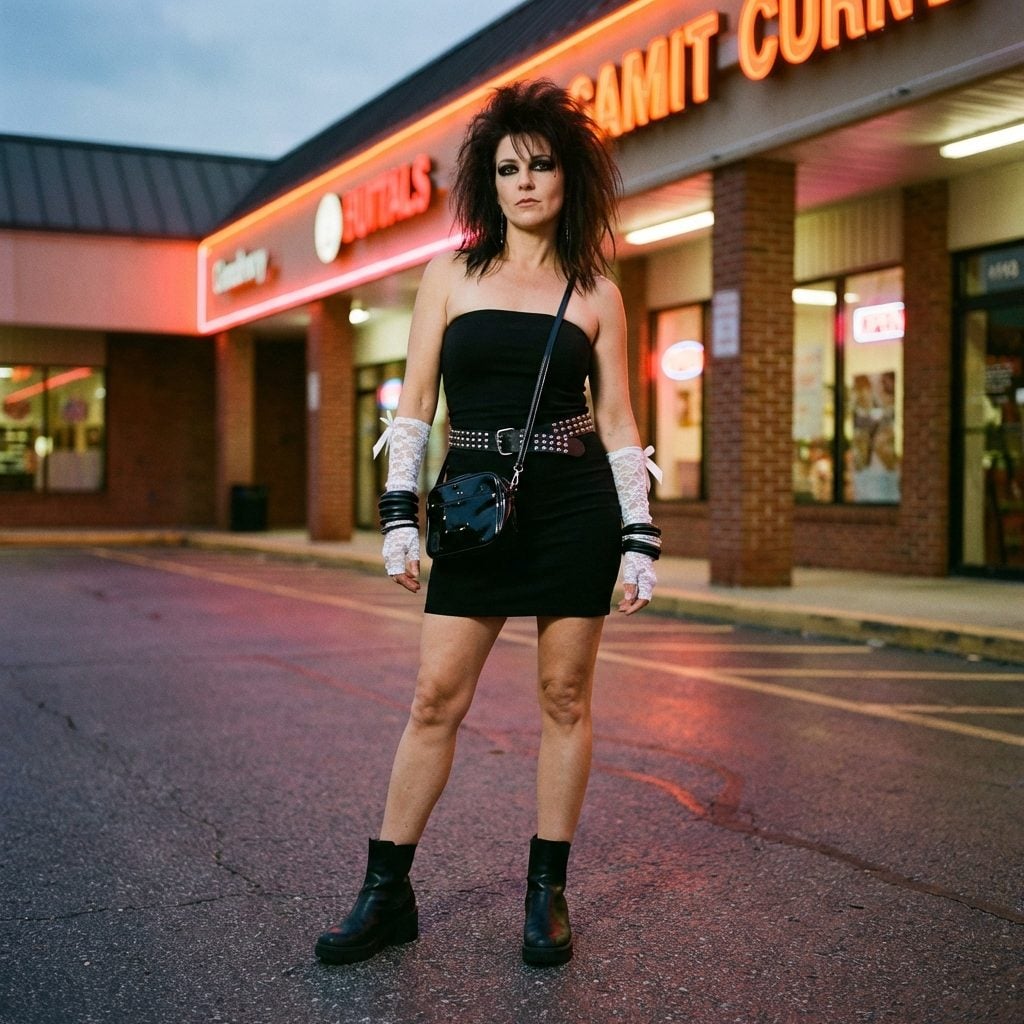
Madonna wore them to the MTV VMAs in 1984 and within sixty days every teenage girl and their slightly older sister had a pair. White lace fingerless gloves were worn to parties, school dances, the mall, summer barbecues, and on at least one occasion that everyone remembers, to a church event where they were technically not appropriate and nobody said a word.
The fingerless part was crucial, it said you meant business but you also needed to hold a Coke. Layered over rubber bracelets up to the elbow, paired with a black minidress and ankle boots, these gloves transformed any summer evening into a personal music video. The lace fingerless gloves were the decade’s most committed accessory, which is saying something, because the decade was lousy with committed accessories.
17. Frosted Blue Eyeshadow Applied From Lashline to Eyebrow With Conviction

Not a touch of blue. Not a hint of blue. A full, opaque, shimmer-forward block of blue from your lashes to your brows, and then you went out in public and made eye contact with people. This was the standard. Revlon, Maybelline, and Cover Girl all sold it in approximately fifteen frosted variations, and the correct application technique was: more.
Summer was when the blue eyeshadow reached its most powerful form because the heat made it crease into the eyelid fold and create a second, slightly darker stripe of blue, which was somehow also correct. You touched it up with your finger. You applied it in car mirrors before going into events. The look communicated that you had taken the time to prepare, and the preparation had been blue.
16. Terrycloth Rompers in Pastels With Matching Terrycloth Visors
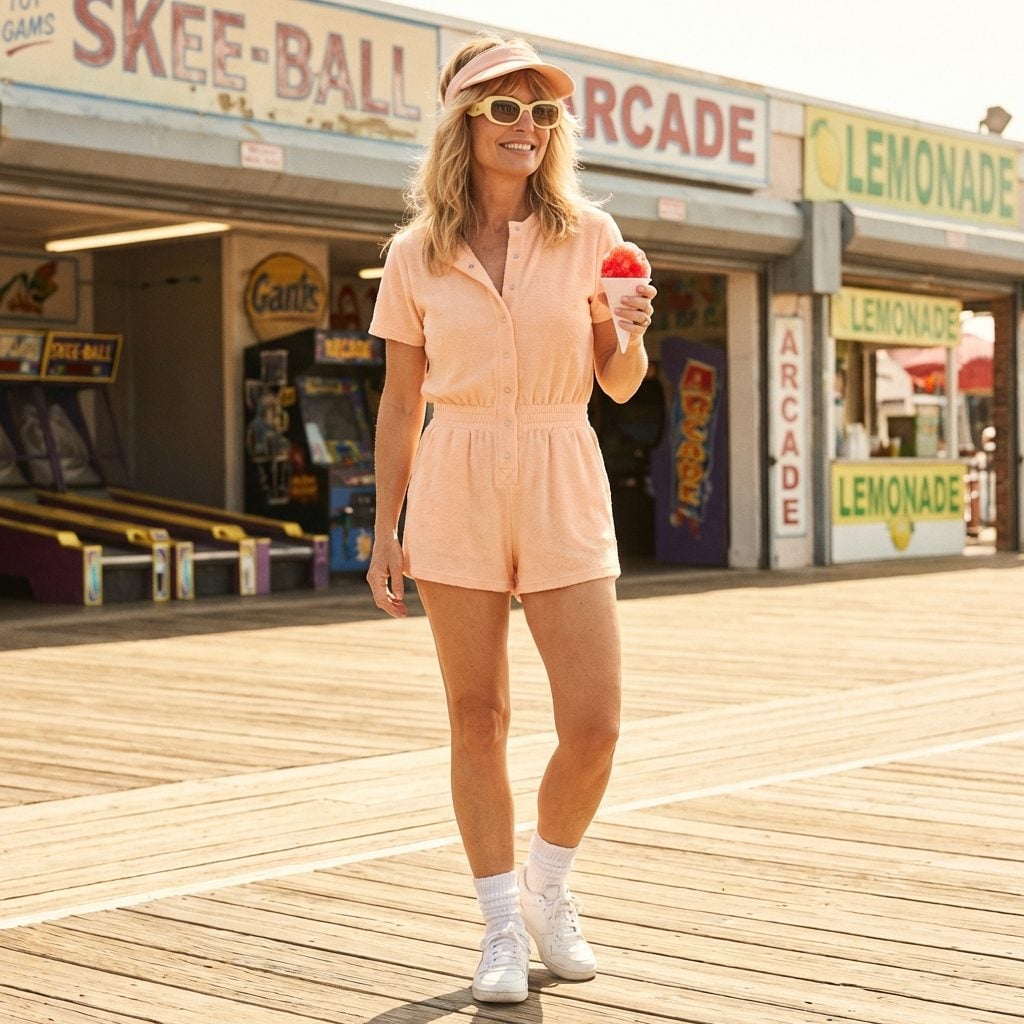
Terrycloth was the decade’s fabric of summer leisure, and the romper was its highest form. One piece, no decisions, snap at the crotch so you didn’t have to fully undress to use a public restroom, this was engineering in the service of vacation. The terrycloth romper came in every pastel available: mint, peach, lavender, baby yellow. You owned at least two.
The matching visor was not optional. The visor was the completion of a set, and completing the set was a moral imperative in 1986. Wearing the romper without the visor would have felt like showing up to something half-dressed. The visor also genuinely did protect your face from the sun, which means this was one trend that was actually practical, even if it looked like you were dressed as a very relaxed tennis ball.
15. Off-the-Shoulder Ruffled Tops Worn With Everything, Including Jeans in July
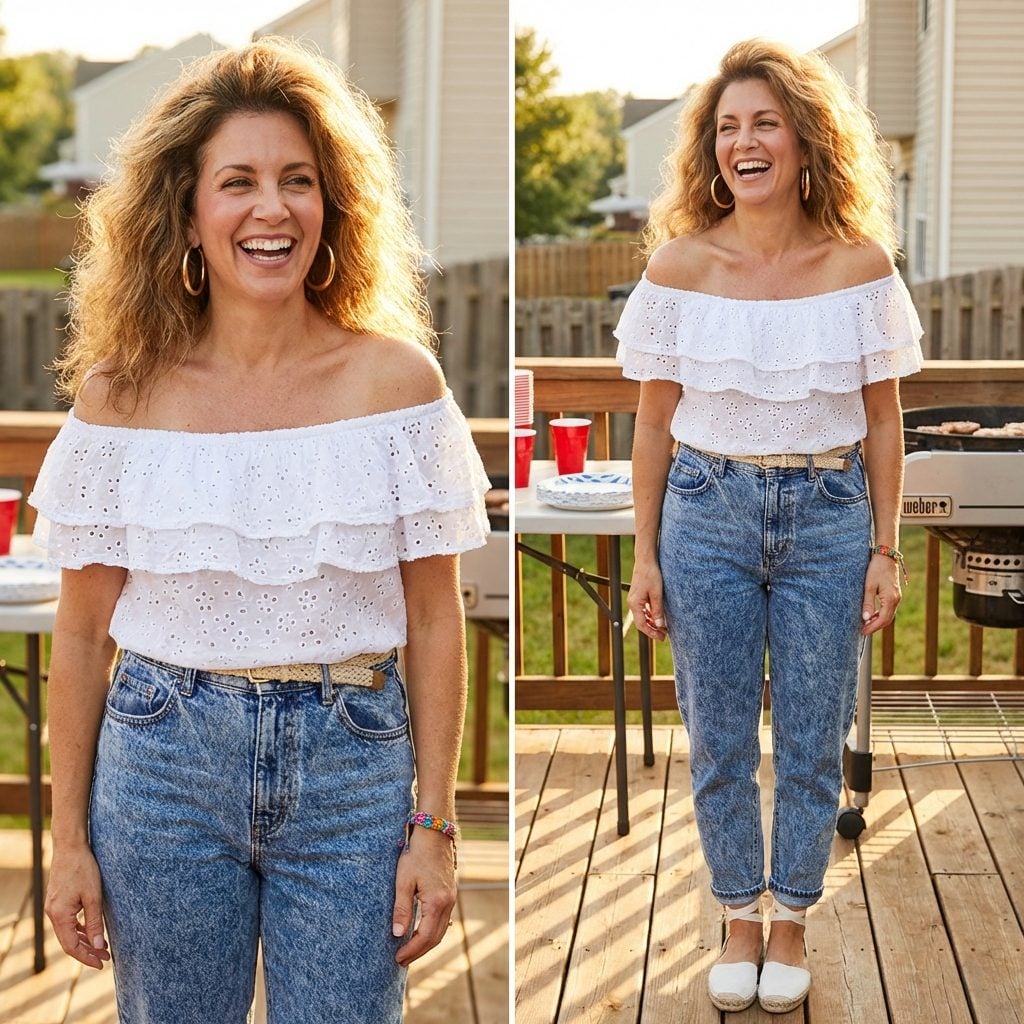
One slightly too-vigorous movement and the whole neckline shifted down or twisted sideways. You fixed it constantly. Everyone fixed theirs constantly. This was just the operating condition of the off-shoulder top, and nobody considered it a design flaw, you just incorporated the adjustment into your regular physical routine, like breathing.
The ruffle situation varied by outfit. Sometimes one ruffle at the shoulder. Sometimes a cascade of three, graduated in size, which made your upper body look like a wedding cake. Paired with high-waisted jeans and espadrilles, the off-shoulder top was the summer party silhouette of the entire decade. The off-shoulder ruffle top said: I dressed up for this, but not so much that I can’t eat potato salad.
14. The Banana Clip Holding Up an Amount of Hair That Should Not Be Possible
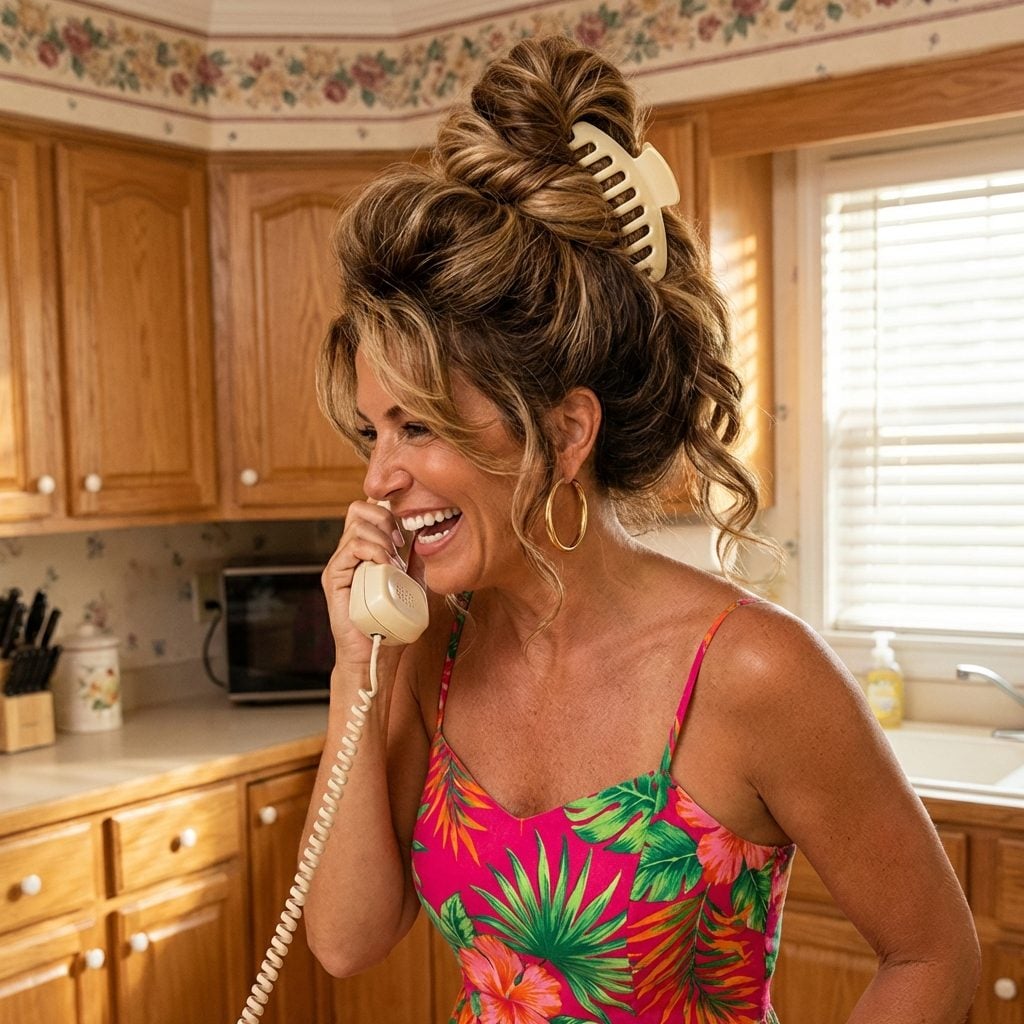
The banana clip was a structural marvel. You gathered all your hair, twisted it loosely, and snapped two plastic combs together around it, creating a cascading updo that had no right to be as secure as it was. It stayed. All day. Through humidity and swimming and dancing at parties. The engineering was genuinely impressive.
What it created at the crown was a kind of contained chaos: smooth at the sides, then a deliberate explosion of curls or waves where the hair escaped the clip at the top. A few pieces always came down in front and those were left there, carefully, because they looked like they had come down by accident. They had not come down by accident.
13. Bold Geometric Printed Unitards With Stirrup Leggings on Top (Or Under. The Order Was Flexible.)
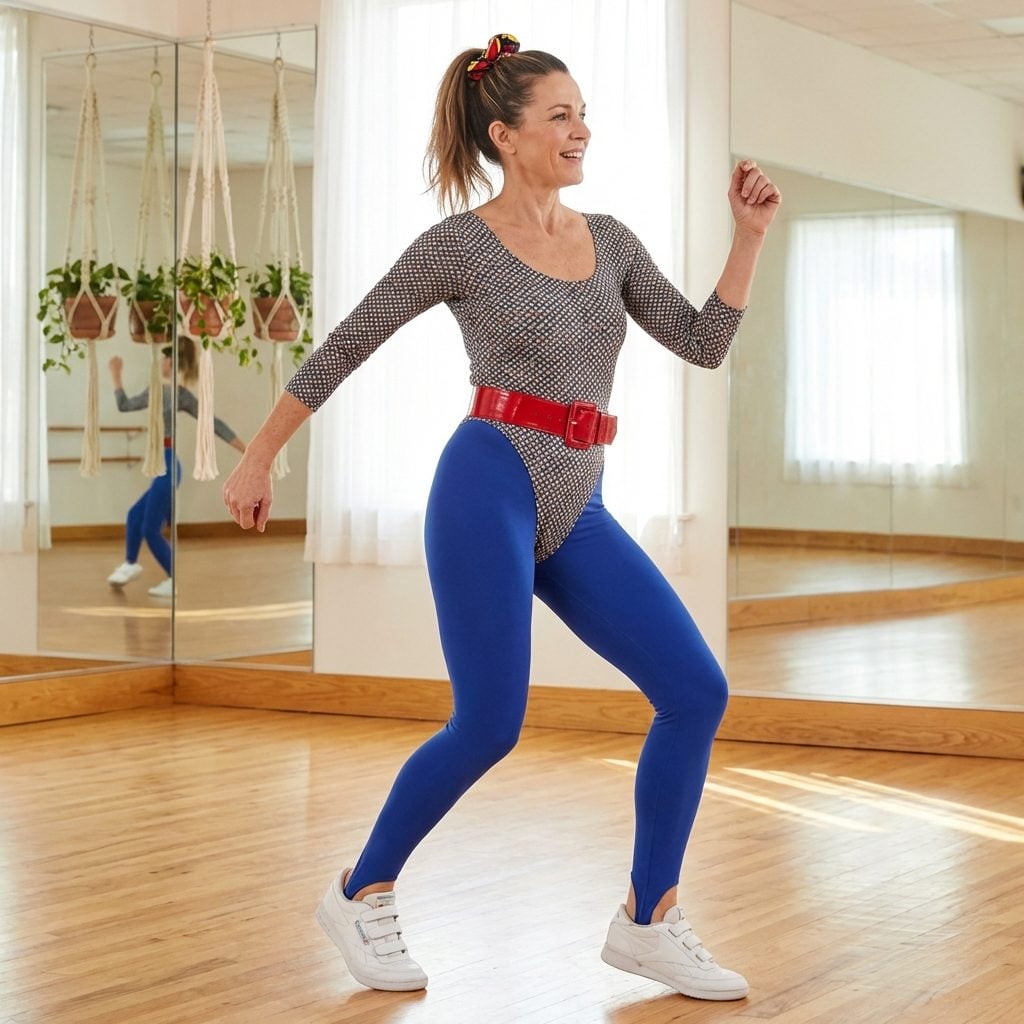
The stirrup legging had a foot strap that kept the legging pulled taut and smooth, which was important because the alternative was the legging bunching up, and bunching up was not acceptable. The stirrup solved this problem and created a new one, which was that the strap was always slightly uncomfortable and the tension transferred up the entire leg all day.
But worn over a geometric-print unitard or under a bold bodysuit, with a patent leather belt cinching the waist and aerobic sneakers completing the look, this was a full accessory outfits moment. It said: I might be about to exercise. I might just be going to the grocery store. These are not mutually exclusive in 1987 and you should not assume otherwise. The stirrup leggings have actually cycled back in recent seasons, though modern versions wisely made the stirrup a design choice rather than a structural necessity.
12. The Cotton Candy Sun-In Hair Situation (Orange Was Also an Option, Apparently)
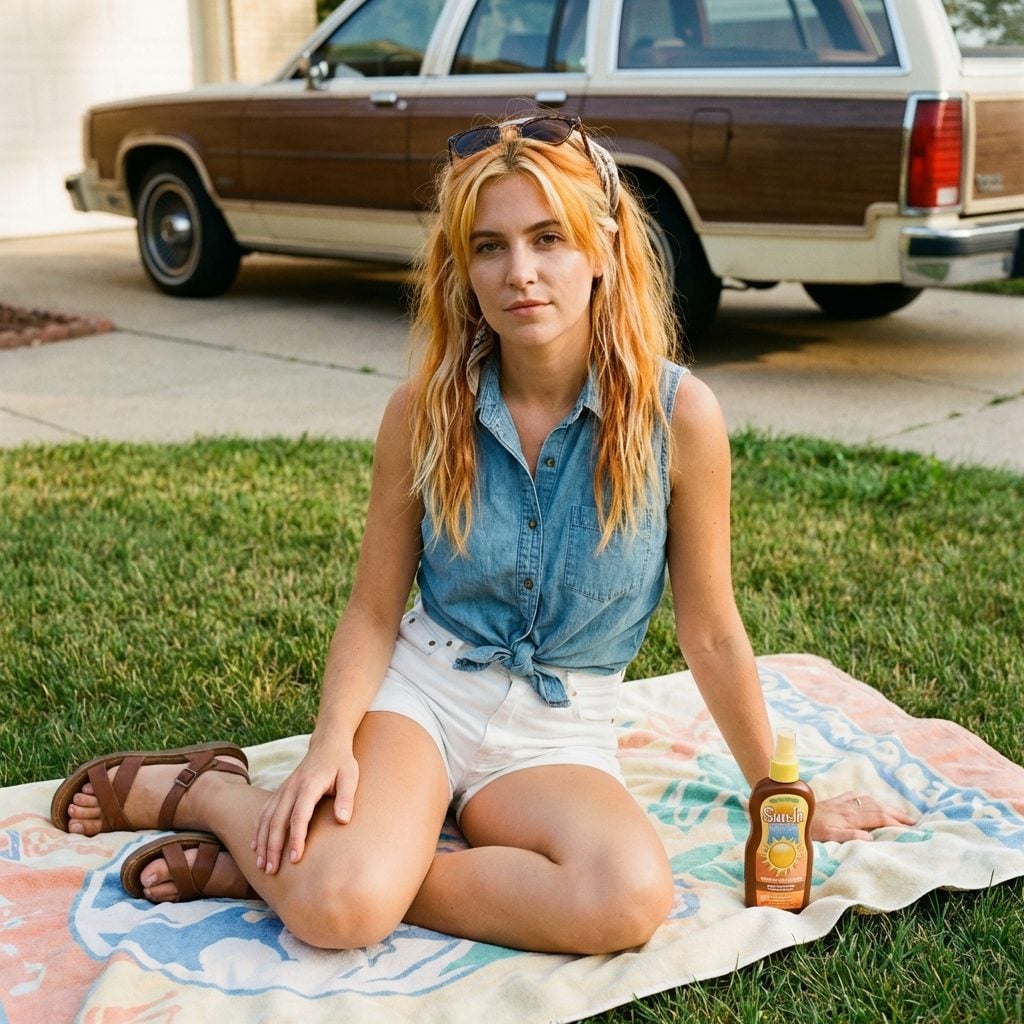
You sprayed it on, went outside, and the sun was supposed to do the work. In theory, Sun-In lightened your hair gently toward a sun-kissed blonde. In practice, it turned approximately seventy percent of users a shade of orange that existed nowhere in nature, and the effect was not even, you’d have golden patches near the crown, a strange brassy stripe on the right side, and your actual hair color starting up again somewhere around your ears.
The uneven result was not considered a failure. It was considered highlights. You went back out the next weekend and did it again. Some of us did this every single weekend of summer 1986 through 1989, essentially conducting an ongoing experiment in what our hair could withstand. The answer was: a lot, but not without consequences. Those of us who had dark brown hair and expected blonde got a very specific kind of education about chemistry.
11. The Fanny Pack Worn at the Front, Always at the Front, Centered on the Stomach

❤️ Would you like to save this?
Worn at the back and it’s just a belt bag. Worn at the front, centered at the stomach like a small rectangular second belly: that is a fanny pack, and that is where every single one of us wore ours from approximately 1985 to 1993. The logic was access. You could reach your lip gloss faster. You could pay for funnel cake without opening a purse. It was practical and it was also, in retrospect, extremely funny-looking.
The nylon was usually brightly colored. The clasp was plastic. Inside: lip gloss, a few dollars, your ID if you were old enough to have one, a crinkled receipt, and approximately three things you had forgotten were in there. The fanny pack was the original hands-free bag and the entire fashion world has been trying to rehabilitate it as a crossbody since 2019. We had it first.
10. Slouchy Socks Over Jelly Shoes, Because Texture Was for Everyone
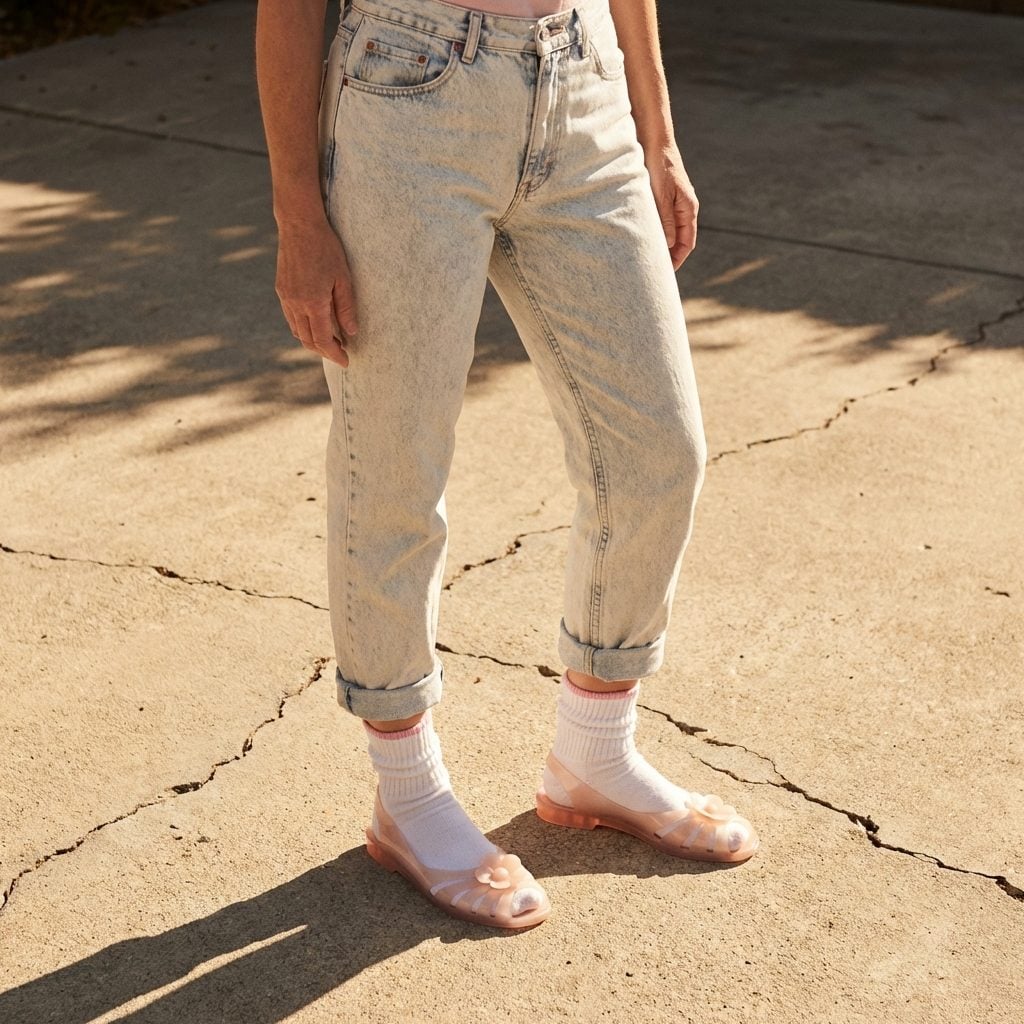
Jelly shoes were made of PVC plastic and in summer they became a dedicated foot environment. Your feet sweated. The jellies made a specific sound on linoleum. By the end of the day, a thin sheen of moisture had developed inside the shoe that was not comfortable to think about too carefully. You wore them again the next day.
The slouchy sock underneath was the styling move that took this from playground to fashion statement. The sock had to be genuinely slouched, not just slightly fallen down, but deliberately, specifically gathered around the ankle in a casual pool of white cotton. Paired with rolled jeans and the jellies, this was the official bag outfits era footwear moment, and we were all deeply committed to it every single summer until approximately the day we weren’t anymore.
9. The Matching Shorts Set in a Print That Asked a Lot of the Eye
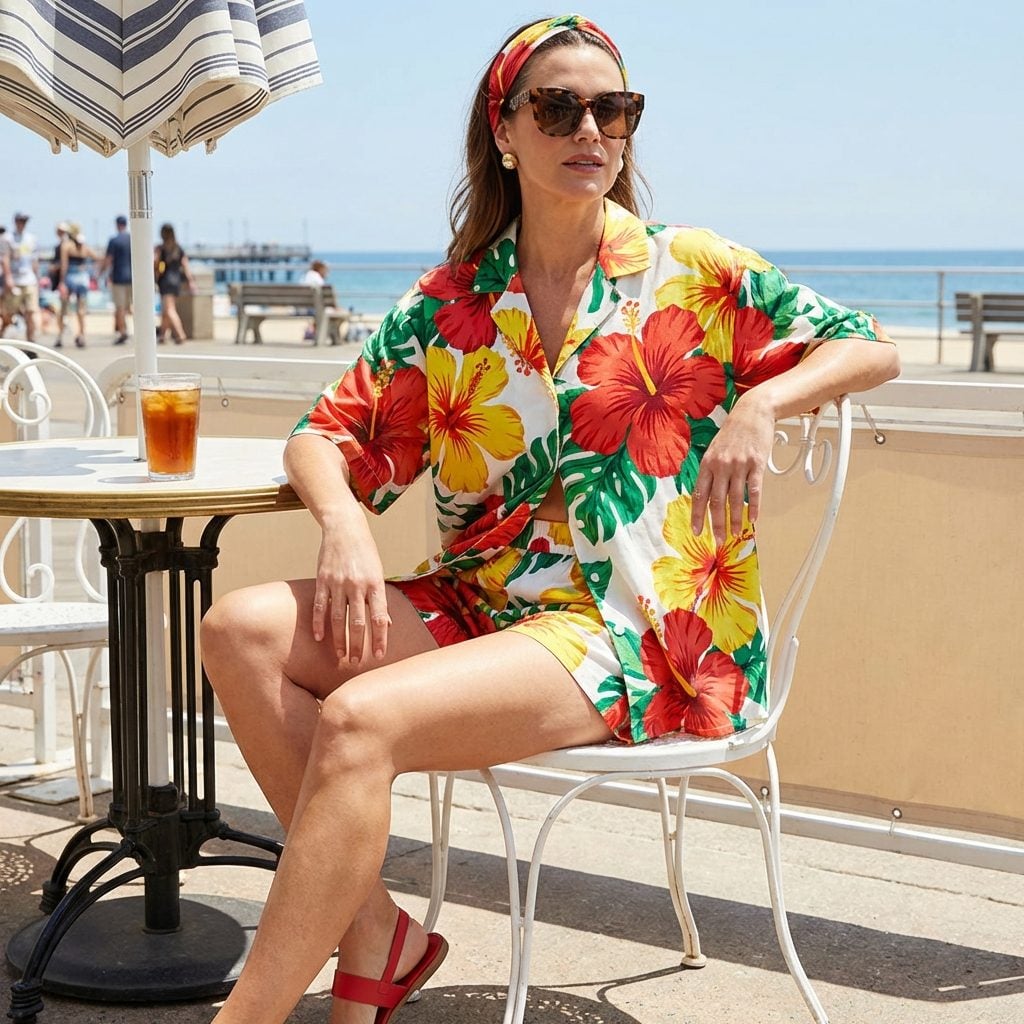
Head-to-toe matching print was a deliberate act of visual commitment. The shorts were the same fabric as the top, purchased as a coordinated set from a store like Casual Corner or Lerner New York, and you wore them together because that was the instruction and the instruction was correct. The print was usually floral or tropical and always slightly louder than what a reasonable person might choose standing still, but in motion, in summer, it made complete sense.
The matching shorts set was the decade’s answer to the question: how do I look put together without making two separate clothing decisions? One answer. One unit. One print that could be seen from significant distance. The matching print shorts set required no coordination, no styling thought, no second-guessing, you simply put on the whole thing and walked out looking like summer had a dress code and you had read it.
8. Fluorescent Spandex Bike Shorts Worn Absolutely Nowhere Near a Bicycle
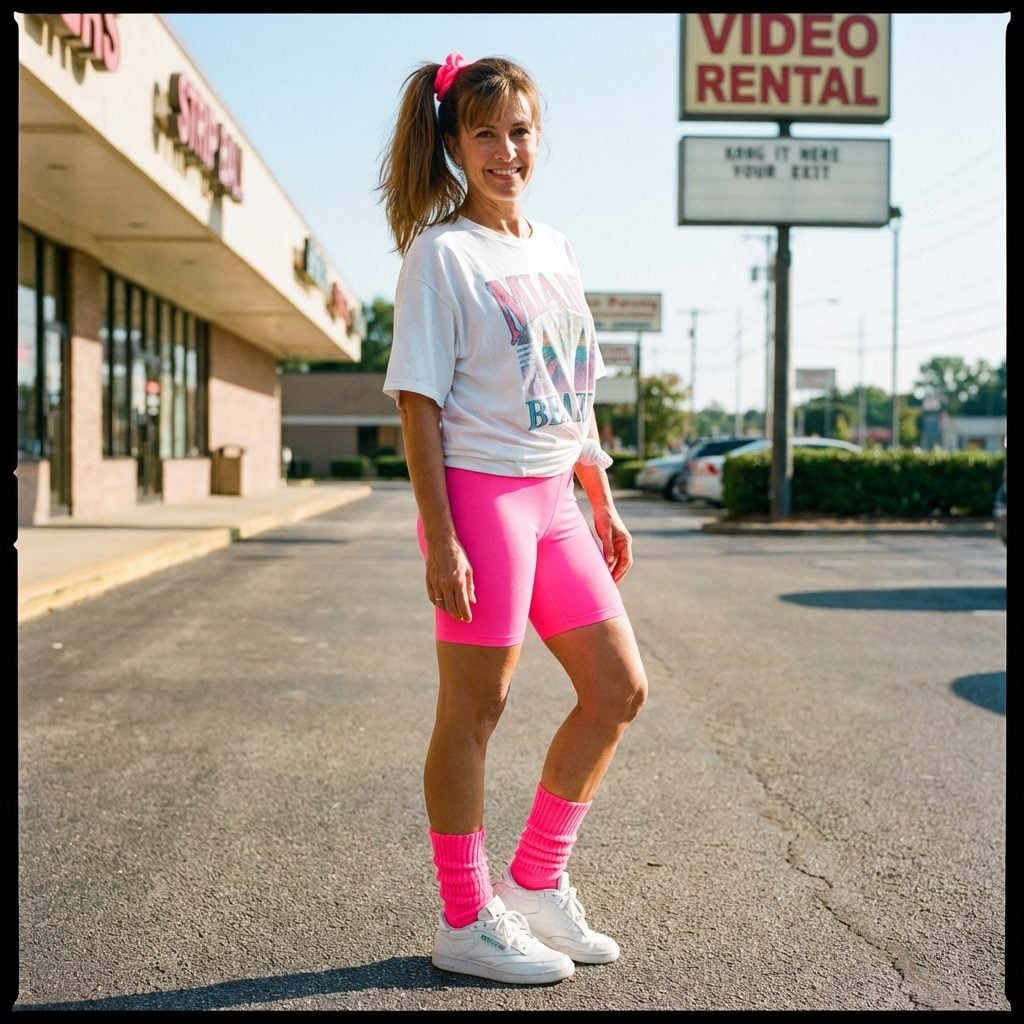
Nobody was cycling. Let’s just get that established upfront. The bike shorts worn by every woman in America between 1987 and 1993 had never seen a bicycle, would never see a bicycle, and were paired specifically with oversized graphic tees, slouchy cotton socks, and Reebok Classics in colors that glowed faintly in dim lighting.
Neon yellow. Electric pink. That one shade of safety orange that made you look like a very fashionable traffic cone. You wore them to the mall, to the movies, to your friend’s house, to the gas station. You wore them everywhere except on a bike. The spandex was aggressively shiny, with a seam up the back that served as a kind of personal architecture, and you owned at least four pairs in colors that had no names in nature.
7. The Side Ponytail Positioned So Far to One Side It Was Basically on Your Cheek
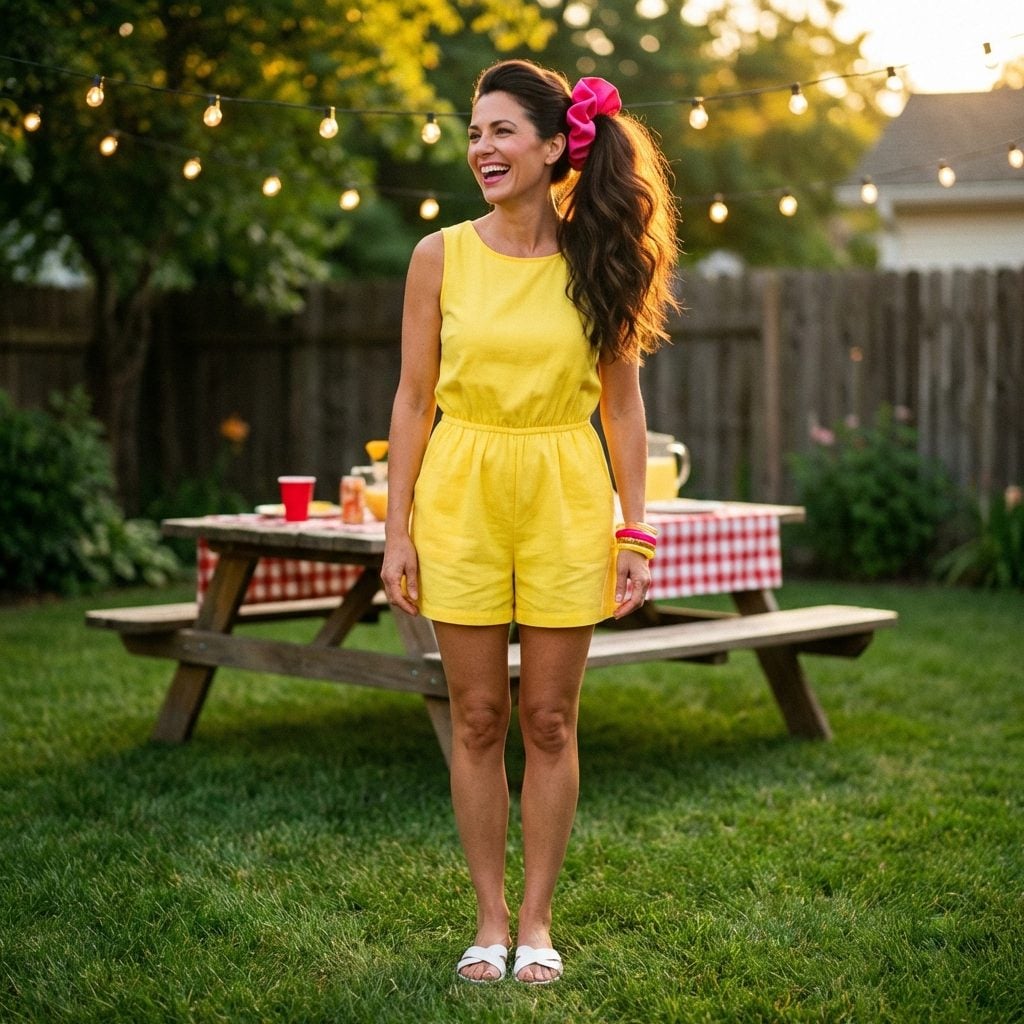
There was a specific physics to the side ponytail. You gathered your hair at the absolute furthest point from center that your skull would allow, secured it with a neon scrunchie or a crimped ribbon, and then tilted your head slightly to balance the weight. It sat there, against your jawline, defying gravity and logic equally.
Madonna had one in the early videos. Cyndi Lauper had a version. Every girl at every summer cookout from 1983 to 1991 had one slightly less famous but equally committed version. The higher and farther to the side, the better. If it was flopping against your ear, you were doing it right. If anyone could mistake it for a centered ponytail, you had failed.
‘The side pony was the 1980s in a single hairstyle: asymmetrical, cheerful, and completely sure of itself.’
6. Matching Terrycloth Shorts and Tube Top Sets in Every Pastel Known to Mankind

Terrycloth was having its absolute moment and nobody questioned it. The same fabric used to make towels was being sewn into two-piece shorts sets and sold at every Sears, JCPenney, and beach boardwalk shop from Maine to California. The tube top had elastic along the top and bottom that left distinctive red lines on your skin, and the shorts had a matching elastic waistband that sat squarely at your natural waist.
They came in mint green, baby yellow, powder blue, and that peachy coral that everyone’s kitchen appliances also came in. You wore them to the beach, to the community pool, and to run errands on hot July afternoons. They absorbed sweat in a textile-forward way. They required no belt, no tuck, no coordination whatsoever. They were summer reduced to its simplest, most terry-est form.
5. Stonewashed Denim Skirts with Fringe Hemlines That Walked Before You Did

The fringe arrived first. Always. A stonewashed denim mini skirt with a fringe hem was not merely a skirt, it was an announcement. The fringe swung when you walked, rustled when you sat, and caught on chair legs with an enthusiasm that was occasionally inconvenient. The denim itself was that very specific faded blue-gray achieved by the stonewashing process, which made everything look as though you had been wearing it for years even if you bought it that morning at Express.
Worn with a tied-front cotton blouse and white slip-on sneakers, this was the quintessential summer outfit for anyone aged twelve to forty in 1986. The length was debatable. The fringe added approximately two inches of moral ambiguity to whatever length you had technically purchased. This was considered a feature.
4. Jellies: The Plastic Shoes That Made Your Feet Sweat in Colors Your Feet Have No Business Being

They were made entirely of PVC. They were transparent, or translucent, or candy-colored in a way that no leather or canvas could ever aspire to. They were called jelly shoes and they were worn by every girl and woman who stepped foot in a Payless or a beach gift shop between 1982 and 1990, and they were profoundly uncomfortable in the specific way that only a shoe made entirely of hard plastic can be.
Blisters within twenty minutes. Sweat pooling in the toe box. A distinctive squeaking sound with every step that announced your location to the entire mall food court. And yet, they were beautiful. Clear with glitter. Hot pink. Pale lavender. That specific iridescent pearl that seemed futuristic in 1985. You wore them anyway, with ankle socks or without, and you wore them with a joy that transcended podiatric common sense.
3. The Polo Shirt with Every Single Collar Point Popped, Layered Under Another Popped Polo
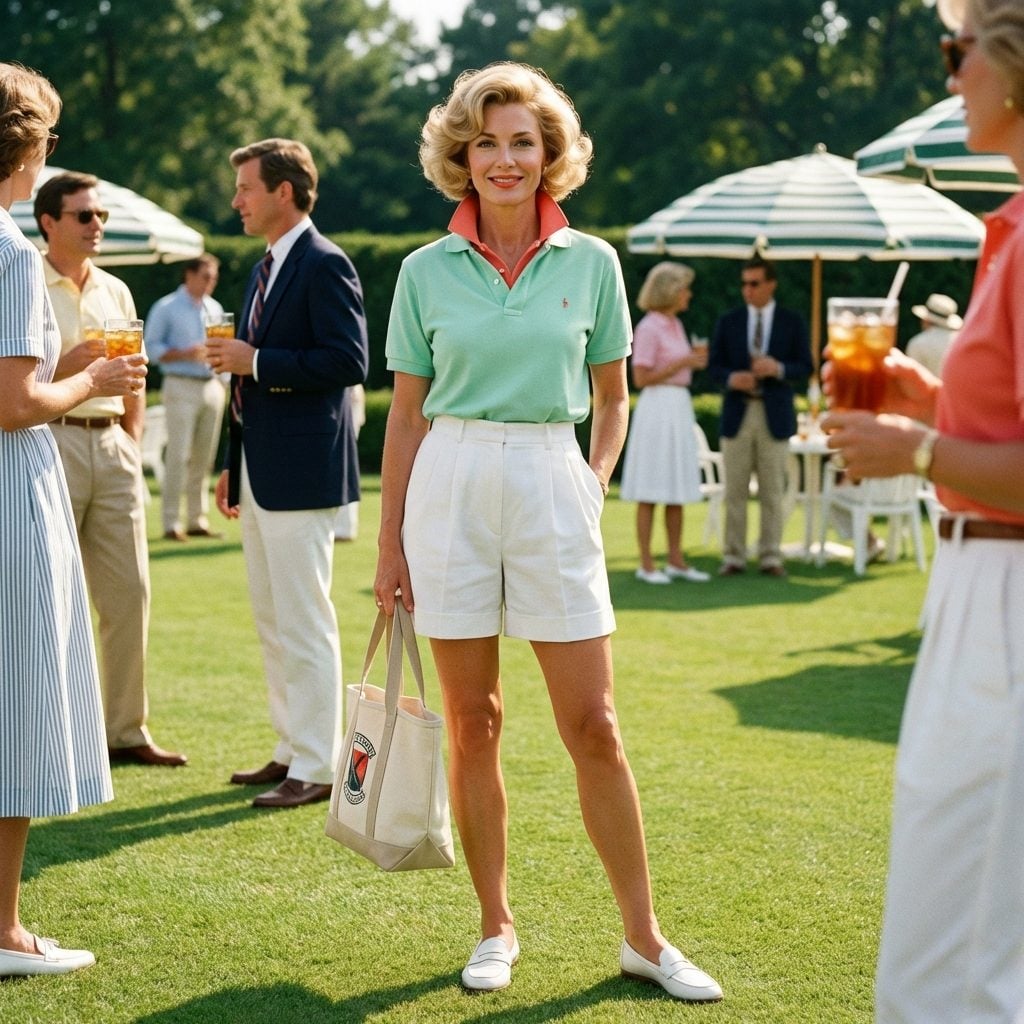
One polo collar up was a statement. Two polo collars, both popped, layered one shirt over another in complementary colors, was an entire thesis on confidence. The double polo was a summer staple for anyone who spent their hot-weather months at the country club, the yacht club, the community pool that functioned as a yacht club, or any mall in the continental United States.
Pastel was mandatory. Coral under mint. Yellow under white. Lavender under powder blue. The collars had to point skyward at precise angles, stiff with starch or the specific weight of the piqué cotton weave, and you adjusted them with the same care you’d give to anything structural. This was an accessory outfits situation, technically, the collar itself functioning as decoration on top of a perfectly fine garment that needed no such embellishment and received it anyway.
2. Sun-In: The Spray Bottle That Turned Everyone’s Hair Orange and We Called It Highlights

You sprayed it on your damp hair before going outside. The instructions said it would give you “natural-looking sun-kissed highlights.” What it actually gave you was a specific shade of orange that no sun in any hemisphere has ever naturally produced on a human head. It smelled faintly of chemicals and ambition. You used half a bottle every weekend of July and August, and by September your hair was the color of a traffic cone in a good light and a carrot in a bad one.
Sun-In came in an orange bottle, which was perhaps a preview of what awaited your hair. Your mother may have warned you. You did not listen. The results were irreversible until your hair grew out, which meant you spent the rest of fall explaining to people that yes, it was intentional, and also no, you were not going to do it again, and also maybe just a little bit more before school started.
1. Enormous Plastic Hoop Earrings in Colors That Matched Your Outfit Precisely and Exactly

The matching was the point. Not approximate matching. Not inspired-by matching. The earrings were the exact same shade as the top, which was the exact same shade as the scrunchie, which was the exact same shade as the ankle socks. The plastic hoops came in every color imaginable and several that weren’t, and you bought them at Claire’s in multi-packs specifically so you could achieve this level of chromatic coordination.
They were light, which was good, because they were large. Dinner-plate adjacent in scale by 1988. They swung when you walked. They caught on your collar when you turned your head too quickly. They were the most joyful possible bag outfits-level commitment to a color palette, and they cost approximately two dollars, and you wore them like you were being paid to wear them.
The hat was optional. The matching plastic hoops were not.