❤️ Would you like to save this?
There was a specific confidence that came with a great pair of shorts in the ’90s. Not the quiet, tasteful kind. The kind that came from pairing bike shorts with a bodysuit, or cutting off your jeans so unevenly that the fringe was basically a fringe situation. We smelled like coconut Banana Boat, our scrunchies matched our waistbands, and we thought every single one of these looked incredible. We were wrong about some of them. We were absolutely right about others. Here’s the full, gloriously chaotic recap.
FYI, thanks to AI imagery software, we’re able to create very specific fashion and hairstyle examples to illustrate the points being made. In some cases, imagery is exaggerated to hammer home the point. Also, assume links that take you off the site are affiliate links such as links to Amazon. this means we may earn a commission if you buy something.
38. High-Waisted Denim Cutoffs With the Frayed Hem You Pulled Apart Yourself
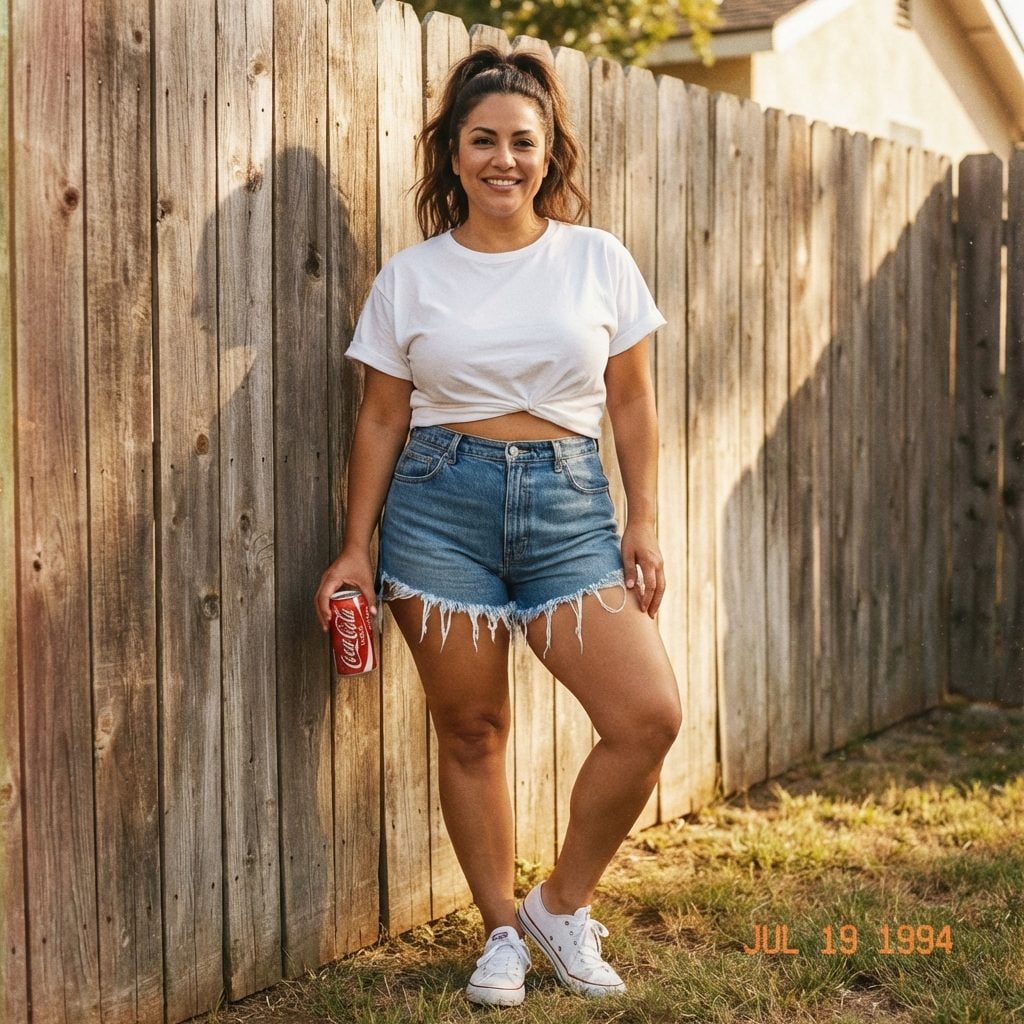
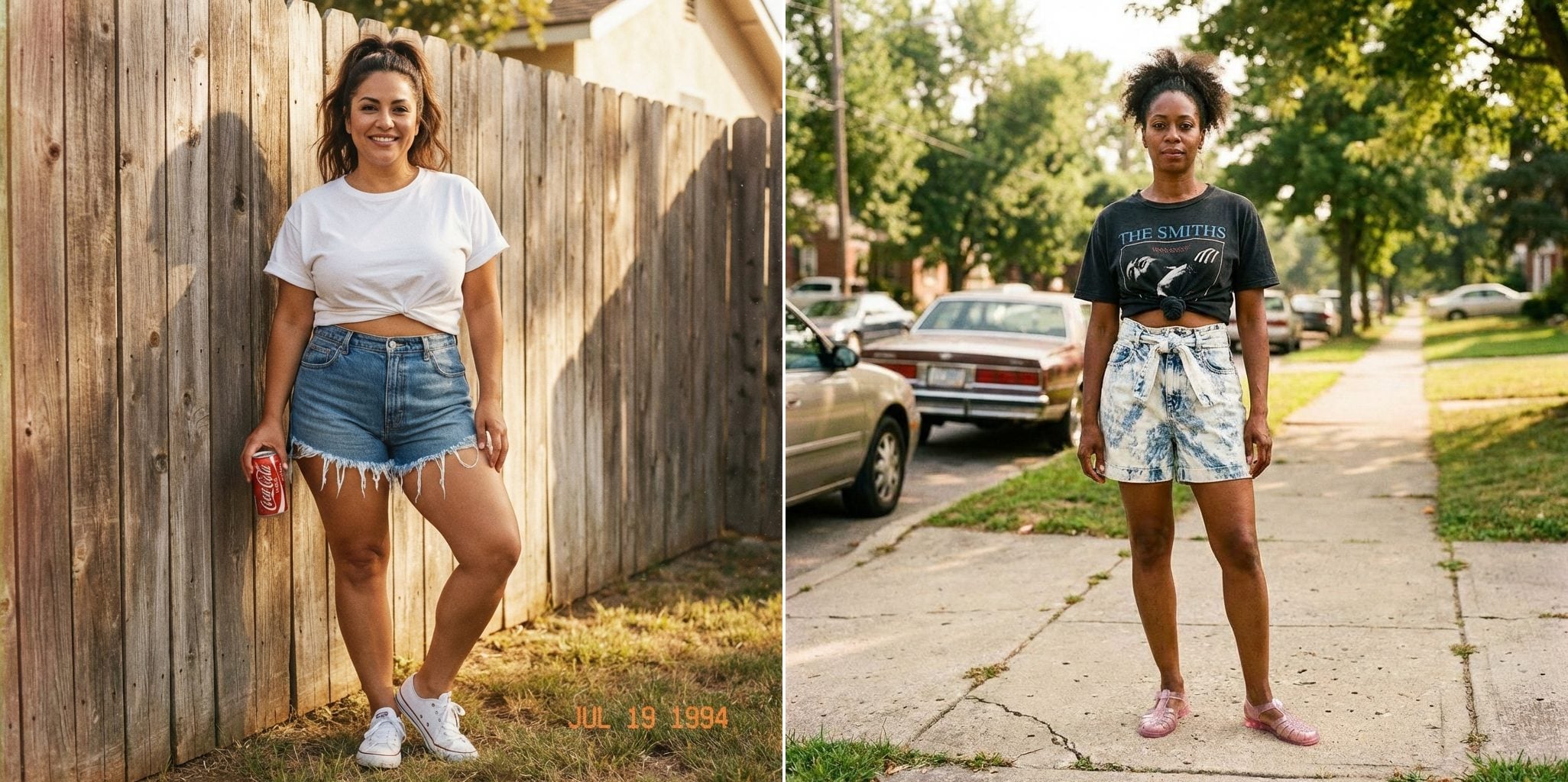
You bought a pair of full-length jeans specifically to destroy them. That was the plan. You marked the line with a Sharpie, grabbed the kitchen scissors, and then spent an entire Saturday afternoon picking threads out of the hem until you had exactly the right amount of fringe. Too little and they looked store-bought. Too much and they looked unhinged. The sweet spot was a very specific chaos.
Paired with a white crop tee tucked in at the front, these were the shorts of every summer barbecue, every outdoor concert, every afternoon at the community pool. The higher the waist, the better. We genuinely believed we had invented something.
37. Acid Wash Denim Shorts With the Front Knot Tie
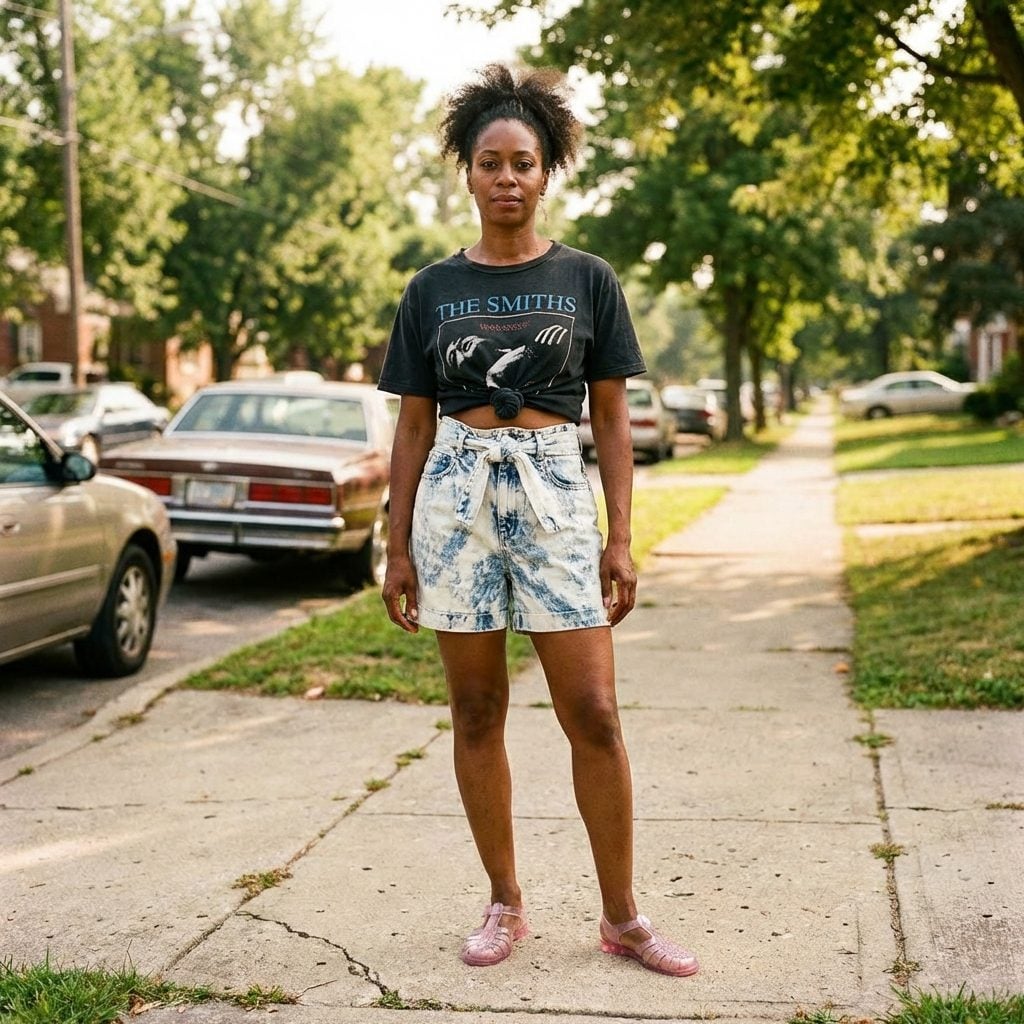
The acid wash looked like someone had attacked the denim with bleach. Because someone had. That was the entire point. The more chaotic the bleach pattern, the more authentic the style. And then, as if the shorts weren’t already doing a lot visually, you gathered the front hem into a knot. Tight. Right at the center. Architectural, almost.
These came from the sale rack at Contempo Casuals or a folding table at the county fair, and you wore them with a cropped band tee and jelly sandals. Something about the whole look said: I watch MTV and I mean it.
36. Denim Shorts With Embroidered Floral Patches Sewn Across the Pockets

These weren’t distressed. These were decorated. There’s a real difference and in 1993 it mattered enormously to your sense of self. The embroidered patches, little clusters of daisies and vines stitched across both back pockets and sometimes creeping up the front, said something specific: I am artistic. I am whimsical. I found these at a craft fair.
Some versions came pre-embroidered from the store. The truly dedicated bought iron-on patches and added their own. Either way, you were communicating a very particular kind of cottagecore-before-cottagecore-existed energy, and honestly, you were ahead of the curve by about thirty years.
35. Mock-Fly Denim Shorts With That Wide Structured Waistband
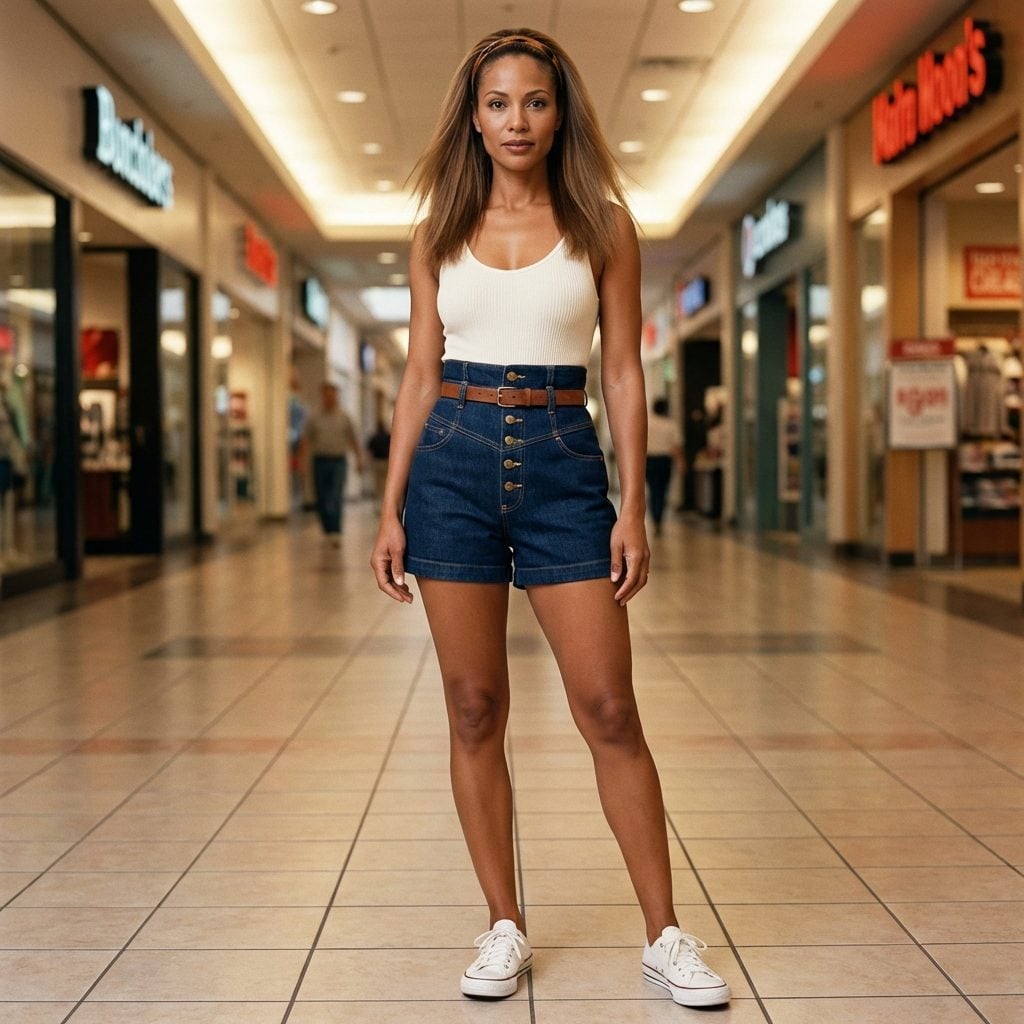
The wide waistband was doing serious architectural work. It came up a solid two or three inches above the natural waist, it was stiff enough to stand on its own, and the mock fly down the front was purely decorative. Those buttons didn’t unbutton. They were just there for the aesthetic. A visual reference to the idea of a fly. Fashion fiction.
These came in every wash from nearly white to dark indigo, and they were the slightly more polished cousin of the basic cutoff. You wore them to the movies with a bodysuit tucked in, and you felt genuinely put together.
34. Chambray Shorts With a Button Fly and Front Pleats (The Ones That Felt Almost Formal)
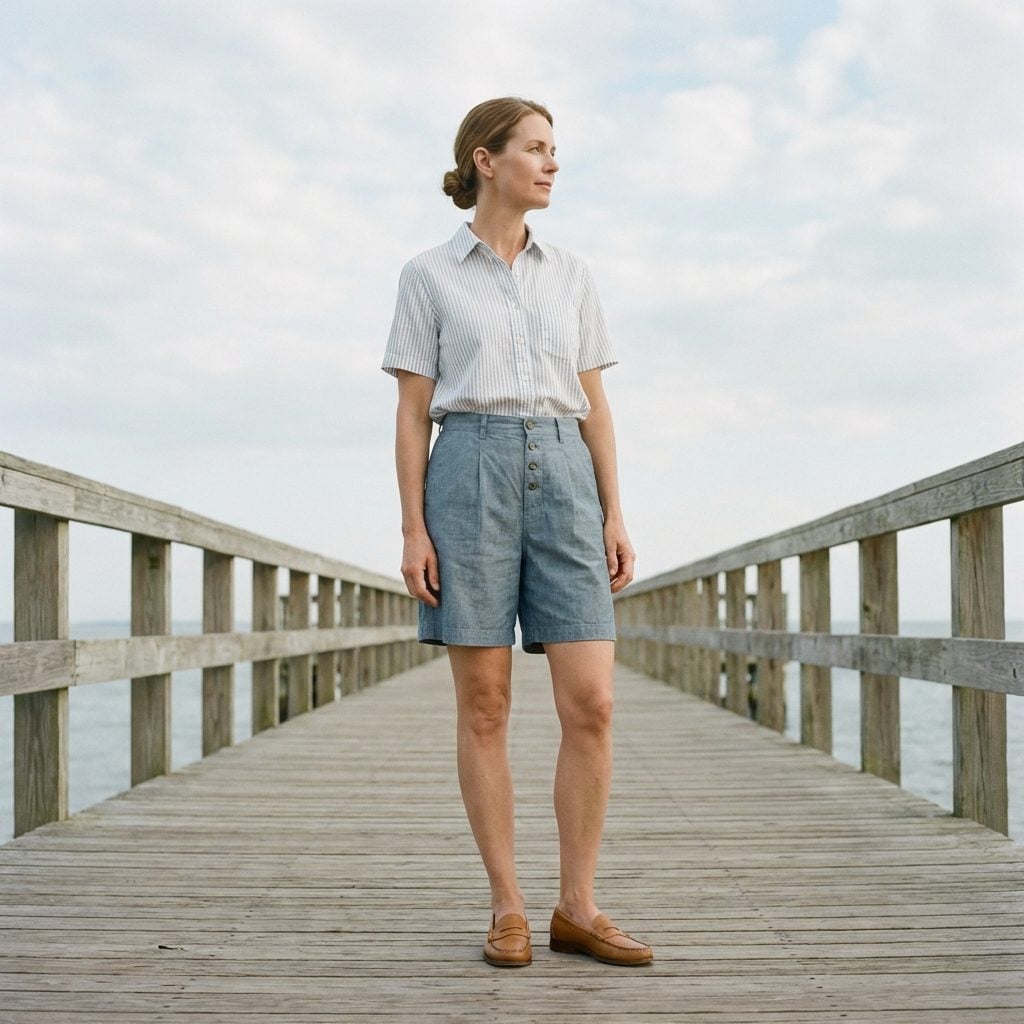
If the cutoff was the casual option, the chambray pleat-front was the one you wore when you needed to look like you had your life together. The pleats added volume right at the top of the thigh, the button fly took forty-five seconds to close, and the chambray fabric had that soft blue-grey tone that photographed beautifully in every disposable camera shot from 1992 to 1997.
These were the shorts you wore to a family dinner in summer. Or to a job interview at the ice cream shop. They said: I take this seriously.
Paired with a tucked-in striped short-sleeve button down and loafers, you were the most put-together person at the pier. Your aunt complimented you, which was the highest possible social validation.
33. Crocheted Denim Shorts Worn Over a Swimsuit Bottom (Beach Ready, Allegedly)
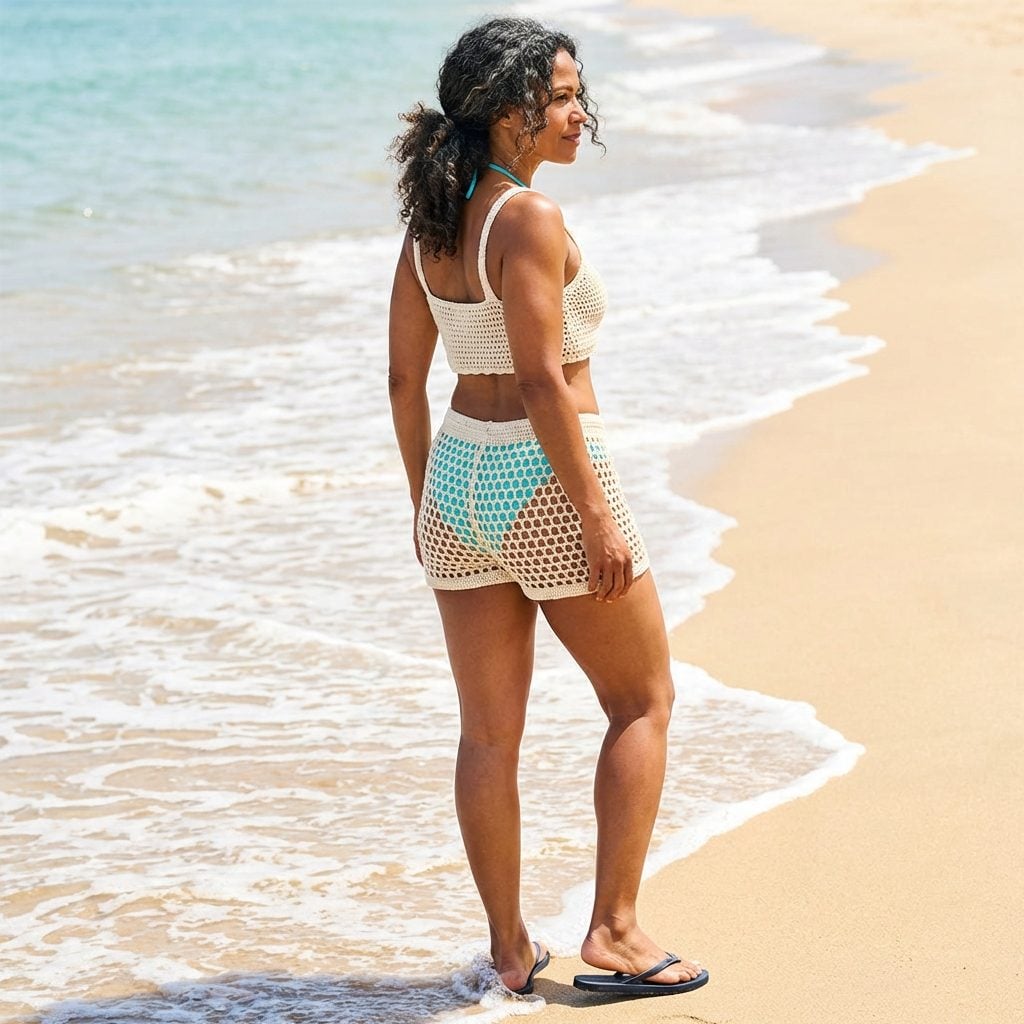
These occupied a very specific category: cover-up that covered very little. The crochet panel replaced the entire front of the shorts, and since crochet is essentially decorative holes, you could see the swimsuit bottom right through them. The illusion of being dressed. The dream of a cover-up. Technically, yes, you had shorts on.
They came in white and natural and occasionally a faded coral, and they had that slightly rough texture from the yarn that left a faint pattern on your thighs by the afternoon. You wore them walking from the beach towel to the snack stand and back, and that was their entire purpose and they fulfilled it perfectly.
32. Cutoff Overalls Shorts With One Strap Completely Undone
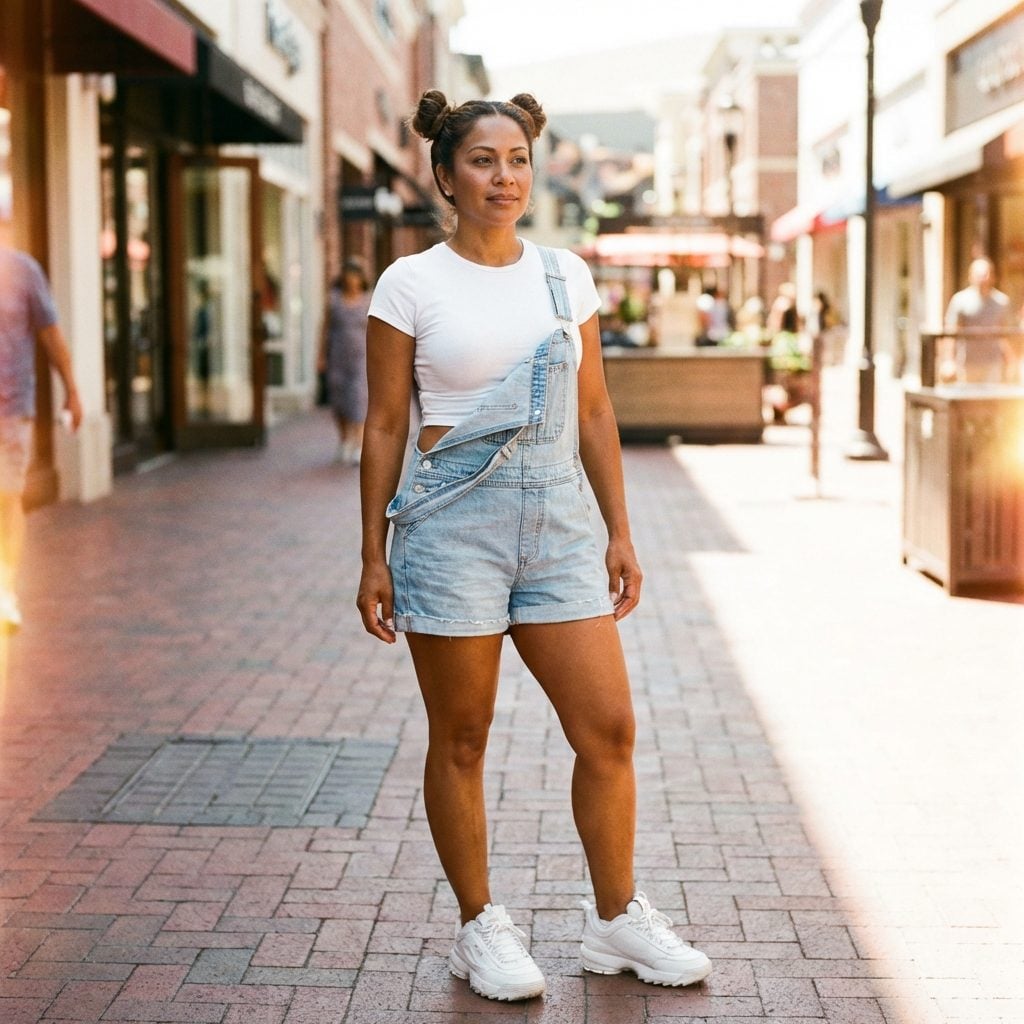
Both straps fastened was for children. One strap undone, hanging loose at your side or dangling off your shoulder, was the universal ’90s signal that you were relaxed about everything. The cool girl wasn’t trying. The cool girl had her overalls strap just sort of floating in the general vicinity of her torso, unbuckled, living its best life.
These were worn over a crop tee or a fitted long-sleeve thermal underneath, and the denim was always a light to medium wash. TLC wore them. Aaliyah wore them. You wore them to the mall and to every single outdoor event between 1993 and 1998.
There’s something genuinely moving about remembering these now. The freedom of that single undone buckle. The specific confidence of deliberately not finishing getting dressed.
31. Black Spandex Biker Shorts Worn With an Oversized Band Tee
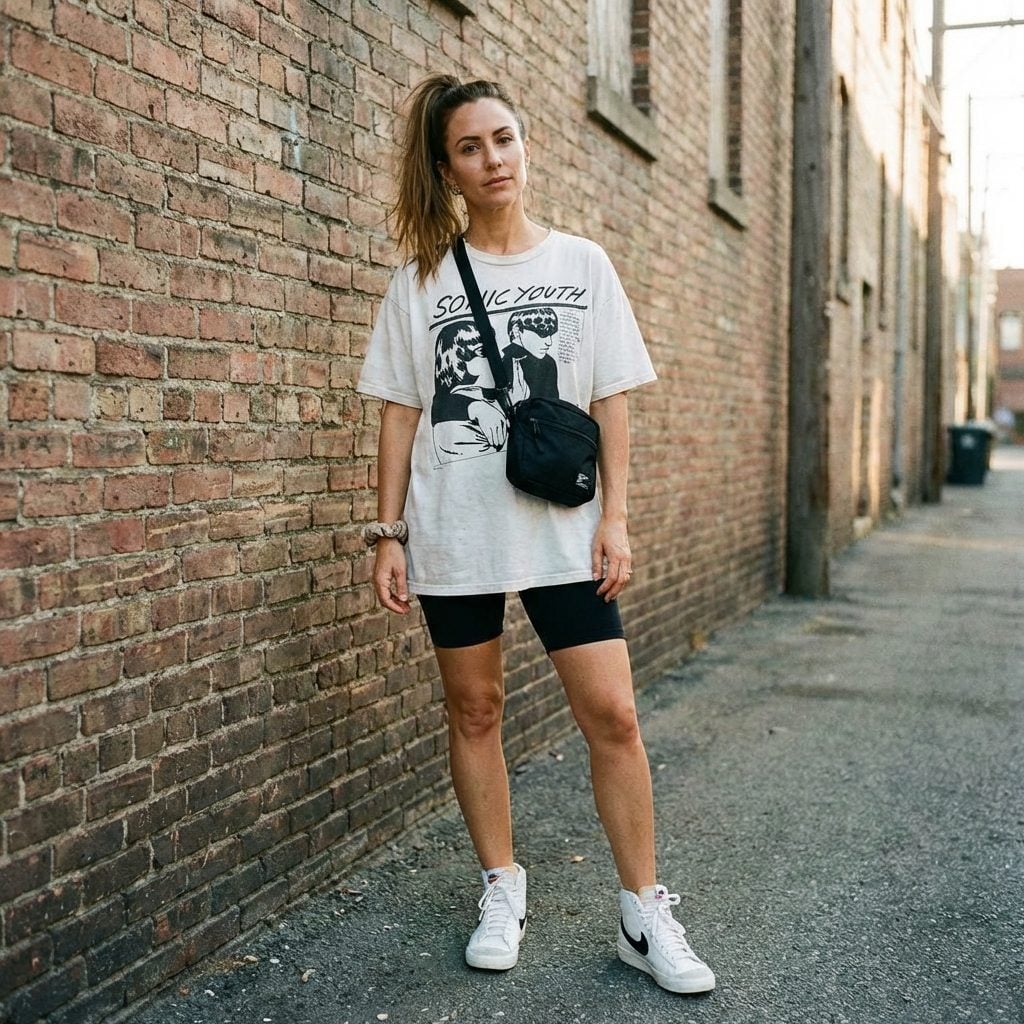
The oversized tee was the key. Without the oversized tee, these were workout shorts. With the oversized tee, they were an outfit. Specifically: the tee had to be at least two sizes too big, the hem had to fall somewhere between your hip and mid-thigh, and ideally it was a band tee you’d cut the collar off of. The biker shorts peeked out below, just a few inches of black spandex at the hem.
This look was everywhere from 1991 to 1996. In music videos. At every theme park. On the cover of every teen magazine. The accessory styles that completed it were always the same: a scrunchie on the wrist, white sneakers, and either a fanny pack or a small crossbody worn across the front.
30. Floral Print Bike Shorts With a Bodysuit Tucked In

Black spandex biker shorts were for the minimalists. Floral print biker shorts, in a bold garden print of roses or hibiscus flowers in hot pink and jungle green against a black background, were for people who had a point to make. The bodysuit tucked in at the waist completed the look, the snap closure at the bottom keeping everything smooth and flat.
The bodysuit was its own category of ’90s innovation. You snapped it closed after putting it on, it never untucked, it never bunched. Paired with the floral shorts and white chunky sandals, this was the summer of ’95 in a photograph.
29. Printed Bicycle Shorts With Bold Geometric Shapes
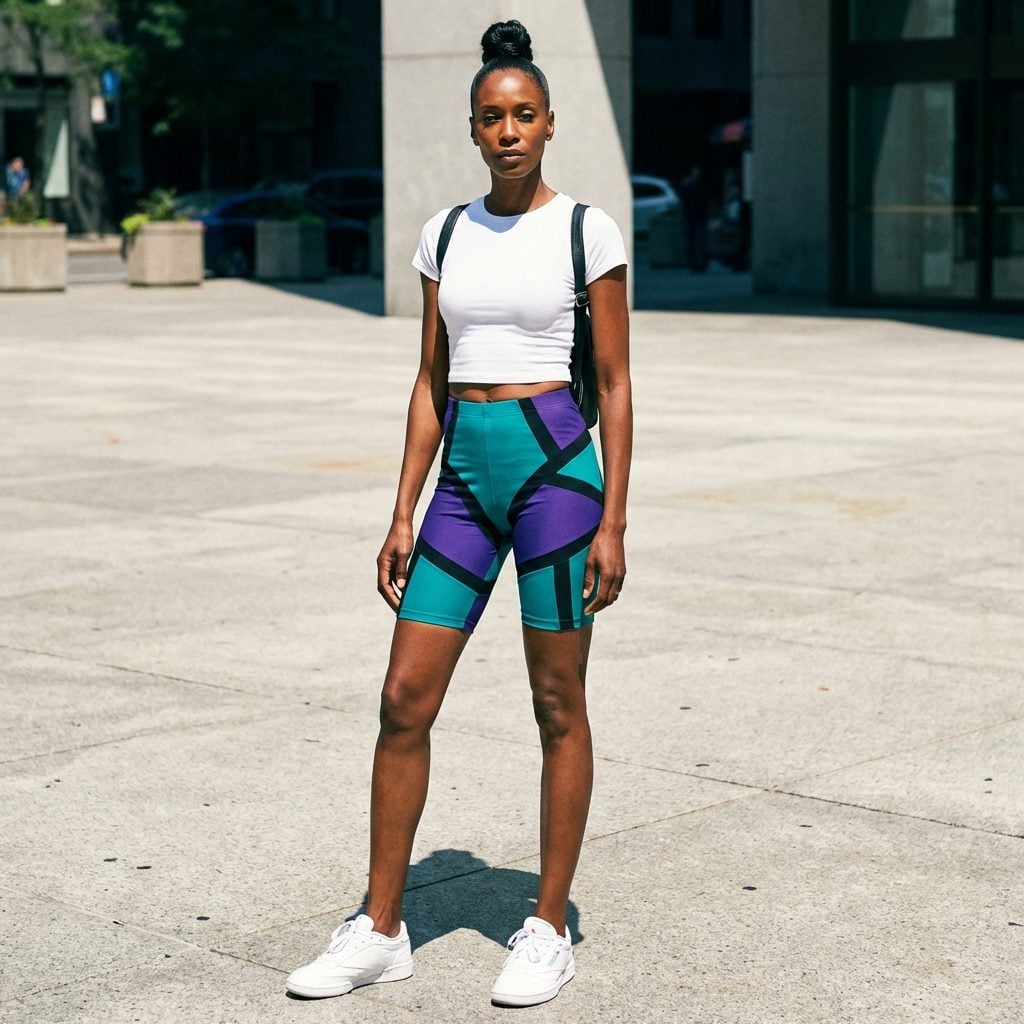
These were the art project version of the biker short. Interlocking triangles. Diagonal color bars. Abstract shapes in teal, purple, and black arranged in patterns that looked like they were designed by someone who had just discovered graphic design software for the first time and was very excited about it. The prints were loud in a way that required commitment.
You wore these and felt genuinely modern. This was the cutting edge. This was what people meant when they said fashion forward. Looking back, the geometric biker short looks like a screensaver. At the time, it looked like the future.
28. Color Block Spandex Shorts in Blinding Primary Colors
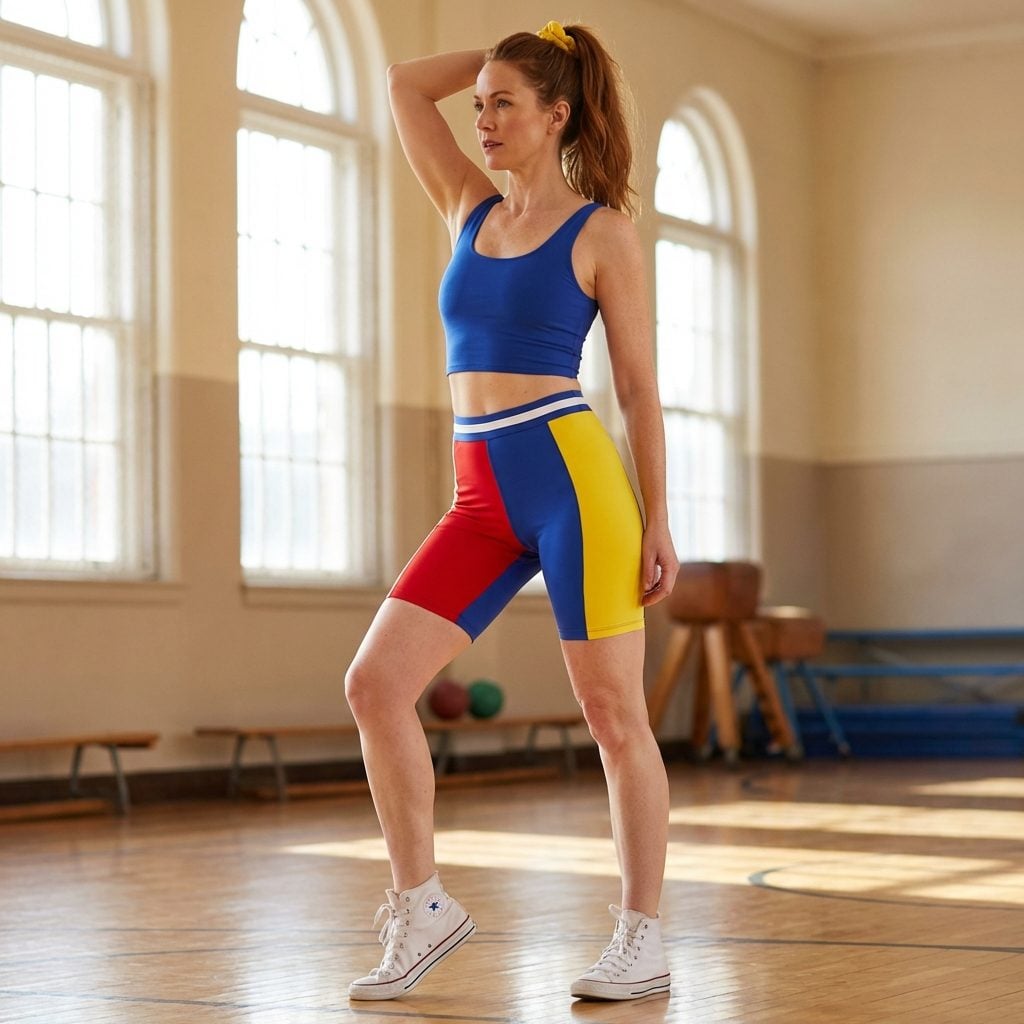
Red on one panel. Royal blue on the next. Bright yellow at the waistband. Maybe a strip of white somewhere in there. These were not subtle. These were the loudest shorts in the room, and the room was fine with that, because in 1992 the entire visual culture was competing to see who could go the most saturated.
Color blocking as a concept was everywhere: on windbreakers, on sneakers, on workout gear, on this specific pair of spandex shorts that you probably bought at a sporting goods store and immediately re-categorized as casual wear. You wore them with a color-matched crop top, which meant you were technically color-coordinating, which felt very sophisticated.
These shorts had the energy of a primary color chart that had gained confidence. They were bold in a way that didn’t apologize. We miss that specific flavor of bold.
27. Pleated Khaki Shorts That Hit Exactly at the Most Awkward Possible Knee
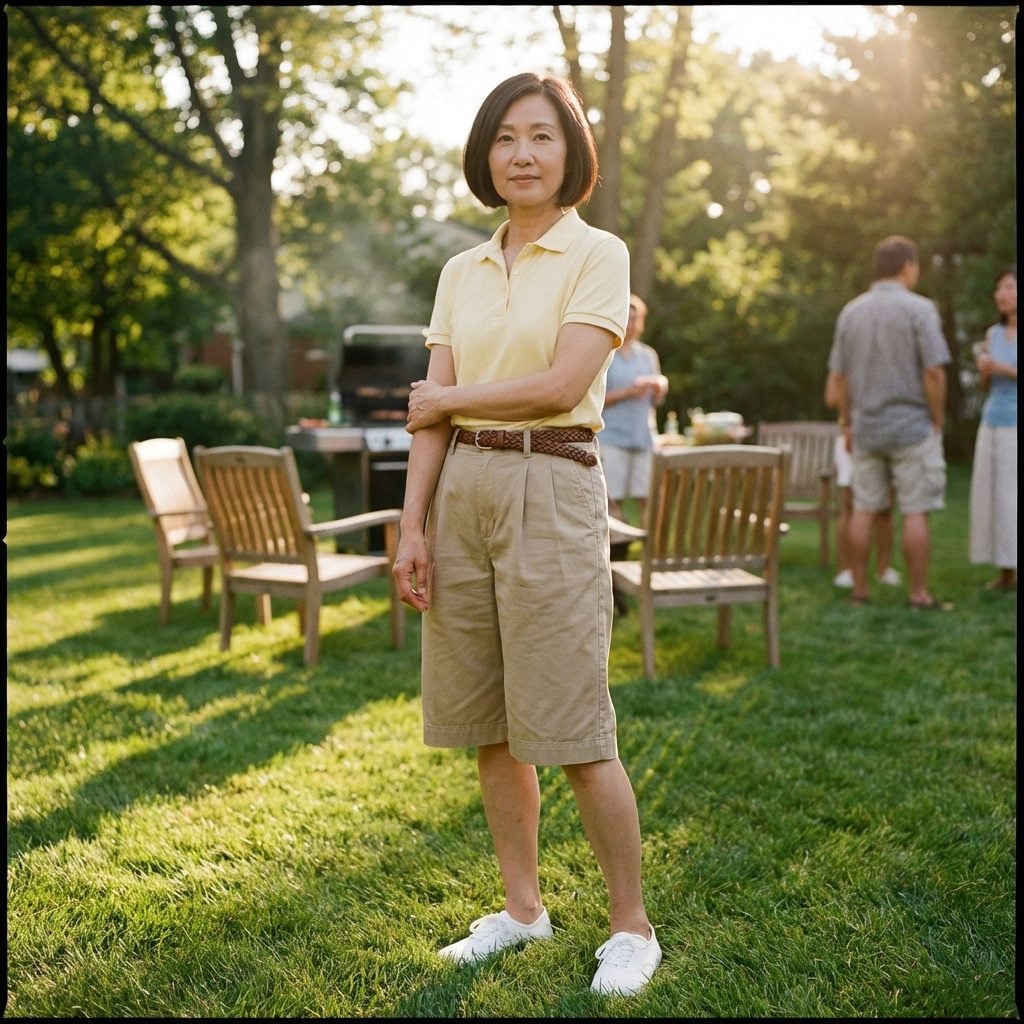
Not quite above the knee. Not quite at it. Just below it, in the zone that added approximately four inches to everyone’s thighs and zero inches to anyone’s chic factor. And yet: we all owned a pair. Multiple pairs. Gap made them. Banana Republic made them. Your dad definitely owned the men’s version.
The pleats at the front were the detail we thought looked polished. We were wrong, but we were wrong together, so it barely mattered. These were the shorts of soccer games, back-to-school shopping trips, and family barbecues where someone’s mom said you looked “very put-together.” Worn with a tucked polo shirt and brown leather belt, this was preppy in the most sincere, earnest, Gap-ad sense of the word.
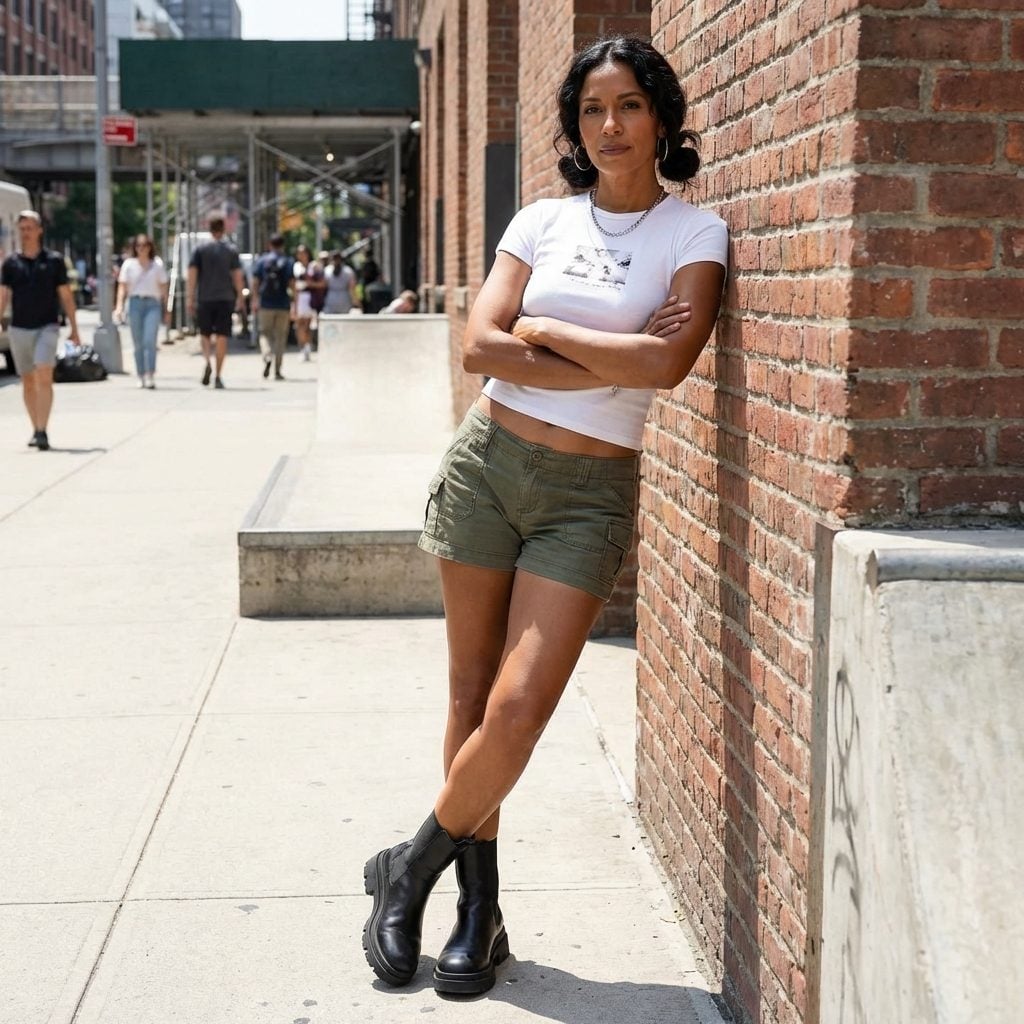
26. Cargo Shorts in Olive or Khaki With More Pockets Than You Had Things to Put In Them
❤️ Would you like to save this?
Those side pockets never held anything important. You might have had a lip gloss in one. A folded-up note from your friend in another. The bottom pocket, the largest one, the pocket with the most structural ambition, was always completely empty. But the pockets were never really about storage. They were about attitude.
Cargo shorts in olive or khaki were the cool-girl style of the mid-’90s, worn with a baby tee, chunky boots, and absolutely zero irony. They sat low on the hip when that was just starting to be a thing. They had that satisfying utilitarian weight to them, the belt loops always slightly too wide for any actual belt you owned. Equal parts practical and effortlessly anti-establishment, which is a very specific trick to pull off in cargo fabric.
25. Plaid Flannel Shorts With a Rolled Cuff (Grunge Did This, and We Followed)
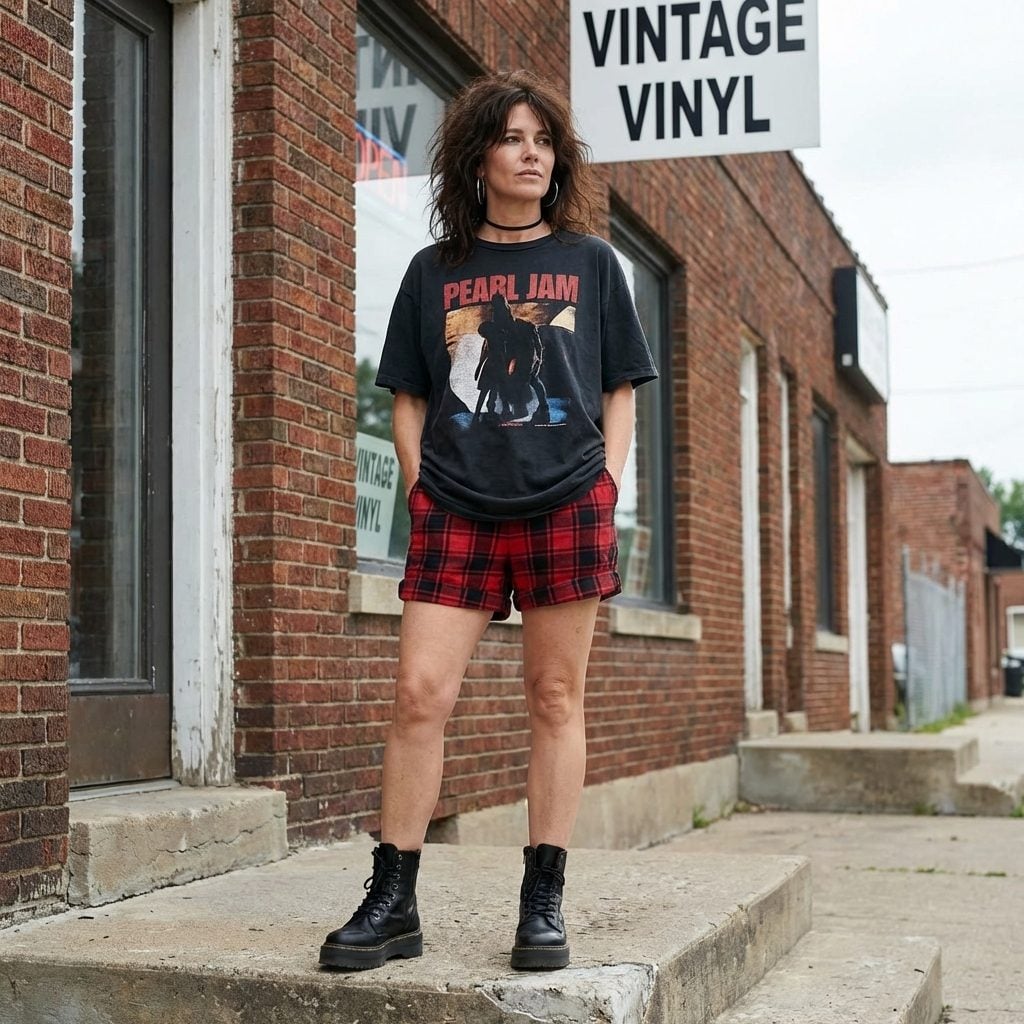
Kurt Cobain in a dress was not the look most of us were going for, but the flannel energy absolutely trickled down. Plaid flannel shorts, usually cut from an oversized flannel shirt someone had deconstructed, or bought already-made in green, red, or blue plaid, were rolled once at the cuff to signal that you knew about alternative music. Even if your most alternative album was Ace of Base.
Worn with combat boots and a band tee, these were the uniform of every girl who sat in the back of the bleachers and had opinions about things. But honestly, even the girls who wore them with white Keds and a tucked chambray shirt made them work. Flannel in summer was irrational. We did not care.
24. Pleated Floral Shorts With an Elastic Waistband Your Grandmother Also Owned
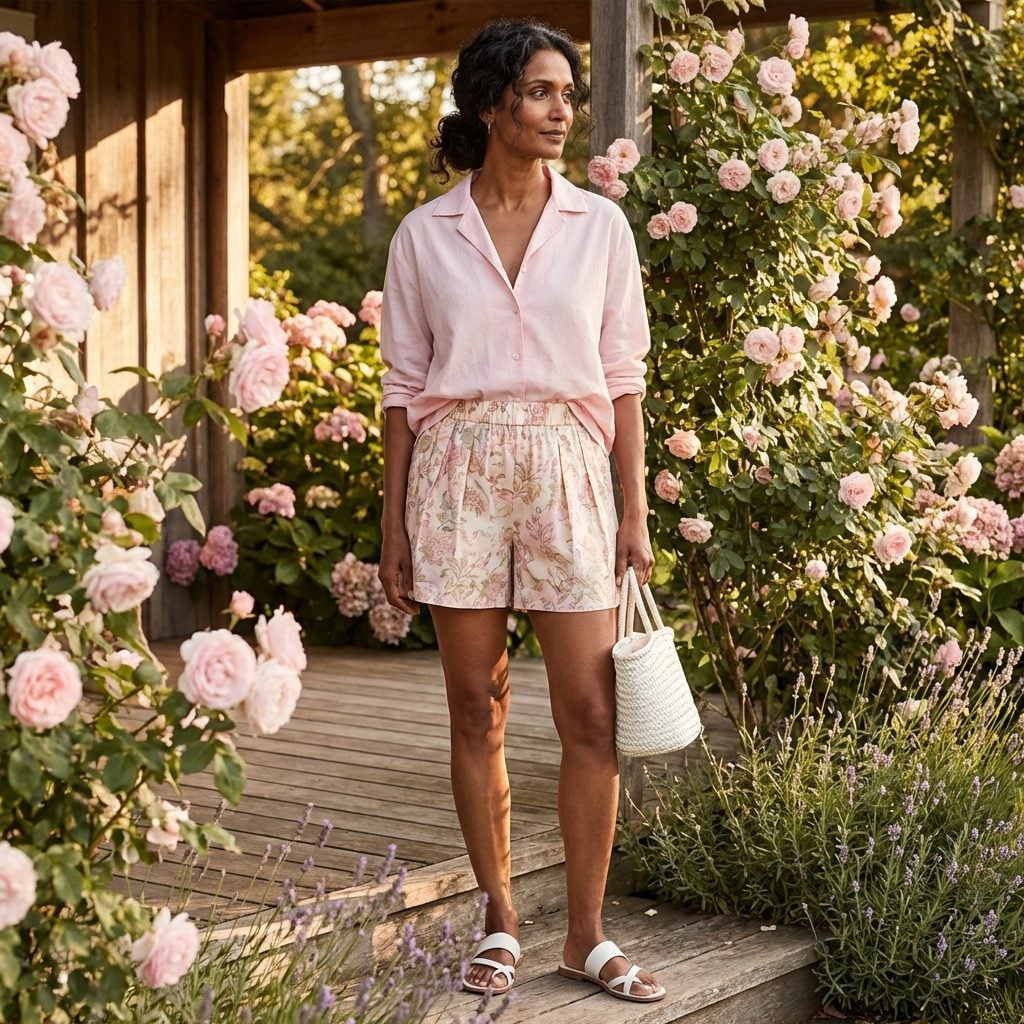
The cognitive dissonance of finding these on the rack at JCPenney, right next to the rack where your grandmother was also shopping, and buying them anyway because the floral print was cute, that was a very specific ’90s experience.
Pastel flowers on a cream or navy background. Soft, light fabric with that gentle shimmer of polyester-cotton blend. Front pleats. Elastic waistband with a small ribbon threaded through. They were comfortable in the way that only clothes with zero structural ambition are comfortable. Worn with a tucked solid-color camp shirt in matching pink, they photographed beautifully in every family album from the summer of 1992 through 1996.
23. Nautical-Striped Shorts With a Wide Waistband and Those Gold Buttons Down the Front
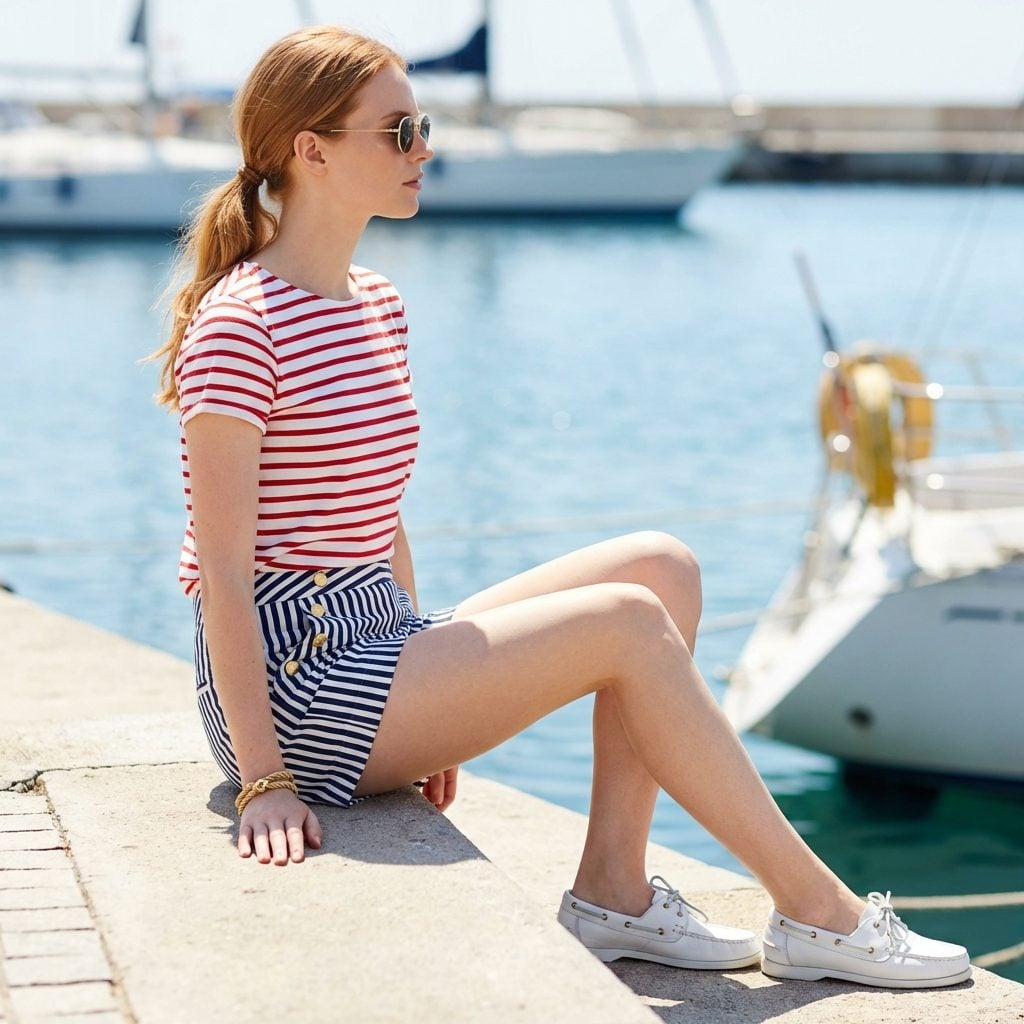
Navy and white stripes. Wide flat waistband. Two or three gold nautical buttons arranged down the front placket like you were about to set sail on something. These shorts asked everyone to believe you had a boat, or at least knew someone who did. We bought them at The Limited or Ann Taylor, wore them to picnics and outdoor concerts, and felt extremely coastal.
The accessory styles that completed this look were very specific: a red and white striped tee, leather deck shoes or white espadrilles, a gold rope bracelet, and sunglasses with small round frames. It was a costume, but a committed one. The whole outfit said “I summer as a verb” in the most sincere possible way.
22. Printed Rayon Shorts With a Matching Blouse You Absolutely Tucked In
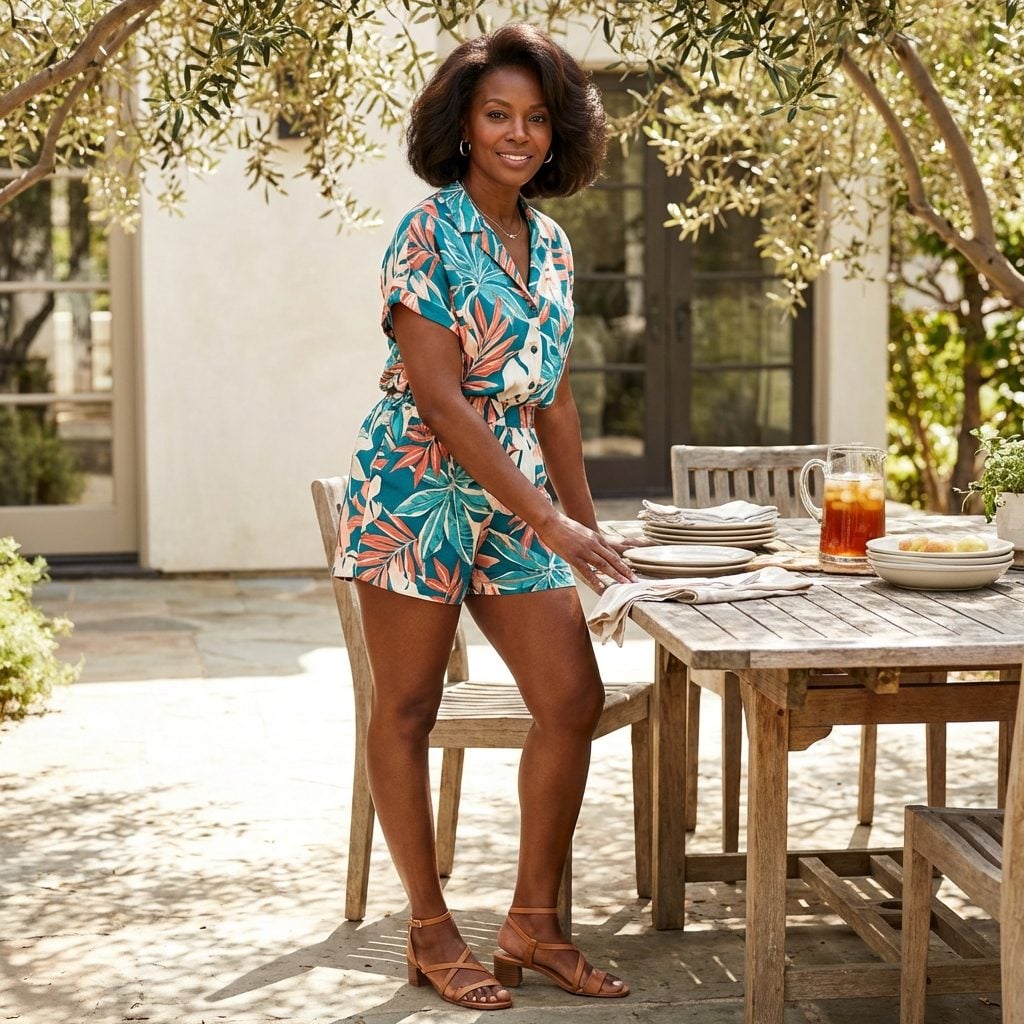
Rayon was doing a lot of heavy lifting in the summer wardrobes of the early-to-mid ’90s. Lightweight, slightly drapey, printed in bold tropical or abstract patterns, this fabric made the matching two-piece short set the resort look of the decade. The set came as a unit: shorts with a relaxed high waist and a matching button-front blouse with short sleeves and a collar.
The blouse got tucked. Always. Sometimes fully, sometimes just the front two buttons’ worth, creating a soft blouse over a slightly visible waistband situation that felt very put-together. You could buy these two-piece rayon sets at Chadwick’s, at Talbots, at Sears. Women of every age wore them to outdoor lunches and felt, correctly, that they had nailed summer dressing.
21. Paper Bag Waist Shorts With a Self-Tie Belt You Knotted a Hundred Different Ways
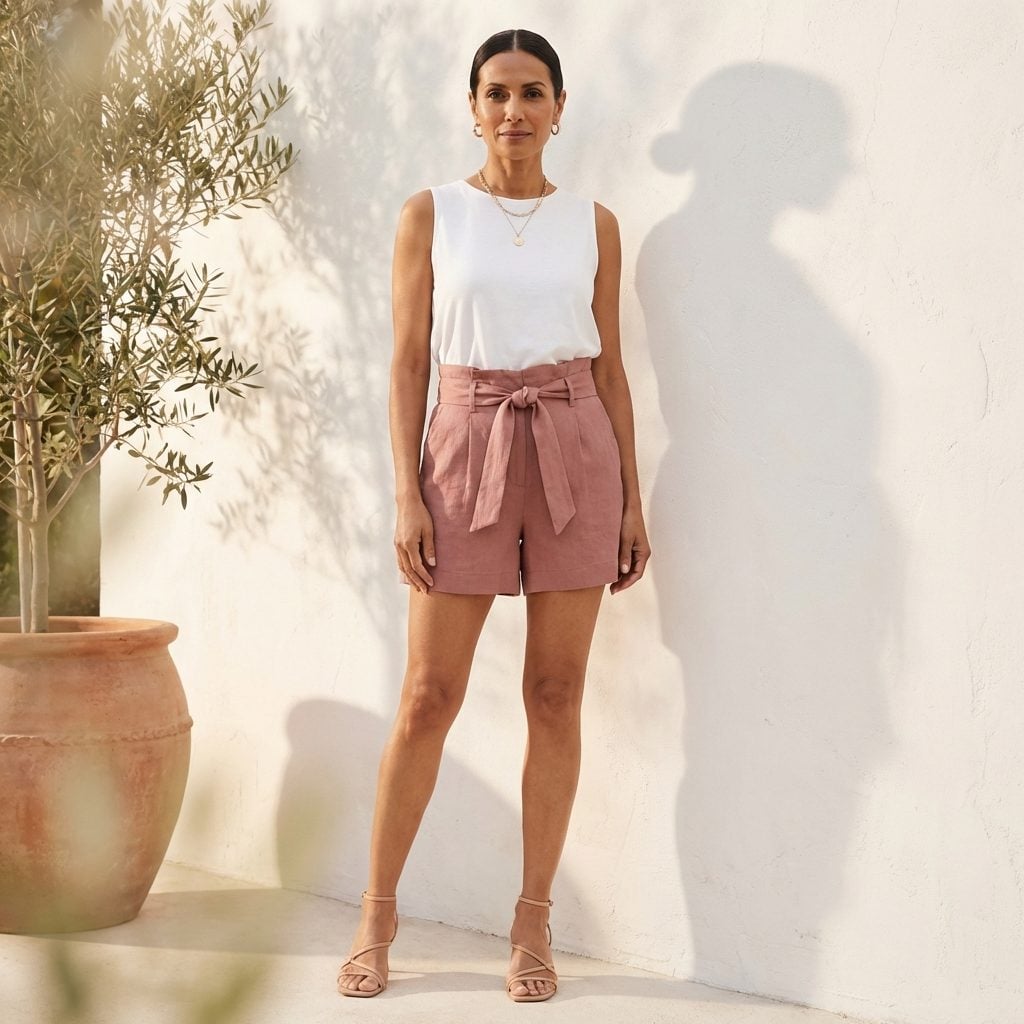
The ruched, gathered, excess-fabric explosion at the waistband was either deeply flattering or completely chaotic, depending entirely on how you tied the belt and how much you’d eaten that day. Paper bag waist shorts were a whole commitment. You couldn’t half-wear them. The silhouette demanded a tucked-in top, a specific shoe, and a certain willingness to have a lot going on at your midsection.
They came in chambray, in crisp white cotton, in dusty rose linen. The self-tie belt was always a fabric sash in a matching or contrasting color, and you had about forty possible knotting configurations, of which maybe three actually worked. But when they worked? They worked. This silhouette was the most photographed shorts cut in every 1995 catalog, and not without reason.
20. Wrap-Front Shorts in a Tropical Print (The Most Optimistic Garment of the ’90s)
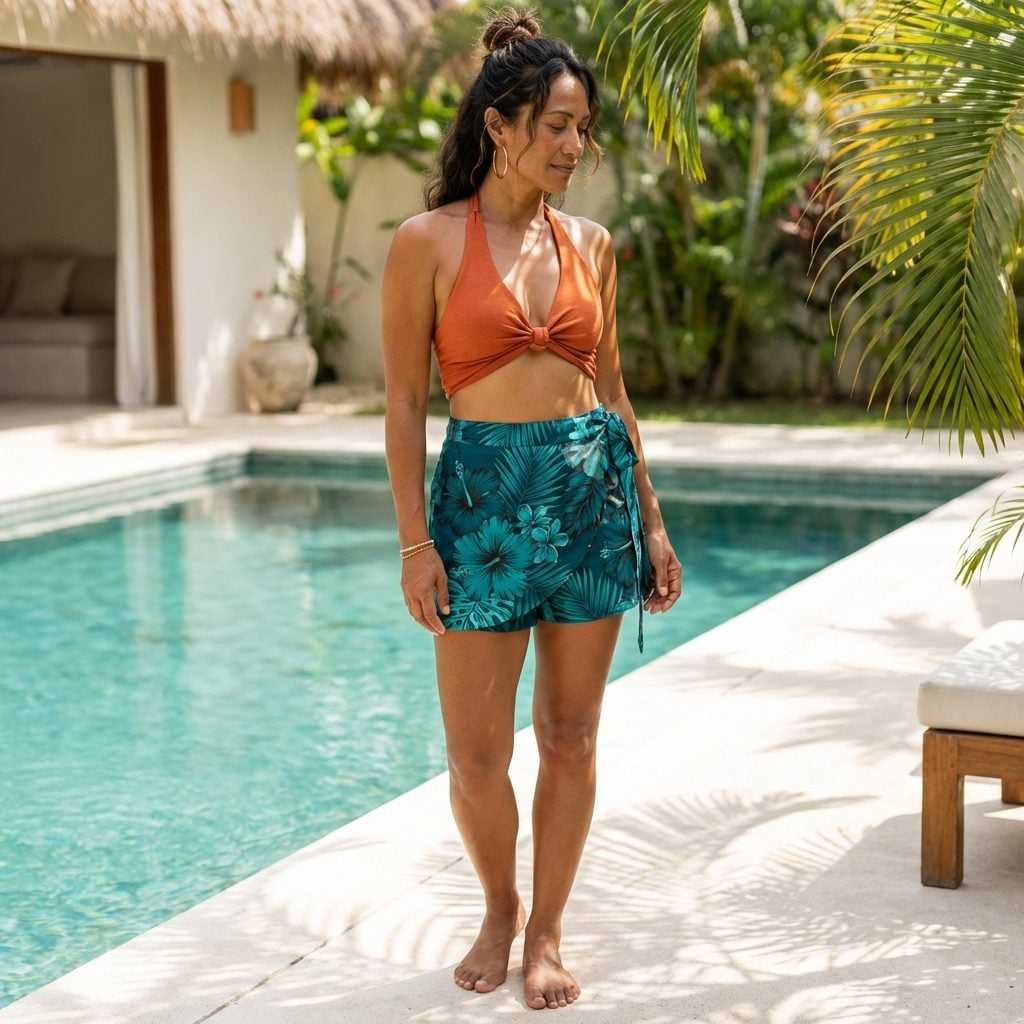
The wrap-front closure was fashion’s greatest act of optimism because there was genuinely nothing keeping those shorts closed except a small button and the faith that you wouldn’t move too quickly. Yet we wore them confidently, to outdoor concerts, to the beach, to anywhere the occasion called for something that felt like a vacation even when you were just in your own backyard.
Tropical print wrap shorts were a whole mood, specifically the mood of someone who had just returned from Cancun or was very much pretending they had.
The prints were lush: birds of paradise, large hibiscus blooms, palm fronds on backgrounds of deep teal, burnt orange, or cream. Worn with a matching halter or a solid-color wrap top and simple woven slide sandals, these shorts carried the entire emotional weight of wanting summer to last forever. They almost made it feel like it could.
19. The Romper-Style Shorts With the Built-In Top Nobody Could Escape
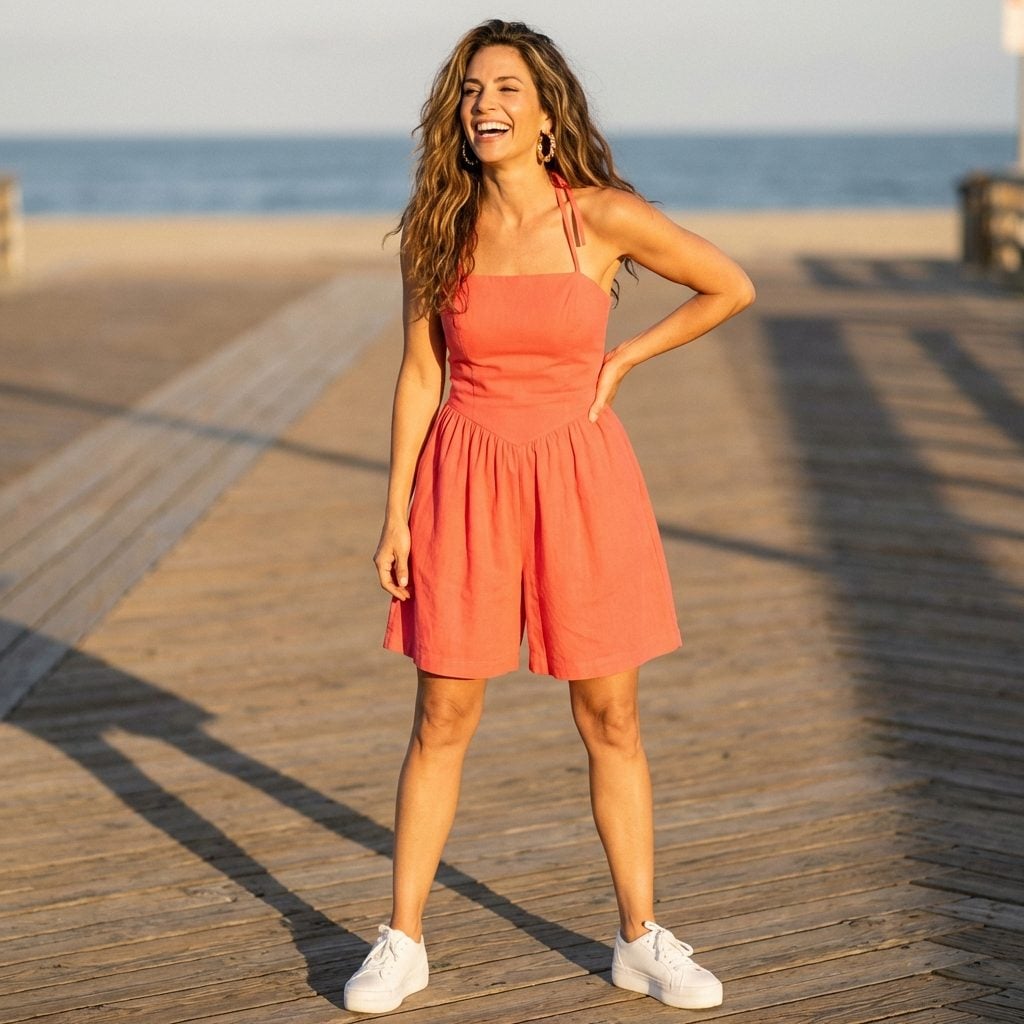
You spotted it on a spinner rack at Limited Too or shorts section of Contempo Casuals and it was hanging there in every neon colorway imaginable. One piece. No shirt required. Built-in top that was somehow both a crop AND a halter depending on which way you tied the straps.
The genius of the romper-style shorts was that you technically got a whole outfit for fifteen dollars. The tragedy was that every bathroom trip required a full strip-down. We did not care. We wore them to Six Flags and the boardwalk and felt absolutely invincible.
18. Ribbed Cotton Matching Shorts and Crop Top Set (Worn With the Nike Cortez, Obviously)
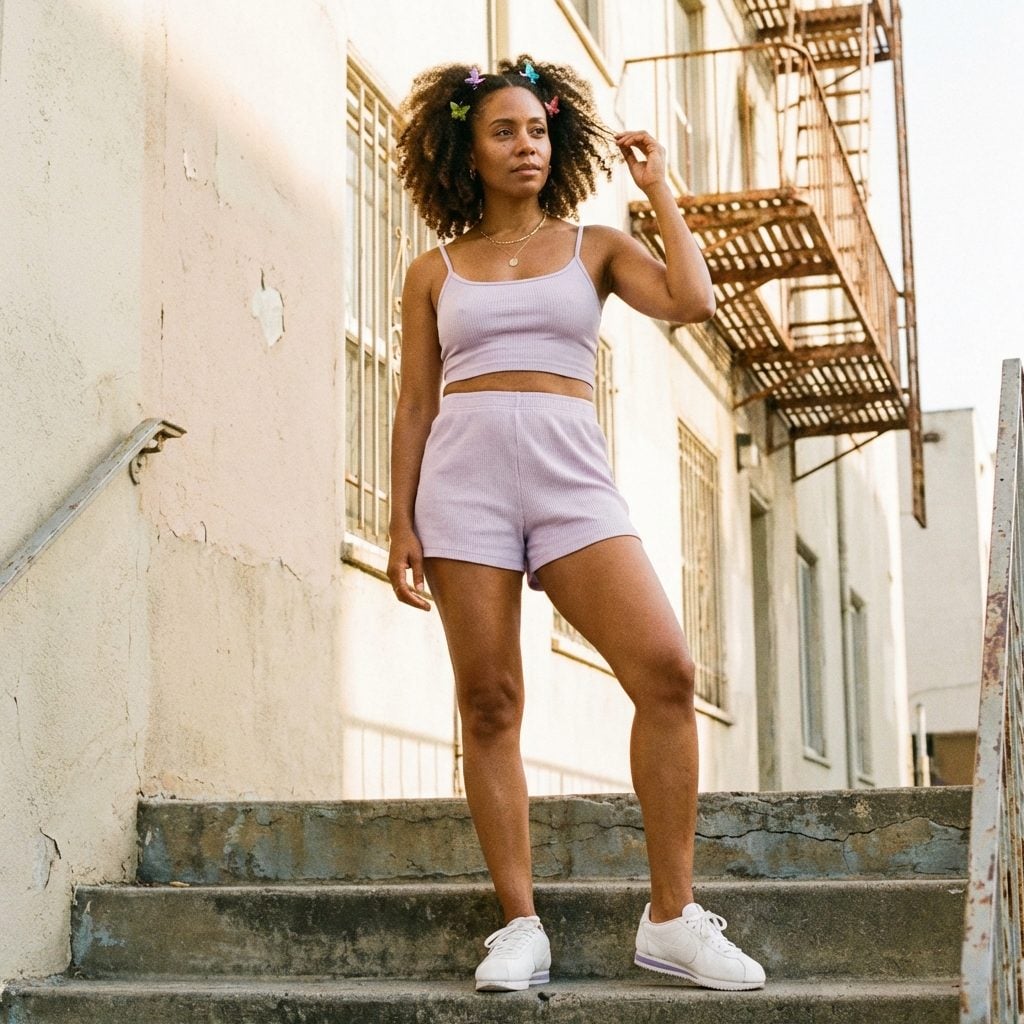
The matching ribbed set was the ’90s answer to an actual put-together outfit. You bought the lavender one and the white one and wore both to every end-of-year school event, every cousin’s backyard party, every single trip to the mall. The fabric had just enough stretch to feel like a second skin and just enough structure to look like you tried.
Brands like Bebe and Express carried the dressier versions, but the beloved ones came from the five-dollar bins at Rainbow. Paired with a ribbed crop top in the same ice-blue shade, white sneakers, and a tiny butterfly clip above one ear, this was the universal signal that summer had officially started.
17. Satin Boxer-Style Shorts Worn as Outerwear, As If That Were Normal
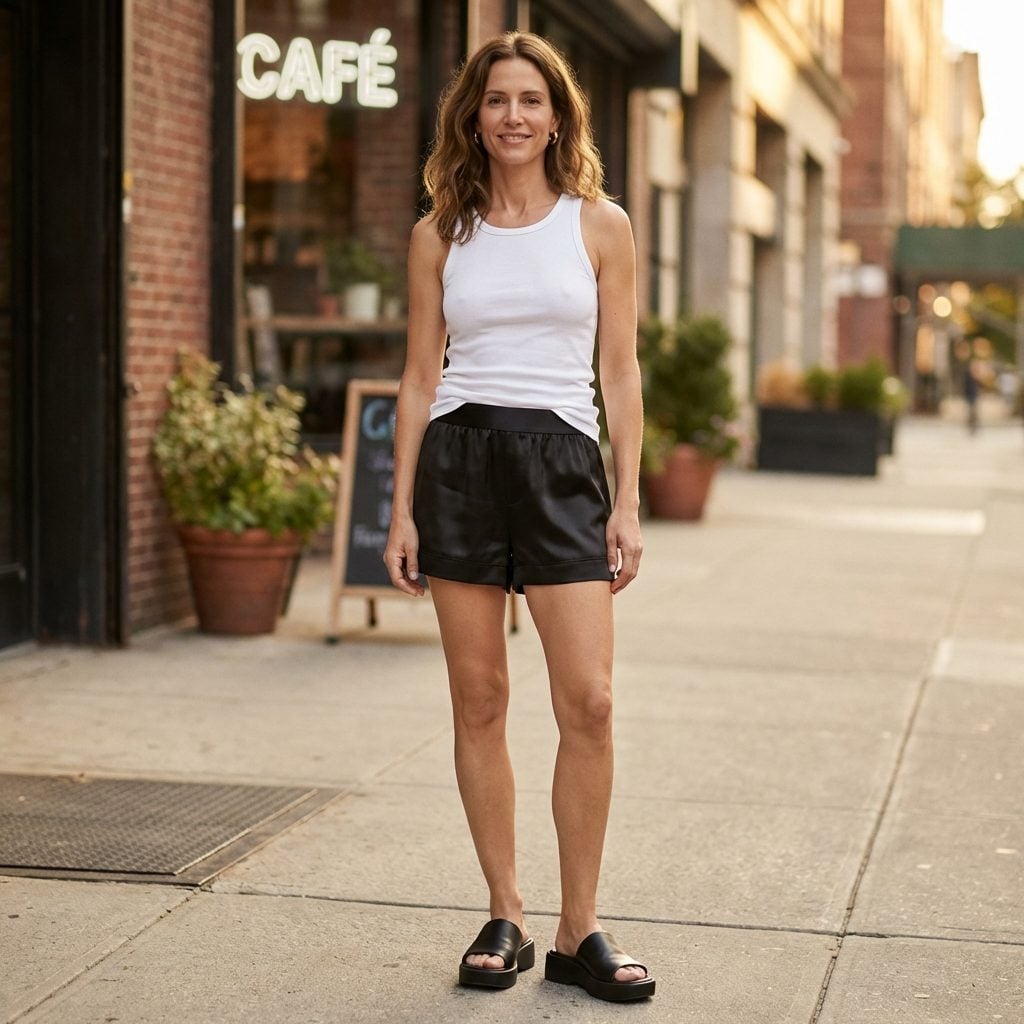
This one deserves a dedicated exhibit at a fashion museum. At some point in the mid-’90s, we collectively decided that the satin boxer shorts meant for sleeping were, in fact, excellent street wear. And not just acceptable street wear. Aspirational street wear. You wore them with a fitted tank tucked in, chunky slides, and a tiny rhinestone clip at the ear and you felt like an absolute vision.
The credit (or blame) goes squarely to the hip-hop fashion explosion of the early-to-mid ’90s. TLC, Aaliyah, and every music video airing on BET and MTV Jams featured some version of the silky short paired with an oversized tee or fitted crop. We were not copying them, we told ourselves. We were inspired.
16. Terrycloth Shorts in Every Pastel Color Kmart Stocked
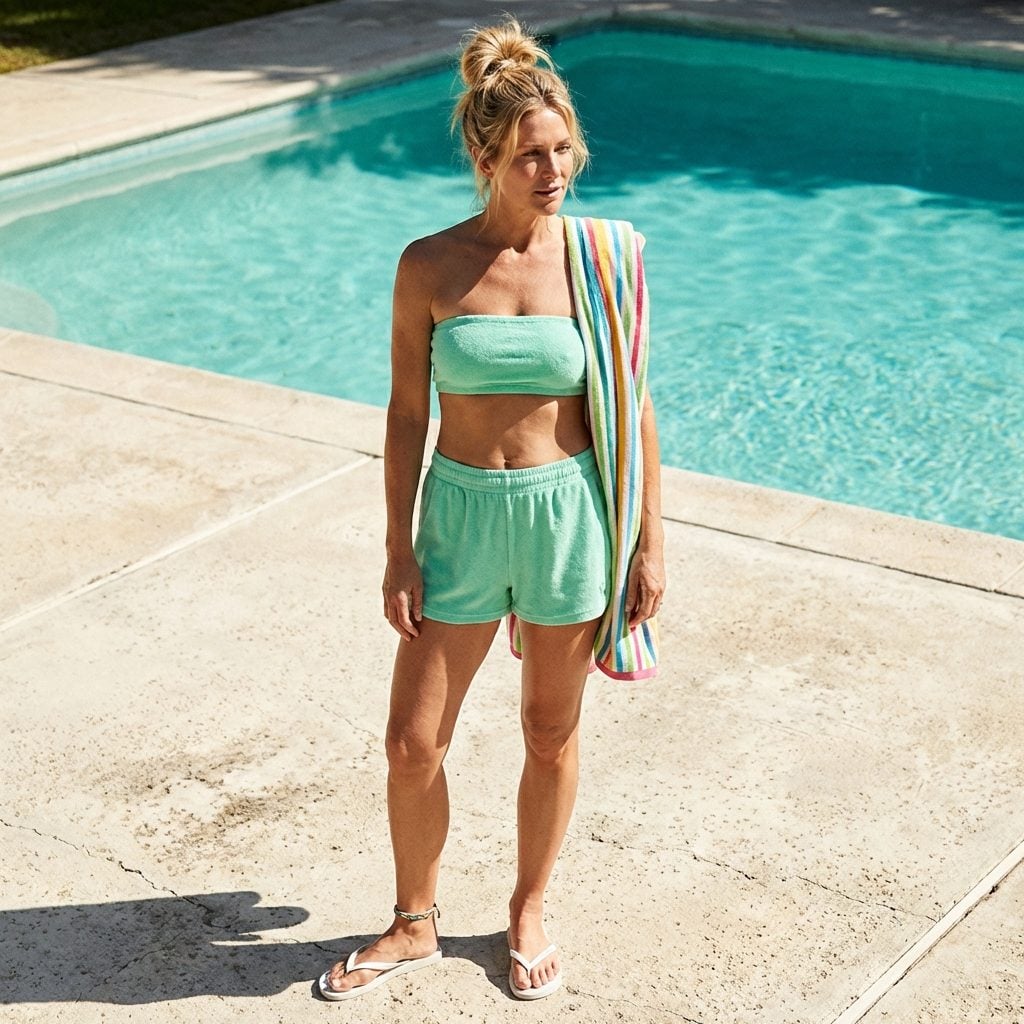
Mint green. Pale peach. That specific shade of lilac that only existed in the ’90s. Terrycloth shorts were technically beachwear but we wore them absolutely everywhere: the corner store, the community pool, the backseat of someone’s mom’s minivan. The fabric felt like wearing a bath towel that had been cut into shorts, which was exactly the point.
They were cheap, they dried fast, and they had the kind of elastic waistband that meant you never had to unbutton anything ever. The grown-up version came from Polo Sport or Tommy Hilfiger. The everyday version came from a discount rack and had a tiny embroidered shell near the hem for no reason.
15. Jewel-Toned Velvet Shorts With Flat Sandals (In August, Because We Had No Fear)
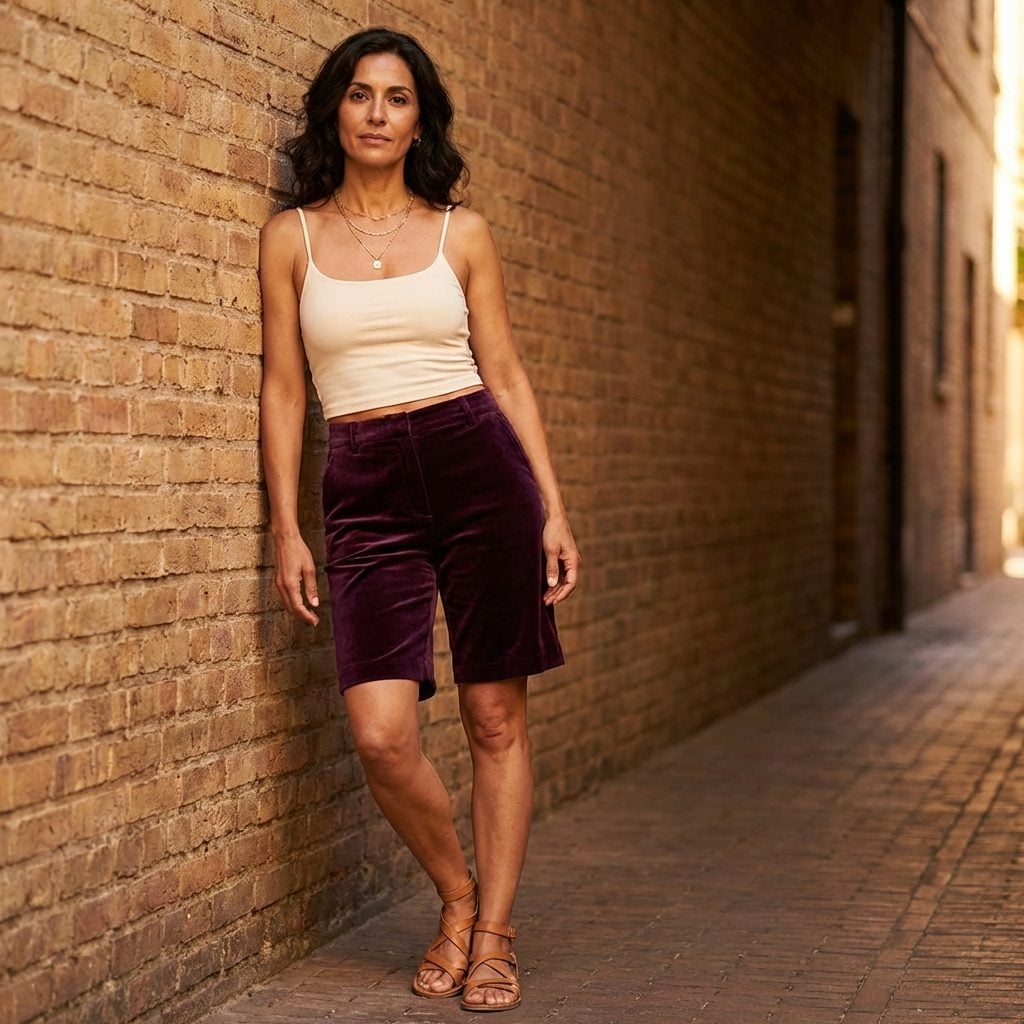
Wearing velvet in summer is objectively absurd. We did not care.
The velvet shorts came in deep plum, forest green, and a burgundy so saturated it looked almost black in certain light. They showed up in the mid-to-late ’90s alongside the boho-grunge moment and paired with strappy flat sandals and a cropped spaghetti-strap tank, they looked like something straight out of a Delia’s catalog page you’d dog-eared seventeen times. The velvet had a slight crush to it from the waistband inward, and you learned very quickly that sitting on anything warm would leave a shadow imprint that took hours to recover.
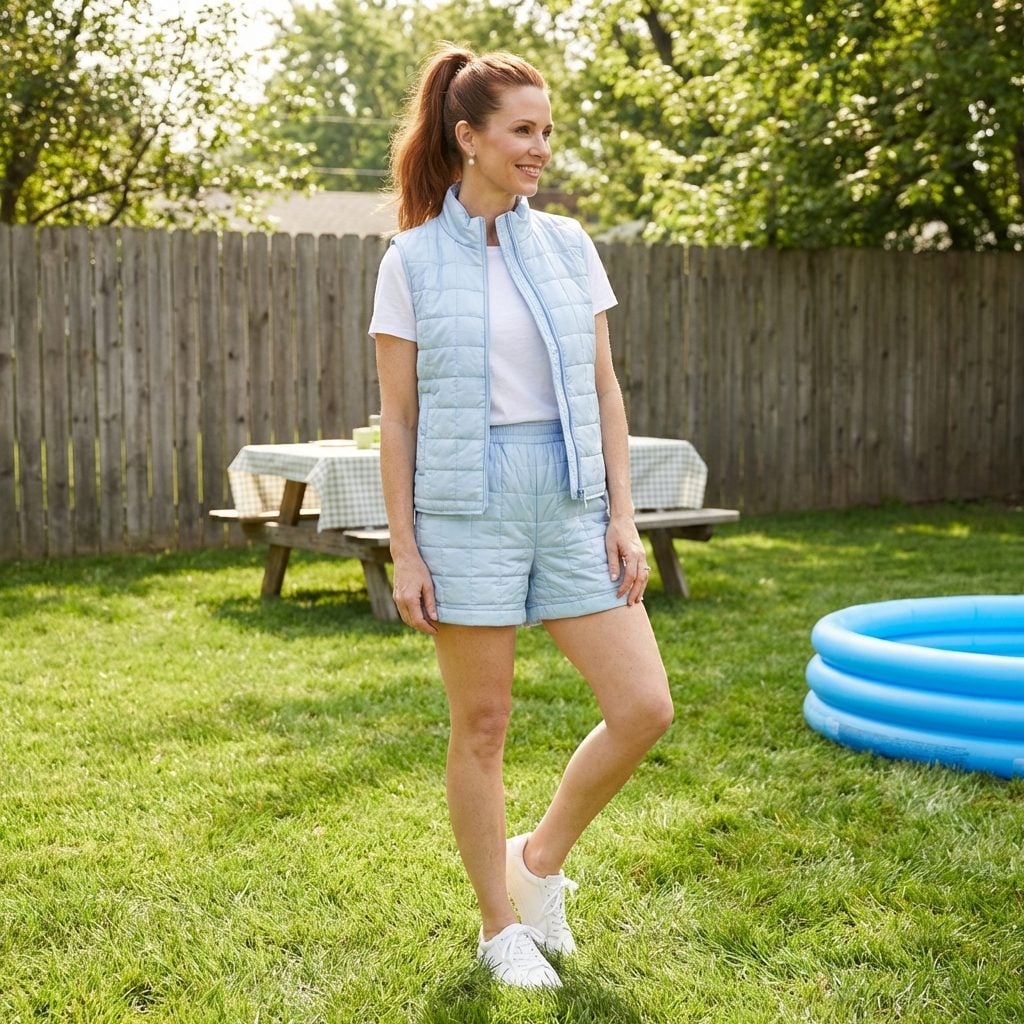
14. Quilted Shorts and Coordinating Vest: The Outfit That Asked ‘What If Sofa Cushion, But Make It Fashion?’
❤️ Would you like to save this?
Let’s be honest. The quilted pastel set looked like it was upholstered. The shorts had that puffy grid-stitched texture in shades of powder blue or barely-pink, and the coordinating vest matched so precisely that you could only have bought them together, as a unit, as a matched set of inexplicable choices. And yet, there was a moment, roughly 1993 to 1995, where this was legitimately considered a smart summer outfit.
The quilted vest would be left unzipped over a white tee, the shorts would be worn with white sneakers, and the whole look was considered perfectly appropriate for a school photo, a family barbecue, or a trip to Sears to look at the new catalog.
13. Loose-Fit ‘Mom’ Denim Shorts With the Longer Inseam and Zero Apologies
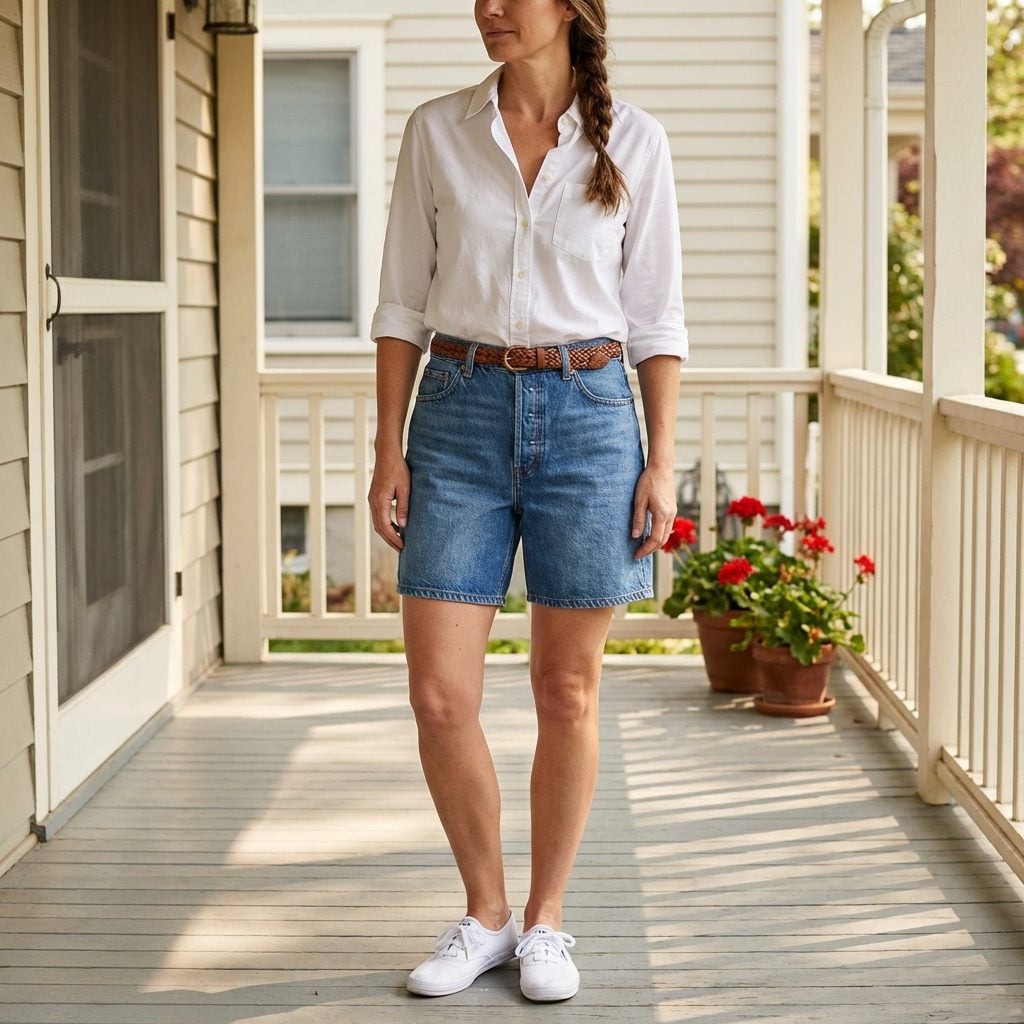
These were not cutoffs. These were SHORTS. Purchased with intention, with a real button fly, with a real inseam that hit somewhere between the upper thigh and the knee, with a real waist that sat exactly at, or just above, the natural waist. The wash was either medium blue or that particular faded stonewash that read almost white at the knees.
The high-waist denim shorts came from Levi’s, from Lee, from Gap when Gap still felt like a big deal. You tucked a white button-down into them and wore white Keds and thought you looked like you were starring in a wholesome summer movie. You were right. You did.
“The longer inseam was a quiet statement: I’m not trying. I’m just here, comfortable, in my yard, being effortlessly correct about denim.”
12. Rolled-Hem Jean Shorts You Cuffed Yourself With Surgical Precision
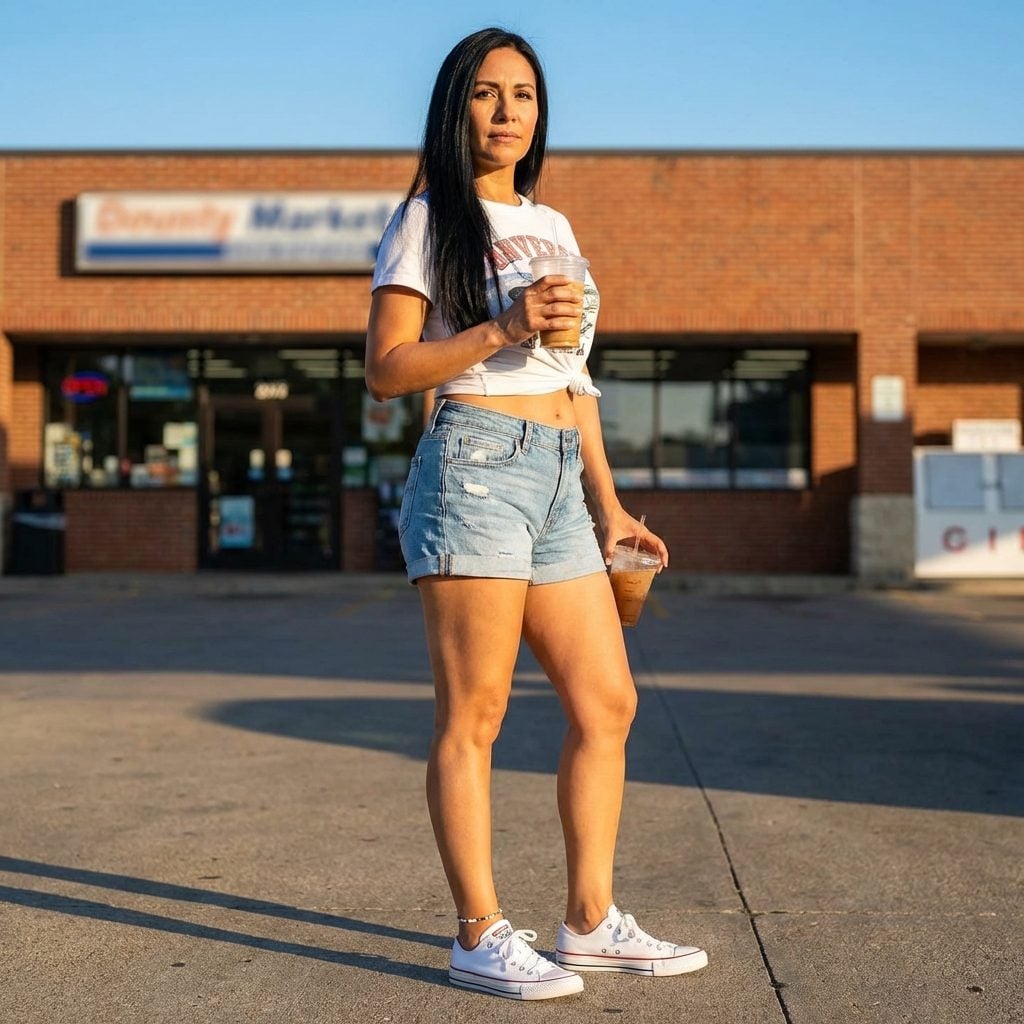
There was an art to the roll and everyone knew it. One fold wasn’t enough, two folds was the sweet spot, three folds was either a mistake or a very specific statement. The cuff had to be tight enough to stay put through a full day at a theme park but loose enough to look like you’d barely thought about it. You had thought about it for eleven minutes.
The source material was whatever pair of jeans had a worn-out knee or an unflattering flare. You cut them yourself with craft scissors, washed them once to fray the hem, then rolled. Levi’s 501s were the gold standard. JNCO cutoffs rolled into something totally different. The rolled-hem denim shorts were democratic: they required nothing but scissors and nerve.
11. Cuffed Bermuda Shorts in Khaki That Your Mom Also Wore (Simultaneously, Without Discussion)
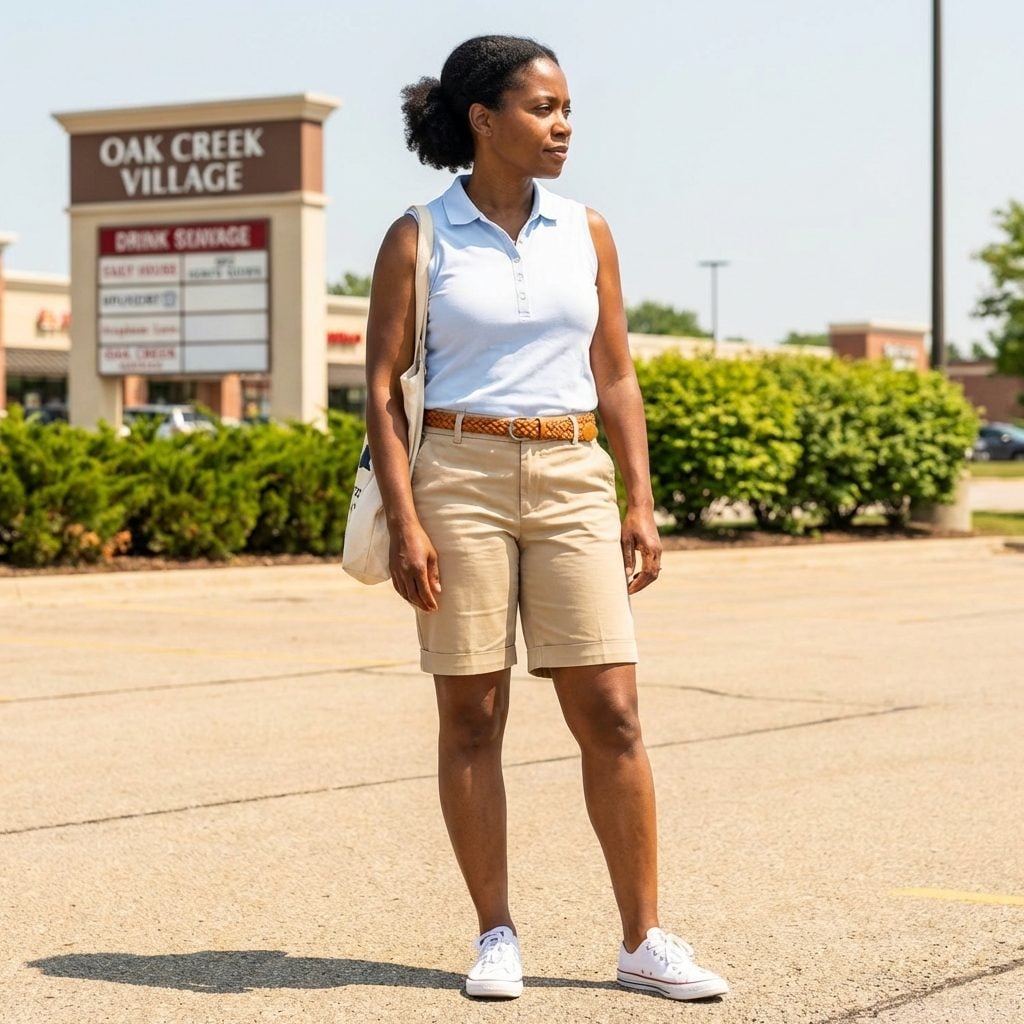
Cuffed Bermuda shorts were the ’90s garment that crossed every generational and style boundary without permission. You wore them. Your mom wore them. Your school librarian wore them. They hit just above the knee in khaki, navy, or a sage green that has not appeared in fashion since, and they had a sharp, tailored cuff that required either ironing or willful optimism.
Paired with a sleeveless polo, white canvas sneakers, and a braided belt, the cuffed Bermuda shorts said “I have errands and I am handling them.” Talbots and J.Crew were the go-to sources, though Sears had a house-brand version that was virtually identical and half the price and nobody talked about that either.
10. Shorts Worn Over Black Sheer Tights, Because Summer Was Just a Suggestion
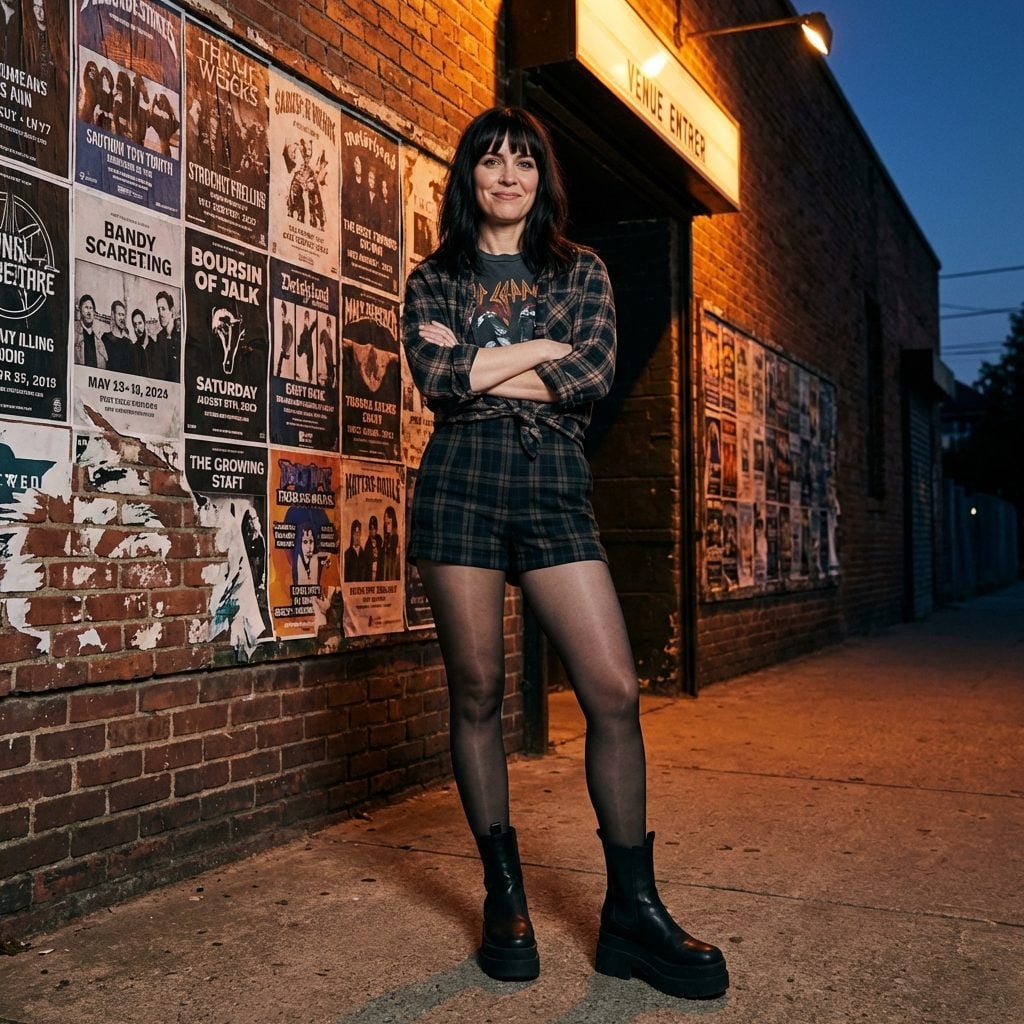
This particular styling habit requires some context: we were absolutely serious. Sheer black tights under denim cut-offs or plaid mini shorts was not ironic. It was not performative. It was, for approximately three years in the mid-’90s, the correct way to dress for a concert, a party, or a Tuesday.
The look came directly from grunge and the downtown New York art-student aesthetic, filtered through MTV’s 120 Minutes and reinterpreted at Hot Topic and Urban Outfitters. A worn plaid flannel tied at the waist, platform Doc Martens, and a band tee completed the picture. The sheer black tights ran constantly and we carried clear nail polish in every bag to stop the ladder before it ate the whole leg.
9. Mini Shorts and an Absolutely Enormous Oversized Top: The ’90s Power Equation
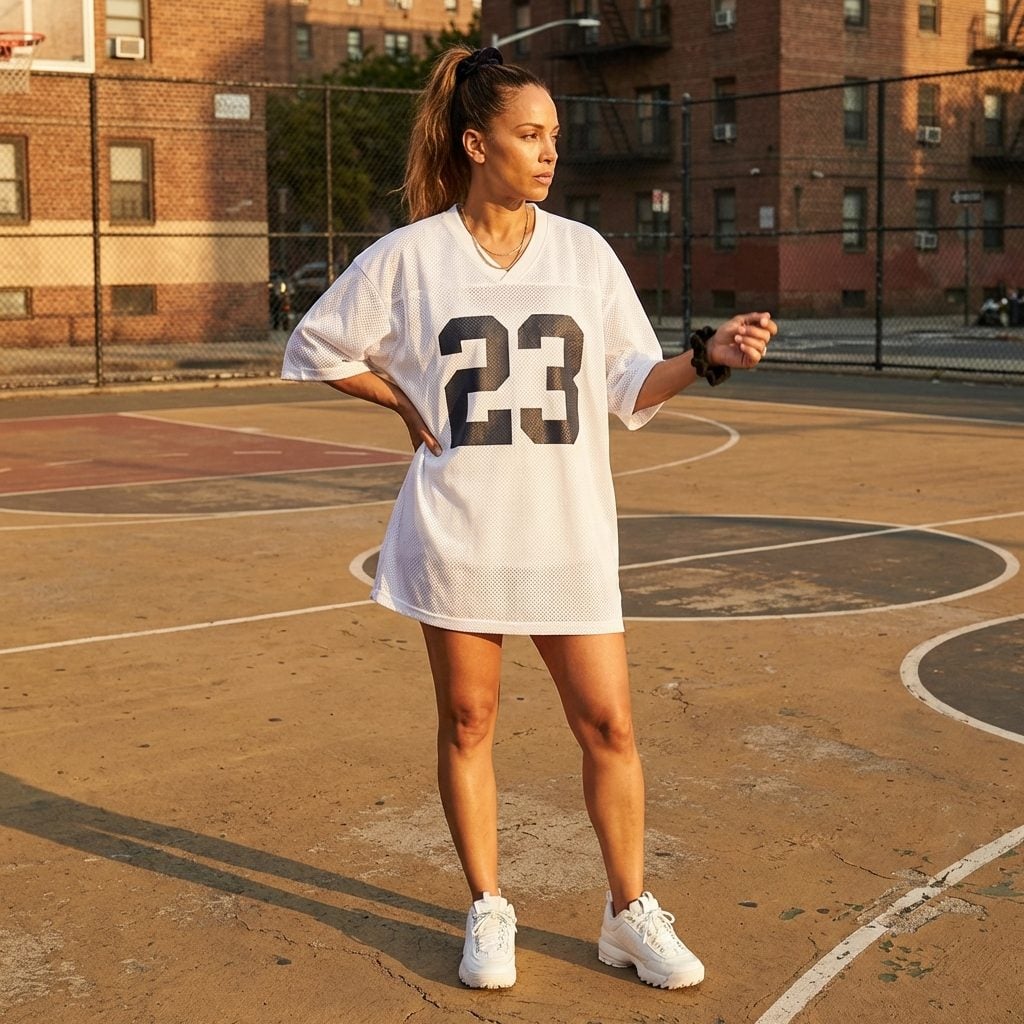
The logic was: if the top is big enough, the shorts below become optional as a visual concept. The oversized graphic tee would hang to mid-thigh anyway, and the tiny mini shorts beneath were more of a structural formality than an outfit component. The top was usually a concert tee, a sports jersey, or a men’s XL that you’d shoplifted from your older brother’s drawer.
This combination was the calling card of a very specific ’90s cool: unbothered, slightly sporty, influenced equally by hip-hop aesthetics and pure laziness. The shorts might be spandex, might be denim, might be nylon athletic. Didn’t matter. What mattered was that the top was enormous and the whole thing was held together by a scrunchie on the wrist and complete confidence.
8. Denim Shorts With Those Oversized Back Pockets That Could Hold an Entire Spiral Notebook
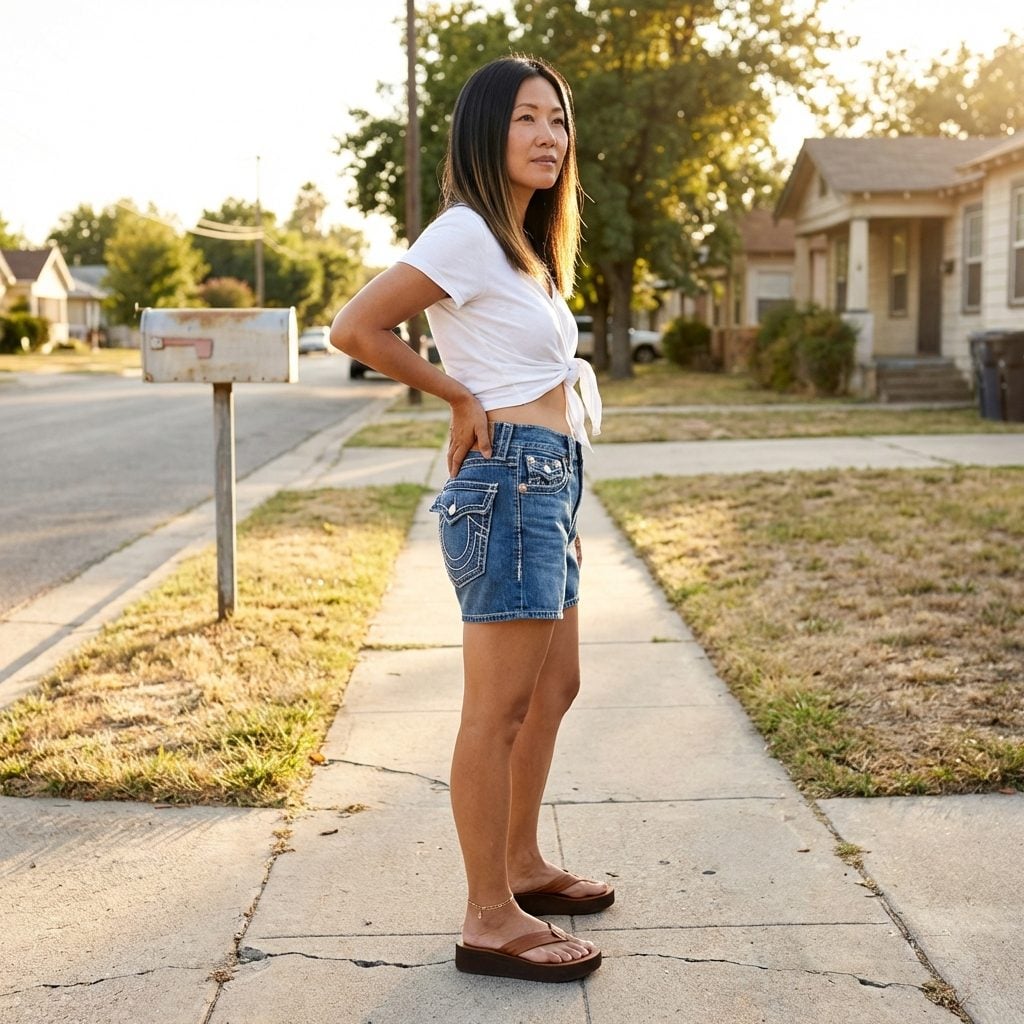
The back pockets were enormous. Architecturally, structurally, philosophically enormous. They sat low on the seat with decorative stitching in contrasting thread, and they ballooned outward slightly in a way that suggested the designer was making a point about something. These pockets were influenced directly by the oversized proportions of JNCO jeans and the carpenter-pant trend, and they arrived on denim shorts sometime around 1996 and stayed longer than anyone expected.
The decorative stitching came in white, gold, or that slightly iridescent thread that caught light like a disco ball in miniature. You bought these at Wet Seal or Rave and wore them with a tie-front crop top and platform flip-flops and felt genuinely fashion-forward. Looking back: the pockets were the size of pillowcases. We have made our peace with this.
7. Button-Front Denim Shorts With the Fly You Had to Fidget With All Day
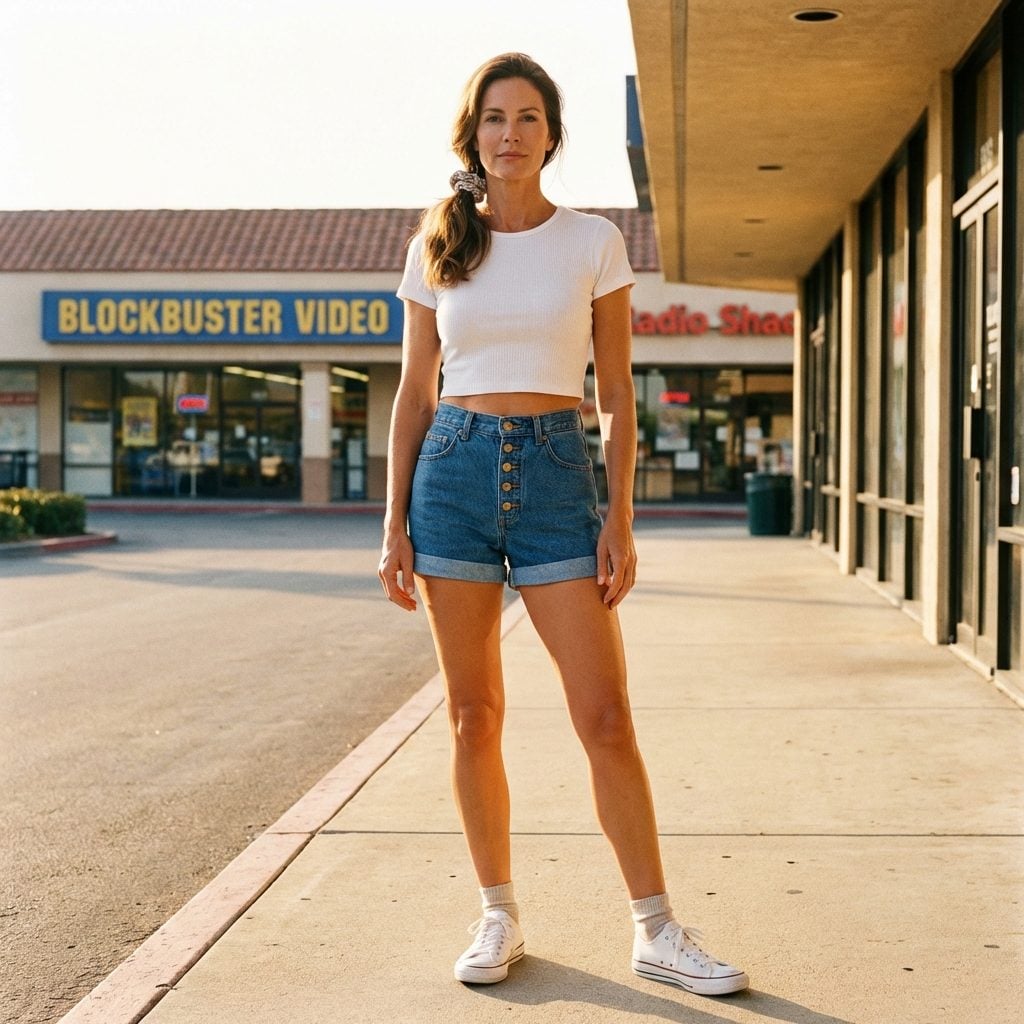
You know the exact pair. High-waisted, stiff as cardboard for the first three wears, with a row of brass buttons running straight down the front that felt very French and very intentional. You bought them at Express or Gap, cuffed them exactly once at the hem, and wore them with a tucked-in white crop top like you were heading to a Levi’s ad instead of the mall food court.
The buttons were both the point and the problem. One always came undone at the worst moment, usually while you were standing in line at Dairy Queen. We called it a design flaw. It was a design flaw. We wore them anyway, every single summer, because nothing else looked quite that good with a tied-up flannel.
6. Corduroy Shorts in Burnt Orange and Olive That Somehow Survived Summer
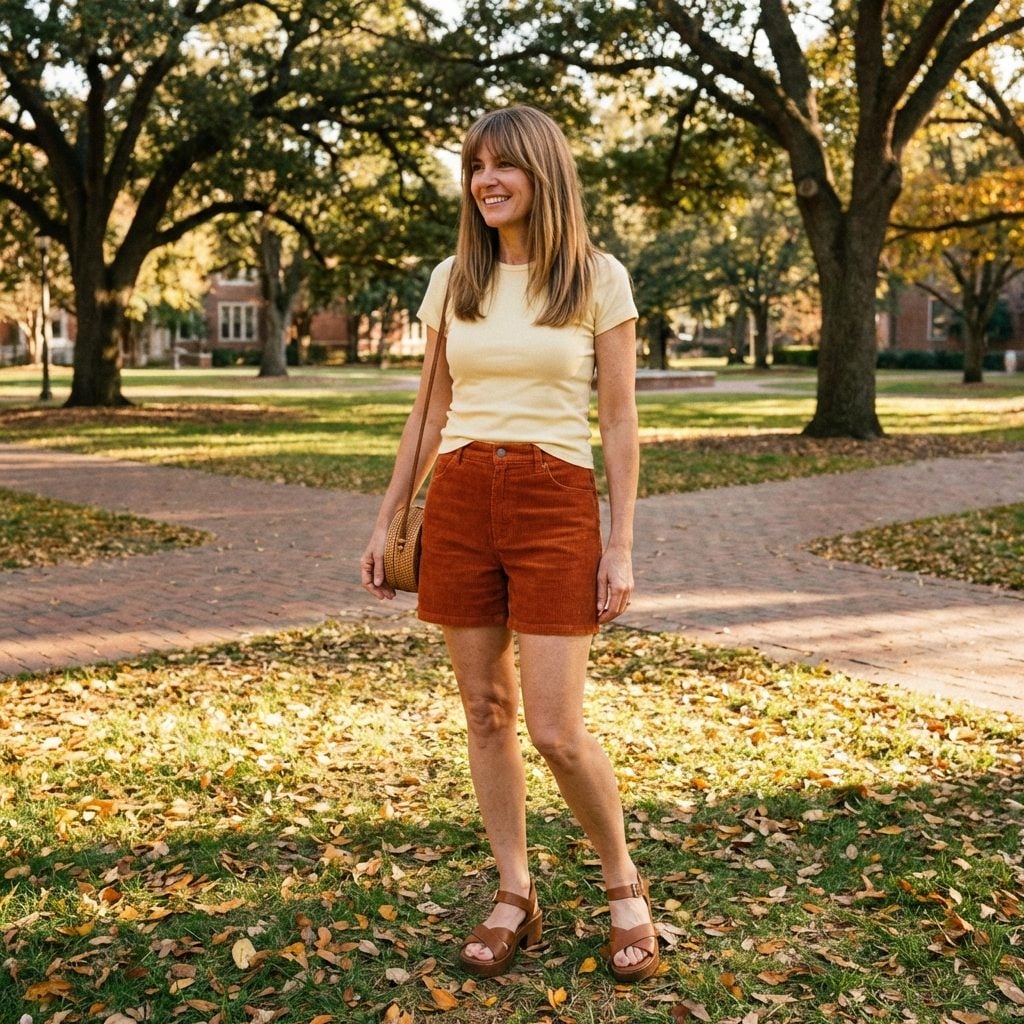
Corduroy. In July. We genuinely did this.
They came in every earthy, slightly muted tone that the ’90s loved, burnt sienna, mossy green, dusty burgundy, and they had that satisfying thick-wale texture that made a soft swishing sound when your thighs brushed together. You could find them at shorts-obsessed retailers like American Eagle or Urban Outfitters before Urban Outfitters became what it became. Paired with a baby tee and chunky platform sandals, the whole look had an earthy, almost collegiate energy that made you feel like a significantly cooler person than you were at age 16.
The practical case against them was overwhelming. They were warm. They wrinkled the moment you sat down. The wale left imprints on the backs of your legs. None of that mattered even slightly.
5. Silk and Satin Shorts You Wore Out in Public Like That Was Completely Normal
❤️ Would you like to save this?
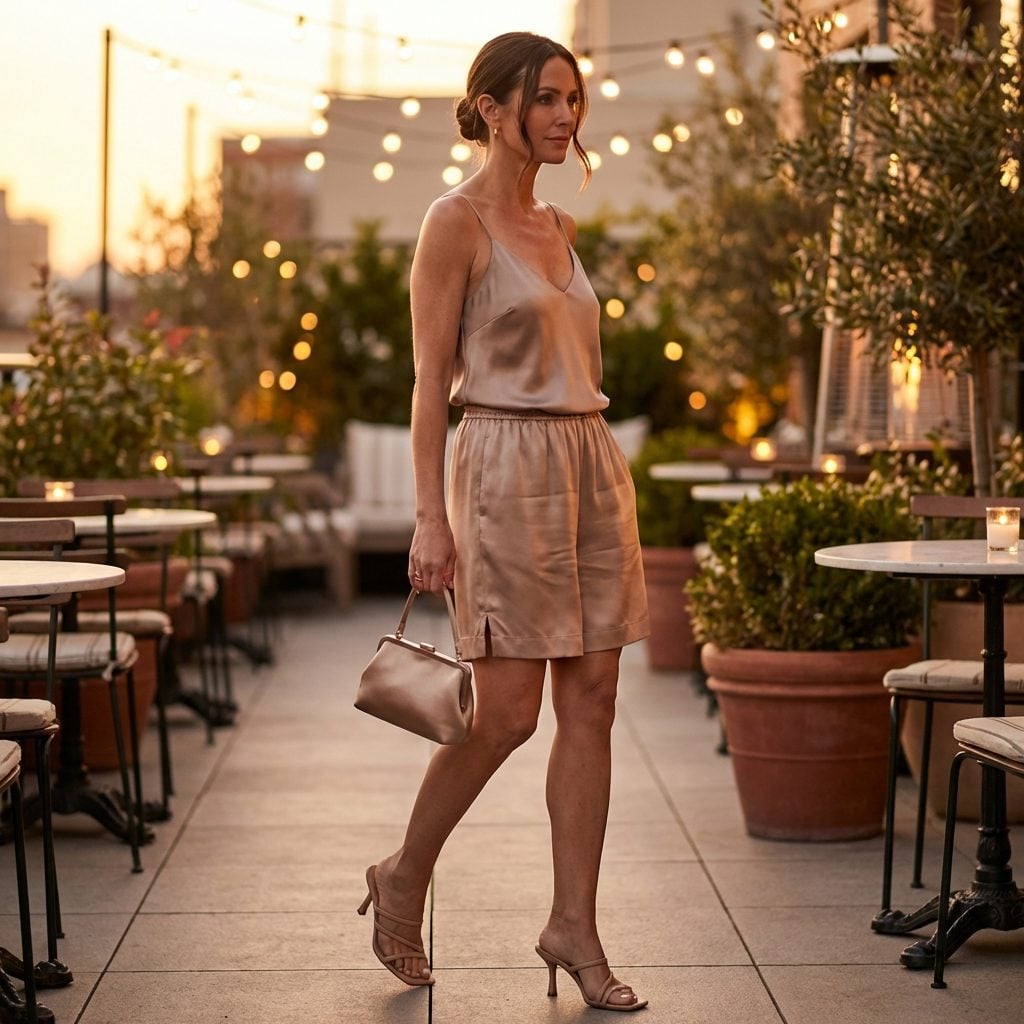
Not pajamas. That was the whole argument, delivered with total confidence. These were lounge shorts, and you wore them to the movies, to a friend’s backyard barbecue, to the kind of casual dinner where you were technically trying. They were liquid-smooth against your skin, usually in champagne or dusty rose or deep plum, and they caught the light in a way that felt genuinely luxurious for something you bought on a clearance rack at Charlotte Russe.
The style borrowed heavily from the slip dress moment that Kate Moss and Carolyn Bessette-Kennedy had made feel almost architectural. Translating that energy into shorts required a certain kind of confidence, or at least the willingness to pretend. You paired them with a matching cami and strappy kitten-heel mules and walked out the door feeling like you had cracked some kind of dress code that no one else understood yet.
4. Elastic Waistband Gym Shorts With Contrast Trim That Went Everywhere Except the Gym
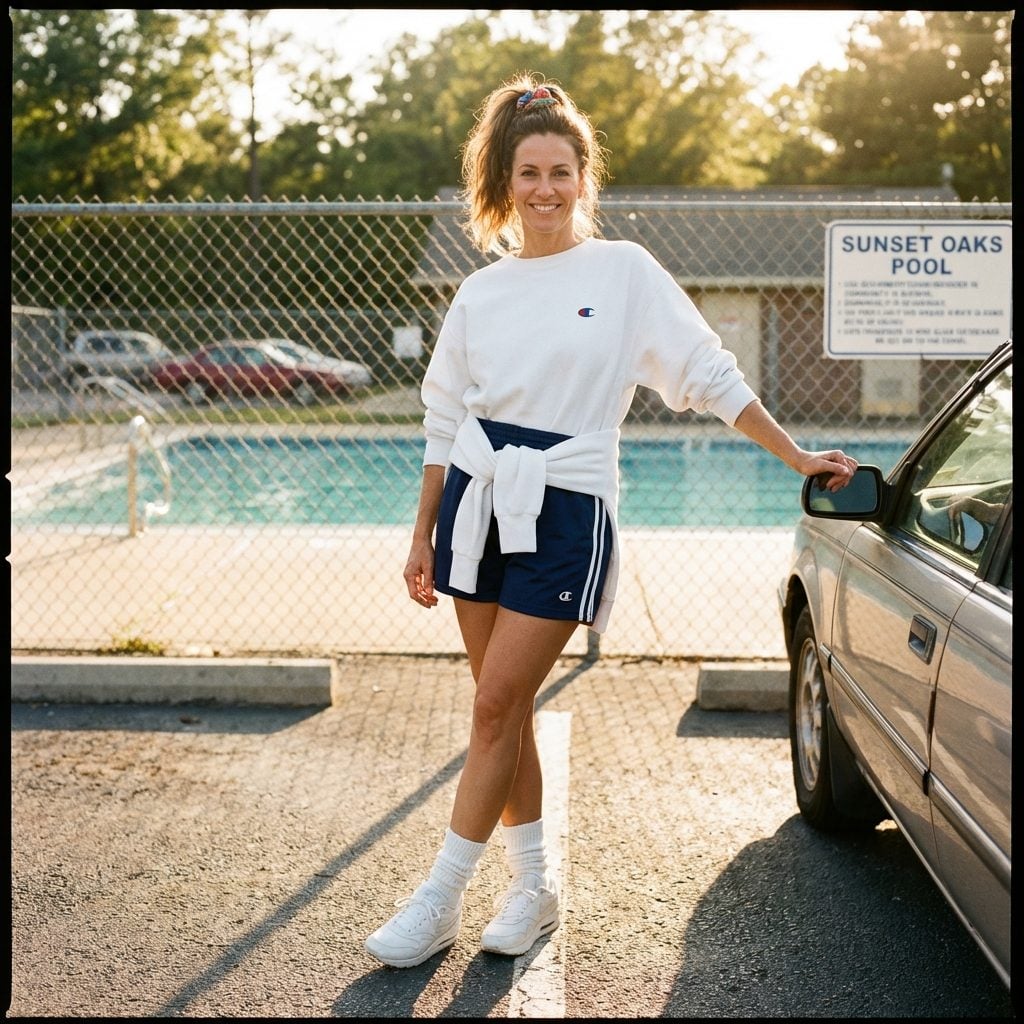
The contrast stripe down the side seam was doing a lot of heavy lifting aesthetically. These were 100% polyester, in a color combination your school had no official relationship with, navy with white trim, black with hot pink, forest green with yellow, and they had an elastic waistband wide enough to fold down twice so the logo sat right at your hip.
Nike and Champion made the ones that counted. Everyone else was simply providing options. You wore them to the pool, to the drive-through, to the kind of errand that required leaving the house but not getting dressed, and sometimes, if the summer got hot enough, just to stay in.
3. Velcro-Closure Athletic Shorts That Made an Ungodly Amount of Noise
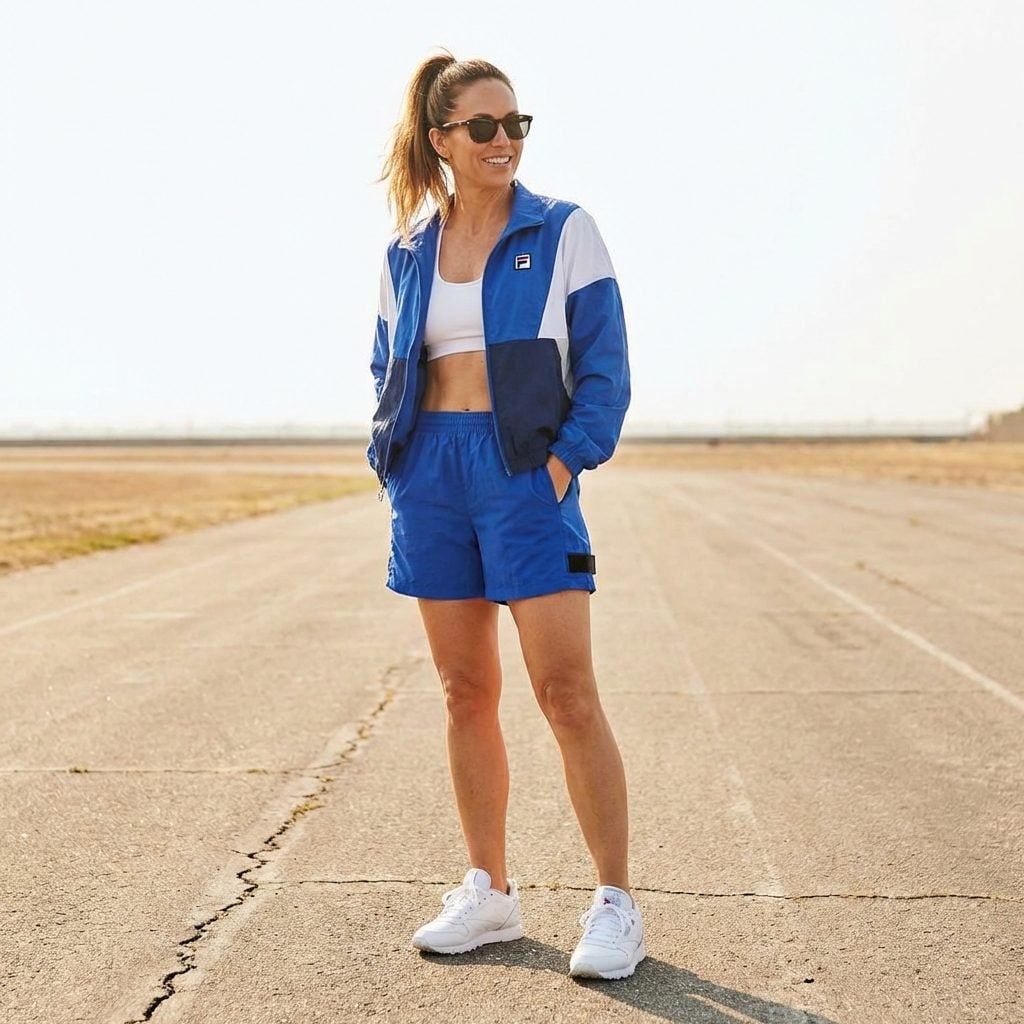
The ripping sound announced you before you even entered the room. You’d adjust the side tabs mid-walk and that distinctive velcro tear would cut through every conversation within a fifteen-foot radius. Somehow this did not discourage anyone from wearing them constantly between 1993 and 1998.
They came with adjustable velcro tabs at the outer thigh, technically there for fit customization, practically there to provide a sound effect every time you sat down or stood up. Reebok and Fila were the labels that mattered. The shorts themselves were usually in solid bold colors, cobalt, bright red, black, with the logo embroidered or screened at the left leg. You wore them with a sports bra and a zip-up windbreaker and considered the outfit thoroughly complete.
2. Track Shorts With Side Snap Buttons You Absolutely Could Not Stop Unsnapping
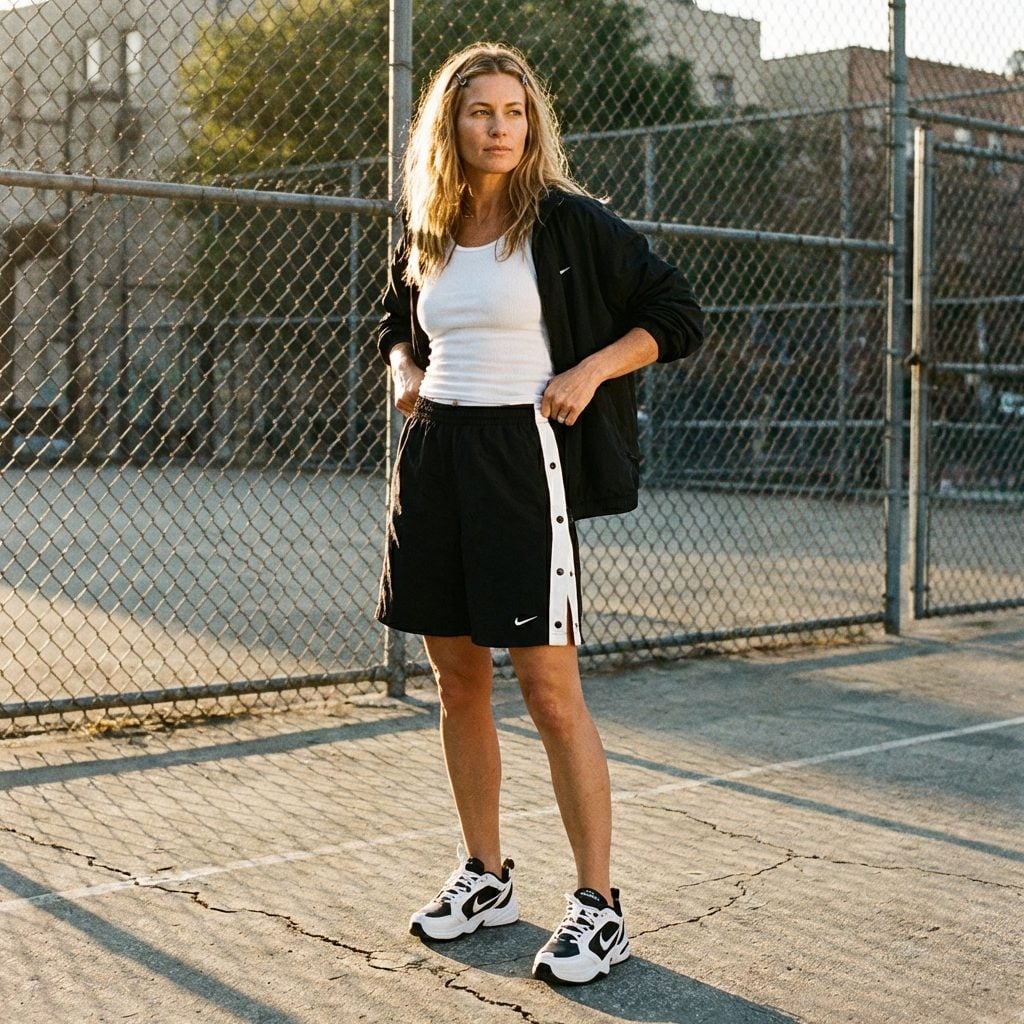
These were a sensory trap. The small plastic snaps running up each outer seam were meant to make the shorts easy to pull on over sneakers, a practical feature borrowed from NBA warm-up gear. Their actual function in daily life was to provide an irresistible fidget mechanism that you operated unconsciously while watching TV, waiting in line, or sitting through literally any class that bored you.
The accessory styles you stacked with these mattered enormously. A matching track jacket worn open, a fitted ribbed tank underneath, and chunky sneakers elevated the whole thing from gym class to genuine ’90s streetwear. Allen Iverson and the broader crossover of basketball culture into everyday fashion had made warm-up gear not just acceptable but aspirational. You were not an athlete. The outfit made a compelling argument otherwise.
“The snaps were always half undone. That was the look. That was intentional. We were doing that on purpose.”
1. Cutoff Sweatpants Shorts: The DIY Project That Required Zero Skill and No Apologies
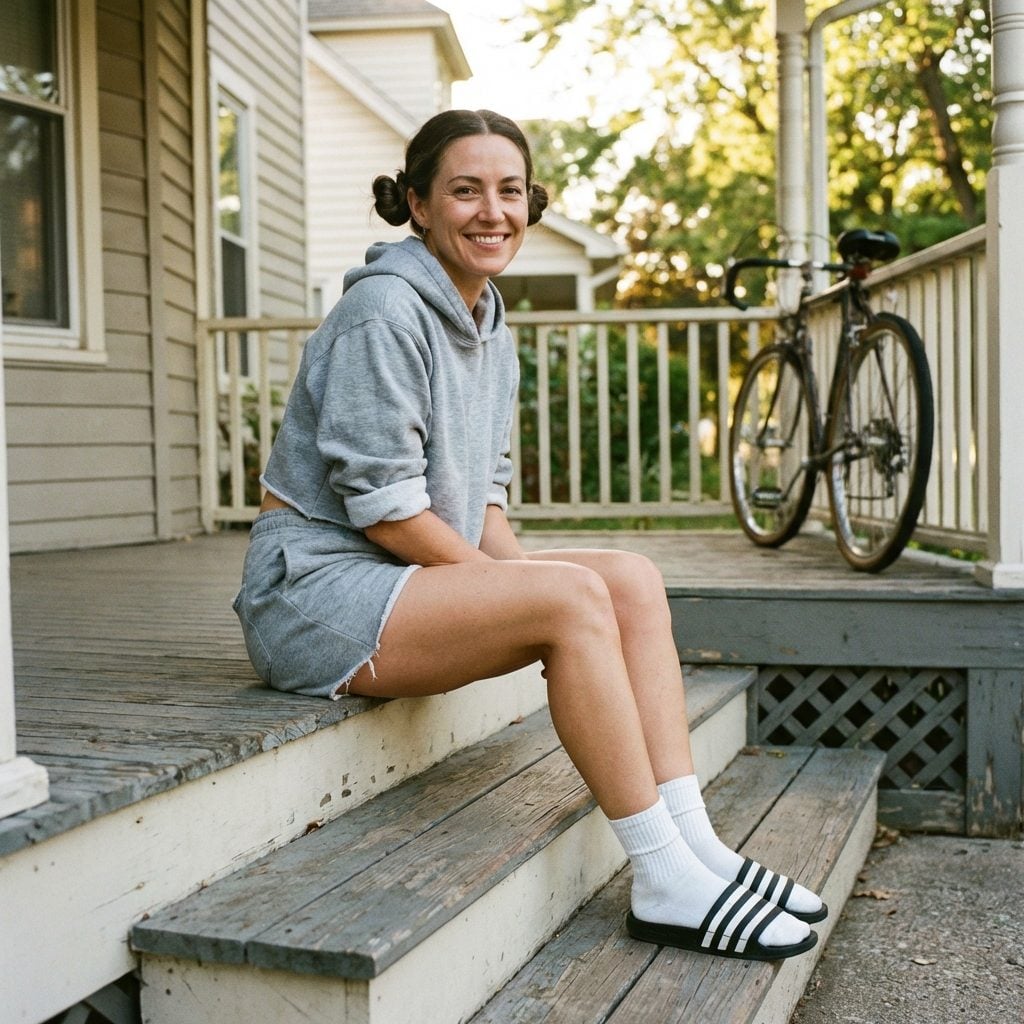
You took a perfectly good pair of gray fleece sweatpants, grabbed whatever scissors were nearby (probably craft scissors, probably dull), and cut them off at roughly mid-thigh with absolutely no regard for evenness. The raw edge frayed immediately. That was fine. That was, in fact, the point.
This was not laziness disguised as fashion, although it was also that. It was a specific ’90s aesthetic that prized the casual and the deconstructed, the same energy that made torn jeans and oversized flannels tied at the waist feel right. Worn with a cropped hoodie in the matching gray and beat-up Adidas slides, you had assembled one of the most comfortable outfits in human history. The fact that it also looked intentional was a genuine miracle of timing and cultural context.
Some people bought them pre-cut at the mall, which was its own kind of commitment. Those people had not lived.