
❤️ Would you like to save this?
A haircut can do what a month of skincare can’t. At 46, the face has more structure, more character, and honestly more to work with than it did at 25, but the wrong cut can flatten all of that in a single appointment. These before and after photos of women right around that age show what a skilled stylist actually does differently: not just the chop or the color, but the specific shift in where the weight sits, how the layers open up around the jaw, or why half an inch off the length suddenly makes the whole face look less tired.
What’s useful about looking at real women at 46 rather than generically “mature” hair transformations is that the changes tend to be surgical, not dramatic. A lot of these aren’t overhauls. They’re corrections. One woman ditches the middle part she’s had since college and suddenly her cheekbones show up to the conversation. Another goes shorter and looks younger, not because short hair is inherently youthful, but because the old length was weighing her down in a very literal sense.
FYI, thanks to AI imagery software, we’re able to create very specific fashion and hairstyle examples to illustrate the points being made. In some cases, imagery is exaggerated to hammer home the point. Also, assume links that take you off the site are affiliate links such as links to Amazon. this means we may earn a commission if you buy something.
28. From Shoulder-Length to Bob: One Cut That Actually Changes the Frame
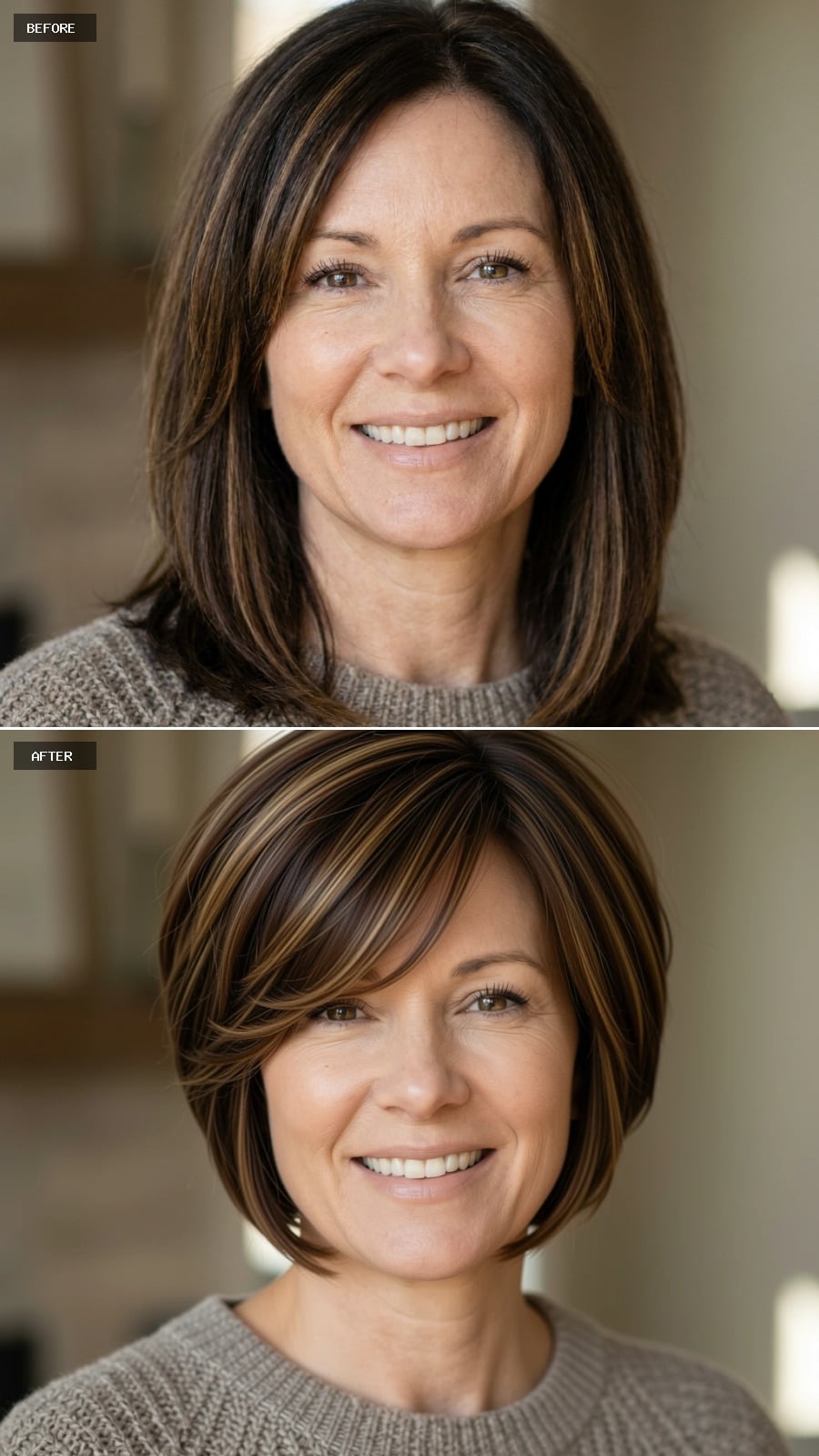
She wore her dark brown hair past the collarbone in the before shot, straight and heavy, with caramel highlights that read as subtle against all that length. The bob changes the math entirely. Cropped just below the jaw, the cut angles forward and picks up volume at the sides, which makes the highlight placement suddenly visible and intentional rather than blended away. It’s a chunky balayage pattern, warm gold against near-black, and the shorter length lets those streaks do real work. The chunky knit crewneck stays the same in both shots, which is actually useful here: it confirms the face is what shifted, not the wardrobe.
27. Dark to Blonde, Long to Cropped: What Losing Four Inches Actually Does
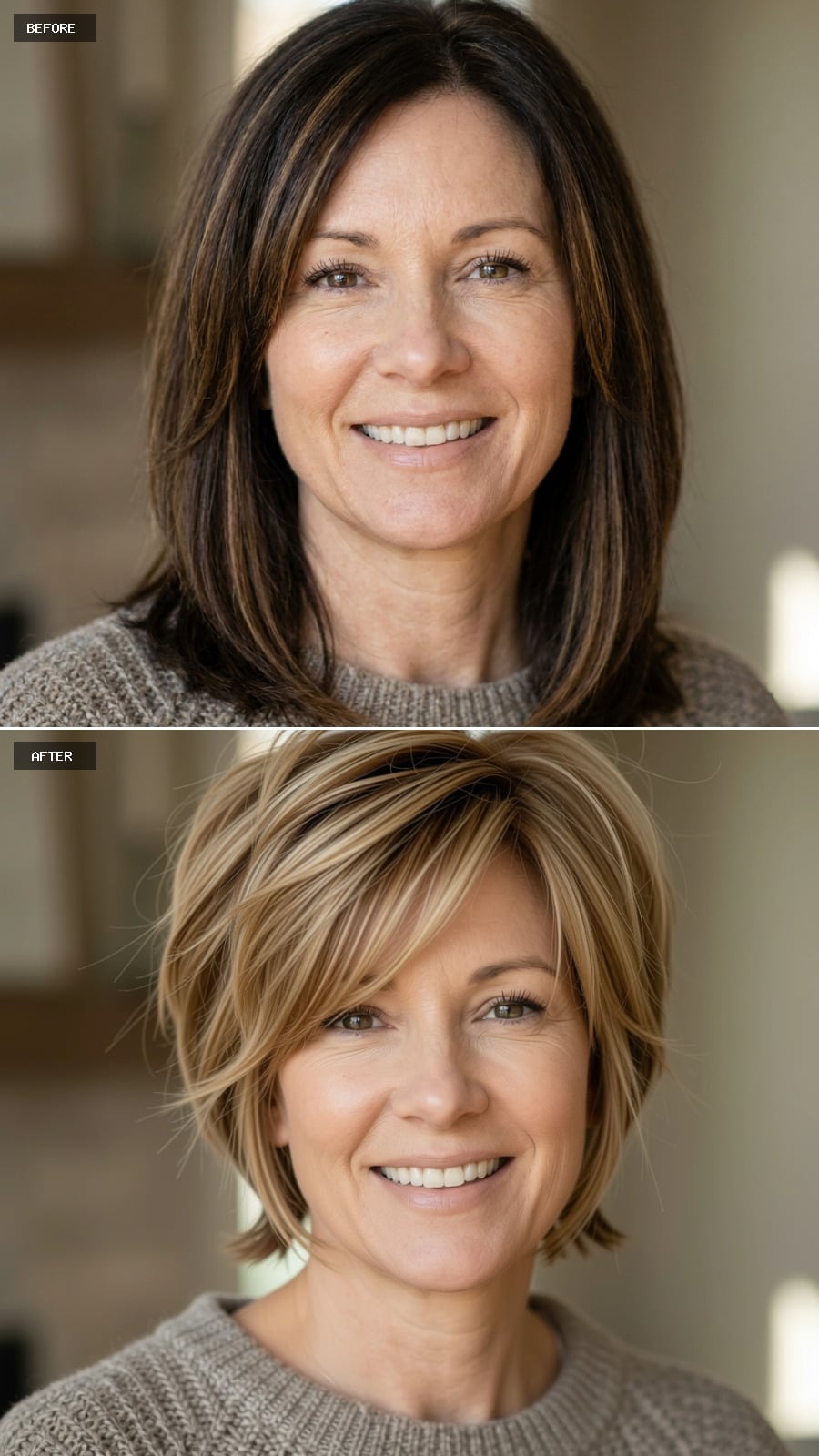
Going from dark brown with caramel highlights to a layered blonde bob isn’t just a color shift, it’s a structural one. The cut sits just below the ear, with side-swept layers that redirect attention toward the cheekbones. That geometric shift does more for face framing than the color change alone.
26. Darker Base, Shorter Bob, and the Highlights That Actually Do the Work
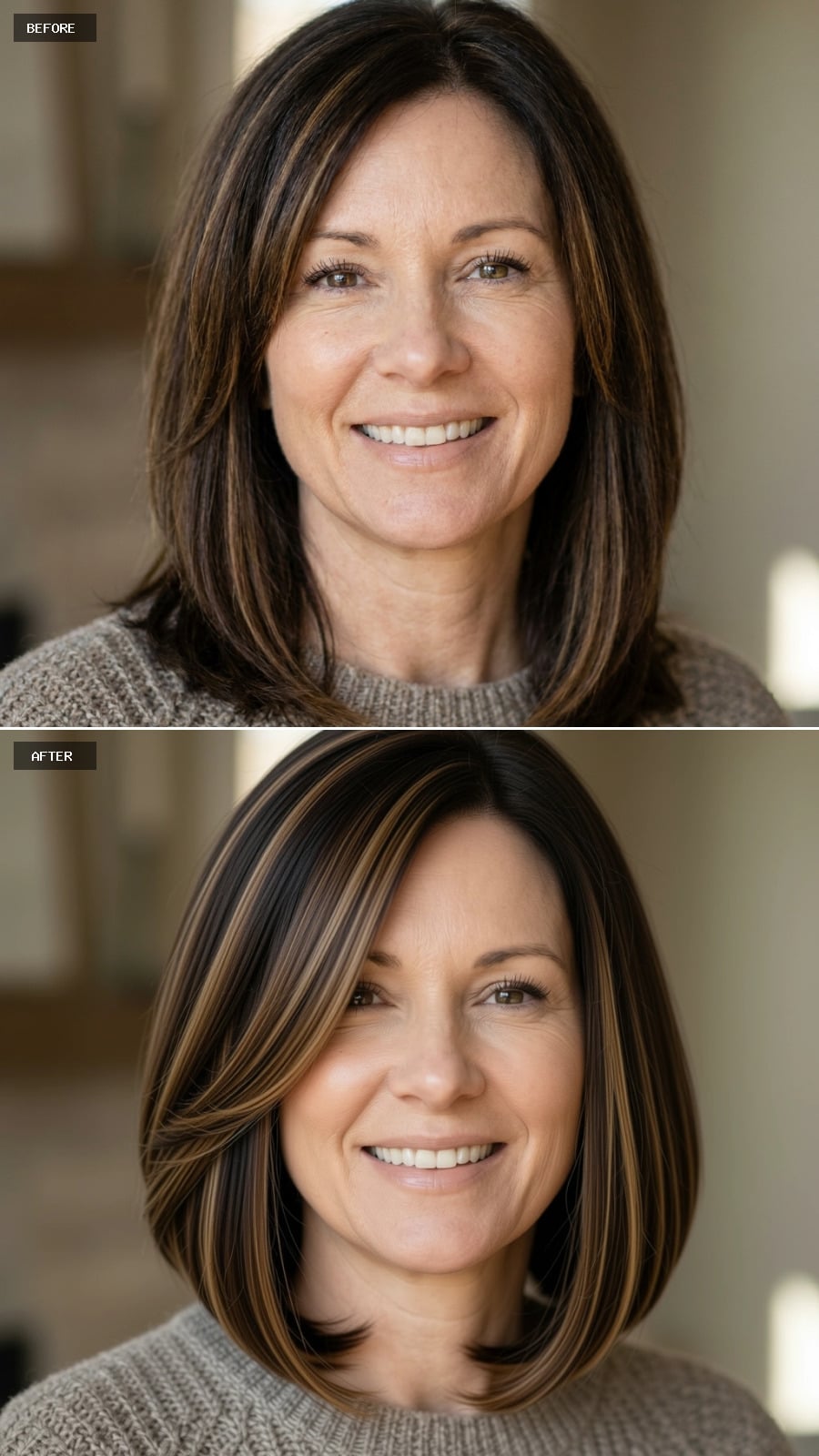
What changed here isn’t subtle. The before shows a medium-length layered cut with warm caramel highlights scattered through a brown base, the kind of color that reads as low-maintenance but slightly undefined. The after pulls the base significantly darker, closer to espresso, and shortens the length into a blunt bob that grazes the collarbone. The highlights stay, but they’re now higher-contrast against that deeper ground, which makes every strand visible. The bob’s silhouette is rounder through the sides and the face reads cleaner for it. Shorter didn’t mean simpler.
25. Bangs, a Bob, and Caramel Highlights That Rewire the Whole Face
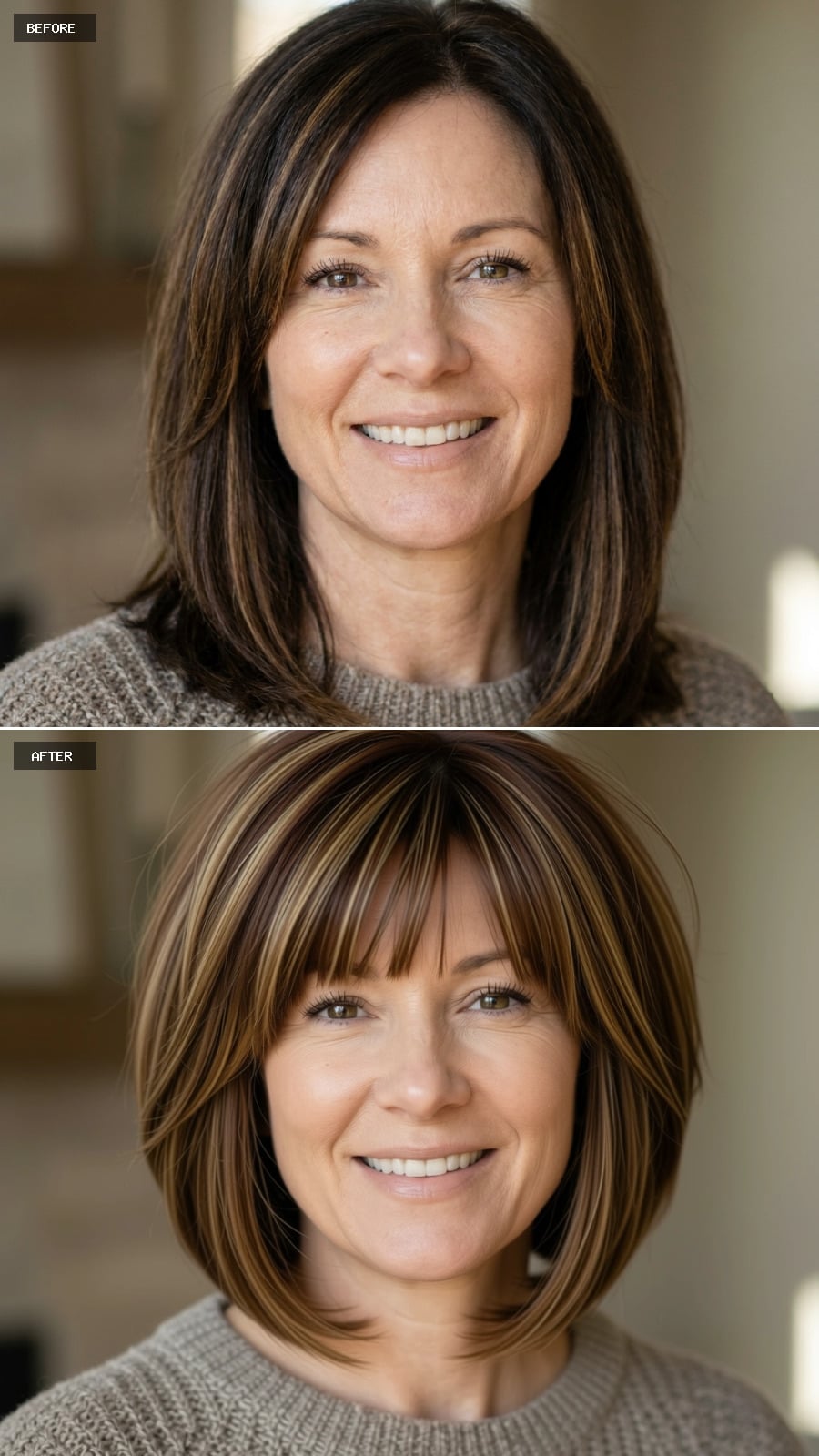
Cutting from a long, dark layer to a stacked bob with fringe does something specific to the face frame that a trim alone never achieves. In the before, the hair falls past the collarbone, center-parted, with subtle caramel streaks that barely register against the deep brown base. It’s polished, but the length pulls the eye downward. After, the bob sits just below the jaw, and fringe sweeps straight across the brow. The highlights are heavier now, chunky ribbons of warm caramel and honey running through the brown, and they catch light from the front rather than disappearing into the length. Bangs are divisive. But on a face with this kind of cheekbone structure, they stop drawing attention to the lower face and redirect it up.
Color Note: The color shift here isn’t dramatic on paper, same brown base, but the highlight placement makes it read completely differently. Lighter pieces concentrated near the face and through the fringe create contrast that a single-process color rarely delivers. That’s the actual work the highlights are doing.
24. Balayage, Waves, and the Specific Kind of Brightness That Reads as Youth
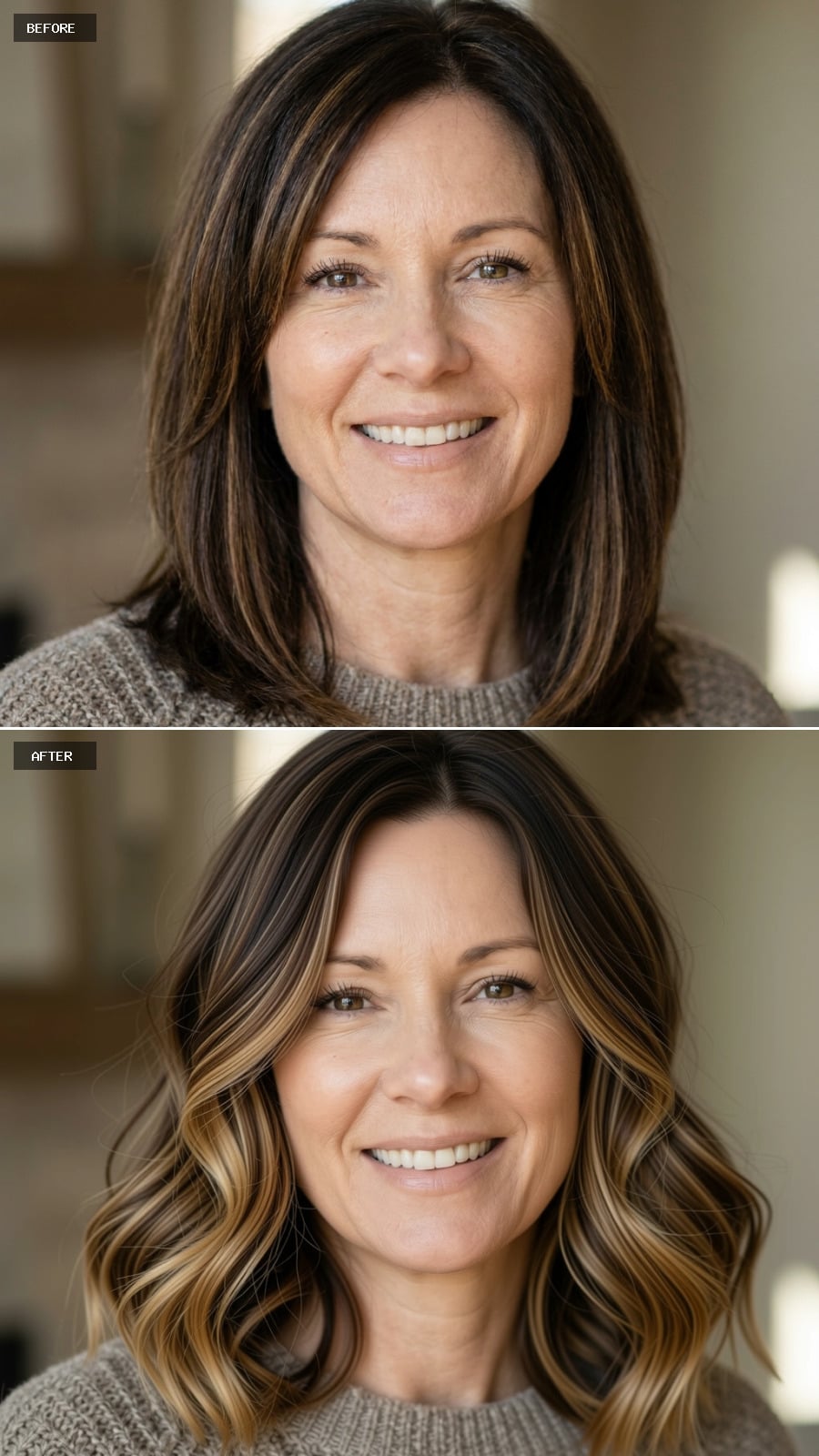
Straight, dark, and flat gets replaced here by loose waves with a balayage that runs from a deep brown root into warm caramel and honey at the ends. That’s the shift worth paying attention to. The movement the waves create around the jaw adds dimension the straight cut couldn’t, and lighter ends near the face do something that a single-process color never quite manages. Same sweater, same woman. The brightness isn’t louder, it’s just placed better.
23. Highlights Repositioned, Bob Tightened, and Suddenly the Jaw Does Something New
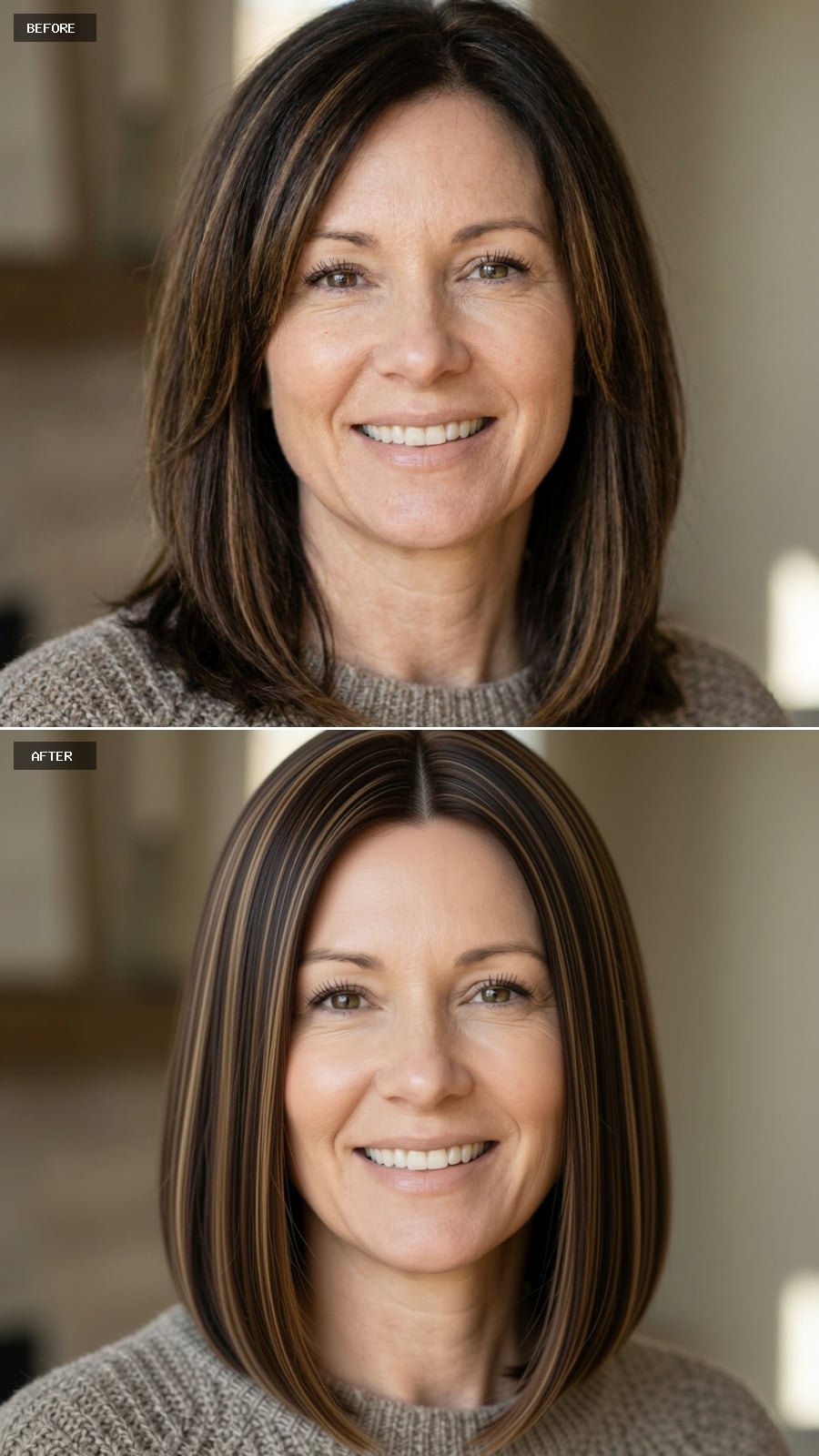
Parting the hair down the center and pulling the bob into a blunt, collarbone-grazing line does something specific to jaw definition that a side-swept style tends to soften. The before shows a looser, layered cut with highlights fanning outward from mid-shaft, which scatters the light across the outer edges of the frame. In the after, those same warm caramel streaks run vertically from root to tip, close to the face, and the effect pulls the eye downward along a cleaner line. It’s not a louder look. It’s a more deliberate one.
22. Dark Brunette to Warm Blonde: How Repositioned Light Rewires a Face
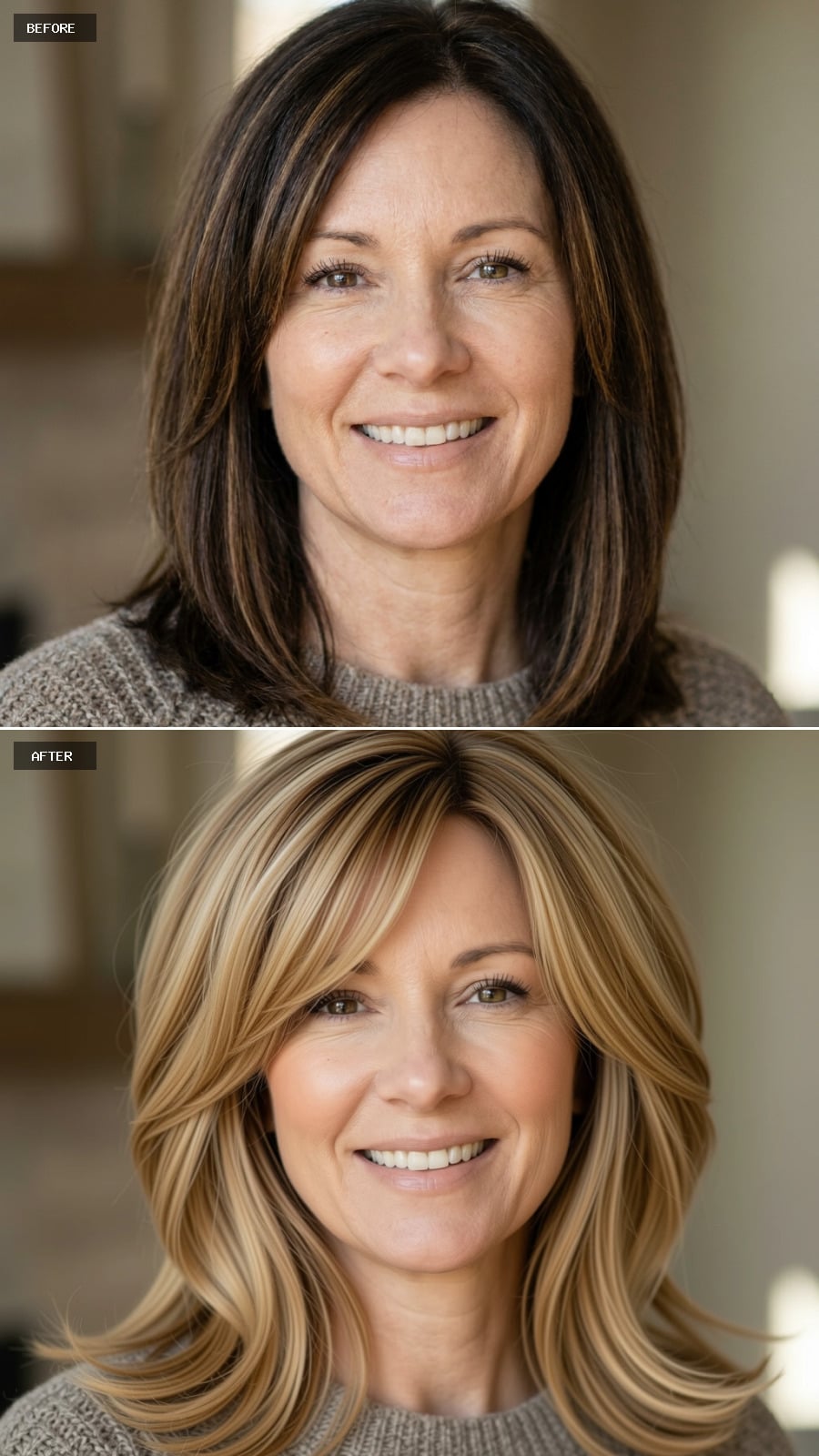
Honey blonde replaces a dark brunette base, and the volume follows. Layers sweep outward at the jaw, adding width where the before photo shows a flat, center-parted fall of hair. The chunky highlights aren’t subtle, and that’s exactly the point.
21. Curtain Bangs, Caramel Ribbons, and Waves That Put Volume Exactly Where It Counts
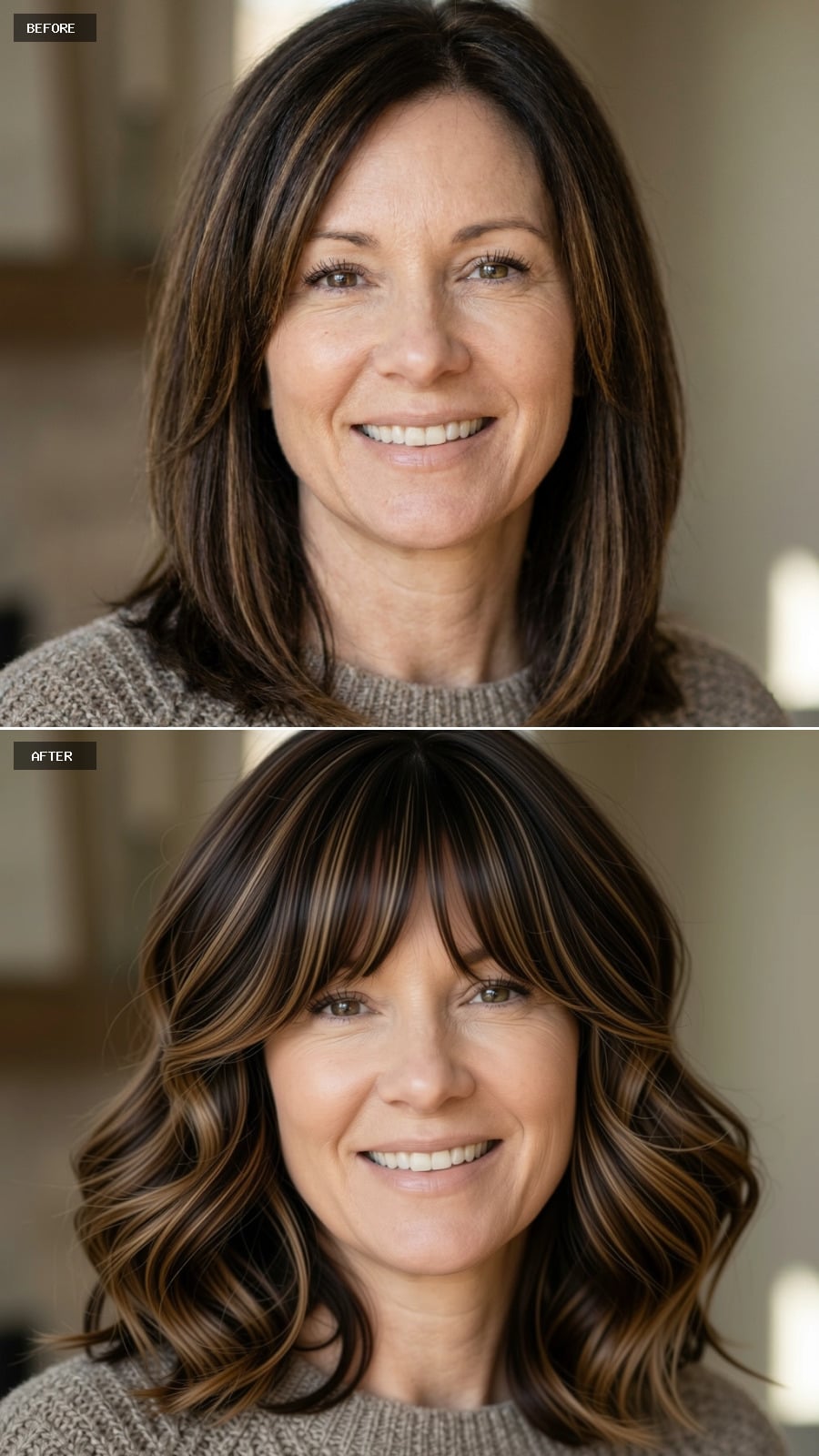
Dark brunette with gentle highlights becomes something richer here. The before shows a center-parted lob with highlights that read almost flat, close to the face and blending into the base color without doing much structural work. The after adds curtain bangs that graze the brow, and suddenly the upper third of the face has a frame it didn’t have before.
The waves matter because of where they start. Not at the root, not mid-shaft, but lower, so the volume lands at the jaw and collarbone rather than at the crown. That placement widens the face horizontally, which reads softer. The caramel ribbons are concentrated through the mid-lengths and ends, pulling the eye downward and outward rather than straight back into the part.
The overall effect is more dimensional than dramatically different. Bangs tend to get dismissed as a risk, and sometimes they are. But curtain bangs at this length, with this wave pattern, don’t hide the face. They direct attention to the eyes and cheekbones in a way that a clean side part at this length simply can’t replicate.
The Details: Curtain bangs work at 46 in part because they don’t require a hard grow-out commitment the way blunt bangs do. The caramel placement here avoids the root area entirely, which keeps the color looking intentional longer between appointments.
20. Brunette Bob to Blonde Waves: Length and Light Working the Same Shift
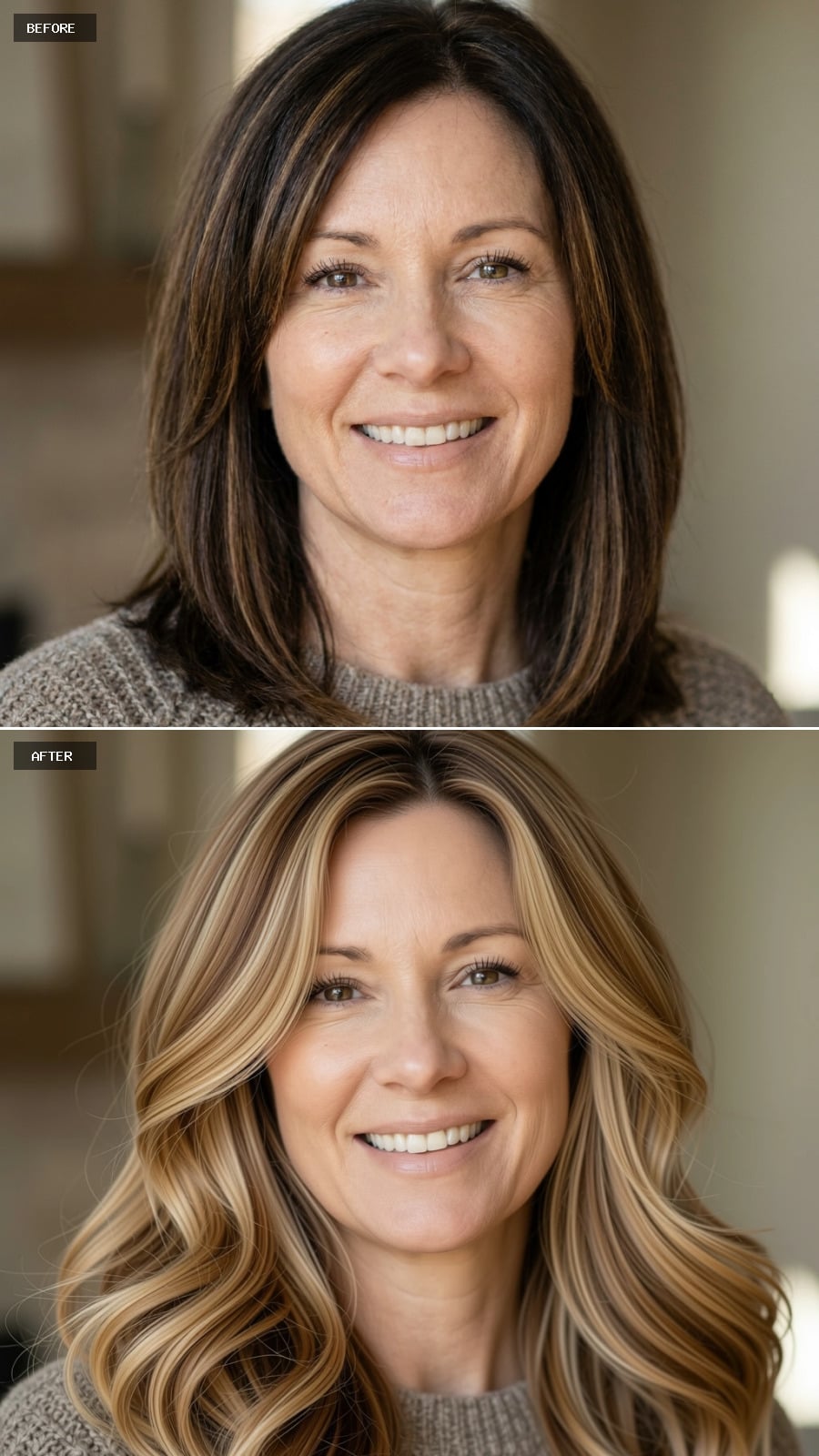
The before shows a chin-grazing bob in deep brunette with subtle caramel ribbons, clean and polished but visually heavy through the jaw. The after adds both length and a full blonde balayage, and the combination does something specific: the face reads wider open, softer at the temples. Loose waves keep the volume from sitting flat against the cheeks. It’s the movement that earns it.
19. Long, Straight, and Heavily Highlighted: How Extra Length Rebalances Everything
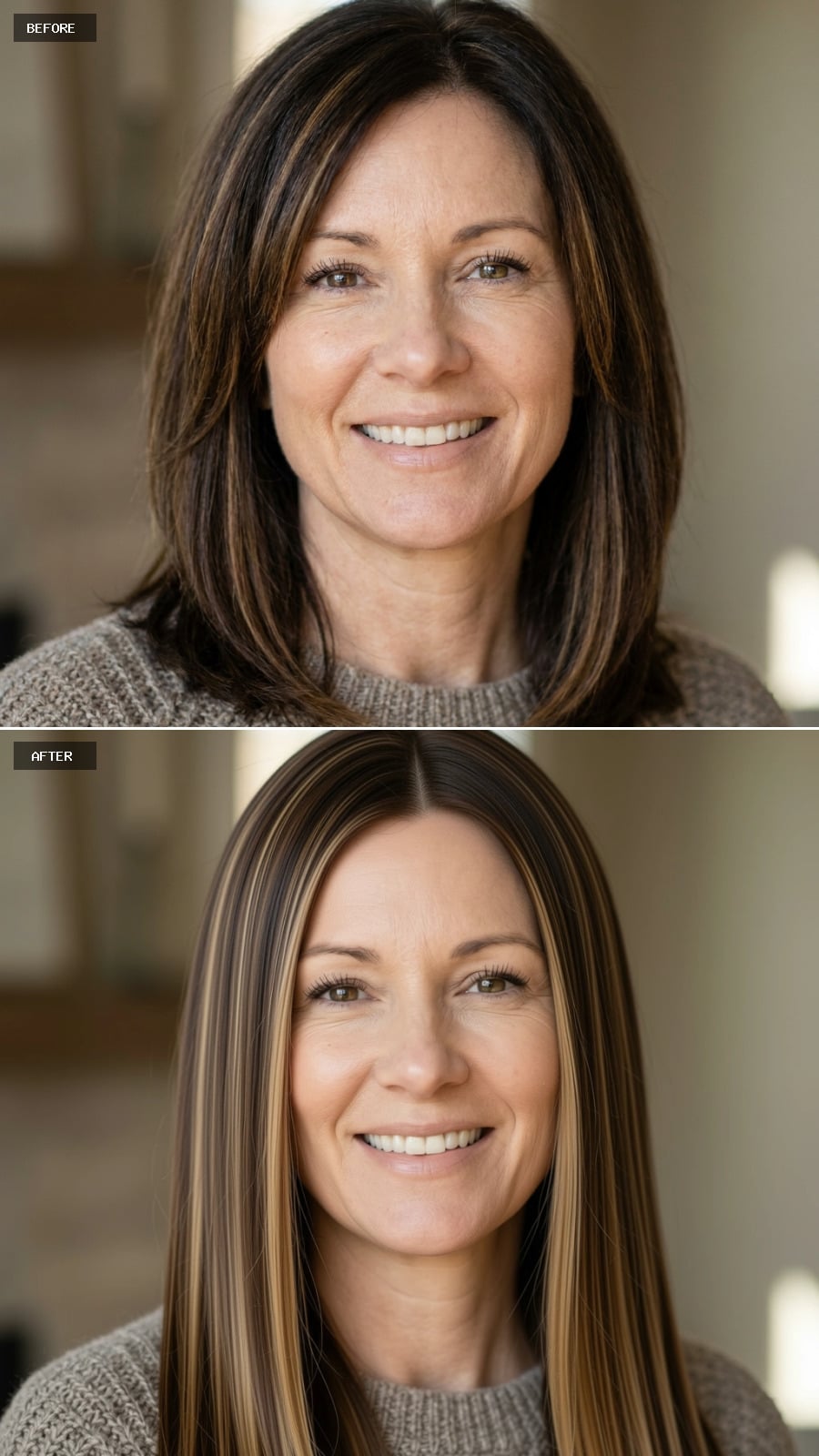
Adding several inches to a medium brunette cut sounds simple, but the length here does something specific: it pulls the eye downward and gives the highlights more room to work. In the before, the warm caramel pieces are concentrated near the face. In the after, they run the full length of the hair in wider ribbons, so the brightness isn’t just framing the cheekbones, it’s distributing across the whole silhouette. The result is less contrast at the jawline, which softens without requiring any change to the cut itself.
18. Voluminous Waves, Repositioned Highlights, and What Happens When Length Finally Has a Job
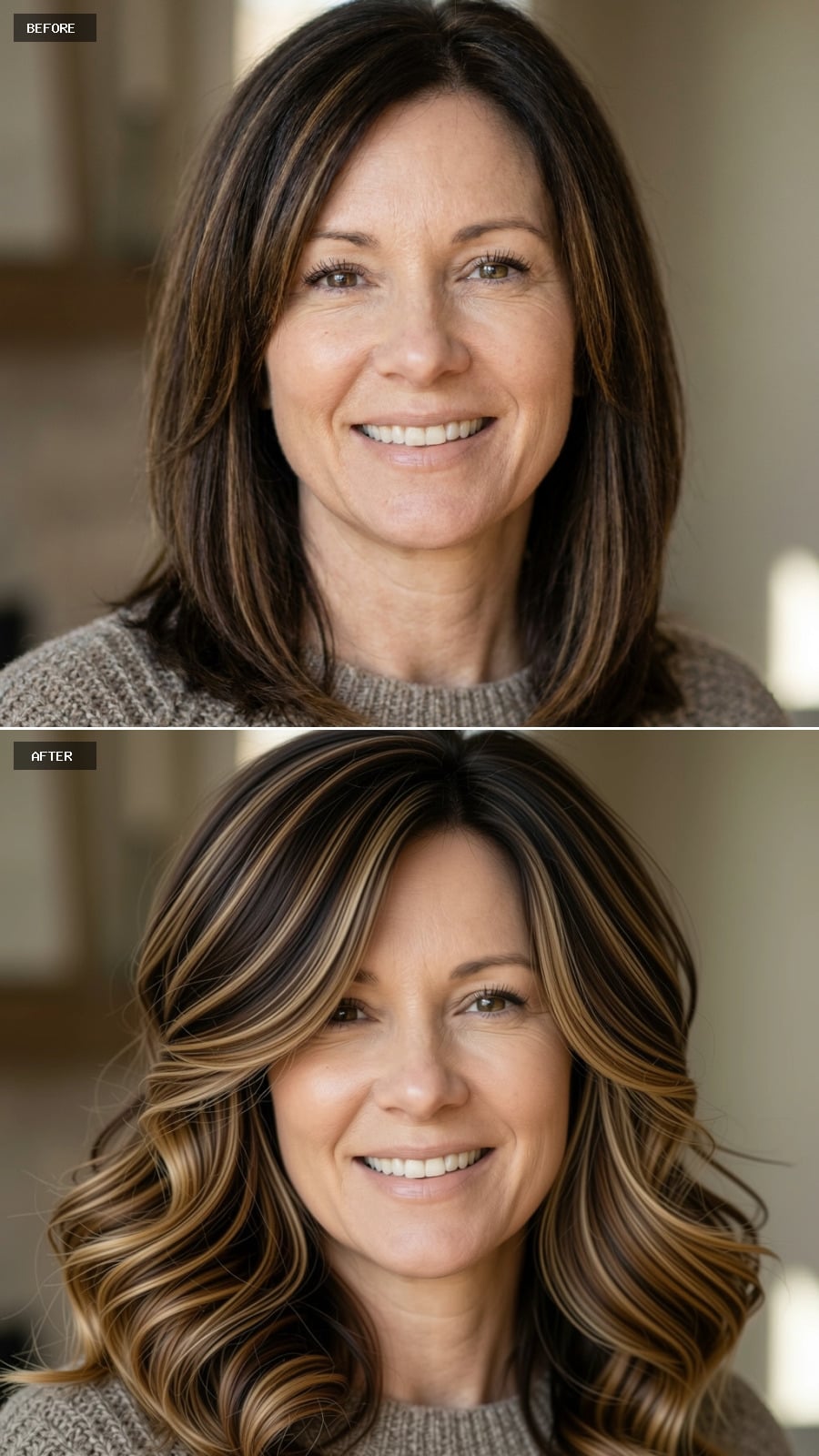
Flat, straight, and chin-grazing in the before, her dark brunette reads heavy without much contrast to break it up. The after adds several inches of length and shifts the highlight placement lower, pulling caramel and gold tones through the mid-shaft and ends. Curled waves do the rest. Volume at the sides softens the jaw without any structural cut doing the heavy lifting.
17. Half-Up, Darker Base, and Waves That Actually Earn Their Volume
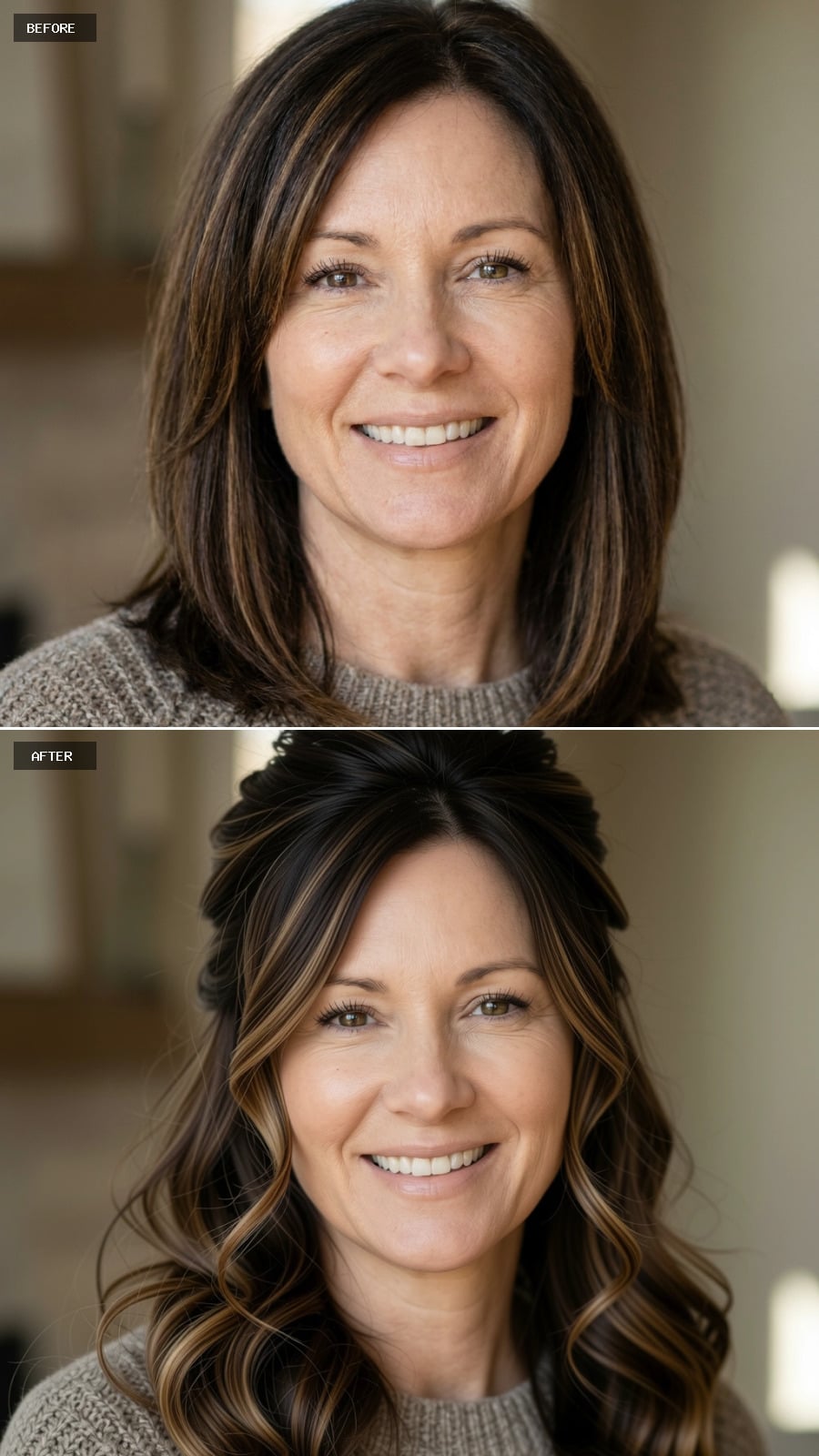
She arrived with shoulder-length hair worn loose, medium brunette with caramel highlights running through the mid-lengths. It read fine. The after takes the same base color and deepens it noticeably, closer to near-black at the root, which creates contrast the before simply didn’t have. The highlights that remain aren’t repositioned dramatically, but against a darker ground they read warmer, more deliberate.
The half-up styling does specific work here. Lifting the crown section creates height without adding bulk at the sides, and the loose waves below carry volume without weight. At 46, that distinction matters because heavy volume at the jaw tends to widen rather than lift. Keeping the fullness at the collarbone and below keeps the face framed rather than crowded. The knit sweater is identical in both shots, which makes the comparison honest. Same clothes, same light. The hair is doing all of it.
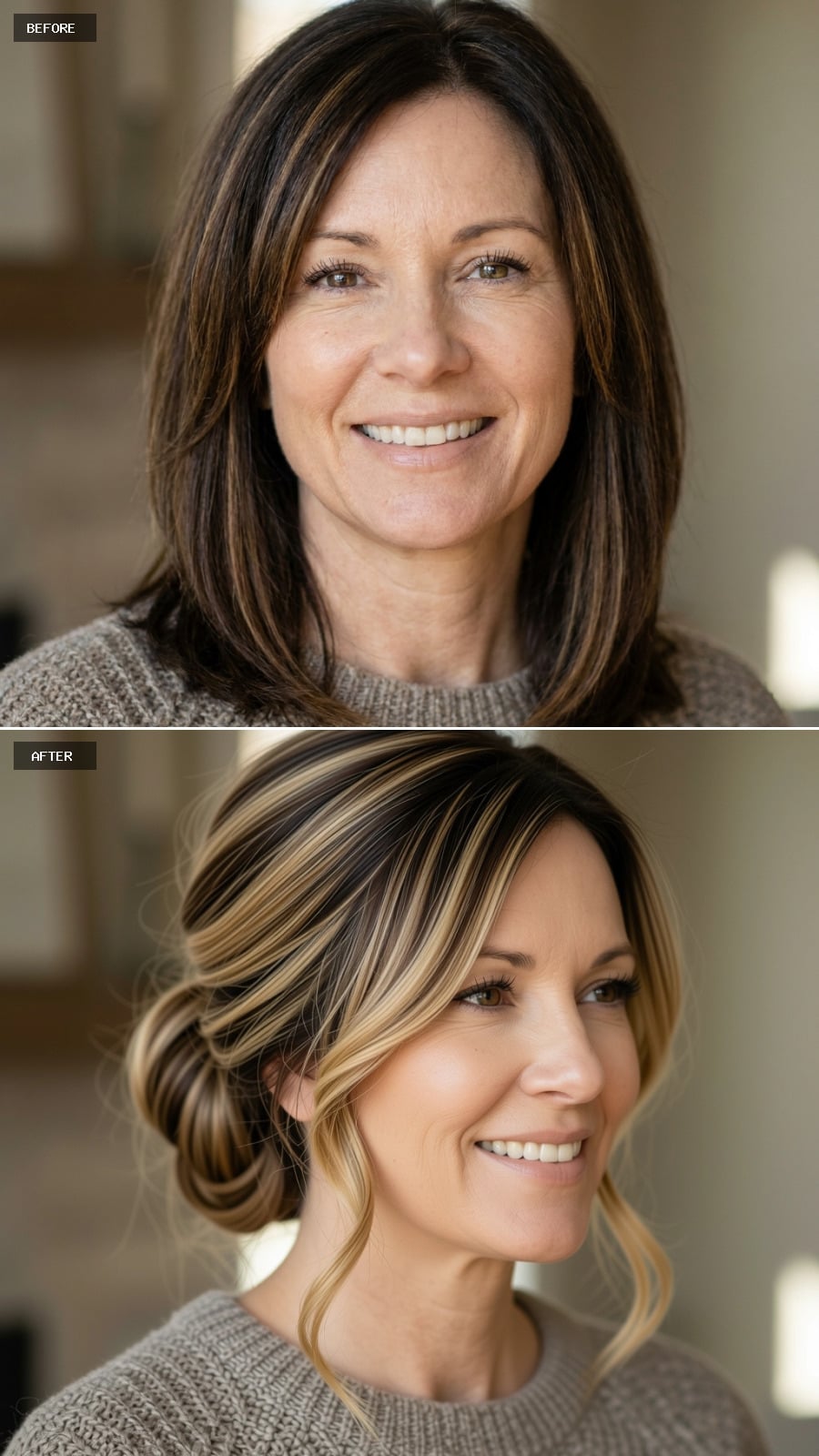
16. Updo, Blonde Ribbons, and Why Pinning It Back Changes the Whole Equation
❤️ Would you like to save this?
Pulled into a low chignon with face-framing pieces left loose at the front, her hair goes from blunt and one-note to something with actual structure. The before shows a solid dark brunette bob with subtle warm highlights. The after layers in chunky blonde ribbons against that same dark base, then sweeps everything back so the contrast does its work around the face, not buried in the length. Soft. Specific. It works.
15. Messy Updo, Caramel Face-Framing, and What Happens When You Stop Hiding the Hairline
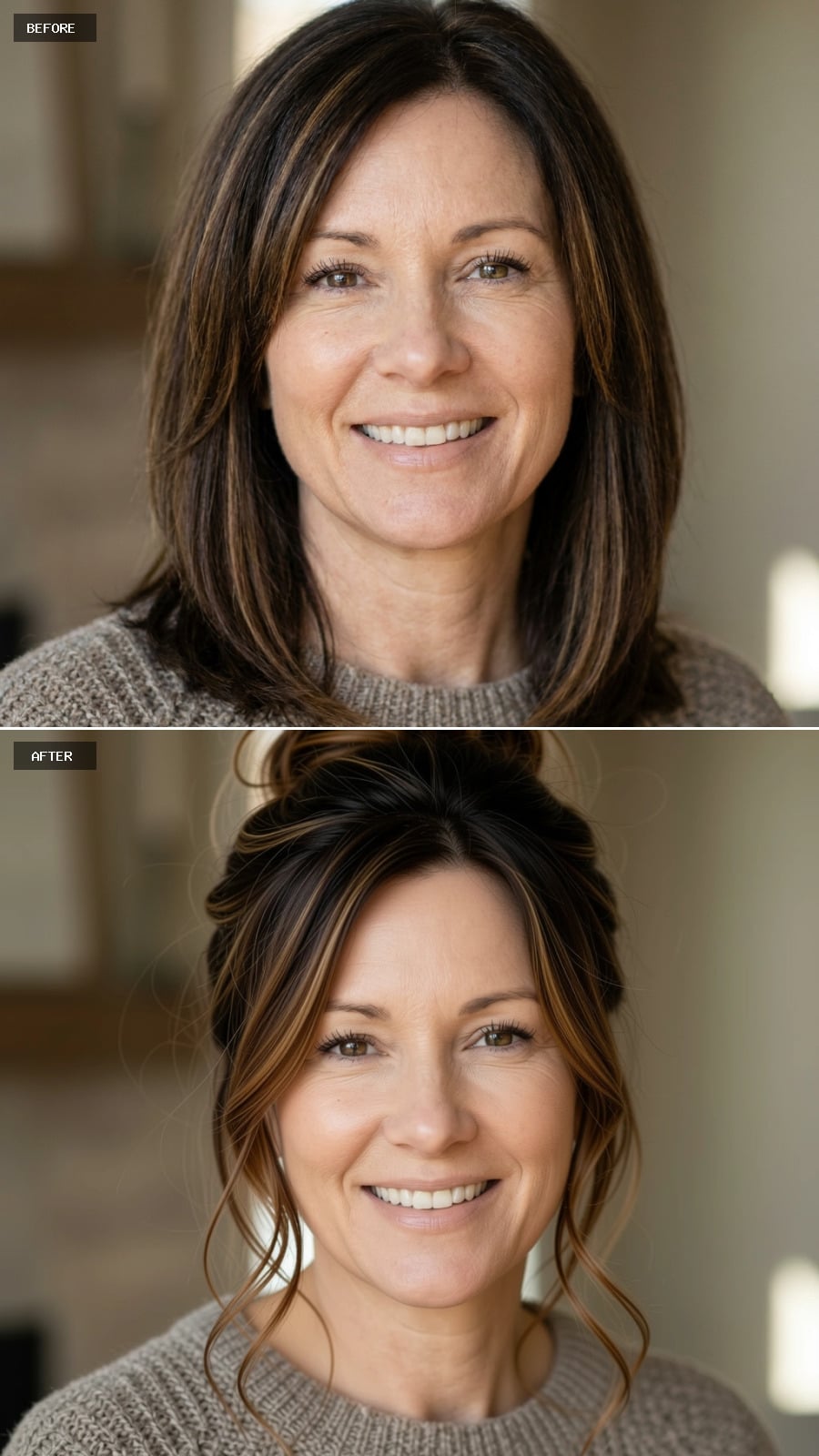
Both photos show a woman in a textured knit sweater, same face, same setting, noticeably different read. In the before, her hair falls straight to the collarbone with cool-leaning highlights scattered throughout. It’s fine. But the weight of it pulls everything down, and the center part doesn’t do the jaw any favors.
The after pulls the bulk up into a loose, slightly undone updo with face-framing pieces left out at the front. Those pieces matter more than the updo itself. They’re warmer, golden-brown against the darker base, and they curve toward the cheekbones rather than dropping past them. Freed from all that length, her hairline becomes visible, which resets where the eye starts reading the face. The overall effect reads younger not because anything was minimized, but because the structure now has a clear focal point instead of a long, even curtain.
Insider Tip: Leaving out two or three pieces at the temples when pinning up is one of the fastest ways to soften a hairline that feels too stark. The key isn’t length on those pieces, it’s warmth. If they’re highlighted slightly lighter than the rest, they catch light at face level and hold attention right where you want it.
14. Crown Braid, Blonde Shift, and What Pinning Everything Up Actually Does to the Face
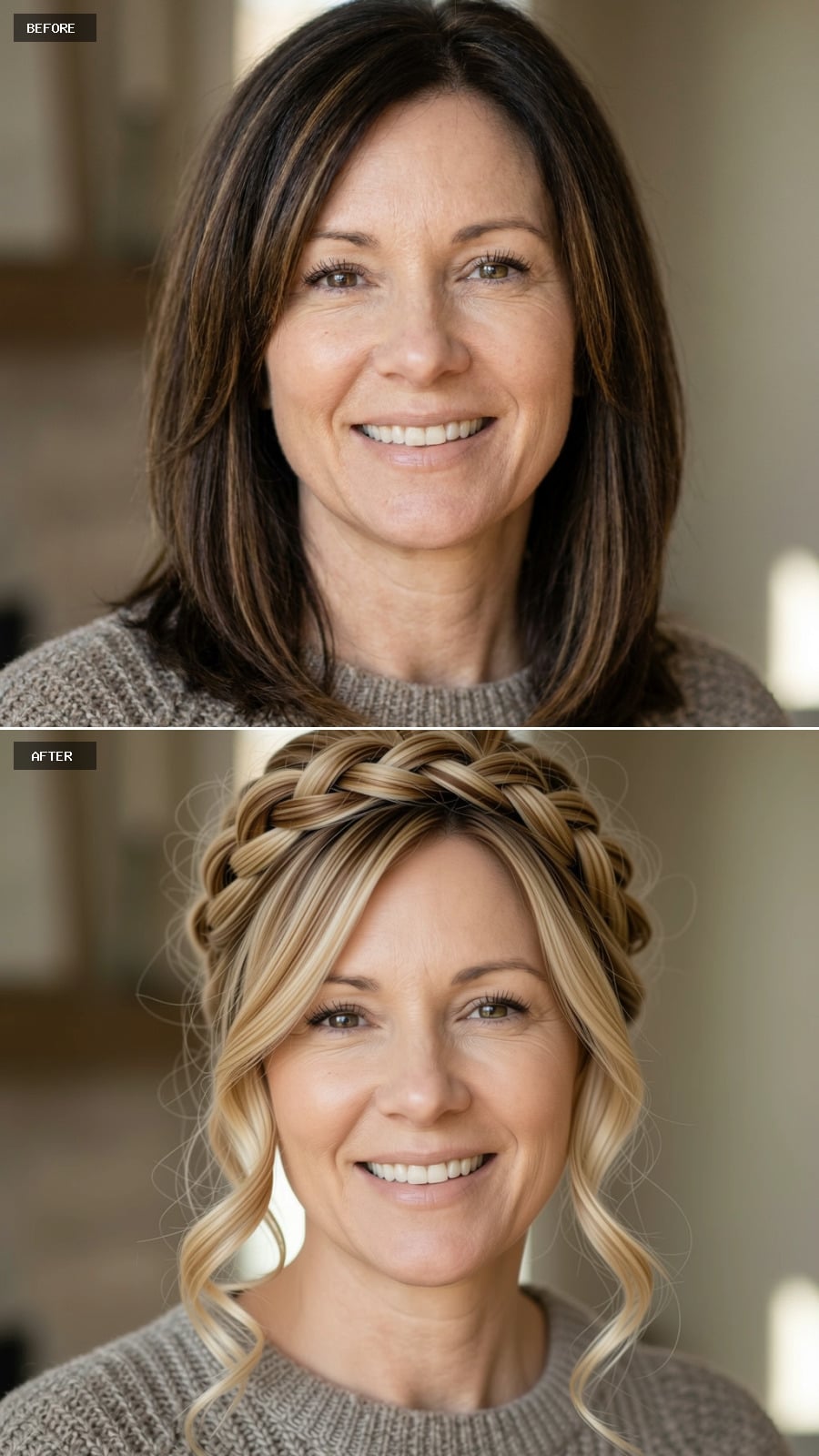
Going from a dark brunette bob with straight ends to a crown braid with loose blonde curls changes more than the color. Pinning the hair up and back opens the entire face, and the warm blonde tones sitting closest to her skin make the complexion read warmer and clearer. Those soft curls falling at the jaw do the same work a fringe would, without the commitment.
13. Warm Ribbons, Flipped Ends, and What Louder Color Placement Does to a Midlength Cut
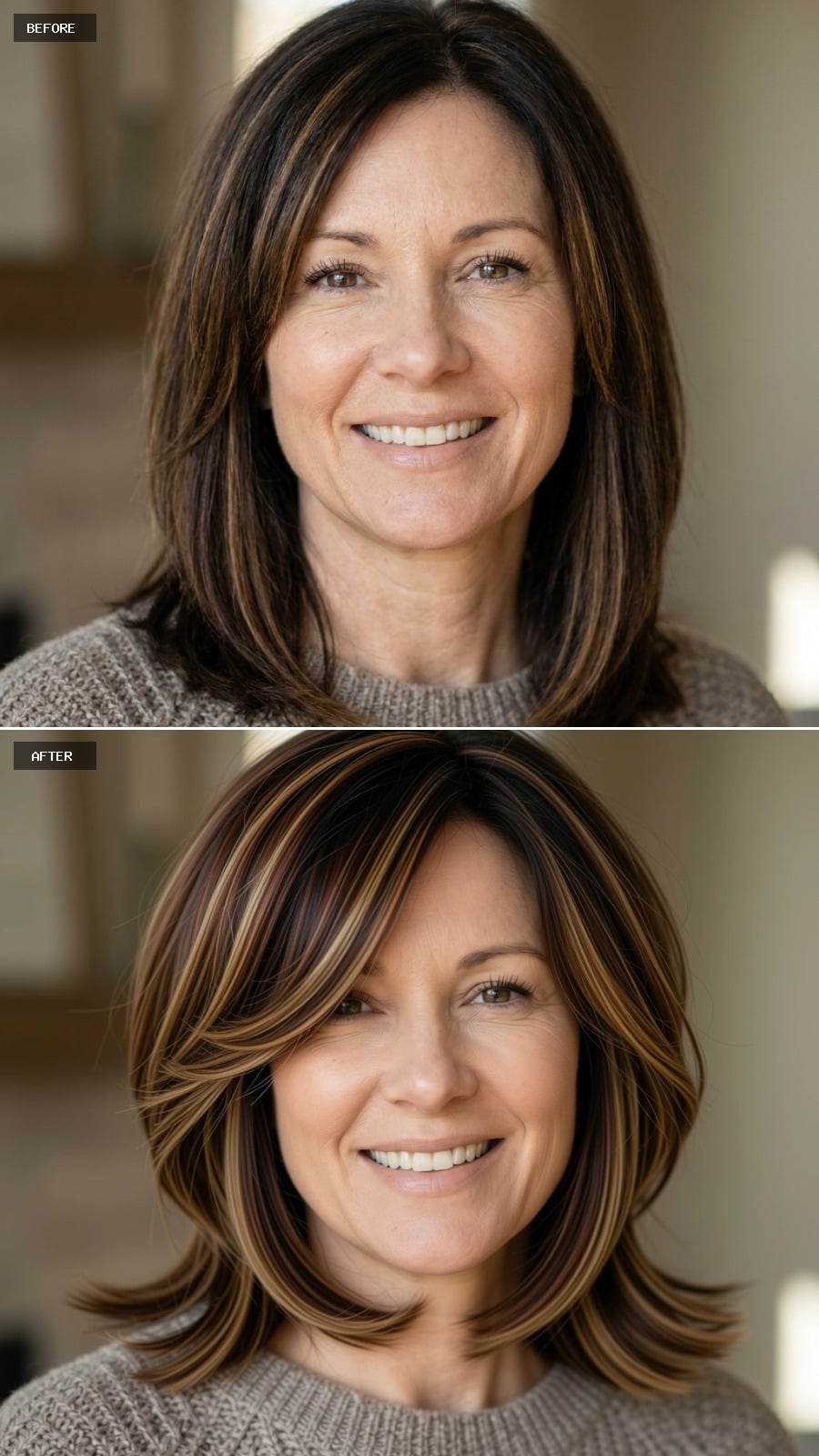
Before: a midlength brunette cut with subtle caramel highlights, center-parted and falling straight, clean but quiet. After: the same approximate length reads completely differently once the color gets louder and more intentional. Rich caramel ribbons run through a dark brown base, concentrated around the face and through the mid-lengths, while the ends flip out slightly rather than falling flat. That flip is doing more work than it looks like. It lifts the overall silhouette at the jaw, which on a midlength cut is exactly where volume tends to disappear.
12. Shorter Bob, Deeper Base, and What Louder Highlights Do to a Rounder Face
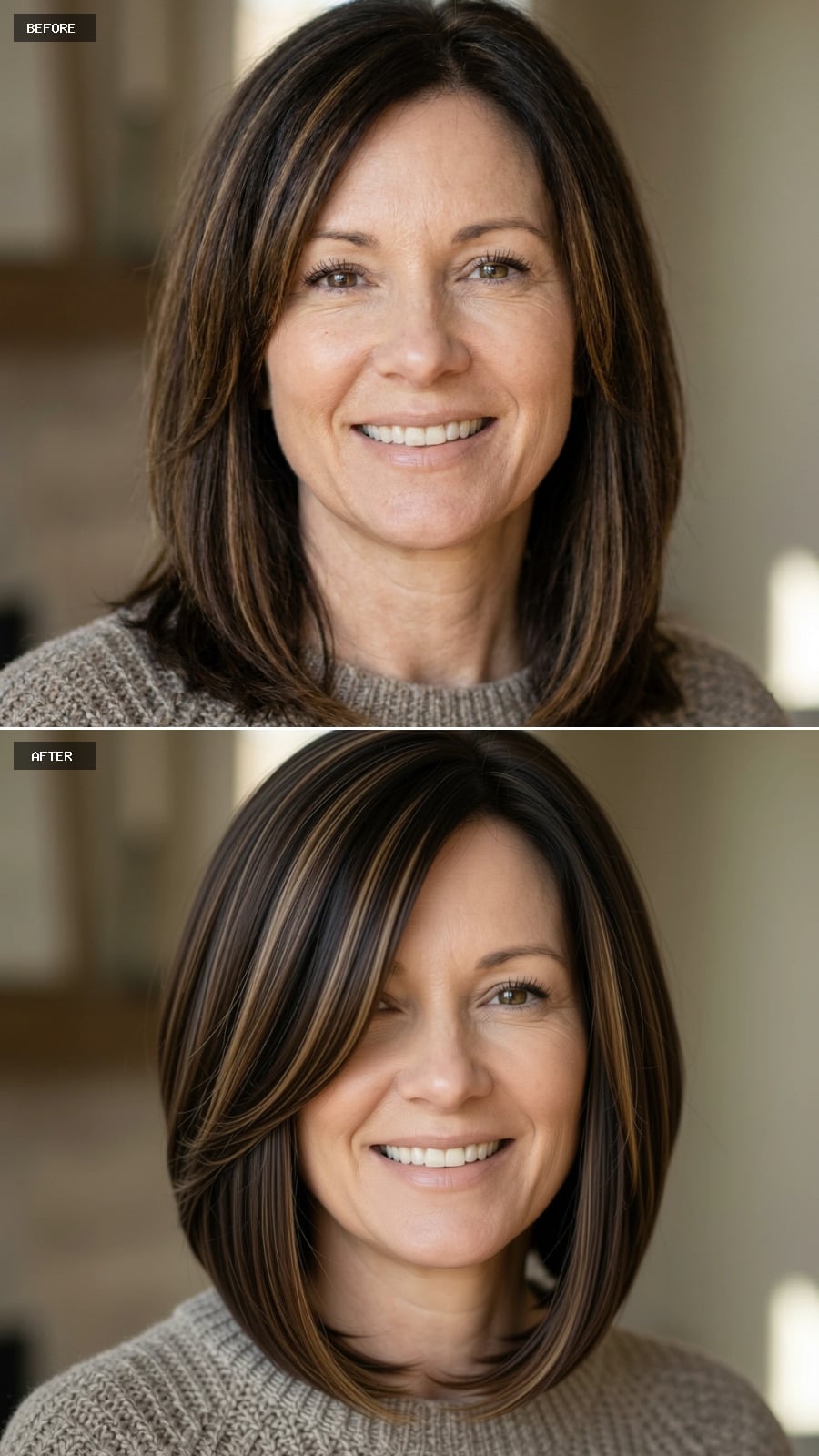
What changed here isn’t the color family. It’s the contrast. In the before, her mid-length layers carry soft caramel highlights spread fairly evenly through the ends. It reads natural, but diffused. The after takes that same brunette base, deepens it noticeably, and pulls brighter ribbons forward along the part and face frame, so the eye reads light before it reads anything else.
The cut shifted too. That shoulder-grazing length became a bob that sits just below the jaw, with a side-swept part pushing volume toward one cheek. Blunt-ish through the ends, with enough internal layering to keep it from reading heavy.
At 46, that combination of deeper base plus concentrated highlights near the face does something a softer, all-over color doesn’t: it creates definition without relying on hairline work alone. The weight of the bob holds the shape through the day.
11. Straight Dark Bob to Blonde Waves: When Color Does More Work Than the Cut
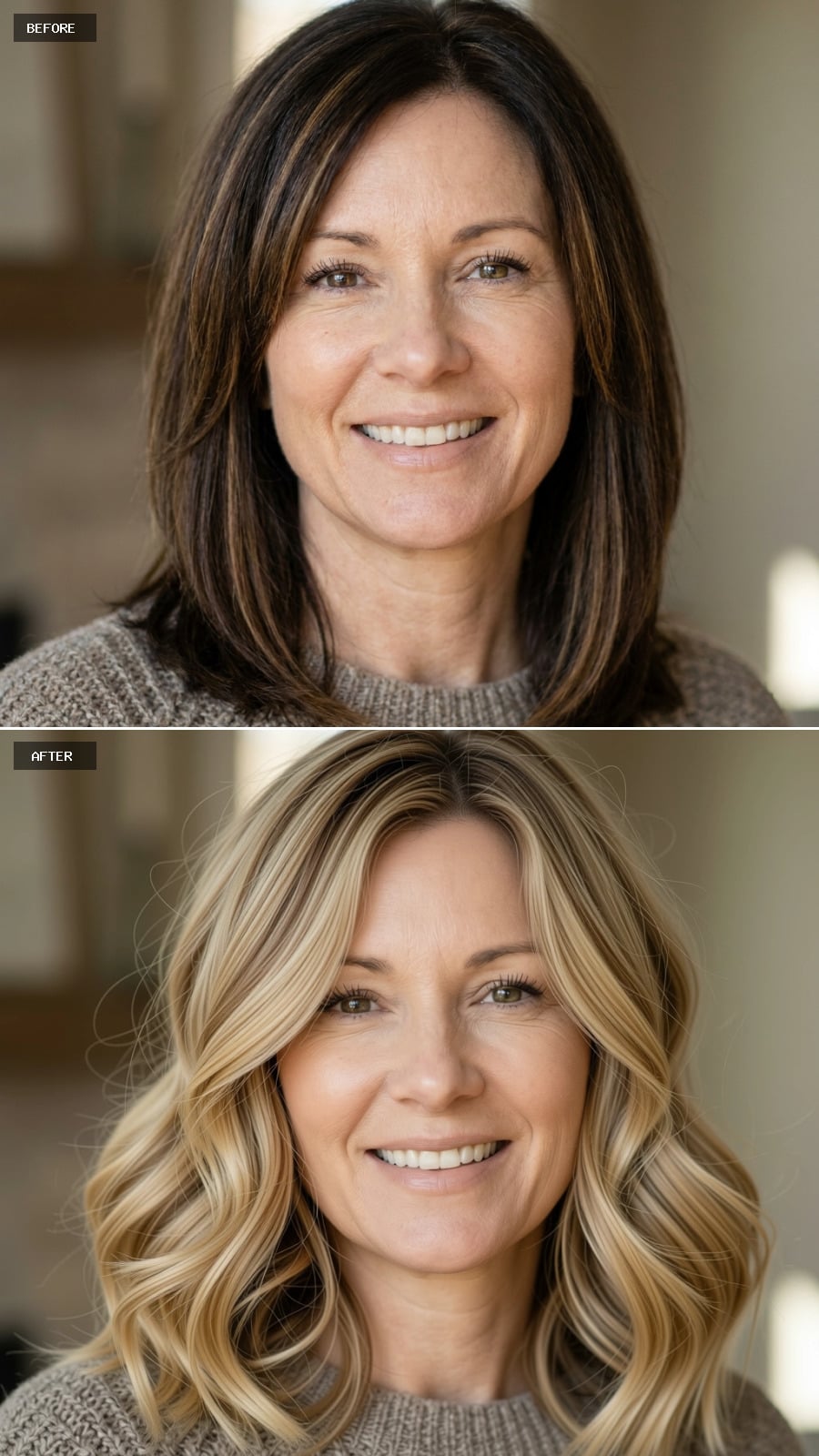
Starting with a straight, dark brown bob with subtle caramel ribbons, the before reads neat but flat against her complexion. The after introduces a full shift to a sandy blonde base with brighter face-framing pieces and loose, mid-length waves that add width at the cheekbones. Length stays roughly the same. What changes is where the light lands. Blonde tones pull forward at the front sections, and the wave pattern gives the ends a lift the straight cut couldn’t offer.
Try This: Switching from a dark base to a lighter one works best when the highlights aren’t uniform. Ask your colorist to concentrate the brightest pieces around the face and leave the underlayers a shade or two deeper. That contrast is what keeps blondes from going flat at 46.
10. Dark Bob, Curtain Bangs, and Lighter Color That Finally Has Somewhere to Go
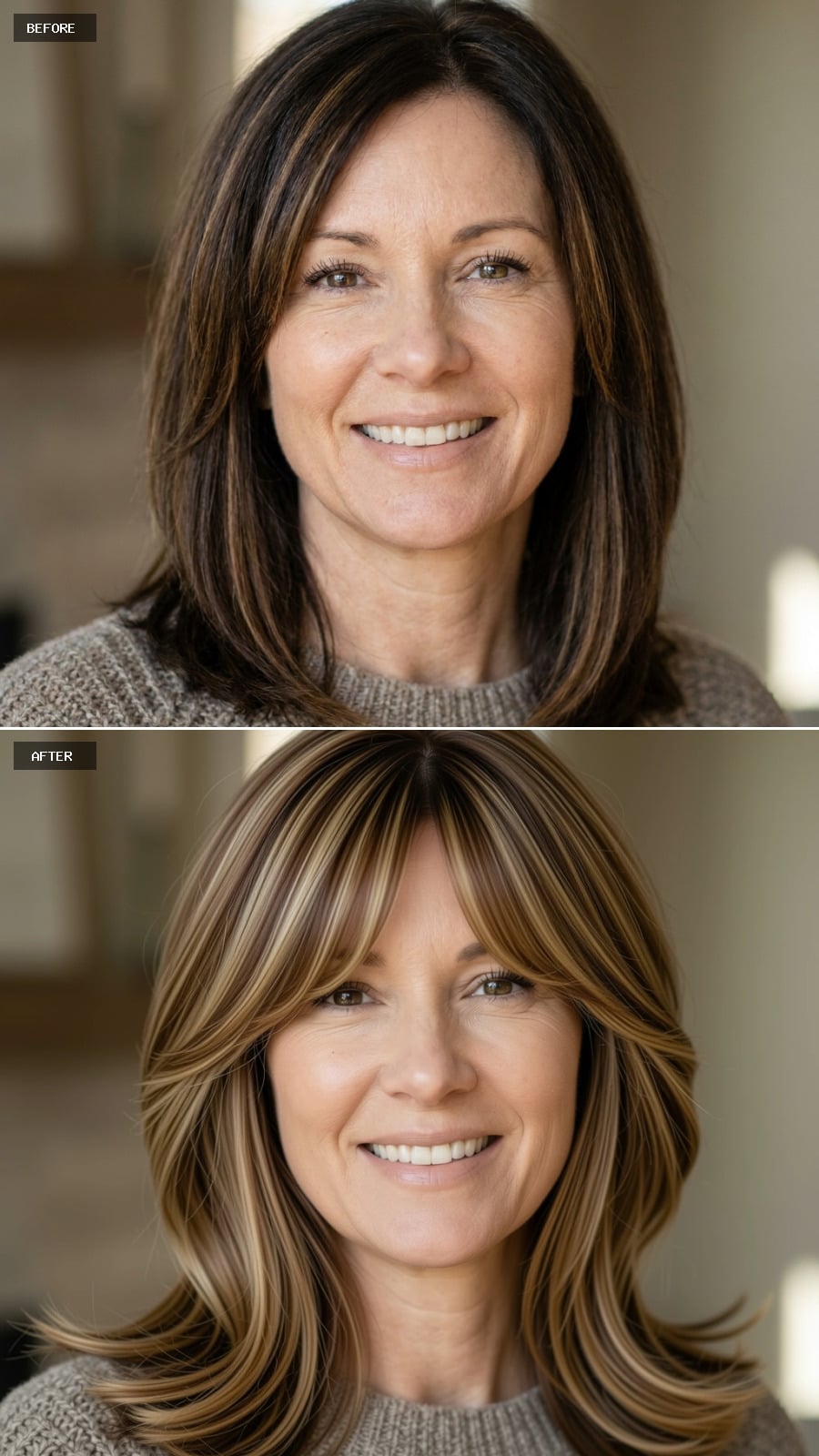
Swapping a blunt-edged dark bob for longer layers with curtain bangs does something specific here: it softens the forehead without shortening the face. The caramel-to-blonde ribbons are concentrated at the front, so the brightness lands where it does the most work. Longer length, bangs included, and it reads younger without trying.
9. Curls, a Darker Root, and What Happens When Highlights Finally Have Volume to Travel Through
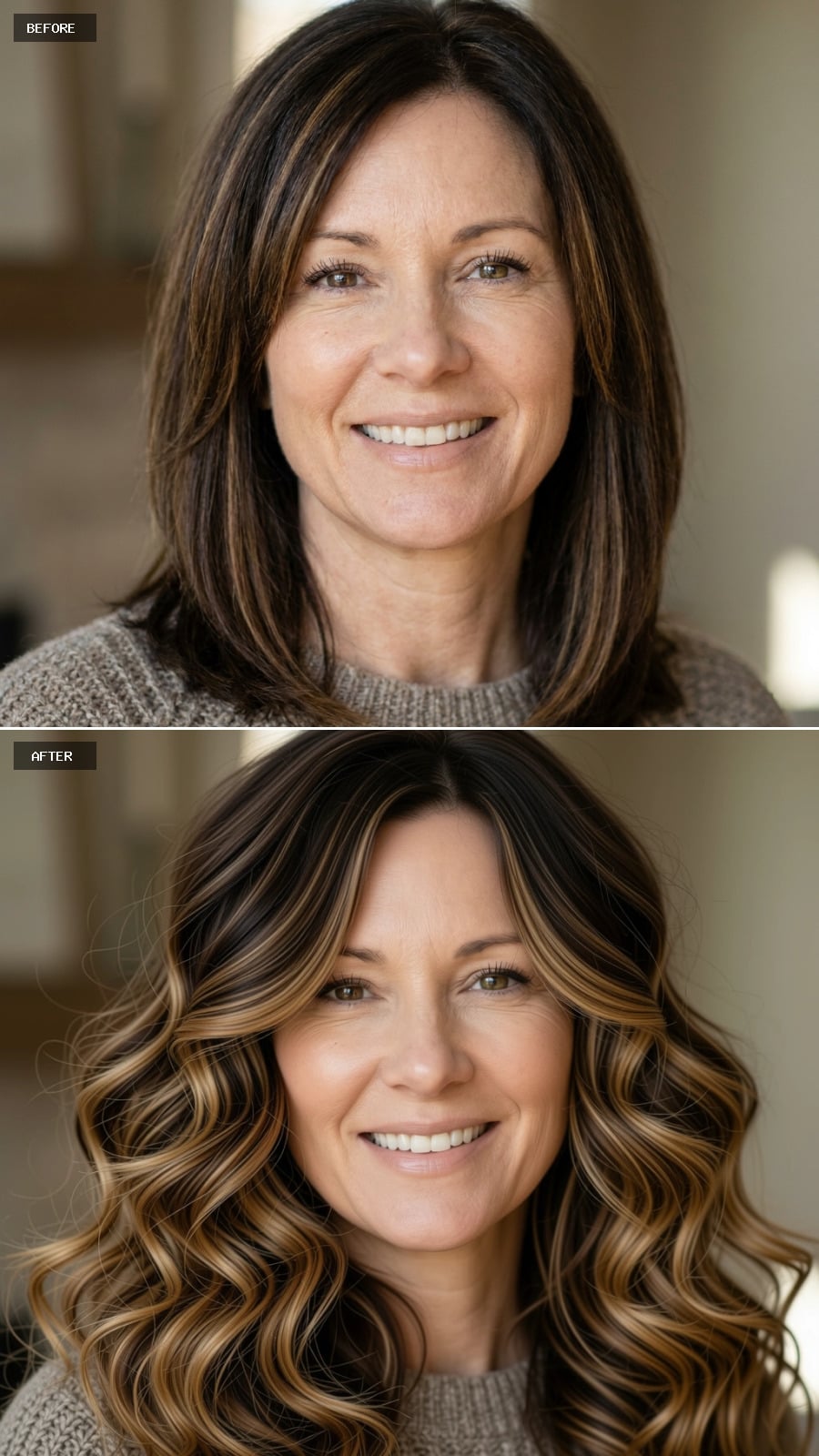
In the before, her hair sits straight and shoulder-length, with highlights that run in fairly uniform vertical streaks from root to tip. It reads flat because there’s nowhere for the color to catch. In the after, the base deepens slightly at the crown while caramel and blonde pieces weave through loose, voluminous curls that hit well past the collarbone. The movement gives those lighter strands somewhere to land, so they read warm instead of striped. The skin looks smoother, too. That’s not a coincidence.
8. Dark Base to Blonde Layers: When Volume Gets a Color Strategy
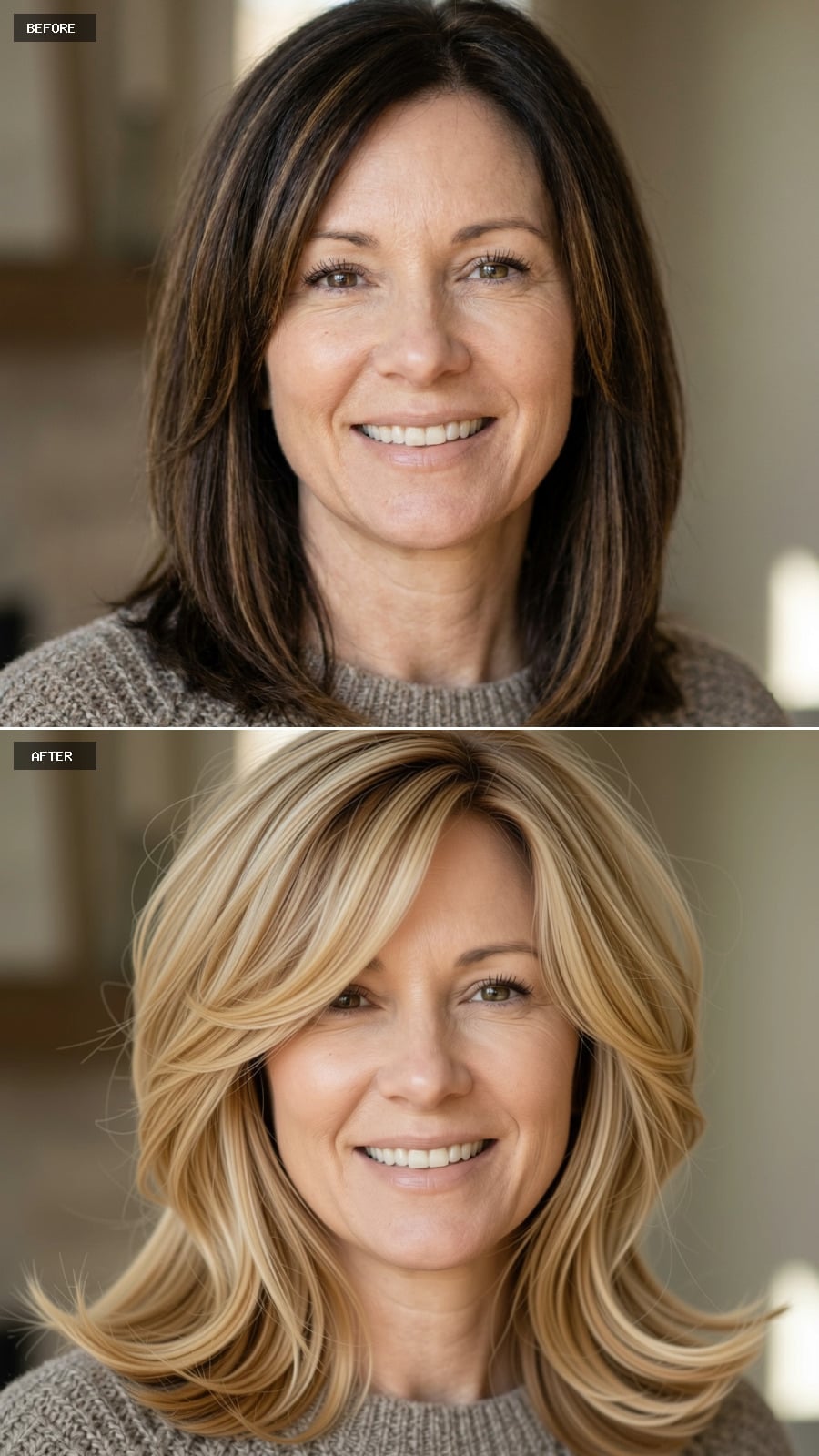
Longer layers and a sweep of blonde that concentrates near the face do most of the heavy lifting here. The before shows a sleek, dark brown bob with caramel ribbons, well-maintained but sitting close to the head with little movement. After, the same length reads completely differently because the color shifts to a warm blonde with a slightly darker root, and the layers are styled with an outward flip at the ends. That flip creates width at the jaw without adding bulk at the crown, which is a useful distinction for anyone with a longer face shape.
7. Darker Root, Caramel Ribbons, and Waves That Finally Give the Color Room to Move
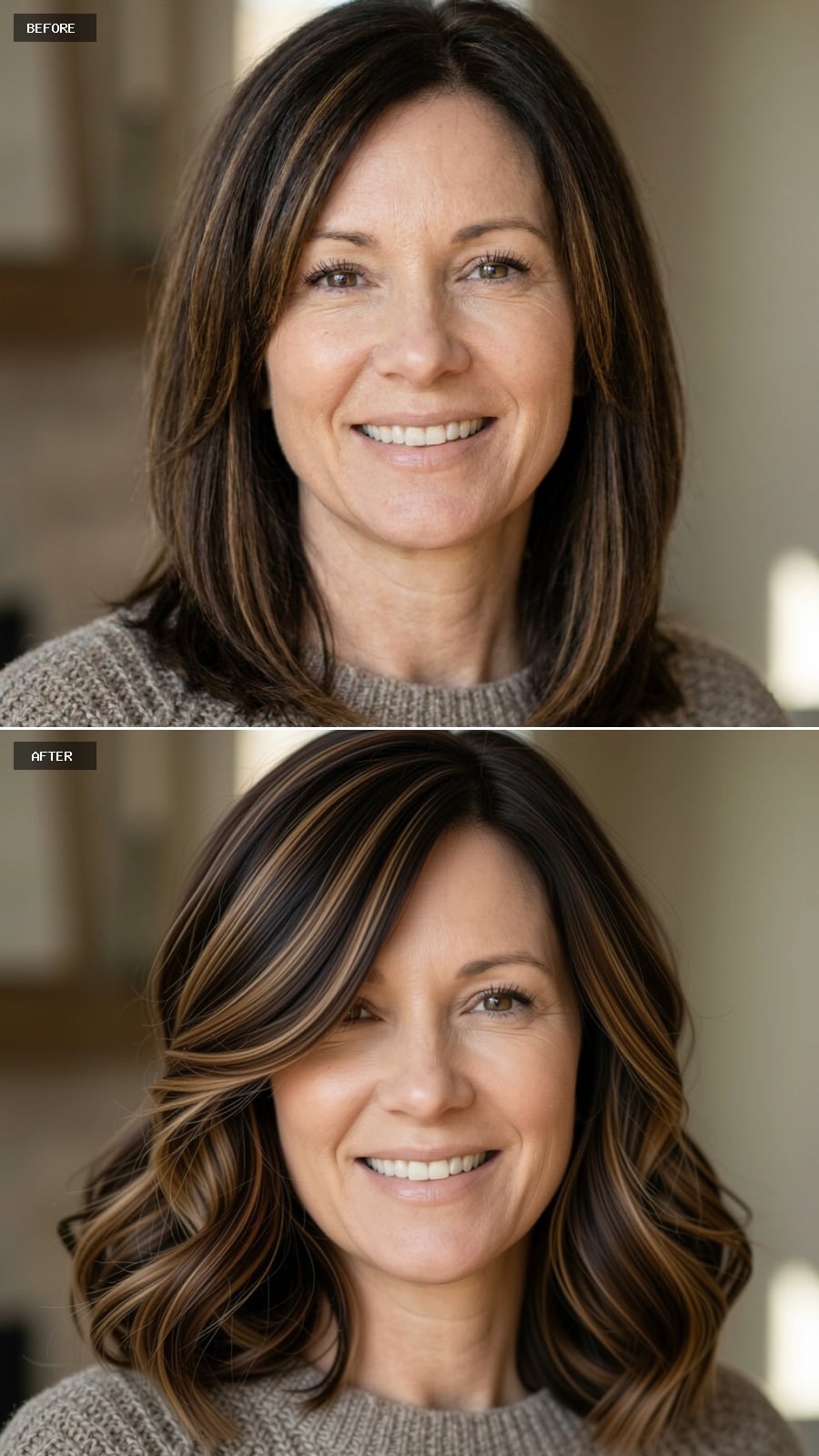
Flat, straight, and single-toned is a combination that reads heavier as hair gets longer, and the before shot shows exactly why. The after trades that blunt geometry for loose waves and a deeper base with caramel highlights concentrated along the face and mid-lengths. Waves do something specific here: they stack the color so the lighter pieces catch light at the crest and shadow at the bend. The result reads less like “highlighted hair” and more like dimension that was always there.
6. Blunt Bob, Richer Base, and How Caramel Ribbons Reshape a Face Without Touching the Cut
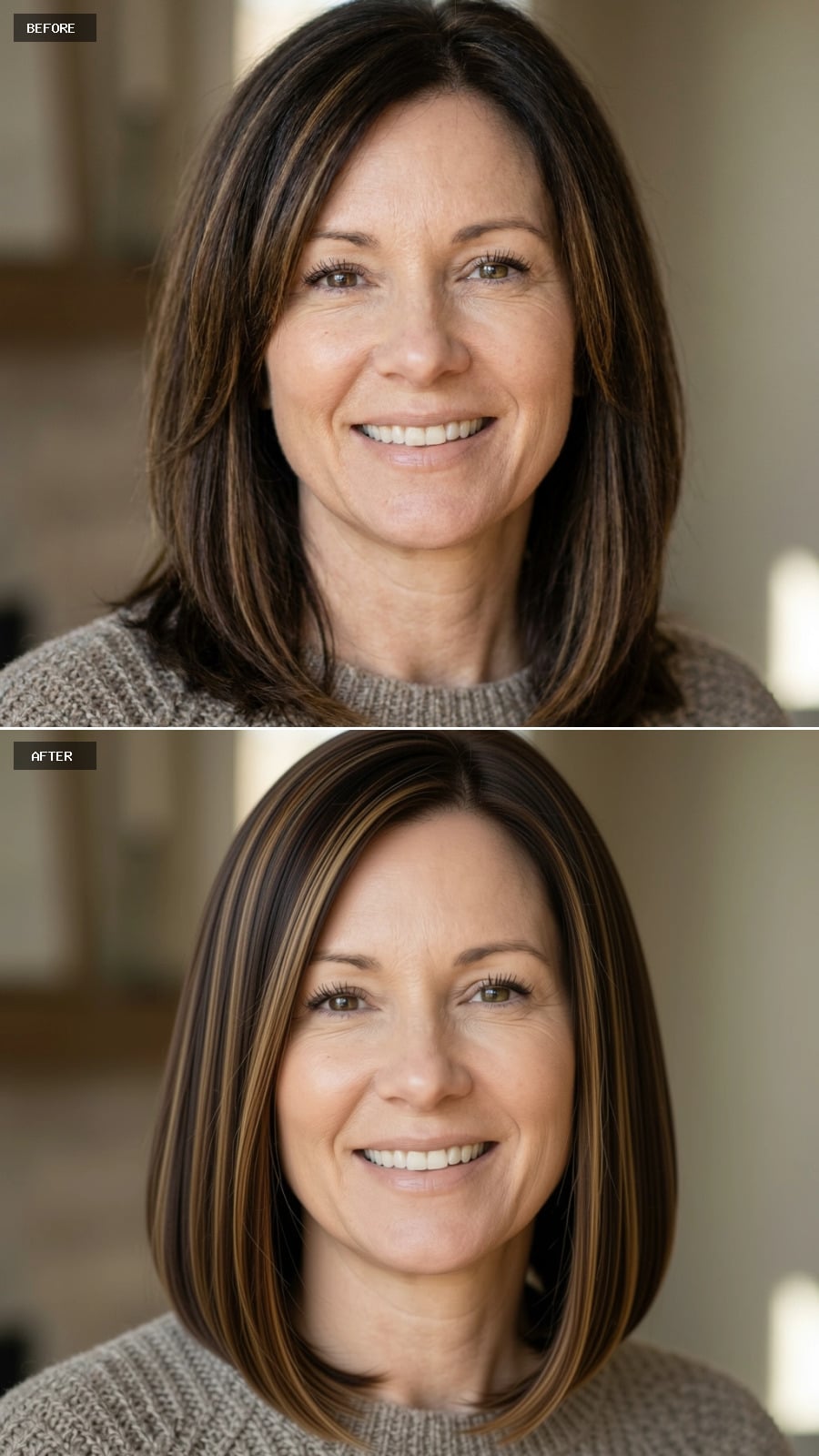
She had layers before. Now she has a blunt bob that sits at the jaw, and the difference isn’t just the cut. The base went darker while the highlights got more deliberate, pulled into wider caramel ribbons that run almost parallel down each side. That placement is doing real work. It frames without scattering, and the result reads cleaner than the looser layered version did.
Why the ribbon placement matters more than the highlight shade
Those caramel pieces aren’t scattered through the mid-lengths randomly. They’re positioned to run vertically along the sides, which draws the eye down rather than outward. On a blunt bob that hits at the jaw, that direction matters because it counters any widening effect the blunt line might create. The colorist kept the crown darker, which keeps the shape feeling deliberate rather than grown-out.
5. Dark Brown to Blonde Waves: How Color Placement Handles the Work Volume Can’t Do Alone
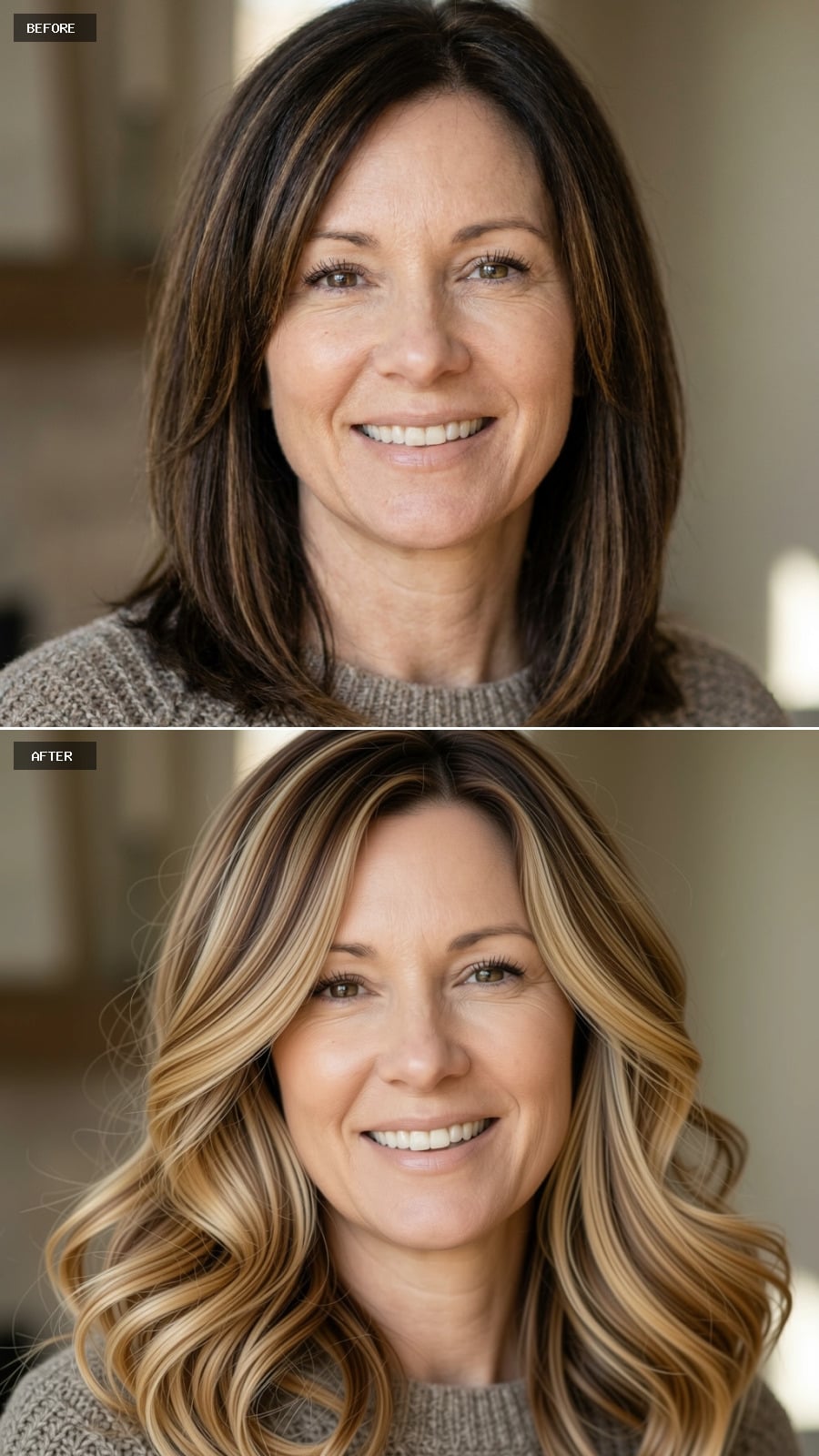
Her dark brown, shoulder-length cut sits flat against the face before, the highlights too subtle to register any movement. After, the shift to a blonde-heavy balayage with a darker root gives the longer, wavy lengths a reason to exist. Waves without contrast read as bulk. These don’t.
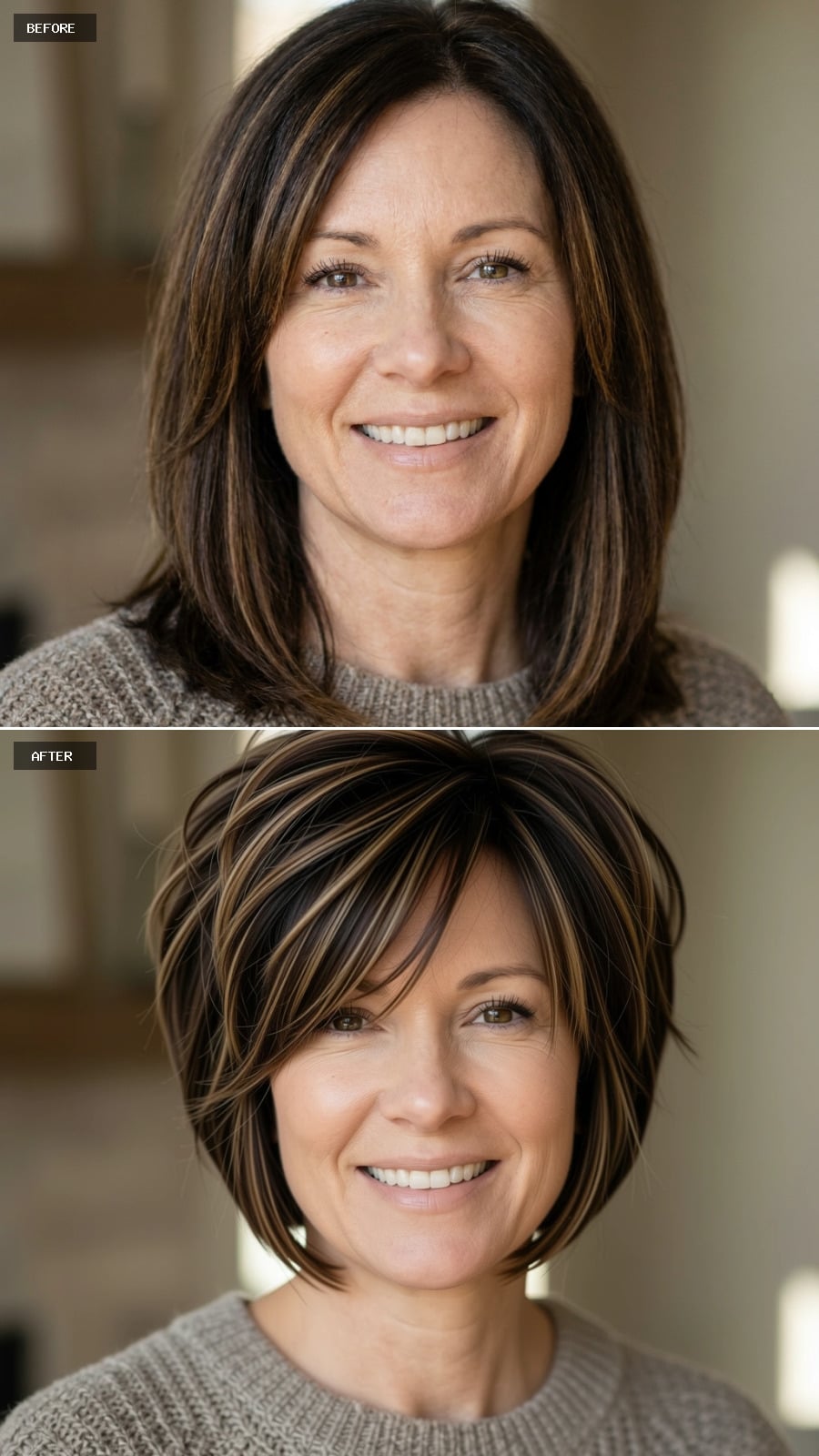
4. Dark Base, Caramel Highlights, and Why Cutting to a Bob Changed Where the Color Lives
❤️ Would you like to save this?
Moving from a shoulder-length cut to a chin-grazing bob didn’t just remove length. It repositioned everything. The caramel ribbons that previously blended into the mid-shaft now surface at the perimeter, framing her face instead of disappearing into it. That richer, near-black base reads darker against the warm highlights, and the contrast does the heavy lifting around her jawline. Short cuts give color nowhere to hide, and here, that’s exactly the point.
3. Caramel Ribbons, a Rounder Bob Shape, and How Color Placement Finally Gets Room to Curve
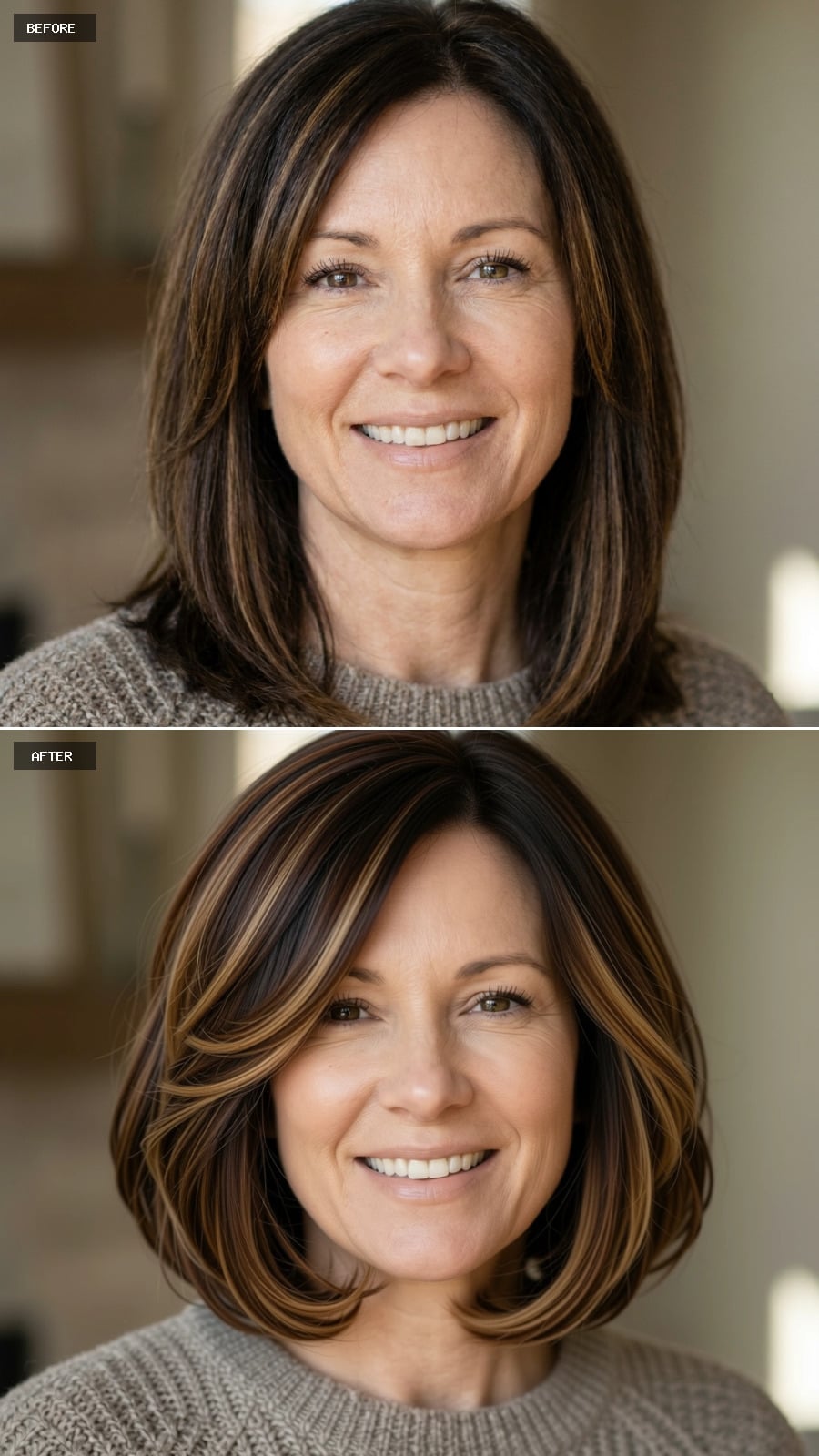
Going from a flat, center-parted midlength to a rounded bob changes more than length. The “after” has real shape at the ends, with the hair curving inward just below the jaw, and that curve is where the caramel highlights finally do something. Placed through the mid-lengths and ends rather than concentrated near the scalp, they follow the bend of the style instead of sitting flat against the head.
The base reads darker here too, a true dark brown versus the softer, more uniform brunette in the before. That contrast is what makes the golden ribbons visible without looking highlighted in an obvious way. On a bob with this much curve at the perimeter, the lighter pieces catch differently depending on how the light hits, which is exactly why chunky, evenly spaced highlights tend to fall flat on blunt cuts.
Color does the heavy lifting again here, but the cut is working harder than it looks.
2. Dark Brown to Blonde Layers: When the Cut Changes and the Color Finally Has a Shape to Follow
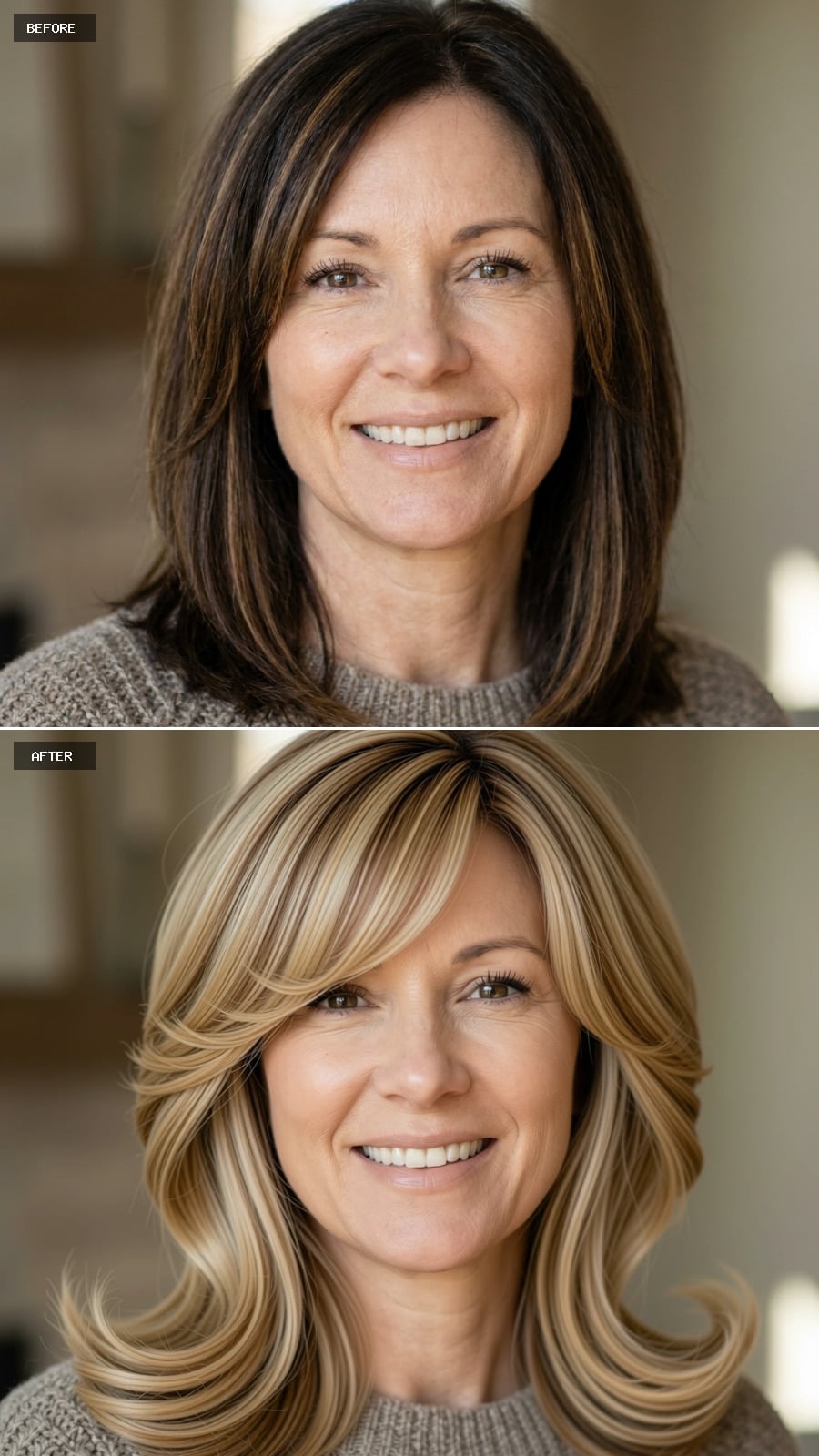
Both the color and the cut shifted in the after photo, and that combination is what makes this read differently than a simple color change. The before shows a sleek, straight-hanging bob with a deep brown base and subtle caramel streaks that don’t have much movement to travel through. The after brings in side-swept layers with a soft curl at the ends, and the color suddenly has somewhere to go. Ash blonde highlights near the face draw the eye up and out, while the darker root keeps enough depth that the overall effect doesn’t read flat or overprocessed. The knit crew neck stays the same. The face reads wider open.
1. Wavy, Highlighted, and Why the Volume Finally Makes the Color Worth Having
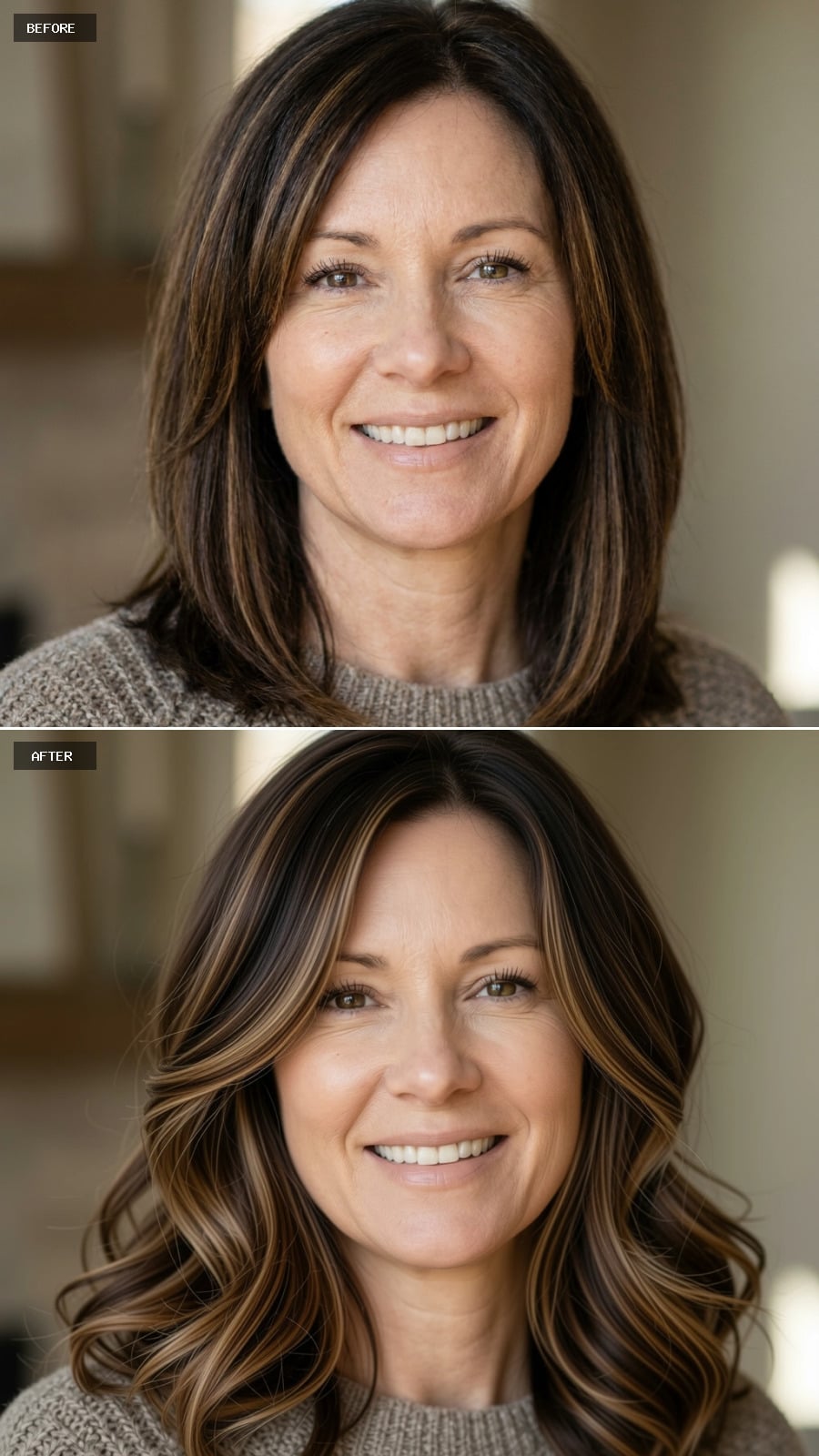
What changes most between the before and after isn’t the color formula, it’s the architecture. The before shows a straight, blunt-ended bob sitting flat against the jaw, and the caramel highlights read as surface detail because there’s nowhere for them to travel. Add waves and length past the collarbone, and those same ribbons suddenly have curves to move through.
The after version works because the root stays dark enough to ground everything. Lighter pieces concentrate toward the face and through the mid-lengths, which keeps the warmth from going muddy. Waves this loose don’t require a stylist every morning. A diffuser or overnight braids get close enough, and at 46, a style that doesn’t demand precision is often the one that actually gets worn.