❤️ Would you like to save this?
You said never again. You meant it. And then the internet brought every single one of them back, and suddenly your teenager is wearing your exact outfit from 1997 like it’s something new. The smell of Tommy Girl, the sound of a chain wallet hitting your hip, the very specific pain of a platform flip-flop on uneven pavement, it’s all flooding back now, isn’t it? Here are 34 trends that lived rent-free in your closet and apparently never fully left.
FYI, thanks to AI imagery software, we’re able to create very specific fashion and hairstyle examples to illustrate the points being made. In some cases, imagery is exaggerated to hammer home the point. Also, assume links that take you off the site are affiliate links such as links to Amazon. this means we may earn a commission if you buy something.
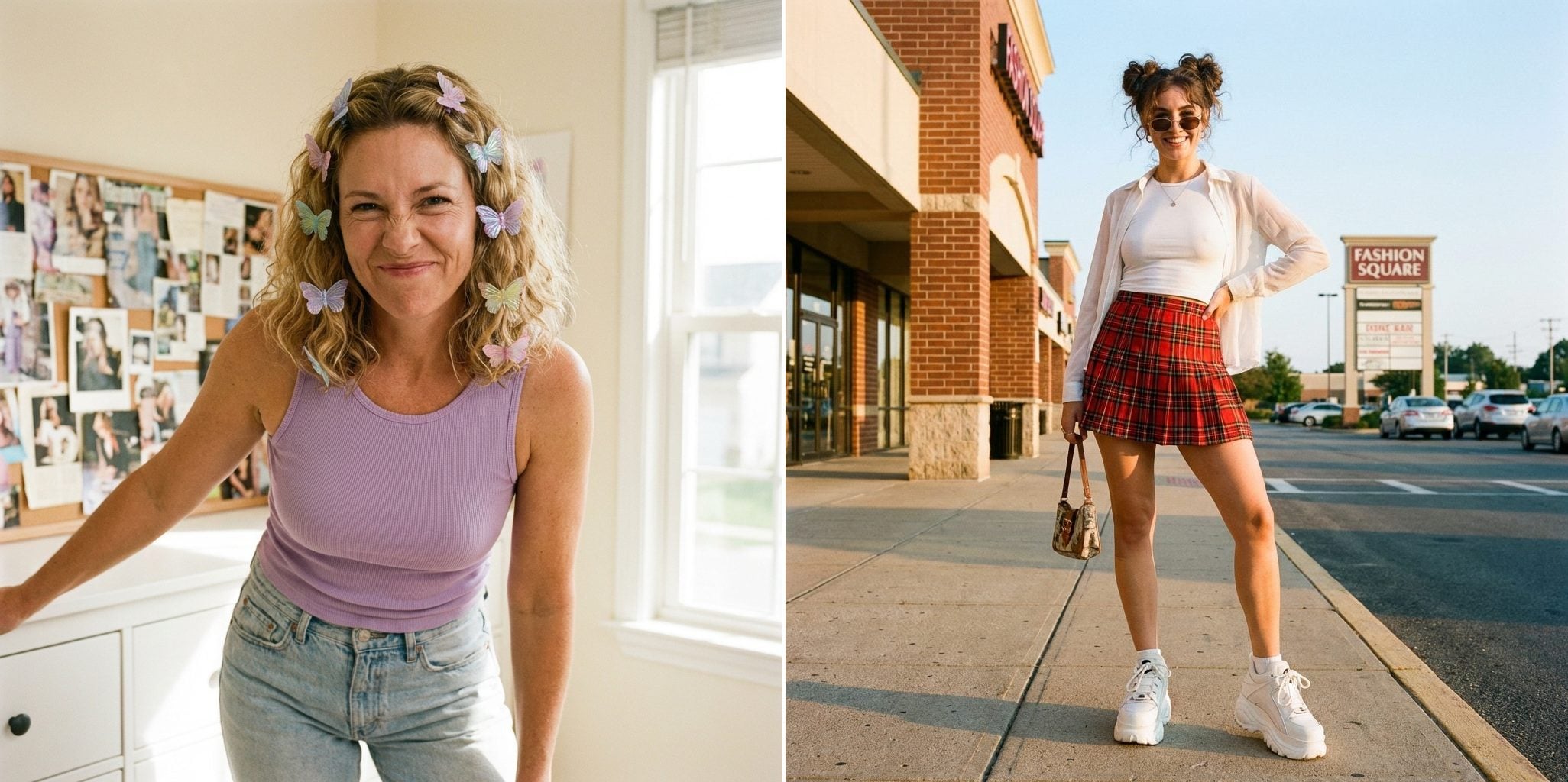
31. Butterfly Clips Scattered Across Your Hair Like You Were Hosting a Garden Party on Your Head

Not one. Not two. The correct number was seventeen, minimum. You’d section off tiny pieces all over your head, clip each one with a different pastel butterfly, and consider yourself completely put together. The iridescent ones from Claire’s were the gold standard, though the sparkle ones ran a close second.
There was an art to the placement, you could do a half-up situation, or scatter them free-form like you’d just walked through a field. Either way, the sound of them clicking together when you turned your head too fast was deeply specific to 1998. Every single one eventually broke at the hinge, and you bought more the next Saturday anyway.
30. Platform Sneakers That Added Three Inches and Took Away Your Ankle Stability
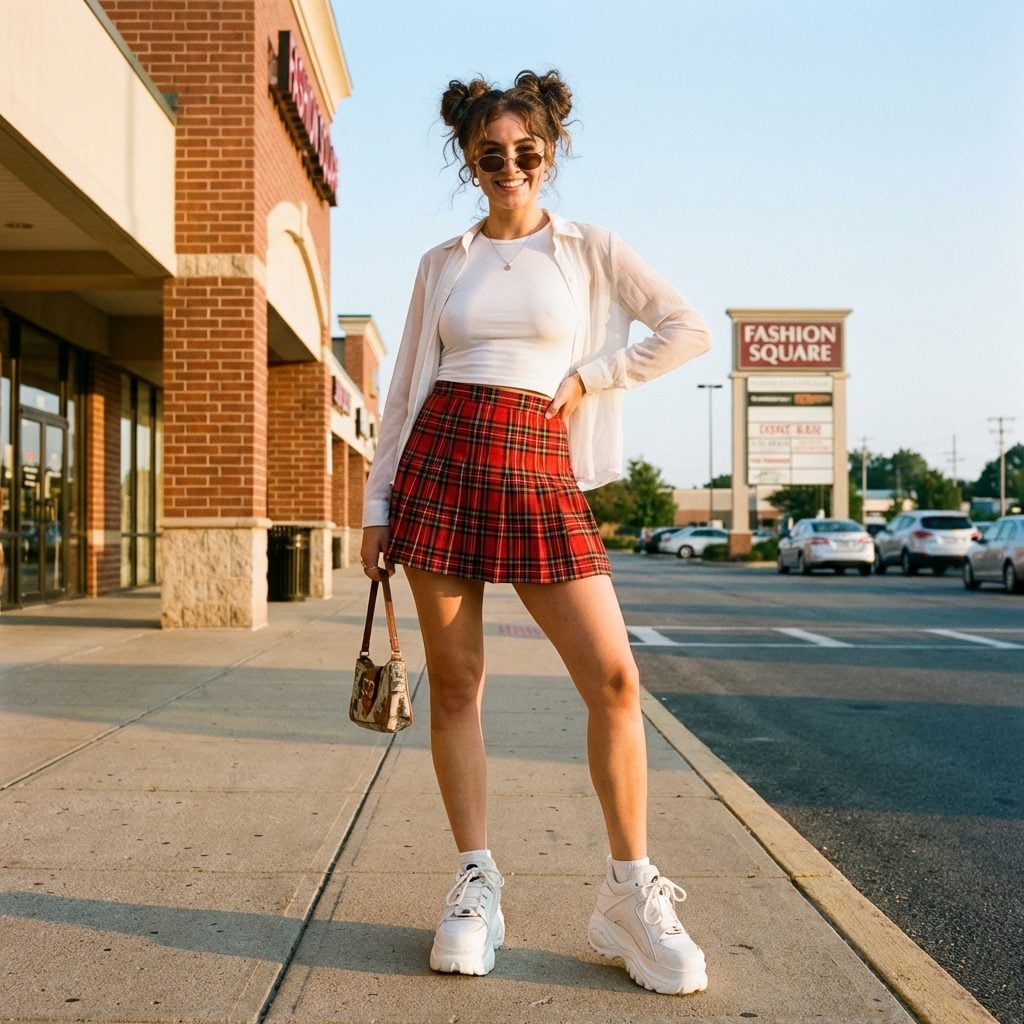
The Spice Girls started it, Steve Madden perfected it, and every girl in the sixth through twelfth grade had a version of them. Platform sneakers came in white leather with a chunky rubber sole stacked at least three inches high, and walking in them was more of a controlled stumble than an actual gait.
The Buffalo platform sneakers were the holy grail, worn by the Spice Girls in every video and plastered across every teen magazine. Most of us had the Steve Madden knockoffs from Payless or the mall shoe store, which was fine. The point was the height, the clunk of each step on linoleum, and the absolute confidence that came with towering over everyone at the school dance.
29. Spice Girls Platform Shoes That Were Basically Small Buildings Strapped to Your Feet
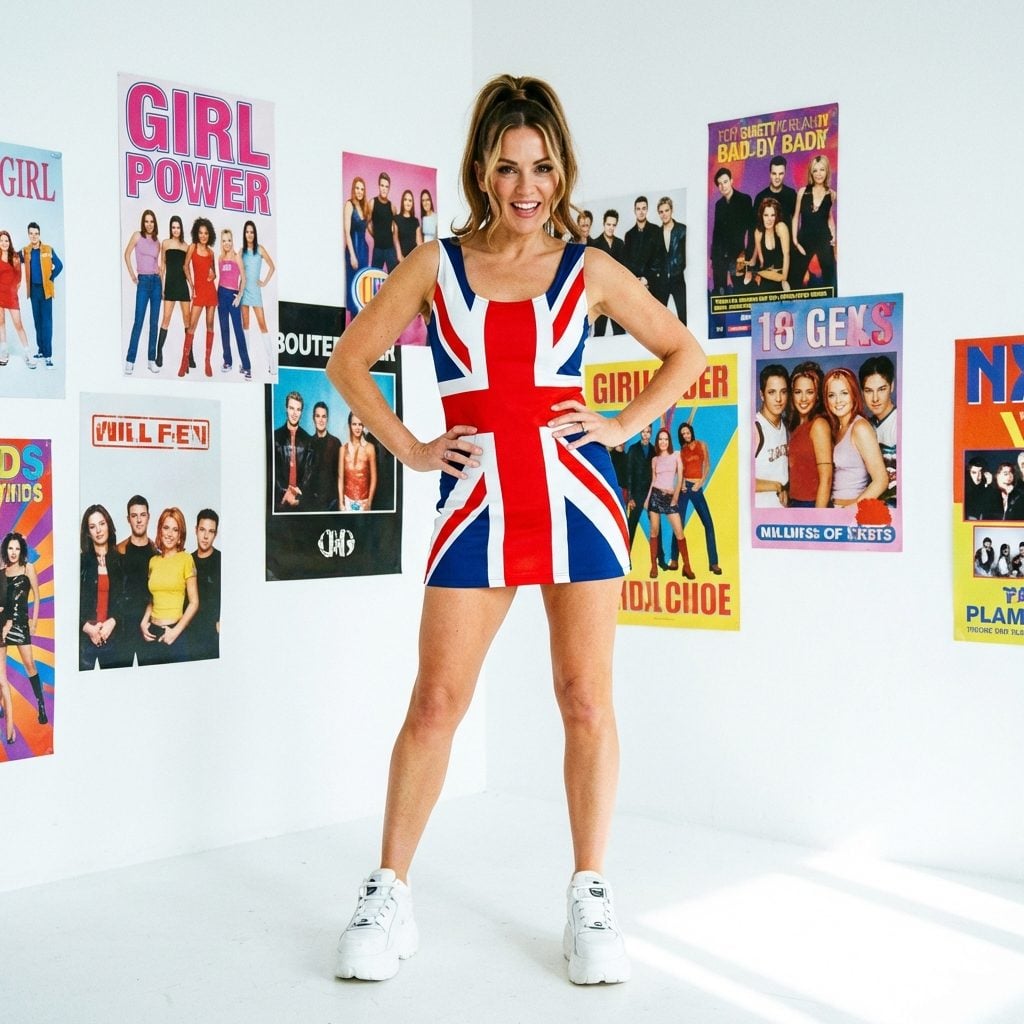
These were not shoes. They were a structural engineering project.
The Spice Girls’ signature extreme platforms, the kind that Scary, Sporty, Baby, Ginger, and Posh wore in the “Wannabe” video, were the single most aspirational footwear of the late 1990s. We are talking four, five, sometimes six inches of solid rubber or cork underfoot. The Union Jack mini dress version worn by Ginger Spice at the Brit Awards in 1997 is fashion history, but the shoes underneath it were the real event.
Getting a pair meant either a trip to a specialty shoe store or begging a parent near a Wet Seal. They were impractical, slightly dangerous, and completely unforgettable. The brand Buffalo London supplied the originals, and pairs from that era now sell as collector’s items. We wore them to the mall and thought we were in a music video. We were not wrong.
28. Tiny Shoulder Bags That Held Your Lip Gloss and Absolutely Nothing Else
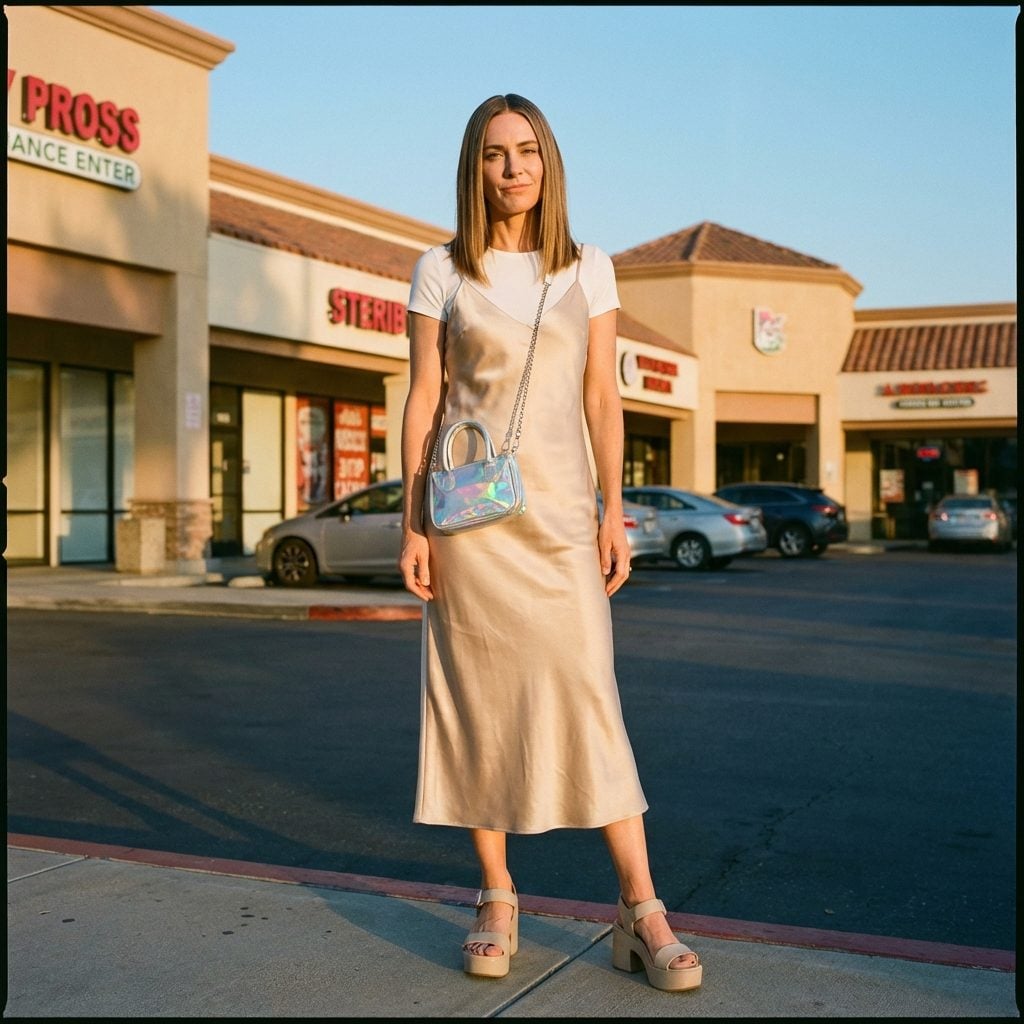
The smaller the bag, the cooler you were. That was the rule. These little rectangles of pleather barely fit a ChapStick, a folded five-dollar bill, and your school ID, and if you could make it work, that was enough. You’d wear the skinny strap across your chest or hang it from one shoulder at the absolute end, making it clear this bag was decorative, not functional.
Current bag trends might be cycling back to micro styles, but the 1990s version came in silver chrome, iridescent holographic, or shiny vinyl at prices that made sense with a babysitting budget. The Kate Spade versions with their simple grosgrain ribbon bows were the ones you pinned in your Teen Vogue. The ones most of us actually had came from Icing or the weekend flea market.
What Our Readers Say
- When we asked ThreadCurve readers which era their style belongs to, two out of three said timeless, while only 22% picked retro revival.
From ThreadCurve reader polls and votes.
27. Cargo Pants With Enough Pockets to Pack for a Weekend Trip
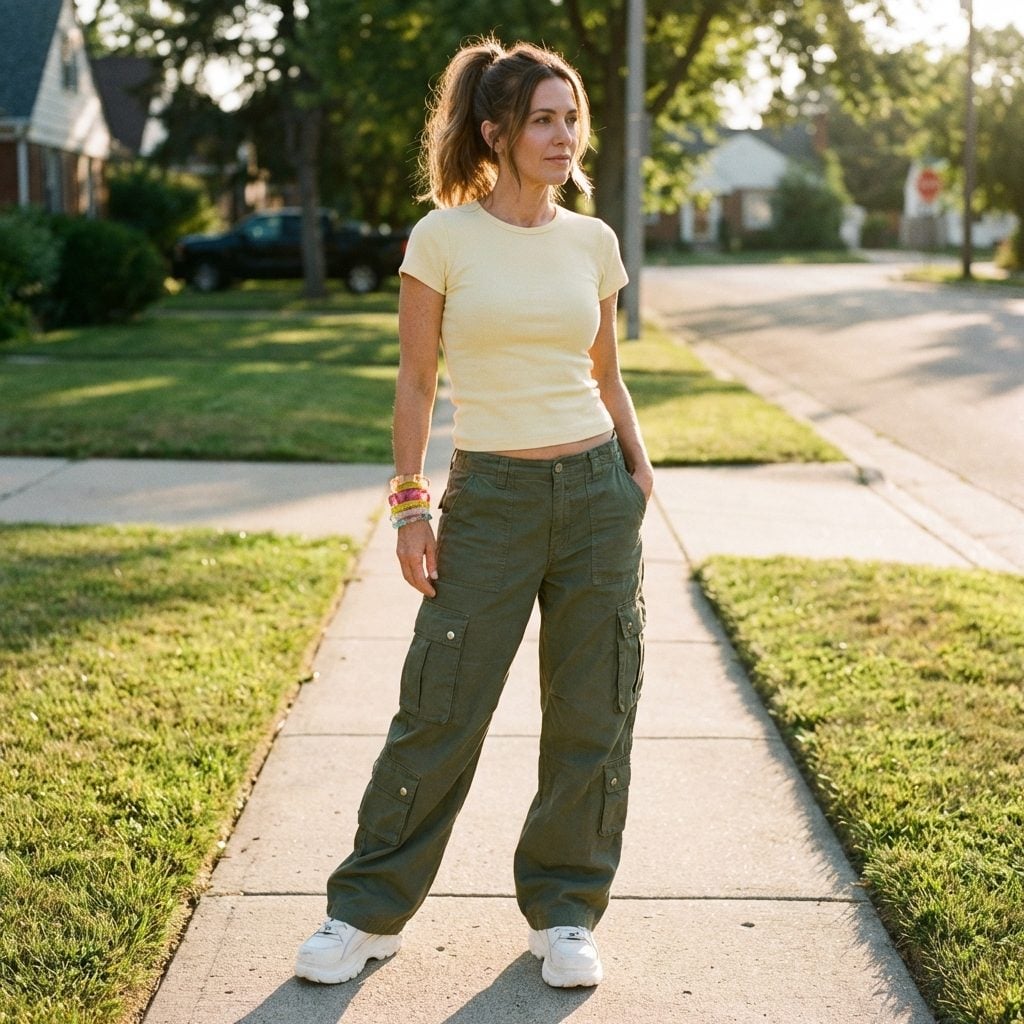
Six pockets. Eight pockets. Possibly twelve, if you counted the hidden ones on the thigh. Cargo pants were the great democratizer of the late ’90s, everyone from skater kids to TRL regulars to girls who just liked having somewhere to put things wore them. The leg pockets, snapped or velcroed shut, were technically functional and practically never used for anything except extra bulk.
The best versions came in army green or khaki from Old Navy or Gap, sat somewhere between low-rise and mid-rise, and pooled slightly at the ankle over chunky sneakers. Wearing them signaled a particular kind of casual that said you weren’t trying too hard, even though you’d absolutely thought about the outfit. Adding a fitted baby tee on top and an armful of jelly bracelets completed the aesthetic completely.
26. Tube Tops and the Full-Time Job of Keeping Them in Place
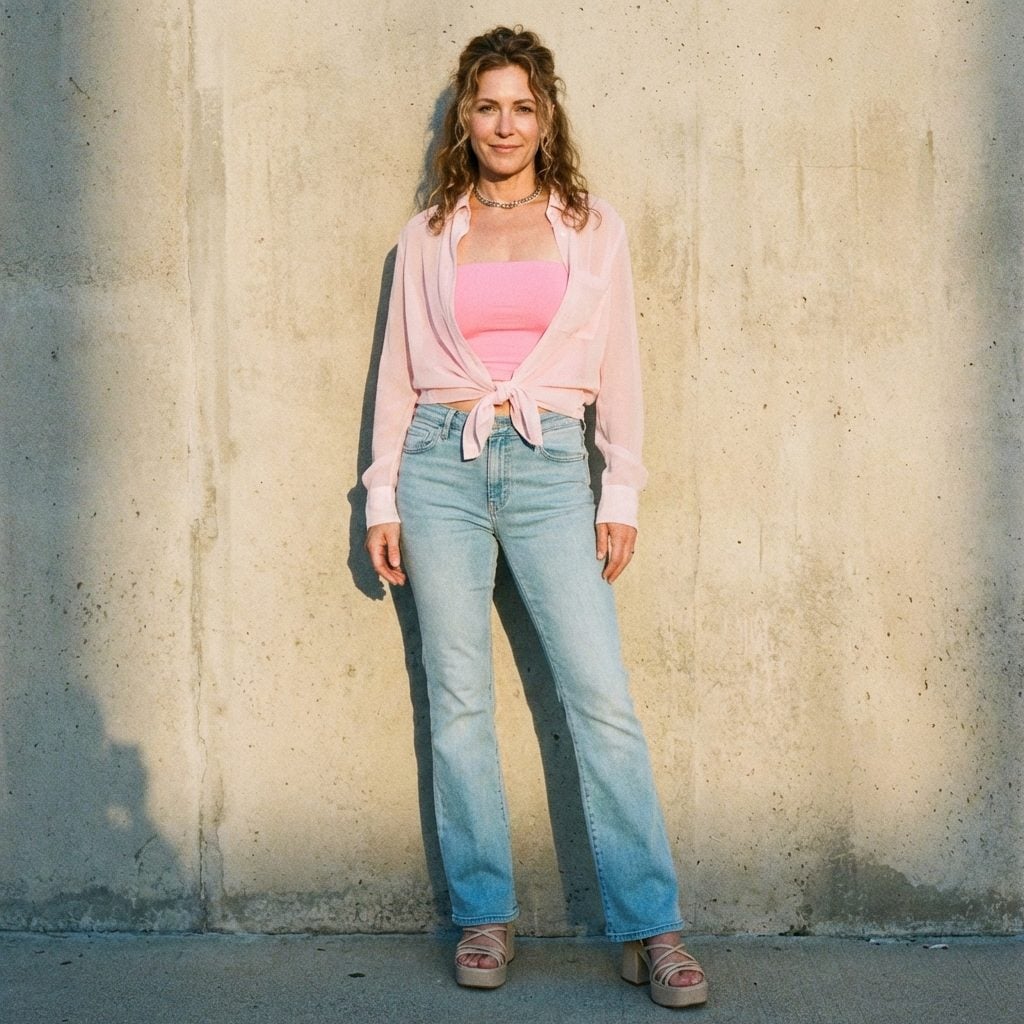
Every ninety seconds, you had to reach down and tug it back up. This was understood. You wore a tube top knowing full well that it was in a constant negotiation with your body, and you were willing to do the labor because the look was worth it.
The stretchy ones from Charlotte Russe came in every color and pattern imaginable, tiger print, pastel stripe, solid black, a particularly popular shade of bubblegum pink. They worked under overalls with one strap undone, tucked into flared jeans, or layered under an open button-down that you wore tied at the waist. The boning-reinforced versions from bebe or Express felt more secure, which meant you only adjusted every four minutes instead of every ninety seconds. Progress.
25. Choker Necklaces, Especially the Stretchy Black Tattoo Kind That Cost $1.99 at Claire’s

The hierarchy was clear: the tattoo-print elastic choker was entry level, the velvet ribbon was a step up, the plastic charm choker from Limited Too was aspirational, and the actual sterling silver from Tiffany’s (the thin bean necklace sitting just at the collarbone) was what you saw on the older girls and quietly coveted.
Most of us lived in the elastic tattoo version that came in a pack of three for two dollars. It cut into your neck by the end of the school day, left a faint line on your skin, and snapped if you stretched it too far getting dressed. You’d replace it the following weekend without question.
“The tattoo choker was the friendship bracelet of the ’90s, everyone had one, it cost nothing, and you’d feel slightly naked without it.”
Current accessory trends keep trying to bring the choker back, and honestly, the velvet version never really left. But there is only one original tattoo choker experience, and it belongs entirely to 1995-1999.
24. Overalls With One Strap Undone (The Universal ’90s Signal for ‘I’m Laid-Back, Actually’)
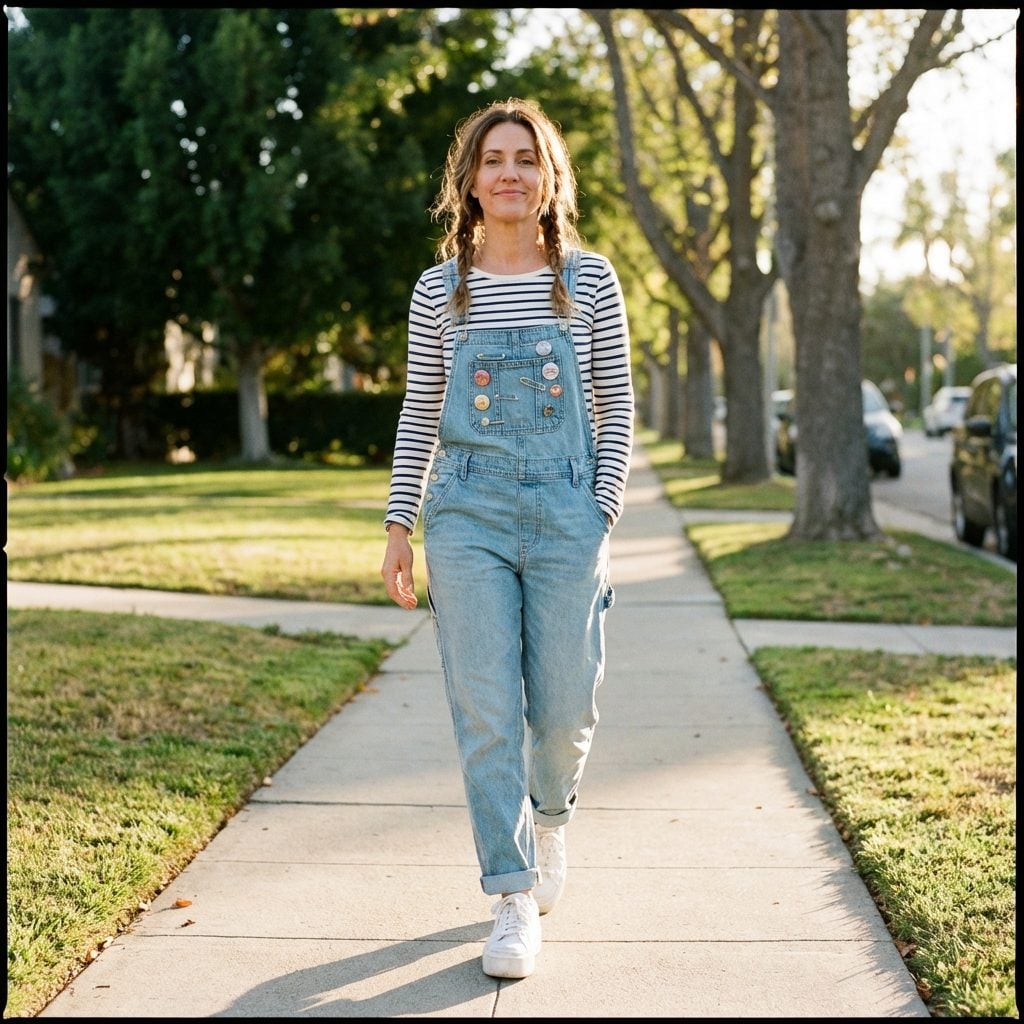
One strap fastened, one strap dangling free at your hip. That was the only correct way to wear overalls if you were between the ages of eleven and twenty-two in the 1990s. Both straps done up was for toddlers and farmers. Both straps off meant you’d gone full overalls-as-dress, which required a certain confidence. One strap down was the sweet spot: effortless, slightly disheveled, extremely deliberate.
The light-wash denim versions from GAP or Old Navy were standard issue, usually worn with a white tee or a striped long-sleeve underneath. TLC wore them in the “Creep” video and the look was cemented forever. You’d fold the bib down for a different vibe, and if you were feeling ambitious, you might safety-pin something, a patch, a band button, a little fabric flower, somewhere on the chest.
23. Windbreaker Jackets in Color Blocks So Loud They Could Be Seen From Space
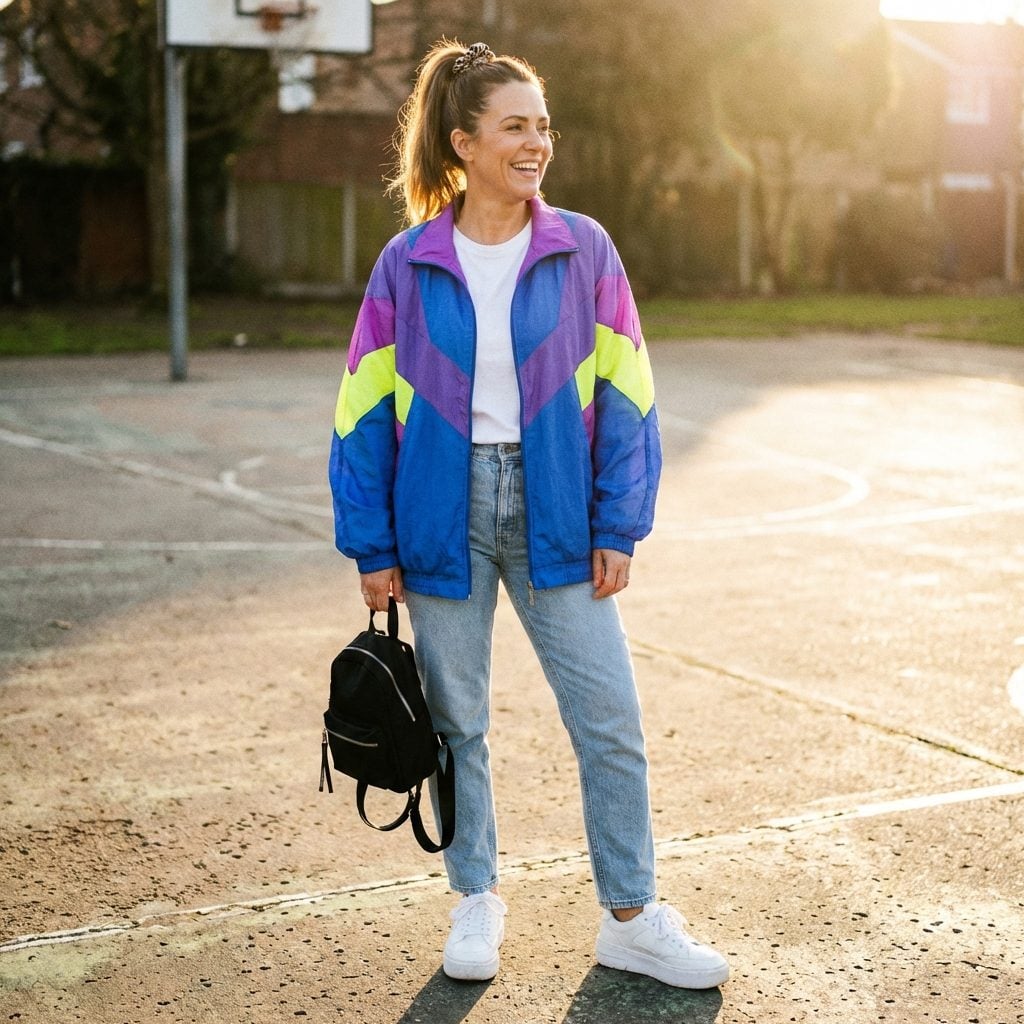
Purple, teal, and yellow. Or electric blue and neon orange. Or hot pink and lime green. The more colors in a single jacket, the better, this was not a time for restraint. These lightweight nylon windbreakers rustled when you walked, swished against your jeans, and made a specific sound when you unzipped the front that is permanently stored somewhere in your sensory memory.
Nike and Adidas made the coveted versions. Starter jackets with the team color-blocks were status symbols in themselves. For everyone else, there was always the No Fear version from the sporting goods section at Kmart, which was also completely acceptable if you leaned into the aesthetic with enough confidence. You wore it over everything, a tee, a hoodie, your school uniform, a tube top. It was less a jacket and more a mood.
22. Slip Dresses Over T-Shirts, Because Kate Moss Said So and That Was Enough
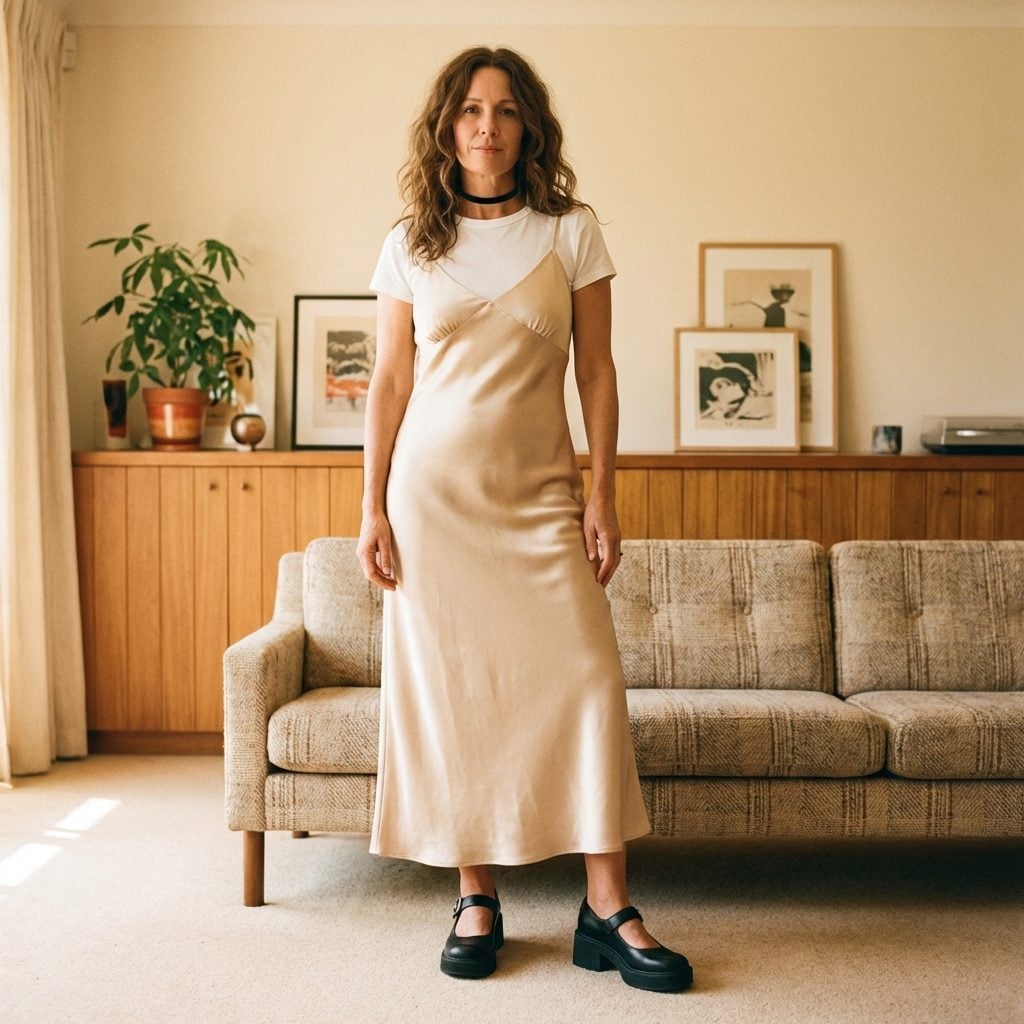
The slip dress alone was too fancy, too exposed, too something. But layered over a fitted white crew-neck tee, or a long-sleeve thermal in winter, it became the central look of the entire decade. The combination was everywhere from 1994 onward: bias-cut satin or silky polyester in champagne, black, or baby blue, skimming over a plain cotton tee whose neckline peeked out above the dress’s own.
Kate Moss did it first, grunge did it louder, and then every fast-fashion version landed in the pages of dELiA*s catalogs and the racks at Wet Seal. You wore yours to the school dance over a black ribbed tee with chunky mary janes. The dress probably cost $14. You felt like you’d invented something.
21. Frosted Lipstick in a Shade Somewhere Between ‘Barely There’ and ‘Ghost Lip’

The goal was to make your lips look like they’d been lightly dusted with iridescent chalk. Shimmery beige. Pale frosted pink. Sometimes a lavender-tinged nude that photographed completely invisible. You found these at the drugstore, Maybelline’s Wet Shine Diamonds and L’Oreal’s Colour Riche Frost were the workhorses, for about four dollars, applied them directly from the bullet without a mirror, and considered your face complete.
The look required very little lip liner (or a liner slightly outside your natural lip, which we are not going to discuss at length), as much shimmer as the product could physically deliver, and a complete absence of warmth or depth. Dark-lined lips with pale frosted fill were peak 1990s glamour. Worn with heavy penciled brows? Absolutely not, that came later. The ’90s face was frosted lips, minimal brow, and a swipe of black liquid liner. Simple. Specific. Unforgettable.
20. Crimped Hair With That Signature Zig-Zag Texture
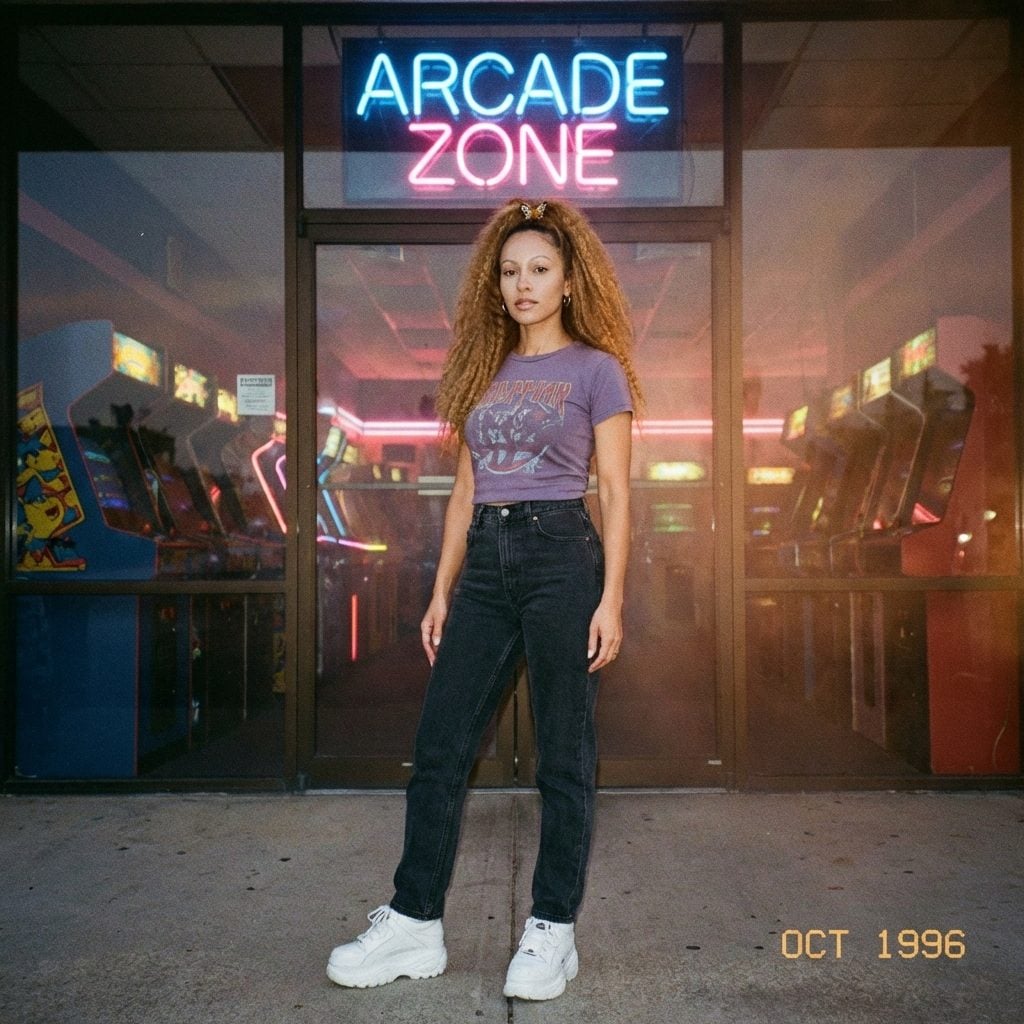
The crimping iron was the most dangerous piece of technology in any ’90s bathroom, and we used it with absolute confidence. You’d section your hair, press that pleated plate down every half inch, and emerge forty-five minutes later looking like you’d survived a small electrical incident. It was perfect. We thought it was perfect.
Every drugstore sold a version of the crimper. Conair made the one most of us had, the kind with the black plastic plates that smelled faintly of burning keratin after the third use. You wore it to school dances, to the mall, sometimes just to watch Saturday morning cartoons because you had time and you had ambition.
19. Denim-on-Denim With Absolutely Zero Hesitation
❤️ Would you like to save this?
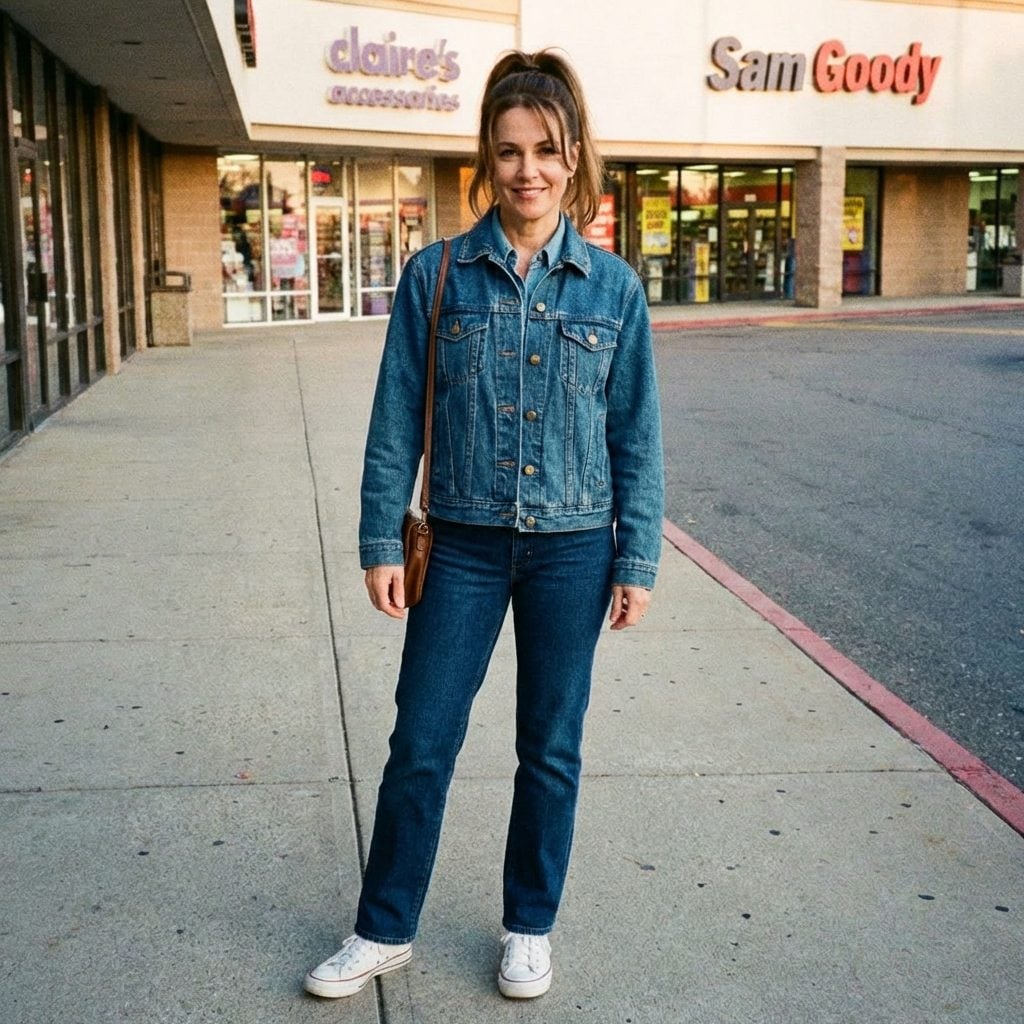
The Canadian tuxedo. Before anyone called it that, we just called it getting dressed. A chambray shirt over a pair of light-wash flares, or a denim jacket over dark jeans, worn with a denim mini skirt if you were feeling especially committed to the bit. The rule that you couldn’t double up on denim simply did not exist in our world.
Britney Spears and Justin Timberlake made it legendary at the 2001 AMAs, but we were already doing it three years earlier, choosing slightly mismatched washes because we didn’t own two pairs of the same denim and we didn’t care. There was something almost zen about the total denim immersion. You were not confused about your aesthetic. Your aesthetic was denim.
If you’re bringing back the denim jacket, our readers lean classic: 60% picked a regular length over a cropped cut in our reader poll.
18. Baby Tees With Tiny Logos That Said Everything
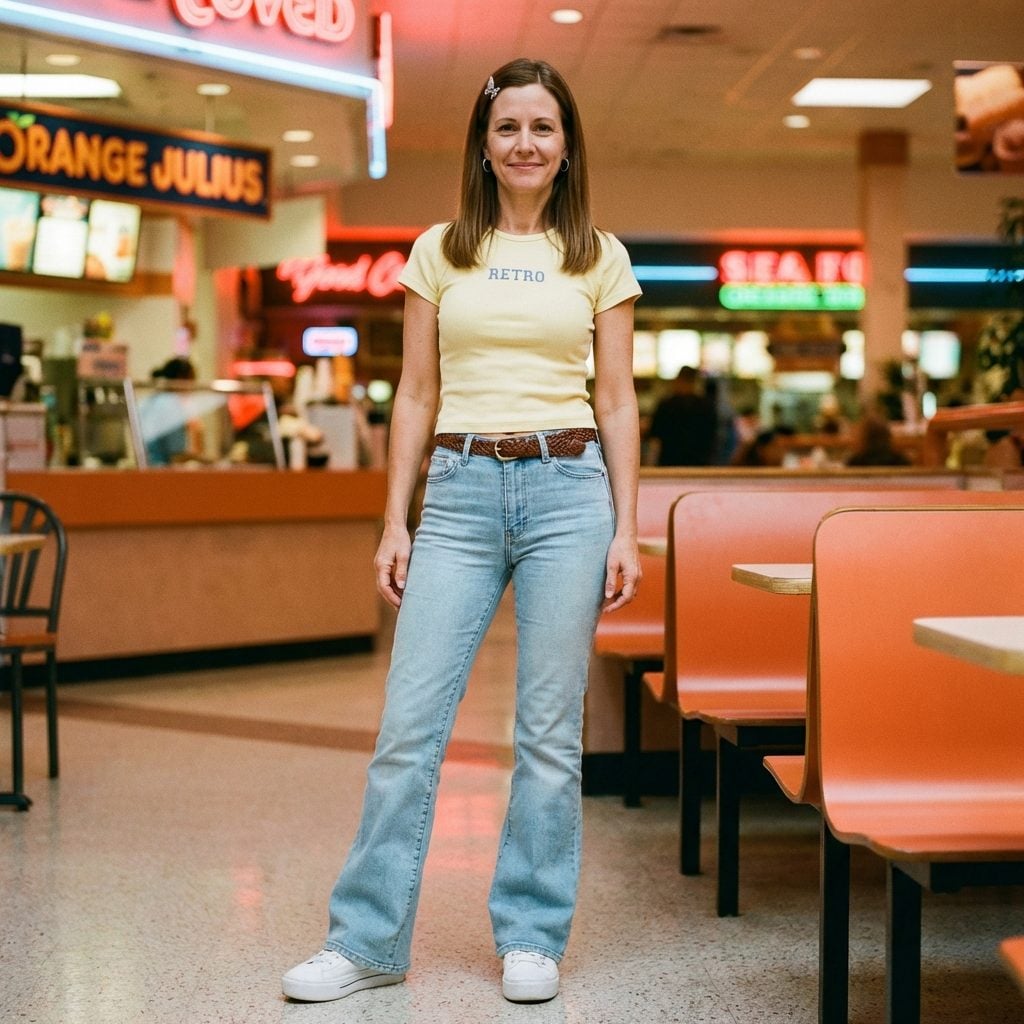
Three inches of midriff, 100% cotton, and a logo small enough that only someone standing very close could read it. That was the entire point. The fitted baby tee communicated a very specific kind of effortful coolness: you cared about brands, but you weren’t going to shout about it.
Hot Topic had the band ones. Delia’s had the pastel ones with tiny butterfly or star graphics. Express had the ribbed ones in every color. You had at least four, and you wore the tightest one with your lowest-waist jeans and a thin butterfly clip in your hair whenever you wanted to feel dangerously stylish. The logo was almost a decoy. The midriff was the message.
17. Scrunchies Worn in Your Hair AND on Your Wrist Simultaneously
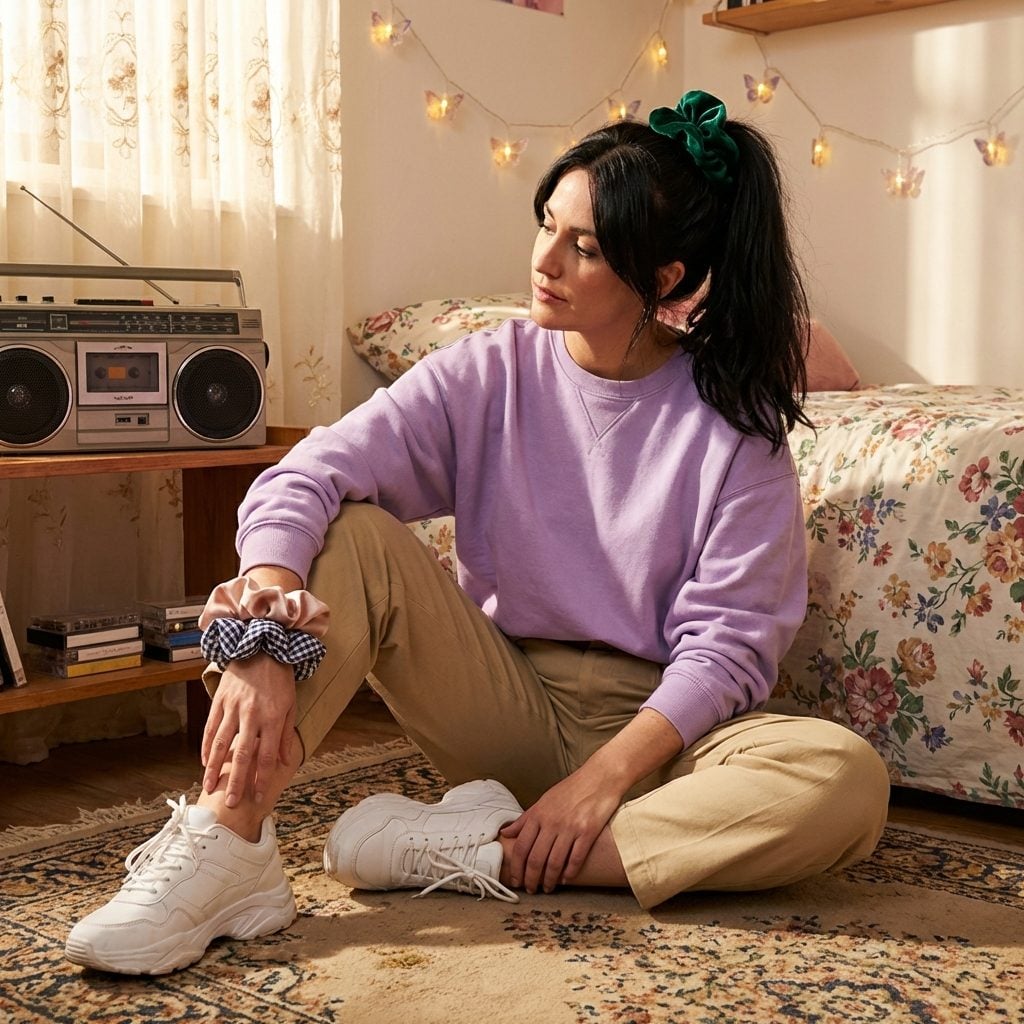
A scrunchie on the wrist was not jewelry. It was infrastructure. You always needed a backup. And if you had a velvet one or a satin one in a color that matched your outfit, well, then it was basically a bracelet and you were basically a stylist.
The color-matching scrunchie situation was its own social language. Wore it on your wrist with a velvet scrunchie matching your top, and everyone understood. Wore a plain elastic, and you were merely functional. Scrunchies from Limited Too came in sets of six. You wore three in your hair and three on your arm and felt like you had your life completely together.
16. Chain Wallets Clipped to Belt Loops Like We Had Security Concerns
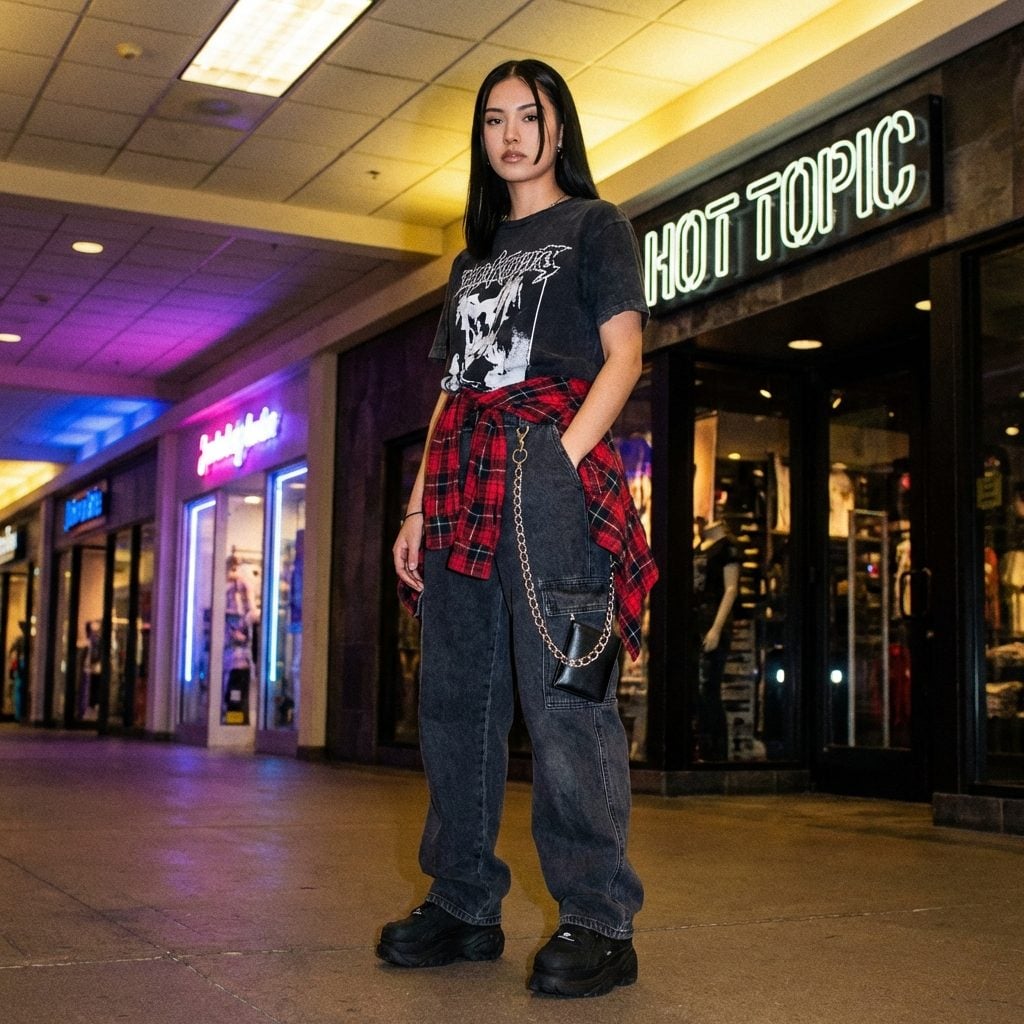
No one in suburban America in 1997 was in serious danger of having their wallet stolen. And yet, the chain wallet clipped to a belt loop felt absolutely essential, a functional accessory that also communicated you had been to Hot Topic and made decisions there.
The wallet itself was usually a trifold in black pleather with a small skull or a band logo embossed on the front. The chain hung low enough to swing when you walked, which was aesthetically very important. You kept your student ID, five dollars, and a folded note from your best friend in there. Maximum security for minimum contents.
15. The Shiny Tracksuit You Wore Absolutely Everywhere
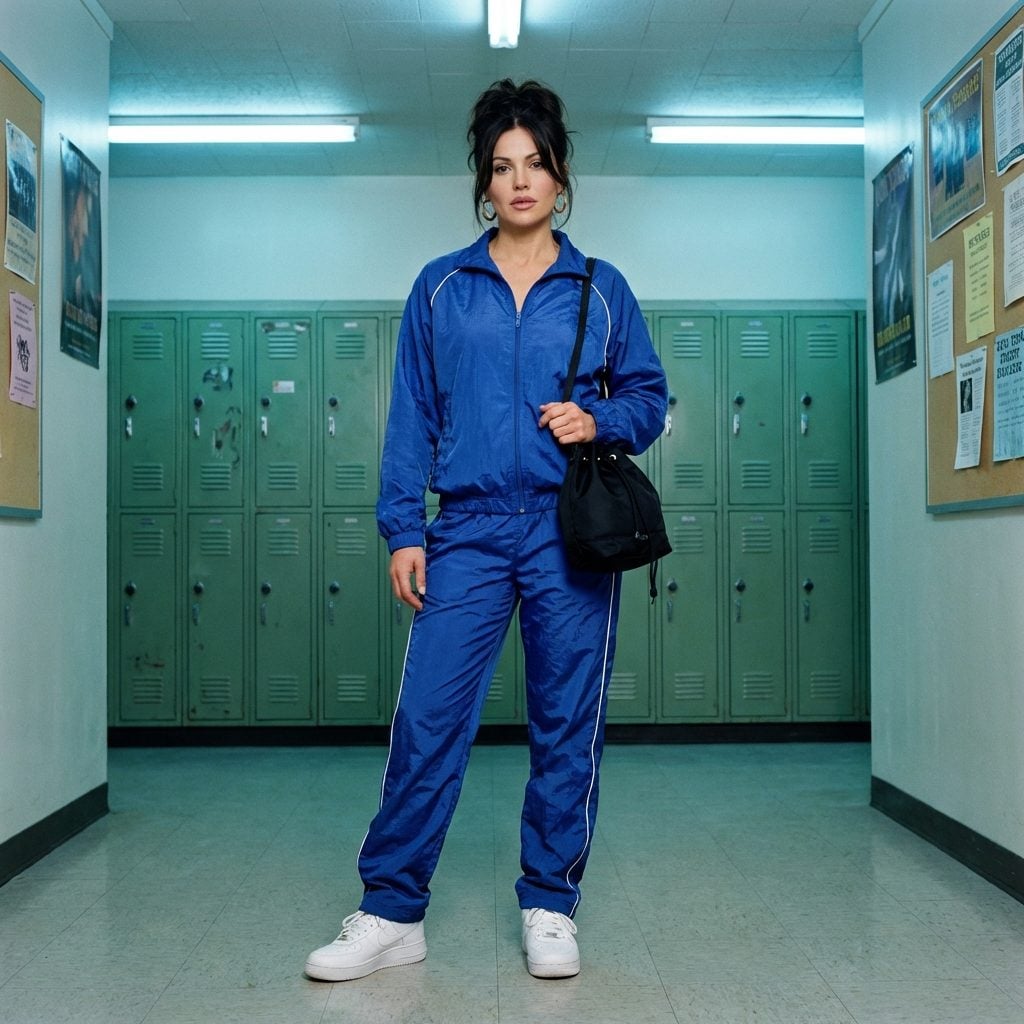
Before Juicy Couture made velour the official uniform of the early 2000s, the mid-’90s had its own tracksuit moment, and it came in a shiny nylon that sounded like a trash bag when you walked. You wore it to school on Fridays. You wore it to birthday parties. You considered it evening wear for anything that wasn’t a formal dance, and sometimes even then.
Adidas three-stripe pants were the prestige version. Everything else came from the athletic section of T.J. Maxx and looked similar enough. The key was the jacket: you wore it zipped exactly halfway up, with nothing underneath, and you walked like you owned the entire building.
The nylon track jacket in cobalt blue or tomato red was the power move. Silver zip pulls, contrast piping down the sleeves, and the faint rustle that announced your arrival thirty seconds before you walked in the door.
14. Square-Toe Shoes That Were Slightly Unsettling and Completely Unavoidable
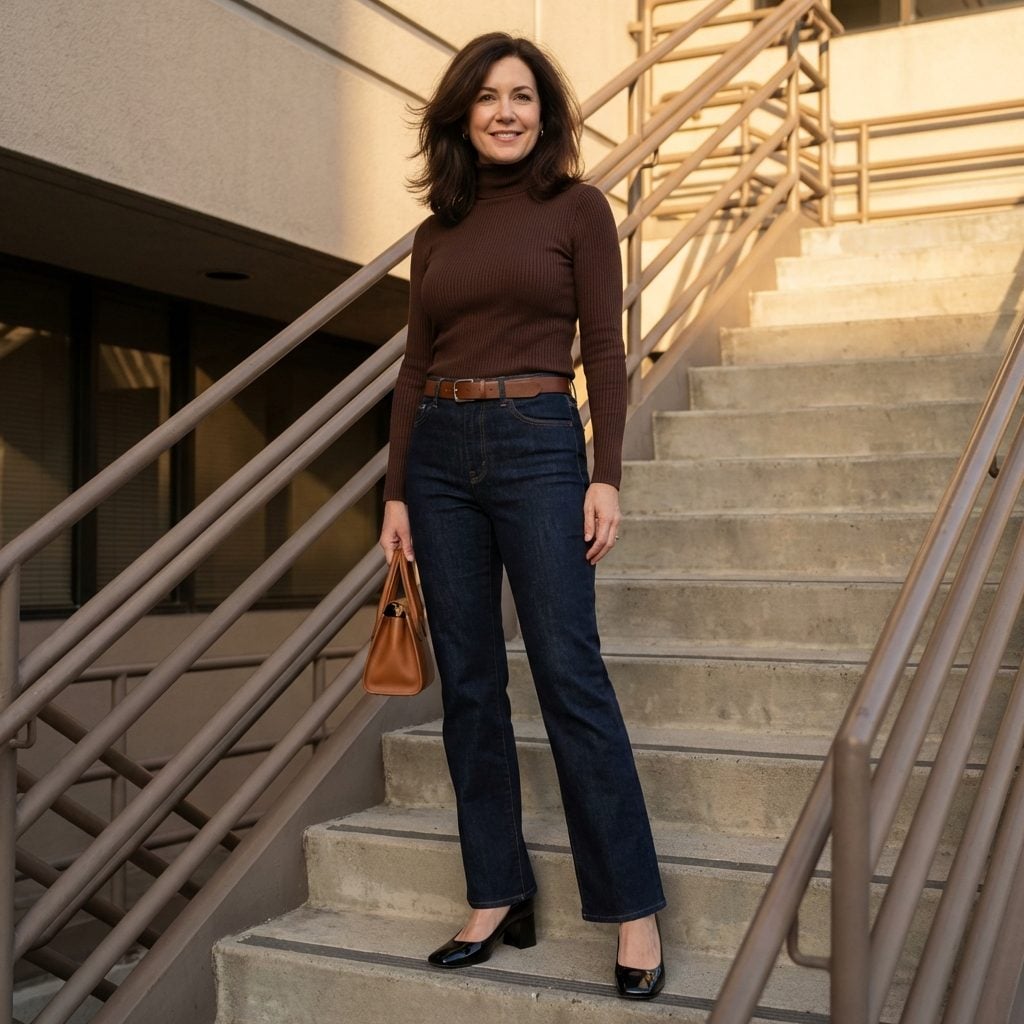
At some point in 1997, someone decided that the human foot did not require a rounded toe box, and the fashion industry agreed immediately and without debate. The square toe appeared on heels, on flats, on mules, on boots. Every shoe on every shelf at Nine West and Steve Madden had that blunt, slightly architectural front, and we bought them all.
The square-toe block heel in camel suede or black patent was the dressy version. The square-toe chunky platform mule was for weekend errands and casual intimidation. There was something about the geometry of it that felt very modern at the time. Looking back, they made everyone’s feet look like a Minecraft character. We were fine with that. We were thriving.
13. Spaghetti Strap Tops Layered Over a Plain White Tee
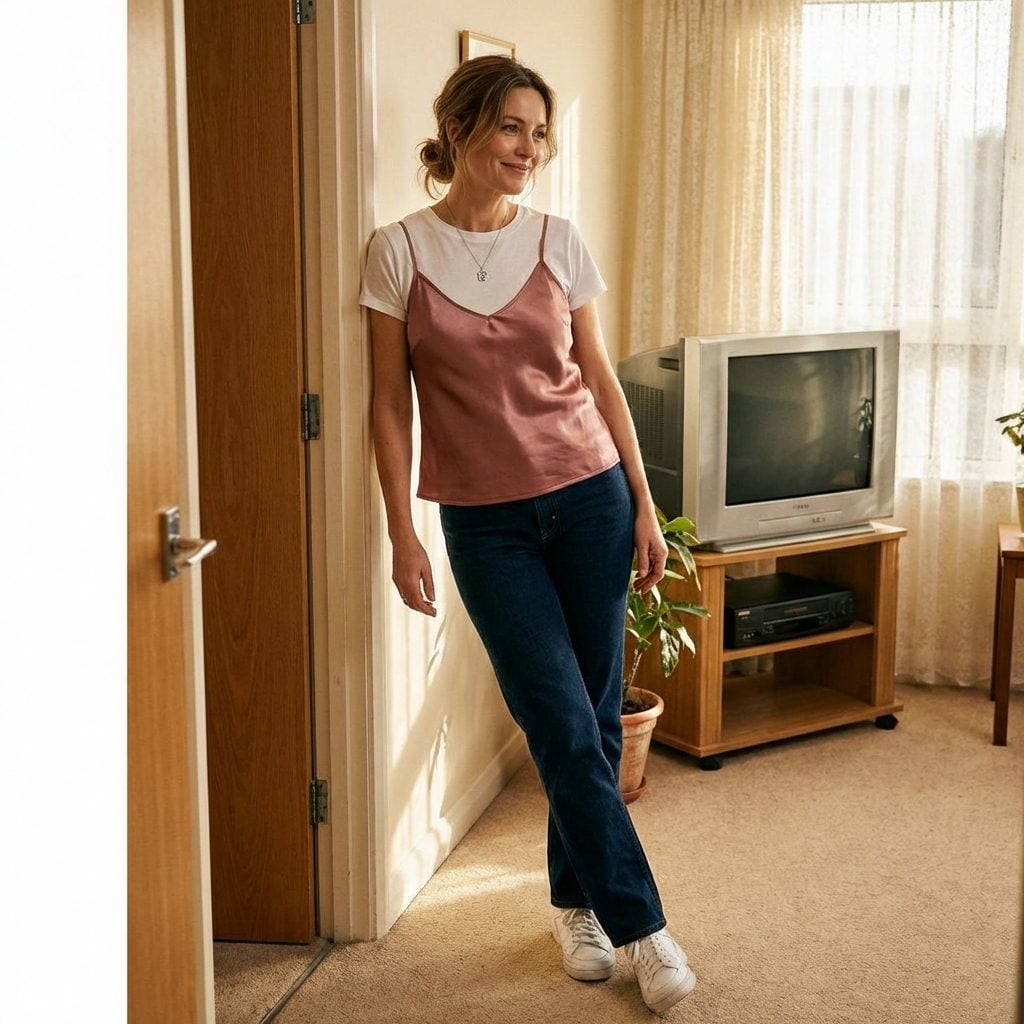
This was fashion theory in action. The silky satin spaghetti strap top on its own was a going-out top. But layer it over a fitted white crew neck tee, and suddenly it was casual, it was layered, it was an entire outfit philosophy.
The contrast of the delicate strap over the chunky tee collar created a texture conversation that we were all having in 1998 without knowing what to call it. Flowers, bias-cut satin in dusty rose or sage green, very small camisole-style bodies, these came from Wet Seal, from the Delia’s catalog, from the sale rack at Express. The white tee underneath cost $6 at Target and made the whole thing work.
12. Tinted Sunglasses in Blue, Pink, or Anything That Made the World Look Wrong
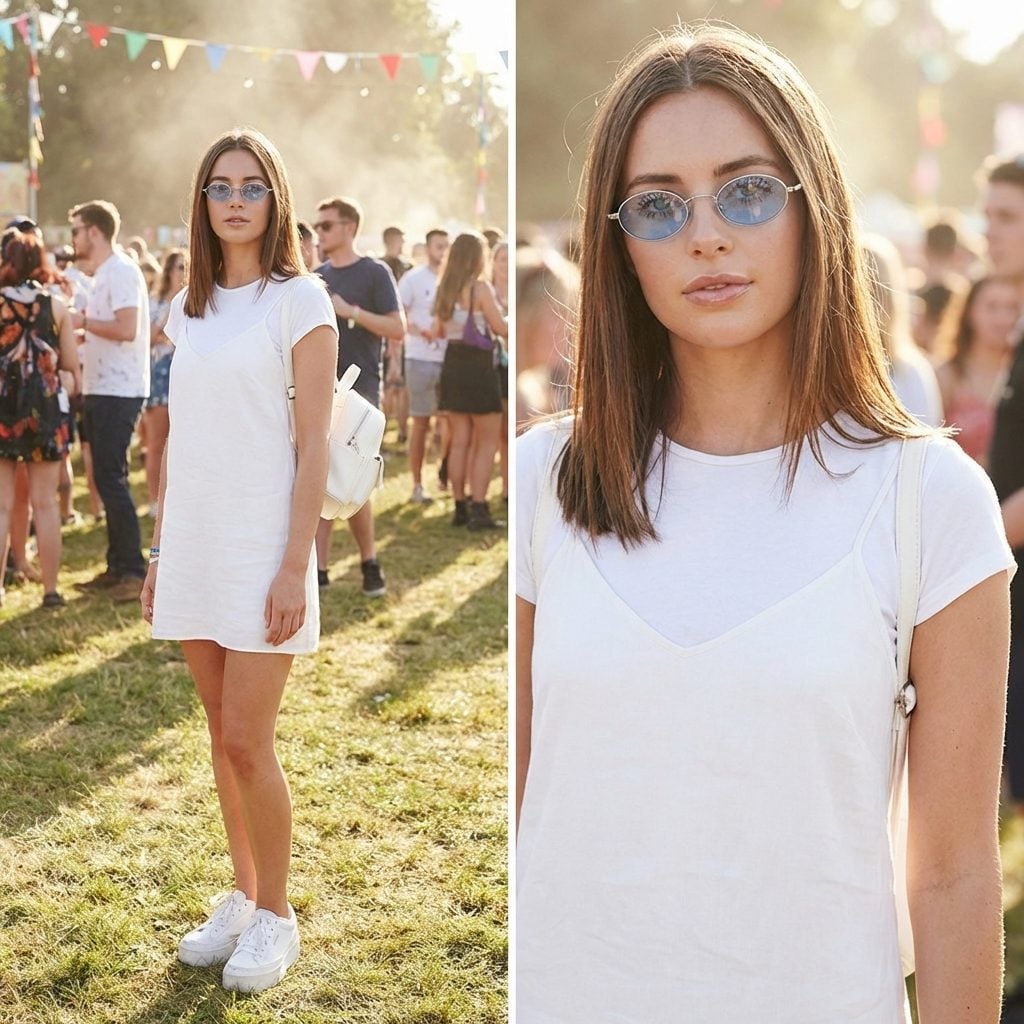
Seeing the world through rose-tinted lenses was not a metaphor in 1996. It was a Tuesday. Every sunglass kiosk at the mall had them: small oval frames, tiny round frames, tiny rectangular frames in wire gold or silver, with lenses in baby blue, lilac, pale yellow, or a slightly terrifying amber that made everyone look like they were in sepia.
The tinted oval sunglasses were the Lolita-coded version made famous by every music video from ’95 to ’99. You bought yours from a spinner rack for $8 and you wore them indoors at least once. Kate Moss wore them. That was the entire argument. No further questions.
11. Bandanas Worn as Tops, Headbands, or Whatever Felt Right That Morning

The bandana was the most versatile piece of fabric in any ’90s wardrobe, and we used every option. Folded into a thin strip and tied around your forehead: Tupac-coded, very serious. Tied around a high ponytail: cheerful, sporty, Saturday-morning-errand energy. Folded diagonally and tied around the neck: cowgirl moment whether you wanted one or not.
And then there was the bandana top. You folded a square bandana in half, tied the two top corners behind your neck, and the bottom corners around your back, and you had a halter top. This required confidence and a somewhat warm day. Gwen Stefani and the No Doubt crew wore versions of this constantly, and the rest of us filed it under aspirational weekend wear.
The paisley bandana in red or navy was the classic choice. But the pastel versions from craft stores, tied into a headband over slightly unwashed hair, were their own category of ’90s morning-after-the-slumber-party chic that no one has ever properly documented and that we should all take a moment to honor.
10. Platform Flip-Flops (The Ankle Injury We Were All One Puddle Away From)
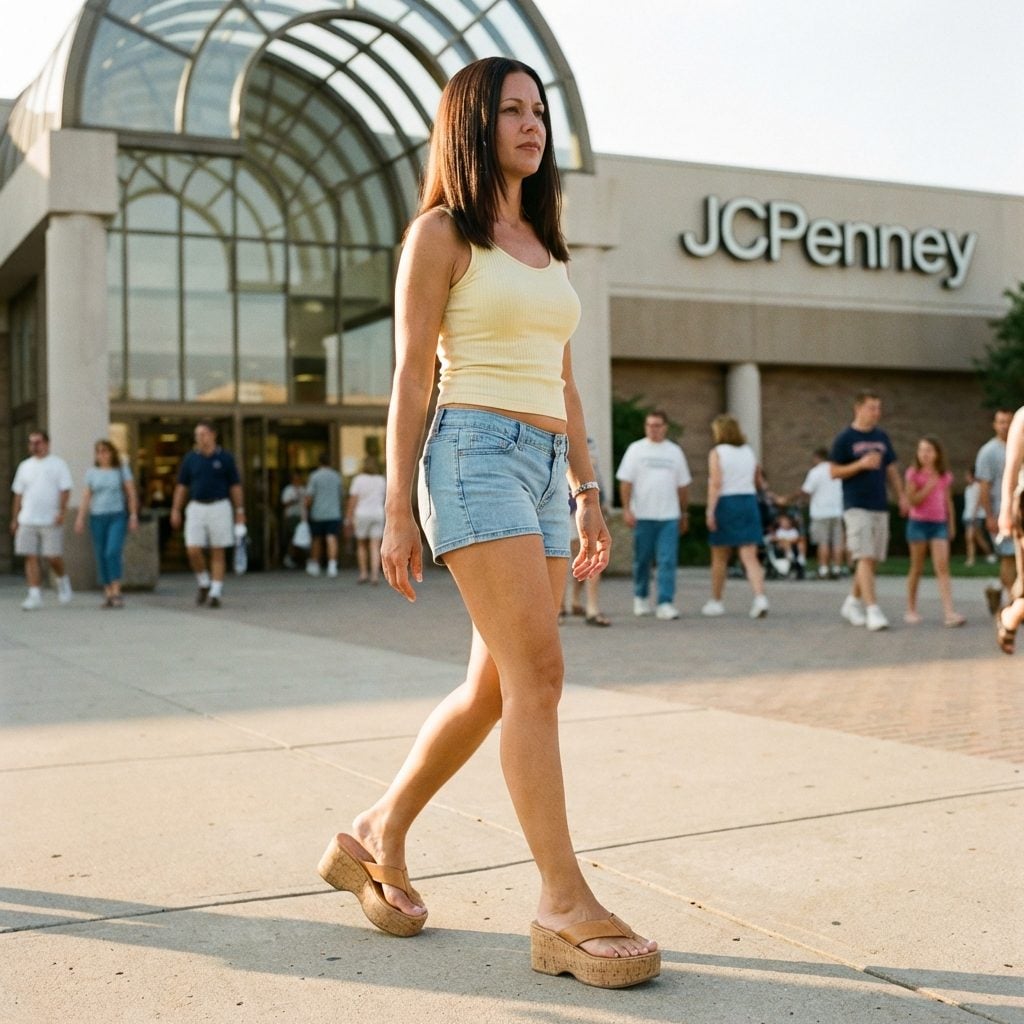
Steve Madden sold us a dream and a trip to the ER in the same shoe. These weren’t just flip-flops, they were flip-flops with a chunky platform sole that added four inches of pure optimism to your height and approximately zero inches of stability to your stride. The thwacking sound they made on mall linoleum was basically our generation’s battle cry.
We wore them to everything. The pool. The movies. That one outdoor concert where the grass ate the heel whole and we just kept walking. Looking back, the confidence required to navigate a parking lot in these things was actually kind of extraordinary.
9. JNCO Jeans With Leg Openings Wider Than Your Future
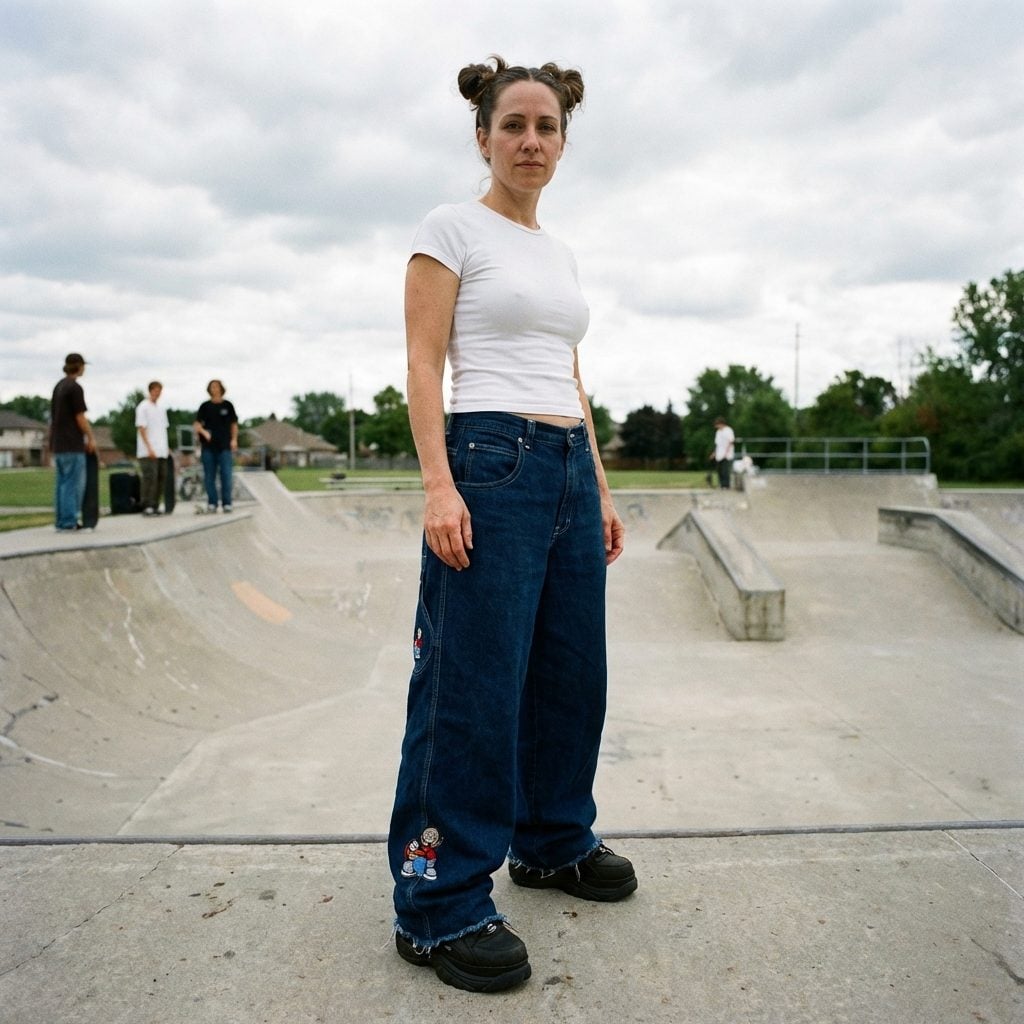
The leg opening on a pair of JNCOs could comfortably fit a second person. That wasn’t an accident, that was the point. You wanted the world to know you had found the widest possible denim available to humankind and you were wearing it to school.
The waistband sat somewhere around your hip bones, the crotch hovered near your knees, and the hems dragged on every wet sidewalk you crossed. We ironed on patches, let the fraying get truly feral, and wore them with a chain wallet because of course we did. They cost $60 at Hot Topic, which in 1996 was an absolutely unhinged amount of money for jeans that looked like denim culottes designed by someone who had never seen legs before.
8. The Flannel Shirt Tied Around Your Waist (You Weren’t Wearing It, You Were Displaying It)
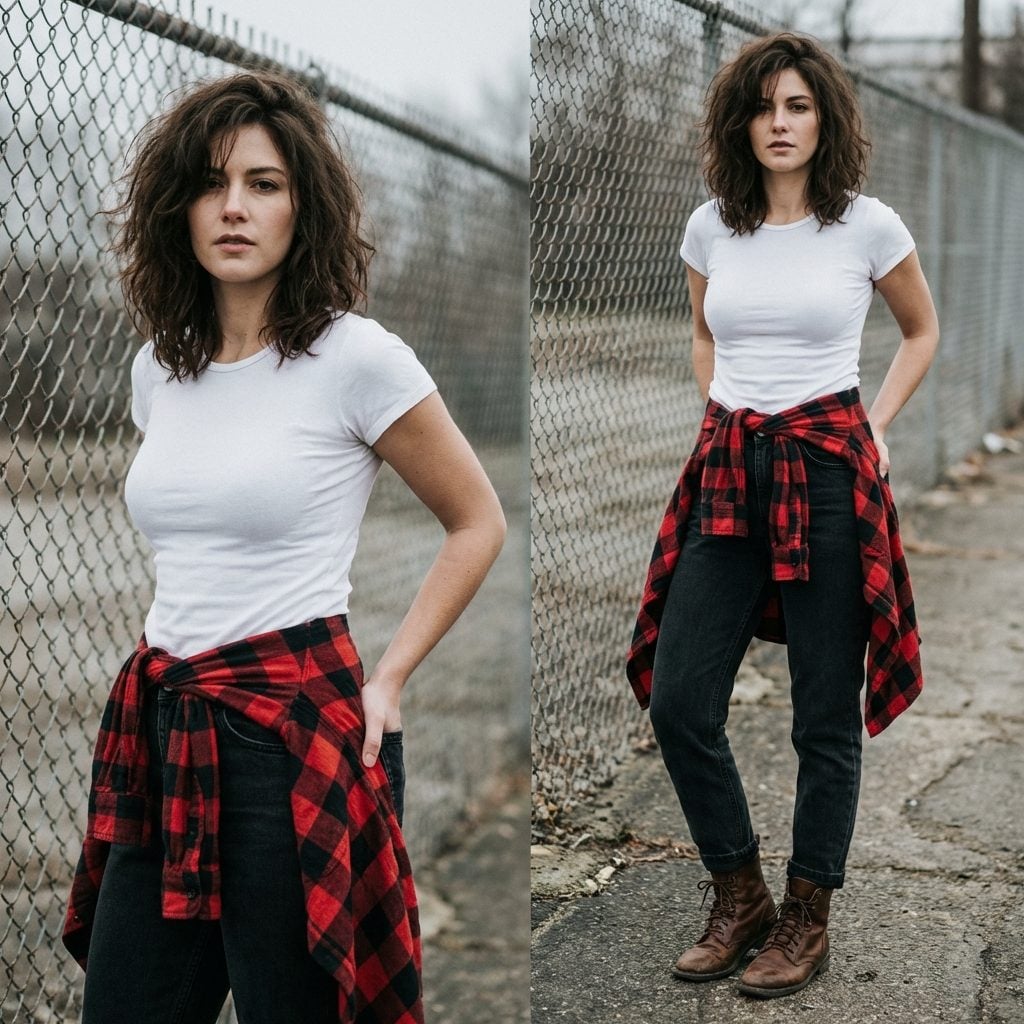
Nobody was cold. That’s the thing we need to acknowledge. The flannel shirt around the waist was not a practical temperature-management system, it was a signal. It said: I listen to Pearl Jam. I have complicated feelings. I shop at thrift stores on purpose.
A plaid flannel shirt knotted loosely at the front of your jeans, sleeves dangling, was the 90s equivalent of a mood board. Red and black Buffalo plaid was the standard issue, but a good green-and-navy Pendleton find from the Goodwill bins elevated your entire aesthetic. The harder it had been to find, the better. You didn’t buy flannel. You discovered it.
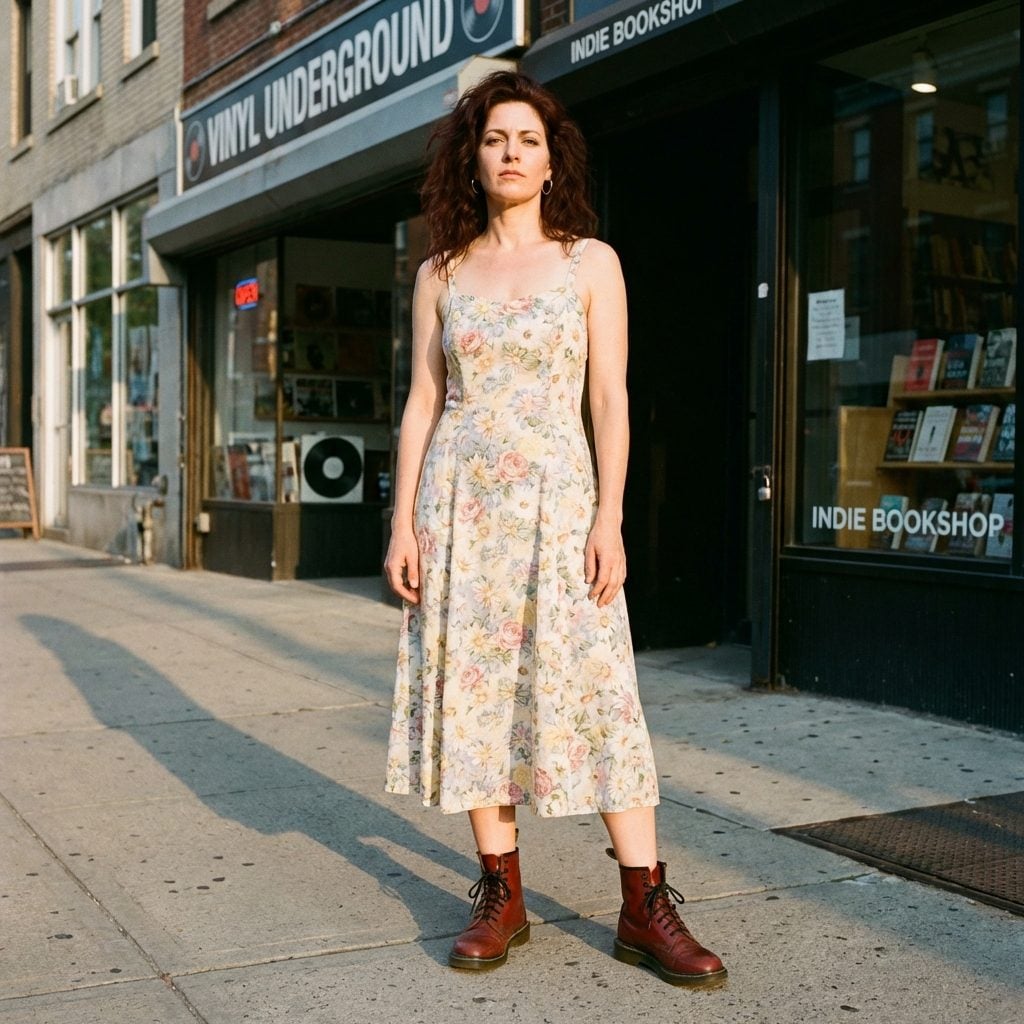
7. Doc Martens With a Floral Sundress (The Outfit That Started a Culture War)
❤️ Would you like to save this?
This combination felt like a personality statement and it absolutely was. You were soft and you were tough, simultaneously, and you wanted everyone at the record store to know it. The floral sundress was usually vintage or from Urban Outfitters when Urban Outfitters still felt underground, and the Doc Martens were the 1460 eight-eyelet boot in classic cherry red or black, broken in enough to prove you’d had them for years.
Courtney Love wore this. So did every woman who ever described herself as “not like other girls” in 1994, which, in fairness, was a lot of us. The look has aged better than almost anything else on this list, because the tension it created between pretty and hard was actually kind of brilliant.
6. Wide-Leg Trousers That We Called ‘Dress Pants’ But Wore With a Crop Top
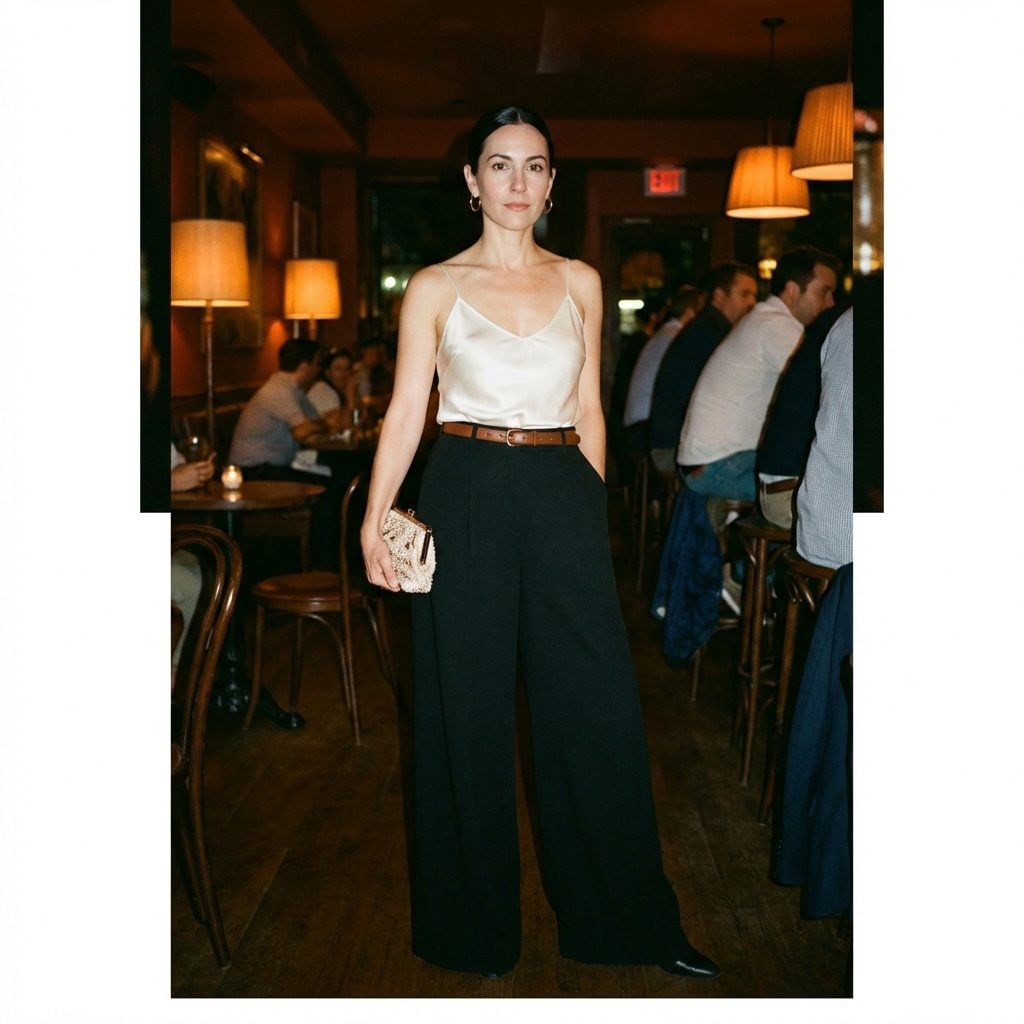
High-waisted, wide-leg wide-leg trousers in a fabric that could loosely be called crepe, usually in black, camel, or a very specific shade of burgundy, were the building block of the 90s going-out outfit. You tucked a tiny satin camisole into them. You added a thin belt that served no structural purpose. You felt incredible.
These were the pants that made us all feel like we were in a Calvin Klein ad, which was the highest possible aspiration at the time. The silhouette was genuinely elegant. If you were wearing them to Applebee’s on a Friday night, that was between you and God.
5. Capri Pants in Every Fabric Known to Science
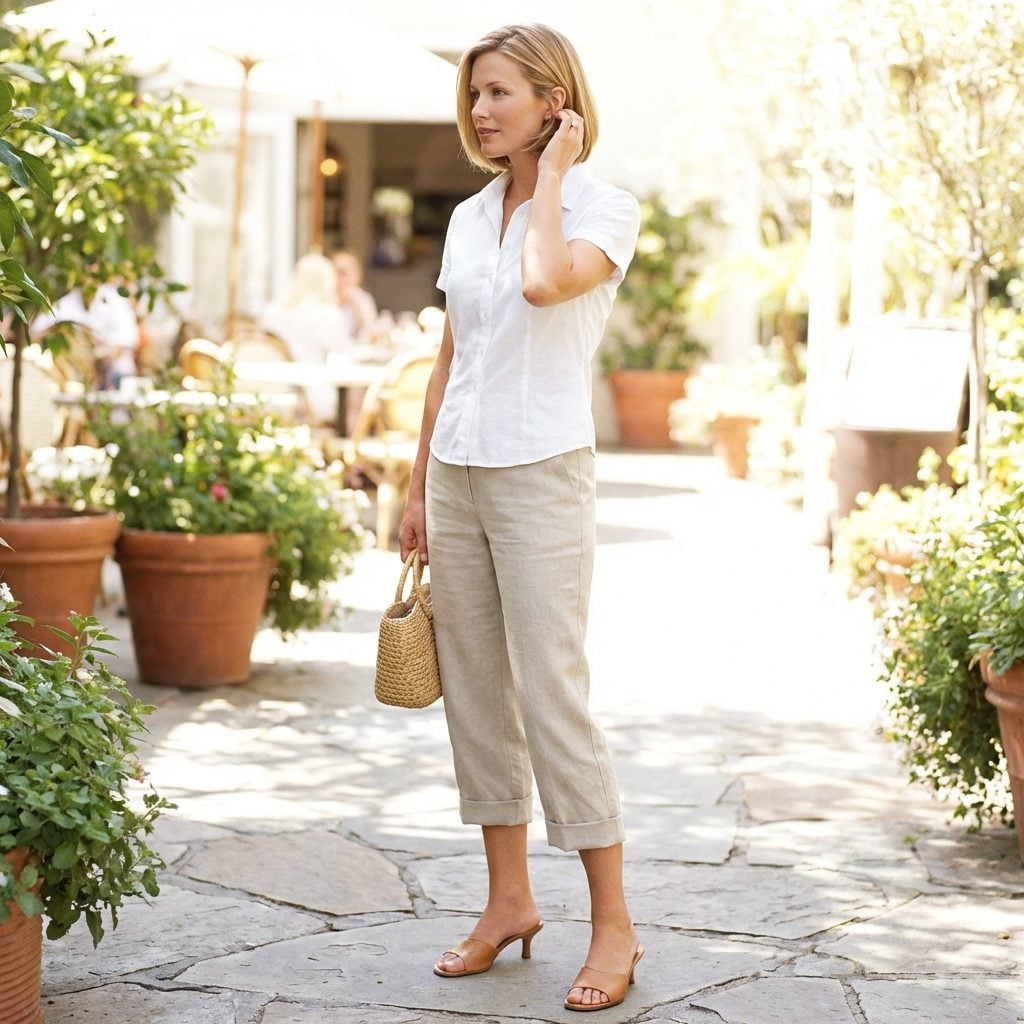
There was a period in the late 90s when capri pants appeared in literally every fabric available to the textile industry. Linen capris. Velvet capris. Khaki capris. Stretch capris with a faux lace hem. The capri pant was the Swiss Army knife of the era, not quite shorts, not quite trousers, hitting at the most anatomically random point on the calf with absolute confidence.
Paired with a kitten heel mule, this was office casual. With a platform sandal, it was going out. With sneakers and a zip-up hoodie, it was Sunday errands. The capri pant refused to be categorized and we respected that. We still own at least two pairs somewhere. We don’t talk about it.
4. Sheer Tops Over Bandeau Bras (Our Answer to Every Dress Code)
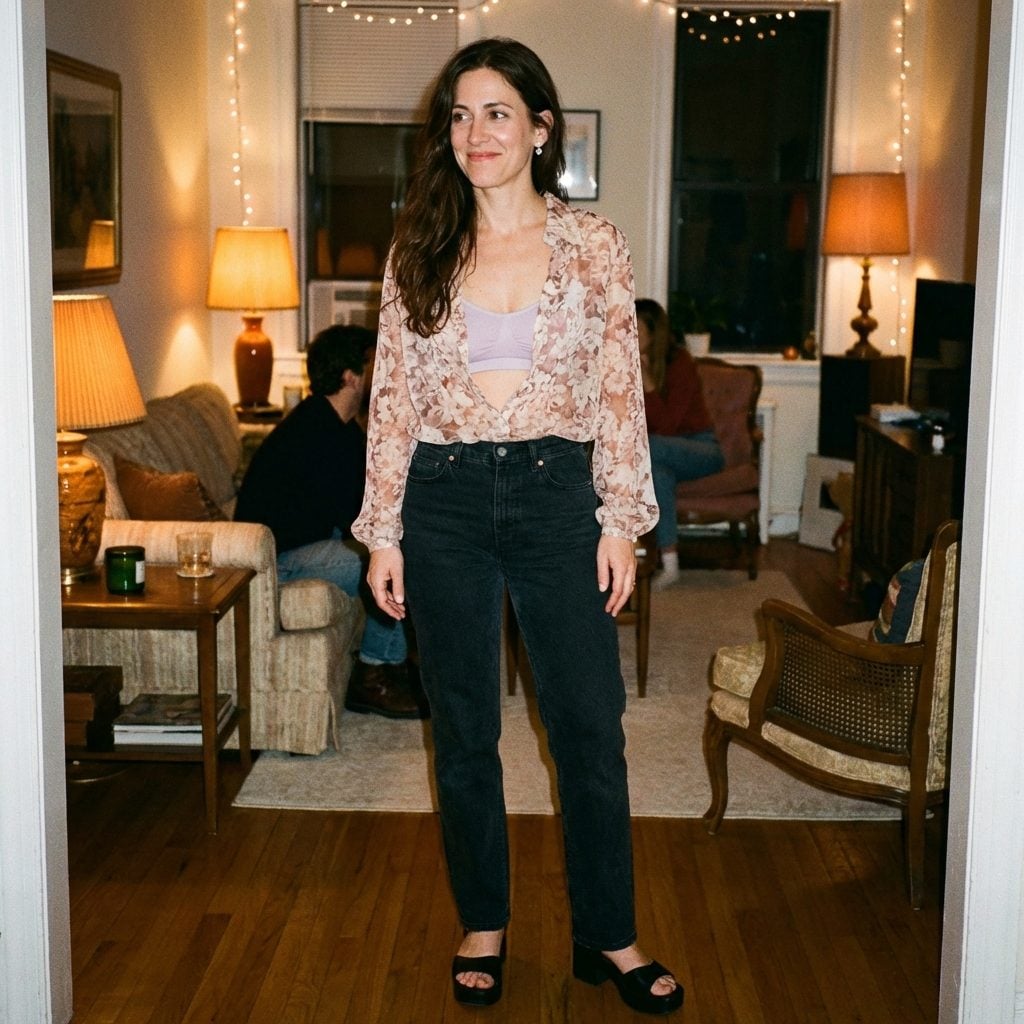
The formula was simple: one sheer chiffon top, one bandeau bra in a color that did not match, and an absolute refusal to explain yourself to anyone. The top could be floral, solid, or printed with something abstract that came from a bin at Wet Seal for $12. The bandeau was structural only in theory.
What made this outfit work was the confidence. You were showing more than a tank top allowed but less than going without. It occupied this very specific 90s gray zone where showing your bra was coded as fashion, not accident. Every woman who wore this to a house party in 1998 felt like she had cracked the dress code at a cellular level.
Not everyone is ready for this revival, since sheer outfits got fewer hearts from our readers than the other images in the same articles, 38% versus 43%.
3. Sports Jerseys Worn as a Complete Outfit (Not to a Game, Just to Life)
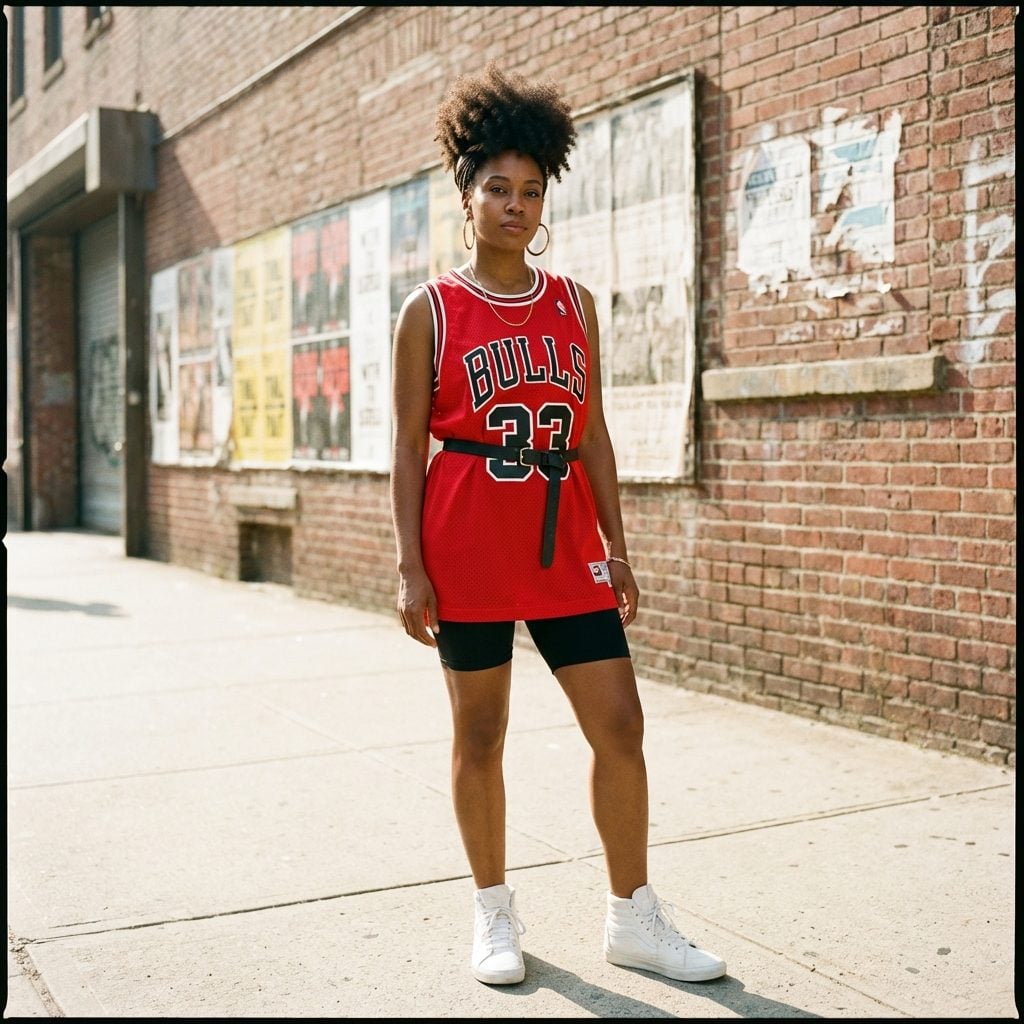
The oversized sports jersey worn as a dress, belted over bike shorts, or just hanging loose over baggy jeans was the 90s casual uniform for anyone who wanted to telegraph cool without appearing to try. TLC wore jerseys. Aaliyah wore jerseys. Lisa Lopes wore a Braves jersey to the actual Grammy Awards in 1995 and the conversation was settled forever.
It didn’t matter if you followed the team. Honestly, the less you knew about basketball, the better the jersey looked. You wanted the Chicago Bulls or the LA Lakers because those were the aesthetics of that cultural moment, not because you tracked the standings. Sports fandom was optional. The sleeve drop and the mesh texture were not.
2. The Tiny Backpack That Held Absolutely Nothing (By Design)
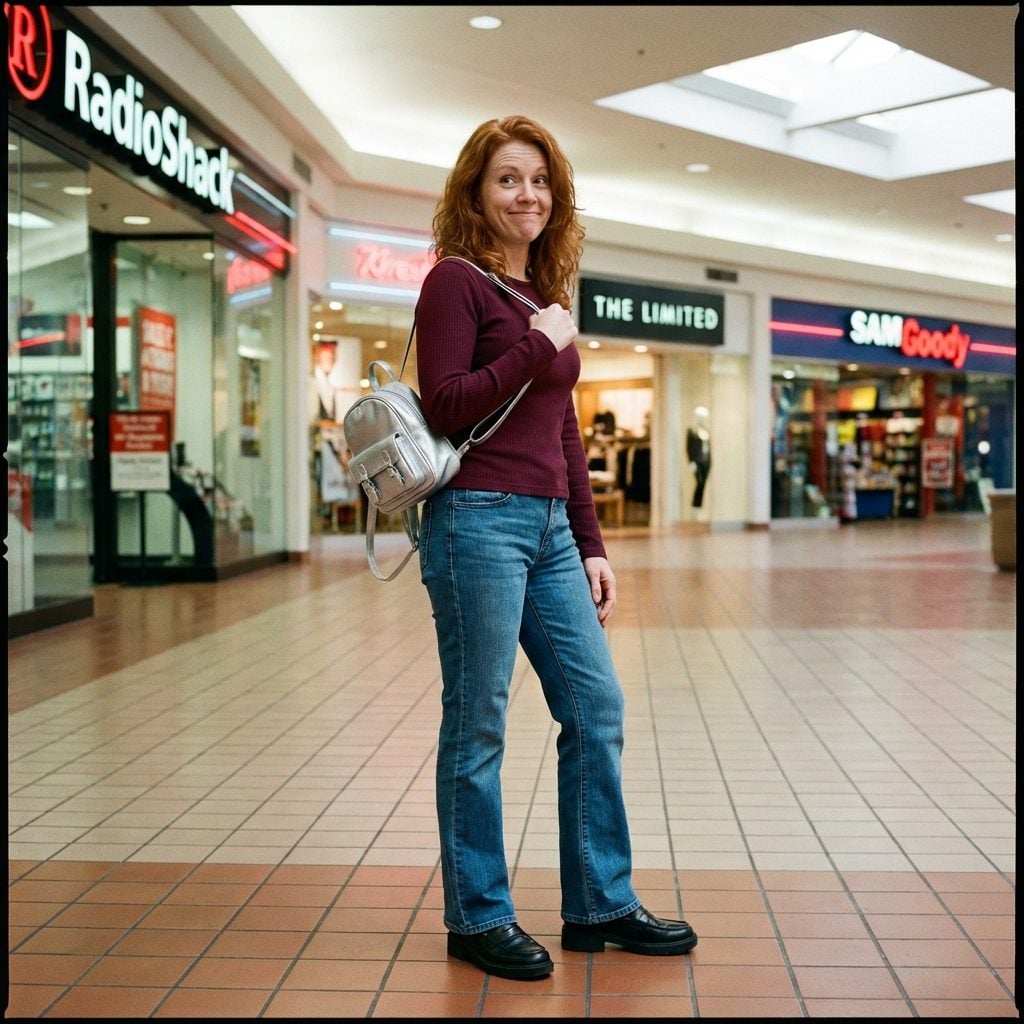
Your lip gloss. Your ID. One crumpled five-dollar bill. That was the full inventory of the backpack trends era’s most impractical accessory. The miniature backpack, in black leather, silver vinyl, clear PVC, or that very specific lavender faux suede from Claire’s, had approximately the same storage capacity as a generous coat pocket, and we used it as our primary bag for three years running.
The straps were decorative. Wearing it on your back required taking it off to access anything. You put it on your arm like a purse anyway, which defeated the entire architectural premise but looked correct. Mini backpacks were not about utility. They were about silhouette. The tiny bag against the oversized everything else was, in retrospect, genuinely good proportion theory.
1. Biker Shorts Under an Oversized Blazer (The Look That Just Came Back and We Have Feelings)
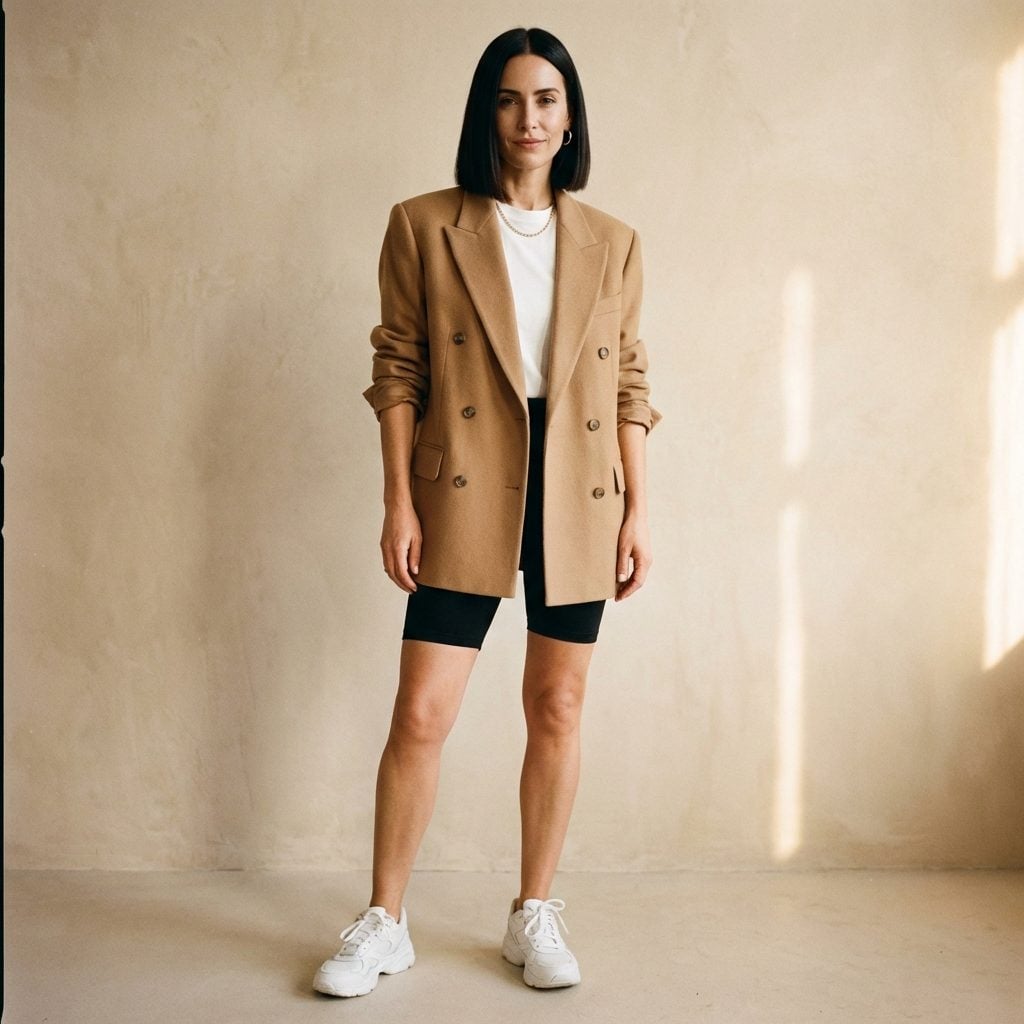
Here is the thing about biker shorts under an oversized blazer: we wore this in 1993 and felt absolutely insane about it, and then our daughters wore it in 2021 and called it new. It is not new. Nothing is new. We pioneered this look in a thrifted men’s blazer from the Salvation Army while listening to En Vogue on a CD player the size of a dinner plate.
The proportions are actually good, the long blazer cuts the shorts off at the right point on the thigh, the shoulders give volume at the top, the legs below look lean. We knew what we were doing. We just didn’t know we’d have to watch an entire new generation get credited for it on TikTok thirty years later.