❤️ Would you like to save this?
You could smell the Aqua Net before you even walked through the front door. That sweet, chemical cloud hanging in the bathroom, the pink can sweating on the counter next to a rat-tail comb and a drawer full of bobby pins your mother swore she’d just bought. Every curl was a project. Every roller had a purpose. And height? Height was everything.
The 1960s gave us hairstyles that required engineering degrees, prayer, and a reckless faith in hairspray. Here are 37 that we still haven’t fully recovered from.
FYI, thanks to AI imagery software, we’re able to create very specific fashion and hairstyle examples to illustrate the points being made. In some cases, imagery is exaggerated to hammer home the point. Also, assume links that take you off the site are affiliate links such as links to Amazon. this means we may earn a commission if you buy something.
The Towering Beehive With the Thin Black Headband Holding It All Together
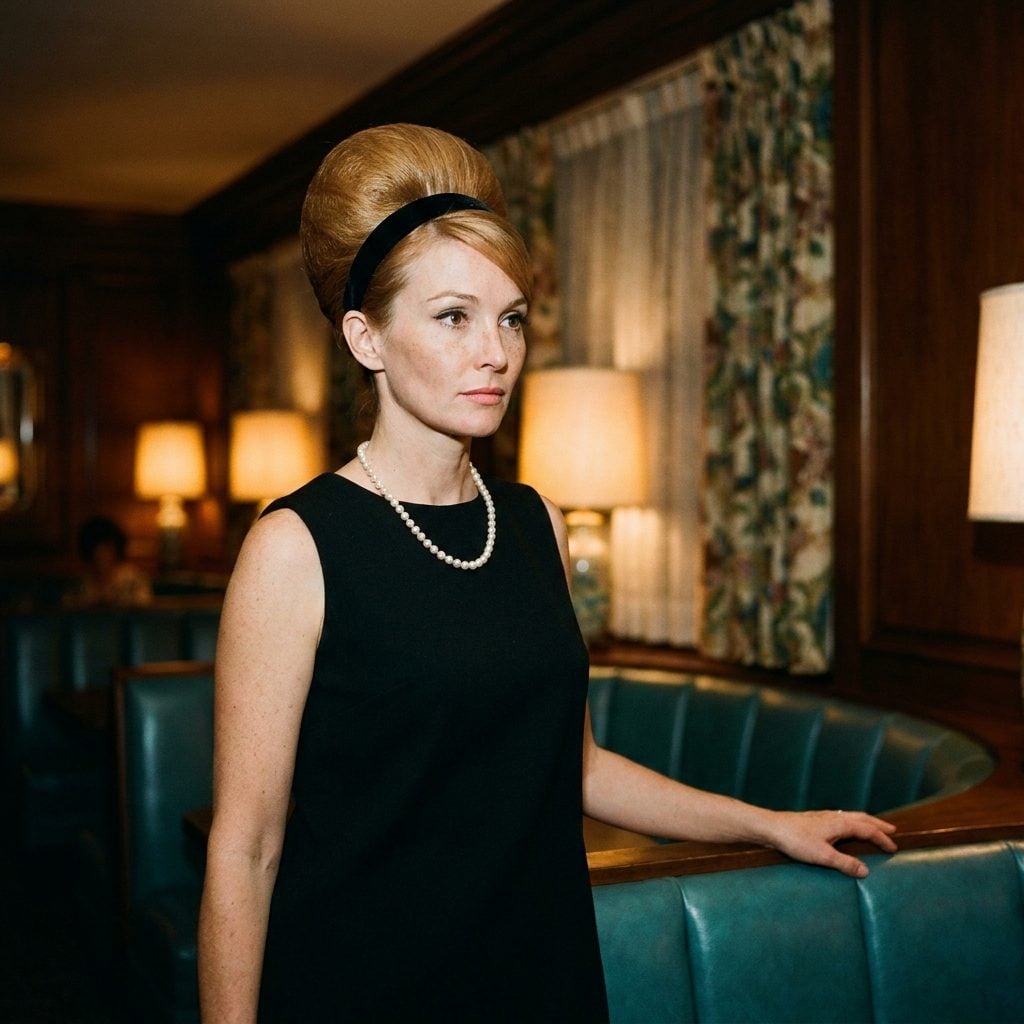
There was no such thing as “too high.” You teased and sprayed and teased some more until your hair existed in a vertical column that defied both gravity and good sense. The surface had to be smooth, though. That was the trick. All that chaos happening underneath, but the outside? Glass.
And then the thin black headband at the base, like a little fence keeping the whole operation grounded. I’m still not sure if it served a structural purpose or was purely decorative, but we all wore one. Aqua Net was the real architect here. Your bathroom smelled like a chemical plant on Saturday nights, and your pillowcase was crunchy by Sunday morning.
The Chin-Length Flip That Made Every Suburban Mom Look Like a TV Star
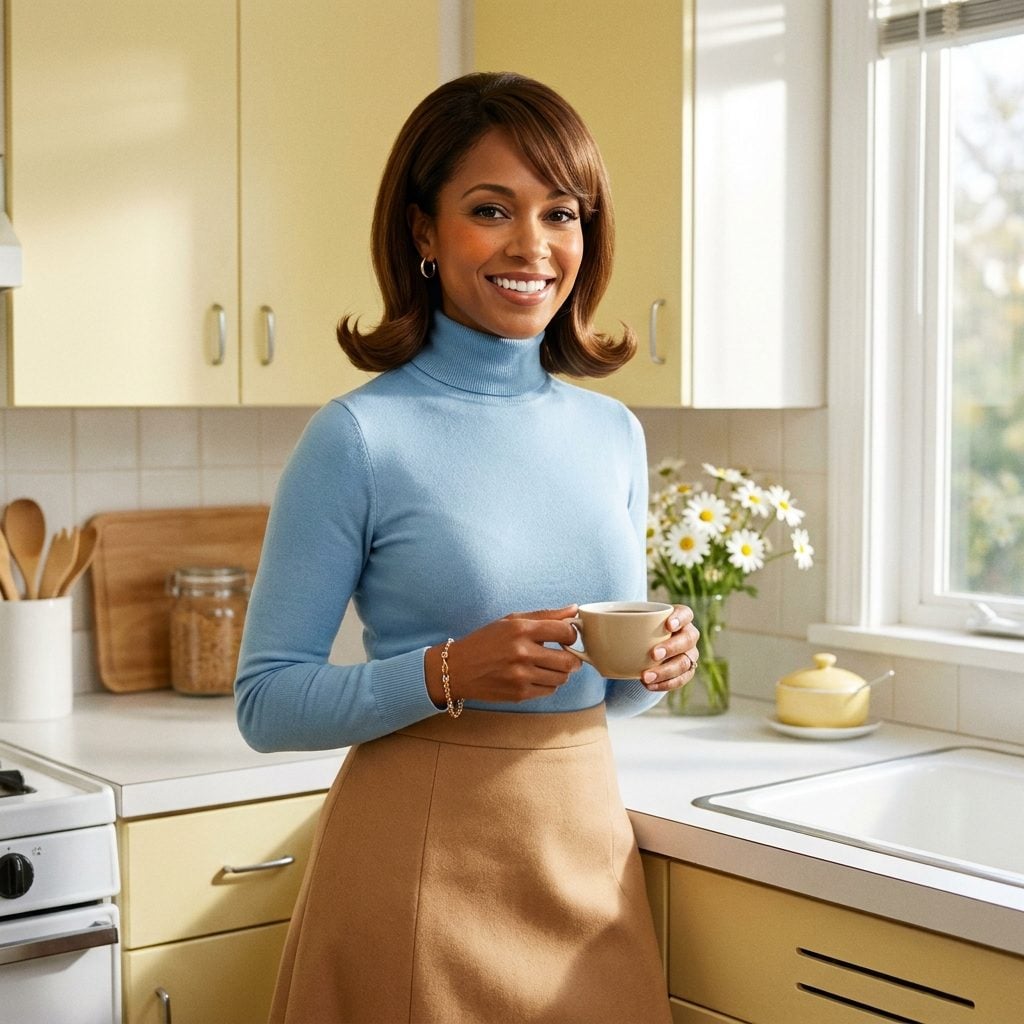
Chin-length. Ends turned up. Bangs swept to the side. That was the formula, and it worked on literally everyone. This was the hairstyle equivalent of a good casserole recipe: reliable, flattering, and you could do it yourself with hot rollers and ten minutes.
What made it so perfect was the movement. Those flipped ends bounced when you walked. They caught the light. They said “I have my life together” even when you absolutely did not. Your mom probably wore this style to the grocery store, to church, to parent-teacher conferences. It was the Swiss Army knife of ’60s hair.
The Dramatic Black Bouffant With Hair Flowing Past Your Shoulders Like a Warning
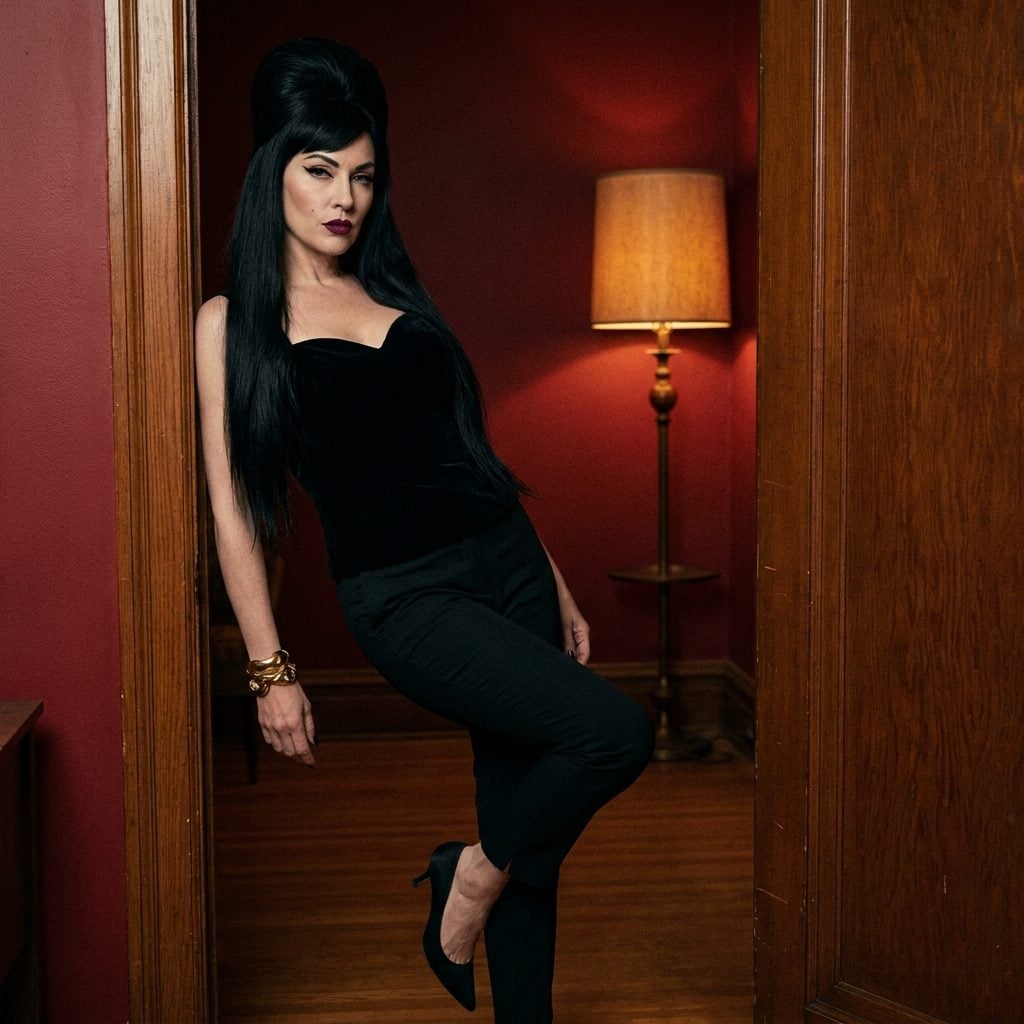
Not everyone went for the tidy, contained version of ’60s hair. Some of us wanted volume AND length, which meant teasing the crown into the stratosphere while letting the rest cascade down past the shoulders in a dark, dramatic waterfall. Heavy black eyeliner was not optional. It was load-bearing.
This was the hairstyle that said “I might be trouble.” The bouffant gave you height. The long hair gave you mystery. The combination gave your father a reason to question your life choices. You needed a serious backcombing session, a hand mirror to check the back, and the kind of confidence that only comes from being twenty-two and invincible.
The maintenance was no joke, either. Sleeping on this required a satin pillowcase and the spatial awareness of someone parallel parking a boat.
The Loose Chignon With Face-Framing Tendrils That Made You Feel Like European Royalty
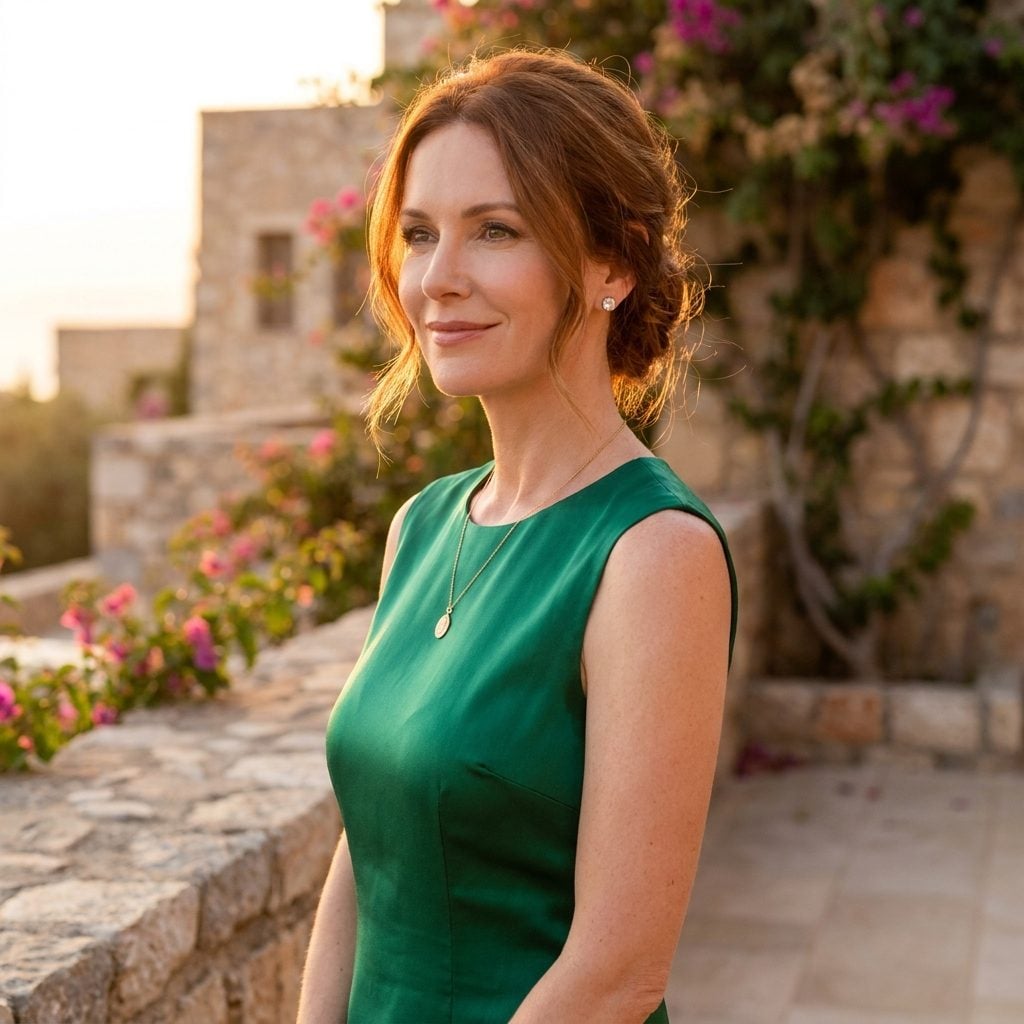
Some hairstyles are about looking perfect. This one was about looking perfectly undone. Warm auburn hair swept up and back into a soft, slightly messy chignon at the nape, with a few strategic tendrils escaping around the face. It whispered “I woke up like this” decades before anyone put that on a T-shirt.
You wore this to weddings, formal dinners, and occasionally just to the post office because it made you feel like you should be stepping off a yacht in Portofino. The trick was making it look effortless when it actually took forty-five minutes and a whole package of bobby pins you’d find in your couch cushions for months afterward.
The French Twist Secured With a Rhinestone Comb You Treated Like Fine Jewelry
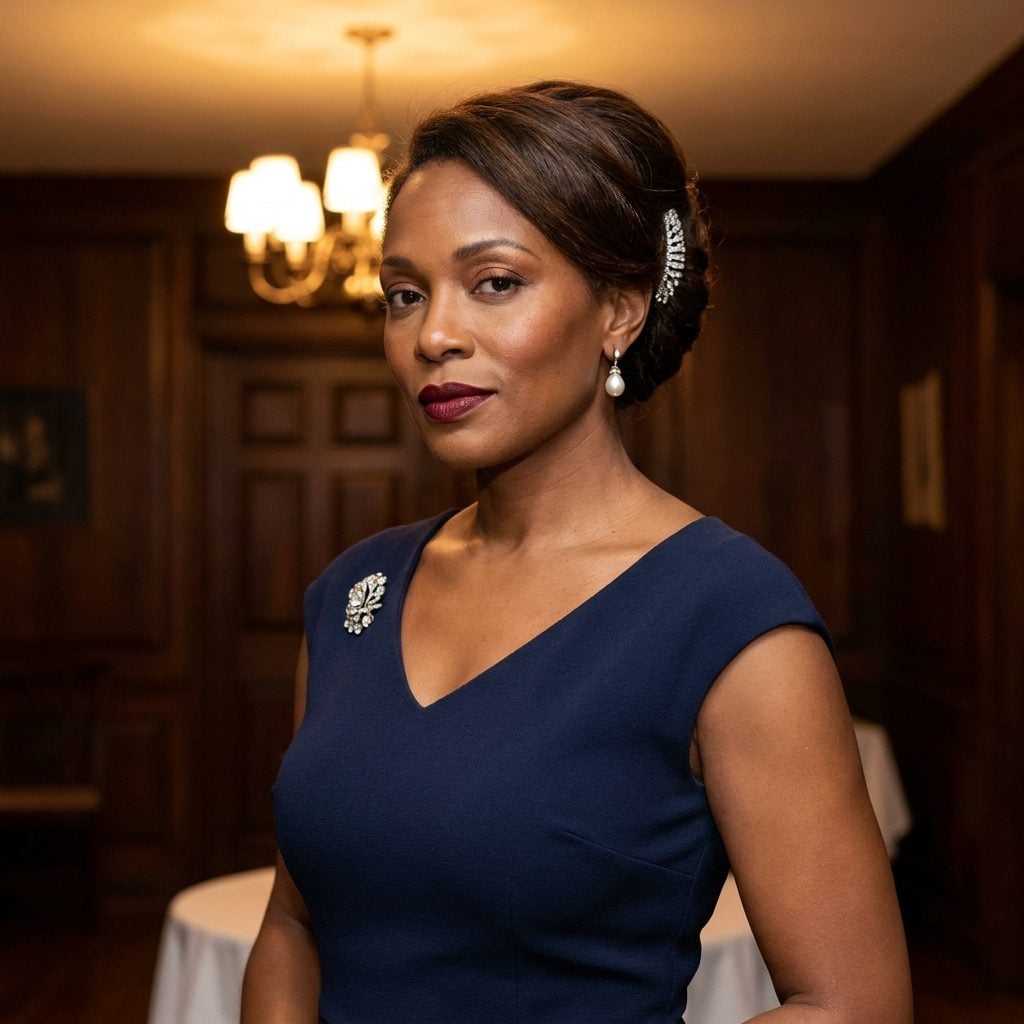
That vertical roll of hair up the back of your head. The way it stayed put through an entire evening if you did it right, and collapsed spectacularly if you didn’t. The French twist was the most sophisticated thing you could do with your hair in the 1960s, and everyone knew it.
The rhinestone comb tucked into the twist was the finishing move. Not a functional hairpin, not really. More of a declaration. It caught the light when you turned your head, and you turned your head often because you knew it caught the light. That comb lived in a specific drawer, wrapped in tissue paper, and you only brought it out for occasions that deserved it.
The Pixie Cut That Terrified Your Mother and Made You Feel Invincible
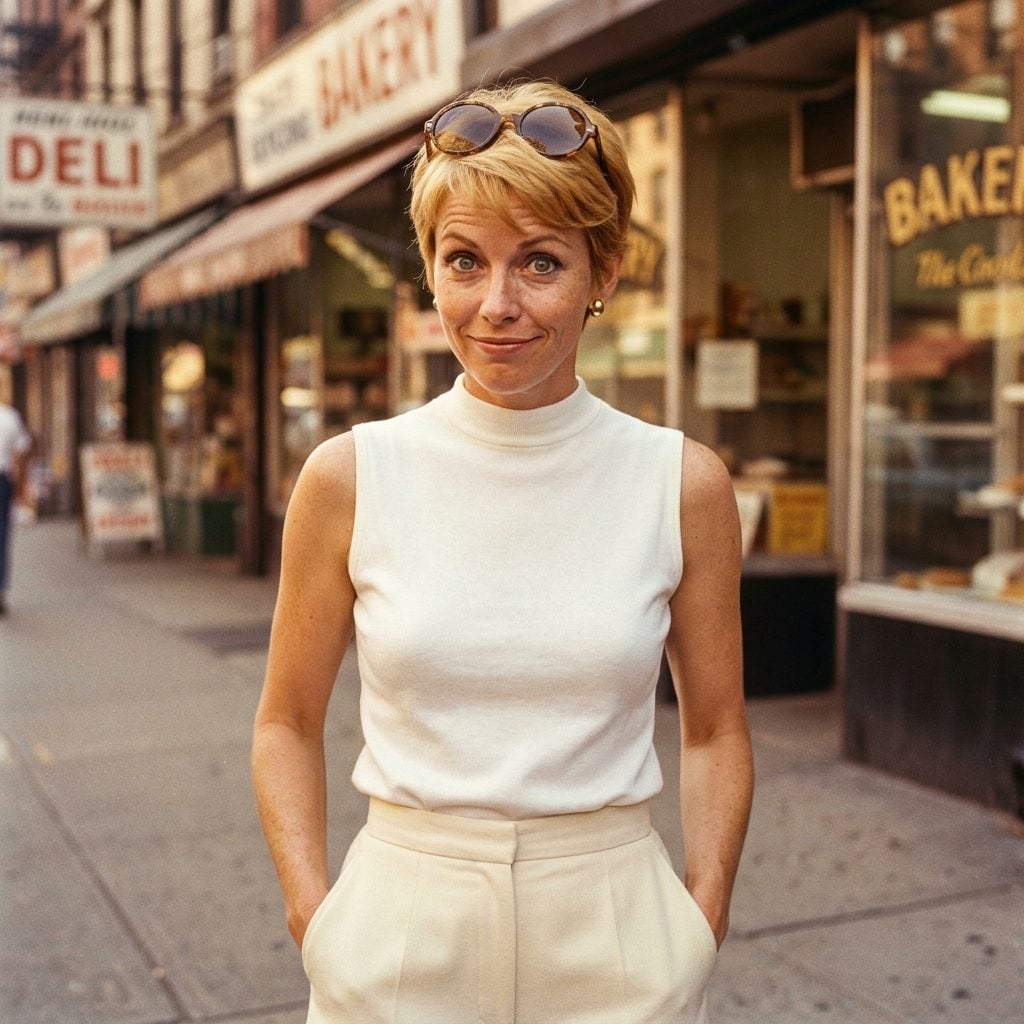
Nineteen sixty-seven. You walked into the salon with hair past your shoulders and walked out looking like a completely different person. Golden blonde wisps barely covering your ears, close-cropped sides, those little bangs that moved when you blinked. Your mother cried. Your friends gasped. You felt like you could fly.
The pixie cut was an act of rebellion disguised as a haircut. In a decade defined by big hair, choosing to have almost none was a statement. It said you didn’t need volume to be interesting. You didn’t need cascading waves to be feminine. You just needed cheekbones and nerve. And honestly? It looked better on regular women than it did on anyone in the magazines. Something about seeing your own face with nothing to hide behind. That kind of androgynous hairstyle took real courage in 1967.
The Vidal Sassoon Geometric Bob That Changed Everything About What Hair Could Do
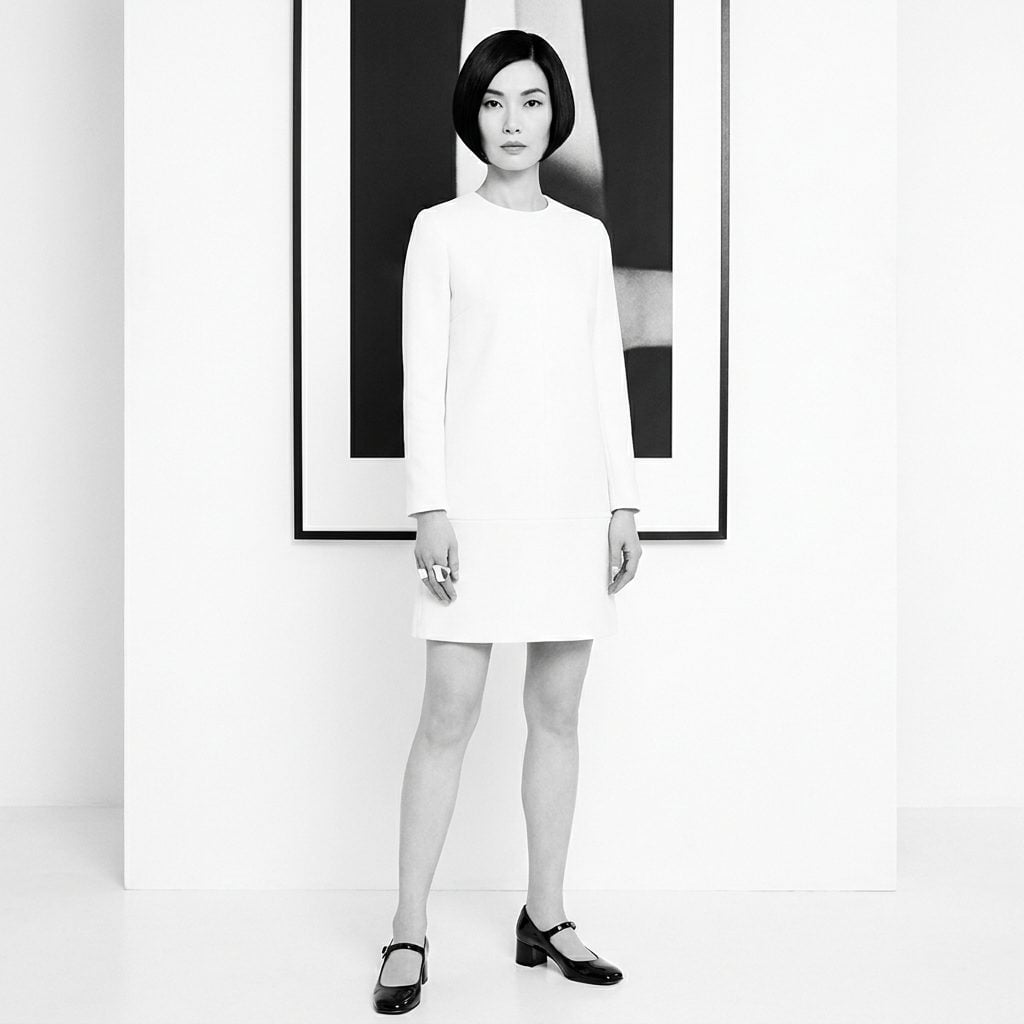
Before Vidal Sassoon, a haircut was just a haircut. After him, it was architecture.
That five-point bob with glossy black hair cut into sharp, precise angles framing the jawline. The blunt fringe sitting exactly where it was supposed to sit. No rollers, no teasing, no spray. Just the cut itself, doing all the work. It was the most radical idea in hair: what if the shape came from the scissors, not the styling?
Most women saw this in a magazine and thought about getting it. A smaller number actually did. It required a skilled stylist who understood geometry, not just beauty school basics. And it required you to accept that your hair would look exactly one way, because there was no “throwing it up in a ponytail” with a Sassoon cut. You committed, or you didn’t.
The Gamine Crop With Tousled Fringe That Proved Less Really Was More
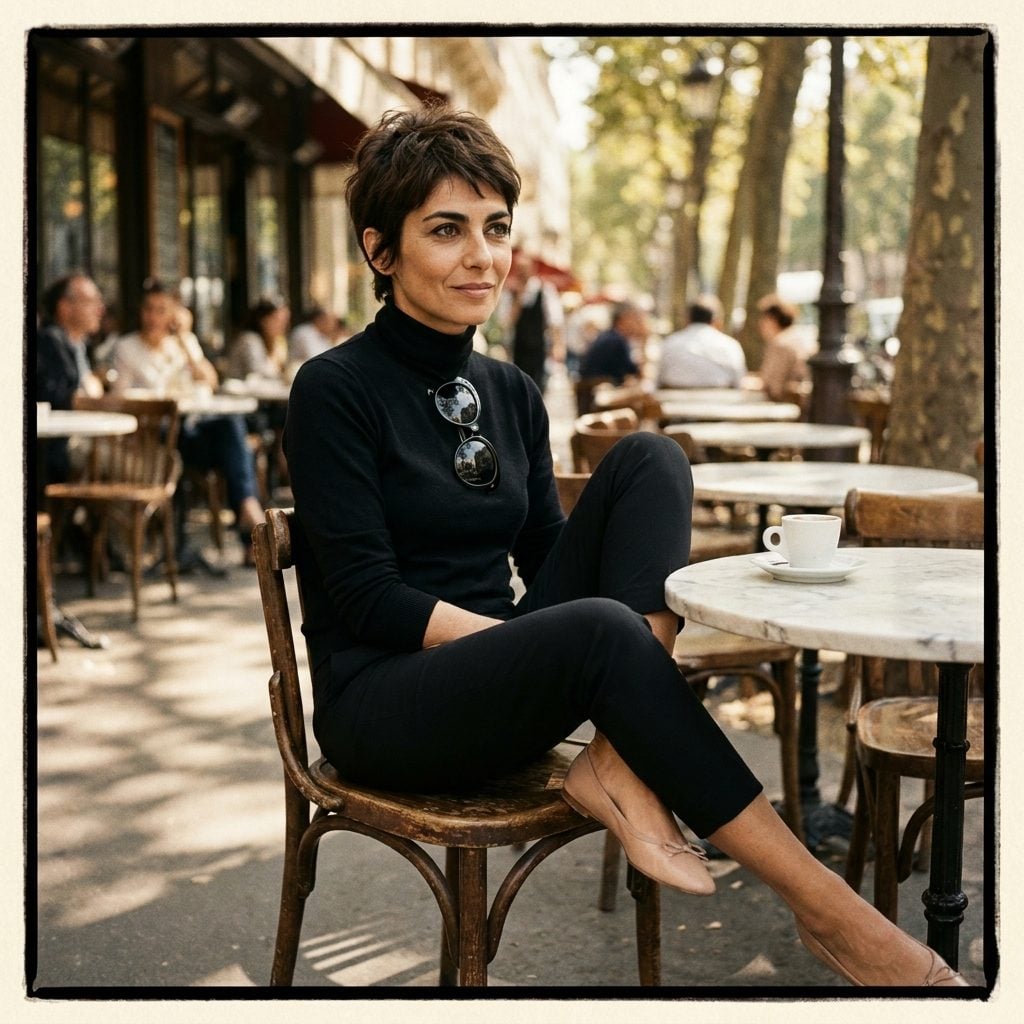
Short dark brown hair with a bit of a wave on top and that perfectly imperfect fringe falling across the forehead. The gamine crop wasn’t about looking glamorous. It was about looking interesting.
You paired it with ballet flats, a black turtleneck, and the belief that you were more continental than you probably were. This haircut turned every trip to the bookstore into a scene from a French film. It made you sit up straighter, wear bigger sunglasses, and drink your coffee without sugar. I’m not saying the haircut changed your personality, but I’m not saying it didn’t.
The Platinum Blonde Bouffant With Flipped-Out Ends and Enough Hairspray to Stun a Horse
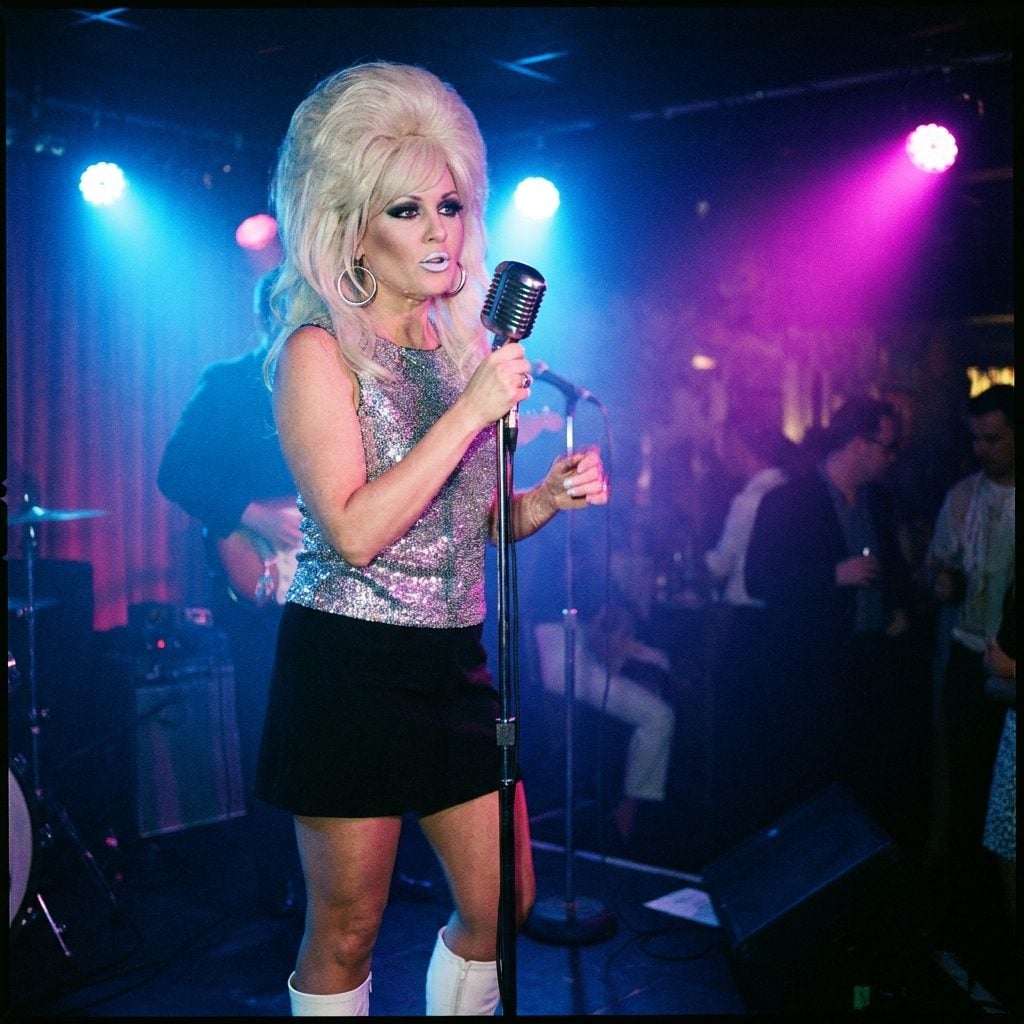
If the beehive was about height, this was about width AND height AND attitude. A platinum blonde bouffant, heavily backcombed through every layer, with the ends flipped out at the shoulders like two little wings trying to take off. The whole production was held together by a truly alarming amount of hairspray.
The panda-eye makeup was non-negotiable. Thick black liner on top, thick black liner on the bottom, mascara applied in approximately seven coats. Your eyes looked enormous. Your hair looked enormous. Everything about you took up more space than strictly necessary, and that was the entire point.
The Raven-Black Glamour Bouffant With Soft Waves That Said ‘I Know Exactly What I’m Doing’
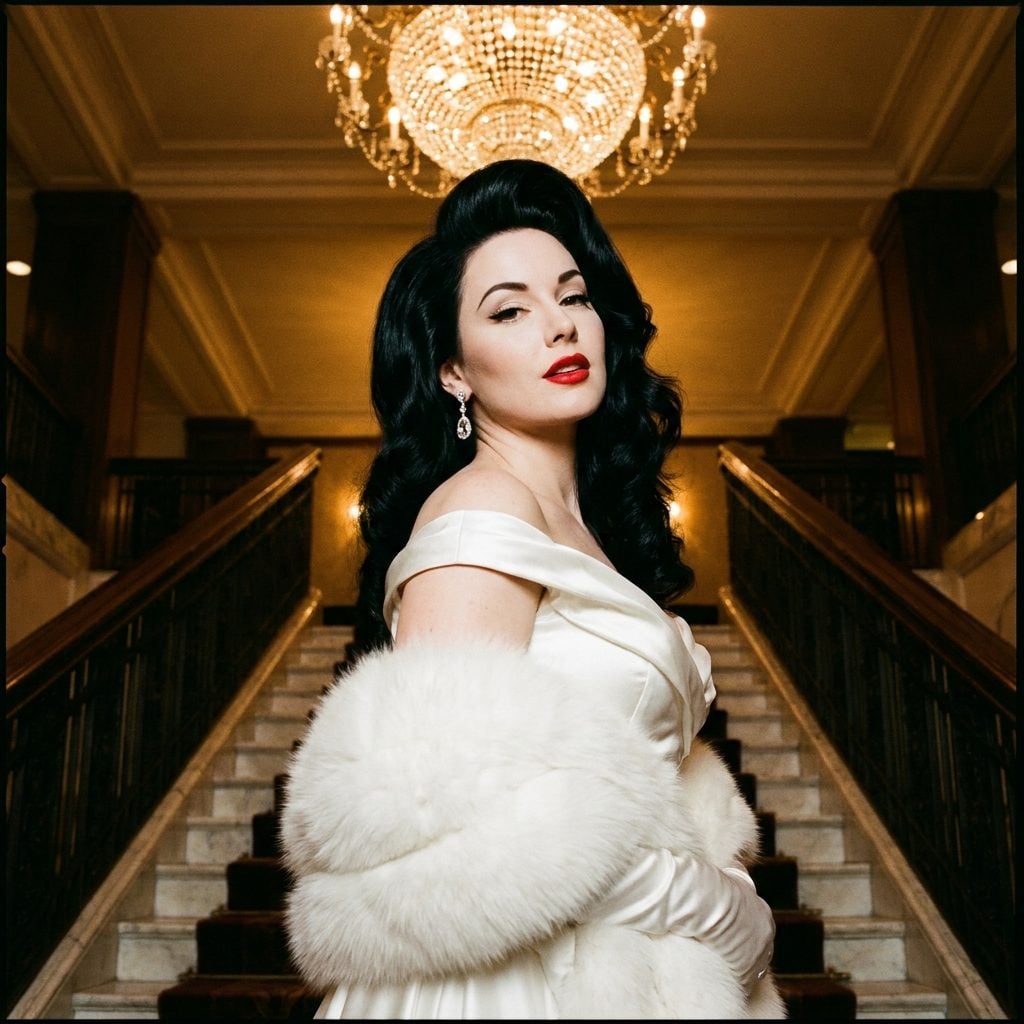
Glossy. Raven. Black. Teased high at the crown but soft through the waves cascading past the shoulders. This wasn’t a hairstyle for blending in. This was the hair of a woman who expected the room to notice when she arrived, and the room always did.
The key distinction between this and the other bouffants of the decade was the finish. Where others went matte and stiff with spray, this one stayed glossy. Touchable, almost. The kind of shine that required hot oil treatments, careful brushing, and the genetic gift of naturally thick hair that the rest of us pretended we had. You paired it with diamond drop earrings, a white fur stole if you had one, and the absolute certainty that you were the most interesting person at the party.
The Half-Up Beehive With Tousled Waves That Somehow Made Messy Hair Look Intentional
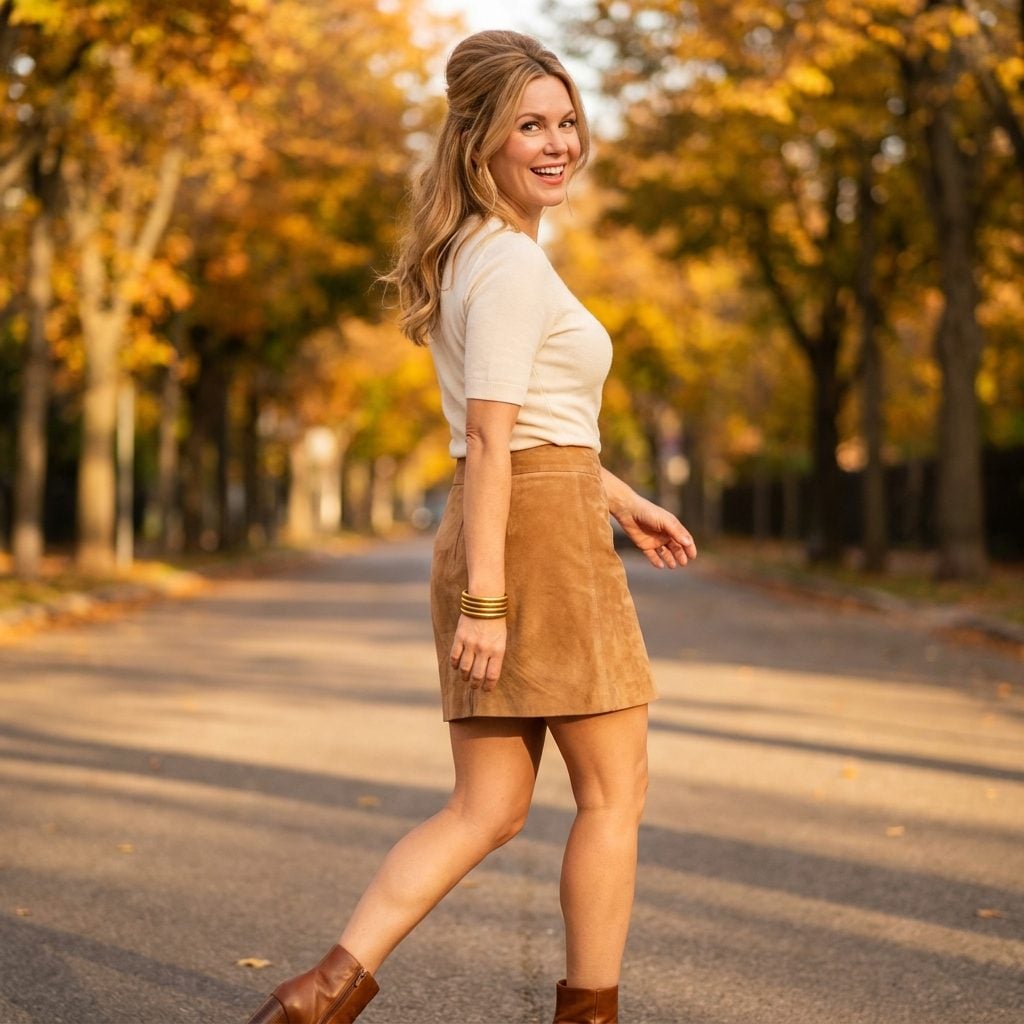
Here’s what was genius about this hairstyle: it looked like you’d tried hard and not tried at all, simultaneously. The crown was teased into a proper beehive, giving you that ’60s height we were all chasing. But then the rest of the hair just… fell. Loose, tousled, honey-blonde waves tumbling down your back with side-swept bangs that you blew out of your eyes every thirty seconds.
It was the hairstyle of women who wanted to look like they’d just come from the beach but also might be going to a cocktail party. The contradiction was the appeal. You could wear this with a striped Breton top and jeans or a black dress, and it worked both ways because it lived in that rare space between polished and undone.
I spent half of 1997 trying to recreate this from old magazine photos. Teasing the crown without making the rest of my hair look like I’d been in a windstorm turned out to be a skill I never fully mastered. Some women just had the gift.
The Doris Day Blonde Flip With a Silk Headscarf Tied Under the Chin
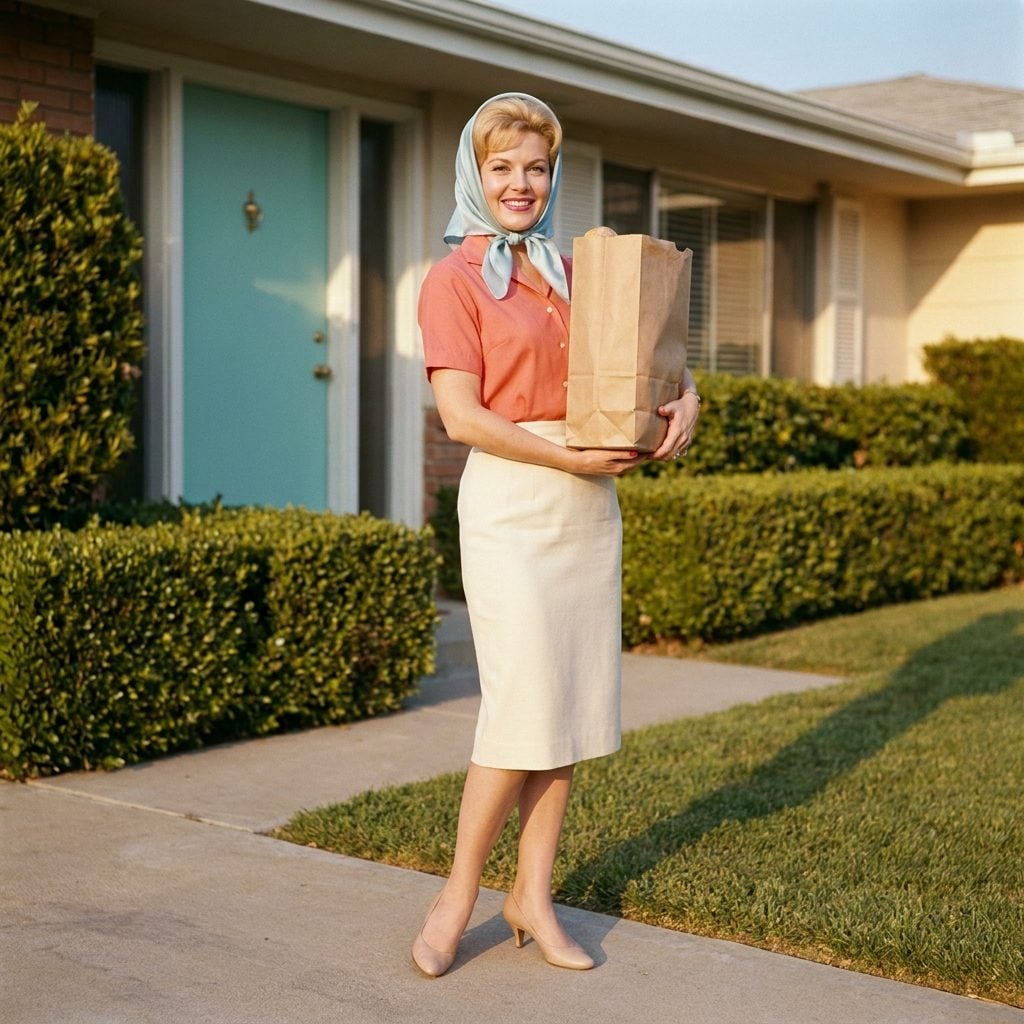
You couldn’t walk through a suburban grocery store in 1962 without seeing this exact look. Short blonde hair, curled outward at the ends with military precision, then protected from the wind by a silk headscarf knotted neatly under the chin. It wasn’t fashion, really. It was armor. You’d just spent forty minutes with hot rollers and a can of Aqua Net, and you were not about to let a breeze undo all that work on the drive to bridge club.
The flip itself required sleeping in rollers the size of orange juice cans. Morning meant unwinding, brushing out, then teasing the crown just enough to give it that buoyant, optimistic lift that screamed “I have my life together.” The headscarf wasn’t optional for convertibles or windy days. It was survival.
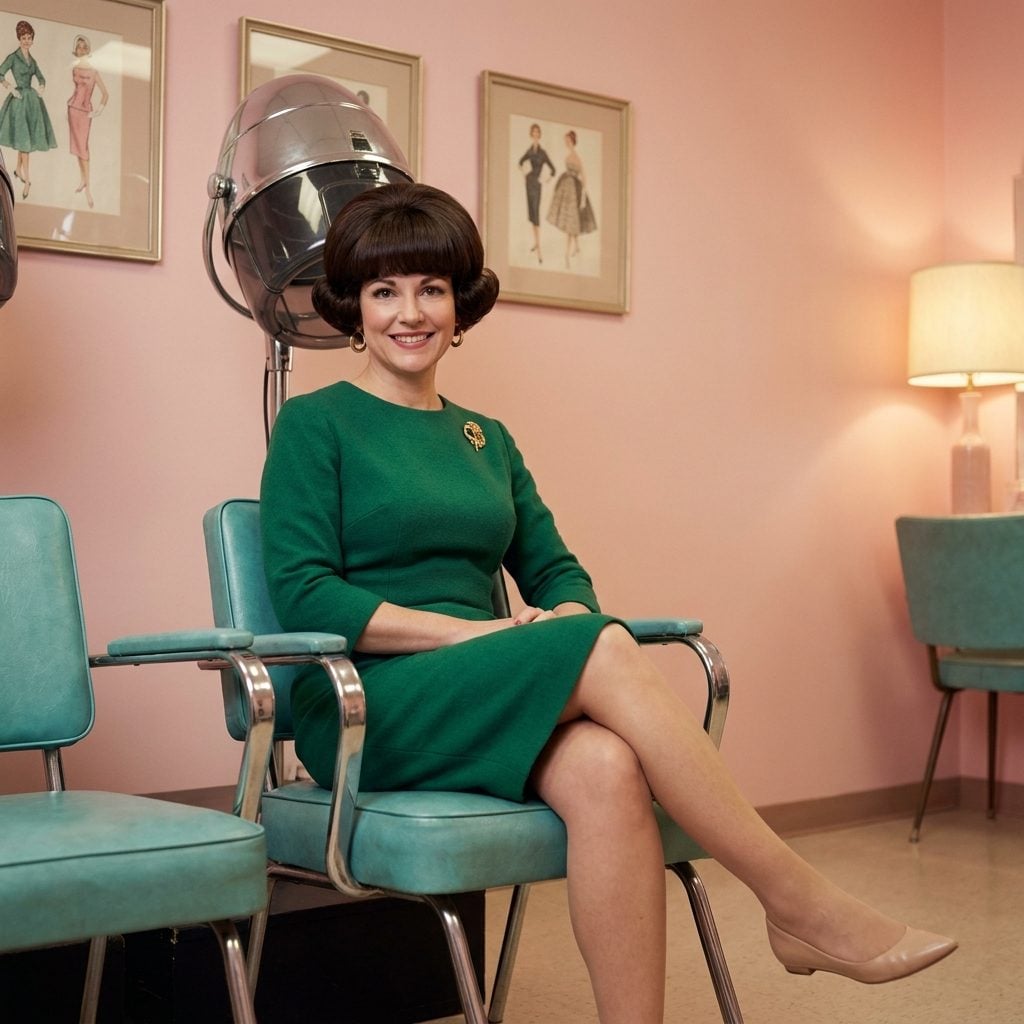
The Bubble Cut That Made Every Head Look Like a Perfect Dark Helmet
❤️ Would you like to save this?
This was the hairstyle equivalent of a uniform. Rounded, voluminous, curled into a smooth dome shape that sat about two inches off the scalp at every point. Dark brown hair, ideally. The bubble cut said nothing about your personality and everything about your commitment to weekly salon appointments.
Getting it right required a hood dryer, a stylist who understood geometry, and enough hairspray to shellac a bookcase. You didn’t run your fingers through a bubble cut. You didn’t let the wind touch it. You maintained it like a topiary.
Jackie Kennedy gets credit for making this silhouette presidential, but the version most of us actually wore was slightly less polished, slightly more suburban, and held together with prayers and Dippity-do.
The Flipped Pageboy With a Center Part and Wispy Bangs
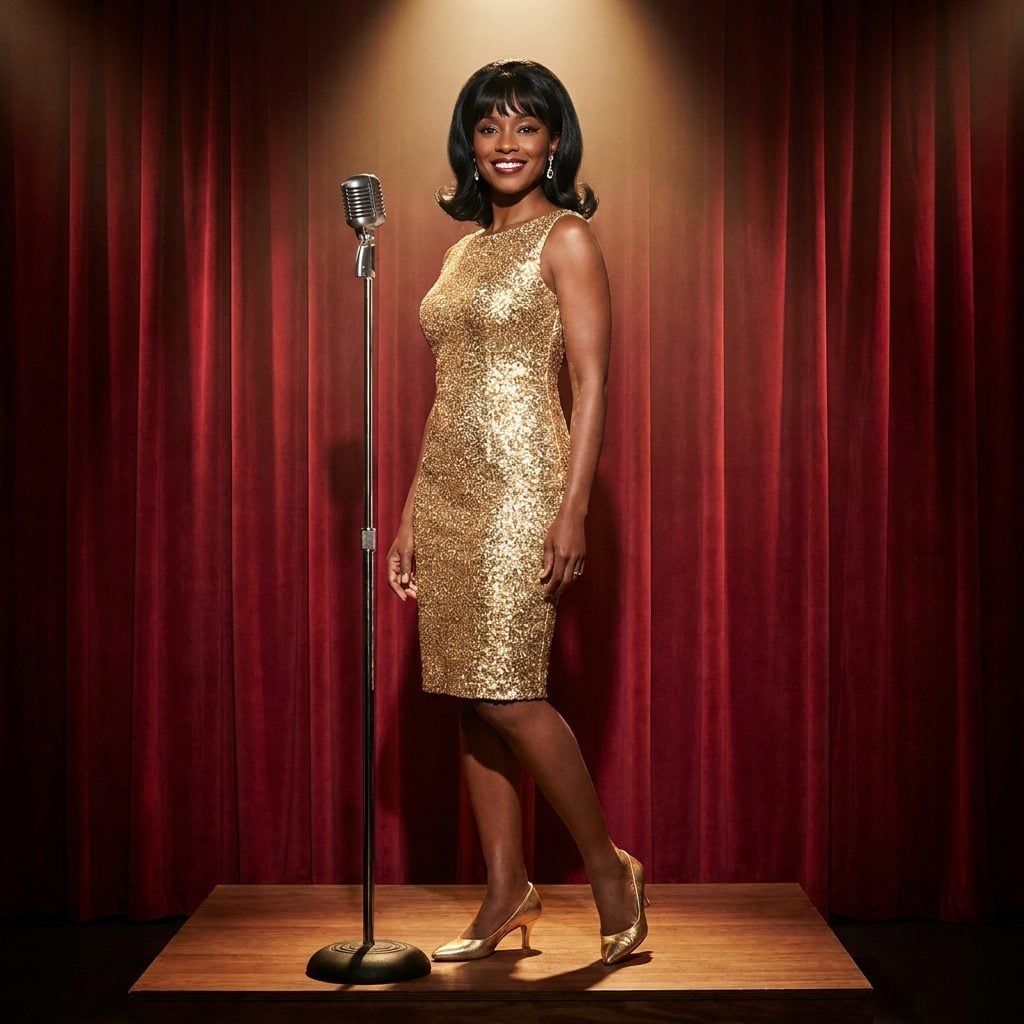
Jet-black hair, turned under at the ends so precisely it looked like each strand had been individually instructed where to go. Center-parted, with wispy bangs that just barely grazed the eyebrows. This was the Motown-era pageboy, and if you grew up watching girl groups on Ed Sullivan, you know exactly what I’m talking about.
The secret was pressing the hair smooth first, then using large rollers to create that perfect inward curl at the shoulders. It moved when you moved, which was the whole point. This hairstyle was designed for performing, for walking into a room, for turning your head and having the ends follow a half-second later with a satisfying swish.
The Long Blonde Fall: Straight, Center-Parted, and Impossible to Maintain
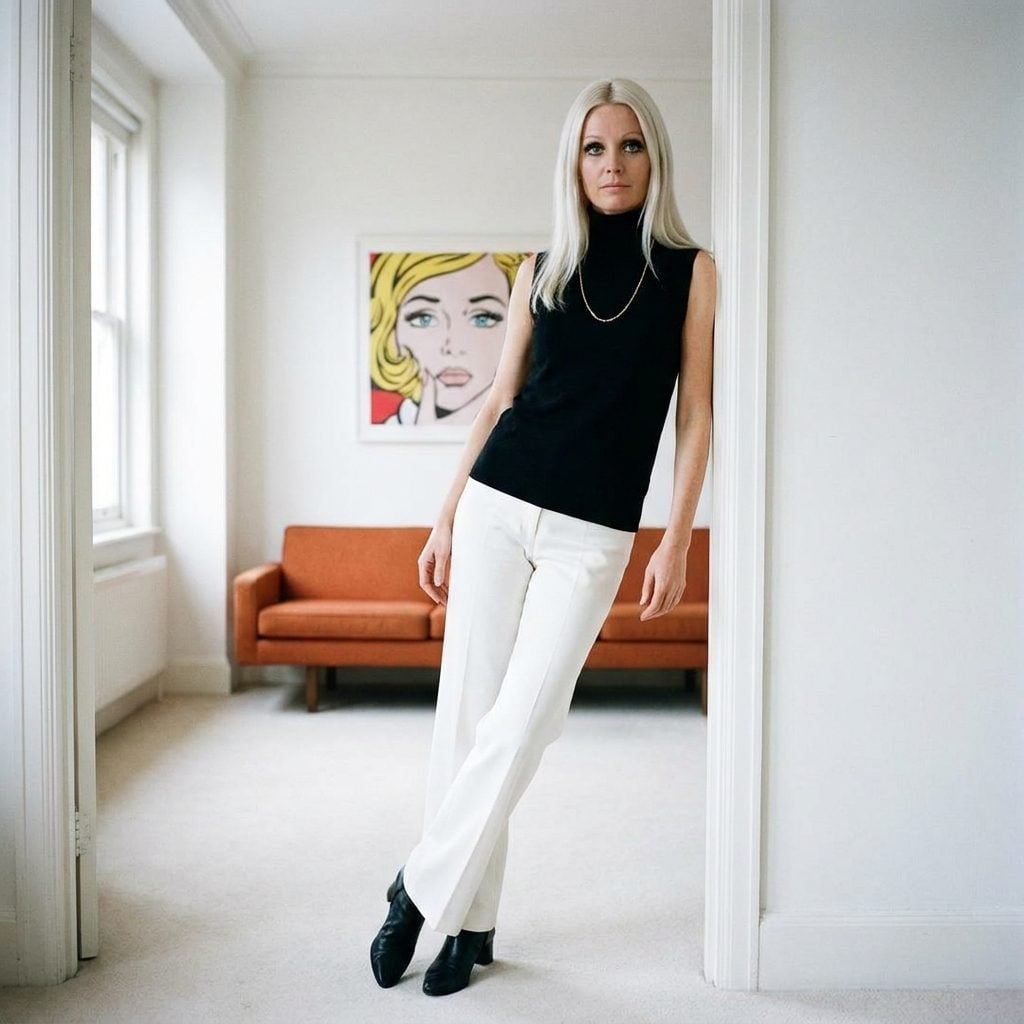
Here’s the thing nobody tells you about stick-straight platinum hair past the shoulders in 1966. Without a flat iron (which didn’t exist yet for home use), you achieved this look by ironing your hair on an actual ironing board. Your friend held the iron. You prayed she wouldn’t burn your ear. This was the price of looking like you didn’t try.
Heavy dark lashes completed the look. Not subtle lashes, either. We’re talking three coats of cake mascara applied with a tiny brush you had to spit on first, or those individual false lash clusters glued on one by one until your eyelids felt heavy. The whole point was the contrast: pale, flat, almost ghostly hair against those enormous doll eyes.
By 1968 this look was everywhere, and half the long blonde hair walking around wasn’t even real. Hairpiece falls clipped right into the crown were sold at every department store.
The Pixie Crop With Piecey Layers and Long Side-Swept Bangs
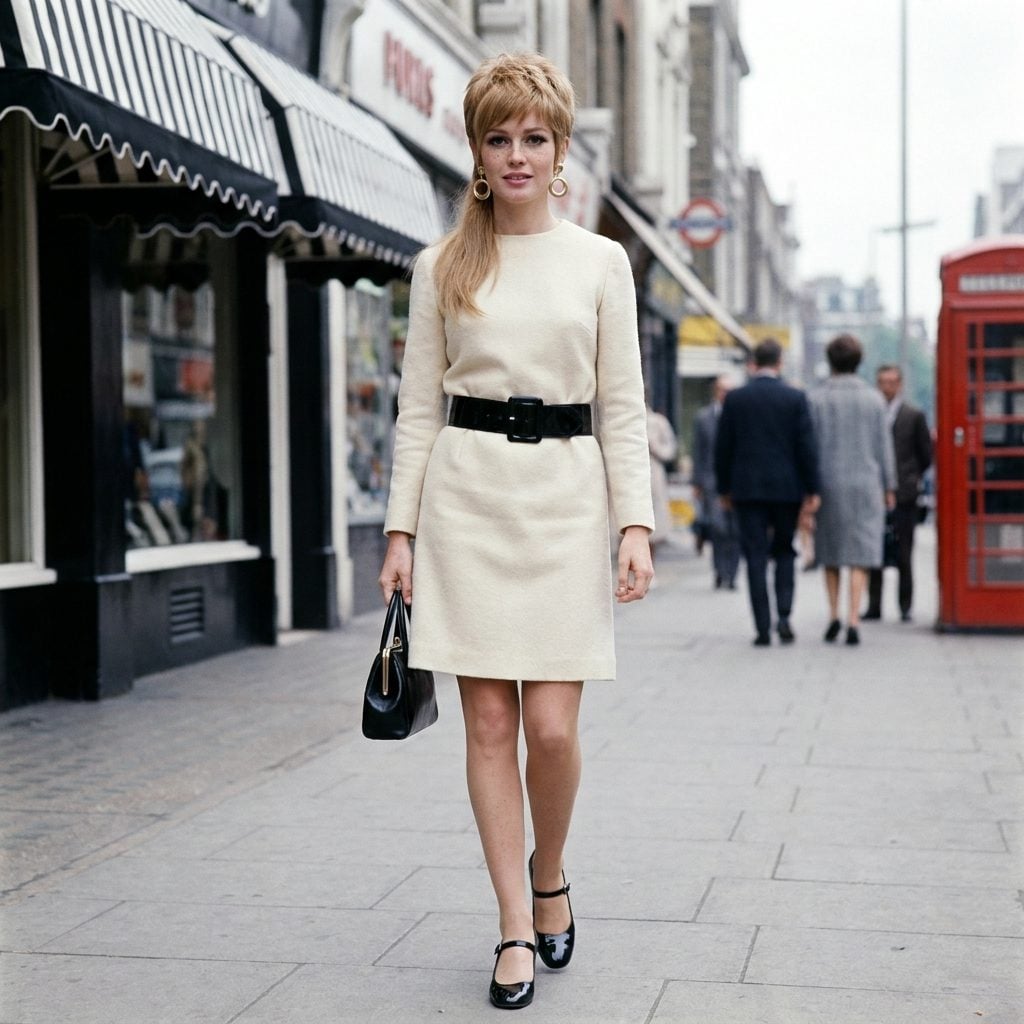
Not everyone could pull this off. Let’s just be honest about that. The cropped cut with piecey, slightly shaggy layers and those long bangs swept dramatically to one side required cheekbones, confidence, and a willingness to have your mother tell you that you looked like a boy.
This was the androgynous hairstyle that split rooms in half. Men either found it wildly attractive or deeply confusing. Women either envied it or felt sorry for you. There was no middle ground.
Sandy blonde worked best because it softened the severity. And the maintenance was shockingly high for something that looked so low-effort. You needed a trim every three weeks or the whole thing collapsed into a shapeless mess that just looked like you’d given up.
The Shoulder-Length Flip With Full Bangs and Dramatically Upturned Ends
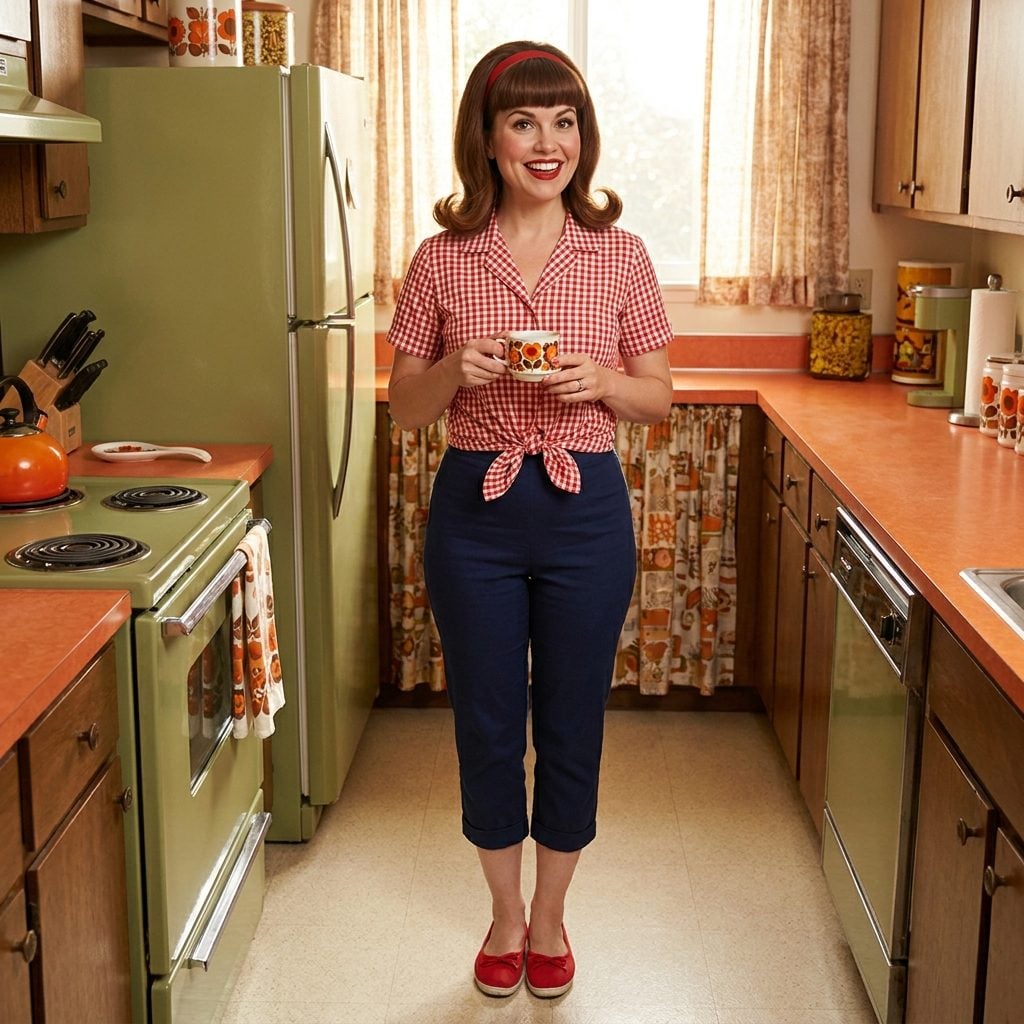
If you watched any television between 1966 and 1971, this was the hair you saw. Chestnut brown, landing right at the shoulders, with the ends curled up and out so aggressively they practically pointed at the ceiling. Full, straight-across bangs that required trimming every ten days unless you wanted to look through a curtain.
The upturned ends were the signature. Not a gentle wave outward. A full, committed flip achieved with a round brush and a bonnet dryer, or in a pinch, those enormous pink foam rollers that left dents in your head if you tried to sleep on them.
The flip wasn’t just a hairstyle. It was a mood. It was the physical manifestation of optimism and pep, curled right into the ends of your hair.
The Beehive Hidden Under a Silk Hermès Scarf With Cat-Eye Sunglasses on Top
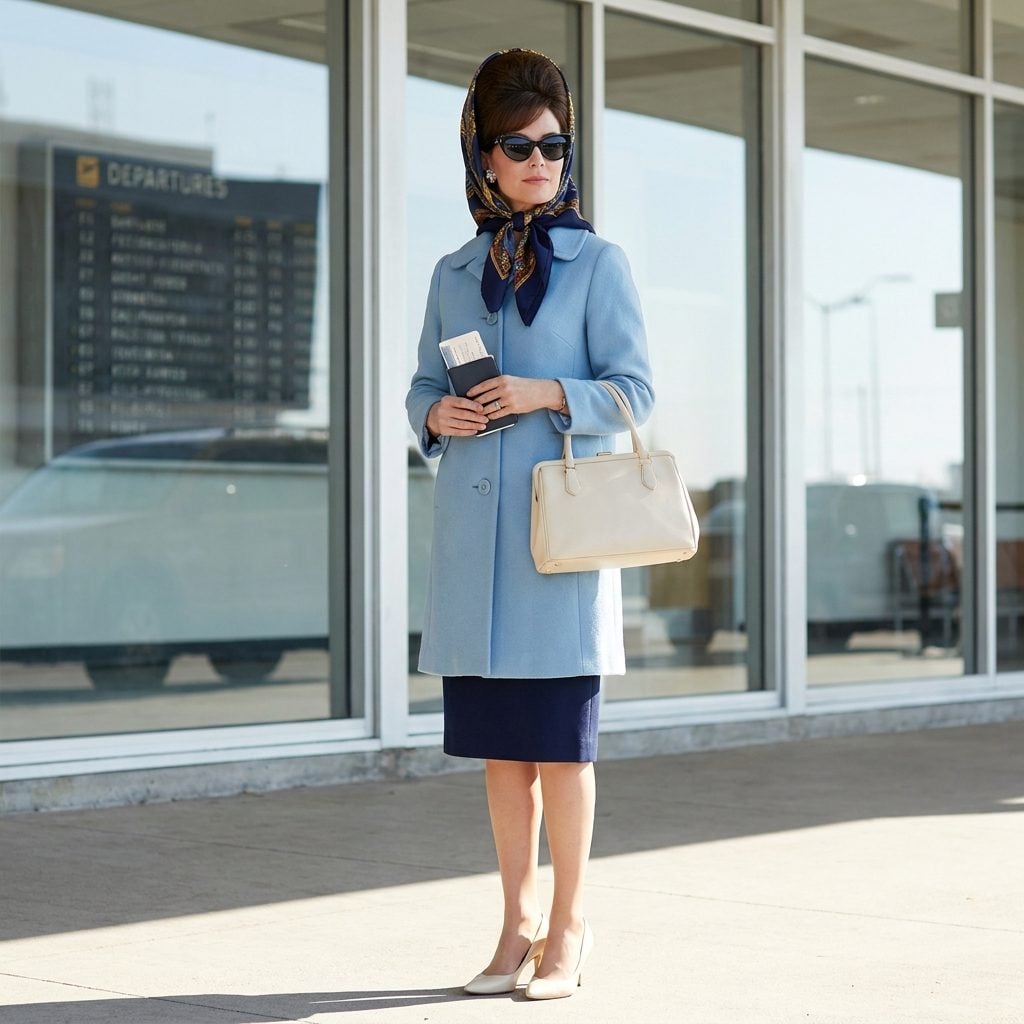
This was peak “I have a hairstyle under here that cost me two hours and I am not letting weather, humanity, or God himself ruin it.” The beehive, fully constructed and lacquered into submission, wrapped in a silk Hermès scarf tied at the nape of the neck. Cat-eye sunglasses perched on top of the whole situation like a cherry on a very architectural sundae.
You saw this look at the country club, at the airport, on the way to lunch at the department store restaurant. It was glamour and practicality fused together. The scarf protected the hair. The sunglasses said you were somebody, or at least that you wanted to be mistaken for somebody.
The real flex was the silk scarf itself. A genuine Hermès was a status symbol that cost more than a week’s groceries. Most of us had a knockoff from the department store accessory counter, and we tied it with exactly the same confidence.
The Classic Low Chignon With Pearl Earrings and Not a Hair Out of Place
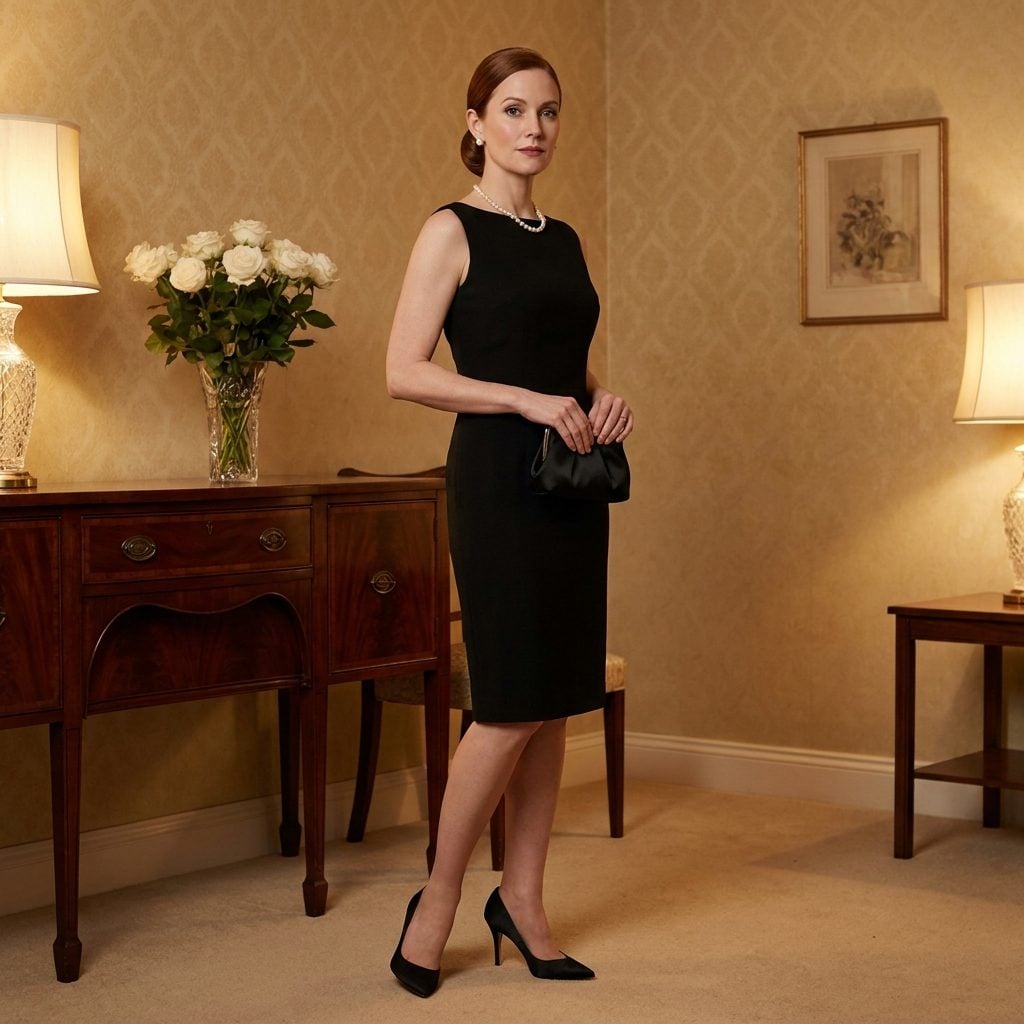
Smooth auburn hair pulled back so sleekly it looked painted on, gathered into a low bun at the nape that could have been sculpted from marble. Small pearl earrings visible now that nothing was competing for attention around the face. This was the formal hairstyle of the decade, and it communicated one very specific thing: I am a serious person attending a serious event, and I did not come here to have fun with my hair.
Weddings, funerals, charity luncheons, dinner parties with your husband’s boss. The chignon covered all of it. And the skill required was no joke. Getting hair that smooth without a straightener meant a wet set, careful drying, and enough bobby pins to set off a metal detector.
The Soft Blonde Flip With a Deep Side Part and Old Hollywood Manners
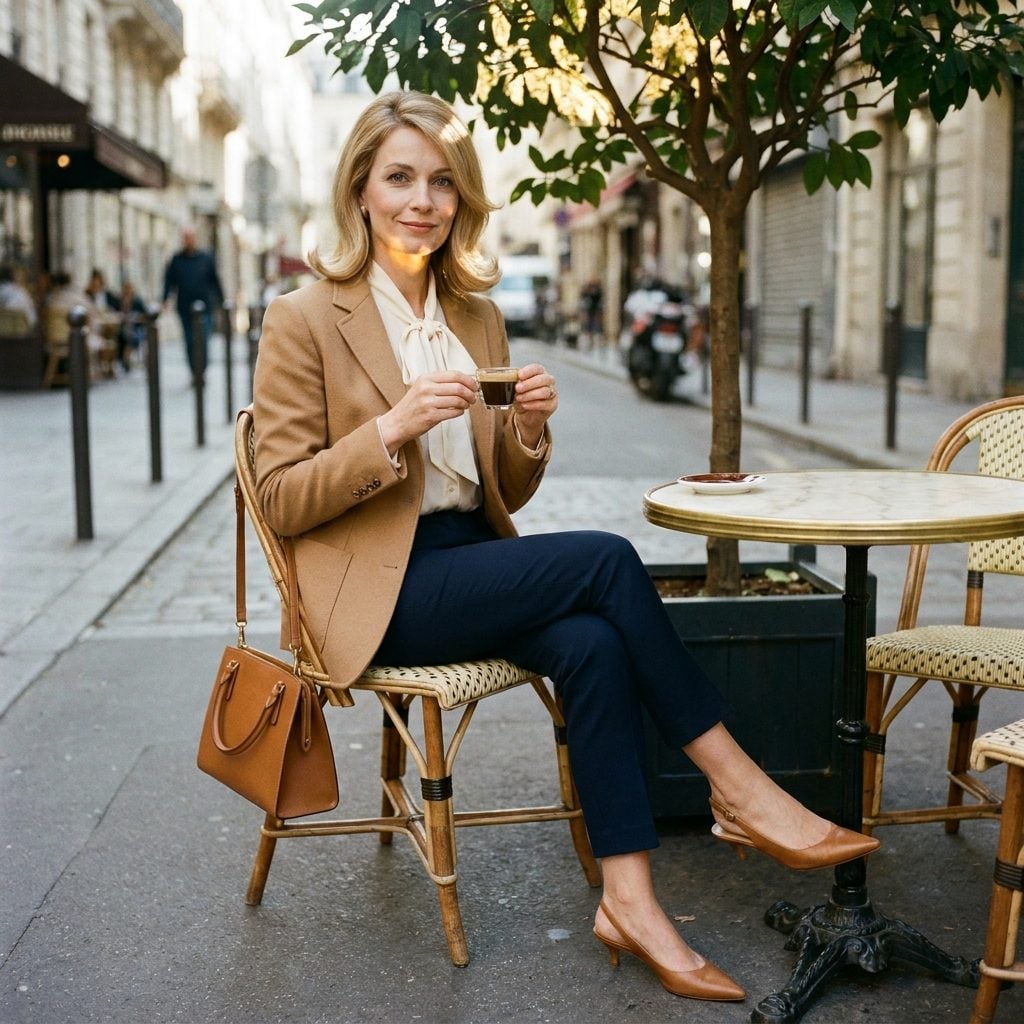
Shoulder-length hair, a shade of blonde that looked expensive even when it wasn’t, curled gently outward in a flip so soft it barely qualified as a curl. The deep side part was what made it. That part pulled the hair across the forehead at an angle that was half ingenue, half femme fatale, and entirely deliberate.
This was French New Wave hair filtered through American sensibility. European women wore it slightly undone. We wore it with more hairspray and more intention. The look required hot rollers set at the ends only, brushed out gently, then a strategic placement of the part that you checked in every reflective surface you passed.
The Bouffant Ponytail Tied With a Ribbon (and Teased Within an Inch of Its Life)
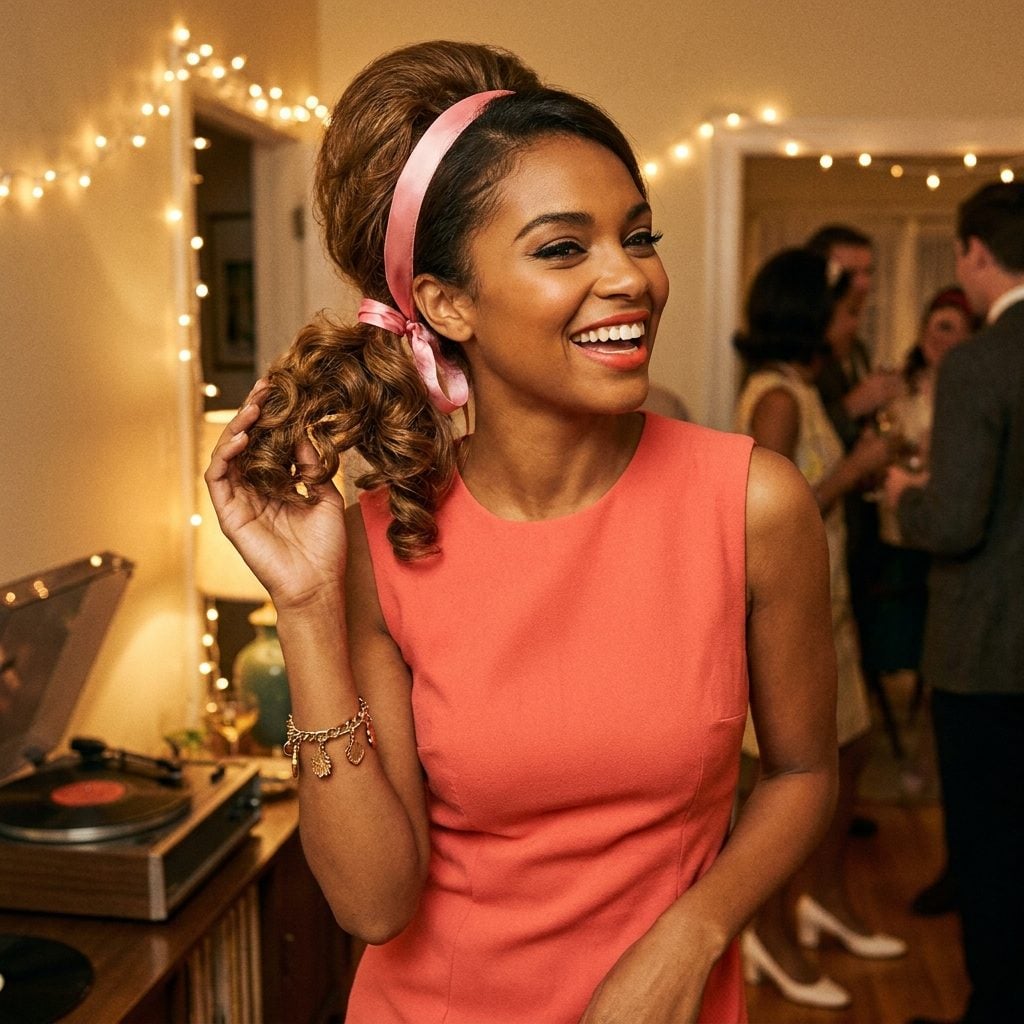
There was a version of the high ponytail in the early ’60s that required more structural engineering than most bridge projects. Dark hair, teased aggressively at the crown until it stood a good three inches tall, then gathered high and secured with a ribbon. Not an elastic with a ribbon on it. An actual satin ribbon tied in a bow, because we were not animals.
The ponytail itself was curled. Bouncy, spiraling curls that swayed when you walked and required pin curls the night before. The whole thing looked effortless and took approximately ninety minutes.
This was a teenager’s hairstyle, technically. But plenty of women in their twenties and thirties wore it to parties and didn’t think twice. The satin ribbon came in every color, and matching it to your outfit was non-negotiable.
The Towering Beehive With Heavy Liner and Spit Curls at the Temples
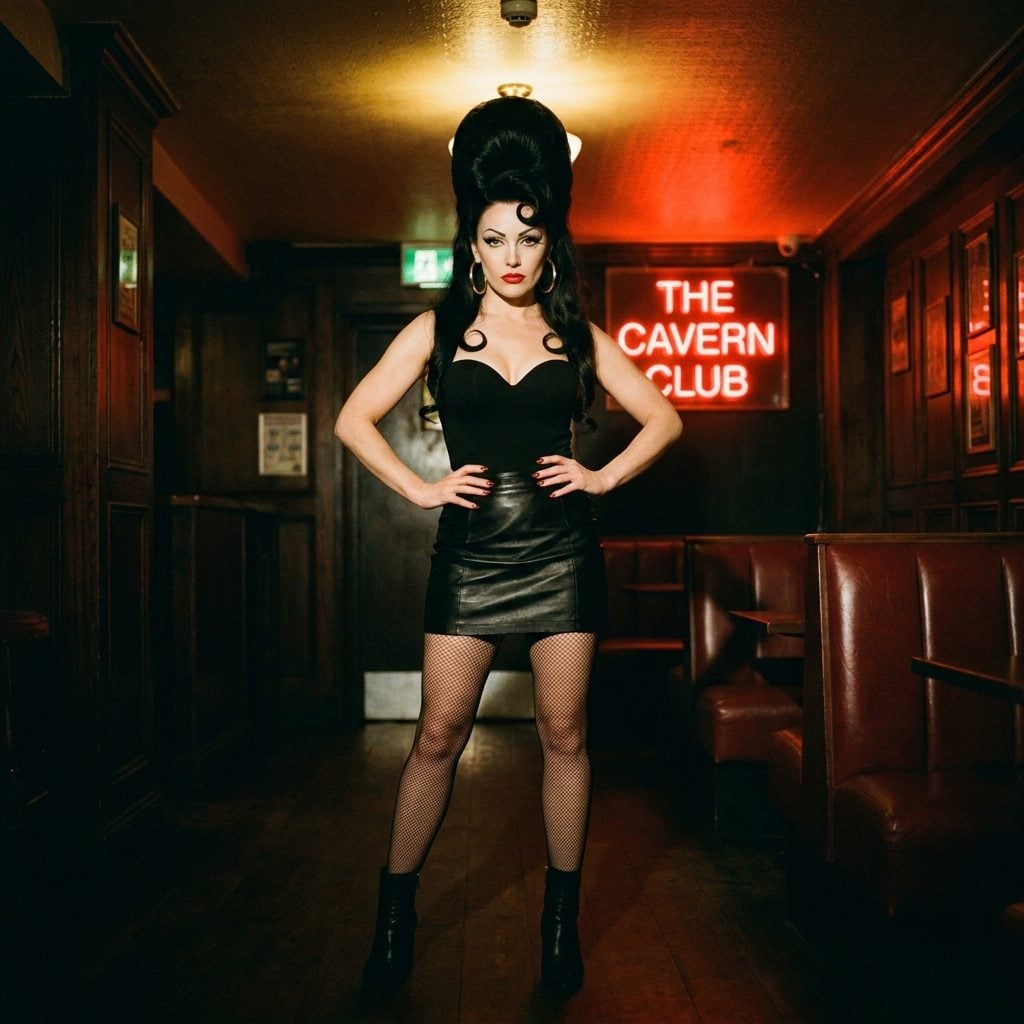
This was not a polite hairstyle. This was a declaration. Jet-black hair stacked and teased and sprayed into a tower that added a solid four to six inches of height, held together with bobby pins, backcombing, and sheer willpower. Heavy black eyeliner ringed the eyes. And at the temples, two perfect spit curls, pressed flat against the skin like punctuation marks.
The beehive in its most extreme form belonged to the girl groups and the rock-and-roll queens. It was loud. It was theatrical. It was not trying to look natural and it did not care if your mother thought it was too much.
Maintaining a beehive this tall meant you didn’t wash your hair for days. You wrapped it at night in toilet paper. I’m not making that up. You literally mummified your own head to preserve the height, then touched up the front in the morning and went about your business.
The Long Tousled Flip With Center-Parted Curtain Bangs and Zero Apologies

By the late ’60s, something shifted. Hair got softer. Less constructed. Light brown waves, center-parted, with curtain bangs that framed the face and a general tousled quality that looked like you’d been walking on a beach in the south of France even if you’d never left Ohio.
This was the style that bridged the structured early ’60s and the free-flowing ’70s. Not quite hippie. Not quite mod. Somewhere in the middle, where the rollers came out of the bathroom drawer less often and the hairspray can started gathering dust.
The curtain bangs were the real star. They softened every face shape, required almost no maintenance beyond a trim, and looked good whether you’d spent thirty minutes on your hair or rolled out of bed five minutes ago. I say this as someone who has been chasing this exact bang silhouette on and off for three decades: it never fully goes out of style, and it probably never will.
The Jackie Kennedy Bouffant Flip (And the Pillbox Hat You Begged Your Mom to Buy)
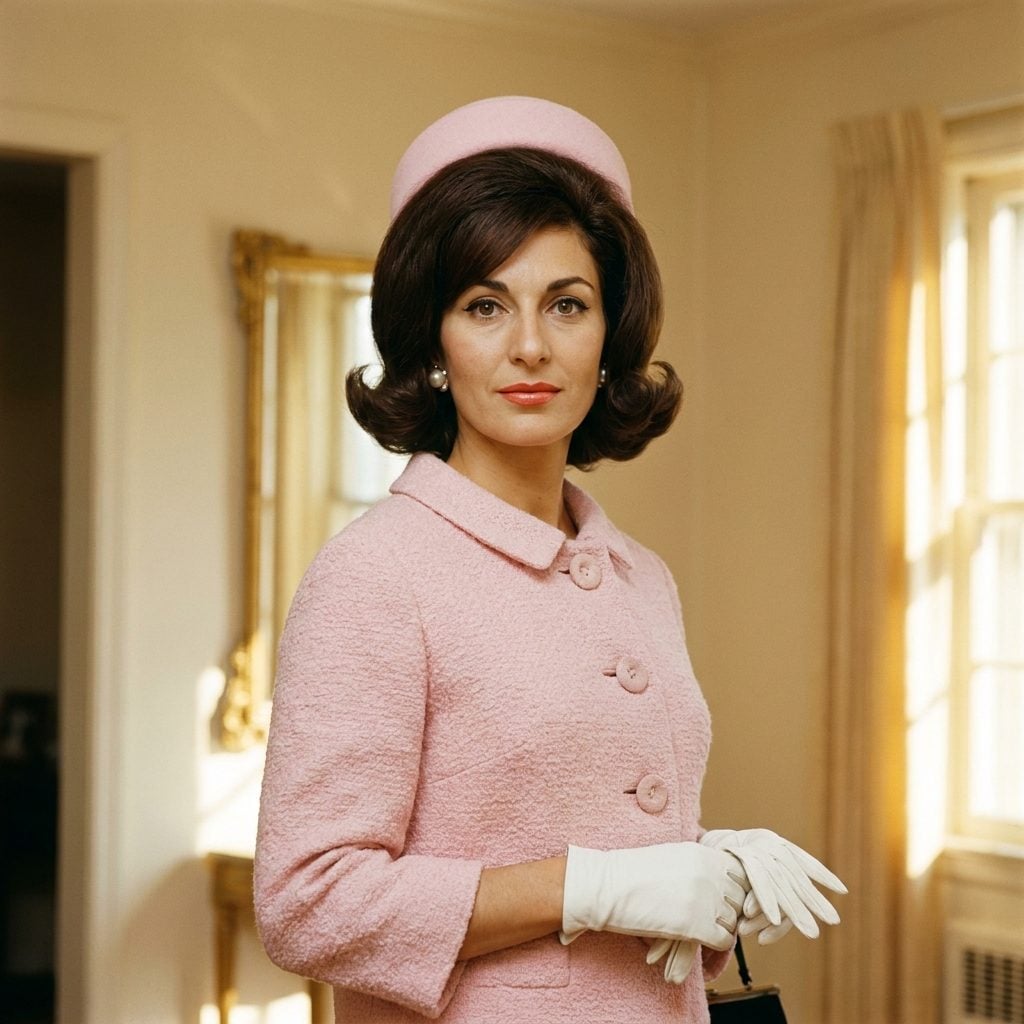
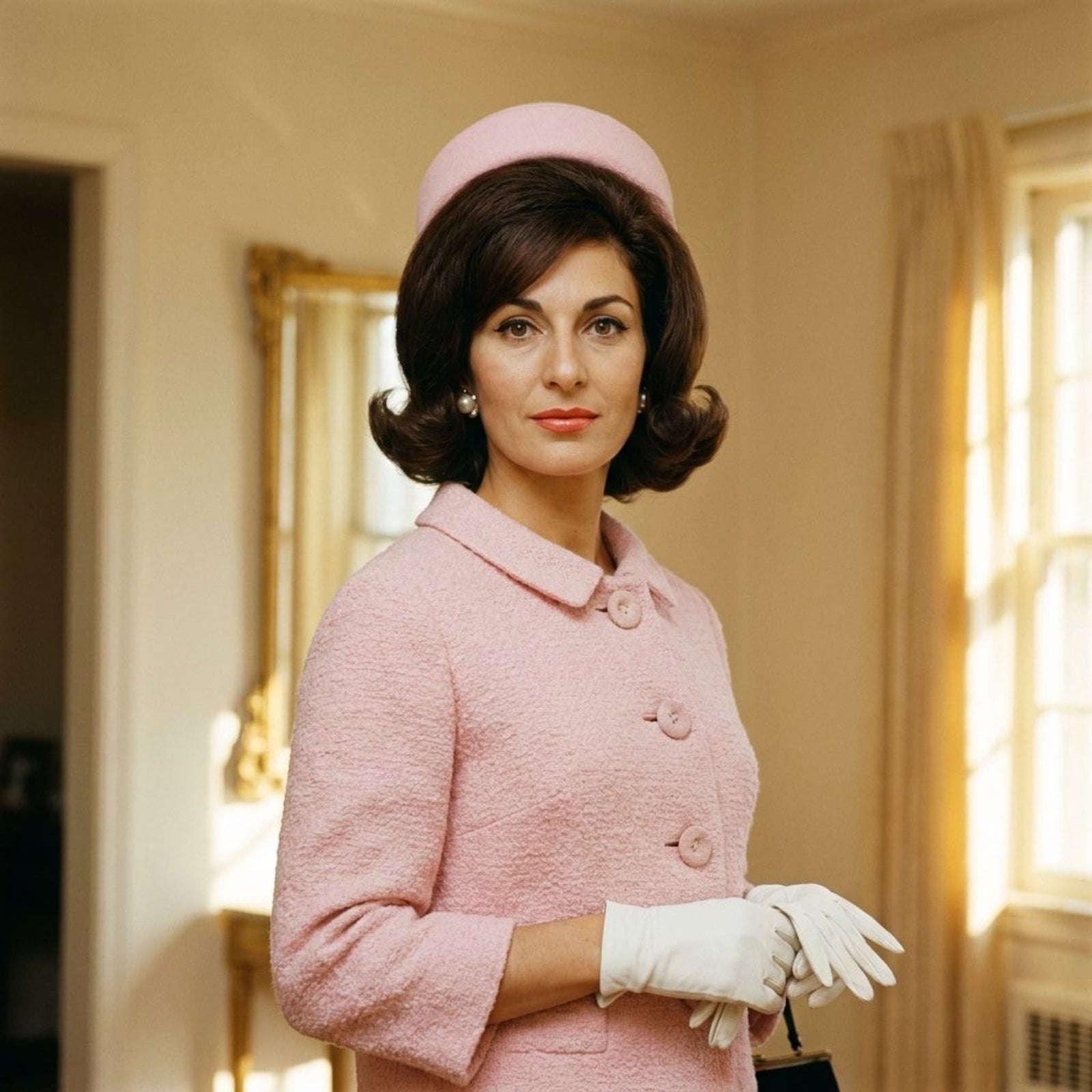
You didn’t just wear this hairstyle. You became it. That side-parted, shoulder-length flip with the volume on top and those ends curling outward like they had somewhere important to be. Every woman in America wanted this between 1961 and 1963, and most of us got a version of it, even if ours deflated by noon.
The real commitment was the pillbox hat perched on the back of your head at that specific angle. Not centered, not forward. Tilted back, like you were too busy running the country to push it into place. You needed approximately forty bobby pins and a prayer to keep it there, but you made it work because that’s what we did.
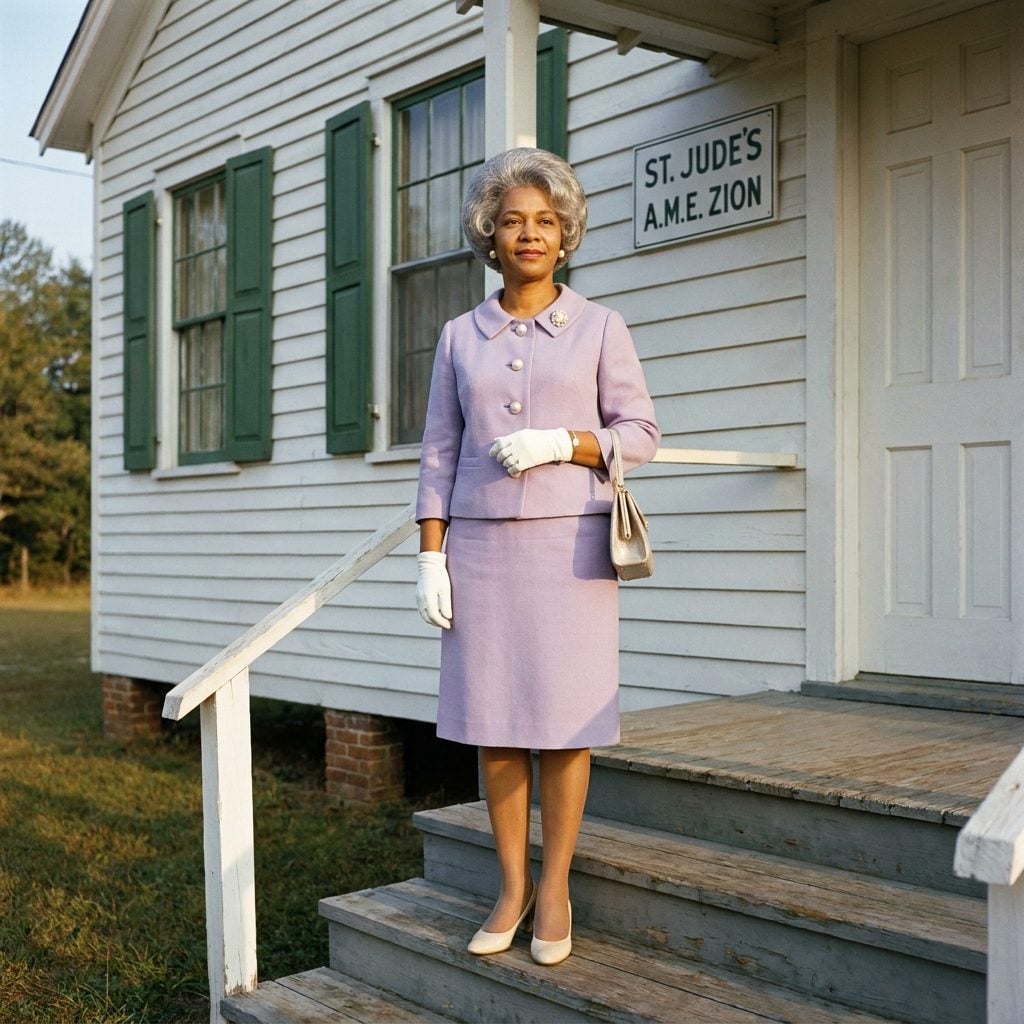
The Southern Church Lady ‘Helmet’ That Could Survive a Hurricane
❤️ Would you like to save this?
You could spot this woman three pews ahead because her hair didn’t move. Not when she turned to shush her kids, not when she fanned herself with the church bulletin, not during the most spirited “Amen” of the service. That silver-gray dome was architectural. It was load-bearing. It was held together by a can and a half of Aqua Net and the sheer force of her personality.
Every small town had a beauty parlor where these were constructed, usually by a woman named Dot or Shirley who’d been doing the same style since Eisenhower. You sat under the dryer reading Good Housekeeping, and you emerged with a helmet that wouldn’t quit until your next Thursday appointment.
I genuinely believe these hairstyles influenced aerospace engineering. The structural integrity was unmatched.
The Short Blonde Flip That Said ‘I Watch Variety Shows and I Have Opinions’
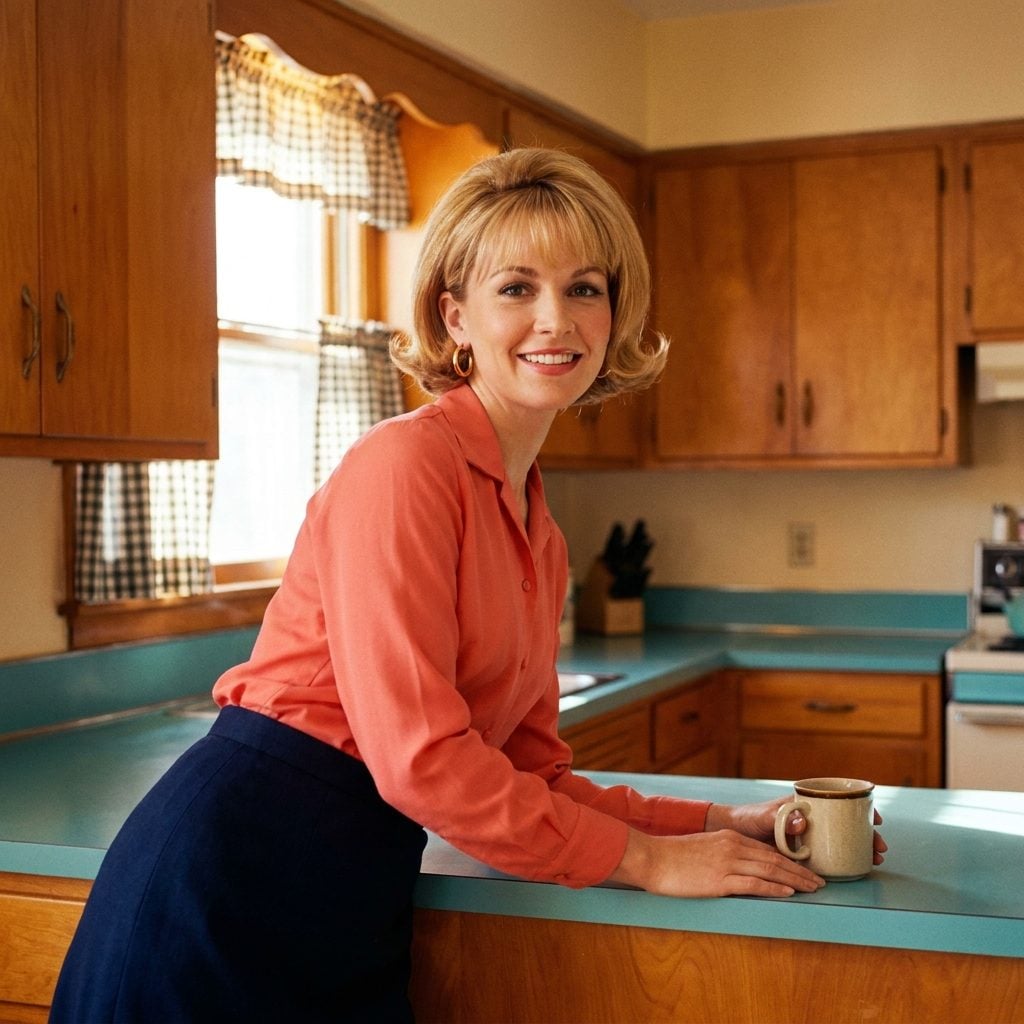
Cropped, textured, and flipped outward at the ends like each strand had somewhere better to be. This was the haircut of a woman who kept up. She knew the songs on the radio. She had a subscription to McCall’s and actually tried the recipes. Those wispy bangs across the forehead weren’t accidental; they took twenty minutes with a round brush and a prayer.
The short flip was a rebellion in miniature. Not long enough to pin up, not short enough to scandalize your mother-in-law. It sat right in the sweet spot of “modern but respectable,” which, if we’re honest, was the entire aesthetic project of the early sixties.
The Beehive Half-Updo With Pearl Drops (Because You Were Going Somewhere Important)
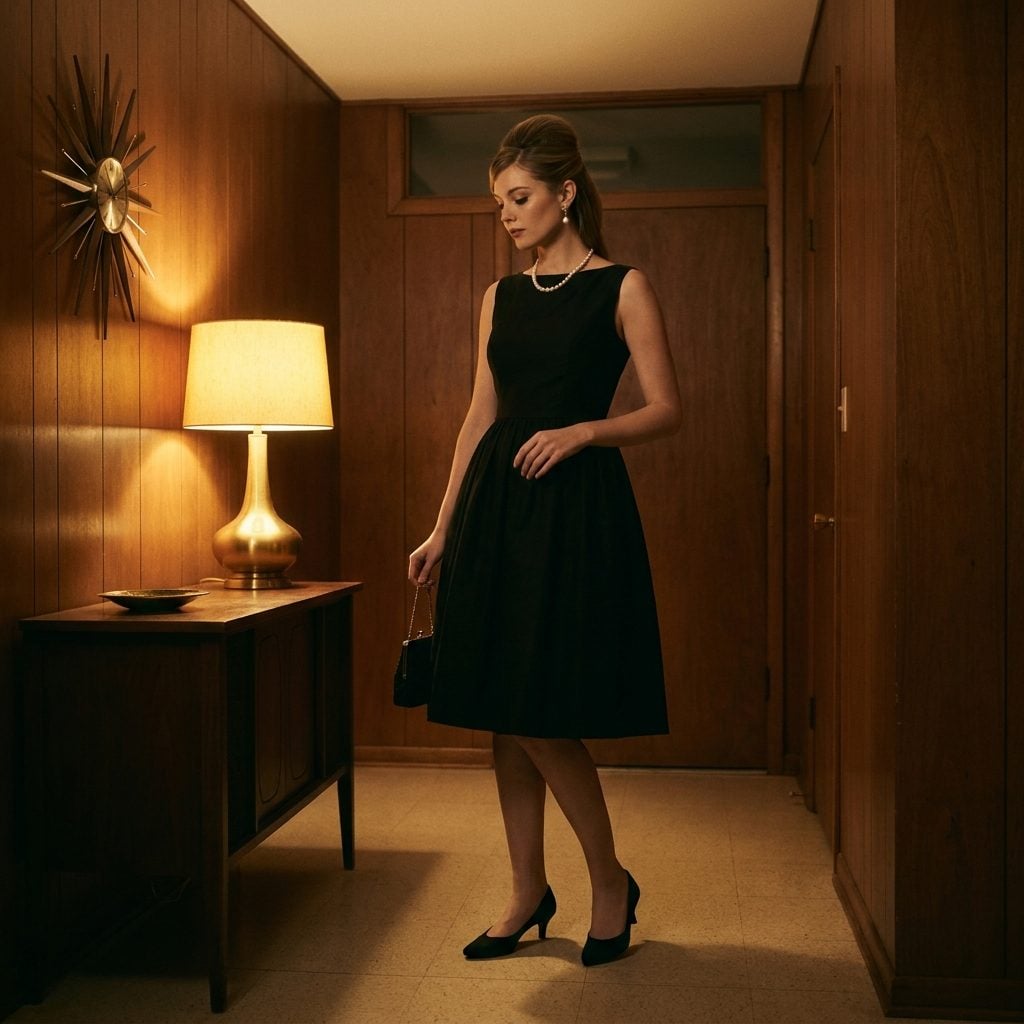
This was not an everyday hairstyle. This was the one you built for the company Christmas party, your anniversary dinner, or the evening your husband’s boss came for cocktails. Dark brown hair teased within an inch of its life at the crown, the rest falling in a polished flip that grazed your shoulders like it had been rehearsed.
And the pearl drop earrings weren’t optional. They were the punctuation mark. The whole look communicated a very specific message: “I put in effort, and I expect you to notice.”
Getting this right required a hand mirror, a tail comb, and about forty bobby pins you’d find in the bathroom sink for the next three weeks.
The Sculpted Curl Updo That Required an Engineering Degree and a Jeweled Hairpin
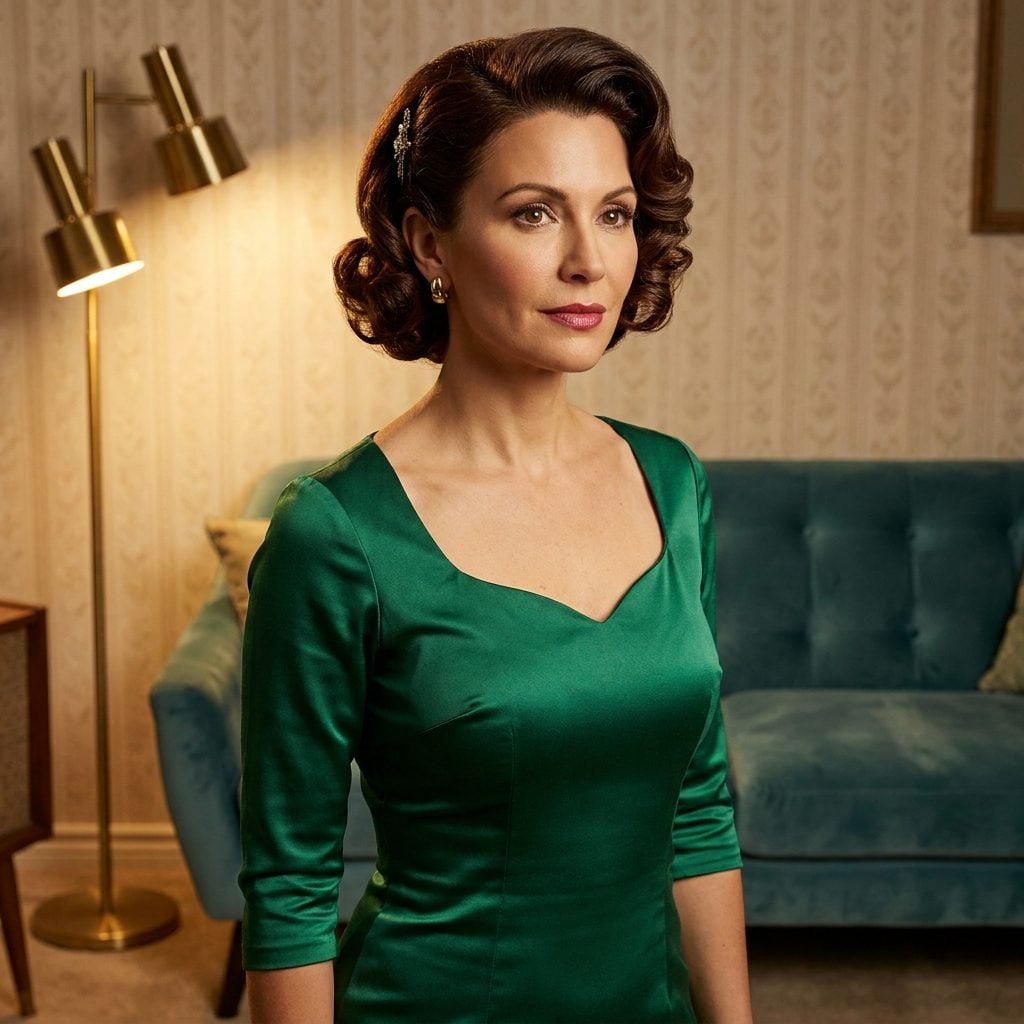
Every curl was deliberate. Pinned, sprayed, and placed like each one had a name and a purpose. This glossy dark brown updo sat on top of the head like a crown you made yourself, and the jeweled hairpin wasn’t decoration. It was the keystone holding the whole operation together. Pull it out and the Geneva Convention no longer applied.
Hollywood brought us this look, but regular women made it their own for weddings, galas, and any occasion that required pantyhose. You could spend an hour on it or pay your hairdresser $3.50, which felt like a fortune in 1964.
The Flower-Child Center Part (The One Your Mother Absolutely Hated)
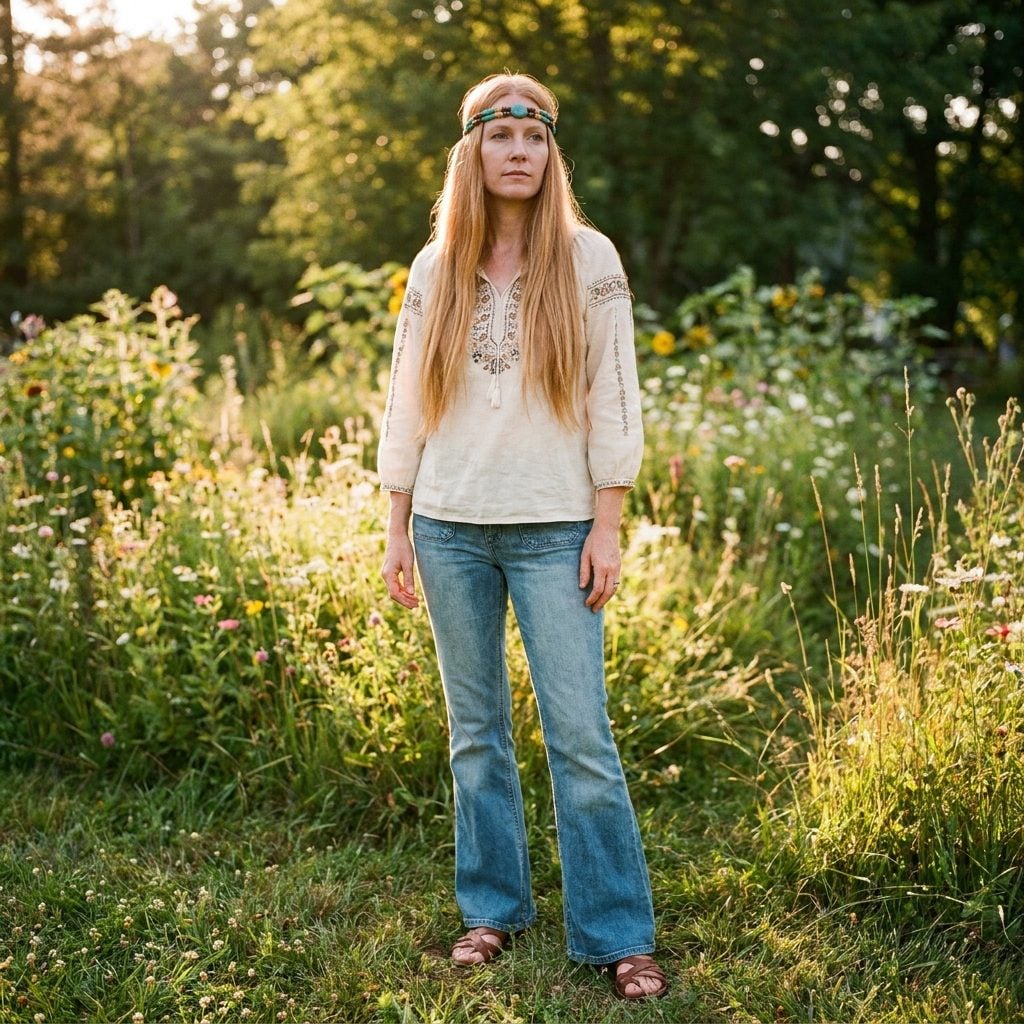
By 1968, something shifted. The teasing combs went quiet. The Aqua Net gathered dust. And suddenly you were parting your hair straight down the middle, letting it fall in long, flat sheets of strawberry-blonde that said, “I have read some pamphlets and I have feelings about the establishment.”
The thin beaded headband was doing a lot of work here. Without it, you were just a woman who hadn’t set her hair. With it, you were making a statement. A cultural one. Possibly a political one. Definitely one that made your mother sigh through her nose at the dinner table.
This was the look that drew a hard line between the early sixties and the late sixties. Same decade, different planet.
The Beauty Parlor Roller Set: Platinum Waves Brushed Into a Halo You Could Set Your Watch By
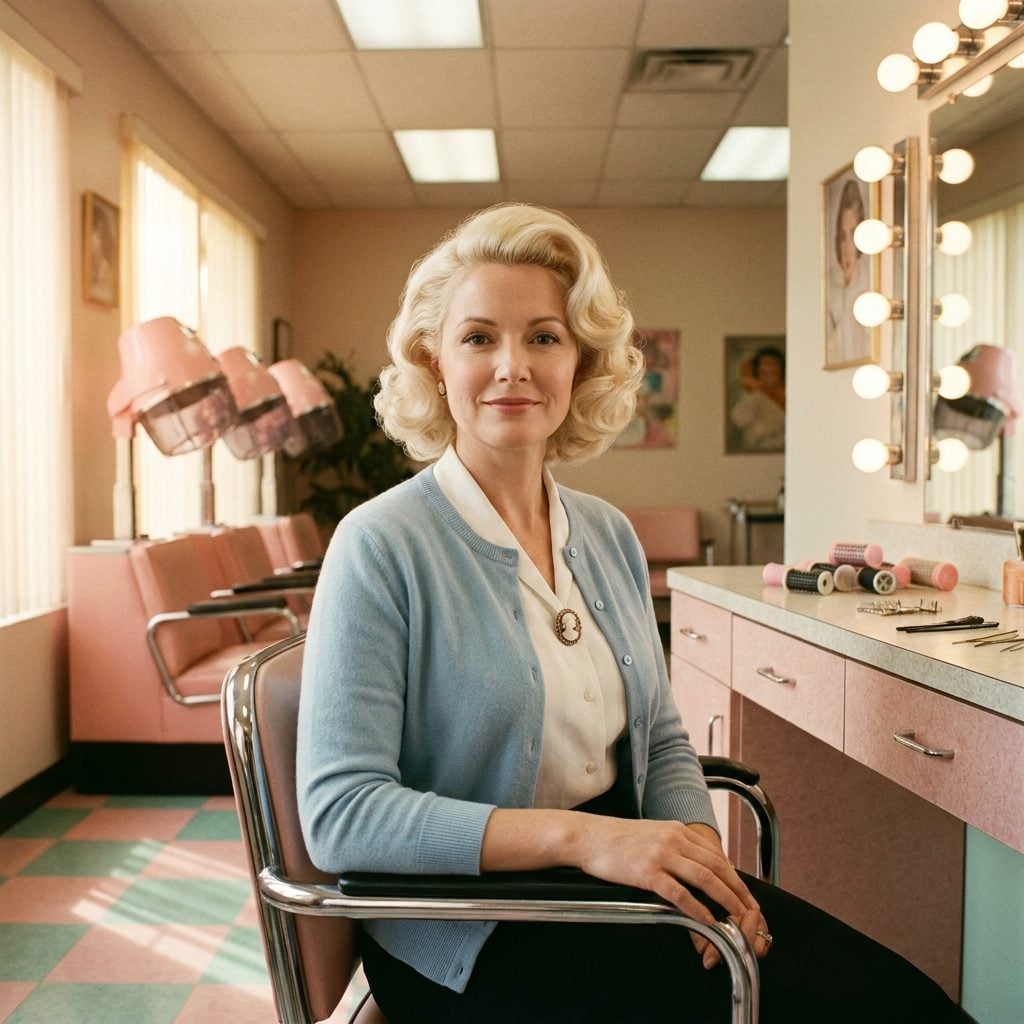
Thursday was hair day. This was not negotiable. You went to the beauty parlor, you sat in the chair, you got rolled, you sat under the dryer reading Ladies’ Home Journal with the roar of hot air drowning out Gladys in the next chair talking about her son-in-law, and you emerged with soft platinum waves brushed into a rounded halo that framed your face like a painting.
It lasted exactly one week if you slept on a satin pillowcase and didn’t get caught in the rain.
The beauty parlor wasn’t about vanity. It was the one hour a week that was yours, and nobody could take it from you.
The Bouffant Bob With Tucked-Under Ends That Every PTA President Wore
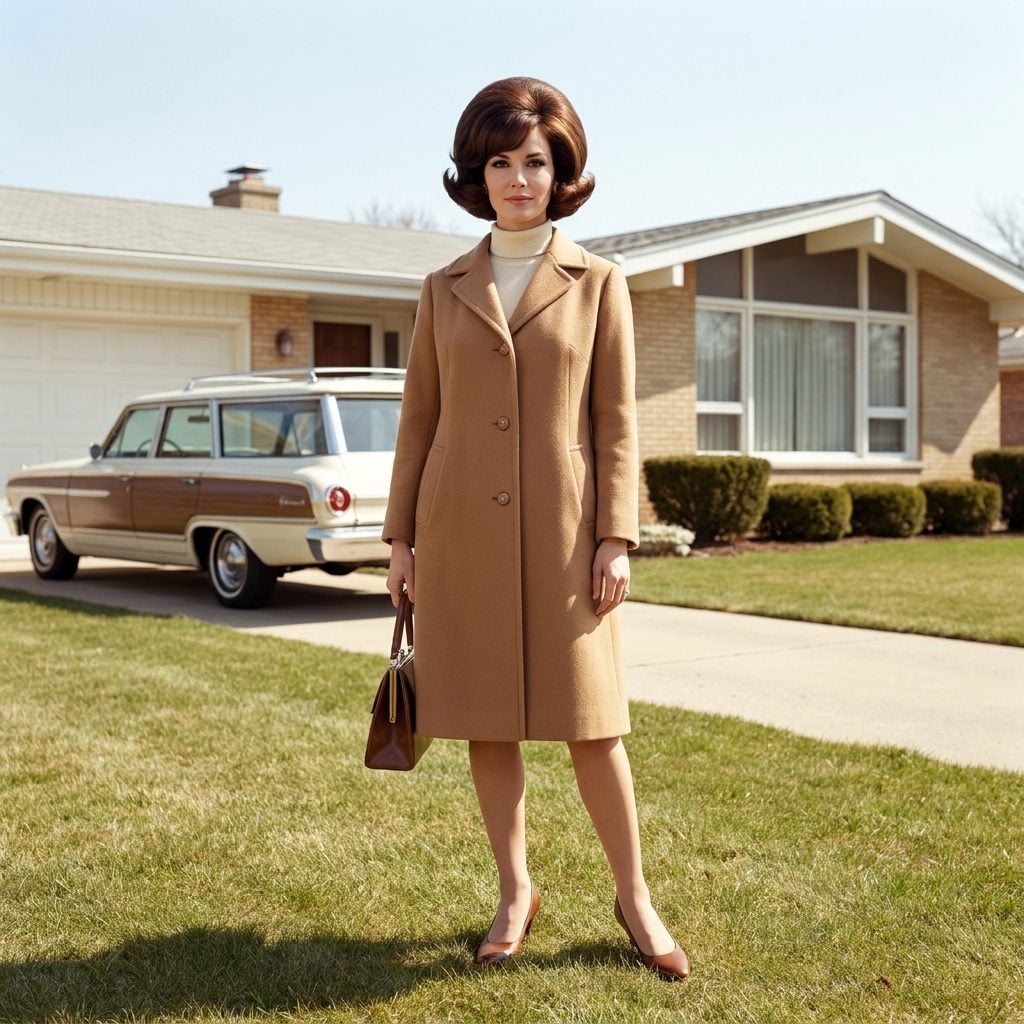
Rounded at the crown. Tucked under at the ends. Deep brunette with maybe a few subtle highlights if you were feeling daring. This was the responsible woman’s hairstyle, and I mean that as a compliment. It said: I chair committees. I remember everyone’s birthday. My casserole is already in the oven.
Jackie Kennedy made the bouffant aspirational, but your neighbor Mrs. Henderson made it functional. She could drive carpool, chair the bake sale, and still look polished for bridge club, all without a single hair falling out of place. The tucked-under ends were essential. They gave the whole thing a finished quality, like closing a parenthesis.
The Feathered Flip With Airy Crown Lift (AKA ‘The Doris Day Without the Dog’)
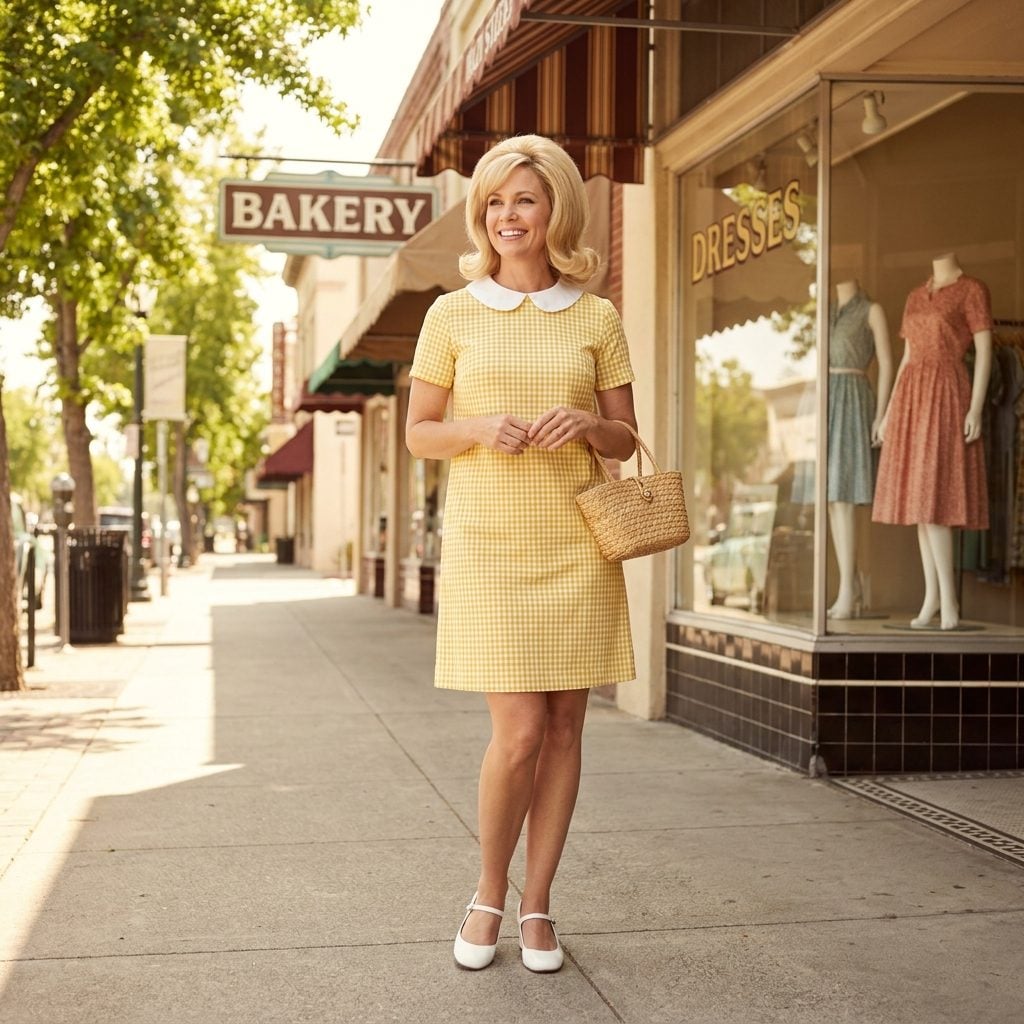
Warm blonde. Feathered outward-curled ends. Airy lift at the crown that suggested you woke up looking this good, even though you absolutely did not. This was the friendliest hairstyle of the decade. Approachable. Sunny. The kind of hair that made people assume you baked banana bread on weekends, and honestly, you probably did.
What made the flip work was the movement. It wasn’t stiff or shellacked. It bounced when you walked. It caught the light. It was the sixties version of “I’m not trying too hard,” which of course required trying incredibly hard. A round brush, a bonnet dryer, and the patience of someone who understood that looking effortless has never once been effortless.
The Jet-Black Mod Bob With Heavy Fringe That Meant You’d Been to London (Or At Least Seen a Magazine About It)
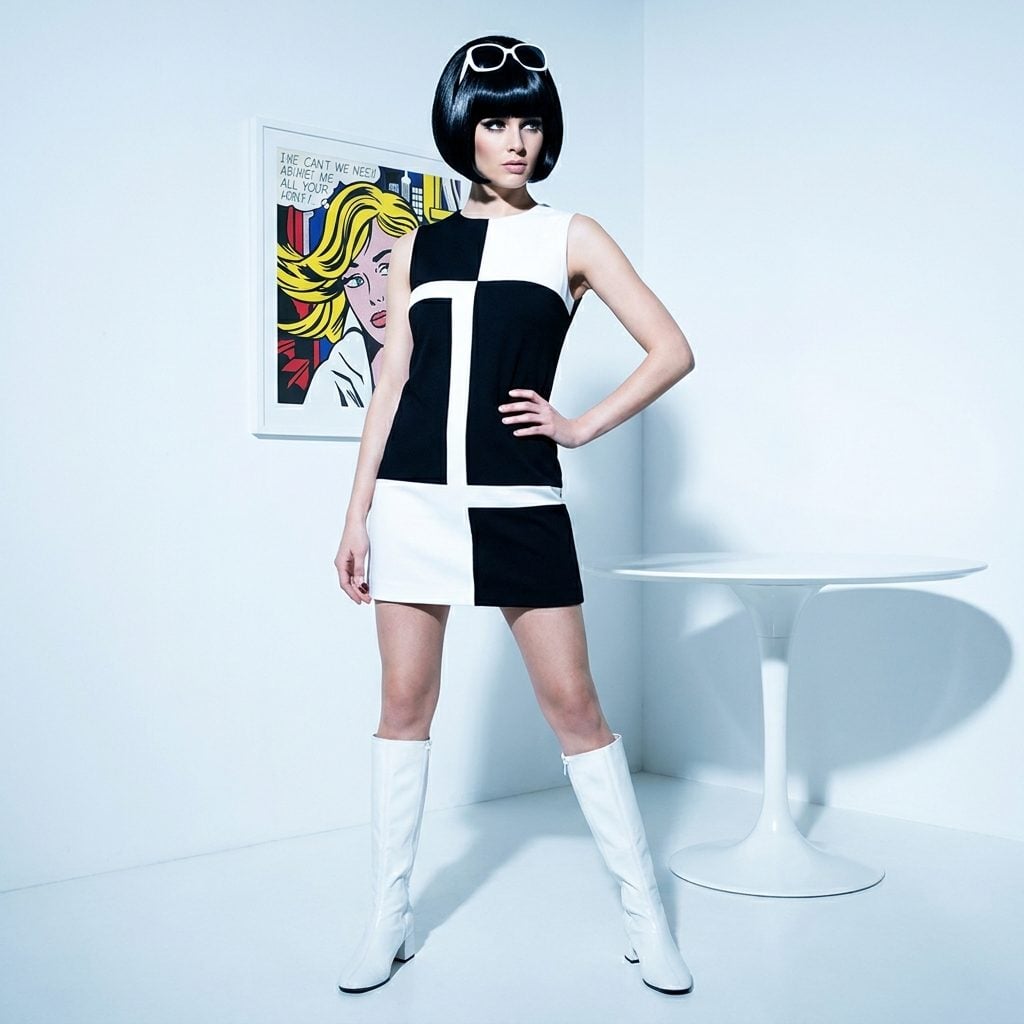
Sharp. Severe. Glossy as a vinyl record. This bob had no softness to it, and that was the whole point. The heavy fringe sat straight across the forehead like a declaration, and the lines were so clean they could have been cut with a ruler. This was not a hairstyle for blending in. This was for the woman who wanted you to look.
By the mid-sixties, the mod look had crossed the Atlantic, and suddenly every adventurous woman with access to a good stylist was asking for “something geometric.” The jet-black color was non-negotiable. Brunette wouldn’t do. It had to be ink-dark, high-gloss, almost liquid.
Not everyone could pull this off. But the women who did? They owned every room they walked into.
The Teased Crown With Straight Lengths: When You Wanted Volume But Also Wanted to Look Like You Watched the News
❤️ Would you like to save this?
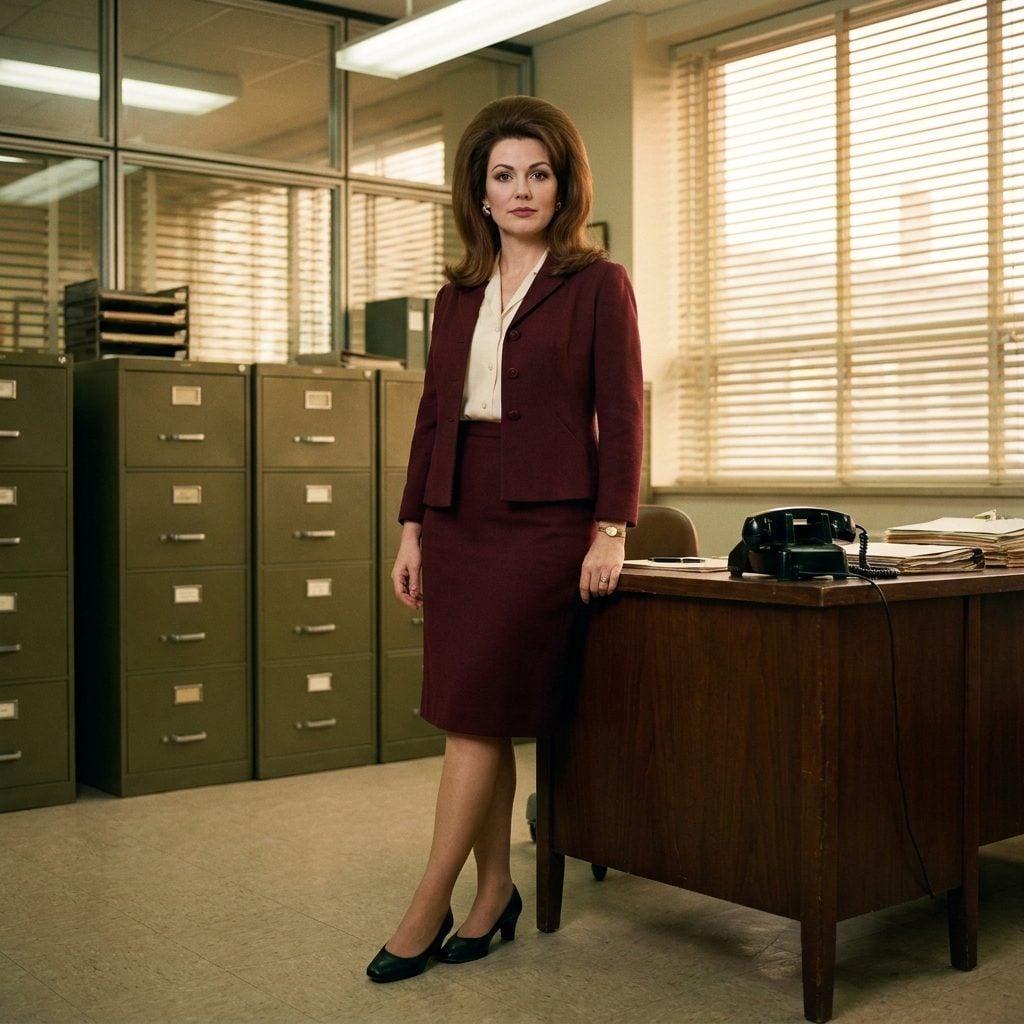
Volume on top, smooth and straight below. Chestnut brown, hitting right at the shoulders. This was the compromise hairstyle, and millions of American women made it work. You teased the crown for height because flat hair felt unfinished in the sixties. But you kept the lengths straight and smooth because you weren’t trying to be Priscilla Presley. You were trying to get through Tuesday.
A tail comb and some backcombing at the roots. That’s all it took. Maybe a light mist of spray to hold the lift. The genius of this look was its adaptability. It worked for the office, for parent-teacher night, for a quick dinner out. It didn’t demand attention. It just quietly insisted on looking put-together.
The Half-Up Bouffant With a Ribbon (The Hairstyle That Launched a Thousand Prom Photos)
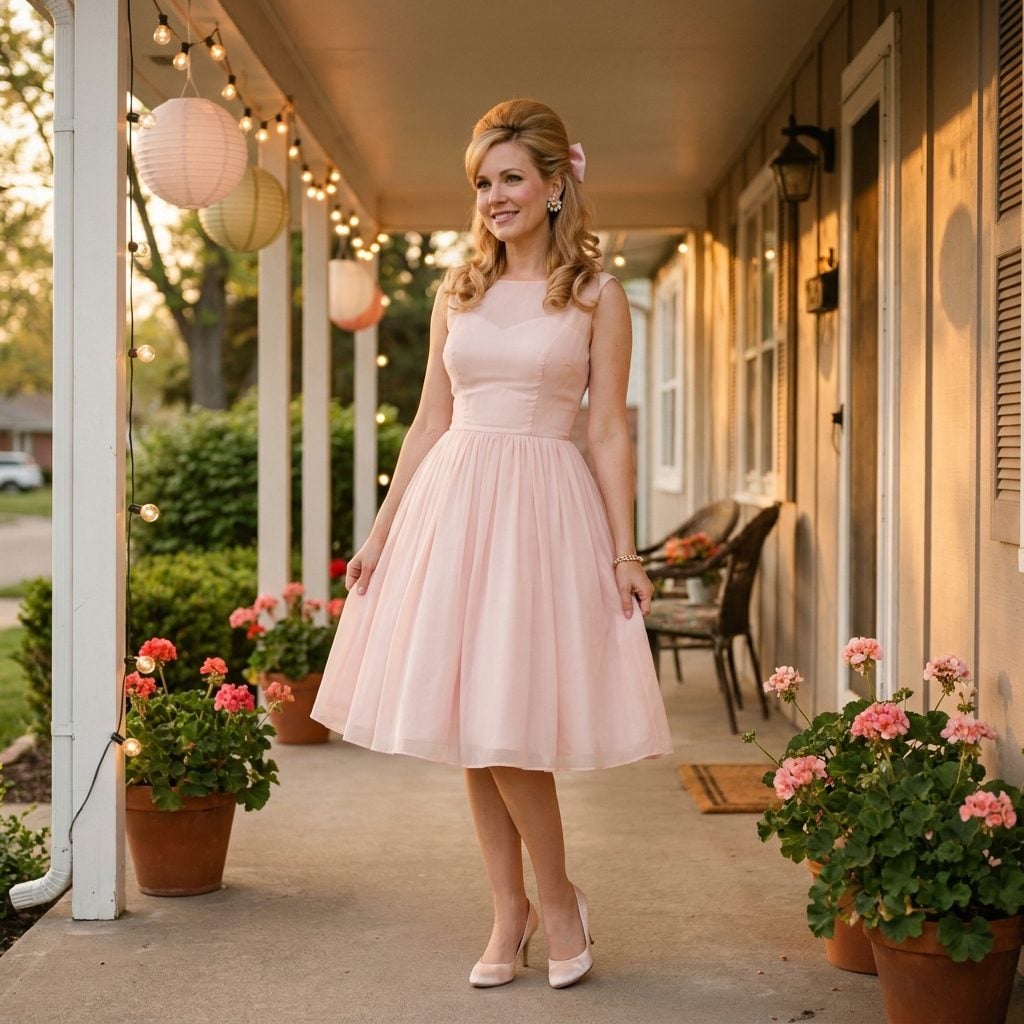
Honey blonde, lifted at the crown, with soft curls cascading down the back and a ribbon tied just so. This was the hairstyle you wore when you wanted to feel like the best version of yourself, and looking at old photos, it worked. There was something about that combination of structured volume on top and loose, feminine curls below that made every woman look like she was about to be photographed for something important.
The ribbon detail is what gets me. It was always satin. Usually in a color that matched your dress. Sometimes a velvet one for winter events. Such a small addition, but it turned a hairstyle into a whole mood.
We didn’t call it “accessorizing your hair” back then. We just called it getting ready. And we took it seriously.
The Low Bouffant Chignon: Quiet Elegance Pinned at the Nape and Never Once Explained
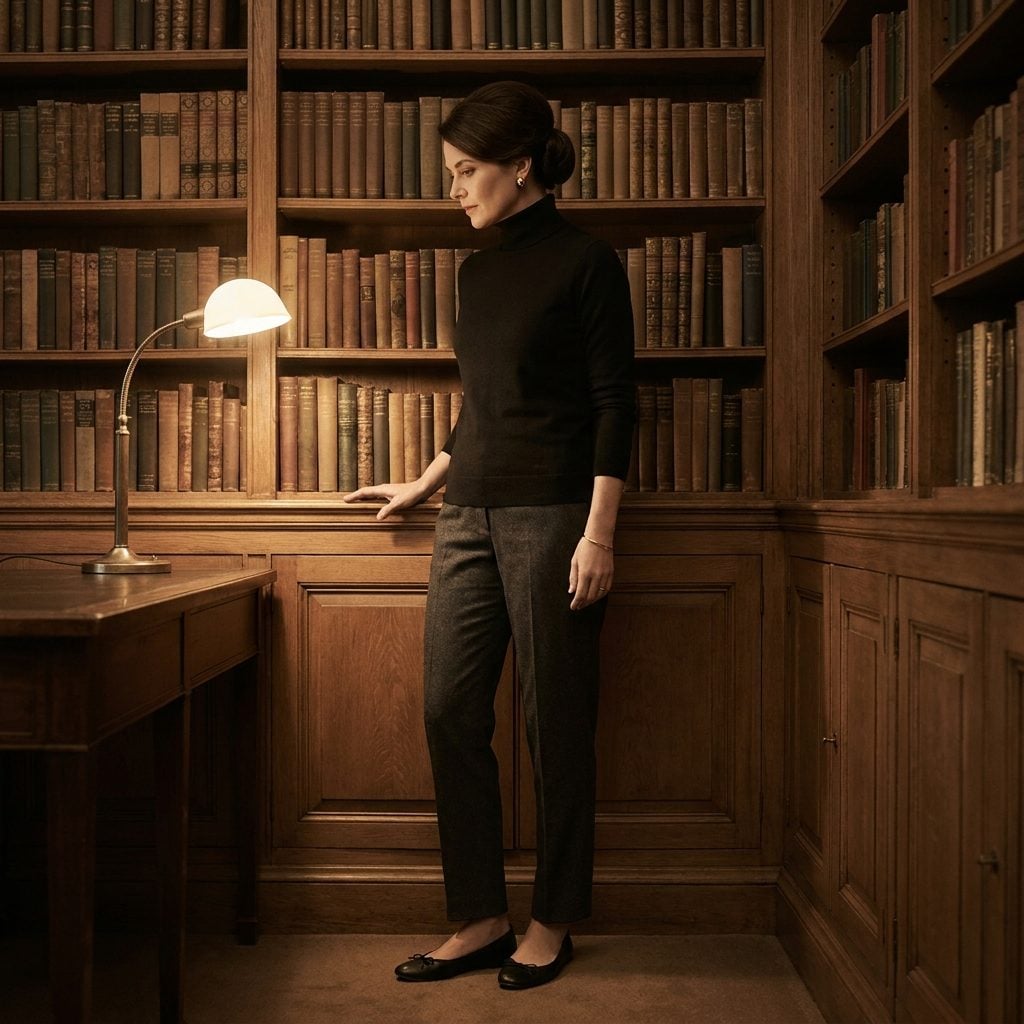
Not every sixties hairstyle was loud. This one whispered, and it whispered something like: “I have read books you haven’t heard of, and I’m not going to tell you which ones.” Dark brown hair lifted softly at the crown, then gathered into a neat, low bun pinned at the nape of the neck. No fuss. No ribbons. Just architecture.
This was the hairstyle of women who wore simple gold jewelry and always smelled like something French. Audrey Hepburn made it iconic, but your favorite English teacher made it real. She wore it every day with a turtleneck and a pen tucked behind her ear, and you thought she was the most sophisticated person alive.
I still think about recreating this one. It requires more pins than you’d expect and a comfort with looking like you take yourself seriously, which, at a certain age, you should.
The Voluminous Flipped Lob With Ends That Could Take Out an Eye
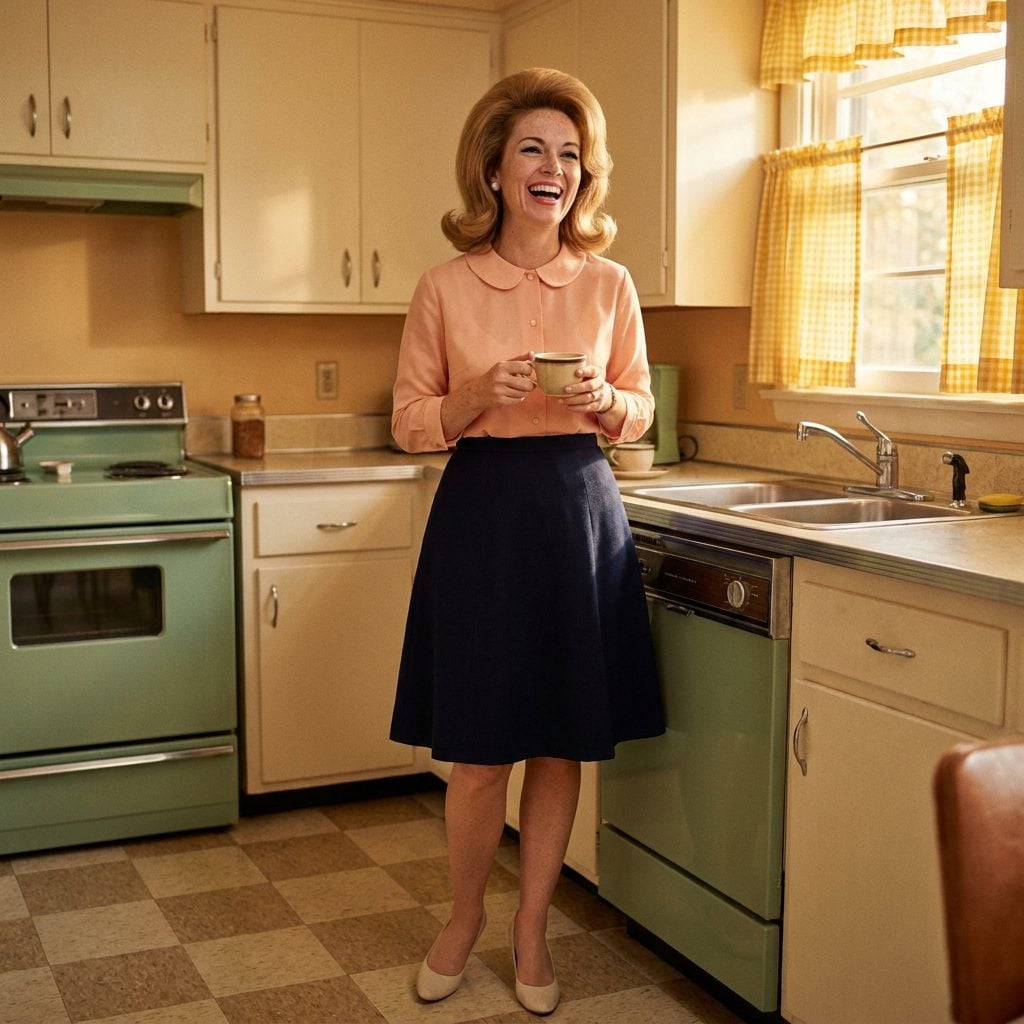
You set those rollers every single night. The big ones, the pink foam ones that dug into your scalp while you tried to sleep on your side. And for what? For those gravity-defying flipped ends that swooped outward like little wings framing your jaw. The lob sat right at the shoulders, sandy blonde with darker roots nobody bothered to hide because that was just how hair grew, and we hadn’t yet invented the concept of “root touch-up anxiety.”
Jackie Kennedy made this silhouette famous, but your mom made it hers. Every woman at the PTA meeting, the grocery store, the Saturday night dinner party had some version of this flip. The volume at the crown was non-negotiable. Flat hair meant you hadn’t tried. You teased, you sprayed with Aqua Net until the bathroom mirror fogged, and you walked out the door with a hairstyle that genuinely did not move in wind.
I think about how much time went into that daily ritual, and honestly? The commitment was remarkable. We complain about a 20-minute blowout now.