Your forties and fifties are when haircuts finally stop being about trends and start being about what actually works for your life. You know what flatters your face. You know how much time you want to spend with a blow dryer (probably not much). The real challenge is finding a cut that looks polished without demanding constant attention.
These styles hit that balance. Think soft layers that air-dry without looking neglected, textured pixies that need nothing more than your fingers and thirty seconds, shoulder-length cuts that transition from desk to dinner without a mirror check. The through-line: cuts designed to work with your hair’s natural tendencies rather than against them.
FYI, thanks to AI imagery software, we’re able to create very specific fashion and hairstyle examples to illustrate the points being made. In some cases, imagery is exaggerated to hammer home the point. Also, assume links that take you off the site are affiliate links such as links to Amazon. this means we may earn a commission if you buy something.
30. The Layered Pixie That Moves
❤️ Would you like to save this?
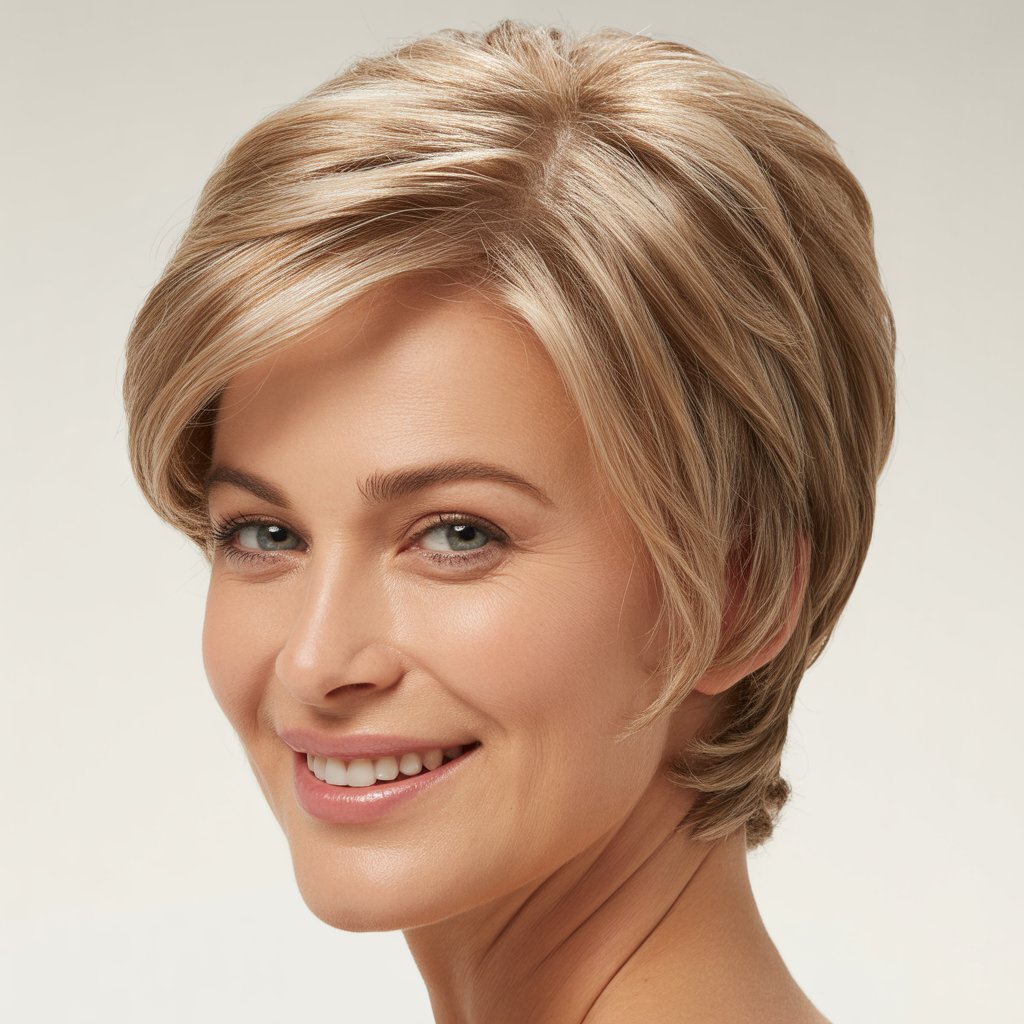
Notice how the layers here stack from the crown forward, creating lift where you want it most. The honey-blonde tones catch light differently at each level, which is the whole point of dimensional layering on short hair.
What makes this particular pixie forgiving is the graduated length through the sides. Your stylist has removed weight at the temples while keeping enough coverage around the ears to soften the overall silhouette. The result reads feminine rather than severe.
“A layered pixie is really just a bob that got braver.”
Fine or medium hair benefits most from this approach. The layers create an illusion of density without requiring any product buildup. Run your fingers through from root to tip, maybe add a dab of texture paste at the ends, and you’re finished.
29. Feathered Edges at Medium Length
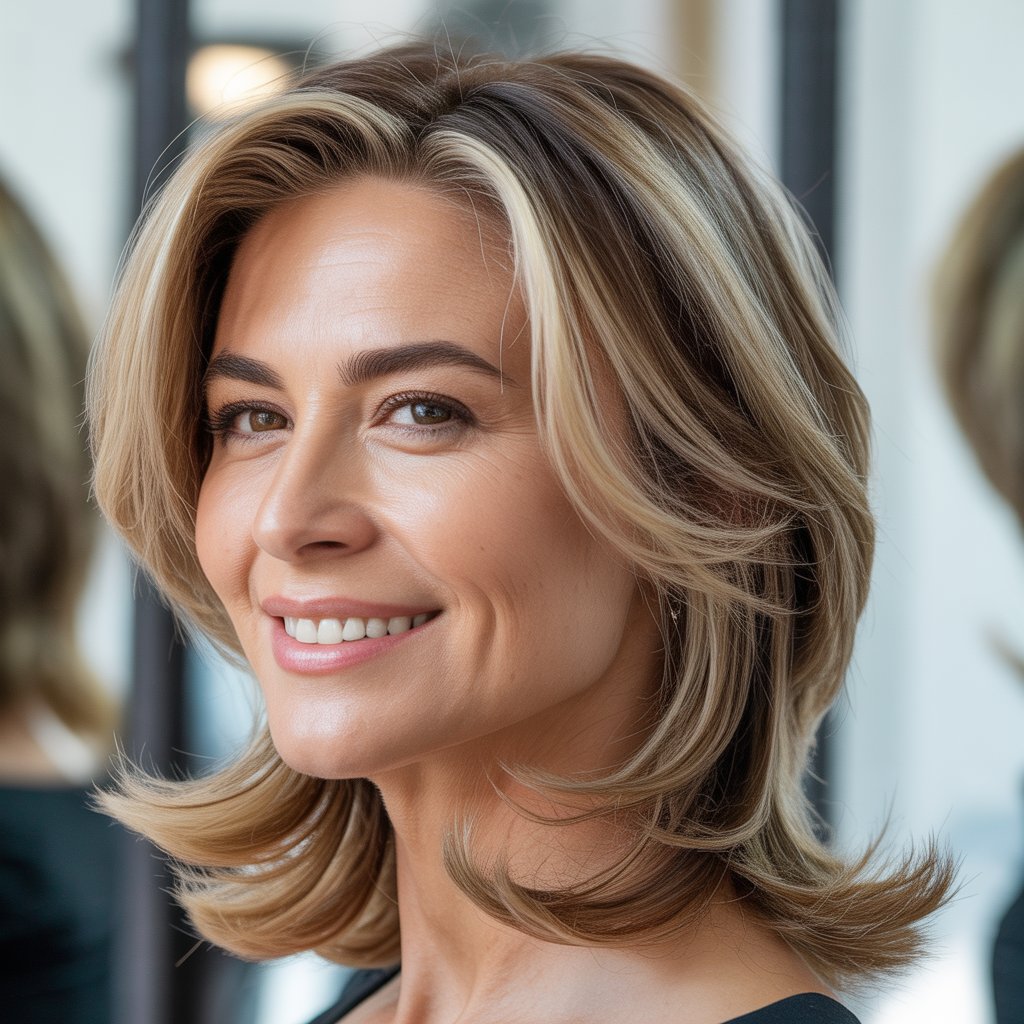
The flip at the ends here is doing real work. See how those caramel and wheat-blonde pieces curl outward just below the jawline? That outward movement draws the eye horizontally, which balances longer face shapes.
Your stylist achieves this effect through point-cutting at the very ends. Instead of cutting straight across, they angle their shears into the hair, creating those soft, irregular tips that catch air and turn outward naturally. This is a technique borrowed from 1970s styling that has never really gone out of rotation.
History Corner
Feathered cuts first exploded in the early 1970s when Farrah Fawcett’s layered wings became the most requested style in America. The technique predates her, though, originating with British hairdressers in the late 1960s who wanted to break away from the geometric shapes of Vidal Sassoon’s era.
Blow-drying with a round brush and rolling the ends outward takes about five minutes. Or you can skip it entirely and let the natural movement happen on its own.
28. A Bob with Texture at the Ends
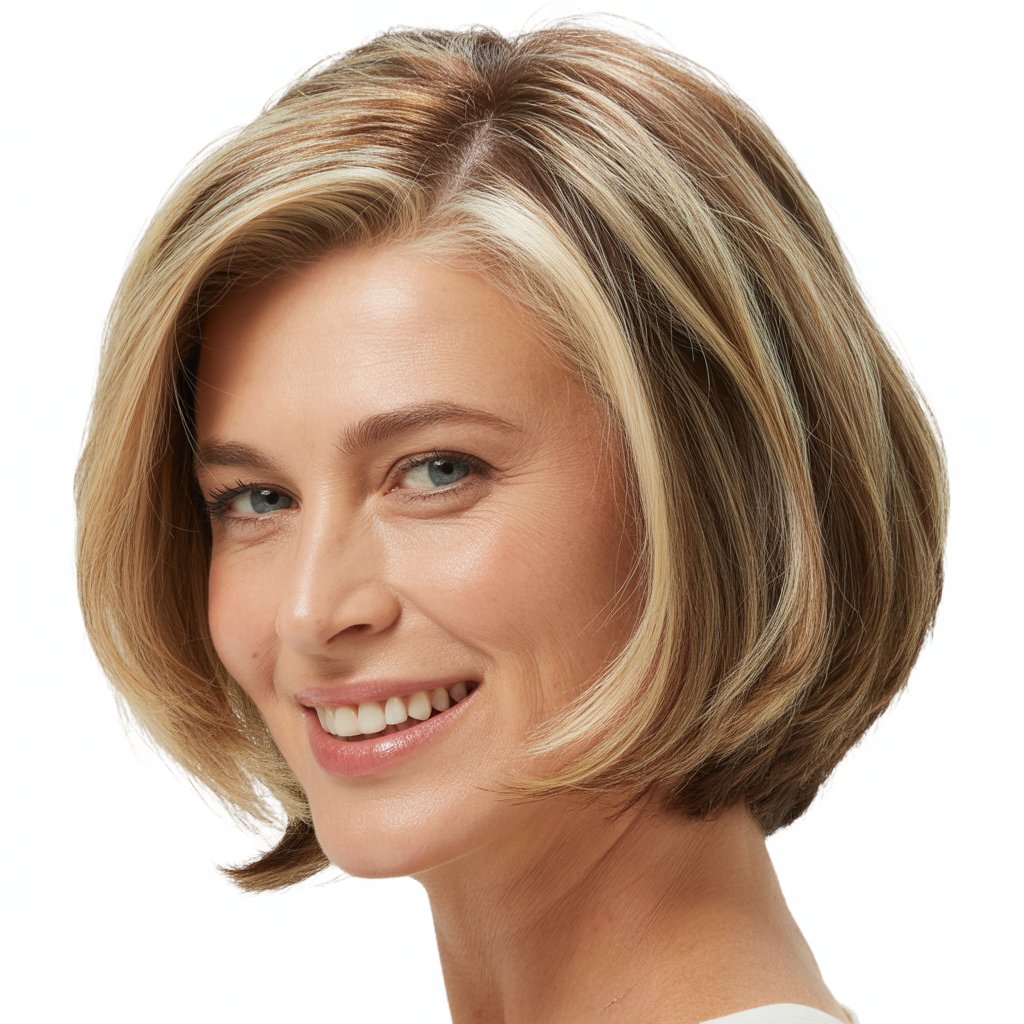
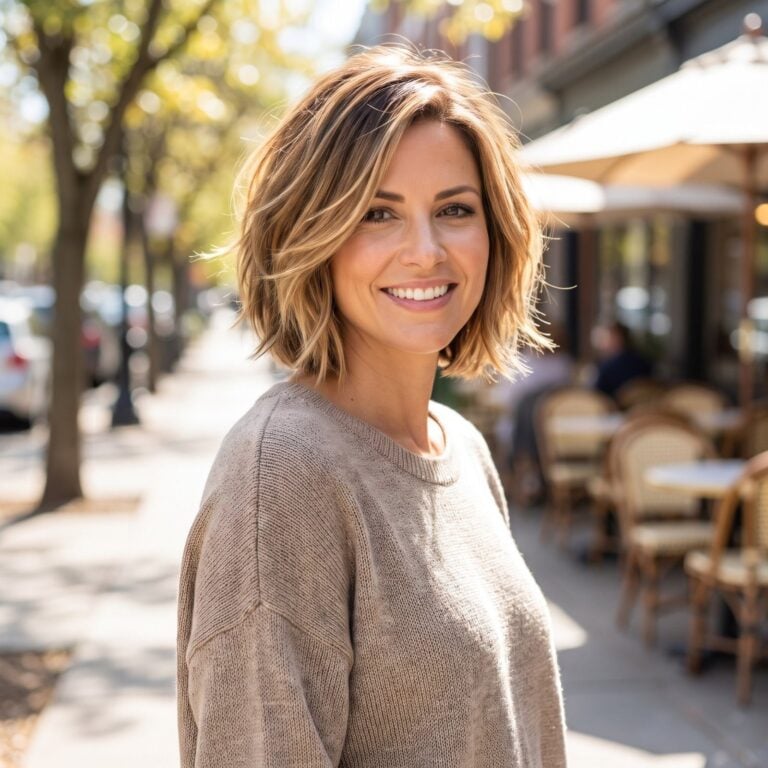
Blunt bobs have their place, but they demand precision. This approach trades that sharp perimeter for something more forgiving. The ends here taper into wisps rather than stopping at a hard line, which means your cut still looks intentional even as it grows.
The warm blonde base with cooler champagne highlights creates depth through the mid-lengths. Your eye travels through the hair rather than stopping at the bottom edge. Texturizing shears at the very ends remove bulk without sacrificing length.
One unexpected benefit: if your hair is fine or starting to thin, these tapered ends disguise the problem. A blunt cut exposes every sparse area. Wispy ends scatter light and create the impression of more volume than actually exists.
What Our Readers Say
- Asked about length, ThreadCurve readers leaned toward the lob at 42%, ahead of the bob at 25%, the pixie at 23% and long hair at 10%.
- In our reader polls, 72% picked layered cuts over blunt ones, though a solid 28% still prefer a clean blunt line.
From ThreadCurve reader polls and votes.
27. Shoulder-Length for Updos and Down Days
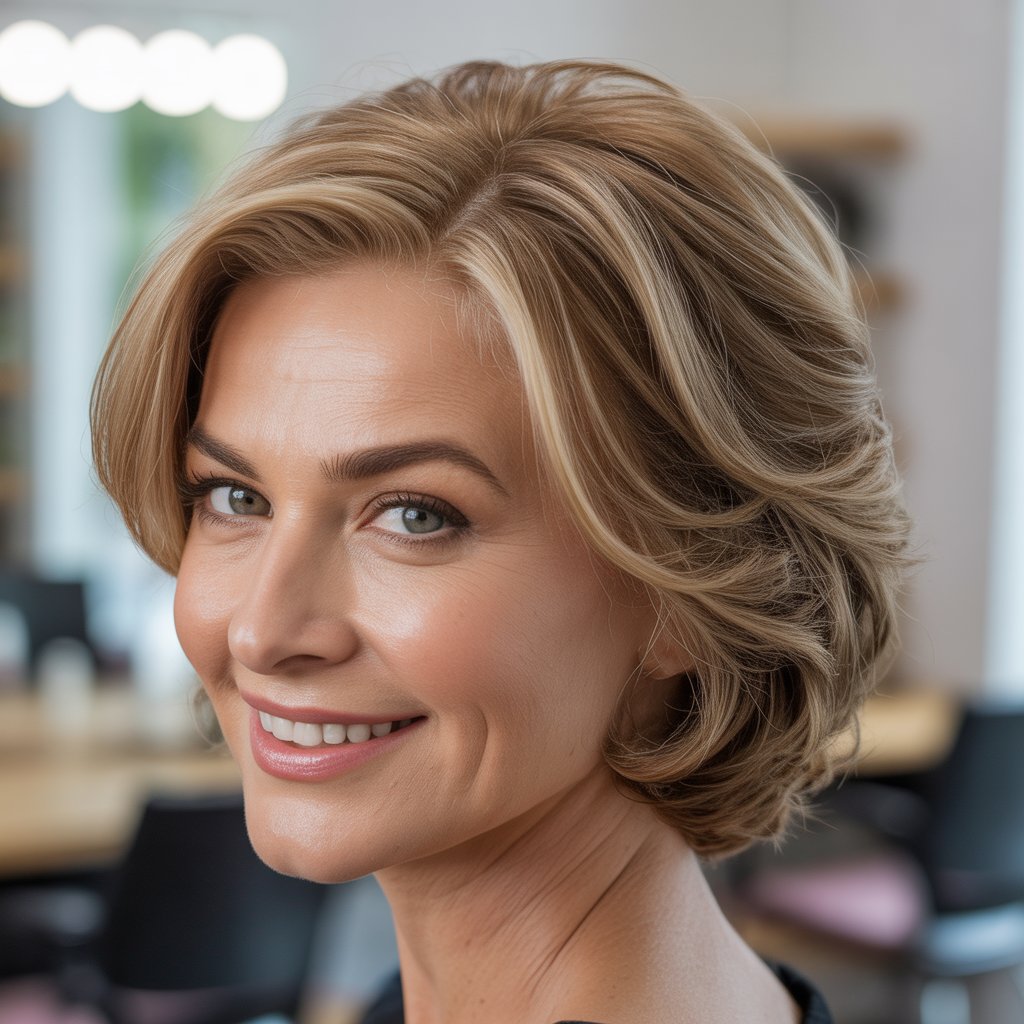
Here is the real argument for keeping some length past forty-five. You gain options. This particular cut grazes the collarbone, which leaves enough hair to twist into a low chignon or pull back for a workout but not so much that it weighs itself down.
The sandy blonde tones are warmer at the roots and lighter through the mids, a placement that reduces the frequency of touch-ups. Regrowth blends rather than announces itself.
Try This
Twist damp hair into two low buns at the nape before bed. In the morning, shake them out for soft waves that hold all day without heat damage.
Light layering through the interior keeps the ends moving and prevents that triangle silhouette that happens when medium-length hair sits too heavy at the bottom.
26. Your Natural Curl Pattern, Shaped
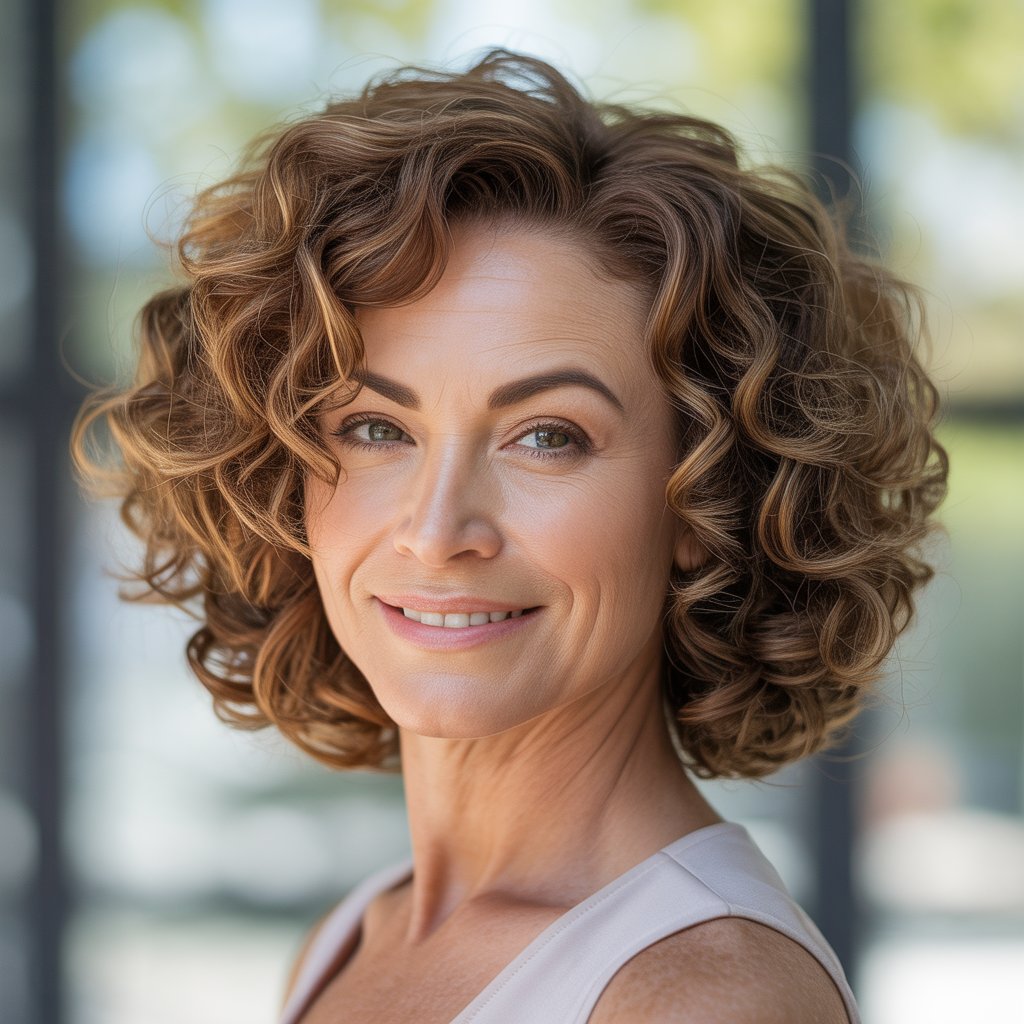
This is what happens when a stylist actually understands curl behavior. The medium-brown spirals here have been cut dry, which means each section was evaluated at its natural resting position rather than stretched wet and left to spring up unpredictably later.
Notice the volume distribution. The crown lifts while the sides stay close to the face. That is intentional layering at work. Removing weight from specific zones lets certain curls bounce higher while others frame the jaw.
The warm chestnut highlights woven through the mid-lengths catch light differently on the raised portions of each curl. This dimensional color technique only works when your stylist places the lighter tones on curls that will sit forward rather than hiding underneath.
A leave-in conditioner and a scrunch is really all this cut requires. The shape does the work.
25. The Blunt Lob, Uncomplicated
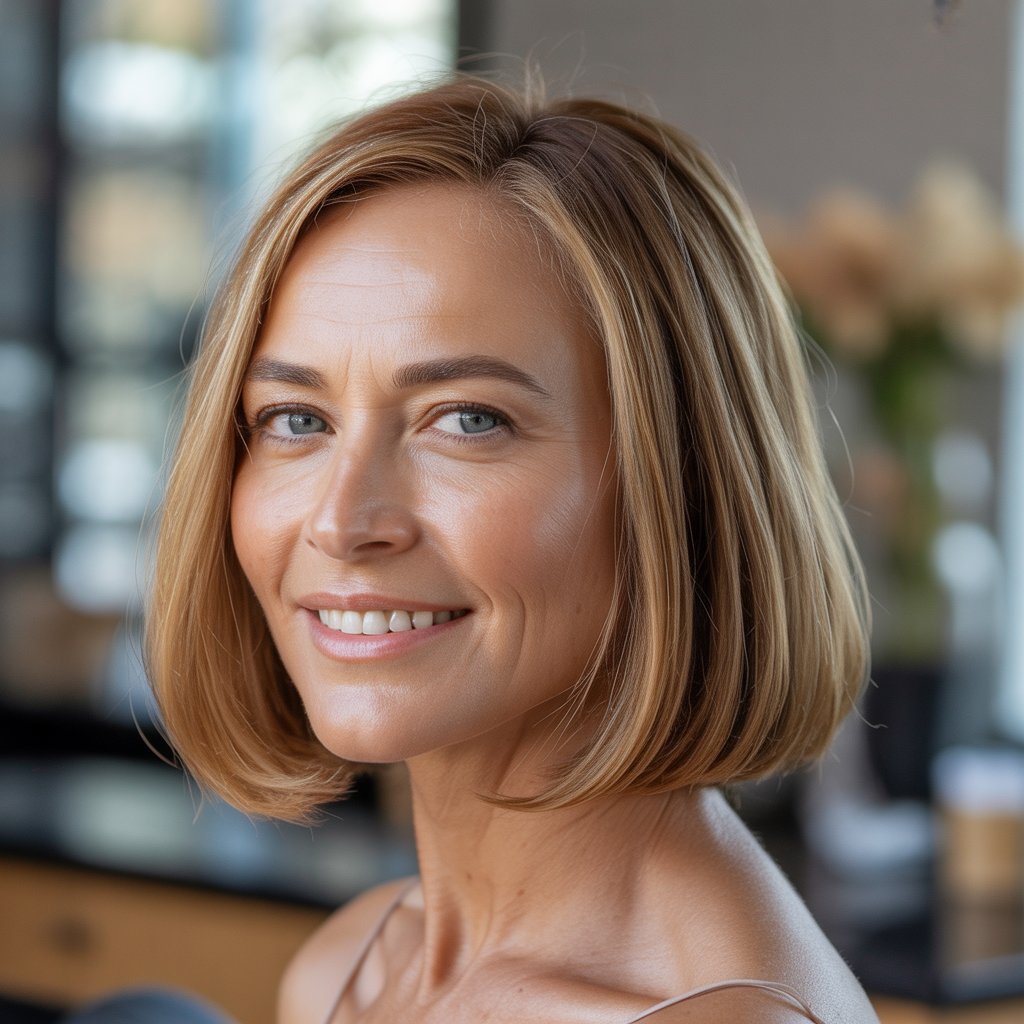
No layers. No razored ends. Just a clean horizontal line at the collarbone. The strawberry-blonde tone here is one consistent shade from root to tip, which reinforces the simplicity of the cut itself.
This is the haircut equivalent of a white t-shirt and good jeans. It works because of the quality of the cut, not because of any styling tricks hiding underneath.
Fine hair actually benefits from this blunt perimeter. Layers would scatter what density exists. A solid line at the bottom creates the illusion that your ends are thicker than they are.
Why It Works
The visual weight sits at the bottom of this cut, drawing the eye downward and lengthening the neck. The collarbone-length placement creates a frame that ends before the shoulders, so the line stays clean whether you are wearing a crew neck or a v-neck.
Grow-out is gradual and forgiving. You can stretch appointments to ten or twelve weeks before the shape feels lost.
24. Layers and Light Placement Working Together
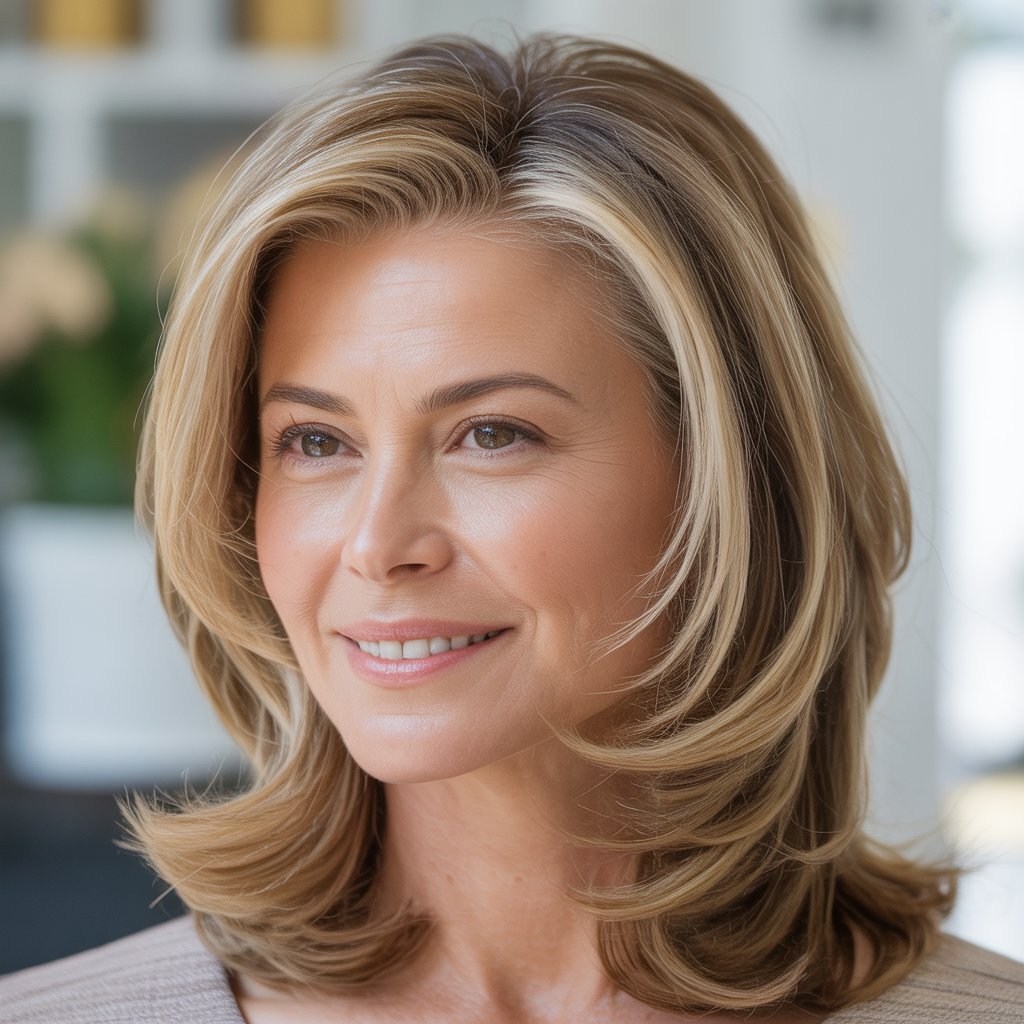
When your colorist and your stylist actually communicate, you get this. The balayage highlights here land on the layers that sit forward, which means the lighter pieces frame your face while the deeper base color adds shadow underneath.
The wheat blonde tones brighten without reading too warm. Your stylist has kept the interior layers subtle rather than heavily graduated, so the movement is there without bulk removal that can make fine hair look sparse.
This particular grow-out pattern is intentional. The darker roots blend into the mid-lengths, which means you are not chasing touch-ups every six weeks. Three months between appointments is realistic here.
23. Curtain Bangs, Left Undone
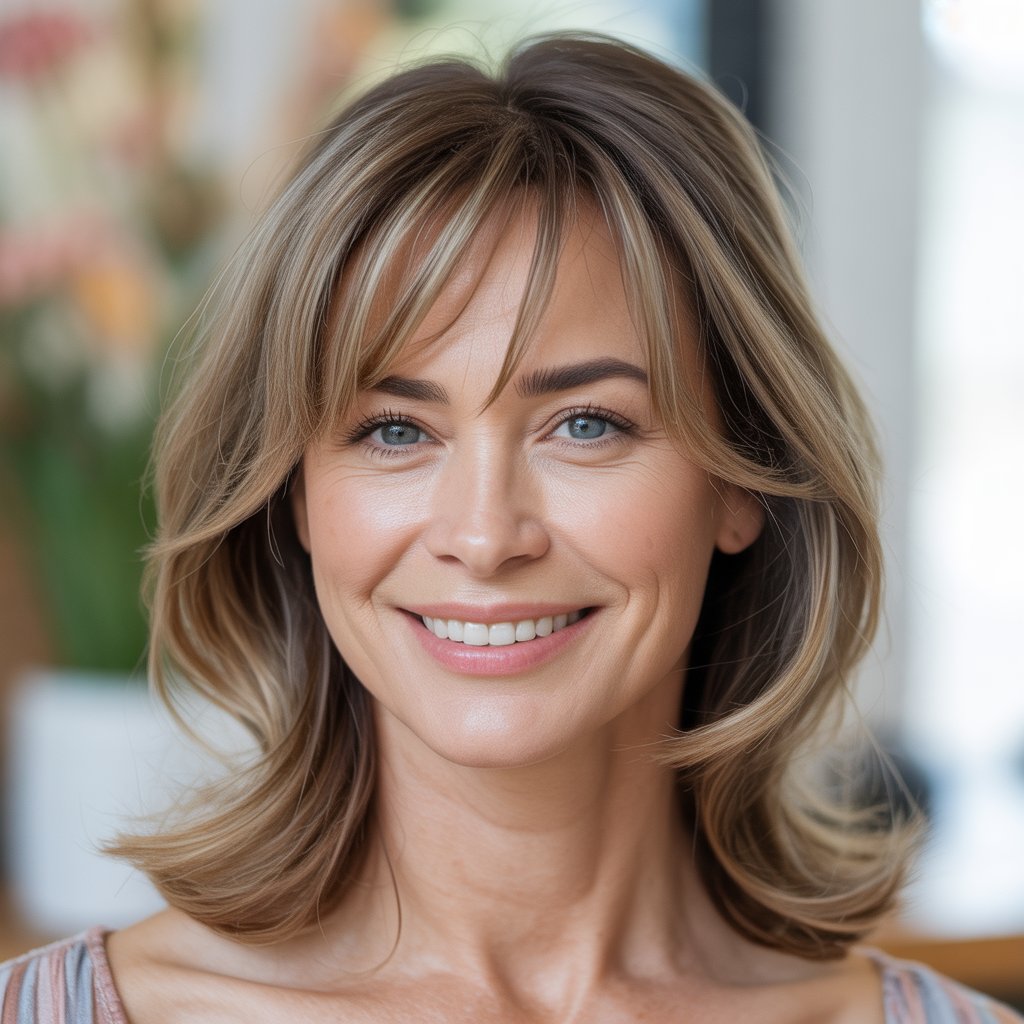
The center part here is key. These wispy pieces frame each side of the face rather than sitting as a solid block across the forehead. The ash-blonde tones pick up light at the cheekbones, which is exactly where you want brightness as skin changes in your forties and fifties.
What makes this particular fringe forgiving is the length. They graze the brow bone at the shortest point and blend into the face-framing layers by the time they reach the jaw. That graduated length means they grow out gracefully. No awkward in-between stages where you are constantly pinning them back.
Air-drying works here. If your bangs dry a little wonky, a quick pass with a round brush takes thirty seconds to redirect them.
Editor’s Note
Curtain bangs are the one fringe style I recommend to women who have never had bangs before. The commitment is low, the grow-out is painless, and the learning curve for styling is almost flat.
Curtain bangs are the clear favourite with our readers too: 52% chose them in a bangs poll, compared with 16% for side bangs and just 4% for blunt.
22. Thick Hair, Controlled with Layers
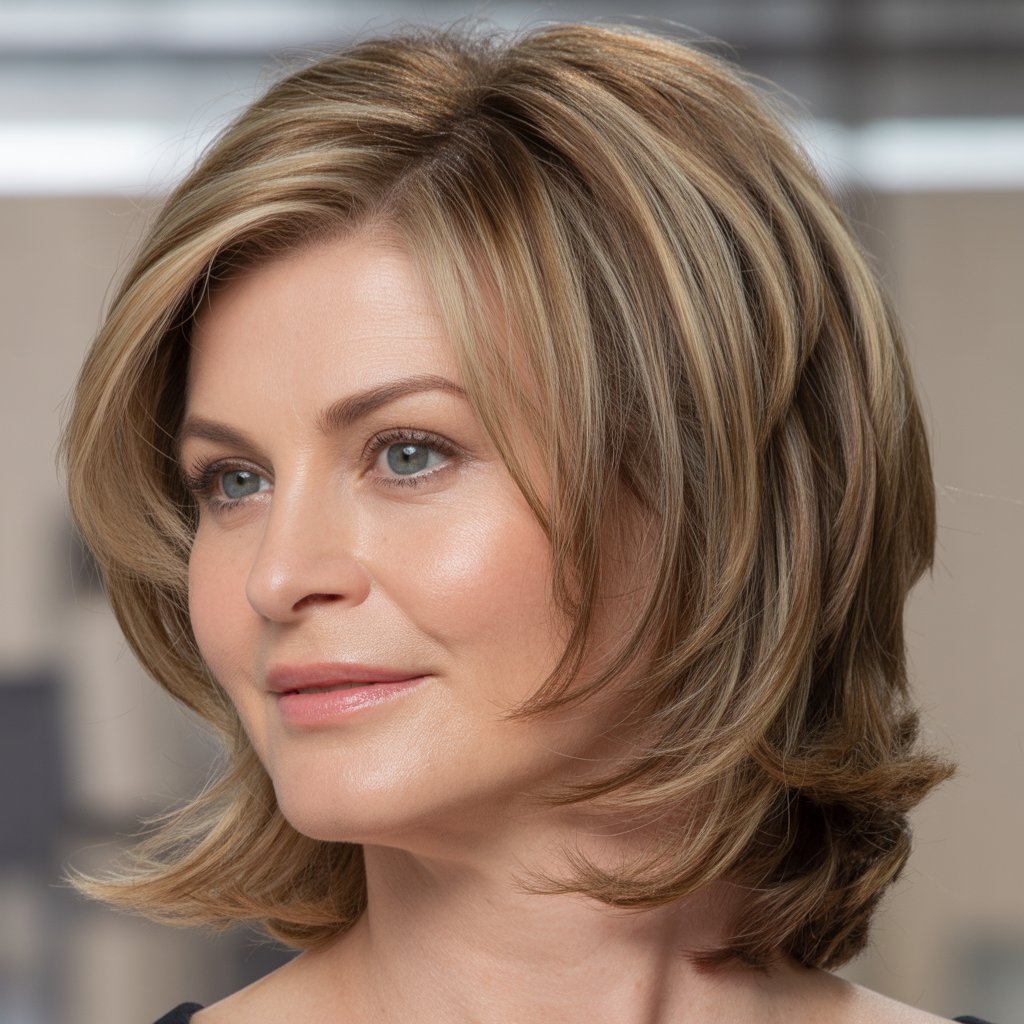
Thick hair without layers does one thing: it forms a solid mass that ends in a blunt line at your shoulders. This cut prevents that entirely. The warm caramel and butterscotch tones show the layering at work. See how the shorter interior pieces flip outward while the longer perimeter sections hang straight? That variation creates movement without making your ends look thin.
Your stylist has removed density from the interior here rather than chopping length off the bottom. The result is a cut that feels lighter on your head but keeps its shape for weeks.
Let’s shift gears for a moment. If you have thick hair and you have been told you cannot have low-maintenance cuts, you have been misled. The real issue is usually technique. Layers placed correctly turn thick hair into an asset rather than a chore.
21. Loose Waves at Lob Length
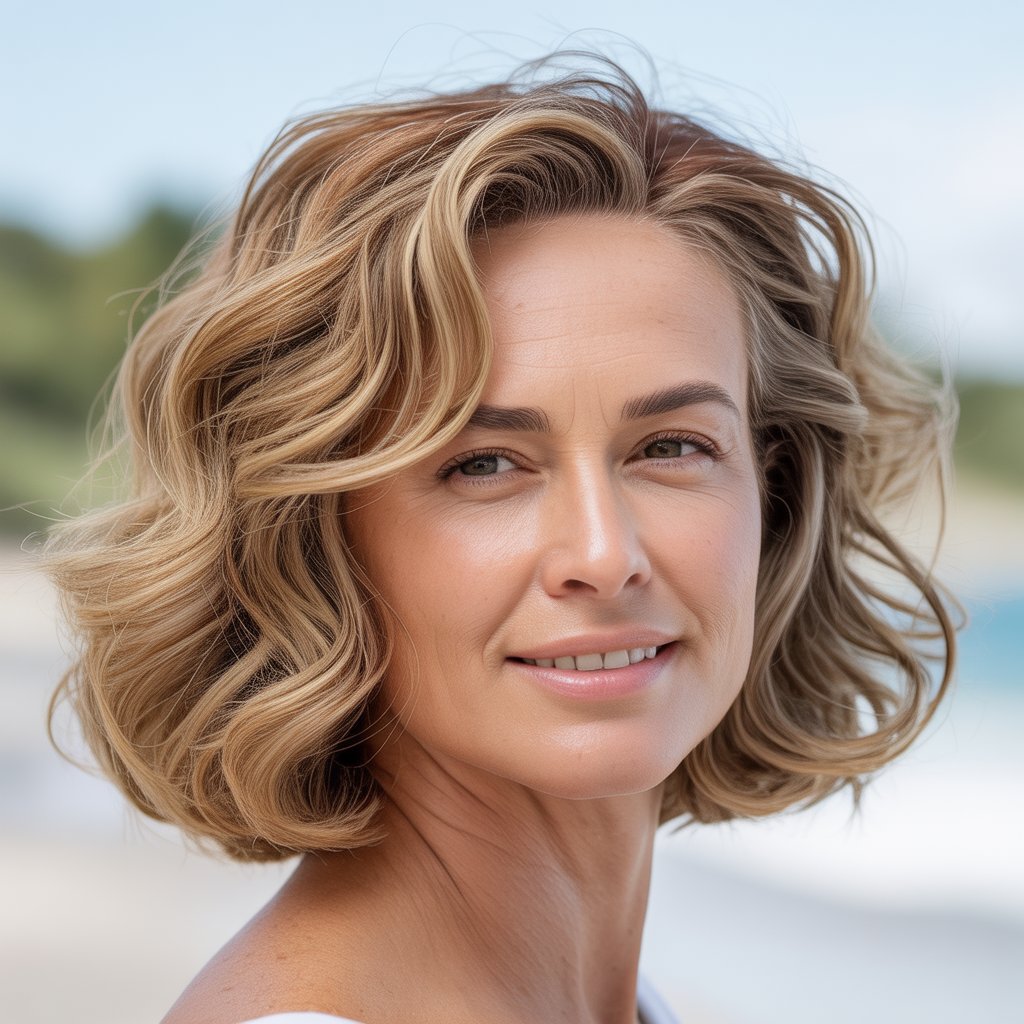
The caramel and golden blonde pieces here catch coastal light, which makes sense given the relaxed wave pattern. This is not a heat-styled curl. These are the kind of waves that happen when you braid damp hair or twist it into a bun and forget about it.
That pale blue sky in the background is not accidental. This cut was made for casual contexts. A beach, a farmers market, a weekend lunch. But the shoulder length keeps it appropriate for professional settings too.
Texture spray at the roots adds grip. Scrunching through the lengths defines the wave without crunching. The whole routine takes under two minutes.
ThreadCurve readers are firmly on board with this one: when asked how they’d wear a lob, 82% picked waves over straight.
20. A Close Crop with a Fade
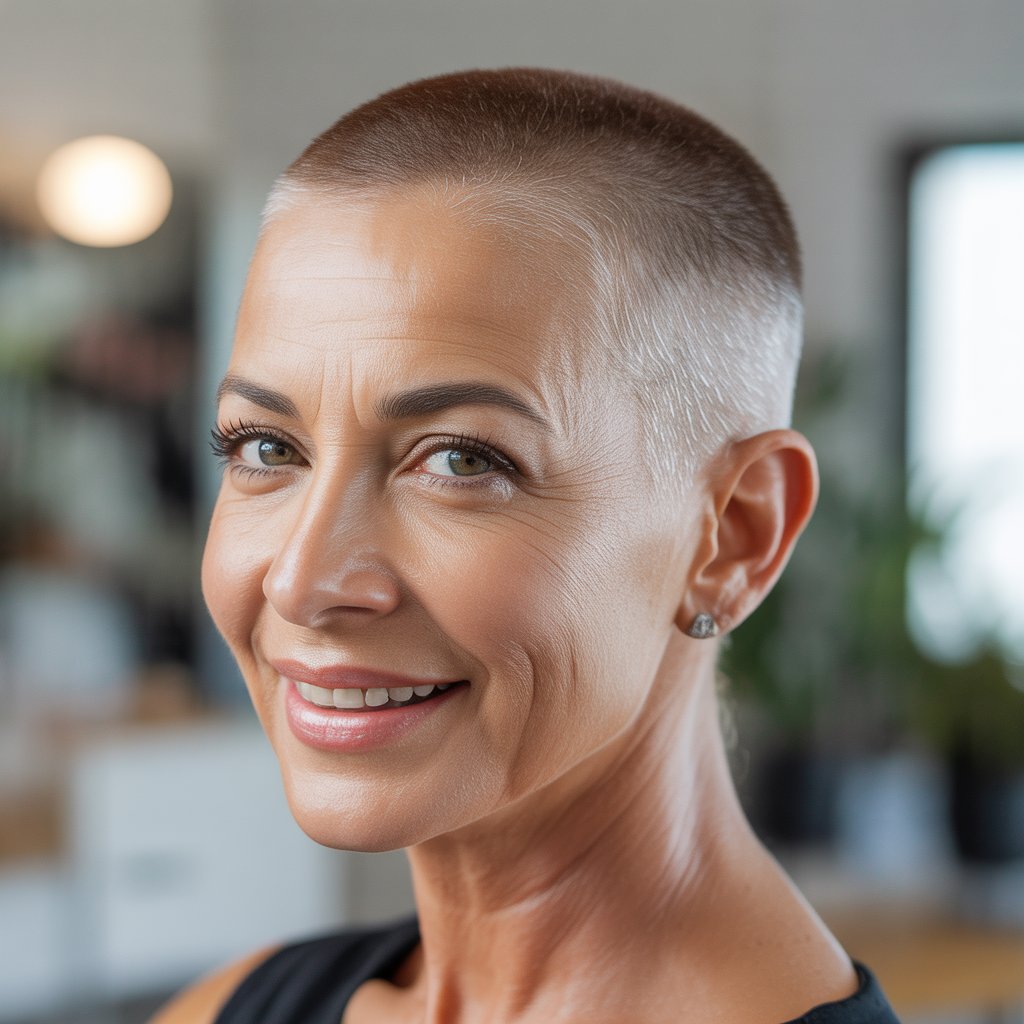
This is the lowest maintenance option in this entire collection. The fade at the temples transitions from bare skin to a quarter inch over about an inch of vertical space. The crown sits slightly longer, maybe half an inch at most.
The small silver studs in her ears demonstrate a key styling principle with this cut: your accessories do the talking. A bold lip, a statement earring, a bright scarf. The hair recedes into a clean frame.
By The Numbers
Women searching for buzz cuts and fades increased 89% between 2021 and 2024, with the largest growth among women 45 to 60.
Every three to four weeks keeps the fade sharp. That sounds frequent, but the appointment itself takes fifteen minutes and requires no styling afterward. The total time investment is actually lower than most longer cuts when you factor in daily maintenance.
Your 40s bring a certain clarity about what works and what doesn’t. The same applies to your hair. These next ten cuts represent that sweet spot where style requires minimal effort but delivers maximum impact.
19. The Side-Swept Bob That Does the Work for You
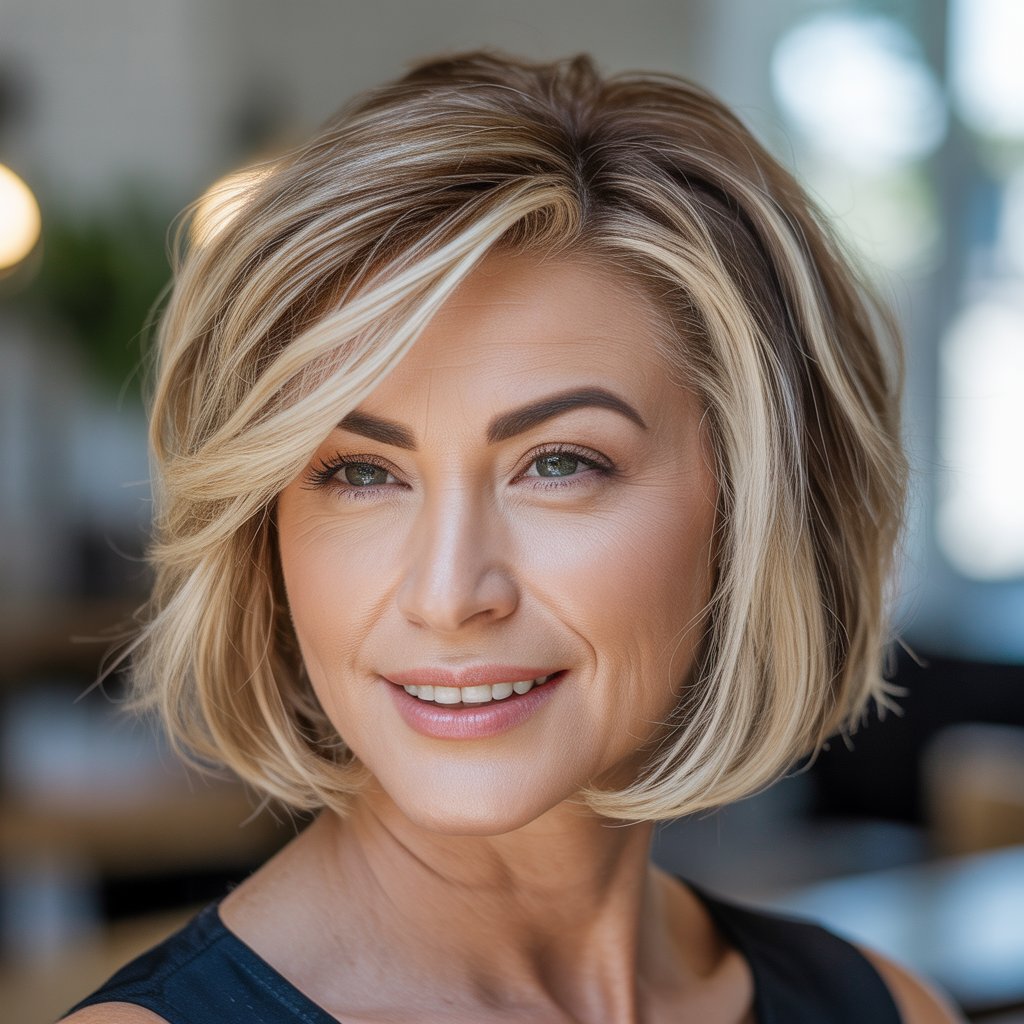
Notice how the honey-blonde highlights weave through the darker base, catching light as they sweep across the forehead. The bangs here aren’t heavy or blunt—they’re wispy, falling at an angle that draws attention to green eyes and defined brows.
This particular cut lands right at chin level, which creates a visual line that actually lifts the jawline. The layers underneath add just enough volume without making your head look oversized. Side-swept bangs tend to soften angular features while adding structure to rounder faces.
Try This: Blow-dry your bangs while they’re still damp, directing them sideways with a round brush. Once dry, they’ll hold that sweep all day without product.
18. Clean Lines, Zero Fuss
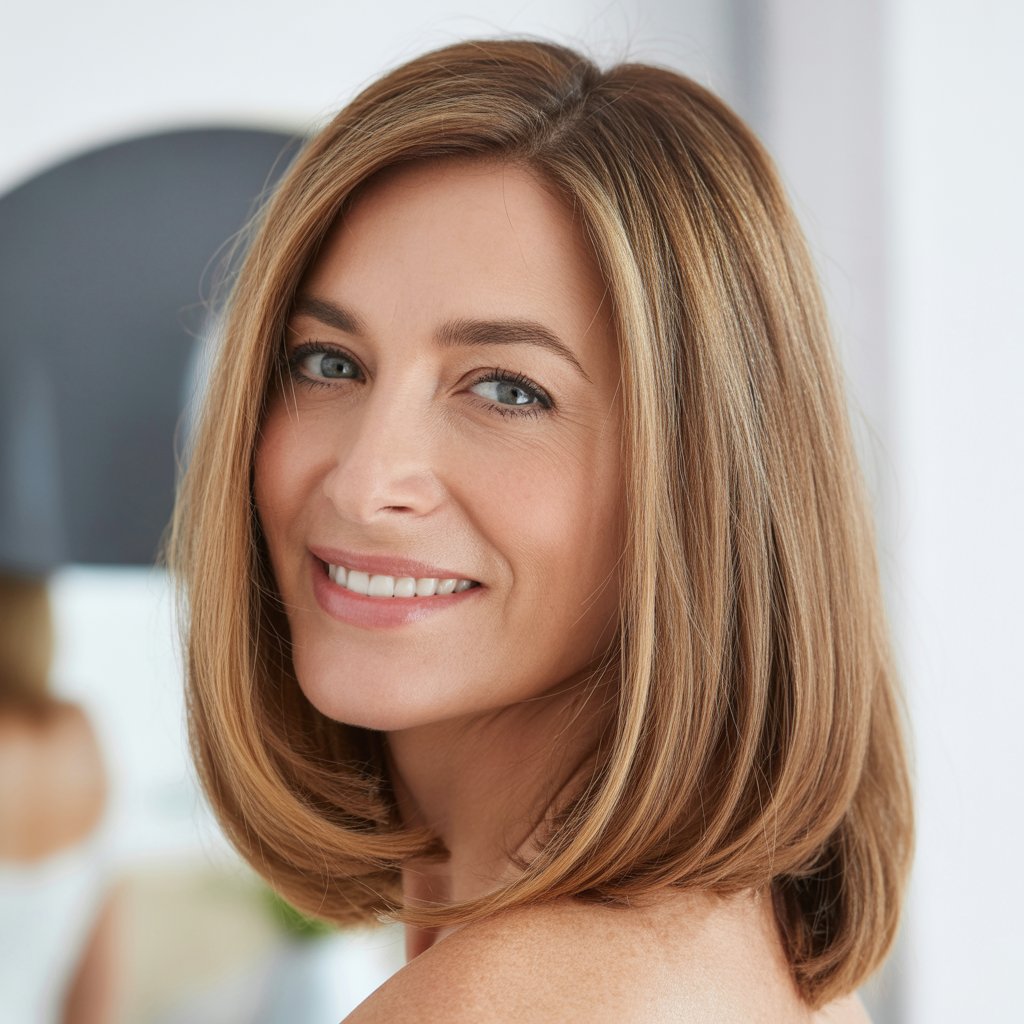
Straight cuts get dismissed as boring. Look again.
The warm caramel tones in this shoulder-length cut show exactly how a minimal layer strategy works. You can see where the stylist added just two or three internal layers—enough to prevent that heavy curtain effect, but not so many that you need a curling iron to create movement. The ends sit at a uniform length, which reads as polished and intentional rather than grown-out.
If your hair naturally falls straight, you’ve hit the jackpot with this cut. A brush, maybe some smoothing serum on humid days, and you’re done. The blunt ends actually help fine hair appear thicker because there’s no tapered wispy-ness at the bottom.
17. Let Your Curls Run the Show
❤️ Would you like to save this?
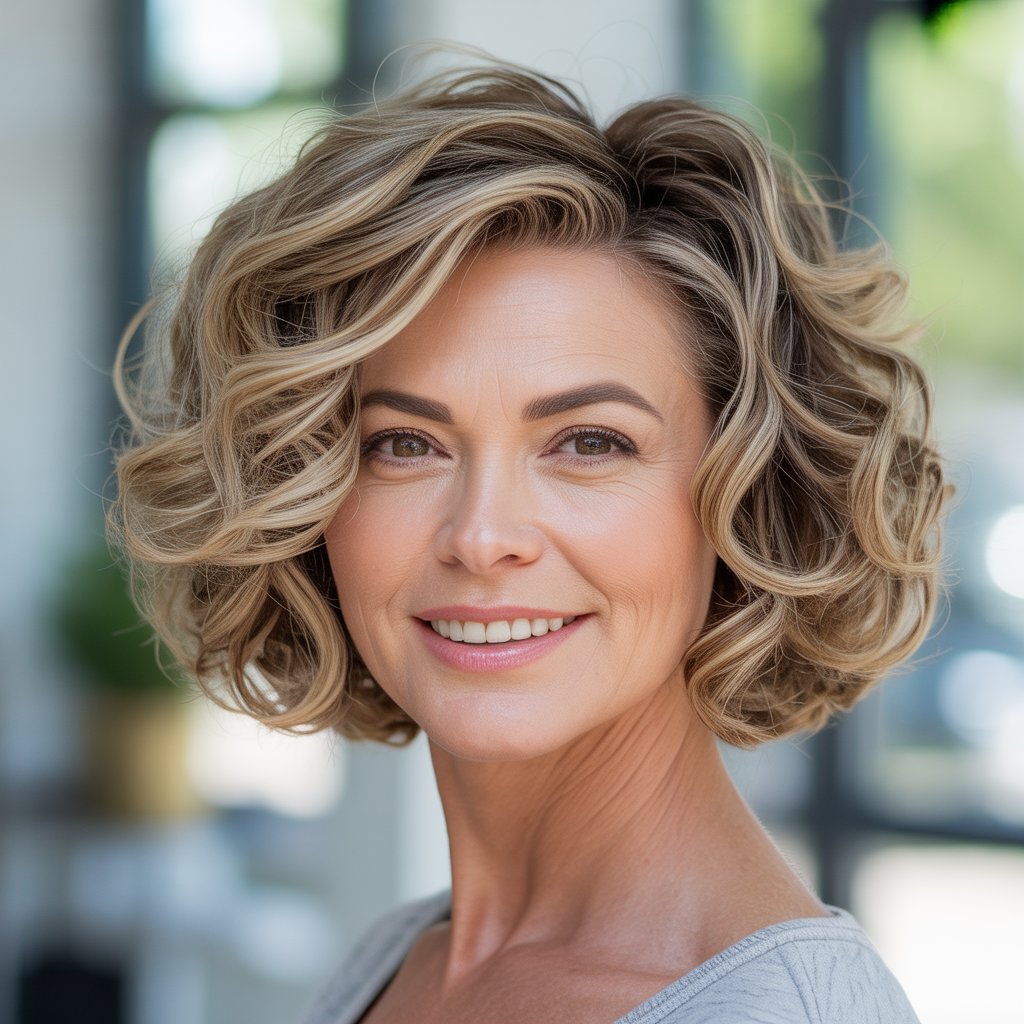
Those dimensional curls—ranging from honey to ash blonde—fall in loose spirals that frame the face without overwhelming it. The cut hits just below the ears, allowing each curl to spring upward rather than being weighed down by length.
Layering curly hair requires a different approach than straight hair. Here, you can see the layers were cut dry, following the natural curl pattern rather than fighting it. That’s why there’s no awkward triangle shape happening. The volume sits at the crown and temples where you want it, tapering naturally toward the nape.
“The best curly cuts are the ones where you can skip the blow dryer entirely.”
Scrunch in your curl cream while your hair is soaking wet. Then walk away. Fight the urge to touch it while it dries.
20. Choppy Bangs Change Everything
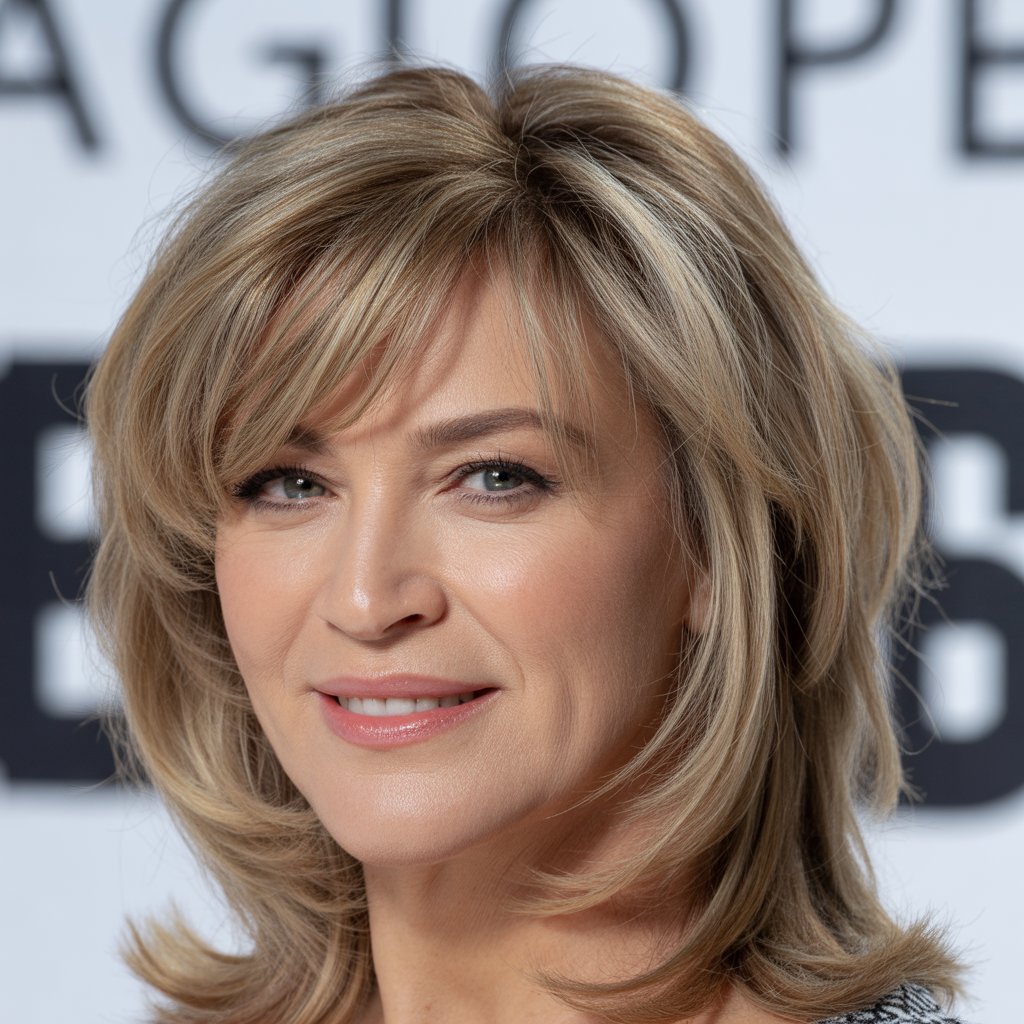
Medium-length hair can fall into “nothing special” territory fast. Choppy bangs prevent that entirely.
The multi-tonal blonde here—from darker roots through champagne to platinum pieces—creates visual interest that a single-process color never could. But the real action is those bangs. They’re not straight across. Instead, they’re point-cut at varying lengths, some hitting mid-forehead, others brushing the brows. This creates texture and prevents that helmet look.
The rest of the hair shows movement through the ends, sitting around shoulder length. On days when you don’t feel like styling, the bangs do the heavy lifting. On days you want more, a few loose waves transform this into a going-out look.
15. A Slight Angle Goes a Long Way
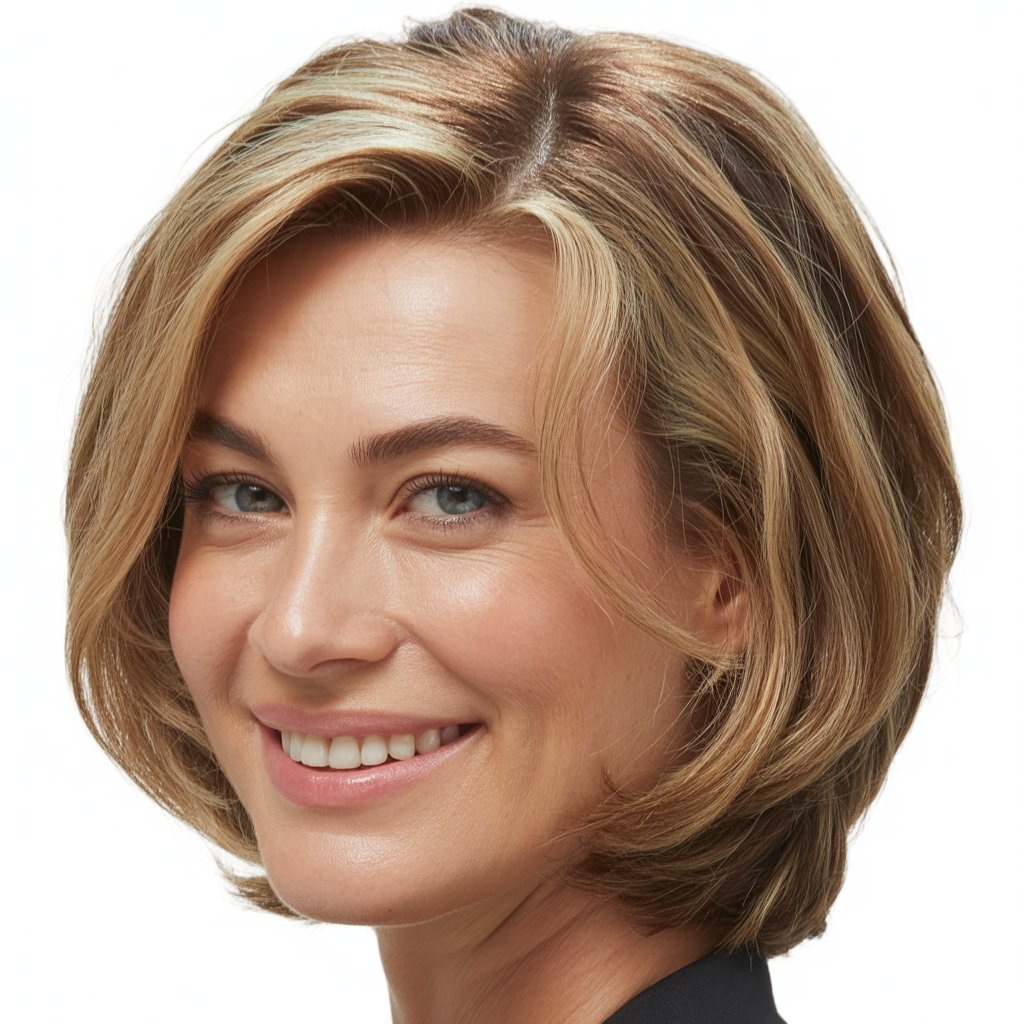
The difference between a standard lob and an angled one might only be an inch. That inch matters.
You can see how the front pieces fall about an inch below the chin while the back tapers up slightly. This warm bronde shade—a blend of brunette and golden tones—catches light differently depending on the angle, making the cut look more dimensional than it actually is. Blue eyes pop against this particular color temperature.
Why It Works:
The angle creates the illusion of movement even when your hair is perfectly still. Your eye follows that diagonal line, reading it as dynamic rather than static. It’s geometry doing the styling for you.
14. Long Hair Without the High Maintenance
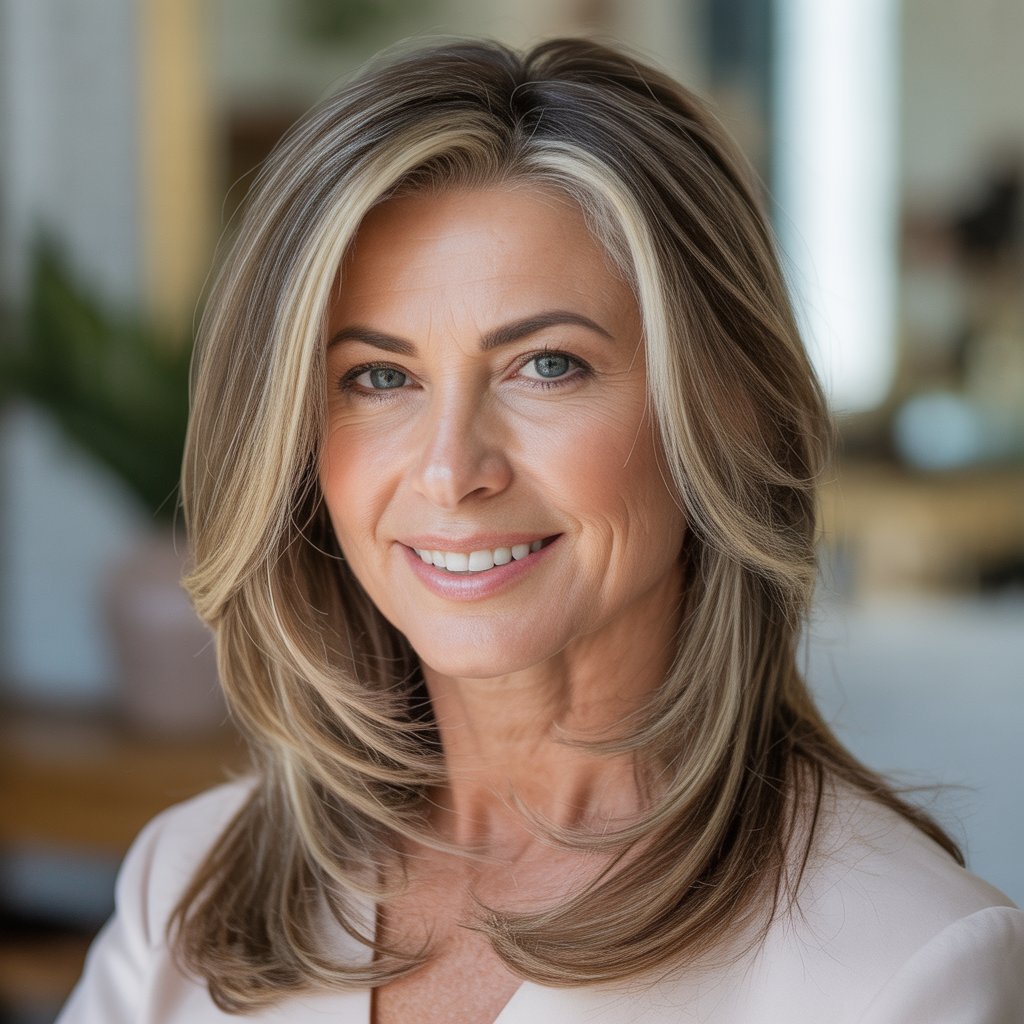
Keeping your length past 45 is absolutely possible. The secret is strategic layering that works with your hair instead of creating more work.
This cut demonstrates the concept well. The warm blonde transitions to cooler ash tones toward the ends, while face-framing pieces start around the cheekbones. The layers aren’t choppy or obvious—they’re blended so well you might not notice them until the hair moves. That’s when you see the different lengths creating dimension.
Visible through the blush-pink V-neck top is a collarbone-length layer that gives the illusion of fullness even if your hair has thinned a bit over the years. The longest layers fall several inches below, maintaining that length you want to keep. A blurred modern interior in the background suggests this is someone with places to be—and hair that keeps up without complaint.
13. Short, Layered, and Ready in Five Minutes
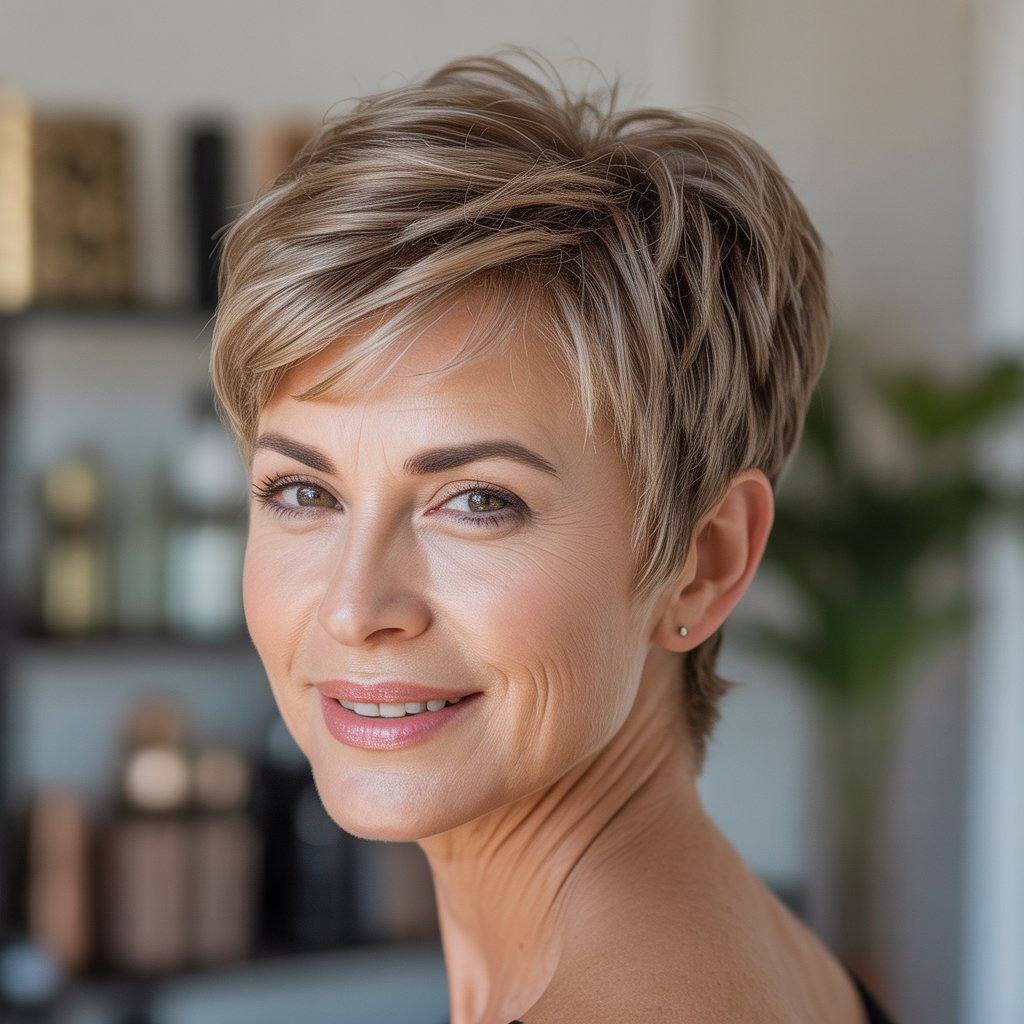
The textured ash-blonde pixie here shows exactly what happens when layers are placed correctly. Volume at the crown, tapered sides, and just enough length on top to push forward or sweep back depending on your mood.
Hazel eyes and a coral lip stand out because the hair isn’t competing for attention. It’s framing. The wispy pieces around the ears and nape keep this from looking severe, while the subtle highlights add movement without screaming “I just left the salon.”
Behind the subject, you can spot shelves with bottles and products—likely a salon setting. There’s something satisfying about seeing this cut in its natural habitat, knowing it’ll look just as good in your bathroom mirror tomorrow morning.
Did You Know: Pixie cuts were originally marketed in the 1950s as “gamine” cuts after Audrey Hepburn’s appearance in Roman Holiday. The term “pixie” didn’t become standard until the 1960s.
12. Built for the Messy Bun
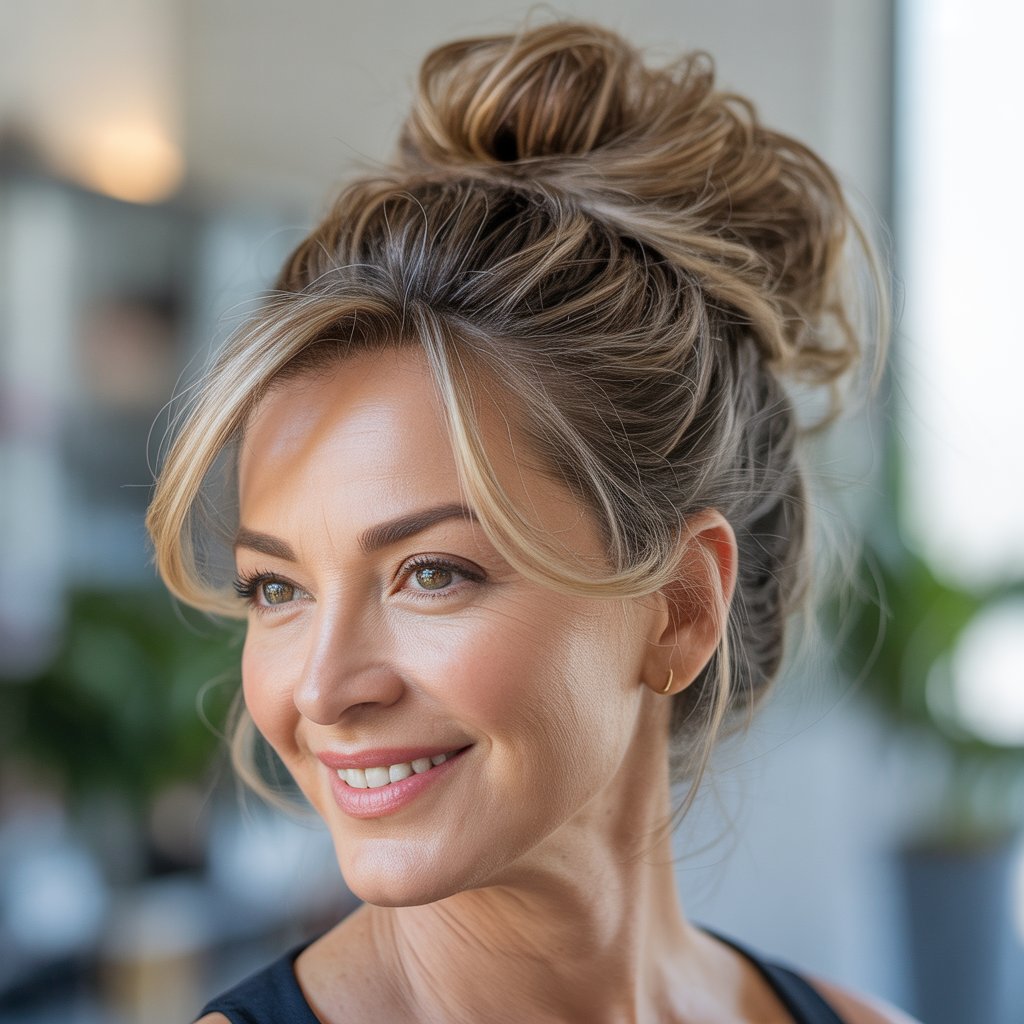
Some cuts photograph well but fall apart in real life. This is the opposite.
The twisted topknot sits high on the crown, with face-framing pieces in warm caramel and blonde tones falling deliberately around the ears and temples. Those loose strands aren’t accidents—they’re the whole point. A tiny gold earring catches light near the jawline. The navy top provides contrast that makes the warm hair tones read even warmer.
Getting this look requires a cut with enough length to gather (shoulder-length minimum) and enough layers that pieces escape naturally when you twist your hair up. Too many layers and you’ll have flyaways everywhere. Too few and the bun sits flat and boring. The sweet spot is right here.
11. Soft Layers Frame Without Fuss
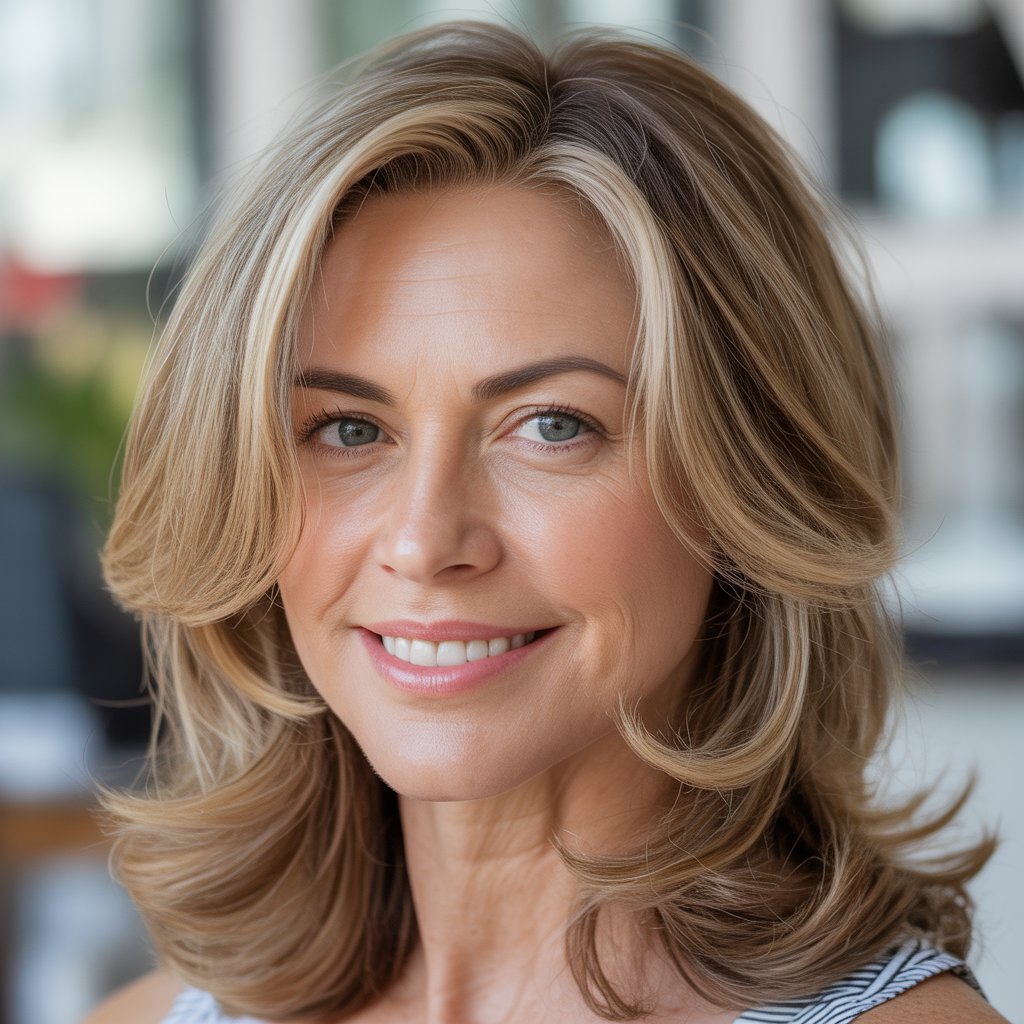
The face-framing layers here start around the cheekbones and blend into longer layers that fall past the collarbone. Notice the color placement—darker roots transitioning to buttery blonde with champagne highlights concentrated around the face. This isn’t random. Those lighter pieces draw the eye exactly where the cut wants it to go.
A striped top peeks into the frame, suggesting a casual but pulled-together aesthetic. The background shows a blurred interior with what looks like windows and furniture—everyday life happening while the hair just does its thing.
This cut works whether you blow it out smooth or let it air dry with some wave. The layers are forgiving enough to handle either approach without looking like two different haircuts.
10. Tousled Texture That Hides Everything
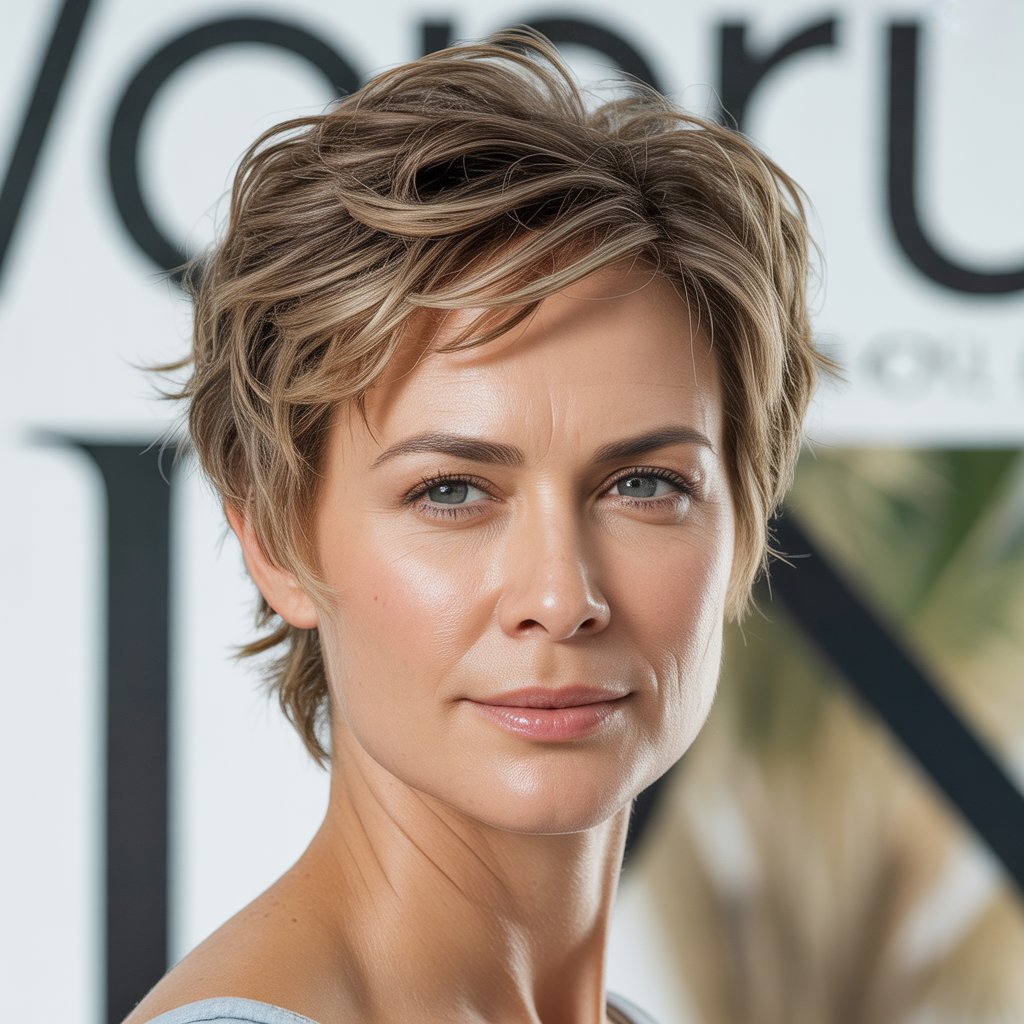
Cowlicks. Weird growth patterns. That one spot that never lies flat. Tousled texture makes all of it irrelevant.
The sandy blonde shades here range from darker at the roots to lighter, sun-kissed pieces throughout. The cut is short—above the ears on the sides, longer and piece-y on top—but nothing about it looks “done.” It looks like she ran her fingers through damp hair, maybe added a little product, and walked out the door.
Behind her, a blurred logo or text suggests some kind of professional setting. This is a cut that crosses contexts. It works for a photo shoot and also for your Tuesday morning meeting. Gray strands blend into the multi-tonal color without announcing themselves. That’s not an accident—it’s smart color placement meeting smart cut architecture.
9. The Undercut You Didn’t Know You Needed
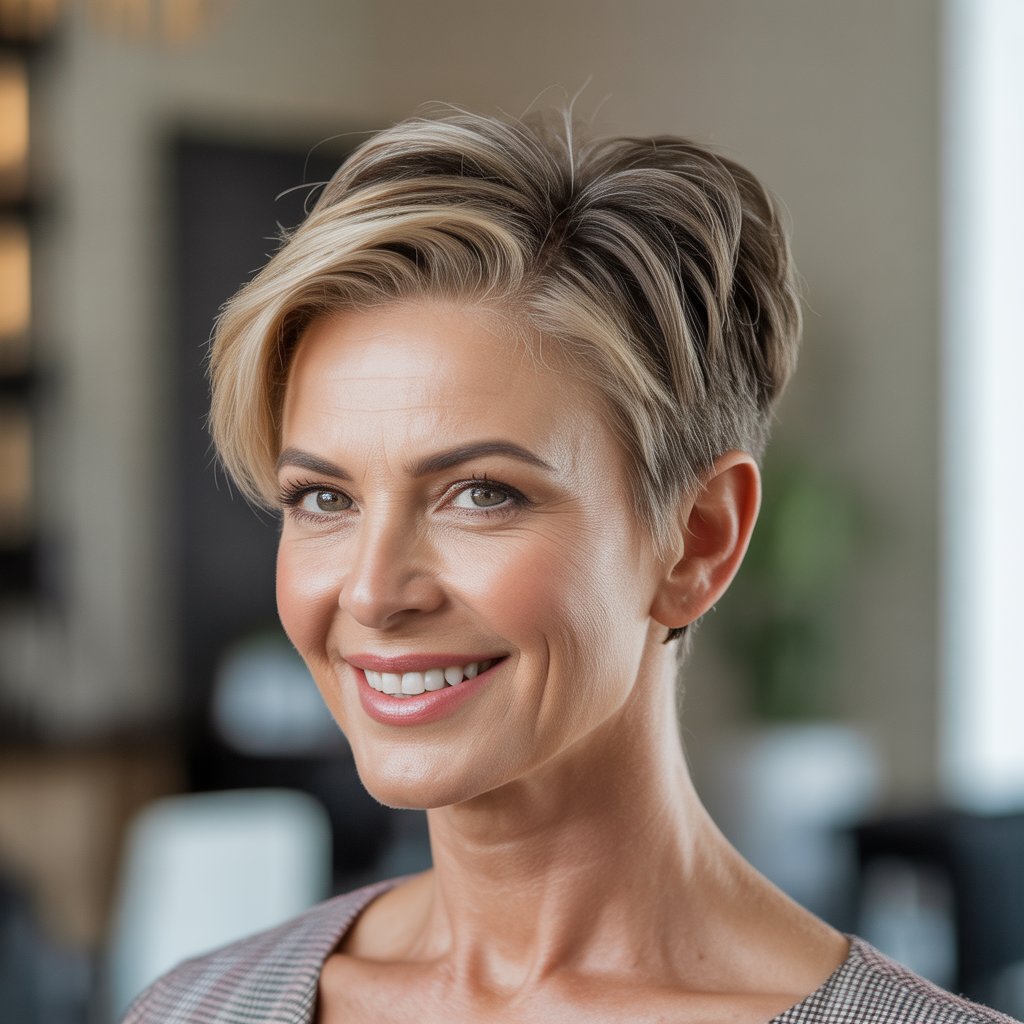
Undercuts carry a reputation for being edgy, but this version tells a different story. The warm blonde-to-platinum gradient on top gets all the visual attention while shorter sides create structure without looking shaved or aggressive.
A subtle plaid pattern in the top she’s wearing adds a hint of texture that echoes the textured top layers of the cut. The styling here pushes volume up and forward, creating height at the crown while the sides stay close. It’s architectural without being intimidating.
Pro Tip: If you’re curious about undercuts but nervous to commit, start with just one side cut shorter. You can always cover it by wearing your hair down, and you’ll get a feel for the maintenance before going further.
8. Asymmetry That Actually Works
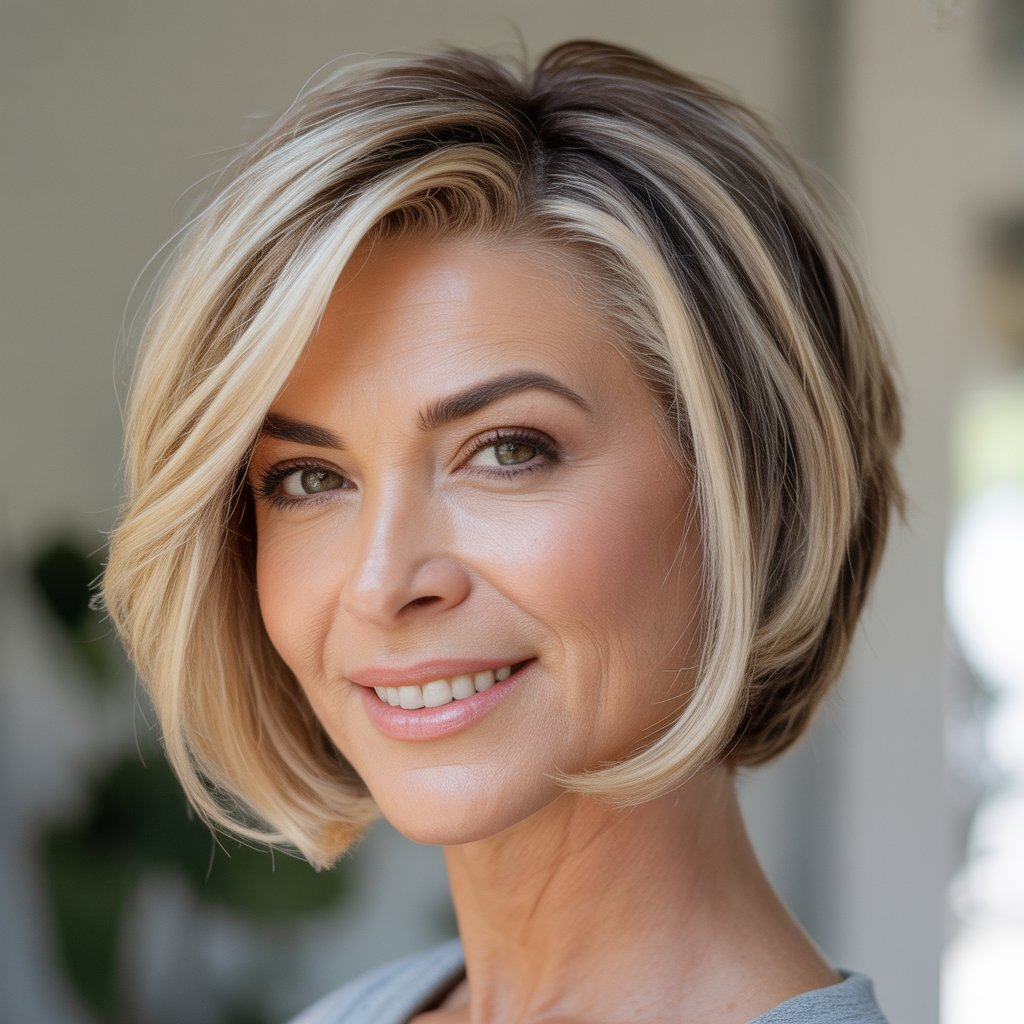
The contrast in this cut tells the whole story. One side falls to the chin, the other stops above the jawline. Platinum blonde pieces weave through a darker blonde base, creating dimension that a single color could never achieve. Hazel-green eyes benefit from this framing—the longer side draws attention while the shorter side opens up space.
Asymmetrical bobs can tip into “trying too hard” territory fast. This one doesn’t. The angle is noticeable but not dramatic. The color is dimensional but not wild. A gray top provides a neutral backdrop that lets the cut speak for itself.
What makes this style land in the low-maintenance category is that the asymmetry does the styling work. You don’t need to add waves or volume or texture to make it interesting. The cut comes with interest built in.
Your hair tells a story about how you spend your mornings. If you want those extra fifteen minutes for coffee, a walk, or simply not rushing, these final cuts deliver exactly that. The countdown wraps up with styles that prove low-effort and high-impact can absolutely coexist.
7. Let Your Natural Waves Do the Work
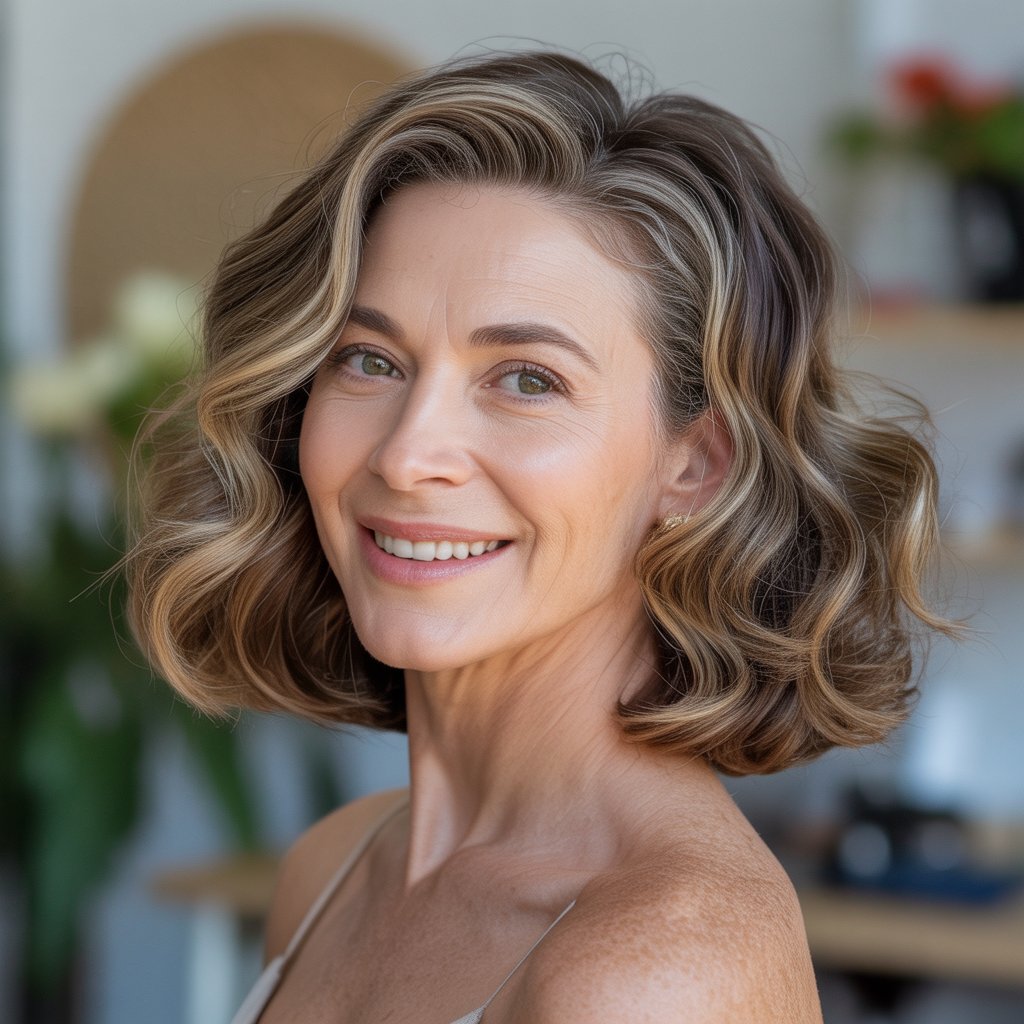
Look at how those caramel and honey-toned waves catch the light here. The color technique blends darker roots into buttery mid-lengths, and that dimensional shift makes thin or medium hair read as much fuller than it actually is.
Working with your natural texture instead of fighting it changes everything. A small amount of curl cream scrunched into damp hair, then air drying while you make breakfast or check emails. That’s the entire routine. The shoulder length keeps enough weight to prevent frizz while still letting the wave pattern hold its shape throughout the day.
Try This: Skip the diffuser. Scrunch once with product, then walk away. Touching your waves as they dry creates frizz. Benign neglect is actually the secret.
6. The Blunt Cut Needs Nothing From You
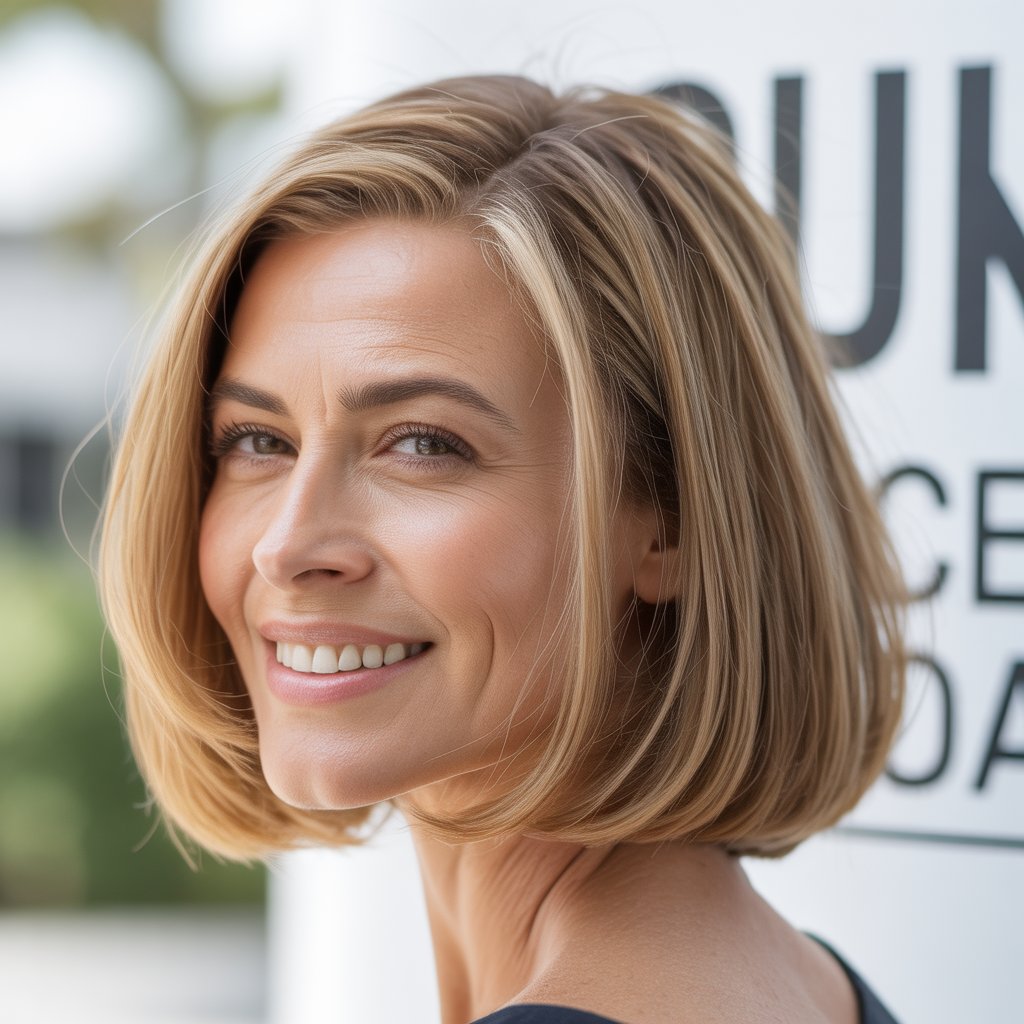
Clean. Direct. Done.
This chin-length blunt bob in warm wheat blonde sits exactly where it should, with not a single unnecessary layer. The precision of that bottom edge actually creates the illusion of thicker hair because every strand ends at the same point. Notice how the side-swept styling adds movement without requiring any actual effort beyond tucking one side behind your ear.
If you have naturally straight or slightly wavy hair, this cut basically styles itself. A quick blow-dry with a paddle brush, maybe a drop of smoothing serum on humid days. Some women skip even that and let it air dry with a center part. The cut holds structure because there’s nothing to grow out unevenly.
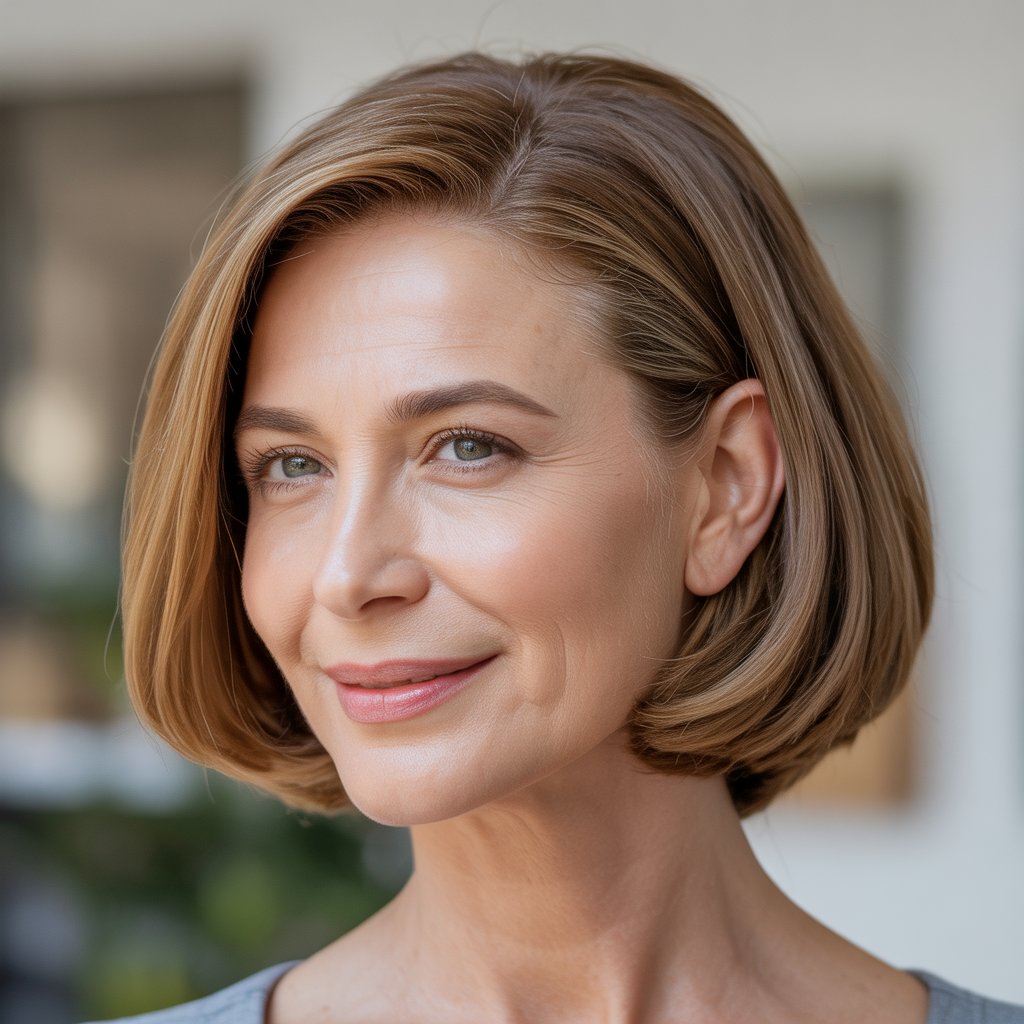
5. Why the Side Part Changes Everything
❤️ Would you like to save this?
A deep side part on a chin-length bob creates instant asymmetry, and that small detail shifts everything. This warm chestnut brown color with subtle caramel pieces through the front catches light differently depending on how you move your head.
Why It Works: The deep part lifts hair at the root on one side while allowing it to sweep across the forehead on the other. This creates volume where flat hair typically falls, and the sweeping motion draws the eye along the cheekbone rather than down toward the jawline.
The rounded ends here tuck naturally under the chin, and that inward curve is built into the cut itself. Your stylist uses their shears at an angle during the haircut, so the hair wants to sit this way. You’re not fighting physics every morning with a round brush.
4. Shaggy Lob: Built for Real Life
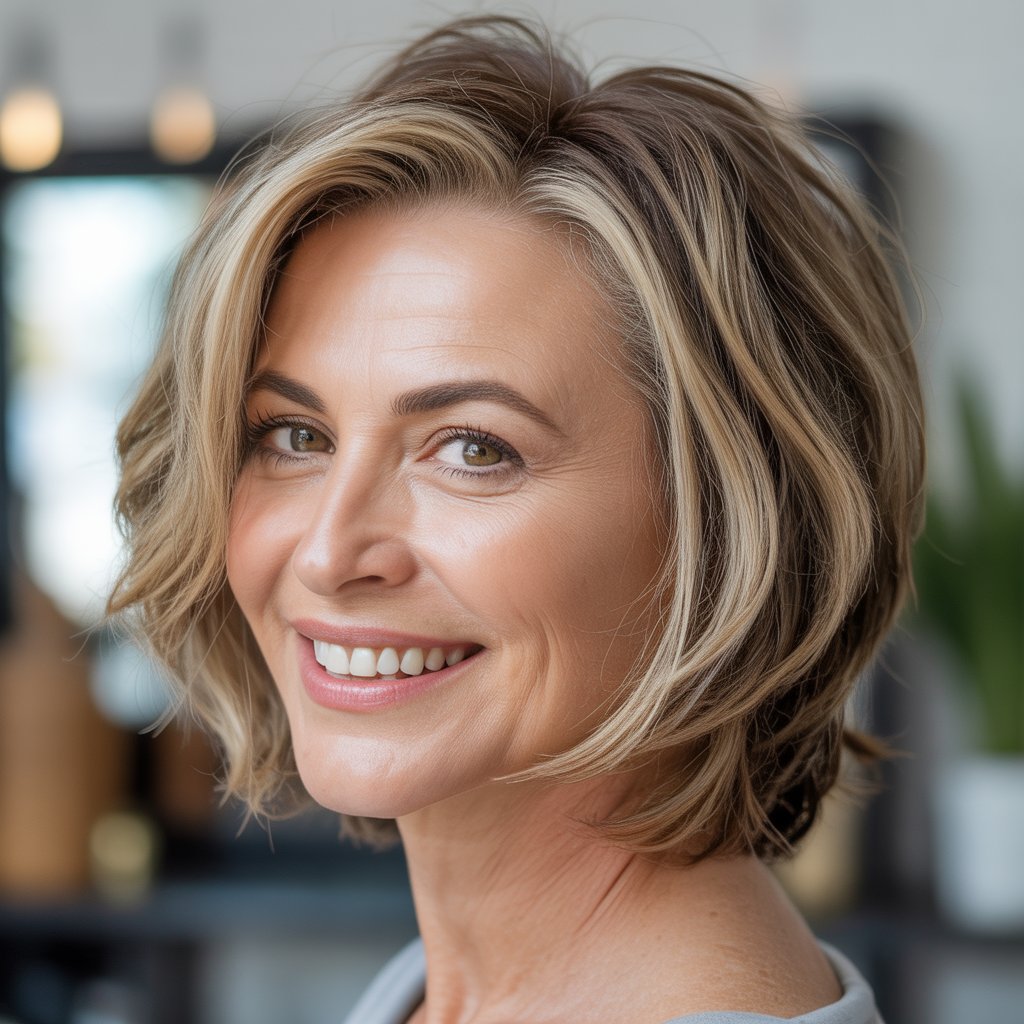
Here’s a cut that actually improves as days pass between washes. The sandy blonde tones with platinum face-framing pieces have that lived-in quality that’s impossible to fake with a flat iron but shows up naturally when you stop over-styling.
Layers start around the cheekbone and continue down to the collarbone, creating movement without thinning out the ends too much. The slight wave pattern here came from nothing more than scrunching in some mousse and sleeping on it. Second-day hair on a shaggy lob often looks better than freshly styled.
This works particularly well if your hair has changed texture over time. Many women notice their hair becoming wavier or coarser in their forties, and a shaggy lob turns that into an advantage rather than something to combat.
3. Curtain Bangs Frame Without Fussing
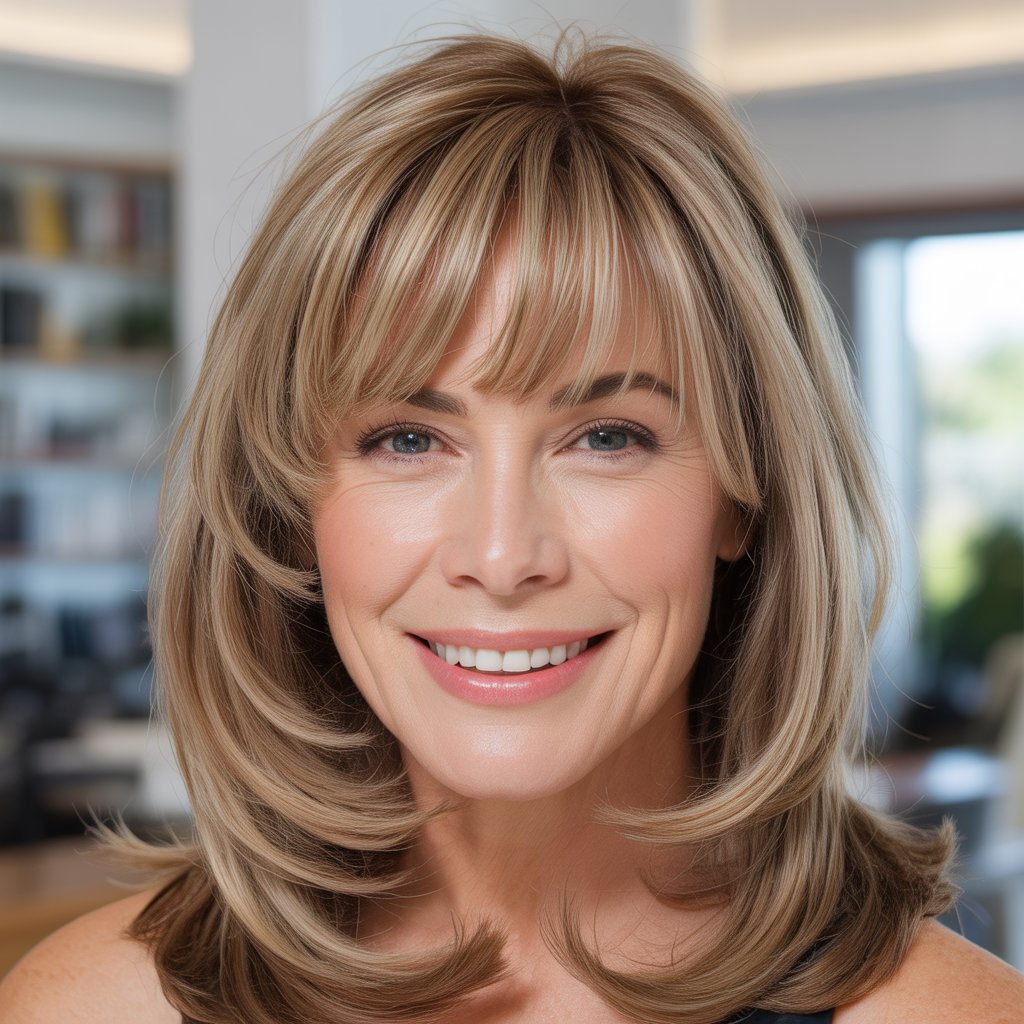
The thing about curtain bangs is they’re not really bangs at all, not in the high-maintenance sense. They’re long face-framing layers that happen to start at your brow and sweep outward. This warm bronde color shows off how the shorter pieces near the center part blend into the longer layers without any harsh lines.
Notice the feathered ends throughout the mid-lengths here. They create movement without sacrificing any actual length, and they’re forgiving as they grow. You might go two or three months between trims and nobody would know.
“The best haircut is one you forget you have until someone compliments it.”
2. Long Layered Bob Hits Every Mark

Shoulder-grazing length with internal layers that you can’t quite see but definitely feel. This ash blonde with darker roots shows smart color strategy too. Letting roots grow in darker means far fewer salon visits and a more natural transition as grays come through.
The flipped-out ends visible here happen when you blow-dry with a round brush and direct the airflow outward rather than under. But they also happen when you do absolutely nothing and your hair just decides to flip. That’s the beauty of a layered cut with this much movement built in. Messy, polished, somewhere in between. It all works.
For women dealing with thinning around the crown, internal layers add bulk where the hair sits against itself. The overlapping pieces create shadows and depth that read as fullness from across a room.
1. The Textured Pixie Takes First Place
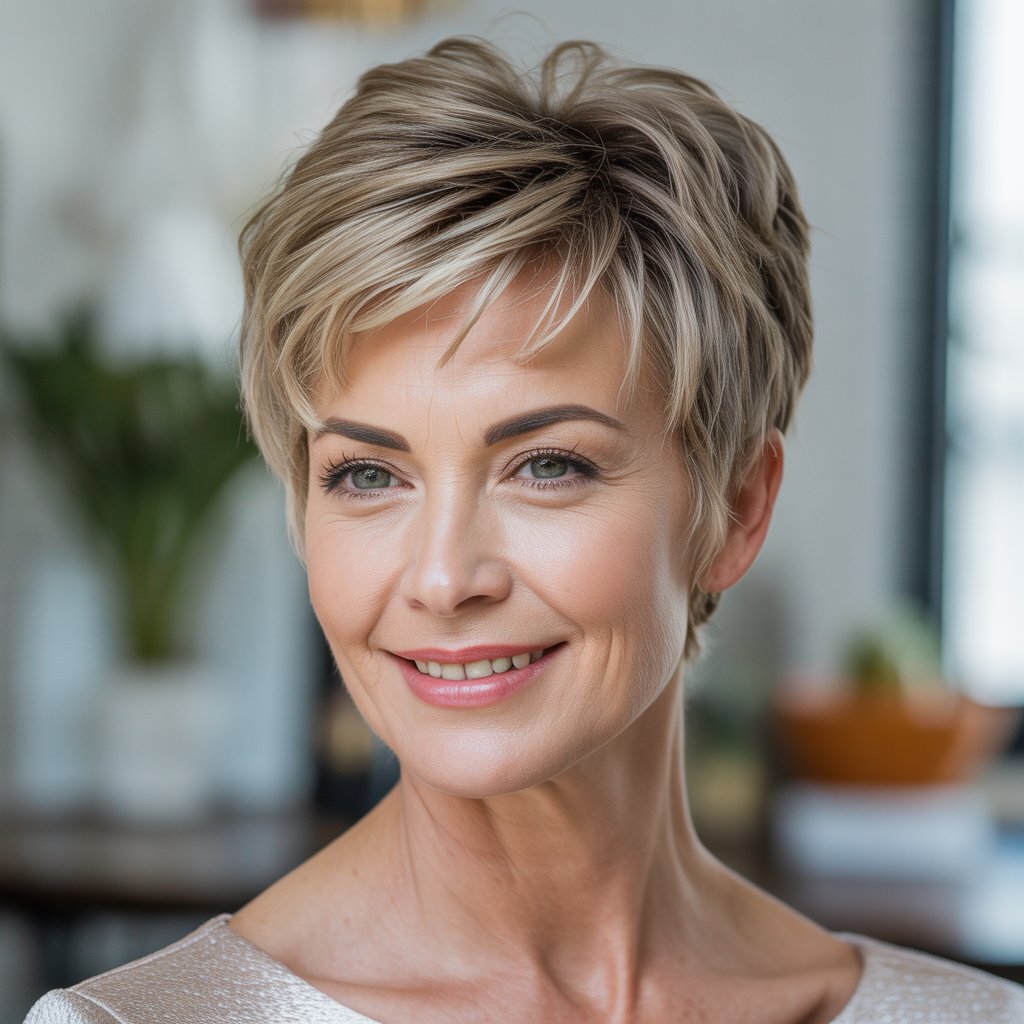
And here you are at the top. This ash blonde pixie with champagne highlights through the crown proves that going short doesn’t mean sacrificing dimension or style. The longer pieces on top sweep forward and across while the sides stay close to the head, creating a silhouette that draws attention to eyes and cheekbones.
Every four to six weeks for a trim keeps this shape intact, but between visits you’re looking at maybe ninety seconds of styling. A fingertip of wax or pomade, some directed pushing and lifting, done. Your hands are your only tool.
By The Numbers: Searches for “textured pixie cut” have increased 89% among women 40-55 in the past two years. The appeal isn’t mysterious. Less time on hair means more time on everything else.
What strikes me most looking at this final style is the confidence it requires and reflects back. You can’t hide behind a pixie cut. Your face is there, fully visible, and that visibility becomes its own kind of beauty statement. For women who’ve spent decades tending to longer styles, cutting it all off often marks a shift in how they see themselves. Not younger, necessarily. Just clearer.