❤️ Would you like to save this?
Your mother’s closet smelled like cedar and something floral you couldn’t name. You swore, at fifteen, that you’d never dress like her. And yet here you are, standing in front of your own mirror, wearing a blouse you just realized is almost identical to the one she wore to your school plays. Some of it is unconscious inheritance. Some of it is genuinely good taste that skips a generation and lands right back. These 29 signs will tell you which category you’re in, and a few of them might actually surprise you.
FYI, thanks to AI imagery software, we’re able to create very specific fashion and hairstyle examples to illustrate the points being made. In some cases, imagery is exaggerated to hammer home the point. Also, assume links that take you off the site are affiliate links such as links to Amazon. this means we may earn a commission if you buy something.
29. The Fastest Way to Your Heart Is a Waistband With Zero Structural Drama

There’s a specific moment when elastic waistbands stopped being a compromise and started being a preference. Not because anything is wrong with you, but because you’ve simply run out of patience for pants that require negotiations at the waistband level.
Your mother had a whole drawer of pull-on trousers in muted colors, and you spent years quietly judging them. Now you own four pairs and you’ve started evaluating all new bottoms based on what the waistband situation is going to be like. The elastic waist trousers win every single time, and the rationalization is always comfort, but the backstory is your mother was right.
28. You Bought ‘Athletic’ Sneakers You Will Never Once Use for Athletics
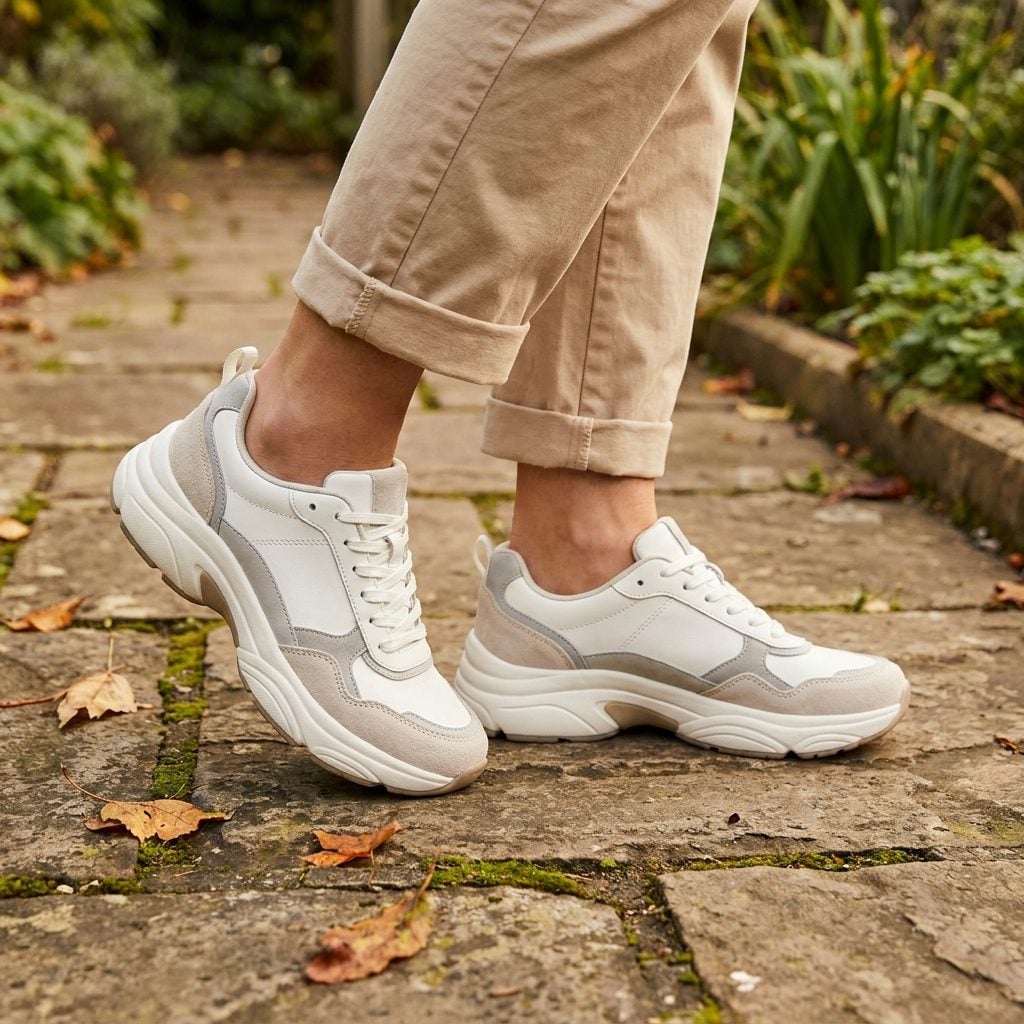
They’re described on the website as “walking shoes,” and that framing did something to you. Not running. Not training. Walking. Which is something you do. That’s a sport now, technically. You bought them in white because white is clean and versatile, and the sole is thick enough to suggest serious intent even though the most athletic thing they’ll do is navigate a farmer’s market.
Your mother wore New Balance 574s to the grocery store for twenty years. You made fun of this. You are now wearing the 2024 equivalent of exactly that shoe, and you’re calling it “dad sneaker aesthetic” to make it feel like a choice.
The chunky white sneakers are genuinely comfortable and there’s no shame in that. Own it fully or don’t own it at all, but the “I got them for walking” explanation is not fooling anyone who knew your mother.
27. Your Cardigan Collection Could Be Its Own Mood Board for the Color ‘Beige Adjacent’
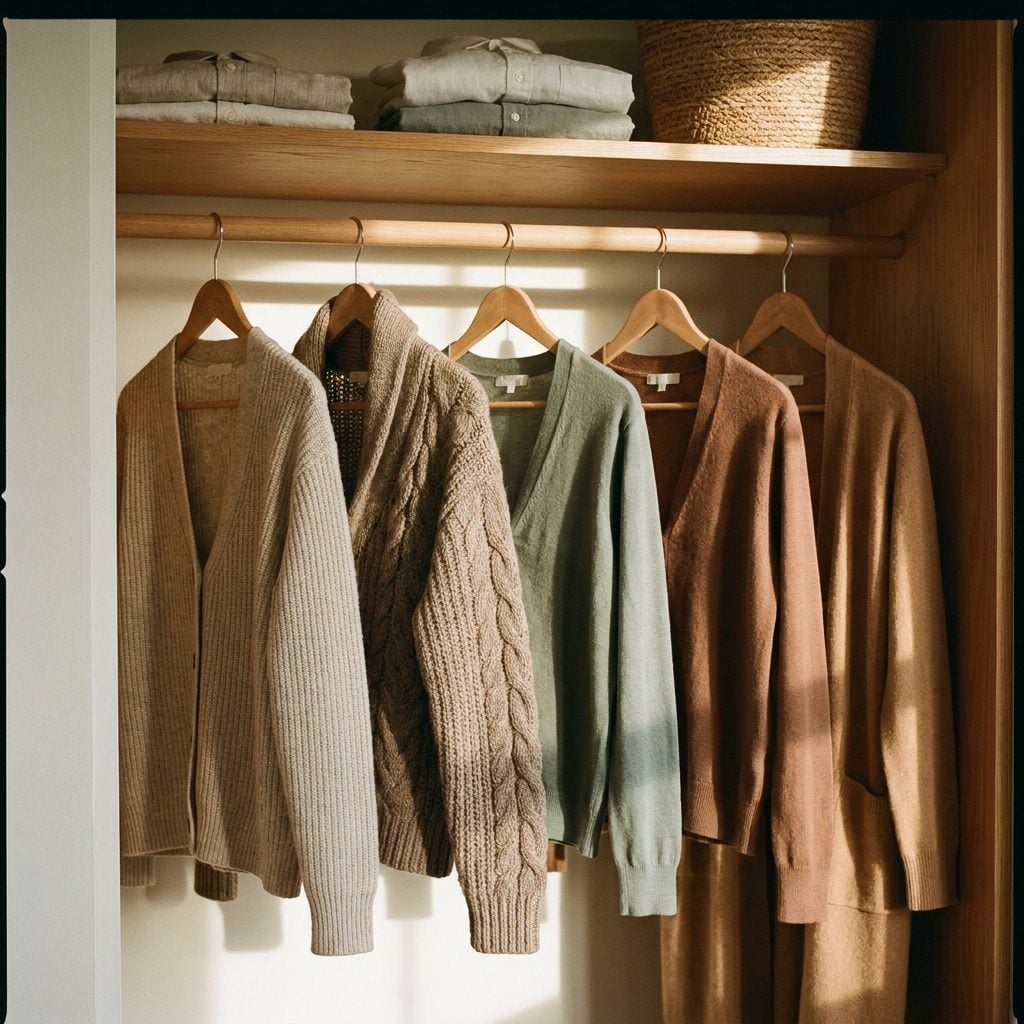
You don’t remember buying this many cardigans. That’s the thing. They accumulated the way houseplants or expired coupons accumulate, slowly and with full intention at the time of acquisition. Each one made complete sense when you bought it. Each one was, you told yourself, “versatile.”
Together they form a spectrum running from ecru to warm taupe to something you once called “earthy rust” but is honestly just brown. A beige dress under a camel cardigan with oatmeal sneakers is a complete outfit in this era of your life, and that is entirely fine. Your mother had the same relationship with her layering pieces. She called it “classics.” You call it “building a capsule.” The cardigans don’t care what you call them.
26. Your Reading Glasses Live on a Chain Around Your Neck and You Have No Regrets

The beaded chain didn’t happen overnight. First came the reading glasses, left on every surface you own. Then came losing them three times in one day during an important meeting. Then came the chain, bought at a small boutique or maybe a pharmacy rack, justified as practical, kept because it actually works.
Your mother’s chain had little plastic clips at the end and sat coiled on her nightstand when not in use. Yours has amber beads and a vague artisanal quality. The function is identical. A beaded eyeglass chain is genuinely one of the most sensible accessories a person can own, and the fact that it reads as “grandmother-coded” to some people says more about them than it does about you. You can see things now. That’s the win.
25. Turtleneck Tucked Into High-Waisted Pants: You’ve Stopped Explaining This and Started Just Doing It
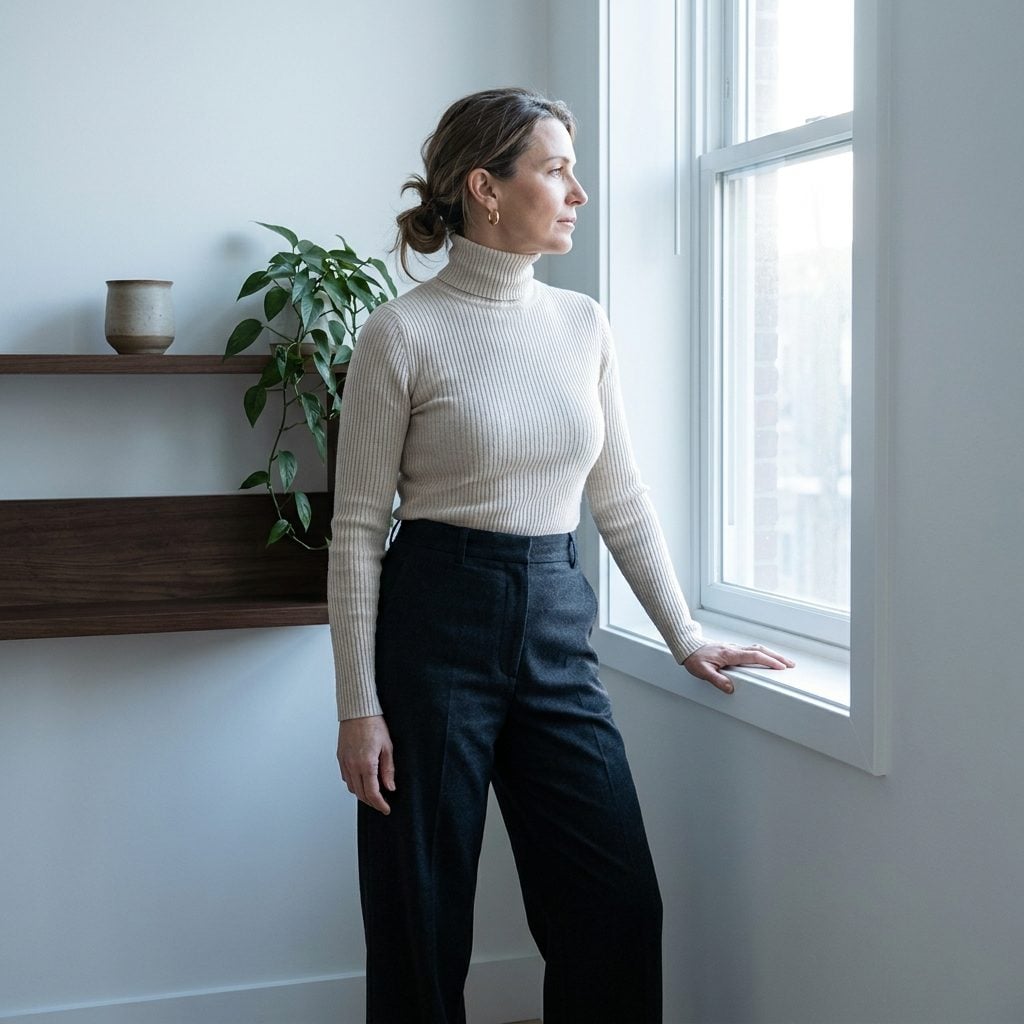
This is not an ironic outfit choice and it never was. The tucked turtleneck is warm, it solves the bunching problem at the neckline, and it gives your waist definition without anything overtly trying to give your waist definition. It’s the sartorial equivalent of reading a map instead of using GPS: slightly old-fashioned in method, completely effective in result.
Fashion decided recently that this look is back, which is a relief only because you kept doing it through the years it supposedly wasn’t. Your mother tucked everything. Mock necks, cable knits, the occasional dickie (a different era entirely). The ribbed turtleneck paired with high-waisted trousers has always worked because it creates a clean, uninterrupted line from neck to hip. Fashion just keeps cycling back to things your mother was already doing in 1987.
“The tuck isn’t a throwback. It’s a reminder that some things just work.”
24. Your Bag Has a Tissue Pocket. You Always Know Exactly Where It Is.
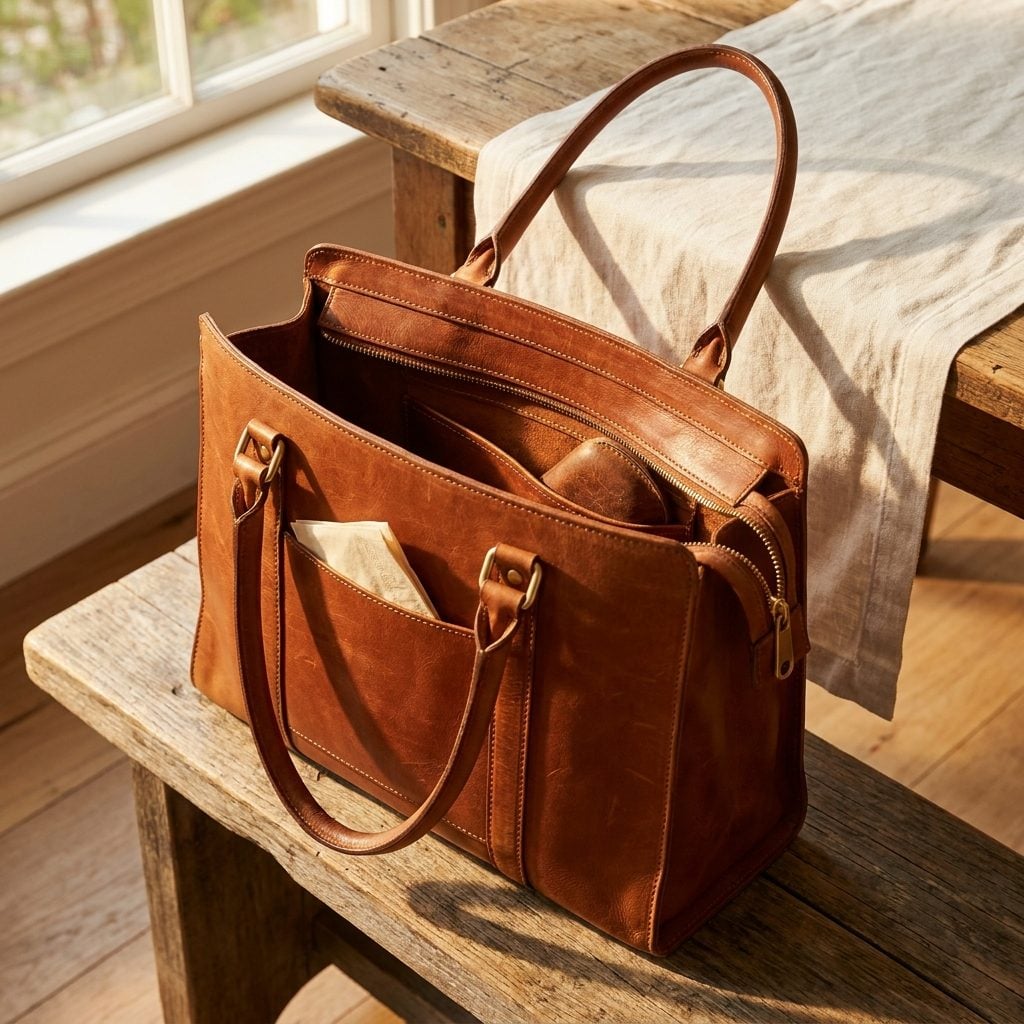
You know which pocket without looking. That’s the thing that would alarm your younger self most, probably. Not the tissue itself, not even the pocket designed specifically for tissues, but the muscle memory of reaching for it in exactly the right spot without a second thought.
Your mother’s handbag was a complete organizational system that outsiders could not decode. She knew where everything was. You used to rifle through it looking for ChapStick and come up empty every time, which was because you didn’t know the system. The structured leather tote you carry now has its own system. The tissue pocket is non-negotiable. You’ve also started keeping a small travel umbrella and a folded grocery bag in there, and you see absolutely nothing wrong with this.
23. That Stretchy Metal Watch Band Is Doing a Lot of Work and You Love It
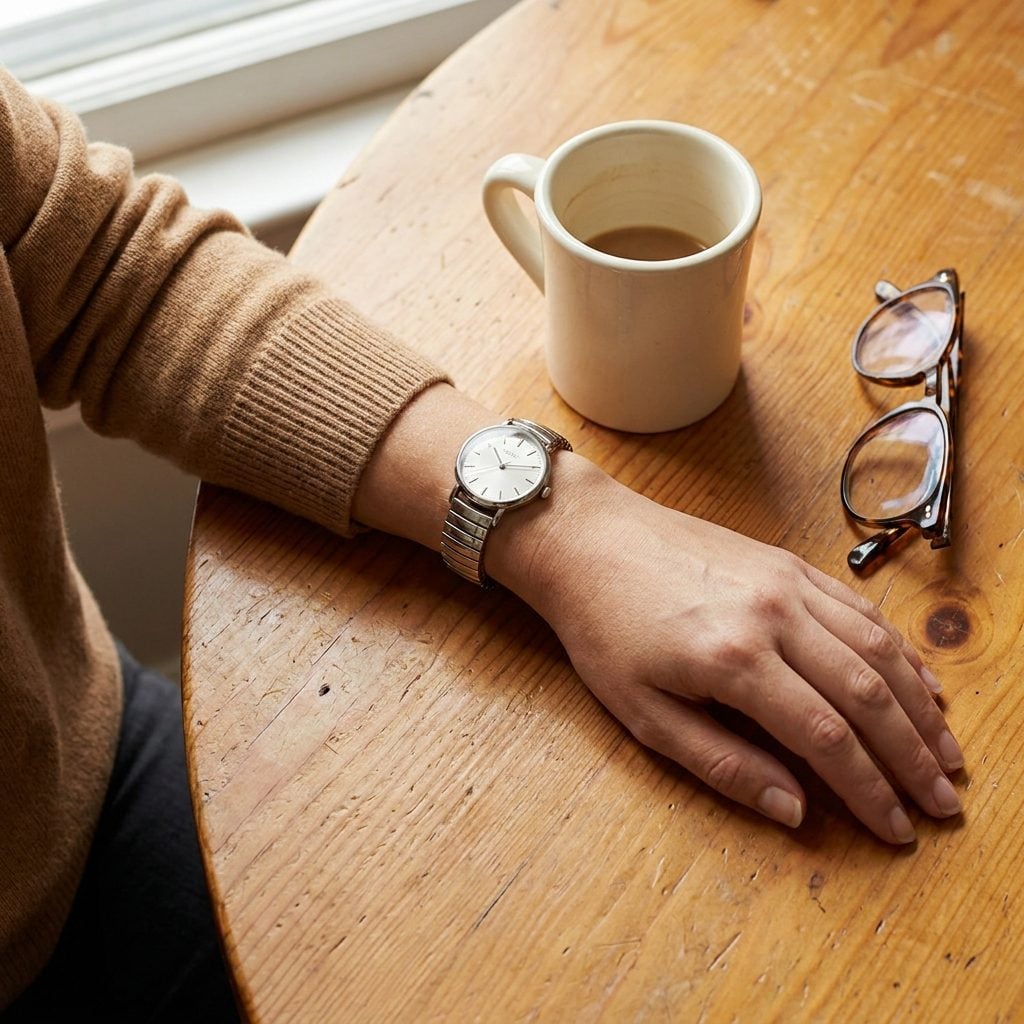
The expansion band watch communicates a very specific set of priorities. Time-telling: yes. Comfort: absolutely. Fumbling with a clasp in bad light: never again. Your mother wore one of these and it stayed on her wrist the way a wedding ring does, just always there, always readable without drama.
There’s a reason the expansion band watch keeps showing up in vintage and retro collections: it’s genuinely a good design. It fits on the first try, stretches enough to be comfortable through the day, and never leaves a red mark at the end of a long afternoon. Your mother didn’t wear it because she’d given up on style. She wore it because it worked and she was busy. You’re wearing it for the exact same reasons, and you’ve stopped apologizing for it.
22. The Rhinestone Floral Top You Bought Because It Was ‘Fun’

There’s a specific rack in every department store, the one near the escalator, the one with slightly too much going on. You know the rack. At some point, something with rhinestones on it ended up in your cart because it felt festive, or the sales tag said fun detail, and you believed it. Your mother had a version of this top in every color, probably in a bedazzled cat or a sequined autumn leaf motif. The chest-text version (think: Blessed, Coastal, Nana) is the same instinct in different packaging.
None of this is a crime. But if the last three tops you bought have something sparkling, scripted, or blooming across the front, you’re dressing from a retail habit, not a personal aesthetic. There’s a difference, and it’s worth the three seconds it takes to notice it.
21. You Stopped Buying Shoes You Love and Started Buying Shoes That ‘Work’

Arch support is genuinely important. Nobody is arguing against comfortable feet. But there’s a moment, and you’ll know if it’s happened to you, where you stopped even glancing at the shoes that made you feel something, and started filtering entirely by sole thickness and return policy.
Your mother did this too, probably in her mid-forties, probably after one bad day in heels at an airport. The slide toward exclusively functional footwear happens fast, and before long you’ve got four pairs of the same wide-fit walking shoes in different colors and nothing that makes you want to get dressed.
Comfort and style are not mutually exclusive. That’s not a pep talk, it’s just true, and the footwear market has made serious progress on this. You don’t have to choose pain. You also don’t have to choose beige velcro.
20. The Matching Set That Arrived Together and Has Never Been Separated
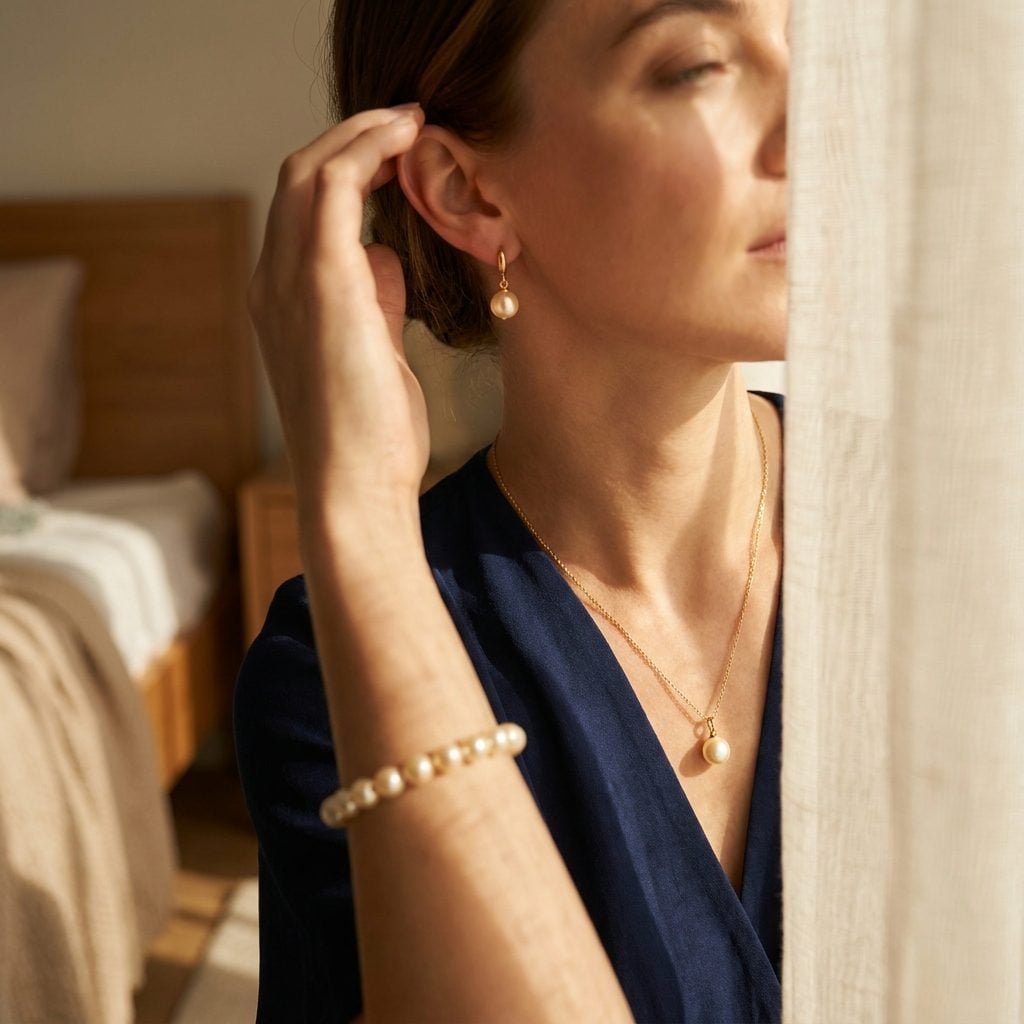
Matching jewelry sets exist because someone, somewhere, decided women shouldn’t have to think. Box sets sold at department store counters, gifted at holidays, worn exactly as intended: earrings plus necklace plus bracelet, all at once, never separated. It’s the jewelry equivalent of buying a pre-made outfit from a single hanger.
Your mother lived by these sets. Maybe yours came in a velvet-lined box. Maybe you still own the box.
The thing about a matching set is that it signals coordination without actually demonstrating taste. Mixing a vintage brooch with a modern chain and one good ring says something about who you are. A boxed set says you were given something and kept it together out of habit.
19. The Pull-On ‘Denim’ Pants That Are Fooling Absolutely No One
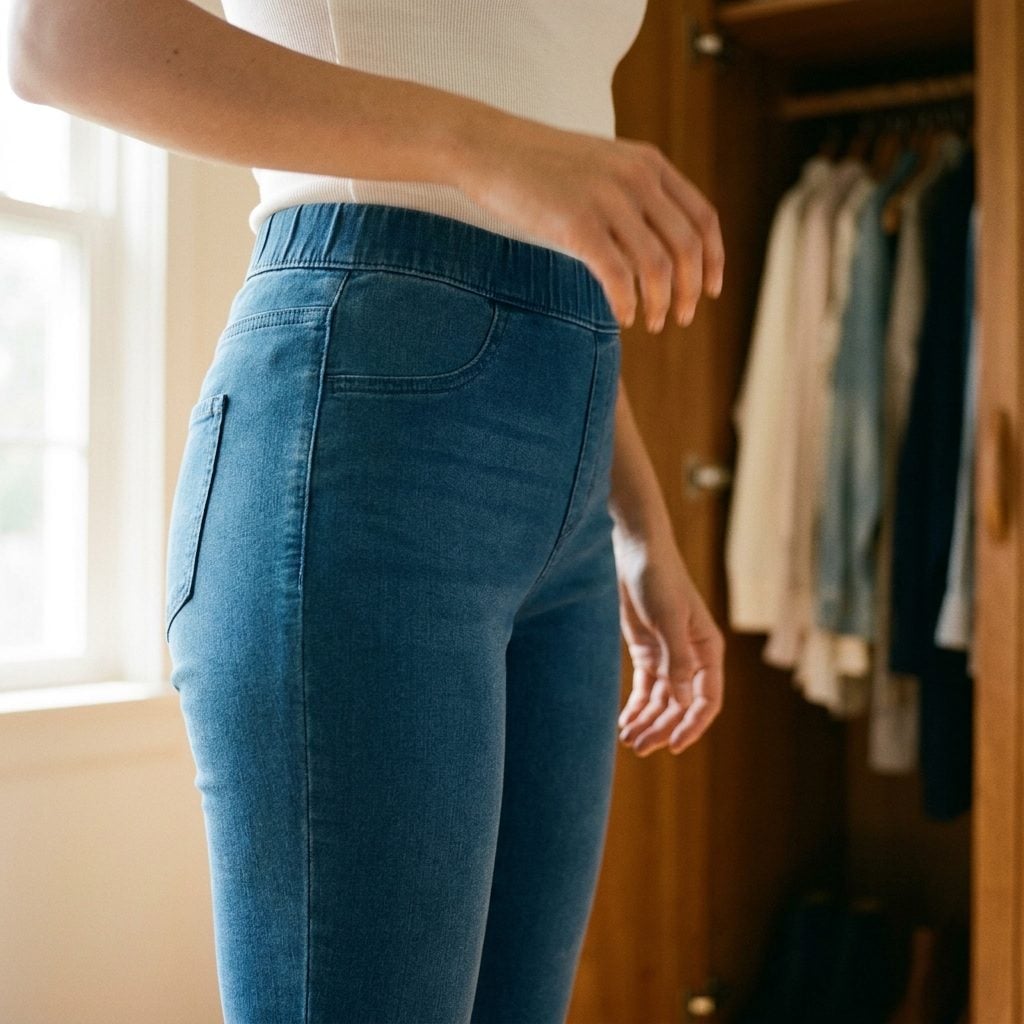
Pull-on pants with a faux-denim print aren’t necessarily bad. They are almost always extremely comfortable. And that is precisely where the slippery slope begins.
You try a pair because your back hurts, or because someone on a Facebook group said they were life-changing, and then six months later your entire casual wardrobe is elastic-waist everything. Your mother made this exact trade-off. In 1998, she called them slacks. Now the industry calls them ponte trousers or sculpting jeggings, but the mechanism is identical: the zipper, button, and any sense of intention have been quietly removed.
Real black dress-level commitment to getting dressed involves occasionally wearing something that requires a little effort to put on. That’s not punishment. That’s just how clothes remind you they’re doing something.
18. The Indoor Scarf That Has Somehow Become Your Whole Personality

Not a winter scarf. Not a scarf being worn because it’s cold outside. An indoor scarf, looped around the neck at the breakfast table, worn to a friend’s house, present at the doctor’s office. The kind your mother draped over every neutral cardigan from October through April.
Scarves indoors are one of those things that tip from intentional accessory into habitual uniform. At first, it feels European. After the first dozen times, it’s just something you do without thinking, like checking the back door before bed.
If you’re wearing a scarf indoors every single day and it surprises you when someone mentions it, you’re not accessorizing. You’re on autopilot.
That’s a fine place to be, honestly, just own it consciously. A merino wool scarf worn with intention reads completely differently than one worn out of cold-neck habit inherited from a woman born in 1952.
17. Your Bag and Shoes Are the Same Color Because Your Mother Said They Should Be
❤️ Would you like to save this?
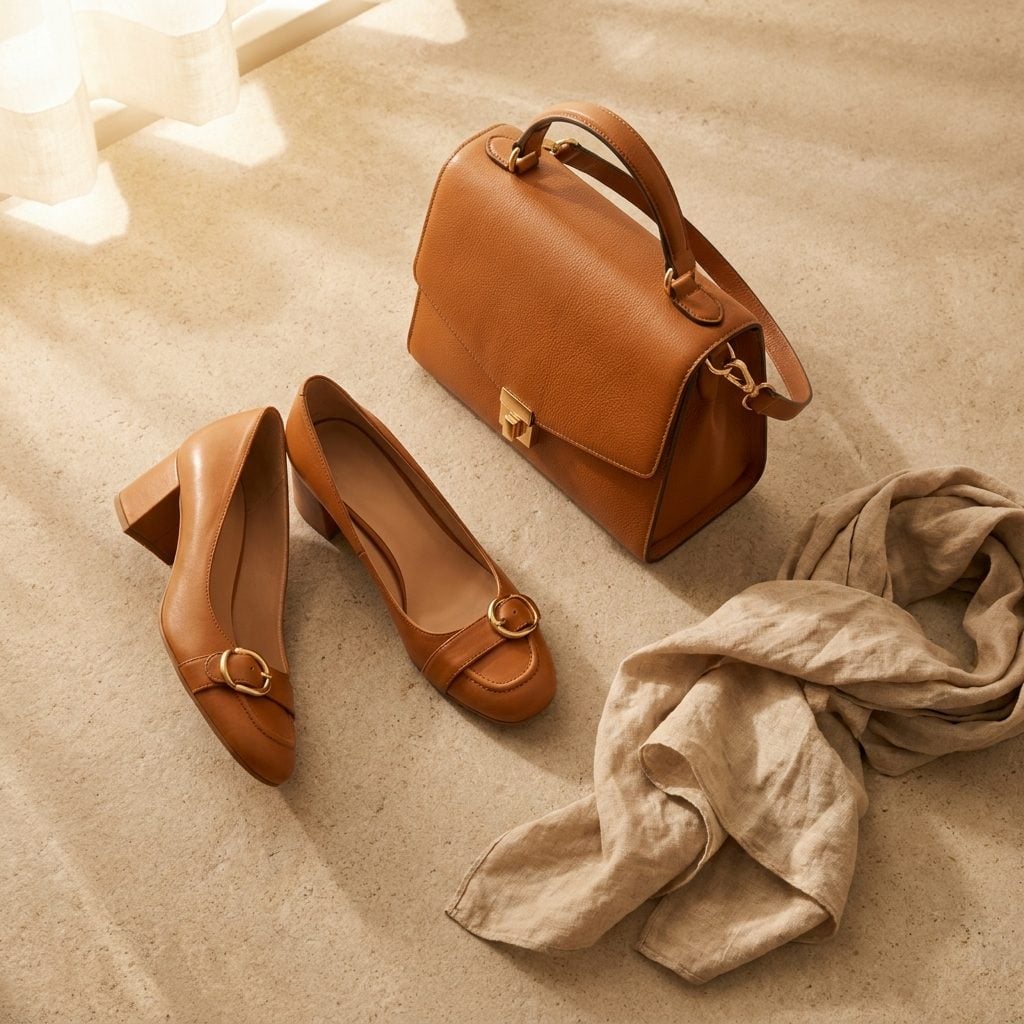
Matching your bag to your shoes is one of those rules that sounds timeless but is actually extremely 1987. It originated in a era of structured dressing when coordination was the goal and personal style was less the point. Your grandmother did it. Your mother refined it. And if you’re still doing it, you are three generations deep in a style convention that the rest of the fashion world quietly retired.
Modern dressing is about contrast and intention, not a matching set of accessories that look like they arrived in the same shopping bag. A tan leather structured handbag looks far more interesting beside a deep burgundy loafer than beside its twin.
16. The Drawer Full of Shells That You Rotate Under Every Blazer You Own
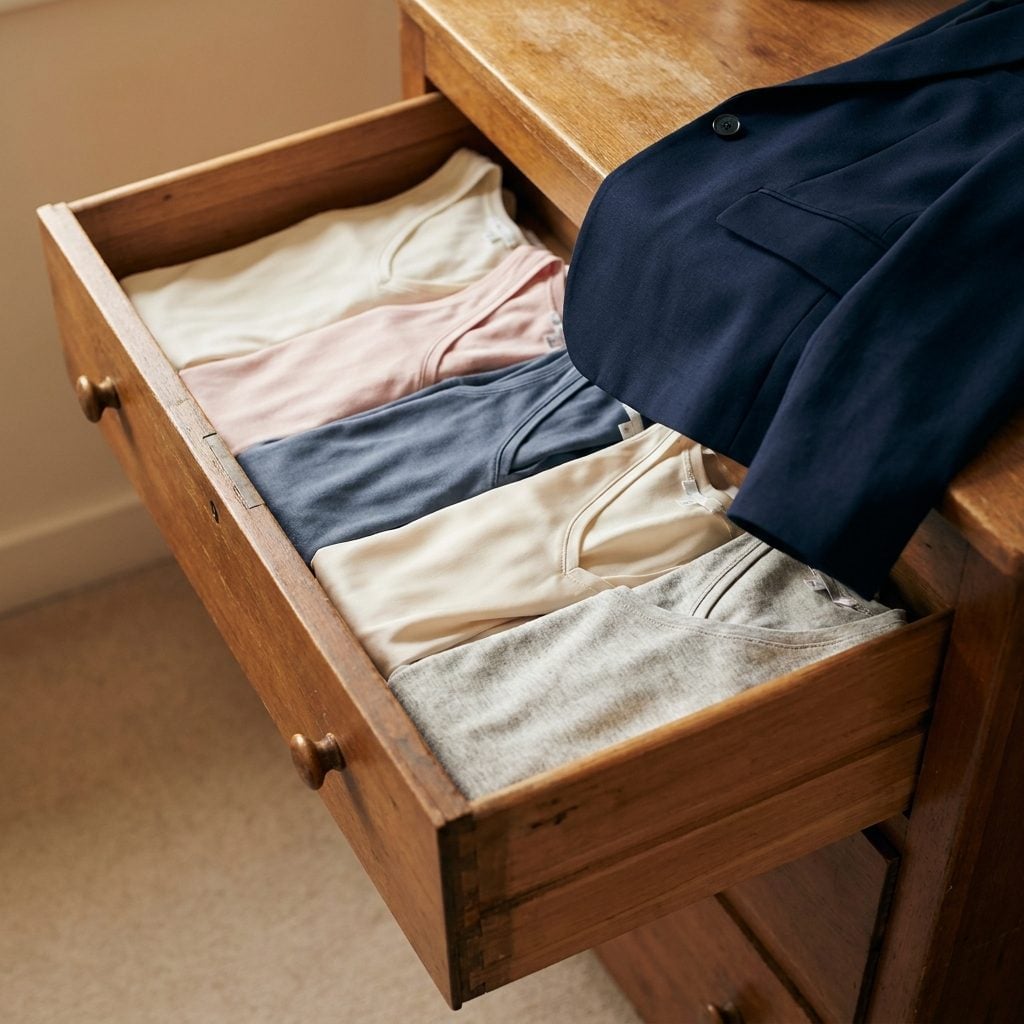
The layering shell is one of those items that seems purely functional until you realize you own seven of them in slightly different shades of nothing. They live in a dedicated drawer. You don’t think about them; you just reach for one every time you put on a blazer, because that’s what goes under a blazer, obviously.
Your mother called hers a dickey or a blouse front. The mechanics are identical: a thin, sleeveless, mostly-invisible layer designed to solve a problem that a better-fitting top wouldn’t have created in the first place.
There’s nothing wrong with a sleeveless layering shell in theory. But seven of them, rotated on autopilot, is a wardrobe system built around avoidance rather than style. Sometimes a well-cut fitted tee or a silk camisole with an interesting neckline does more for a blazer than any shell ever will.
15. Your Jeans Haven’t Changed Since the Second Obama Term and You’re Fine With That
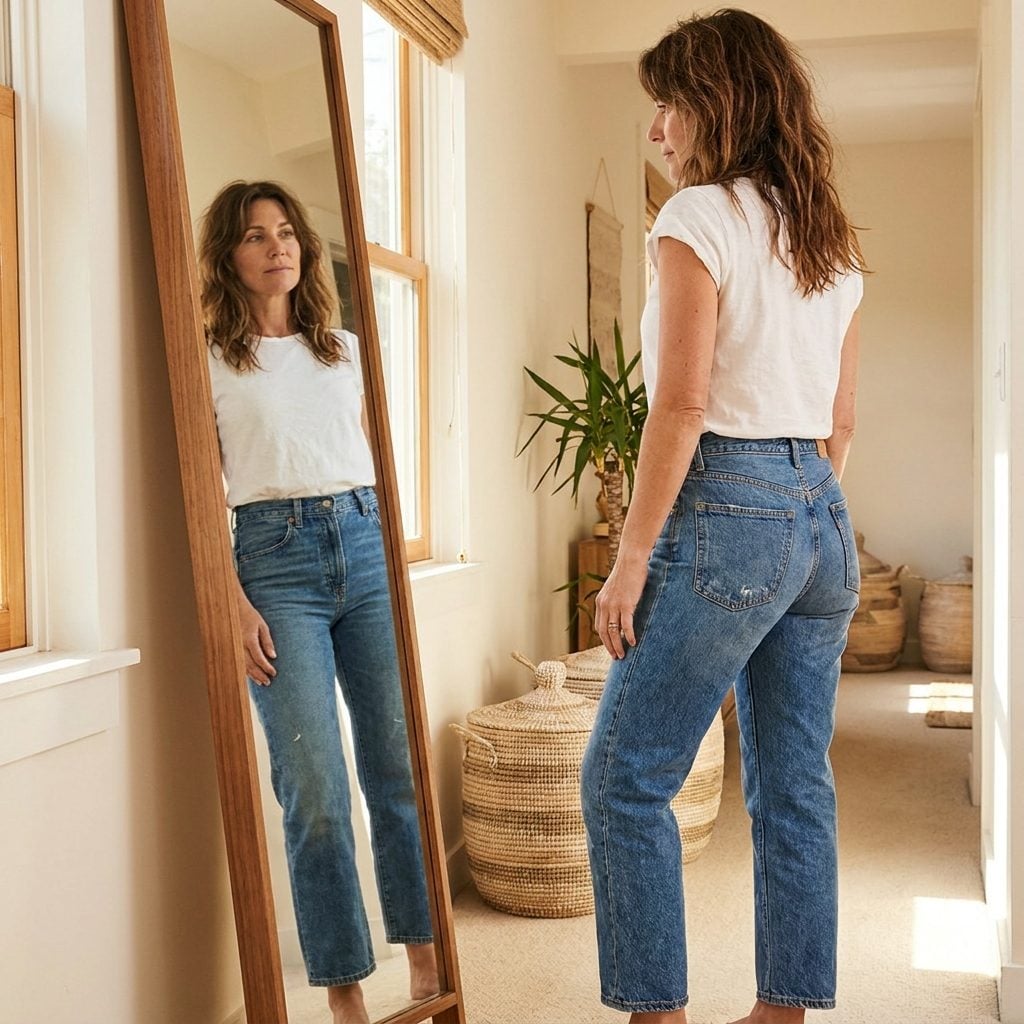
Here’s the thing about jeans: once you find a pair that fits, the instinct to never change them is completely rational. Denim shopping is exhausting, fitting rooms are brutal, and the waistband gap at the back has humiliated enough of us to make repeat-buying feel like self-preservation.
But there’s a version of this that stops being practical and starts being a 10-year freeze. If your blue dress gets swapped for jeans the moment you’re not going anywhere fancy, and those jeans are the same mid-wash straight leg you’ve been buying since before Instagram had stories, it’s worth asking whether the choice is still yours or just gravity.
Natural-waist jeans, for the record, are having a real moment right now, so you may be accidentally correct. But there’s a difference between wearing a high-rise because you love it and wearing it because your mother wore it and you never questioned it. One is confidence. The other is just continuity.
14. You Reach for Closed-Toe Shoes Even When the Outfit Is Begging for a Sandal
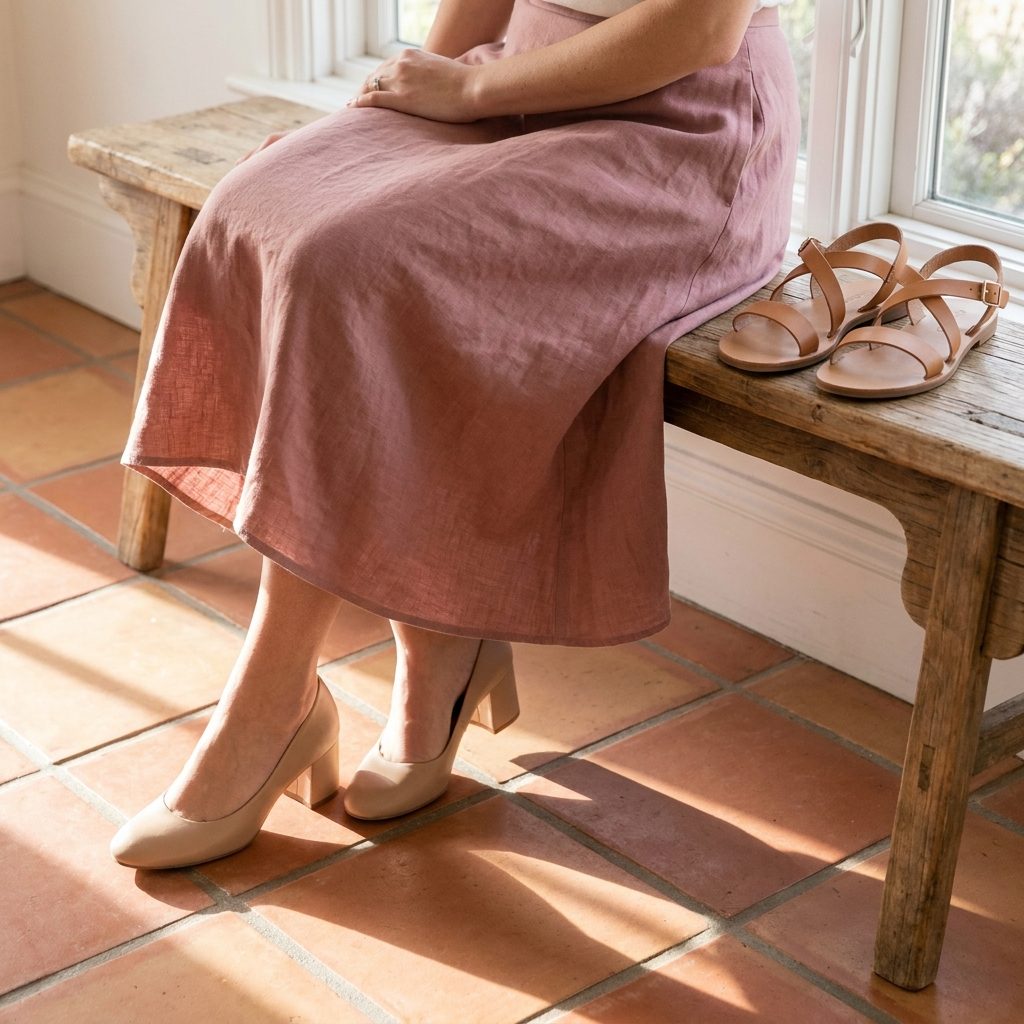
There’s a specific kind of comfort in closed-toe shoes that has nothing to do with physical comfort. It’s psychological armor. Your mother wore closed-toes to the office, to church, to the neighbor’s dinner party, and somehow that calcified into your definition of “dressed.” Sandals feel casual. Casual feels underdressed. Underdressed feels like a judgment.
The tell is when you’re standing in a linen dress at a summer garden party, slightly overheating in nude block heel pumps, watching every other woman float past in slides or strappy sandals, and thinking “but this looks more put together.” It doesn’t. It looks like you’re dressed for a different event. The closed-toe habit is usually the last one to go.
13. The Words ‘Tummy Control’ on a Tag Are Starting to Feel Like a Promise, Not a Warning

Somewhere in the last decade, “tummy control” stopped being a compromise and started being a feature. You browse, you read the label, and instead of a small internal objection you feel a quiet relief. That is a significant moment in a woman’s fashion biography.
Nothing is wrong with structured fabric. Honestly, ponte does hold its shape beautifully, and a well-constructed ponte fitted top is genuinely useful. But there’s a difference between choosing compression for fit and choosing it because it’s become the default. Your mother had a whole drawer of these. You’re starting to understand her in a new, slightly unsettling way.
12. Loafers With Bare Ankles Is Your Version of Dressed Up, and You Stand By It
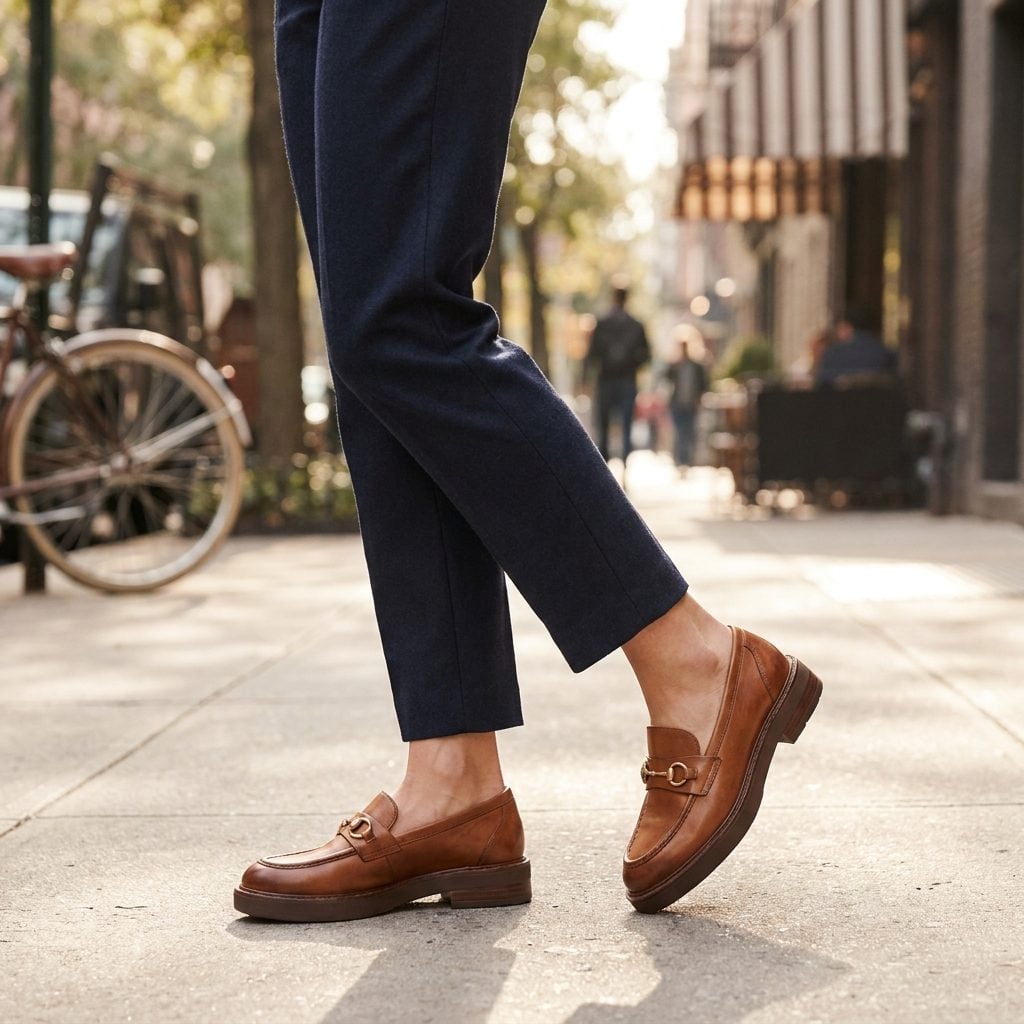
Loafers with bare ankles are objectively a good look. This one isn’t a dig. But here’s the tell: you’ve stopped thinking about it. You reach for the tan leather loafers, you crop your trousers just so, and you call it polished without a second thought. Which is exactly what your mother did. And her mother before her.
The look works. It always has. But “this is my polished” and “I actively chose this” are two very different things. One is personal style. The other is inherited default. Sometimes it’s both, and that’s fine. Mostly it’s worth knowing which one you’re operating from.
11. Your Entire Wardrobe Lives in a Five-Color Range That Starts at Navy and Ends at Cream

Opening your closet and seeing navy, white, cream, camel, and maybe a single grey that felt adventurous at the time is its own kind of answer to the question this article is asking.
The navy-to-cream palette is not bad. It photographs beautifully, everything coordinates, and you never have a getting-dressed crisis. But your mother didn’t choose it for those reasons either. She chose it because it felt safe, appropriate, and above reproach. Ask yourself honestly: does your wardrobe look like someone with deep aesthetic conviction, or someone who stopped experimenting around the time the kids started school?
A closet with no surprises in it is a closet that stopped reflecting who you actually are.
10. You Own a Vest. You Wear the Vest. You Feel Good in the Vest.
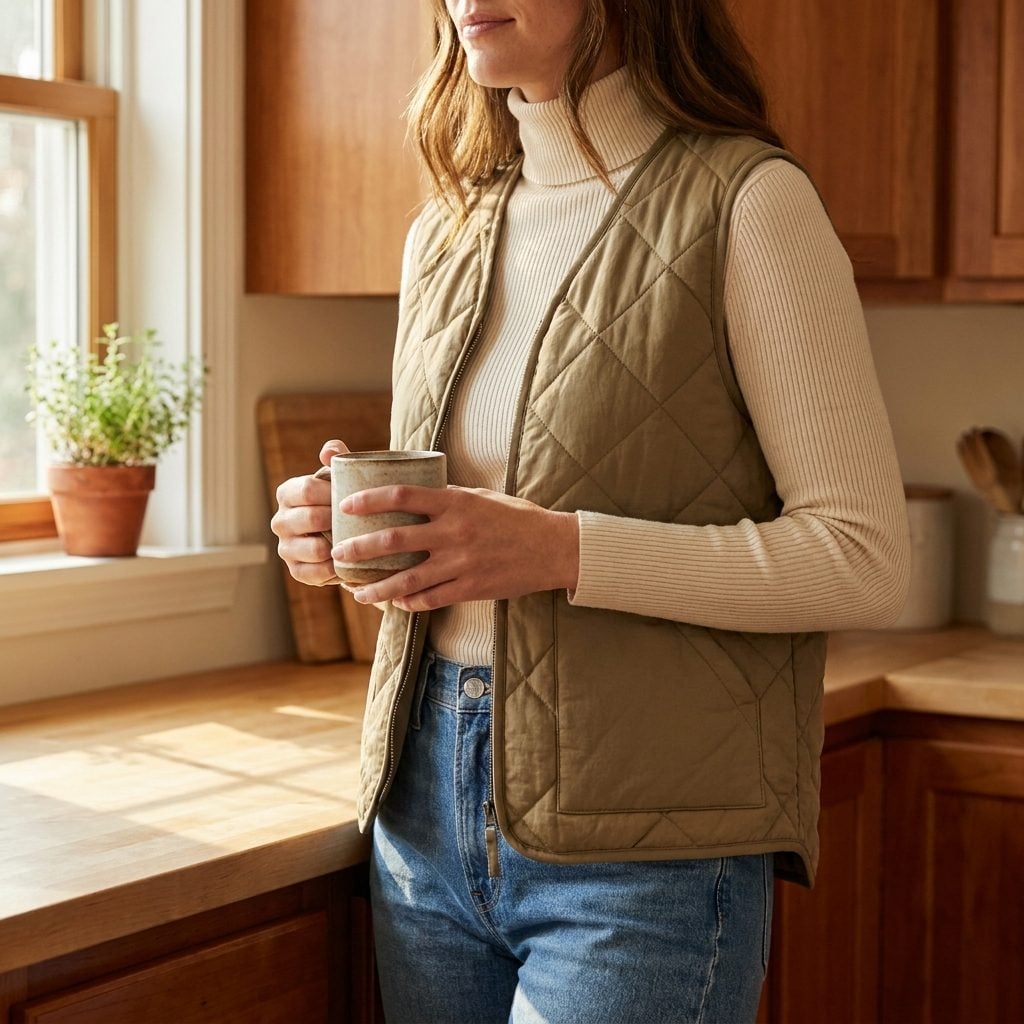
The vest is the canary in the coal mine. I say this with full awareness that I own one and wore it last Tuesday.
There’s a specific life stage the vest represents: past caring about looking cold in exchange for looking put-together, but not yet at full coat territory. It’s practical layering that signals a certain relationship with functionality over fashion. Your mother wore hers to the farmer’s market, to school drop-off, while gardening. You wear yours the same places, probably in the same quilted khaki or navy zip-up style she favored.
9. Your Pajamas Match, Have Piping, and You’d Be Embarrassed If They Didn’t
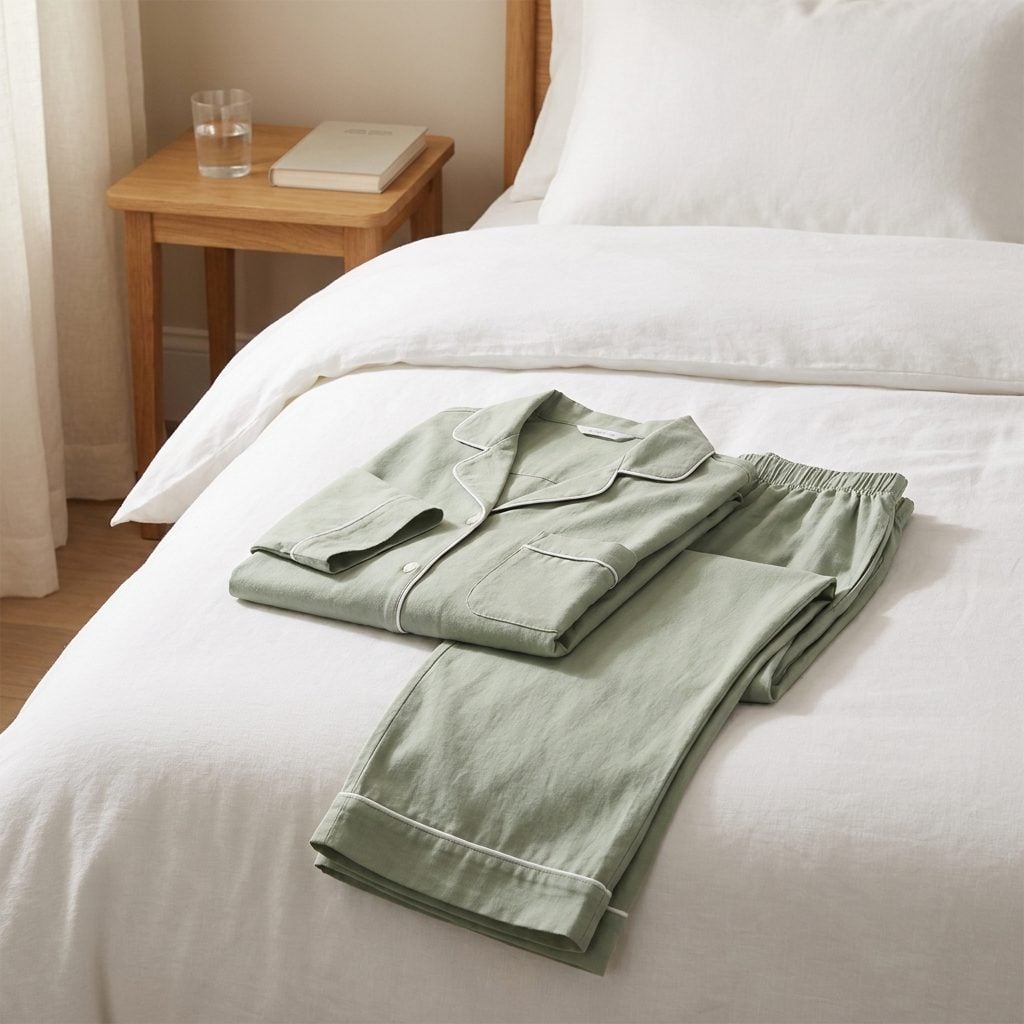
Coordinated sleepwear with piping detail is the sartorial equivalent of your mother saying “we don’t wear that outside the house.” It’s a standard applied to a context where no one will see you. That’s either admirable discipline or inherited anxiety about being caught undone. Hard to say which.
The cotton pajama set with contrast piping has a long, respectable history in women’s loungewear. Worn deliberately, it’s a genuine pleasure. But if you’d feel vaguely ashamed to open the door in a mismatched t-shirt and shorts, your mother’s voice is doing a lot of work in that moment.
8. Pearl Studs Are In Your Ears Before You’ve Finished Your First Cup of Coffee

You don’t decide to wear them. They just go in. Every morning, automatic as brushing teeth, the pearl stud earrings go in and you walk out the door. That’s not personal style. That’s a habit so deep it’s basically posture.
Pearl studs are genuinely beautiful. Classic, versatile, appropriate everywhere. But “appropriate everywhere” was your mother’s entire brief for jewelry. She wore them to funerals and to the grocery store with equal conviction. Ask yourself the last time you consciously chose them over something else, rather than simply defaulting to the pair in the first slot of the jewelry dish. The answer might surprise you.
7. Your Sunglasses Are Designed to Go Over Your Reading Glasses, and You’ve Made Peace With That

This one deserves no mockery, because the logistics of vision correction are genuinely annoying and the solutions are genuinely limited. But there is something worth pausing on when a functional accommodation becomes an aesthetic identity.
Your mother didn’t choose those oversized fitover sunglasses for style reasons either. She chose them because they worked and she’d moved past worrying about the rest. There’s actually something freeing about that transition, the moment when function wins cleanly and you stop apologizing for it. It’s just useful to recognize it for what it is: pragmatism wearing the clothes of personal style.
Prescription sunglasses exist, for what it’s worth. So do contact lenses for outdoor wear. This is not a judgment. It’s just a door, if you want to open it.
6. The Decorated Denim Jacket You Thought Was Different
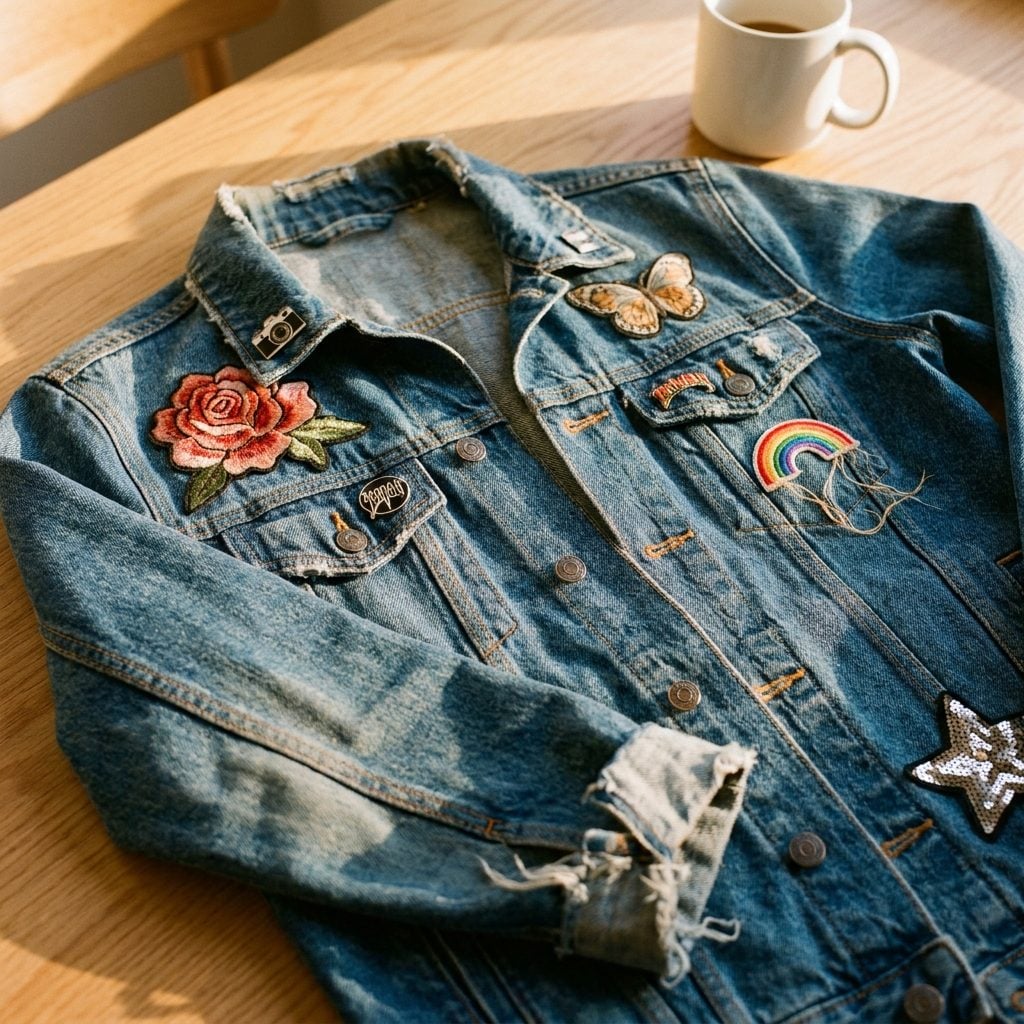
The thing about the decorated denim jacket is that it felt like a personality move. You picked up the patches yourself, you chose the pins, you maybe even ironed them on at the kitchen table. It felt creative. It felt you. And yet, flip through your mother’s photo albums from her early forties and there she is, same energy, different patches. Hers had a lace collar she sewed on. You have a sequined taco.
This isn’t really about the jacket. It’s about the instinct to add something to a piece to make it feel personal, rather than letting the cut or color or fabric do the work. Your mother did the same thing, and her mother before her. There is a whole generational lineage of women trying to make a safe piece of clothing feel interesting through decoration.
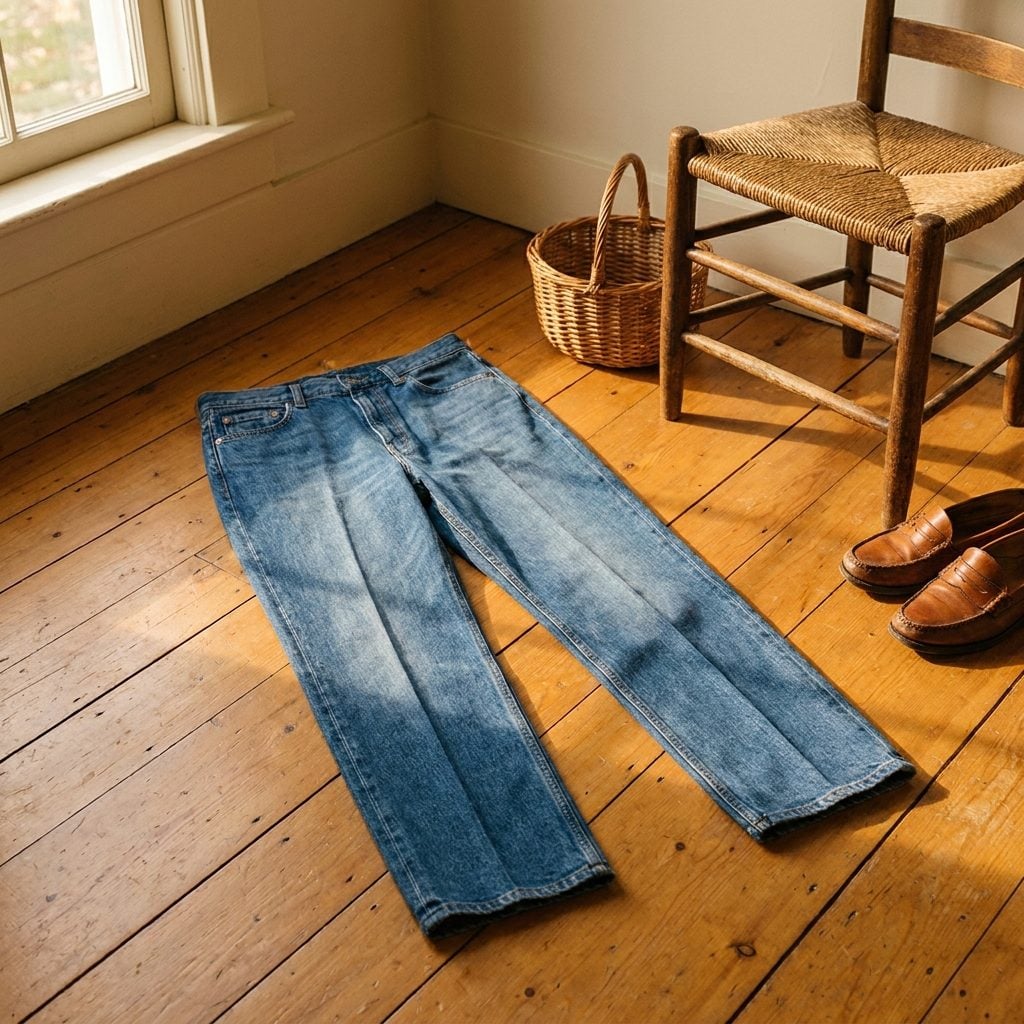
5. Your Jeans Have a Pressed Crease Down the Front Like You’re Wearing Dress Pants to a Picnic
❤️ Would you like to save this?
Something happens around the second or third time you iron a pair of jeans. You stop thinking of it as ironing and start thinking of it as finishing them. The crease appears almost automatically, pressed into the denim like a habit you inherited without signing up for it. Your mother ran an iron down the front of her Lees every Saturday morning, and you watched, probably bored, definitely absorbing it.
The truth is, pressed-crease jeans are having a genuine fashion moment right now, so you could argue you’re ahead of the curve. But if yours have been creased since 2003 and the reason is purely “that’s how jeans should look,” that’s a different story entirely. That’s your mother’s voice living rent-free in your laundry routine.
4. You Still Have the Jeans That Promised to Take Off Ten Pounds

The tag probably said something like “sculpting” or “body-shaping” or, the boldest of all, “miracle.” The marketing copy on those jeans was written for women who had been told their bodies were problems to solve. And a lot of us bought in, literally, spending more than we would on a regular pair of black dress trousers because the promise was attached to the price.
Your mother had a version of these too. Hers might have been a different brand, a different silhouette, but the same premise: the right pair of pants will do the work your body won’t. Decades later, the jeans have changed but the marketing hasn’t. If the sell is a smaller you rather than a better-made garment, it’s worth pausing before you swipe.
3. Every Outfit You Own Has Been Tried With Those Ankle Boots First
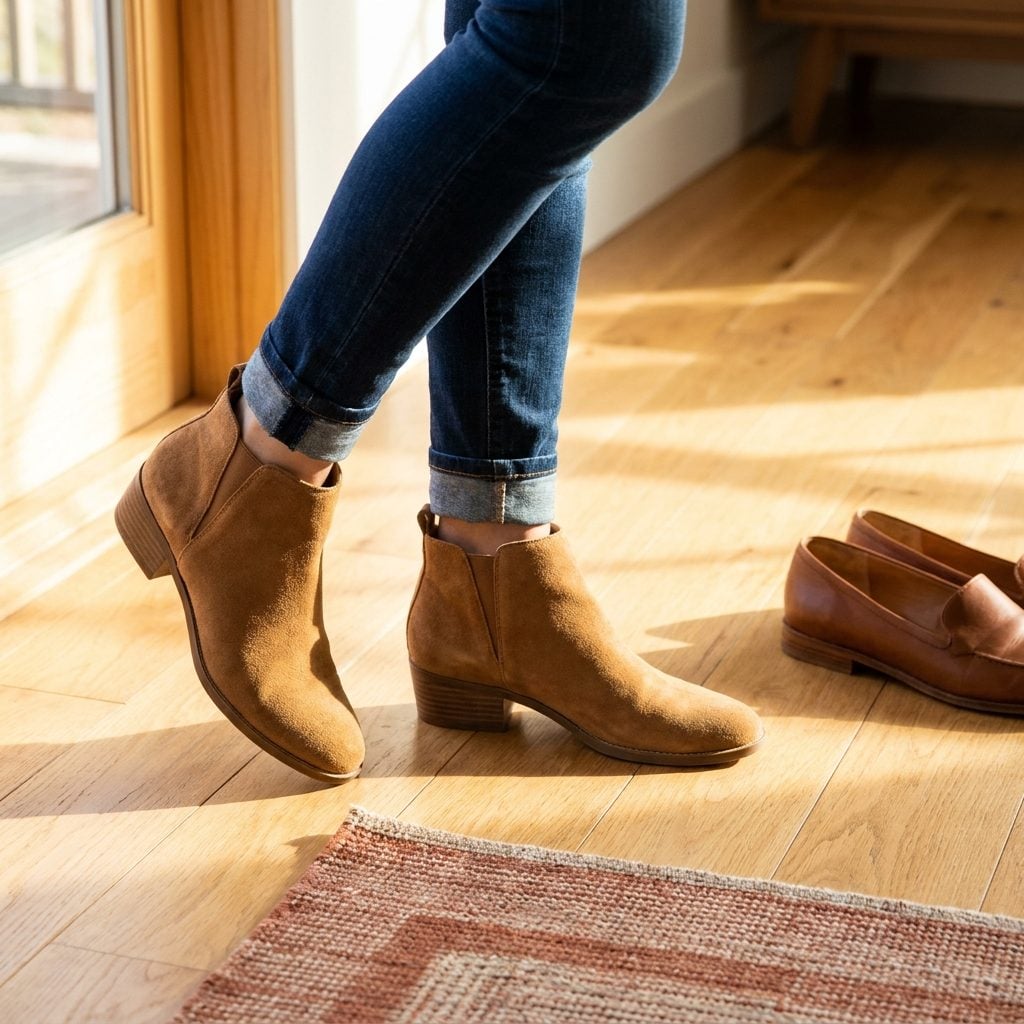
There is a specific kind of closet comfort that ankle boots provide, and it’s the same comfort your mother got from her one good pair of low-heeled pumps. They go with the jeans. They go with the midi skirt. They go with the wide-leg trousers. They go with the dress you wore to your friend’s birthday dinner. They are the universal answer, which is exactly what makes them slightly dangerous.
Easy is good. But “easy” as a strategy that never changes is a uniform. And there’s a real difference between choosing your tan suede ankle boots because they’re genuinely the right shoe, and choosing them because they’re the only shoe you’ve trusted in two years. Your mother had a pair she wore into the ground too. Hers were navy kitten heels.
2. Your Bag Has Its Own Posture and You Carry It Like a Shield
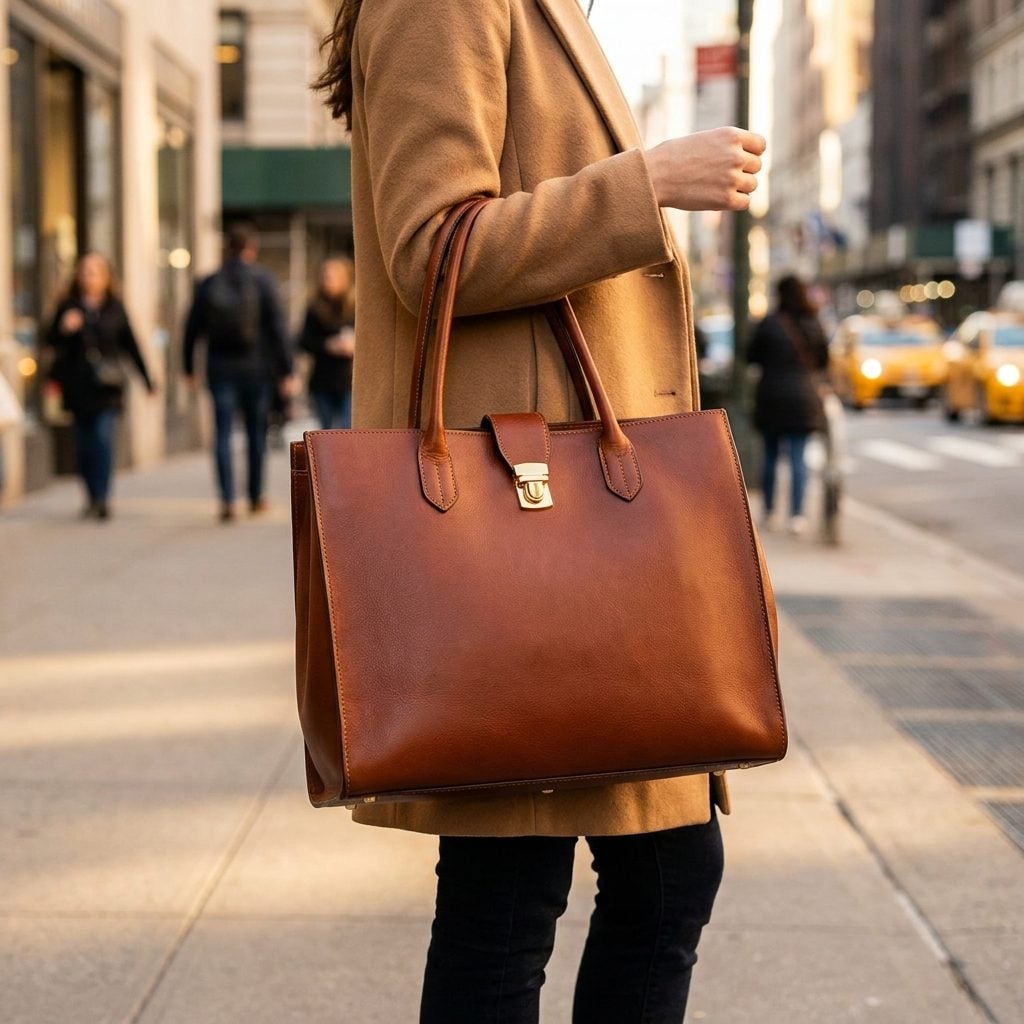
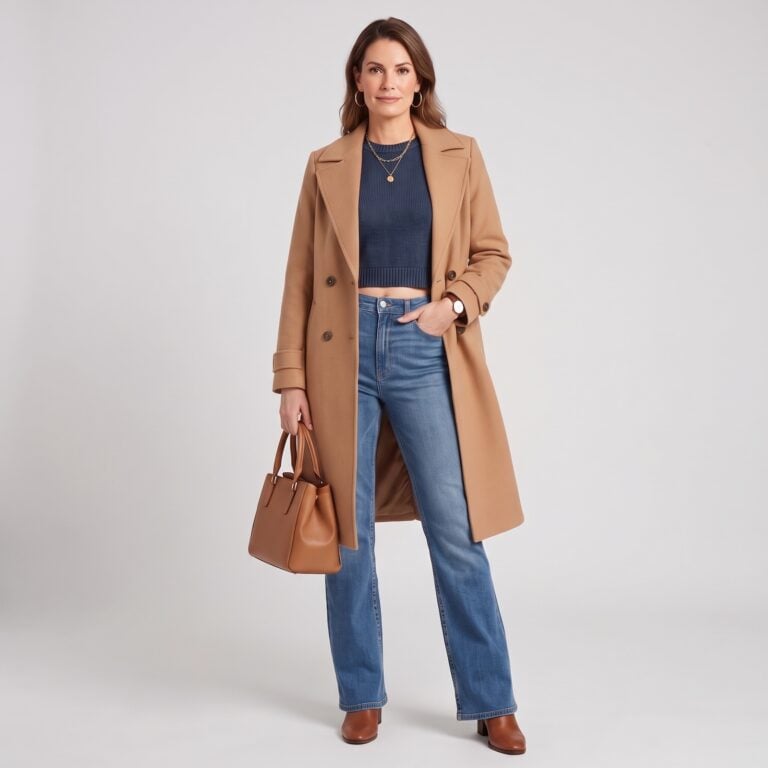
The structured, top-handle bag communicates something. It says: I am organized, I am prepared, I have a designated pocket for everything. It is the bag of a woman with a system. And there is nothing wrong with a system.
But notice how you hold it. Gripped at the top handles, held in front of the body, carried like a small elegant barricade. Your mother held hers the exact same way, and her mother held a similar version of it. The silhouette changes decade by decade but the instinct to carry something solid and closed in front of you stays constant. A structured leather top-handle bag is a genuinely useful object. Just know what else you’re doing with it.
1. You Call It Style But You Picked It Because You Knew You Could Breathe

Somewhere between thirty-five and forty-five, a lot of women make a quiet, private deal with themselves. The deal goes: if I can’t be comfortable in it, I won’t wear it. Which is, on paper, completely reasonable. Discomfort is not a virtue. No one should suffer through a waistband for fashion.
But watch the language that follows. The linen wide-leg trousers get called “effortless.” The cotton tunic top is “minimal.” The flat sandals are “clean.” These are style words applied to what are, in honest terms, the things that don’t squeeze or pinch or ask too much. Your mother did this too. She called it “classic.”
Comfort and style aren’t in opposition, not even slightly. But if every single choice is filtered through comfort first and you haven’t bought anything remotely experimental in three years, you’re not dressing with intention. You’re dressing to disappear quietly into a nice fabric.