❤️ Would you like to save this?
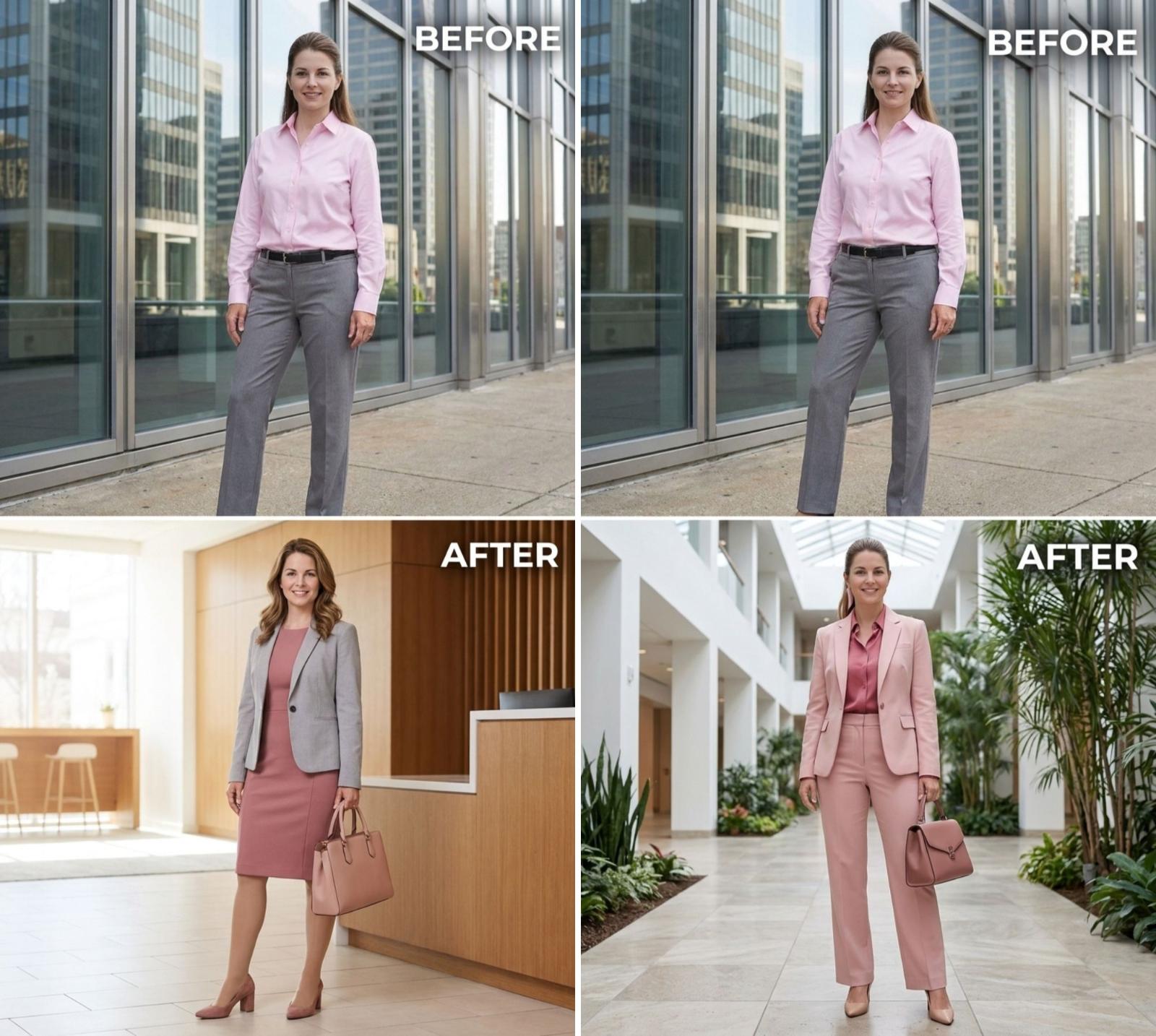
She’s the woman who color-codes her calendar, iron-creases her blazers, and has strong opinions about lapel width. And now, she’s getting a makeover — on her terms.
This series takes a fresh look at workwear for the woman over 40 who knows exactly what she wants. The twist? Every outfit was conceptualized by AI. Using generative design tools, these looks were built from the ground up — no stylist, no mood board, no human hand guiding the process.
The results? Polished. Structured. Surprisingly wearable. Because even the most controlling woman deserves to be surprised by something she didn’t plan herself.
FYI, thanks to AI imagery software, we’re able to create very specific fashion and hairstyle examples to illustrate the points being made. In some cases, imagery is exaggerated to hammer home the point. Also, assume links that take you off the site are affiliate links such as links to Amazon. this means we may earn a commission if you buy something.
30. Navy Double-Breasted Suiting and the Power It Quietly Commands
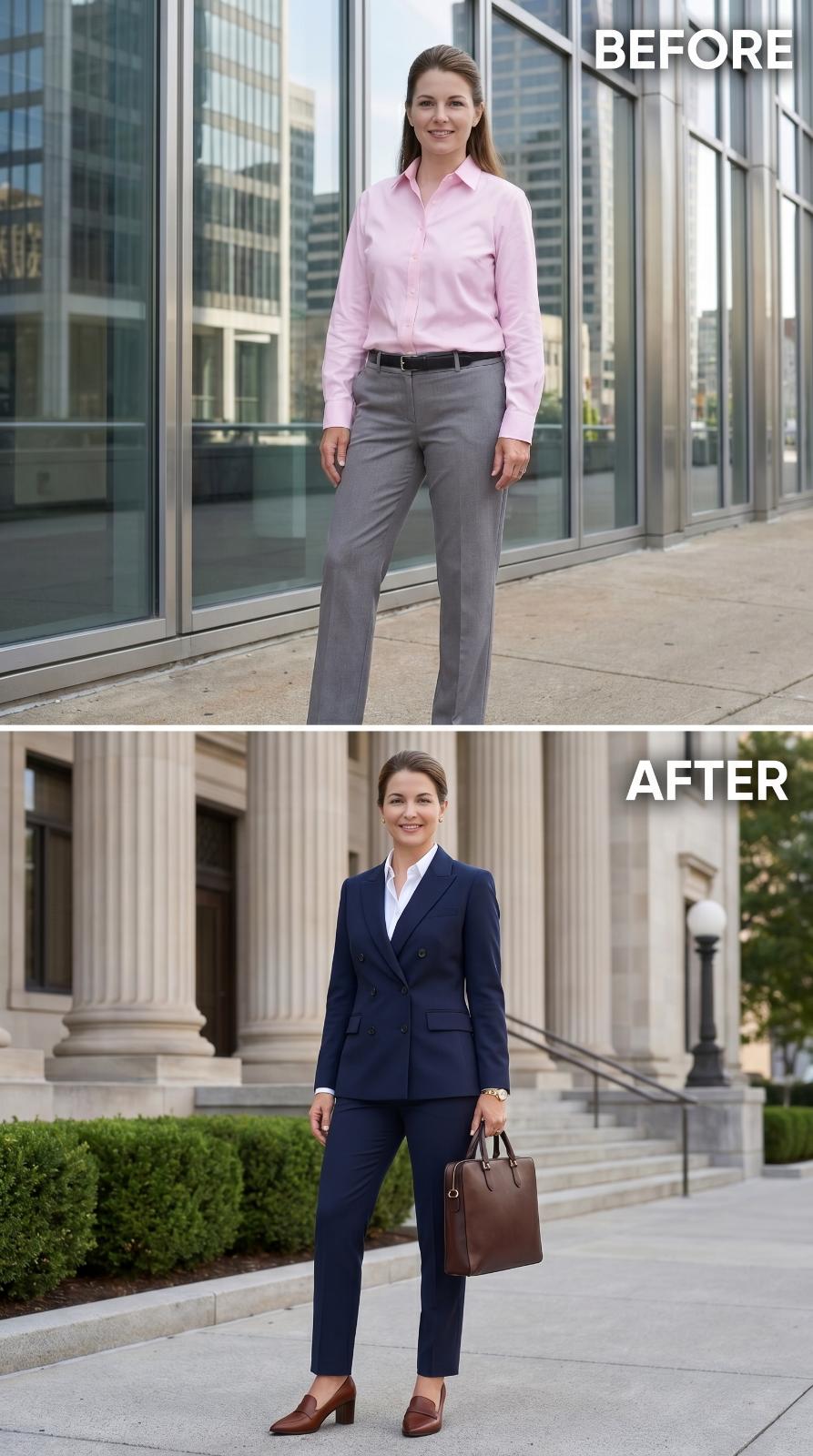
She’s wearing a double-breasted blazer in deep navy, cut close through the shoulders with peaked lapels that sit flat and sharp. The matching trousers are slim through the leg and land just above the ankle, which is the one detail that keeps the whole silhouette from reading as heavy. Underneath, a white shirt collar shows just enough at the neckline to break the navy without softening it.
The accessories are doing real work here. A structured brown leather tote with top handles reads as serious without being stiff, and the cognac block-heel loafers ground the outfit in something warm. Control-freak energy, honestly, looks exactly like this: every element accounted for, nothing left to chance.
29. Camel Wool, a Belted Waist, and Why Control Looks Best When It’s Relaxed
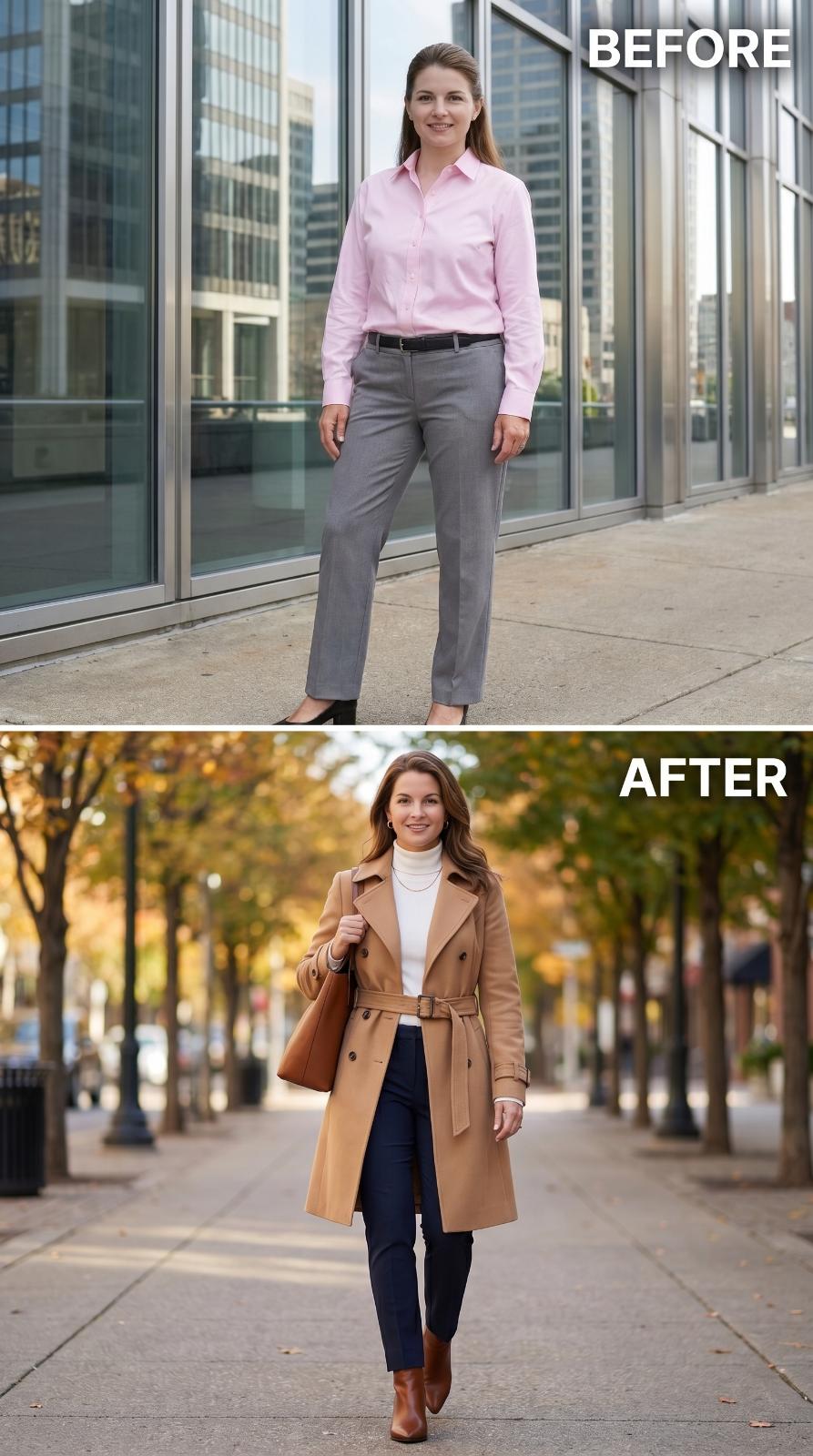
What’s doing the real work here is the coat’s length. It falls well past the knee, and the self-belt cinches at exactly the natural waist, which gives the silhouette structure without looking stiff. The camel shade is warm enough to read as intentional against navy trousers, and the white turtleneck underneath keeps the neckline clean instead of layered and complicated.
The cognac ankle boots are the choice that earns everything else. They hit at a height that makes the trouser hem sit right, and the brown leather tote picks up that same warm tone without matching it too precisely.
A layered silver necklace is the one visible concession to jewelry, and it reads as considered rather than decorative. Women who like control tend to over-accessorize or strip everything back entirely. This lands somewhere more interesting than either.
28. Slate Blue Blazer, a Tote, and the Outfit That Actually Reads as Serious
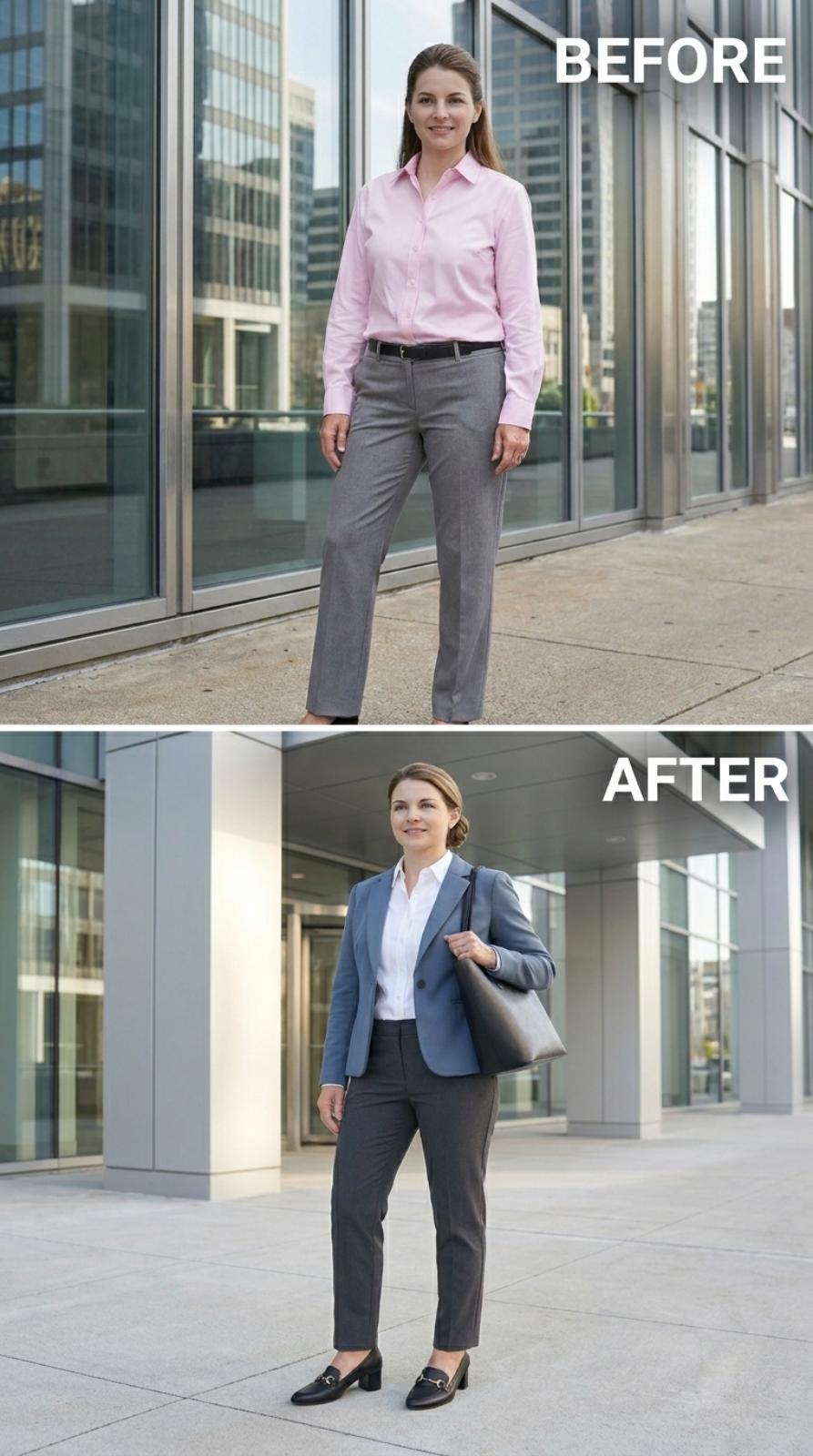
Fitted charcoal trousers cut slim through the ankle do most of the structural work here, and the slate blue blazer worn open over a white shirt keeps the whole thing from feeling rigid.
The tote carried at the shoulder rather than the hand is a small choice that matters. Low block-heeled mules in black with a gold bit detail land just right: polished without trying. Hair pinned up completes the shift from approachable to composed.
27. Camel Suiting, a White Shirt, and What Happens When Polish Stops Apologizing
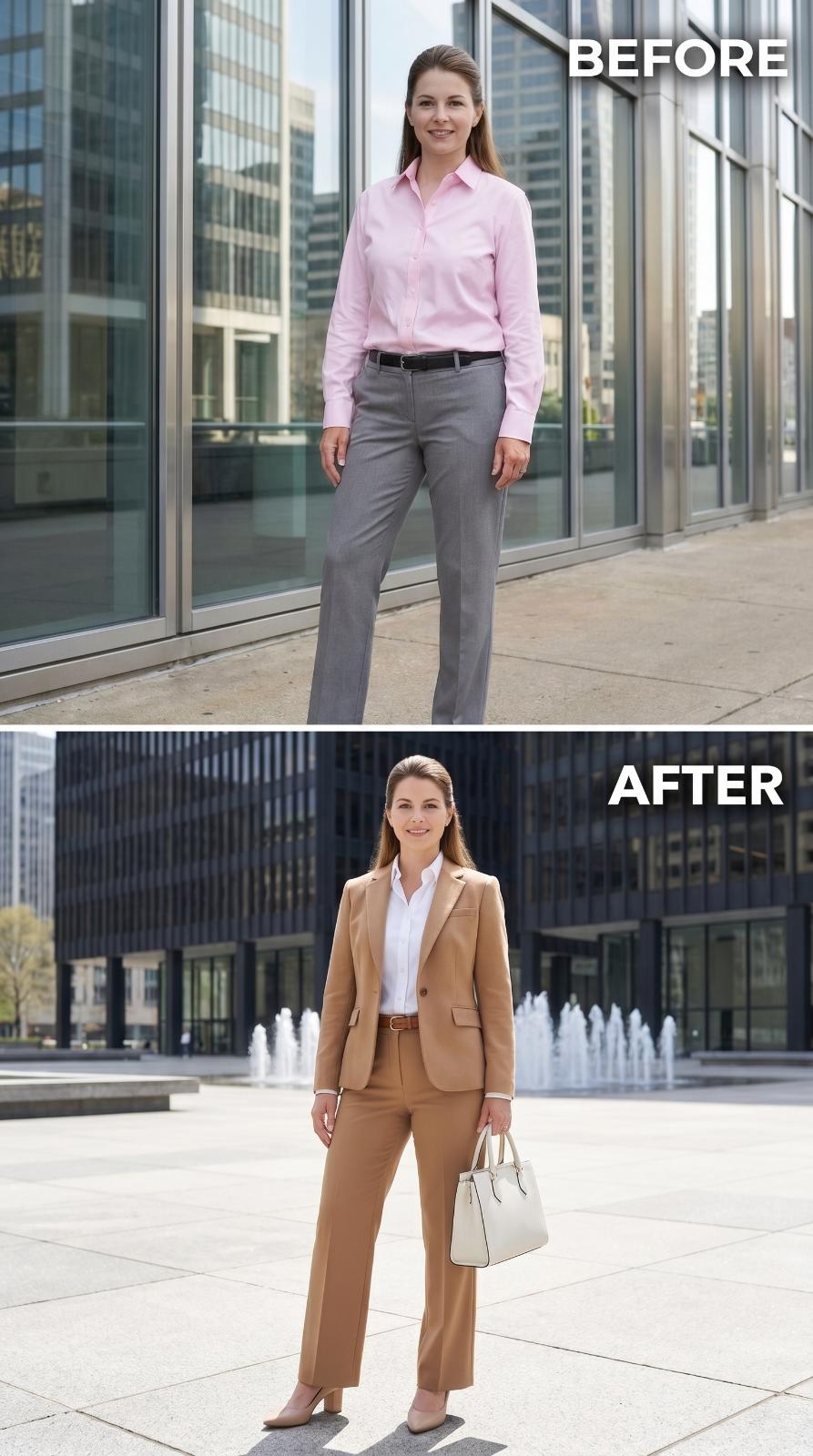
Camel suiting in this weight reads warmer than a classic tan but stops short of mustard, which keeps it boardroom-safe without feeling borrowed from a menswear rack.
The blazer’s single-button closure and notched lapels sit flat against the chest, a construction detail that matters because it’s where cheaper versions buckle and break. Paired with a white shirt left open at the collar, the whole silhouette breathes without loosening its grip.
The trouser cut is straight through the leg, hitting right at the ankle, which is the one length that lets a low heel do its job without looking like an afterthought. The cream structured tote is carried at the hand, not tucked under an arm. That single choice pulls the entire look upright.
Why the Belt Is Doing More Work Than It Appears
A slim cognac belt threads through the trouser waistband, and its warm brown tone bridges the camel suit to the white shirt without creating a hard color break. It’s not decorative. It marks the waist with enough precision that the blazer can stay open and the silhouette still reads as intentional. Women who skip the belt in matching suiting often lose that definition, and the whole outfit starts to drift toward shapeless.
26. Burgundy, a Blazer, and the Exact Combination That Reads as Untouchable
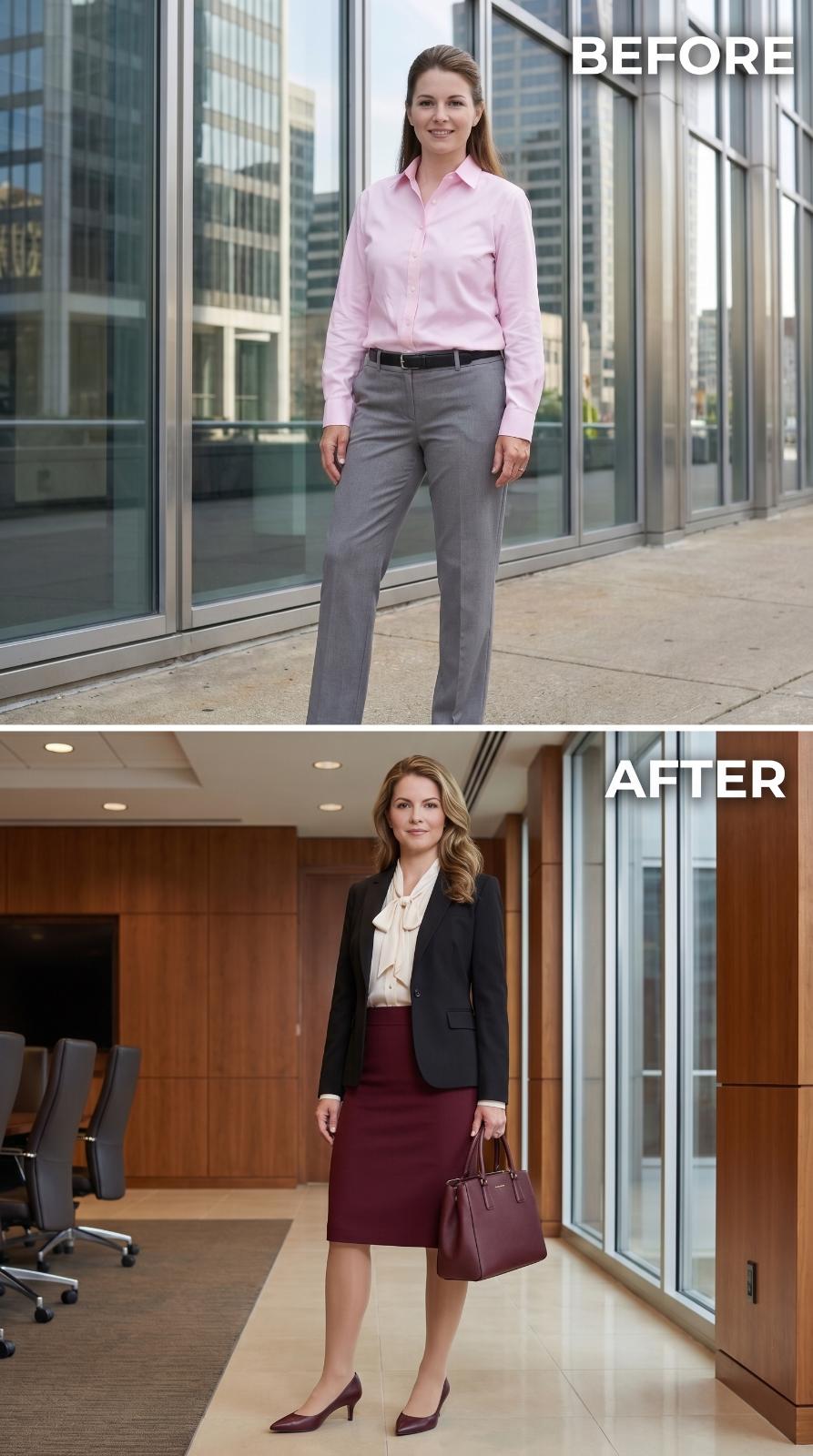
A pencil skirt in deep burgundy is doing most of the work here. The midi length hits just below the knee, which keeps the silhouette structured without sliding into stiff, and the color is saturated enough to anchor the whole look without competing with anything above it.
Paired with a cream blouse that ties loosely at the neck, there’s softness in the upper half that makes the overall look feel considered rather than armored.
The black blazer is cut close but not tight. Single-button closure, structured shoulders, and the kind of lapel that doesn’t draw attention to itself. It’s a working blazer, not a statement one. Burgundy heels and a matching leather tote pull the palette closed in a way that reads intentional without being overworked. Women who tend toward control often overthink accessories. She didn’t.
What makes this version of the look land is the tonal commitment. Burgundy at the bottom, burgundy at the wrist, and floor. It creates a vertical line without belts or tricks. The cream blouse breaks it just enough to let the face read first, which is exactly where authority wants to live.
25. Black Suiting, a Structured Tote, and the Confidence That Doesn’t Ask for Permission
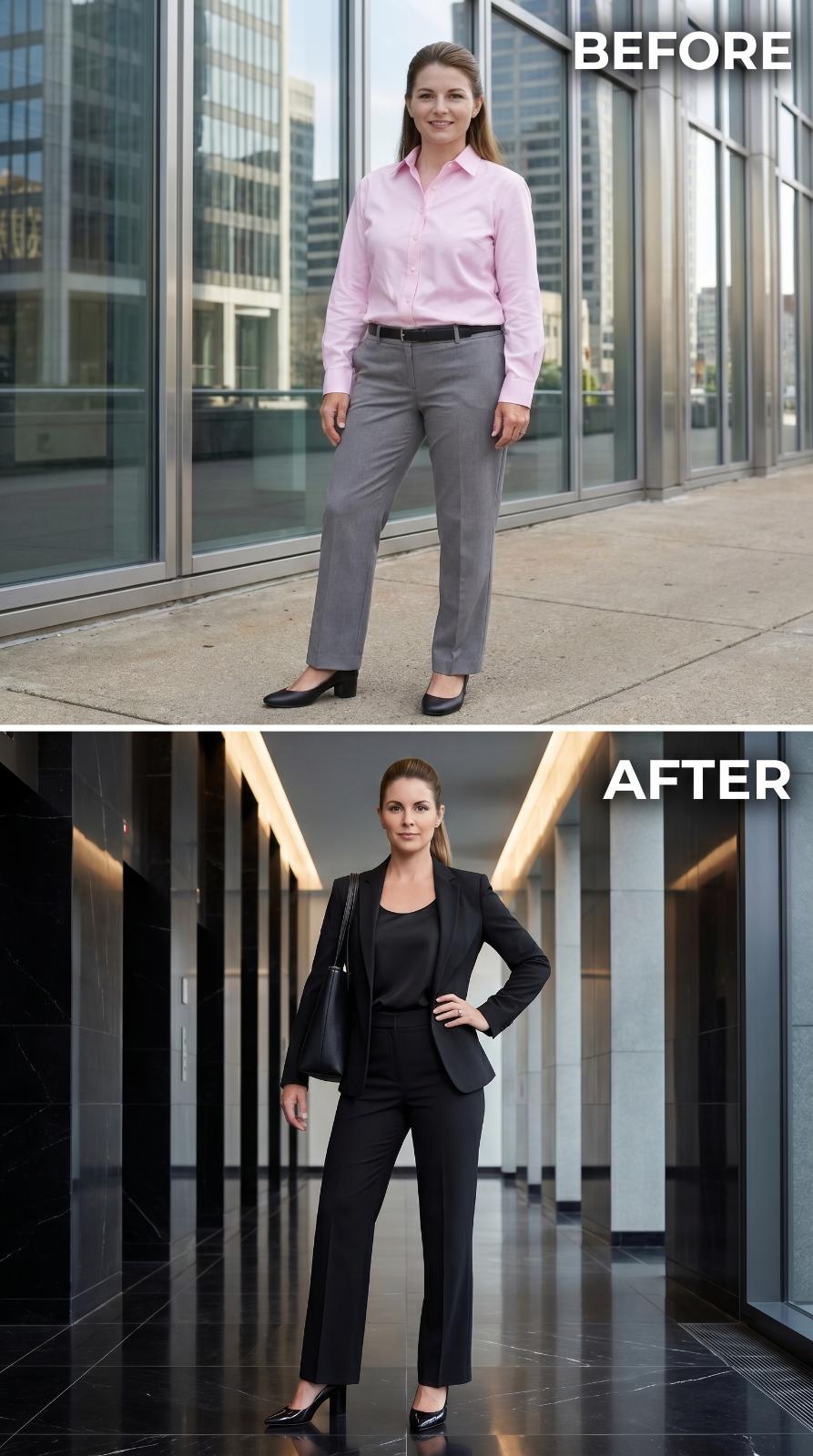
Black on black reads as severe on the wrong person. On a woman who already knows what she’s doing, it reads as decided. The blazer here is fitted through the shoulder but relaxed at the lapel, the kind of cut that doesn’t pull or strain under pressure. Paired with straight-leg trousers that break cleanly at the ankle, the silhouette is vertical without being rigid.
The black scoop-neck underneath is doing real work. It softens the suit without compromising its authority, and the neckline sits low enough to feel intentional without becoming a distraction in a conference room. One hand on the hip. The other is holding a structured tote by its top handles. Nothing is loose. Nothing is decorative for the sake of it.
That’s the entire point of this combination. Control isn’t announced. It’s just present, visible in the way every piece is doing exactly what it was put there to do.
24. Navy Suiting, a Tan Tote, and What Polish Looks Like When It’s Not Trying to Prove Anything
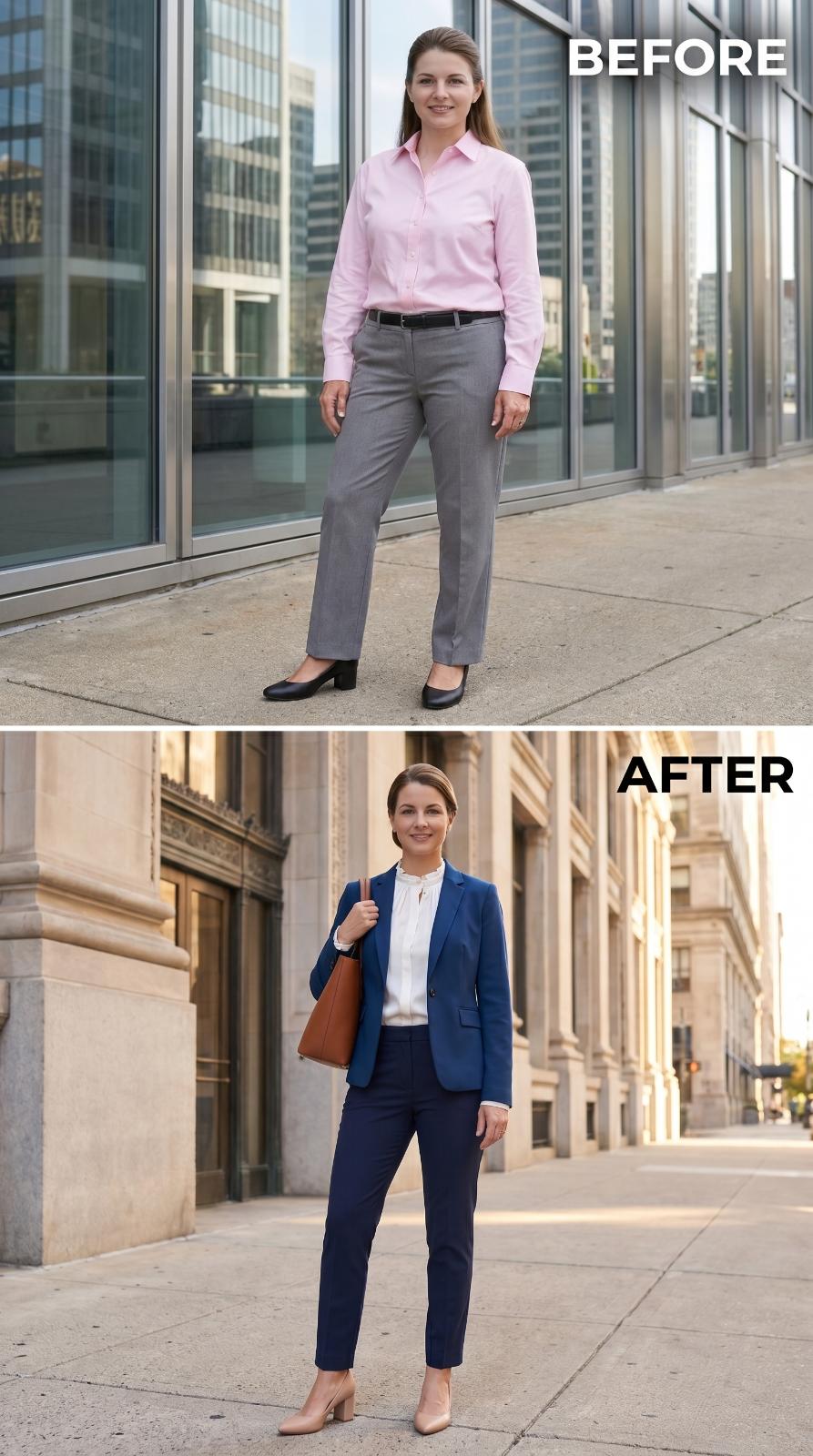
Navy does something specific here: the blazer and slim trousers read as a matched set without looking like a uniform, and that’s harder to pull off than it sounds.
She’s got a white blouse underneath with just enough texture at the neckline to keep it from being flat. The tan leather tote and nude block heels give the whole outfit a warmth that stops it from going cold.
23. Olive Blazer, Cream Trousers, and the Outfit That Stopped Performing
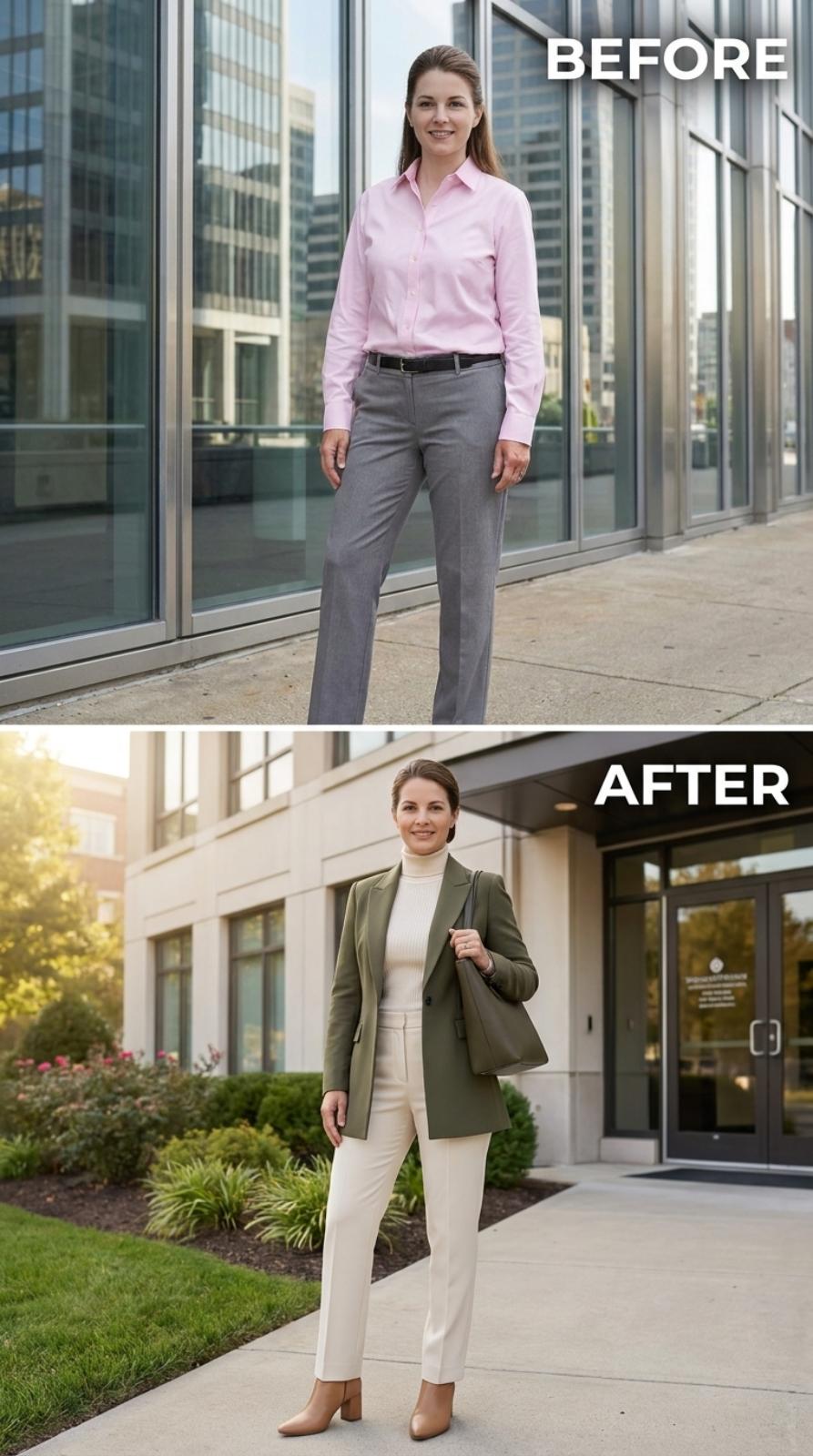
Structured control doesn’t always mean dark colors and sharp shoulders. The olive blazer here reads as authority without announcing itself, and that’s exactly the point. It’s a single-button cut with clean lapels, worn over a cream ribbed turtleneck that anchors the whole palette without competing with it.
The trousers are slim-fit ivory, hitting just above the ankle, which gives the tan block-heel mules room to land deliberately instead of disappearing under fabric. She’s carrying a structured tote in the same warm family as her shoes. Nothing fights.
The color story is quiet and controlled, which, for women who like to be in charge, tends to feel more comfortable than they expected.
Common Mistake: Pairing a blazer and trousers in two different shades of the same neutral family looks intentional only when there’s enough contrast between them. If the colors read as a failed match rather than a deliberate tonal choice, the look loses credibility fast. Keep at least two to three shades of separation between pieces, or commit fully to a single color head to toe.
22. Plaid Suiting, a Tan Tote, and the Look That Already Closed the Deal
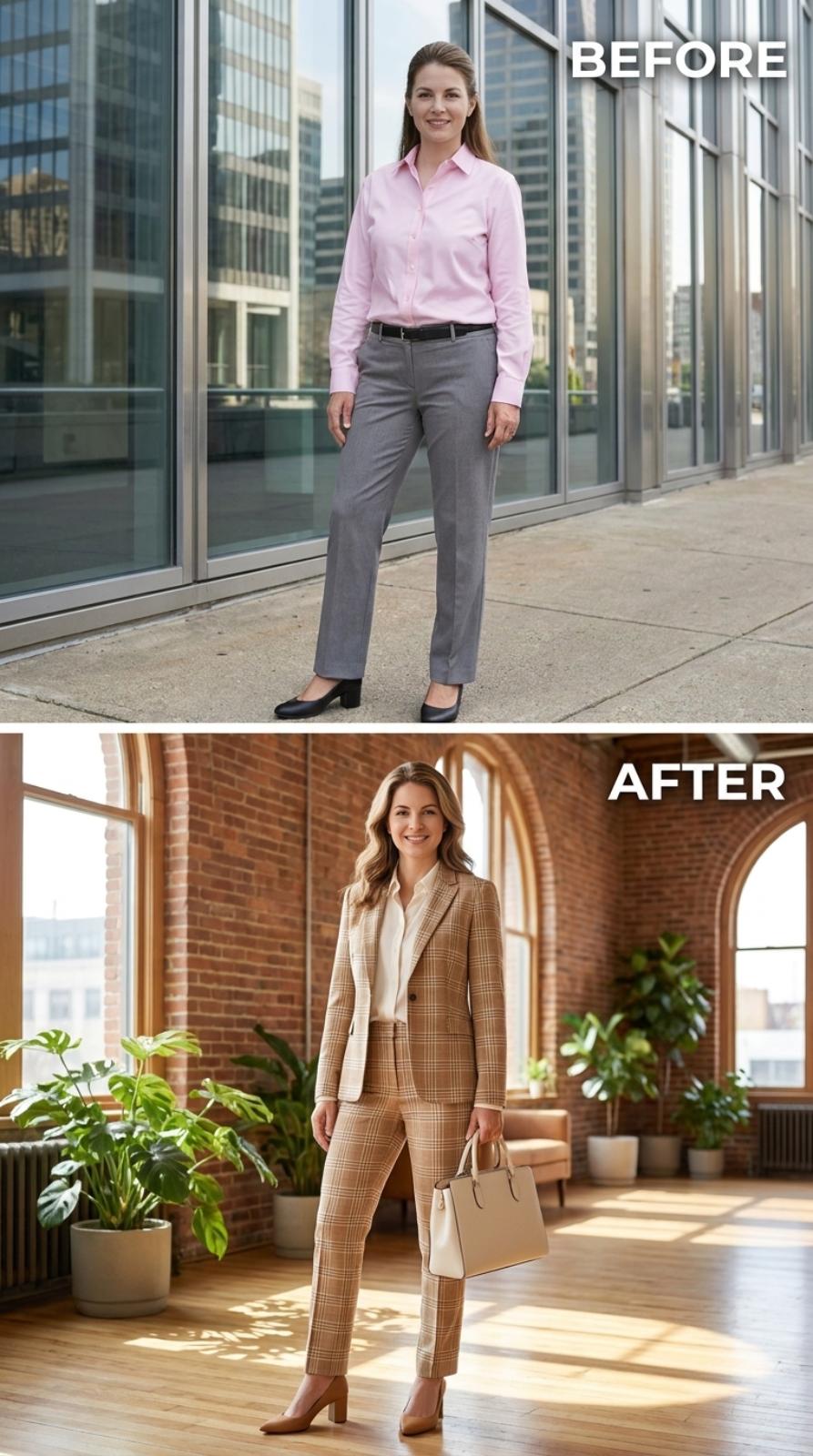
Caramel and cream plaid in a mid-scale check does something most solid suiting doesn’t: it holds attention without demanding it.
The blazer fits close through the shoulder and opens at a relaxed lapel, worn over a white blouse with just enough drape to soften the structure above it. Tan block heels and a matching tote pull the palette together. It doesn’t look assembled. It looks decided.
21. Pink Suiting, a Rose Silk Shirt, and the Look That Doesn’t Need to Announce Itself
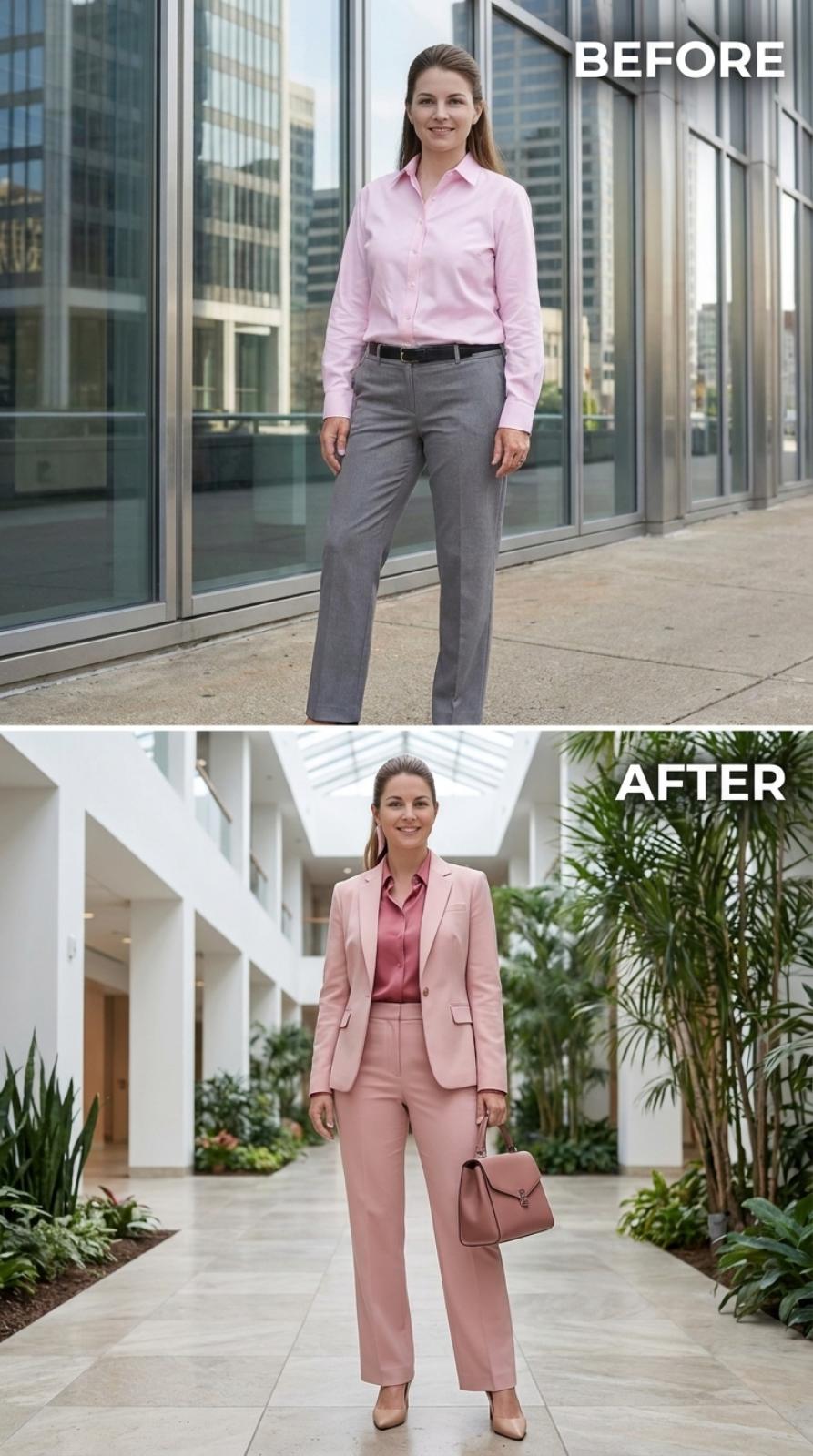
Tonal dressing done right isn’t about matching. The blazer here sits in a dusty rose, structured enough at the shoulder to hold authority but soft enough that it doesn’t read as armor.
Underneath, a deeper rose silk shirt adds depth without contrast, and that layering of pink within pink is what makes the whole thing feel considered rather than coordinated. The trousers hit at the ankle, cut cleanly through the leg, and the nude heel keeps the line unbroken from hip to floor.
The bag is the one place where she allowed a shift in tone. A mauve-brown leather satchel with a top handle, carried in the hand rather than slung over a shoulder, changes the posture of the whole outfit. It’s a small decision that reads as if someone already knows how the meeting ends.
Tonal dressing done right isn’t about matching. It’s about knowing exactly how far to push a single color before it stops working.
20. Burgundy, a Briefcase, and the Outfit That Already Knows How the Meeting Ends
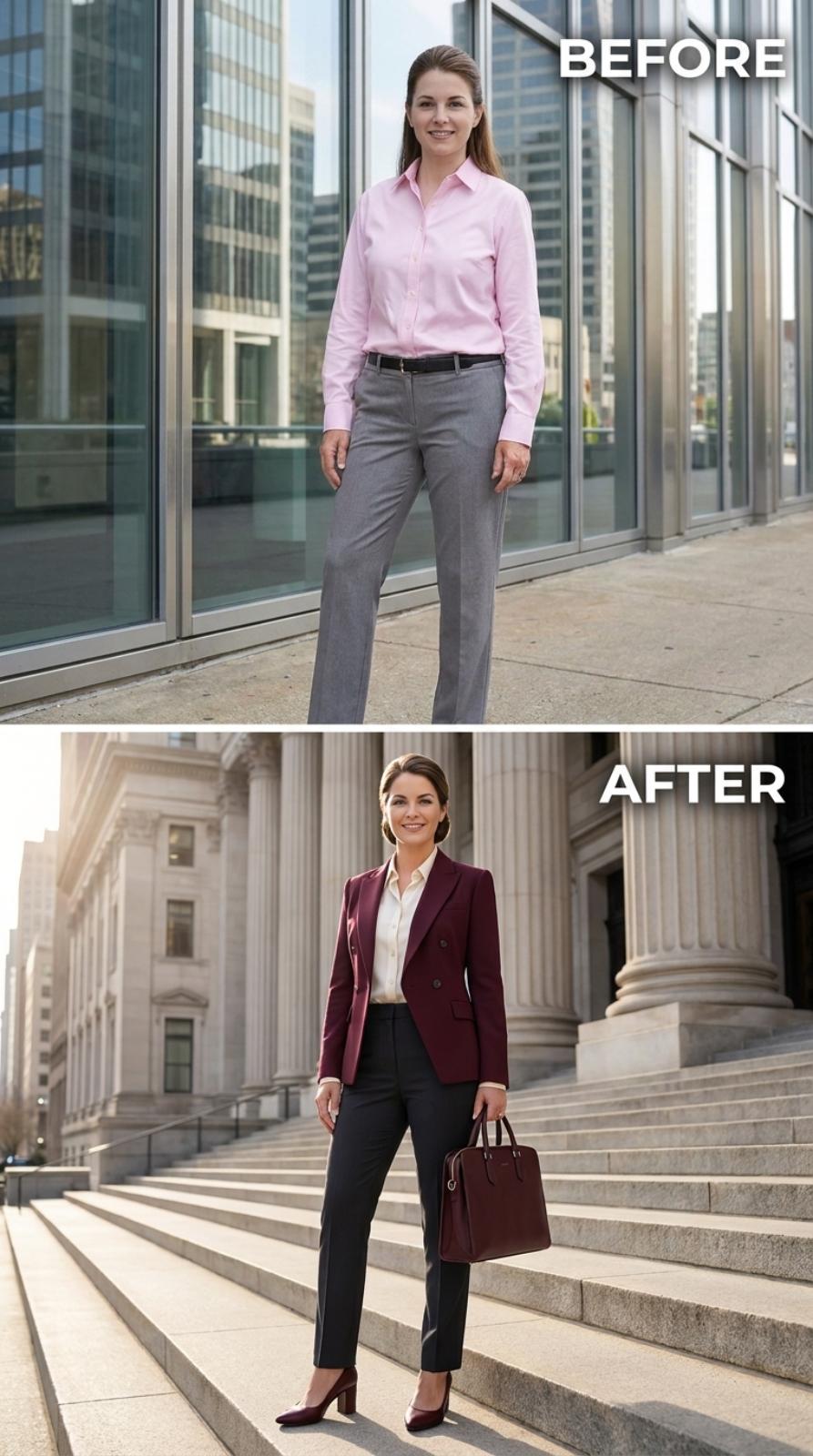
Double-breasted blazers have a reputation for being a lot. This one earns it. Cut in a deep burgundy with visible peak lapels and two rows of buttons, it sits at the hip with enough structure to hold its shape through a full day.
Underneath, a cream shirt with a soft open collar keeps the look from going full boardroom theater. The ankle-length trousers are charcoal, slim through the leg, and they hit right where they should.
The shoes matter here. Burgundy block heels that match the blazer almost exactly, coordinated without being costume. She’s carrying a matching briefcase in the same tone, which is either very deliberate or very lucky. Either way, it works.
The hair is pulled back, accessories are minimal, and none of it is competing for attention. That’s the point of an outfit like this. When everything is already decided, there’s nothing left to prove.
When the color shifts from neutral to something with actual personality, the whole calculus changes.
19. Blue-Gray Suiting, a White Shirt, and the Look That Already Runs the Room
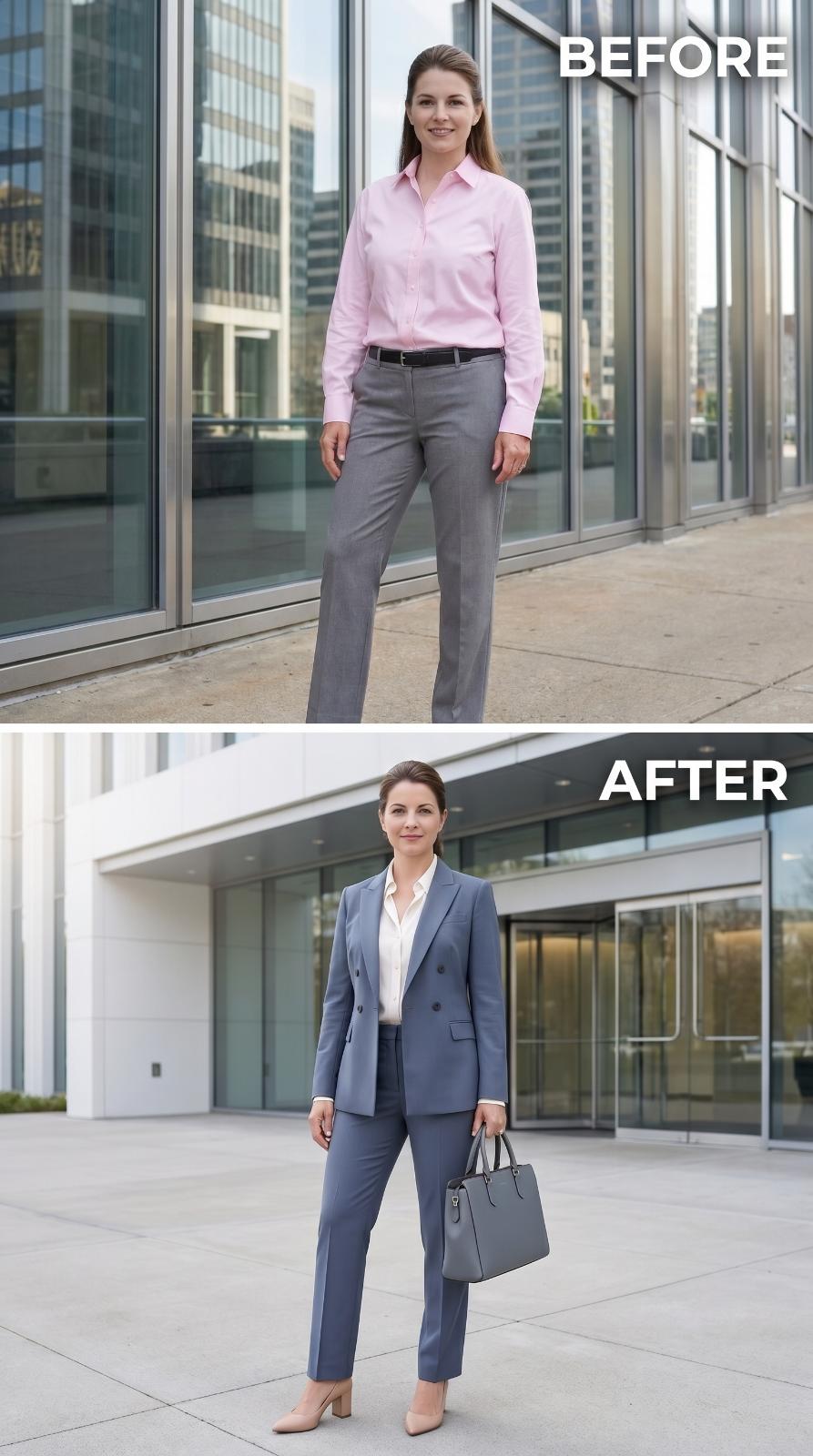
She’s wearing a blue-gray double-breasted blazer with matching slim trousers, and the suit reads as someone who stopped waiting for permission years ago. The shade is specific: not navy, not slate, but something cooler and more considered, the kind of color that photographs well in a boardroom and looks even better in person.
Her white shirt sits open at the collar just enough to break the formality without softening the authority. The blazer’s clean lapels and structured shoulders do the heavy work.
Nude block-heeled pumps keep the proportion grounded rather than precious, and the gray leather tote she’s carrying matches the suit closely enough to look deliberate.
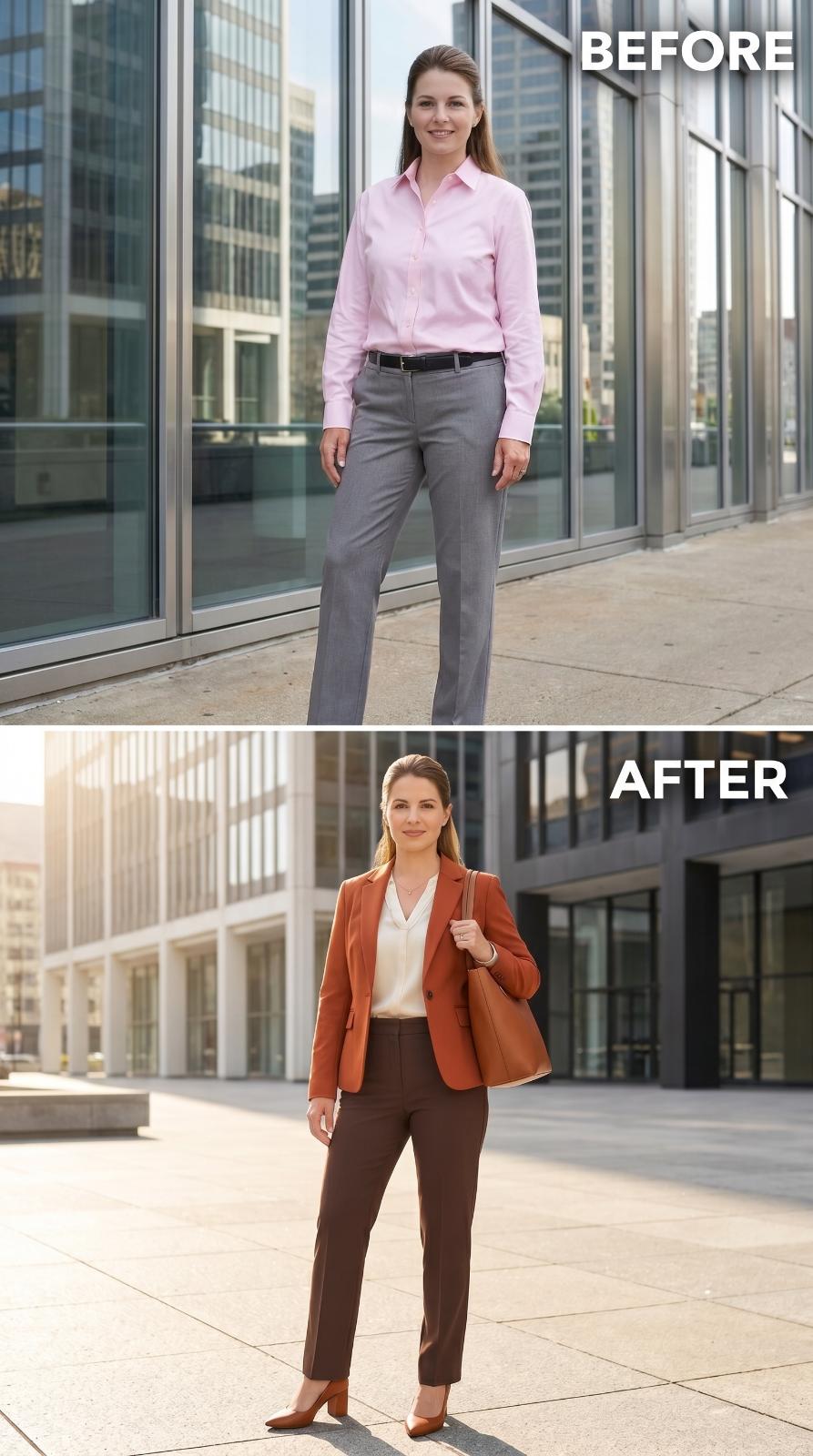
18. Rust Blazer, Brown Trousers, and the Outfit That Already Decided
❤️ Would you like to save this?
Warm terracotta and chocolate brown shouldn’t work as a two-piece, but the contrast between the rust blazer and the darker trousers stops the look from reading as one muddy block of color.
The cream V-neck underneath does the real work, keeping the neckline open without adding another competing layer. She’s got the tote slung over one shoulder, heels in the same rust family as the blazer. When the shoes echo the top layer instead of the bottom, everything pulls upward.
17. White Suiting, a Structured Briefcase, and the Look That Already Owns the Room
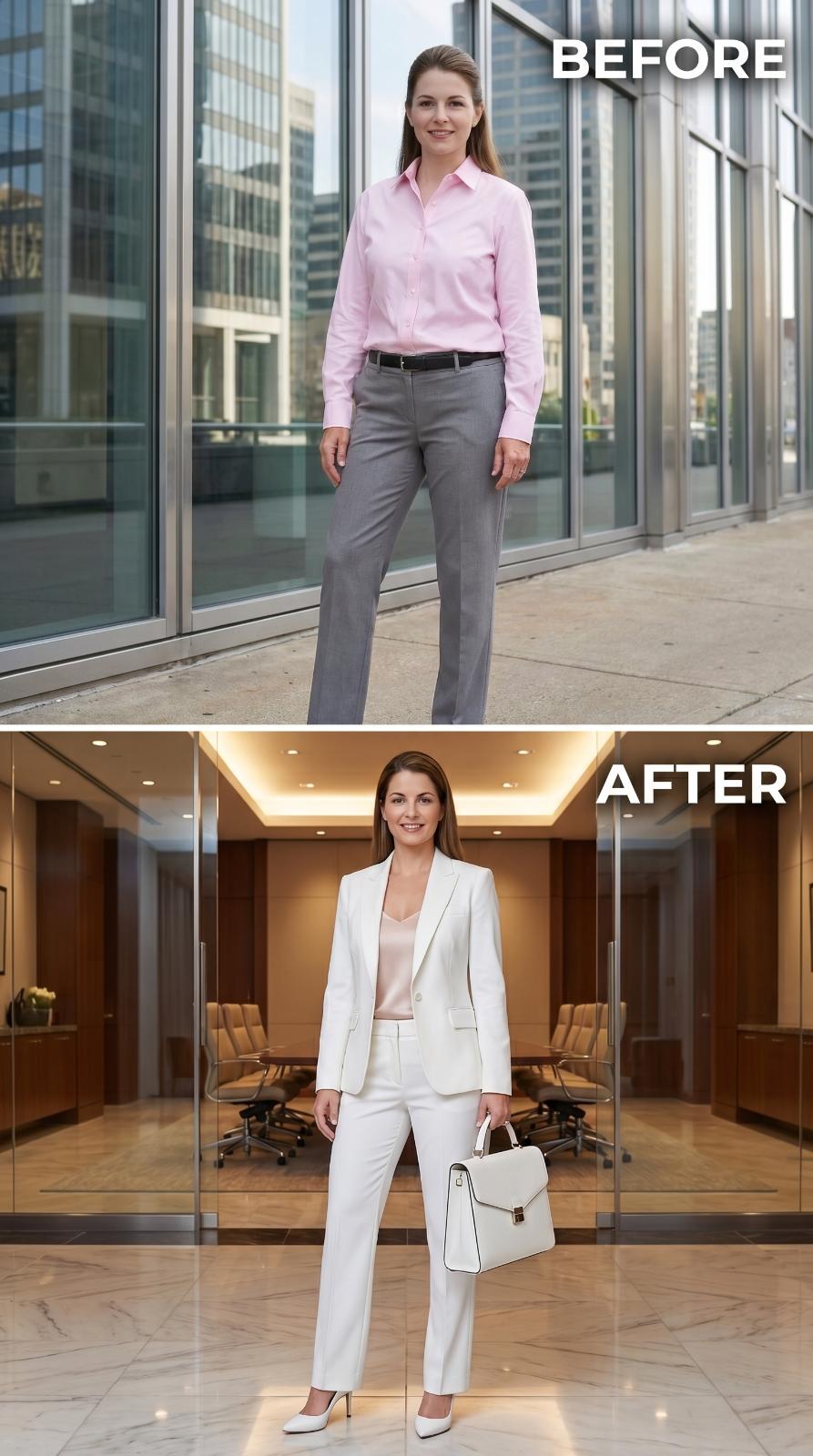
White suiting is unforgiving, and that’s exactly why it works here. The blazer fits close through the shoulders without pulling, and the trousers break just above a low heel, which keeps the line clean without looking stiff. Under the lapel, a blush camisole adds enough warmth to stop the all-white from reading clinical.
The briefcase is the decision that holds everything together. White hardware, boxy silhouette, carried at the hand rather than the shoulder. It matches without matching exactly, which is harder to pull off than it sounds.
Women who tend toward control often default to dark suiting because it feels safer. White suiting requires a different kind of confidence: the willingness to be completely visible. There’s nowhere to hide in this outfit, and she’s clearly not looking for anywhere to go.
16. Tweed, a Black Silk Shirt, and the Outfit That Closed Before Anyone Sat Down
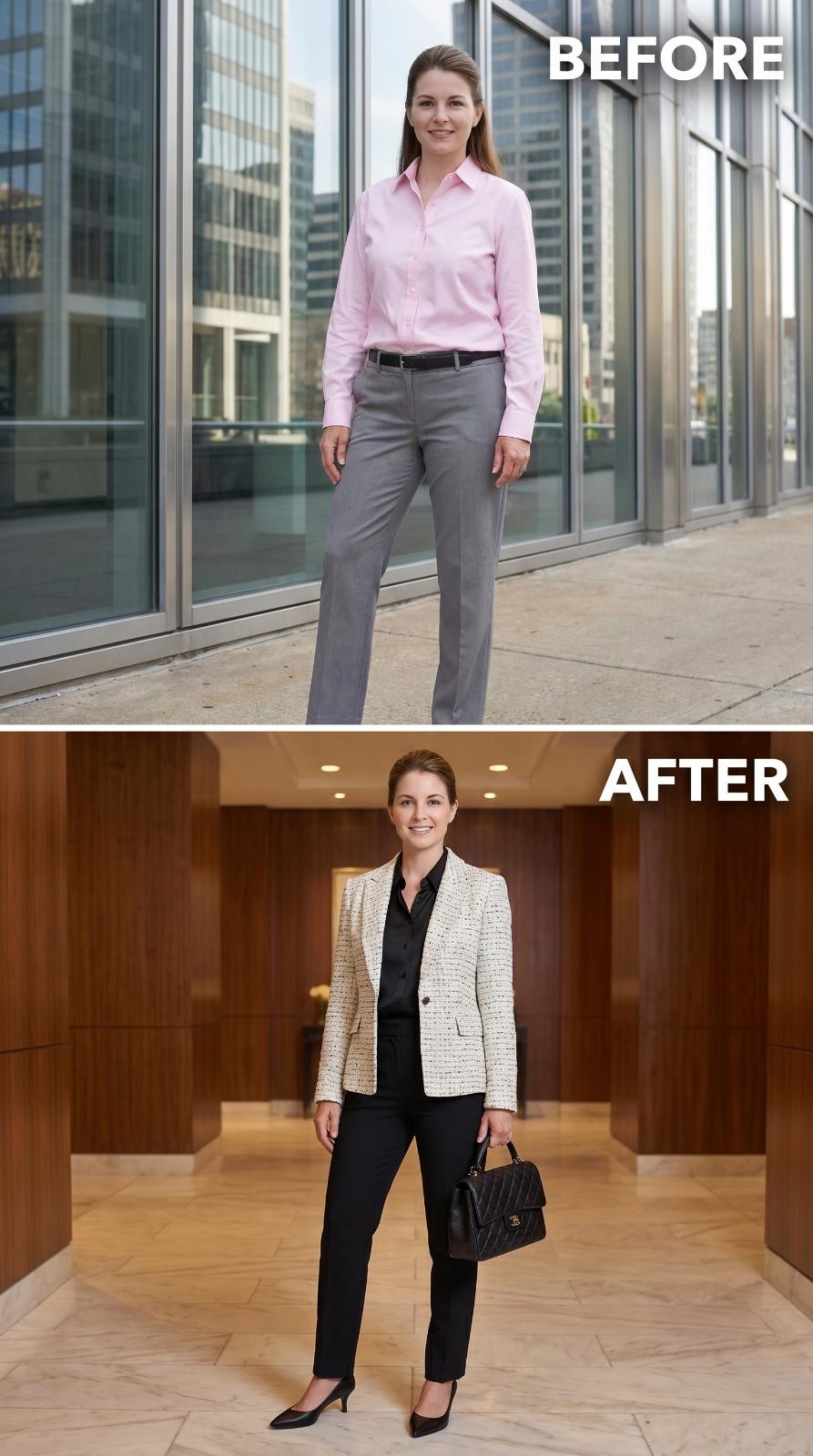
Cream tweed with a tightly woven multi-tonal pattern does something a plain blazer can’t: it holds the eye without asking for jewelry. Paired here over a black silk button-front worn open at the collar, the contrast is doing real work. The blazer’s single-button closure sits low, which keeps the silhouette long rather than boxy.
The black trousers are slim without being tight, and they end right at the ankle, which is exactly where they should. A quilted leather bag with a top handle finishes it without fuss. Pointed-toe heels in black keep the proportion clean. It’s a complete outfit, and it knows it.
15. Sage Green, Cream Trousers, and the Outfit That Already Knows Where It’s Going
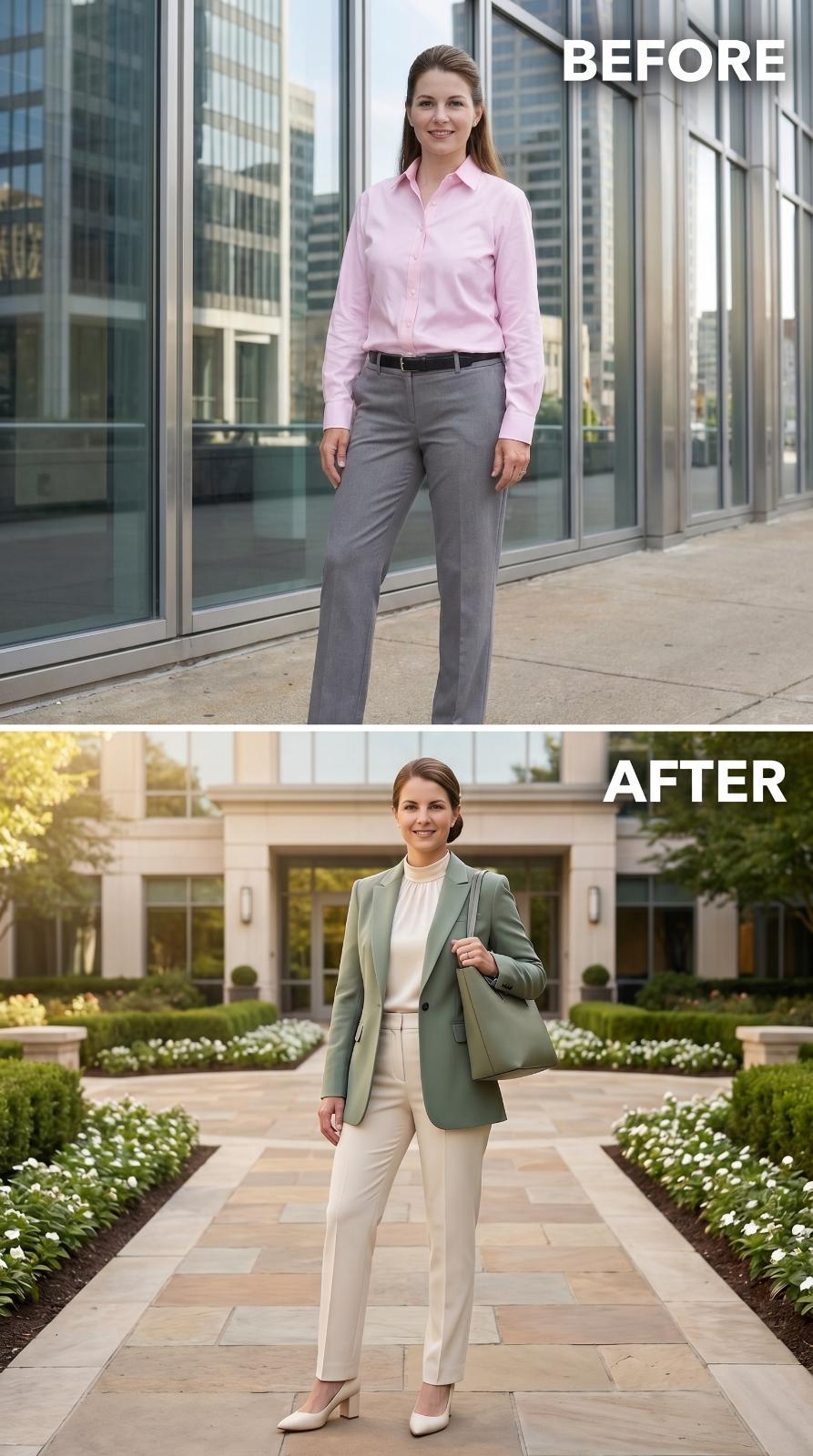
A sage green blazer with a single-button closure sits open over a cream turtleneck, and the combination works because the tones are close enough to feel cohesive but different enough to read as intentional. The trousers are the same cream as the top, which pulls the lower half together without demanding attention.
Heels are low and nude, the kind that disappear into the outfit rather than compete with it. The bag is the one move that grounds everything. A sage leather tote, carried on the shoulder rather than the arm, adds just enough structure to keep the softness of the palette from going slack.
Hair pulled back keeps the neckline clean. At 42, she’s not dressing to be seen first. She’s dressing so the work speaks before anyone gets a chance to look twice.
14. Dark Green Wrap Dress, a Gray Blazer, and the Look That Already Has the Answer
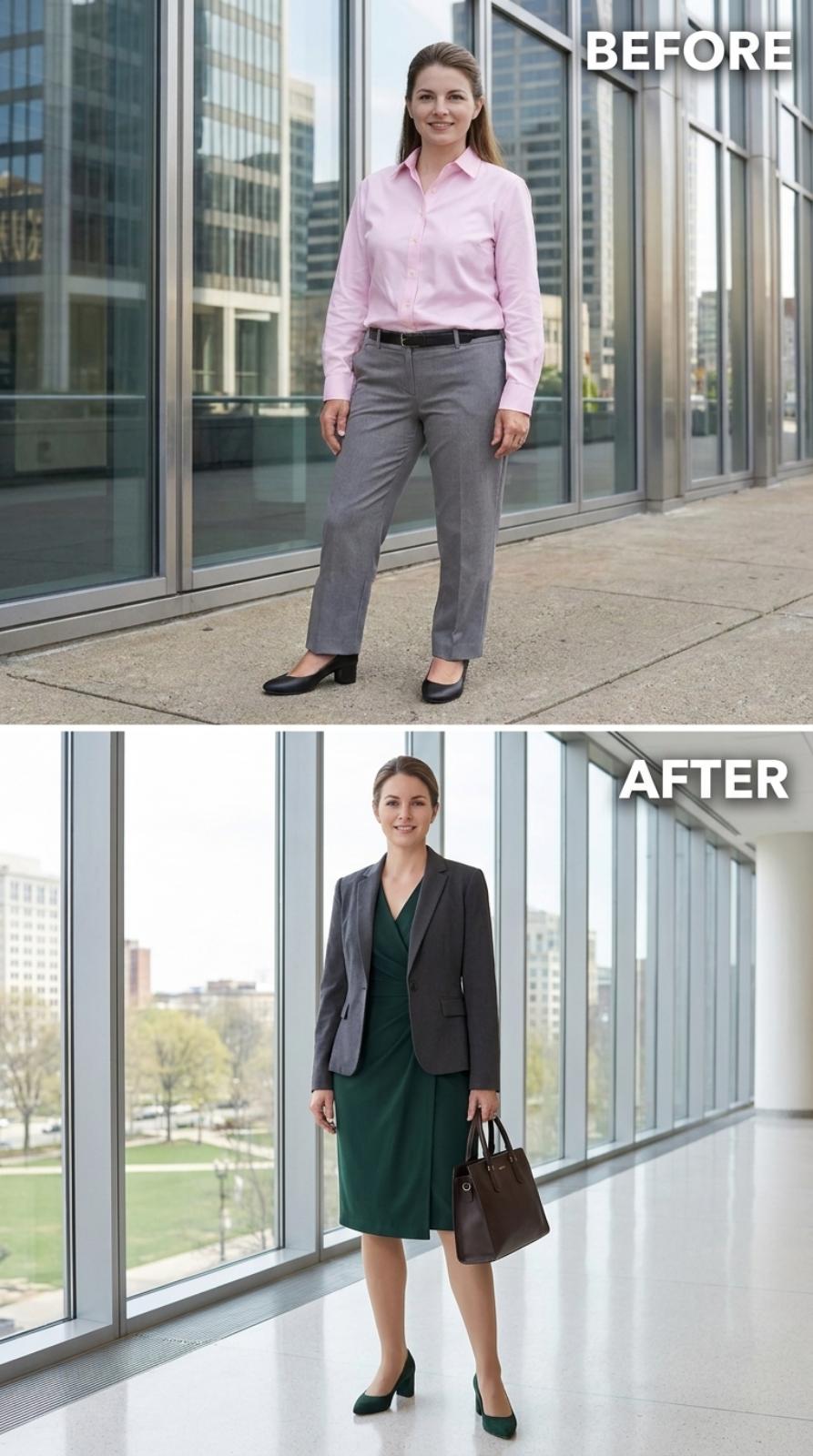
Forest green does something specific in a workplace context: it reads as serious without defaulting to black, and it holds its ground next to gray without competing. The wrap silhouette here keeps things from going corporate-flat, with the diagonal neckline doing quiet work where a collar would feel stiff.
The blazer sits open, which matters. A buttoned blazer over a wrap dress can look like two outfits arguing. Open, it becomes a layer. The fit through the shoulder is clean, and the length lands at the hip rather than cutting across the widest point, which is where a lot of blazers lose the plot.
Hair pulled back shifts the whole register. It’s not a power move exactly, just a clarifying one. The dark tote and block heels close the look without announcing themselves, and that restraint is the point. Nothing here is asking for permission.
13. Grid-Check Blazer, Black Trousers, and the Outfit That Already Ran the Numbers
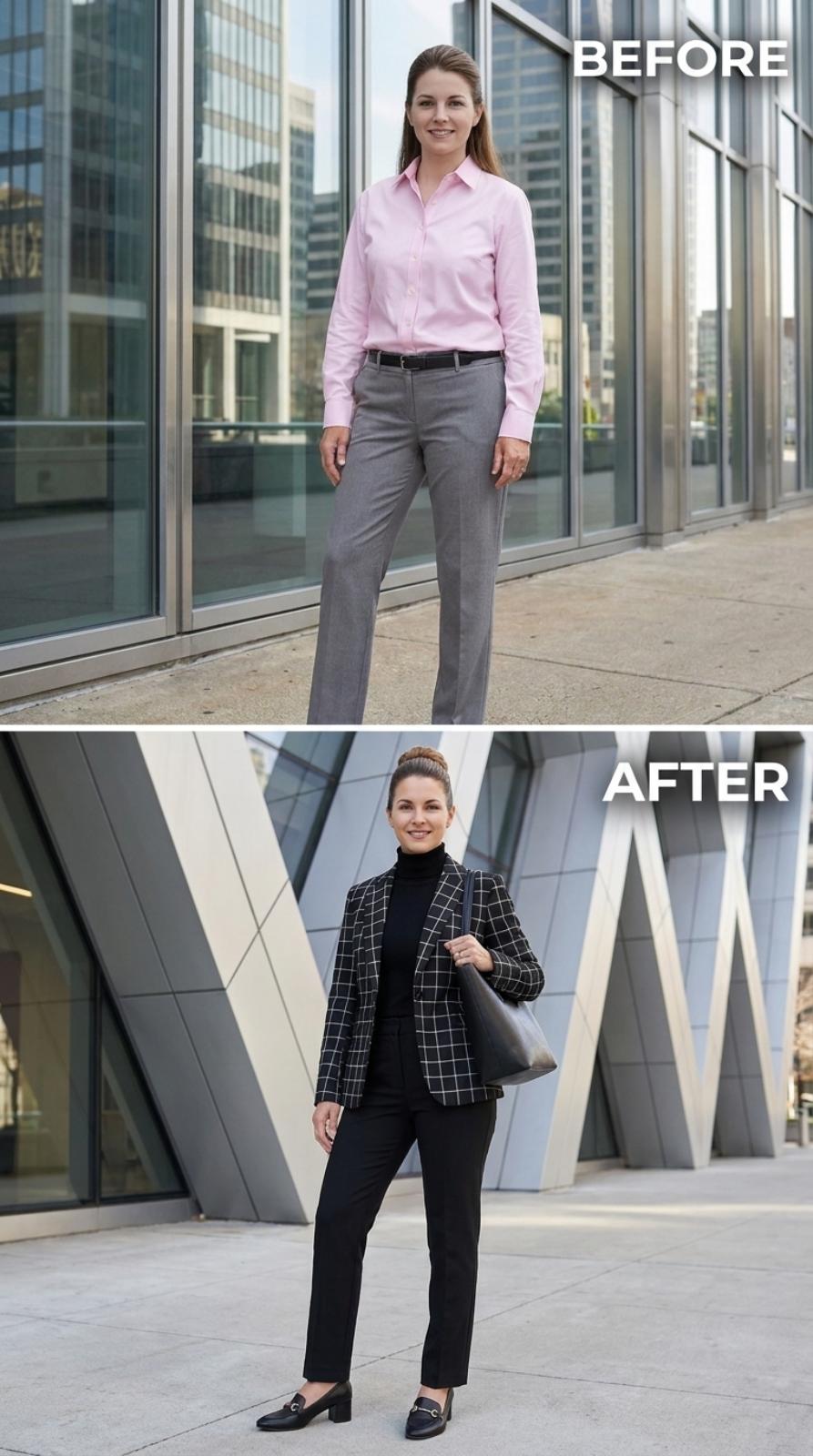
Black trousers with a slim, tapered cut do a specific kind of work here: they keep the lower half quiet so the windowpane blazer can hold the frame without competition. The blazer’s grid pattern reads at a medium scale, large enough to register across a conference table but not so large that it becomes the only thing anyone looks at.
Underneath, a black turtleneck replaces the standard shirt-and-collar setup, and it’s a sharper choice. No collar points to manage, no gap at the neckline, nothing to adjust before walking into a room. The leather tote worn at the shoulder rather than carried in the hand is a small detail that matters.
It keeps both hands free and reads as someone who already knows where she’s going. Hair pulled up adds to the overall verticality of the look. The block heel on the loafers is low enough to be practical and high enough to be intentional. This outfit doesn’t need to signal effort. It already looks like a decision.
Pro Tip: Windowpane and grid patterns tend to work best at a scale that matches the formality of the environment. A fine grid reads closer to a solid from a distance, which suits conservative offices. A bolder grid, like the one here, projects more presence and suits rooms where standing out is part of the job.
12. Gray Blazer, a Rose Dress, and the Outfit That Already Walked In Prepared
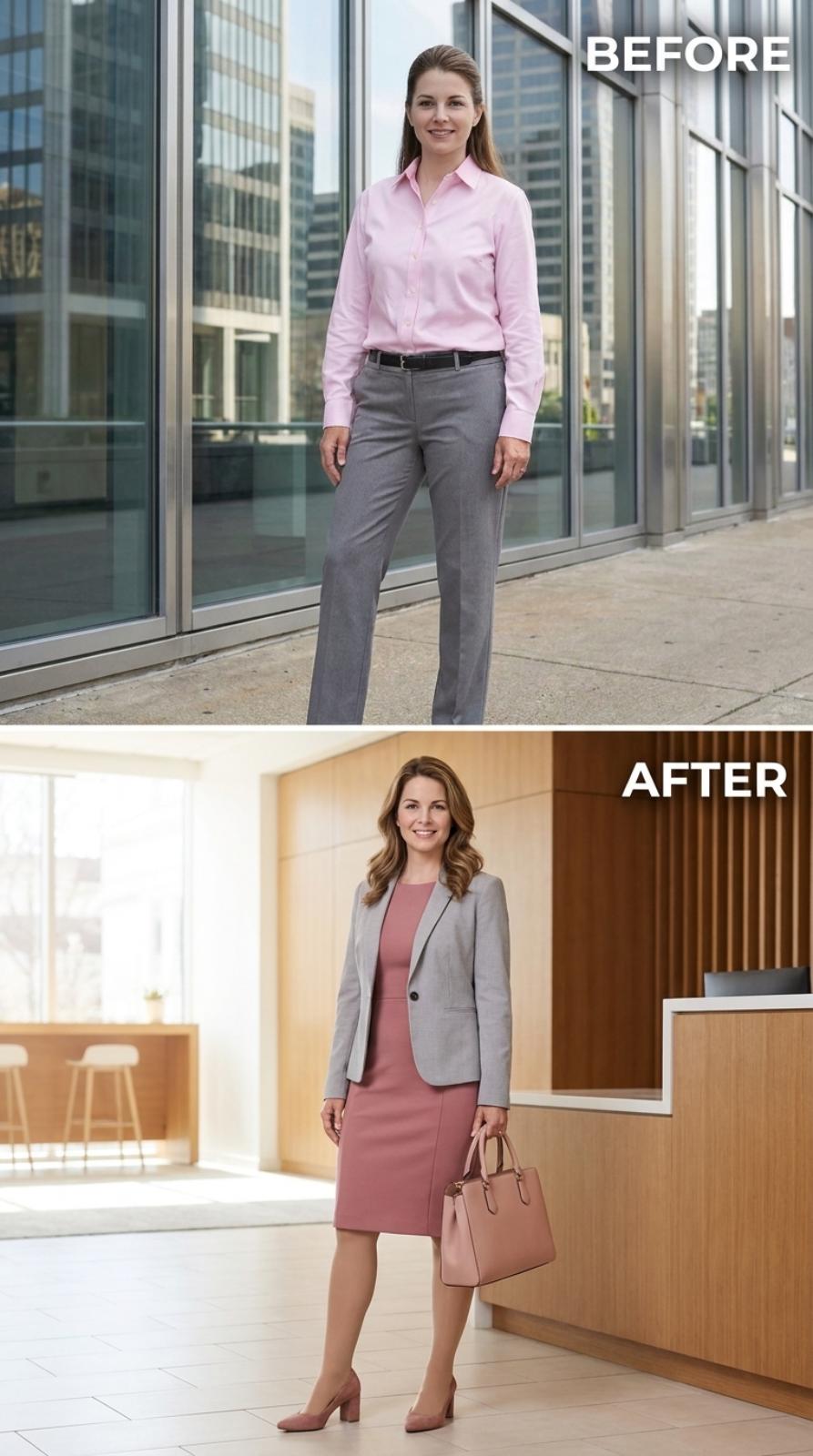
Soft rose and gray work together here because neither one is fighting for attention. The dress is a fitted sheath in a muted dusty rose, with a simple round neckline that keeps everything clean from the collar up.
Over it, a gray single-button blazer with notched lapels and a fitted cut that doesn’t swallow the dress underneath. The hem lands at the knee, which is doing more work than it looks like. Too short and it reads casual. Too long and the heel loses its point.
Right at the knee, with a block heel pump in the same dusty rose as the dress, the whole thing holds together without anyone explaining it. The structured tote matches the shoes, and that matters more than most people think it does.
11. Camel Suiting, a Tan Tote, and the Look That Already Scheduled the Follow-Up
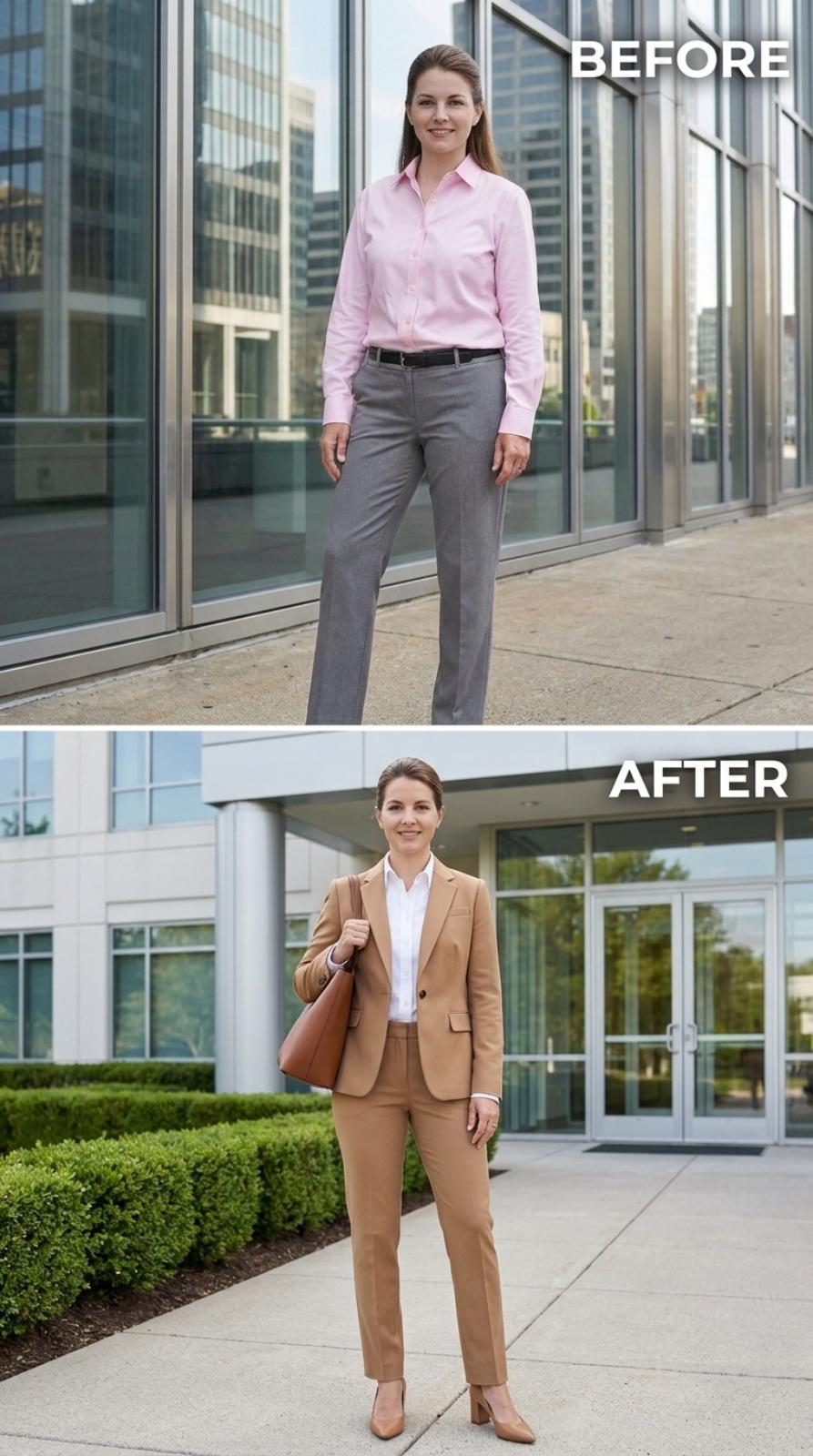
Camel suiting in a matte wool blend reads authority without broadcasting effort. The blazer fits close through the shoulder and opens at a single button, which keeps the silhouette clean rather than boxy.
Underneath, a white shirt sits at an open collar, and that small decision does a lot of work, pulling the whole thing toward polished without tipping into stiff.
The trousers are tapered and hit just above the ankle, which matters more than most people admit. Nude block heels add the right amount of height without shifting the outfit’s register toward dressed-up. The cognac tote is the one contrast note, and it’s enough.
10. Navy Suiting, a Briefcase That Means Business, and the Look That Already Has the Job
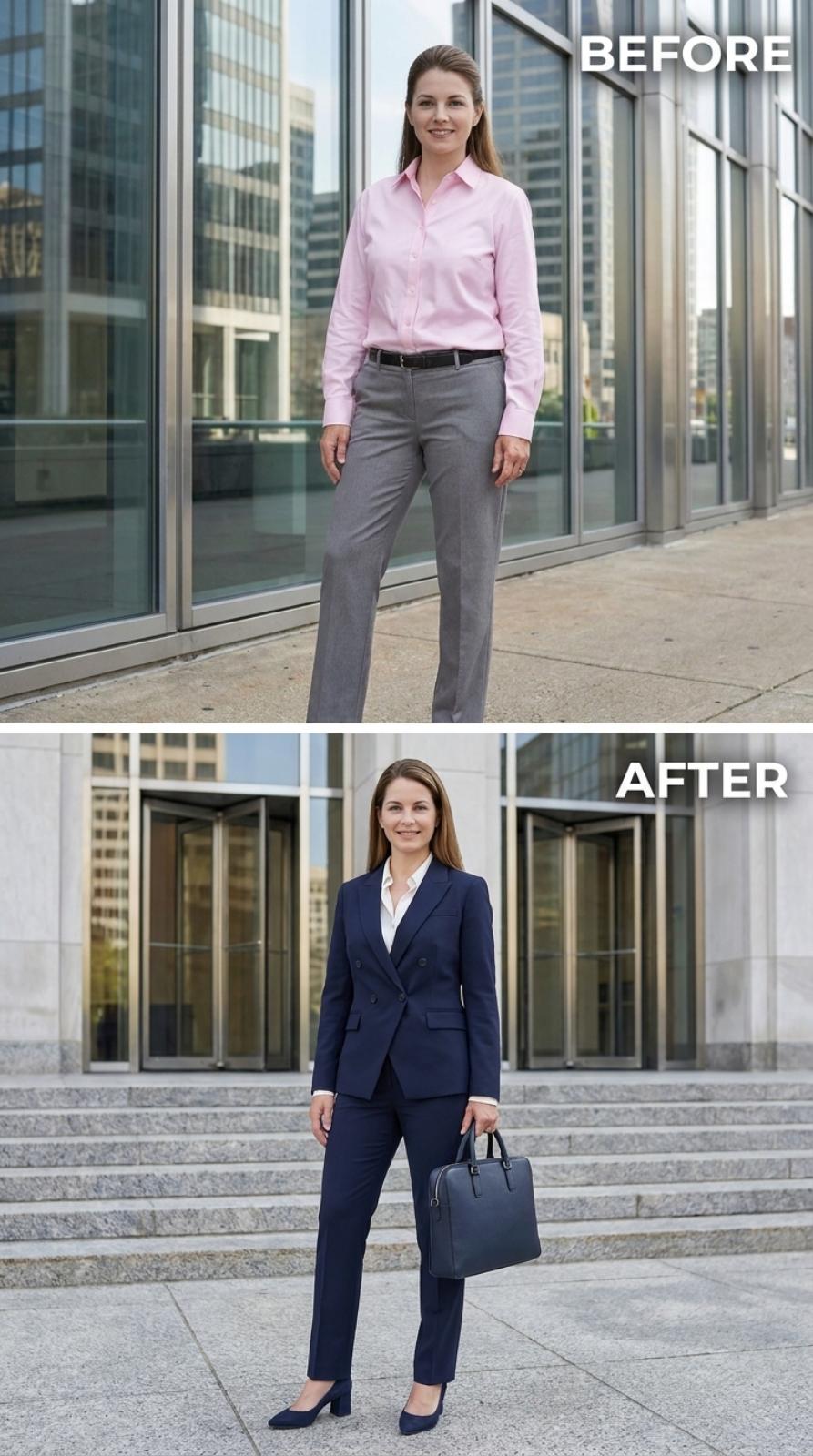
Navy does something particular at this depth of shade: it reads as authoritative without the coldness that true black can carry. The double-breasted cut is doing real structural work here, pulling the silhouette into something precise at the waist without a belt in sight.
She’s holding the briefcase low, which keeps the proportions clean. Heels at this modest block height say she’s there to stay, not perform.
9. Green Blazer, Black Trousers, and the Look That Already Has the Room’s Attention
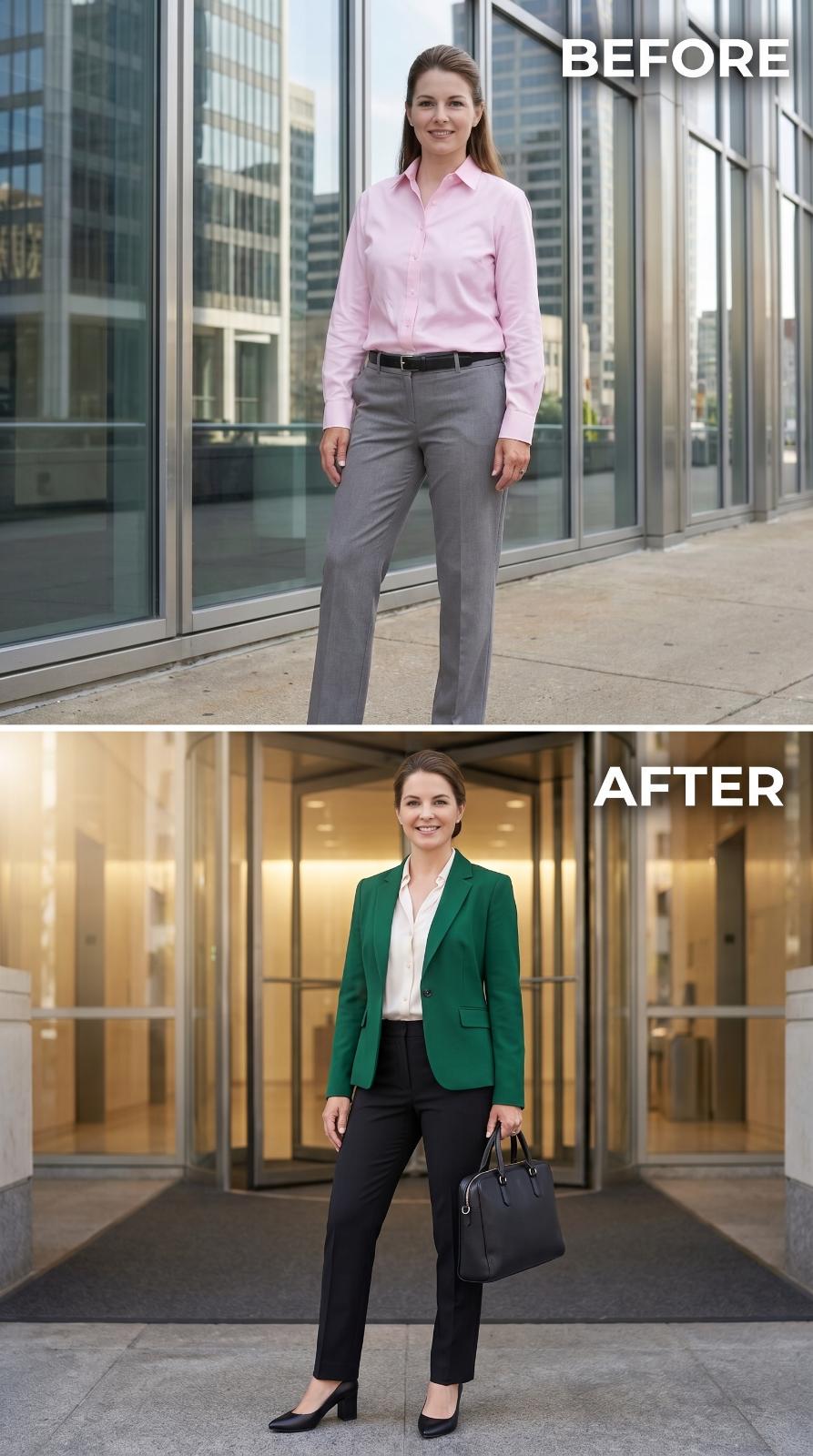
Emerald does the work here. The blazer’s saturated green reads as authority without trying to signal it, and the slim black trousers keep the proportions grounded rather than theatrical. Heels and a structured bag complete it. Nothing is asking for permission.
Fun Fact: Green has historically been considered a difficult color for professional dressing, but saturated shades like emerald tend to read as confident rather than casual because of their depth and formality of tone. It’s the muted versions that can drift into ambiguity.
8. Burgundy Blazer, Tan Trousers, and the Look That Already Prepared the Agenda
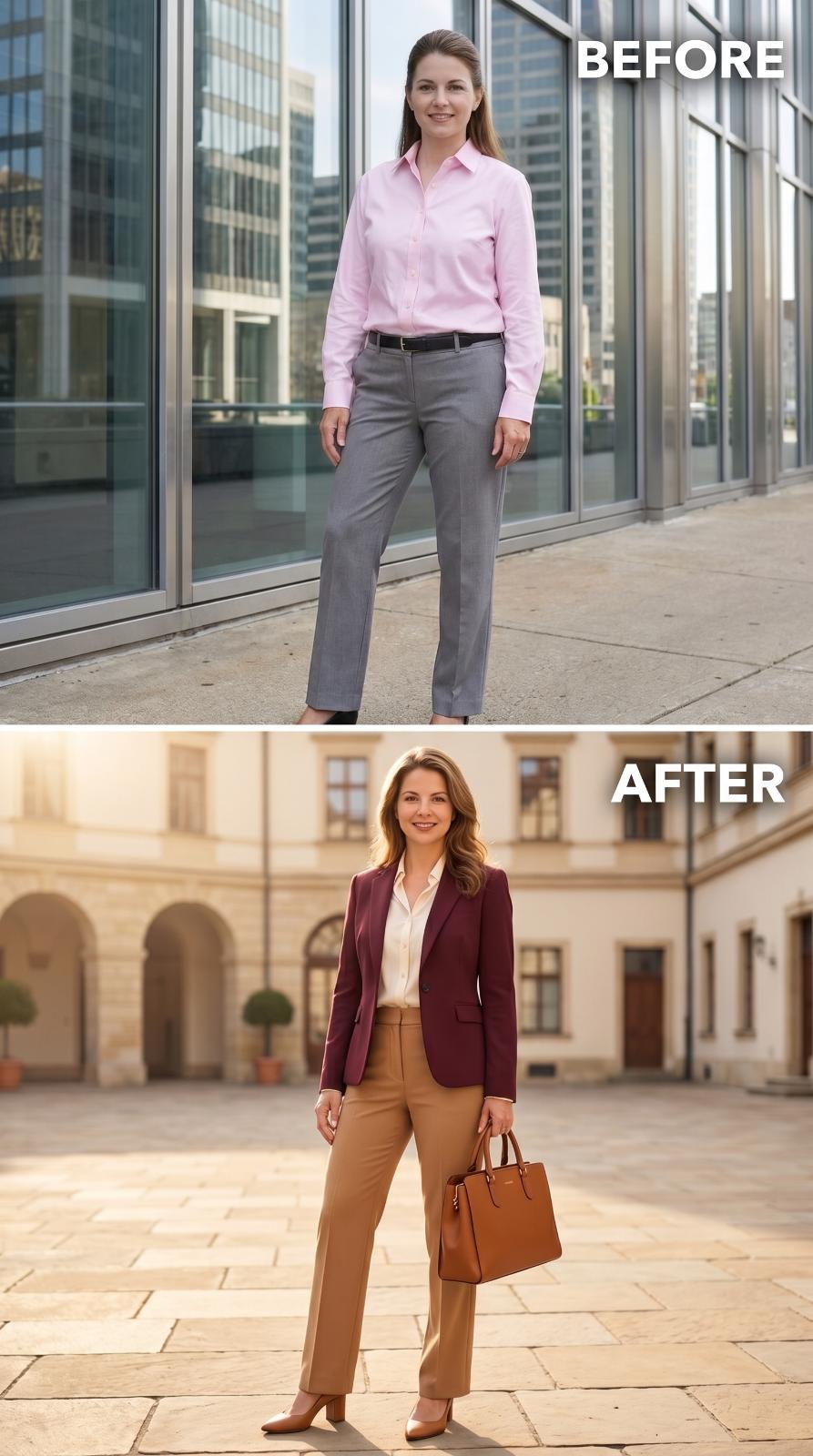
The blazer does the work here. That deep burgundy reads as authoritative without crossing into severe, and the single-button closure keeps the front line clean. Tan trousers with a straight leg and a hem that breaks just right make the whole silhouette read taller. The cognac leather tote grounds it.
7. Ivory Blazer, Charcoal Suiting, and the Look That Doesn’t Need to Announce Itself
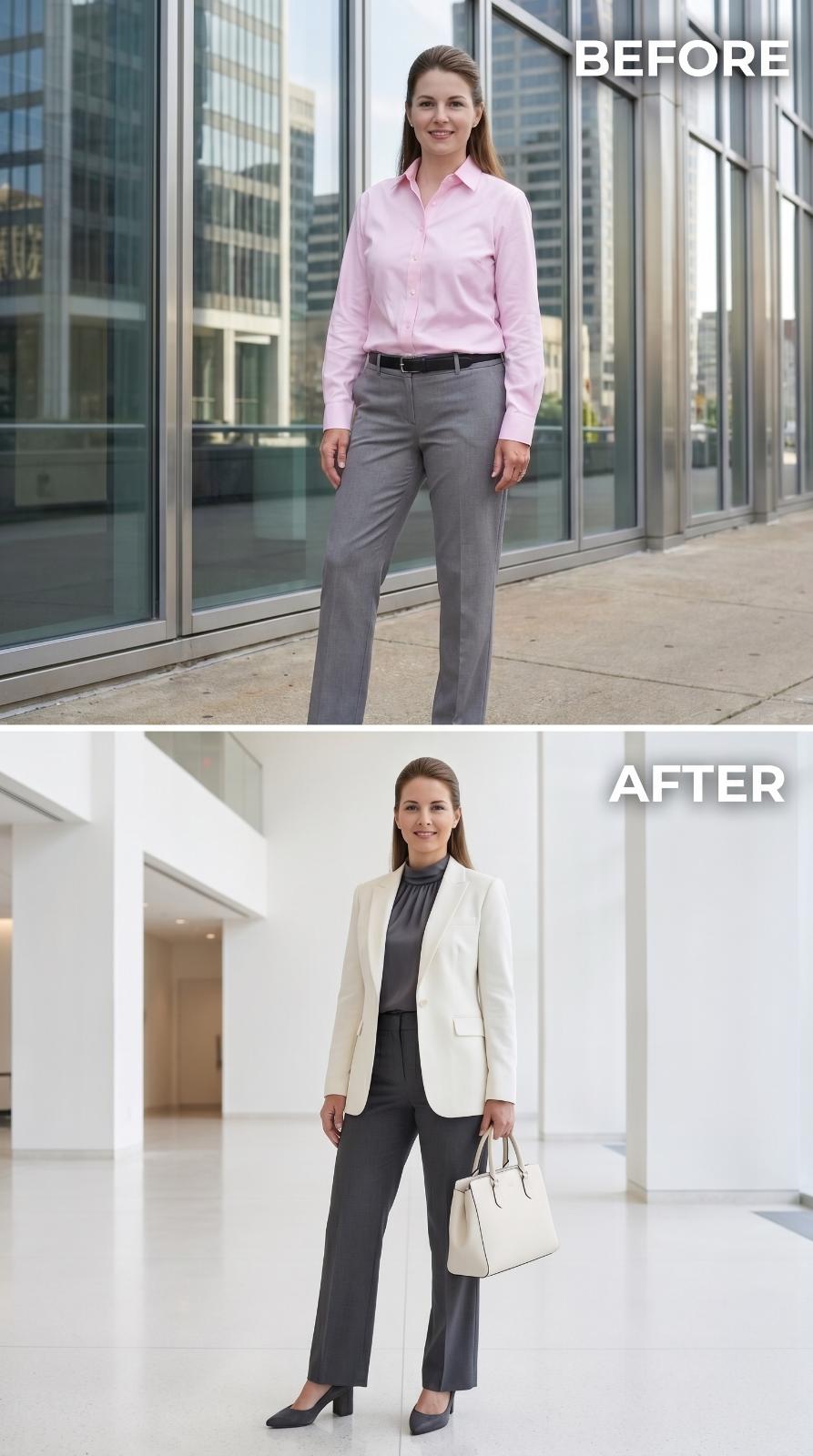
Charcoal trousers with a slight flare cut and a matching high-neck top create one continuous line from shoulder to floor, and the ivory blazer worn open over it doesn’t compete with that. It frames.
The blazer’s lapel sits clean, and the structure is relaxed enough that it doesn’t read as a second skin, which matters more than most people realize. She’s carrying a cream structured tote at her side, held by the top handle rather than the shoulder strap.
That small choice keeps the silhouette upright. The heels are low and pointed, dark enough to extend the trouser line without drawing attention to themselves.
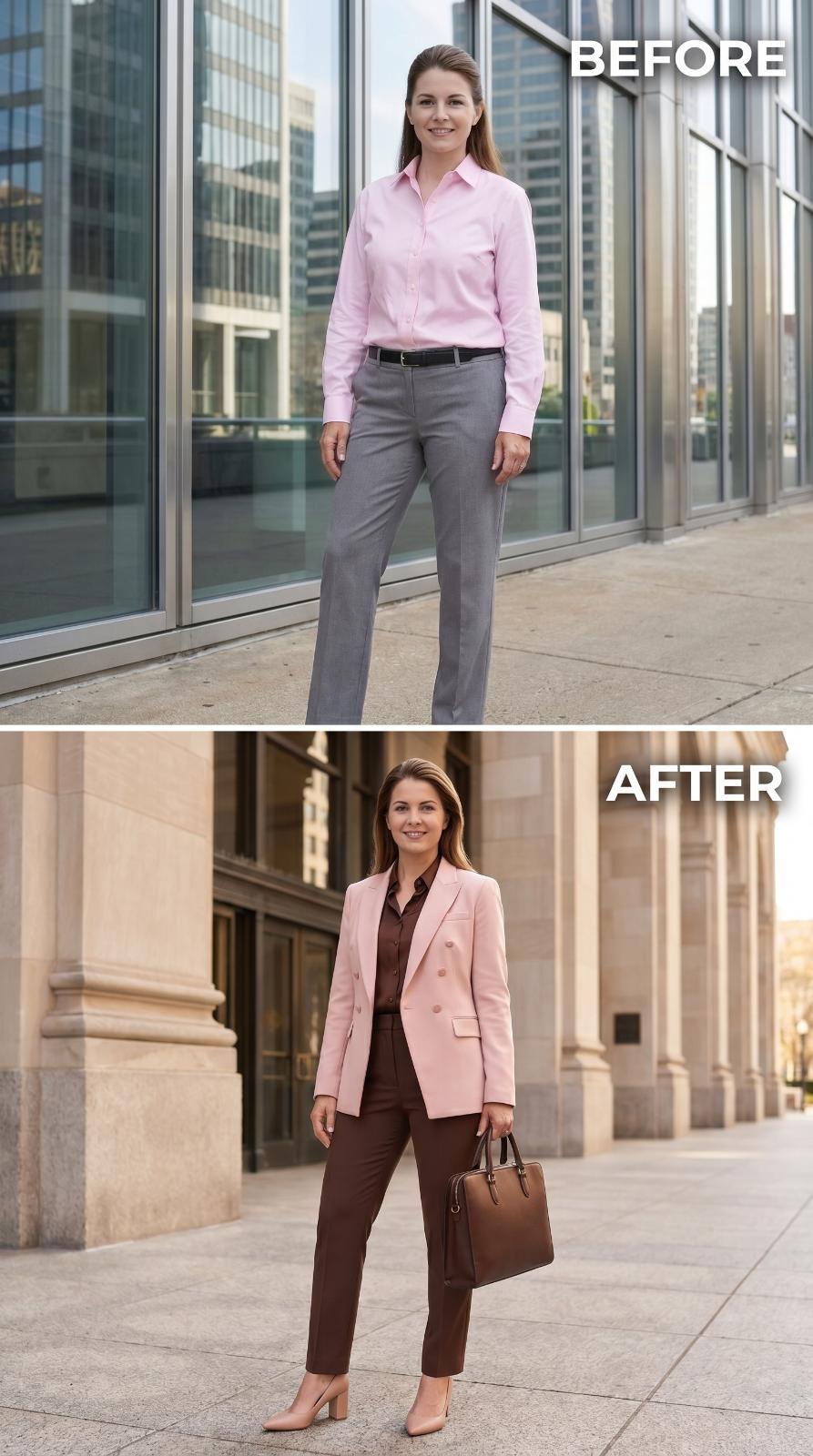
6. Pink Blazer, Chocolate Suiting, and the Look That Already Owns the Room
❤️ Would you like to save this?
Pairing a blush double-breasted blazer with dark chocolate slim trousers creates contrast that reads as intentional rather than accidental. The brown leather tote and nude heel anchor the palette without competing.
It’s a two-tone combination that women in their forties tend to pull off better than anyone else, because it requires enough confidence to let the colors do the work.
5. Houndstooth Pencil Skirt, Dark Blazer, and the Look That Already Closed the Deal
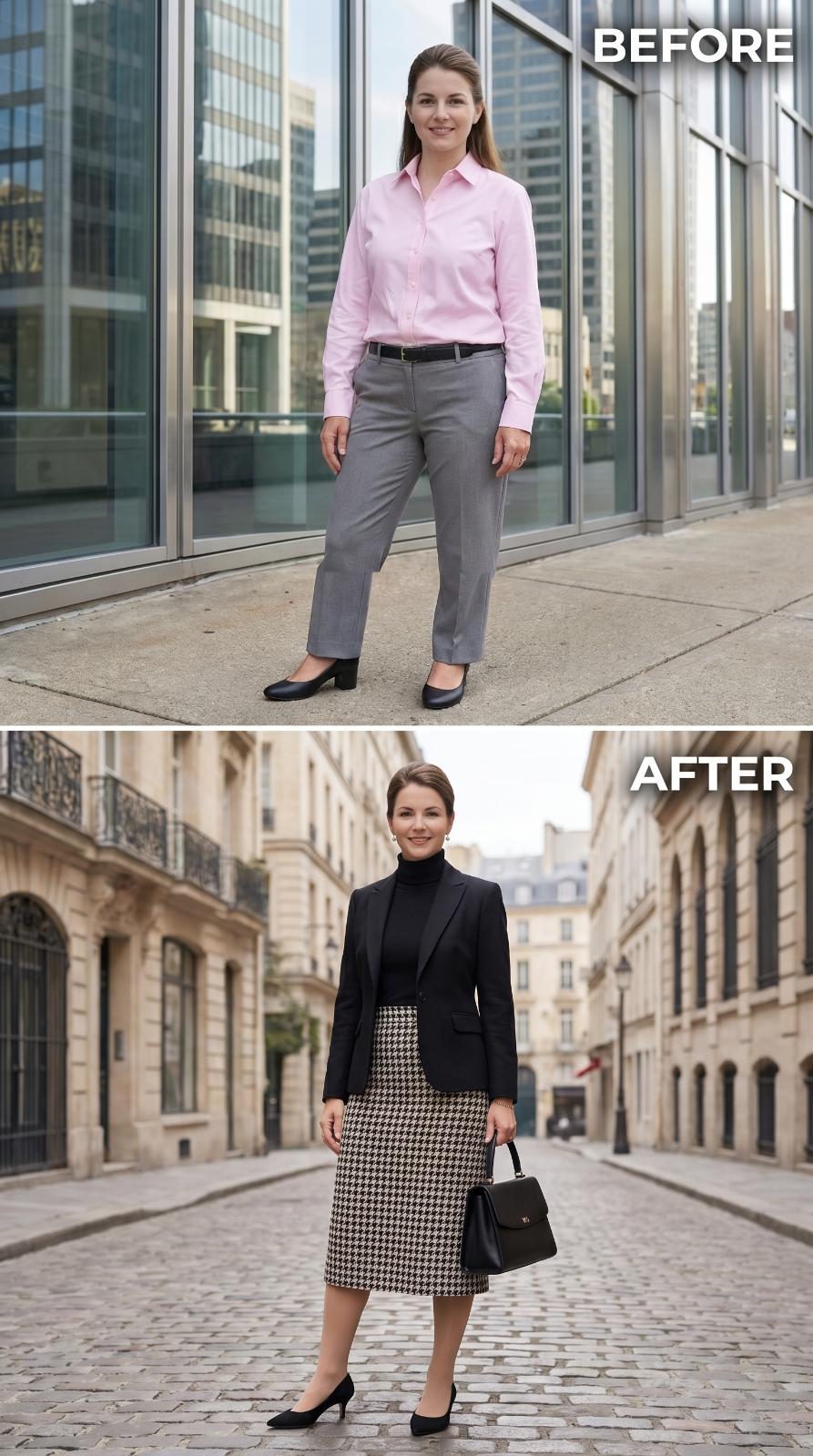
Structured at the shoulder and tapered at the hem, this pairing earns its authority from contrast. The houndstooth pencil skirt does the pattern work so the black blazer doesn’t have to. Kitten heels and an updo keep the proportions clean. Nothing’s competing.
4. Cream Suiting, a Low Ponytail, and the Look That Already Has the Corner Office
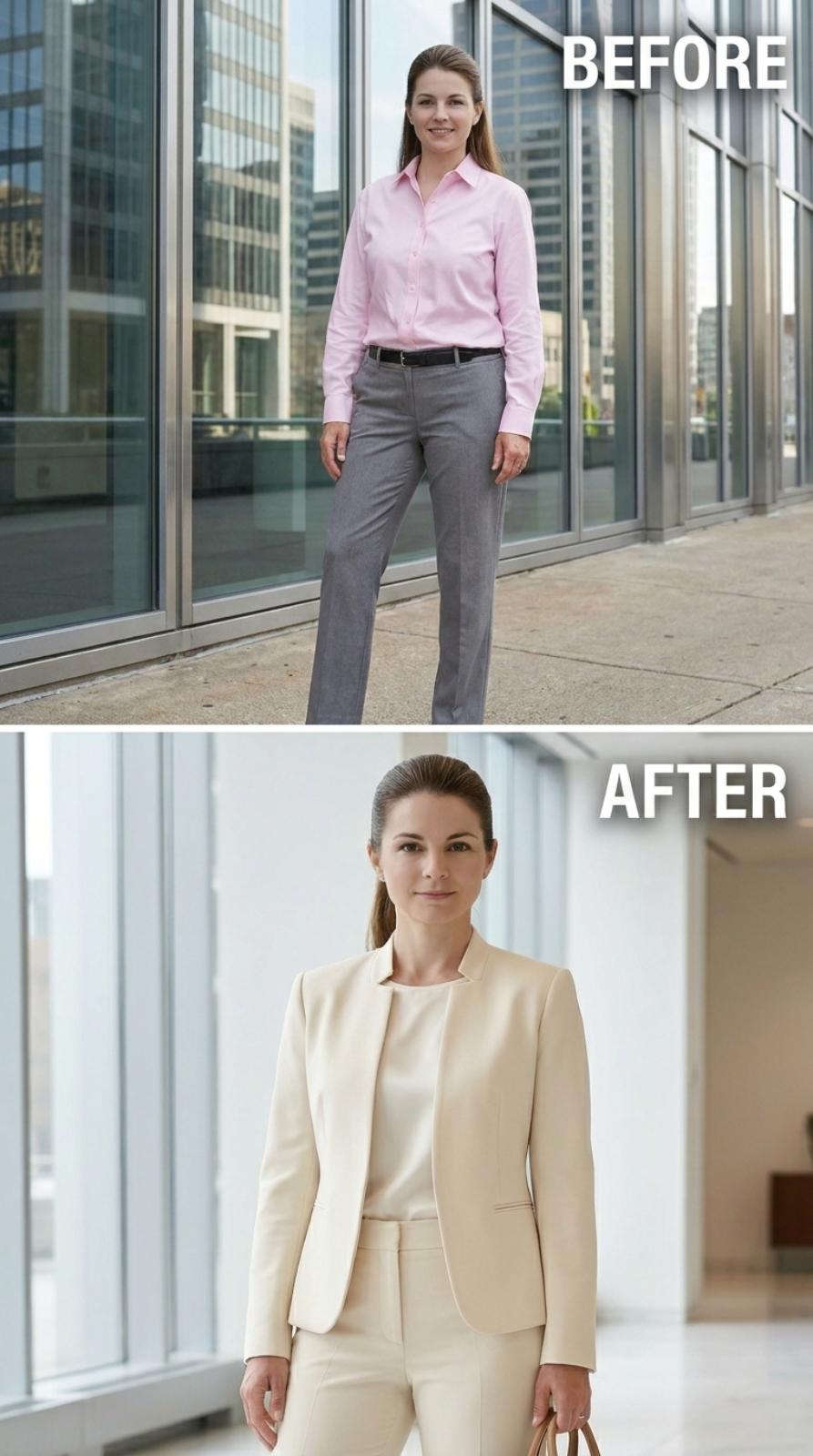
Worn head to toe in the same warm cream, the suit reads as a single deliberate statement rather than two pieces trying to coordinate. The blazer has a clean, collarless neckline that sits away from the throat without lapels competing for attention, and the fit through the torso is close without pulling.
Underneath, a satin-finish shell in the same ivory register adds a quiet shift in texture that keeps the monochrome from going flat. What makes this work at 42 isn’t the color or the cut individually. It’s the restraint. No contrast belt. No statement jewelry interrupts the line.
The ponytail sits low at the nape, pulled back smoothly, which lets the neckline do what it’s supposed to do. A structured bag in a tone just one shade deeper than the suit is the only place the look introduces any variation, and that’s enough.
3. White Blazer, Black Trousers, and the Look That Already Has the Next Meeting Covered
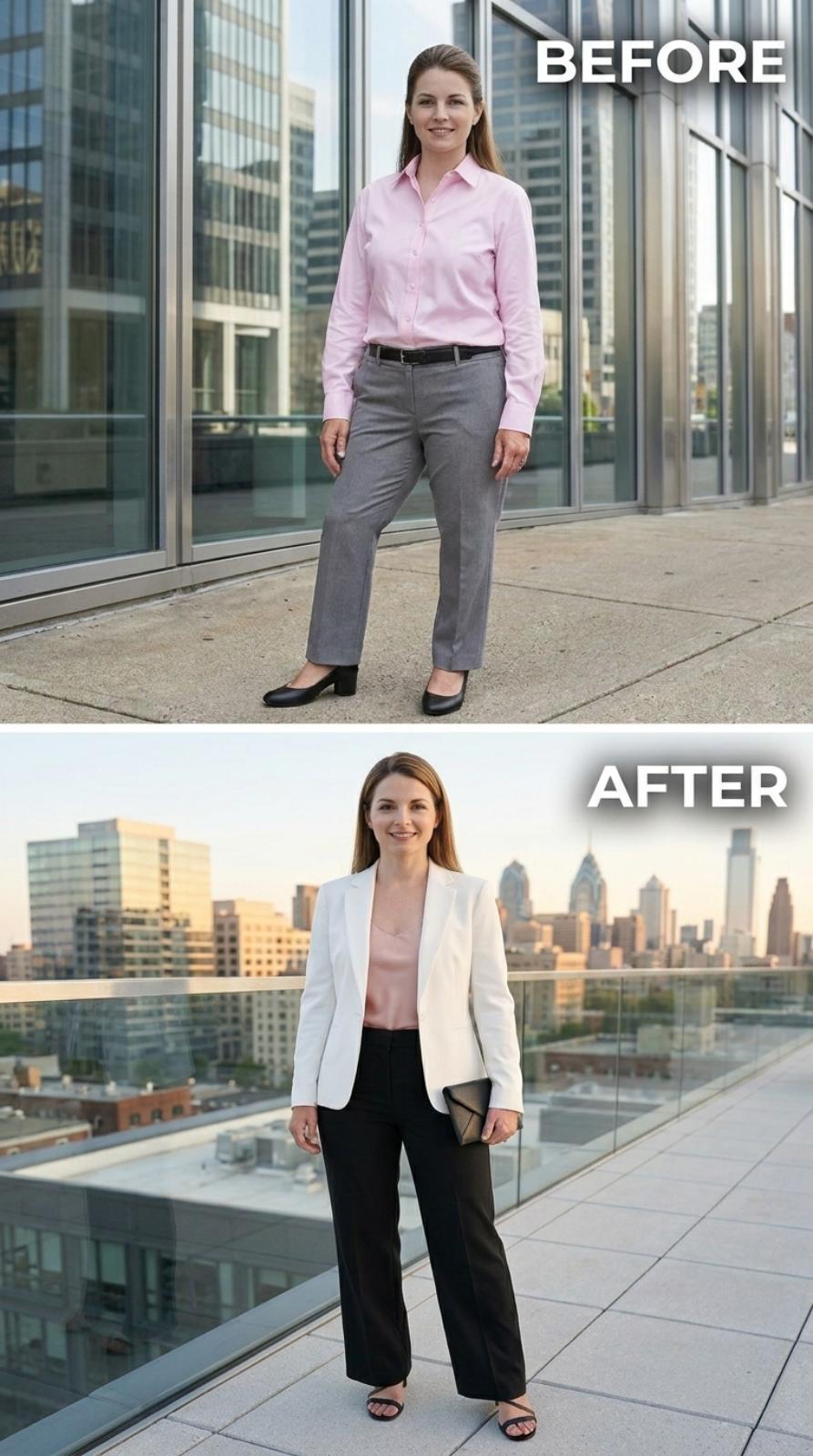
A white blazer over a blush satin camisole reads sharper than most people expect from that combination. The black trousers are wide-leg, which does something important: they keep the silhouette long without competing with the blazer’s clean lapel line.
She’s carrying a structured clutch rather than a tote, which signals she’s not here to haul anything. She doesn’t need to be. The heel height is low enough to move fast but open enough at the toe to look deliberate.
What holds it together isn’t the white-and-black contrast; it’s the restraint. Nothing here is trying to prove a point. It already made one.
Closet Note: White blazers photograph colder than they look in person, so if you’re buying one for client-facing work, hold it near your face under fluorescent light before committing. Bright white can read harshly under office lighting, depending on your undertone. Off-white or ivory tends to photograph warmer and wears more forgivingly across different skin tones.
2. Black Blazer, Forest Green Wrap Dress, and the Outfit That Already Has a Position on Everything
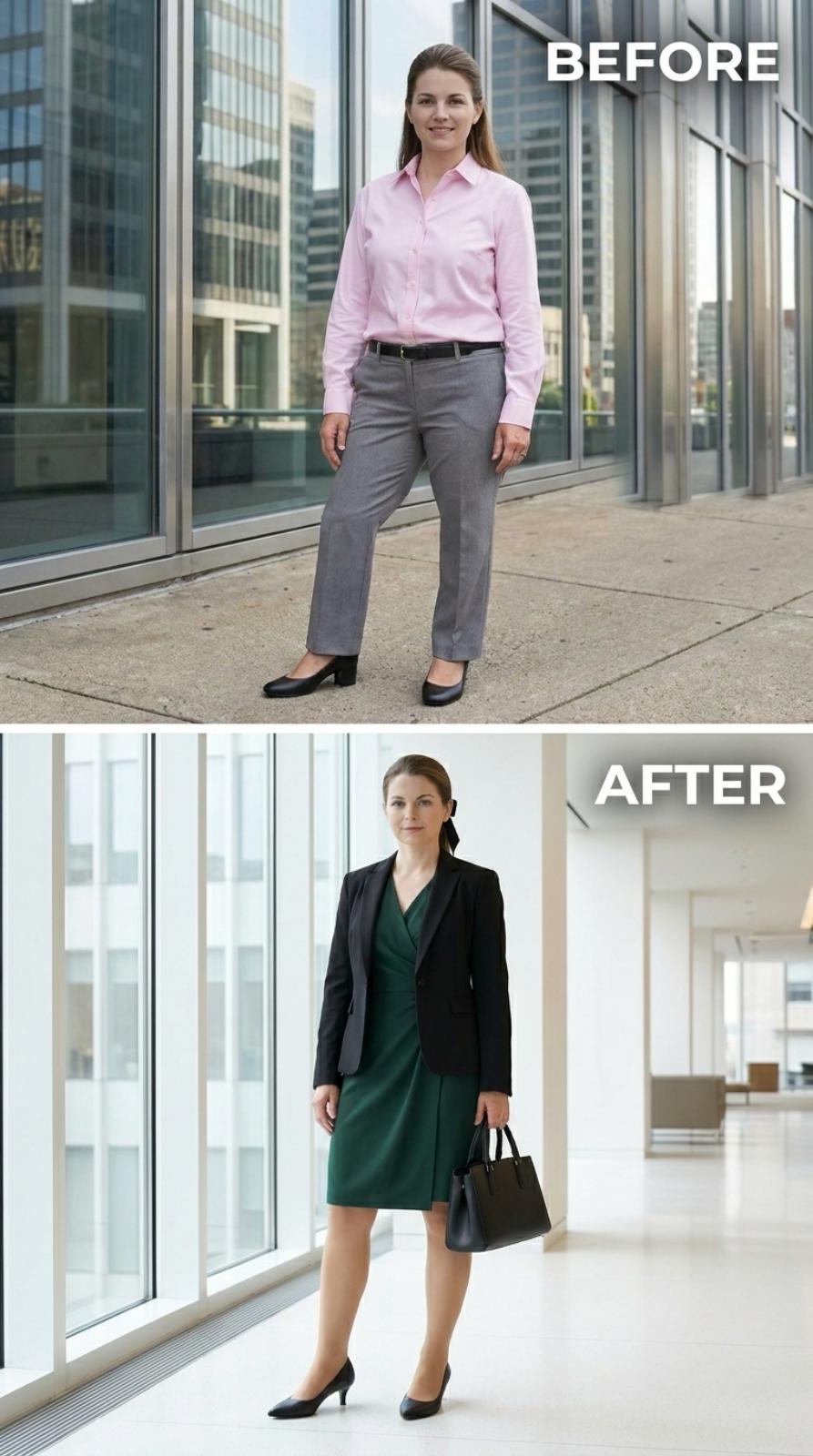
Forest green does something specific in a corporate setting: it reads as decisive without being aggressive. Here, a wrap dress in a deep, matte green sits under a black blazer with structured shoulders and a clean single-button close. The wrap neckline does the work of a statement without requiring one.
Hair is pulled back into a low, sleek style that keeps the collar visible, which matters more than people realize. When the neckline of a wrap dress competes with your hair, the whole upper half loses its line. Keeping it clear lets the V-shape do what it’s supposed to do.
The bag is classic structured tote in black leather, carried by the top handles rather than the strap. That’s a small choice that lands differently in a room. Kitten heels in black keep the proportion clean without adding height that the silhouette doesn’t need.
1. Slate Suiting, a Briefcase That Closes Conversations, and the Look That Already Ran the Numbers
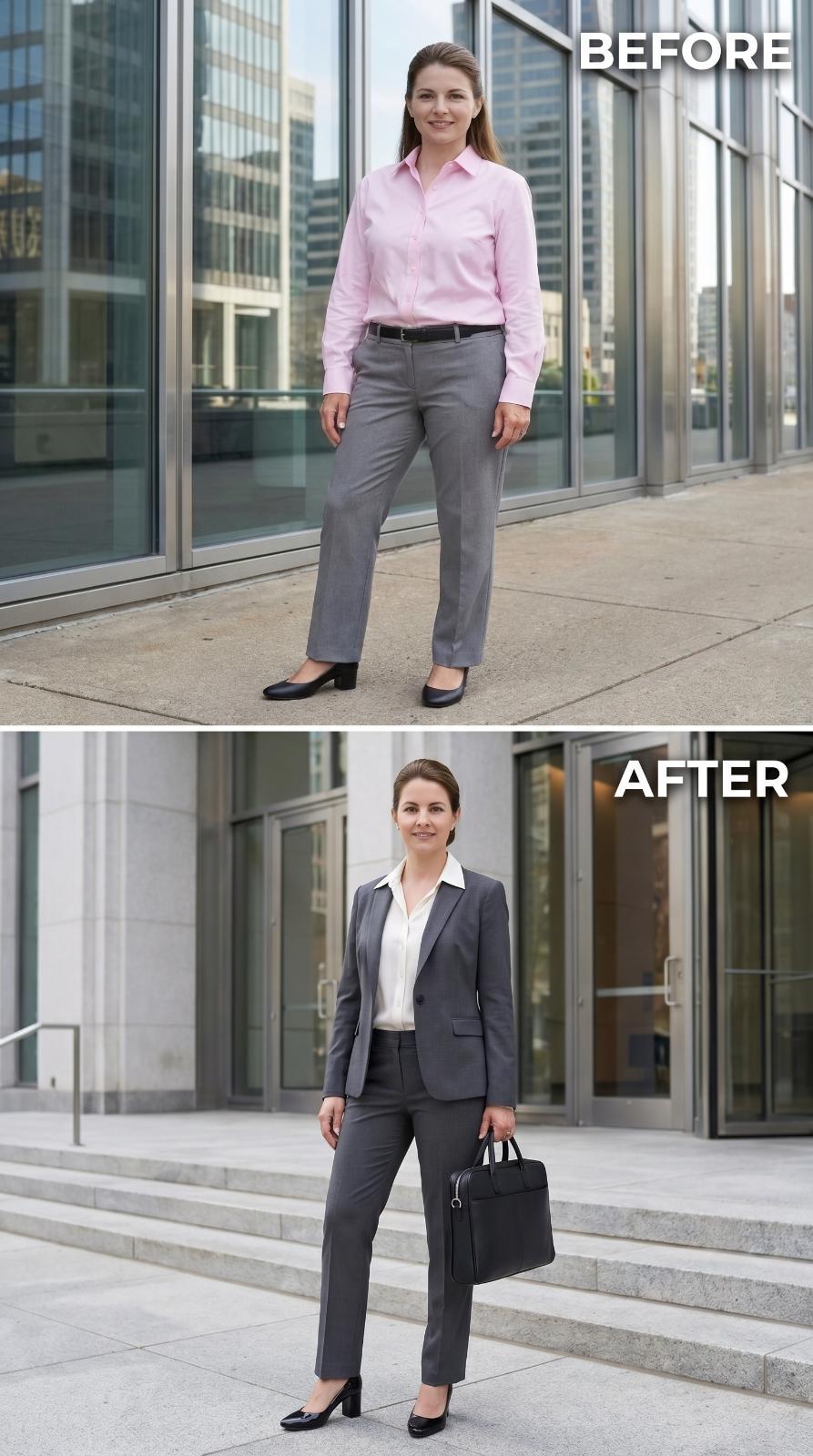
Slate grey suiting in a slim, tapered cut does something specific: it reads as serious without reading as severe. The blazer sits close through the shoulder with a single-button closure, and the lapels are narrow enough to feel current without chasing trends.
Underneath, a white blouse with a soft collar keeps the neckline from looking rigid. Hair pulled back tight and low signals that nothing here is accidental. She’s carrying a structured leather briefcase, and it’s doing exactly what it’s supposed to do: finishing the look without competing with it.