
❤️ Would you like to save this?
A woman I know inherited a six-figure watch and wears it with a ten-dollar cardigan from a thrift store in Connecticut. She doesn’t think about it. That’s the tell. New money screams; old money barely whispers, and the difference shows up in every outfit choice you make, from how visible your logos are to how quietly your handbag closes. I spent years confusing expensive with wealthy, and they’re not the same thing. Not even close. Here are 33 style signals that broadcast “recently arrived” instead of “always been here,” and honestly, a few of them stung to recognize in my own closet.
FYI, thanks to AI imagery software, we’re able to create very specific fashion and hairstyle examples to illustrate the points being made. In some cases, imagery is exaggerated to hammer home the point. Also, assume links that take you off the site are affiliate links such as links to Amazon. this means we may earn a commission if you buy something.
30. Logos Big Enough to Read from Across the Room

Here’s the thing about logos: old money treats them like whispers, new money treats them like megaphones. If someone can identify your brand from thirty feet away in a crowded terminal, you’ve made a choice, and that choice is broadcasting net worth rather than taste.
A small gold logo hoop earring or a discreet monogram lining? That’s confidence. A monogram tote bag where the logo IS the design, covering every square inch? That’s a receipt worn as an outfit.
29. When Every Surface Becomes a Billboard for Your Designer

Logo saturation is the fastest tell. One branded piece anchors an outfit. Two starts a pattern. Three or more, and you’ve basically become a walking storefront. I spent an embarrassing number of years thinking more logos meant more polish before a brutally honest friend set me straight over brunch.
28. Head-to-Toe in One Designer’s Resort Collection (Yes, All of It)
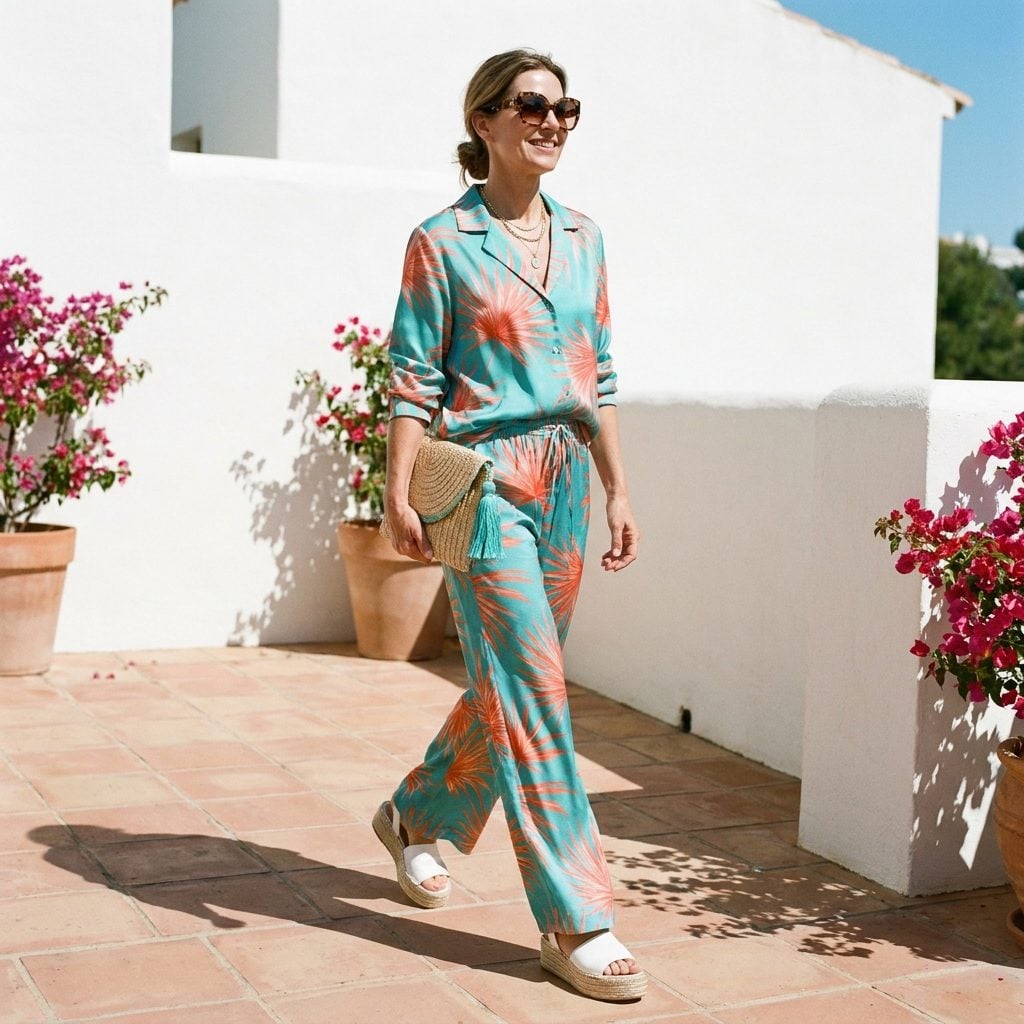
Buying the full look off the runway, head to toe, same collection, same season, same print? That’s the fashion equivalent of ordering the prix fixe because you didn’t want to think about the menu. Real style comes from mixing, from pairing that silk resort shirt with linen trousers you’ve owned for six years.
Generational wealth buys individual pieces that speak to them. New money buys outfits pre-assembled by a creative director.
27. Clashing Luxury Logos from Four Different Houses in One Outfit
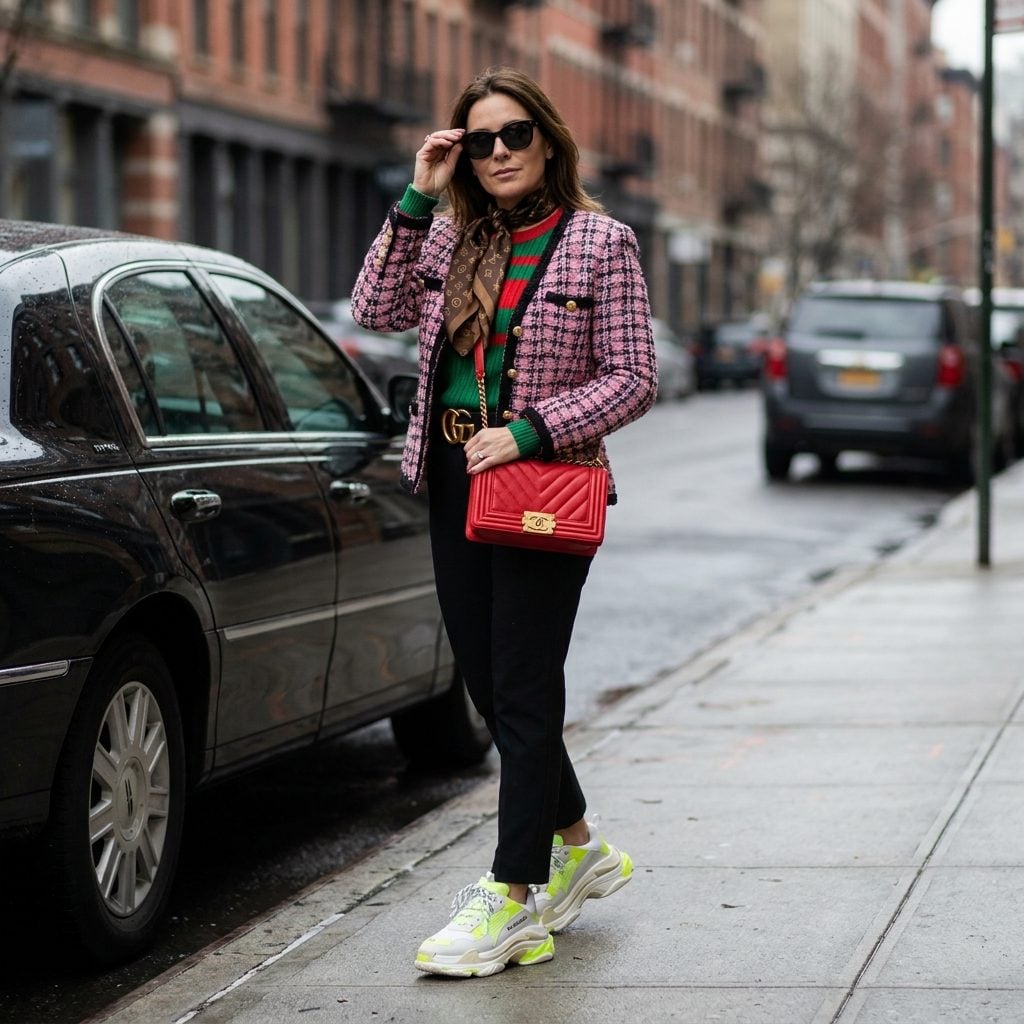
Wearing Chanel, Gucci, Balenciaga, and Louis Vuitton simultaneously doesn’t say “I have range.” It says “I have accounts at every department store on Fifth Avenue and no one to tell me to pick a lane.”
Mixing brands is fine. Mixing four different logo-heavy pieces is a turf war happening on your body. Old money picks one quietly excellent piece and lets everything else play support. The boucle tweed jacket would be beautiful on its own with dark denim and simple flats. It doesn’t need backup singers.
26. Every Handbag Is Current Season (Never Anything from Two Years Ago)
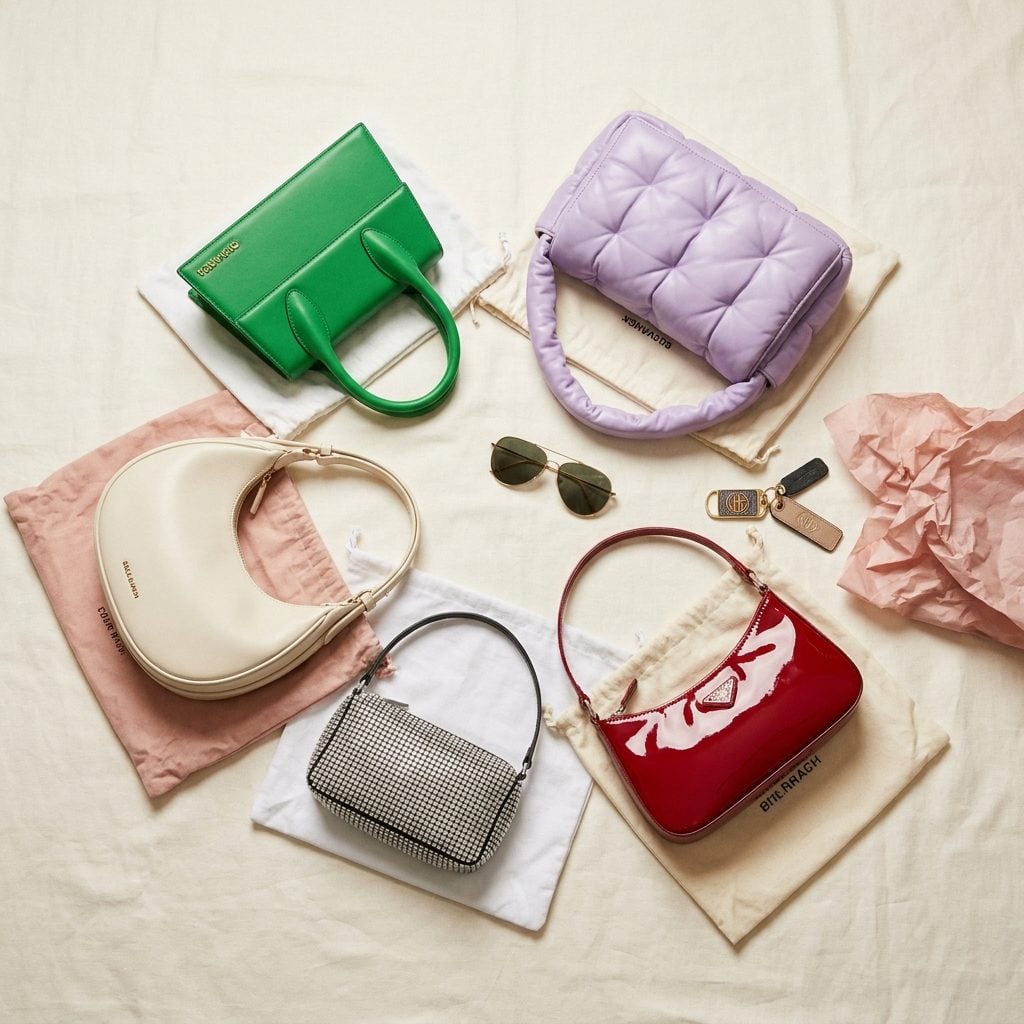
Not a single bag in the rotation older than this season’s lookbook. Every color trending, every silhouette of-the-moment, price tags practically still dangling. You know what’s conspicuously absent? A well-loved bag with a patina, a softened handle, a story.
Old money carries a tan leather shoulder bag that belonged to their mother. The leather has darkened beautifully. The hardware has a gentle tarnish. Nobody asks if it’s current because it never needed to be.
A closet full of this-second bags reveals the quiet anxiety underneath: the fear that last season’s quilted shoulder bag might expose you as behind.
25. The Birkin That Gets Photographed More Often Than It Gets Carried

I will die on this hill: if your Birkin has more screen time than wrist time, it’s not an accessory. It’s content.
Old money treats a good bag the way you’d treat a favorite cast iron pan. It gets used. It picks up marks. Nobody photographs it next to their latte for the grid. The orange structured leather bag sitting pristine under museum lighting in a closet? That’s an investment asset cosplaying as fashion.
24. Diamonds Chosen for Sheer Size Before Anyone Mentions the Cut
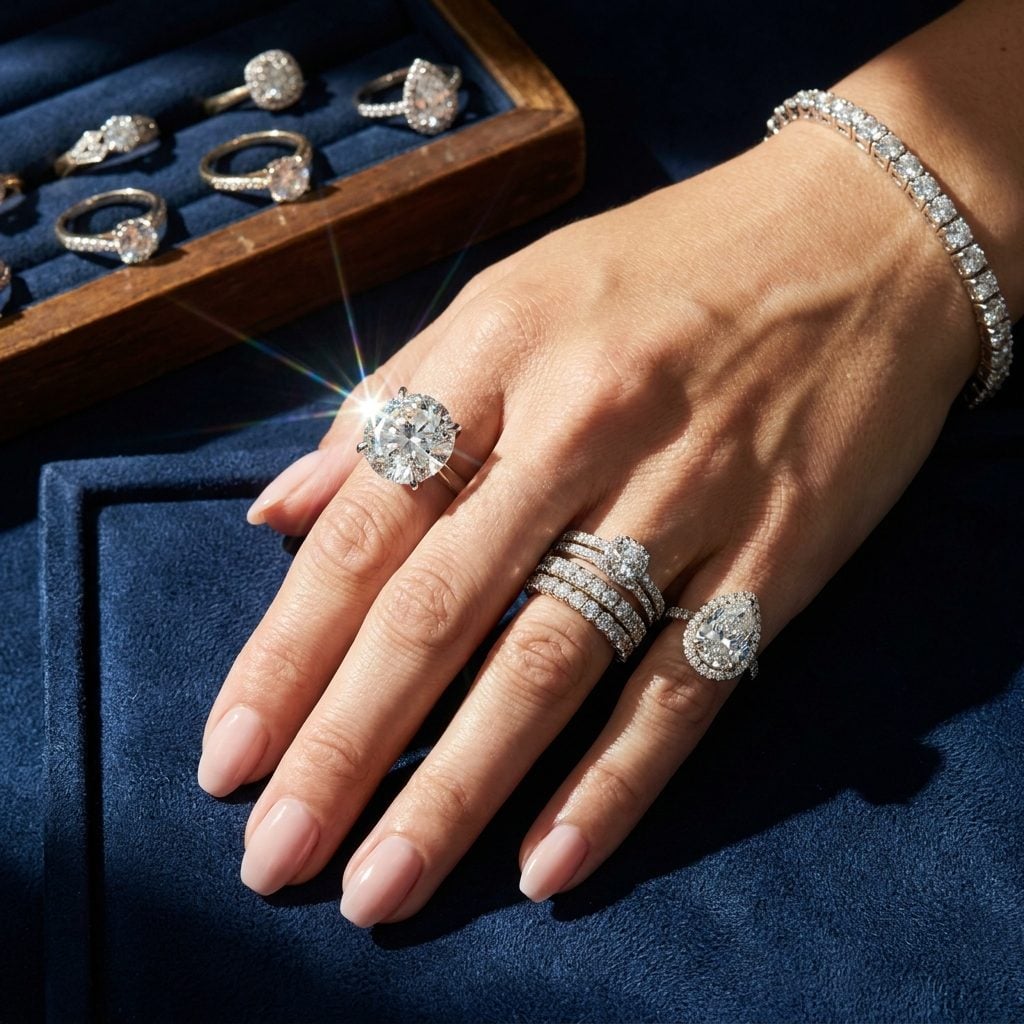
Big diamonds are easy to spot from across a dinner table, and that’s exactly the point. New money gravitates toward carat weight the way it gravitates toward visible logos: the metric that impresses fastest.
But anyone who’s spent time around truly fine jewelry knows that cut determines brilliance, and a flawless two-carat stone with an ideal cut will outperform a cloudy five-carat rock every time. Those vintage rings in the background, the modest ones with the fire? Those are the ones getting passed down through generations.
23. A Watch Loud Enough to Enter the Room Before You Do

That gold diamond-bezel watch isn’t telling time. It’s telling a story about a bank account, and it’s telling it loudly, to everyone, whether they asked or not.
Generational wealth wears a thin dress watch, maybe vintage, probably inherited, face no bigger than a quarter. The thin gold bangle on the other wrist there? That’s the real tell. Simple. Quiet. Worth more per gram than the flashy piece, and nobody at the table will ever know unless they ask.
22. Red Soles at a Tuesday Lunch Say More Than You Think

Nobody from old money is flashing red-sole patent leather pumps at a weekday lunch. That’s the whole tell. Generational wealth wears shoes you can’t identify from across the room: scuffed loafers, ancient riding boots, maybe some Italian flat you’ve never heard of. The red sole is a broadcast, not a whisper, and it signals exactly what you paid.
I spent years thinking expensive shoes were the shortcut to looking wealthy. They’re not. The truly rich wear their grandmother’s resoled Ferragamos and don’t think twice about it.
21. Your Monogrammed Luggage Has the Brand’s Font, Not Your Family’s
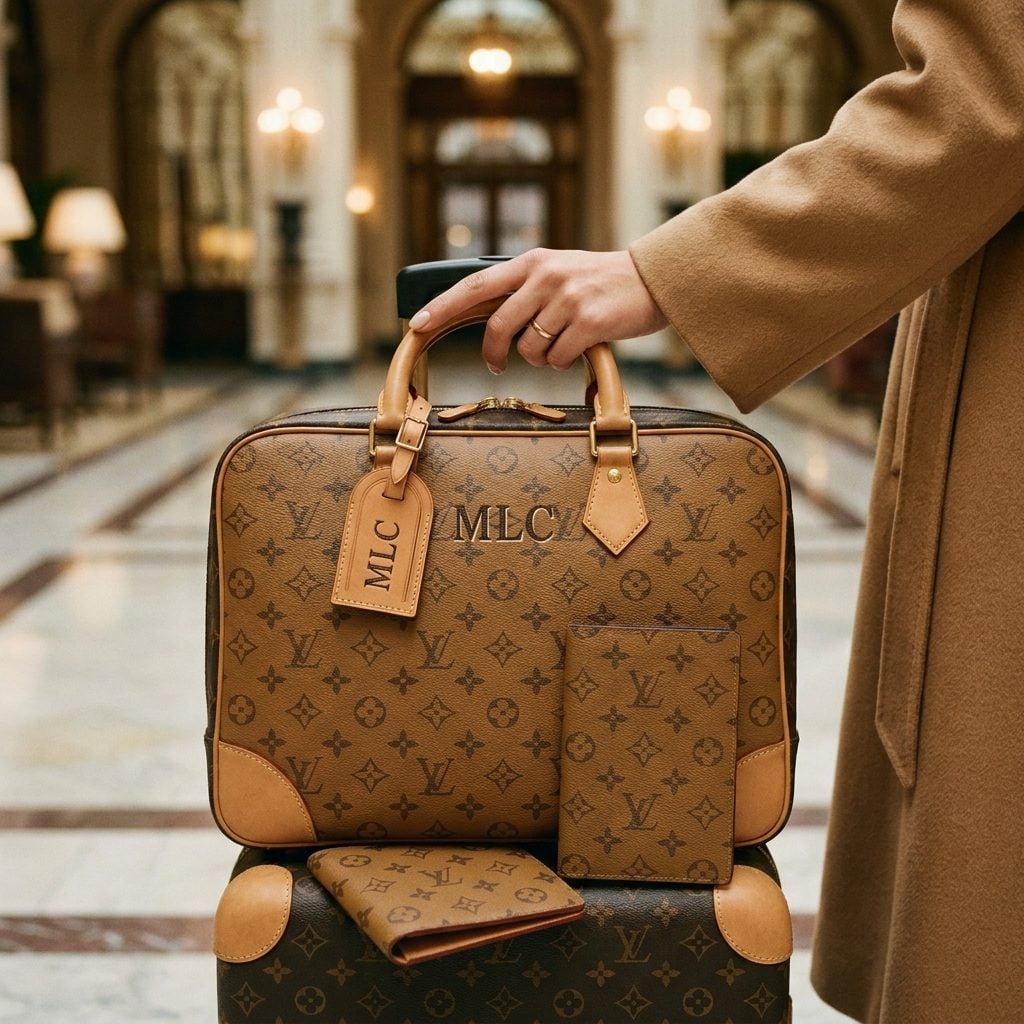
Old money monograms are threadbare, hand-stitched, and inherited. They use a family crest or a simple serif font your great-aunt chose in 1962. New money monograms come in whatever typeface the fashion house designed last season, stamped across designer monogram luggage so everyone in the terminal knows exactly which store you visited.
The difference is subtle but real. One says “this belongs to me.” The other says “I belong to this brand.”
20. Sunglasses That Spell Out the Designer Along the Temple

Quiet wealth buys sunglasses from a tiny optician in Florence. New money buys oversized logo sunglasses with the maker’s name running temple to hinge in gold lettering, readable from ten feet away.
19. Your Perfume Arrives Three Full Steps Before You Do

I’m going to say something that might sting: if people can smell you before they see you, your fragrance isn’t working for you. It’s performing for an audience. Generational wealth applies perfume so close to the skin you’d have to lean in to catch it. A single pulse point. Maybe two.
New money treats fragrance like a fog machine at a concert entrance. Six sprays of something sweet and heavy, usually oud-heavy or loaded with synthetic vanilla, and the whole room knows you’ve arrived before your black suede heels hit the floor.
The French have a phrase for it: “sillage,” the scent trail you leave. Old money sillage is barely there. New money sillage could knock over a candle display at Nordstrom.
18. Statement Jewelry on a Wednesday Morning School Run

❤️ Would you like to save this?
A crystal statement necklace layered over a grey cashmere crewneck at 8:15 AM in the school drop-off lane? That’s not polish. That’s a costume for an audience of minivan bumpers and crossing guards.
Generational wealth does the school run in an ancient Barbour jacket and pearl studs so small you’d miss them. The context matters as much as the piece itself, and wearing chandelier-level jewelry to a Wednesday morning errand tells everyone your outfit is working harder than the occasion requires.
17. Every Piece Is Shouting and Nobody Can Hear Any of Them
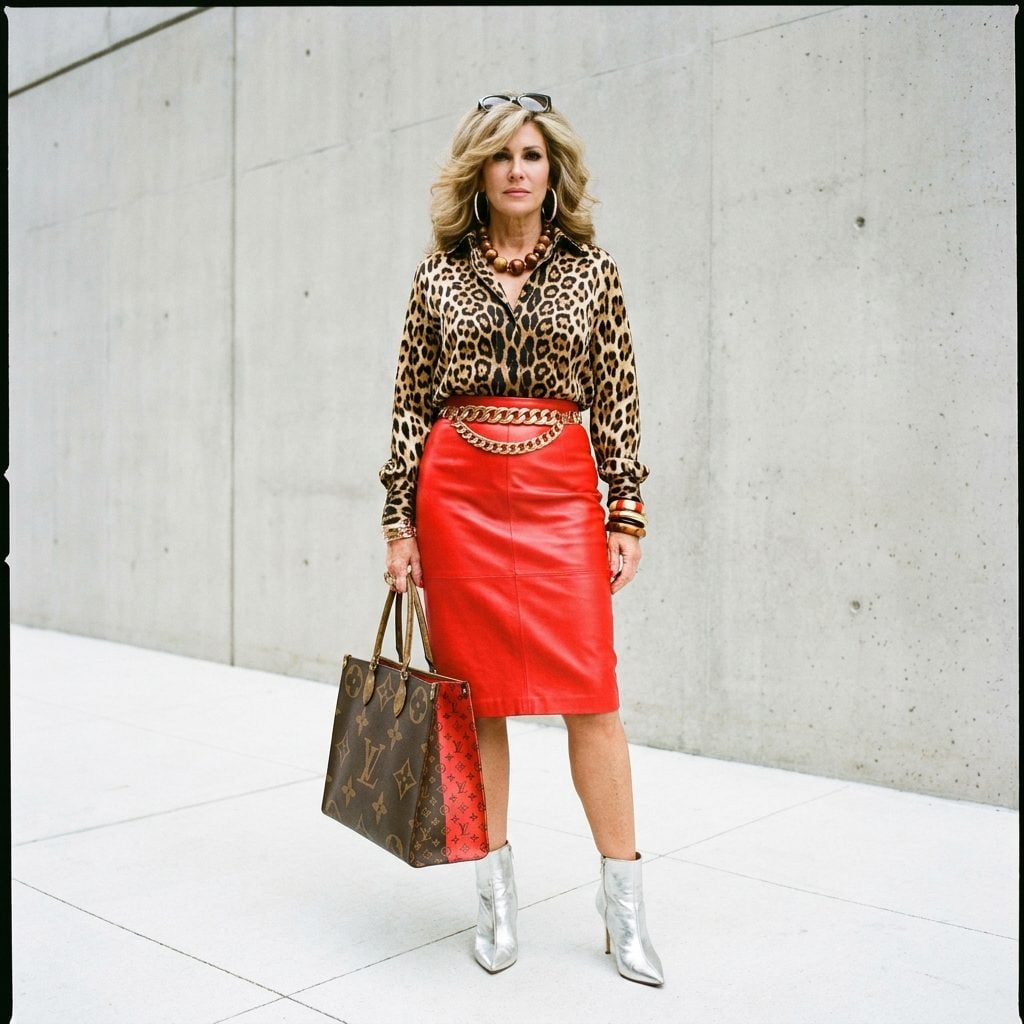
There’s an old decorator’s rule: before you leave the house, take one thing off. It applies to getting dressed too, and this outfit breaks it about four times over.
Leopard print silk, red leather pencil skirt, metallic silver ankle boots, a logo tote, oversized hoops, stacked bangles. Each piece is fighting for attention and losing. The paradox of wearing every interesting thing you own is that nothing stands out. Old money understands that a single interesting choice against a quiet background is what actually catches the eye.
16. When the Fit Is So Tight It’s Doing All the Talking

Old money’s greatest trick is clothing that fits well without fitting tight. There’s a real difference, and it’s about half an inch of ease through the hip. Generational wealth buys for comfort and has a tailor handle the rest. New money buys a size down and calls it flattering.
A bodycon dress in fuchsia with a plunging neckline and nude patent platform stilettos for a casual dinner isn’t confidence. It’s volume. And honestly, I wore versions of this exact outfit through most of my thirties before I figured out that a perfectly draped fabric that skims rather than grips is infinitely more compelling. The clothes should suggest a shape, not argue about it.
15. That Viral Bag You Bought Last Month Already Looks Like a Time Capsule
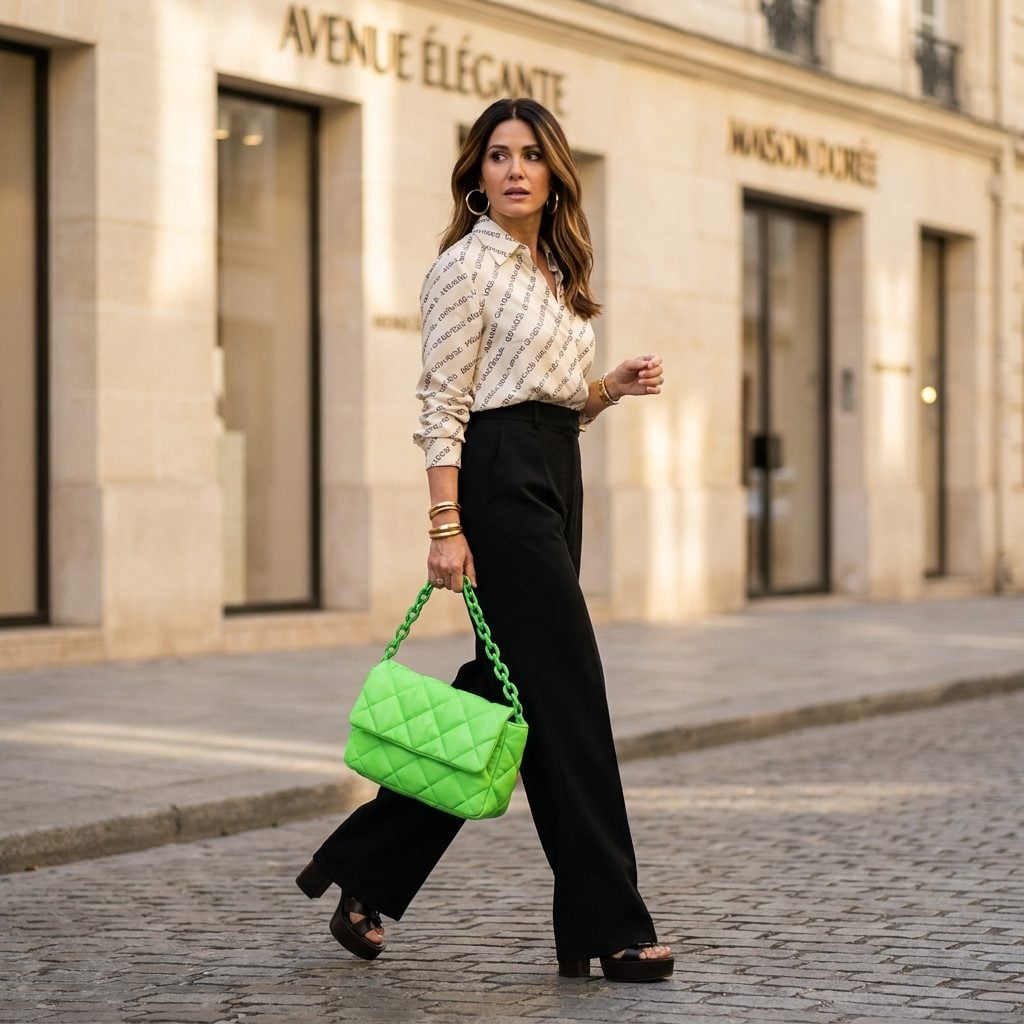
Nothing announces “I shop reactively” quite like a bag that peaked on TikTok six weeks ago. Generational wealth dresses on a delay, almost deliberately behind. The woman who inherited her taste buys a tan leather crossbody she’ll carry for a decade.
You, meanwhile, are stuck with a neon quilted bag that already feels like a costume prop. The fix isn’t to stop buying new things. It’s to wait three months and see if you still want it.
14. Your Aesthetic Changes Every Two Weeks (And Your Closet Looks Like a Thrift Store Explosion)
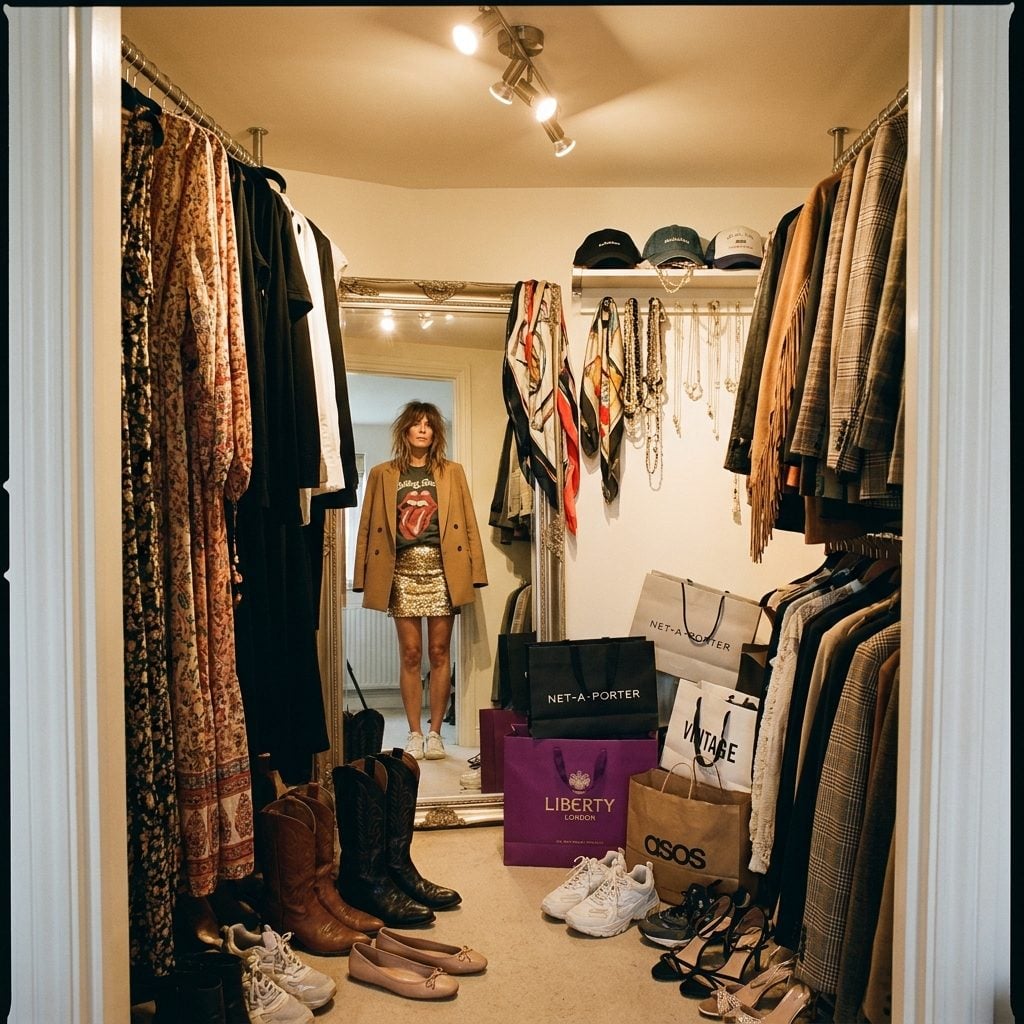
Coastal grandmother one week. Quiet luxury the next. Mob wife by Friday. I spent my entire thirties doing this, and I can tell you exactly what it signals: you’re auditioning identities instead of inhabiting one.
Old money style is boring on purpose. The same navy blazer, the same camel wool coat, the same flat shoes, year after year. That consistency reads as confidence. Constant reinvention reads as someone still figuring it out.
13. You’re Building a Trend Collection, Not a Wardrobe
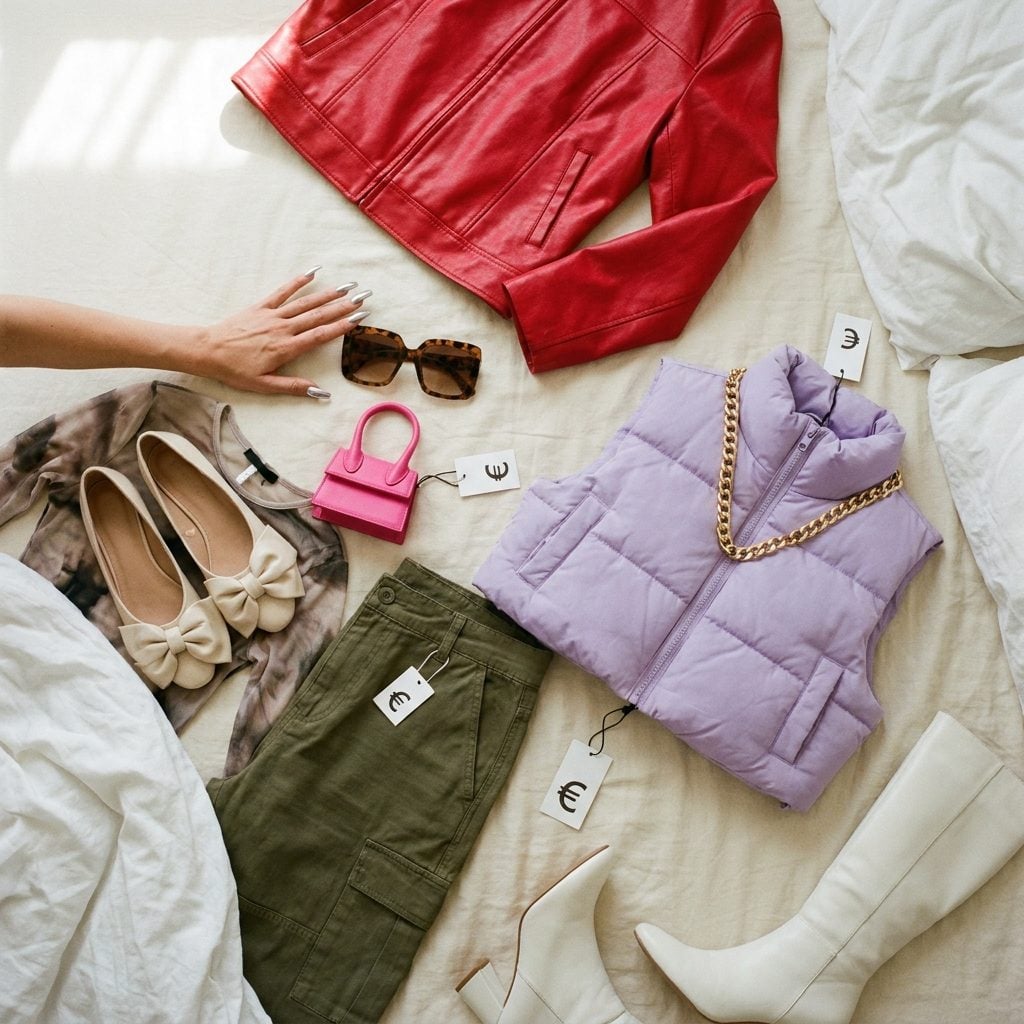
A wardrobe is not a collection of moments. Every piece in this flat lay is technically on-trend, and not a single combination here would make a coherent outfit. That’s the tell.
Women who grew up around real wealth tend to own fewer things. A navy cashmere sweater, well-fitted trousers, a good watch. Those pieces play nicely together because they were chosen as a system, not grabbed individually off an algorithm’s recommendation page.
12. Every Piece Screams Expensive, But the Outfit Looks Like It Took Three Hours
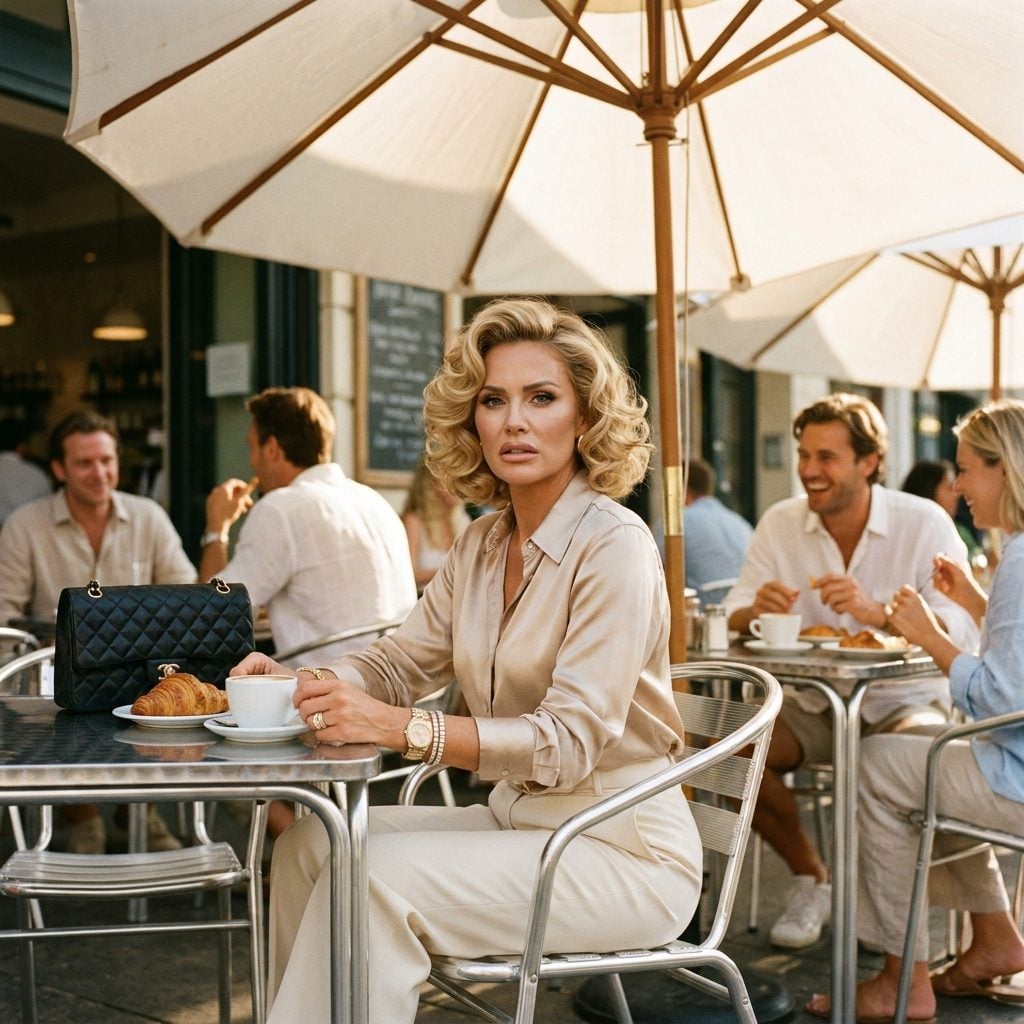
Here’s the paradox nobody talks about. Every single item on this woman is beautiful. The champagne silk blouse, the tailored trousers, the quilted black leather handbag. And yet the overall effect is stiff. Overdone. Like a costume rather than clothing someone actually lives in.
Old money style has a specific casualness baked in. One cuff rolled unevenly. A flat shoe instead of the heel. Hair that moved on the walk over. The richest-looking women in any room are usually the ones who appear to have thought about it the least, which of course is its own performance, just a better rehearsed one.
11. You Look Rich, Sure. But You Don’t Look Like You Forget You’re Rich.

Real athleisure style from someone who grew up comfortable looks like actual comfort: a faded crew neck from a college they attended, beat-up running shoes, hair in a claw clip. Not a coordinated designer tracksuit with pristine white leather sneakers that have never touched grass.
The giveaway is the newness. Everything matching, everything fresh, everything clearly purchased as a set. Wealth that’s been around a while wears its clothes like they’ve been around a while too. Scuffed loafers. A sweater with a tiny moth hole. That kind of gentle disrepair is almost impossible to fake.
10. Your Hair Color Is a Single Flat Shade From Root to Tip (And It Shows)

This one’s subtle, and I got it wrong for years. Single-process color that’s the same shade from scalp to ends is one of the fastest visual signals of new money. It looks “done.” It looks maintained. And that’s precisely the problem.
Expensive colorists charge what they charge because they paint in dimension: darker at the root, lighter where the sun would naturally hit, cooler tones woven through warmer ones. The goal is hair that looks like it grew that way. A flat, uniform chestnut from root to tip says “I just sat in a chair for 45 minutes.” A multitonal brunette says “I’ve always looked like this.”
Ask your colorist for a shadow root and face-framing pieces that blend rather than contrast. It costs roughly the same and the difference is startling.
9. Your French Manicure Has Never Survived Past Day Six
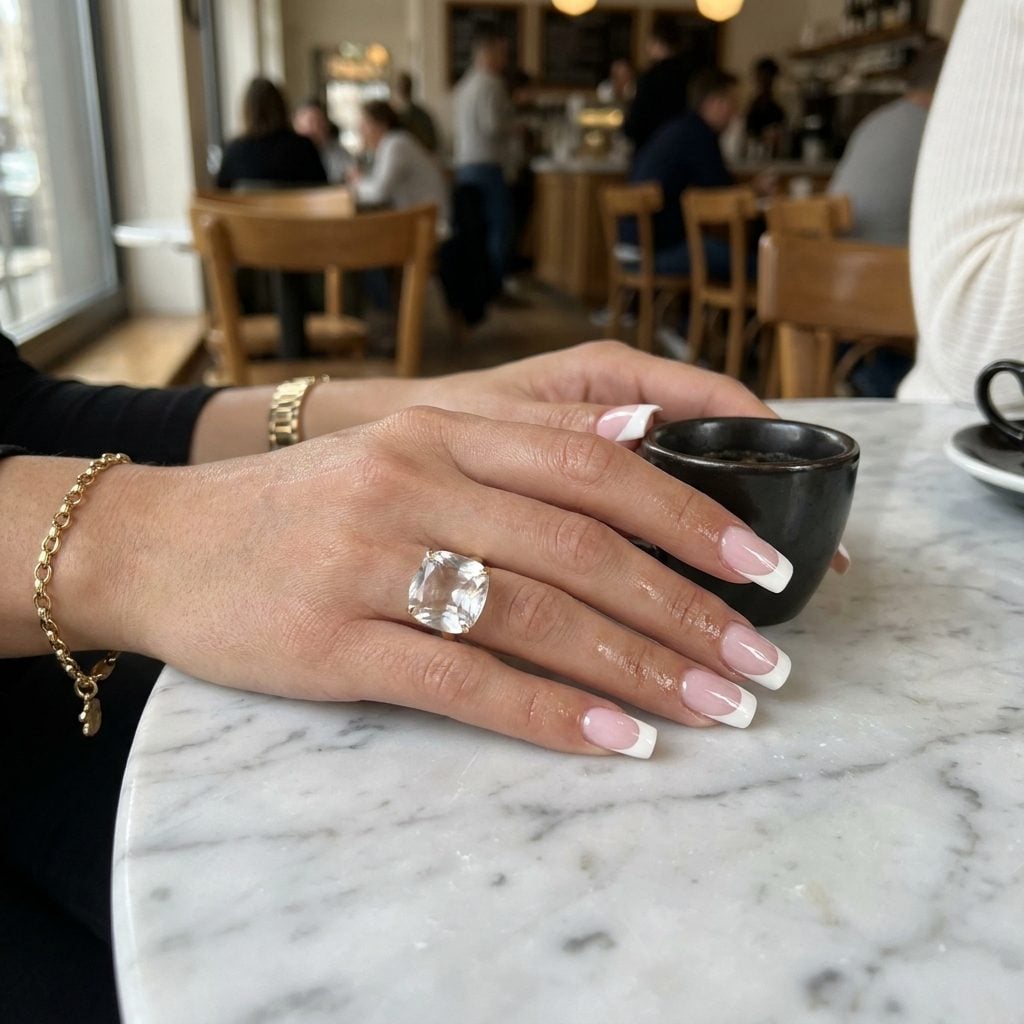
Thick opaque tips on square acrylics, replaced religiously every week. I will die on this hill: this is the nail equivalent of a logo tee. It announces maintenance schedules rather than taste.
Old money nails are short, rounded, and often bare with a single coat of sheer pink nail polish. Or they’re a blush style neutral that’s allowed to grow out gracefully for two weeks without looking ragged. The point is nails that could plausibly belong to someone who gardens, plays tennis, or simply doesn’t think about her nails that much.
8. Your Teeth Are a Shade of White That Doesn’t Exist in Nature

Old money teeth have character. A slight overlap, a warm ivory tone, maybe a canine that sits just a hair forward. They look like teeth that have been well cared for, not engineered in a lab.
The new money tell is a row of identical, blindingly white veneers that read less “healthy” and more “I spent the price of a used car on my mouth.” Under restaurant lighting they practically hum. I’m not judging the investment, honestly. I’m just saying that real generational wealth tends to keep its dental work within the range of colors that occur on this planet.
7. A Spray Tan Calibrated for the Camera, Not for Daylight

Here’s the giveaway: it photographs beautifully but in person, under actual sunlight, the tone sits somewhere between terracotta pot and basketball. Women who grew up around wealth tend to either be pale and unbothered about it, or they carry a low-key tan from actual time outdoors, the kind that fades unevenly and nobody minds.
6. Fillers That Have Rearranged the Face Into Something Symmetrical and Unfamiliar

❤️ Would you like to save this?
Symmetry is overrated, and the wealthiest women I’ve observed seem to know this instinctively. They keep the bump on the nose, the thinner upper lip, the lines that prove they’ve laughed at a thousand dinner parties. New money filler tends to aim for a version of the face that looks optimized, like someone ran it through a filter and then handed the screenshot to a cosmetic nurse.
The result is often technically pretty but strangely anonymous. You can’t quite place the age, the ethnicity, sometimes even the original bone structure underneath all that hyaluronic acid.
5. Heels Too High for the Surface You’re Standing On

Cobblestones. Grass at a garden party. A gravel driveway. The surface is screaming “wear a flat” and yet there she is, in five-inch patent red stilettos, ankles doing that wobbly negotiation with gravity that fools no one.
Generational wealth women own incredible shoes. But they also own the common sense to match the heel to the terrain. A suede block heel for the lawn, a loafer for the dock, a ballet flat for the museum. It’s not about avoiding glamour. It’s about reading the room, or in this case, reading the ground.
4. Designer Athleisure Worn to Places Where No One Is Being Athletic
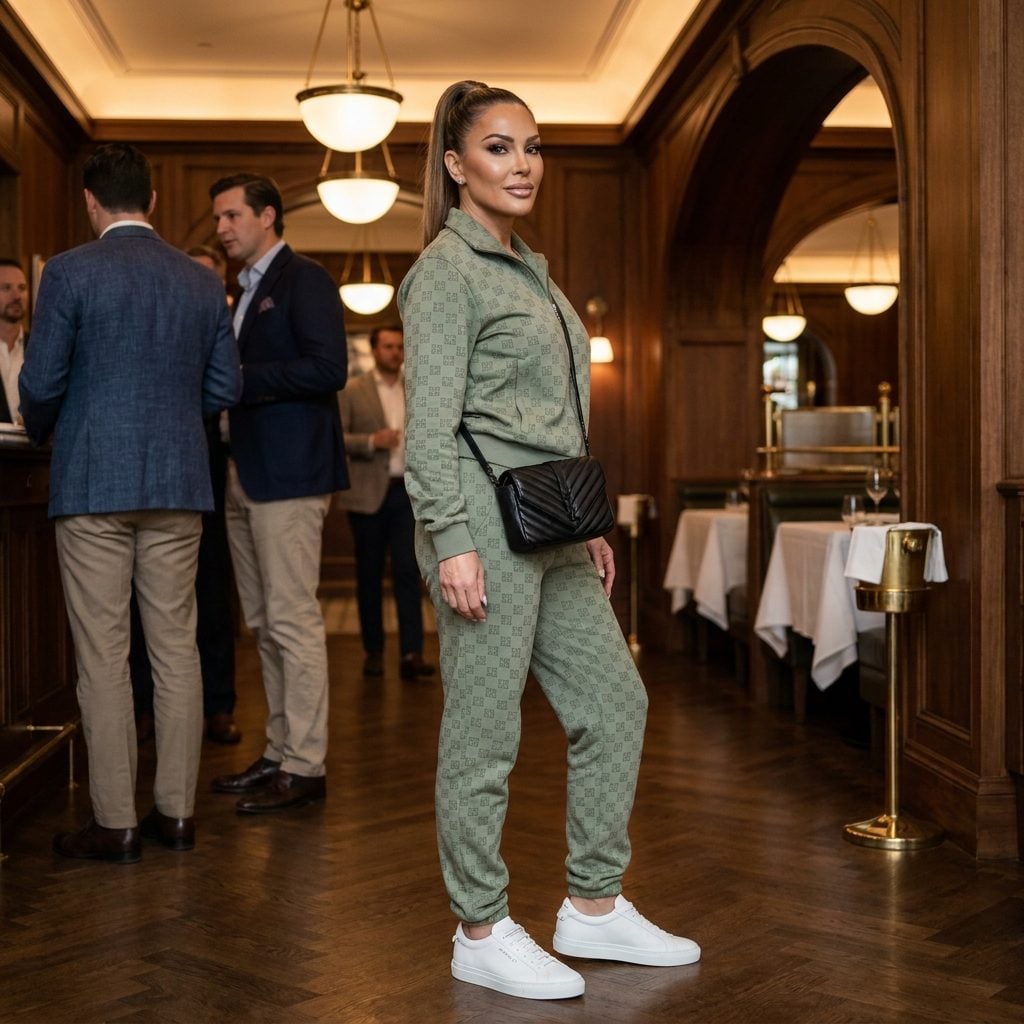
I spent an embarrassing number of years thinking a matching logo tracksuit counted as an outfit for brunch. It doesn’t. I mean, it does technically cover your body, but it also announces that you paid a lot of money to look like you might jog at any moment, even though you are holding a mimosa.
There’s a difference between genuine athleisure style worn to run errands on a Saturday and a full designer athletic set worn to a seated dinner. Old money keeps the workout clothes within a two-block radius of the actual workout.
3. The Price of Something Works Its Way Into the Second Sentence

“Oh, this bag? It was four thousand.” Nobody asked. Nobody ever asks. But the number lands on the table like a check at dinner, and suddenly the handbag is no longer a handbag. It’s a receipt.
Generational wealth rarely volunteers a price. Not out of secrecy, just out of disinterest. The navy cashmere crewneck is just “something I’ve had forever.” The watch was “my grandmother’s.” The information that matters is the story, not the invoice.
New money treats cost as the story itself. And once you start listening for it, you hear it constantly: at lunch, at school pickup, in the group chat. The dollar amount becomes the adjective.
2. Tags and Stickers Left on the Soles of New Shoes, On Purpose
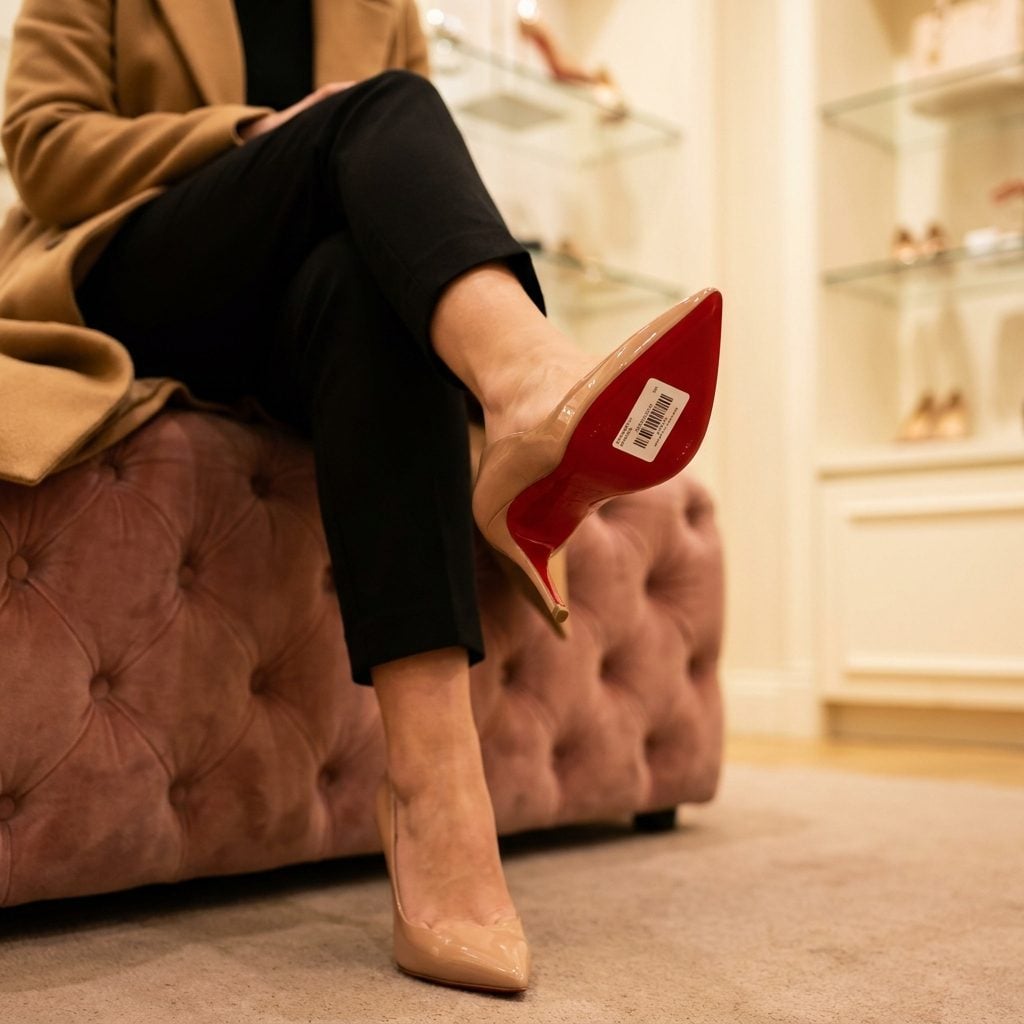
This one’s specific but I see it all the time. The sole sticker stays on. The tag stays tucked inside but visible if you look. It’s a subtle broadcast: these are new, these are expensive, and I want you to register both of those facts before the adhesive wears off on its own.
1. When Your Skin Looks Like It Was Airbrushed by a Professional Retoucher

I spent a solid year convinced that the goal was skin so smooth it looked like a phone filter come to life. Here’s what old money knows that took me too long to learn: real wealth doesn’t erase every pore. Women from generational wealth tend to invest in long-term skin health, think consistent sunscreen since childhood, quality retinol, and dermatologists on speed dial. The result is skin that looks healthy, not plasticized.
That over-smoothed, almost waxy finish from too many chemical peels or aggressive laser sessions reads as someone trying very hard. A few fine lines around the eyes? That’s not a flaw. That’s a face that’s actually been lived in.