

❤️ Would you like to save this?
Hair parting seems simple enough—you wake up, run a comb through your hair, and go about your day. Yet this tiny, everyday habit might be quietly adding years to your appearance. The way you divide your hair can either enhance your natural beauty or, well, highlight every line and shadow you’d rather forget.
Honestly, most of us never think about how our hair part affects our overall look, but it’s one of those sneaky anti-aging tools that can make a real difference. From mistakes stylists spot instantly to those old habits that just aren’t doing you any favors, even tiny tweaks to your parting can totally shift your vibe. If you’re dealing with thinning hair, your face shape has changed, or you just want a fresh look, spotting these parting pitfalls is step one. Your hair should work with your mature beauty—not against it.
FYI, thanks to AI imagery software, we’re able to create very specific fashion and hairstyle examples to illustrate the points being made. In some cases, imagery is exaggerated to hammer home the point. Also, assume links that take you off the site are affiliate links such as links to Amazon. this means we may earn a commission if you buy something.
30. Ignoring scalp sensitivity when parting and styling which can exacerbate inflammation and hair loss

Your scalp isn’t just being dramatic when it starts to ache after styling. That tender, irritated feeling means your hair follicles are basically waving a white flag.
Tight hairstyles and improper parting pile on the strain, making things worse as time goes by. Ponytails yanked too tight or parts drawn with surgical precision? Not helping.
Scalp inflammation is a big culprit behind hair loss. Heat tools, harsh products, and even the weather can fire things up.
If you keep ignoring those warning signs, your hair follicles might just call it quits. Parting in the same spot every day leads to thinning right along that line.
Your scalp deserves a break. Listen to it—don’t let minor irritation turn into major hair loss.
29. Trying to hide a receding hairline with a severe part rather than embracing softer, more flattering fades

That razor-straight center part you’re clutching? Honestly, it’s not doing you any favors.
A severe part draws a bright, bold line right where you don’t want attention. It’s like putting a neon sign on your thinning spots.
Stylists get it—tapered fades are magic for receding hairlines. A gradual blend distracts from problem areas and feels so much softer.
Instead of fighting your hairline into submission, let it work with you. Try a side-swept part for movement and volume where you actually need it.
The trick is all in that gradient. Longer on top, shorter toward the sides—it’s modern, flattering, and just a bit forgiving.
Your hair doesn’t need to line up like soldiers. It just needs a little gentle guidance and a style that flows with your natural growth.
28. Clinging to a single parting style ignoring the opportunity for low-maintenance lifts from new angles

Still parting your hair the same way you did in the ‘90s? You’re not alone. Stylists know your part changes everything about your look, but most of us just default to the old routine.
That center part from your twenties might now be making lines and thinning more obvious. Just switching to a deep side part can add volume and soften your features.
The right part can flatter your face, boost volume, and even shave off a few years. But if you’re always on autopilot, you’ll miss those quick wins.
Try flipping your part to the opposite side once in a while. You’ll get a natural lift at the roots, and your hair’s cowlicks might even cooperate for once.
Even a slightly off-center part is more interesting than a ruler-straight line. Tiny changes, big difference—no fancy salon visit required.
27. Painting a thick, obvious part line that screams product heavy and no fun

That crisp, ruler-straight part line? It’s aging you faster than skipping sunscreen.
A super-defined part says, “I spent way too long with pomade and a comb.” It creates harsh lines that highlight every little imperfection on your scalp and forehead.
It’s not just the thickness—it’s the stiffness. Real hair doesn’t fall in perfect lines. When you force it with heavy styling products, the whole look gets artificial and weirdly severe.
Your part should look easy, not engineered. Softer, slightly messy parts feel alive and confident—no desperation vibes.
And all that product? It just weighs your hair down, especially if it’s fine or thinning. Flat, lifeless hair is not the goal.
Try using your fingers to part after a little lightweight product. Let a few pieces fall out of line. It’s more youthful, less forced.
26. Forgetting the power of a soft zigzag part for adding youthful texture and hiding thinning spots

That perfect center part? It might be making you look older than you feel. A soft zigzag part is like a little magic trick for your scalp.
Switching up your part with a zigzag gives instant volume where your hair’s decided to get a bit sparse. It’s nothing like those sharp zigzags from high school—now it’s all about gentle, natural lines.
A zigzag part lifts hair at the roots and breaks up that widening part line. It’s a lifesaver for camouflaging spots where your hairline’s gotten a little too honest.
Keep it soft, not geometric. Think effortless, not “90s pop star.” This trick works for any length and gives your hair that youthful bounce a straight part just can’t.
25. Not adjusting your part seasonally—humidity and dryness affect styling and aging differently

Your part isn’t immune to the weather, no matter how stubborn you are. What looks great in January’s dry air can fall flat by July.
Winter air zaps the moisture from your hair, leaving it limp. That usual side part might just cling to your scalp.
Summer humidity puffs up your hair, causing frizz and volume where you don’t want it. That deep side part? Suddenly it’s all about the flyaways and weird shadows.
The fix isn’t complicated. In humid months, go for a softer, less defined part. It hides frizz and adds volume.
In winter, try a deeper part to break up flatness. Weather changes hair behavior, and once you get that, styling gets easier.
Let your part change with the seasons. Sticking to the same look all year? That’s aging you faster than last year’s jeans.
24. Cranking up the volume too close to the part, creating an unnatural poof that ages you
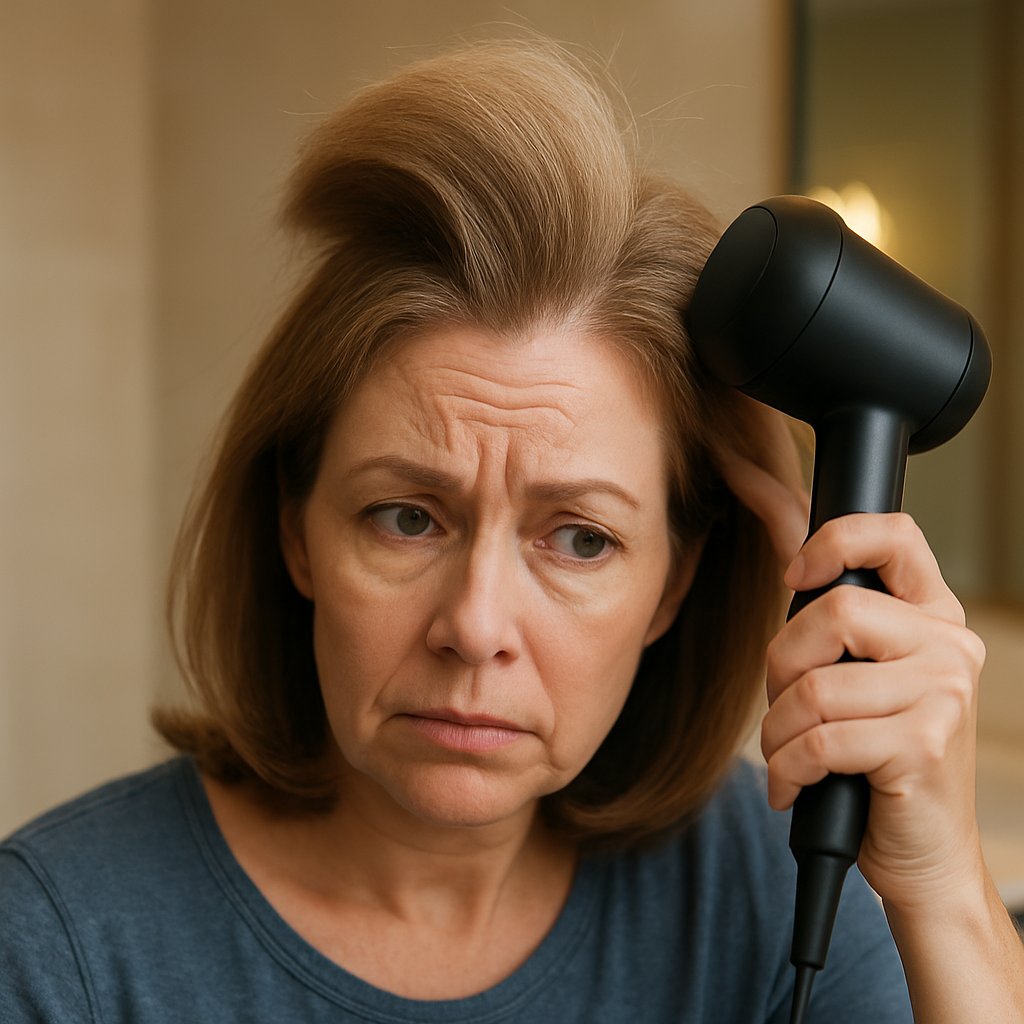
Chasing big volume? Where you place it matters—a lot.
If you tease or backcomb right at your part, you end up with “1985 mall hair.” That puffy spot says, “I’m trying way too hard,” not “I just woke up like this.”
It’s just physics. Hair wants to fall away from the part, so forcing it up creates a weird bump. That harsh line between flat roots and sudden lift? It draws attention to thinning spots you’d rather hide.
Let your part breathe. Build volume about two inches away instead. You’ll get lift without that obvious poof.
Think hair contouring—gentle, gradual elevation, not a sudden wall of volume. You want people to notice your gorgeous hair, not your styling tricks.
When volume hugs the part, it also spotlights any scalp visibility. None of us need that.
23. Keeping a stubborn side part that highlights forehead width instead of minimizing it

Your trusty side part probably felt right in your twenties, but these days, it might be working against you. That deep, defined line you’ve stuck with for years can actually draw more attention to your forehead—exactly what you might be trying to avoid.
As we age, hairlines tend to recede a bit, making wide foreheads stand out more. A dramatic side part just creates this horizontal line that pulls the eye right up.
The deeper the part, the more it can exaggerate forehead width instead of balancing things out. Face shape plays a big role in whether a middle or side part flatters you, and, let’s be honest, our proportions change over time.
Try softening that sharp part with a gentler, less defined line. Even a slightly off-center part can give you the same styling perks without that harsh division.
Or, what about a subtle zigzag part? It breaks up the severity and adds a bit of interest, making the forehead less of a focal point.
Hair naturally grows in cowlicks and patterns, and forcing it into a super dramatic side part can make your style feel stiff instead of effortless.
22. Overprocessing hair near the part with color or chemicals, making damage painfully obvious
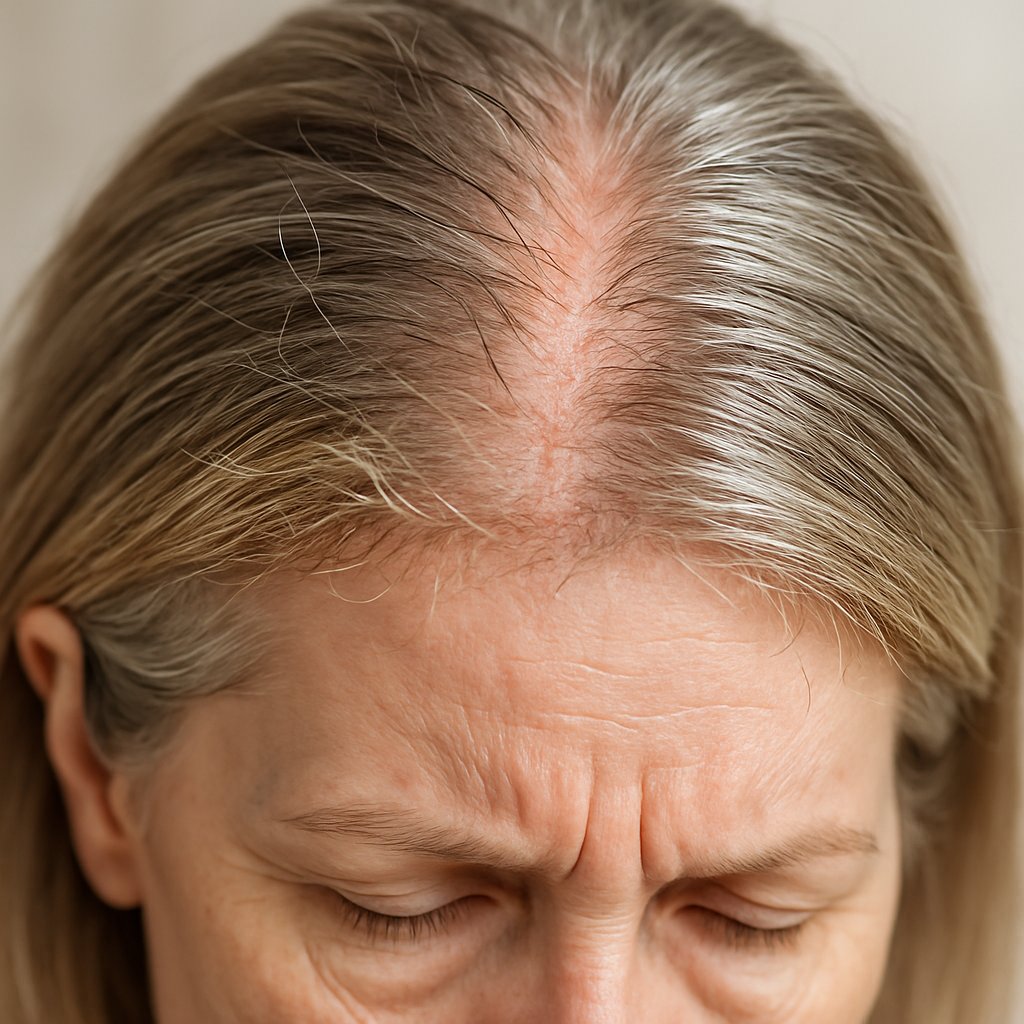
Your part line really does act like a spotlight for any hair damage. When you overprocess hair with repeated chemical treatments, the breakage and dryness show up right where people look first.
Color touch-ups are usually the main culprit. Covering roots every few weeks means bleach or dye keeps hitting those same fragile strands along your part.
Chemical treatments change the structure of your hair shaft, leaving these exposed sections brittle and prone to snapping. You’re left with thinning, scraggly hair right down your part that just screams “overdone.”
Heat styling only makes it worse. Blow-drying and flat-ironing the same area turns your part into a parade of fried, lifeless strands that reflect light all wrong compared to healthy hair.
Overprocessed hair shows dryness and damage most where it’s exposed. Spacing out chemical services and using heat protectants—especially along your part—can make a big difference.
21. Parting hair without addressing dryness and frizz that makes any style look frazzled

You can have the most precisely placed part, but if your hair looks like it’s been through a windstorm, nobody’s noticing your handiwork. Dry, frizzy hair just instantly ages you and makes even the most sophisticated style look a bit neglected.
Mature hair cuticles don’t lay flat like they used to, so you get that frazzled texture that practically shouts, “I gave up somewhere around my 40th birthday.”
Creating a parting on damp hair helps reduce frizz. The trick is to seal those wild cuticles before they start acting up.
Setting your parting while hair is wet lets it air dry into place. A cold water rinse before hopping out of the shower can help lock things down.
A smoothing serum along your part before styling creates a shield against humidity and gives you that polished, “I actually tried” finish.
20. Pulling hair too tightly into a part that causes daily scalp stress and potential traction alopecia

That razor-straight center part you’ve been perfecting? It might be your hair’s silent saboteur.
If you’re yanking your hair tight every morning for that flawless line, you’re putting a lot of stress on your follicles. This kind of daily tension can lead to traction alopecia—a totally preventable form of hair loss that sneaks up after years of pulling.
The first signs are subtle: thin, broken hairs and bald spots, especially along the hairline where you’re most aggressive with that comb.
This damage happens because repeated pulling puts excessive stress on the follicle, causing it to weaken and sometimes scar. Eventually, the hair might just stop growing there.
The solution? Loosen up. Create your part gently, and switch sides now and then so those follicles get a break.
Your hair will probably thank you by sticking around instead of disappearing.
19. Ignoring that your part placement can conceal or emphasize under-eye shadows and fine lines

Your hair part casts shadows on your face, and at 45, those shadows can either be your friend or your enemy. A center part can create symmetrical shadows that highlight every under-eye circle you’d rather keep hidden.
Side parts are kind of a secret weapon for playing with light. If you part your hair to the left, the extra volume on the right side creates a soft shadow that can minimize fine lines.
It’s all about how light hits your face. A deep side part lets hair sweep across your forehead and cheek, giving you natural contouring that conceals dark circles and under-eye bags—no makeup required.
Your part should work with your bone structure, not against it. If you’ve got prominent under-eye hollows, a side part with some forward-swept bangs can soften the lighting and hide shadows.
Think about your morning routine, too. The same lighting you use to apply concealer should help you choose where to part your hair. Natural light will show you how your part affects facial shadows throughout the day.
18. Doubling down on a part that reveals gray roots instead of using soft blending techniques

❤️ Would you like to save this?
That sharp, ruler-straight part you’ve been perfecting all these years? Now it’s just a spotlight for every gray root peeking through.
Keeping the same precise part week after week basically turns your roots into a runway for gray hairs. It’s where everyone looks first.
Instead of fighting nature with harsh lines, gray blending techniques work with your natural growth pattern. These methods soften the transition and make regrowth less obvious.
Try a softer, less defined part that doesn’t create such a stark contrast. Or, just shift your part a little day to day.
Highlights and lowlights add dimension and help camouflage gray roots. The color variation is way less harsh than a single shade with a perfect part.
Techniques like root smudging or shadow roots can also help. These blending methods make the grow-out phase a lot more forgiving.
Your part doesn’t have to be perfect. Sometimes a little intentional messiness is actually better.
17. Creating a part without considering face shape changes due to age—time for a reassessment

Your face at 25 isn’t the same one you see in the mirror now. That center part you’ve worn since college? It might not be doing you any favors.
Face shape changes with age—bone structure shifts, fat moves around, skin loses some bounce. Your once-oval face might be a bit wider or longer now.
The middle part that used to highlight your cheekbones could now be emphasizing a broader forehead or deeper smile lines. As facial harmony evolves with age, your part should evolve, too.
A deep side part can add some asymmetry, drawing attention away from areas that show aging. It adds a bit of lift and pulls the eye upward.
Think about your current face shape, not the one in your old driver’s license photo. Round faces can benefit from off-center parts that create angles. Longer faces need width, which a slightly off-center part delivers better than a strict middle part.
Let your part work for the face you have now.
16. Neglecting to soften the part edges with a light cut or trimming baby hairs for a fresher look
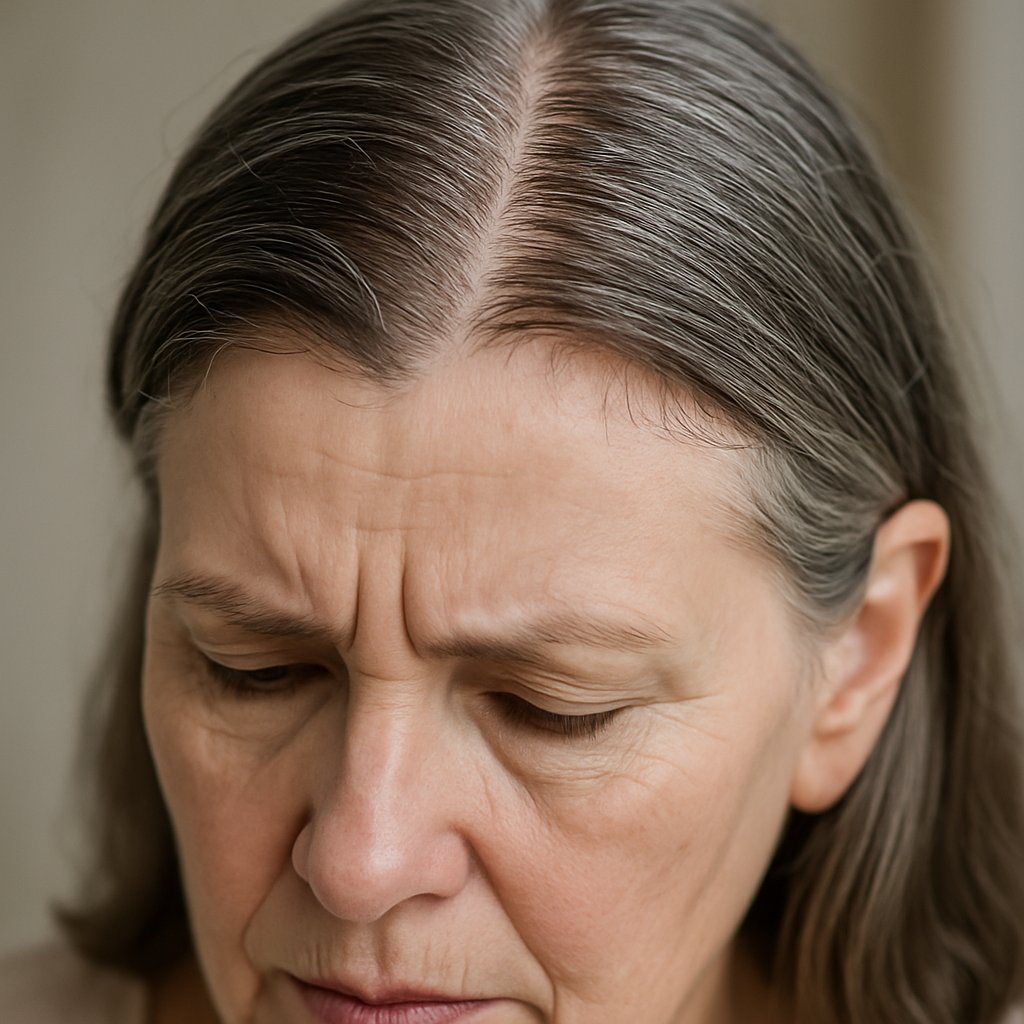
Sharp, severe part lines? They’re basically announcing your age to everyone within shouting distance. That harsh contrast just emphasizes every change and thinning spot along your hairline.
Crisp edges that looked chic in your twenties now highlight areas where hair has gotten finer. The stark line is like a magnifying glass for little imperfections.
Baby hairs and edges are back for good reason—they create a softer, more youthful frame for your face. Those wispy bits break up harsh lines and add movement.
Point-cutting vertically into the ends gives you a much softer line than blunt cuts. It creates subtle texture that looks more natural.
Ask your stylist to lightly trim and shape the baby hairs around your part. The goal isn’t perfection, just a lived-in softness that feels easy.
Even a tiny trim of those fine hairs can make your part look less severe. You’ll look polished, but not overdone.
15. Styling around an old part instead of experimenting with new parting shapes that flatter your face

Look, we all get stuck in our ways. Maybe you’ve parted your hair the same way for decades—it’s comfortable, right? But honestly, that center part from the late ‘90s isn’t doing you any favors anymore.
Your face shape changes over time. What looked great in your twenties might be aging you now. That center part could be making fine lines stand out or making your forehead look wider.
Face shapes work better with certain parting styles. Round faces? Try a deep side part for height. Square faces? Gentle, side-swept parts soften things up.
Honestly, your old faithful part might be the sneaky reason your hair feels outdated. It’s piling all the focus in the wrong spots.
Why not try a zigzag part for some texture? Or just shift your part over a bit. Sometimes moving it an inch changes everything.
Your stylist isn’t coming up with new parting ideas based on face shape just to mess with you—they’re trying to help you look fresher.
Let’s not get stuck on autopilot. Your face deserves a little more adventure.
14. Forget the gravity lesson: parting against your natural fall means constant battles with flyaways

Hair wants to fall a certain way, and fighting that is like swimming upstream. Physics isn’t just for classrooms—it’s in your bathroom every morning.
If you force a part where your hair resists, you’re asking those strands to rebel. Cue the flyaways, cowlicks, and that “I gave up” vibe none of us want.
Your natural part is there for a reason. Hair grows in certain directions, and gravity pulls it down in the most flattering way when you let it.
As we age, hair can get finer or change texture. Fighting your natural fall just makes these shifts stand out more, creating weird volume where you don’t want it.
To find your natural part, comb wet hair straight back and gently push it forward. Where it splits? That’s your spot for a smoother, easier style.
13. Using tight accessories like small elastics at the part, pulling and stressing delicate roots
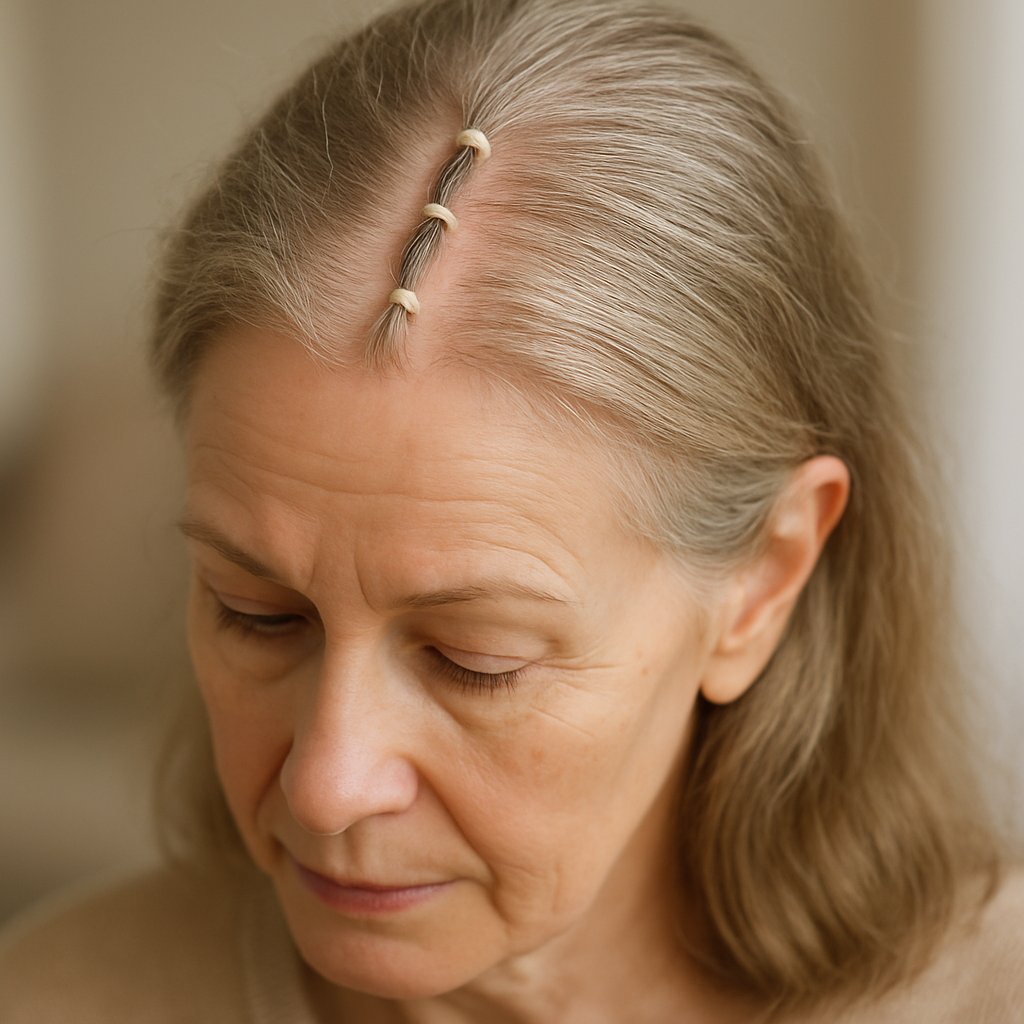
Those tiny clear elastics seem harmless, but they’re not your friend here.
Small rubber bands put a lot of tension right where hair is most fragile—along your part. Roots in this area already have enough to handle.
Add tight accessories, and you’re stressing the follicles even more. Rubber bands can damage hair, especially when you yank them out.
Your part is often the first place to show thinning—UV exposure, styling, and now, tight elastics all speed that up by cutting off blood flow to the roots.
Instead, try lightweight bobby pins or clips that spread out the pressure. Pulling on fragile hair near the part just makes thinning worse, so go for gentler options.
If you really need an elastic, pick a fabric-covered one and skip the tiny rubber ones that grip like crazy.
12. Parting wet hair harshly and causing breakage right where strands are most fragile
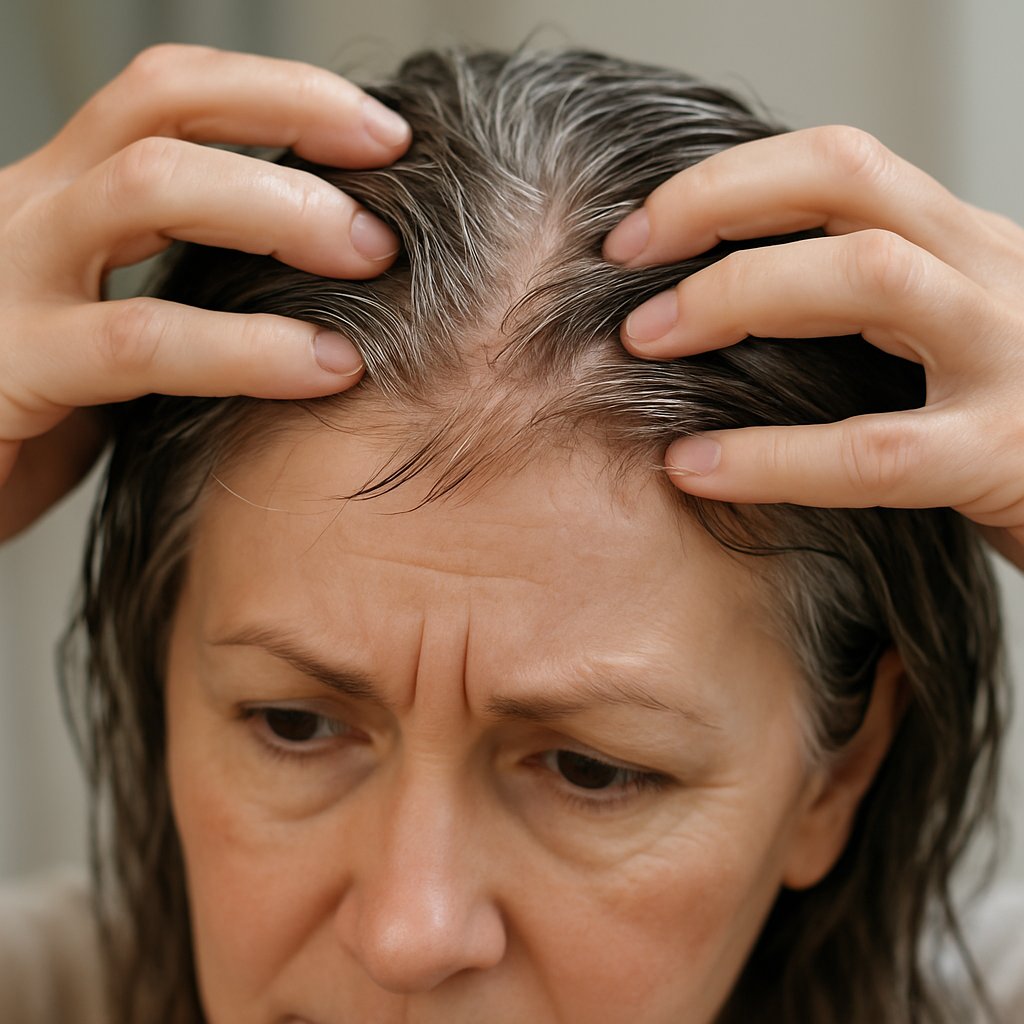
Ever notice more breakage right along your part? That aggressive comb-through on wet hair could be to blame.
Wet hair stretches and snaps way easier than dry hair. Dragging a comb through damp strands to make a part? You’re setting up a breakage zone, especially at the top of your head.
Wet hair just can’t handle the pressure. Tugging it apart puts stress on already delicate strands.
The result? Wispy, uneven pieces that make your hairline look thinner.
So, what to do? Let your hair air dry about 80% before you part it. Use a wide-tooth comb and go easy.
Or, try parting before you wash your hair and let it settle as it dries. Your hairline will definitely look fuller for it.
11. Relying exclusively on combs instead of fingers which can give you a more forgiving and softer part
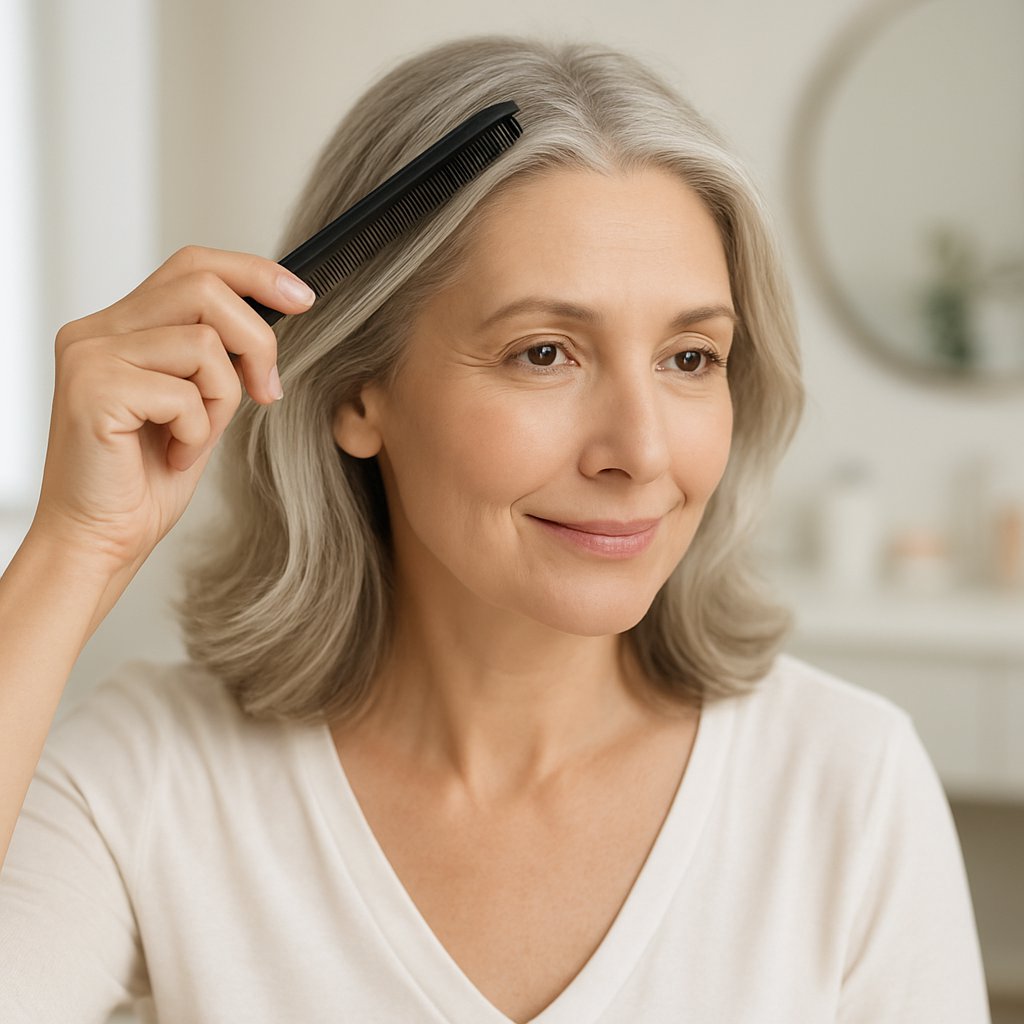
That favorite comb of yours? It might be the reason your part looks so sharp and severe.
Finger combing is way gentler. Your hands can feel where your hair wants to split and give you a softer, more natural part.
Combs tend to pull hair in different directions, creating that ruler-straight line that just looks a bit too harsh—especially on mature faces.
Using your fingers gives you more control over how wide or soft your part is. You can play around and find a look that feels more relaxed and youthful.
Try using your fingertips to separate sections when your hair is just a little damp. It’s the secret to that “I woke up like this” look everyone wants but few actually achieve.
Honestly, your fingers just know your hair better than any tool ever could.
10. Never switching sides to give the part—and your scalp—a breather and fresh perspective

Still rocking that same left-side part from the 90s? Maybe it’s time to shake things up.
Leaving your part in the same spot for years carves a groove where hair gets weaker and thinner. Pulling hair in one direction all the time stresses those follicles.
Switching your part helps prevent thinning and breakage. It also spreads your scalp’s natural oils more evenly.
Your scalp gets sun in that same strip every day. Move the part, and you let other areas breathe and recover.
Changing up your part can even limit heat damage by spreading styling stress around. Overworked hair gets a break.
And let’s be honest, a new part gives you instant volume and a fresher look.
Try flipping sides every week or month—you might be surprised how much you like the change.
9. Parting too low or too high on the scalp, throwing off your hair’s natural volume balance

Part placement is everything. Get it wrong, and your hair just won’t sit right. A lot of us drift into habits that fight our natural volume.
If you part too low, your forehead looks bigger and your crown flattens—hello, limp hair. Too high, and all your volume piles on top, giving you a weird, unbalanced shape that doesn’t do anyone any favors.
Where you part your hair really affects how full and healthy it looks. Usually, the sweet spot is about a finger-width from your natural cowlick.
Try sectioning at different spots and see what gives you balanced volume on both sides. Your part should flatter your bone structure, not fight it.
8. Continuing with a deep side part that drapes over wrinkles instead of brightening your face

That deep side part you’ve loved for years? It might be casting shadows that highlight fine lines and droopy skin.
It’s not that side parts are bad—it’s the heavy drape that pulls your face down and draws attention to all the spots you’d rather not highlight.
A deep side part can be glamorous, but only if you place it just right. Try moving it closer to the center for better balance.
Really think about how your hair falls. If it’s covering your cheekbone or jaw, it’s probably making shadows that age your face.
You want lift and brightness, not darkness. A softer side part, with hair swept away from your face, opens things up and gives you a fresher look.
Shift your part a little each day until you find what actually flatters you best. Sometimes, it’s just a matter of a few centimeters.
7. Ignoring natural hair growth patterns—battle them and your hair will lose, every single time

Your hair didn’t just randomly pick a direction—it’s got a game plan. Fighting it? That’s like arguing with gravity. You’ll lose, and your hair will look like it’s given up.
Everyone’s got cowlicks, whorls, and weird little patterns that dictate how hair wants to fall. Maybe you’ve got a stubborn swirl up top, or your hair always flops to the right no matter what. It’s not a flaw, it’s just how you’re built.
Force a part where your hair doesn’t want it and you’ll get flatness, awkward bends, or that constant messy vibe you can’t quite fix. It’s like your hair is telling you, “Nope, not today.”
Honestly, the more you fight your natural growth, the more tired and, well, older your hair looks. Those natural techniques to reverse hair loss that experts love? They all start with working with what you’ve got.
Take a good look at your hair when it’s wet and untouched. Notice where it wants to part? That’s your blueprint. Go with it, and you’ll probably find styling gets a whole lot easier—and your hair just looks better, with way less effort.
6. Using heavy gel or mousse near the part that flakes and makes roots look crunchy, darling
❤️ Would you like to save this?
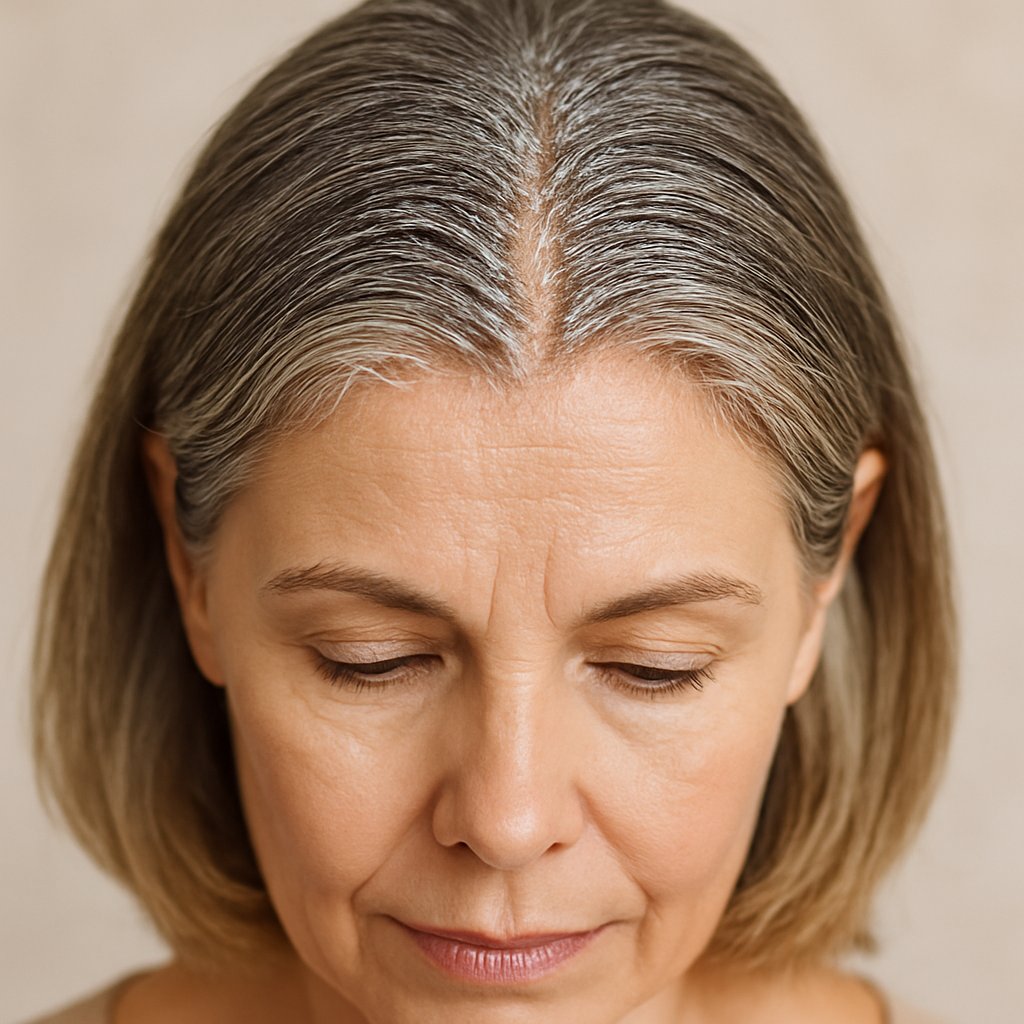
Nothing says “I gave up” like a part line full of white flakes. Still, so many of us end up piling gel or mousse right where it shows the most.
Heavy products build up, and before you know it, you’re dusting flakes off your scalp all day. It’s especially obvious at the part, where product sits right on top of your roots.
Gel flaking happens when you mix products that don’t play nice, or just use too much. Suddenly, it looks like you’ve got dandruff you can’t shake.
And mousse? That’s another culprit. Mousse can leave your roots crunchy and stiff, especially if you get heavy-handed. The result is hair that looks less “styled” and more “shellacked.”
Try applying product to the mid-lengths and ends first, and go super light near your roots. Lightweight formulas move better and won’t give you that helmet effect. Your hair will thank you—and so will your mirror.
5. Clinging to a middle part despite noticeable widening or balding at the crown

If your middle part is starting to look more like a runway than a delicate line, it’s probably time to rethink things. A widening part is often one of the first signs of hair loss, and sticking with it can add years to your look.
It’s tough—many of us hang onto that center part out of habit, even as it draws attention to exactly what we’d rather hide. A wider part line is a dead giveaway, but denial is strong.
Honestly, a deep side part can work wonders. It adds volume and cleverly covers up thinning spots, all while giving your style a bit of retro flair.
If you’re not quite ready to give up the center part, try teasing at the roots and using volumizing products to fake fullness while you figure out your next move.
4. Placing your part dead center when asymmetry would add some much-needed youthful flair

That sharp center part? It’s not doing you any favors, honestly.
Middle parts highlight every little asymmetry. And let’s be real—nobody’s face is perfectly symmetrical. Why draw a line right down the middle and call attention to it?
Just shifting your part a bit off-center creates movement and interest. It softens the look, breaks up harsh lines, and can actually make you look younger.
Here’s a little industry secret: Side parts are usually more flattering for most faces. You don’t need a dramatic swoop—just move it over an inch or two.
That tiny tweak adds dimension, softens features, and gives the illusion of thicker hair. Stylists rarely go dead center for a reason.
3. Creating a part that’s too harsh or straight, making your face look tired and unforgiving

If you’re still rocking that razor-straight part from the ‘80s, it might be time to reconsider.
A super straight part creates hard lines that highlight every shadow and dip in your face. It’s like drawing a marker line down a painting—suddenly, that’s all anyone notices.
Square faces especially benefit from softer parts. Yet, so many of us grab the comb and go for precision.
Try using your fingers instead. A slightly messy, lived-in part looks softer and more forgiving. It lets the light hit your face in a better way, adding movement instead of rigidity.
Your hair should frame your face, not slice it in two. Save the ruler for your taxes, not your hairline.
2. Ignoring scalp health when parting leads to weaker roots and sad, thinning patches

Your scalp isn’t just a landing pad for your hair—it’s the foundation for everything. Neglect it, and your hair pays the price.
Repeatedly parting in the same spot? You’re basically carving a path of stress right into your scalp. Scalp health directly affects hair growth, and all that buildup from products, dead skin, and pollution just makes things worse.
Poor circulation means your roots don’t get the nutrients they need. Weak roots come from both genetics and lifestyle, and skipping scalp care is one of those habits you can actually change.
That thin, fragile strip at your part? It’s a billboard for scalp neglect. Regular scalp massage, a little exfoliation, and the occasional clarifying treatment can turn things around. You deserve a scalp that’s thriving, not just surviving.
1. Parting your hair the exact same way you did in your 20s—yes, it’s aging you more than you realize

That center part from your college days? It’s not the friend it used to be.
Your face shape changes over time. What once flattered your cheekbones might now pull focus to lines or make your face look drawn.
A lot of us part our hair on autopilot, but sticking with the same old routine can age your whole look. Your hair texture probably isn’t what it was back then, either.
That severe side part you loved in your twenties? It might be too harsh now. How your hair frames your face can either highlight your best features or draw attention to things you’d rather not showcase.
Try softening things up. Move your part just a bit off-center, or follow your natural cowlick. You might be surprised how much more flattering it looks for your face now.
Understanding the Impact of Hair Parting on Mature Features
Your hair part does a lot more than you think, especially after 45. The wrong part can highlight every line and shadow, while the right one works like a subtle facelift.
How Parting Can Age or Rejuvenate Your Look
That center part you’ve stuck with since the ‘90s? It’s probably not doing you any favors anymore. Center parts can be pretty harsh on mature faces, drawing a vertical line that makes asymmetries and forehead lines more obvious.
A side part, angled just an inch from your natural cowlick, softens features and adds volume at the crown. It creates gentle shadows that blur imperfections—kind of magic, really.
Deep side parts help if you’re thinning at the temples. Sweeping more hair to one side gives the illusion of fuller coverage, and the diagonal draws the eye up.
Your hair part actually affects how thick your hair looks. Always parting in the same spot can make that area look wider and thinner over time.
Zigzag parts might seem fun, but on mature faces, they usually just look messy. A clean, intentional part looks polished and helps you outsmart gravity a bit.
The Psychology Behind Hair Parting Choices
Most of us stick with the same part for years—sometimes decades—without realizing it’s just a comfort zone. Familiar parts feel safe, but they don’t always flatter us as we age.
Your dominant hand even affects your parting habits. Right-handed? You probably go left-side out of convenience, but that might not be the best look for your face.
Confidence pops when your part suits your features instead of working against them. A good part can make you look more awake and put-together, even if nothing else changes.
Stylists see it all the time: women resist changing their part, even when it’d make a huge difference. Usually, it’s not about looking better or worse—it’s just the fear of change.
Expert Tips for Choosing a Youthful Hair Part
Understanding your face shape and learning a few tricks can totally transform your look. The right part can highlight your best features and camouflage the rest.
Face Shape and the Science of Flattering Part Lines
Let’s talk geometry, because your face deserves better than a random hair part dictated by your cowlick. Different face shapes benefit from specific parting styles that create visual balance and draw attention to your most flattering features.
Round faces need height and vertical lines. A deep side part creates asymmetry that instantly elongates your face. Center parts? Honestly, they just make your face look wider—probably not the goal.
Square faces look softer with off-center parts that break up a strong jawline. A slightly zigzag part adds a bit of curve, which helps counteract those sharper edges. I’d skip severe center parts since they can highlight the angles you might want to downplay.
Heart-shaped faces—if you have a wider forehead, center or slight side parts are your friend. These distribute hair volume more evenly. Deep side parts tend to exaggerate a broad forehead, so maybe avoid those.
Oval faces—well, you lucked out. Pretty much every part works for you. Center, side, deep side—take your pick, honestly. Not much else to say!
Long faces need width, not extra height. Side parts with some volume at the temples create horizontal lines, balancing out facial length. Center parts, on the other hand, just make your face seem longer.
Tools and Techniques for Seamless Part Transitions
The right tools can make switching up your part feel a lot less daunting. A rattail comb is still the go-to for crisp, clean lines. The pointed end gives you the kind of precision your fingers just can’t.
Start with damp hair—it moves easier and lets you retrain stubborn growth patterns. A lightweight styling cream helps set the new direction without weighing things down.
Try this: First, use the comb’s point to mark out your new part. Next, comb hair firmly to each side. Then, blow-dry right away to lock in the change.
Dealing with a stubborn cowlick? Use clips to section hair while it dries. This helps train hair into its new position. Leave the clips in at least ten minutes after blow-drying, even if it’s a bit annoying.
A little root lift spray at the part line stops that flat, tired look. Just a bit of volume at the roots gives you the movement and flow that experts recommend for a fresher, more youthful vibe.
Frequently Asked Questions
People often stick with old parting habits or ignore how hair changes with age. Here are some issues that come up again and again—and why they matter.
Which seemingly timeless hairstyles might secretly be adding years to your visage?
That severe center part you’ve rocked since the ’90s? It’s probably not doing you any favors now. Sharp, straight parts make facial asymmetries stand out and draw the eye to thinning spots along your hairline.
The deep side part that once felt chic can seem heavy and dated now. It pulls your features downward, especially if your hair’s lost volume over time.
Slicked-back styles with a visible scalp just make hair look thinner. When you can see every bit of scalp through your part, it reads more “struggling” than “sleek.”
What hair faux pas could be contributing to a more mature look that I’m unwittingly committing?
Using a fine-tooth comb for razor-straight parts makes hair look too controlled and product-heavy. Maybe that worked in your twenties, but now it just feels stiff against mature skin.
Keeping the same part for years creates wear patterns that thin your hair. You end up training your follicles to grow in one direction, and that can mean permanent thinning along the part.
Forcing parts against your hair’s cowlicks leads to frizz and flyaways. Fighting your hair’s natural tendencies rarely ends well—it just looks forced.
Are there any cardinal hair parting sins that might be taking me further from ‘fabulous’ and closer to ‘frumpy’?
Parts that are too wide show off more scalp and highlight thinning. If your part is wider than a pencil, it’s probably drawing attention to sparse areas instead of creating volume.
Parts set too far back on your crown? That’s an old-school look—think 1980s, and not in a good way. It also flattens your hair where you most need lift.
Harsh geometric lines instead of softer, more natural parts can age your look. Hair parting mistakes often come down to lines that look too perfect and, well, artificial.
Could my beloved bob be betraying me by broadcasting a more advanced age?
A bob with a severe straight part can look helmet-like—think “suburban mom, 2005.” It kills the movement and softness that keeps hair looking lively.
Blunt bobs with center parts draw attention to jawline changes and create boxy shapes around your face. The lines compete with your features instead of working with them.
Wearing the same part with your bob every day leads to dents and creases. Over time, this repetitive styling messes with your hair’s structure and makes it look overdone.
What hair styling missteps should I avoid to keep from looking like I’m stuck in a different decade?
Obvious product buildup along your part makes hair look greasy and old-fashioned. If you can see flakes or heavy residue, it’s time to rethink your products.
Using hot tools to make perfectly straight parts damages hair cuticles over time. That repeated heat along the same line weakens hair and causes breakage—tough to hide, honestly.
Teasing hair at the part for volume usually backfires now. What worked on younger hair can just make mature strands look frizzy and a bit desperate.
Why does my long, cherished mane not resonate with the youthful vibe I aim to exude?
Long hair with a sharp center part can create this curtain effect that just sort of hides your face and feels heavy. Honestly, it sometimes looks like you’re hiding behind your hair instead of letting your features shine.
If you keep the same long hairstyle and part you had in your twenties, you’re kind of ignoring how your face and hair have changed. What used to look effortless might now seem like you’re clinging to the past a bit too much.
When you wear long hair without adding some volume at the crown, it can fall flat and make thinning more obvious. The weight just drags everything down, so any sparse spots stand out more than they would if you played around with your part a little.